EP0865008B1 - Empfänger mit der Funktion eines Elektronischen Geldautomaten und Verfahren zum ausführen dieser Funktion - Google Patents
Empfänger mit der Funktion eines Elektronischen Geldautomaten und Verfahren zum ausführen dieser Funktion Download PDFInfo
- Publication number
- EP0865008B1 EP0865008B1 EP98301741A EP98301741A EP0865008B1 EP 0865008 B1 EP0865008 B1 EP 0865008B1 EP 98301741 A EP98301741 A EP 98301741A EP 98301741 A EP98301741 A EP 98301741A EP 0865008 B1 EP0865008 B1 EP 0865008B1
- Authority
- EP
- European Patent Office
- Prior art keywords
- electronic money
- smart card
- host computer
- mode
- input
- Prior art date
- Legal status (The legal status is an assumption and is not a legal conclusion. Google has not performed a legal analysis and makes no representation as to the accuracy of the status listed.)
- Expired - Lifetime
Links
Images


Classifications
-
- G—PHYSICS
- G06—COMPUTING OR CALCULATING; COUNTING
- G06Q—INFORMATION AND COMMUNICATION TECHNOLOGY [ICT] SPECIALLY ADAPTED FOR ADMINISTRATIVE, COMMERCIAL, FINANCIAL, MANAGERIAL OR SUPERVISORY PURPOSES; SYSTEMS OR METHODS SPECIALLY ADAPTED FOR ADMINISTRATIVE, COMMERCIAL, FINANCIAL, MANAGERIAL OR SUPERVISORY PURPOSES, NOT OTHERWISE PROVIDED FOR
- G06Q20/00—Payment architectures, schemes or protocols
- G06Q20/30—Payment architectures, schemes or protocols characterised by the use of specific devices or networks
- G06Q20/36—Payment architectures, schemes or protocols characterised by the use of specific devices or networks using electronic wallets or electronic money safes
-
- G—PHYSICS
- G07—CHECKING-DEVICES
- G07F—COIN-FREED OR LIKE APPARATUS
- G07F7/00—Mechanisms actuated by objects other than coins to free or to actuate vending, hiring, coin or paper currency dispensing or refunding apparatus
- G07F7/08—Mechanisms actuated by objects other than coins to free or to actuate vending, hiring, coin or paper currency dispensing or refunding apparatus by coded identity card or credit card or other personal identification means
- G07F7/0866—Mechanisms actuated by objects other than coins to free or to actuate vending, hiring, coin or paper currency dispensing or refunding apparatus by coded identity card or credit card or other personal identification means by active credit-cards adapted therefor
-
- G—PHYSICS
- G06—COMPUTING OR CALCULATING; COUNTING
- G06Q—INFORMATION AND COMMUNICATION TECHNOLOGY [ICT] SPECIALLY ADAPTED FOR ADMINISTRATIVE, COMMERCIAL, FINANCIAL, MANAGERIAL OR SUPERVISORY PURPOSES; SYSTEMS OR METHODS SPECIALLY ADAPTED FOR ADMINISTRATIVE, COMMERCIAL, FINANCIAL, MANAGERIAL OR SUPERVISORY PURPOSES, NOT OTHERWISE PROVIDED FOR
- G06Q20/00—Payment architectures, schemes or protocols
- G06Q20/04—Payment circuits
-
- G—PHYSICS
- G06—COMPUTING OR CALCULATING; COUNTING
- G06Q—INFORMATION AND COMMUNICATION TECHNOLOGY [ICT] SPECIALLY ADAPTED FOR ADMINISTRATIVE, COMMERCIAL, FINANCIAL, MANAGERIAL OR SUPERVISORY PURPOSES; SYSTEMS OR METHODS SPECIALLY ADAPTED FOR ADMINISTRATIVE, COMMERCIAL, FINANCIAL, MANAGERIAL OR SUPERVISORY PURPOSES, NOT OTHERWISE PROVIDED FOR
- G06Q20/00—Payment architectures, schemes or protocols
- G06Q20/08—Payment architectures
- G06Q20/18—Payment architectures involving self-service terminals [SST], vending machines, kiosks or multimedia terminals
-
- G—PHYSICS
- G06—COMPUTING OR CALCULATING; COUNTING
- G06Q—INFORMATION AND COMMUNICATION TECHNOLOGY [ICT] SPECIALLY ADAPTED FOR ADMINISTRATIVE, COMMERCIAL, FINANCIAL, MANAGERIAL OR SUPERVISORY PURPOSES; SYSTEMS OR METHODS SPECIALLY ADAPTED FOR ADMINISTRATIVE, COMMERCIAL, FINANCIAL, MANAGERIAL OR SUPERVISORY PURPOSES, NOT OTHERWISE PROVIDED FOR
- G06Q20/00—Payment architectures, schemes or protocols
- G06Q20/30—Payment architectures, schemes or protocols characterised by the use of specific devices or networks
- G06Q20/34—Payment architectures, schemes or protocols characterised by the use of specific devices or networks using cards, e.g. integrated circuit [IC] cards or magnetic cards
- G06Q20/342—Cards defining paid or billed services or quantities
-
- G—PHYSICS
- G06—COMPUTING OR CALCULATING; COUNTING
- G06Q—INFORMATION AND COMMUNICATION TECHNOLOGY [ICT] SPECIALLY ADAPTED FOR ADMINISTRATIVE, COMMERCIAL, FINANCIAL, MANAGERIAL OR SUPERVISORY PURPOSES; SYSTEMS OR METHODS SPECIALLY ADAPTED FOR ADMINISTRATIVE, COMMERCIAL, FINANCIAL, MANAGERIAL OR SUPERVISORY PURPOSES, NOT OTHERWISE PROVIDED FOR
- G06Q20/00—Payment architectures, schemes or protocols
- G06Q20/30—Payment architectures, schemes or protocols characterised by the use of specific devices or networks
- G06Q20/36—Payment architectures, schemes or protocols characterised by the use of specific devices or networks using electronic wallets or electronic money safes
- G06Q20/363—Payment architectures, schemes or protocols characterised by the use of specific devices or networks using electronic wallets or electronic money safes with the personal data of a user
-
- G—PHYSICS
- G07—CHECKING-DEVICES
- G07F—COIN-FREED OR LIKE APPARATUS
- G07F7/00—Mechanisms actuated by objects other than coins to free or to actuate vending, hiring, coin or paper currency dispensing or refunding apparatus
- G07F7/02—Mechanisms actuated by objects other than coins to free or to actuate vending, hiring, coin or paper currency dispensing or refunding apparatus by keys or other credit registering devices
- G07F7/025—Mechanisms actuated by objects other than coins to free or to actuate vending, hiring, coin or paper currency dispensing or refunding apparatus by keys or other credit registering devices by means, e.g. cards, providing billing information at the time of purchase, e.g. identification of seller or purchaser, quantity of goods delivered or to be delivered
Definitions
- the present invention relates to a receiver including an electronic money terminal function and a method for performing the electronic money terminal function, and more particularly, to a receiver whereby various bank services such as deposit and withdrawal of money to and from an electronic money card can be performed at home and on-line by connecting a satellite broadcasting receiver provided with a smart card and a modem to a host computer of the bank, and a method for performing the various bank services.
- An electronic money card can be used not only for mass transport such as subways or buses, but also in stores and restaurants.
- a person spends all of the money placed on the electronic money card they can re-use the electronic money card by going to the bank and depositing more money in the electronic money card from their bank account using an electronic money terminal.
- WO 97/23997 discloses a receiver for television signals comprising a card reader for either a magnetic strip or smart card based data card.
- the receiver is suitable for connecting to a host computer of a bank.
- WO 97/23997 is a co-pending application under Article 54(3)EPC.
- FIG. 1 is a block diagram of a typical electronic money terminal.
- a smart card interface (hereinafter, I/F) 102 informs a micro processor unit (MPU) 104 that an electronic money smart card was input.
- the MPU 104 recognizes the input of the smart card, initializes the smart card according to a system program stored in a memory 114, and displays a menu about the types of services on a display 108 by controlling an OSD processor 106.
- the memory 114 is comprised of a RAM and a ROM.
- the RAM temporarily stores data required to perform an electronic money terminal function
- the ROM stores system programs and application programs.
- the MPU 104 applies to a transmission I/F 112 a command for connecting the terminal to a host computer (not shown) of the bank.
- the transmission I/F 112 connects the terminal to the host computer according to the received command.
- the user's desired type of service and a user identification number stored in the smart card (electronic money card) 100 are transmitted to the host computer.
- the host computer applies a command for requesting input of a user's password to the MPU 104 via the transmission I/F 112.
- the MPU 104 displays a message such as "enter password" on the display 108 by controlling the OSD processor 106.
- the user inputs their password via the keypad 110 in response to the password input message.
- the MPU 104 recognizes the input password and transmits the user's password to the host computer of the bank via the transmission I/F 112.
- the host computer 112 compares the input user's password with a user's password stored in database, and performs the desired service when the two passwords are identical.
- a method of performing an electronic money terminal function characterised in that: the method is for an audiovisual receiver including at least a smart card interface and a modem; and said method comprises the steps of: (a) checking that an electronic money smart card is input to the smart card interface in an electronic money terminal mode and initialising the electronic money smart card; (b) selecting a sub-mode for the electronic money terminal mode, wherein said sub-mode includes a deposit mode for depositing money from a user's bank account to said electronic money smart card, a remittance mode for remitting money from said electronic money smart card to said bank account, and a balance inquiry mode for inquiring the balance of said bank account; (c) connecting said audiovisual receiver to a host computer of a bank which issued the electronic money smart card, using said modem; (d) transmitting the selected sub-mode, a personal identification number (PIN) stored in said electronic money smart card, and a secret number input from an external source, to said host computer; and (PIN)
- a receiver which performs an electronic money terminal function characterised in that: the receiver is an audiovisual receiver which can simultaneously receive charge-free and charged channel signals, said audiovisual receiver comprising: a smart card interface for indicating the input of an electronic money smart card and transmitting a personal identification number (PIN) from said electronic money smart card; a modem for connecting said audiovisual receiver to a host computer of a bank; a memory for storing data representing a screen menu with respect to an electronic money terminal mode and its sub-modes and data representing a telephone number of the bank which issued said electronic money smart card, wherein said sub-modes include at least a deposit mode for depositing money from a user's bank account to said electronic money smart card, a remittance mode for remitting money from said electronic money smart card to said bank account, and a balance inquiry mode for inquiring the balance of said bank account; a controller for recognizing said electronic money terminal mode set by a user and its sub-modes, and transmit
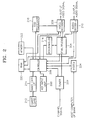
- the output port of a key input unit 200 provided with a keypad is connected to a controller 206.
- a tuner 202 has an input port to which satellite broadcasting signals of multiple channels are input, an output port connected to an input port of a demultiplexer 204, and a control signal input/output port connected to the controller 206.
- a control signal input/output port and first and second output ports are connected to the controller 206, a video decoder 208 and an audio decoder 210, respectively.
- the video decoder 208 has a second input port connected to an output port of an OSD processor 218, a control signal input/output port connected to the controller 206, a data input/output port connected to a RAM 220, and an output port through which a decoded video signal is output.
- the OSD processor 218 has a control signal input port connected to the controller 206.
- the audio decoder 210 has a control signal input/output port connected to the controller 206, a data input/output port connected to the RAM 220, and an output port through which a decoded audio signal is output.
- An input/output port of a smart card 212 is connected to a smart card I/F 214 whose input/output port is connected to the controller 206.
- a descrambler 216 has a control signal input port connected to the controller 206 and an input/output port connected to the demultiplexer 204.
- the data input/output ports of the RAM 220 and a memory 222 are connected to the controller 206.
- a modem 224 is connected to a host computer (not shown) of the bank, a program supplying company or a subscriber managing center, via a telephone line.
- the control signal input/output port of the modem 224 is connected to the controller 206.
- a channel of a cable television or a VOD receiver, as well as a satellite broadcasting receiver can be divided into a charge-free channel and a charged channel according to a fee calculation method.
- the charge-free channel is a channel that everyone can watch without paying a TV subscription fee, needing only a receiver.
- the charged channel can be again divided into a subscriber channel and a pay-per-view channel.
- the subscriber channel when a subscriber subscribes to a channel to watch a program of the channel, they can watch all programs in the channel if they pay a TV subscription fee based on a predetermined period (e.g., a month) regardless of the time for which programs are watched.
- the pay-per-view channel is a channel where a TV subscription fee is paid only for the programs that a viewer watches.
- data of charged programs are scrambled to prevent people who do not pay the TV subscription fee from watching TV.
- the broadcasting reception can be divided into the charge-free channel reception, the subscriber channel reception and the pay-per-view channel reception.
- a plurality of channel signals multiplexed in transport packet form are input to the demultiplexer 204 via the tuner 202.
- the demultiplexer 204 divides multiplexed data, on a channel selected by a user using the key input unit 200 from the plurality of multiplexed channels received via the tuner 202, into video and audio data each having a packet identification (PID) of the selected channel.
- PID packet identification
- the controller 206 checks a control bit representing scramble information (information on whether the selected channel is scrambled) included in the header of the divided data. Then, if the selected channel is not scrambled, the controller 206 does not operate the descrambler 216, and applies a control signal indicating the above fact to the demultiplexer 204.
- the demultiplexer 204 applies the video and audio data, divided from a transport packet of the selected channel according to the control signal provided by the controller 206, to the video and audio decoders 208 and 210, respectively.
- the video and audio decoders 208 and 210 decode the divided video and audio data and output decoded video and audio signals through a display (not shown) and a speaker (not shown), respectively.
- the key input unit 200 can be keys installed on a remote controller or a receiver set.
- a plurality of channel signals multiplexed in a transport packet are applied to the demultiplexer 204 through the tuner 202.
- the demultiplexer 204 divides multiplexed data, on a channel selected by a user using the key input unit 200 from the plurality of multiplexed channels received through the tuner 202, into video and audio data each having the PID of the selected channel, and applies the headers of the divided data to the controller 206.
- the controller 206 checks the control bit representing the scramble information included in the divided header. If it is determined that the selected channel is scrambled, first, a check of whether the smart card 212 was inserted is made to determine whether the viewer is a charged channel subscriber.
- the controller 206 applies a control signal to the OSD processor 218 and displays on a display a message requesting the subscriber to insert the smart card 212. Then, the controller 206 reads information on a personal identification number (PIN) from the smart card 212, compares the read information with PIN information prestored in the memory 222 or PIN information provided by an external source, and applies a control signal to allow the de-scrambler 216 to operate if the PIN information from the smart card 212 is the same as that prestored in the memory 222 or that provided by the external source.
- PIN information input from the external source is PIN information input by the user via the key input unit 200.
- the descrambler 216 restores the scrambled video and audio data divided by the demultiplexer 204 to non-scrambled signals, and applies the non-scrambled video and audio data to the video and audio decoders 208 and 210, respectively, via the demultiplexer 204.
- the video and audio decoders 208 and 210 decode the descrambled video and audio data and output the decoded video and audio signals through a display and a speaker.
- the TV subscriber fee is calculated on the basis of a predetermined period of time, so watched items do not need to be stored in the smart card 212 for a special purpose.
- the memory 222 stores help screen menu data including information guiding the selection of a pay-per-view program.
- the controller 206 recognizes the input of the smart card 212 and displays a help screen by controlling the OSD processor 218.
- a subscriber selects a menu for a pay-per-view program, transmitted from a program supplying company, from displayed menus using the key input unit 200.
- a pay-per-view channel signal transmitted according to the selection of a viewer is applied to the demultiplexer 204 through the tuner 202.
- the pay-per-view channel signal includes program guiding data, entitlement control message (ECM) data and program data.
- ECM entitlement control message
- the ECM data is comprised of a channel number, present time information, an ID for determining whether a viewer is qualified to watch a pay-per-view program, and a toggle bit indicating the start and end of a program, and input at a predetermined period (e.g., 8 seconds).
- the demultiplexer 204 demultiplexes the pay-per-view channel signal received through the tuner 202 into the program guiding data, the ECM data and the program data.
- the smart card 212 After the demultiplexed ECM data is applied to the smart card 212 through the controller 206, and when an ID, included in the ECM data, for determining whether a viewer is qualified to receive a program is identical to that stored in the smart card 212, the smart card 212 decodes the applied ID and applies the same as a control word to the de-scrambler 216 via the controller 206.
- the smart card 212 includes a memory and an MPU.
- the memory stores an ID representing a qualification for watching programs, and PIN information of the smart card, and has a storage area for storing a list of items watched.
- the MPU controls the writing and reading of data stored in the memory, and decodes the ECM data transmitted through the controller 206 to output the same as a control word.
- the descrambler 216 receives program data demultiplexed in the demultiplexer 204 according to a control word applied through the controller 206 and descrambles the scrambled program data.
- the demultiplexer 204 divides the descrambled program data received from the descrambler 216 into video and audio data.
- the video and audio decoders 208 and 210 decode the de-scrambled video and audio data, respectively, applied from the demultiplexer 204 and output the decoded video and audio signals to a display and a speaker.
- a list of the items of a pay-per-view program that a user selects and watches is stored in the smart card 212, and transmitted to a program supplying company via the modem 224 after a predetermined period of time.
- the RAM 220 writes and reads data processed by the controller 206 and data necessary for the operation of the decoders 208 and 210 thereto and therefrom.
- the memory 222 is an electrically erasable and programmable ROM (E 2 PROM) or a flash memory, to store system programs, setting parameters and data which are to be stored even when the receiver is turned off, and to store new programs downloaded via the modem 224.
- E 2 PROM electrically erasable and programmable ROM
- flash memory to store system programs, setting parameters and data which are to be stored even when the receiver is turned off, and to store new programs downloaded via the modem 224.
- the electronic money terminal function according to the preferred embodiment of the present invention can be simply performed by a change of software installed in the memory 222, without requiring changes to the hardware of the satellite broadcasting receiver shown in Figure 2. This function will be described referring to FIGS. 3A through 4.
- the memory 222 stores not only help menu data for satellite broadcasting reception but also menu data for electronic money terminal services, and telephone number data required to connect to a host computer of the bank.
- the telephone number data can be set by the user.
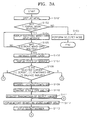
- the OSD processor 218 displays a main screen menu according to a control signal of the controller 206, as in step S101 of Figure 3A.
- a subscriber selects a terminal mode for electronic money terminal function from the main screen menu using the keypad of the key input unit 200, as in step S102 of Figure 3A.
- the terminal mode can be directly selected by a key (terminal mode selection key) installed on the key input unit 200.
- step S102 the function of the other selected mode is performed as in step S103 of Figure 3A.
- the controller 206 controls the OSD processor 218 to display a message requesting the removal of the satellite broadcasting smart card and the input of the electronic money smart card of a user, in step S104 of Figure 3A.
- the controller 206 checks if the electronic money smart card 212 was inserted, in step S105 of Figure 3A. If the electronic money smart card 212 was not inserted, the procedure returns to step S104. On the other hand, if the electronic money smart card 212 was inserted, the electronic money smart card 212 is initialized in step S106 of Figure 3A.
- the controller 206 displays a sub menu representing the types of services for an electronic money terminal mode, by controlling the OSD processor 218, in step S107 of Figure 3A.
- the displayed sub menu on the service types can include (1) a deposit service mode for depositing a desired amount of money from a bank account to an electronic money card, (2) a remittance service mode for remitting money from an electronic money card to a bank account, and (3) a balance inquiry service mode for inquiring the balance of a bank account.
- a service selected by a user is the deposit service mode (1) for depositing money from a bank account to an electronic money card, in step S108 of Figure 3A.
- the receiver tries to make contact by making a call with a bank on-line contact number prestored in the memory 222, using the modem 224, in step S109 of Figure 3A.
- the bank on-line contact number stored in the memory 222, i.e., a telephone number, can be set by the user.
- the controller 206 transmits a service type (here, the deposit service (1)) desired by the user and a PIN stored in the electronic money smart card 212, to the host computer via the modem 224, in step S110 of Figure 3A. Then, the host computer transmits a command requesting the transmission of a user's secret number to the controller 206 via the modem 224, in step S111 of Figure 3A.
- the controller 206 displays a message requesting the input of the secret number on the display screen, by controlling the OSD processor 218, in step S112 of Figure 3A.
- the controller 206 When the user inputs their secret number through the keypad of the key input unit 200 in response to the secret number input request message, the controller 206 recognizes the key data and transmits the secret number to the host computer via the modem 224, in step S113 of Figure 3A.
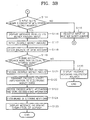
- the host computer compares the secret number input in step S113 with the user's secret number stored in data base in step S114 of Figure 3B. When they are consistent with each other, the desired deposit service mode is performed, and otherwise, a message requesting the input of another secret number is transmitted to the controller 206 via the modem 224, and the procedure then returns to the step S112, in step S115 of Figure 3B.
- the host computer transmits a control signal indicating the above fact to the controller 206 via the modem 224, and the controller 206 displays on a screen a message requesting the input of the desired amount of money by controlling the OSD processor 218, in step S116 of Figure 3B.
- the user inputs the desired money amount through the keypad of the key input unit 200 in step S117 of Figure 3B
- the input money information is transmitted to the host computer via the controller 206 and the modem 224, and the host computer checks the balance of the user's bank account, in step S118 of Figure 3B.
- step S119 of Figure 3B After the checked balance of the bank account is compared with the amount of money input, in step S119 of Figure 3B, if the balance of the bank account is smaller than the requested money amount, a control signal indicating the above fact is transmitted to the controller 206 via the modem 224. At this time, the controller 206 displays a message indicating the insufficient balance on a screen by controlling the OSD processor 218, in step S120 of Figure 3B.
- step S119 information corresponding to the requested amount of money is encoded in step S121 of Figure 3B, and the encoded money information is transmitted to the electronic money smart card 212 in step S122 of Figure 3B.
- the MPU inside the electronic money smart card 212 is operated to decode the encoded money information and store the result in the memory inside the electronic money card 212, in step S123 of Figure 3B.
- the controller 206 transmits a control signal for checking the balance of the electronic money card, to the electronic money smart card 212 in step S124 of Figure 3B.
- the controller 206 informs the user of the balance information output from the electronic money smart card 212 by controlling the OSD processor 118, and completes the deposit service, in step S125 of Figure 3B.
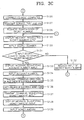
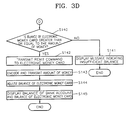
- steps S126 through S145 shown in FIGS. 3C and 3D are performed as follows.
- the receiver tries to connect by making a call to an on-line contact number of the bank, prestored in the memory 222, using the modem 224, in step S126 of Figure 3C.
- the controller 206 transmits a service type (here, the remittance service 2) desired by the user and the PIN, stored in the electronic money smart card 212, to the host computer via the modem 224, in step S127 of Figure 3C.
- the host computer transmits a command requesting the transmission of the user's secret number, to the controller 206 via the modem 224 in step S128 of Figure 3C.
- the controller 206 displays a message requesting the input of the secret number on a screen, by controlling the OSD processor 218, in step S129 of Figure 3C.
- the controller 206 recognizes the data from the keypad and transmits the same to the host computer via the modem 224, in step S130 of Figure 3C.
- the host computer compares the secret number input in step S130 with the user's secret number stored in a data base, in step S131 of Figure 3C.
- step S129 If they are consistent with each other, the desired remittance service is performed, and otherwise, a command requesting to again input another secret number is transmitted to the controller 206 via the modem 224, in step S132 of Figure 3C, and then the procedure returns to the step S129.
- the host computer transmits a control signal to the controller 206 via the modem 224.
- the controller 206 displays a message requesting the input of an account number of the user on a screen by controlling the OSD processor 218 according to the control signal, in step S133 of Figure 3C.
- the user inputs an account number through the keypad of the key input unit 200 in response to the account number input request message, in step S134 of Figure 3C.
- the host computer After the input account number is transmitted to the host computer via the modem 224, the host computer transmits a command, ordering the balance of the electronic money card to be checked, to the electronic money smart card 212 via the modem 224 and the controller 206, in step S135 of Figure 3C.
- the electronic money smart card 212 checks the balance and transmits to the host computer encoded information on the balance checked according to the above command, in step S136 of Figure 3C.
- the controller 206 displays a message requesting the input of the amount of money by controlling the OSD processor 218, in step S138 of Figure 3C.
- the amount of money is input through the key input unit 200 in response to the message, and information on the input amount of money is transmitted to the host computer via the controller 206 and the modem 224, in step S139 of Figure 3C.
- the host computer compares the amount of money input in step S139 with the balance of the electronic money card checked in step S136 in step S140 of Figure 3D.
- a control signal indicating the insufficient balance is transmitted to the controller 206 via the modem 224, and, at this time, the controller 206 displays a message indicating the insufficient balance on a screen, by controlling the OSD processor 218, in step S141 of Figure 3D.
- a remittance command is generated and transmitted to the electronic money smart card 212 via the modem 224 and the controller 206, in step S142 of Figure 3D.
- the electronic money smart card 212 transmits encoded money data corresponding to the input amount of money to the host computer via the controller 206 and the modem 224, in step S143 of Figure 3D.
- the electronic money smart card 212 remits the input amount of money to the bank account and adjusts the balance of the electronic money card, in step S144 of Figure 3D.
- the controller 206 After the host computer informs the controller 206 via the modem 224 that the desired money was remitted from the electronic money card to the user's bank account, the controller 206 displays the balance of the bank account and the new balance of the electronic money card to the user by controlling the OSD processor 218, and completes the remittance service, in step S145 of Figure 3D.
- steps S146 through S154 shown in Figure 3E are performed as follows.
- the receiver tries to connect by making a call to the on-line connection number of the bank prestored in the memory 222 using the modem 224, in step S146 of Figure 3E.
- the controller 206 transmits a service type (here, the balance inquiry service 3) desired by a user and the PIN stored in the electronic money smart card 212, via the modem 224 to the host computer, in step S147 of Figure 3E.
- the host computer transmits a command requesting the transmission of the secret number of the user to the controller 206 via the modem 224 in step S148 of Figure 3E.
- the controller 206 displays on a screen a message requesting the input of the secret number, by controlling the OSD processor 218, in step S149 of Figure 3E.
- the controller 206 recognizes the key input data and transmits the user's secret number to the host computer via the modem 224, in step S150 of 3E.
- the host computer compares the secret number input in step S150 with the user's secret number stored in a data base, in step S151 of Figure 3E.
- step S152 of Figure 3E a command requesting the input of another secret number is transmitted to the controller 206 via the modem 224, in step S152 of Figure 3E, and the procedure then returns to the step S149.
- the host computer transmits information on the balance of the user's bank account to the controller 206 via the modem 224, in step S153 of Figure 3E.
- the controller 206 displays the transmitted balance information by controlling the OSD processor 218, and then finishes the balance inquiry service, in step S154 of Figure 3E.
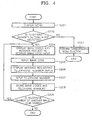
- Figure 4 is a flowchart illustrating a process for storing a telephone number of the bank which issues the electronic money card and the user's bank account, to automatically connect the receiver to the host computer of the bank in step S109 of Figure 3A, step S126 of Figure 3C and step S146 of Figure 3E, upon performance of the electronic money terminal function according to the present invention.
- the method of Figure 4 can be performed on selecting a telephone number setting mode from a main screen menu, but also as part of step S103 of Figure 3A. Also, this telephone number setting program can be stored in the memory 222.
- the OSD processor 218 displays a menu according to a control signal of the controller 206, in step S201.
- a subscriber selects the telephone number setting mode from the displayed menu through the key input unit 200 in step S202. If the telephone number setting mode is not selected in step S202, a function depending on a selected mode is performed, in step S203.
- step S202 When the mode selected in step S202 is the telephone number setting mode, a unique bank code supplied to each bank is read from the memory 222, which stores the respective unique bank codes, and displayed on a screen simultaneously with a message requesting the input of a desired bank code, in step S204.
- a desired bank code among the displayed bank codes is input through the keypad of the key input unit 200, in step S205.
- a message requesting the input of a telephone number of the selected bank is displayed on the screen, in step S206.
- the user inputs the telephone number in response to the telephone number input request message through the keypad of the key input unit 200, in step S207.
- the input bank code and telephone number are stored in the memory 222 in step S208. It is determined in step S209 whether the telephone number of another bank will be stored. If there is a telephone number of another bank to be stored, the procedure returns to the step S204, and otherwise, the process is complete.
- the present invention is applicable to not only the satellite broadcasting receiver but also all kinds of apparatuses having a modem and a smart card input portion.
- a receiver according to the present invention can perform various functions by being provided with an electronic money terminal function. Also, people do not need to directly go to the bank to deposit or withdraw money to or from an electronic money card.
Landscapes
- Business, Economics & Management (AREA)
- Engineering & Computer Science (AREA)
- Accounting & Taxation (AREA)
- Physics & Mathematics (AREA)
- General Physics & Mathematics (AREA)
- Strategic Management (AREA)
- General Business, Economics & Management (AREA)
- Theoretical Computer Science (AREA)
- Finance (AREA)
- Computer Networks & Wireless Communication (AREA)
- Microelectronics & Electronic Packaging (AREA)
- Financial Or Insurance-Related Operations Such As Payment And Settlement (AREA)
Claims (19)
- Verfahren zum Durchführen einer elektronischen Geldautomatenfunktion, dadurch gekennzeichnet, dass:das Verfahren für einen audiovisuellen Empfänger bestimmt ist, der wenigstens eine Smartcard-Schnittstelle und ein Modem enthält; unddas Verfahren die folgenden Schritte umfasst:(a) Prüfen, ob eine elektronische Geld-Smartcard in die Smartcard-Schnittstelle in einem elektronischen Geldautomaten-Modus eingeführt ist, und Initialisieren der elektronischen Geld-Smartcard;(b) Auswählen eines Unter-Modus für den elektronischen Geldautomaten-Modus, wobei der Unter-Modus einen Lademodus zum Laden von Geld von einem Bankkonto des Benutzers auf die elektronische Geld-Smartcard, einen Überweisungs-Modus zum Überweisen von Geld von der elektronischen Geld-Smartcard auf das Bankkonto und einen Kontostand-Abfrage-Modus zum Abfragen des Kontostandes des Bankkontos einschließt;(c) Verbinden des audiovisuellen Empfängers mit einem Host-Computer einer Bank, die die elektronische Geld-Smartcard ausgegeben hat, unter Verwendung des Modems;(d) Senden des ausgewählten Unter-Modus, einer persönlichen Identifikationsnummer (PIN), die in der elektronischen Geld-Smartcard gespeichert ist, und einer Geheimnummer, die von einer externen Quelle eingegeben wird, zu dem Host-Computer; und(e) Durchführen des ausgewählten Unter-Modus, wenn die eingegebene Geheimnummer mit einer in dem Host-Computer gespeicherten Geheimnummer identisch ist.
- Elektronisches Geldautomaten-Verfahren nach Anspruch 1, wobei der Schritt (a) die folgenden Schritte umfasst:(a1) Anzeigen eines Haupt-Bildschirmmenüs;(a2) Auswählen eines elektronischen Geldautomaten-Modus aus dem angezeigten Haupt-Bildschirmmenü; und(a3) Initialisieren einer elektronischen Geld-Smartcard, nachdem der elektronische Geldautomaten-Modus ausgewählt ist.
- Elektronisches Geldautomaten-Verfahren nach Anspruch 2, wobei der Schritt (a) des Weiteren die folgenden Schritte umfasst:(a4) Auswählen eines Telefonnummer-Einstellmodus aus dem Haupt-Bildschirmmenü, das in Schritt (a1) angezeigt wird;(a5) Eingeben der Bankleitzahl und der Telefonnummer der Bank, die die elektronische Geld-Smartcard ausgegeben hat; und(a6) Speichern von Daten, die die eingegebene Bankleitzahl und Telefonnummer darstellen.
- Elektronisches Geldautomaten-Verfahren nach Anspruch 3, wobei in dem Schritt (c) der audiovisuelle Empfänger mit dem Host-Computer verbunden wird, indem die Telefonnummer-Daten, die in dem Schritt (a6) gespeichert werden, über das Modem gesendet werden.
- Elektronisches Geldautomaten-Verfahren nach Anspruch 1, wobei das Verfahren des Weiteren die folgenden Schritte umfasst:Einstellen eines elektronischen Geldautomaten-Modus;Aufnehmen der elektronischen Geld-Smartcard und Initialisieren der Smartcard; undAnzeigen der Unter-Modi des ausgewählten elektronischen Geldautomaten-Modus.
- Elektronisches Geldautomaten-Verfahren nach Anspruch 5, wobei das Verfahren die folgenden Schritte einschließt:Auswählen des Lademodus zum Laden von Geld von einem Bankkonto des Benutzers auf die elektronische Geld-Smartcard in den angezeigten Unter-Modi;Verbinden des audiovisuellen Receivers mit dem Host-Computer der Bank, die die elektronische Geld-Smartcard ausgegeben hat, unter Verwendung des Modems;Senden eines Lade-Modus-Signals, das den ausgewählten Lade-Modus darstellt, und der persönlichen Identifikationsnummer (PIN), die in der elektronischen Geld-Smartcard gespeichert ist, zu dem Host-Computer; undEingeben der Geheimnummer in Reaktion auf eine Anforderung von dem Host-Computer zum Senden der Geheimnummer;Eingeben einer Geldsumme, wenn die eingegebene Geheimnummer identisch mit einer in dem Host-Computer gespeicherten Geheimnummer ist; undKodieren der eingegebenen Geldsumme und Senden des kodierten Geldes zu der elektronischen Geld-Smartcard, wenn der Kontostand des Bankkontos über der eingegebenen Geldsumme liegt oder ihr entspricht.
- Elektronisches Geldautomaten-Verfahren nach Anspruch 6, wobei das Verfahren des Weiteren den folgenden Schritt umfasst:Anzeigen von Informationen über den Kontostand der elektronischen Geld-Smartcard, auf die die eingegebene Geldsumme geladen wurde, nachdem die kodierten Geldinformationen zu der elektronischen Geld-Smartcard gesendet worden sind.
- Elektronisches Geldautomaten-Verfahren nach Anspruch 6 oder 7, wobei der Schritt des Eingebens der Geldsumme des Weiteren den folgenden Schritt umfasst:Anzeigen einer Nachricht, die die Eingabe einer weiteren Geheimnummer anfordert, wenn die eingegebene Geheimnummer nicht mit der in dem Host-Computer gespeicherten Geheimnummer übereinstimmt.
- Elektronisches Geldautomaten-Verfahren nach Anspruch 6, 7 oder 8, wobei der Schritt des Kodierens der eingegebenen Geldsumme des Weiteren den folgenden Schritt umfasst:Anzeigen einer Nachricht, die den unzureichenden Kontostand des Bankkontos anzeigt, wenn der Kontostand des Bankkontos unter der eingegebenen Geldsumme liegt.
- Elektronisches Geldautomaten-Verfahren nach Anspruch 5, wobei das Verfahren des Weiteren die folgenden Schritte umfasst:Auswählen des Überweisungs-Modus zum Überweisen einer Geldsumme von der elektronischen Geld-Smartcard auf das Bankkonto aus dem angezeigten Unter-Modi;Verbinden des audiovisuellen Empfängers mit dem Host-Computer der Bank, die die elektronische Geld-Smartcard ausgegeben hat, unter Verwendung des Modems;Senden eines Überweisungs-Modus-Signals, das den ausgewählten Überweisungs-Modus darstellt, und der auf der elektronischen Geld-Smartcard gespeicherten PIN zu dem Host-Computer;Eingeben der Geheimnummer in Reaktion auf eine Anforderung von dem Host-Computer zum Senden der Geheimnummer;Vergleichen der eingegebenen Geheimnummer mit einer Geheimnummer, die in dem Host-Computer gespeichert ist, und, wenn sie identisch miteinander sind, Eingeben einer Kontonummer in Reaktion auf eine Anforderung von dem Host-Computer zur Eingabe der Kontonummer;Kodieren des Kontostandes der elektronischen Geld-Smartcard entsprechend dem Befehl des Host-Computers, der eine Prüfung des Kontostandes der elektronischen Geld-Smartcard anweist, und Senden von Informationen über den kodierten Kontostand zu dem Host-Computer;Eingeben einer Geldsumme entsprechend einer Anforderung von dem Host-Computer zur Eingabe einer Geldsumme; undSenden von Informationen über die kodierte Geldsumme von der elektronischen Geld-Smartcard zu dem Host-Computer entsprechend einem Überweisungs-Befehl von dem Host-Computer, wenn der Kontostand des Bankkontos über der eingegebenen Geldsumme liegt oder ihr entspricht.
- Elektronisches Geldautomaten-Verfahren nach Anspruch 10, wobei das Verfahren des Weiteren die folgenden Schritte umfasst:Angleichen des Kontostandes der elektronischen Geld-Smartcard nach dem Schritt des Sendens von Informationen über die kodierte Geldsumme von der elektronischen Geld-Smartcard zu dem Host-Computer; undAnzeigen des angeglichenen Kontostandes der elektronischen Geld-Smartcard und des Kontostandes des Bankkontos, auf das die eingegebene Geldsumme eingezahlt wurde.
- Elektronisches Geldautomaten-Verfahren nach Anspruch 10 oder 11, wobei der Schritt des Vergleichens der eingegebenen Geheimnummer des Weiteren den folgenden Schritt umfasst:Anzeigen einer Nachricht, die die Eingabe einer weiteren Geheimnummer anfordert, wenn die eingegebene Geheimnummer nicht mit der in dem Host-Computer gespeicherten Geheimnummer übereinstimmt.
- Elektronisches Geldautomaten-Verfahren nach Anspruch 10, 11 oder 12, wobei der Schritt des Sendens von Informationen über die kodierte Geldsumme von der elektronischen Geld-Smartcard zu dem Host-Computer des Weiteren den folgenden Schritt umfasst:Anzeigen einer Nachricht, die den unzureichenden Kontostand des Bankkontos anzeigt, wenn der Kontostand des Bankkontos unter der eingegebenen Geldsumme liegt.
- Elektronisches Geldautomaten-Verfahren nach Anspruch 5, wobei das Verfahren des Weiteren die folgenden Schritte umfasst:Auswählen des Kontostand-Abfrage-Modus zum Abfragen des Kontostandes eines Bankkontos aus den angezeigten Unter-Modi;Verbinden des audiovisuellen Empfängers mit dem Host-Computer der Bank, die die elektronische Geld-Smartcard ausgegeben hat, unter Verwendung des Modems;Senden eines Kontostand-Abfrage-Modus-Signals, das den ausgewählten Kontostand-Abfrage-Modus darstellt, und der in der elektronischen Geld-Smartcard gespeicherten PIN zu dem Host-Computer;Eingeben der Geheimnummer in Reaktion auf eine Anforderung von dem Host-Computer zum Senden der Geheimnummer; undAnzeigen des Kontostandes des Bankkontos, wenn die eingegebene Geheimnummer mit einer in dem Host-Computer gespeicherten Geheimnummer übereinstimmt.
- Elektronisches Geldautomaten-Verfahren nach einem der vorangehenden Ansprüche, wobei das Verfahren die folgenden Schritte umfasst:Anzeigen eines Haupt-Bildschirmmenüs; undAuswählen des elektronischen Geldautomaten-Modus aus dem angezeigten Haupt-Bildschirmmenü.
- Elektronisches Geldautomaten-Verfahren nach Anspruch 15, wobei das Verfahren des Weiteren die folgenden Schritte umfasst:Auswählen eines Telefonnummer-Einstellmodus aus dem angezeigten Haupt-Bildschirmmenü;Eingeben der Bankleitzahl und Telefonnummer der Bank, die die elektronische Geld-Smartcard ausgegeben hat; undSpeichern von Daten, die die eingegebene Bankleitzahl und die Telefonnummer darstellen.
- Elektronisches Geldautomaten-Verfahren nach Anspruch 16, wobei die gespeicherten Telefonnummer-Daten von dem Modem verwendet werden, um den audiovisuellen Empfänger mit dem Host-Computer zu verbinden.
- Empfänger, der eine elektronische Geldautomaten-Funktion durchführt, dadurch gekennzeichnet, dass:der Empfänger ein audiovisueller Empfänger ist, der gleichzeitig kostenfreie und kostenpflichtige Kanalsignale empfangen kann, wobei der audiovisuelle Empfänger umfasst:eine Smartcard-Schnittstelle (214), die das Eingeben einer elektronischen Geld-Smartcard (212) anzeigt und eine persönliche Identifikationsnummer (PIN) von der elektronischen Geld-Smartcard (212) sendet;ein Modem (224), das den audiovisuellen Empfänger mit einem Host-Computer einer Bank verbindet;einen Speicher (222), der Daten, die ein Bildschirmmenü bezüglich eines elektronischen Geldautomaten-Modus und seine Unter-Modi darstellen, und Daten speichert, die eine Telefonnummer der Bank darstellen, die die elektronische Geld-Smartcard (212) ausgegeben hat, wobei die Unter-Modi wenigstens einen Lade-Modus zum Laden von Geld von einem Bankkonto des Benutzers auf die elektronische Geld-Smartcard (212), einen Überweisungs-Modus zum Überweisen von Geld von der elektronischen Geld-Smartcard (212) auf das Bankkonto und einen Kontostand-Abfrage-Modus zum Abfragen des Kontostandes des Bankkontos einschließen;eine Steuerung (206), die den von einem Benutzer eingestellten elektronischen Geldautomaten-Modus und seine Unter-Modi erkennt und die Telefonnummer-Daten zu dem Modem (224) sendet, um das Modem (224) mit dem Host-Computer zu verbinden, die über die Smartcard-Schnittstelle gesendete PIN und die erkannten Unter-Modus-Daten zu dem Host-Computer sendet und ein Steuersignal entsprechend einem Befehl zum Durchführen des Unter-Modus anlegt, das von dem Host-Computer über das Modem (224) gesendet wird; undeinen OSD-Prozessor (218), der das Bildschirmmenü als On-Screen-Anzeige (OSD)-Informationen anzeigt und entsprechend dem Steuersignal eine Nachricht erzeugt, die erforderlich ist, um den Unter-Modus durchzuführen.
- Empfänger nach Anspruch 18, wobei von einem Benutzer eingestellte Telefonnummer-Daten in dem Speicher (222) gespeichert werden.
Applications Claiming Priority (2)
| Application Number | Priority Date | Filing Date | Title |
|---|---|---|---|
| KR1019970008749A KR100213098B1 (ko) | 1997-03-14 | 1997-03-14 | 전자 화폐 단말 기능을 내장한 방송 수신기와 그 수행방법 |
| KR9708749 | 1997-03-14 |
Publications (3)
| Publication Number | Publication Date |
|---|---|
| EP0865008A2 EP0865008A2 (de) | 1998-09-16 |
| EP0865008A3 EP0865008A3 (de) | 2002-05-15 |
| EP0865008B1 true EP0865008B1 (de) | 2005-10-26 |
Family
ID=19499791
Family Applications (1)
| Application Number | Title | Priority Date | Filing Date |
|---|---|---|---|
| EP98301741A Expired - Lifetime EP0865008B1 (de) | 1997-03-14 | 1998-03-10 | Empfänger mit der Funktion eines Elektronischen Geldautomaten und Verfahren zum ausführen dieser Funktion |
Country Status (6)
| Country | Link |
|---|---|
| US (1) | US6279824B1 (de) |
| EP (1) | EP0865008B1 (de) |
| JP (1) | JPH10275190A (de) |
| KR (1) | KR100213098B1 (de) |
| CN (1) | CN1099653C (de) |
| DE (1) | DE69831989T2 (de) |
Families Citing this family (27)
| Publication number | Priority date | Publication date | Assignee | Title |
|---|---|---|---|---|
| EP0914001A1 (de) | 1997-10-28 | 1999-05-06 | CANAL+ Société Anonyme | Fernladen von Anwendungen in einen Decoder |
| JP3105867B2 (ja) | 1998-07-03 | 2000-11-06 | 日本電気株式会社 | 合成開口レーダシステム及びそれに用いるプラットフォーム位置計測方法並びにその制御プログラムを記録した記録媒体 |
| JP4554079B2 (ja) | 1998-07-15 | 2010-09-29 | セイコーエプソン株式会社 | 画像表示装置および画像表示装置の調整方法 |
| US7090123B2 (en) | 1998-12-30 | 2006-08-15 | Walker Digital, Llc | Method and apparatus for promoting the selection and use of a transaction card |
| US6325284B1 (en) * | 1998-12-30 | 2001-12-04 | Walker Digital, Llc | Device and method for promoting the selection and use of a credit card |
| JP3831546B2 (ja) * | 1999-03-18 | 2006-10-11 | 株式会社ソニー・コンピュータエンタテインメント | 電子決済システムおよび取引用端末 |
| KR20000073813A (ko) * | 1999-05-14 | 2000-12-05 | 이동규 | 전자카드에 금액정보를 충전하는 방법 및 그를 수행하기 위한 |
| AU4350699A (en) * | 1999-08-11 | 2001-02-15 | Khai Hee Kwan | Method, apparatus and program to make payment in any currencies through a communication network system |
| KR100605877B1 (ko) * | 1999-08-12 | 2006-08-01 | 삼성전자주식회사 | 카드폰 장치 및 그에 따른 사용 방법 |
| US7386516B2 (en) * | 1999-09-10 | 2008-06-10 | Metavante Corporation | System and method for providing secure services over public and private networks using a removable portable computer-readable storage |
| GB0005392D0 (en) * | 2000-03-06 | 2000-04-26 | Innovation Venture Ltd | Transaction processing system and method of operation thereof |
| KR100325023B1 (ko) * | 2000-05-18 | 2002-02-25 | 이 용 국 | 다중 채널 수신 장치 및 그 방법 |
| TW571245B (en) * | 2000-09-15 | 2004-01-11 | Nagracard Sa | Multi-ports card |
| US20020133413A1 (en) * | 2001-03-07 | 2002-09-19 | Chang Matthew S. | System and method for purchasing an item displayed on a display device |
| US20040139028A1 (en) * | 2001-03-23 | 2004-07-15 | Fishman Jayme Matthew | System, process and article for conducting authenticated transactions |
| US20020138769A1 (en) * | 2001-03-23 | 2002-09-26 | Fishman Jayme Matthew | System and process for conducting authenticated transactions online |
| US7778925B2 (en) * | 2001-09-18 | 2010-08-17 | Sony Corporation | Audio and video digital content delivery |
| US8626642B2 (en) | 2003-08-22 | 2014-01-07 | Compucredit Intellectual Property Holdings Corp. Iii | System and method for dynamically managing a financial account |
| US20040225604A1 (en) * | 2003-04-29 | 2004-11-11 | Foss Sheldon H. | System for providing a checkless checking account |
| US7204412B2 (en) | 2003-10-14 | 2007-04-17 | Compucredit Intellectual Property Holdings Corp. Iii | Family stored value card program |
| US20050197945A1 (en) * | 2004-02-12 | 2005-09-08 | Bsi2000, Inc. | Optical banking card |
| GB0412796D0 (en) * | 2004-06-09 | 2004-07-14 | Price Philip A | Supawall system |
| KR100724423B1 (ko) * | 2005-10-05 | 2007-06-04 | 엘지전자 주식회사 | 하나의 심 카드 소켓을 구비한 이동통신 단말기 및 그의제어방법 |
| CN101322394A (zh) * | 2005-12-20 | 2008-12-10 | 深圳Tcl新技术有限公司 | 用于视频数据的解密系统和方法 |
| US20080294561A1 (en) * | 2007-05-22 | 2008-11-27 | Microsoft Corporation | Media content deciphered when initiated for playback |
| WO2009049412A1 (en) * | 2007-10-19 | 2009-04-23 | Memory Experts International Inc. | Method of providing assured transactions using secure transaction appliance and watermark verification |
| JP5260974B2 (ja) * | 2008-01-24 | 2013-08-14 | 順子 杉中 | モデム装置及びプログラム |
Family Cites Families (24)
| Publication number | Priority date | Publication date | Assignee | Title |
|---|---|---|---|---|
| JPH021049A (ja) | 1988-03-02 | 1990-01-05 | Hitachi Ltd | 取引システム、銀行自動取引装置、決算端末装置、引出取引方法、預入取引方法及び振込取引方法 |
| JPH01259483A (ja) * | 1988-04-08 | 1989-10-17 | Minolta Camera Co Ltd | Icカード |
| US5025373A (en) * | 1988-06-30 | 1991-06-18 | Jml Communications, Inc. | Portable personal-banking system |
| ZA907106B (en) * | 1989-10-06 | 1991-09-25 | Net 1 Products Pty Ltd | Funds transfer system |
| US5157717A (en) * | 1989-11-03 | 1992-10-20 | National Transaction Network, Inc. | Portable automated teller machine |
| US5282249A (en) * | 1989-11-14 | 1994-01-25 | Michael Cohen | System for controlling access to broadcast transmissions |
| US5220501A (en) * | 1989-12-08 | 1993-06-15 | Online Resources, Ltd. | Method and system for remote delivery of retail banking services |
| US5870724A (en) * | 1989-12-08 | 1999-02-09 | Online Resources & Communications Corporation | Targeting advertising in a home retail banking delivery service |
| US5473143A (en) * | 1991-09-23 | 1995-12-05 | Atm Communications International, Inc. | ATM/POS based electronic mail system |
| JPH0591509A (ja) * | 1991-09-30 | 1993-04-09 | Toshiba Corp | 有料放送の視聴料金徴収システム |
| US5453601A (en) | 1991-11-15 | 1995-09-26 | Citibank, N.A. | Electronic-monetary system |
| US5754655A (en) * | 1992-05-26 | 1998-05-19 | Hughes; Thomas S. | System for remote purchase payment and remote bill payment transactions |
| AU675550B2 (en) | 1993-06-02 | 1997-02-06 | Hewlett-Packard Company | System and method for revaluation of stored tokens in IC cards |
| US5649118A (en) * | 1993-08-27 | 1997-07-15 | Lucent Technologies Inc. | Smart card with multiple charge accounts and product item tables designating the account to debit |
| US5557516A (en) * | 1994-02-04 | 1996-09-17 | Mastercard International | System and method for conducting cashless transactions |
| EP0690399A3 (de) * | 1994-06-30 | 1997-05-02 | Tandem Computers Inc | System für fernbediente finanzielle Transaktionen |
| CA2153727A1 (en) * | 1994-08-19 | 1996-02-20 | Dougals R. Merkler | Point-of-sale payment using interactive television |
| KR0149946B1 (ko) * | 1995-01-20 | 1999-05-15 | 김광호 | 전자통장시스템 및 그 거래방법 |
| JPH0944576A (ja) | 1995-08-02 | 1997-02-14 | Hitachi Ltd | 電子財布貸付システム |
| US5796832A (en) * | 1995-11-13 | 1998-08-18 | Transaction Technology, Inc. | Wireless transaction and information system |
| PT868816E (pt) * | 1995-12-22 | 2002-07-31 | British Sky Broadcasting Ltd | Melhorias em receptores para sinais de televisao |
| US5973756A (en) * | 1996-02-06 | 1999-10-26 | Fca Corporation | IR Transmitter with integral magnetic-stripe ATM type credit card reader & method therefor |
| US5850442A (en) * | 1996-03-26 | 1998-12-15 | Entegrity Solutions Corporation | Secure world wide electronic commerce over an open network |
| US5937396A (en) * | 1996-12-04 | 1999-08-10 | Konya; Arpad | System for ATM/ATM transfers |
-
1997
- 1997-03-14 KR KR1019970008749A patent/KR100213098B1/ko not_active Expired - Fee Related
-
1998
- 1998-03-10 EP EP98301741A patent/EP0865008B1/de not_active Expired - Lifetime
- 1998-03-10 DE DE69831989T patent/DE69831989T2/de not_active Expired - Lifetime
- 1998-03-13 CN CN98105554A patent/CN1099653C/zh not_active Expired - Fee Related
- 1998-03-13 JP JP6375098A patent/JPH10275190A/ja active Pending
- 1998-03-13 US US09/041,660 patent/US6279824B1/en not_active Expired - Lifetime
Also Published As
| Publication number | Publication date |
|---|---|
| CN1099653C (zh) | 2003-01-22 |
| EP0865008A2 (de) | 1998-09-16 |
| US6279824B1 (en) | 2001-08-28 |
| EP0865008A3 (de) | 2002-05-15 |
| DE69831989D1 (de) | 2005-12-01 |
| KR100213098B1 (ko) | 1999-08-02 |
| KR19980073478A (ko) | 1998-11-05 |
| DE69831989T2 (de) | 2006-07-27 |
| JPH10275190A (ja) | 1998-10-13 |
| CN1197967A (zh) | 1998-11-04 |
Similar Documents
| Publication | Publication Date | Title |
|---|---|---|
| EP0865008B1 (de) | Empfänger mit der Funktion eines Elektronischen Geldautomaten und Verfahren zum ausführen dieser Funktion | |
| KR100680663B1 (ko) | 방송 및 수신 시스템, 및 수신기/디코더 및 이에 사용되는 원격 제어기 | |
| US20050089168A1 (en) | Method and system for conditional access | |
| GB2329736A (en) | Television subscriber equipment | |
| KR20060060014A (ko) | 채널-변경 시간을 감소시키기 위한 디스크램블링 데이터의사전-처리 | |
| WO2011084990A1 (en) | System and method for activating display device feature | |
| US7149309B1 (en) | Time-dependent authorization | |
| KR100595603B1 (ko) | 상이한 조건부 접근 시스템과 동작하는 리시버/디코더를구성하는 방법 및 디바이스 | |
| EP1422863B1 (de) | Informationsbereitstellungssystem, Informationsbereitstellungsvorrichtung und -verfahren und Informationsverarbeitungsvorrichtung und -verfahren | |
| US20080016525A1 (en) | Cable TV a la carte | |
| KR20010019213A (ko) | 스마트카드를 이용한 유료방송 시청 요금정산 시스템 및 방법과 프로그램 등급 관리 방법 | |
| GB2334361A (en) | A portable subscriber unit for controlling access to television transmissions via wireless communication | |
| KR100777042B1 (ko) | 패스워드를 통합시키는 장치 및 방법 | |
| JP2007013685A (ja) | 限定受信放送用icカード及びそれを使用する受信装置 | |
| KR0162220B1 (ko) | 스마트카드를 이용한 가입자 식별방법 | |
| US20050033793A1 (en) | Digital broadcast shopping system | |
| AU770198B2 (en) | Broadcast and reception system, and receiver/decoder and remote controller therefor | |
| HK1044659A1 (en) | Broadcast and reception system, and receiver/decoder and remote controller therefor | |
| EP1470712A2 (de) | Fernsteuerprotokoll für eine lokale aktion zur erzeugung einer befehlsnachricht | |
| MXPA99008550A (en) | Broadcast and reception system, and receiver/decoder and remote controller therefor | |
| HK1024807B (en) | Receiver/decoder and method of reception | |
| CZ331999A3 (cs) | Vysílací a přijímací systém, přijímač/dekodér a vzdálená řídící jednotka | |
| MXPA06006309A (en) | Broadcast conditional access system with impulse purchase capability in a two-way network |
Legal Events
| Date | Code | Title | Description |
|---|---|---|---|
| PUAI | Public reference made under article 153(3) epc to a published international application that has entered the european phase |
Free format text: ORIGINAL CODE: 0009012 |
|
| 17P | Request for examination filed |
Effective date: 19980407 |
|
| AK | Designated contracting states |
Kind code of ref document: A2 Designated state(s): AT BE CH DE DK ES FI FR GB GR IE IT LI LU MC NL PT SE |
|
| AX | Request for extension of the european patent |
Free format text: AL;LT;LV;MK;RO;SI |
|
| RIN1 | Information on inventor provided before grant (corrected) |
Inventor name: PARK, JU-HA |
|
| PUAL | Search report despatched |
Free format text: ORIGINAL CODE: 0009013 |
|
| AK | Designated contracting states |
Kind code of ref document: A3 Designated state(s): AT BE CH DE DK ES FI FR GB GR IE IT LI LU MC NL PT SE |
|
| AX | Request for extension of the european patent |
Free format text: AL;LT;LV;MK;RO;SI |
|
| RIC1 | Information provided on ipc code assigned before grant |
Free format text: 7G 07F 19/00 A, 7G 07F 7/10 B, 7G 07F 7/08 B, 7H 04N 7/16 B |
|
| AKX | Designation fees paid |
Designated state(s): DE FR GB |
|
| 17Q | First examination report despatched |
Effective date: 20040408 |
|
| GRAP | Despatch of communication of intention to grant a patent |
Free format text: ORIGINAL CODE: EPIDOSNIGR1 |
|
| GRAS | Grant fee paid |
Free format text: ORIGINAL CODE: EPIDOSNIGR3 |
|
| GRAA | (expected) grant |
Free format text: ORIGINAL CODE: 0009210 |
|
| AK | Designated contracting states |
Kind code of ref document: B1 Designated state(s): DE FR GB |
|
| REG | Reference to a national code |
Ref country code: GB Ref legal event code: FG4D |
|
| REF | Corresponds to: |
Ref document number: 69831989 Country of ref document: DE Date of ref document: 20051201 Kind code of ref document: P |
|
| ET | Fr: translation filed | ||
| PLBE | No opposition filed within time limit |
Free format text: ORIGINAL CODE: 0009261 |
|
| STAA | Information on the status of an ep patent application or granted ep patent |
Free format text: STATUS: NO OPPOSITION FILED WITHIN TIME LIMIT |
|
| 26N | No opposition filed |
Effective date: 20060727 |
|
| REG | Reference to a national code |
Ref country code: FR Ref legal event code: PLFP Year of fee payment: 18 |
|
| PGFP | Annual fee paid to national office [announced via postgrant information from national office to epo] |
Ref country code: DE Payment date: 20150318 Year of fee payment: 18 |
|
| PGFP | Annual fee paid to national office [announced via postgrant information from national office to epo] |
Ref country code: FR Payment date: 20150320 Year of fee payment: 18 Ref country code: GB Payment date: 20150225 Year of fee payment: 18 |
|
| REG | Reference to a national code |
Ref country code: DE Ref legal event code: R119 Ref document number: 69831989 Country of ref document: DE |
|
| GBPC | Gb: european patent ceased through non-payment of renewal fee |
Effective date: 20160310 |
|
| REG | Reference to a national code |
Ref country code: FR Ref legal event code: ST Effective date: 20161130 |
|
| PG25 | Lapsed in a contracting state [announced via postgrant information from national office to epo] |
Ref country code: FR Free format text: LAPSE BECAUSE OF NON-PAYMENT OF DUE FEES Effective date: 20160331 Ref country code: GB Free format text: LAPSE BECAUSE OF NON-PAYMENT OF DUE FEES Effective date: 20160310 Ref country code: DE Free format text: LAPSE BECAUSE OF NON-PAYMENT OF DUE FEES Effective date: 20161001 |