EP0865738A1 - Löslicher Natamycin-Proteinkomplex - Google Patents
Löslicher Natamycin-Proteinkomplex Download PDFInfo
- Publication number
- EP0865738A1 EP0865738A1 EP98200780A EP98200780A EP0865738A1 EP 0865738 A1 EP0865738 A1 EP 0865738A1 EP 98200780 A EP98200780 A EP 98200780A EP 98200780 A EP98200780 A EP 98200780A EP 0865738 A1 EP0865738 A1 EP 0865738A1
- Authority
- EP
- European Patent Office
- Prior art keywords
- natamycin
- complex
- composition
- protein
- milk
- Prior art date
- Legal status (The legal status is an assumption and is not a legal conclusion. Google has not performed a legal analysis and makes no representation as to the accuracy of the status listed.)
- Granted
Links
Images

Classifications
-
- A—HUMAN NECESSITIES
- A23—FOODS OR FOODSTUFFS; TREATMENT THEREOF, NOT COVERED BY OTHER CLASSES
- A23B—PRESERVATION OF FOODS, FOODSTUFFS OR NON-ALCOHOLIC BEVERAGES; CHEMICAL RIPENING OF FRUIT OR VEGETABLES
- A23B2/00—Preservation of foods or foodstuffs, in general
- A23B2/70—Preservation of foods or foodstuffs, in general by treatment with chemicals
- A23B2/725—Preservation of foods or foodstuffs, in general by treatment with chemicals in the form of liquids or solids
- A23B2/729—Organic compounds; Microorganisms; Enzymes
- A23B2/7295—Antibiotics
-
- C—CHEMISTRY; METALLURGY
- C12—BIOCHEMISTRY; BEER; SPIRITS; WINE; VINEGAR; MICROBIOLOGY; ENZYMOLOGY; MUTATION OR GENETIC ENGINEERING
- C12P—FERMENTATION OR ENZYME-USING PROCESSES TO SYNTHESISE A DESIRED CHEMICAL COMPOUND OR COMPOSITION OR TO SEPARATE OPTICAL ISOMERS FROM A RACEMIC MIXTURE
- C12P19/00—Preparation of compounds containing saccharide radicals
- C12P19/44—Preparation of O-glycosides, e.g. glucosides
- C12P19/60—Preparation of O-glycosides, e.g. glucosides having an oxygen of the saccharide radical directly bound to a non-saccharide heterocyclic ring or a condensed ring system containing a non-saccharide heterocyclic ring, e.g. coumermycin, novobiocin
- C12P19/62—Preparation of O-glycosides, e.g. glucosides having an oxygen of the saccharide radical directly bound to a non-saccharide heterocyclic ring or a condensed ring system containing a non-saccharide heterocyclic ring, e.g. coumermycin, novobiocin the hetero ring having eight or more ring members and only oxygen as ring hetero atoms, e.g. erythromycin, spiramycin, nystatin
- C12P19/626—Natamycin; Pimaricin; Tennecetin
Definitions
- the present invention relates to the preparation of compositions which comprise of natamycin and the use of such compositions to treat foods such as cheeses and sausages or agricultural products such as fruits, grains and seeds. Also said products treated with compositions of the invention are disclosed.
- natamycin has been used to prevent fungal growth on cheeses and sausages.
- Cheeses are treated by immersion in a suspension of natamycin in water or covered by an emulsion of a polymer in water, mostly polyvinyl acetate. Sausages are mainly treated by immersion or by spraycoating with a suspension of natamycin in water.
- aqueous suspensions for immersion treatments contain 0.1% to 0.2% w/v of natamycin, while polymer emulsions for coating purposes contain 0.01% to 0.05% w/v of natamycin.
- natamycin Due to the low solubility of natamycin a food product treated with this antimycotic will be protected against fungal growth for a longer period. Only the natamycin which is in solution will be available to exert anti-fungal activity.
- Natamycin has a MIC (Minimal Inhibitory Concentration) of less than 10 ppm for most foodborn fungi, while its solubility in water is from 30 to 50 ppm (Brik, H.; "Natamycin” Analytical Profiles of Drug Substances 10 , 513-561, (1981)). After many years of continuous use of this antimycotic natamycin-resistant fungi have never been found (De Boer, E.; Stolk-Horsthuis, M.; "Sensitivity to natamycin (pimaricin) of fungi isolated in cheese warehouses" J. of Food Prot. 40 , 533-536, (1977)) .
- natamycin will protect food products such as cheese fully against fungal spoilage for a short period of time.
- the amount of fungi present in the surroundings is high, for example in a cheese factory, such that the dissolved fraction of natamycin is insufficient to prevent fungal growth on cheese, or the production or storage conditions in factories are particularly favourable for fungal growth.
- An example of an important factor which enhances fungal growth is an insufficient control of the relative humidity.
- the present invention relates to a process seeking to improve the activity of natamycin towards fungi and to compositions prepared according to said process.
- compositions prepared according to said process can be useful for combatting moulds and yeasts which are normally relatively less sensitive to the action of natamycin.
- Modification of the polymorphic form of polyene antifungal compounds, such as natamycin, may also lead to an improved activity of these compounds towards less susceptible species European Patent Application No. 670676, (1995)).
- modified forms are solvates of natamycin, such as the methanol solvate and crystal modifications of natamycin.
- the activity of polyene fungicides can also be enhanced by converting the compound into an earth alkaline metal salt, such as the calcium- and barium salts.
- Another method to enhance the activity of polyene fungicides is to first dissolve the antifungal compound in a solvent and then incorporate the dissolved fungicide in an aqueous composition (European Application No. 670676).
- suitable solvent systems are lower alcohols such as methanol, ethanol and propanol; glycerol and glycol; methoxy ethanol and ethoxy ethanol; glacial acetic acid and aqueous acid and alkaline solutions; also suitable solubilizers can be used.
- modified polyene antibiotics can also be applied on a carrier by well known methods; e.g. by spray coating techniques using a solution of the antifungal composition on a carrier or by evaporating the solvent from a mixture of a solution of the antifungal and the carrier.
- the solution of the antifungal compound may be incorporated into the final composition by adding the solution to a preparation or vice versa.
- Enhancing the activity could be achieved by improving the availability of the antifungal compound as a result of improved dissolution (EP 670676).
- the solubility in water can be increased using alkaline or acidic conditions.
- the solubility can also be enhanced by using solvents.
- dissolved natamycin is rapidly decomposed under such conditions (Brik, vide supra).
- Further dissolved natamycin is known to be less stable compared with the crystal form. Natamycin for instance may be deactivated by decomposition through the action of light or by hydrolysis.
- the present invention procides a complex, comprising natamycin complexed to one or more proteins or amino acids, when present in water, does not produce crystals visible at 400x magnification.
- this complex does not substantially lose activity within 60 days.
- the ratio of natamycin to the total amount of protein or amino acid is 10,000:1 to 1:10, preferably this ratio is 100:1 to 1:1.
- At least one of the proteins is a milk protein, more preferably a whey protein, casein or caseinate.
- the complex can be produced by the following method:
- the complex can also be produced using the following method:
- the complex of natamycin adhered to a suitable compound can be used for different applications including to prevent fungal infection and growth on natural products e.g. cheeses or sausages.
- the formed and optionally purified complex can also be mixed with aqueous systems, such as water or cheese coating, or with other suitable compounds.
- composition of the present invention is thought to be due to improved availability of the anti-fungal compound as a result of improved dissolution.
- natamycin which is in solution will be available to exert anti-fungal activity.
- one of the factors which influences the fungicidal effect is the dissolution of the fungicide.
- Other important factors are the diffusion of the dissolved fungicide to the side of contamination and the elimination of the dissolved fungicide.
- Natamycin for instance may be inactivated by decomposition through the action of light or by hydrolysis (Daamen, C.B.G. and Berg, G. van den; "Prevention of mould growth on cheese by means of natamycin” Voedingsmiddelentechnologie, 18 (2), 26-29, (1985)).
- Natamycin has a minimal inhibitory concentration (MIC) of less than 10 ppm for most foodborn fungi.
- MIC minimal inhibitory concentration
- solubility of natamycin in water is from 30 to 50 ppm, which is in most cases enough to prevent fungal growth for a short period of time. Elimination of dissolved natamycin is generally compensated sufficiently in these situations by dissolution of undissolved natamycin and by diffusion of dissolved natamycin to the site of infection.
- One method to produce the complex of natamycin adhered to a suitable compound is by dissolving the natamycin by increasing or reducing the pH using methods known in the art.
- the pH is above 10 or below 4.
- suitable aqueous acids are aqueous solutions of HCl, H 2 SO 4 , citric acid and lactic acid.
- suitable alkaline solutions are solutions of hydroxides such as NaOH, KOH and NH 4 OH.
- the dissolved natamycin is mixed with the suitable compound, preferably a protein or amino acid.
- a food grade proteins is used.
- suitable proteins are milk proteins, e.g. whey proteins, caseins and caseinates or other compounds, such as L-glutamine.
- fats e.g. vegetable and animal fats or oils such as milk fat, butter fat, soya bean oil and sunflower oil
- compositions or products which contain (mixtures of) these compounds can be used. Examples of such mixtures are cow milk or soya bean milk.
- the pH is adjusted between 5 and 9, preferably between 6 and 8.
- natamycin will crystallize. It has been surprisingly found that the presence of the suitable compound may prevent the formation of visible crystals when using a microscope having a magnitude of 400 x. It is thought that natamycin and the compound (e.g. milk, proteins) form a complex which is not visible using the microscope at this magnification. Possibly this complex is formed at the surface of the protein. We noted that at high natamycin/protein ratios part of the natamycin did not always form the complex but instead could form crystals.
- Another method to produce a complex of natamycin and the suitable compound is by dissolving the natamycin in a suitable solvent system.
- Suitable solvent systems are lower alcohols such as methanol, ethanol, propanol, ethylene glycol, propylene glycol and glycerol and mixtures thereof. Further, in a suitable alcoholic solvent, one or more hydroxyl groups may be linked by an ester bond to a fatty acid or linked to another alcohol group by an ether bond. Examples of such solvents are methoxy ethanol and ethoxy ethanol.
- solubilisers such as surfactants may be added to the solvent.
- solubilizers are sodium lauryl sulphate, dioctyl sulphosuccinate, calcium chloride or surfactants of the non-ionic type, for instance those which are sold under the trade marks Tween, Span, Brij and Myrj.
- Adhesion or complex formation between the natamycin and the suitable protein can be achieved by adding the protein to the solution or vice versa.
- the protein can already be present in an aqueous environment such as water or milk.
- the complex of natamycin and the one or more proteins can be used directly in the desired application or can be processed further.
- the complex can be isolated and/or purified using well known methods. Examples of drying methods to separate the complex from a liquid are filtration, centrifugation, evaporation of the liquid, spray drying, freeze drying and fluid bed drying.
- the complex can be stored over a long period e.g. at least half a year without losing substantial activity.
- the purified complex of natamycin and one or more proteins may be used for the treatment of natural products such as foodstuffs or other edible substances e.g. cheeses or sausages, agricultural products e.g. flower bulbs, (kernel) grain and vegetables.
- natural products such as foodstuffs or other edible substances e.g. cheeses or sausages, agricultural products e.g. flower bulbs, (kernel) grain and vegetables.
- the unpurified complex of natamycin and one or more proteins in the aqueous system or in the solvent system may be used for the treatment of said natural products.
- compositions comprising a complex of the invention can be used for the treatment of food and agricultural products according to treatment methods known per se, e.g. dipping or spraying.
- the antifungal composition of the invention may be used for treating any natural product prone to mycobacterial infection such as a food or agricultural product.
- Particularly preferred for use in treatments are emulsions prepared from coating emulsions commonly employed in the food industry.
- emulsions prepared from coating emulsions commonly employed in the food industry.
- an aqueous polymer emulsion of the polyvinyl acetate type which can be used by brushing or with a spray device, may be used.
- a composition of the invention may also be in the form of an emulsion (e.g. for coating) of the oil-in-water or water-in-oil type.
- suitable preparations for treating agricultural products such as fruits are films of polymeric materials such as for example polyolefins, e.g. polyethylene and polypropylene.
- the amount of natamycin in a liquid composition for immersion or spraying treatment may be from 0.01% to 2% w/v. Preferably the amount is from 0.01% to 1% w/v.
- the immersion liquid may be of any kind.
- a surfactant may be of advantage, in particular for treating objects with a hydrophobic surface.
- Useful surfactants are for example anionic tensides such as sodium lauryl sulphate or polyethylene alkyl ethers such as Cetomacrogol® 1000 or polyoxyethylene ethers e.g. Tween® 60, 61 and 65.
- the amount of natamycin may be from 0.005% to 2% w/v, preferably from 0.01% to 1% w/v and more preferably from 0.01% to 0.5% w/v.
- This example describes a microbiological method for determining the availability of an anti-fungal component from an anti-fungal composition.
- Filter paper discs S&S Antibiotics Test Discs no. 321260 with a diameter of 0.6 cm were loaded with the preparation to be tested. Each disc was loaded with 250 ⁇ g. of natamycin, i.e. 50 ⁇ l of a sample containing 5000 ppm of natamycin was applied to a disc. The discs were then placed on agar which was seeded with Saccharomyces cerevisiae ATCC 9763 and incubated at 30° C for 24 hours. As a reference, discs were freshly loaded with a range of known amounts of natamycin dissolved in aqueous methanol.
- sample discs were transferred to new petri dishes containing agar seeded with Saccharomyces cerevisiae. New discs freshly loaded with a range of known quantities of dissolved natamycin were prepared for use as a reference. The new dishes with the sample discs and the new references were incubated at 30° C for 24 hours.
- the size of the inhibition zone is a measure of the natamycin released from the sample disc.
- the amount of released natamycin can then be calculated by known methods.
- the released natamycin can be measured on a daily basis.
- This example describes the preparation of the natamycin complexes.
- Example 2 This example describes the release of the different natamycin formulations on daily basis.
- 50 ⁇ l of each sample prepared as described in Example 2 (samples A to J) was applied to a disk as described in Example 1.
- the release of natamycin from the disks was determined for 3 days by the method described in Example 1.
- the results are presented in Table 1. Release of natamycin ( ⁇ g/disk) on daily basis Day Suitable compounds 1 2 3 J (control) 2.5 1.8 1.7 A 8.4 7.6 6.7 B 7.8 5.4 5.3 C 4.2 2.3 2.2 D 6.0 7.4 6.0 E 2.7 2.0 2.1 F 11.3 11.6 5.5 G 9.3 7.7 5.8 H 7.5 6.0 4.0 I 7.8 6.0 4.1
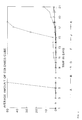
- This example describes the activity of the natamycin complexes against Penicillium discolour, a more tolerant mould which sometimes causes spoilage problems in the cheese industry.
- a spore suspension was prepared by scraping the spores from a sporulated culture of P. discolour and suspending the spores in sterile water with 0.05 % Tween.
- the freshly prepared spore suspension was mixed with mould agar to a final concentration of 10 2 spores / ml agar, and agar plates were prepared. In the middle of the plates a hole with a diameter of 5 mm was made.
- 25 ⁇ l of the formulations A, B, C, D, F, I and J (from Example 2) was injected. The plates were incubated for 6 days at 24° C. After 2, 3 and 6 days the inhibition zones were measured.
- Figure 1 clearly demonstrates that P. discolour was inhibited to a greater extent by the new formulations then by natamycin alone.
- compositions A, B, D, F and J were prepared as described in Example 2. 5 ml of each composition was mixed with 45 ml Plasticoat® (an aqueous emulsion of polyvinylacetate supplied by National Starch and Chemicals B.V.) in such a way that coating emulsions were obtained containing 500 ppm of natamycin. Also a coating emulsion without natamycin was prepared as a control (K). The coating compositions were applied to the surface of Gouda cheese according to the following procedure:
- a freshly brined wheel of Gouda cheese was first cut horizontally into two parts. Each part was then cut into pieces of 5 by 5 by 5 cm. Only pieces with a flat rind surface were used in the experiment. The pieces were dipped into a bath of melted paraffin at 80° C in such a way that the rind surface remained free of paraffin, while the other five surfaces were covered by a thin film of paraffin. The rind surface was then inoculated with about 1.9 x 10 3 CFU/cm 2 of a mixture of spores of three strains of Penicillium discolour (CBS numbers: 611.92, 612.92 and 613.92).
- the inoculation was performed by applying 0.15 ml of a spore suspension containing about 2 x 10 5 CFU/ml to the surface of the piece of cheese.
- the inoculum was evenly spread over the surface by means of a sterile swab, which was saturated with the spore suspension.
- the pieces of cheese were treated with the different compositions.
- 4 pieces of cheese were taken.
- On each piece 0.8 ml of the composition A, B, D, F, J or K was applied and evenly spread over the surface by means of a sterile rectangular piece of plastic of about 2 by 5 cm. After standing for 2 hours at ambient conditions, the pieces of cheese were incubated at 15° C with a relative humidity of 95%.
- This example illustrates the effect of the Sodium caseinate concentration towards the release of the natamycin.
- a 15% Sodium caseinate solution was prepared by dissolving 15 grammes of Sodium caseinate into 100 ml water.
- the natamycin complexes prepared were as follows.
- Example 1 50 ⁇ l of each sample (formulations J and L to S) was applied to a disk as described in Example 1. The release of natamycin from the disks was determined for 3 days by the method described in Example 1.
- the released natamycin of the control sample (J) was found to be 2 microgrammes per day.
- the released natamycin of compositions L, M, N, O, P and Q was found to be 3.5 (Q) to more than 8 (L) times higher on day 1.
- On days 2 and 3 the release of these compositions was 2 to 4 times higher than the control (J).
- the release for compositions R and S was higher on day 1 (5 microgrammes of natamycin).
- composition "N” was prepared as described in example 6. Said composition was mixed with Plasticoat®, an aqueous emulsion of PVA supplied by National Starch & Chemical B.V., as follows:
- composition PVA-N The release rate of composition PVA-N is considerably higher than the release rate of the control. This means that if composition N is added to PVA-coating, also more natamycin is available to inhibit moulds.
- composition N was prepared as described in example 6.
- a powder was produced as follows:
- the amount of natamycin after spray drying (14.5 %) (w/w) was almost the same as the maximal amount of natamycin which can be expected (15.3 %) (w/w) based on the amount of natamycin which was added before spray drying.
- the new composition is not inactivated by the spray drying process.
- the stability of the powder composition was determined by measuring the natamycin content of the powder by HPLC (according to IDF standard 140, International Dairy Federation, 1987) immediately after preparation and after 28 days of storage at 20°C in darkness. There was no significant change in the natamycin concentration after 28 days of storage. Immediately after production and after 28 days of storage the natamycin concentration was 14.5 % (w/w).
- the powder composition "POW-N” was dissolved in water and added to PVA to a final concentration of 250 ppm.
- the stability of natamycin in this new formulation (POW-PVA-N) was determined by measuring the natamycin content immediately after preparation and after 28 days of storage at 15°C in darkness. In both cases the concentration of natamycin was 250 ppm.
Landscapes
- Life Sciences & Earth Sciences (AREA)
- Engineering & Computer Science (AREA)
- Chemical & Material Sciences (AREA)
- Wood Science & Technology (AREA)
- Zoology (AREA)
- Organic Chemistry (AREA)
- Microbiology (AREA)
- General Engineering & Computer Science (AREA)
- Chemical Kinetics & Catalysis (AREA)
- General Chemical & Material Sciences (AREA)
- Polymers & Plastics (AREA)
- Food Science & Technology (AREA)
- Health & Medical Sciences (AREA)
- Biochemistry (AREA)
- Bioinformatics & Cheminformatics (AREA)
- Biotechnology (AREA)
- General Health & Medical Sciences (AREA)
- Genetics & Genomics (AREA)
- Food Preservation Except Freezing, Refrigeration, And Drying (AREA)
- Agricultural Chemicals And Associated Chemicals (AREA)
- Peptides Or Proteins (AREA)
- Medicines That Contain Protein Lipid Enzymes And Other Medicines (AREA)
- Pharmaceuticals Containing Other Organic And Inorganic Compounds (AREA)
Priority Applications (1)
| Application Number | Priority Date | Filing Date | Title |
|---|---|---|---|
| EP98200780A EP0865738B1 (de) | 1997-03-14 | 1998-03-11 | Löslicher Natamycin-Proteinkomplex |
Applications Claiming Priority (3)
| Application Number | Priority Date | Filing Date | Title |
|---|---|---|---|
| EP97200764 | 1997-03-14 | ||
| EP97200764 | 1997-03-14 | ||
| EP98200780A EP0865738B1 (de) | 1997-03-14 | 1998-03-11 | Löslicher Natamycin-Proteinkomplex |
Publications (2)
| Publication Number | Publication Date |
|---|---|
| EP0865738A1 true EP0865738A1 (de) | 1998-09-23 |
| EP0865738B1 EP0865738B1 (de) | 2007-05-30 |
Family
ID=8228103
Family Applications (1)
| Application Number | Title | Priority Date | Filing Date |
|---|---|---|---|
| EP98200780A Expired - Lifetime EP0865738B1 (de) | 1997-03-14 | 1998-03-11 | Löslicher Natamycin-Proteinkomplex |
Country Status (9)
| Country | Link |
|---|---|
| US (2) | US5997926A (de) |
| EP (1) | EP0865738B1 (de) |
| AT (1) | ATE363214T1 (de) |
| AU (1) | AU730551B2 (de) |
| CA (1) | CA2232149A1 (de) |
| DE (1) | DE69837824T2 (de) |
| DK (1) | DK0865738T3 (de) |
| ES (1) | ES2285747T3 (de) |
| PT (1) | PT865738E (de) |
Cited By (2)
| Publication number | Priority date | Publication date | Assignee | Title |
|---|---|---|---|---|
| WO2015034360A1 (en) * | 2013-09-04 | 2015-03-12 | Ceradis B.V. | Processed edible product comprising a polyelectrolyte complex and an antimicrobial compound |
| US10342228B2 (en) | 2012-03-05 | 2019-07-09 | Ceradis B.V. | Polyelectrolyte complexes for biocide enhancement |
Families Citing this family (12)
| Publication number | Priority date | Publication date | Assignee | Title |
|---|---|---|---|---|
| DE69837824T2 (de) * | 1997-03-14 | 2008-01-31 | Dsm Ip Assets B.V. | Löslicher Natamycin-Proteinkomplex |
| CA2470159A1 (en) * | 2001-12-21 | 2003-07-03 | Dsm Ip Assets B.V. | Improved method for the treatment of food, feed or agricultural products with a polyene antifungal compound |
| US20040253660A1 (en) * | 2003-06-12 | 2004-12-16 | Giles Scientific, Inc. | Automated microbiological testing apparatus and method |
| JP4926707B2 (ja) | 2003-08-22 | 2012-05-09 | ダニスコ エイ/エス | 封入化抗菌材料 |
| GB2388581A (en) * | 2003-08-22 | 2003-11-19 | Danisco | Coated aqueous beads |
| EP1793692B1 (de) * | 2004-09-23 | 2012-11-14 | DSM IP Assets B.V. | Antimikrobielle zusammensetzung |
| ES2586203T3 (es) * | 2005-10-04 | 2016-10-13 | Dsm Ip Assets B.V. | Composición anti-fúngica mejorada |
| AU2010215528A1 (en) | 2009-02-17 | 2011-09-08 | Dsm Ip Assets B.V. | Process for foil ripening of cheese |
| WO2010141441A1 (en) * | 2009-06-03 | 2010-12-09 | Pepsico, Inc. | Beverage preservative system containing pimaricin-povidone complex |
| US8425968B2 (en) * | 2009-06-19 | 2013-04-23 | Pepsico., Inc. | Beverage preservative system containing pimaricin-cyclodextrin complex |
| BR112018071453A2 (pt) | 2016-04-18 | 2019-02-05 | Arec Crop Prot B V | composições de natamicina e seus usos |
| CN113040216B (zh) * | 2021-04-02 | 2022-04-15 | 中国农业科学院农产品加工研究所 | 抑菌保鲜纸的制备方法及其产品与应用 |
Citations (2)
| Publication number | Priority date | Publication date | Assignee | Title |
|---|---|---|---|---|
| US4002741A (en) * | 1974-04-24 | 1977-01-11 | Valter Osvaldovich Kulbakh | Meglumine complex fungicidal polyene macrolide antibiotic compositions and treatment method |
| EP0466038A1 (de) * | 1990-07-12 | 1992-01-15 | E.R. SQUIBB & SONS, INC. | Wasser-dispergierbare antifungizide Polyenkomplexen |
Family Cites Families (4)
| Publication number | Priority date | Publication date | Assignee | Title |
|---|---|---|---|---|
| US5196344A (en) * | 1990-02-27 | 1993-03-23 | D & F Control Systems, Inc. | Milk sample preservative |
| EP0608575A1 (de) * | 1993-01-27 | 1994-08-03 | Dsm N.V. | Vom UV-Licht vernetzte Zusammensetzung ohne Lösungsmittel |
| JP3655359B2 (ja) * | 1995-06-29 | 2005-06-02 | 株式会社サンコンタクトレンズ | 含水性ソフトコンタクトレンズの洗浄および消毒用組成物 |
| DE69837824T2 (de) * | 1997-03-14 | 2008-01-31 | Dsm Ip Assets B.V. | Löslicher Natamycin-Proteinkomplex |
-
1998
- 1998-03-11 DE DE69837824T patent/DE69837824T2/de not_active Expired - Fee Related
- 1998-03-11 EP EP98200780A patent/EP0865738B1/de not_active Expired - Lifetime
- 1998-03-11 PT PT98200780T patent/PT865738E/pt unknown
- 1998-03-11 DK DK98200780T patent/DK0865738T3/da active
- 1998-03-11 ES ES98200780T patent/ES2285747T3/es not_active Expired - Lifetime
- 1998-03-11 AT AT98200780T patent/ATE363214T1/de not_active IP Right Cessation
- 1998-03-13 AU AU58384/98A patent/AU730551B2/en not_active Ceased
- 1998-03-13 US US09/042,134 patent/US5997926A/en not_active Expired - Fee Related
- 1998-03-16 CA CA002232149A patent/CA2232149A1/en not_active Abandoned
-
1999
- 1999-08-06 US US09/369,777 patent/US6228408B1/en not_active Expired - Fee Related
Patent Citations (2)
| Publication number | Priority date | Publication date | Assignee | Title |
|---|---|---|---|---|
| US4002741A (en) * | 1974-04-24 | 1977-01-11 | Valter Osvaldovich Kulbakh | Meglumine complex fungicidal polyene macrolide antibiotic compositions and treatment method |
| EP0466038A1 (de) * | 1990-07-12 | 1992-01-15 | E.R. SQUIBB & SONS, INC. | Wasser-dispergierbare antifungizide Polyenkomplexen |
Cited By (3)
| Publication number | Priority date | Publication date | Assignee | Title |
|---|---|---|---|---|
| US10342228B2 (en) | 2012-03-05 | 2019-07-09 | Ceradis B.V. | Polyelectrolyte complexes for biocide enhancement |
| WO2015034360A1 (en) * | 2013-09-04 | 2015-03-12 | Ceradis B.V. | Processed edible product comprising a polyelectrolyte complex and an antimicrobial compound |
| US11678683B2 (en) | 2013-09-04 | 2023-06-20 | Ceradis B.V. | Processed edible product comprising a polyelectrolyte complex and an antimicrobial compound |
Also Published As
| Publication number | Publication date |
|---|---|
| EP0865738B1 (de) | 2007-05-30 |
| ATE363214T1 (de) | 2007-06-15 |
| CA2232149A1 (en) | 1998-09-14 |
| US5997926A (en) | 1999-12-07 |
| PT865738E (pt) | 2007-07-09 |
| DE69837824D1 (de) | 2007-07-12 |
| US6228408B1 (en) | 2001-05-08 |
| AU730551B2 (en) | 2001-03-08 |
| AU5838498A (en) | 1998-09-17 |
| DE69837824T2 (de) | 2008-01-31 |
| DK0865738T3 (da) | 2007-07-30 |
| ES2285747T3 (es) | 2007-11-16 |
Similar Documents
| Publication | Publication Date | Title |
|---|---|---|
| EP0670676B1 (de) | Modifizierte Formen des Natamycins, Verfahren zu ihrer Herstellung und sie enthaltende antifungale Zusammensetzungen | |
| US6228408B1 (en) | Antifungal complexes and method of making | |
| US5597598A (en) | Fungicide composition to prevent the growth of mould on foodstuff and agricultural products | |
| US8536144B2 (en) | Anti-fungal composition | |
| EP0608944B1 (de) | Fungizide Mittel zur Verhinderung des Wachstums des Schimmels bei Lebensmitteln und landwirtschaftlichen Produkten | |
| US20140023762A1 (en) | Antimicrobial Composition | |
| JPH037537A (ja) | 細菌汚染防止を保証する為の非液状食物製品の処理方法、特にチーズに対する応用及びこの処理を行う為の調合物の一部分 | |
| Stark et al. | Natamycin | |
| De Boer et al. | Sensitivity to natamycin (pimaricin) of fungi isolated in cheese warehouses | |
| WO2000016644A1 (en) | Food coatings | |
| EP0748588B1 (de) | Fungizide Zusammensetzungen | |
| US20090111894A1 (en) | Method of Preventing Microbial Growth | |
| CN101026969A (zh) | 抗微生物组合物 | |
| WO2007063043A1 (en) | Improved anti-microbial composition |
Legal Events
| Date | Code | Title | Description |
|---|---|---|---|
| PUAI | Public reference made under article 153(3) epc to a published international application that has entered the european phase |
Free format text: ORIGINAL CODE: 0009012 |
|
| 17P | Request for examination filed |
Effective date: 19980311 |
|
| AK | Designated contracting states |
Kind code of ref document: A1 Designated state(s): AT BE CH DE DK ES FI FR GB GR IE IT LI LU MC NL PT SE |
|
| AX | Request for extension of the european patent |
Free format text: AL;LT;LV;MK;RO;SI |
|
| AKX | Designation fees paid |
Free format text: AT BE CH DE DK ES FI FR GB GR IE IT LI LU MC NL PT SE |
|
| RBV | Designated contracting states (corrected) |
Designated state(s): AT BE CH DE DK ES FI FR GB GR IE IT LI LU MC NL PT SE |
|
| RAP1 | Party data changed (applicant data changed or rights of an application transferred) |
Owner name: DSM N.V. |
|
| RAP1 | Party data changed (applicant data changed or rights of an application transferred) |
Owner name: DSM IP ASSETS B.V. |
|
| 17Q | First examination report despatched |
Effective date: 20040817 |
|
| GRAP | Despatch of communication of intention to grant a patent |
Free format text: ORIGINAL CODE: EPIDOSNIGR1 |
|
| GRAS | Grant fee paid |
Free format text: ORIGINAL CODE: EPIDOSNIGR3 |
|
| GRAA | (expected) grant |
Free format text: ORIGINAL CODE: 0009210 |
|
| AK | Designated contracting states |
Kind code of ref document: B1 Designated state(s): AT BE CH DE DK ES FI FR GB GR IE IT LI LU MC NL PT SE |
|
| REG | Reference to a national code |
Ref country code: GB Ref legal event code: FG4D |
|
| REG | Reference to a national code |
Ref country code: CH Ref legal event code: EP |
|
| REG | Reference to a national code |
Ref country code: PT Ref legal event code: SC4A Free format text: AVAILABILITY OF NATIONAL TRANSLATION Effective date: 20070628 |
|
| REG | Reference to a national code |
Ref country code: IE Ref legal event code: FG4D |
|
| REF | Corresponds to: |
Ref document number: 69837824 Country of ref document: DE Date of ref document: 20070712 Kind code of ref document: P |
|
| REG | Reference to a national code |
Ref country code: DK Ref legal event code: T3 |
|
| REG | Reference to a national code |
Ref country code: SE Ref legal event code: TRGR |
|
| REG | Reference to a national code |
Ref country code: GR Ref legal event code: EP Ref document number: 20070402543 Country of ref document: GR |
|
| ET | Fr: translation filed | ||
| REG | Reference to a national code |
Ref country code: ES Ref legal event code: FG2A Ref document number: 2285747 Country of ref document: ES Kind code of ref document: T3 |
|
| PLBE | No opposition filed within time limit |
Free format text: ORIGINAL CODE: 0009261 |
|
| STAA | Information on the status of an ep patent application or granted ep patent |
Free format text: STATUS: NO OPPOSITION FILED WITHIN TIME LIMIT |
|
| 26N | No opposition filed |
Effective date: 20080303 |
|
| BERE | Be: lapsed |
Owner name: DSM IP ASSETS B.V. Effective date: 20080331 |
|
| PG25 | Lapsed in a contracting state [announced via postgrant information from national office to epo] |
Ref country code: MC Free format text: LAPSE BECAUSE OF NON-PAYMENT OF DUE FEES Effective date: 20080331 Ref country code: GR Free format text: LAPSE BECAUSE OF NON-PAYMENT OF DUE FEES Effective date: 20070831 Ref country code: FI Free format text: LAPSE BECAUSE OF NON-PAYMENT OF DUE FEES Effective date: 20080311 |
|
| REG | Reference to a national code |
Ref country code: CH Ref legal event code: PL |
|
| REG | Reference to a national code |
Ref country code: DK Ref legal event code: EBP |
|
| EUG | Se: european patent has lapsed | ||
| GBPC | Gb: european patent ceased through non-payment of renewal fee |
Effective date: 20080311 |
|
| PG25 | Lapsed in a contracting state [announced via postgrant information from national office to epo] |
Ref country code: NL Free format text: LAPSE BECAUSE OF NON-PAYMENT OF DUE FEES Effective date: 20081001 |
|
| NLV4 | Nl: lapsed or anulled due to non-payment of the annual fee |
Effective date: 20081001 |
|
| REG | Reference to a national code |
Ref country code: FR Ref legal event code: ST Effective date: 20081125 |
|
| REG | Reference to a national code |
Ref country code: PT Ref legal event code: MM4A Free format text: LAPSE DUE TO NON-PAYMENT OF FEES Effective date: 20081211 |
|
| PG25 | Lapsed in a contracting state [announced via postgrant information from national office to epo] |
Ref country code: SE Free format text: LAPSE BECAUSE OF NON-PAYMENT OF DUE FEES Effective date: 20080312 Ref country code: PT Free format text: LAPSE BECAUSE OF NON-PAYMENT OF DUE FEES Effective date: 20081211 Ref country code: LI Free format text: LAPSE BECAUSE OF NON-PAYMENT OF DUE FEES Effective date: 20080331 Ref country code: IE Free format text: LAPSE BECAUSE OF NON-PAYMENT OF DUE FEES Effective date: 20080311 Ref country code: DE Free format text: LAPSE BECAUSE OF NON-PAYMENT OF DUE FEES Effective date: 20081001 Ref country code: CH Free format text: LAPSE BECAUSE OF NON-PAYMENT OF DUE FEES Effective date: 20080331 |
|
| PG25 | Lapsed in a contracting state [announced via postgrant information from national office to epo] |
Ref country code: BE Free format text: LAPSE BECAUSE OF NON-PAYMENT OF DUE FEES Effective date: 20080331 |
|
| PG25 | Lapsed in a contracting state [announced via postgrant information from national office to epo] |
Ref country code: FR Free format text: LAPSE BECAUSE OF NON-PAYMENT OF DUE FEES Effective date: 20080331 Ref country code: DK Free format text: LAPSE BECAUSE OF NON-PAYMENT OF DUE FEES Effective date: 20080331 |
|
| REG | Reference to a national code |
Ref country code: ES Ref legal event code: FD2A Effective date: 20080312 |
|
| PG25 | Lapsed in a contracting state [announced via postgrant information from national office to epo] |
Ref country code: GB Free format text: LAPSE BECAUSE OF NON-PAYMENT OF DUE FEES Effective date: 20080311 |
|
| PG25 | Lapsed in a contracting state [announced via postgrant information from national office to epo] |
Ref country code: ES Free format text: LAPSE BECAUSE OF NON-PAYMENT OF DUE FEES Effective date: 20080312 |
|
| PG25 | Lapsed in a contracting state [announced via postgrant information from national office to epo] |
Ref country code: IT Free format text: LAPSE BECAUSE OF NON-PAYMENT OF DUE FEES Effective date: 20080311 Ref country code: AT Free format text: LAPSE BECAUSE OF NON-PAYMENT OF DUE FEES Effective date: 20080311 |
|
| PG25 | Lapsed in a contracting state [announced via postgrant information from national office to epo] |
Ref country code: LU Free format text: LAPSE BECAUSE OF NON-PAYMENT OF DUE FEES Effective date: 20080311 |