EP0866145A2 - Alliage d'acier complètement martensitique - Google Patents
Alliage d'acier complètement martensitique Download PDFInfo
- Publication number
- EP0866145A2 EP0866145A2 EP98810193A EP98810193A EP0866145A2 EP 0866145 A2 EP0866145 A2 EP 0866145A2 EP 98810193 A EP98810193 A EP 98810193A EP 98810193 A EP98810193 A EP 98810193A EP 0866145 A2 EP0866145 A2 EP 0866145A2
- Authority
- EP
- European Patent Office
- Prior art keywords
- alloy
- present
- fully martensitic
- weight
- tempering steel
- Prior art date
- Legal status (The legal status is an assumption and is not a legal conclusion. Google has not performed a legal analysis and makes no representation as to the accuracy of the status listed.)
- Granted
Links
Images


Classifications
-
- C—CHEMISTRY; METALLURGY
- C22—METALLURGY; FERROUS OR NON-FERROUS ALLOYS; TREATMENT OF ALLOYS OR NON-FERROUS METALS
- C22C—ALLOYS
- C22C38/00—Ferrous alloys, e.g. steel alloys
- C22C38/18—Ferrous alloys, e.g. steel alloys containing chromium
- C22C38/30—Ferrous alloys, e.g. steel alloys containing chromium with cobalt
-
- C—CHEMISTRY; METALLURGY
- C21—METALLURGY OF IRON
- C21D—MODIFYING THE PHYSICAL STRUCTURE OF FERROUS METALS; GENERAL DEVICES FOR HEAT TREATMENT OF FERROUS OR NON-FERROUS METALS OR ALLOYS; MAKING METAL MALLEABLE, e.g. BY DECARBURISATION OR TEMPERING
- C21D6/00—Heat treatment of ferrous alloys
- C21D6/002—Heat treatment of ferrous alloys containing Cr
-
- C—CHEMISTRY; METALLURGY
- C22—METALLURGY; FERROUS OR NON-FERROUS ALLOYS; TREATMENT OF ALLOYS OR NON-FERROUS METALS
- C22C—ALLOYS
- C22C33/00—Making ferrous alloys
- C22C33/02—Making ferrous alloys by powder metallurgy
- C22C33/0257—Making ferrous alloys by powder metallurgy characterised by the range of the alloying elements
- C22C33/0278—Making ferrous alloys by powder metallurgy characterised by the range of the alloying elements with at least one alloying element having a minimum content above 5%
- C22C33/0285—Making ferrous alloys by powder metallurgy characterised by the range of the alloying elements with at least one alloying element having a minimum content above 5% with Cr, Co, or Ni having a minimum content higher than 5%
-
- C—CHEMISTRY; METALLURGY
- C22—METALLURGY; FERROUS OR NON-FERROUS ALLOYS; TREATMENT OF ALLOYS OR NON-FERROUS METALS
- C22C—ALLOYS
- C22C38/00—Ferrous alloys, e.g. steel alloys
- C22C38/001—Ferrous alloys, e.g. steel alloys containing N
-
- C—CHEMISTRY; METALLURGY
- C21—METALLURGY OF IRON
- C21D—MODIFYING THE PHYSICAL STRUCTURE OF FERROUS METALS; GENERAL DEVICES FOR HEAT TREATMENT OF FERROUS OR NON-FERROUS METALS OR ALLOYS; MAKING METAL MALLEABLE, e.g. BY DECARBURISATION OR TEMPERING
- C21D1/00—General methods or devices for heat treatment, e.g. annealing, hardening, quenching or tempering
- C21D1/18—Hardening; Quenching with or without subsequent tempering
Definitions
- the invention relates to new alloy specifications from the class of fully martensitic 9-15% chrome steels.
- controlled excretion management in The quenching phase can have excellent properties and combinations of properties can be set for broad applications in the power plant sector.
- the mechanical properties important for the use are indicated by a so-called remuneration process. It is done by solution heat treatment, a quenching treatment and subsequent tempering treatment in a medium temperature range.
- the resulting microstructure is characterized by a dense arrangement of slats, which with excretion phases overgrown. These microstructures are at elevated temperatures unstable. They soften depending on the time, the stress and them imposed deformations.
- the phase reactions taking place during the heat treatment limit the achievable toughness within the required strength.
- the phase reactions taking place during operation together with the coarsening of the excretions cause an increased susceptibility to embrittlement and reduce the strains to be borne by the components.
- the current alloys of the class are fully martensitic 9-15% Chrome steel no longer meets the requirements of modern power plant technology. This primarily concerns the combination of strength and toughness, and also also Combinations of high temperature strength, creep resistance, creep resistance, Resistance to relaxation, resistance to creep embrittlement and thermal Fatigue. A steady improvement in properties of this alloy class by demanding full through-payability, especially in thick-walled Components, narrow metallurgical limits.
- an optimal one is used Combination of grain coarsening resistance, hardenability and temper resistance through a suitable (empirical) coordination on vanadium, niobium, carbon and reached nitrogen.
- Optimal combinations are achieved when the proportion of carbon in atomic percent is higher than that of nitrogen.
- the optimal one Carbon content is in the range 0.1-0.2% by weight and the optimal nitrogen content lies in the range 0.05 - 0.1% by weight.
- the invention has for its object alloy specifications for training to identify fully martensitic structures in which a controlled dissolution and rejection of special nitrides or special carbonitrides together with the martensitic phase transformation to the highest properties and property combinations leads without the properties and combinations of properties to be achieved, are limited by the size of the components to be tempered.
- These specifications which are distinguished in terms of composition and heat treatment are then not only used in the area of thin-walled components such as tubes, bolts and blades, but also for rotors, rotor disks, various housing components, boiler systems and much more.
- the microstructure resulting after the tempering treatment is characterized by a very uniform and dense dispersion of special nitrides and or special carbonitrides in a lath structure, which already were eliminated before the martensitic phase transition.
- the identified Alloy compositions not only offer an optimal combination of grain coarsening resistance, hardenability and temper resistance, but also enable a targeted influencing of the martensitic phase transition through elimination phases for the purpose of improved mechanical Properties and increased structural stability in operation.
- compositions in which these phase reactions for adjustment increased properties and property combinations can be used can essentially contain 8 to 15% Cr, up to 15% Co, up to 4% Mn, up to 4% Ni, up to 8% Mo, up to 6% W, 0.5 to 1.5% V, up to 0.15% Nb, up to 0.04% Ti, up to 0.4% Ta, to 0.02% Zr, up to 0.02% Hf, up to 0.1% C and 0.12-0.25% N, balance iron and usual melting-related Impurities.
- the associated heat treatments, which enable a controlled setting of improved property combinations are characterized as follows. Solution heat treatment is preferably carried out between 1150 and 1250 ° C with holding times between 0.5 and 15h.
- the cooling is controlled quickly or slowly and is carried out as required and used an isothermal annealing in the temperature range between 900 and 500 ° C is interrupted. Cooling and isothermal annealing can be done as needed and by one thermomechanical treatment. The tempering treatment after quenching occurs in the temperature range between 600 and 820 ° C and can be between 0.5 to 30h.
- the invention has a number of advantages.
- the specifications formulated above the alloy composition and the heat treatment allow the Adjustability of the highest possible combinations of properties of strength, toughness, High temperature strength, relaxation strength, creep resistance, creep rupture strength, Creep ductility, resistance to thermal fatigue and so on.
- the simple controllability of the resulting excretion states enables one economically efficient development and improvement of products for High temperature applications.
- the structure aging takes place in the company delayed by the uniformity and stability of the excretion states and controls and thus not only enables extended downtimes, but increases them also the reliability of service life forecasts of the components in operation.
- the Microstructure formation in thick-walled components, such as in rotors can by influencing and controlling the local cooling speeds Be designed to meet demands, be flexible and optimal. This allows one Considerably improved overall lifetime optimization of such components taking into account the thermal stresses occurring in them be non-uniform Operating conditions.
- the specifications developed for the use according to the invention contain in essentially 8 to 15% Cr, up to 15% Co, up to 4% Mn, up to 4% Ni, up to 8% Mo, up to 6% W, 0.5 to 1.5% V, up to 0.15% Nb, up to 0.04% Ti, up to 0.4% Ta, up to 0.04% Zr, up to 0.04% Hf, up to 0.1% C and 0.12-0.25% N and can by casting or on powder metallurgical Be made way. Specifications of this kind are dependent the intended use of targeted dissolution and rejection reactions thermodynamically stable special nitrides and special carbonitrides at high temperatures and benefit from the martensitic phase transition. This becomes the overall stability of the structure that ripens in tempering treatment and operation increased and the mechanical properties improved overall.
- the amount of excretion can be influenced and improve the stability of the particles against coarsening.
- dissolution and re-precipitation reactions Adjust extremely fine-grained structures.
- the one from the Structures resulting from forging treatment are due to the stabilizing effect of primary nitrides very resistant to grain coarsening and allow hence a controlled partial re-dissolution of primary nitrides during the Solution annealing treatment.
- nitride dispersion Particle size 3-50nm and particle distances between 5 and 100nm will. These influence the morphology and the dislocation density of the resulting Martensite.
- the uncontrolled formation of coarse grain boundary deposits or the formation of grain boundary films are determined by the type and the kinetics of origin suppresses this special nitride. Bainite conversion is used in such nitrogen and vandium-rich systems were not observed.
- Chromium is one that promotes corrosion resistance and temperability Element.
- its ferrite-stabilizing effect must be reduced by the austenite-stabilizing one Effect of other elements, such as Co, Mn or Ni can be compensated.
- This lower disadvantageously for the emergence of a fully martensitic remuneration structure both the martensite start temperature and the ferrite stability the tempering treatment or, as in the case of Co, increase the alloying costs.
- Cr should not exceed 15% by weight.
- Less than 8% chromium in turn, not only reduce the corrosion and oxidation resistance to an intolerable level Level but also affect hardenability in a way that a flexible precipitation of special nitrides before the martensitic phase change is severely impaired.
- a particularly preferred range is 10 up to 14% chromium, in particular 11 to 13% chromium.
- Manganese is an element that strongly promotes through-remuneration and is for one flexible separation of special nitrides before the martensitic phase change very important. However, 4% by weight is sufficient for these purposes. Furthermore Mn lowers the martensite start temperature and the ferrite stability at Annealing treatment, leading to undesirable structural training in the fully compensated Condition leads. Particularly preferred ranges are up to 2.5%, 0.5 to 2.5% and 0.5 to 1.5% manganese.
- Nickel like Mn, is an element that promotes through-hardening, but its effect in this regard is not as strong as that of manganese. On the other hand, its effect on austenite stability at high solution annealing temperatures is significantly stronger than that of manganese. Furthermore, its lowering effect on the martensite starting temperature and the ferrite stability when starting is not as high as that of the manganese.
- a substitution of Ni by Mn depends on the flexibility of the precipitation reactions to be carried out before the martensitic phase transition and on the level of the A c1 temperature required for optimal structure formation in the tempered state. However, the nickel content should not exceed 4% by weight, otherwise the A c1 falls to insufficiently low values. Particularly preferred ranges are up to 2.5%, 0.3 to 2.5%, 0.5 to 2.5%, up to 2% and up to 1.5% nickel.
- Ni + Mn should not be more than 4% by weight.
- Cobalt is the most important element for the optimization of a high austenite stability at high solution annealing temperatures and a high A c1 temperature. Its proportion depends on the amount of the important ferrite-stabilizing elements Mo, W, V, Nb, Ta, Ti, Zr and Hf. Above 15% by weight, the Ac1 temperature drops to intolerably low values for a fully tempered one Structure from. Preferred ranges are 5 to 15% by weight, 3 to 15% by weight, 1 to 10% by weight, 3 to 10% by weight, 1 to 8% by weight, 3 to 7% by weight. % and 1 to 6% by weight.
- a particularly preferred range is 5-15% by weight of cobalt for alloys which have a very high strength potential due to high molybdenum and tungsten contents, and 1-10% by weight of cobalt for alloys with a low to medium strength level.
- Small strength levels are approximately 700 to 850 MPa, medium levels 850 to 1100 MPa and high levels over 1100MPa.
- Molybdenum can perform many functions that are important for microstructure formation. Chromium and manganese alike have a strong support in terms of through-hardenability Effect. Furthermore, it can be in solution or via excretion reactions contribute significantly to a further increase in strength. High molybdenum content lower, however, through the rapid coarsening of the intermetallics that form them Elimination phases the toughness. Its ideal salary depends on the intended applications and operating temperatures of the corresponding components. Molybdenum contents above 8% by weight reduce the toughness and the Martensite start temperature to intolerable values. Preferred molybdenum contents are below 5% by weight, in particular below 4 and 3% by weight.
- Tungsten works in a similar way to molybdenum and the molybdenum content should be kept below 6% by weight. Its ideal content, like molybdenum, depends on the application and the operating temperature of the corresponding components. Preferred tungsten grades are below 4% by weight, in particular below 3% by weight.
- the Sum of Mo + W should not be more than 8% by weight.
- Vandium is that when it comes to setting the highest combinations of properties such as strength and toughness, creep rupture strength and creep ductility as well as structural stability most important alloy element. It ensures together with nitrogen a high resistance to grain coarsening at high solution annealing temperatures and a strength-enhancing high separation volume of UN special nitrides at lower excretion temperatures. For a sufficiently high Combination of a high coarsening resistance with an effective one Elimination volumes are however at least 0.5% by weight necessary. Increased levels of vanadium make increased solution glow temperatures necessary. At Vandium contents above 1.5% by weight, the solution annealing temperature to be applied increases for increased strength on technically no longer realizable Values. A preferred range is 0.5 to 1 wt% vanadium. A special one preferred range is 0.5 to 0.8% by weight of vanadium.
- Nitrogen is the accompanying element for the formation of MN special nitrides. For a sufficiently good combination of a high coarsening resistance with a strength-effective separation volume at least 0.12% by weight is necessary. The amount to be applied rises like vanadium Solution annealing temperature for improved properties at nitrogen levels above 0.25% by weight on values that are no longer technically feasible. A preferred one The range is 0.12 - 0.2% by weight nitrogen. A particularly preferred area is 0.12 - 0.18% by weight nitrogen.
- carbon can contribute to an increased excretion volume of special carbonitrides without the grain coarsening resistance decreasing. Excess carbon increases the hardness of the quenched martensite. However, it promotes the formation of toughness-reducing phases of precipitation such as M 23 C 6 and M 2 (C, N), as well as the formation of bainite at low cooling rates.
- the carbon content should therefore not exceed 0.1% by weight.
- a preferred range is less than 0.05% by weight C.
- a particularly preferred range is less than 0.03% by weight C.
- Nb this is 0.15% by weight, for Ta 0.4% by weight, for Ti 0.04% by weight and for the elements Hf and Zr 0.02% by weight each. These elements can be used alone or in Combination with each other effectively contribute to property improvements.
- the optimal composition depends on the mechanical properties to be set from.
- niobium is the preferred element among the special nitride formers.
- Preferred maximum niobium contents are below 0.1% by weight.
- Very preferred niobium Contents are 0.02 to 0.1% by weight.
- Boron is an element that promotes through-hardening and therefore for flexible elimination reactions in austenite before the martensitic phase transformation expedient. It also increases the coarsening resistance of excretions in tempered martensite. Since it tends to segregate and high Affinity to nitrogen shows, the boron content must be limited to 0.005 wt .-%.
- Silicon is an important deoxidation element and is therefore always found in steel. In solution, it can contribute to the strength of the steel and, at the same time, that Increase resistance to oxidation. In large quantities, however, it appears embrittled. The proportion by weight of silicon should therefore not exceed 0.3% by weight.
- the alloy specifications according to the invention ensure a fully martensitic Event structure, which is generated by an expanded remuneration process becomes.
- This consists of a solution heat treatment, a controlled rapid one or slow cooling treatment, with or without one of the martensitic phase transformation previous thermomechanical treatment or isothermal Annealing, and one after quenching to room temperature Tempering treatment.
- Solution heat treatment is carried out at temperatures between 1150 ° C and 1250 ° C with holding times between 0.5 and 15h.
- the purpose of this solution heat treatment is the partial dissolution of special nitrides and special carbonitrides.
- a special one delayed cooling or iostherme annealing with or without thermomechanical Treatment, i.e. Deformation, in the quenching phase occurs at temperatures between 900 and 500 ° C and can take the entire quenching treatment up to 1000h delay.
- the occasion treatment takes place at temperatures between 600 and 820 ° C and takes place during glow times between 0.5 and 25h. This intends a partial recovery from the martensitic Phase transformation generated internal tensions.
- the mean grain diameter of the in the steel alloy by the solution heat treatment developing structure does not grow beyond a value of 50 ⁇ m.
- the subsequent cooling down to the martensite start temperature the controlled elimination of vanadium-rich special nitrides or special carbonitrides, be it through a thermomechanical Treatment or be it through an artificially delayed cooling.
- the AP alloys were at a nitrogen partial pressure of 0.9bar at temperatures melted between 1500 and 1600 ° C.
- the cast blocks were between Forged at 1230 and 1050 ° C.
- the heat treatments were forged Plates made with a thickness of 15mm.
- Solution heat treatment was carried out during the heat treatments for the mechanical tests at 1180 ° C and lasted 1h. Subsequently, one was oven-controlled Cooling down at a cooling rate of 120 ° C / h.
- Separate Heat treatments are characterized by isothermal austenite aging (Ausageing) out. The sample is heated to a medium temperature after solution annealing cooled, which is clearly above the martensite start temperature; then kept at this temperature for a certain time and then on Cooled to room temperature. Such a heat treatment is shown schematically in FIG 1 reproduced.
- the heat treatments T2 and T6 differ from the heat treatment T5 is characterized by very high cooling rates in the quenching phase. In the Heat treatment T5 will also result in a longer isothermal annealing before the martensitic Phase conversion carried out.
- Figure 2 shows the grain sizes resulting from the use of different solution annealing temperatures surrender. Generally the grain size grows with increasing Solution annealing temperature. In the case of conventional 9-12% chrome steels sets above a solution annealing temperature of 1100 ° C a very pronounced grain coarsening a. In contrast, the alloys according to the invention are accelerated Grain coarsening only above 1200 ° C.
- FIG. 3 shows how the isothermal AP11 alloy is Annealing after solution annealing and before the martensitic phase transition affects the hardness of the quenched martensite.
- the individual samples were each with different austenite aging temperatures and times removed from the oven and quenched in water.
- the hardness at the time zero corresponds to the martensite hardness in the absence of austenite aging the solution-annealed (1200 ° C / 1 h) and directly quenched state.
- Austenite aging changes the quenching hardness depending on the aging temperature and the aging time before the martensitic phase transition. The course of hardness cannot be monotonous.
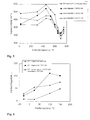
- FIG. 4 shows the tempering curves of three alloys according to the invention in comparison with the known alloy X20 CrMoV 12 1.
- inventive Alloys at tempering temperatures above 600 ° C higher tempering temperatures achieved, and this with the same content of molybdenum in the alloy (Comparison of AP14 with TAF in Table 1). The influence of molybdenum only becomes very high levels significant (AP8).
- FIG. 5 shows the influence of a previous austenite aging on the temper resistance an alloy AP11 according to the invention.
- Austenite aging relates to structural conditions, which a minor after austenite aging Martensite hardness than the solution annealed and directly quenched state. It can be seen, however, that the differences to those important for the technology Reduce tempering temperatures above 600 ° C. There are even states (aged austenite: 600 ° C / 150h), which has a higher hardness at a tempering temperature of 650 ° C exhibit. Austenite aging can thus be used for setting higher strengths use.
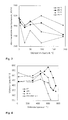
- Figure 6 shows the influence of austenite aging on the impact energy and the Transition temperature of the impact energy for the alloy according to the invention AP1.
- the transition temperature of the impact work decreases with increasing Tempering temperature and therefore allows the setting of higher impact energy.
- alloy AP1 it can be seen that an austenite overaging does not lead to any significant embrittlement.
- Figure 7 shows the influence of austenite aging on the yield strength at test temperatures between 23 ° C and 600 ° C. Basically, the yield strength increases with decreasing Tempering temperature. This means achieving high strengths accordingly Figure 6 is at the expense of a significantly reduced impact energy. On the other hand leads to an austenite aging of the alloy AP1 according to the invention a significant increase in the yield strength up to a temperature of approximately 550 ° C without being linked to embrittlement.
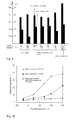
- Figure 8 shows a comparison of the yield strengths between the inventive Alloy AP1 and known (X20CrMoV121, X12 CrNiMo 12) or in technology Newly-introduced alloy (X12 CrMoWVNbN11 1 1), being indicated at the Comparative values are minimal standard values. The comparison shows that at similar tempering temperatures for the exemplary alloy AP1 clearly higher yield strengths result.
- FIG. 9 A comparison is made in FIG. 9 between a number of old - known and newly introduced ones Alloys with the exemplary alloy AP1. It is evident that an inventive manufactured taking into account an optimized austenite aging AP1 alloy is a much better combination of Notched impact work and yield strength at room temperature allows, probably a - Optimized chemical composition according to the exemplary alloy AP1 the crucial prerequisite for a positive benefit of a Represents austenite aging.
- Figure 10 shows the influence of austenite aging on the impact energy and transition temperature the impact energy for an alloy according to the invention AP8. This is characterized by a high molybdenum content (Table 1). This means that extremely high tempering resistance can be achieved even above one Achieve tempering temperature of 600 ° C ( Figure 4). On the other hand, this is with the The disadvantage of pronounced embrittlement linked. An increase in the tempering temperature from 710 to 740 ° C proves to be ineffective here. However, for this Alloy the transition temperature of the impact work by a previous one Austenite aging even while maintaining a tempering temperature of 710 ° C considerably lower.
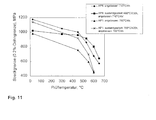
- FIG. 11 shows the influence of an austenite aging on the yield strength between 23 ° C. and 650 ° C. for the same alloy AP8.
- austenite aging does not increase the yield strength at room temperature, but austenite aging at lower austenite aging temperatures leads to a significant increase in hot yield strength at temperatures above 500 ° C.
Landscapes
- Chemical & Material Sciences (AREA)
- Engineering & Computer Science (AREA)
- Materials Engineering (AREA)
- Mechanical Engineering (AREA)
- Metallurgy (AREA)
- Organic Chemistry (AREA)
- Thermal Sciences (AREA)
- Crystallography & Structural Chemistry (AREA)
- Physics & Mathematics (AREA)
- Heat Treatment Of Steel (AREA)
- Heat Treatment Of Articles (AREA)
- Heat Treatments In General, Especially Conveying And Cooling (AREA)
- Heat Treatment Of Strip Materials And Filament Materials (AREA)
Applications Claiming Priority (2)
| Application Number | Priority Date | Filing Date | Title |
|---|---|---|---|
| DE19712020A DE19712020A1 (de) | 1997-03-21 | 1997-03-21 | Vollmartensitische Stahllegierung |
| DE19712020 | 1997-03-21 |
Publications (3)
| Publication Number | Publication Date |
|---|---|
| EP0866145A2 true EP0866145A2 (fr) | 1998-09-23 |
| EP0866145A3 EP0866145A3 (fr) | 1998-12-23 |
| EP0866145B1 EP0866145B1 (fr) | 2003-05-07 |
Family
ID=7824257
Family Applications (1)
| Application Number | Title | Priority Date | Filing Date |
|---|---|---|---|
| EP98810193A Expired - Lifetime EP0866145B1 (fr) | 1997-03-21 | 1998-03-09 | Procédé de traitement thermique pour alliage d'acier complètement martensitique |
Country Status (6)
| Country | Link |
|---|---|
| US (1) | US6030469A (fr) |
| EP (1) | EP0866145B1 (fr) |
| JP (1) | JP4204089B2 (fr) |
| AT (1) | ATE239804T1 (fr) |
| DE (2) | DE19712020A1 (fr) |
| ES (1) | ES2199414T3 (fr) |
Cited By (7)
| Publication number | Priority date | Publication date | Assignee | Title |
|---|---|---|---|---|
| EP1158067A1 (fr) * | 2000-05-24 | 2001-11-28 | ALSTOM Power N.V. | Acier de traitement thermique durcissable martensitique à résistance thermique ameliorée et à ductilité ameliorée |
| US6592685B2 (en) | 2000-12-18 | 2003-07-15 | Alstom (Switzerland) Ltd | Transformation controlled nitride precipitation hardening heat treatable steel |
| EP1203831A3 (fr) * | 2000-11-03 | 2004-03-17 | ATI Properties, Inc. | Articles en acier inoxydable résistants à la fatigue |
| EP1754798A1 (fr) * | 2005-08-18 | 2007-02-21 | Siemens Aktiengesellschaft | Vis pour un carter de turbine |
| WO2008119638A1 (fr) * | 2007-03-29 | 2008-10-09 | Alstom Technology Ltd | Acier résistant au fluage |
| EP2116626A1 (fr) | 2008-02-25 | 2009-11-11 | ALSTOM Technology Ltd | Acier resistant au fluage |
| US7686898B2 (en) | 2004-10-29 | 2010-03-30 | Alstom Technology Ltd | Creep-resistant maraging heat-treatment steel |
Families Citing this family (17)
| Publication number | Priority date | Publication date | Assignee | Title |
|---|---|---|---|---|
| US7235212B2 (en) * | 2001-02-09 | 2007-06-26 | Ques Tek Innovations, Llc | Nanocarbide precipitation strengthened ultrahigh strength, corrosion resistant, structural steels and method of making said steels |
| UA73311C2 (uk) | 1999-07-12 | 2005-07-15 | Ммфекс Стил Корпорейшн Оф Америка | Низьковуглецеві сталі з високими механічними і корозійними властивостями та спосіб їх виготовлення |
| JP3492969B2 (ja) * | 2000-03-07 | 2004-02-03 | 株式会社日立製作所 | 蒸気タービン用ロータシャフト |
| JP4836063B2 (ja) * | 2001-04-19 | 2011-12-14 | 独立行政法人物質・材料研究機構 | フェライト系耐熱鋼とその製造方法 |
| US20040115084A1 (en) * | 2002-12-12 | 2004-06-17 | Borgwarner Inc. | Method of producing powder metal parts |
| US6899773B2 (en) * | 2003-02-07 | 2005-05-31 | Advanced Steel Technology, Llc | Fine-grained martensitic stainless steel and method thereof |
| US6890393B2 (en) * | 2003-02-07 | 2005-05-10 | Advanced Steel Technology, Llc | Fine-grained martensitic stainless steel and method thereof |
| US20060065327A1 (en) * | 2003-02-07 | 2006-03-30 | Advance Steel Technology | Fine-grained martensitic stainless steel and method thereof |
| JP4900639B2 (ja) * | 2005-02-28 | 2012-03-21 | 独立行政法人物質・材料研究機構 | 焼戻しマルテンサイト組織を有するフェライト耐熱鋼とその製造方法 |
| US20070048169A1 (en) * | 2005-08-25 | 2007-03-01 | Borgwarner Inc. | Method of making powder metal parts by surface densification |
| US7985304B2 (en) | 2007-04-19 | 2011-07-26 | Ati Properties, Inc. | Nickel-base alloys and articles made therefrom |
| ES2736316T3 (es) | 2012-10-24 | 2019-12-27 | Crs Holdings Inc | Aleación de acero resistente a la corrosión de templado y revenido |
| US11634803B2 (en) | 2012-10-24 | 2023-04-25 | Crs Holdings, Llc | Quench and temper corrosion resistant steel alloy and method for producing the alloy |
| US10094007B2 (en) | 2013-10-24 | 2018-10-09 | Crs Holdings Inc. | Method of manufacturing a ferrous alloy article using powder metallurgy processing |
| US10563293B2 (en) | 2015-12-07 | 2020-02-18 | Ati Properties Llc | Methods for processing nickel-base alloys |
| CN115725911B (zh) * | 2021-08-27 | 2023-12-08 | 华为技术有限公司 | 钢、钢结构件、电子设备及钢结构件的制备方法 |
| CN115948700B (zh) * | 2023-01-29 | 2023-06-30 | 襄阳金耐特机械股份有限公司 | 一种马氏体耐热钢 |
Family Cites Families (7)
| Publication number | Priority date | Publication date | Assignee | Title |
|---|---|---|---|---|
| GB796733A (en) * | 1955-07-09 | 1958-06-18 | Birmingham Small Arms Co Ltd | Improvements in or relating to alloy steels |
| SE330616B (fr) * | 1967-06-08 | 1970-11-23 | Uddeholms Ab | |
| JPS6024353A (ja) * | 1983-07-20 | 1985-02-07 | Japan Steel Works Ltd:The | 12%Cr系耐熱鋼 |
| DE4212966C2 (de) * | 1992-04-18 | 1995-07-13 | Ver Schmiedewerke Gmbh | Verwendung eines martensitischen Chrom-Stahls |
| US5310431A (en) * | 1992-10-07 | 1994-05-10 | Robert F. Buck | Creep resistant, precipitation-dispersion-strengthened, martensitic stainless steel and method thereof |
| US5415706A (en) * | 1993-05-28 | 1995-05-16 | Abb Management Ag | Heat- and creep-resistant steel having a martensitic microstructure produced by a heat-treatment process |
| JPH08225833A (ja) * | 1995-02-16 | 1996-09-03 | Nippon Steel Corp | 高温クリープ強度の優れたマルテンサイト系耐熱鋼の製造方法 |
-
1997
- 1997-03-21 DE DE19712020A patent/DE19712020A1/de not_active Withdrawn
-
1998
- 1998-03-09 ES ES98810193T patent/ES2199414T3/es not_active Expired - Lifetime
- 1998-03-09 AT AT98810193T patent/ATE239804T1/de active
- 1998-03-09 DE DE59808216T patent/DE59808216D1/de not_active Expired - Lifetime
- 1998-03-09 EP EP98810193A patent/EP0866145B1/fr not_active Expired - Lifetime
- 1998-03-18 JP JP06829398A patent/JP4204089B2/ja not_active Expired - Fee Related
- 1998-03-20 US US09/044,784 patent/US6030469A/en not_active Expired - Lifetime
Cited By (10)
| Publication number | Priority date | Publication date | Assignee | Title |
|---|---|---|---|---|
| EP1158067A1 (fr) * | 2000-05-24 | 2001-11-28 | ALSTOM Power N.V. | Acier de traitement thermique durcissable martensitique à résistance thermique ameliorée et à ductilité ameliorée |
| DE10025808A1 (de) * | 2000-05-24 | 2001-11-29 | Alstom Power Nv | Martensitisch-härtbarer Vergütungsstahl mit verbesserter Warmfestigkeit und Duktilität |
| US6464804B2 (en) | 2000-05-24 | 2002-10-15 | Alstom (Switzerland) Ltd | Martensitic-hardenable heat-treated steel with improved resistance to heat and ductility |
| EP1203831A3 (fr) * | 2000-11-03 | 2004-03-17 | ATI Properties, Inc. | Articles en acier inoxydable résistants à la fatigue |
| US6592685B2 (en) | 2000-12-18 | 2003-07-15 | Alstom (Switzerland) Ltd | Transformation controlled nitride precipitation hardening heat treatable steel |
| US7686898B2 (en) | 2004-10-29 | 2010-03-30 | Alstom Technology Ltd | Creep-resistant maraging heat-treatment steel |
| EP1754798A1 (fr) * | 2005-08-18 | 2007-02-21 | Siemens Aktiengesellschaft | Vis pour un carter de turbine |
| WO2008119638A1 (fr) * | 2007-03-29 | 2008-10-09 | Alstom Technology Ltd | Acier résistant au fluage |
| US8147748B2 (en) | 2007-03-29 | 2012-04-03 | Alstom Technology Ltd. | Creep-resistant steel |
| EP2116626A1 (fr) | 2008-02-25 | 2009-11-11 | ALSTOM Technology Ltd | Acier resistant au fluage |
Also Published As
| Publication number | Publication date |
|---|---|
| JPH10265914A (ja) | 1998-10-06 |
| DE19712020A1 (de) | 1998-09-24 |
| EP0866145B1 (fr) | 2003-05-07 |
| ATE239804T1 (de) | 2003-05-15 |
| ES2199414T3 (es) | 2004-02-16 |
| JP4204089B2 (ja) | 2009-01-07 |
| DE59808216D1 (de) | 2003-06-12 |
| EP0866145A3 (fr) | 1998-12-23 |
| US6030469A (en) | 2000-02-29 |
Similar Documents
| Publication | Publication Date | Title |
|---|---|---|
| EP0866145B1 (fr) | Procédé de traitement thermique pour alliage d'acier complètement martensitique | |
| DE60010997T2 (de) | Wärmebeständiges Chrom-Molybdän Stahl | |
| DE69706224T2 (de) | Wärmebeständiger Stahl und Dampfturbinenrotor | |
| DE69010234T2 (de) | Hochfester Stahl mit hohem Chromgehalt und mit sehr guten Zähigkeits- und Oxidationsbeständigkeitseigenschaften. | |
| DE69529829T2 (de) | Ferritische wärmebeständige Stähle | |
| DE69429610T2 (de) | Hochfester martensitischer rostfreier Stahl und Verfahren zu seiner Herstellung | |
| DE69523268T2 (de) | Verfahren zum Herstellen eines aus einem Stück hergestellter Hochdruck-Niederdruck-Turbinenrotor | |
| DE69406512T2 (de) | Rotor für Dampfturbinen und Verfahren zu seiner Herstellung | |
| DE3650515T2 (de) | Hochfester hitzebeständiger ferritischer Stahl mit hohem Chromgehalt | |
| DE69008575T2 (de) | Hitzebeständiger ferritischer Stahl mit ausgezeichneter Festigkeit bei hohen Temperaturen. | |
| DE60214456T2 (de) | Martensitischer rostfreier Stahl mit hoher Härte und guter Korrosionsbeständigkeit | |
| DE69832886T2 (de) | Kontinuierlicher giessprozess zur herstellung von niedrig kohlenstoffhaltigen stahlbändern und so erzeugte stahlbänder mit so guten wie im guss hergestellten mechanischen eigenschaften | |
| DE69700057T2 (de) | Hitzebeständiger, ferritischer Stahl mit niedrigem Cr- und Mn-Gehalt und mit ausgezeichneter Festigkeit bei hohen Temperaturen | |
| DE69901345T2 (de) | Einsatzstahl mit hoher anlasstemperatur, herstellungsverfahren für diesen stahl und werkstücke aus diesem stahl | |
| DE69800902T2 (de) | Hochfester, hochzähiger wärmebestädiger Stahl | |
| DE60300561T3 (de) | Verfahren zur Herstellung eines warmgewalzten Stahlbandes | |
| DE69508876T2 (de) | Temperaturbeständiger ferritischer Stahl mit hohem Chromgehalt | |
| DE3426882A1 (de) | Hitzebestaendiger, martensitischer, rostfreier stahl mit 12% chrom | |
| DE102007023306A1 (de) | Verwendung einer Stahllegierung für Mantelrohre zur Perforation von Bohrlochverrohrungen sowie Mantelrohr | |
| WO2017085072A1 (fr) | Acier de construction fin présentant une structure bainitique, pièce forgée fabriquée à partir de celui-ci et procédé pour la fabrication d'une pièce forgé | |
| DE3041565C2 (fr) | ||
| DE69601340T2 (de) | Hochfester, hochzaher warmebestandiger stahl und verfahren zu seiner herstellung | |
| DE1558668B2 (de) | Verwendung von kriechfesten, nichtrostenden austenitischen Stählen zur Herstellung von Blechen | |
| DE3522115A1 (de) | Hitzebestaendiger 12-cr-stahl und daraus gefertigte turbinenteile | |
| WO2016020519A1 (fr) | Produits semi-finis à haute résistance et en même temps durs, et composants en acier fortement allié, leur procédé de fabrication et utilisation |
Legal Events
| Date | Code | Title | Description |
|---|---|---|---|
| PUAI | Public reference made under article 153(3) epc to a published international application that has entered the european phase |
Free format text: ORIGINAL CODE: 0009012 |
|
| AK | Designated contracting states |
Kind code of ref document: A2 Designated state(s): AT DE ES FR GB SE |
|
| AX | Request for extension of the european patent |
Free format text: AL;LT;LV;MK;RO;SI |
|
| PUAL | Search report despatched |
Free format text: ORIGINAL CODE: 0009013 |
|
| K1C1 | Correction of patent application (title page) published |
Effective date: 19980923 |
|
| AK | Designated contracting states |
Kind code of ref document: A3 Designated state(s): AT BE CH DE DK ES FI FR GB GR IE IT LI LU MC NL PT SE |
|
| AX | Request for extension of the european patent |
Free format text: AL;LT;LV;MK;RO;SI |
|
| 17P | Request for examination filed |
Effective date: 19981219 |
|
| AKX | Designation fees paid |
Free format text: AT DE ES FR GB SE |
|
| 17Q | First examination report despatched |
Effective date: 20001013 |
|
| RAP1 | Party data changed (applicant data changed or rights of an application transferred) |
Owner name: ALSTOM |
|
| GRAH | Despatch of communication of intention to grant a patent |
Free format text: ORIGINAL CODE: EPIDOS IGRA |
|
| RTI1 | Title (correction) |
Free format text: HEAT TREATMENT METHOD FOR COMPLETELY MARTENSITIC STEEL ALLOY |
|
| RAP1 | Party data changed (applicant data changed or rights of an application transferred) |
Owner name: ALSTOM (SWITZERLAND) LTD |
|
| GRAH | Despatch of communication of intention to grant a patent |
Free format text: ORIGINAL CODE: EPIDOS IGRA |
|
| GRAA | (expected) grant |
Free format text: ORIGINAL CODE: 0009210 |
|
| AK | Designated contracting states |
Designated state(s): AT DE ES FR GB SE |
|
| REG | Reference to a national code |
Ref country code: GB Ref legal event code: FG4D Free format text: NOT ENGLISH |
|
| REF | Corresponds to: |
Ref document number: 59808216 Country of ref document: DE Date of ref document: 20030612 Kind code of ref document: P |
|
| REG | Reference to a national code |
Ref country code: SE Ref legal event code: TRGR |
|
| GBT | Gb: translation of ep patent filed (gb section 77(6)(a)/1977) | ||
| REG | Reference to a national code |
Ref country code: ES Ref legal event code: FG2A Ref document number: 2199414 Country of ref document: ES Kind code of ref document: T3 |
|
| ET | Fr: translation filed | ||
| PLBE | No opposition filed within time limit |
Free format text: ORIGINAL CODE: 0009261 |
|
| STAA | Information on the status of an ep patent application or granted ep patent |
Free format text: STATUS: NO OPPOSITION FILED WITHIN TIME LIMIT |
|
| 26N | No opposition filed |
Effective date: 20040210 |
|
| REG | Reference to a national code |
Ref country code: DE Ref legal event code: R082 Ref document number: 59808216 Country of ref document: DE Representative=s name: UWE ROESLER, DE |
|
| REG | Reference to a national code |
Ref country code: ES Ref legal event code: PC2A Owner name: ALSTOM TECHNOLOGY LTD. Effective date: 20120814 |
|
| REG | Reference to a national code |
Ref country code: GB Ref legal event code: 732E Free format text: REGISTERED BETWEEN 20120802 AND 20120808 |
|
| REG | Reference to a national code |
Ref country code: DE Ref legal event code: R082 Ref document number: 59808216 Country of ref document: DE Representative=s name: ROESLER, UWE, DIPL.-PHYS.UNIV., DE Effective date: 20120713 Ref country code: DE Ref legal event code: R081 Ref document number: 59808216 Country of ref document: DE Owner name: GENERAL ELECTRIC TECHNOLOGY GMBH, CH Free format text: FORMER OWNER: ALSTOM (SWITZERLAND) LTD., BADEN, CH Effective date: 20120713 Ref country code: DE Ref legal event code: R081 Ref document number: 59808216 Country of ref document: DE Owner name: ALSTOM TECHNOLOGY LTD., CH Free format text: FORMER OWNER: ALSTOM (SWITZERLAND) LTD., BADEN, CH Effective date: 20120713 |
|
| REG | Reference to a national code |
Ref country code: FR Ref legal event code: TP Owner name: ALSTOM TECHNOLOGY LTD., CH Effective date: 20120918 |
|
| REG | Reference to a national code |
Ref country code: AT Ref legal event code: PC Ref document number: 239804 Country of ref document: AT Kind code of ref document: T Owner name: ALSTOM TECHNOLOGY LTD, CH Effective date: 20121109 |
|
| REG | Reference to a national code |
Ref country code: FR Ref legal event code: PLFP Year of fee payment: 19 |
|
| PGFP | Annual fee paid to national office [announced via postgrant information from national office to epo] |
Ref country code: ES Payment date: 20160309 Year of fee payment: 19 |
|
| PGFP | Annual fee paid to national office [announced via postgrant information from national office to epo] |
Ref country code: GB Payment date: 20160321 Year of fee payment: 19 Ref country code: AT Payment date: 20160322 Year of fee payment: 19 Ref country code: SE Payment date: 20160321 Year of fee payment: 19 Ref country code: FR Payment date: 20160321 Year of fee payment: 19 |
|
| PGFP | Annual fee paid to national office [announced via postgrant information from national office to epo] |
Ref country code: DE Payment date: 20160330 Year of fee payment: 19 |
|
| REG | Reference to a national code |
Ref country code: DE Ref legal event code: R082 Ref document number: 59808216 Country of ref document: DE Representative=s name: ROESLER, UWE, DIPL.-PHYS.UNIV., DE Ref country code: DE Ref legal event code: R081 Ref document number: 59808216 Country of ref document: DE Owner name: GENERAL ELECTRIC TECHNOLOGY GMBH, CH Free format text: FORMER OWNER: ALSTOM TECHNOLOGY LTD., BADEN, CH |
|
| REG | Reference to a national code |
Ref country code: ES Ref legal event code: PC2A Owner name: GENERAL ELECTRIC TECHNOLOGY GMBH Effective date: 20161021 |
|
| REG | Reference to a national code |
Ref country code: AT Ref legal event code: HC Ref document number: 239804 Country of ref document: AT Kind code of ref document: T Owner name: GENERAL ELECTRIC TECHNOLOGY GMBH, CH Effective date: 20161014 |
|
| REG | Reference to a national code |
Ref country code: FR Ref legal event code: CD Owner name: ALSTOM TECHNOLOGY LTD, CH Effective date: 20161110 |
|
| REG | Reference to a national code |
Ref country code: DE Ref legal event code: R119 Ref document number: 59808216 Country of ref document: DE |
|
| REG | Reference to a national code |
Ref country code: SE Ref legal event code: EUG |
|
| REG | Reference to a national code |
Ref country code: AT Ref legal event code: MM01 Ref document number: 239804 Country of ref document: AT Kind code of ref document: T Effective date: 20170309 |
|
| GBPC | Gb: european patent ceased through non-payment of renewal fee |
Effective date: 20170309 |
|
| PG25 | Lapsed in a contracting state [announced via postgrant information from national office to epo] |
Ref country code: SE Free format text: LAPSE BECAUSE OF NON-PAYMENT OF DUE FEES Effective date: 20170310 |
|
| REG | Reference to a national code |
Ref country code: FR Ref legal event code: ST Effective date: 20171130 |
|
| PG25 | Lapsed in a contracting state [announced via postgrant information from national office to epo] |
Ref country code: DE Free format text: LAPSE BECAUSE OF NON-PAYMENT OF DUE FEES Effective date: 20171003 Ref country code: FR Free format text: LAPSE BECAUSE OF NON-PAYMENT OF DUE FEES Effective date: 20170331 Ref country code: AT Free format text: LAPSE BECAUSE OF NON-PAYMENT OF DUE FEES Effective date: 20170309 |
|
| PG25 | Lapsed in a contracting state [announced via postgrant information from national office to epo] |
Ref country code: GB Free format text: LAPSE BECAUSE OF NON-PAYMENT OF DUE FEES Effective date: 20170309 |
|
| REG | Reference to a national code |
Ref country code: ES Ref legal event code: FD2A Effective date: 20180507 |
|
| PG25 | Lapsed in a contracting state [announced via postgrant information from national office to epo] |
Ref country code: ES Free format text: LAPSE BECAUSE OF NON-PAYMENT OF DUE FEES Effective date: 20170310 |