EP0866566A1 - Empfänger - Google Patents
Empfänger Download PDFInfo
- Publication number
- EP0866566A1 EP0866566A1 EP97943147A EP97943147A EP0866566A1 EP 0866566 A1 EP0866566 A1 EP 0866566A1 EP 97943147 A EP97943147 A EP 97943147A EP 97943147 A EP97943147 A EP 97943147A EP 0866566 A1 EP0866566 A1 EP 0866566A1
- Authority
- EP
- European Patent Office
- Prior art keywords
- program
- data
- data table
- service
- found
- Prior art date
- Legal status (The legal status is an assumption and is not a legal conclusion. Google has not performed a legal analysis and makes no representation as to the accuracy of the status listed.)
- Withdrawn
Links
Images





Classifications
-
- H—ELECTRICITY
- H03—ELECTRONIC CIRCUITRY
- H03J—TUNING RESONANT CIRCUITS; SELECTING RESONANT CIRCUITS
- H03J1/00—Details of adjusting, driving, indicating, or mechanical control arrangements for resonant circuits in general
- H03J1/0008—Details of adjusting, driving, indicating, or mechanical control arrangements for resonant circuits in general using a central processing unit, e.g. a microprocessor
- H03J1/0058—Details of adjusting, driving, indicating, or mechanical control arrangements for resonant circuits in general using a central processing unit, e.g. a microprocessor provided with channel identification means
-
- H—ELECTRICITY
- H04—ELECTRIC COMMUNICATION TECHNIQUE
- H04H—BROADCAST COMMUNICATION
- H04H60/00—Arrangements for broadcast applications with a direct linking to broadcast information or broadcast space-time; Broadcast-related systems
- H04H60/61—Arrangements for services using the result of monitoring, identification or recognition covered by groups H04H60/29-H04H60/54
- H04H60/65—Arrangements for services using the result of monitoring, identification or recognition covered by groups H04H60/29-H04H60/54 for using the result on users' side
-
- H—ELECTRICITY
- H04—ELECTRIC COMMUNICATION TECHNIQUE
- H04H—BROADCAST COMMUNICATION
- H04H2201/00—Aspects of broadcast communication
- H04H2201/10—Aspects of broadcast communication characterised by the type of broadcast system
- H04H2201/20—Aspects of broadcast communication characterised by the type of broadcast system digital audio broadcasting [DAB]
-
- H—ELECTRICITY
- H04—ELECTRIC COMMUNICATION TECHNIQUE
- H04H—BROADCAST COMMUNICATION
- H04H60/00—Arrangements for broadcast applications with a direct linking to broadcast information or broadcast space-time; Broadcast-related systems
- H04H60/35—Arrangements for identifying or recognising characteristics with a direct linkage to broadcast information or to broadcast space-time, e.g. for identifying broadcast stations or for identifying users
- H04H60/38—Arrangements for identifying or recognising characteristics with a direct linkage to broadcast information or to broadcast space-time, e.g. for identifying broadcast stations or for identifying users for identifying broadcast time or space
- H04H60/39—Arrangements for identifying or recognising characteristics with a direct linkage to broadcast information or to broadcast space-time, e.g. for identifying broadcast stations or for identifying users for identifying broadcast time or space for identifying broadcast space-time
-
- H—ELECTRICITY
- H04—ELECTRIC COMMUNICATION TECHNIQUE
- H04H—BROADCAST COMMUNICATION
- H04H60/00—Arrangements for broadcast applications with a direct linking to broadcast information or broadcast space-time; Broadcast-related systems
- H04H60/35—Arrangements for identifying or recognising characteristics with a direct linkage to broadcast information or to broadcast space-time, e.g. for identifying broadcast stations or for identifying users
- H04H60/47—Arrangements for identifying or recognising characteristics with a direct linkage to broadcast information or to broadcast space-time, e.g. for identifying broadcast stations or for identifying users for recognising genres
Definitions
- the present invention relates to a receiver having a function for selecting a program.
- DAB Digital Audio Broadcasting
- the present invention aims to provide a receiver by which a user can select a program based on the program itself.
- a receiver comprises a first data table containing sets of a service ID and a time data indicating a broadcast time of that program in order of the time and a second data table containing the service ID in the order of a receiving frequency of its program.
- FIG. 1 is a systematic diagram showing an embodiment according to the present invention
- FIG. 2 is a diagram showing an embodiment of a data table according to the present invention
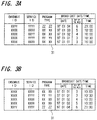
- FIG. 3 is a diagram for explaining the present invention
- FIG. 4 is a diagram showing a display example in the present invention
- FIG. 5 and FIG. 6 are flow charts showing an embodiment according to the present invention, respectively
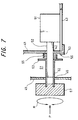
- FIG. 7 is a sectional view showing an embodiment of a part in the present invention
- FIG. 8 is an exploded perspective view showing the embodiment of the part in the present invention.
- FIG. 1 shows an example where the present invention is applied to a radio receiver for the DAB.
- a receiving circuit 10 a broadcast wave signal of the DAB is received by an antenna 11 and the received signal is supplied to a tuner circuit 12 including a front-end circuit of a synthesizer system to a demodulator circuit, from which digital data is derived.
- This digital data is a baseband signal in which a digital audio signal of a plurality of channels and various data are multiplexed according to the DAB standard.
- the digital data is supplied to a transmissive path decoder circuit 13 where processings of deinterleave, error correction, selection of data of a desired program and the like are performed.
- the resulting data from the processings is supplied to an audio decoder circuit 14 which decompresses the data into an original digital audio signal.
- This digital audio signal is then supplied to a D/A converter 15 which D/A converts it into original analog audio signals of left and right channels.
- These audio signals are supplied to speakers 17L and 17R through amplifiers 16L and 16R, respectively.
- a microcomputer 20 for system control, and the processings of tuning in the tuner circuit 12, data selection of the desired program in the decoder cheroot 13, adjusting sound volumes and qualities of the audio signals through the amplifiers 16L, 16R and so on are performed by the microcomputer 20.
- PAD Program Associated Data
- routines 100 to 300 shown in FIG. 5 and FIG. 6 are provided in the microcomputer 20. Although processing contents of these routines 100 to 300 will be described below, these are to select and receive a program when the program is specified.
- a plurality of operation keys 21 and a jog dial 22 for performing various input operations are connected to the microcomputer 20 and connected a plurality of operation keys 21 and a jog dial 22 for performing various input operations, as well as a LCD 23 as a display device for displaying information on a broadcasting station and a program which are being received.
- a memory 24 and a clock circuit 25 for clocking a current time are connected to the microcomputer 20.
- the memory 24 may be a ROM into which data can be written electrically, or, though not shown, may be a RAM which is backed up by a battery.
- the memory 24 is made a nonvolatile memory which can hold written data even if power supply is turned off.
- data tables 31 to 33 as shown in FIG. 2 are provided in this memory 24.
- the data table 31 is to show a history of selecting services and therefore has data columns of ensemble ID, service ID, program type and broadcast date / time concerning programs selected in the past.
- the data table 32 indicates selecting frequencies of programs and has a data column of program type.
- the data table 33 is to show currently selectable services and as data columns of ensemble ID, service ID and program type.
- the oldest data of the data table 31 is replaced with data of that program and data of the date/time indicated by the clock circuit 25, thus causing the data table 31 to be renewed. Further, according to data of the selected program, the data table 32 is rearranged in the order of the frequencies of programs and the data table 33 is also renewed.
- a menu showing program selecting modes is displayed on LCD 23 and at the same time a cursor arrow mark 231 is displayed at the head of the first item of the menu displayed. Then, when a knob of the jog dial 22 is turned in a clockwise or counterclockwise direction, the cursor arrow mark 231 moves upward or downward between the items.
- Turning the jog dial 22 enables to move the cursor arrow mark 231 in FIG. 4A in sequential manner. For example, when making the cursor arrow mark 231 located at the first item and pushing the jog dial 22 as it is, "Selecting mode according to the latest history priority" of the first item will start.
- data of the data table 31 is rearranged, as shown in FIG. 3A, for example, in order of newness according to data of the broadcast date / time in a manner that data of ensemble ID, service ID, program type and broadcast date/time are combined as one set data.
- a service ID of the latest broadcast date / time i. e. a service ID coincident with the service ID "YYYY” in the first line of data of the rearranged data table 31 (FIG. 3A) is found in the data table 33 showing the currently selectable services in FIG. 2C. In the present instance, it is not found.
- a service ID of the next latest broadcast date / time i.e. a service ID coincident with the service ID "XXXX" in the second line of data of the data table 31 is found in the data table 33.
- selecting the program is performed according to this service ID and thereafter the selected state, i.e. received state of that program will continue.
- the information on that selection is displayed in the LCD 23.
- the selection of next candidate will start. That is to say, it is checked whether or not a service ID of the thirdly latest broadcast date/time,i.e. a service ID coincident with the service ID "XXYY" in the third line of data of the data table 31 is found in the data table 33. In the present instance, because it is found in the second line of the data table 33, selecting the program is performed according to this service ID and thereafter the selected state of that program will continue. This means that the program of next candidate has been selected.
- the jog dial 22 After depressing a predetermined key 21, the jog dial 22 is turned to make the cursor arrow mark 231 located at the second item in FIG. 4A.
- the jog dial 22 When the jog dial 22 is pushed as it is, "Selecting mode according to frequency order of program type" of the second item will start.
- this selecting mode it is checked whether or not a program type of the highest receiving frequency program, i.e. a program type coincident with the program type "XXXX" in the first line of data of the data table 32 (This is always rearranged in frequency order.) is found in the data table 33 showing the currently selectable services. In the present instance, because it is found in the first line of the data table 33, selecting the program is performed according to this service ID and thereafter the selected state of that program will continue.
- the jog dial 22 After depressing a predetermined key 21, the jog dial 22 is turned to make the cursor arrow mark 231 located at the third item in FIG. 4A. When the jog dial 22 is pushed as it is, "Selecting mode according to service priority during the same time zone" will start.
- data of the data table 31 is rearranged, as shown in FIG. 3B, for example, in a predetermined order according to its broadcast date/time, in which the data of ensemble ID, service ID, program type and broadcast date/ time are combined as one set data.
- 1 represents Monday
- 2 represents Tuesday
- 3 represents Wednesday
- 4 represents Thursday
- 5 represents Friday
- 6 represents Saturday
- 7 represents Sunday.
- FIG. 3B shows a result of the rearrangement in a case where the present time is between ten and eleven o'clock on Wednesday.
- This rearrangement is made in a manner that data is arranged in order of day of the week giving a first priority to the present day of the week.
- On the same day of the week it is arranged in order of time zone giving a first priority to the present time zone.
- time zone giving a first priority to the present time zone.
- an exact ten o'clock and fifty-nine minutes after ten o'clock are both handled as a time between ten and eleven o'clock.
- a time pertinent to the same "hour” is handled as the same time zone.
- selecting the next candidate will start. That is to say, it is checked whether or not a service ID coincident with a service ID "YYYY" in the second line of data of the data table 31 is found in the data table 33. In the present instance, because it is not found in the data table 33, it is further checked whether or not a service ID coincident with a service ID "XXYY" in the third line of data of the data table 31 is found in the data table 33. In the present instance, because it is coincident to the service ID in the second line of the data table 33, selecting the program is performed according to this service ID and thereafter the selected state of that program will continue. This means that the program of next candidate has been selected. Of course, if the jog dial 22 is turned in the counterclockwise direction in a condition that this next candidate is selected, the sequentially previous candidate will be selected.
- the receiver of FIG. 1 is capable of selecting a program in three kinds of selecting modes of (1) to (3) items and in any mode it is arranged to select a program itself based on the past receiving history, so that the selection of a desired program is facilitated. Moreover, since it is arranged to have a learning function, a user is able to select his favorite programs without any need of complicated settings.
- a routine 100 shown in FIG. 5 is an example of routines for implementing "Selecting mode according to the latest history priority" of the aforesaid (1) item.
- routines for implementing "Selecting mode according to the latest history priority" of the aforesaid (1) item For example, as is shown in FIG. 4A, when the cursor arrow mark 231 is located at the position of selecting mode of (1) item, if the jog dial 22 is pushed, processing by the CPU of the microcomputer 20 will start from a step 101 of the routine 100. In a next step 102, a pointer is set to the first line of data lines of the data table 31 (FIG. 3A).
- a service ID coincident with a service ID in the position of pointer set in the step 102 is retrieved from the data table 33.
- the retrieved result is distinguished in a step 112. If the coincident service ID is present, the processing will then advance from the step 112 to a step 113. Then, in the step 113 selecting the program of the coincident service ID is performed, and thereafter the routine 100 will end in a step 114.
- the processing will then advance from the step 112 to a step 121.
- the step 121 it is decided whether or not the pointer set in the data table 31 is located at the lowest line of the data table 31. If it is not located at the lowest line, the processing will then advance from the step 121 to a step 122.
- the step 122 the pointer is moved to the next line, in the present instance, the second line of the data table 31 and thereafter the processing will return to the step 111.
- the steps 111 to 122 are repeated until a service ID coincident with that service ID is obtained from the data table 33. If the coincident service ID is obtained, the program of that service ID will then be selected by the step 113.
- the processing will then advance from the step 121 to the step 114 where the routine 100 will end.
- a routine 200 shown in FIG. 6A is an example of routines for implementing "Selecting mode according to service priority during the same time zone" of the aforesaid (3) item. Particularly, when the cursor arrow mark 231 is located at the position of selecting mode of (3) item, if the jog dial 22 is pushed, processing by the CPU of the microcomputer 20 will start from a step 201 and in a next step 202 data of the data table 31 is rearranged in order of time by comparing between "hours" of time.
- step 203 a further rearrangement of the rearranged data table 31 by the step 202 is performed giving the priority to the present time and day of the week.
- step 204 the resulting data table 31 in the step 203 and the data table 33 are used for performing the same processing as the routine 100 to select a broadcasting station, and in a step 205 the routine 200 will end.
- the step 203 can be constructed, for example, as a routine 300.
- processing will start from a step 301 and in a next step 302 data of the present time and day of the week are acquired from the clock circuit 25.
- a pointer is set to a data line of the same "hour” as "hour" of the present time acquired by the step 302 among data lines of the data table 31 (FIG. 3A).
- a data located between the first line and the data line prior to the pointer set by the step 303 in data of the data table 31 is moved to the last rear part of the data table 31.
- the processed data of the data table 31 by the step 304 is rearranged, among data having the same "hour" of time, in order of day of the week so that the present day of the week acquired by the step 302 may be located ahead.
- the routine 300 will end in a step 306.
- FIG. 7 and FIG. 8 show the jog dial 22 used for the present embodiment.
- a printed circuit board 43 is fixed to the rear part of a chassis 41 (right side in the figure).
- a rotary encoder 51 whose input shaft (operating axis) 52 extends to be positioned at the front side of the receiver through an aperture 42 in the chassis 41.
- the input shaft 52 is made, e.g., hexagonal of its section.
- a joint 61 has a cylindrical portion 62 and a flange portion 63 at an end of the cylindrical portion 62 which are formed integrally by using metallic or plastic materials.
- the cylindrical portion 62 is made, e.g. hexagonal of its section.
- the input shaft 52 is inserted into the cylindrical portion 62 in a condition that the flange portion 63 is directed toward the rotary encoder 51.
- a coil spring 65 concentrically with the input shaft 52, which biases the joint 61 in a direction away from the rotary encoder 51.
- the cylindrical portion 62 faces the front faces of a front panel 45 through an aperture 46 of the panel 45.
- the tip of the cylindrical portion is inserted into a hexagonal groove 67a provided in the rear face of a knob 67 and is adhered and fixed thereto.
- microswitch 53 On the chassis 41 is provided a microswitch 53, and an actuator (operating part) 56 of the microswitch 53 is opposed to the flange portion 63.
- the knob 67 is fixed to the cylindrical portion 62 of the joint 61.
- the cylindrical portion 62 is fit on the input shaft 52 of the rotary encoder 51 and because both sections of the cylindrical portion 62 and the input shaft 52 are made hexagonal, they are rotatively unified and rotatable in a rotative direction R.
- the knob 67 can be pushed along the input shaft 52 in the direction of an arrow mark P against the bias force of the coil spring 65, when the knob 67 is pushed in the arrow mark direction P from a state of FIG. 7, the joint 61 will move in the P direction, i.e. the direction toward the chassis 41 and then the flange portion 63 of the joint 61 pushes the actuator 56 of the microswitch 53.
- pushing the knob 67 will cause a switching output from the microswitch 53 to be obtained, thereby allowing the aforesaid decision of the selecting mode, etc. to be performed.
- the joint 61 i.e. the knob 67 will move in the direction opposite to the arrow mark P direction by the bias force of the coil spring 65 and return to the state of FIG. 7.
- the present invention because it is arranged to select a program itself based on the past receiving history, the selection of the desired program is made easier. Also, because of its learning function, it is possible for a user to select his favorite program without any need of complicated settings.
Landscapes
- Engineering & Computer Science (AREA)
- Computer Hardware Design (AREA)
- Microelectronics & Electronic Packaging (AREA)
- Signal Processing (AREA)
- Circuits Of Receivers In General (AREA)
Applications Claiming Priority (3)
| Application Number | Priority Date | Filing Date | Title |
|---|---|---|---|
| JP284687/96 | 1996-10-07 | ||
| JP28468796 | 1996-10-07 | ||
| PCT/JP1997/003588 WO1998016020A1 (en) | 1996-10-07 | 1997-10-07 | Receiver |
Publications (2)
| Publication Number | Publication Date |
|---|---|
| EP0866566A1 true EP0866566A1 (de) | 1998-09-23 |
| EP0866566A4 EP0866566A4 (de) | 2002-07-24 |
Family
ID=17681685
Family Applications (1)
| Application Number | Title | Priority Date | Filing Date |
|---|---|---|---|
| EP97943147A Withdrawn EP0866566A4 (de) | 1996-10-07 | 1997-10-07 | Empfänger |
Country Status (3)
| Country | Link |
|---|---|
| US (1) | US6389271B1 (de) |
| EP (1) | EP0866566A4 (de) |
| WO (1) | WO1998016020A1 (de) |
Cited By (5)
| Publication number | Priority date | Publication date | Assignee | Title |
|---|---|---|---|---|
| DE19943475C1 (de) * | 1999-09-10 | 2001-06-21 | Am3 Automotive Multimedia Ag | Verfahren und Vorrichtung zum Betrieb eines digitalen Rundfunkempfängers |
| EP1204231A1 (de) * | 2000-10-16 | 2002-05-08 | Nec Corporation | Rundfunksendungssuchverfahren in einem digitalen Rundfunkempfänger, und computerlesbares Speichermedium mit gespeichertem Rundfunksendungssuchprogramm |
| EP0994589A3 (de) * | 1998-10-12 | 2003-05-21 | Robert Bosch Gmbh | Empfänger für den Empfang von digitalen Hörfunkprogrammen (DAB) |
| RU2208294C2 (ru) * | 2001-05-08 | 2003-07-10 | Федеральное Государственное унитарное предприятие Воронежский научно-исследовательский институт связи | Устройство борьбы с шумовыми помехами |
| EP2477333A1 (de) * | 2010-12-23 | 2012-07-18 | Harman Becker Automotive Systems GmbH | Wiedergabeverfahren für ein Rundfunkprogramm |
Families Citing this family (11)
| Publication number | Priority date | Publication date | Assignee | Title |
|---|---|---|---|---|
| JPH11312993A (ja) * | 1998-04-28 | 1999-11-09 | Pioneer Electron Corp | ディジタル放送受信機 |
| US6600908B1 (en) | 1999-02-04 | 2003-07-29 | Hark C. Chan | Method and system for broadcasting and receiving audio information and associated audio indexes |
| US7369824B1 (en) * | 1999-02-04 | 2008-05-06 | Chan Hark C | Receiver storage system for audio program |
| US7245707B1 (en) | 1999-03-26 | 2007-07-17 | Chan Hark C | Data network based telephone messaging system |
| TW494683B (en) * | 1999-04-14 | 2002-07-11 | Koninkl Philips Electronics Nv | Receiving device for receiving teletext information, having means for autonomously determining an appropriate character set |
| US6674993B1 (en) * | 1999-04-30 | 2004-01-06 | Microvision, Inc. | Method and system for identifying data locations associated with real world observations |
| EP1146673A1 (de) * | 2000-04-10 | 2001-10-17 | Sony International (Europe) GmbH | Verfahren zur Übertragung eines Informationsdienstes in einem Rundfunkübertragungssystem |
| US7565541B1 (en) | 2000-06-21 | 2009-07-21 | Microvision, Inc. | Digital fingerprint identification system |
| US8126127B2 (en) * | 2002-01-16 | 2012-02-28 | Qualcomm Incorporated | Method and apparatus for provision of broadcast service information |
| US20060064146A1 (en) * | 2004-09-17 | 2006-03-23 | Collins Kenneth A | Heating/cooling system for indwelling heat exchange catheter |
| KR100667770B1 (ko) * | 2004-11-09 | 2007-01-11 | 삼성전자주식회사 | 디지털 멀티미디어 방송 수신장치 및 그 사용자인터페이스 방법 |
Family Cites Families (28)
| Publication number | Priority date | Publication date | Assignee | Title |
|---|---|---|---|---|
| US4706121B1 (en) * | 1985-07-12 | 1993-12-14 | Insight Telecast, Inc. | Tv schedule system and process |
| JPS6454937A (en) * | 1987-08-26 | 1989-03-02 | Sony Corp | Receiver |
| US4977455B1 (en) * | 1988-07-15 | 1993-04-13 | System and process for vcr scheduling | |
| JP2663582B2 (ja) * | 1988-11-24 | 1997-10-15 | ソニー株式会社 | ラジオ受信機 |
| GB9027669D0 (en) * | 1990-12-20 | 1991-02-13 | Rca Licensing Corp | Fault tolerant vcr recording control |
| DE4103779C2 (de) * | 1991-02-08 | 1995-02-16 | Blaupunkt Werke Gmbh | RDS-Rundfunkempfänger |
| JP2930084B2 (ja) * | 1991-06-28 | 1999-08-03 | ソニー株式会社 | ラジオ受信機 |
| US5355527A (en) * | 1991-07-01 | 1994-10-11 | Sony Corporation | Radio receiver with display memory and keys for displaying selecting, and storing station frequencies |
| JPH05122692A (ja) * | 1991-10-28 | 1993-05-18 | Pioneer Electron Corp | Catv端末装置およびcatvシステム |
| JP3084939B2 (ja) * | 1992-06-25 | 2000-09-04 | ソニー株式会社 | デジタル放送受信機 |
| DE4233282A1 (de) * | 1992-10-02 | 1994-04-07 | Becker Autoradio | Verfahren zur Abstimmung eines Rundfunkempfängers unter Verwendung der RDS-Information |
| JP3049164B2 (ja) * | 1992-12-25 | 2000-06-05 | 株式会社ケンウッド | データ多重放送用チューナ |
| JP3237362B2 (ja) * | 1993-12-27 | 2001-12-10 | 松下電器産業株式会社 | 番組表表示装置 |
| JP3287375B2 (ja) * | 1994-01-24 | 2002-06-04 | ソニー株式会社 | シンセサイザ受信機 |
| DE4405020C1 (de) * | 1994-02-17 | 1995-01-26 | Inst Rundfunktechnik Gmbh | Verfahren zum Empfangen von in einem Fernsehsignal übertragenen Daten |
| US5465402A (en) * | 1994-03-23 | 1995-11-07 | Uniden America Corp. | Automatic frequency transfer and storage method |
| JPH07297734A (ja) * | 1994-04-27 | 1995-11-10 | Pioneer Electron Corp | 多重放送選局方法 |
| JPH07297735A (ja) * | 1994-04-27 | 1995-11-10 | Pioneer Electron Corp | 多重放送受信方法及び受信機 |
| US5671411A (en) * | 1994-11-10 | 1997-09-23 | Intel Corporation | Method of searching an audio/visual programming database using selected criterion having implicit logical operation |
| US5596373A (en) * | 1995-01-04 | 1997-01-21 | Sony Corporation | Method and apparatus for providing program oriented information in a multiple station broadcast system |
| JPH08330911A (ja) * | 1995-06-01 | 1996-12-13 | Mitsubishi Electric Corp | デジタル音声放送受信機 |
| US5995155A (en) * | 1995-07-17 | 1999-11-30 | Gateway 2000, Inc. | Database navigation system for a home entertainment system |
| US5710994A (en) * | 1995-09-06 | 1998-01-20 | Sony Corporation | Synthesized type receiver with PLL |
| CN1115811C (zh) * | 1995-10-24 | 2003-07-23 | 皇家菲利浦电子有限公司 | 以可重新赋值的群方式传送数据的装置和方法 |
| US5793438A (en) * | 1995-11-13 | 1998-08-11 | Hyundai Electronics America | Electronic program guide with enhanced presentation |
| JP4380797B2 (ja) * | 1996-06-17 | 2009-12-09 | スターサイト テレキャスト インコーポレイテッド | 改良型テレビジョンスケジュールシステム |
| US6057890A (en) * | 1996-12-12 | 2000-05-02 | Echostar Engineering Corp. | User interface for television schedule system in which the future events are paged in time |
| US6005565A (en) * | 1997-03-25 | 1999-12-21 | Sony Corporation | Integrated search of electronic program guide, internet and other information resources |
-
1997
- 1997-10-07 EP EP97943147A patent/EP0866566A4/de not_active Withdrawn
- 1997-10-07 US US09/077,310 patent/US6389271B1/en not_active Expired - Fee Related
- 1997-10-07 WO PCT/JP1997/003588 patent/WO1998016020A1/ja not_active Ceased
Cited By (5)
| Publication number | Priority date | Publication date | Assignee | Title |
|---|---|---|---|---|
| EP0994589A3 (de) * | 1998-10-12 | 2003-05-21 | Robert Bosch Gmbh | Empfänger für den Empfang von digitalen Hörfunkprogrammen (DAB) |
| DE19943475C1 (de) * | 1999-09-10 | 2001-06-21 | Am3 Automotive Multimedia Ag | Verfahren und Vorrichtung zum Betrieb eines digitalen Rundfunkempfängers |
| EP1204231A1 (de) * | 2000-10-16 | 2002-05-08 | Nec Corporation | Rundfunksendungssuchverfahren in einem digitalen Rundfunkempfänger, und computerlesbares Speichermedium mit gespeichertem Rundfunksendungssuchprogramm |
| RU2208294C2 (ru) * | 2001-05-08 | 2003-07-10 | Федеральное Государственное унитарное предприятие Воронежский научно-исследовательский институт связи | Устройство борьбы с шумовыми помехами |
| EP2477333A1 (de) * | 2010-12-23 | 2012-07-18 | Harman Becker Automotive Systems GmbH | Wiedergabeverfahren für ein Rundfunkprogramm |
Also Published As
| Publication number | Publication date |
|---|---|
| WO1998016020A1 (en) | 1998-04-16 |
| US6389271B1 (en) | 2002-05-14 |
| EP0866566A4 (de) | 2002-07-24 |
Similar Documents
| Publication | Publication Date | Title |
|---|---|---|
| US6389271B1 (en) | Receiver with program selection | |
| EP0301770A2 (de) | Stations-Format selektierbarer Rundfunkempfänger | |
| US7263329B2 (en) | Method and apparatus for navigating, previewing and selecting broadband channels via a receiving user interface | |
| US5457815A (en) | RBDS scan, identify and select receiving method and system | |
| KR100565397B1 (ko) | 다중기능의 rds 버튼을 구비한 rds 라디오 | |
| US5475874A (en) | Method for the tuning of a broadcast radio receiver using RDS information | |
| US7190938B2 (en) | Broadcast receiver | |
| US5946635A (en) | Sporting event configurable radio receiver/scanner | |
| EP0359476B1 (de) | Synthesizer für Funkempfänger | |
| JPH0677778A (ja) | 電波でデータを受信することにより最新化可能な内部データベースに基づき自動的な局の認識及びフォーマット・スキャニングを行うことが可能な放送受信機 | |
| US7069510B2 (en) | In-vehicle audio browser system having a common usability model | |
| EP0370797B1 (de) | Radioempfänger | |
| US4661994A (en) | Frequency and volume display for a receiver | |
| JP2000295125A (ja) | デジタル音声放送の受信機 | |
| JP3894656B2 (ja) | ラジオ受信機 | |
| JPS63296513A (ja) | 受信装置 | |
| EP0664611B1 (de) | Funkempfänger mit Synthetisierer | |
| EP0851592A2 (de) | Synthetisierer für Empfänger | |
| JP3894244B2 (ja) | 受信機 | |
| JPH06232778A (ja) | Rds受信機 | |
| JPH09102755A (ja) | Fm多重放送受信装置 | |
| JP2000013265A (ja) | デジタルオーディオ放送の受信機 | |
| JP3691677B2 (ja) | 表示装置 | |
| JP3794852B2 (ja) | 受信装置 | |
| JP3709897B2 (ja) | 受信機 |
Legal Events
| Date | Code | Title | Description |
|---|---|---|---|
| PUAI | Public reference made under article 153(3) epc to a published international application that has entered the european phase |
Free format text: ORIGINAL CODE: 0009012 |
|
| 17P | Request for examination filed |
Effective date: 19980608 |
|
| AK | Designated contracting states |
Kind code of ref document: A1 Designated state(s): DE FR GB |
|
| A4 | Supplementary search report drawn up and despatched |
Effective date: 20020611 |
|
| AK | Designated contracting states |
Kind code of ref document: A4 Designated state(s): DE FR GB |
|
| RIC1 | Information provided on ipc code assigned before grant |
Free format text: 7H 04B 1/06 A, 7H 04H 1/00 B |
|
| STAA | Information on the status of an ep patent application or granted ep patent |
Free format text: STATUS: THE APPLICATION HAS BEEN WITHDRAWN |
|
| 18W | Application withdrawn |
Withdrawal date: 20021129 |