EP0868063A2 - Verfahren und Vorrichtung zum Cache-Vorspeichern von Daten in einem Anbieter-Rechter - Google Patents
Verfahren und Vorrichtung zum Cache-Vorspeichern von Daten in einem Anbieter-Rechter Download PDFInfo
- Publication number
- EP0868063A2 EP0868063A2 EP98302085A EP98302085A EP0868063A2 EP 0868063 A2 EP0868063 A2 EP 0868063A2 EP 98302085 A EP98302085 A EP 98302085A EP 98302085 A EP98302085 A EP 98302085A EP 0868063 A2 EP0868063 A2 EP 0868063A2
- Authority
- EP
- European Patent Office
- Prior art keywords
- data
- client
- web site
- pages
- user
- Prior art date
- Legal status (The legal status is an assumption and is not a legal conclusion. Google has not performed a legal analysis and makes no representation as to the accuracy of the status listed.)
- Withdrawn
Links
Images

Classifications
-
- H—ELECTRICITY
- H04—ELECTRIC COMMUNICATION TECHNIQUE
- H04L—TRANSMISSION OF DIGITAL INFORMATION, e.g. TELEGRAPHIC COMMUNICATION
- H04L67/00—Network arrangements or protocols for supporting network services or applications
- H04L67/01—Protocols
- H04L67/02—Protocols based on web technology, e.g. hypertext transfer protocol [HTTP]
-
- H—ELECTRICITY
- H04—ELECTRIC COMMUNICATION TECHNIQUE
- H04L—TRANSMISSION OF DIGITAL INFORMATION, e.g. TELEGRAPHIC COMMUNICATION
- H04L67/00—Network arrangements or protocols for supporting network services or applications
- H04L67/50—Network services
- H04L67/56—Provisioning of proxy services
- H04L67/568—Storing data temporarily at an intermediate stage, e.g. caching
- H04L67/5681—Pre-fetching or pre-delivering data based on network characteristics
-
- G—PHYSICS
- G06—COMPUTING OR CALCULATING; COUNTING
- G06F—ELECTRIC DIGITAL DATA PROCESSING
- G06F16/00—Information retrieval; Database structures therefor; File system structures therefor
- G06F16/90—Details of database functions independent of the retrieved data types
- G06F16/95—Retrieval from the web
- G06F16/957—Browsing optimisation, e.g. caching or content distillation
- G06F16/9574—Browsing optimisation, e.g. caching or content distillation of access to content, e.g. by caching
-
- H—ELECTRICITY
- H04—ELECTRIC COMMUNICATION TECHNIQUE
- H04L—TRANSMISSION OF DIGITAL INFORMATION, e.g. TELEGRAPHIC COMMUNICATION
- H04L12/00—Data switching networks
- H04L12/02—Details
- H04L12/16—Arrangements for providing special services to substations
- H04L12/18—Arrangements for providing special services to substations for broadcast or conference, e.g. multicast
- H04L12/1859—Arrangements for providing special services to substations for broadcast or conference, e.g. multicast adapted to provide push services, e.g. data channels
-
- H—ELECTRICITY
- H04—ELECTRIC COMMUNICATION TECHNIQUE
- H04L—TRANSMISSION OF DIGITAL INFORMATION, e.g. TELEGRAPHIC COMMUNICATION
- H04L67/00—Network arrangements or protocols for supporting network services or applications
- H04L67/50—Network services
- H04L67/56—Provisioning of proxy services
- H04L67/565—Conversion or adaptation of application format or content
- H04L67/5651—Reducing the amount or size of exchanged application data
-
- H—ELECTRICITY
- H04—ELECTRIC COMMUNICATION TECHNIQUE
- H04L—TRANSMISSION OF DIGITAL INFORMATION, e.g. TELEGRAPHIC COMMUNICATION
- H04L69/00—Network arrangements, protocols or services independent of the application payload and not provided for in the other groups of this subclass
- H04L69/04—Protocols for data compression, e.g. ROHC
-
- H—ELECTRICITY
- H04—ELECTRIC COMMUNICATION TECHNIQUE
- H04L—TRANSMISSION OF DIGITAL INFORMATION, e.g. TELEGRAPHIC COMMUNICATION
- H04L9/00—Cryptographic mechanisms or cryptographic arrangements for secret or secure communications; Network security protocols
- H04L9/40—Network security protocols
-
- H—ELECTRICITY
- H04—ELECTRIC COMMUNICATION TECHNIQUE
- H04L—TRANSMISSION OF DIGITAL INFORMATION, e.g. TELEGRAPHIC COMMUNICATION
- H04L69/00—Network arrangements, protocols or services independent of the application payload and not provided for in the other groups of this subclass
- H04L69/30—Definitions, standards or architectural aspects of layered protocol stacks
- H04L69/32—Architecture of open systems interconnection [OSI] 7-layer type protocol stacks, e.g. the interfaces between the data link level and the physical level
- H04L69/322—Intralayer communication protocols among peer entities or protocol data unit [PDU] definitions
- H04L69/329—Intralayer communication protocols among peer entities or protocol data unit [PDU] definitions in the application layer [OSI layer 7]
Definitions
- the present invention relates in general to data processing systems and in particular to the distribution of information over from a network such as the Internet to a large number of data processing systems.
- the Internet has become a cultural fixture as a source of both information and entertainment.
- Many businesses are creating Web sites as an integral part of their marketing efforts, informing consumers of the products or services offered by the business or providing other information seeking to engender brand loyalty.
- Many federal, state, and local government agencies are also employing Internet sites for informational purposes, particularly agencies which must interact with virtually all segments of society such as the Internal Revenue Service and secretaries of state. Operating costs may be reduced by providing informational guides and/or searchable databases of public records online.
- HTTP Hypertext Transfer Protocol
- HTML Hypertext Markup Language
- HTML allows developers to specify "links" to other Web resources, identified by a Uniform Resource Locator (URL).
- URL Uniform Resource Locator
- Retrieval of information on the Web is generally accomplished with an HTML-compatible "browser", a program capable of submitting a request for information identified by an URL, at the client machine.
- the request is submitted to a server connected to the client and may be handled by a series of servers to effect retrieval of the requested information.
- the information is provided to the client formatted according to HTML.
- Off-line browsing One feature of Web browsers which would be particularly advantageous to implement in connection with Web appliances is off-line browsing. Large traffic demands to specific Web sites can make access to such sites difficult. Off-line browsing allows information at the site to be retrieved during off-peak periods without contemporaneous user interaction at the client for subsequent off-line viewing by the user. Off-line browsing is a process of viewing Web pages cached in a local memory, such as a hard drive, without connection to the Web site from which those pages originate. The pages are typically retrieved from the originating Web site by off-peak retrieval, or retrieval during periods when traffic to the site is at a minimum.
- a scheduling utility allows a user to retrieve specific Web pages for storage on the user's hard drive and later viewing. While an off-line browser may provide benefits to an individual user, however, it cannot support optimization of communications between a group of clients and the Web. Individual clients, each employing off-peak information retrieval, may still tax communications resources when connected to the same server or group of servers. Such a situation will particularly arise where substantial numbers of Web appliances access the Internet through a single service provider. In addition to practical constraints on off-peak information retrieval which complicate off-line browsing in such environments, it is anticipated that service providers will limit the time allotted for off-peak information retrieval for off-line browsing.
- the present invention provides a method for efficient distribution of precached data from a server to a plurality of user client systems, comprising:
- Said step of receiving a request for data from a client typically comprises receiving an off-peak information retrieval request for a Web site, or a browsing request for a Web site from a registration list of browsing requests for a plurality of Web sites.
- the method preferably further comprises collecting a registration list of browsing requests for a plurality of Web sites. This list can then be culled as appropriate to eliminate abandoned browsing requests.
- said step of receiving a request for data comprises receiving a request for at least one page of data from a Web site, and said step of selecting a portion of said identified requested data for transmission to said system further comprises selecting pages linked to said at least one page of data for transmission to said system.
- Said step of identifying requested data which is not already present in said client further comprises identifying pages linked to said requested page from said Web site which are not already present in said client; and said step of selecting a portion of said identified requested data for transmission to said client further comprises selecting pages linked to said requested page from said Web site which are likely to be accessed by a user.
- step of selecting a portion of said identified requested data to further comprise selecting portions, not already in said client, of pages linked to said at least one page which are likely to be accessed by a user; and said step of transmitting said selected portion of said identified requested data further comprises transmitting said selected portions of pages to said client.
- said step of receiving a request for data from a client comprises receiving a request for data from a Web site; and said step of selecting a portion of said identified requested data for transmission to said client further comprises selecting a portion of said data from said Web site which is not already present in said client for transmission to said client.
- a size constraint such as a number of files, quantity of bytes, or a time limit.
- the method of the invention further comprises the steps of: receiving a second request for said data from said client after a period of time; identifying remaining data from said identified requested data which is not already present in said client; selecting a portion of said remaining data for transmission to said client; compressing said selected portion of said identified requested data; and transmitting said selected remaining data to said client in compressed form.
- the invention further provides apparatus for efficient distribution of precached data to a plurality of user client systems, comprising:
- the apparatus further comprises compression means for compressing said selected portion of said identified requested data for transmission to said client; said receiving means further comprises means for receiving a request for data or a page of data from a Web site; and said selection means further comprises means for selecting a portion of said data or pages from said Web site which is not already present in said client for transmission thereto.
- said identifying means further comprises means for identifying pages or portions of pages linked to said requested page from said Web site which are not already present in said client; and said selection further comprises means for selecting pages or portions of pages not already in the client linked to said requested page from said Web site which are likely to be accessed by a user.
- the apparatus further comprises receiving means for receiving a second request for said data from said system after a period of time; identifying means for identifying remaining data from said identified requested data which is not already present in said client; selection means for selecting a portion of said remaining data for transmission to said client; and transmission means for transmitting said selected remaining data to said client in a compressed form.
- the invention further provides a computer program product for use with a data processing system, comprising:
- the computer usable medium is a hard disk drive.
- the invention further provides a method of precaching Web pages, comprising:
- said step of creating a cached Web site further comprises: identifying pages linked to said Web site home page which are likely to be accessed by a user; retrieving said requested Web site home page and said identified pages linked to said Web site home page; and compressing said requested Web site home page and said identified pages linked to said Web site home page.
- the pages which are likely to be accessed by a user are preferably identified as all pages referenced by said Web site home page which are most frequently accessed by users; and those pages referenced by a page referenced by said Web site home page, wherein a breadth first priority is employed to identify pages likely to be accessed by a user.
- said step of transmitting a portion of said changed portion of a corresponding cached Web site comprises transmitting complete pages unless a page exceeds said size constraint, and said step of maintaining a registration list of requested Web site home pages further comprises adding new browsing requests and deleting existing browsing requests which have become abandoned.
- the invention further provides a method of efficiently distributing data to a plurality of users, comprising:
- the invention provides a method in a data processing system of efficient distribution of precached data to a plurality of users, comprising:
- said step of receiving a request for data further comprises receiving a request for data or a page of data from a Web site
- said step of selecting a portion of said identified requested data for transmission to said system further comprises selecting a portion of said data from said Web site, for example pages linked to said at least one page of data (not necessarily all at same Web site), which is not already present in said system and which is likely to be accessed by a user for transmission to said system.
- selection involves selecting complete pages from said Web site which are likely to be accessed by a user, unless said complete pages violate a size constraint, which can be specified in terms of a number of files, a quantity of bytes, a time limit, or any other suitable criteria.
- Said step of transmitting said selected portion of said identified requested data further comprises transmitting said selected portion or pages to said system.
- the data processing system described herein has an improved mechanism for the data distribution of information from the Internet or other network to a large number of data processing systems.
- This is accomplished in a preferred embodiment by a server providing access for multiple users to the World Wide Web, in which selected pages from periodically updated Web sites are precached. Pages linked to the home page for a Web site which are likely to be accessed by a user are retrieved and stored on the server.
- the pages or portions of pages which are not already present in a susbcriber's system are prioritized by likelihood of being accessed utilizing statistical information, link relationships, and/or content.
- the pages or page portions most likely to be accessed are compressed and transmitted to the subscriber, thus minimizing the connection time required and maximizing the number of subscribers which may be updated.
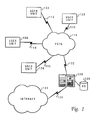
- User units 102, 104, 106 and 108 have communications links, 110, 112, 114 and 116 which provide these user units access to the public switched telephone network (PSTN) 118 .
- PSTN public switched telephone network
- server 120 provides users units 102-108 access to Internet 124 via communications link 126 .
- server 120 also stores various configuration information, passwords, E-mail messages, and backup data on storage device (SD) 128.
- User units 102-108 may be located in remote geographical locations, such as California or New York. Additionally, user units 102-108 may be located on other continents on the globe.
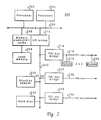
- Data processing system 200 may be a symmetric multiprocessor (SMP) system including a plurality of processors 202 and 204 connected to a system bus 206 . Also connected to system bus 206 is memory controller/cache 208 , which provides an interface to local memory 209. I/O bus bridge 210 is connected to system bus 206 and provides an interface to I/O bus 212 . Memory controller/cache 208 and I/O bus bridge 210 may be integrated as depicted.
- SMP symmetric multiprocessor
- Peripheral component interconnect (PCI) bus bridge 214 connected to I/O bus 212 provides an interface to PCI bus 216.
- PCI bus 216 A number of modems 218-220 may be connected to PCI bus 216 .
- Typical PCI bus implementations will support four PCI expansion slots or add-in connectors.
- Communications links to PSTN 118 depicted in Figure 1 may be provided through modems 218-220 connected to PCI local bus 216 through add-in boards.
- Modems 218-220 in the depicted example also provide a connection to Internet 124 shown in Figure 1.
- Additional PCI bus bridges 222, 224 provide interfaces for additional PCI buses 226, 228, from which additional modems may be supported. In this manner server 200 allows dial-ups by multiple user units simultaneously.
- a memory mapped graphics adapter 230 and a hard disk 232 may also be connected to I/O bus 212 as depicted, either directly or indirectly.
- the data processing system depicted in Figure 2 may be, for example, an IBM RS/6000 system, a product of International Business Machines Corporation in Armonk, New York, running the AIX operating system.
- the data processing system provides a platform for a Web server, and may be one of a group of interconnected servers employed by an Internet service provider to provide access to Web clients or user units to the Internet.
- the server data processing system in accordance with a preferred embodiment includes a Web server program, such as Netscape Enterprise Server Version 2.0, a product of Netscape Communications Corporation in Mountain View, California, which supports interface extensions.
- the server thus contains a known set of server application functions (SAFs) which accept a client's request together with configuration information and return a response.
- SAFs server application functions
- the server may also include an Application Programming Interface (API) providing extensions enabling application developers to extend or customize the SAFs through software programs commonly known as "plug-ins.”
- API Application Programming Interface
- the server supports off-line browsing by clients and provides storage for precaching Web pages.
- the server also implements and/or supports the processes described below for selecting Web pages for precaching and off-line downloading by clients.
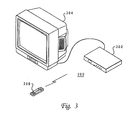
- FIG. 3 a pictorial representation of a data processing system which may be implemented as a user unit, such as user units 102-108 in Figure 1 , is depicted.
- Figure 3 is a pictorial representation of the data processing system as a whole.
- Data processing system 300 in the depicted example provides, with minimal economic costs for hardware to the user, access to the Internet.
- Data processing system 300 includes a data processing unit 302.
- Data processing unit 302 is preferably sized to fit in typical entertainment centers and provides all required functionality, conventionally found in personal computers, to enable a user to "browse" the Internet. Additionally, data processing unit 302 may provide other common functions such as, for example, serving as an answering machine, transmitting or receiving facsimile transmissions, or providing voice mail facilities.
- Data processing unit 302 a Web appliance, is connected to television 304 for display of graphical information.
- Television 304 may be any suitable television, although color televisions with an S-Video input will provide better presentations of the graphical information.
- Data processing unit 302 may be connected to television 304 through a standard coaxial cable connection.
- a remote control unit 306 allows a user to interact with and control data processing unit 302.
- Remote control unit 306 emits infrared (IR) signals, preferably modulated at a different frequency than the normal television, stereo, and VCR infrared remote control frequencies in order to avoid interference.
- Remote control unit 306 provides the functionality of a pointing device in conventional personal computers, including the ability to move a cursor on a display and select items.
- data processing unit 302 includes a motherboard 402 containing a processor 404 and memory 406 connected to system bus 408 .
- Processor 405 is preferably at least a 486 processor operating at or above 100 MHz.
- Memory 406 includes read only memory (ROM) 406a containing a basic input/output services (BIOS) routine and may include cache memory and/or video RAM.
- ROM read only memory
- BIOS basic input/output services
- Video/TV converter 410 on motherboard 402 and connected to system bus 408 generates computer video signals for computer monitors, a composite television signal, and an S-Video signal.
- the functionality of video/TV converter 410 may be provided utilizing commercially available video and converter chips.
- Keyboard/remote control interface unit 412 on motherboard 402 receives keyboard codes through controller 414 , regardless of whether a wired keyboard/pointing device or an infrared keyboard/remote control is being employed.
- Infrared remote control unit 306 transmits signals which are ultimately sent to the serial port as control signals generated by conventional mouse or pointing device movements. Two buttons on remote control unit 306 are interpreted identically to the two buttons on a conventional mouse, while the remainder of the buttons transmit signals corresponding to keystrokes on an infrared keyboard. Thus, remote control unit 306 has a subset of the functions provided by an infrared keyboard.
- Connectors indicators 416 on motherboard 402 provide the connections and indicators on data processing unit 302 described above.
- Power supply 418 is a conventional power supply except that it receives a control signal from controller 414 which effects shut down of all power to motherboard 402, hard drive 420 , and modem 422 . In some recovery situations, removing power and rebooting is the only guaranteed method of resetting all of these devices to a known state. Thus, power supply 418 , in response to a signal from controller 414 , is capable of powering down and restarting data processing unit 302 .
- Hard drive 420 contains operating system and applications software for data processing unit 302 , which preferably includes: IBM DOS 7.0, a product of International Business Machines Corporation in Armonk, New York; Windows 3.1, a product Microsoft Corporation in Redmond, Washington; and Netscape Navigator, a product of Netscape Communications Corporation in Mountain View, California. Data may also be stored on hard drive 420 .
- Modem 422 inserted into a slot mounted sideways on motherboard 402 , is preferably a 33.6 kbps modem supporting the V.42bis, V34bis, V.34, V.17 Fax, MNP 1-5, and AT command sets.
- Hard drive 420 may also store data, such as a list of favorite internet sites or unviewed downloads from an internet site. Additionally, hard drive 420 contains instructions necessary to establish a communications link with a service provider and initiate a configuration process for the data processing system.
- Controller 414 is preferably one or more of the 805x family controllers. Controller 414 is continuously powered and, when data processing unit 302 is turned on, monitors the system for a periodic "ping" indicating that data processing unit 302 is operating normally. In the event that controller 414 does not receive a ping within a prescribed timeout period, controller 414 removes power from the system and restarts the system. This may be necessary, for example, when the system experiences a general protection fault. If multiple attempts to restart the system prove unsuccessful, controller 414 shuts off data processing unit 302 and signals that service is required through indicators 416 . Thus, data processing unit 302 is capable of self-recovery in some circumstances without involvement by a user.
- Controller 414 also receives and processes input from infrared remote control 306 , infrared keyboard, wired keyboard, or wired mouse. When one keyboard or pointing device is used, all others are locked out (ignored) until none have been active for a prescribed period. Then the first keyboard or pointing device to generate activity locks out all others. Controller 414 also directly controls all LED indicators except that indicating modem use and specifies the boot sector selection during any power off-on cycle.
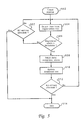
- FIG. 5 a high level flowchart for a process for precaching data at a server in accordance with a preferred embodiment is depicted.
- the process may be executed by a Web server during off-peak hours or may be continuously run throughout a day or a span of several days as a background application.
- the process depicted begins at step 502, which depicts a timed "wakeup" or automatic initiation of the process based on the server system clock or some other event within the server.
- the timing of the download initiation may be coordinated with the scheduling of automatic downloads by user units. For example, if the user units utilizing the server are all configured to make automatic downloads between 3:00 a.m. and 5:00 a.m., the server may be configured to start the process at approximately 1:00 a.m. so that the necessary downloads to the server are complete in time for the user unit downloads.
- the respective automatic downloads may be overlapped, with individual downloads to the server being completed prior to requests from the user units. This alternative may be appropriate if the process is run as a background application.
- the process then passes to step 504 , which illustrates selecting an item from a registration list for data to be precached at the server.
- the registration list contains identifications of information which clients or user units download on a periodic basis (e.g., every night or once a week) together with an associated number of users currently registered for each identified information.
- the registration list may contain, for example, a list of URLs for various Web pages frequently requested by a user or client.
- the registration list may be generated by specific user requests that entries be added to the registration list, by monitoring user transfers for periodic transfer from the same source, or both.
- the registration list may be generated by compiling specific off-peak information retrieval requests from clients employing the server at which Web data is to be precached, or by examining the "bookmarks" or "favorites" lists for a client's Web browser.
- a client's Web browser may be configured so that adding a URL to a bookmark list initiates a query to the client regarding adding the URL to an off-peak retrieval list.
- the registration list may be maintained by monitoring actual user transfers and comparing them to registration requests, decrementing the request number associated with an item when a user which requested that item does not download the item for longer than a threshold period (i.e., a month). In this manner, requested items which have been "abandoned" or unused by a requesting user may be culled from the registration list. For example, a user unit may monitor whether downloads are viewed and, after a period of time during which a specific download is not viewed, terminate automatic download of such data.
- step 506 depicts a determination of whether the number of clients or user units registered for periodic downloads of the item selected exceeds a threshold.
- the threshold is determined by the efficiency of precaching the downloads for the selected item. For example, if a single user only is registered for a specific download, it may be more efficient to simply allow that user to download the requested data directly, rather than precaching the download at the server.
- the threshold for individual items on the registration list may be dependently set on whether the item was specifically requested for off-peak information retrieval by a user or was merely added to the registration list based on a frequency of requests for this item.
- step 507 depicts a determination of whether all entries have been checked. If so, the process proceeds to step 514, described below. If not, however, the process returns to step 504 for selection of a different item. If at least the threshold number of users are registered for the selected item, the process proceeds to step 508, which illustrates fetching the data identified by the selected item, compressing the data, and storing it at the server. Any suitable compression utility may be utilized for compressing the data.
- the data fetched comprises Web pages from a Web site on the Internet.
- the number of Web pages retrieved is determined by rules or heuristics for deciding which Web pages and subpages are most likely to be accessed by a user.
- the Web pages downloaded each consist of a number of files or components. Therefore, a prior download of Web page components stored on the server but which were updated or are no longer referenced in the Web pages retrieved may be deleted as part of this step.
- Web pages obtained from different sites may be compressed and stored separately to facilitate distribution to each user of only the pages requested by that user.
- each server acts as a mirror site only for the specific Web sites requested for off-peak retrieval by users utilizing that server.
- step 510 depicts updating a download list containing a list of items precached at the server for client downloads.
- the download list may contain other information, such as the time and date of each downloaded component.
- step 512 illustrates a determination of whether all entries or items in the registration list have been checked. If not, the process returns to step 504 for selection of another item in the registration list. If so, however, the process proceeds to step 514 , which depicts the process becoming idle until the next timed precache download is initiated.
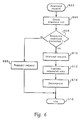
- step 602 depicts a server receiving a download request, such as an automatic, timed off-peak retrieval request for a particular Web page or an on-line request made at dialup.
- the request may contain an URL for a particular Web site, as described below.
- step 604 illustrates checking the download list of precached downloads at the server, and then to step 606 , which depicts a determination of whether the requested download is precached at the server. If not, the process proceeds to step 608, which illustrates transmitting the download requested to the appropriate location.
- step 616 depicts the process becoming idle until the next download request is received.
- step 610 which illustrates interception of the download request by the server.
- step 612 which depicts transmission of the requested download data from the server to the requesting user unit or Web client.
- the requested data is stored in a local memory, such as a hard disk drive, in the user unit.
- step 614 which illustrates the user unit automatically decompressing the downloaded data.
- step 616 which depicts the process becoming idle until the next download request is received.
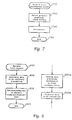
- step 702 which illustrates the user unit receiving a precached download from the server.
- step 704 illustrates deleting the previous download of a similar nature (i.e. older versions of the downloaded Web page components) received from the server.
- step 706 which depicts automatically decompressing the download at the time it is received to speed viewing.
- step 708 which illustrates the process becoming idle until another download is received.
- FIG. 8 a high level flowchart for a process for retrieving data from a Web site or server cache in a preferred embodiment is portrayed.
- the process illustrated is employed, as a whole or in part, to retrieve information from a Web site for precaching at a Web server as depicted in step 508 of Figure 5 or from a Web server for storage on a Web client's hard drive as described in connection with step 612 in Figure 6.
- the process for retrieval of information for precaching at a server requires more than a simple fetch, and must be adapted to the realities of off-peak information retrieval. It is anticipated that user requests for off-peak retrieval will far exceed the capacity of the bandwidth, time, and resources available to satisfy such requests. That is, the requests, if satisfied, would consume more resources than could practically be made available. Thus, the process of retrieving data for precaching must analyze the requests and the data requested and fetch data in an intelligent manner.
- Web pages, or hypertext documents are retrieved through a URL identifying the communications source for the page.
- the URL is typically of the form "www.domainname.ext/filepath/filename".
- the domain name and extension identify a specific Web site (Web domain or server) containing the requested information.
- the requested information will comprise a file or a group of files organized within directories on the Web site which is the subject of the request.
- the URL must include a path to the files containing the information requested and may also require a filename.
- Web pages at a particular location comprise an HTML file or plurality of HTML files together with associated graphics, sound, motion video, and executable script files.
- An HTML file forming part of a Web page will frequently include references to graphics files such as images in JPEG or GIF format, sound files such as audio information in WAV or MIDI format, motion video files such video information in MPEG format, and/or executable script files such as JAVA, JAVASCRIPT, or Common Gateway Interface (CGI) script files. More importantly, an HTML file will typically contain "links", or embedded references including URLs for "jumping" to (or, in reality, retrieving) other HTML files. These other HTML files may be local (located at the same Web domain, although perhaps at a different path) or remote (located on a different Web domain or server).
- Display of a Web Page by a browser requires retrieval of at least one HTML file formatting the Web page to be displayed and each graphics, sound, motion video, and script file referenced in the HTML file(s). Additionally, effectively caching a Web page requires that links within the page be resolved and data retrieved for display. The pages referenced by the links may themselves contain links to still other pages, and so on. In this manner, a single offline browsing request could conceivably request a page containing the root of a link "tree" which, if fully expanded, would include virtually every Web page currently published. Moreover, a client's off-peak retrieval time may be limited for the reasons described above. For these reasons, the process for retrieving data to or from a server cache must be intelligently implemented.
- step 802 depicts receiving a fetch request.
- the fetch request may be received by the server in an off-peak retrieval request by a client, or as part of a retrieval process for precaching by the server.
- the process then passes to step 804 , which illustrates determining the information to be retrieved or transmitted pursuant to the request.
- the information retrieved from a Web site for caching at a server or transmitted from a server cache to a client is selected using a set of rules or heuristic to identify files most likely to satisfy a user's interest without inordinately taxing available resources.
- the rules for determining which Web site files to retrieve for caching at the server are driven by the twin goals of obtaining a span of pages likely to interest a client and restricting the cache data to an appropriate size given the total cache size available.
- a broad sampling of the files associated with a Web page should be retrieved without devoting an unreasonable amount of system resources to following a specific series, or path, of links.
- any HTML file together with the graphics, sound, motion video, and/or script files referenced within the text of the HTML file may be referred to as a "page".
- the same graphics, sound, motion video, and/or script files may be associated with or referenced by more than one HTML file and therefore may be found in more than one page.
- references to separate HTML files, or links within a page are references to distinct pages.
- complete pages are preferably retrieved rather than partial pages (e.g., ignoring sound files), unless size constraints would be violated (e.g., the page includes unusually large motion video files).
- the system would begin resolving links within the news site's home page, following these links to other pages and retrieving those pages. Links within these second level pages are followed, and the process continues recursively until the link tree originating with the home page is fully exhausted or a threshold is exceeded.
- the threshold may be determined by a number of files retrieved, a quantity of bytes retrieved, or a time spent in retrieving files. Since it will most commonly be the case that the selected threshold will be exceeded before the link tree is exhausted, a mechanism must be provided for identifying the most preferred pages within the link tree to retrieve.
- a "breadth first” retrieval system may be employed, either in conjunction with or in lieu of employing statistical information to identify most popular pages.
- a "breadth first” system would retrieve all pages, either as a whole or in similar amounts, from a given level of a link tree before proceeding to a subsequent level of the link tree. This is in contrast to a "depth first" retrieval system, which would fully exhaust all levels for a specific path within the link tree before addressing branches from that path at various levels.
- Still another rule for page retrieval may be to prefer pages at the same site (i.e. identified by the same domain name within the page URL) to pages located at different sites.
- the rule may be extended to prefer pages in the same directory at a given site to pages in different directories.
- a site-based preference allows filtration of so-called "superlink" pages from the retrieval.
- Superlink pages contain links to a plethora of sites in the Web, often serving a resource locator for a particular area of interest. Following all links within a superlink page could quickly consume available system resources.
- a page link count may also be employed in conjunction with a site-based preference, ignoring links with a page containing more than a threshold number of, for example, 100. Again, such a large number of links would quickly exhaust available resources if fully resolved.
- the rules for determining what information is to be transmitted to the client during off-peak information retrieval are based on similar goals of providing pages of interest to the client and remaining within a threshold of allocated resources.
- An overriding concern with minimizing connection time by the off-peak retrieval is also present in the context of downloading cached information to the users. This allows larger numbers of clients to be fairly provided quality service. In this regard, limitations on time and bandwidth for off-peak retrieval may be more strict.
- the rules for determining what information is to be transmitted to the client are somewhat different. For example, if the client has never before downloaded a specific cached site, the entire content of that site (every page) must be downloaded. If the user is limited to one hour of off-peak information retrieval per night, it may not be possible to download all pages to the client in a single night. Several nights may be required to download a specific site. Therefore, a priority system must be established for downloaded content.
- all sound files for a given site may be assigned the lowest download priority, downloaded on the last night.
- Additionaiiy, statisticaiiy based, breadth-first, and site- or directory-based preferences as described above may be employed for determining which pages are selected for downloading.
- connection time also elevates considerations of information overlap. For example, if the same graphics files is used in a many pages for the specific site, as might occur with a logo image, that graphics file may be assigned a higher download priority than other files for the same site. Another scenario invoking this consideration is whether the client has already downloaded information for a given site, and merely requires an update, as might occur with a daily news site employing the same advertisements. Comparison of file dates and sizes in the server cache with those present on a client's system will reveal the changes which must be updated for the client. Alternatively, a listing of the files previously downloaded to the client may be maintained. This may be preferable since a listing of the services to which an individual client subscribes must be maintained in any event. Such listings also provide a resource for updating the registration list of sites to cache and for culling the files previously downloaded to the client.
- step 804a illustrates identifying the data already downloaded to the client, if any, for the requested Web site.
- step 804a illustrates identifying the data already downloaded to the client, if any, for the requested Web site.
- the example depicted assumes that a list of files downloaded to the client for a given Web site is maintained, either on the client's machine or the server. This may be compared to a list of current files for the Web site, with changes identified by discrepancies in file name, date, or size.
- step 804b illustrates prioritizing data to be downloaded according to the rules described above or similar rules.
- the process depicted may be employed as part of a multicasting process, where the same stream of information is provided to different recipients simultaneously. It may be, for example, that a number of users subscribe to off-peak retrieval for the same news site and therefore require the same update. If the individual download processes may be coordinated to receive the same stream of information, a single server process may be employed to update each respective user. Multicasting may be particularly useful where there are multiple user units in a single household.
- step 804 depicts retrieving the identified information and compressing it for storage at the server, or extracting the identified information from a compressed cache file, compressing it, and transmitting it to the client.
- step 806 depicts retrieving the identified information and compressing it for storage at the server, or extracting the identified information from a compressed cache file, compressing it, and transmitting it to the client.
- the concern with minimizing connection time also elevates the importance of compression in transmitting cached data to the client. Compressing a body of Web site information in a single file at the server is not a serious impediment to selective transmission of pages or files from that Web site information to the client.
- Known algorithms allow files to be extracted from compressed archives and compressed on the fly during transmission, so that only selected pages or files from the information need be transmitted, and may be transmitted in compressed form to reduce connection time.
- Web sites will eventually implement cache-optimized pages.
- a Web site may configure pages with knowledge of the rules used to prioritize caching and downloads, creating cache-optimized pages for preferential caching and downloading to clients.
- Web publishers may alternatively include comments identifying which pages and/or files are part of the same Web "publication" and which links reference pages for distinct publications.
- Web sites which update pages on a periodic basis may compress the updated or changed files for the Web site in a single bundle for efficient retrieval. Where a server provides off-line subscriptions to such a Web site, the server need only act as a mirror for the compressed, changed files.
- the approach described herein provides an efficient means of distributing data from a plurality of sources to a plurality of destinations in situations where the all of the data necessarily passes through the same node during the separate transfers.
- the bandwidth requirements from a server to the Internet can be decreased by precaching or "mirroring" information requested by multiple users at the server.
- the requested information is compressed to occupy less space at the server and to speed transfer to the user.
Landscapes
- Engineering & Computer Science (AREA)
- Computer Networks & Wireless Communication (AREA)
- Signal Processing (AREA)
- Computer Security & Cryptography (AREA)
- Theoretical Computer Science (AREA)
- Databases & Information Systems (AREA)
- Data Mining & Analysis (AREA)
- Physics & Mathematics (AREA)
- General Engineering & Computer Science (AREA)
- General Physics & Mathematics (AREA)
- Information Transfer Between Computers (AREA)
- Computer And Data Communications (AREA)
- Information Retrieval, Db Structures And Fs Structures Therefor (AREA)
Applications Claiming Priority (2)
| Application Number | Priority Date | Filing Date | Title |
|---|---|---|---|
| US827075 | 1997-03-26 | ||
| US08/827,075 US6182122B1 (en) | 1997-03-26 | 1997-03-26 | Precaching data at an intermediate server based on historical data requests by users of the intermediate server |
Publications (2)
| Publication Number | Publication Date |
|---|---|
| EP0868063A2 true EP0868063A2 (de) | 1998-09-30 |
| EP0868063A3 EP0868063A3 (de) | 2004-02-04 |
Family
ID=25248252
Family Applications (1)
| Application Number | Title | Priority Date | Filing Date |
|---|---|---|---|
| EP98302085A Withdrawn EP0868063A3 (de) | 1997-03-26 | 1998-03-19 | Verfahren und Vorrichtung zum Cache-Vorspeichern von Daten in einem Anbieter-Rechter |
Country Status (8)
| Country | Link |
|---|---|
| US (1) | US6182122B1 (de) |
| EP (1) | EP0868063A3 (de) |
| JP (1) | JP3762828B2 (de) |
| KR (1) | KR100300494B1 (de) |
| CN (1) | CN1294512C (de) |
| CA (1) | CA2229392C (de) |
| MY (1) | MY123888A (de) |
| TW (1) | TW364086B (de) |
Cited By (15)
| Publication number | Priority date | Publication date | Assignee | Title |
|---|---|---|---|---|
| WO2000031943A1 (de) * | 1998-11-20 | 2000-06-02 | Siemens Aktiengesellschaft | Sicherung der benutzerkonfiguration für webphones |
| US6341304B1 (en) | 1999-09-23 | 2002-01-22 | International Business Machines Corporation | Data acquisition and distribution processing system |
| WO2002028054A1 (de) * | 2000-09-29 | 2002-04-04 | Siemens Aktiengesellschaft | Verfahren und vorrichtung zur optimierung der datenübertragungsrate bei einer netzwerkanbindung |
| WO2002097556A3 (en) * | 2001-05-30 | 2003-04-17 | Ericsson Telefon Ab L M | A method for transferring a page from a server to a client and a program suitable to carry out the method |
| EP1154597A3 (de) * | 2000-05-08 | 2003-08-06 | Nec Corporation | Überlastregelungsverfahren und -System |
| WO2001063485A3 (en) * | 2000-02-24 | 2003-12-18 | Transfinity Corp | Content distribution system |
| WO2003075177A3 (en) * | 2002-03-04 | 2004-01-08 | Sendo Int Ltd | Retrieving information from an information database |
| WO2003094047A3 (de) * | 2002-04-30 | 2004-05-27 | Siemens Ag | Beschleunigte übermittlung von hypertext-dokumenten |
| EP1217552A3 (de) * | 2000-11-30 | 2004-12-29 | International Business Machines Corporation | Http Archiv Datei |
| GB2437600A (en) * | 2006-04-27 | 2007-10-31 | My Zebra Ltd | Media communications system for providing digital content through a network |
| CN100461166C (zh) * | 2003-09-03 | 2009-02-11 | 国际商业机器公司 | 利用移动设备的离线浏览 |
| EP2552082A1 (de) * | 2011-07-29 | 2013-01-30 | Deutsche Telekom AG | Verfahren zur Beschleunigung von Favoritenwebseiten und System |
| US8447835B2 (en) | 2001-02-15 | 2013-05-21 | Nokia Corporation | Method and apparatus for accessing data |
| EP2897405A4 (de) * | 2012-09-13 | 2015-10-14 | Huawei Tech Co Ltd | Verfahren zum herunterladen von inhalten sowie zugehörige vorrichtung und system |
| WO2016028948A1 (en) * | 2014-08-22 | 2016-02-25 | Microsoft Technology Licensing, Llc | Method for record selection to avoid negatively impacting latency |
Families Citing this family (159)
| Publication number | Priority date | Publication date | Assignee | Title |
|---|---|---|---|---|
| US6604103B1 (en) * | 1994-09-02 | 2003-08-05 | Mark A. Wolfe | System and method for information retrieval employing a preloading procedure |
| US7467137B1 (en) | 1994-09-02 | 2008-12-16 | Wolfe Mark A | System and method for information retrieval employing a preloading procedure |
| US8180844B1 (en) | 2000-03-18 | 2012-05-15 | Digimarc Corporation | System for linking from objects to remote resources |
| US6006252A (en) * | 1996-10-08 | 1999-12-21 | Wolfe; Mark A. | System and method for communicating information relating to a network resource |
| US6480486B2 (en) * | 1997-05-21 | 2002-11-12 | Lextron Systems, Inc. | Micro-localized internet service center |
| US8626763B1 (en) * | 1997-05-22 | 2014-01-07 | Google Inc. | Server-side suggestion of preload operations |
| US6351467B1 (en) * | 1997-10-27 | 2002-02-26 | Hughes Electronics Corporation | System and method for multicasting multimedia content |
| US7257604B1 (en) | 1997-11-17 | 2007-08-14 | Wolfe Mark A | System and method for communicating information relating to a network resource |
| US6769019B2 (en) * | 1997-12-10 | 2004-07-27 | Xavier Ferguson | Method of background downloading of information from a computer network |
| JP3844588B2 (ja) * | 1998-03-05 | 2006-11-15 | 富士通株式会社 | 情報管理システム、ローカルコンピュータ、及び情報取得プログラムを記録したコンピュータ読み取り可能な記録媒体 |
| US6385641B1 (en) * | 1998-06-05 | 2002-05-07 | The Regents Of The University Of California | Adaptive prefetching for computer network and web browsing with a graphic user interface |
| US7047489B2 (en) * | 1998-07-29 | 2006-05-16 | Fujitsu Limited | Slide show system and method using a browser |
| JP2000105775A (ja) * | 1998-07-29 | 2000-04-11 | Fujitsu Ltd | ブラウザを利用したスライドショ―システムおよび方法 |
| JP2000099436A (ja) * | 1998-09-24 | 2000-04-07 | Fujitsu Ltd | 表示装置 |
| US6195696B1 (en) * | 1998-10-01 | 2001-02-27 | International Business Machines Corporation | Systems, methods and computer program products for assigning, generating and delivering content to intranet users |
| JP4406944B2 (ja) * | 1998-11-11 | 2010-02-03 | 株式会社日立製作所 | 計算機システム及び問合せに対する処理分散システム |
| US6463455B1 (en) * | 1998-12-30 | 2002-10-08 | Microsoft Corporation | Method and apparatus for retrieving and analyzing data stored at network sites |
| AU5027200A (en) * | 1999-05-20 | 2000-12-12 | Intensifi, Inc. | Method and apparatus for access to, and delivery of, multimedia information |
| US7343412B1 (en) * | 1999-06-24 | 2008-03-11 | International Business Machines Corporation | Method for maintaining and managing dynamic web pages stored in a system cache and referenced objects cached in other data stores |
| US20010047394A1 (en) * | 1999-09-10 | 2001-11-29 | Kloba David D. | System, method, and computer program product for executing scripts on mobile devices |
| US7987420B1 (en) | 1999-09-10 | 2011-07-26 | Ianywhere Solutions, Inc. | System, method, and computer program product for a scalable, configurable, client/server, cross-platform browser for mobile devices |
| US20020052781A1 (en) * | 1999-09-10 | 2002-05-02 | Avantgo, Inc. | Interactive advertisement mechanism on a mobile device |
| US6421717B1 (en) * | 1999-09-10 | 2002-07-16 | Avantgo, Inc. | System, method, and computer program product for customizing channels, content, and data for mobile devices |
| US8595308B1 (en) | 1999-09-10 | 2013-11-26 | Ianywhere Solutions, Inc. | System, method, and computer program product for server side processing in a mobile device environment |
| US7392308B2 (en) * | 1999-09-10 | 2008-06-24 | Ianywhere Solutions, Inc. | System, method, and computer program product for placement of channels on a mobile device |
| AU7551200A (en) * | 1999-09-27 | 2001-04-30 | Gizmoz Ltd. | Self-propagating network content distribution |
| US7096417B1 (en) * | 1999-10-22 | 2006-08-22 | International Business Machines Corporation | System, method and computer program product for publishing interactive web content as a statically linked web hierarchy |
| JP2001125908A (ja) * | 1999-10-26 | 2001-05-11 | Sony Corp | 入力装置および方法 |
| US6338152B1 (en) * | 1999-10-28 | 2002-01-08 | General Electric Company | Method and system for remotely managing communication of data used for predicting malfunctions in a plurality of machines |
| US7082454B1 (en) * | 1999-11-15 | 2006-07-25 | Trilogy Development Group, Inc. | Dynamic content caching framework |
| US7340499B1 (en) * | 1999-12-03 | 2008-03-04 | Sun Microsystems, Inc. | Dynamic embedding of literal object data in supplied instance of information object |
| US6490575B1 (en) * | 1999-12-06 | 2002-12-03 | International Business Machines Corporation | Distributed network search engine |
| US6658402B1 (en) * | 1999-12-16 | 2003-12-02 | International Business Machines Corporation | Web client controlled system, method, and program to get a proximate page when a bookmarked page disappears |
| US7950999B2 (en) * | 2004-09-16 | 2011-05-31 | Bally Gaming, Inc. | User interface system and method for a gaming machine |
| US7093026B2 (en) * | 2000-02-14 | 2006-08-15 | Matsushita Electric Industrial, Co. Ltd | Data transmission system |
| US6947440B2 (en) | 2000-02-15 | 2005-09-20 | Gilat Satellite Networks, Ltd. | System and method for internet page acceleration including multicast transmissions |
| WO2001069387A2 (en) * | 2000-03-16 | 2001-09-20 | Microsoft Corporation | Notification platform architecture |
| US8380854B2 (en) * | 2000-03-21 | 2013-02-19 | F5 Networks, Inc. | Simplified method for processing multiple connections from the same client |
| JP3613550B2 (ja) * | 2000-03-29 | 2005-01-26 | インターナショナル・ビジネス・マシーンズ・コーポレーション | ウェブページ取得サービスシステム、サーバ、ウェブページ取得方法、記憶媒体及びプログラム伝送装置 |
| US6622168B1 (en) | 2000-04-10 | 2003-09-16 | Chutney Technologies, Inc. | Dynamic page generation acceleration using component-level caching |
| US7475404B2 (en) | 2000-05-18 | 2009-01-06 | Maquis Techtrix Llc | System and method for implementing click-through for browser executed software including ad proxy and proxy cookie caching |
| US8086697B2 (en) * | 2005-06-28 | 2011-12-27 | Claria Innovations, Llc | Techniques for displaying impressions in documents delivered over a computer network |
| US6728785B1 (en) * | 2000-06-23 | 2004-04-27 | Cloudshield Technologies, Inc. | System and method for dynamic compression of data |
| US7155489B1 (en) * | 2000-06-28 | 2006-12-26 | Microsoft Corporation | Acquiring web page information without commitment to downloading the web page |
| US6920488B1 (en) * | 2000-07-28 | 2005-07-19 | International Business Machines Corporation | Server assisted system for accessing web pages from a personal data assistant |
| TW540238B (en) * | 2000-08-08 | 2003-07-01 | Replaytv Inc | Method and system for remote television replay control |
| US6678795B1 (en) * | 2000-08-15 | 2004-01-13 | International Business Machines Corporation | Method and apparatus for memory prefetching based on intra-page usage history |
| US7216149B1 (en) * | 2000-08-18 | 2007-05-08 | International Business Machines Corporation | Gathering enriched web server activity data of cached web content |
| US7840691B1 (en) | 2000-09-07 | 2010-11-23 | Zamora Radio, Llc | Personal broadcast server system for providing a customized broadcast |
| EP1187481B1 (de) * | 2000-09-11 | 2008-04-02 | Handmark Europe AB | Ein Verfahren zur dynamischen Cachespeicherung |
| EP1187485B1 (de) * | 2000-09-11 | 2003-04-02 | MediaBricks AB | Verfahren zur Bereitstellung von Medieninhalt über ein digitales Netzwerk |
| AU2001294620A1 (en) * | 2000-09-19 | 2002-04-02 | Conxion Corporation | Method and apparatus for dynamic determination of optimum connection of a clientto content servers |
| JP2002132976A (ja) * | 2000-10-23 | 2002-05-10 | Uniden Corp | ホームページ管理装置及び方法並びにホームページ評価装置及び記録媒体 |
| US6609126B1 (en) | 2000-11-15 | 2003-08-19 | Appfluent Technology, Inc. | System and method for routing database requests to a database and a cache |
| EP1346289A1 (de) * | 2000-11-30 | 2003-09-24 | Appfluent Technology, Inc. | System und verfahren zum abliefern von dynamischem inhalt |
| US20020078170A1 (en) * | 2000-12-15 | 2002-06-20 | International Business Machines Corporation | Method and system for minimizing network bandwidth bottlenecks |
| US6650348B2 (en) * | 2001-01-17 | 2003-11-18 | Microsoft Corporation | System and method for web-based content scheduling |
| US20030074204A1 (en) * | 2001-01-17 | 2003-04-17 | Prasad Krothapalli | Offline browsing |
| DK1360796T3 (da) * | 2001-01-26 | 2010-05-10 | American Power Conv Corp | Fremgangsmåde og system til at indstille et sæt netværksapparater som kan forbindes for at tilvejebringe forbedret samarbejde, skalerbarhed og pålidelighed |
| US20020107835A1 (en) * | 2001-02-08 | 2002-08-08 | Coram Michael T. | System and method for adaptive result set caching |
| US8214501B1 (en) | 2001-03-02 | 2012-07-03 | At&T Intellectual Property I, L.P. | Methods and systems for electronic data exchange utilizing centralized management technology |
| US20020161634A1 (en) * | 2001-04-27 | 2002-10-31 | Koninklijke Philips Electronics N.V. | Electronic document with an automatically updated portion |
| US7962482B2 (en) | 2001-05-16 | 2011-06-14 | Pandora Media, Inc. | Methods and systems for utilizing contextual feedback to generate and modify playlists |
| US20060206478A1 (en) * | 2001-05-16 | 2006-09-14 | Pandora Media, Inc. | Playlist generating methods |
| US20060212442A1 (en) * | 2001-05-16 | 2006-09-21 | Pandora Media, Inc. | Methods of Presenting and Providing Content to a User |
| EP1260914A1 (de) * | 2001-05-23 | 2002-11-27 | Mediabricks Ab | Verfahren zur Optimierung des Kapazitätsverbrauch eines Clients |
| US7584418B2 (en) * | 2001-05-31 | 2009-09-01 | Oracle International Corporation | Methods, systems, and articles of manufacture for prefabricating an information page |
| US20020191015A1 (en) * | 2001-06-18 | 2002-12-19 | International Business Machines Corporation | Method and apparatus for managing history logs in a data processing system |
| US7716332B1 (en) * | 2001-06-20 | 2010-05-11 | At&T Intellectual Property I, L.P. | System and method for server-based predictive caching of back-end system data |
| US7610357B1 (en) * | 2001-06-29 | 2009-10-27 | Cisco Technology, Inc. | Predictively responding to SNMP commands |
| US20030004998A1 (en) * | 2001-06-29 | 2003-01-02 | Chutney Technologies, Inc. | Proxy-based acceleration of dynamically generated content |
| JP2003076647A (ja) * | 2001-08-31 | 2003-03-14 | Hitachi Ltd | メール送受信方法およびそれを用いる装置 |
| US7162522B2 (en) * | 2001-11-02 | 2007-01-09 | Xerox Corporation | User profile classification by web usage analysis |
| US20030115421A1 (en) * | 2001-12-13 | 2003-06-19 | Mchenry Stephen T. | Centralized bounded domain caching control system for network edge servers |
| US7437438B2 (en) * | 2001-12-27 | 2008-10-14 | Hewlett-Packard Development Company, L.P. | System and method for energy efficient data prefetching |
| ES2257543T3 (es) * | 2002-04-05 | 2006-08-01 | Telefonaktiebolaget Lm Ericsson (Publ) | Control de transferencia de objeto en una red de comunicaciones. |
| US7490162B1 (en) | 2002-05-15 | 2009-02-10 | F5 Networks, Inc. | Method and system for forwarding messages received at a traffic manager |
| US7069515B1 (en) * | 2002-05-21 | 2006-06-27 | Claria Corporation | Method and apparatus for displaying messages in computer systems |
| US7249313B2 (en) | 2002-06-26 | 2007-07-24 | International Business Machines Corporation | Creating and utilizing a wizard to capture an application's interdependencies between web pages and data accesses for running the application's downloadable dynamic web pages off-line |
| US7200645B2 (en) * | 2002-06-26 | 2007-04-03 | International Business Machines Corporation | Running dynamic web pages off-line with a wizard |
| US7415519B2 (en) * | 2002-06-28 | 2008-08-19 | Lenovo (Singapore) Pte. Ltd. | System and method for prevention of boot storms in a computer network |
| US8028077B1 (en) * | 2002-07-12 | 2011-09-27 | Apple Inc. | Managing distributed computers |
| US7584131B1 (en) | 2002-07-31 | 2009-09-01 | Ameriprise Financial, Inc. | Method for migrating financial and indicative plan data between computerized record keeping systems without a blackout period |
| US8015259B2 (en) | 2002-09-10 | 2011-09-06 | Alan Earl Swahn | Multi-window internet search with webpage preload |
| US7603341B2 (en) | 2002-11-05 | 2009-10-13 | Claria Corporation | Updating the content of a presentation vehicle in a computer network |
| US7774484B1 (en) | 2002-12-19 | 2010-08-10 | F5 Networks, Inc. | Method and system for managing network traffic |
| US7321931B2 (en) * | 2002-12-20 | 2008-01-22 | International Business Machines Corporation | Time controlled network use |
| WO2004109552A2 (en) * | 2003-06-03 | 2004-12-16 | Access Co., Ltd. | Method for browsing contents using page storing file |
| JP2005149387A (ja) * | 2003-11-19 | 2005-06-09 | Nec Corp | リアルタイムWeb共有システム |
| GB0326915D0 (en) * | 2003-11-19 | 2003-12-24 | Ibm | A method and system for updating/reloading the content of pages browsed over a network |
| US20050192814A1 (en) * | 2004-02-13 | 2005-09-01 | International Business Machines Corporation | Browser URL and content preloading based on autonomic collaboration |
| US7949726B2 (en) * | 2004-03-12 | 2011-05-24 | Ocean And Coastal Environmental Sensing, Inc. | System and method for delivering information on demand |
| US7437364B1 (en) | 2004-06-30 | 2008-10-14 | Google Inc. | System and method of accessing a document efficiently through multi-tier web caching |
| US8676922B1 (en) | 2004-06-30 | 2014-03-18 | Google Inc. | Automatic proxy setting modification |
| US8224964B1 (en) | 2004-06-30 | 2012-07-17 | Google Inc. | System and method of accessing a document efficiently through multi-tier web caching |
| JP2006040281A (ja) * | 2004-07-24 | 2006-02-09 | Samsung Electronics Co Ltd | コンテンツディスプレイ装置及び方法 |
| US20060059118A1 (en) * | 2004-08-10 | 2006-03-16 | Byrd Stephen A | Apparatus, system, and method for associating resources using a behavior based algorithm |
| US7661135B2 (en) * | 2004-08-10 | 2010-02-09 | International Business Machines Corporation | Apparatus, system, and method for gathering trace data indicative of resource activity |
| US20060036579A1 (en) * | 2004-08-10 | 2006-02-16 | Byrd Stephen A | Apparatus, system, and method for associating resources using a time based algorithm |
| US7546601B2 (en) * | 2004-08-10 | 2009-06-09 | International Business Machines Corporation | Apparatus, system, and method for automatically discovering and grouping resources used by a business process |
| US7630955B2 (en) * | 2004-08-10 | 2009-12-08 | International Business Machines Corporation | Apparatus, system, and method for analyzing the association of a resource to a business process |
| US8255413B2 (en) * | 2004-08-19 | 2012-08-28 | Carhamm Ltd., Llc | Method and apparatus for responding to request for information-personalization |
| US8078602B2 (en) * | 2004-12-17 | 2011-12-13 | Claria Innovations, Llc | Search engine for a computer network |
| US7383406B2 (en) * | 2004-11-19 | 2008-06-03 | International Business Machines Corporation | Application transparent autonomic availability on a storage area network aware file system |
| US7457930B2 (en) * | 2004-11-19 | 2008-11-25 | International Business Machines Corporation | Method for application transparent autonomic data replication improving access performance for a storage area network aware file system |
| US7464124B2 (en) * | 2004-11-19 | 2008-12-09 | International Business Machines Corporation | Method for autonomic data caching and copying on a storage area network aware file system using copy services |
| US7693863B2 (en) * | 2004-12-20 | 2010-04-06 | Claria Corporation | Method and device for publishing cross-network user behavioral data |
| CN100458776C (zh) * | 2005-01-13 | 2009-02-04 | 龙搜(北京)科技有限公司 | 网络缓存管理的系统和方法 |
| US8073866B2 (en) * | 2005-03-17 | 2011-12-06 | Claria Innovations, Llc | Method for providing content to an internet user based on the user's demonstrated content preferences |
| US7689663B2 (en) * | 2005-03-24 | 2010-03-30 | Hewlett-Packard Development Company, L.P. | Embedded web-based management method |
| US9002725B1 (en) | 2005-04-20 | 2015-04-07 | Google Inc. | System and method for targeting information based on message content |
| US20070074125A1 (en) * | 2005-09-26 | 2007-03-29 | Microsoft Corporation | Preview information for web-browsing |
| US7949714B1 (en) * | 2005-12-05 | 2011-05-24 | Google Inc. | System and method for targeting advertisements or other information using user geographical information |
| US8601004B1 (en) * | 2005-12-06 | 2013-12-03 | Google Inc. | System and method for targeting information items based on popularities of the information items |
| CN100486170C (zh) * | 2005-12-15 | 2009-05-06 | 国际商业机器公司 | 传送前摄http内容的方法和设备 |
| JP4519779B2 (ja) * | 2006-01-25 | 2010-08-04 | 株式会社東芝 | 管理装置、管理装置のキャッシュ制御方法及び記録媒体並びに情報転送システムのキャッシュ制御方法 |
| US7747749B1 (en) * | 2006-05-05 | 2010-06-29 | Google Inc. | Systems and methods of efficiently preloading documents to client devices |
| CN100542140C (zh) * | 2006-12-15 | 2009-09-16 | 华为技术有限公司 | 一种访问用户数据的方法及用户档案管理服务器 |
| KR101451851B1 (ko) * | 2007-01-03 | 2014-10-23 | 삼성전자주식회사 | 웹서버 및 그 웹 서비스 방법 |
| US8812651B1 (en) | 2007-02-15 | 2014-08-19 | Google Inc. | Systems and methods for client cache awareness |
| US8065275B2 (en) * | 2007-02-15 | 2011-11-22 | Google Inc. | Systems and methods for cache optimization |
| US8874518B2 (en) | 2007-06-06 | 2014-10-28 | International Business Machines Corporation | System, method and program product for backing up data |
| US7966318B2 (en) * | 2007-11-20 | 2011-06-21 | General Electric Company | Compressed data storage to provide recent and summary data |
| US8849838B2 (en) | 2008-01-15 | 2014-09-30 | Google Inc. | Bloom filter for storing file access history |
| US9535692B2 (en) * | 2008-03-14 | 2017-01-03 | Adobe Systems Incorporated | Systems and methods for managing related files in a software development environment |
| US8713520B2 (en) | 2008-04-04 | 2014-04-29 | Adobe Systems Incorporated | Web development environment that enables a developer to interact with run-time output presentation of a page |
| US8028081B2 (en) | 2008-05-23 | 2011-09-27 | Porto Technology, Llc | System and method for adaptive segment prefetching of streaming media |
| JP5517181B2 (ja) * | 2008-07-24 | 2014-06-11 | 日本電気株式会社 | コンテンツ配信システム、コンテンツ受信方法および装置 |
| KR101383573B1 (ko) * | 2008-08-01 | 2014-04-09 | 삼성전자주식회사 | 화상형성장치 및 그의 웹 정보 제공방법 |
| US8578506B2 (en) * | 2008-10-06 | 2013-11-05 | Telefonaktiebolaget Lm Ericsson (Publ) | Digital rights management in user-controlled environment |
| JP5168107B2 (ja) * | 2008-11-26 | 2013-03-21 | 富士通株式会社 | 中継サーバ、情報閲覧システム及びプログラム |
| WO2011026223A1 (en) * | 2009-09-02 | 2011-03-10 | Andrew Echenberg | Content distribution over a network |
| US8984048B1 (en) | 2010-04-18 | 2015-03-17 | Viasat, Inc. | Selective prefetch scanning |
| CN102298599A (zh) * | 2010-06-28 | 2011-12-28 | 宏碁股份有限公司 | 离线浏览网页方法及其系统 |
| CN102812452B (zh) * | 2010-09-07 | 2016-05-18 | Sk普兰尼特有限公司 | 用于显示缓存网页的系统、服务器、终端、方法、以及记录该方法的计算机可读记录介质 |
| CN101964816A (zh) * | 2010-09-26 | 2011-02-02 | 用友软件股份有限公司 | 在b/s架构软件系统中浏览数据的方法和系统 |
| US9465885B2 (en) * | 2010-12-03 | 2016-10-11 | Salesforce.Com, Inc. | Method and system for providing information to a mobile handheld device from a database system |
| US8788927B2 (en) * | 2011-02-24 | 2014-07-22 | Cbs Interactive Inc. | System and method for displaying web page content |
| US9065793B2 (en) * | 2011-02-24 | 2015-06-23 | Cbs Interactive Inc. | Rendering web content using pre-caching |
| US9146909B2 (en) | 2011-07-27 | 2015-09-29 | Qualcomm Incorporated | Web browsing enhanced by cloud computing |
| CN102957712B (zh) * | 2011-08-17 | 2016-04-20 | 阿里巴巴集团控股有限公司 | 网站资源加载方法和系统 |
| US9094090B2 (en) | 2011-09-23 | 2015-07-28 | Gilat Satellite Networks Ltd. | Decentralized caching system |
| CN103092701B (zh) * | 2011-10-31 | 2017-02-08 | 联想(北京)有限公司 | 一种通信方法、装置及电子设备 |
| SG190505A1 (en) * | 2011-11-24 | 2013-06-28 | Chikka Pte Ltd | System and method for detecting broadband service and a charging mechanism for same |
| US8832275B1 (en) * | 2012-03-30 | 2014-09-09 | Google Inc. | Offline web browser |
| EP3396983A1 (de) | 2012-04-10 | 2018-10-31 | Alcatel Lucent | Optimierung der backhaul- und funkverknüpfungskapazität in mobiltelekommunikationssystemen |
| US10128000B1 (en) * | 2012-04-19 | 2018-11-13 | Kaiser Foundation Hospitals | Computer system and method for delivering operational intelligence for ambulatory team based care and virtual medicine |
| CN103793426A (zh) * | 2012-11-01 | 2014-05-14 | 腾讯科技(深圳)有限公司 | 一种网页访问记录保存方法及装置 |
| CN103118081B (zh) * | 2013-01-18 | 2016-01-13 | 北京奇虎科技有限公司 | 预加载浏览器中浏览页面的服务器、客户端、系统和方法 |
| US9516092B2 (en) * | 2013-03-13 | 2016-12-06 | Google Inc. | Precompiling locally-stored instructions for a web application |
| US20150334204A1 (en) * | 2014-05-15 | 2015-11-19 | Google Inc. | Intelligent auto-caching of media |
| EP2953313A1 (de) * | 2014-06-05 | 2015-12-09 | Thomson Licensing | Verfahren zum Betreiben eines Zwischenspeichers entlang eines Übertragungsweges zwischen Client-Endgeräten und mindestens einem Server und entsprechender Zwischenspeicher |
| KR102151457B1 (ko) | 2014-08-25 | 2020-09-03 | 삼성전자 주식회사 | 통신 시스템에서 페이지 로딩 시간 단축 방법 및 장치 |
| US10178192B2 (en) * | 2015-09-15 | 2019-01-08 | Qualcomm Innovation Center, Inc. | Behavior-based browser bookmarks |
| CN107291756A (zh) | 2016-04-01 | 2017-10-24 | 阿里巴巴集团控股有限公司 | 数据缓存的方法及装置 |
| US10356200B2 (en) | 2016-12-28 | 2019-07-16 | Google Llc | Optimizing user interface data caching for future actions |
| CN107038218B (zh) * | 2017-03-17 | 2023-11-17 | 腾讯科技(深圳)有限公司 | 报表处理方法和系统 |
| CN112559472B (zh) * | 2020-12-07 | 2024-05-14 | 北京锐安科技有限公司 | 一种文件传输方法、装置、计算机设备及存储介质 |
| CN117938955B (zh) * | 2024-03-21 | 2024-06-21 | 北京火山引擎科技有限公司 | 用于cdn中的数据预热方法、装置、设备和介质 |
Family Cites Families (16)
| Publication number | Priority date | Publication date | Assignee | Title |
|---|---|---|---|---|
| US5611049A (en) * | 1992-06-03 | 1997-03-11 | Pitts; William M. | System for accessing distributed data cache channel at each network node to pass requests and data |
| US5452447A (en) | 1992-12-21 | 1995-09-19 | Sun Microsystems, Inc. | Method and apparatus for a caching file server |
| US5581704A (en) * | 1993-12-06 | 1996-12-03 | Panasonic Technologies, Inc. | System for maintaining data coherency in cache memory by periodically broadcasting invalidation reports from server to client |
| US5659631A (en) * | 1995-02-21 | 1997-08-19 | Ricoh Company, Ltd. | Data compression for indexed color image data |
| JP4309480B2 (ja) * | 1995-03-07 | 2009-08-05 | 株式会社東芝 | 情報処理装置 |
| US6029175A (en) * | 1995-10-26 | 2000-02-22 | Teknowledge Corporation | Automatic retrieval of changed files by a network software agent |
| US5781901A (en) * | 1995-12-21 | 1998-07-14 | Intel Corporation | Transmitting electronic mail attachment over a network using a e-mail page |
| US5802299A (en) * | 1996-02-13 | 1998-09-01 | Microtouch Systems, Inc. | Interactive system for authoring hypertext document collections |
| US5859971A (en) * | 1996-02-15 | 1999-01-12 | International Business Machines Corp. | Differencing client/server communication system for use with CGI forms |
| US5754774A (en) * | 1996-02-15 | 1998-05-19 | International Business Machine Corp. | Client/server communication system |
| US5727159A (en) * | 1996-04-10 | 1998-03-10 | Kikinis; Dan | System in which a Proxy-Server translates information received from the Internet into a form/format readily usable by low power portable computers |
| US5838910A (en) * | 1996-03-14 | 1998-11-17 | Domenikos; Steven D. | Systems and methods for executing application programs from a memory device linked to a server at an internet site |
| US5925100A (en) * | 1996-03-21 | 1999-07-20 | Sybase, Inc. | Client/server system with methods for prefetching and managing semantic objects based on object-based prefetch primitive present in client's executing application |
| US5673322A (en) * | 1996-03-22 | 1997-09-30 | Bell Communications Research, Inc. | System and method for providing protocol translation and filtering to access the world wide web from wireless or low-bandwidth networks |
| US5889952A (en) * | 1996-08-14 | 1999-03-30 | Microsoft Corporation | Access check system utilizing cached access permissions |
| US5838927A (en) * | 1996-11-22 | 1998-11-17 | Webtv Networks | Method and apparatus for compressing a continuous, indistinct data stream |
-
1997
- 1997-03-26 US US08/827,075 patent/US6182122B1/en not_active Expired - Lifetime
-
1998
- 1998-01-15 TW TW087100498A patent/TW364086B/zh not_active IP Right Cessation
- 1998-02-10 KR KR1019980003909A patent/KR100300494B1/ko not_active Expired - Fee Related
- 1998-02-13 CA CA002229392A patent/CA2229392C/en not_active Expired - Fee Related
- 1998-02-24 MY MYPI98000792A patent/MY123888A/en unknown
- 1998-03-10 CN CNB981060986A patent/CN1294512C/zh not_active Expired - Lifetime
- 1998-03-16 JP JP06486198A patent/JP3762828B2/ja not_active Expired - Fee Related
- 1998-03-19 EP EP98302085A patent/EP0868063A3/de not_active Withdrawn
Cited By (19)
| Publication number | Priority date | Publication date | Assignee | Title |
|---|---|---|---|---|
| WO2000031943A1 (de) * | 1998-11-20 | 2000-06-02 | Siemens Aktiengesellschaft | Sicherung der benutzerkonfiguration für webphones |
| US6341304B1 (en) | 1999-09-23 | 2002-01-22 | International Business Machines Corporation | Data acquisition and distribution processing system |
| WO2001063485A3 (en) * | 2000-02-24 | 2003-12-18 | Transfinity Corp | Content distribution system |
| US6952422B2 (en) | 2000-05-08 | 2005-10-04 | Nec Corporation | Congestion control method and system |
| EP1154597A3 (de) * | 2000-05-08 | 2003-08-06 | Nec Corporation | Überlastregelungsverfahren und -System |
| WO2002028054A1 (de) * | 2000-09-29 | 2002-04-04 | Siemens Aktiengesellschaft | Verfahren und vorrichtung zur optimierung der datenübertragungsrate bei einer netzwerkanbindung |
| EP1217552A3 (de) * | 2000-11-30 | 2004-12-29 | International Business Machines Corporation | Http Archiv Datei |
| US8447835B2 (en) | 2001-02-15 | 2013-05-21 | Nokia Corporation | Method and apparatus for accessing data |
| WO2002097556A3 (en) * | 2001-05-30 | 2003-04-17 | Ericsson Telefon Ab L M | A method for transferring a page from a server to a client and a program suitable to carry out the method |
| WO2003075177A3 (en) * | 2002-03-04 | 2004-01-08 | Sendo Int Ltd | Retrieving information from an information database |
| WO2003094047A3 (de) * | 2002-04-30 | 2004-05-27 | Siemens Ag | Beschleunigte übermittlung von hypertext-dokumenten |
| CN100461166C (zh) * | 2003-09-03 | 2009-02-11 | 国际商业机器公司 | 利用移动设备的离线浏览 |
| US9811603B2 (en) | 2003-09-03 | 2017-11-07 | International Business Machines Corporation | Transport and administration model for offline browsing |
| US10331755B2 (en) | 2003-09-03 | 2019-06-25 | International Business Machines Corporation | Transport and administration model for offline browsing |
| GB2437600A (en) * | 2006-04-27 | 2007-10-31 | My Zebra Ltd | Media communications system for providing digital content through a network |
| EP2552082A1 (de) * | 2011-07-29 | 2013-01-30 | Deutsche Telekom AG | Verfahren zur Beschleunigung von Favoritenwebseiten und System |
| EP2897405A4 (de) * | 2012-09-13 | 2015-10-14 | Huawei Tech Co Ltd | Verfahren zum herunterladen von inhalten sowie zugehörige vorrichtung und system |
| US9924016B2 (en) | 2012-09-13 | 2018-03-20 | Huawei Technologies Co., Ltd. | Content download method, related device, and system |
| WO2016028948A1 (en) * | 2014-08-22 | 2016-02-25 | Microsoft Technology Licensing, Llc | Method for record selection to avoid negatively impacting latency |
Also Published As
| Publication number | Publication date |
|---|---|
| KR19980079706A (ko) | 1998-11-25 |
| JPH10275108A (ja) | 1998-10-13 |
| US6182122B1 (en) | 2001-01-30 |
| TW364086B (en) | 1999-07-11 |
| MY123888A (en) | 2006-06-30 |
| CN1194413A (zh) | 1998-09-30 |
| CA2229392C (en) | 2002-03-19 |
| CA2229392A1 (en) | 1998-09-26 |
| CN1294512C (zh) | 2007-01-10 |
| KR100300494B1 (ko) | 2001-09-28 |
| JP3762828B2 (ja) | 2006-04-05 |
| EP0868063A3 (de) | 2004-02-04 |
Similar Documents
| Publication | Publication Date | Title |
|---|---|---|
| US6182122B1 (en) | Precaching data at an intermediate server based on historical data requests by users of the intermediate server | |
| US6366947B1 (en) | System and method for accelerating network interaction | |
| US7523173B2 (en) | System and method for web page acquisition | |
| US5991760A (en) | Method and apparatus for modifying copies of remotely stored documents using a web browser | |
| US7363291B1 (en) | Methods and apparatus for increasing efficiency of electronic document delivery to users | |
| US20020178232A1 (en) | Method of background downloading of information from a computer network | |
| US5991809A (en) | Web serving system that coordinates multiple servers to optimize file transfers | |
| US7305472B2 (en) | Method for downloading a web page to a client for efficient display on a television screen | |
| EP0811939B1 (de) | Methode und Vorrichtung für Proxyfunkion und Umkodierung von Dokumenten in einem verteilten Netzwerk | |
| US5961602A (en) | Method for optimizing off-peak caching of web data | |
| US6105028A (en) | Method and apparatus for accessing copies of documents using a web browser request interceptor | |
| US6061686A (en) | Updating a copy of a remote document stored in a local computer system | |
| US6311197B2 (en) | Method for downloading a web page to a client for efficient display on a television screen | |
| US6163779A (en) | Method of saving a web page to a local hard drive to enable client-side browsing | |
| US20050192814A1 (en) | Browser URL and content preloading based on autonomic collaboration | |
| CZ289563B6 (cs) | Server připojitelný k síti a způsob jeho provozu | |
| WO1998004985A9 (en) | Web serving system with primary and secondary servers | |
| US6178460B1 (en) | Method of efficiently retrieving data on a computer network by monitoring performance of mirrored network locations | |
| JPH10320337A (ja) | 分散データ管理方法 | |
| US6883020B1 (en) | Apparatus and method for filtering downloaded network sites | |
| US6182140B1 (en) | Hot objects with multiple links in web browsers | |
| WO2001050320A1 (en) | Minimal impact crawler | |
| WO2001075668A2 (en) | Search systems | |
| AU740208B2 (en) | Web serving system with primary and secondary servers |
Legal Events
| Date | Code | Title | Description |
|---|---|---|---|
| PUAI | Public reference made under article 153(3) epc to a published international application that has entered the european phase |
Free format text: ORIGINAL CODE: 0009012 |
|
| AK | Designated contracting states |
Kind code of ref document: A2 Designated state(s): AT BE CH DE DK ES FI FR GB GR IE IT LI LU MC NL PT SE |
|
| AX | Request for extension of the european patent |
Free format text: AL;LT;LV;MK;RO;SI |
|
| PUAL | Search report despatched |
Free format text: ORIGINAL CODE: 0009013 |
|
| AK | Designated contracting states |
Kind code of ref document: A3 Designated state(s): AT BE CH DE DK ES FI FR GB GR IE IT LI LU MC NL PT SE |
|
| AX | Request for extension of the european patent |
Extension state: AL LT LV MK RO SI |
|
| 17P | Request for examination filed |
Effective date: 20040220 |
|
| 17Q | First examination report despatched |
Effective date: 20040415 |
|
| AKX | Designation fees paid |
Designated state(s): AT BE CH DE ES FR GB IE IT LI NL SE |
|
| STAA | Information on the status of an ep patent application or granted ep patent |
Free format text: STATUS: THE APPLICATION IS DEEMED TO BE WITHDRAWN |
|
| 18D | Application deemed to be withdrawn |
Effective date: 20060117 |