EP0868086B1 - Videodekodierer - Google Patents
Videodekodierer Download PDFInfo
- Publication number
- EP0868086B1 EP0868086B1 EP19970309577 EP97309577A EP0868086B1 EP 0868086 B1 EP0868086 B1 EP 0868086B1 EP 19970309577 EP19970309577 EP 19970309577 EP 97309577 A EP97309577 A EP 97309577A EP 0868086 B1 EP0868086 B1 EP 0868086B1
- Authority
- EP
- European Patent Office
- Prior art keywords
- frame
- data
- reference frame
- decoding
- last
- Prior art date
- Legal status (The legal status is an assumption and is not a legal conclusion. Google has not performed a legal analysis and makes no representation as to the accuracy of the status listed.)
- Expired - Lifetime
Links
- 230000005540 biological transmission Effects 0.000 claims description 18
- 238000000034 method Methods 0.000 claims description 15
- 238000010586 diagram Methods 0.000 description 6
- 230000004044 response Effects 0.000 description 6
- 238000012217 deletion Methods 0.000 description 3
- 230000037430 deletion Effects 0.000 description 3
- 230000003247 decreasing effect Effects 0.000 description 2
- 230000001934 delay Effects 0.000 description 2
- 238000012986 modification Methods 0.000 description 2
- 230000004048 modification Effects 0.000 description 2
- 230000002123 temporal effect Effects 0.000 description 2
- 230000001186 cumulative effect Effects 0.000 description 1
- 230000007423 decrease Effects 0.000 description 1
- 230000000694 effects Effects 0.000 description 1
- 238000005516 engineering process Methods 0.000 description 1
- 238000005192 partition Methods 0.000 description 1
- 238000011084 recovery Methods 0.000 description 1
Images



Classifications
-
- H—ELECTRICITY
- H04—ELECTRIC COMMUNICATION TECHNIQUE
- H04N—PICTORIAL COMMUNICATION, e.g. TELEVISION
- H04N19/00—Methods or arrangements for coding, decoding, compressing or decompressing digital video signals
- H04N19/65—Methods or arrangements for coding, decoding, compressing or decompressing digital video signals using error resilience
-
- H—ELECTRICITY
- H04—ELECTRIC COMMUNICATION TECHNIQUE
- H04N—PICTORIAL COMMUNICATION, e.g. TELEVISION
- H04N19/00—Methods or arrangements for coding, decoding, compressing or decompressing digital video signals
- H04N19/42—Methods or arrangements for coding, decoding, compressing or decompressing digital video signals characterised by implementation details or hardware specially adapted for video compression or decompression, e.g. dedicated software implementation
- H04N19/423—Methods or arrangements for coding, decoding, compressing or decompressing digital video signals characterised by implementation details or hardware specially adapted for video compression or decompression, e.g. dedicated software implementation characterised by memory arrangements
-
- H—ELECTRICITY
- H04—ELECTRIC COMMUNICATION TECHNIQUE
- H04N—PICTORIAL COMMUNICATION, e.g. TELEVISION
- H04N19/00—Methods or arrangements for coding, decoding, compressing or decompressing digital video signals
- H04N19/60—Methods or arrangements for coding, decoding, compressing or decompressing digital video signals using transform coding
- H04N19/61—Methods or arrangements for coding, decoding, compressing or decompressing digital video signals using transform coding in combination with predictive coding
-
- H—ELECTRICITY
- H04—ELECTRIC COMMUNICATION TECHNIQUE
- H04N—PICTORIAL COMMUNICATION, e.g. TELEVISION
- H04N19/00—Methods or arrangements for coding, decoding, compressing or decompressing digital video signals
- H04N19/85—Methods or arrangements for coding, decoding, compressing or decompressing digital video signals using pre-processing or post-processing specially adapted for video compression
- H04N19/89—Methods or arrangements for coding, decoding, compressing or decompressing digital video signals using pre-processing or post-processing specially adapted for video compression involving methods or arrangements for detection of transmission errors at the decoder
-
- H—ELECTRICITY
- H04—ELECTRIC COMMUNICATION TECHNIQUE
- H04N—PICTORIAL COMMUNICATION, e.g. TELEVISION
- H04N19/00—Methods or arrangements for coding, decoding, compressing or decompressing digital video signals
- H04N19/10—Methods or arrangements for coding, decoding, compressing or decompressing digital video signals using adaptive coding
- H04N19/102—Methods or arrangements for coding, decoding, compressing or decompressing digital video signals using adaptive coding characterised by the element, parameter or selection affected or controlled by the adaptive coding
- H04N19/103—Selection of coding mode or of prediction mode
- H04N19/107—Selection of coding mode or of prediction mode between spatial and temporal predictive coding, e.g. picture refresh
Definitions
- the present invention relates to a picture decoder, and more particularly to an improvement in picture quality degraded by a data error or a data loss caused during picture data transmission.
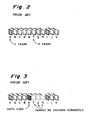
- the coding method adopted by the ITU-T Recommendation H.263, shown in FIG. 2 performs intra-frame coding on time-sequenced frames (I frames a and i) at regular intervals and, at other times, performs inter-frame coding for each of P frames (inter-frame coded frames, b - h, j - ) with reference to the immediately preceding frame to remove temporal redundancy.
- a frame coded in the intra-frame coding method is referred to as an I frame
- a frame coded in the inter-frame coding method is referred to as a P frame.
- networks employ a protocol (for example, TCP : Transmission Control Protocol) in which the transmitting device sends packets with attached serial numbers, and the receiving device rearranges the packets in the correct sequence, confirms their arrival, and sends requests for the retransmission of non-arriving packets back to the transmitting device in order to deal with these problems and increase network reliability.
- TCP Transmission Control Protocol
- Broadcasting and multicasting are schemes which send data to a plurality of sites at a time.
- packet dropout occurs during transmission of a packet to one of the sites, the above protocol requires that the same packet be sent even to those sites which have received the packet successfully, significantly increasing the network load.
- Broadcasting and multicasting are therefore performed using a protocol that does not re-transmit a packet, such as the User Datagram Protocol (UDP); as a result,. the probability of packet dropout increases.
- UDP User Datagram Protocol
- the data error rate or data drop-out rate is high not only when data is sent in packets but when a line connection is established before data is sent.
- the errors exceed the error-correcting capability of the receiving device, a sequence of data items are sometimes discarded to receive some other part of data successfully.
- Data dropouts in wireless networks therefore tend to be larger than in wireline networks.
- Another problem is that the processing speed of the sending device is not always equal to that of the receiving device. For example, decoding all the frames on a slower receiving device would put much frame data in the wait state, causing long delays. This requires the receiving device to intentionally skip frames. However, when there is no decoding data for a frame preceding the current frame, as in the inter-frame coding method according to the prior art, the current frame cannot be decoded and therefore frames cannot be skipped as intended.
- FIG. 3 shows an example of frame dropout that may occur during transmission of frames.
- frame e is dropped out or cannot be decoded because of slow processing, the P frames (f, g, h) cannot be decoded until the next I frame, i, is received.
- EP 0 763 944 A2 an arrangement is disclosed in which a frame is selected to serve as a reference frame when coding P frames on receipt of an acknowledgement that the frame has been successfully received by a decoder.
- the reference frame is then saved in either a reference frame memory unit or together with other received frames in a ring buffer.
- a data decoder includes receiving means configured to receive coded data coded through predictive coding and a reference frame number of a reference frame used in the predictive coding over a transmission line, decoding means configured to decode the coded data using frame data indicated by the reference frame number, the coded data having been received by the receiving means, decoding status signal transmitting means configured to output a decoding status signal indicating a decoding result of each frame decoded by the decoding means and a frame number associated with the frame to a picture coder, frame data storing means arranged to store a plurality of frames successfully decoded by the decoding means and to manage a last frame out of at least one frame used previously as the reference frame and indicated by the reference frame number as a last reference frame, reference frame indicating means configured to provide an indication of which of the plurality of frames stored in the frame data storing means is the last reference frame and reference frame selecting and deleting means arranged to select an oldest frame other than the reference frame using said indication provided by said reference frame indicating
- the reference frame indication means may include a pointer configured to point to said last frame among said plurality of concurrently stored frames.
- This aspect also provides a method of decoding data comprising receiving coded data coded through predictive coding and a reference frame number of a reference frame used in the predictive coding, decoding the coded data using frame data indicated by the reference frame number, outputting a decoding status signal indicating a decoding result of a frame decoded by the decoding means and the frame number associated with the frame to a picture coder, storing in a data store a plurality of items of frame data when successfully decoded, managing a last frame out of at least one frame used previously as the reference frame, and indicated by the reference frame number, as a last reference frame, including providing an indication of which of the plurality of items stored in the data store is the last reference frame and selecting an oldest frame other than the last reference frame using said indication, and deleting the oldest frame to allow further successfully decoded items of frame data to be stored in the store.
- the indication of the last reference frame may be provided by a pointer arranged to point to the last frame among said plurality of concurrently stored items of frame data.
- a data decoder includes receiving means configured to receive, on a block basis, coded data coded through predictive coding and a reference frame number of a reference frame and a block number used in the predictive coding over a transmission line, a frame being divided into a plurality of blocks, decoding means configured to decode the coded data using block data indicated by the reference frame number and the block number, the coded data being received by the receiving means, decoding status signal transmitting means configured to output a decoding status signal indicating a decoding result of each block decoded by the decoding means and the frame number and the block number associated with the coded data to a picture coder, frame data storing means arranged to store, on a block basis, a plurality of frames successfully decoded by the decoding means and to manage, on a block basis, a last frame out of at least one frame used previously as the reference frame and indicated by the reference frame number as a last reference frame, reference frame indicating means configured to provide an indication of which of the
- the reference frame indicating means may be a pointer configured to point to said last reference frame among the plurality of frames stored in said frame data storing means.
- This aspect also provides a method of decoding data comprising receiving, on a block basis, coded data coded through predictive coding and a reference frame number of a reference frame and a block number used in the predictive coding, a frame being divided into a plurality of blocks, decoding the coded data using block data indicated by the reference frame number and the block number, outputting a decoding status signal indicating a decoding result of a data block decoded by the decoding means and the frame number associated with the data block to a picture coder, storing in a data store, on a block basis, a plurality of items of frame data when successfully decoded, managing a last frame out of at least one frame used previously as the reference frame, as a last reference frame, including providing an indication of which of the plurality of items stored in the data store is the last reference frame, selecting an oldest frame other than the last reference frame using said indication and deleting, on a block basis, a block of said oldest frame to allow further successfully decoded items of frame data to be stored in the store
- Said indication may be provided by a pointer arranged to point to said last reference frame among said plurality of concurrently stored items of frame data.
- the moving-picture decoder updates a reference picture on a frame basis or on a block basis, where a block is one partition of a frame.
- a decoding status signal is returned and the reference picture is updated each time a frame is updated;
- the decoding status signal is returned and the reference picture is updated each time a block is updated.
- the picture decoder (receiving device) in the first embodiment is characterized in that the decoder saves in the frame memory the last frame (or block) used as the reference picture (hereinafter called last reference frame).
- FIG. 1 A functional configuration of the moving-picture decoder (receiving device) used in the first embodiment is shown in FIG. 1.
- a moving-picture decoder (receiving device) 100 comprises a coded data receiving module 101, a reference frame comparing module 102, a reference frame updating module 103, a reference frame memory module 104, a frame memory module 105, a reference frame selecting and deleting module 106, a decoding module 107, a acknowledgment signal transmitting module 108, a moving-picture outputting module 109, and a refresh signal transmitting module 110.
- the coded data receiving module 101 receives coded moving-picture data from the sending moving-picture coder.
- the module passes received coded data as well as data multiplexed on the coded data, such as an intra-/inter-frame coding identifier and a reference frame number, to the decoding module 107; it also sends sending device information, multiplexed as necessary on the coded data, to the decoding module 107.
- the coded data receiving module 101 also passes the reference frame number to the reference frame comparing module 102.
- the reference frame comparing module 102 compares the reference frame number contained each received frame (or block) with the reference frame number stored in the reference frame memory module 104. If two reference frame numbers mismatch, the reference frame comparing module 102 sends a reference frame update request to the reference frame updating module 103 and passes a new reference frame number to it.
- the reference frame updating module 103 upon receiving an update request from the reference frame comparing module 102, reads frame data (or block data) associated with the new reference frame number from the frame memory module 105, and writes the frame number and frame data into the reference frame memory module 104 for updating.
- the reference frame updating module 103 also passes the reference frame number to the reference frame selecting and deleting module 106.
- the reference frame memory module 104 is a memory medium, such as a memory circuit, which memorizes reference frame data for use in inter-frame decoding. This module is updated by the reference frame updating module 103 and the decoding module 107.
- the frame memory module 105 is a medium such as a memory circuit containing decoded frame data (or block data). Data of a frame (or block) decoded by the decoding module 107 is written into the frame memory module 105; the data is deleted as necessary by the reference frame selecting and deleting module 106. The frame memory module 105 also keeps track of which frame (or block) is the last reference frame.
- the reference frame selecting and deleting module 106 saves the last reference frame in the frame memory module 105. That is, the module maintains the last reference frame based on the reference frame number received from the reference frame updating module 103, and deletes frames (or blocks) earlier than the last reference frame from the frame memory module 105. The last reference frame is not cleared until updated.
- the decoding module 107 decodes received coded data and sends resulting decoded data to the moving-picture outputting module 109.
- the decoding module 107 writes decoded data and the frame number into the reference frame memory module 104 and the frame memory module 105 to update the reference frame picture;
- the module decodes data by referencing data stored in the reference frame memory module 104 and writes decoded data and the frame number into the frame memory module 105. If a transmission error is detected by using CRC or if the picture data cannot be decoded because no reference frame data is stored in the reference frame memory module 104 , the decoding module 107 does not write data into the reference frame memory module 104 and the frame memory module 105.
- the acknowledgment signal transmitting module 108 sends the acknowledgment signal to the moving-picture coder (sending device) to inform it of the frame which has been decoded successfully.
- the moving-picture outputting module 109 outputs decoded data received from the decoding module 107 to a display monitor device.
- the refresh signal transmitting module 110 upon receiving a refresh request from a user, sends a refresh signal to the moving-picture coder (sending device).
- FIG. 4 shows the reference frame update method executed in response to the acknowledgment signal (ACK) when the reference frame selecting and deleting module 106 is not used. Assume that the frame memory module 105 contains three frames.
- Successfully-decoded frames (a, b, c, d) are stored in the frame memory module 105.
- the frame memory module 105 is full, the oldest frame is cleared and then a new frame is added. For example, when frame d is stored, frame a is cleared. Instead of clearing frame a, frame d may be overwritten directly on frame a.
- a transmission error or a decoding error occurs, the frame is not stored in the frame memory module 105.
- next frame h
- frame d is cleared. Therefore, the next frame, i, which is received successfully, cannot be decoded because the reference frame d has already been cleared from the fi ame memory module 105.
- continuous decoding status signal errors may clear a necessary reference frame, decreasing coding efficiency.
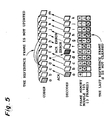
- FIG. 5 shows the reference frame update method executed in response to the acknowledgment signal (ACK) when the reference frame selecting and deleting module 106 is used. Assume that the frame memory module 105 contains three frames.
- Successfully-decoded frames (a, b, c, d) are stored in the frame memory module 105.
- the last reference frame is managed using a flag or a pointer. In FIG. 5, the number of a frame used as the last reference frame is circled.
- Frame e on which a transmission error or a decoding error occurred is not stored in the frame memory module 105.
- the last reference frame is temporarily nullified.
- a circle is cleared at the time frame e is processed. This is because, when a decoding error occurs, it cannot be determined whether or not the last reference frame b should be kept in frame memory module 105. Note that no problem will develop even if frame b is kept in frame memory module 105 as the last reference frame.
- FIG. 6 shows the reference frame update method executed in response to both the acknowledgment signal (ACK) and the negative acknowledgment signal (NACK) when the reference frame selecting and deleting module 106 of the first embodiment is used.
- ACK acknowledgment signal
- NACK negative acknowledgment signal
- Frames a - d and frames k and the following are processed in response to the NACK signal, while frame e - j are processed in response to the ACK signal.
- the coder is switched to the ACK mode when it receives the NACK signal or receives neither of the signals, and is switched to the NACK mode when it receives two continuous ACK signals.
- Successfully-decoded frames are stored in the frame memory module 105 and the last reference frame is managed as in the example in which the coder performs processing in response to the acknowledgment signal (ACK).
- ACK acknowledgment signal
- Frames e and h on which a transmission error occurred or frame f which could not be decoded because there was no reference frame are not stored in the frame memory module 105, and the last reference frame is nullified temporarily.
- the last reference frame (or block) is kept in the frame memory module 105.
- the decoder used in this embodiment stores only necessary frames (or blocks) in memory, keeping the reference frame memory size to a minimum.
- the reference frame memory module 104 and the frame memory module 105 are separate modules. This configuration is not always required. Frame data may be stored in a memory module, with the reference frame being pointed to by a pointer. This configuration eliminates the need for copying data from the frame memory module 105 to the reference frame memory module 104 during reference frame update; simply moving the pointer points to the reference frame, thereby making the circuit configuration simple.
- the picture decoder according to the present invention saves in memory a frame (or block) that is likely to be used as the reference frame, decreasing the probability that received coded data cannot be decoded because there is no reference picture and thus increasing coding efficiency.
- the picture decoder which controls the reference frame memory ly decreases the probability of necessary frames (or blocks) being cleared and increases coding efficiency.
Landscapes
- Engineering & Computer Science (AREA)
- Multimedia (AREA)
- Signal Processing (AREA)
- Compression Or Coding Systems Of Tv Signals (AREA)
Claims (6)
- Datendecodierer (100), der umfasst:eine Empfangseinrichtung (101), die so konfiguriert ist, dass sie codierte Daten, die durch prädiktive Codierung codiert sind, und eine Referenzrahmennummer eines Referenzrahmens, der bei der prädiktiven Codierung verwendet wird, über eine Übertragungsleitung empfängt;eine Decodierungseinrichtung (107), die so konfiguriert ist, dass sie die codierten Daten unter Verwendung von Rahmendaten, die durch die Referenzrahmennummer angegeben werden, decodiert, wobei die codierten Daten von der Empfangseinrichtung empfangen worden sind;eine Decodierungsstatussignal-Sendeeinrichtung (108), die so konfiguriert ist, dass sie ein Decodierungsstatussignal, das ein Decodierungsergebnis jedes durch die Decodierungseinrichtung decodierten Rahmens angibt, und eine dem Rahmen zugeordnete Rahmennummer an einen Bildcodierer ausgibt;eine Rahmendaten-Speichereinrichtung (105), die so beschaffen ist, dass sie mehrere Rahmen, die durch die Decodierungseinrichtung erfolgreich decodiert wurden, speichert und einen letzten Rahmen von wenigstens einem Rahmen, der früher als der Referenzrahmen verwendet wurde und durch die Referenzrahmennummer angeben wird, als den letzten Referenzrahmen managt; undeine Referenzrahmen-Angabeeinrichtung, die so konfiguriert ist, dass sie angibt, welcher der mehreren in der Rahmendaten-Speichereinrichtung gespeicherten Rahmen der letzte Referenzrahmen ist;gekennzeichnet durch:eine Referenzrahmenauswahl- und -löscheinrichtung (106), die so beschaffen ist, dass sie einen ältesten Rahmen, der von dem letzten Referenzrahmen verschieden ist, unter Verwendung der Angabe der Referenzrahmen-Angabeeinrichtung auswählt und den ältesten Rahmen löscht, wenn der Bedarf entsteht, aus der Rahmendaten-Speichereinrichtung Rahmendaten zu löschen.
- Datendecodierer (100), der umfasst:eine Empfangseinrichtung (101), die so konfiguriert ist, dass sie auf einer Blockbasis codierte Daten, die durch prädiktive Codierung codiert sind, und eine Referenzrahmennummer eines Referenzrahmens sowie eine Blocknummer, die bei der prädiktiven Codierung verwendet werden, über eine Übertragungsleitung empfängt, wobei ein Rahmen in mehrere Blöcke unterteilt ist;eine Decodierungseinrichtung (107), die so konfiguriert ist, dass sie die codierten Daten unter Verwendung von Blockdaten, die durch die Referenzrahmennummer und die Blocknummer angegeben werden, decodiert, wobei die codierten Daten durch die Empfangseinrichtung empfangen werden;eine Decodierungsstatussignal-Sendeeinrichtung (108), die so konfiguriert ist, dass sie ein Decodierungsstatussignal, das ein Decodierungsergebnis jedes durch die Decodierungseinrichtung decodierten Datenblocks angibt, und die Rahmennummer sowie die Blocknummer, die den codierten Daten zugeordnet sind, an einen Bildcodierer ausgibt;eine Rahmendaten-Speichereinrichtung (105), die so beschaffen ist, dass sie mehrere Rahmen, die durch die Decodierungseinrichtung erfolgreich decodiert worden sind, auf Blockbasis speichert und einen letzten Rahmen von wenigstens einem Rahmen, der früher als der Referenzrahmen verwendet wurde und durch die Referenzrahmennummer angegeben wird, als den letzten Referenzrahmen auf Blockbasis managt; undeine Referenzrahmen-Angabeeinrichtung, die so konfiguriert ist, dass sie angibt, welcher der mehreren in der Rahmendaten-Speichereinrichtung gespeicherten Rahmen der letzte Referenzrahmen entsprechend der Referenzrahmennummer ist;gekennzeichnet durch:eine Referenzrahmenauswahl- und -löscheinrichtung (106), die so beschaffen ist, dass sie einen ältesten Rahmen, der von dem letzten Referenzrahmen verschieden ist, unter Verwendung der Angabe der Referenzrahmen-Angabeeinrichtung auswählt und auf Blockbasis einen Block des ältesten Rahmens löscht, wenn ein Bedarf entsteht, Rahmendaten aus der Rahmendaten-Speichereinrichtung zu löschen.
- Datendecodierer (100) nach Anspruch 1 oder 2, bei der die Referenzrahmen-Angabeeinrichtung ein Zeiger ist, der so konfiguriert ist, dass er auf den letzten Referenzrahmen unter den mehreren Rahmen, die in der Rahmendaten-Speichereinrichtung (105) gespeichert sind, zeigt.
- Verfahren zum Decodieren von Daten, das umfasst:Empfangen codierter Daten, die durch prädiktive Codierung codiert werden, und einer Referenzrahmennummer eines Referenzrahmens, der bei der prädiktiven Codierung verwendet wird;Decodieren der codierten Daten unter Verwendung von Rahmendaten, die durch die Referenzrahmennummer angegeben werden,Ausgeben eines Decodierungsstatussignals, das ein Decodierungsergebnis eines durch die Decodierungseinrichtung decodierten Rahmens angibt, und der dem Rahmen zugeordneten Rahmennummer an einen Bildcodierer;Speichern mehrerer Rahmendatenelemente in einem Datenspeicher (105), wenn diese erfolgreich decodiert worden sind; undManagen eines letzten Rahmens von wenigstens einem Rahmen, der früher als der Referenzrahmen verwendet wurde und durch die Referenzrahmennummer angegeben wird, als einen letzten Referenzrahmen, einschließlich des Bereitstellens einer Angabe darüber, welches der mehreren Elemente, die in dem Datenspeicher gespeichert sind, der letzte Referenzrahmen ist,gekennzeichnet durch:Auswählen eines ältesten Rahmens, der von dem letzten Referenzrahmen verschieden ist, unter Verwendung dieser Angabe und Löschen des ältesten Rahmens, um zu ermöglichen, dass weitere erfolgreich decodierte Elemente von Rahmendaten in den Datenspeicher gespeichert werden.
- Verfahren zum Decodieren von Daten, das umfasst:Empfangen auf Blockbasis von codierten Daten, die durch prädiktive Codierung codiert werden, und einer Referenzrahmennummer eines Referenzrahmens und einer Blocknummer, die bei der prädiktiven Codierung verwendet werden, wobei ein Rahmen in mehrere Blöcke unterteilt ist;Decodieren der codierten Daten unter Verwendung von Referenzblockdaten, die durch die Referenzrahmennummer und die Blocknummer angegeben werden,Ausgeben eines Decodierungsstatussignals, das ein Decodierungsergebnis eines durch die Decodierungseinrichtung decodierten Datenblocks angibt, und der dem Datenblock zugeordneten Rahmennummer, zu einem Bildcodierer;Speichern auf Blockbasis mehrere Rahmendatenelemente, wenn sie erfolgreich decodiert wurden, in einem Datenspeicher (105); undManagen wenigstens eines Rahmens von wenigstens einem Rahmen, der früher als der Referenzrahmen verwendet wurde und durch die Referenzrahmennummer angegeben wird, als einen letzten Referenzrahmen, einschließlich des Bereitstellens einer Angabe darüber, welches der mehreren Elemente, die in dem Datenspeicher gespeichert sind, der letzte Referenzrahmen ist;gekennzeichnet durch:Auswählen eines ältesten Rahmens, der von dem letzten Referenzrahmen verschieden ist, unter Verwendung dieser Angabe und Löschen auf Blockbasis eines Blocks des ältesten Rahmens, um zu ermöglichen, dass weitere erfolgreich decodierte Elemente von Rahmendaten in dem Speicher gespeichert werden.
- Verfahren nach Anspruch 4 oder 5, bei dem die Angabe durch einen Zeiger bereitgestellt wird, der so beschaffen ist, dass er auf den wenigstens einen Referenzrahmen unter den mehreren gleichzeitig gespeicherten Rahmendatenelementen zeigt.
Applications Claiming Priority (2)
| Application Number | Priority Date | Filing Date | Title |
|---|---|---|---|
| JP69454/97 | 1997-03-24 | ||
| JP06945497A JP3373130B2 (ja) | 1997-03-24 | 1997-03-24 | 画像復号化装置 |
Publications (2)
| Publication Number | Publication Date |
|---|---|
| EP0868086A1 EP0868086A1 (de) | 1998-09-30 |
| EP0868086B1 true EP0868086B1 (de) | 2007-10-03 |
Family
ID=13403119
Family Applications (1)
| Application Number | Title | Priority Date | Filing Date |
|---|---|---|---|
| EP19970309577 Expired - Lifetime EP0868086B1 (de) | 1997-03-24 | 1997-11-27 | Videodekodierer |
Country Status (6)
| Country | Link |
|---|---|
| US (1) | US6111915A (de) |
| EP (1) | EP0868086B1 (de) |
| JP (1) | JP3373130B2 (de) |
| KR (1) | KR100378337B1 (de) |
| CN (1) | CN1117486C (de) |
| DE (1) | DE69738176T2 (de) |
Families Citing this family (25)
| Publication number | Priority date | Publication date | Assignee | Title |
|---|---|---|---|---|
| EP0940989A3 (de) | 1998-03-02 | 2003-10-29 | Nippon Telegraph and Telephone Corporation | Videokommunikationssystem und -verfahren |
| JP3606306B2 (ja) * | 1998-10-08 | 2005-01-05 | 沖電気工業株式会社 | 画像符号化装置、画像復号化装置及び画像伝送システム |
| US6658618B1 (en) * | 1999-09-02 | 2003-12-02 | Polycom, Inc. | Error recovery method for video compression coding using multiple reference buffers and a message channel |
| GB2362531A (en) * | 2000-05-15 | 2001-11-21 | Nokia Mobile Phones Ltd | Indicating the temporal order of reference frames in a video sequence |
| EP1176833A3 (de) * | 2000-07-25 | 2012-06-27 | Panasonic Corporation | Verfahren zur Bilddekodierung, Vorrichtung zur Bilddekodierung, und Datenträger |
| AU2002314902A1 (en) | 2001-06-02 | 2002-12-16 | Polycom, Inc. | System and method for point to point integration of personal computers with videoconferencing systems |
| AU2008200669B2 (en) * | 2002-02-01 | 2010-05-13 | Godo Kaisha Ip Bridge 1 | Moving picture coding method and moving picture decoding method |
| BRPI0302966B1 (pt) | 2002-02-01 | 2018-02-14 | Godo Kaisha Ip Bridge 1 | Método de codificação de imagem em movimento e método de decodificação de imagem em movimento |
| JP4355156B2 (ja) | 2002-04-16 | 2009-10-28 | パナソニック株式会社 | 画像復号化方法及び画像復号化装置 |
| JP4562999B2 (ja) * | 2002-07-11 | 2010-10-13 | パナソニック株式会社 | 画像復号化方法および画像復号化装置 |
| PT1742479E (pt) | 2002-07-11 | 2009-11-17 | Panasonic Corp | Método de descodificação de imagens para h.264 utilizando uma memória tampão virtual de visualização |
| JP4414904B2 (ja) * | 2004-04-16 | 2010-02-17 | 株式会社エヌ・ティ・ティ・ドコモ | 動画像符号化装置、動画像符号化方法、動画像符号化プログラム、動画像復号装置、動画像復号方法、及び動画像復号プログラム |
| WO2005112449A1 (en) * | 2004-04-30 | 2005-11-24 | Worldgate Service, Inc. | Adaptive video telephone system |
| US20060083298A1 (en) * | 2004-10-14 | 2006-04-20 | Nokia Corporation | Reference picture management in video coding |
| JP4642075B2 (ja) * | 2005-04-13 | 2011-03-02 | シャープ株式会社 | 動画像再生装置 |
| US7716551B2 (en) * | 2005-12-07 | 2010-05-11 | Microsoft Corporation | Feedback and frame synchronization between media encoders and decoders |
| JP2008177907A (ja) | 2007-01-19 | 2008-07-31 | Fujitsu Ltd | 動画データ復号装置、情報機器、動画データ復号方法および動画データ復号プログラム |
| US8494049B2 (en) * | 2007-04-09 | 2013-07-23 | Cisco Technology, Inc. | Long term reference frame management with error video feedback for compressed video communication |
| US7898443B2 (en) * | 2007-12-05 | 2011-03-01 | Qualcomm Incorporated | Apparatus and methods using a linear memory model for encoder output buffers |
| US20090279614A1 (en) * | 2008-05-10 | 2009-11-12 | Samsung Electronics Co., Ltd. | Apparatus and method for managing reference frame buffer in layered video coding |
| EP2680587A4 (de) * | 2011-02-25 | 2016-12-14 | Panasonic Ip Man Co Ltd | Videokodiervorrichtung und videodekodiervorrichtung |
| US8867852B2 (en) * | 2012-01-19 | 2014-10-21 | Sharp Kabushiki Kaisha | Decoding a picture based on a reference picture set on an electronic device |
| US8693793B2 (en) * | 2012-01-19 | 2014-04-08 | Sharp Laboratories Of America, Inc. | Reducing reference picture set signal overhead on an electronic device |
| CN110636333A (zh) * | 2019-08-19 | 2019-12-31 | 西安万像电子科技有限公司 | 丢帧处理方法及装置 |
| CN113573063B (zh) * | 2021-06-16 | 2024-06-14 | 百果园技术(新加坡)有限公司 | 视频编解码方法及装置 |
Family Cites Families (12)
| Publication number | Priority date | Publication date | Assignee | Title |
|---|---|---|---|---|
| PT77084B (en) * | 1982-07-23 | 1986-01-27 | British Telecomm | Improvements relating to data transmission |
| JPH0490648A (ja) * | 1990-08-06 | 1992-03-24 | Fujitsu Ltd | 符号化送信方式 |
| JPH04167862A (ja) * | 1990-10-31 | 1992-06-15 | Fujitsu Ltd | ファクシミリ装置 |
| KR0148130B1 (ko) * | 1992-05-18 | 1998-09-15 | 강진구 | 블럭킹아티팩트를 억제시키는 부호화/복호화 방법 및 그 장치 |
| US5497404A (en) * | 1992-07-14 | 1996-03-05 | General Instrument Corporation | Transmission error recovery for digital communication systems using variable length data packets where data is stored in header locations of memory |
| US5268961A (en) * | 1992-08-20 | 1993-12-07 | General Electric Co. | Error control apparatus for a digital video signal processing system |
| JPH07250196A (ja) * | 1994-03-08 | 1995-09-26 | Ricoh Co Ltd | ファクシミリ装置の画像蓄積方法 |
| US5623311A (en) * | 1994-10-28 | 1997-04-22 | Matsushita Electric Corporation Of America | MPEG video decoder having a high bandwidth memory |
| US5774206A (en) * | 1995-05-10 | 1998-06-30 | Cagent Technologies, Inc. | Process for controlling an MPEG decoder |
| US5568200A (en) * | 1995-06-07 | 1996-10-22 | Hitachi America, Ltd. | Method and apparatus for improved video display of progressively refreshed coded video |
| JP3068002B2 (ja) * | 1995-09-18 | 2000-07-24 | 沖電気工業株式会社 | 画像符号化装置、画像復号化装置及び画像伝送システム |
| US6038000A (en) * | 1997-05-28 | 2000-03-14 | Sarnoff Corporation | Information stream syntax for indicating the presence of a splice point |
-
1997
- 1997-03-24 JP JP06945497A patent/JP3373130B2/ja not_active Expired - Fee Related
- 1997-11-27 DE DE1997638176 patent/DE69738176T2/de not_active Expired - Fee Related
- 1997-11-27 EP EP19970309577 patent/EP0868086B1/de not_active Expired - Lifetime
- 1997-12-09 US US08/987,590 patent/US6111915A/en not_active Expired - Lifetime
-
1998
- 1998-02-12 KR KR10-1998-0004171A patent/KR100378337B1/ko not_active Expired - Fee Related
- 1998-03-23 CN CN98105680A patent/CN1117486C/zh not_active Expired - Fee Related
Also Published As
| Publication number | Publication date |
|---|---|
| US6111915A (en) | 2000-08-29 |
| JPH10271507A (ja) | 1998-10-09 |
| KR100378337B1 (ko) | 2003-05-16 |
| CN1194503A (zh) | 1998-09-30 |
| CN1117486C (zh) | 2003-08-06 |
| EP0868086A1 (de) | 1998-09-30 |
| JP3373130B2 (ja) | 2003-02-04 |
| DE69738176T2 (de) | 2008-07-24 |
| KR19980079714A (ko) | 1998-11-25 |
| DE69738176D1 (de) | 2007-11-15 |
Similar Documents
| Publication | Publication Date | Title |
|---|---|---|
| EP0868086B1 (de) | Videodekodierer | |
| US6049570A (en) | Picture coder | |
| JP3068002B2 (ja) | 画像符号化装置、画像復号化装置及び画像伝送システム | |
| US6282240B1 (en) | Picture coder, picture decoder, and transmission system | |
| US5768533A (en) | Video coding using segmented frames and retransmission to overcome channel errors | |
| US6891799B1 (en) | Data transmission method | |
| US8259802B2 (en) | Reference pictures for inter-frame differential video coding | |
| JPH1079949A (ja) | 画像符号化装置、画像復号化装置及び画像伝送システム | |
| US9264737B2 (en) | Error resilient transmission of random access frames and global coding parameters | |
| JPH0795571A (ja) | 画像符号化装置、画像復号化装置及び多地点間データ伝送方法 | |
| KR100374245B1 (ko) | 화상부호화장치,화상복호화장치및화상전송시스템 | |
| EP0763948B1 (de) | Fernsehdatenspeichervorrichtung | |
| JPH02162887A (ja) | 画像伝送誤り訂正方式 | |
| EP0902593B1 (de) | Videokodierer, -dekodierer und Übertragungssystem | |
| JP3323057B2 (ja) | 符号化装置、復号化装置及び伝送システム | |
| JPH1118086A (ja) | 画像通信方法および装置 | |
| JPH0993592A (ja) | 画像符号化装置 | |
| KR100670220B1 (ko) | 부호화장치,복호화장치및전송시스템 | |
| Fukunaga et al. | Error resilient video coding controlled by backward channel signaling | |
| US20040261111A1 (en) | Interactive mulitmedia communications at low bit rates | |
| JPH07184189A (ja) | 映像情報蓄積制御装置 | |
| US20120327943A1 (en) | Media Transmission Over a Data Network | |
| JPH01293085A (ja) | 動画像伝送状態変更方式 |
Legal Events
| Date | Code | Title | Description |
|---|---|---|---|
| PUAI | Public reference made under article 153(3) epc to a published international application that has entered the european phase |
Free format text: ORIGINAL CODE: 0009012 |
|
| AK | Designated contracting states |
Kind code of ref document: A1 Designated state(s): DE FR GB |
|
| AX | Request for extension of the european patent |
Free format text: AL;LT;LV;MK;RO;SI |
|
| 17P | Request for examination filed |
Effective date: 19981123 |
|
| AKX | Designation fees paid |
Free format text: DE FR GB |
|
| 17Q | First examination report despatched |
Effective date: 20040122 |
|
| GRAP | Despatch of communication of intention to grant a patent |
Free format text: ORIGINAL CODE: EPIDOSNIGR1 |
|
| GRAS | Grant fee paid |
Free format text: ORIGINAL CODE: EPIDOSNIGR3 |
|
| GRAA | (expected) grant |
Free format text: ORIGINAL CODE: 0009210 |
|
| AK | Designated contracting states |
Kind code of ref document: B1 Designated state(s): DE FR GB |
|
| REG | Reference to a national code |
Ref country code: GB Ref legal event code: FG4D |
|
| RIN2 | Information on inventor provided after grant (corrected) |
Inventor name: NAKAI, TOSHIHISA Inventor name: FUKUNAGA, SHIGERU |
|
| REF | Corresponds to: |
Ref document number: 69738176 Country of ref document: DE Date of ref document: 20071115 Kind code of ref document: P |
|
| ET | Fr: translation filed | ||
| PLBE | No opposition filed within time limit |
Free format text: ORIGINAL CODE: 0009261 |
|
| STAA | Information on the status of an ep patent application or granted ep patent |
Free format text: STATUS: NO OPPOSITION FILED WITHIN TIME LIMIT |
|
| 26N | No opposition filed |
Effective date: 20080704 |
|
| GBPC | Gb: european patent ceased through non-payment of renewal fee |
Effective date: 20080103 |
|
| PG25 | Lapsed in a contracting state [announced via postgrant information from national office to epo] |
Ref country code: DE Free format text: LAPSE BECAUSE OF NON-PAYMENT OF DUE FEES Effective date: 20080603 |
|
| REG | Reference to a national code |
Ref country code: FR Ref legal event code: ST Effective date: 20081029 |
|
| PG25 | Lapsed in a contracting state [announced via postgrant information from national office to epo] |
Ref country code: GB Free format text: LAPSE BECAUSE OF NON-PAYMENT OF DUE FEES Effective date: 20080103 |
|
| PG25 | Lapsed in a contracting state [announced via postgrant information from national office to epo] |
Ref country code: FR Free format text: LAPSE BECAUSE OF NON-PAYMENT OF DUE FEES Effective date: 20071130 |