EP0871307A2 - Vorrichtung zur flexibler Steuerung von Unterbrechungen in Multiprozessorsystemen - Google Patents
Vorrichtung zur flexibler Steuerung von Unterbrechungen in Multiprozessorsystemen Download PDFInfo
- Publication number
- EP0871307A2 EP0871307A2 EP98302016A EP98302016A EP0871307A2 EP 0871307 A2 EP0871307 A2 EP 0871307A2 EP 98302016 A EP98302016 A EP 98302016A EP 98302016 A EP98302016 A EP 98302016A EP 0871307 A2 EP0871307 A2 EP 0871307A2
- Authority
- EP
- European Patent Office
- Prior art keywords
- node
- value
- interrupts
- adapter
- interrupt
- Prior art date
- Legal status (The legal status is an assumption and is not a legal conclusion. Google has not performed a legal analysis and makes no representation as to the accuracy of the status listed.)
- Withdrawn
Links
Images



Classifications
-
- G—PHYSICS
- G06—COMPUTING OR CALCULATING; COUNTING
- G06F—ELECTRIC DIGITAL DATA PROCESSING
- G06F9/00—Arrangements for program control, e.g. control units
- G06F9/06—Arrangements for program control, e.g. control units using stored programs, i.e. using an internal store of processing equipment to receive or retain programs
- G06F9/46—Multiprogramming arrangements
- G06F9/54—Interprogram communication
- G06F9/546—Message passing systems or structures, e.g. queues
-
- G—PHYSICS
- G06—COMPUTING OR CALCULATING; COUNTING
- G06F—ELECTRIC DIGITAL DATA PROCESSING
- G06F13/00—Interconnection of, or transfer of information or other signals between, memories, input/output devices or central processing units
- G06F13/14—Handling requests for interconnection or transfer
- G06F13/20—Handling requests for interconnection or transfer for access to input/output bus
- G06F13/24—Handling requests for interconnection or transfer for access to input/output bus using interrupt
-
- G—PHYSICS
- G06—COMPUTING OR CALCULATING; COUNTING
- G06F—ELECTRIC DIGITAL DATA PROCESSING
- G06F9/00—Arrangements for program control, e.g. control units
- G06F9/06—Arrangements for program control, e.g. control units using stored programs, i.e. using an internal store of processing equipment to receive or retain programs
- G06F9/46—Multiprogramming arrangements
- G06F9/48—Program initiating; Program switching, e.g. by interrupt
- G06F9/4806—Task transfer initiation or dispatching
- G06F9/4812—Task transfer initiation or dispatching by interrupt, e.g. masked
Definitions
- the present invention relates to controlling interrupts in multiprocessor systems, and more particularly relates to providing control of interrupts to application programmers of multiprocessor systems.
- a multiprocessor distributed memory machine processes typically executing on different processors communicate with each other by sending and receiving messages.
- Sending and Receiving messages is usually accomplished in one of two modes:
- interrupt mode In IBM's implementation of Message Passing Interface (MPI), "synchronous mode” is also referred to as “polling mode”, and “asynchronous mode” is also referred to as “interrupt mode”. In polling mode, interrupts are essentially disabled. In interrupt mode, the sending node (origin) sends a message to the receiving node (target). When the message arrives at the target, an interrupt to the node is generated by the adapter on the target.
- polling mode interrupts are essentially disabled.
- the sending node sends a message to the receiving node (target). When the message arrives at the target, an interrupt to the node is generated by the adapter on the target.
- the flow chart for interrupt mode of operation at the target is shown in Fig. 1.
- the message from the origin is partitioned into fixed sized units called packets. All packets of a message are sent to the target. These packets arrive at the target at 10 (possibly out of order), and the adapter, to be discussed, copies the incoming data at 12 in the communication buffer (also called network buffer) area.
- the first packet of the message that arrives at the target causes an interrupt at 14 to be generated by the adapter to the system.
- the interrupt is received by the OS FLIH (operating system's first level interrupt handler) at 16.
- the operating system may be, for instance, the AIX operating system from IBM.
- the FLIH decodes the interrupt to find the source of the interrupt.
- the FLIH then calls the corresponding SLIH (second level interrupt handler).
- the SLIH is installed in the kernel by the MPI initialization process and is part of the adapter device driver.
- the SLIH in the device driver reads the interrupt mask on the adapter to determine from which adapter port (also called window) the interrupt was generated, shown at 20.
- the device driver looks up its tables to determine the PID (process id) of the job running in the user space window (assuming it was a user space interrupt), at 22.
- the device driver then sends a signal to the PID running user space job at 24, and then exits.
- the signal handler to field the signal sent by the device driver is installed when the MPI library is initialized.
- the operating system (AIX) scheduler marks the PID with the signal handler as a runnable entity and puts it in the queue of runnable processes at 26.
- the operating system dispatcher (AIX) eventually schedules the signal handler for execution at 28.
- the signal handler then receives the incoming data and absorbs it into the ongoing computation.
- the handler reads the headers of the incoming packets and determines the number of packets in the message.
- the handler waits and receives all packets of the message, before enabling interrupts (by setting the appropriate threshold) before returning control to the application.
- the adapter generated only one interrupt for a particular threshold. This means that if two packets arrive at the target node and the interrupt threshold has not been changed since before the first packet arrived, only the first packet will cause an interrupt.
- U.S. Patent 5,265,215 for MULTIPROCESSOR SYSTEM AND INTERRUPT ARBITER THEREOF discloses a tightly coupled multiprocessor system in which I/O interrupts are distributed to respective processors in accordance with load conditions of the processors.
- U.S. Patent 5,359,730 for METHOD OF OPERATING A DATA PROCESSING SYSTEM HAVING A DYNAMIC SOFTWARE UPDATE FACILITY discloses a dynamic software update facility in a data processing system. Pieces of software in large data processing systems are updated using interrupts without having to shutdown the whole system, thereby allowing other parts of the system to continue operation.
- U.S. Patent 5,495,615 for MULTIPROCESSOR INTERRUPT CONTROLLER WITH REMOTE READING OF INTERRUPT CONTROL REGISTERS discloses a multiprocessor programmable interrupt controller system which has an interrupt bus distinct for the system bus for handling interrupt-related messages.
- U.S. Patent 5,561,809 for IN A MULTIPROCESSING SYSTEM HAVING A COUPLING FACILITY, COMMUNICATING MESSAGES BETWEEN THE PROCESSORS AND THE COUPLING FACILITY IN EITHER A SYNCHRONOUS OPERATION OR AN ASYNCHRONOUS OPERATION discloses a mechanism for communicating messages between processors in a multiprocessor system in either a synchronous or an asynchronous operation without using interrupts.
- IBM Technical Disclosure Bulletin, Vol. 38, No. 02, February 1995 for PARALLELIZED MANAGEMENT OF ADVANCED PROGRAM-TO-PROGRAM COMMUNICATIONS/VM IN A SERVER SUPERSTRUCTURE discloses a method for letting multiple threads of execution running in parallel on multiple control processing units manage a set of Advanced Program-To-Program Communications/VM (APPC/VM) conversations wherein one instance of an interrupt handler is registered for each APPC/VM resource being managed.
- APPC/VM Advanced Program-To-Program Communications/VM
- IBM Technical Disclosure Bulletin, Vol. 38, No. 07, July 1995 for REDUCING CPU UTILIZATION BY CONTROLLING TRANSMIT COMPLETE INTERRUPTS discloses a method that significantly reduces the number of interrupts generated by LAN adapter, helping to alleviate system CPU utilization by delaying transmit complete interrupts.
- an apparatus for controlling interrupts comprising: a node for sending and receiving messages: a switch network for passing messages to and from said node; an adapter connected between said node and said switch network; a threshold register in said adapter for holding a threshold value; a count register for counting message packets received over said switch network for said node; a interrupt generator in said adapter for sending an interrupt to said node when the value in count register is equal or greater than the value in said threshold register; and a program in said node changing the value in said threshold register under program control to a desired value, thereby controlling the sending of interrupts to said node.
- an apparatus comprising: distributed system having a plurality of nodes, a switch network for passing messages between nodes, each message being sent from a source node to a target node, and an adapter connecting each node to said switch network; each adapter having a count register for adding the value of the packets in messages received by the adapter to the value in the count register, a threshold register for containing a desired threshold value, and an interrupt generator for generating interrupts when the value in said count register is equal to or greater than the value in said threshold register.
- the initial version of the MPI library on the SP system did not have a mechanism by which a user could disable interrupts from the adapter when running in interrupt mode.
- the mode of operation was decided by the user before executing his program by setting an environment variable (MP_CSS_INTERRUPT). This was fixed for all nodes on the system. If the environment variable was set to YES, then all nodes (client or server) operated in interrupt mode.
- Fig. 2 is a schematic diagram of a distributed computer system 100 useable with the present invention.
- the distributed computer system 100 may be an IBM RISC System/6000 Scalable POWERparallel Systems (SP) distributed computer system available from International Business Machines Corporation of Armonk, NY.
- SP IBM RISC System/6000 Scalable POWERparallel Systems
- the embodiment disclosed in Fig. 1 is an SP computer having a total of 8 frames, with each frame having up to 16 nodes, for a total of 128 nodes. All of the nodes 106 are joined by a local area network (LAN) 102.
- LAN local area network
- Each node 106 is a computer itself, and may be a RISC System/6000 workstation, as is well known by those skilled in the art.
- All of the nodes in a frame of the SP computer 100 are included in a LAN segment which is joined by the other LAN segments through LAN gates 104. Also connected to the LAN 102, is a control workstation (CWS) 112 which controls operation of the SP computer 100.
- the control workstation has a direct access storage device (DASD) 114 on which is stored the system data repository files (SDR).
- SDR files include such information as a list of nodes that are in the system and their configuration.
- Each node 106 also includes a DASD device 107 for storing data processed by the SP computer 100.
- the nodes in each frame are also connected to an IBM Scalable POWERparallel switch (SPS) 105.
- SPS IBM Scalable POWERparallel switch
- Each of the nodes 106 is connected to the SPS by an adapter, as discussed in connection with Fig. 3.
- Each SPS 105 of each frame is connected to the neighbouring SPS 105 of other frames by a bus 110.
- the CWS node 112 sends system data and control signals to the frames of the SP computer 100 by means of the LAN 102 while messages and data may be sent from one to another of the nodes 106 by means of the high performance switches 105.
- the connection of the nodes 106 to the SPS 105 is shown and discussed in U.S. Patent 5,453,978 issued September 26, 1995 to Sethu, and owned by the assignee of the present invention.
- Fig. 3 is a schematic diagram of one of the nodes 106 connected to the SPS 105 through an adapter 300.
- the adapter 300 may be an SP TB2 or TB3 adapter available from IBM.
- the workstation of each node 106 includes a processor 310 and a user program 301, which calls an MPI library 302.
- the library 302 under control of the user program 301, uses two unsigned 64 bit integers to control the state of interrupts. These variables reside in registers 304 and 306 on the adapter whose values are used by an interrupt generator 307 to generate interrupts, as will be explained.
- the node 106 can disable adapter interrupts by setting the threshold in 306 to the largest unsigned 64 bit integer.
- the node 106 typically can enable interrupts by setting the adapter threshold to 1 more than the rcv_pkt_cnt.
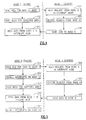
- Figs. 4 and 5 show examples of the flows where the user application benefits by saving the cost of an unnecessary interrupt.
- Fig. 4 is an illustration of the flow with interrupts enabled in the adapter 300 such that the invention is in an interrupt mode like a prior art device.
- node 0 (the client node) sends a request for data to node 1 (the server node).
- node 1 receives the request from node 0 in interrupt mode, that is, the adapter 300 for node 1 has the threshold value in Rcv_Intr_thresh register 306 is set at 1 above the value in the Rcv_Pkt_Cnt register 304 by an mpc_enableintr() call, as explained.
- node 1 decodes the request for node 0 by, for instance, the procedure set out in Fig. 1.
- node 1 sends the data requested by node 0, back to node 0.
- node 0 receives the requested data from node 1, as it has been instructed to receive at 402. The receipt of the data at 410 is with the adapter 300 for node 0 being set in the interrupt such that the data causes an interrupt in accordance, for instance, with the flow of Fig. 1.
- Fig. 5 shows the flow for exchange of data between node 0 (the client) and node 1 (the server) with the interrupts disabled in the adapter 300 of node 0 and enabled in the adapter 300 of node 1.
- node 0 sends a request for data to node 1.
- interrupts are disabled on node 0 by setting the value in the Rcv_Intr_thresh register 306 set to the maximum value by an mpc_disableintr() call, as previously explained.
- Node 0 is then post received (post recv) at 503 for the expected data from node 1.
- node 1 receives the request for data from node 0, with the adapter 300 of node 1 having interrupts enabled, as previously explained.
- node 1 decodes the request from node 0, and at 508, sends the requested data to node 0, as discussed in connection with Fig. 4.
- node 0 receives the data from 1, but since node 0 is now expecting the data because of the post recv at 503, node 0 receives the data in the polling mode rather than an interrupt mode.
- node 0 After the data has been received at 510, node 0 enables interrupts on its adapter 300 at 511, in the manner previously discussed.
- the disabling of interrupts on the client side is done outside the critical path (i.e. at 502 after the request message has been sent to the server at 501).
- the enabling of interrupts on the client side at 411 is in the critical path but this cost is small (in the order of 0.5us) compared to the cost of servicing an interrupt (65us). It should also be noted that this allows the user the flexibility of allowing segments of the program to run in interrupt mode or polling mode, and that this disabling and enabling of interrupts can be done multiple times.
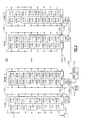
- Figs. 6 and 7 show examples of the sequence of events when the client node wants to send a huge amount of data to the server node to be stored at the server.
- client interrupts are enabled, and in Fig. 7, client interrupts are disabled.
- the client node sends a request to send a huge amount of data to node 1.
- the client node waits for the buffer ready message from node 1 with interrupts enabled such that the client node is in the interrupt mode.
- the server node receives the request from node 0.
- the server node adapter also has interrupts enabled such that the server node is in the interrupt mode.
- the server node posts its buffer for the requested message.
- the server node sends a buffer ready message to node 0 indicating that the server node is ready to receive the data.
- the client node at 602 receives the buffer ready message from the server node, the client node sends the data to node 1 at 606.
- the server node receives the data from node 0 in the interrupt mode. As shown, the entire operation results in an interrupt on the client node and multiple interrupts on the server since the data sent from node 0 comprises multiple packets, and possibly multiple messages.
- Fig. 7 shows the same transaction as shown in Fig. 6 with the client and server adapters having their interrupts disabled such that both the client and server are in the polling mode during the data transfer.
- the client node sends a request to send a huge amount of data to node 1.
- the client node disables its interrupts, as explained.
- the client node waits for a buffer ready message from node 1, with node 0 being in the polling mode.
- the server node receives the request from node 0 in the interrupt mode.
- the server node disables interrupts and posts its buffer for the requested message.
- the server node sends a buffer ready message to node 0.
- the client node receives the buffer ready message sent at 707, and sends the data to node 1. After the data is sent to the server node at 708, the client node enables interrupts at 709.
- the server node receives the data from node 0 in the polling mode. After the data has been received at 710, the server enables interrupts at 711. As shown, the operation results in only a single interrupt at 705 to receive the request from the client. The rest of the data transfers are done in the polling mode without interrupts.
Landscapes
- Engineering & Computer Science (AREA)
- Theoretical Computer Science (AREA)
- Physics & Mathematics (AREA)
- General Engineering & Computer Science (AREA)
- General Physics & Mathematics (AREA)
- Software Systems (AREA)
- Computer And Data Communications (AREA)
- Multi Processors (AREA)
Applications Claiming Priority (2)
| Application Number | Priority Date | Filing Date | Title |
|---|---|---|---|
| US08/835,459 US6012121A (en) | 1997-04-08 | 1997-04-08 | Apparatus for flexible control of interrupts in multiprocessor systems |
| US835459 | 2001-04-16 |
Publications (2)
| Publication Number | Publication Date |
|---|---|
| EP0871307A2 true EP0871307A2 (de) | 1998-10-14 |
| EP0871307A3 EP0871307A3 (de) | 1999-07-21 |
Family
ID=25269556
Family Applications (1)
| Application Number | Title | Priority Date | Filing Date |
|---|---|---|---|
| EP98302016A Withdrawn EP0871307A3 (de) | 1997-04-08 | 1998-03-18 | Vorrichtung zur flexibler Steuerung von Unterbrechungen in Multiprozessorsystemen |
Country Status (3)
| Country | Link |
|---|---|
| US (1) | US6012121A (de) |
| EP (1) | EP0871307A3 (de) |
| KR (1) | KR19980079670A (de) |
Cited By (4)
| Publication number | Priority date | Publication date | Assignee | Title |
|---|---|---|---|---|
| WO2000036519A1 (en) * | 1998-12-14 | 2000-06-22 | Intel Corporation | Dynamically varying interrupt bundle size |
| US7032049B2 (en) | 2000-09-22 | 2006-04-18 | Infineon Technologies Ag | Apparatus for relaying received interrupt requests |
| WO2016089628A1 (en) * | 2014-12-02 | 2016-06-09 | Qualcomm Technologies International, Ltd. | Memory access by dual processor systems |
| CN108920184A (zh) * | 2018-06-05 | 2018-11-30 | 山东大学 | 基于双环形缓冲区的微处理器高性能数据通信方法 |
Families Citing this family (13)
| Publication number | Priority date | Publication date | Assignee | Title |
|---|---|---|---|---|
| US6385659B1 (en) * | 1998-08-19 | 2002-05-07 | International Business Machines Corporation | Handling of asynchronous message packet in a multi-node threaded computing environment |
| US6415332B1 (en) * | 1998-08-19 | 2002-07-02 | International Business Machines Corporation | Method for handling of asynchronous message packet in a multi-node threaded computing environment |
| US6412018B1 (en) * | 1998-08-19 | 2002-06-25 | International Business Machines Corporation | System for handling asynchronous message packet in a multi-node threaded computing environment |
| US6615305B1 (en) * | 1998-08-27 | 2003-09-02 | Intel Corporation | Interrupt pacing in data transfer unit |
| JP3389920B2 (ja) * | 2000-07-10 | 2003-03-24 | 日本電気株式会社 | ディスクアレイ装置およびディスクアレイ装置の割り込み実行方法 |
| US6754755B1 (en) * | 2000-08-10 | 2004-06-22 | Hewlett-Packard Development Company, L.P. | Service request system using an activity indicator to reduce processing overhead |
| US7046628B2 (en) * | 2001-09-24 | 2006-05-16 | Intel Corporation | Apparatus and method for just-in-time transfer of transmit commands to a network interface |
| US20030145097A1 (en) * | 2002-01-28 | 2003-07-31 | Connor Patrick L. | Ingress throttling via adaptive interrupt delay scheduling |
| KR20040017656A (ko) * | 2002-08-23 | 2004-02-27 | 삼성전자주식회사 | 적은 수의 인터럽트를 이용하여 데이터를 처리하는인터페이스 카드 및 인터럽트 발생 방법 |
| US7054972B2 (en) * | 2002-12-13 | 2006-05-30 | Lsi Logic Corporation | Apparatus and method for dynamically enabling and disabling interrupt coalescing in data processing system |
| US7587510B1 (en) * | 2003-04-21 | 2009-09-08 | Charles Schwab & Co., Inc. | System and method for transferring data between a user space and a kernel space in a server associated with a distributed network environment |
| US7730250B2 (en) * | 2006-12-27 | 2010-06-01 | Seiko Epson Corporation | Interrupt control circuit, circuit board, electro-optic device, and electronic apparatus |
| KR101994929B1 (ko) | 2012-12-03 | 2019-07-01 | 삼성전자주식회사 | 집합 통신 수행 방법 및 이를 이용한 집합 통신 시스템 |
Family Cites Families (16)
| Publication number | Priority date | Publication date | Assignee | Title |
|---|---|---|---|---|
| US4809269A (en) * | 1987-04-02 | 1989-02-28 | Advanced Micro Devices, Inc. | Dual-port timing controller |
| US5101402A (en) * | 1988-05-24 | 1992-03-31 | Digital Equipment Corporation | Apparatus and method for realtime monitoring of network sessions in a local area network |
| US5495615A (en) * | 1990-12-21 | 1996-02-27 | Intel Corp | Multiprocessor interrupt controller with remote reading of interrupt control registers |
| JP2625589B2 (ja) * | 1991-04-22 | 1997-07-02 | インターナショナル・ビジネス・マシーンズ・コーポレイション | マルチプロセッサ・システム |
| US5542076A (en) * | 1991-06-14 | 1996-07-30 | Digital Equipment Corporation | Method and apparatus for adaptive interrupt servicing in data processing system |
| US5440690A (en) * | 1991-12-27 | 1995-08-08 | Digital Equipment Corporation | Network adapter for interrupting host computer system in the event the host device driver is in both transmit and receive sleep states |
| CA2086691C (en) * | 1992-03-30 | 1997-04-08 | David A. Elko | Communicating messages between processors and a coupling facility |
| US5319752A (en) * | 1992-09-18 | 1994-06-07 | 3Com Corporation | Device with host indication combination |
| US5359730A (en) * | 1992-12-04 | 1994-10-25 | International Business Machines Corporation | Method of operating a data processing system having a dynamic software update facility |
| US5530874A (en) * | 1993-02-02 | 1996-06-25 | 3Com Corporation | Network adapter with an indication signal mask and an interrupt signal mask |
| SG47794A1 (en) * | 1993-09-30 | 1998-04-17 | Intel Corp | Buffer memory management for a computer network node |
| US5687316A (en) * | 1994-07-29 | 1997-11-11 | International Business Machines Corporation | Communication apparatus and methods having P-MAC, I-MAC engines and buffer bypass for simultaneously transmitting multimedia and packet data |
| US5604742A (en) * | 1995-05-31 | 1997-02-18 | International Business Machines Corporation | Communications system and method for efficient management of bandwidth in a FDDI station |
| US5659758A (en) * | 1995-07-07 | 1997-08-19 | Sun Microsystems, Inc. | Interrupt modular for receiving bursty high speed network traffic |
| US5761516A (en) * | 1996-05-03 | 1998-06-02 | Lsi Logic Corporation | Single chip multiprocessor architecture with internal task switching synchronization bus |
| US5943479A (en) * | 1997-01-02 | 1999-08-24 | Digital Equipment Corporation | Method for reducing the rate of interrupts in a high speed I/O controller |
-
1997
- 1997-04-08 US US08/835,459 patent/US6012121A/en not_active Expired - Fee Related
-
1998
- 1998-02-04 KR KR1019980003049A patent/KR19980079670A/ko not_active Withdrawn
- 1998-03-18 EP EP98302016A patent/EP0871307A3/de not_active Withdrawn
Cited By (9)
| Publication number | Priority date | Publication date | Assignee | Title |
|---|---|---|---|---|
| WO2000036519A1 (en) * | 1998-12-14 | 2000-06-22 | Intel Corporation | Dynamically varying interrupt bundle size |
| US6195725B1 (en) | 1998-12-14 | 2001-02-27 | Intel Corporation | Dynamically varying interrupt bundle size |
| US7032049B2 (en) | 2000-09-22 | 2006-04-18 | Infineon Technologies Ag | Apparatus for relaying received interrupt requests |
| WO2016089628A1 (en) * | 2014-12-02 | 2016-06-09 | Qualcomm Technologies International, Ltd. | Memory access by dual processor systems |
| US9720861B2 (en) | 2014-12-02 | 2017-08-01 | Qualcomm Incorporated | Memory access by dual processor systems |
| CN107111577A (zh) * | 2014-12-02 | 2017-08-29 | 高通技术国际有限公司 | 双处理器系统的存储器存取 |
| CN107111577B (zh) * | 2014-12-02 | 2020-07-14 | 高通技术国际有限公司 | 双处理器系统的存储器存取 |
| CN108920184A (zh) * | 2018-06-05 | 2018-11-30 | 山东大学 | 基于双环形缓冲区的微处理器高性能数据通信方法 |
| CN108920184B (zh) * | 2018-06-05 | 2020-06-23 | 山东大学 | 基于双环形缓冲区的微处理器高性能数据通信方法 |
Also Published As
| Publication number | Publication date |
|---|---|
| KR19980079670A (ko) | 1998-11-25 |
| EP0871307A3 (de) | 1999-07-21 |
| US6012121A (en) | 2000-01-04 |
Similar Documents
| Publication | Publication Date | Title |
|---|---|---|
| US6256660B1 (en) | Method and program product for allowing application programs to avoid unnecessary packet arrival interrupts | |
| US6012121A (en) | Apparatus for flexible control of interrupts in multiprocessor systems | |
| US6799317B1 (en) | Interrupt mechanism for shared memory message passing | |
| US5875329A (en) | Intelligent batching of distributed messages | |
| US7890670B2 (en) | Direct memory access transfer completion notification | |
| US7948999B2 (en) | Signaling completion of a message transfer from an origin compute node to a target compute node | |
| US8037213B2 (en) | Replenishing data descriptors in a DMA injection FIFO buffer | |
| US6038604A (en) | Method and apparatus for efficient communications using active messages | |
| US7779173B2 (en) | Direct memory access transfer completion notification | |
| EP0902374A1 (de) | Signalisierung von Kommunikationsereignissen in einem Rechnernetz | |
| CN107046508A (zh) | 报文接收方法及网络设备 | |
| US20040054822A1 (en) | Transferring interrupts from a peripheral device to a host computer system | |
| AU2016201513A1 (en) | Low latency fifo messaging system | |
| US20160294926A1 (en) | Using a single work item to send multiple messages | |
| US8141077B2 (en) | System, method and medium for providing asynchronous input and output with less system calls to and from an operating system | |
| EP0614139A2 (de) | Anruf einer externen Prozedur für eine distribuierte Arbeitsumgebung | |
| US7089457B2 (en) | Efficient I/O retry over QDIO | |
| US7889657B2 (en) | Signaling completion of a message transfer from an origin compute node to a target compute node | |
| US20070271401A1 (en) | Techniques to moderate interrupt transfer | |
| JP2002024195A (ja) | 並列処理装置、及び、並列処理方法 | |
| EP2383658B1 (de) | Warteschlangentiefen-Verwaltung für die Kommunikation zwischen einer Host- und einer Peripherie-Einrichtung | |
| US20220091888A1 (en) | Resource utilization method, electronic device, and computer program product | |
| US7765337B2 (en) | Direct memory access transfer completion notification | |
| US20180123984A1 (en) | High performance network i/o in a virtualized environment | |
| US7320044B1 (en) | System, method, and computer program product for interrupt scheduling in processing communication |
Legal Events
| Date | Code | Title | Description |
|---|---|---|---|
| PUAI | Public reference made under article 153(3) epc to a published international application that has entered the european phase |
Free format text: ORIGINAL CODE: 0009012 |
|
| AK | Designated contracting states |
Kind code of ref document: A2 Designated state(s): DE FR GB |
|
| AX | Request for extension of the european patent |
Free format text: AL;LT;LV;MK;RO;SI |
|
| PUAL | Search report despatched |
Free format text: ORIGINAL CODE: 0009013 |
|
| AK | Designated contracting states |
Kind code of ref document: A3 Designated state(s): AT BE CH DE DK ES FI FR GB GR IE IT LI LU MC NL PT SE |
|
| AX | Request for extension of the european patent |
Free format text: AL;LT;LV;MK;RO;SI |
|
| STAA | Information on the status of an ep patent application or granted ep patent |
Free format text: STATUS: THE APPLICATION HAS BEEN WITHDRAWN |
|
| 17P | Request for examination filed |
Effective date: 20000120 |
|
| AKX | Designation fees paid |
Free format text: DE FR GB |
|
| 18W | Application withdrawn |
Withdrawal date: 20000223 |