EP0872995A2 - Appareil et procédé pour l'initiation d'une transaction ayant un récepteur acoustique de données qui filtre la voix humaine - Google Patents
Appareil et procédé pour l'initiation d'une transaction ayant un récepteur acoustique de données qui filtre la voix humaine Download PDFInfo
- Publication number
- EP0872995A2 EP0872995A2 EP98302770A EP98302770A EP0872995A2 EP 0872995 A2 EP0872995 A2 EP 0872995A2 EP 98302770 A EP98302770 A EP 98302770A EP 98302770 A EP98302770 A EP 98302770A EP 0872995 A2 EP0872995 A2 EP 0872995A2
- Authority
- EP
- European Patent Office
- Prior art keywords
- data
- microphone
- signal
- transaction
- capture device
- Prior art date
- Legal status (The legal status is an assumption and is not a legal conclusion. Google has not performed a legal analysis and makes no representation as to the accuracy of the status listed.)
- Withdrawn
Links
- 230000000977 initiatory effect Effects 0.000 title claims abstract description 17
- 238000000034 method Methods 0.000 title claims description 28
- 230000005236 sound signal Effects 0.000 claims abstract description 33
- 238000004891 communication Methods 0.000 claims description 15
- 238000012545 processing Methods 0.000 claims description 10
- 238000001914 filtration Methods 0.000 claims description 5
- 230000006870 function Effects 0.000 description 30
- 239000000047 product Substances 0.000 description 15
- 238000010586 diagram Methods 0.000 description 10
- 239000003795 chemical substances by application Substances 0.000 description 9
- 230000000007 visual effect Effects 0.000 description 9
- 230000004913 activation Effects 0.000 description 8
- 230000005540 biological transmission Effects 0.000 description 8
- 230000001413 cellular effect Effects 0.000 description 8
- 230000002452 interceptive effect Effects 0.000 description 8
- 230000008569 process Effects 0.000 description 8
- 238000012546 transfer Methods 0.000 description 5
- 230000003213 activating effect Effects 0.000 description 4
- 230000003287 optical effect Effects 0.000 description 4
- 230000004044 response Effects 0.000 description 4
- 230000008901 benefit Effects 0.000 description 2
- 238000013481 data capture Methods 0.000 description 2
- 230000000881 depressing effect Effects 0.000 description 2
- 238000003032 molecular docking Methods 0.000 description 2
- 238000012015 optical character recognition Methods 0.000 description 2
- 230000006978 adaptation Effects 0.000 description 1
- 230000002238 attenuated effect Effects 0.000 description 1
- 239000003086 colorant Substances 0.000 description 1
- 230000001010 compromised effect Effects 0.000 description 1
- 238000012790 confirmation Methods 0.000 description 1
- 238000010276 construction Methods 0.000 description 1
- 238000013500 data storage Methods 0.000 description 1
- 230000009977 dual effect Effects 0.000 description 1
- 230000000694 effects Effects 0.000 description 1
- 239000004973 liquid crystal related substance Substances 0.000 description 1
- 239000011159 matrix material Substances 0.000 description 1
- 238000012986 modification Methods 0.000 description 1
- 230000004048 modification Effects 0.000 description 1
- 230000011664 signaling Effects 0.000 description 1
- 238000001228 spectrum Methods 0.000 description 1
- 239000013589 supplement Substances 0.000 description 1
- 230000000153 supplemental effect Effects 0.000 description 1
Images



Classifications
-
- H—ELECTRICITY
- H04—ELECTRIC COMMUNICATION TECHNIQUE
- H04H—BROADCAST COMMUNICATION
- H04H20/00—Arrangements for broadcast or for distribution combined with broadcast
- H04H20/28—Arrangements for simultaneous broadcast of plural pieces of information
- H04H20/30—Arrangements for simultaneous broadcast of plural pieces of information by a single channel
- H04H20/31—Arrangements for simultaneous broadcast of plural pieces of information by a single channel using in-band signals, e.g. subsonic or cue signal
-
- H—ELECTRICITY
- H04—ELECTRIC COMMUNICATION TECHNIQUE
- H04M—TELEPHONIC COMMUNICATION
- H04M1/00—Substation equipment, e.g. for use by subscribers
- H04M1/26—Devices for calling a subscriber
- H04M1/27—Devices whereby a plurality of signals may be stored simultaneously
-
- H—ELECTRICITY
- H04—ELECTRIC COMMUNICATION TECHNIQUE
- H04M—TELEPHONIC COMMUNICATION
- H04M1/00—Substation equipment, e.g. for use by subscribers
- H04M1/68—Circuit arrangements for preventing eavesdropping
-
- H—ELECTRICITY
- H04—ELECTRIC COMMUNICATION TECHNIQUE
- H04M—TELEPHONIC COMMUNICATION
- H04M1/00—Substation equipment, e.g. for use by subscribers
- H04M1/72—Mobile telephones; Cordless telephones, i.e. devices for establishing wireless links to base stations without route selection
- H04M1/725—Cordless telephones
Definitions
- This patent application is related to an apparatus and method for initiating a transaction using an acoustic data receiver that filters the human voice.
- a portable capture device is used to capture in a wireless manner encoded non-perceptible data from a light emitting device such as a television or other video or audio output device.
- the capture device uses the captured data to initiate a transaction, such as placing a telephone call and transmitting a message to a remote agent or automated attendant, and delivering the data to a point-of-sale agent directly or indirectly via a telecommunication connection.
- This data is part of the ordinary program displayed by the device and yet indiscernible by a viewer or listener.
- a television monitor may be located in a kiosk or other public area, and display the advertising of selected services and products.
- the indiscernible data may be information needed to order those services or products, including prices, delivery intervals, shipping details, coupon offers, and other related information.
- Capture can be effected by decoding subliminally modulated video broadcast signals, in a manner suggested in U.S. Patent No. 4,807,031, issued on February 21, 1989, to R.S. Broughton, et al., the teachings which are incorporated herein by reference in their entirety.
- Encoding, transmission and decoding of non-discernable data may be accomplished as described in patent application entitled “System and Method for Encoding Digital Information in Television Signal" filed on behalf of T. Sizer, and assigned to the same assignee as the present application, which copending application is incorporated herein by reference.
- a modulated carrier which, for example, can be an amplitude shift keyed (ASK) or frequency shift keyed (FSK) signal having its primary frequency components at a frequency (e.g. 25 kHz) not usually present in a conventional television signal, can be added only to the luminance component of a television signal, and the data can thereafter be captured using bandpass filtering and an ASK or FSK receiver.
- the device includes a memory for storing the data for later use, and communications circuitry to output at least portions of the data (or data derived from the captured data) to a remote agent or device, such as via a telephone call or a data transfer to a point of sale device.
- the encoded non-perceptible data can include associated dialing, routing, or other identification information, so that other portions of the captured data can be transmitted to an appropriate final destination or device.
- the final destination can be (a) a remote location, such as a platform arranged to process and consummate transactions, or (b) a point of sale system or other device (e.g., TV, stereo, VCR Plus, smart mouse device, etc.).
- the other portions of the captured data are part of the payload to be communicated to the final destination or device, and can include product or coupon information that is related to the display from which the non-perceptible data was captured, as well as programming or control data.
- the capture device can include a built-in-display, such as an LCD display, and the encoded non-perceptible data can include display information, so that at least portions of the captured data can be discerned by a user of the device, and the user can thus be kept informed as to the operation of the device.
- the memory and the communications circuitry in the capture device are advantageously arranged so that, in a transaction initiated by the device using captured information, a two-way dialog may be initiated between the user and an agent at a remote terminal or a POTS system, and information may be transmitted to and stored in the device for later retrieval.
- non-perceptible information can be encoded in a television program, captured in a "set top box", and thereafter used to make telephone calls.
- the set top box is an electrical device that is "hard-wired" directly in the circuit between the video services network and the television set (as a stand alone unit or alternatively as part of the television set itself) and thus, unfortunately, is not portable.
- the set top box is dedicated to one particular television (or other video source) and thus cannot be shared among several sources.
- the user of the set top box may be uncertain as to the nature of the information captured therein.
- the above disclosures provide a system and method for initiating a transaction using the wireless capture of information obtained from a video/audio device, and for benefit of this invention, more particularly from an audio device such as a radio in a car or home premises.
- the wireless capture device acts as an acoustic data link where encoded data is transmitted from a source to the wireless capture device using sound waves.
- the wireless capture device includes an acoustic data receiver having a microphone for capturing the sound waves.
- a sensitive microphone used with the wireless capture device can be used for unauthorized purposes, such as listening to human conversations or detecting the audio channel of television, video or radio programs that may occur adjacent the acoustic data receiver.
- a person's privacy is compromised.
- an acoustic data receiver has a microphone for receiving an audio signal that has encoded data that is non-discernable by a listener, but is transmitted as part of the audio signal.
- the microphone converts the sound waves into an electrical signal.
- a signal receiver receives the electrical signal and works on the signal for further processing or data communication.
- a filter is associated with the microphone and removes those frequencies associated with a substantial portion of a human voice signal that may have been received within the microphone.
- the signal receiver has a processing unit that receives the electrical signal.
- the acoustic data receiver is part of a wireless capture device, any transaction data that is encoded within the audio signal is removed and processed.
- a telephone call typically is originated from a telephone number received from the transaction data and at least a portion of the transaction data is transferred to a desired destination for initiating a transaction.
- the filter comprises an electrical filter located after the microphone for filtering out signal frequencies corresponding substantially to those frequencies of the human voice.
- the acoustic data receiver typically can be a high-pass filter that passes frequencies above about 6,000 - 7,000 Hertz.
- the encoded data is part of a signal having a frequency typically above about 6,000 - 7,000 Hertz.
- the filter can be a mechanical filter formed from an extensible tube having a diaphragm at one end.
- the microphone is located at the other end and a stub is in the middle of the tube.
- This mechanical filter typically is contained in a sound enclosure.
- a storage devices can store the transaction data, while a display, such as an LCD screen, can display at least a portion of the transaction data to a user.
- the transaction data also can include dialing information for originating a telephone call.
- the transaction data can also include descriptive information about an advertisement or solicitation that is associated with the audio signal.
- the capture device can include a portable phone. Means for originating a telephone call can be contained in a personal base station. Transaction data is transferred to the portable base station, which processes the data and originates a telephone call.
- a block diagram of an acoustic data receiver indicated generally at 10 , that is part of a wireless capture device, indicated generally at 110 .
- the acoustic data receiver 10 prevents eavesdropping on human conversations in the vicinity of an acoustic data link formed between the receiver 10 and a source of an audio signal, indicated generally at 10a .
- An acoustic transmitter can be a separate device for transmitting an encoded information signal such as a sound wave. It can be a radio 11 or the audio channel of a television or video tape player 12 or other similar device that produces an audio signal capable of being suitably encoded with information such as transaction data.
- the wireless capture device 110 includes a microphone 14 in the receiver 10 which converts the sound wave into an electrical signal for further use through either a data transfer to a separate processor or data processing in a processor 14a contained in the wireless capture device.
- the wireless capture device can receive the sound wave and convert it into an electrical signal and then transfer it to a portable base station 109 as shown in Fig. 5.
- the wireless capture device 110 could be a cellular phone, such as used in an automobile, which would include appropriate processing apparatus for retrieving transaction data from the audio signal and then initiating a transaction by dialing a telephone number that could have been retrieved from the transaction data.
- eavesdropping is eliminated by using either an acoustic filter 16 ahead of the microphone 14 or an electrical filter 17 after the microphone 14 to prevent voice signals from reaching the processor 14a , which is part of the wireless capture device.
- the acoustic frequencies occupied by the human voice are shown on the curve 20 , and typically occupy the 100 Hertz (Hz) to 4,000 and 6,000 Hz range, with the maximum energy occurring about 300 Hz to about 2000 Hz.
- the output of an acoustic or electrical filter that can sufficiently attenuate the human voice frequencies to make them unintelligible would pass frequencies only above about 7,000 Hz. Thus, any signal passing such filter would not contain intelligible human voice signals.
- a filter response is shown on curve 22 on Fig. 2. Attenuate frequencies are shown by the dotted line.
- Appropriately encoded data signals can still be unaffected by the filter.
- the filter could normally pass frequencies above 7,000 Hz. If the data signal was at about 10,000 Hz, and occupied a sufficiently narrow bandwidth as shown by the graph of Figure 2, then the data signal would not be significantly attenuated or distorted by the filter. Thus, the data signal would be substantially unaffected.
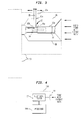
- FIG. 3 there is illustrated at 16 an acoustic high pass filter that can be placed before the microphone 14 to exclude almost all the voice signal from reaching the microphone.
- This high pass filter 16 is constructed from a tube 30 having a diaphragm 32 at one end and the microphone 14 at the other end.
- a open stub 34 is placed at its mid portion.
- the tube 30 can be formed from two slidable sections 30a and 30b , so that it can be extended along its length by moving handle 35 which extends though associated slots 35a formed in the tubes 30a , 30b and capture device 110 .
- the stub 34 is moveable also, by adjusting the length of the tube 30 .
- the position and length of the stub 34 relative to the tub sections 30a , 30b changes the desired filtering characteristic of the filter 16 .
- Other construction methods and types of filters are known to those skilled in the art.
- This filter 30 is mounted in a sound absorbing enclosure 38 , which prevents sound from reaching the microphone 14 unless the sound passes through the filter. In this embodiment, only those sounds at frequencies higher than those needed for intelligible human speech reach the microphone 14 . As a result, human speech cannot be reconstructed from the electrical signal coming from the microphone 14 . A person with access to the electrical signal from the microphone, such as through data transfer or by processing apparatus connected to the microphone would not be able to reconstruct human speech signals that might be present in the vicinity of the acoustic data receiver 10 .
- Figure 4 illustrates another embodiment using an electrical filter 17 positioned after the microphone 14 to exclude almost all voice signals from reaching any data communication or processing apparatus that are part of the acoustic data reciever 10 .
- the microphone 14 receives an audio sound signal and converts that sound signal into an electrical signal.
- the resulting electrical signal is passed through the filter 17 which removes those frequencies necessary to reconstruct human speech.
- the techniques used to build such an electrical filter are well known to those skilled in the art.
- the electrical output of the filter is connected to the processor 14a .
- FIG. 5 there is shown a schematic drawing of one embodiment of the present invention arranged for the wireless capture of encoded non-perceptible data from a light emitting device such as a television 101 , and subsequent use of the captured date to initiate a transaction with a person at an agent terminal 120 , or a person at another terminal 121 that is supported by an interactive service platform 130 .
- a light emitting device such as a television 101
- Such data could be obtained also through scanner unit 50 .
- much of the following discussion will concern the retrieval of non-perceptible data from a light emitting device such as a television, or audio signal from a speaker.
- a television signal is received by television 101 via over-the-air transmission, as from transmission tower 102 via a transmission link 103 , or alternatively is supplied by a cable TV connection, or from a VCR/videotape.
- the video portion of the television signal is displayed on the picture tube or other visual display area 105 of a monitor, computer or a television 101 , while the audio portion of the television signal is played from speaker 106 .
- Associated with the program that is seen and possibly heard by a viewer/listener is non-discernible encoded data that is transmitted as part of the video and possibly audio signal.
- the program may be an advertisement for a service or product
- the indiscernible data may create a subliminal visual pattern on the visual display area, that when properly received and decoded, contains information needed to order those services or products, including prices, delivery intervals, shipping details, coupon offers, and so-on.
- Encoding, transmission and decoding of non-discernible data may be accomplished as described in a patent application entitled "System and Method for Encoding Digital Information in a Television Signal" filed on behalf of T. Sizer and assigned to the same assignee as the present application, which co-pending application is incorporated herein by reference. Briefly, it was found using a spectrum analyzer on a typical video signal, that there are comparatively large frequency components at the line rate and at the frame rate and its harmonics, but that between these frequencies, there are other frequency bands in which little information is carried. One such frequency band is between 15 and 30 kHz.
- a properly tuned decoder can receive and decode the encoded information.
- digital information can be subliminally inserted in a video signal by adding to the video signal an amplitude shift keyed (ASK) or frequency shift keyed (FSK) carrier signal, and the digital information can later be recovered using ASK or FSK decoding.
- ASK amplitude shift keyed
- FSK frequency shift keyed
- Encoded data can also be inserted in a television signal and recovered by a received that responds to the picture displayed on the television, in the manner described in U.S. patent no. 4,807,031 cited above.
- the program displayed on television 101 is sensed by the portable capture device 110 , which is described in more detail in connection with Fig. 6.
- the non-discernible encoded data is part of the video signal
- such sensing takes the form of light from display area 105 being collected by an optical lens 117 .
- the non-discernible encoded data is part of the audio signal
- sensing can take the form of sound from a speaker 106 that is collected by a microphone 211 (Fig. 6).
- there is a wireless communication of the information from television 101 to capture device 110 such that the encoded data is "viewed" or "heard” rather than transmitted through a wired connection, or through a more conventional radio frequency communication.
- the capture device 110 has the capability of (a) storing the encoded data, (b) transmitting (or otherwise outputting) the encoded data (or information retrieved using such data) to a remote location or device, and (c) displaying the encoded data to a user.
- the data may include information for initiating a transaction or originating a telephone call, as well as additional information (e.g., price and ordering information) associated with the television program being displayed on television 101 .
- the remote location can be agent terminals 120 or 121 , interactive service platform 130 , or a point of sale system, and the communication between the capture device 110 and the remote location may be one-way or two-way.
- the call may be initiated and transacted in one of several ways, as illustrated in Fig. 5.
- the data may be transmitted over a wireless link to an associated telephone base station 109 that is, in turn, connected to a telephone line 111 that is part of a telecommunications network 115 .
- Communication between capture device 110 and base station 109 may be accomplished in a variety of ways; as an example, the same signaling and transmission can be used as is presently used in communication between a cordless telephone handset and its associated base station.
- capture device 110 may be directly connected to a telephone line 112 through an interface that includes a standard telephone jack 114 .
- capture device 110 may include the functionality of a cellular telephone, so that the data may be communicated to a remote location via a wireless call placed to a mobile telephone switching office (MTSP) 140 , which is in turn connected to telecommunications network 115 .
- MTSP mobile telephone switching office
- capture device 110 may include a dual tone multi-frequency (DTMF) transceiver arranged to generate a series of audible tones. Accordingly, a fourth way to initiate a telephone call would apply portions of the data to the transmitter (tone generator) portion of the DTMF transceiver. Capture device 110 may then be placed in juxtaposition with the microphone portion of a conventional telephone handset, such that the audible tones generated in capture device 110 are acoustically coupled through the handset to receivers in telecommunications network 115 .
- DTMF dual tone multi-frequency
- Capture device 110 can also output encoded data directly, without making a telephone call. This is useful in conjunction with a point of sale system or the like, which includes a docking station or other interface to which the capture device may be connected, or an IR receiving device or a device responding to DTMF.
- the call can illustratively be routed through telecommunications network 115 directly to an agent terminal 120 , or to an interactive service platform 130 , which is connected to another agent terminal 121 .
- the call may be routed by a switch matrix 131 to a voice response unit 132 that operates under the control of a processor 134 .
- Information included in the captured encoded can be provided to the attendants, or processor 134 can perform a look-up and retrieval operation in database 131 , using encoded data as a key, in order to effectuate a desired transaction.
- information connected with a transaction may also be transmitted from service platform 130 to capture device 110 , either for display to a user, storage for later use, or output to a point of sale system or device.
- This information may, for example, be confirmation information, indicating that a transaction has been effected, or details regarding a just completed transaction, such as ticket information relating to a travel reservation.
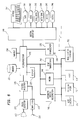
- FIG. 6 there is shown a block diagram illustrating in more detail the components in one embodiment of capture device 110 of Figure 5. If the encoded non-perceptible data is inserted in the video portion of a television signal, the images displayed on visual display area 105 are captured by optical lens 117 and an associated photo-detector 203 , which is arranged to supply an electrical signal to a filter/receiver 215 representing the image.
- filter/receiver 215 can be arranged to perform the same functionality as the elements illustrated in Figure 4 of the above referenced Broughton et al.
- filter/receiver 215 can be as described in conjunction with Figures 4 or 7 in the copending application of T. Sizer.
- the capture device 110 receives encoded data by "watching” or “listening to” the output of television 101 (or another similar display device), and that the capture device 110 is not connected to television 101 or the other display device by a cable or wires.
- filter/receiver 215 representing the data captured by capture device 110
- a microprocessor 220 which is arranged to perform various data processing and control functions in coordination with programs stored in an associated memory 221 as well as inputs received from a user of capture device 110 .
- capture device 110 may operate in an active or a passive mode. In the active mode, capture device 100 responds only to user initiated capture commands. In the passive mode, capture device 110 captures all of the data sent to it while in that mode. In either mode, captured data may be routed by microprocessor to memory 221 and stored for use at a later time, as determined by the user. The captured data may also be displayed on a display 225 , such as a liquid crystal display, so that a user will be aware of exactly what information was captured.
- the control programs contained in memory 221 can implement numerous functions, which broadly speaking, can be categorized as (a) functions relating to data capture, such as SAVE and AUTOSAVE functions, (b) functions relating to output of already captured data, such as DIAL and SEND DATA functions, (c) functions relating to memory manipulation, such as the RECALL and DELETE functions.
- functions relating to data capture such as SAVE and AUTOSAVE functions
- functions relating to output of already captured data such as DIAL and SEND DATA functions
- functions relating to memory manipulation such as the RECALL and DELETE functions.
- the above enumerated functions are initiated when respective buttons 241 - 246 are activated, and the activation signal output from a button is applied to microprocessor 220 via a button interface 240 .
- Each of the functions is discussed below.
- the capture device 110 When the SAVE function is initiated by activation of button 241 , the capture device 110 is in the active made, and the encoded data contained in the current audio or video output of television 101 is captured. This is accomplished, for example, by activating optical lens 117 and photo detector 203 , or microphone 211 and amplifier 213 , for a relatively brief period of time, typically on the order of several seconds, so that encoded data associated with the current program which is displayed on display area 105 or played through the loudspeaker 106 , is processed by filter/receiver 215 and stored in memory 221 .
- a visual or auditory cue may be contained in the video or audio program to indicate to a user of a capture device that there is data to be captured.
- the microprocessor 220 may control display 225 to indicate the current status, e.g., that the capture device is in the process of receiving and capturing data.
- the microprocessor 220 may control the display 225 to actually display some or all of the data, so that the user can be aware of information that had been subliminal and indiscernible.
- the display can also indicate that the device is "aimed" correctly.
- capture device 110 When the AUTOSAVE function in initiated by activation of button 244 , capture device 110 is in the passive mode. In this mode, capture device 110 captures a series of encoded data that may be contained in each of a series of programs that can be viewed or heard on television 101 . This can be accomplished, for example, by activating optical lens 117 and photo detector 203 , or microphone 211 and amplifier 213 , for a relatively long period of time, typically on the order of several minutes or hours. Encoded data captured from the various programs that are displayed on display area 105 or played through loudspeaker 106 over a long period of time are processed by filter/receiver 215 and stored in memory 221 . As with the SAVE function, when the AUTOSAVE function is activated, microprocessor 220 may be arranged to control display 225 so as to indicate the current status, e.g., that the capture device is in the process of receiving and capturing data.
- a user of capture device 110 desires to use any of the data stored in memory 221 , including data stored as a result of the AUTOSAVE function, the contents of the memory 221 may be retrieved and displayed on display 225 by initiating the RECALL function upon activating button 245 .
- This permits a user to be aware of exactly what information was previously captured and stored. Through this function, the user will be able to selectively peruse or scroll through the stored data, so as to retain or use selected portions thereof.
- Activation of button 246 initiates the DELETE function, whereby portions of the data stored in memory 221 are selectively erased.
- the microprocessor 220 may also be arranged to manage the contents in memory 221 , so that the oldest information stored therein could be cycled out and deleted as new information is captured and stored.
- capture device 110 to permit such data to be output upon a command from a user.
- Such data when output, can be used to (a) make a telephone call, and, when the call is answered, to provide information to a live or automated attendant that received the call, or (b) initiate a transaction, such as by interacting with a special purpose terminal or kiosk arranged to receive the stored data, or a device such as a VCR Plus or a stereo.
- data output via a telephone call can be initiated in several ways.
- captured data can be routed by microprocessor 220 from memory 221 to a modem 246 and then to a base station interface 250 , so that the information can be communicated to telephone base 109 of Figure 5. This in turn allows a conventional telephone call to be originated from telephone base 109 .
- captured data can be routed through modem 246 to a wire interface 253 , which allows capture device 110 to be physically connected to a terminal or docking station for information off loading.
- captured data can be routed to a DTMF transceiver 247 , which includes a tone generator arranged to output DTMF tones. These tones can be directly connected to a telephone line 112 via a standard connection such as RJ11 jack 114 .
- capture device 110 can be placed in juxtaposition with the microphone in a telephone handset, and the audible tones can be applied and used much like an audible frequency autodialer.
- captured data can be routed through modem 246 to a cellular telephone 252 , which can initiate a cellular call.
- the captured data can be output in encoded form or an audible tones.
- a telephone call may be originated using the DIAL function. This function in initiated by activation of button 242 . With this function, dialing information, which is part of the data captured by capture device 110 and now stored in memory 221 , is retrieved. This information is then further processed, so that a telephone call can be initiated. In some instances, a call is originated by application of stored data to DTMF transcriber 247 , so that audible tones can be output. In other instances, a data call can be initiated by appropriately formatting stored data. In yet other instances, such as when a cellular call is dialed, stored dialing information may be applied to an outgoing number register. The exact manner in which information is output from the capture device 110 can vary, in accordance with several embodiments of the present invention.
- the SEND DATA function is used to output other portions of the captured data stored in memory 221 , pertaining, for example, to a transaction that the user desires to make. This additional data is retrieved from memory 221 and appropriately transmitted, depending upon the manner and type of telephone call involved. Thus, data may be output either via base station interface 250 to telephone base 109 , or via RJ11 jack 114 onto telephone line 112 , or via cellular phone 252 to MTSO 140 . Note that if output occurs directly, without a telephone call, the SEND DATA function may cause information from memory 221 to be output via wire interface 253 . During the SEND DATA function, the information being output may also be displayed on display 225 . This allows a person using the capture device to identify the information that was captured, and use the information in an actual transaction.
- capture device 110 of Figure 5 may optionally include an automatic speech recognition circuit 245 , an infrared (IR) transmitter 235 , a handset 230 and a keypad 247 .
- IR transmitter 235 is to allow captured data to be output directly to a device such as a point of sale system or a VCR or the like, via infrared transmission.
- speech recognition circuit 245 is to convert captured data to spoken phrases, which can be played to a user or to an attendant after a telephone call is initiated.
- the purpose of handset 230 and keypad 247 is to allow capture device 110 , in addition to being used in accordance with the present invention, to be used to complete conventional dialed telephone calls.
- a televised advertisement for a product includes additional ordering or "coupon" information embedded in a subliminal visual pattern within the video image displayed on visual display area 105 .
- the coupon information describes the item(s) offered for sale, the regular price, the coupon value, and contains additional information needed for ordering.
- This embedded information is transmitted between television 101 and capture device 110 at a rate such as 60 bits per second, that is sufficient such that the necessary information can be transmitted in a very brief period of time.
- the embedded product information, dialing number, coupon information and necessary checkbits together comprise approximately 2,000 bits of information, so that between three and four seconds would be required for transmission.
- the user of the capture device can supplement the coupon information with user entered data which can be entered using keypad 247 .
- This supplemental information may include credit card or other billing information pertaining to the user, as an example.
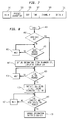
- a first field 301 contains a telephone number which may be used to originate a telephone call in order to order the product to which the coupon applies. Illustratively, this will be a toll-free or "800" number.
- Other information associated with the coupon can include a product description in field 303 , an expiration date in field 305 , the time that the advertisement is televised in field 307 , the number of television channel running the ad in field 309 , and a serial number for the ad in field 311 , identifying either or both the particular ad and its sequence in an ad campaign.
- a user desires to operate the capture device 110 in an unattended manner, and to capture all of the encoded data that may be subliminally displayed on a display device 105 or output from speaker 106 over a relatively long period of time, typically several minutes or hours, until the user, at some later time, desires to discontinue or terminate the capture.
- This mode is initiated using AUTOSAVE functionality, by activating button 244 .
- button 244 When this is done, a positive response is obtained in step 502 , so that data capture, storage and display, all as described below in connection with step 507 , occur.
- capture is terminated by subsequent activation of the same button 224 .
- a user operates capture device 110 in real time, typically while viewing a video display or listening to an audio presentation. During the display or presentation, the user sees or hears a corresponding televised advertisement or other indication that imperceptible information is available for capture.
- the user may, at this time, be instructed to activate SAVE button 241 , or the user may know, from previous experience, how to use the device.
- button 241 or the user may know, from previous experience, how to use the device.
- button 241 is activated, a positive result occurs in step 503 , thereby capturing the imperceptible encoded data, displaying all or a portion of the data on display 225 , and storing same in memory 221 , all in step 507 .
- capture device 110 may be in a "wait state" 505 .
- the user of capture device 110 determines that the appropriate data has been captured by reviewing the information seen in display 225 .
- activation of the DIAL button 242 on the portable capture device 110 in step 509 initiates step 513 , by which stored dialing and/or routing information, illustratively in field 401 of Figure 8, is recalled from memory 221 .
- a call is then originated launch, such by transmitting the dialing information from memory 221 through base station interface 250 to base station 109 and thence to telephone line 111 and telecommunications network 115 to interactive service platform 130 .
- the call may be a local or long distance call made using a "plain old telephone service” (POTS) line; alternatively, a toll-free call may be launched using an 800 number.
- POTS plain old telephone service
- ANI automatic number identification
- ID called ID
- other features available in the telecommunications network may be used to provide additional information to the called party, in addition to the captured data that is transmitted in succeeding steps in the process.
- capture device 110 may be in a "wait state" 511 .
- step 515 After the call has been originated, a determination is made in step 515 that the call ban been answered and that the SEND DATA button 243 has been pushed. (Until the SEND DATA button is activated, capture device 110 may be in a "wait state" 517 .).
- step 515 information contained in fields 403-411 is transmitted to the called destination in step 519 .
- the information received includes details concerning the advertised product, the identity of the caller, and other information associated with the item that was initially displayed or mentioned on the television program.
- the advertiser will know more about their customer that ever before.
- step 507 when data is captured and stored in step 507 , they newly collected data is compared with previously stored data. When a match is found, any duplicate data is dropped. In addition, the information in various fields is examined, to assure that the data captured is in the appropriate format. If an error is detected in any data, the information may be deleted, and "new" data collected. This is accomplished by repeating capture step 507 several times.
- an interactive television capability in connection with a game show or television drama.
- a game show an audience would be asked to vote on various aspects of the game. This could include questions such as which person should go on a date with the contestant, or which singer is the best? The audience would be instructed to press the "SAVE" button on their capture device at the appropriate time specified for their choice. The viewers vote would then be cast by depressing the DIAL button, communicating with the game show host, and then transmitting information indicating the vote by depressing the SEND DATA button. Alternately, one number could be transmitted and an automated interactive voice platform such as the InfoWorxTM platform available from AT&T could offer options to the caller. These calls could be toll free calls, or, alternatively, billed to the caller.
- a video on demand capability can be provided.
- a viewer sees a video he or she would like to see advertised on a previewing network.
- An instruction to press the DIAL button on the capture device is made on the previewing channel to indicate to the viewer that he or she can press the button to order a particular video.
- the call would be placed to a voice response system used to reserve the video on demand. Information about which video the called wanted to see is sent over the phone lines once the call is connected. The caller would merely have to acknowledge the order and select a time slot.
- the present invention can also be employed in the context of programming of a VCR, particularly where the user already has the capabilities provided by VCR Plus, a product that is commercially available.
- a code sequence associated with and representing a particular television show constitutes the information included in a televised advertisement.
- the viewer can press the SAVE button and send the sequences to the VCR Plus using IR transmitter 235 .
- the portability of capture device 110 is advantageous, it is to be noted that in some arrangements, the functions of capture device 110 and telephone base 109 may be combined in a single stationary unit, which might resemble a cordless telephone base station.
- the functionality of capture device 110 would be included in the stationary unit, and that unit would be arranged, in the manner previously described, to collect information.
- the stationary unit could also be adapted to utilize input devices such as optical character recognition (OCR) or scanners that would provide an additional method of inputting telephone numbers and coupon and/or product information.
- OCR optical character recognition
- the hand piece of this stationary unit would be used to place a call and send the data.
- the present invention is not limited to live televised programs, but can also be operated in conjunction with stored video programs played from a VCR.
- advertisements and other encoded information in included in videos at the time they are recorded or at the time they are mastered and put onto video cassettes.
- a viewer watching a video with such an ad can respond immediately to reserve another video, purchase one of the items advertised, or order catalogs automatically.
- the viewer When a program containing subliminally encoded data is viewed, the viewer simply presses the DIAL button, launching a telephone call, and then presses the SEND DATA button, sending captured data, such as product information, to an agent, who can verity the order using the additional information that was captured or stored in the device.
- the portability of the present invention can be used to advantage in implementing what can, in effect, be called a "Roaming Bulletin Board".
- a user can be attending a conference or traveling through the airport where kiosks or bulletin boards are set up.
- an attendee would walk through the conference viewing the displays.
- the attendee sees a display of interest, he or she points the capture device towards the display, and captures the non-discernible encoded data from either the displayed image or the sound output. Later, the user launches a telephone call to the telephone number specified and included in the captured data, and sends out coupon information that is also part of the captured data.
- the present invention can be used in the context of automobiles and mobile telephones.
- a capture device in accordance with the invention When a capture device in accordance with the invention is placed in a car, it can receive and capture non-discernible encoded data contained in the audio output of the car radio.
- the captured data can include a toll free or conventional telephone number for originating a mobile cellular telephone call from the car.
- the call may be placed to an interactive service platform, and additional captured data, such as coupon or similar information, can then be used to effectuate a transaction.
- a simultaneous voice and data (SVD) modem of the type available now from AT&T could be provided in capture device 110 to allow communication both by voice and data transfer, at the same time.
- SMD simultaneous voice and data
- Various functions can also be added to the processes and applications described.
- telephone base 109 may be programmed to dial a number of series of numbers at specific times, when certain amounts of information or data have been collected, or based upon some criteria.
- Capture device 110 could then send collected information "in bulk" to interactive service platform 130 .
- modem 246 could be used, so as to send the information more efficiently.
- a wireless capture device can include an acoustic data receiver that attenuates any frequencies that would correspond to a human voice signal.
- an acoustic data receiver that attenuates any frequencies that would correspond to a human voice signal.
Landscapes
- Engineering & Computer Science (AREA)
- Signal Processing (AREA)
- Computer Networks & Wireless Communication (AREA)
- Telephonic Communication Services (AREA)
- Financial Or Insurance-Related Operations Such As Payment And Settlement (AREA)
- Mobile Radio Communication Systems (AREA)
Applications Claiming Priority (2)
| Application Number | Priority Date | Filing Date | Title |
|---|---|---|---|
| US844047 | 1997-04-18 | ||
| US08/844,047 US6125172A (en) | 1997-04-18 | 1997-04-18 | Apparatus and method for initiating a transaction having acoustic data receiver that filters human voice |
Publications (1)
| Publication Number | Publication Date |
|---|---|
| EP0872995A2 true EP0872995A2 (fr) | 1998-10-21 |
Family
ID=25291664
Family Applications (1)
| Application Number | Title | Priority Date | Filing Date |
|---|---|---|---|
| EP98302770A Withdrawn EP0872995A2 (fr) | 1997-04-18 | 1998-04-08 | Appareil et procédé pour l'initiation d'une transaction ayant un récepteur acoustique de données qui filtre la voix humaine |
Country Status (4)
| Country | Link |
|---|---|
| US (1) | US6125172A (fr) |
| EP (1) | EP0872995A2 (fr) |
| JP (1) | JPH10322291A (fr) |
| CA (1) | CA2232316C (fr) |
Cited By (23)
| Publication number | Priority date | Publication date | Assignee | Title |
|---|---|---|---|---|
| WO2002045273A2 (fr) | 2000-11-30 | 2002-06-06 | Scientific Generics Limited | Systeme de communication |
| DE10227431A1 (de) * | 2002-06-20 | 2004-05-19 | Castel Gmbh | Nachrichtenübermittlungssystem |
| US6850626B2 (en) | 1998-01-20 | 2005-02-01 | Digimarc Corporation | Methods employing multiple watermarks |
| US6917691B2 (en) | 1999-12-28 | 2005-07-12 | Digimarc Corporation | Substituting information based on watermark-enable linking |
| US6917724B2 (en) | 1999-06-29 | 2005-07-12 | Digimarc Corporation | Methods for opening file on computer via optical sensing |
| US6965682B1 (en) | 1999-05-19 | 2005-11-15 | Digimarc Corp | Data transmission by watermark proxy |
| US6993153B2 (en) | 2000-02-10 | 2006-01-31 | Digimarc Corporation | Self-orienting watermarks |
| US7027614B2 (en) | 2000-04-19 | 2006-04-11 | Digimarc Corporation | Hiding information to reduce or offset perceptible artifacts |
| US7050201B2 (en) | 1999-11-10 | 2006-05-23 | Digimarc Corporation | Method and apparatus for encoding paper with information |
| FR2889347A1 (fr) * | 2005-09-20 | 2007-02-02 | Jean Daniel Pages | Systeme de diffusion sonore |
| GB2429316A (en) * | 2005-08-16 | 2007-02-21 | Vodafone Plc | Modulating an unobtrusive sound wave with data |
| US7460991B2 (en) | 2000-11-30 | 2008-12-02 | Intrasonics Limited | System and method for shaping a data signal for embedding within an audio signal |
| US7505823B1 (en) | 1999-07-30 | 2009-03-17 | Intrasonics Limited | Acoustic communication system |
| US7562392B1 (en) | 1999-05-19 | 2009-07-14 | Digimarc Corporation | Methods of interacting with audio and ambient music |
| EP1412831A4 (fr) * | 2000-02-07 | 2010-03-24 | Beepcard Inc | Systeme d'authentification numerique de presence physique |
| US7796676B2 (en) | 1997-01-16 | 2010-09-14 | Intrasonics Limited | Signalling system |
| US7941480B2 (en) | 1998-10-02 | 2011-05-10 | Beepcard Inc. | Computer communications using acoustic signals |
| US8019609B2 (en) | 1999-10-04 | 2011-09-13 | Dialware Inc. | Sonic/ultrasonic authentication method |
| US8248528B2 (en) | 2001-12-24 | 2012-08-21 | Intrasonics S.A.R.L. | Captioning system |
| US8544753B2 (en) | 1998-10-02 | 2013-10-01 | Dialware Inc. | Card for interaction with a computer |
| US8560913B2 (en) | 2008-05-29 | 2013-10-15 | Intrasonics S.A.R.L. | Data embedding system |
| US8942388B2 (en) | 2008-08-08 | 2015-01-27 | Yamaha Corporation | Modulation device and demodulation device |
| US9219708B2 (en) | 2001-03-22 | 2015-12-22 | DialwareInc. | Method and system for remotely authenticating identification devices |
Families Citing this family (52)
| Publication number | Priority date | Publication date | Assignee | Title |
|---|---|---|---|---|
| USRE37991E1 (en) | 1993-01-12 | 2003-02-18 | Visual Automation Systems, Inc. | Apparatus for tracking the flow of video signals by incorportating patterns of machine readable signals which will appear at predetermined locations of a television picture |
| US5822436A (en) * | 1996-04-25 | 1998-10-13 | Digimarc Corporation | Photographic products and methods employing embedded information |
| US7171016B1 (en) | 1993-11-18 | 2007-01-30 | Digimarc Corporation | Method for monitoring internet dissemination of image, video and/or audio files |
| US5841978A (en) | 1993-11-18 | 1998-11-24 | Digimarc Corporation | Network linking method using steganographically embedded data objects |
| US6560349B1 (en) | 1994-10-21 | 2003-05-06 | Digimarc Corporation | Audio monitoring using steganographic information |
| US8094949B1 (en) | 1994-10-21 | 2012-01-10 | Digimarc Corporation | Music methods and systems |
| US7224819B2 (en) | 1995-05-08 | 2007-05-29 | Digimarc Corporation | Integrating digital watermarks in multimedia content |
| US6760463B2 (en) | 1995-05-08 | 2004-07-06 | Digimarc Corporation | Watermarking methods and media |
| US7334024B2 (en) * | 1995-05-19 | 2008-02-19 | Cyberfone Technologies, Inc | System for transmission of voice and data over the same communications line |
| US6505160B1 (en) | 1995-07-27 | 2003-01-07 | Digimarc Corporation | Connected audio and other media objects |
| US6411725B1 (en) | 1995-07-27 | 2002-06-25 | Digimarc Corporation | Watermark enabled video objects |
| US8180844B1 (en) | 2000-03-18 | 2012-05-15 | Digimarc Corporation | System for linking from objects to remote resources |
| US7505605B2 (en) | 1996-04-25 | 2009-03-17 | Digimarc Corporation | Portable devices and methods employing digital watermarking |
| US7222087B1 (en) | 1997-09-12 | 2007-05-22 | Amazon.Com, Inc. | Method and system for placing a purchase order via a communications network |
| US5960411A (en) * | 1997-09-12 | 1999-09-28 | Amazon.Com, Inc. | Method and system for placing a purchase order via a communications network |
| US7689532B1 (en) | 2000-07-20 | 2010-03-30 | Digimarc Corporation | Using embedded data with file sharing |
| US7406214B2 (en) | 1999-05-19 | 2008-07-29 | Digimarc Corporation | Methods and devices employing optical sensors and/or steganography |
| US8055588B2 (en) * | 1999-05-19 | 2011-11-08 | Digimarc Corporation | Digital media methods |
| US8752118B1 (en) | 1999-05-19 | 2014-06-10 | Digimarc Corporation | Audio and video content-based methods |
| US7565294B2 (en) | 1999-05-19 | 2009-07-21 | Digimarc Corporation | Methods and systems employing digital content |
| US20020032734A1 (en) | 2000-07-26 | 2002-03-14 | Rhoads Geoffrey B. | Collateral data combined with user characteristics to select web site |
| US7760905B2 (en) * | 1999-06-29 | 2010-07-20 | Digimarc Corporation | Wireless mobile phone with content processing |
| US7280970B2 (en) | 1999-10-04 | 2007-10-09 | Beepcard Ltd. | Sonic/ultrasonic authentication device |
| US8391851B2 (en) * | 1999-11-03 | 2013-03-05 | Digimarc Corporation | Gestural techniques with wireless mobile phone devices |
| US20010055391A1 (en) * | 2000-04-27 | 2001-12-27 | Jacobs Paul E. | System and method for extracting, decoding, and utilizing hidden data embedded in audio signals |
| US7349668B2 (en) * | 2000-05-31 | 2008-03-25 | Optinetix (Israel) Ltd. | Systems and methods for embedding commercial information into broadcast media |
| AU2001283073A1 (en) * | 2000-08-03 | 2002-02-18 | Digimarc Corporation | Linking from paper invoices and statements to on-line resources |
| DE10110043A1 (de) * | 2001-03-02 | 2002-09-19 | Bosch Gmbh Robert | Verfahren zur Darstellung von Videodaten |
| US7822969B2 (en) * | 2001-04-16 | 2010-10-26 | Digimarc Corporation | Watermark systems and methods |
| TWI220036B (en) * | 2001-05-10 | 2004-08-01 | Ibm | System and method for enhancing broadcast or recorded radio or television programs with information on the world wide web |
| TW540235B (en) * | 2001-05-10 | 2003-07-01 | Ibm | System and method for enhancing broadcast programs with information on the world wide web |
| TWI256250B (en) * | 2001-05-10 | 2006-06-01 | Ibm | System and method for enhancing recorded radio or television programs with information on the world wide web |
| US20040029567A1 (en) * | 2001-05-25 | 2004-02-12 | Timmins Timothy A. | Technique for effectively providing personalized communications and information assistance services |
| US20030005460A1 (en) | 2001-07-01 | 2003-01-02 | David Bartholomew | Method and system for a low cost wireless telephone link for a set top box |
| US6724914B2 (en) | 2001-10-16 | 2004-04-20 | Digimarc Corporation | Progressive watermark decoding on a distributed computing platform |
| AU2003285891A1 (en) | 2002-10-15 | 2004-05-04 | Digimarc Corporation | Identification document and related methods |
| EP1751690B1 (fr) | 2004-02-04 | 2018-10-03 | Digimarc Corporation | Signaux d'images sur puce a filigranage numerique et journaux de voyages photographiques par filigranage numerique |
| EP1774686A4 (fr) | 2004-08-06 | 2012-08-08 | Digimarc Corp | Detection rapide de signal et calcul reparti dans des dispositifs informatiques portatifs |
| US7653661B2 (en) * | 2006-12-29 | 2010-01-26 | Sap Ag | Monitoring connection between computer system layers |
| GB0710211D0 (en) * | 2007-05-29 | 2007-07-11 | Intrasonics Ltd | AMR Spectrography |
| IL194908A0 (en) * | 2008-10-26 | 2009-08-03 | Benjamin Horacio Levy | Fixed phone's call set-up by mobile |
| US8713593B2 (en) | 2010-03-01 | 2014-04-29 | Zazum, Inc. | Detection system and method for mobile device application |
| WO2011109083A2 (fr) * | 2010-03-01 | 2011-09-09 | Zazum, Inc. | Application pour appareil mobile |
| WO2011151842A1 (fr) * | 2010-06-03 | 2011-12-08 | Rajmohan Harindranath | Procédé et dispositif d'atténuation permettant d'éviter une écoute clandestine dans un dispositif électronique |
| US20130197320A1 (en) * | 2012-01-26 | 2013-08-01 | David E. Albert | Ultrasonic digital communication of biological parameters |
| US9406305B2 (en) * | 2012-12-21 | 2016-08-02 | Digimarc Corpororation | Messaging by writing an image into a spectrogram |
| GB2522611A (en) * | 2013-12-13 | 2015-08-05 | Xspet Ltd | Transaction making method and system |
| US9773258B2 (en) * | 2014-02-12 | 2017-09-26 | Nextep Systems, Inc. | Subliminal suggestive upsell systems and methods |
| CN104486478A (zh) * | 2015-01-13 | 2015-04-01 | 曹海 | 一种移动终端的保密方法与装置 |
| US20220180364A1 (en) * | 2015-10-27 | 2022-06-09 | Decentralized Mobile Applications Ltd. | Secure transaction interfaces |
| US20200184478A1 (en) * | 2018-12-10 | 2020-06-11 | Decentralized Mobile Applications Ltd. | Secure transaction interfaces |
| US10885336B1 (en) | 2018-01-13 | 2021-01-05 | Digimarc Corporation | Object identification and device communication through image and audio signals |
Family Cites Families (23)
| Publication number | Priority date | Publication date | Assignee | Title |
|---|---|---|---|---|
| DE2454227C3 (de) * | 1974-11-15 | 1979-05-03 | Blaupunkt-Werke Gmbh, 3200 Hildesheim | Fernsehempfänger zum Empfang u. Auswerten von zusätzlichen Informationen in einem Fernsehsignal |
| US4310854A (en) * | 1979-08-24 | 1982-01-12 | Sanders Associates, Inc. | Television captioning system |
| US4425661A (en) * | 1981-09-03 | 1984-01-10 | Applied Spectrum Technologies, Inc. | Data under voice communications system |
| US4425642A (en) * | 1982-01-08 | 1984-01-10 | Applied Spectrum Technologies, Inc. | Simultaneous transmission of two information signals within a band-limited communications channel |
| DE3224614A1 (de) * | 1982-07-01 | 1984-01-05 | Siemens AG, 1000 Berlin und 8000 München | Elektrisches hoergeraet |
| US4807031A (en) * | 1987-10-20 | 1989-02-21 | Interactive Systems, Incorporated | Interactive video method and apparatus |
| US5121476A (en) * | 1988-02-22 | 1992-06-09 | Yee Keen Y | TV data capture device |
| US4894789A (en) * | 1988-02-22 | 1990-01-16 | Yee Keen Y | TV data capture device |
| US5212551A (en) * | 1989-10-16 | 1993-05-18 | Conanan Virgilio D | Method and apparatus for adaptively superimposing bursts of texts over audio signals and decoder thereof |
| US5138649A (en) * | 1990-11-16 | 1992-08-11 | General Instrument Corporation | Portable telephone handset with remote control |
| US5243423A (en) * | 1991-12-20 | 1993-09-07 | A. C. Nielsen Company | Spread spectrum digital data transmission over TV video |
| US5844984A (en) * | 1992-03-19 | 1998-12-01 | Pan Communications, Inc. | Two-way communications earset with filter |
| KR0138746B1 (ko) * | 1992-08-26 | 1998-05-15 | 윤종용 | 메모리된 채널 표시방법 |
| JP3810790B2 (ja) * | 1992-11-16 | 2006-08-16 | アービトロン インコーポレイテッド | 放送または録音セグメントを符号化/復号してその視聴を監視する方法と装置 |
| US5579537A (en) * | 1993-04-08 | 1996-11-26 | Digital D.J. Inc. | Broadcast system with associated data capabilities |
| US5570295A (en) * | 1994-03-18 | 1996-10-29 | Lucent Technologies Inc. | System and method of capturing encoded data transmitted over a communications network in a video system |
| US5450490A (en) * | 1994-03-31 | 1995-09-12 | The Arbitron Company | Apparatus and methods for including codes in audio signals and decoding |
| US5490168A (en) * | 1994-07-08 | 1996-02-06 | Motorola, Inc. | Method and system for automatic optimization of data throughput using variable packet length and code parameters |
| EP0710022A3 (fr) * | 1994-10-31 | 1998-08-26 | AT&T Corp. | Système et méthode pour coder de l'information digitale dans un signal de télévision |
| US5671267A (en) * | 1994-12-30 | 1997-09-23 | Lucent Technologies Inc. | Interactive system for communications between a cordless telephone and a remotely operated device |
| US5737026A (en) * | 1995-02-28 | 1998-04-07 | Nielsen Media Research, Inc. | Video and data co-channel communication system |
| US5802467A (en) * | 1995-09-28 | 1998-09-01 | Innovative Intelcom Industries | Wireless and wired communications, command, control and sensing system for sound and/or data transmission and reception |
| US5761606A (en) * | 1996-02-08 | 1998-06-02 | Wolzien; Thomas R. | Media online services access via address embedded in video or audio program |
-
1997
- 1997-04-18 US US08/844,047 patent/US6125172A/en not_active Expired - Lifetime
-
1998
- 1998-03-17 CA CA002232316A patent/CA2232316C/fr not_active Expired - Fee Related
- 1998-04-08 EP EP98302770A patent/EP0872995A2/fr not_active Withdrawn
- 1998-04-15 JP JP10105130A patent/JPH10322291A/ja active Pending
Cited By (43)
| Publication number | Priority date | Publication date | Assignee | Title |
|---|---|---|---|---|
| US7796676B2 (en) | 1997-01-16 | 2010-09-14 | Intrasonics Limited | Signalling system |
| US6850626B2 (en) | 1998-01-20 | 2005-02-01 | Digimarc Corporation | Methods employing multiple watermarks |
| US7054463B2 (en) | 1998-01-20 | 2006-05-30 | Digimarc Corporation | Data encoding using frail watermarks |
| US8509680B2 (en) | 1998-09-16 | 2013-08-13 | Dialware Inc. | Physical presence digital authentication system |
| US9830778B2 (en) | 1998-09-16 | 2017-11-28 | Dialware Communications, Llc | Interactive toys |
| US9607475B2 (en) | 1998-09-16 | 2017-03-28 | Dialware Inc | Interactive toys |
| US8062090B2 (en) | 1998-09-16 | 2011-11-22 | Dialware Inc. | Interactive toys |
| US8078136B2 (en) | 1998-09-16 | 2011-12-13 | Dialware Inc. | Physical presence digital authentication system |
| US8425273B2 (en) | 1998-09-16 | 2013-04-23 | Dialware Inc. | Interactive toys |
| US9275517B2 (en) | 1998-09-16 | 2016-03-01 | Dialware Inc. | Interactive toys |
| US8843057B2 (en) | 1998-09-16 | 2014-09-23 | Dialware Inc. | Physical presence digital authentication system |
| US8935367B2 (en) | 1998-10-02 | 2015-01-13 | Dialware Inc. | Electronic device and method of configuring thereof |
| US8544753B2 (en) | 1998-10-02 | 2013-10-01 | Dialware Inc. | Card for interaction with a computer |
| US9361444B2 (en) | 1998-10-02 | 2016-06-07 | Dialware Inc. | Card for interaction with a computer |
| US7941480B2 (en) | 1998-10-02 | 2011-05-10 | Beepcard Inc. | Computer communications using acoustic signals |
| US6965682B1 (en) | 1999-05-19 | 2005-11-15 | Digimarc Corp | Data transmission by watermark proxy |
| US7562392B1 (en) | 1999-05-19 | 2009-07-14 | Digimarc Corporation | Methods of interacting with audio and ambient music |
| US6917724B2 (en) | 1999-06-29 | 2005-07-12 | Digimarc Corporation | Methods for opening file on computer via optical sensing |
| US7505823B1 (en) | 1999-07-30 | 2009-03-17 | Intrasonics Limited | Acoustic communication system |
| US8447615B2 (en) | 1999-10-04 | 2013-05-21 | Dialware Inc. | System and method for identifying and/or authenticating a source of received electronic data by digital signal processing and/or voice authentication |
| US9489949B2 (en) | 1999-10-04 | 2016-11-08 | Dialware Inc. | System and method for identifying and/or authenticating a source of received electronic data by digital signal processing and/or voice authentication |
| US8019609B2 (en) | 1999-10-04 | 2011-09-13 | Dialware Inc. | Sonic/ultrasonic authentication method |
| US7050201B2 (en) | 1999-11-10 | 2006-05-23 | Digimarc Corporation | Method and apparatus for encoding paper with information |
| US7362879B2 (en) | 1999-12-28 | 2008-04-22 | Digimarc Corporation | Substituting objects based on steganographic encoding |
| US6917691B2 (en) | 1999-12-28 | 2005-07-12 | Digimarc Corporation | Substituting information based on watermark-enable linking |
| EP1412831A4 (fr) * | 2000-02-07 | 2010-03-24 | Beepcard Inc | Systeme d'authentification numerique de presence physique |
| EP2530552A1 (fr) * | 2000-02-07 | 2012-12-05 | Dialware Inc. | Système d'authentification numérique de présence physique |
| US6993153B2 (en) | 2000-02-10 | 2006-01-31 | Digimarc Corporation | Self-orienting watermarks |
| US7027614B2 (en) | 2000-04-19 | 2006-04-11 | Digimarc Corporation | Hiding information to reduce or offset perceptible artifacts |
| EP1340320B1 (fr) * | 2000-11-30 | 2008-10-15 | Intrasonics Limited | Dispositif et système pour utiliser un signal de données incorporé dans un signal acoustic |
| US7796978B2 (en) | 2000-11-30 | 2010-09-14 | Intrasonics S.A.R.L. | Communication system for receiving and transmitting data using an acoustic data channel |
| WO2002045273A2 (fr) | 2000-11-30 | 2002-06-06 | Scientific Generics Limited | Systeme de communication |
| US8185100B2 (en) | 2000-11-30 | 2012-05-22 | Intrasonics S.A.R.L. | Communication system |
| US7460991B2 (en) | 2000-11-30 | 2008-12-02 | Intrasonics Limited | System and method for shaping a data signal for embedding within an audio signal |
| US9219708B2 (en) | 2001-03-22 | 2015-12-22 | DialwareInc. | Method and system for remotely authenticating identification devices |
| US8248528B2 (en) | 2001-12-24 | 2012-08-21 | Intrasonics S.A.R.L. | Captioning system |
| DE10227431A1 (de) * | 2002-06-20 | 2004-05-19 | Castel Gmbh | Nachrichtenübermittlungssystem |
| GB2429316A (en) * | 2005-08-16 | 2007-02-21 | Vodafone Plc | Modulating an unobtrusive sound wave with data |
| GB2429316B (en) * | 2005-08-16 | 2009-02-25 | Vodafone Plc | Data Transmission |
| WO2007068833A1 (fr) * | 2005-09-20 | 2007-06-21 | Djv Cryptex | Systeme de diffusion sonore |
| FR2889347A1 (fr) * | 2005-09-20 | 2007-02-02 | Jean Daniel Pages | Systeme de diffusion sonore |
| US8560913B2 (en) | 2008-05-29 | 2013-10-15 | Intrasonics S.A.R.L. | Data embedding system |
| US8942388B2 (en) | 2008-08-08 | 2015-01-27 | Yamaha Corporation | Modulation device and demodulation device |
Also Published As
| Publication number | Publication date |
|---|---|
| US6125172A (en) | 2000-09-26 |
| JPH10322291A (ja) | 1998-12-04 |
| CA2232316A1 (fr) | 1998-10-17 |
| MX9802920A (es) | 1998-11-29 |
| CA2232316C (fr) | 2002-06-11 |
Similar Documents
| Publication | Publication Date | Title |
|---|---|---|
| US6125172A (en) | Apparatus and method for initiating a transaction having acoustic data receiver that filters human voice | |
| US6389055B1 (en) | Integrating digital data with perceptible signals | |
| US6036086A (en) | Apparatus and method for initiating a telephone transaction using a scanner | |
| EP0713335A2 (fr) | Système et méthode de saisie sans fil de données codées transmises avec un signal de télévision, vidéo ou audio et initiation consécutive d'une transaction utilisant de telles données | |
| US5898919A (en) | Cordless phone back link for interactive television system | |
| CA2141976C (fr) | Dispositif et methode de saisie dans un systeme video de donnees codees transmises sur un reseau de communication | |
| AU759009B2 (en) | Audience measurement system incorporating a mobile handset and a base station | |
| US6587138B1 (en) | Method and device for incorporating advertising into videotelephone communications | |
| US20040237114A1 (en) | Television system with acoustic back-link | |
| EP1248464A2 (fr) | Système de réponse interactif pour des systèmes de télévision numériques | |
| JPH07307813A (ja) | 放送メディア利用の利用者リクエスト受付方法及びそれに用いる通信端末 | |
| JP3767635B2 (ja) | 双方向番組の放送方法、双方向番組に対する応答方法および応答装置 | |
| RU2118060C1 (ru) | Способ и устройство для идентификации записанного телефонного сообщения/номера с использованием телевизионного приемника | |
| US20020052197A1 (en) | Cordless phone back link for interactive television system | |
| WO1996013937A1 (fr) | Systeme bidirectionnel d'information et dispositif | |
| MXPA98002920A (en) | Apparatus and method to start a transaction that has an acoustic receiver that films the voice hum | |
| US20050270995A1 (en) | Mobile communication terminal and method for processing communication function during DMB output | |
| KR100565440B1 (ko) | 대화형 문자메시지를 이용한 음성정보 제공장치에서의음성정보에 대응되는 텍스트 정보 제공방법 및 장치 | |
| WO2001011872A1 (fr) | Procede d'affichage d'un numero d'appel d'un telephone sur un poste de television | |
| KR100631502B1 (ko) | 셋톱 박스의 모뎀을 이용한 발신자 정보 표시 방법 | |
| KR0152053B1 (ko) | 전화기능을 구비한 tv수상기 | |
| EP1605673A1 (fr) | Terminal mobile de télécommunication et procédé pour le traitement de la fonction de communication pendant sortie DMB (Digital Multimedia Broadcasting) | |
| KR100667669B1 (ko) | 휴대폰을 이용한 화상 데이터가 첨부된 메시지 전송방법 | |
| JP3900821B2 (ja) | 公衆電話機及び広告情報表示システム | |
| KR20010067677A (ko) | 발신자정보표시장치를 이용한 tv와의 상호작용 인터페이스방법 |
Legal Events
| Date | Code | Title | Description |
|---|---|---|---|
| PUAI | Public reference made under article 153(3) epc to a published international application that has entered the european phase |
Free format text: ORIGINAL CODE: 0009012 |
|
| AK | Designated contracting states |
Kind code of ref document: A2 Designated state(s): AT BE CH CY DE DK ES FI FR GB GR IE IT LI LU MC NL PT SE |
|
| AX | Request for extension of the european patent |
Free format text: AL;LT;LV;MK;RO;SI |
|
| STAA | Information on the status of an ep patent application or granted ep patent |
Free format text: STATUS: THE APPLICATION HAS BEEN WITHDRAWN |
|
| 18W | Application withdrawn |
Effective date: 20030404 |