EP0873682B1 - Improved zea mays (L.) genotypes with capability of long term, highly efficient plant regeneration - Google Patents
Improved zea mays (L.) genotypes with capability of long term, highly efficient plant regeneration Download PDFInfo
- Publication number
- EP0873682B1 EP0873682B1 EP98107918A EP98107918A EP0873682B1 EP 0873682 B1 EP0873682 B1 EP 0873682B1 EP 98107918 A EP98107918 A EP 98107918A EP 98107918 A EP98107918 A EP 98107918A EP 0873682 B1 EP0873682 B1 EP 0873682B1
- Authority
- EP
- European Patent Office
- Prior art keywords
- culture
- cultures
- genotypes
- medium
- plants
- Prior art date
- Legal status (The legal status is an assumption and is not a legal conclusion. Google has not performed a legal analysis and makes no representation as to the accuracy of the status listed.)
- Expired - Lifetime
Links
- 241000196324 Embryophyta Species 0.000 title claims abstract description 81
- 240000008042 Zea mays Species 0.000 title claims abstract description 20
- 235000007244 Zea mays Nutrition 0.000 title claims abstract description 9
- 230000008929 regeneration Effects 0.000 title description 29
- 238000011069 regeneration method Methods 0.000 title description 29
- 230000007774 longterm Effects 0.000 title description 3
- 210000001938 protoplast Anatomy 0.000 claims abstract description 57
- 230000000408 embryogenic effect Effects 0.000 claims description 26
- 210000004027 cell Anatomy 0.000 claims description 13
- 238000004113 cell culture Methods 0.000 claims 2
- 239000002609 medium Substances 0.000 description 46
- 239000000243 solution Substances 0.000 description 25
- 238000004114 suspension culture Methods 0.000 description 25
- 238000012423 maintenance Methods 0.000 description 22
- 230000000392 somatic effect Effects 0.000 description 19
- 206010020649 Hyperkeratosis Diseases 0.000 description 16
- 239000001963 growth medium Substances 0.000 description 15
- 230000000977 initiatory effect Effects 0.000 description 15
- 210000002257 embryonic structure Anatomy 0.000 description 14
- 238000002955 isolation Methods 0.000 description 12
- 239000005631 2,4-Dichlorophenoxyacetic acid Substances 0.000 description 10
- 235000016383 Zea mays subsp huehuetenangensis Nutrition 0.000 description 10
- 235000002017 Zea mays subsp mays Nutrition 0.000 description 10
- 210000005069 ears Anatomy 0.000 description 10
- 235000009973 maize Nutrition 0.000 description 10
- 229930006000 Sucrose Natural products 0.000 description 9
- CZMRCDWAGMRECN-UGDNZRGBSA-N Sucrose Chemical compound O[C@H]1[C@H](O)[C@@H](CO)O[C@@]1(CO)O[C@@H]1[C@H](O)[C@@H](O)[C@H](O)[C@@H](CO)O1 CZMRCDWAGMRECN-UGDNZRGBSA-N 0.000 description 9
- 238000000034 method Methods 0.000 description 9
- 239000005720 sucrose Substances 0.000 description 9
- 108090000790 Enzymes Proteins 0.000 description 8
- 102000004190 Enzymes Human genes 0.000 description 8
- 229940088598 enzyme Drugs 0.000 description 8
- 239000002689 soil Substances 0.000 description 8
- 230000015572 biosynthetic process Effects 0.000 description 7
- 238000012546 transfer Methods 0.000 description 7
- 229920001817 Agar Polymers 0.000 description 6
- OKTJSMMVPCPJKN-UHFFFAOYSA-N Carbon Chemical compound [C] OKTJSMMVPCPJKN-UHFFFAOYSA-N 0.000 description 6
- 239000008272 agar Substances 0.000 description 6
- 230000010154 cross-pollination Effects 0.000 description 6
- 108090000623 proteins and genes Proteins 0.000 description 6
- 239000011550 stock solution Substances 0.000 description 6
- XLYOFNOQVPJJNP-UHFFFAOYSA-N water Chemical compound O XLYOFNOQVPJJNP-UHFFFAOYSA-N 0.000 description 6
- 239000005715 Fructose Substances 0.000 description 5
- 229930091371 Fructose Natural products 0.000 description 5
- RFSUNEUAIZKAJO-ARQDHWQXSA-N Fructose Chemical compound OC[C@H]1O[C@](O)(CO)[C@@H](O)[C@@H]1O RFSUNEUAIZKAJO-ARQDHWQXSA-N 0.000 description 5
- WQZGKKKJIJFFOK-GASJEMHNSA-N Glucose Natural products OC[C@H]1OC(O)[C@H](O)[C@@H](O)[C@@H]1O WQZGKKKJIJFFOK-GASJEMHNSA-N 0.000 description 5
- 238000007792 addition Methods 0.000 description 5
- 238000005119 centrifugation Methods 0.000 description 5
- 239000008103 glucose Substances 0.000 description 5
- 238000011534 incubation Methods 0.000 description 5
- 210000001161 mammalian embryo Anatomy 0.000 description 5
- 239000000203 mixture Substances 0.000 description 5
- 230000010152 pollination Effects 0.000 description 5
- 229930192334 Auxin Natural products 0.000 description 4
- DCXYFEDJOCDNAF-REOHCLBHSA-N L-asparagine Chemical compound OC(=O)[C@@H](N)CC(N)=O DCXYFEDJOCDNAF-REOHCLBHSA-N 0.000 description 4
- CSNNHWWHGAXBCP-UHFFFAOYSA-L Magnesium sulfate Chemical compound [Mg+2].[O-][S+2]([O-])([O-])[O-] CSNNHWWHGAXBCP-UHFFFAOYSA-L 0.000 description 4
- 239000002363 auxin Substances 0.000 description 4
- 230000002068 genetic effect Effects 0.000 description 4
- 238000009396 hybridization Methods 0.000 description 4
- SEOVTRFCIGRIMH-UHFFFAOYSA-N indole-3-acetic acid Chemical compound C1=CC=C2C(CC(=O)O)=CNC2=C1 SEOVTRFCIGRIMH-UHFFFAOYSA-N 0.000 description 4
- 238000004519 manufacturing process Methods 0.000 description 4
- 230000003204 osmotic effect Effects 0.000 description 4
- FGIUAXJPYTZDNR-UHFFFAOYSA-N potassium nitrate Chemical compound [K+].[O-][N+]([O-])=O FGIUAXJPYTZDNR-UHFFFAOYSA-N 0.000 description 4
- 230000008569 process Effects 0.000 description 4
- 230000001172 regenerating effect Effects 0.000 description 4
- 239000000725 suspension Substances 0.000 description 4
- 238000005406 washing Methods 0.000 description 4
- 229910001868 water Inorganic materials 0.000 description 4
- HXKWSTRRCHTUEC-UHFFFAOYSA-N 2,4-Dichlorophenoxyaceticacid Chemical compound OC(=O)C(Cl)OC1=CC=C(Cl)C=C1 HXKWSTRRCHTUEC-UHFFFAOYSA-N 0.000 description 3
- 229920000936 Agarose Polymers 0.000 description 3
- 108010059892 Cellulase Proteins 0.000 description 3
- 108020004414 DNA Proteins 0.000 description 3
- KCXVZYZYPLLWCC-UHFFFAOYSA-N EDTA Chemical compound OC(=O)CN(CC(O)=O)CCN(CC(O)=O)CC(O)=O KCXVZYZYPLLWCC-UHFFFAOYSA-N 0.000 description 3
- LFQSCWFLJHTTHZ-UHFFFAOYSA-N Ethanol Chemical compound CCO LFQSCWFLJHTTHZ-UHFFFAOYSA-N 0.000 description 3
- 102220533703 Histone-lysine N-methyltransferase SUV39H1_W64A_mutation Human genes 0.000 description 3
- 108010059820 Polygalacturonase Proteins 0.000 description 3
- 229940106157 cellulase Drugs 0.000 description 3
- 238000011161 development Methods 0.000 description 3
- 230000018109 developmental process Effects 0.000 description 3
- 238000011156 evaluation Methods 0.000 description 3
- 108010093305 exopolygalacturonase Proteins 0.000 description 3
- 230000035558 fertility Effects 0.000 description 3
- 239000011521 glass Substances 0.000 description 3
- 230000006872 improvement Effects 0.000 description 3
- 239000007788 liquid Substances 0.000 description 3
- 239000000463 material Substances 0.000 description 3
- 210000000056 organ Anatomy 0.000 description 3
- 239000004033 plastic Substances 0.000 description 3
- 229940088594 vitamin Drugs 0.000 description 3
- 239000011782 vitamin Substances 0.000 description 3
- 235000013343 vitamin Nutrition 0.000 description 3
- 229930003231 vitamin Natural products 0.000 description 3
- MTCFGRXMJLQNBG-REOHCLBHSA-N (2S)-2-Amino-3-hydroxypropansäure Chemical compound OC[C@H](N)C(O)=O MTCFGRXMJLQNBG-REOHCLBHSA-N 0.000 description 2
- PRPINYUDVPFIRX-UHFFFAOYSA-N 1-naphthaleneacetic acid Chemical compound C1=CC=C2C(CC(=O)O)=CC=CC2=C1 PRPINYUDVPFIRX-UHFFFAOYSA-N 0.000 description 2
- SXGZJKUKBWWHRA-UHFFFAOYSA-N 2-(N-morpholiniumyl)ethanesulfonate Chemical compound [O-]S(=O)(=O)CC[NH+]1CCOCC1 SXGZJKUKBWWHRA-UHFFFAOYSA-N 0.000 description 2
- UXVMQQNJUSDDNG-UHFFFAOYSA-L Calcium chloride Chemical compound [Cl-].[Cl-].[Ca+2] UXVMQQNJUSDDNG-UHFFFAOYSA-L 0.000 description 2
- IAJILQKETJEXLJ-UHFFFAOYSA-N Galacturonsaeure Natural products O=CC(O)C(O)C(O)C(O)C(O)=O IAJILQKETJEXLJ-UHFFFAOYSA-N 0.000 description 2
- DHMQDGOQFOQNFH-UHFFFAOYSA-N Glycine Chemical compound NCC(O)=O DHMQDGOQFOQNFH-UHFFFAOYSA-N 0.000 description 2
- ONIBWKKTOPOVIA-BYPYZUCNSA-N L-Proline Chemical compound OC(=O)[C@@H]1CCCN1 ONIBWKKTOPOVIA-BYPYZUCNSA-N 0.000 description 2
- 229930182821 L-proline Natural products 0.000 description 2
- ZTHYODDOHIVTJV-UHFFFAOYSA-N Propyl gallate Chemical compound CCCOC(=O)C1=CC(O)=C(O)C(O)=C1 ZTHYODDOHIVTJV-UHFFFAOYSA-N 0.000 description 2
- 239000005708 Sodium hypochlorite Substances 0.000 description 2
- 230000005856 abnormality Effects 0.000 description 2
- 229940024606 amino acid Drugs 0.000 description 2
- 150000001413 amino acids Chemical class 0.000 description 2
- 229960001230 asparagine Drugs 0.000 description 2
- WQZGKKKJIJFFOK-VFUOTHLCSA-N beta-D-glucose Chemical compound OC[C@H]1O[C@@H](O)[C@H](O)[C@@H](O)[C@@H]1O WQZGKKKJIJFFOK-VFUOTHLCSA-N 0.000 description 2
- 239000001110 calcium chloride Substances 0.000 description 2
- 229910001628 calcium chloride Inorganic materials 0.000 description 2
- 239000002299 complementary DNA Substances 0.000 description 2
- 230000003247 decreasing effect Effects 0.000 description 2
- 239000003599 detergent Substances 0.000 description 2
- 238000005516 engineering process Methods 0.000 description 2
- 239000012634 fragment Substances 0.000 description 2
- 239000012737 fresh medium Substances 0.000 description 2
- 238000010353 genetic engineering Methods 0.000 description 2
- 239000005556 hormone Substances 0.000 description 2
- 229940088597 hormone Drugs 0.000 description 2
- 238000005286 illumination Methods 0.000 description 2
- 238000000338 in vitro Methods 0.000 description 2
- 239000004615 ingredient Substances 0.000 description 2
- BAUYGSIQEAFULO-UHFFFAOYSA-L iron(2+) sulfate (anhydrous) Chemical compound [Fe+2].[O-]S([O-])(=O)=O BAUYGSIQEAFULO-UHFFFAOYSA-L 0.000 description 2
- 229910000359 iron(II) sulfate Inorganic materials 0.000 description 2
- 238000009630 liquid culture Methods 0.000 description 2
- 229910052943 magnesium sulfate Inorganic materials 0.000 description 2
- 239000011785 micronutrient Substances 0.000 description 2
- 229960002429 proline Drugs 0.000 description 2
- 108020003175 receptors Proteins 0.000 description 2
- 230000004044 response Effects 0.000 description 2
- 238000007894 restriction fragment length polymorphism technique Methods 0.000 description 2
- 150000003839 salts Chemical class 0.000 description 2
- 230000010153 self-pollination Effects 0.000 description 2
- SUKJFIGYRHOWBL-UHFFFAOYSA-N sodium hypochlorite Chemical compound [Na+].Cl[O-] SUKJFIGYRHOWBL-UHFFFAOYSA-N 0.000 description 2
- 235000000346 sugar Nutrition 0.000 description 2
- 150000008163 sugars Chemical class 0.000 description 2
- 230000009466 transformation Effects 0.000 description 2
- 238000002054 transplantation Methods 0.000 description 2
- 239000012137 tryptone Substances 0.000 description 2
- OWEGMIWEEQEYGQ-UHFFFAOYSA-N 100676-05-9 Natural products OC1C(O)C(O)C(CO)OC1OCC1C(O)C(O)C(O)C(OC2C(OC(O)C(O)C2O)CO)O1 OWEGMIWEEQEYGQ-UHFFFAOYSA-N 0.000 description 1
- QFIIYGZAUXVPSZ-UHFFFAOYSA-N 8-(2,4-dihydroxy-6-methylanilino)-2-(2,4-dihydroxy-6-methylphenyl)imino-7-hydroxy-1,9-dimethyldibenzofuran-3-one Chemical compound CC1=CC(=CC(=C1NC2=C(C3=C(C=C2O)OC4=CC(=O)C(=NC5=C(C=C(C=C5C)O)O)C(=C43)C)C)O)O QFIIYGZAUXVPSZ-UHFFFAOYSA-N 0.000 description 1
- 108091003079 Bovine Serum Albumin Proteins 0.000 description 1
- 108010084185 Cellulases Proteins 0.000 description 1
- 102000005575 Cellulases Human genes 0.000 description 1
- FBPFZTCFMRRESA-FSIIMWSLSA-N D-Glucitol Natural products OC[C@H](O)[C@H](O)[C@@H](O)[C@H](O)CO FBPFZTCFMRRESA-FSIIMWSLSA-N 0.000 description 1
- FBPFZTCFMRRESA-KVTDHHQDSA-N D-Mannitol Chemical compound OC[C@@H](O)[C@@H](O)[C@H](O)[C@H](O)CO FBPFZTCFMRRESA-KVTDHHQDSA-N 0.000 description 1
- AEMOLEFTQBMNLQ-YMDCURPLSA-N D-galactopyranuronic acid Chemical compound OC1O[C@H](C(O)=O)[C@H](O)[C@H](O)[C@H]1O AEMOLEFTQBMNLQ-YMDCURPLSA-N 0.000 description 1
- FBPFZTCFMRRESA-JGWLITMVSA-N D-glucitol Chemical compound OC[C@H](O)[C@@H](O)[C@H](O)[C@H](O)CO FBPFZTCFMRRESA-JGWLITMVSA-N 0.000 description 1
- AEMOLEFTQBMNLQ-AQKNRBDQSA-N D-glucopyranuronic acid Chemical compound OC1O[C@H](C(O)=O)[C@@H](O)[C@H](O)[C@H]1O AEMOLEFTQBMNLQ-AQKNRBDQSA-N 0.000 description 1
- 239000005504 Dicamba Substances 0.000 description 1
- 239000004471 Glycine Substances 0.000 description 1
- 239000007836 KH2PO4 Substances 0.000 description 1
- ZDXPYRJPNDTMRX-VKHMYHEASA-N L-glutamine Chemical compound OC(=O)[C@@H](N)CCC(N)=O ZDXPYRJPNDTMRX-VKHMYHEASA-N 0.000 description 1
- 229930182816 L-glutamine Natural products 0.000 description 1
- 241000218922 Magnoliophyta Species 0.000 description 1
- GUBGYTABKSRVRQ-PICCSMPSSA-N Maltose Natural products O[C@@H]1[C@@H](O)[C@H](O)[C@@H](CO)O[C@@H]1O[C@@H]1[C@@H](CO)OC(O)[C@H](O)[C@H]1O GUBGYTABKSRVRQ-PICCSMPSSA-N 0.000 description 1
- 229930195725 Mannitol Natural products 0.000 description 1
- NWBJYWHLCVSVIJ-UHFFFAOYSA-N N-benzyladenine Chemical compound N=1C=NC=2NC=NC=2C=1NCC1=CC=CC=C1 NWBJYWHLCVSVIJ-UHFFFAOYSA-N 0.000 description 1
- 239000004677 Nylon Substances 0.000 description 1
- 239000004218 Orcein Substances 0.000 description 1
- 229910019142 PO4 Inorganic materials 0.000 description 1
- 108010029182 Pectin lyase Proteins 0.000 description 1
- 108020005120 Plant DNA Proteins 0.000 description 1
- 229920005654 Sephadex Polymers 0.000 description 1
- 239000012507 Sephadex™ Substances 0.000 description 1
- 230000032683 aging Effects 0.000 description 1
- 230000009418 agronomic effect Effects 0.000 description 1
- BFNBIHQBYMNNAN-UHFFFAOYSA-N ammonium sulfate Chemical compound N.N.OS(O)(=O)=O BFNBIHQBYMNNAN-UHFFFAOYSA-N 0.000 description 1
- 229910052921 ammonium sulfate Inorganic materials 0.000 description 1
- 238000013459 approach Methods 0.000 description 1
- 230000001651 autotrophic effect Effects 0.000 description 1
- 230000033228 biological regulation Effects 0.000 description 1
- 229940098773 bovine serum albumin Drugs 0.000 description 1
- 239000006285 cell suspension Substances 0.000 description 1
- 230000001413 cellular effect Effects 0.000 description 1
- 235000013339 cereals Nutrition 0.000 description 1
- 238000006243 chemical reaction Methods 0.000 description 1
- 230000005757 colony formation Effects 0.000 description 1
- 244000038559 crop plants Species 0.000 description 1
- 238000012258 culturing Methods 0.000 description 1
- 230000001461 cytolytic effect Effects 0.000 description 1
- 239000008367 deionised water Substances 0.000 description 1
- 229910021641 deionized water Inorganic materials 0.000 description 1
- 230000001419 dependent effect Effects 0.000 description 1
- IWEDIXLBFLAXBO-UHFFFAOYSA-N dicamba Chemical compound COC1=C(Cl)C=CC(Cl)=C1C(O)=O IWEDIXLBFLAXBO-UHFFFAOYSA-N 0.000 description 1
- 230000004069 differentiation Effects 0.000 description 1
- 230000029087 digestion Effects 0.000 description 1
- ZPWVASYFFYYZEW-UHFFFAOYSA-L dipotassium hydrogen phosphate Chemical compound [K+].[K+].OP([O-])([O-])=O ZPWVASYFFYYZEW-UHFFFAOYSA-L 0.000 description 1
- 229910000396 dipotassium phosphate Inorganic materials 0.000 description 1
- 238000009826 distribution Methods 0.000 description 1
- 238000001704 evaporation Methods 0.000 description 1
- 230000008020 evaporation Effects 0.000 description 1
- 238000002474 experimental method Methods 0.000 description 1
- 239000003337 fertilizer Substances 0.000 description 1
- 229930182830 galactose Natural products 0.000 description 1
- 239000000499 gel Substances 0.000 description 1
- 229940097043 glucuronic acid Drugs 0.000 description 1
- 210000003783 haploid cell Anatomy 0.000 description 1
- 238000003306 harvesting Methods 0.000 description 1
- XLYOFNOQVPJJNP-ZSJDYOACSA-N heavy water Substances [2H]O[2H] XLYOFNOQVPJJNP-ZSJDYOACSA-N 0.000 description 1
- 238000003898 horticulture Methods 0.000 description 1
- 239000003864 humus Substances 0.000 description 1
- 239000010903 husk Substances 0.000 description 1
- 238000011081 inoculation Methods 0.000 description 1
- 230000003993 interaction Effects 0.000 description 1
- 230000002934 lysing effect Effects 0.000 description 1
- 230000014759 maintenance of location Effects 0.000 description 1
- 239000000594 mannitol Substances 0.000 description 1
- 235000010355 mannitol Nutrition 0.000 description 1
- 239000012528 membrane Substances 0.000 description 1
- 238000000520 microinjection Methods 0.000 description 1
- 238000002156 mixing Methods 0.000 description 1
- 238000012986 modification Methods 0.000 description 1
- 230000004048 modification Effects 0.000 description 1
- 239000003068 molecular probe Substances 0.000 description 1
- 229910000402 monopotassium phosphate Inorganic materials 0.000 description 1
- 230000000877 morphologic effect Effects 0.000 description 1
- 239000006870 ms-medium Substances 0.000 description 1
- 230000017074 necrotic cell death Effects 0.000 description 1
- 235000015097 nutrients Nutrition 0.000 description 1
- 229920001778 nylon Polymers 0.000 description 1
- 238000005457 optimization Methods 0.000 description 1
- 235000019248 orcein Nutrition 0.000 description 1
- 239000002245 particle Substances 0.000 description 1
- 239000003415 peat Substances 0.000 description 1
- 239000008188 pellet Substances 0.000 description 1
- 230000000737 periodic effect Effects 0.000 description 1
- 239000010451 perlite Substances 0.000 description 1
- 235000019362 perlite Nutrition 0.000 description 1
- 239000010452 phosphate Substances 0.000 description 1
- NBIIXXVUZAFLBC-UHFFFAOYSA-K phosphate Chemical compound [O-]P([O-])([O-])=O NBIIXXVUZAFLBC-UHFFFAOYSA-K 0.000 description 1
- 238000004161 plant tissue culture Methods 0.000 description 1
- GNSKLFRGEWLPPA-UHFFFAOYSA-M potassium dihydrogen phosphate Chemical compound [K+].OP(O)([O-])=O GNSKLFRGEWLPPA-UHFFFAOYSA-M 0.000 description 1
- 230000002062 proliferating effect Effects 0.000 description 1
- 235000010388 propyl gallate Nutrition 0.000 description 1
- 230000006798 recombination Effects 0.000 description 1
- 238000005215 recombination Methods 0.000 description 1
- 230000001850 reproductive effect Effects 0.000 description 1
- 238000011160 research Methods 0.000 description 1
- 108091008146 restriction endonucleases Proteins 0.000 description 1
- 239000004576 sand Substances 0.000 description 1
- 229960001153 serine Drugs 0.000 description 1
- 210000001082 somatic cell Anatomy 0.000 description 1
- 239000000600 sorbitol Substances 0.000 description 1
- 230000002269 spontaneous effect Effects 0.000 description 1
- 230000006641 stabilisation Effects 0.000 description 1
- 238000011105 stabilization Methods 0.000 description 1
- 239000008223 sterile water Substances 0.000 description 1
- 239000000126 substance Substances 0.000 description 1
- 239000006228 supernatant Substances 0.000 description 1
- 230000004083 survival effect Effects 0.000 description 1
- 239000008399 tap water Substances 0.000 description 1
- 235000020679 tap water Nutrition 0.000 description 1
- 238000012360 testing method Methods 0.000 description 1
- 210000001519 tissue Anatomy 0.000 description 1
- 239000003104 tissue culture media Substances 0.000 description 1
- UZKQTCBAMSWPJD-UQCOIBPSSA-N trans-Zeatin Natural products OCC(/C)=C\CNC1=NC=NC2=C1N=CN2 UZKQTCBAMSWPJD-UQCOIBPSSA-N 0.000 description 1
- UZKQTCBAMSWPJD-FARCUNLSSA-N trans-zeatin Chemical compound OCC(/C)=C/CNC1=NC=NC2=C1N=CN2 UZKQTCBAMSWPJD-FARCUNLSSA-N 0.000 description 1
- 230000017260 vegetative to reproductive phase transition of meristem Effects 0.000 description 1
- 230000035899 viability Effects 0.000 description 1
- 229940023877 zeatin Drugs 0.000 description 1
Images


Classifications
-
- A—HUMAN NECESSITIES
- A01—AGRICULTURE; FORESTRY; ANIMAL HUSBANDRY; HUNTING; TRAPPING; FISHING
- A01H—NEW PLANTS OR NON-TRANSGENIC PROCESSES FOR OBTAINING THEM; PLANT REPRODUCTION BY TISSUE CULTURE TECHNIQUES
- A01H4/00—Plant reproduction by tissue culture techniques ; Tissue culture techniques therefor
-
- A—HUMAN NECESSITIES
- A01—AGRICULTURE; FORESTRY; ANIMAL HUSBANDRY; HUNTING; TRAPPING; FISHING
- A01H—NEW PLANTS OR NON-TRANSGENIC PROCESSES FOR OBTAINING THEM; PLANT REPRODUCTION BY TISSUE CULTURE TECHNIQUES
- A01H4/00—Plant reproduction by tissue culture techniques ; Tissue culture techniques therefor
- A01H4/005—Methods for micropropagation; Vegetative plant propagation using cell or tissue culture techniques
-
- A—HUMAN NECESSITIES
- A01—AGRICULTURE; FORESTRY; ANIMAL HUSBANDRY; HUNTING; TRAPPING; FISHING
- A01H—NEW PLANTS OR NON-TRANSGENIC PROCESSES FOR OBTAINING THEM; PLANT REPRODUCTION BY TISSUE CULTURE TECHNIQUES
- A01H5/00—Angiosperms, i.e. flowering plants, characterised by their plant parts; Angiosperms characterised otherwise than by their botanic taxonomy
- A01H5/10—Seeds
-
- A—HUMAN NECESSITIES
- A01—AGRICULTURE; FORESTRY; ANIMAL HUSBANDRY; HUNTING; TRAPPING; FISHING
- A01H—NEW PLANTS OR NON-TRANSGENIC PROCESSES FOR OBTAINING THEM; PLANT REPRODUCTION BY TISSUE CULTURE TECHNIQUES
- A01H6/00—Angiosperms, i.e. flowering plants, characterised by their botanic taxonomy
- A01H6/46—Gramineae or Poaceae, e.g. ryegrass, rice, wheat or maize
- A01H6/4684—Zea mays [maize]
Definitions
- EP 29 24 435 describes a process in which fertile plants can be obtained starting from a relatively non-mucilaginous, friable and granular maize callus. Shillito et al. (Bio/Technology 7 , 581 (1989)) and Prioli et al. Bio/Technology 7 , 589 (1989)) describe the regeneration of plants from maize protoplasts. However, in these cases regenerable protoplasts could be isolated only after a long in vitro culture period of 7 to 8 or 20 to 40 months. Furthermore, the regenerated plants show abnormalities in their morphology and their fertility.
- the invention thus relates to
- the cell line DSM 6009 is a preferred representative of the genotype as characterized above and was deposited at the "Deutsche Sammlung von Mikroorganismen und Zellkulturen GmbH" on June 1, 1990 under the conditions of the Budapest Treaty with the above-cited registration number.
- the present invention therefore, also relates to cell line DSM 6009.
- genotypes as characterized above and the techniques of culture initiation and maintenance, the suspension culture establishment, the protoplast isolation and culture techniques were developed in the following steps:
- Maize inbreds, stocks and land races are tested for their ability to form callus cultures from anthers and somatic organs such as immature embryos, apical and lateral meristems.
- anthers with mononucleate microspores are placed onto anther culture initiation medium and are incubated in the dark preferably at 21 to 28°C for 40 to 90 days.
- the inocula e.g. 1 to 3 mm size immature embryos, 0.5 to 0.7 cm size meristems
- somatic culture initiation and maintenance medium in the light at 21 to 28°C for 30 to 60 days.
- the resulting cultures are tested for their ability to regenerate on plant regeneration medium.
- the genotypes responding with regenerable tissue cultures are used for cross-hybridization, and the hybrid embryos are tested in the same way with additional scoring for their regenerability followed by at least one year of maintenance in tissue culture.
- the material derived from anther culture is maintained on haploid-maintenance medium.
- the hybrids of regenerable inbreds, stocks or land races usually produce embryogenic cultures with increased frequency. They do not lose the ability to regenerate after the first few passages and are more easily regenerated to plants from their tissue cultures than their parents.
- step (a) Several genotypes from cultured anthers and somatic inocula that proved to be regenerable in step (a) are crossed through successive generations to obtain synthetics for anther and somatic tissue cultures, each with the involvement of 6 to 8 genotypes.
- Anthers and immature embryos or meristems from synthetics as described under step (b) are used as inocula to obtain improved regenerable embryogenic cultures.
- Out of several hundreds of regenerable cultures a special type of culture is obtained which can be maintained as an early-embryogenic, abundantly proliferating callus.
- genotypes like H 229 and OK 281 the parent genotypes of DSM 6009, are obtained by selecting and keeping only those cultures which produce normally developing regenerants from calli grown both in surface and in suspension culture.
- the isolated protoplasts of these selected fertile, regenerable, early embryogenic cultures again show variation in their viability and culturability. Genotypes with positive responses in protoplast experiments are preferably kept.
- regenerants from the first cycle genotypes are cross-hybridized to obtain second cycle genotypes, such as DSM 6009 (HE 89), that are equally well-suited for the initiation of regenerable haploid or somatic cell and tissue cultures, and produce totipotent protoplasts from appropriate cultures.
- second cycle genotypes such as DSM 6009 (HE 89)
- the early-embryogenic cultures of these genotypes are characterized by their high flexibility in respect of culture media.
- Commonly used culture media such as MS (Murashige/Skoog, Physiol. Plant 15 , 473 (1962)), B5, SH or N6 (Chu C.C. et al., Sci. Sin. 16 , 659 (1975)) can all be used to initiate or maintain H 229, OK 281 and DSM 6009 tissue cultures.
- the N6M medium is preferred because it is possible to maintain these cultures without the loss of capability for fertile plant regeneration for several years on this medium (e.g. for 4 years in the case of H 229).
- Protoplasts from the genotypes described can be produced by incubation with lysing enzymes, such as cellulases and pectinases.
- the enzymes can also be used as mixtures, the concentration of a single enzyme being 0.05 to 4 % (weight per volume).
- the optimal composition of the aqueous incubation solution as well as enzyme concentration can be established for each type of tissue in simple tests.
- the incubation solution should contain osmotic substances such as mannitol, sorbitol, glucose, sucrose, fructose, KNO 3 or other typical salts of plant nutrient media.
- the osmolarity of the enzyme solution is preferably in the range from 500 to 750 mOsm, in particular in the range from 600 to 700 mOsm.
- the pH can vary in the range from 4.5 to 6.0.
- Preferably the pH is in the range from 5.5 to 6.0 and is stabilized by addition of 1 to 75 mM phosphate and 1 to 10 mM morpholinoethanesulfonic acid (MES).
- MES morpholinoethanesulfonic acid
- protoplasts are produced after 3 to 20 hours. During incubation careful suspension by shaking is preferred, in particular on an orbital shaker at 10 to 50 rpm.
- the protoplasts can be transferred to a growth medium containing salts, vitamins, amino acids, a synthetic auxin, like 2,4-D or dicamba, as well as sugars, preferably a mixture of fructose, glucose and sucrose.
- a growth medium containing salts, vitamins, amino acids, a synthetic auxin, like 2,4-D or dicamba, as well as sugars, preferably a mixture of fructose, glucose and sucrose.
- the protoplasts are cultured in thin layers (e.g. 0.1 - 1 mm) of ppN6M protoplast culture medium in sterile glass or plastic culture vessels, sealed properly to prevent evaporation from the protoplast cultures, in dim light at temperatures between 21 to 26°C.
- the density of protoplasts necessary for cell and colony formation is between 5-7 ⁇ 10 5 and 3-5 ⁇ 10 6 protoplasts per ml of protoplast culture medium. After a culture period of 20 to 40 days colonies visible to the unaided eye develop in the protoplast culture medium. The period necessary for the formation of visible colonies may be shortened by the stepwise addition of small amounts of suspension or protoplast culture medium (e.g. 0.2 to 0.5 ml at 3- to 4-day intervals) three weeks after the start of the protoplast culture. The visible colonies are placed on maintenance or regeneration medium or alternatively may be used to start a new suspension culture.
- the protoplast-derived colonies are placed on plant regeneration medium, where they develop into mature somatic embryos which eventually germinate into plantlets.
- plant regeneration medium On hormone-free media the relatively homogeneous early embryogenic cultures form on their surface well developed embryogenic tissue clusters.
- embryoids When the mature and germinating embryoids are placed on fresh hormone-free plant regeneration medium a large number of healthy plants differentiate.
- the plantlets When the plantlets have a size of 5 to 7 cm and several roots at the first nodes, they are removed from the culture vessel and separated from each other and from the adhering agar pieces. Their root system is freed from weak non-nodal roots and culture medium using tap water. The plantlet is then transplanted into soil.
- An appropriate soil is an equal part mixture of peat, sand and perlite or any commercially available horticulture soil.
- the plants are grown under nylon bags or in a humid atmosphere for ten days, illuminated constantly for two days and periodically afterwards with an intensity to provide normal green coloration and vigorous growth of the plants.
- the plants are watered and nourished with fertilizers regularly to ensure their normal growth and development. Only the carefully cultivated plants that retain the green color of their first leaves are used to produce seeds via self-or cross-pollination. Most of the plants that are transplanted into soil before ageing starts in the culture vessels and which are cultivated properly produce well-developed plants devoid of abnormalities in the reproductive organs.
- DNA is isolated from the parental lines (H 229 and OK 281) and the resulting highly embryogenic hybrid DSM 6009.
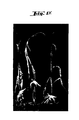
- HindIII and BamHI restriction enzymes As an example we present the hybridization patterns after digestion of this plant DNA with HindIII and BamHI restriction enzymes by using a cDNA clone for a putative auxin receptor gene cloned from maize (U. Tillman et al. The EMBO J. 1988, 2463-2467). As can be seen in fig. 2 all of the analyzed genotypes exhibit a unique and characteristic pattern of hybridizing bands.
- Fig. 2a, b show restriction fragment polymorphism visible after hybridizing with a 32 P-labeled cDNA insert for a putative auxin receptor gene (U. Tillmann et al. The EMBO J. 1988, 2463-2467).
- 1 OK 2 H 229 Hind III 3 DSM 6009 4 OK 5 H 229 Bam HI 6 DSM 6009
- the exposure time of figure 2b was approximately 3 times longer than of figure 2a.
- Plants from different maize genotypes were grown in the field. Three to four plants were self-pollinated and the fertilized ears were harvested 12-14 days after pollination. After removal of husks and silks the ears were surface sterilized in 0.15 % sodium hypochlorite solution containing 0.5 % household detergent for 10 minutes followed by rinsing 3 times with sterile deionized water. Ten embryos per ear were then aseptically dissected and placed with their flat plumule and radicle side down in contact with the surface of 50 ml solidified (0.8 % agar) somatic culture initiation and maintenance medium in 10 ⁇ 2 cm Petri dishes. The embryo cultures were incubated for 30-60 days under illumination at 25 ⁇ 2°C.
- the embryogenic cultures were transferred to fresh medium at monthly intervals and tested for plant regeneration capacity on plant regeneration medium. From the tested genotypes the inbreds A188, GK3/H and W64A, the genetic stock Mangelsdorf's Tester (MT) and a white flint local variety (WFLV) were found to form regenerable cultures under the described conditions. These genotypes, however, formed predominantly late-embryogenic cultures, often referred to as type I culture in the maize tissue culture literature. Their regenerative potential gradually decreased upon successive transfers to fresh medium and after 6 months' maintenance only occasional small regenerable sectors were present. When hybrids of two regenerable genotypes were produced and their embryo cultures were tested in the same way an improvement in the propagation rate and regenerability was observed.
- MT Mangelsdorf's Tester
- WFLV white flint local variety
- a multiple-generation crossing program was started.
- Two opaque (o 2 o 2 ) sources which were either non-regenerable under these conditions (Oh 43o 2 o 2 ) or not tested for their ability to regenerate from tissue cultures (H Temp Ao 2 o 2 ) were included.
- To combine the opaque gene with the genes responsible for the regenerable trait first the opaque source genotypes had to be crossed with the regenerable genotypes. Therefore these genotypes were planted, cultivated and their ears were isolated before silk emergence.
- the isolated ears of the regenerable genotypes were cross-pollinated with pollen from genotypes carrying the opaque gene.
- SC1-SC10 single cross hybrids
- the kernels of these 10 different single crosses were harvested, planted, grown and isolated as before for the second series of cross-pollinations to obtain the double cross (DC1-DC5) hybrid kernels from SC1 ⁇ SC7, SC2 ⁇ SC8, SC3 ⁇ SC9, SC4 ⁇ SC10 and SC5 ⁇ SC6 crosses, respectively. From the first and second pollination series only one harvested ear was taken from each cross-pollination for further generation. From the harvested DC kernels homozygous o 2 o 2 kernels were selected on the basis of their phenotype and were planted. At the flowering time in a third pollination series each DC hybrid (DC1 to DC5) was crossed with all the others to provide 4 harvested ears from each of the 20 cross-combinations.
- the OK281 culture was selected on the basis of its vigorous growth, lack of necrosis, easy regenerability into plants and fertility of regenerated plants.
- the florets carrying the desired microspores were surface sterilized in 0.1 % sodium hypochlorite solution containing 0.5 % household detergent for 10 minutes followed by rinsing the florets in deionized sterile water 3 ⁇ for 10 minutes. From the surface sterilized florets about 100 anthers were dissected and placed on 50 ml anther culture initiation medium in 10 ⁇ 2 cm glass Petri dishes. The plated anthers were incubated in the dark for 40-90 days at 25°C. Two local varieties, the Golden Glow (GG) and a white dent local variety (WDLV), produced at low percentage (below 1 %) haploid calli from the cultured anthers.
- GG Golden Glow
- WDLV white dent local variety
- haploid embryoids derived from different tassels of the MS Syn A/85, about 20 % developed into regenerable embryogenic cultures after transfer from the initiation medium to haploid maintenance medium.
- the H 229 culture was selected on the basis of its predominantly early-embryogenic callus phenotype, its fast propagation rate, its plant regeneration capacity after long-term surface and suspension culture (more than two years before using for further crossing cycle) and its ability to divide and to form colonies and to regenerate plants from protoplasts.
- N6M 3 Since the development of the suspension culture medium N6M 3 independently selected regenerable genotypes (including early- and late-embryogenic, somatic and haploid cultures) have been tested for more than two years in suspension culture for their regenerative and fertility properties.
- suspension cultures show a faster propagation rate, the plant regeneration capacity of these selected genotypes was better when the embryoids were plated from suspension cultures than from infrequently passaged (about 2-month intervals) agar surface cultures.
- N6M suspension culture medium is preferred for maintenance of the cultures before protoplast isolation.
- the less than 1 mm embryos (H 229 ⁇ OK 281) obtained from a greenhouse-grown plant 12 days after pollination were incubated on N6M without 2,4-D for 3 weeks followed by two subcultures on N6M and MSG medium at 10-14-day intervals before the suspension culture is started in N6M medium.
- For regular maintenance 4 g of cells are used to start a new culture cycle of 5-7 days in 50 ml N6M medium in 100 ml Erlenmeyer flasks. All the cultures are grown under continuous or periodic illumination by fluorescent tubes at 22-25°C.
- the floated protoplasts are collected and sedimented again in 15 ml WS + nPG in the third centrifugation.
- the number of protoplasts is counted using a Buerker or Thoma chamber before the third centrifugation.
- the protoplasts are cultured in 2 ml of liquid medium or are embedded in 0.5-0.7 % low gel point agarose (Sigma) by mixing the protoplasts gently with 2 ml of a 1:1 double strength ppN6M/89 and 1.2 % melted agarose solution after a previous temperature adjustment to 45°C for both solutions.
- the protoplasts are cultured under dim light at 25°C.
- N6M medium For feeding the protoplasts in the liquid medium 0.5 ml N6M medium is added after 3 weeks, followed by the addition of a further 1 ml 2-3 days later. Then after 3-4 days the whole culture was put into 10 ml fresh N6M medium and was shaken. The agarose-embedded cultures are placed either on solidified N6M with or without 2,4-D or into 10-50 ml liquid N6M medium after 2-4 weeks, in most cases after 3 weeks.
- Figure 1 A-K shows the various cell types and developmental stages involved in culturing DSM 6009, the DSM 6009 embryogenic maize culture and the regeneration of normal plants from it via the protoplast culture process.
- D the first divisions 32 hours after isolation
- E colonies 8 days after isolation
- F, G early and late embryogenic cultures from protoplasts after 2 months, respectively, regenerated plants from protoplasts before (H) and after (I) transplantation into soil
- K mature protoplast-derived plants with seed, 3 1/2 months after transfer into soil.
- a regenerable haploid Zea mays (L.) tissue culture and genotype which was obtained via anther culture from MS Syn A/85 anther culture synthetic and which was produced by successive cross- and sib-pollinations with the inclusion of the following genotypes: A188, A629, GK 3/H (inbreds), Black Mexican Sweet Corn (BMSC), Mangelsdorf's Tester (MT) (genetic stocks), white dent local variety (WDLV) and Golden Glow (GG) (local varieties).
- the H 229 culture is predominantly early-embryogenic, and readily forms suspension cultures, while the suspension culture protoplasts develop into plants under defined conditions.
- the H 229 plants obtained from the H 229 tissue culture are female-fertile, giving seeds upon pollination with viable pollen grains.
- the OK 281 plants obtained from the OK 281 cultures produce seeds via self-, sib- or cross-pollination under appropriate conditions.
- the OK 281 genotype is homozygous for the recessive opaque gene (o 2 o 2 ).
- the H 229 and OK 281 genotypes were maintained for 30 and 10 months, respectively, in culture before plants were regenerated for cross-pollinations.
- the DSM 6009 genotype is especially adapted to in vitro culture requirements as a consequence of its descent from ancestors which were selected for their tissue culture characteristics.
- DSM 6009 possesses a unique combination of the following traits:
- a special type of maize (Zea mays L.) tissue cultures in which a rapid propagation rate of early stages of somatic embryos is observed. These embryoids do not mature into clearly visible embryoids which are characterized by their size, smooth, scutellum-like structures bearing leaf and root primordia. In contrast, the early-embryogenic cultures have the appearance of a homogeneous callus culture. This culture type is referred to as type II or friable embryogenic callus culture in the relevant literature. The early-embryogenic cultures develop into late-embryogenic cultures before plant regeneration.
- the modified MS medium (Murashige, T. and Skoog, F. Physiol. Plant., 15 (1962) 473-497) as published by Green, C.E. and Phillips R.L. Crop Sci., 15 (1975) 417-421 but with the following modifications and additions (final concentration in mg/l): Bacto tryptone 500 mg, L-asparagine 150 mg.
- the altered components are (per l): 2,4-D 0.5 mg, sucrose 30 g, agar 8 g.
- the pH is adjusted to 5.8 ⁇ 0.05 before autoclaving.
- MgSO 4 ⁇ 7H 2 O 370 mg; CaCl 2 ⁇ 2H 2 O : 300 mg; sucrose 1 g; glucose 50 g; fructose 30 g; maltose 2.5 g; galactose 2.5 g; galacturonic acid 500 mg; glucuronic acid 500 mg; L-asparagine 500 mg; L-glutamine 100 mg, L-serine 100 mg; 2,4-dichlorophenoxyacetic acid 0.4 g; naphthylacetic acid 0.7 mg and zeatin (mixed isomers) 0.7 mg.
- the pH, without adjustment, is in the range of 4.5-5.0.
- Protoplast isolation medium (cellulytic solution)
- 10 ml of the protoplast isolation solution are prepared from the following filter-sterilized (fs) or autoclaved (a) stock solutions: 0.3-0.5 ml desalted cellulase/pectinase stock (fs) 2.0 ml washing solution (fs) 4.2-4.4 ml double-dist.
- H 2 O (a) 0.5 ml BSA stock solution (fs) 0.1 ml n-PG solution (fs) 0.1 ml 1 M CaCl 2 solution (a) 0.1 ml 1 M MgSO 4 solution (a) 2.5 ml osmotic solution (fs)
- N 6 M medium without Fe, EDTA, 2.4-D and (NH 4 ) 2 SO 4 contains the following sugars: sucrose 10 g/l, glucose 55 g/l and fructose 55 g/l.
- fraction V (Merck)
- a stock solution is prepared, containing 40 mg BSA in 1 ml double-distilled H 2 O. Aliquots are kept deep frozen prior to use.
- n-propyl gallate 50 mg n-propyl gallate are dissolved in 2 ml ethanol. 8 ml double-distilled H 2 O are added and the solution is filter-sterilized. 1% freshly prepared nPG solution is added to the washing solution (WS-nPG) and 0.6 M sucrose solution (0.6 Su + nPG).
- 100 ml contain KNO 3 4.04 g; KH 2 PO 4 2.72 g; K 2 HPO 4 0.94 g; fructose 7.2 g; glucose 8.0 g; L-proline 0.68 g.
- the solution is filter-sterilized.
Landscapes
- Life Sciences & Earth Sciences (AREA)
- Developmental Biology & Embryology (AREA)
- Botany (AREA)
- Environmental Sciences (AREA)
- Health & Medical Sciences (AREA)
- Physiology (AREA)
- Engineering & Computer Science (AREA)
- Biotechnology (AREA)
- Cell Biology (AREA)
- Natural Medicines & Medicinal Plants (AREA)
- Breeding Of Plants And Reproduction By Means Of Culturing (AREA)
- Micro-Organisms Or Cultivation Processes Thereof (AREA)
- Saccharide Compounds (AREA)
- Measuring Or Testing Involving Enzymes Or Micro-Organisms (AREA)
- Agricultural Chemicals And Associated Chemicals (AREA)
- Preparation Of Compounds By Using Micro-Organisms (AREA)
- Solid-Sorbent Or Filter-Aiding Compositions (AREA)
- Materials For Photolithography (AREA)
- Storage Of Fruits Or Vegetables (AREA)
- Compounds Of Unknown Constitution (AREA)
Priority Applications (1)
| Application Number | Priority Date | Filing Date | Title |
|---|---|---|---|
| EP98107918A EP0873682B1 (en) | 1990-06-23 | 1991-06-18 | Improved zea mays (L.) genotypes with capability of long term, highly efficient plant regeneration |
Applications Claiming Priority (4)
| Application Number | Priority Date | Filing Date | Title |
|---|---|---|---|
| EP90111945 | 1990-06-23 | ||
| EP90111945 | 1990-06-23 | ||
| EP98107918A EP0873682B1 (en) | 1990-06-23 | 1991-06-18 | Improved zea mays (L.) genotypes with capability of long term, highly efficient plant regeneration |
| EP91109933A EP0465875B1 (en) | 1990-06-23 | 1991-06-18 | Method for producing a callus culture of Zea mays (L.) |
Related Parent Applications (1)
| Application Number | Title | Priority Date | Filing Date |
|---|---|---|---|
| EP91109933A Division EP0465875B1 (en) | 1990-06-23 | 1991-06-18 | Method for producing a callus culture of Zea mays (L.) |
Publications (3)
| Publication Number | Publication Date |
|---|---|
| EP0873682A2 EP0873682A2 (en) | 1998-10-28 |
| EP0873682A3 EP0873682A3 (en) | 1998-12-02 |
| EP0873682B1 true EP0873682B1 (en) | 2002-09-04 |
Family
ID=8204127
Family Applications (2)
| Application Number | Title | Priority Date | Filing Date |
|---|---|---|---|
| EP98107918A Expired - Lifetime EP0873682B1 (en) | 1990-06-23 | 1991-06-18 | Improved zea mays (L.) genotypes with capability of long term, highly efficient plant regeneration |
| EP91109933A Expired - Lifetime EP0465875B1 (en) | 1990-06-23 | 1991-06-18 | Method for producing a callus culture of Zea mays (L.) |
Family Applications After (1)
| Application Number | Title | Priority Date | Filing Date |
|---|---|---|---|
| EP91109933A Expired - Lifetime EP0465875B1 (en) | 1990-06-23 | 1991-06-18 | Method for producing a callus culture of Zea mays (L.) |
Country Status (11)
| Country | Link |
|---|---|
| EP (2) | EP0873682B1 (da) |
| JP (1) | JP3865264B2 (da) |
| AT (2) | ATE173581T1 (da) |
| DE (2) | DE69133102T2 (da) |
| DK (2) | DK0465875T3 (da) |
| ES (2) | ES2184167T3 (da) |
| HU (1) | HU215163B (da) |
| IE (1) | IE912165A1 (da) |
| PT (1) | PT98070B (da) |
| TR (1) | TR28031A (da) |
| ZA (1) | ZA914786B (da) |
Families Citing this family (25)
| Publication number | Priority date | Publication date | Assignee | Title |
|---|---|---|---|---|
| US5350689A (en) * | 1987-05-20 | 1994-09-27 | Ciba-Geigy Corporation | Zea mays plants and transgenic Zea mays plants regenerated from protoplasts or protoplast-derived cells |
| US5767367A (en) * | 1990-06-23 | 1998-06-16 | Hoechst Aktiengesellschaft | Zea mays (L.) with capability of long term, highly efficient plant regeneration including fertile transgenic maize plants having a heterologous gene, and their preparation |
| US6114608A (en) * | 1997-03-14 | 2000-09-05 | Novartis Ag | Nucleic acid construct comprising bacillus thuringiensis cry1Ab gene |
| DE19621572A1 (de) * | 1996-05-29 | 1997-12-04 | Max Planck Gesellschaft | Lokalisierter Zelltod in Pflanzen |
| DE19741375C2 (de) * | 1997-09-19 | 1999-10-21 | Max Planck Gesellschaft | Transgene Pflanzen, deren oberirdische Teile früher reifen und vollständig absterben |
| US6437223B1 (en) | 1998-03-13 | 2002-08-20 | Syngenta Participations Ag | Inbred maize line 2070BT |
| DE19836098A1 (de) | 1998-07-31 | 2000-02-03 | Hoechst Schering Agrevo Gmbh | Pflanzen, die eine modifizierte Stärke synthetisieren, Verfahren zur Herstellung der Pflanzen, ihre Verwendung sowie die modifizierte Stärke |
| WO2000022140A1 (de) | 1998-10-09 | 2000-04-20 | Planttec Biotechnologie Gmbh Forschung & Entwicklung | NUCLEINSÄUREMOLEKÜLE CODIEREND EIN VERZWEIGUNGSENZYM AUS BAKTERIEN DER GATTUNG NEISSERIA SOWIE VERFAHREN ZUR HERSTELLUNG VON α-1,6-VERZWEIGTEN α-1,4-GLUCANEN |
| US6734340B2 (en) | 2000-10-23 | 2004-05-11 | Bayer Cropscience Gmbh | Monocotyledon plant cells and plants which synthesise modified starch |
| CA2505776C (en) | 2002-12-19 | 2013-04-02 | Bayer Cropscience Gmbh | Plant cells and plants which synthesize a starch with an increased final viscosity |
| BR0318467A (pt) | 2003-08-18 | 2006-09-12 | Ceres Inc | seqüências de nucleotìdeo e polipeptìdeos codificados pelas mesmas uteis para aumentar o tamanho de uma planta e aumentar o número e tamanho de folhas |
| ATE440947T1 (de) | 2003-12-02 | 2009-09-15 | Basf Se | 2-methyl-6-solanylbenzochinon-methyltransferase als ziel für herbizide |
| NZ552259A (en) | 2004-07-08 | 2008-09-26 | Dlf Trifolium As | Means and methods for controlling flowering in plants |
| US7335760B2 (en) | 2004-12-22 | 2008-02-26 | Ceres, Inc. | Nucleic acid sequences encoding zinc finger proteins |
| EP1707632A1 (de) | 2005-04-01 | 2006-10-04 | Bayer CropScience GmbH | Phosphorylierte waxy-Kartoffelstärke |
| PL1951879T3 (pl) | 2005-10-05 | 2016-05-31 | Bayer Ip Gmbh | Rośliny o podwyższonej zawartości aminocukrów |
| EP1772052A1 (de) | 2005-10-05 | 2007-04-11 | Bayer CropScience GmbH | Verbesserte Verfahren und Mittel zur Herstellung von Hyaluronan |
| US8222482B2 (en) | 2006-01-26 | 2012-07-17 | Ceres, Inc. | Modulating plant oil levels |
| EP2036983A1 (de) | 2007-09-12 | 2009-03-18 | Bayer CropScience AG | Pflanzen, die erhöhte Mengen an Glucosaminglycanen synthetisieren |
| EP2184351A1 (en) | 2008-10-30 | 2010-05-12 | Max-Planck-Gesellschaft zur Förderung der Wissenschaften e.V. | Polynucleotides encoding caryophyllene synthase and uses thereof |
| EP2455454A1 (en) * | 2010-11-19 | 2012-05-23 | Albert-Ludwigs-Universität Freiburg | Method for introducing a polynucleotide into plant protoplast cells |
| BR112014008895A2 (pt) | 2011-10-12 | 2019-09-24 | Bayer Cropscience Ag | plantas com atividade diminuída de uma enzima de desfosforilação do amido |
| WO2013053730A1 (en) | 2011-10-12 | 2013-04-18 | Bayer Cropscience Ag | Plants with decreased activity of a starch dephosphorylating enzyme |
| PL3464333T3 (pl) | 2016-05-26 | 2024-09-30 | Nunhems B.V. | Rośliny wytwarzające bezpestkowe owoce |
| EP3806619A1 (en) | 2018-06-15 | 2021-04-21 | Nunhems B.V. | Seedless watermelon plants comprising modifications in an abc transporter gene |
Family Cites Families (1)
| Publication number | Priority date | Publication date | Assignee | Title |
|---|---|---|---|---|
| US4830966A (en) * | 1984-09-07 | 1989-05-16 | Sungene Technologies Corporation | Process for regenerating corn |
-
1991
- 1991-06-18 AT AT91109933T patent/ATE173581T1/de not_active IP Right Cessation
- 1991-06-18 ES ES98107918T patent/ES2184167T3/es not_active Expired - Lifetime
- 1991-06-18 DK DK91109933T patent/DK0465875T3/da active
- 1991-06-18 DK DK98107918T patent/DK0873682T3/da active
- 1991-06-18 EP EP98107918A patent/EP0873682B1/en not_active Expired - Lifetime
- 1991-06-18 DE DE69133102T patent/DE69133102T2/de not_active Expired - Lifetime
- 1991-06-18 AT AT98107918T patent/ATE223148T1/de not_active IP Right Cessation
- 1991-06-18 ES ES91109933T patent/ES2124693T3/es not_active Expired - Lifetime
- 1991-06-18 EP EP91109933A patent/EP0465875B1/en not_active Expired - Lifetime
- 1991-06-18 DE DE69130521T patent/DE69130521T2/de not_active Expired - Lifetime
- 1991-06-21 ZA ZA914786A patent/ZA914786B/xx unknown
- 1991-06-21 IE IE216591A patent/IE912165A1/en unknown
- 1991-06-21 JP JP19695591A patent/JP3865264B2/ja not_active Expired - Lifetime
- 1991-06-21 PT PT98070A patent/PT98070B/pt not_active IP Right Cessation
- 1991-06-21 HU HU912082A patent/HU215163B/hu unknown
- 1991-06-21 TR TR00645/91A patent/TR28031A/xx unknown
Also Published As
| Publication number | Publication date |
|---|---|
| ZA914786B (en) | 1992-03-25 |
| IE912165A1 (en) | 1992-01-01 |
| DK0873682T3 (da) | 2002-12-30 |
| ES2184167T3 (es) | 2003-04-01 |
| EP0465875A1 (en) | 1992-01-15 |
| ES2124693T3 (es) | 1999-02-16 |
| TR28031A (tr) | 1995-12-11 |
| ATE223148T1 (de) | 2002-09-15 |
| EP0873682A2 (en) | 1998-10-28 |
| PT98070A (pt) | 1992-03-31 |
| JP3865264B2 (ja) | 2007-01-10 |
| PT98070B (pt) | 1998-12-31 |
| EP0465875B1 (en) | 1998-11-25 |
| DK0465875T3 (da) | 1999-08-09 |
| DE69130521T2 (de) | 1999-05-06 |
| HU215163B (hu) | 1998-10-28 |
| JPH04299928A (ja) | 1992-10-23 |
| HU912082D0 (en) | 1991-12-30 |
| DE69130521D1 (de) | 1999-01-07 |
| DE69133102D1 (de) | 2002-10-10 |
| DE69133102T2 (de) | 2003-05-28 |
| HUT58441A (en) | 1992-03-30 |
| ATE173581T1 (de) | 1998-12-15 |
| EP0873682A3 (en) | 1998-12-02 |
Similar Documents
| Publication | Publication Date | Title |
|---|---|---|
| EP0873682B1 (en) | Improved zea mays (L.) genotypes with capability of long term, highly efficient plant regeneration | |
| US5767367A (en) | Zea mays (L.) with capability of long term, highly efficient plant regeneration including fertile transgenic maize plants having a heterologous gene, and their preparation | |
| Morocz et al. | An improved system to obtain fertile regenerants via maize protoplasts isolated from a highly embryogenic suspension culture | |
| US5523520A (en) | Mutant dwarfism gene of petunia | |
| Duncan et al. | The production of callus capable of plant regeneration from immature embryos of numerous Zea mays genotypes | |
| Kalloo | Eggplant: Solanum melongena L. | |
| Burnett et al. | Embryogenesis and plant regeneration from isolated microspores of Brassica rapa L. ssp. oleifera | |
| US5445961A (en) | Isolated microscope and anther culture of maize | |
| US5134074A (en) | Embryogenic callus and cell suspensions of corn inbred B73 | |
| Bohorova et al. | Isolation, culture and callus regeneration of protoplasts of wild and cultivated Helianthus species | |
| Rotino | Haploidy in eggplant | |
| US5530183A (en) | Soybean variety 9253 | |
| Bajaj | Wide hybridization in legumes and oilseed crops through embryo, ovule, and ovary culture | |
| US5792936A (en) | Zea mays (L.) with capability of long term, highly efficient plant regeneration including fertile transgenic maize plants having a heterologous gene, and their preparation | |
| Sharma et al. | Improvement of anther culture in Nicotiana: media, cultural conditions and flow cytometric determination of ploidy levels | |
| Wu et al. | Plant regeneration from protoplasts isolated from primary callus of four japonica rice (Oryza sativa L.) varieties | |
| Tran Thanh Van et al. | Winged bean [Psophocarpus tetragonolobus (L.) DC.] | |
| CN111316915A (zh) | 一种ems诱导软枣猕猴桃种胚下胚轴突变的新品种培育方法 | |
| Cai et al. | Regeneration of plants from protoplasts of kiwifruit (Actinidia deliciosa) | |
| Taski-Ajdukovic et al. | Shoot development from hypocotyl protoplasts of sunflower (Helianthus annuus L.) | |
| US4810649A (en) | Controlled regeneration of zea diploperennis hybrids and breeding strategies therewith | |
| EP0490600A1 (en) | Sunflower plants having a high frequency of regenerability of fertile plants from isolated protoplasts and method of using same | |
| Tefera et al. | In vitro normal and variant development of t'ef (Eragrostis tef) spikelets | |
| CA1292960C (en) | Process for increasing free pool lysine content in maize | |
| CA2004378C (en) | Method for increasing the ability of a plant species to undergo androgenesis, and products produced therefrom |
Legal Events
| Date | Code | Title | Description |
|---|---|---|---|
| PUAI | Public reference made under article 153(3) epc to a published international application that has entered the european phase |
Free format text: ORIGINAL CODE: 0009012 |
|
| PUAL | Search report despatched |
Free format text: ORIGINAL CODE: 0009013 |
|
| AC | Divisional application: reference to earlier application |
Ref document number: 465875 Country of ref document: EP |
|
| AK | Designated contracting states |
Kind code of ref document: A2 Designated state(s): AT BE CH DE DK ES FR GB GR IT LI NL |
|
| AK | Designated contracting states |
Kind code of ref document: A3 Designated state(s): AT BE CH DE DK ES FR GB GR IT LI NL |
|
| 17P | Request for examination filed |
Effective date: 19990602 |
|
| RAP1 | Party data changed (applicant data changed or rights of an application transferred) |
Owner name: AVENTIS CROPSCIENCE GMBH |
|
| RAP1 | Party data changed (applicant data changed or rights of an application transferred) |
Owner name: AVENTIS CROPSCIENCE GMBH |
|
| GRAG | Despatch of communication of intention to grant |
Free format text: ORIGINAL CODE: EPIDOS AGRA |
|
| 17Q | First examination report despatched |
Effective date: 20010713 |
|
| GRAG | Despatch of communication of intention to grant |
Free format text: ORIGINAL CODE: EPIDOS AGRA |
|
| GRAG | Despatch of communication of intention to grant |
Free format text: ORIGINAL CODE: EPIDOS AGRA |
|
| GRAH | Despatch of communication of intention to grant a patent |
Free format text: ORIGINAL CODE: EPIDOS IGRA |
|
| GRAH | Despatch of communication of intention to grant a patent |
Free format text: ORIGINAL CODE: EPIDOS IGRA |
|
| GRAA | (expected) grant |
Free format text: ORIGINAL CODE: 0009210 |
|
| AC | Divisional application: reference to earlier application |
Ref document number: 465875 Country of ref document: EP |
|
| AK | Designated contracting states |
Kind code of ref document: B1 Designated state(s): AT BE CH DE DK ES FR GB GR IT LI NL |
|
| REF | Corresponds to: |
Ref document number: 223148 Country of ref document: AT Date of ref document: 20020915 Kind code of ref document: T |
|
| REG | Reference to a national code |
Ref country code: GB Ref legal event code: FG4D |
|
| REG | Reference to a national code |
Ref country code: CH Ref legal event code: EP |
|
| BECN | Be: change of holder's name |
Owner name: *BAYER CROPSCIENCE G.M.B.H. |
|
| REF | Corresponds to: |
Ref document number: 69133102 Country of ref document: DE Date of ref document: 20021010 |
|
| REG | Reference to a national code |
Ref country code: DK Ref legal event code: T3 |
|
| REG | Reference to a national code |
Ref country code: CH Ref legal event code: PFA Free format text: AVENTIS CROPSCIENCE GMBH TRANSFER- BAYER CROPSCIENCE GMBH |
|
| REG | Reference to a national code |
Ref country code: GR Ref legal event code: EP Ref document number: 20020404536 Country of ref document: GR |
|
| ET | Fr: translation filed | ||
| REG | Reference to a national code |
Ref country code: ES Ref legal event code: PC2A Ref country code: ES Ref legal event code: FG2A Ref document number: 2184167 Country of ref document: ES Kind code of ref document: T3 |
|
| REG | Reference to a national code |
Ref country code: FR Ref legal event code: CD |
|
| PLBE | No opposition filed within time limit |
Free format text: ORIGINAL CODE: 0009261 |
|
| STAA | Information on the status of an ep patent application or granted ep patent |
Free format text: STATUS: NO OPPOSITION FILED WITHIN TIME LIMIT |
|
| 26N | No opposition filed |
Effective date: 20030605 |
|
| REG | Reference to a national code |
Ref country code: GB Ref legal event code: 732E |
|
| REG | Reference to a national code |
Ref country code: CH Ref legal event code: PFA Owner name: BAYER CROPSCIENCE AG Free format text: BAYER CROPSCIENCE GMBH#BRUENINGSTRASSE 50#65929 FRANKFURT AM MAIN (DE) -TRANSFER TO- BAYER CROPSCIENCE AG#ALFRED-NOBEL-STRASSE 50#40789 MONHEIM (DE) Ref country code: CH Ref legal event code: NV Representative=s name: E. BLUM & CO. AG PATENT- UND MARKENANWAELTE VSP |
|
| NLS | Nl: assignments of ep-patents |
Owner name: BAYER CROPSCIENCE AG Effective date: 20071213 |
|
| NLT1 | Nl: modifications of names registered in virtue of documents presented to the patent office pursuant to art. 16 a, paragraph 1 |
Owner name: BAYER CROPSCIENCE GMBH |
|
| REG | Reference to a national code |
Ref country code: FR Ref legal event code: TP |
|
| PGFP | Annual fee paid to national office [announced via postgrant information from national office to epo] |
Ref country code: FR Payment date: 20100709 Year of fee payment: 20 Ref country code: DK Payment date: 20100610 Year of fee payment: 20 |
|
| PGFP | Annual fee paid to national office [announced via postgrant information from national office to epo] |
Ref country code: IT Payment date: 20100616 Year of fee payment: 20 Ref country code: AT Payment date: 20100610 Year of fee payment: 20 |
|
| PGFP | Annual fee paid to national office [announced via postgrant information from national office to epo] |
Ref country code: NL Payment date: 20100603 Year of fee payment: 20 Ref country code: ES Payment date: 20100713 Year of fee payment: 20 Ref country code: CH Payment date: 20100614 Year of fee payment: 20 Ref country code: BE Payment date: 20100615 Year of fee payment: 20 |
|
| PGFP | Annual fee paid to national office [announced via postgrant information from national office to epo] |
Ref country code: GB Payment date: 20100616 Year of fee payment: 20 Ref country code: DE Payment date: 20100616 Year of fee payment: 20 |
|
| PGFP | Annual fee paid to national office [announced via postgrant information from national office to epo] |
Ref country code: GR Payment date: 20100514 Year of fee payment: 20 |
|
| REG | Reference to a national code |
Ref country code: DE Ref legal event code: R071 Ref document number: 69133102 Country of ref document: DE |
|
| REG | Reference to a national code |
Ref country code: DE Ref legal event code: R071 Ref document number: 69133102 Country of ref document: DE |
|
| REG | Reference to a national code |
Ref country code: NL Ref legal event code: V4 Effective date: 20110618 |
|
| BE20 | Be: patent expired |
Owner name: *BAYER CROPSCIENCE A.G. Effective date: 20110618 |
|
| REG | Reference to a national code |
Ref country code: CH Ref legal event code: PL |
|
| REG | Reference to a national code |
Ref country code: DK Ref legal event code: EUP |
|
| REG | Reference to a national code |
Ref country code: GB Ref legal event code: PE20 Expiry date: 20110617 |
|
| PG25 | Lapsed in a contracting state [announced via postgrant information from national office to epo] |
Ref country code: NL Free format text: LAPSE BECAUSE OF EXPIRATION OF PROTECTION Effective date: 20110618 Ref country code: GB Free format text: LAPSE BECAUSE OF EXPIRATION OF PROTECTION Effective date: 20110617 |
|
| REG | Reference to a national code |
Ref country code: ES Ref legal event code: FD2A Effective date: 20120305 |
|
| PG25 | Lapsed in a contracting state [announced via postgrant information from national office to epo] |
Ref country code: ES Free format text: LAPSE BECAUSE OF EXPIRATION OF PROTECTION Effective date: 20110619 |
|
| PG25 | Lapsed in a contracting state [announced via postgrant information from national office to epo] |
Ref country code: DE Free format text: LAPSE BECAUSE OF EXPIRATION OF PROTECTION Effective date: 20110619 |