EP0874020B1 - Katalysierte Degradation von thermoplastischen Polyolefinen und Einarbeitung der Degradationsprodukte in schweren Kohlenwasserstoffen - Google Patents
Katalysierte Degradation von thermoplastischen Polyolefinen und Einarbeitung der Degradationsprodukte in schweren Kohlenwasserstoffen Download PDFInfo
- Publication number
- EP0874020B1 EP0874020B1 EP98400947A EP98400947A EP0874020B1 EP 0874020 B1 EP0874020 B1 EP 0874020B1 EP 98400947 A EP98400947 A EP 98400947A EP 98400947 A EP98400947 A EP 98400947A EP 0874020 B1 EP0874020 B1 EP 0874020B1
- Authority
- EP
- European Patent Office
- Prior art keywords
- process according
- weight
- thermoplastic polyolefin
- proportion
- mixture
- Prior art date
- Legal status (The legal status is an assumption and is not a legal conclusion. Google has not performed a legal analysis and makes no representation as to the accuracy of the status listed.)
- Expired - Lifetime
Links
- 229920002397 thermoplastic olefin Polymers 0.000 title claims abstract description 31
- 229930195733 hydrocarbon Natural products 0.000 title claims abstract description 28
- 150000002430 hydrocarbons Chemical class 0.000 title claims abstract description 28
- 238000006731 degradation reaction Methods 0.000 title claims abstract description 11
- 230000015556 catabolic process Effects 0.000 title claims abstract description 10
- 238000010348 incorporation Methods 0.000 title claims abstract description 8
- 239000000203 mixture Substances 0.000 claims abstract description 36
- 238000000034 method Methods 0.000 claims abstract description 28
- -1 polyethylene Polymers 0.000 claims abstract description 22
- 239000004698 Polyethylene Substances 0.000 claims abstract description 20
- 239000003054 catalyst Substances 0.000 claims abstract description 20
- 229920000573 polyethylene Polymers 0.000 claims abstract description 20
- 229910052500 inorganic mineral Inorganic materials 0.000 claims abstract description 9
- 239000011707 mineral Substances 0.000 claims abstract description 9
- 239000007787 solid Substances 0.000 claims abstract description 8
- 239000010949 copper Substances 0.000 claims abstract description 7
- 238000002156 mixing Methods 0.000 claims abstract description 6
- 239000004215 Carbon black (E152) Substances 0.000 claims abstract description 5
- RYGMFSIKBFXOCR-UHFFFAOYSA-N Copper Chemical compound [Cu] RYGMFSIKBFXOCR-UHFFFAOYSA-N 0.000 claims abstract description 5
- XAGFODPZIPBFFR-UHFFFAOYSA-N aluminium Chemical compound [Al] XAGFODPZIPBFFR-UHFFFAOYSA-N 0.000 claims abstract description 5
- 229910052782 aluminium Inorganic materials 0.000 claims abstract description 5
- 229910052802 copper Inorganic materials 0.000 claims abstract description 5
- 239000010703 silicon Substances 0.000 claims abstract description 5
- 229910052710 silicon Inorganic materials 0.000 claims abstract description 5
- 239000003921 oil Substances 0.000 claims abstract description 4
- 239000004411 aluminium Substances 0.000 claims abstract 2
- 239000010426 asphalt Substances 0.000 claims description 26
- 229920001903 high density polyethylene Polymers 0.000 claims description 7
- 239000002253 acid Substances 0.000 claims description 6
- BERDEBHAJNAUOM-UHFFFAOYSA-N copper(I) oxide Inorganic materials [Cu]O[Cu] BERDEBHAJNAUOM-UHFFFAOYSA-N 0.000 claims description 5
- KRFJLUBVMFXRPN-UHFFFAOYSA-N cuprous oxide Chemical group [O-2].[Cu+].[Cu+] KRFJLUBVMFXRPN-UHFFFAOYSA-N 0.000 claims description 5
- 229940112669 cuprous oxide Drugs 0.000 claims description 5
- 239000004700 high-density polyethylene Substances 0.000 claims description 5
- 229920001577 copolymer Polymers 0.000 claims description 4
- 230000000593 degrading effect Effects 0.000 claims description 4
- 238000010306 acid treatment Methods 0.000 claims description 2
- 229910052799 carbon Inorganic materials 0.000 claims description 2
- 125000004432 carbon atom Chemical group C* 0.000 claims description 2
- 239000004927 clay Substances 0.000 claims description 2
- 229920001519 homopolymer Polymers 0.000 claims description 2
- 229920001179 medium density polyethylene Polymers 0.000 claims description 2
- 239000010457 zeolite Substances 0.000 claims description 2
- 239000004711 α-olefin Substances 0.000 claims description 2
- 229910021536 Zeolite Inorganic materials 0.000 claims 1
- PNEYBMLMFCGWSK-UHFFFAOYSA-N aluminium oxide Inorganic materials [O-2].[O-2].[O-2].[Al+3].[Al+3] PNEYBMLMFCGWSK-UHFFFAOYSA-N 0.000 claims 1
- HNPSIPDUKPIQMN-UHFFFAOYSA-N dioxosilane;oxo(oxoalumanyloxy)alumane Chemical compound O=[Si]=O.O=[Al]O[Al]=O HNPSIPDUKPIQMN-UHFFFAOYSA-N 0.000 claims 1
- 239000004701 medium-density polyethylene Substances 0.000 claims 1
- 229920000098 polyolefin Polymers 0.000 abstract description 11
- 230000002378 acidificating effect Effects 0.000 abstract description 4
- XUIMIQQOPSSXEZ-UHFFFAOYSA-N Silicon Chemical compound [Si] XUIMIQQOPSSXEZ-UHFFFAOYSA-N 0.000 abstract 1
- 150000001875 compounds Chemical class 0.000 description 5
- 239000000047 product Substances 0.000 description 5
- 238000007254 oxidation reaction Methods 0.000 description 4
- 239000003208 petroleum Substances 0.000 description 4
- 229920005989 resin Polymers 0.000 description 4
- 239000011347 resin Substances 0.000 description 4
- 239000004743 Polypropylene Substances 0.000 description 3
- 125000003118 aryl group Chemical group 0.000 description 3
- 239000006185 dispersion Substances 0.000 description 3
- 239000010687 lubricating oil Substances 0.000 description 3
- 230000035515 penetration Effects 0.000 description 3
- 229920001155 polypropylene Polymers 0.000 description 3
- VXNZUUAINFGPBY-UHFFFAOYSA-N 1-Butene Chemical compound CCC=C VXNZUUAINFGPBY-UHFFFAOYSA-N 0.000 description 2
- KPAPHODVWOVUJL-UHFFFAOYSA-N 1-benzofuran;1h-indene Chemical compound C1=CC=C2CC=CC2=C1.C1=CC=C2OC=CC2=C1 KPAPHODVWOVUJL-UHFFFAOYSA-N 0.000 description 2
- LIKMAJRDDDTEIG-UHFFFAOYSA-N 1-hexene Chemical compound CCCCC=C LIKMAJRDDDTEIG-UHFFFAOYSA-N 0.000 description 2
- KWKAKUADMBZCLK-UHFFFAOYSA-N 1-octene Chemical compound CCCCCCC=C KWKAKUADMBZCLK-UHFFFAOYSA-N 0.000 description 2
- 239000003245 coal Substances 0.000 description 2
- 239000010779 crude oil Substances 0.000 description 2
- 238000004821 distillation Methods 0.000 description 2
- 229920001971 elastomer Polymers 0.000 description 2
- 239000000295 fuel oil Substances 0.000 description 2
- 238000012423 maintenance Methods 0.000 description 2
- 238000002844 melting Methods 0.000 description 2
- 230000008018 melting Effects 0.000 description 2
- 230000003647 oxidation Effects 0.000 description 2
- 238000004806 packaging method and process Methods 0.000 description 2
- 210000002741 palatine tonsil Anatomy 0.000 description 2
- 229920000642 polymer Polymers 0.000 description 2
- 238000003756 stirring Methods 0.000 description 2
- 229920000468 styrene butadiene styrene block copolymer Polymers 0.000 description 2
- 229920001169 thermoplastic Polymers 0.000 description 2
- 239000004416 thermosoftening plastic Substances 0.000 description 2
- 239000002699 waste material Substances 0.000 description 2
- 229910018072 Al 2 O 3 Inorganic materials 0.000 description 1
- VGGSQFUCUMXWEO-UHFFFAOYSA-N Ethene Chemical compound C=C VGGSQFUCUMXWEO-UHFFFAOYSA-N 0.000 description 1
- 239000005977 Ethylene Substances 0.000 description 1
- 229910004298 SiO 2 Inorganic materials 0.000 description 1
- 239000011230 binding agent Substances 0.000 description 1
- FACXGONDLDSNOE-UHFFFAOYSA-N buta-1,3-diene;styrene Chemical compound C=CC=C.C=CC1=CC=CC=C1.C=CC1=CC=CC=C1 FACXGONDLDSNOE-UHFFFAOYSA-N 0.000 description 1
- 239000003153 chemical reaction reagent Substances 0.000 description 1
- 238000004587 chromatography analysis Methods 0.000 description 1
- 239000012141 concentrate Substances 0.000 description 1
- 239000007857 degradation product Substances 0.000 description 1
- 239000003599 detergent Substances 0.000 description 1
- GUJOJGAPFQRJSV-UHFFFAOYSA-N dialuminum;dioxosilane;oxygen(2-);hydrate Chemical compound O.[O-2].[O-2].[O-2].[Al+3].[Al+3].O=[Si]=O.O=[Si]=O.O=[Si]=O.O=[Si]=O GUJOJGAPFQRJSV-UHFFFAOYSA-N 0.000 description 1
- 238000000113 differential scanning calorimetry Methods 0.000 description 1
- 239000000806 elastomer Substances 0.000 description 1
- 238000005485 electric heating Methods 0.000 description 1
- 230000007613 environmental effect Effects 0.000 description 1
- ZZUFCTLCJUWOSV-UHFFFAOYSA-N furosemide Chemical compound C1=C(Cl)C(S(=O)(=O)N)=CC(C(O)=O)=C1NCC1=CC=CO1 ZZUFCTLCJUWOSV-UHFFFAOYSA-N 0.000 description 1
- 239000008187 granular material Substances 0.000 description 1
- 239000011261 inert gas Substances 0.000 description 1
- 230000001788 irregular Effects 0.000 description 1
- NLYAJNPCOHFWQQ-UHFFFAOYSA-N kaolin Chemical compound O.O.O=[Al]O[Si](=O)O[Si](=O)O[Al]=O NLYAJNPCOHFWQQ-UHFFFAOYSA-N 0.000 description 1
- 238000004898 kneading Methods 0.000 description 1
- 238000004519 manufacturing process Methods 0.000 description 1
- 239000000463 material Substances 0.000 description 1
- 239000000155 melt Substances 0.000 description 1
- 150000001247 metal acetylides Chemical class 0.000 description 1
- 238000012986 modification Methods 0.000 description 1
- 230000004048 modification Effects 0.000 description 1
- 229910052901 montmorillonite Inorganic materials 0.000 description 1
- TVMXDCGIABBOFY-UHFFFAOYSA-N n-Octanol Natural products CCCCCCCC TVMXDCGIABBOFY-UHFFFAOYSA-N 0.000 description 1
- 239000004058 oil shale Substances 0.000 description 1
- 230000003287 optical effect Effects 0.000 description 1
- 239000012188 paraffin wax Substances 0.000 description 1
- 235000019809 paraffin wax Nutrition 0.000 description 1
- 235000019271 petrolatum Nutrition 0.000 description 1
- 239000000049 pigment Substances 0.000 description 1
- 229920003023 plastic Polymers 0.000 description 1
- 239000004033 plastic Substances 0.000 description 1
- 238000006116 polymerization reaction Methods 0.000 description 1
- 239000000843 powder Substances 0.000 description 1
- QQONPFPTGQHPMA-UHFFFAOYSA-N propylene Natural products CC=C QQONPFPTGQHPMA-UHFFFAOYSA-N 0.000 description 1
- 125000004805 propylene group Chemical group [H]C([H])([H])C([H])([*:1])C([H])([H])[*:2] 0.000 description 1
- 238000000197 pyrolysis Methods 0.000 description 1
- 238000011084 recovery Methods 0.000 description 1
- 239000005060 rubber Substances 0.000 description 1
- 239000002904 solvent Substances 0.000 description 1
- 239000011269 tar Substances 0.000 description 1
- 238000004227 thermal cracking Methods 0.000 description 1
- 238000004078 waterproofing Methods 0.000 description 1
- 239000001993 wax Substances 0.000 description 1
Images
Classifications
-
- C—CHEMISTRY; METALLURGY
- C08—ORGANIC MACROMOLECULAR COMPOUNDS; THEIR PREPARATION OR CHEMICAL WORKING-UP; COMPOSITIONS BASED THEREON
- C08J—WORKING-UP; GENERAL PROCESSES OF COMPOUNDING; AFTER-TREATMENT NOT COVERED BY SUBCLASSES C08B, C08C, C08F, C08G or C08H
- C08J11/00—Recovery or working-up of waste materials
- C08J11/04—Recovery or working-up of waste materials of polymers
- C08J11/10—Recovery or working-up of waste materials of polymers by chemically breaking down the molecular chains of polymers or breaking of crosslinks, e.g. devulcanisation
- C08J11/12—Recovery or working-up of waste materials of polymers by chemically breaking down the molecular chains of polymers or breaking of crosslinks, e.g. devulcanisation by dry-heat treatment only
-
- C—CHEMISTRY; METALLURGY
- C08—ORGANIC MACROMOLECULAR COMPOUNDS; THEIR PREPARATION OR CHEMICAL WORKING-UP; COMPOSITIONS BASED THEREON
- C08F—MACROMOLECULAR COMPOUNDS OBTAINED BY REACTIONS ONLY INVOLVING CARBON-TO-CARBON UNSATURATED BONDS
- C08F8/00—Chemical modification by after-treatment
- C08F8/50—Partial depolymerisation
-
- C—CHEMISTRY; METALLURGY
- C08—ORGANIC MACROMOLECULAR COMPOUNDS; THEIR PREPARATION OR CHEMICAL WORKING-UP; COMPOSITIONS BASED THEREON
- C08L—COMPOSITIONS OF MACROMOLECULAR COMPOUNDS
- C08L95/00—Compositions of bituminous materials, e.g. asphalt, tar, pitch
-
- C—CHEMISTRY; METALLURGY
- C08—ORGANIC MACROMOLECULAR COMPOUNDS; THEIR PREPARATION OR CHEMICAL WORKING-UP; COMPOSITIONS BASED THEREON
- C08J—WORKING-UP; GENERAL PROCESSES OF COMPOUNDING; AFTER-TREATMENT NOT COVERED BY SUBCLASSES C08B, C08C, C08F, C08G or C08H
- C08J2323/00—Characterised by the use of homopolymers or copolymers of unsaturated aliphatic hydrocarbons having only one carbon-to-carbon double bond; Derivatives of such polymers
- C08J2323/02—Characterised by the use of homopolymers or copolymers of unsaturated aliphatic hydrocarbons having only one carbon-to-carbon double bond; Derivatives of such polymers not modified by chemical after treatment
-
- Y—GENERAL TAGGING OF NEW TECHNOLOGICAL DEVELOPMENTS; GENERAL TAGGING OF CROSS-SECTIONAL TECHNOLOGIES SPANNING OVER SEVERAL SECTIONS OF THE IPC; TECHNICAL SUBJECTS COVERED BY FORMER USPC CROSS-REFERENCE ART COLLECTIONS [XRACs] AND DIGESTS
- Y02—TECHNOLOGIES OR APPLICATIONS FOR MITIGATION OR ADAPTATION AGAINST CLIMATE CHANGE
- Y02W—CLIMATE CHANGE MITIGATION TECHNOLOGIES RELATED TO WASTEWATER TREATMENT OR WASTE MANAGEMENT
- Y02W30/00—Technologies for solid waste management
- Y02W30/50—Reuse, recycling or recovery technologies
- Y02W30/62—Plastics recycling; Rubber recycling
Definitions
- the invention relates to a process for degrading thermoplastic polyolefins, especially of high or medium density polyethylenes, and of incorporation thermoplastic polyolefins degraded in heavy hydrocarbons.
- plastic packaging made of polyolefins For environmental protection reasons, it appears necessary to recycle plastic packaging made of polyolefins. This is particularly the case for films, high density polyethylene cans used in particular for packaging of lubricating oils, household detergents, products phytosanitary, etc. ; these products constitute well identified deposits of polyethylene high density to recycle.
- the invention therefore provides a process for degrading thermoplastic polyolefins which comprises the mixture at high temperature of at least one polyolefin thermoplastic with at least one catalyst consisting essentially of a solid mineral compound containing copper or a solid mineral compound containing aluminum and silicon and having an acidic character, in the presence of at least a heavy oil.
- thermoplastic polyolefins The valuation of degraded thermoplastic polyolefins is then carried out, according to the invention, by incorporation of these into a heavy hydrocarbon (or a mixture of heavy hydrocarbons), such as for example a bitumen base.
- the degraded thermoplastic polyolefins according to the invention can also be valued in various other hydrocarbon compositions, such as by example of polyethylene waxes or paraffinic hydrocarbons, such as paraffin waxes.
- thermoplastic polyolefins to which the process of degradation of the invention are generally homopolymers and copolymers ⁇ -olefins of 2 to 8 carbon atoms, and more particularly polyethylenes high or medium density, polypropylenes or ethylene-propylene copolymers, these thermoplastic polyolefins generally having a crystallinity greater than 35%.
- high density polyethylenes have a range of melting (partially crystalline) around 135 ° C and the polypropylenes have a melting range (partially crystalline) around 165 ° C.
- high density polyethylenes one can consider more particularly polyethylene of high molecular weight average by weight, for example from around 150,000 to 200,000 and very high molecular weight polyethylenes, ranging for example up to about 500,000 to 1,000,000.
- thermoplastic polyolefins we also consider mixtures of two or more thermoplastic polyolefins between them.
- Such heavy hydrocarbons are characterized for example by a softening temperature, measured by the standardized method NF-T-66 008 (ball-ring temperature), of at least 10 ° C, and / or by a kinematic viscosity, measured at 100 ° C, from about 50 to about 700 mm 2 / s.
- Petroleum resins can be prepared by hydro polymerization unsaturated carbides present in unsaturated petroleum fractions, such as fractions obtained by thermal cracking or by steam or by pyrolysis.
- Indene-coumarone resins are obtained from coal tars.
- thermoplastic polyolefin The degradation of the thermoplastic polyolefin and its incorporation into the mixing of heavy hydrocarbons is carried out by mixing, in the presence of catalyst as defined above, of a proportion of mixture of hydrocarbons heavy ranging from 5 to 99% by weight for a proportion of thermoplastic polyolefin from 1 to 95% by weight (catalyst included).
- the degraded thermoplastic polyolefin (s) may (may) be incorporated in heavy hydrocarbons considered in suitable proportions to satisfy the applications for which the bitumen compositions are intended, that is to say in general about 1 to 25% by weight of thermoplastic polyolefin degraded (this proportion including the catalyst) for 75 to 99% by weight of mixture of heavy hydrocarbons, for industrial applications (e.g. realization of waterproofing screeds) or road screeds (pavement). More in particular, a proportion of degraded thermoplastic polyolefin of approximately 1 to 15% by weight for applications and around 3 to 25% by weight for industrial applications.
- compositions “bitumens - polymers” in all proportions, for example in proportions suitable for industrial and road applications, these proportions being, as already indicated higher, approximately 1 to 15% by weight for road applications and approximately 3 to 25% by weight for industrial applications.
- bitumen-polymer mixtures degraded polyolefin concentrates known as “masterbatches” containing for example a proportion of 40 to 60% by weight of bitumen and a proportion of 60 to 40% in weight of degraded polyolefin.
- elastomers may be incorporated into them such as for example SBS rubbers (styrene-butadiene-styrene) or atactic polypropylenes, in usual proportions.
- bitumen compositions obtained according to the process of the invention may have, for example, a penetration at 25 ° C, measured in 1/10 mm from 20 to 330; they can then have a dynamic viscosity, measured at 60 ° C from 18 to 440 Pa.s, and a kinematic viscosity from 100 to 530 mm 2 / s.
- bitumen is loaded beforehand 80 ° C to allow its flow.
- the cans were made of high density polyethylene having the characteristics following: a density of 0.949, a melt flow index (or “melt flow index ”) of 0.5 g / 10 min, measured at 190 ° C under a load of 2.16 kg according to the standard ASTM D 1238, and molar masses measured by chromatography by Gel permeation of 150,000 for mass by weight and 20,000 for mass by number. Its crystallinity measured by differential scanning calorimetry (DSC) is around 50%. Before being transformed into cans, it is marketed under the reference “Lupolen 5021D®" by the company BASF.
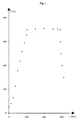
- the mixture is brought to 350 ° C. with stirring (speed of rotation: 350 rpm), the temperature rise time being approximately 2 hours and the temperature holding time being, as the case may be, 1 hour or 3 hours, as indicated in Table 1.
- stirring speed of rotation: 350 rpm
- the temperature rise time being approximately 2 hours
- the temperature holding time being, as the case may be, 1 hour or 3 hours, as indicated in Table 1.
- a typical temperature profile is shown in Figure 1.
- the mixture is cooled to a temperature of the order of 200 ° C. in the reactor, then poured through a bottom valve in the form of plates a few millimeters thick, the appearance of which is evaluated.
Landscapes
- Chemical & Material Sciences (AREA)
- Organic Chemistry (AREA)
- Health & Medical Sciences (AREA)
- Chemical Kinetics & Catalysis (AREA)
- Medicinal Chemistry (AREA)
- Polymers & Plastics (AREA)
- Civil Engineering (AREA)
- Engineering & Computer Science (AREA)
- General Chemical & Material Sciences (AREA)
- Materials Engineering (AREA)
- Structural Engineering (AREA)
- Physics & Mathematics (AREA)
- Thermal Sciences (AREA)
- Life Sciences & Earth Sciences (AREA)
- Sustainable Development (AREA)
- Compositions Of Macromolecular Compounds (AREA)
- Addition Polymer Or Copolymer, Post-Treatments, Or Chemical Modifications (AREA)
- Separation, Recovery Or Treatment Of Waste Materials Containing Plastics (AREA)
Claims (16)
- Verfahren zum Abbau eines thermoplastischen Polyolefins und dessen Beimischen in ein Gemisch schwerer Kohlenwasserstoffe, dadurch gekennzeichnet, dass es das Vermischen wenigstens eines thermoplastischen Polyolefins bei einer Temperatur von 200 bis 450°C in Gegenwart wenigstens eines Katalysators, der unter den mineralischen kupferhaltigen Festkörpern und den mineralischen Festkörpern, die Aluminium und Silizium enthalten und einen sauren Charakter aufweisen, gewählt ist, und wenigstens eines Gemischs schwerer Kohlenwasserstoffe umfasst.
- Verfahren nach Anspruch 1, dadurch gekennzeichnet, dass man einen Anteil an thermoplastischen Polyolefin von 1 bis 95 Gew.-%, einschließlich Katalysatoren für einen Anteil von 99 bis 5 Gew.-% an Gemisch schwerer Kohlenwasserstoffe verwendet.
- Verfahren nach einem der Ansprüche 1 und 2, dadurch gekennzeichnet, dass das thermoplastische Polyolefin ein Homopolymer oder Copolymer wenigstens eines α-Olefins mit 2 bis 8 Kohlenstoffatomen ist.
- Verfahren nach einem der Ansprüche 1 und 2, dadurch gekennzeichnet, dass das thermoplastische Polyolefin ein Polyethylen hoher oder mittlerer Dichte ist.
- Verfahren nach einem der Ansprüche 1 bis 4, dadurch gekennzeichnet, dass das Gemisch schwerer Kohlenwasserstoffe eine Erweichungstemperatur, gemessen durch die standardisierte NF-T-66 008 -Methode (Temperatur Kugel-Ring), von wenigstens 10°C und/oder eine kinematische Viskosität, gemessen bei 100°C, von etwa 50 bis 700 mm2/s hat.
- Verfahren nach einem der Ansprüche 1 bis 5, dadurch gekennzeichnet, dass der Katalysator in einem Anteil von 0,1 bis 6 Gew.-% im Verhältnis zum thermoplastischen Polyolefin eingesetzt wird.
- Verfahren nach einem der Ansprüche 1 bis 6, dadurch gekennzeichnet, dass der Katalysator wenigstens ein durch eine Säurebehandlung aktivierter Ton, ein saures Silizium-Aluminiumoxid oder ein saurer Zeolith ist.
- Verfahren nach einem der Ansprüche 1 bis 6, dadurch gekennzeichnet, dass der Katalysator ein kupferhaltiges Oxid ist.
- Verfahren nach Anspruch 8, dadurch gekennzeichnet, dass der Anteil des kupferhaltigen Oxids 0,1 bis 2 Gew.-% im Verhältnis zum thermoplastischen Polyolefin ist.
- Verfahren nach einem der Ansprüche 1 bis 9, dadurch gekennzeichnet, dass die eingesetzte Temperatur 250 bis 375°C ist.
- Verfahren nach einem der Ansprüche 1 bis 10, dadurch gekennzeichnet, dass das Gemisch schwerer Kohlenwasserstoffe aus einem Bitumengrundstoff besteht.
- Verfahren nach Anspruch 11, dadurch gekennzeichnet, dass für eine Strassenbauanwendung das thermoplastische Polyolefin zu dem Bitumengrundstoff im Verhältnis von 1 bis 15 Gew.-% beigemischt wird.
- Verfahren nach Anspruch 11, dadurch gekennzeichnet, dass für eine industrielle Anwendung das thermoplastische Polyolefin zu dem Bitumengrundstoff im Verhältnis von 3 bis 25 Gew.-% beigemischt wird.
- Verfahren nach Anspruch 11, dadurch gekennzeichnet, dass der Anteil von eingesetztem thermoplastischen Polyolefin derart ist, dass man ein Stammgemisch erhält, das 40 bis 60 Gew.-% abgebautes thermoplastisches Polyolefin für 60 bis 40 Gew.-% Bitumengrundstoff enthält.
- Verfahren nach Anspruch 11, dadurch gekennzeichnet, dass man das Stammgemisch in einem Bitumengrundstoff später verdünnt, um davon die Konzentration auf einen Wert einzustellen, der für die geplante Anwendung passend ist.
- Verwendung eines Verfahrens zum Abbau und zum Beimischen nach einem der Ansprüche 1 bis 15 für Ölkanister aus recycelten Polyethylenen.
Applications Claiming Priority (2)
| Application Number | Priority Date | Filing Date | Title |
|---|---|---|---|
| FR9705050 | 1997-04-22 | ||
| FR9705050A FR2762320B1 (fr) | 1997-04-22 | 1997-04-22 | Degradation catalysee de polyolefines thermoplastiques et incorporation des produits de degradation dans des bitumes |
Publications (2)
| Publication Number | Publication Date |
|---|---|
| EP0874020A1 EP0874020A1 (de) | 1998-10-28 |
| EP0874020B1 true EP0874020B1 (de) | 2004-04-07 |
Family
ID=9506255
Family Applications (1)
| Application Number | Title | Priority Date | Filing Date |
|---|---|---|---|
| EP98400947A Expired - Lifetime EP0874020B1 (de) | 1997-04-22 | 1998-04-14 | Katalysierte Degradation von thermoplastischen Polyolefinen und Einarbeitung der Degradationsprodukte in schweren Kohlenwasserstoffen |
Country Status (8)
| Country | Link |
|---|---|
| US (1) | US6043289A (de) |
| EP (1) | EP0874020B1 (de) |
| AT (1) | ATE263800T1 (de) |
| CA (1) | CA2233418A1 (de) |
| DE (1) | DE69822915T2 (de) |
| ES (1) | ES2218781T3 (de) |
| FR (1) | FR2762320B1 (de) |
| ZA (1) | ZA983324B (de) |
Families Citing this family (7)
| Publication number | Priority date | Publication date | Assignee | Title |
|---|---|---|---|---|
| US20030057083A1 (en) * | 2001-09-17 | 2003-03-27 | Eatough Craig N. | Clean production of coke |
| RU2262520C1 (ru) * | 2004-06-25 | 2005-10-20 | Государственное образовательное учреждение высшего профессионального образования Белгородский государственный университет (ГОУ ВПО Белгородский государственный университет) | Способ переработки органических полимерных отходов |
| MXPA04008451A (es) * | 2004-09-01 | 2005-06-07 | Angel Eduardo Martinez Leal | Procedimiento mejorado para manufactura de una arena plastica de baja densidad, la arena plastica y composiciones. |
| RU2451696C2 (ru) * | 2010-09-06 | 2012-05-27 | Учреждение Российской академии наук Институт катализа им. Г.К. Борескова Сибирского отделения РАН | Катализатор, способ утилизации отходов полимеров с его использованием и способ получения моторных топлив и масел |
| RU2589155C1 (ru) * | 2015-01-12 | 2016-07-10 | Федеральное государственное бюджетное образовательное учреждение высшего профессионального образования "Башкирский государственный университет" | Способ переработки органических полимерных отходов |
| UA109871C2 (uk) * | 2015-06-22 | 2015-10-12 | Спосіб термічної деструкції відходів поліетилену та поліпропілену | |
| UA109872C2 (uk) * | 2015-06-22 | 2015-10-12 | Пристрій для термічної деструкції відходів поліетилену та поліпропілену |
Family Cites Families (4)
| Publication number | Priority date | Publication date | Assignee | Title |
|---|---|---|---|---|
| US3332926A (en) * | 1964-02-21 | 1967-07-25 | Allied Chem | Thermal degradation of polyolefins in the presence of a metal salt carboxylic acid catalyst |
| US5079385A (en) * | 1989-08-17 | 1992-01-07 | Mobil Oil Corp. | Conversion of plastics |
| DE4424290C2 (de) * | 1994-07-09 | 1996-05-15 | Leuna Werke Gmbh | Verfahren zur Herstellung bitumenverträglicher Polyolefincompounds und deren Verwendung |
| DE19500425C1 (de) * | 1995-01-10 | 1996-04-11 | Leuna Werke Gmbh | Verfahren zur Herstellung heißlagerstabiler Polymerbitumina aus Polyolefin-Altkunststoffen |
-
1997
- 1997-04-22 FR FR9705050A patent/FR2762320B1/fr not_active Expired - Fee Related
-
1998
- 1998-04-14 DE DE1998622915 patent/DE69822915T2/de not_active Expired - Fee Related
- 1998-04-14 EP EP98400947A patent/EP0874020B1/de not_active Expired - Lifetime
- 1998-04-14 AT AT98400947T patent/ATE263800T1/de not_active IP Right Cessation
- 1998-04-14 ES ES98400947T patent/ES2218781T3/es not_active Expired - Lifetime
- 1998-04-21 CA CA 2233418 patent/CA2233418A1/fr not_active Abandoned
- 1998-04-21 ZA ZA9803324A patent/ZA983324B/xx unknown
- 1998-04-22 US US09/063,829 patent/US6043289A/en not_active Expired - Fee Related
Also Published As
| Publication number | Publication date |
|---|---|
| ZA983324B (en) | 1999-10-21 |
| ES2218781T3 (es) | 2004-11-16 |
| CA2233418A1 (fr) | 1998-10-22 |
| EP0874020A1 (de) | 1998-10-28 |
| US6043289A (en) | 2000-03-28 |
| ATE263800T1 (de) | 2004-04-15 |
| FR2762320B1 (fr) | 2002-10-04 |
| DE69822915T2 (de) | 2004-08-19 |
| FR2762320A1 (fr) | 1998-10-23 |
| DE69822915D1 (de) | 2004-05-13 |
Similar Documents
| Publication | Publication Date | Title |
|---|---|---|
| FR2580658A1 (fr) | Composition pour revetement, a base de bitume et de poudre de caoutchouc de recuperation | |
| EP0447280B1 (de) | Bituminöse Zusammensetzungen enthaltend Rückstände von thermoplastischen Polymeren mit Polyurethanschäumen und hitzehärtbaren Harzen und Verfahren zu ihrer Herstellung | |
| EP1960472B1 (de) | Chemisch stabilisierte asphaltkautschukzusammensetzungen und mechanisch-chemisches herstellungsverfahren dafür | |
| EP3068827B1 (de) | Bitumen / polymer composition with improved mechanical properties in the cold | |
| EP0937750B1 (de) | Bitumenzusammensetzungen,die thermoplastische Polyolefine enthalten, und ihre Verwendungen | |
| EP3350239B1 (de) | Bitumen-/polymerzusammensetzung mit verbesserten mechanischen eigenschaften | |
| WO2008142304A1 (fr) | Composition comprenant une fraction organique pour la réalisation d'une couche et/ou d'un revêtement de voie ou de bâtiment | |
| EP0874020A1 (de) | Katalysierte Degradation von thermoplastischen Polyolefinen und Einarbeitung der Degradationsprodukte in schweren Kohlenwasserstoffen | |
| CA2397995C (fr) | Composition coloree comprenant un liant bitumineux et ses applications | |
| FR2910477A1 (fr) | Fluxant et ses applications. | |
| CA2242016A1 (fr) | Melanges de bitume, de poudrette de caoutchouc et de polymere utilises comme liant routier | |
| WO2019211560A1 (fr) | Composition bitume/polymere presentant des proprietes mecaniques ameliorees | |
| EP0641834A1 (de) | Bituminöse Zusammensetzungen für schalldämpfende Materialien | |
| CA1115889A (fr) | Composition d'asphalte coule aux proprietes physico-chimiques ameliorees | |
| US20120016062A1 (en) | Binder composition comprising a low viscosity naphthenic oil for coloured hot-mix asphalt applications | |
| CN87102480A (zh) | 沥青的制备方法 | |
| CN87102482A (zh) | 制备烃类馏分油和渣油以及含该渣油的沥青组合物的方法 | |
| WO2021019141A1 (fr) | Composition bitume/polymere fluxee et son procede de preparation | |
| EP0645433A1 (de) | Verfahren zur Herstellung von Bitumen/Polymer Zusammensetzungen, so erhaltene Zusammensetzungen und ihre Anwendungen | |
| FR2604442A1 (fr) | Procede pour la stabilisation de melanges de brai et de bitume | |
| EP1664199A2 (de) | Flussmittel, stammlösung und bitumenzusammensetzung damit sowie herstellung und anwendungen dieser produkte | |
| EP3440130A1 (de) | Verfahren zur herstellung einer bitumen-/polymerzusammensetzung mit verbesserten eigenschaften | |
| WO2025104085A1 (fr) | Composition bitumineuse comprenant un residu de conversion thermique de plastique | |
| FR2613375A1 (fr) | Procede de preparation d'un liant a base de bitume et de polymeres | |
| OA17763A (fr) | Composition bitume/polymère à propriétés mécaniques à froid améliorées. |
Legal Events
| Date | Code | Title | Description |
|---|---|---|---|
| PUAI | Public reference made under article 153(3) epc to a published international application that has entered the european phase |
Free format text: ORIGINAL CODE: 0009012 |
|
| AK | Designated contracting states |
Kind code of ref document: A1 Designated state(s): AT BE CH CY DE DK ES FI FR GB GR IE IT LI LU MC NL PT SE |
|
| AX | Request for extension of the european patent |
Free format text: AL;LT;LV;MK;RO;SI |
|
| 17P | Request for examination filed |
Effective date: 19990428 |
|
| AKX | Designation fees paid |
Free format text: AT BE CH CY DE DK ES FI FR GB GR IE IT LI LU MC NL PT SE |
|
| RAP1 | Party data changed (applicant data changed or rights of an application transferred) |
Owner name: TOTALFINALELF FRANCE Owner name: INSTITUT FRANCAIS DU PETROLE |
|
| GRAP | Despatch of communication of intention to grant a patent |
Free format text: ORIGINAL CODE: EPIDOSNIGR1 |
|
| GRAS | Grant fee paid |
Free format text: ORIGINAL CODE: EPIDOSNIGR3 |
|
| GRAA | (expected) grant |
Free format text: ORIGINAL CODE: 0009210 |
|
| AK | Designated contracting states |
Kind code of ref document: B1 Designated state(s): AT BE CH CY DE DK ES FI FR GB GR IE IT LI LU MC NL PT SE |
|
| PG25 | Lapsed in a contracting state [announced via postgrant information from national office to epo] |
Ref country code: IE Free format text: LAPSE BECAUSE OF FAILURE TO SUBMIT A TRANSLATION OF THE DESCRIPTION OR TO PAY THE FEE WITHIN THE PRESCRIBED TIME-LIMIT Effective date: 20040407 Ref country code: FI Free format text: LAPSE BECAUSE OF FAILURE TO SUBMIT A TRANSLATION OF THE DESCRIPTION OR TO PAY THE FEE WITHIN THE PRESCRIBED TIME-LIMIT Effective date: 20040407 Ref country code: CY Free format text: LAPSE BECAUSE OF FAILURE TO SUBMIT A TRANSLATION OF THE DESCRIPTION OR TO PAY THE FEE WITHIN THE PRESCRIBED TIME-LIMIT Effective date: 20040407 |
|
| REG | Reference to a national code |
Ref country code: GB Ref legal event code: FG4D Free format text: NOT ENGLISH |
|
| PG25 | Lapsed in a contracting state [announced via postgrant information from national office to epo] |
Ref country code: LU Free format text: LAPSE BECAUSE OF NON-PAYMENT OF DUE FEES Effective date: 20040414 |
|
| REG | Reference to a national code |
Ref country code: CH Ref legal event code: EP |
|
| PG25 | Lapsed in a contracting state [announced via postgrant information from national office to epo] |
Ref country code: MC Free format text: LAPSE BECAUSE OF NON-PAYMENT OF DUE FEES Effective date: 20040430 |
|
| REF | Corresponds to: |
Ref document number: 69822915 Country of ref document: DE Date of ref document: 20040513 Kind code of ref document: P |
|
| REG | Reference to a national code |
Ref country code: IE Ref legal event code: FG4D Free format text: FRENCH |
|
| PG25 | Lapsed in a contracting state [announced via postgrant information from national office to epo] |
Ref country code: SE Free format text: LAPSE BECAUSE OF FAILURE TO SUBMIT A TRANSLATION OF THE DESCRIPTION OR TO PAY THE FEE WITHIN THE PRESCRIBED TIME-LIMIT Effective date: 20040707 Ref country code: GR Free format text: LAPSE BECAUSE OF FAILURE TO SUBMIT A TRANSLATION OF THE DESCRIPTION OR TO PAY THE FEE WITHIN THE PRESCRIBED TIME-LIMIT Effective date: 20040707 Ref country code: DK Free format text: LAPSE BECAUSE OF FAILURE TO SUBMIT A TRANSLATION OF THE DESCRIPTION OR TO PAY THE FEE WITHIN THE PRESCRIBED TIME-LIMIT Effective date: 20040707 |
|
| GBT | Gb: translation of ep patent filed (gb section 77(6)(a)/1977) |
Effective date: 20040622 |
|
| REG | Reference to a national code |
Ref country code: ES Ref legal event code: FG2A Ref document number: 2218781 Country of ref document: ES Kind code of ref document: T3 |
|
| REG | Reference to a national code |
Ref country code: IE Ref legal event code: FD4D |
|
| PLBE | No opposition filed within time limit |
Free format text: ORIGINAL CODE: 0009261 |
|
| STAA | Information on the status of an ep patent application or granted ep patent |
Free format text: STATUS: NO OPPOSITION FILED WITHIN TIME LIMIT |
|
| 26N | No opposition filed |
Effective date: 20050110 |
|
| PG25 | Lapsed in a contracting state [announced via postgrant information from national office to epo] |
Ref country code: PT Free format text: LAPSE BECAUSE OF NON-PAYMENT OF DUE FEES Effective date: 20040907 |
|
| PGFP | Annual fee paid to national office [announced via postgrant information from national office to epo] |
Ref country code: ES Payment date: 20090415 Year of fee payment: 12 |
|
| PGFP | Annual fee paid to national office [announced via postgrant information from national office to epo] |
Ref country code: NL Payment date: 20090427 Year of fee payment: 12 Ref country code: IT Payment date: 20090421 Year of fee payment: 12 Ref country code: DE Payment date: 20090423 Year of fee payment: 12 Ref country code: AT Payment date: 20090424 Year of fee payment: 12 |
|
| PGFP | Annual fee paid to national office [announced via postgrant information from national office to epo] |
Ref country code: BE Payment date: 20090428 Year of fee payment: 12 |
|
| PGFP | Annual fee paid to national office [announced via postgrant information from national office to epo] |
Ref country code: GB Payment date: 20090424 Year of fee payment: 12 Ref country code: CH Payment date: 20090701 Year of fee payment: 12 |
|
| REG | Reference to a national code |
Ref country code: FR Ref legal event code: CD |
|
| BERE | Be: lapsed |
Owner name: *TOTALFINAELF FRANCE Effective date: 20100430 Owner name: INSTITUT FRANCAIS DU *PETROLE Effective date: 20100430 |
|
| REG | Reference to a national code |
Ref country code: NL Ref legal event code: V1 Effective date: 20101101 |
|
| REG | Reference to a national code |
Ref country code: CH Ref legal event code: PL |
|
| REG | Reference to a national code |
Ref country code: FR Ref legal event code: CD |
|
| GBPC | Gb: european patent ceased through non-payment of renewal fee |
Effective date: 20100414 |
|
| PG25 | Lapsed in a contracting state [announced via postgrant information from national office to epo] |
Ref country code: NL Free format text: LAPSE BECAUSE OF NON-PAYMENT OF DUE FEES Effective date: 20101101 Ref country code: AT Free format text: LAPSE BECAUSE OF NON-PAYMENT OF DUE FEES Effective date: 20100414 |
|
| PG25 | Lapsed in a contracting state [announced via postgrant information from national office to epo] |
Ref country code: LI Free format text: LAPSE BECAUSE OF NON-PAYMENT OF DUE FEES Effective date: 20100430 Ref country code: DE Free format text: LAPSE BECAUSE OF NON-PAYMENT OF DUE FEES Effective date: 20101103 Ref country code: CH Free format text: LAPSE BECAUSE OF NON-PAYMENT OF DUE FEES Effective date: 20100430 |
|
| PG25 | Lapsed in a contracting state [announced via postgrant information from national office to epo] |
Ref country code: GB Free format text: LAPSE BECAUSE OF NON-PAYMENT OF DUE FEES Effective date: 20100414 Ref country code: BE Free format text: LAPSE BECAUSE OF NON-PAYMENT OF DUE FEES Effective date: 20100430 Ref country code: IT Free format text: LAPSE BECAUSE OF NON-PAYMENT OF DUE FEES Effective date: 20100414 |
|
| REG | Reference to a national code |
Ref country code: ES Ref legal event code: FD2A Effective date: 20110718 |
|
| PG25 | Lapsed in a contracting state [announced via postgrant information from national office to epo] |
Ref country code: ES Free format text: LAPSE BECAUSE OF NON-PAYMENT OF DUE FEES Effective date: 20110706 |
|
| PG25 | Lapsed in a contracting state [announced via postgrant information from national office to epo] |
Ref country code: ES Free format text: LAPSE BECAUSE OF NON-PAYMENT OF DUE FEES Effective date: 20100415 |
|
| REG | Reference to a national code |
Ref country code: FR Ref legal event code: PLFP Year of fee payment: 18 |
|
| PGFP | Annual fee paid to national office [announced via postgrant information from national office to epo] |
Ref country code: FR Payment date: 20150414 Year of fee payment: 18 |
|
| REG | Reference to a national code |
Ref country code: FR Ref legal event code: ST Effective date: 20161230 |
|
| PG25 | Lapsed in a contracting state [announced via postgrant information from national office to epo] |
Ref country code: FR Free format text: LAPSE BECAUSE OF NON-PAYMENT OF DUE FEES Effective date: 20160502 |