EP0874496A2 - Procédé et dispositif de traitement cryptographique ainsi que support de stockage pour stocker un programme de traitement cryptographique pour améliorer la sécurité sans augmenter substantiellement la dimension du matériel et le temps de traitement - Google Patents
Procédé et dispositif de traitement cryptographique ainsi que support de stockage pour stocker un programme de traitement cryptographique pour améliorer la sécurité sans augmenter substantiellement la dimension du matériel et le temps de traitement Download PDFInfo
- Publication number
- EP0874496A2 EP0874496A2 EP98303142A EP98303142A EP0874496A2 EP 0874496 A2 EP0874496 A2 EP 0874496A2 EP 98303142 A EP98303142 A EP 98303142A EP 98303142 A EP98303142 A EP 98303142A EP 0874496 A2 EP0874496 A2 EP 0874496A2
- Authority
- EP
- European Patent Office
- Prior art keywords
- data
- cryptographic processing
- block
- cryptographic
- processing
- Prior art date
- Legal status (The legal status is an assumption and is not a legal conclusion. Google has not performed a legal analysis and makes no representation as to the accuracy of the status listed.)
- Granted
Links
Images













Classifications
-
- G—PHYSICS
- G06—COMPUTING OR CALCULATING; COUNTING
- G06F—ELECTRIC DIGITAL DATA PROCESSING
- G06F9/00—Arrangements for program control, e.g. control units
- G06F9/06—Arrangements for program control, e.g. control units using stored programs, i.e. using an internal store of processing equipment to receive or retain programs
-
- H—ELECTRICITY
- H04—ELECTRIC COMMUNICATION TECHNIQUE
- H04L—TRANSMISSION OF DIGITAL INFORMATION, e.g. TELEGRAPHIC COMMUNICATION
- H04L9/00—Cryptographic mechanisms or cryptographic arrangements for secret or secure communications; Network security protocols
- H04L9/08—Key distribution or management, e.g. generation, sharing or updating, of cryptographic keys or passwords
- H04L9/0891—Revocation or update of secret information, e.g. encryption key update or rekeying
-
- H—ELECTRICITY
- H04—ELECTRIC COMMUNICATION TECHNIQUE
- H04L—TRANSMISSION OF DIGITAL INFORMATION, e.g. TELEGRAPHIC COMMUNICATION
- H04L9/00—Cryptographic mechanisms or cryptographic arrangements for secret or secure communications; Network security protocols
- H04L9/06—Cryptographic mechanisms or cryptographic arrangements for secret or secure communications; Network security protocols the encryption apparatus using shift registers or memories for block-wise or stream coding, e.g. DES systems or RC4; Hash functions; Pseudorandom sequence generators
- H04L9/0618—Block ciphers, i.e. encrypting groups of characters of a plain text message using fixed encryption transformation
- H04L9/0637—Modes of operation, e.g. cipher block chaining [CBC], electronic codebook [ECB] or Galois/counter mode [GCM]
-
- H—ELECTRICITY
- H04—ELECTRIC COMMUNICATION TECHNIQUE
- H04L—TRANSMISSION OF DIGITAL INFORMATION, e.g. TELEGRAPHIC COMMUNICATION
- H04L9/00—Cryptographic mechanisms or cryptographic arrangements for secret or secure communications; Network security protocols
- H04L9/08—Key distribution or management, e.g. generation, sharing or updating, of cryptographic keys or passwords
- H04L9/0894—Escrow, recovery or storing of secret information, e.g. secret key escrow or cryptographic key storage
-
- H—ELECTRICITY
- H04—ELECTRIC COMMUNICATION TECHNIQUE
- H04L—TRANSMISSION OF DIGITAL INFORMATION, e.g. TELEGRAPHIC COMMUNICATION
- H04L9/00—Cryptographic mechanisms or cryptographic arrangements for secret or secure communications; Network security protocols
- H04L9/50—Cryptographic mechanisms or cryptographic arrangements for secret or secure communications; Network security protocols using hash chains, e.g. blockchains or hash trees
Definitions
- the present invention relates to a cryptographic processing apparatus, a cryptographic processing method, and a storage medium storing a cryptographic processing program for encrypting or decrypting data which is to be subjected to cryptographic processing in units of blocks using secret keys, and especially to a cryptographic processing apparatus, a cryptographic processing method, and a storage medium storing a cryptographic processing program for improving security without greatly increasing hardware scale and processing time.
- an original communication text is referred to as "plaintext”
- ciphertext a text converted from the plaintext, from which it is difficult for third parties to derive the plaintext
- Conversion from the plaintext to the ciphertext is referred to as “encryption”
- decryption inverse conversion for restoring the original plaintext from the ciphertext
- a content of encryption or decryption is specified by an algorithm and a key which is a parameter of the algorithm.
- the algorithm specifies a conversion family composed of a plurality of conversions, while the key specifies one conversion out of the plurality of conversions in the conversion family.
- the algorithm corresponds to a fixed part in the apparatus, where the key is occasionally changed.
- a third party who attempts to decrypt a ciphertext does so in the assumption that the ciphertext is known.
- a cryptanalysis method in which a secret plaintext or key is derived only from a ciphertext is called "ciphertext-only attack”.
- ciphertext-only attack a cryptanalysis method in which a plurality of unspecified pairs of a ciphertext and a plaintext are used to determine a secret key, which is then used to obtain a plaintext corresponding to an arbitrary ciphertext.
- the pseudo-random-number-sum-type cryptography is described below as an example.
- a transmitter and a receiver share the same secret key which is used by each device as a seed to generate a random number of a predetermined number of bits (hereinafter, "block") in a random number generator, where the random number generators of both devices have the same algorithm.
- the transmitter generates a ciphertext by performing an exclusive-OR operation on the random number and a plaintext for each corresponding bit in units of blocks.
- the receiver On receiving the ciphertext, the receiver generates the original plaintext by performing the an exclusive-OR operation on the random number and the ciphertext for each corresponding bit in units of blocks.
- the cryptanalyst can decrypt the pseudo-random-number-sum-type ciphertext without difficulty by the known-plaintext attack.
- Cryptographic processing methods which are relatively secure against the known-plaintext attack include Data Encryption Standard (DES) and Fast Data Encipherment Algorithm (FEAL). These methods are explained in detail in Eiji Okamoto An Introduction to Encryption Theory, published by Kyoritsu.
- DES Data Encryption Standard
- FEAL Fast Data Encipherment Algorithm
- Cipher Block Chaining mode (hereinafter, CBC mode) has been proposed in order to improve security of the DES methods against cryptanalysis and other unauthorized acts.
- the CBC mode is explained in detail in Nobuichi Ikeno and Kenji Koyama Modern Encryption Theory, published by Institute of Electronic Information and Communication (pp. 66-67).
- Fig. 1 shows the construction of an encryption apparatus 30 which realizes the CBC mode.
- the encryption apparatus 30 includes an exclusive-OR unit 301, a data encryption unit 302, and a register 303.
- the register 303 stores one ciphertext block which was obtained immediately before processing a present plaintext block. It should be noted that an initial value IV of one block is set in advance for encrypting a first plaintext block.
- the exclusive-OR unit 301 performs, for each corresponding bit, an exclusive-OR operation on the immediately preceding ciphertext block which is stored in the register 303 and the present plaintext block to be encrypted, and sends the obtained data to the data encryption unit 302.
- an exclusive-OR operation is performed on the initial value IV and the first plaintext block for each corresponding bit.
- the data encryption unit 302 encrypts the 64-bit data sent from the exclusive-OR unit 301 using the DES algorithm and 64-bit key data.
- the encryption apparatus 30 first performs an exclusive-OR operation on the initial value IV and the first plaintext block for each corresponding bit and encrypts the result using the 64-bit key data to obtain one ciphertext block.
- the encryption apparatus 30 then performs an exclusive-OR operation on the ciphertext block and a next plaintext block for each corresponding bit and encrypts the result to obtain another ciphertext block.
- each Ci depends on all ciphertext data preceding Ci, so that statistical characteristics of the plaintext are disturbed.
- the CBC mode is relatively secure against cryptanalysis and other unauthorized acts.
- a drawback with the DES methods, the FEAL methods, the CBC mode in the DES methods and the like is that an algorithm is known and the length of a key is limited, so that it is not practically impossible to obtain the proper key by performing decryption using every possible key in the known-plaintext attack. It should be noted here that each key of 64 bits in the DES methods includes 8 parity bits, so that the valid key length is 56 bits. Accordingly, the number of possible keys is 2 56 .
- JPN. 52-130504 cryptographic apparatus
- JPN. 8-12537 encryption apparatus
- key data is renewed based on an immediately preceding cryptographic processing result such as a ciphertext and the renewed key is used for present cryptographic processing.
- a plurality of intermediate keys which have been generated from an encryption key beforehand are each used for performing bit conversion in order to generate intermediate key renewal information, based on which each of the plurality of intermediate keys is renewed.
- a cryptographic processing apparatus for performing cryptographic processing using input data to generate output data, including: a storage unit for storing chain data which is used for reflecting present cryptographic processing on next cryptographic processing, and for renewing the chain data each time cryptographic processing is performed; a merging unit for merging the chain data stored in the storage unit with the input data to generate merged data; and a main cryptographic processing unit for performing main cryptographic processing using the merged data to generate the output data and for outputting intermediate data which is generated during a generation of the output data, wherein the storage unit renews the chain data by storing the intermediate data outputted by the main cryptographic processing unit as the new chain data, which is used for the next cryptographic processing.
- the intermediate data generated during the cryptographic processing is stored as the chain data, which is merged with the input data such as key data or cryptographic-processing object data which is to be subjected to the cryptographic processing next time the cryptographic processing is performed.
- the chain data is renewed each time the cryptographic processing is performed, so that each set of output data will depend on all preceding data. Accordingly, statistical characteristics of the plaintext are disturbed by each chain data, making the cryptanalysis difficult without greatly increasing the hardware scale and the processing time. Also, even if a cryptanalyst obtains a pair of a ciphertext and a plaintext, it will practically be impossible to obtain chain data used for the cryptographic processing.
- an algorithm for generating the chain data and an initial value of the chain data are secret, the cryptanalysis by the known-plaintext attack becomes further difficult, so does the cryptanalysis by trying all possible keys.
- First Embodiment of the present invention is composed of an encryption apparatus which generates ciphertext data from plaintext data and a decryption apparatus which generates the plaintext data from the ciphertext data (the encryption apparatus and the decryption apparatus are both referred to as "cryptographic processing apparatus which generates output data from cryptographic-processing object data which is to be subjected to cryptographic processing") by performing encryption processing and decryption processing which are specified by key data (the encryption processing and the decryption processing are both referred to as "cryptographic processing").
- each time the cryptographic processing is performed on one block an intermediate block which is generated during the cryptographic processing is stored as a chain block, which is then merged with the key data next time the cryptographic processing is performed.
- Fig. 2 shows the construction of an encrypted communication system of First Embodiment of the present invention.
- This encrypted communication system includes a transmitter 1 which encrypts plaintext data and transmits the obtained ciphertext data and a receiver 2 which decrypts the received ciphertext data.
- a transmission path 3 via which the ciphertext data is transmitted from the transmitter 1 to the receiver 2 is also shown in the figure.
- the transmitter 1 is equipped with a data encryption apparatus 10 and a transmission unit 11.
- the data encryption apparatus 10 encrypts input plaintext data in units of blocks, which are each composed of a predetermined number of bits, using key data which has been determined in advance and a predetermined algorithm, in order to obtain ciphertext data from the input plaintext data.
- the key data has been secretly shared by the transmitter 1 and the receiver 2 in advance, while the predetermined algorithm, which specifies a conversion family, is unique to each apparatus.
- the key data specifies one conversion out of the conversions included in the conversion family.
- the plaintext data is digital information which is obtained by digitally coding audio and image information, graphic character codes, or the like.
- one block which is composed of a predetermined number of bits is, for instance, set as 64 bits.
- the transmission unit 11 outputs transmission data which is generated by performing processing such as modulation and amplification on the ciphertext data onto the transmission path 3.
- the receiver 2 is equipped with a data decryption apparatus 20 and a reception unit 21.
- the reception unit 21 receives the transmission data via the transmission path 3, and after performing processing such as demodulation on the transmission data, sends the ciphertext data to the data decryption apparatus 20.
- the data decryption apparatus 20 decrypts the ciphertext data in units of blocks using the key data and a predetermined algorithm to obtain the plaintext data.
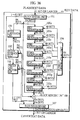
- Fig. 3 shows the detailed construction of the data encryption apparatus 10, which is shown in Fig. 2, of First Embodiment of the present invention.
- the data encryption apparatus 10 includes a block dividing unit 101, a block storage unit 102, a key data merging unit 103, a subkey generation unit 104, first to eighth encryption units 105a-105h, a fraction data processing unit 106, and a block integration unit 107.
- the exclusive-OR unit 301 corresponds to the key data merging unit 103
- the data encryption unit 302 corresponds to the block dividing unit 101
- the subkey generation unit 104 corresponds to the first to eighth encryption units 105a-105h
- the fraction data processing unit 106 corresponds to the block integration unit 107
- the register 303 corresponds to the block storage unit 102.
- the block dividing unit 101 divides input plaintext data into 64-bit blocks of plaintext data (hereinafter, "plaintext block”), which are then sent in turn to the first encryption unit 105a.
- plaintext block 64-bit blocks of plaintext data
- the traction plaintext data is sent to the fraction data processing unit 106.
- plaintext data of 200 bits is inputted and divided into a first plaintext block composed of the first to 64th bits, a second plaintext block composed of the 65th to 128th bits, a third plaintext block composed of the 129th to 192th bits, and fraction plaintext data composed of the 193th to 200th bits.
- the block dividing unit 101 then sends in turn the first to third plaintext blocks to the first encryption unit 105a, and the fraction plaintext data to the fraction data processing unit 106.
- the block storage unit 102 stores a chain block which is used for reflecting a present block on a next block. It should be noted that an initial value IV of the chain block is stored in the block storage unit 102 in advance for processing the first plaintext block.
- the key data merging unit 103 merges the chain block stored in the block storage unit 102 with key data to generate merged key data.
- an exclusive-OR operation is performed on the initial value IV of the 64-bit chain block and 64-bit input key data which has been determined in advance for each corresponding bit.
- an exclusive-OR operation is performed, for each corresponding bit, on the 64-bit key data and a 64-bit chain block generated during the processing of the immediately preceding plaintext block.
- the subkey generation unit 104 generates a number of subkeys corresponding to a number of encryption units from the merged key data which has been generated by the key data merging unit 103.
- eight 48-bit subkeys are generated from the 64-bit merged key data.
- the first encryption unit 105a generates a first intermediate block from a plaintext block using a first subkey.
- the second to seventh encryption units 105b-105g generate second to seventh intermediate blocks from the first to sixth intermediate blocks using second to seventh subkeys, respectively.
- the eighth encryption unit 105h generates one block of ciphertext data (hereinafter, "ciphertext block”) from the seventh intermediate block using an eighth subkey.
- the first to eighth encryption units 105a-105h have the same construction, in which conversion processing is performed in eight stages, the conversion processing being composed of a process of converting higher 32 bits of a 64-bit input block using lower 32 bits of the 64-bit input block based on a conversion specified by a 48-bit subkey and a process of replacing the converted higher 32 bits with the lower 32 bits in series.
- first to seventh intermediate blocks are progressively generated for each of the first to third plaintext blocks, with first to third ciphertext blocks being generated from the resulting intermediate blocks.
- Fig. 4 shows the detailed construction of the first to eighth encryption units 105a-105h.
- a 64-bit plaintext block is divided into higher 32 bits and lower 32 bits.
- H0 the higher 32-bit
- L0 the lower 32-bit as “L0”
- input of an "n”th encryption unit as " ⁇ H(n-1), L(n-1) ⁇ ”
- output as "(Hn, Ln)”
- Ln H(n-1) (+) f ⁇ L(n-1), Kn ⁇
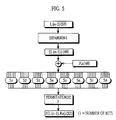
- Fig. 5 shows the detailed construction of a unit which calculates the function "f".
- the table shows new bit positions to which input bits are transposed. For example, the 32th bit of the input bits is transposed to the first bit and the 47th bit of the output bits, while the first bit of the input bits is transposed to the second bit and the 48th bit of the output bits.
- the choice functions S1-S8 are functions which input 6 bits and output 4 bits. The processing of the choice functions is described with corresponding substitution tables.
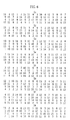
- Fig. 6 shows the substitution tables of the choice functions S1-S8.
- Each choice function is provided with 64 numerals each in a range of 0-15, which are arranged in 4 lines and 16 columns.
- the first bit and the last bit out of input six bits specify a line in the substitution table, and the other 4 bits specify a column in the table.
- the table shows new bit positions to which input bits are transposed. For example, the 16th bit of the input bits is transposed to the first bit of the output bits, while the seventh bit of the input bits is transposed to the second bit of the output bits.
- the block storage unit 102 is equipped with a block renewal function. Each time the fourth encryption unit 105d generates a fourth intermediate block, the block storage unit 102 renews the chain block by storing the fourth intermediate block as the new chain block, which is used for processing a next block.
- the block storage unit 102 stores the 64-bit initial value IV in advance, which is used for processing the first plaintext block.
- the block storage unit 102 renews the chain block by storing a fourth intermediate block which was generated during the processing of the first plaintext block.
- the renewed chain block is then used for processing the second plaintext block, and the block storage unit 102 renews the chain block by storing a fourth intermediated block generated during the processing of the second plaintext block.
- the renewed chain block is used for processing the third plaintext block, and the block storage unit 102 renews the chain block by storing a fourth intermediate block generated during the processing of the third plaintext block.
- the renewed chain block is then used for processing the fraction plaintext data.
- the fraction data processing unit 106 receives the fraction plaintext data from the block dividing unit 101, and generates fraction ciphertext data whose number of bits is the same as the fraction plaintext data using the chain block stored in the block storage unit 102.
- the fraction data processing unit 106 includes a data matching unit 106a and a fraction data merging unit 106b.
- Fig. 7 shows the detailed construction of the fraction data processing unit 106, which is shown in Fig. 3, of First Embodiment of the present invention.
- the data matching unit 106a generates fraction chain data whose number of bits is the same as the fraction plaintext data from the chain block stored in the block storage unit 102.
- the fraction plaintext data is 8 bits, so that the data matching unit 106a generates fraction chain data which is composed of, for instance, highest 8 bits of the chain block stored in the block storage unit 102.
- the fraction data merging unit 106b merges the generated fraction chain data with the fraction plaintext data.
- an exclusive-OR operation is performed on 8 bits of the fraction chain data and 8 bits of the fraction plaintext data for each corresponding bit to generate 8 bits of fraction ciphertext data.
- the block integration unit 107 integrates each ciphertext block generated by the eighth encryption unit 105h and the fraction ciphertext data generated by the fraction data processing unit 106 to generate ciphertext data.
- the 64-bit first to third ciphertext blocks and the 8-bit fraction ciphertext data are integrated to form ciphertext data of 200 bits.
- the block storage unit 102 renews the chain block using each fourth intermediate block generated by the fourth encryption unit 105d in the present example, any intermediate blocks generated during the processing can also be used. Accordingly, the block storage unit 102 may use one of the first to seventh intermediate blocks generated by the respective first to seventh encryption units 105a-105g as the new chain block.
- Fig. 8 shows the detailed construction of the data decryption apparatus 20, which is shown in Fig. 2, of First Embodiment of the present invention.
- the data decryption apparatus 20 includes a block dividing unit 201, a block storage unit 202, a key data merging unit 203, a subkey generation unit 204, first to eighth decryption units 205a-205h, a fraction data processing unit 206, and a block integration unit 207.
- the exclusive-OR unit 301 corresponds to the key data merging unit 203
- the data encryption unit 302 corresponds to the block dividing unit 201
- the subkey generation unit 204 corresponds to the first to eighth decryption units 205a-205h
- the fraction data processing unit 206 corresponds to the block integration unit 207
- the register 303 corresponds to the block storage unit 202.
- the block dividing unit 201 divides input ciphertext data into 64-bit ciphertext blocks, which are then sent in turn to the first decryption unit 205a.
- the fraction ciphertext data is sent to the fraction data processing unit 206.
- ciphertext data of 200 bits is inputted and divided into a first ciphertext block composed of the first to 64th bits, a second ciphertext block composed of the 65th to 128th bits, a third ciphertext block composed of the 129th to 192th bits, and fraction ciphertext data composed of the 193th to 200th bits.
- the block dividing unit 101 then sends in turn the first to third ciphertext blocks to the first decryption unit 205a, and the fraction ciphertext data to the fraction data processing unit 206.
- the block storage unit 202 stores a chain block which is used for reflecting a present block on a next block.
- an initial value IV of the chain block is stored in the block storage unit 202 in advance for processing the first ciphertext block.
- This initial value IV is the same as the initial value IV used in the data encryption apparatus 10. That is to say, an initial value IV which is used for encrypting plaintext data is the same as an initial value IV which is used for decrypting ciphertext data corresponding to the plaintext data.
- the key data merging unit 203 merges the chain block stored in the block storage unit 202 with key data to generate merged key data. It should be noted here that this merging is the same as the merging performed by the key data merging unit 103 of the data encryption apparatus 10. Also, the key data used in the data decryption apparatus 20 is the same as the key data used in the data encryption apparatus 10. That is to say, key data used for encrypting plaintext data is the same as key data used for decrypting ciphertext data corresponding to the plaintext data.
- an exclusive-OR operation is performed on the initial value IV of the 64-bit chain block and 64-bit input key data which has been determined in advance for each corresponding bit.
- an exclusive-OR operation is performed, for each corresponding bit, on the 64-bit key data and a 64-bit chain block generated during the processing of the immediately preceding ciphertext block.
- the subkey generation unit 204 generates a number of subkeys corresponding to a number of decryption units from the merged key data which has been generated by the key data merging unit 203. In the present example, eight 48-bit subkeys are generated from the 64-bit merged key data. It should be noted here that the function of generating the subkeys by the subkey generation unit 204 of the data decryption apparatus 20 is the same as the function of generating the subkeys by the subkey generation unit 104 of the data encryption apparatus 10.
- the first decryption unit 205a generates a seventh intermediate block from a ciphertext block using an eighth subkey.
- the second to seventh decryption units 205b-205g generate sixth to first intermediate blocks from the seventh to second intermediate blocks using seventh to second subkeys, respectively.
- the eighth decryption unit 205h generates a plaintext block from the first intermediate block using a first subkey.
- the first to eighth decryption units 205a-205h have the same construction, in which conversion processing is performed in eight stages, the conversion processing being composed of a process of converting higher 32 bits of a 64-bit input block using lower 32 bits of the 64-bit input block based on a conversion specified by a 48-bit subkey and a process of replacing the converted higher 32 bits with the lower 32 bits in series.
- seventh to first intermediate blocks are progressively generated for each of the first to third ciphertext blocks, with first to third plaintext blocks being generated from the resulting intermediate blocks.
- the conversions performed by the first to eighth decryption units 205a-205h are inverse conversions of the conversions performed by the eighth to first encryption units 105h-105a of the data encryption apparatus 10, respectively.
- the block storage unit 202 is equipped with a block renewal function. Each time the fourth decryption unit 205d generates a fourth intermediate block, the block storage unit 202 renews the chain block by storing the fourth intermediate block as the new chain block, which will be used for processing a next ciphertext block.
- the block storage unit 202 stores the initial value IV of 64 bits in advance, which is used for processing the first ciphertext block.
- the block storage unit 202 renews the chain block by storing a fourth intermediate block generated during the processing of the first ciphertext block as the new chain block.
- the renewed chain block is then used for processing the second ciphertext block, and the block storage unit 202 renews the chain block by storing a fourth intermediate block generated during the processing of the second ciphertext block.
- the renewed chain block is used for processing the third ciphertext block, and the block storage unit 202 renews the chain block by storing a fourth intermediate block generated during the processing of the third ciphertext block.
- the renewed chain block is then used for processing the fraction ciphertext data.
- the fraction data processing unit 206 receives the fraction ciphertext data from the block dividing unit 201, and generates fraction plaintext data whose number of bits is the same as the fraction ciphertext data using the chain block stored in the block storage unit 202.
- the fraction data processing unit 206 includes a data matching unit 206a and a fraction data merging unit 206b.
- Fig. 9 shows the detailed construction of the fraction data processing unit 206, which is shown in Fig. 8, of First Embodiment of the present invention.
- the data matching unit 206a generates fraction chain data whose number of bits is the same as the fraction ciphertext data from the chain block stored in the block storage unit 202.
- the fraction ciphertext data is 8 bits, so that the data matching unit 206a generates fraction chain data which is composed of, for instance, highest 8 bits of the chain block stored in the block storage unit 202.
- the fraction data merging unit 206b merges the generated fraction chain data with the fraction ciphertext data.
- an exclusive-OR operation is performed on 8 bits of the fraction chain data and 8 bits of the fraction ciphertext data for each corresponding bit to generate 8 bits of fraction plaintext data.
- the block integration unit 207 integrates each plaintext block generated by the eighth decryption unit 205h and the fraction plaintext data generated by the fraction data processing unit 206 to generate plaintext data.
- the 64-bit first to third plaintext blocks and the 8-bit fraction plaintext data are integrated to form plaintext data of 200 bits.
- the block storage unit 202 renews the chain block using each fourth intermediate block generated by the fourth decryption unit 205d in the present example, any intermediate blocks generated during the processing can also be used. Accordingly, the block storage unit 202 may use one of the seventh to first intermediate blocks generated by the respective first to seventh decryption units 205a-205g as the new chain block.
- the intermediate block used by the block storage unit 202 of the data decryption apparatus 20 should be the same as the intermediate block used by the block storage unit 102 of the data encryption apparatus 10.
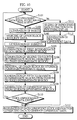
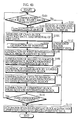
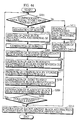
- Fig. 10 is a flowchart showing the cryptographic processing of the data encryption apparatus 10 of First Embodiment of the present invention.
- the following is an example of the process of generating first to eighth 48-bit subkeys (48 bits ⁇ 8) from the 64-bit key data which includes 8 parity bits.
- the 8 parity bits are removed from the 64-bit key data, and the remaining 56 bits are transposed according to transposition shown in the following table (Table 3). 57 49 41 33 25 17 9 1 58 50 42 34 26 18 10 2 59 51 43 35 27 19 11 3 60 52 44 36 63 55 47 39 31 23 15 7 62 54 47 38 30 22 14 6 61 53 45 37 29 21 13 5 28 20 12 4
- the table shows new bit positions to which input bits are transposed. For example, the 57th bit of the input bits is transposed to the first bit of the output bits, while the 49th bit of the input bits is transposed to the second bit of the output bits.
- the 56-bit key data is divided into the first half 28 bits represented as "C0" and the second half 28 bits as "D0", each of "C0" and “D0” being shifted to the left for a number of shifting times shown in the following table (Table 4) so as to generate C1-C8 and D1-D8.
- the 56-bit key data is transposed to be 48 bits in accordance with transposition shown in the following table (Table 5). 14 17 11 24 1 5 3 28 15 6 21 10 23 19 12 4 26 8 16 7 27 20 13 2 41 52 31 37 47 55 30 40 51 45 33 48 44 49 39 56 34 53 46 42 50 36 29 32
- the table shows new bit positions to which input bits are transposed. For example, the 14th bit of the input bits is transposed to the first bit of the output bits, while the 17th bit of the input bits is transposed to the second bit of the output bits.
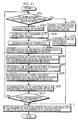
- Fig. 11 is a flowchart showing the cryptographic processing of the data decryption apparatus 20 of First Embodiment of the present invention.
- the operation of the data decryption apparatus 20 is inverse conversion of the operation of the data encryption apparatus 10.
- the process of generating first to eighth 48-bit subkeys (48 bits ⁇ 8) from the 64-bit key data which includes 8 parity bits is the same as the subkey generation process performed by the subkey generation unit 104 of the data encryption apparatus 10.
- an intermediate block generated when performing the cryptographic processing on a present block is stored as a chain block, which is then merged with key data when performing the cryptographic processing on a next block, renewing the chain block each time the cryptographic processing is performed.
- Second Embcdiment of the present invention is different from First Embodiment in that a chain block is not merged with key data but merged with either cryptographic-processing object data or data which has been generated by the cryptographic processing.
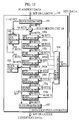
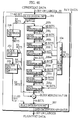
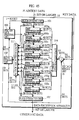
- Fig. 12 shows the detailed construction of a data encryption apparatus 10, which is shown in Fig. 2, of Second Embodiment of the present invention.
- the data encryption apparatus 10 of Second Embodiment includes a block dividing unit 101, a block storage unit 102, a subkey generation unit 104, first to eighth encryption units 105a-105h, a fraction data processing unit 106, a block integration unit 107, and a block merging unit 108.
- the exclusive-OR unit 301 corresponds to the block merging unit 108
- the data encryption unit 302 corresponds to the block dividing unit 101
- the subkey generation unit 104 corresponds to the first to eighth encryption units 105a-105h
- the fraction data processing unit 106 corresponds to the block integration unit 107
- the register 303 corresponds to the block storage unit 102.
- the block dividing unit 101 of Second Embodiment is different from that of First Embodiment only in that it sends divided blocks not to the first encryption unit 105a but to the block merging unit 108.
- the block merging unit 108 merges a chain block stored in the block storage unit 102 with a plaintext block to generate a merged plaintext block.
- an exclusive-OR operation is performed on the 64-bit first plaintext block and an initial value IV of a 64-bit chain block for each corresponding bit to generate a 64-bit first merged plaintext block.
- an exclusive-OR operation is performed, for each corresponding bit, on each of the 64-bit second and third plaintext blocks and a 64-bit chain block generated during the processing of the immediately preceding plaintext block, so as to generate 64-bit second and third merged plaintext blocks, respectively.
- the subkey generation unit 104 generates subkeys whose number is the same as the number of encryption units from key data. In the present example, the subkey generation unit 104 generates eight 48-bit subkeys from 64-bit input key data which has been determined in advance.
- the first encryption unit 105a generates a first intermediate block not from the plaintext block but from the merged plaintext block generated by the block merging unit 108.
- first to eighth encryption units 105a-105h of the data encryption apparatus 10 of Second Embodiment have the same functions as those of First Embodiment.
- first to seventh intermediate blocks are progressively generated for each of the first to third merged plaintext blocks, with first to third ciphertext blocks being generated from the resulting intermediate blocks.
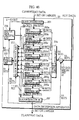
- Fig. 13 shows the detailed construction of a data decryption apparatus 20, which is shown in Fig. 2, of Second Embodiment of the present invention.
- the data decryption apparatus 20 of Second Embodiment includes a block dividing unit 201, a block storage unit 202, a subkey generation unit 204, first to eighth decryption units 205a-205h, a fraction data processing unit 206, a block integration unit 207, and a block merging unit 208.
- the subkey generation unit 204 generates subkeys whose number is the same as the number of decryption units from key data.
- the subkey generation unit 204 generates eight 48-bit subkeys from 64-bit input key data which has been determined in advance. It should be noted here that the function of generating the subkeys by the subkey generation unit 204 of the data decryption apparatus 20 is the same as the function of generating the subkeys by the subkey generation unit 104 of the data encryption apparatus 10.
- the eighth decryption unit 205h generates a cryptographic-processed block from a first intermediate block using a first subkey.
- the first to eighth decryption units 205a-205h of the data decryption apparatus 20 of Second Embodiment have the same functions as those of First Embodiment.
- seventh to first intermediate blocks are progressively generated for each of the first to third ciphertext blocks, with first to third cryptographic-processed blocks being generated from the resulting intermediate blocks.
- the block merging unit 208 merges a chain block stored in the block storage unit 202 with a cryptographic-processed block to generate a plaintext block.
- an exclusive-OR operation is performed on the 64-bit first cryptographic-processed block and an initial value IV of the 64-bit chain block for each corresponding bit to generate a 64-bit first plaintext block.
- an exclusive-OR operation is performed, for each corresponding bit, on each of the 64-bit second and third cryptographic-processed blocks and a 64-bit chain block generated during the processing of the immediately preceding ciphertext block, so as to generate 64-bit second and third plaintext blocks, respectively.
- the block integration unit 207 integrates each plaintext block generated by the block merging unit 208 and fraction plaintext data generated by the fraction data processing unit 206 to generate plaintext data.
- the 64-bit first to third plaintext blocks and the 8-bit fraction plaintext data are integrated to form 200-bit plaintext data.
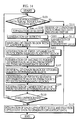
- Fig. 14 is a flowchart showing the cryptographic processing of the data encryption apparatus 10 of Second Embodiment of the present invention.
- Steps which are the same as those in the operation of the data encryption apparatus 10 of First Embodiment shown in Fig. 10 are given the same numbers, and are not explained here.
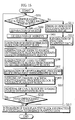
- Fig. 15 is a flowchart showing the cryptographic processing of the data decryption apparatus 20 of Second Embodiment of the present invention.
- the operation of the data decryption apparatus 20 is inverse conversion of the operation of the data encryption apparatus 10.
- Steps which are the same as those in the operation of the data decryption apparatus 20 of First Embodiment shown in Fig. 11 are given the same numbers, and are not explained here.
- an intermediate block generated when the cryptographic processing is performed on a present block is stored as a chain block, which is then merged with a plaintext block or a cryptographic-processed block when the cryptographic processing is performed on a next block, renewing the chain block each time the cryptographic processing is performed.
- a data encryption apparatus 10 of Third Embodiment of the present invention is different from that of First Embodiment only in the input of a fifth encryption unit 105e. While the input of the fifth encryption unit 105e of First Embodiment is the output of the fourth encryption unit 105d, the input of the fifth encryption unit 105e of Third Embodiment is a plaintext block. Accordingly, a chain block and the plaintext block are processed by different encryption units.
- a data decryption apparatus 20 of Third Embodiment of the present invention operates in inverse conversion of the data encryption apparatus 10.
- the data decryption apparatus 20 of Third Embodiment is different from that of First Embodiment in that the output of a fourth decryption unit 205d is a plaintext block, which is encrypted in the same way as the data encryption apparatus 10 to generate a fourth intermediate block, the fourth intermediate block then being stored as the new chain block.
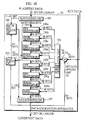
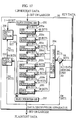
- Fig. 16 shows the detailed construction of a data encryption apparatus 10, which is shown in Fig. 2, of Third Embodiment of the present invention.
- the construction of the data encryption apparatus 10 of Third Embodiment is the same as that of First Embodiment, the only difference lying in that the fifth encryption unit 105e of Third Embodiment generates a fifth intermediate block not from a fourth intermediate block but from the plaintext block.
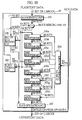
- Fig. 17 shows the detailed construction of a data decryption apparatus 20, which is shown in Fig. 2, of Third Embodiment of the present invention.
- the data decryption apparatus 20 of Third Embodiment includes a block dividing unit 201, a block storage unit 202, a key data merging unit 203, a subkey generation unit 204, first to fourth decryption units 205a-205d, first to fourth encryption units 205i-2051, a fraction data processing unit 206, and a block integration unit 207.
- the fourth decryption unit 205d generates a plaintext block from a fifth intermediate block using a fifth subkey.
- first to third plaintext blocks are generated from each fifth intermediate block corresponding to first to third ciphertext blocks.
- first to fourth decryption units 205a-205d perform inverse conversions of the eighth to fifth encryption units 105h-105e of the data encryption apparatus 10, respectively.
- the first encryption unit 205i generates a first intermediate block from the plaintext block generated by the fourth decryption unit 205d using a first subkey.
- the second to fourth encryption units 205j-2051 generate second to fourth intermediate blocks from the first to third intermediate blocks using second to fourth subkeys, respectively.
- the first to fourth encryption units 205i-205l have the same functions and operations as the first to fourth encryption units 105a-105d of the data encryption apparatus 10.
- the first to fourth intermediate blocks which correspond to each of the first to third plaintext blocks are generated.
- the block storage unit 202 which is provided with a block renewal function, renews the chain block by storing the fourth intermediate block as the new chain block, which is used for processing a next block. This operation is the same as in First Embodiment.
- the block integration unit 207 integrates each plaintext block generated by the fourth decryption unit 205d and fraction plaintext data generated by the fraction data processing unit 206 to generate plaintext data.
- the 64-bit first to third plaintext blocks and 8-bit fraction plaintext data are integrated to form 200-bit plaintext data.
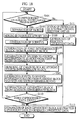
- Fig. 18 is a flowchart showing the cryptographic processing of the data encryption apparatus 10 of Third Embodiment of the present invention.
- Steps which are the same as those in the operation of the data encryption apparatus 10 of First Embodiment shown in Fig. 10 are given the same numbers, and are not explained here.
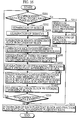
- Fig. 19 is a flowchart showing the cryptographic processing of the data decryption apparatus 20 of Third Embodiment of the present invention.
- the operation of the data decryption apparatus 20 is inverse conversion of the operation of the data encryption apparatus 10.
- an intermediate block generated when the cryptographic processing is performed on a present block is stored as a chain block, which is then merged with key data when performing the cryptographic processing on a next block, renewing the chain block each time the cryptographic processing is performed.
- an intermediate block generated when the cryptographic processing is performed on a present block is stored as a chain block, which is then merged with the plaintext block or the cryptographic-processed block when the cryptographic processing is performed on a next block, renewing the chain block each time the cryptographic processing is performed.
- Fourth Embodiment of the present invention is a cryptographic processing apparatus in that, when the change of Third Embodiment is applied to Second Embodiment, the operation of first to fourth encryption units to encrypt data which is to be merged and the operation of a block storage unit to store a chain block are carried out in inverse order, so that a merged block or a block which is not yet merged is stored as the new chain block.
- Fig. 20 shows the detailed construction of a data encryption apparatus 10, which is shown in Fig. 2, of Fourth Embodiment of the present invention.
- the data encryption apparatus 10 of Fourth Embodiment includes a block dividing unit 101, a block storage unit 102, a subkey generation unit 104, first to eighth encryption units 105a-105h, a fraction data processing unit 106, a block integration unit 107, and a block merging unit 108.
- the first encryption unit 105a generates a first intermediate block not from a merged plaintext block but from a chain block stored in the block storage unit 102.
- the first to fourth encryption units 105a-105d have the same functions as those of Second Embodiment.
- first to third intermediate blocks and a cryptographic-processed block which correspond to each chain block are generated from the chain block.
- the block merging unit 108 merges the cryptographic-processed block generated by the fourth encryption unit 105d with a plaintext block to generate a fourth intermediate block.
- an exclusive-OR operation is performed, for each corresponding bit, on the 64-bit first plaintext block and a 64-bit first cryptographic-processed block generated from an initial value IV of the chain block.
- an exclusive-OR operation is performed, for each corresponding bit, on the 64-bit second and third plaintext blocks and 64-bit second and third cryptographic-processed blocks generated durinq the processing of the immediately preceding block, respectively.
- the block storage unit 102 which is provided with a block renewal function, renews the chain block by storing the fourth intermediate block as the new chain block, which is used for processing a next plaintext block.
- the block storage unit 102 stores the 64-bit initial value IV in advance, which is used for processing the first plaintext block, and renews the chain block by storing a fourth intermediate block generated when processing the first plaintext block as the new chain block.
- this new chain block is used for processing the second plaintext block, and a fourth intermediate block generated during the processing is stored in the block storage unit 102 as the new chain block.
- this new chain block is used for processing the third plaintext block, and a fourth intermediate block generated during the processing is stored in the block storage unit 102 as the new chain block.
- this new chain block is used for processing fraction plaintext data.
- the fifth to eighth encryption units 105e-105h have the same functions as those of Second Embodiment.
- fifth to seventh intermediate blocks are progressively generated for each of the fourth intermediate blocks, with first to third ciphertext blocks being generated from the resulting intermediate blocks.
- the fraction data processing unit 106 receives the fraction plaintext data from the block dividing unit 101, and generates fraction ciphertext data whose number of bits is the same as the fraction plaintext data using the cryptographic-processed block generated by the fourth encryption unit 105d.
- the fraction data processing unit 106 includes a data matching unit 106a and a fraction data merging unit 106b.
- the data matching unit 106a generates fraction cryptographic-processed data whose number of bits is the same as the fraction plaintext data from the cryptographic-processed block generated by the fourth encryption unit 105d.
- the fraction plaintext data is 8 bits, so that the data matching unit 106a generates fraction cryptographic-processed data which is composed of, for example, highest 8 bits of the cryptographic-processed block generated by the fourth encryption unit 105d.
- the fraction data merging unit 106b merges the fraction cryptographic-processed data with the fraction plaintext data to generate the fraction ciphertext data.
- an exclusive-OR operation is performed on the 8-bit fraction cryptographic-processed data and the 8-bit fraction plaintext data for each corresponding bit to generate 8-bit fraction ciphertext data.
- fraction data processing unit 106 may have the same function as that of Second Embodiment.
- Fig. 21 shows the detailed construction of a data decryption apparatus 20, which is shown in Fig. 2, of Fourth Embodiment of the present invention.
- the data decryption apparatus 20 of Fourth Embodiment includes a block dividing unit 201, a block storage unit 202, a subkey generation unit 204, first to fourth decryption units 205a-205d, first to fourth encryption units 205i-2051, a fraction data processing unit 206, a block integration unit 207, and a block merging unit 208.
- the first encryption unit 205i generates a first intermediate block from a chain block stored in the block storage unit 202 using a first subkey.
- the second to fourth encryption units 205j-2051 generate second and third intermediate blocks and a cryptographic-processed block from the first to third intermediate blocks using the second to fourth subkeys, respectively.
- the block merging unit 208 merges the cryptographic-processed block generated by the fourth encryption unit 2051 with a fourth intermediate block generated by the fourth decryption unit 205d to generate a plaintext block.
- an exclusive-OR operation is performed, for each corresponding bit, on a 64-bit first cryptographic-processed block generated from an initial value IV of the chain block and a 64-bit fourth intermediate block generated from the first ciphertext block, and as a result a 64-bit first plaintext block is generated.
- an exclusive-OR operation is performed, for each corresponding bit, on 64-bit second and third cryptographic-processed blocks which have been generated from each chain block generated during the processing of the first and second ciphertext blocks and each 64-bit fourth intermediate block generated from the second and third ciphertext blocks, and as a result 64-bit second and third plaintext blocks are generated, respectively.
- the fraction data processing unit 206 receives fraction ciphertext data from the block dividing unit 201, and generates fraction plaintext data whose number of bits is the same as the fraction ciphertext data using the cryptographic-processed block generated by the fourth encryption unit 2051.
- the fraction data processing unit 206 includes a data matching unit 206a and a fraction data merging unit 206b.
- the data matching unit 206a generates fraction cryptographic-processed data whose number of bits is the same as the fraction ciphertext data from the cryptographic-processed block generated by the fourth encryption unit 2051.
- the fraction ciphertext data is 8 bits, so that the data matching unit 206a generates fraction cryptographic-processed data which is composed of, for example, highest 8 bits of the cryptographic-processed block generated by the fourth encryption unit 2051.
- the fraction data merging unit 206b merges the fraction cryptographic-processed data with the fraction ciphertext data to generate the fraction plaintext data.
- an exclusive-OR operation is performed on the 8-bit fraction cryptographic-processed data and the 8-bit fraction ciphertext data for each corresponding bit to generate 8-bit fraction plaintext data.
- fraction data processing unit 206 may have the same function as that of Second Embodiment.
- Fig. 22 is a flowchart showing the cryptographic processing of the data encryption apparatus 10 of Fourth Embodiment of the present invention.
- Steps which are the same as those in the operation of the data encryption apparatus 10 of Second Embodiment shown in Fig. 14 are given the same numbers, and are not explained here.
- Fig. 23 is a flowchart showing the cryptographic processing of the data decryption apparatus 20 of Fourth Embodiment of the present invention.
- the operation of the data decryption apparatus 20 is inverse conversion of the operation of the data encryption apparatus 10.
- Steps which are the same as those in the operation of the data decryption apparatus 20 of Second Embodiment shown in Fig. 15 are given the same numbers, and are not explained here.
- an intermediate block generated when the cryptographic processing is performed on a present block is stored as a chain block.
- the chain block on which the cryptographic processing is performed is merged with a plaintext block or a cryptographic-processed block.
- the chain block is renewed each time the cryptographic processing is performed.
- Fifth Embodiment of the present invention is different from Fourth Embodiment only in that a block which is obtained by performing the cryptographic processing on a chain block is stored as the new chain block, while in Fourth Embodiment a merged block or a block which is not yet merged is stored as the new chain block.
- Fig. 24 shows the detailed construction of a data encryption apparatus 10, which is shown in Fig. 2, of Fifth Embodiment of the present invention.
- the data encryption apparatus 10 of Fifth Embodiment includes a block dividing unit 101, a block storage unit 102, a subkey generation unit 104, first to eighth encryption units 105a-105h, a fraction data processing unit 106, a block integration unit 107, and a block merging unit 108.
- the first encryption unit 105a generates a first intermediate block not from a merged plaintext block but from a chain block stored in the block storage unit 102.
- the first to fourth encryption units 105a-105d have the same functions as those of Second Embodiment.
- first to fourth intermediate blocks which correspond to each chain block are generated from the chain block.
- the block merging unit 108 merges the fourth intermediate block generated by the fourth encryption unit 105d with a plaintext block to generate a merged plaintext block.
- an exclusive-OR operation is performed, for each corresponding bit, on the 64-bit first plaintext block and a 64-bit fourth intermediate block generated from an initial value IV of the chain block.
- an exclusive-OR operation is performed, for each corresponding bit, on each of the 64-bit second and third plaintext blocks and a 64-bit fourth intermediate block generated during the processing of the immediately preceding plaintext block, respectively.
- the fifth encryption unit 105e generates a fifth intermediate block not from the fourth intermediate block but from the merged plaintext block generated by the block merging unit 108.
- the fifth to eighth encryption units 105e-105h have the same functions as those of Second Embodiment.
- fifth to seventh intermediate blocks are progressively generated for each of the merged plaintext blocks, with first to third ciphertext blocks being generated from the resulting intermediate blocks.
- the fraction data processing unit 106 has the same function as that of Fourth Embodiment.
- fraction data processing unit 106 may have the same function as that of Second Embodiment.
- Fig. 25 shows the detailed construction of a data decryption apparatus 20, which is shown in Fig. 2, of Fifth Embodiment of the present invention.
- the data decryption apparatus 20 of Fifth Embodiment includes a block dividing unit 201, a block storage unit 202, a subkey generation unit 204, first to fourth decryption units 205a-205d, first to fourth encryption units 205i-2051, a fraction data processing unit 206, a block integration unit 207, and a block merging unit 208.
- the fourth decryption unit 205d generates a cryptographic-processed block from a fifth intermediate block using a fifth subkey.
- first to third cryptographic-processed blocks are generated from each of the fifth intermediate blocks corresponding to the first to third ciphertext blocks, respectively.
- the conversions performed by the first to fourth decryption units 205a-205d are inverse conversions of the conversions performed by the respective fourth to first encryption units 105d-105a of the data encryption apparatus 10.
- the first encryption unit 205i generates a first intermediate block from a chain block stored in the block storage unit 202 using a first subkey.
- the second to fourth encryption units 205j-2051 generate second to fourth intermediate blocks from the first to third intermediate blocks using second to fourth subkeys, respectively.
- the block storage unit 202 which is provided with a block renewal function, renews the chain block by storing the fourth intermediate block as the new chain block, which is used for processing a next ciphertext block. This operation is the same as First Embodiment.
- the first to fourth encryption units 205i-2051 have the same functions and operations as the respective first to fourth encryption units 105a-105d of the data encryption apparatus 10.
- first to fourth intermediate blocks corresponding to each chain block are generated from the chain block.
- the block merging unit 208 merges the fourth intermediate block generated by the fourth encryption unit 2051 with the cryptographic-processed block generated by the fourth decryption unit 205d to generate a plaintext block.
- an exclusive-OR operation is performed, for each corresponding bit, on the 64-bit fourth intermediate block generated from the initial value IV of the chain block and the 64-bit first cryptographic-processed block generated from the first ciphertext block, so as to generate a 64-bit first plaintext block.
- an exclusive-OR operation is performed, for each corresponding bit, on each 64-bit fourth intermediate block which has been generated from the chain blocks generated during the processing of the first and second ciphertext blocks and each of the 64-bit second and third cryptographic-processed blocks generated from the second and third ciphertext blocks, so as to generate 64-bit second and third plaintext blocks, respectively.
- the fraction data processing unit 206 has the same function as that of Fourth Embodiment.
- fraction data processing unit 206 may have the same function as that of Second Embodiment.
- Fig. 26 is a flowchart showing the cryptographic processing of the data encryption apparatus 10 of Fifth Embodiment of the present invention.
- Steps which are the same as those in the operation of the data encryption apparatus 10 of Second Embodiment shown in Fig. 14 are given the same numbers, and are not explained here.
- Fig. 27 is a flowchart showing the cryptographic processing of the data decryption apparatus 20 of Fifth Embodiment of the present invention.
- the operation of the data decryption apparatus 20 is inverse conversion of the operation of the data encryption apparatus 10.
- Steps which are the same as those in the operation of the data decryption apparatus 20 of Second Embodiment shown in Fig. 15 are given the same numbers, and are not explained here.
- an intermediate block generated when the cryptographic processing is performed on a present block is stored as a chain block.
- the chain block, on which the cryptographic processing has been performed is then merged with a plaintext block or a cryptographic-processed block.
- the chain block is renewed each time the cryptographic processing is performed.
- Sixth Embodiment of the present invention is a cryptographic processing apparatus in that output data is generated from cryptographic-processing object data by performing cryptographic processing specified by key data on the cryptographic-processing object data.
- a block such as an output block, a block which is to be subjected to the cryptographic processing, or an intermediate block, is stored as a chain block, which is then converted and merged with the key data when the cryptographic processing is performed on a next block.
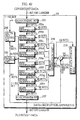
- Fig. 28 shows the detailed construction of a data encryption apparatus 10, which is shown in Fig. 2, of Sixth Embodiment of the present invention.
- the data encryption apparatus 10 of Sixth Embodiment includes a block dividing unit 101, a block storage unit 102, a key data merging unit 103, a subkey generation unit 104, first to eighth encryption units 105a-105h, a fraction data processing unit 106, a block integration unit 107, and a block conversion unit 109.
- the block storage unit 102 which is provided with a block renewal function, renews a chain block by storing the ciphertext block as the new chain block, which is used for processing a next plaintext block.
- the block storage unit 102 stores a 64-bit initial value IV in advance, which is used for processing a first plaintext block, and renews the chain block by storing a first ciphertext block generated during the processing of the first plaintext block as the new chain block.
- this new chain block is used for processing a second plaintext block, and a second ciphertext block generated during the processing is stored in the block storage unit 102 as the new chain block.
- this new chain block is used for processing a third plaintext block, and a third ciphertext block generated during the processing is stored in the block storage unit 102 as the new chain block.
- this new chain block is used for processing fraction plaintext data.
- the block conversion unit 109 performs predetermined conversion on the chain block stored in the block storage unit 102 to generate a converted block.
- the predetermined conversion performed by the block conversion unit 109 is, for instance, bit transposition, bit conversion, or the like.
- the bit transposition is transposition in a bit unit, such as the permutation P explained in the description of the first to eighth encryption units 105a-105h of First Embodiment, while the bit conversion is fixed calculation in a bit unit, such as an exclusive-OR operation on specific data.
- a 64-bit first converted block is generated from the initial value IV of the 64-bit chain block.
- 64-bit second and third converted blocks are generated from the 64-bit chain blocks generated during the processing of the first and second plaintext blocks, respectively.
- the key data merging unit 103 merges the converted block generated by the block conversion unit 109 with key data to generate merged key data.
- an exclusive-OR operation is performed, for each corresponding bit, on the 64-bit first converted block and 64-bit input key data which has been determined in advance.
- an exclusive-OR operation is performed on each of the 64-bit second and third converted blocks and the 64-bit key data for each corresponding bit, respectively.
- the fraction data processing unit 106 receives the fraction plaintext data from the block dividing unit 101, and generates fraction ciphertext data whose number of bits is the same as the fraction plaintext data using the converted block generated by the block conversion unit 109.
- the fraction data processing unit 106 includes a data matching unit 106a and a fraction data merging unit 106b.
- the data matching unit 106a generates fraction converted data whose number of bits is the same as the fraction plaintext data from the converted block generated by the block conversion unit 109.
- the fraction plaintext data is 8 bits, so that the data matching unit 106a generates fraction converted data which is composed of, for example, highest 8 bits of the converted block generated by the block conversion unit 109.
- the fraction data merging unit 106b merges the fraction converted data with the fraction plaintext data.
- an exclusive-OR operation is performed on the 8-bit fraction converted data and the 8-bit fraction plaintext data for each corresponding bit to generate 8-bit fraction ciphertext data.
- fraction data processing unit 106 may have the same function as that of First Embodiment.
- Fig. 29 shows the detailed construction of a data decryption apparatus 20, which is shown in Fig. 2, of Sixth Embodiment of the present invention.
- the data decryption apparatus 20 of Sixth Embodiment includes a block dividing unit 201, a block storage unit 202, a key data merging unit 203, a subkey generation unit 204, first to eighth decryption units 205a-205h, a fraction data processing unit 206, a block integration unit 207, and a block conversion unit 209.
- the block storage unit 202 is provided with a block renewal function. Each time the block dividing unit 201 generates a present ciphertext block, the block storage unit 202 renews a chain block by storing the ciphertext block as the new chain block, which is used for processing a next ciphertext block.
- a 64-bit initial value IV which has been stored in advance is used for processing a first ciphertext block, and the first ciphertext block is stored as the new chain block.
- this new chain block is used for processing a second ciphertext block, and the second ciphertext block is stored as the new chain block.
- this new chain block is used for processing a third ciphertext block, and the third ciphertext block is stored as the new chain block. Then, this new chain block is used for processing fraction ciphertext data.
- the block conversion unit 209 performs predetermined conversion on the chain block stored in the block storage unit 202 to generate a converted block.
- the predetermined conversion performed by the block conversion unit 209 is the same as the predetermined conversion performed by the block conversion unit 109 of the data encryption apparatus 10, which is, for instance, bit transposition, bit conversion, or the like.
- the bit transposition is transposition in a bit unit, such as the permutation P which has been explained in the description of the first to eighth encryption units 105a-105h of First Embodiment, while the bit conversion is fixed calculation in a bit unit, such as an exclusive-OR operation on specific data.
- a 64-bit first converted block is generated from the initial value IV of the 64-bit chain block.
- 64-bit second and third converted blocks are generated from the 64-bit chain blocks generated during the processing of the first and second ciphertext blocks, respectively.
- the key data merging unit 203 merges the converted block generated by the block conversion unit 209 with key data to generate merged key data.
- an exclusive-OR operation is performed, for each corresponding bit, on the 64-bit first converted block and 64-bit input key data which has been determined in advance.
- an exclusive-OR operation is performed on each of the 64-bit second and third converted blocks and the 64-bit key data for each corresponding bit, respectively.
- the fraction data processing unit 206 receives the fraction ciphertext data from the block dividing unit 201, and generates fraction plaintext data whose number of bits is the same as the fraction ciphertext data using the converted block generated by the block conversion unit 209.
- the fraction data processing unit 206 includes a data matching unit 206a and a fraction data merging unit 206b.
- the data matching unit 206a generates fraction converted data whose number of bits is the same as the fraction ciphertext data from the converted block generated by the block conversion unit 209.
- the fraction ciphertext data is 8 bits, so that the data matching unit 206a generates fraction converted data which is composed of, for example, highest 8 bits of the converted block generated by the block conversion unit 209.
- the fraction data merging unit 206b merges the fraction converted data with the fraction ciphertext data.
- an exclusive-OR operation is performed on the 8-bit fraction converted data and the 8-bit fraction ciphertext data for each corresponding bit to generate 8-bit fraction plaintext data.
- fraction data processing unit 206 may have the same function as that of First Embodiment.
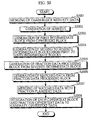
- Fig. 30 is a flowchart showing the cryptographic processing of the data encryption apparatus 10 of Sixth Embodiment of the present invention.
- Steps which are the same as those in the operation of the data encryption apparatus 10 of First Embodiment shown in Fig. 10 are given the same numbers, and are not explained here.
- Fig. 31 is a flowchart showing the cryptographic processing of the data decryption apparatus 20 of Sixth Embodiment of the present invention.
- the operation of the data decryption apparatus 20 is inverse conversion of the operation of the data encryption apparatus 10.
- Steps which are the same as those in the operation of the data decryption apparatus 20 of First Embodiment shown in Fig. 11 are given the same numbers, and are not explained here.
- a ciphertext block is stored as a chain block, which is then converted and merged with key data next time the cryptographic processing is performed.
- the chain block is renewed each time the cryptographic processing is performed.
- ciphertext block is stored as the new chain block
- a plaintext block or one of intermediate blocks may also be stored as the new chain block.
- Seventh Embodiment of the present invention is different from Sixth Embodiment in that a converted block obtained by performing block conversion on a chain block is not merged with key data but with either cryptographic-processing object data or cryptographic-processed data which has been generated by the cryptographic processing.
- Fig. 32 shows the detailed construction of a data encryption apparatus 10, which is shown in Fig. 2, of Seventh Embodiment of the present invention.
- the data encryption apparatus 10 of Seventh Embodiment includes a block dividing unit 101, a block storage unit 102, a subkey generation unit 104, first to eighth encryption units 105a-105h, a fraction data processing unit 106, a block integration unit 107, a block merging unit 108, and a block conversion unit 109.
- the block storage unit 102 has a block renewal function. Each time the eighth encryption unit 105h generates a ciphertext block from a present plaintext block, the block storage unit 102 renews a chain block by storing the ciphertext block as the new chain block, which is used for processing a next plaintext block.
- a 64-bit initial value IV which has been stored in advance is used for processing a first plaintext block, and a first ciphertext block generated during the processing is stored as the new chain block.
- this new chain block is used for processing a second plaintext block, and a second ciphertext block generated during the processing is stored as the new chain block.
- this new chain block is used for processing a third plaintext block, and a third ciphertext block generated during the processing is stored as the new chain block. Then this new chain block is used for processing fraction plaintext data.
- the block conversion unit 109 performs predetermined conversion on the chain block stored in the block storage unit 102 to generate a converted block.
- the predetermined conversion performed by the block conversion unit 109 is, for example, bit transposition, bit conversion, or the like.
- a 64-bit first converted block is generated from the initial value IV of the 64-bit chain block.
- 64-bit second and third converted blocks are generated from the 64-bit chain blocks generated during the processing of the first and second plaintext blocks, respectively.
- the block merging unit 108 merges the converted block generated by the block conversion unit 109 with a plaintext block to generate a merged plaintext block.
- an exclusive-OR operation is performed on the 64-bit first converted block and the 64-bit first plaintext block for each corresponding bit to generate a 64-bit first merged plaintext block.
- an exclusive-OR operation is performed on the 64-bit second and third converted blocks and the 64-bit second and third plaintext blocks for each corresponding bit to generate 64-bit second and third merged plaintext blocks, respectively.
- Fig. 33 shows the detailed construction of a data decryption apparatus 20, which is shown in Fig. 2, of Seventh Embodiment of the present invention.
- the data decryption apparatus 20 of Seventh Embodiment includes a block dividing unit 201, a block storage unit 202, a subkey generation unit 204, first to eighth decryption units 205a-205h, a fraction data processing unit 206, a block integration unit 207, a block merging unit 208, and a block conversion unit 209.
- the block storage unit 202 has a block renewal function. Each time the block dividing unit 201 generates a present ciphertext block, the block storage unit 102 renews a chain block by storing the ciphertext block as the new chain block, which is used for processing a next ciphertext block.
- a 64-bit initial value IV which has been stored in advance is used for processing a first ciphertext block, and the first ciphertext block is stored as the new chain block.
- this new chain block is used for processing a second ciphertext block, and the second ciphertext block is stored as the new chain block.
- this new chain block is used for processing a third ciphertext block, and the third ciphertext is stored as the new chain block. Then this new chain block is used for processing fraction ciphertext data.
- the block conversion unit 209 performs predetermined conversion on the chain block stored in the block storage unit 202 to generate a converted block.
- the predetermined conversion performed by the block conversion unit 209 is the same as the predetermined conversion performed by the block conversion unit 109 of the data encryption apparatus 10, which is, for example, bit transposition, bit conversion, or the like.
- a 64-bit first converted block is generated from the initial value IV of the 64-bit chain block.
- 64-bit second and third converted blocks are generated from the 64-bit chain blocks generated during the processing of the first and second ciphertext blocks, respectively.
- the block merging unit 208 merges the converted block generated by the block conversion unit 209 with a cryptographic-processed block to generate a plaintext block.
- a cryptographic-processed block for processing the first ciphertext block, an exclusive-OR operation is performed on the 64-bit first converted block and a 64-bit first cryptographic-processed block for each correspondinq bit to generate a 64-bit first plaintext block.
- an exclusive-OR operation is performed on the 64-bit second and third converted blocks and 64-bit second and third cryptographic-processed blocks for each corresponding bit to generate 64-bit second and third plaintext blocks, respectively.
- Fig. 34 is a flowchart showing the cryptographic processing of the data encryption apparatus 10 of Seventh Embodiment of the present invention.
- Steps which are the same as those in the operation of the data encryption apparatus 10 of Second Embodiment shown in Fig. 14 are given the same numbers, and are not explained here.
- Fig. 35 is a flowchart showing the cryptographic processing of the data decryption apparatus 20 of Seventh Embodiment of the present invention.
- the operation of the data decryption apparatus 20 is inverse conversion of the operation of the data encryption apparatus 10.
- Steps which are the same as those in the operation of the data decryption apparatus 20 of Second Embodiment shown in Fig. 15 are given the same numbers, and are not explained here.
- a ciphertext block is stored as a chain block, which is then converted and merged with a plaintext block or a cryptographic-processed block next time the cryptographic processing is performed.
- the chain block is renewed each time the cryptographic processing is performed.
- ciphertext block is stored as the new chain block
- a plaintext block or one of intermediate blocks may also be stored as the new chain block.
- a data encryption apparatus 10 of Eighth Embodiment of the present invention is different from that of Seventh Embodiment in each input of a first encryption unit 105a, a block storage unit 102, a block integration unit 107, and a block merging unit 108.
- the processing order and the like of the data encryption apparatus 10 of Eighth Embodiment is different from that of Seventh Embodiment.
- a data decryption apparatus 20 of Eighth Embodiment of the present invention is the same as the data encryption apparatus 10, the only difference lying in the input of a block storage unit 202.
- Fig. 36 shows the detailed construction of a data encryption apparatus 10, which is shown in Fig. 2, of Eighth Embodiment of the present invention.
- the construction of the data encryption apparatus 10 of Eighth Embodiment is the same as that of Seventh Embodiment.
- the first encryption unit 105a generates a first intermediate block from a converted block generated by the block conversion unit 109, and not from a merged plaintext block generated by the block merging unit 108 as in Seventh Embodiment.
- the eighth encryption unit 105h generates a cryptographic-processed block, and not a ciphertext block as in Seventh Embodiment.
- the first to eighth encryption units 105a-105h have the same functions as those of Seventh Embodiment.
- first to seventh intermediate blocks are progressively generated for each of the first to third converted blocks, with first to third cryptographic-processed blocks being generated from the resulting intermediate blocks.
- the block storage unit 102 has a block renewal function. Each time the block merging unit 108 generates a ciphertext block, the block storage unit 102 renews a chain block by storing the ciphertext block as the new chain block, which is used for processing a next plaintext block. This operation is the same as that of Seventh Embodiment.
- the block merging unit 108 merges the plaintext block with the cryptographic-processed block generated by the eighth encryption unit 105h to generate a ciphertext block, and not with the converted block generated by the block conversion unit 109 as in Seventh Embodiment.
- an exclusive-OR operation is performed on the 64-bit first cryptographic-processed block and the 64-bit first plaintext block for each corresponding bit to generate a 64-bit first ciphertext block.
- an exclusive-OR operation is performed on the 64-bit second and third cryptographic-processed blocks and the 64-bit second and third plaintext blocks for each corresponding bit to generate 64-bit second and third ciphertext blocks, respectively.
- the block integration unit 107 integrates each ciphertext block generated by the block merging unit 108 and fraction ciphertext data generated by the fraction data processing unit 106 to generate ciphertext data.
- the 64-bit first to third ciphertext blocks and 8-bit fraction ciphertext data are integrated to form 200-bit ciphertext data.
- Fig. 37 shows the detailed construction of a data decryption apparatus 20, which is shown in Fig. 2, of Eighth Embodiment of the present invention.
- the data decryption apparatus 20 of Eighth Embodiment includes a block dividing unit 201, a block storage unit 202, a subkey generation unit 204, first to eighth encryption units 205i-205p, a fraction data processing unit 206, a block integration unit 207, a block merging unit 208, and a block conversion unit 209.
- the block storage unit 202 has a block renewal function. Each time the block dividing unit 201 generates a present ciphertext block, the block storage unit 202 renews a chain block by storing the ciphertext block as the new chain block, which is used for processing a next ciphertext block.
- a 64-bit initial value IV which has been stored in advance is used for processing a first ciphertext block, and the first ciphertext block is stored as the new chain block.
- this new chain block is used for processing a second ciphertext block, and the second ciphertext block is stored as the new chain block.
- this new chain block is used for processing a third ciphertext block, and the third ciphertext is stored as the new chain block. Then this new chain block is used for processing fraction ciphertext data.
- Fig. 38 is a flowchart showing the cryptographic processing of the data encryption apparatus 10 of Eighth Embodiment of the present invention.
- Steps which are the same as those in the operation of the data encryption apparatus 10 of Seventh Embodiment shown in Fig. 34 are given the same numbers, and are not explained here.
- the operation of the data decryption apparatus 20 is inverse conversion of the operation of the data encryption apparatus 10.
- the operation of the data decryption apparatus 20 of Eighth Embodiment is the same as the data encryption apparatus 10 of Eighth Embodiment except the difference in the input of the block storage unit, and is thereby not explained here.
- a ciphertext block is stored as a chain block.
- the chain block on which the block conversion and the cryptographic processing have been performed, is then merged with a plaintext block or a ciphertext block.
- the chain block is renewed each time the cryptographic processing is performed.
- ciphertext block is stored as the new chain block
- a plaintext block or one of intermediate blocks may also be stored as the new chain block.
- Ninth Embodiment of the present invention is different from Eighth Embodiment only in the input of a block storage unit.
- Fig. 39 shows the detailed construction of a data encryption apparatus 10, which is shown in Fig. 2, of Ninth Embodiment of the present invention.
- the construction of the data encryption apparatus 10 of Ninth Embodiment is the same as that of Eighth Embodiment.
- the block storage unit 102 has a block renewal function. Each time the eighth encryption unit 105h generates a cryptographic-processed block, the block storage unit 102 renews a chain block by storing the cryptographic-processed block as the new chain block, which is used for processing a next plaintext block.
- a 64-bit initial value IV which has been stored in advance is used for processing a first plaintext block, and a first cryptographic-processed block generated during the processing is stored as the new chain block.
- the new chain block is used for processing a second plaintext block, and a second cryptographic-processed block generated during the processing is stored as the new chain block.
- this new chain block is used for processing a third plaintext block, and a third cryptographic-processed block generated during the processing is stored as the new chain block. Then this new chain block is used for processing fraction plaintext data.
- Fig. 40 shows the detailed construction of a data decryption apparatus 20, which is shown in Fig. 2, of Ninth Embodiment of the present invention.
- the construction of the data decryption apparatus 20 of Ninth Embodiment is the same as that of Eighth Embodiment.
- Components whose names are the same as those of the data encryption apparatus 10 of Ninth Embodiment shown in Fig. 39 have the same functions, and is thereby not explained here.
- the data encryption apparatus 10 of Ninth Embodiment of the present invention is the same as the data encryption apparatus 10 of Eighth Embodiment except the difference in the input of the block storage unit 102, so that its operation is not explained here.
- the operation of the data decryption apparatus 20 is inverse conversion of the operation of the data encryption apparatus 10.
- the operation of the data decryption apparatus 20 of Ninth Embodiment is the same as the data encryption apparatus 10 of Ninth Embodiment, and is thereby not explained here.
- a cryptographic-processed block generated during the cryptographic processing on a present block is stored as a chain block.
- the chain block, on which the block conversion and the cryptographic processing have been performed is then merged with a plaintext block or a ciphertext block.
- the chain block is renewed each time the cryptographic processing is performed.
- Fig. 41 shows the detailed construction of a data encryption apparatus 10, which is shown in Fig. 2, of Tenth Embodiment of the present invention.
- the data encryption apparatus 10 of Tenth Embodiment includes a block dividing unit 101, a block storage unit 102, a key data merging unit 103, a subkey generation unit 104, first to eighth encryption units 105a-105h, a fraction data processing unit 106, a block integration unit 107, and a key data storage unit 110.
- Comparison between the conventional encryption apparatus 30 shown in Fig. 1 and the data encryption apparatus 10 of Tenth Embodiment of the present invention shown in Fig. 41 corresponds to the comparison between the conventional encryption apparatus 30 and the data encryption apparatus 10 of First Embodiment, the only difference lying in that the key data storage unit 110 is included in Tenth Embodiment.
- the key data storage unit 110 stores key data. An initial value of the key data is stored in advance for processing a first plaintext block.
- the key data merging unit 103 merges a chain block stored in the block storage unit 102 with the key data stored in the key data storage unit 110 to generate merged key data.
- an exclusive-OR operation is performed on an initial value IV of the 64-bit chain block and the initial value of the 64-bit key data for each corresponding bit to generate first merged key data.
- an exclusive-OR operation is performed, for each corresponding bit, on a 64-bit chain block generated during the cryptographic processing of the immediately preceding plaintext block and 64-bit key data generated during the cryptographic processing of the immediately preceding plaintext block, so as to generate second and third merged key data, respectively.
- the key data storage unit 110 has a key data renewal function. Each time the key data merging unit 103 generates merged key data, the key data storage unit 110 renews the key data by storing the merged key data as the new key data, which is used for processing a next plaintext block.
- the 64-bit initial value which has been stored in advance is used for processing the first plaintext block, and the first merged key data generated during the processing is stored as the new key data.
- this new key data is used for processing the second plaintext block, and the second merged key data generated during the processing is stored as the new key data.
- this new key data is used for processing the third plaintext block, and the third merged key data generated during the processing is stored as the new key data.
- Fig. 42 shows the detailed construction of a data decryption apparatus, which is shown in Fig. 2, of Tenth Embodiment of the present invention.
- the data decryption apparatus 20 of Tenth Embodiment includes a block dividing unit 201, a block storage unit 202, a key data merging unit 203, a subkey generation unit 204, first to eighth decryption units 205a-205h, a fraction data processing unit 206, a block integration unit 207, and a key data storage unit 210.
- the key data storage unit 210 stores key data. An initial value of the key data is stored in advance for processing a first ciphertext block.
- the key data merging unit 203 merges a chain block stored in the block storage unit 202 with the key data stored in the key data storage unit 210 to generate merged key data.
- an exclusive-OR operation is performed on an initial value IV of the 64-bit chain block and the initial value of the 64-bit key data for each corresponding bit to generate first merged key data.
- an exclusive-OR operation is performed, for each corresponding bit, on a 64-bit chain block generated during the cryptographic processing of the immediately preceding ciphertext block and 64-bit key data generated during the cryptographic processing of the immediately preceding ciphertext block, so as to generate second and third merged key data, respectively.
- the key data storage unit 210 has a key data renewal function. Each time the key data merging unit 203 generates merged key data, the key data storage unit 210 renews the key data by storing the merged key data as the new key data, which is used for processing a next ciphertext block.
- the 64-bit initial value which has been stored in advance is used for processing the first ciphertext block, and the first merged key data generated during the processing is stored as the new key data.
- this new key data is used for processing the second ciphertext block, and the second merged key data generated during the processing is stored as the new key data.
- this new key data is used for processing the third ciphertext block, and the third merged key data generated during the processing is stored as the new key data.
- Fig. 43 is a flowchart showing the cryptographic processing of the data encryption apparatus 10 of Tenth Embodiment of the present invention.
- Steps which are the same as those in the operation of the data encryption apparatus 10 of First Embodiment shown in Fig. 10 are given the same numbers, and are not explained here.
- the cryptographic processing is performed according to the DES algorithm in the data encryption apparatus 10 where 200-bit plaintext data is inputted and the initial value IV of the chain block is stored in the block storage unit 102 in advance. Also, the initial value of the key data is stored in the key data storage unit 110 in advance.
- Fig. 44 is a flowchart showing the cryptographic processing of the data decryption apparatus 20 of Tenth Embodiment of the present invention.
- the operation of the data decryption apparatus 20 is inverse conversion of the operation of the data encryption apparatus 10.
- the cryptographic processing is performed according to the DES algorithm in the data decryption apparatus 20 where 200-bit ciphertext data is inputted and the initial value IV of the chain block is stored in the block storage unit 202 in advance. Also, the initial value of the key data is stored in the key data storage unit 210 in advance.
- an intermediate block and merged key data which have been generated when the cryptographic processing is performed on a present block are stored respectively as a chain block and key data.
- the chain block is merged with the key data.
- the chain block and the key data are renewed each time the cryptographic processing is performed.
- the key data storage unit 110 and the key data storage unit 210 are included respectively in the data encryption apparatus 10 and the data decryption apparatus 20 of First Embodiment, the key data storage units 110 and 210 may also be included in Second to Ninth Embodiments.
- Fig. 45 shows the detailed construction of a data encryption apparatus 10, which is shown in Fig. 2, of Eleventh Embodiment of the present invention.
- the data encryption apparatus 10 of Eleventh Embodiment includes a block dividing unit 101, a block storage unit 102, a key data merging unit 103, a subkey generation unit 104, first to eighth encryption units 105a-105h, a fraction data processing unit 106, a block integration unit 107, and a block selection unit 111.
- Comparison between the conventional encryption apparatus 30 shown in Fig. 1 and the data encryption apparatus 10 of Eleventh Embodiment of the present invention shown in Fig. 45 corresponds to the comparison between the conventional encryption apparatus 30 and the data encryption apparatus 10 of First Embodiment, the only difference lying in that the block selection unit 111 is included in Eleventh Embodiment.
- the block selection unit 111 selects one block out of a plaintext block, each intermediate block, and a ciphertext block based on a chain block stored in the block storage unit 102, and sends the selected block to the block storage unit 102. For example, when lowest 3 bits of the chain block stored in the block storage unit 102 are "001", the block selection unit 111 selects a first intermediate block, while when the lowest 3 bits are "010"-"111", the block selection unit 111 selects second to seventh intermediate blocks, respectively.
- the block selection unit 111 selects the plaintext block, while when the lowest 3 bits are "000” and the fourth lowest bit is "1", the block selection unit 111 selects a ciphertext block.
- the block storage unit 102 renews the chain block by storing the block selected by the block selection unit 111 as the new chain block, which is used for processing a next plaintext block.
- a 64-bit initial value IV which has been stored in advance is used for processing a first plaintext block, and a block selected based on lowest 4 bits of the initial value IV is stored as the new chain block.
- this new chain block is used for processing a second plaintext block, and a block selected based on lowest 4 bits of the chain block is stored as the new chain block.
- this new chain block is used for processing a third plaintext block, and a block selected based on lowest 4 bits of the chain block is stored as the new chain block. Then this new chain block is used for processing fraction plaintext data.
- Fig. 46 shows the detailed construction of a data decryption apparatus, which is shown in Fig. 2, of Eleventh Embodiment of the present invention.
- the data decryption apparatus 20 of Eleventh Embodiment includes a block dividing unit 201, a block storage unit 202, a key data merging unit 203, a subkey generation unit 204, first to eighth decryption units 205a-205h, a fraction data processing unit 206, a block integration unit 207, and a block selection unit 211.
- the block selection unit 211 selects one block out of a ciphertext block, each intermediate block, and a plaintext block based on a chain block stored in the block storage unit 202, and sends the selected block to the block storage unit 202. For example, when lowest 3 bits of the chain block stored in the block storage unit 202 are "001", the block selection unit 211 selects a first intermediate block, while when the lowest 3 bits are "010"-"111", the block selection unit 211 selects second to seventh intermediate blocks, respectively.
- the block selection unit 211 selects the plaintext block, while when the lowest 3 bits are "000” and the fourth lowest bit is "1", the block selection unit 211 selects a ciphertext block.
- the block storage unit 202 renews the chain block by storing the block selected by the block selection unit 211 as the new chain block, which is used for processing a next ciphertext block.
- a 64-bit initial value IV which has been stored in advance is used for processing a first ciphertext block, and a block selected based on lowest 4 bits of the initial value IV is stored as the new chain block.
- this new chain block is used for processing a second ciphertext block, and a block selected based on lowest 4 bits of the chain block is stored as the new chain block.
- this new chain block is used for processing a third ciphertext block, and a block selected based on lowest 4 bits of the chain block is stored as the new chain block. Then this new chain block is used for processing fraction ciphertext data.
- Fig. 47 is a flowchart showing the cryptographic processing of the data encryption apparatus 10 of Eleventh Embodiment of the present invention.
- Steps which are the same as those in the operation of the data encryption apparatus 10 of First Embodiment shown in Fig. 10 are given the same numbers, and are not explained here.
- Fig. 48 is a flowchart showing the cryptographic processing of the data decryption apparatus 20 of Eleventh Embodiment of the present invention.
- the operation of the data decryption apparatus 20 is inverse conversion of the operation of the data encryption apparatus 10.
- a block such as an intermediate block generated in present cryptographic processing, is stored as a chain block, which is then merged with key data when next cryptographic processing is performed.
- the chain block is renewed by selecting one out of the plurality of blocks including intermediate blocks using the chain block each time the cryptographic processing is performed.
- block selection unit 111 and the block selection unit 211 are respectively included in the data encryption apparatus 10 and the data decryption apparatus 20 of First Embodiment, the block selection units 111 and 211 may also be included in Second to Tenth Embodiments.
- Fig. 49 shows the detailed construction of the fraction data processing unit 106 of Twelfth Embodiment of the present invention.
- the fraction data processing unit 106 On receiving fraction plaintext data from the block dividing unit 101, the fraction data processing unit 106 has the first to eighth encryption units 105a-105h perform the cryptographic processing such as encryption on an immediately preceding ciphertext block using a chain block stored in the block storage unit 102 so as to generate a fraction data processing block, which is used to generate fraction ciphertext data whose number of bits is the same as the fraction plaintext data from the fraction plaintext data.
- the fraction data processing unit 106 includes a data matching unit 106a, a fraction data merging unit 106b, and a ciphertext block storage unit 106c.
- the ciphertext block storage unit 106c stores the ciphertext block generated immediately before processing the fraction plaintext data. For processing the fraction plaintext data, the ciphertext block storage unit 106c sends the stored ciphertext block to the first to eighth encryption units 105a-105h. In the present example, the ciphertext block storage unit 106c stores a third ciphertext block, which is sent to the first to eighth encryption units 105a-105h for processing the fraction plaintext data.
- the first to eighth encryption units 105a-105h perform the same cryptographic processing as in First Embodiment to generate the fraction data processing block from the ciphertext block sent from the ciphertext block storage unit 106c.
- a fraction data processing block is generated from the third ciphertext block.
- the data matching unit 106a generates matched data whose number of bits is the same as the fraction plaintext data from the fraction data processing block generated in the above cryptographic processing.
- the fraction plaintext data is 8 bits, so that matched data which is composed of, for instance, highest 8 bits of the fraction data processing block is generated.
- the fraction data merging unit 106b merges the matched data with the fraction plaintext data.
- an exclusive-OR operation is performed on the 8-bit matched data and the 8-bit fraction plaintext data for each corresponding bit to generate 8-bit fraction ciphertext data.
- Fig. 50 is a flowchart showing the fraction data processing of the data encryption apparatus 10 of Twelfth Embodiment of the present invention.
- the fraction data processing performed by the fraction data processing unit 206 in the data decryption apparatus 20 is changed. Accordingly, in the fraction data processing of the data decryption apparatus 20, the cryptographic processing is performed on an immediately preceding ciphertext block as the new input block using a chain block so as to generate a fraction data processing block, which is used for generating fraction plaintext data whose number of bits is the same as fraction ciphertext data from the fraction ciphertext data. This change is the same as that of the fraction data processing unit 106, and is thereby not explained here.
- the original DES algorithm is such that the cryptographic processing by each cryptographic processing unit in 16 stages is performed after initial transposition and before last transposition, while in each Embodiment described above, the initial transposition, the last transposition, and the cryptographic processing units from the ninth to 16th stages are omitted in order to simplify the explanation.
- the algorithm used in each Embodiment is not limited to the DES algorithm, but any algorithms can be used. Also, the stages of the cryptographic processing units are not limited to 8, but any number of stages may be applied.
- the output of the fourth stage is mainly used as a chain block
- the present invention is not limited to such, as an output of any stage may be used as the chain block.
- the number of bits of the chain block is the same as that of the key data in each Embodiment described above, this may not be necessarily the case.
- the numbers of bit of the chain block and the key data are different in Embodiments in which the key data is merged with the chain block or the like, data whose number of bits is the same as the key data is generated from the block to be merged with the key data, the generated data then being merged with the key data.
- the number of bits of the key data is larger than 64 bits
- data whose number of bits is the same as the key data is generated from the block to be merged with the key data by means of expansion or the like and then merged with the key data
- the number of bits of the key data is smaller than 64 bits
- data which is composed of highest bits of the block to be merged with the key data, the highest bits being composed of the same number of bits as the key data is generated and merged with the key data.
Landscapes
- Engineering & Computer Science (AREA)
- Computer Security & Cryptography (AREA)
- Computer Networks & Wireless Communication (AREA)
- Signal Processing (AREA)
- Software Systems (AREA)
- Theoretical Computer Science (AREA)
- Physics & Mathematics (AREA)
- General Engineering & Computer Science (AREA)
- General Physics & Mathematics (AREA)
- Storage Device Security (AREA)
- Stored Programmes (AREA)
Applications Claiming Priority (3)
| Application Number | Priority Date | Filing Date | Title |
|---|---|---|---|
| JP10560997 | 1997-04-23 | ||
| JP105609/97 | 1997-04-23 | ||
| JP10560997 | 1997-04-23 |
Publications (3)
| Publication Number | Publication Date |
|---|---|
| EP0874496A2 true EP0874496A2 (fr) | 1998-10-28 |
| EP0874496A3 EP0874496A3 (fr) | 2000-04-05 |
| EP0874496B1 EP0874496B1 (fr) | 2002-08-28 |
Family
ID=14412253
Family Applications (1)
| Application Number | Title | Priority Date | Filing Date |
|---|---|---|---|
| EP98303142A Expired - Lifetime EP0874496B1 (fr) | 1997-04-23 | 1998-04-23 | Procédé et dispositif de traitement cryptographique ainsi que support de stockage pour stocker un programme de traitement cryptographique pour améliorer la sécurité sans augmenter substantiellement la dimension du matériel et le temps de traitement |
Country Status (6)
| Country | Link |
|---|---|
| US (1) | US6459792B2 (fr) |
| EP (1) | EP0874496B1 (fr) |
| KR (1) | KR100477230B1 (fr) |
| CN (1) | CN1157020C (fr) |
| DE (1) | DE69807389T2 (fr) |
| TW (1) | TW367465B (fr) |
Cited By (3)
| Publication number | Priority date | Publication date | Assignee | Title |
|---|---|---|---|---|
| SG87160A1 (en) * | 1999-08-31 | 2002-03-19 | Matsushita Electric Industrial Co Ltd | Encryption method, encryption apparatus, decryption method, and decryption apparatus |
| EP1161027A4 (fr) * | 2000-01-14 | 2005-09-14 | Mitsubishi Electric Corp | Procede et dispositif pour chiffrement, procede et dispositif pour dechiffrement, et support lisible sur machine pour l'enregistrement de programme |
| US7184549B2 (en) | 2000-01-14 | 2007-02-27 | Mitsubishi Denki Kabushiki Kaisha | Method and apparatus for encryption, method and apparatus for decryption, and computer-readable medium storing program |
Families Citing this family (24)
| Publication number | Priority date | Publication date | Assignee | Title |
|---|---|---|---|---|
| AU767323B2 (en) * | 2000-03-09 | 2003-11-06 | Mitsubishi Denki Kabushiki Kaisha | Block encryption device using auxiliary conversion |
| JP2002082732A (ja) * | 2000-09-06 | 2002-03-22 | Nec Corp | プログラムコードの不正改竄防止システム及びその方法並びにその制御プログラムを記録した記録媒体 |
| US20020116624A1 (en) * | 2001-02-16 | 2002-08-22 | International Business Machines Corporation | Embedded cryptographic system |
| US7298849B2 (en) * | 2001-06-29 | 2007-11-20 | Intel Corporation | Method and apparatus for simultaneous encryption and decryption of publicly distributed media |
| US7260217B1 (en) * | 2002-03-01 | 2007-08-21 | Cavium Networks, Inc. | Speculative execution for data ciphering operations |
| US20030223581A1 (en) * | 2002-05-30 | 2003-12-04 | Bedros Hanounik | Cipher block chaining unit for use with multiple encryption cores |
| US20040088539A1 (en) * | 2002-11-01 | 2004-05-06 | Infante Steven D. | System and method for securing digital messages |
| CN1698307A (zh) * | 2003-04-11 | 2005-11-16 | 索尼株式会社 | 信息记录介质驱动装置 |
| IL155671A (en) * | 2003-04-30 | 2004-12-15 | Elad Barkan | Method and system of encryption decryption |
| EP1961140A4 (fr) * | 2005-12-14 | 2013-02-27 | Nds Ltd | Procede et systeme pour l'usage de criptage de chiffrement par bloc |
| JP5023624B2 (ja) * | 2006-09-01 | 2012-09-12 | ソニー株式会社 | 暗号処理装置、および暗号処理方法、並びにコンピュータ・プログラム |
| WO2008031205A1 (fr) * | 2006-09-13 | 2008-03-20 | Elliptic Semiconductor Inc. | Chiffrement - dÉchiffrement de multiples clÉs de sÉCURITÉ sÉquentielles |
| US8634549B2 (en) * | 2008-05-07 | 2014-01-21 | Red Hat, Inc. | Ciphertext key chaining |
| US8396209B2 (en) * | 2008-05-23 | 2013-03-12 | Red Hat, Inc. | Mechanism for chained output feedback encryption |
| WO2009147788A1 (fr) | 2008-06-04 | 2009-12-10 | パナソニック株式会社 | Dispositif et système de chiffrement |
| US8375225B1 (en) * | 2009-12-11 | 2013-02-12 | Western Digital Technologies, Inc. | Memory protection |
| US8712040B2 (en) * | 2010-01-22 | 2014-04-29 | Harlan J. Brothers | Data-conditioned encryption method |
| JP5198526B2 (ja) * | 2010-09-21 | 2013-05-15 | 株式会社東芝 | 暗号化装置および復号装置 |
| US9124420B2 (en) * | 2010-11-15 | 2015-09-01 | Nec Corporation | Encryption processing device and encryption processing method |
| TWI448133B (zh) * | 2011-08-22 | 2014-08-01 | Chiou Haun Lee | 使用沙紋圖像通訊之加解密方法 |
| US10984415B2 (en) * | 2012-06-25 | 2021-04-20 | Li Tan | System and methods for using limit-use encrypted code to transfer values securely among users |
| JP2016517046A (ja) * | 2013-04-24 | 2016-06-09 | エヌイーシー ヨーロッパ リミテッドNec Europe Ltd. | データを暗号化する方法およびシステム |
| US11005653B2 (en) * | 2017-02-28 | 2021-05-11 | Airbus Helicopters | Integrated method and device for storing and sharing data |
| US11363005B2 (en) * | 2018-12-04 | 2022-06-14 | Journey.ai | Storing information within a zero-knowledge data management network |
Family Cites Families (12)
| Publication number | Priority date | Publication date | Assignee | Title |
|---|---|---|---|---|
| US4078152A (en) * | 1976-04-26 | 1978-03-07 | International Business Machines Corporation | Block-cipher cryptographic system with chaining |
| US4074066A (en) | 1976-04-26 | 1978-02-14 | International Business Machines Corporation | Message verification and transmission error detection by block chaining |
| DE2658065A1 (de) * | 1976-12-22 | 1978-07-06 | Ibm Deutschland | Maschinelles chiffrieren und dechiffrieren |
| US4229818A (en) | 1978-12-29 | 1980-10-21 | International Business Machines Corporation | Method and apparatus for enciphering blocks which succeed short blocks in a key-controlled block-cipher cryptographic system |
| US4447672A (en) * | 1980-10-06 | 1984-05-08 | Nippon Electric Co., Ltd. | Device for encrypting each input data bit by at least one keying bit decided by a code pattern and a bit pattern of a predetermined number of preceding encrypted bits |
| US4731843A (en) * | 1985-12-30 | 1988-03-15 | Paradyne Corporation | Method and device of increasing the execution speed of cipher feedback mode of the DES by an arbitrary multiplier |
| US4944006A (en) * | 1987-03-12 | 1990-07-24 | Zenith Electronics Corporation | Secure data packet transmission system and method |
| JPH0642120B2 (ja) * | 1987-07-10 | 1994-06-01 | 沖電気工業株式会社 | 暗号化回路 |
| JP2762470B2 (ja) * | 1988-08-05 | 1998-06-04 | 松下電器産業株式会社 | 暗号化処理方法およびその方法を用いたicカード装置 |
| DE4016203A1 (de) | 1990-05-19 | 1991-11-21 | Rolf Prof Dr Trautner | Verfahren zur blockweisen chiffrierung von digitalen daten |
| JPH0812537B2 (ja) * | 1993-03-11 | 1996-02-07 | 日本電気株式会社 | 暗号化装置 |
| US5606616A (en) | 1995-07-03 | 1997-02-25 | General Instrument Corporation Of Delaware | Cryptographic apparatus with double feedforward hash function |
-
1998
- 1998-04-22 TW TW087106192A patent/TW367465B/zh not_active IP Right Cessation
- 1998-04-22 US US09/064,469 patent/US6459792B2/en not_active Expired - Lifetime
- 1998-04-22 CN CNB981150640A patent/CN1157020C/zh not_active Expired - Lifetime
- 1998-04-23 KR KR10-1998-0014499A patent/KR100477230B1/ko not_active Expired - Lifetime
- 1998-04-23 EP EP98303142A patent/EP0874496B1/fr not_active Expired - Lifetime
- 1998-04-23 DE DE69807389T patent/DE69807389T2/de not_active Expired - Lifetime
Cited By (6)
| Publication number | Priority date | Publication date | Assignee | Title |
|---|---|---|---|---|
| SG87160A1 (en) * | 1999-08-31 | 2002-03-19 | Matsushita Electric Industrial Co Ltd | Encryption method, encryption apparatus, decryption method, and decryption apparatus |
| EP1081888A3 (fr) * | 1999-08-31 | 2002-07-17 | Matsushita Electronics Corporation | Procédé et dispositif de chiffrage, procédé et dispositif de déchiffrage |
| US6917684B1 (en) | 1999-08-31 | 2005-07-12 | Matsushita Electric Industrial Co., Ltd. | Method of encryption and decryption with block number dependant key sets, each set having a different number of keys |
| CN100595816C (zh) * | 1999-08-31 | 2010-03-24 | 松下电器产业株式会社 | 加密方法,加密装置,解密方法和解密装置 |
| EP1161027A4 (fr) * | 2000-01-14 | 2005-09-14 | Mitsubishi Electric Corp | Procede et dispositif pour chiffrement, procede et dispositif pour dechiffrement, et support lisible sur machine pour l'enregistrement de programme |
| US7184549B2 (en) | 2000-01-14 | 2007-02-27 | Mitsubishi Denki Kabushiki Kaisha | Method and apparatus for encryption, method and apparatus for decryption, and computer-readable medium storing program |
Also Published As
| Publication number | Publication date |
|---|---|
| KR19980081663A (ko) | 1998-11-25 |
| US6459792B2 (en) | 2002-10-01 |
| EP0874496A3 (fr) | 2000-04-05 |
| EP0874496B1 (fr) | 2002-08-28 |
| CN1222799A (zh) | 1999-07-14 |
| KR100477230B1 (ko) | 2005-09-16 |
| US20020015492A1 (en) | 2002-02-07 |
| TW367465B (en) | 1999-08-21 |
| DE69807389T2 (de) | 2002-12-19 |
| DE69807389D1 (de) | 2002-10-02 |
| CN1157020C (zh) | 2004-07-07 |
Similar Documents
| Publication | Publication Date | Title |
|---|---|---|
| EP0874496B1 (fr) | Procédé et dispositif de traitement cryptographique ainsi que support de stockage pour stocker un programme de traitement cryptographique pour améliorer la sécurité sans augmenter substantiellement la dimension du matériel et le temps de traitement | |
| US6504930B2 (en) | Encryption and decryption method and apparatus using a work key which is generated by executing a decryption algorithm | |
| US6917684B1 (en) | Method of encryption and decryption with block number dependant key sets, each set having a different number of keys | |
| AU2003296887B2 (en) | Efficient encryption and authentication for data processing systems | |
| US5974144A (en) | System for encryption of partitioned data blocks utilizing public key methods and random numbers | |
| US5745577A (en) | Symmetric cryptographic system for data encryption | |
| US8005225B2 (en) | Hierarchical threshold tree-based broadcast encryption method | |
| US20020044651A1 (en) | Method and apparatus for improving the security of cryptographic ciphers | |
| US7110539B1 (en) | Method and apparatus for encrypting and decrypting data | |
| JP2004320819A (ja) | データを一意的に端局暗号化するための方法及び装置 | |
| HUP0204260A2 (en) | Cryptographic communication process and apparatus | |
| KR20070015204A (ko) | 중대형 시나리오 및 낮은 사용자측 요구를 위한 멀티캐스트키 발행 방식 | |
| US6542607B1 (en) | Device and method for the cryptographic processing of a digital data stream presenting any number of data | |
| Nissar et al. | Implementation of security enhancement in AES by inducting dynamicity in AES s-box | |
| KR100551992B1 (ko) | 어플리케이션 데이터의 암호화 및 복호화 방법 | |
| KR100797106B1 (ko) | 무선랜에서 송수신되는 패킷의 암호화 및 복호화 방법 | |
| JP3035889B2 (ja) | 暗号化処理装置、及び、復号化処理装置 | |
| EP1456997B1 (fr) | Systeme et procede de cryptographie symetrique | |
| EP1001398B1 (fr) | Dispositif de chiffrement | |
| Brahimi et al. | Data confidentiality-preserving schemes for random linear network coding-capable networks | |
| JP3442010B2 (ja) | 暗号化処理装置、及び、復号化処理装置 | |
| JP3442011B2 (ja) | 暗号化処理装置、及び、復号化処理装置 | |
| Pandya et al. | Comparative analysis of encryption techniques | |
| KR100262384B1 (ko) | 암호화 방법 및 장치(Encryption Method and Apparatus) | |
| KR20250099748A (ko) | 평문을 암호화하기 위한 방법 |
Legal Events
| Date | Code | Title | Description |
|---|---|---|---|
| PUAI | Public reference made under article 153(3) epc to a published international application that has entered the european phase |
Free format text: ORIGINAL CODE: 0009012 |
|
| AK | Designated contracting states |
Kind code of ref document: A2 Designated state(s): DE FR GB |
|
| AX | Request for extension of the european patent |
Free format text: AL;LT;LV;MK;RO;SI |
|
| PUAL | Search report despatched |
Free format text: ORIGINAL CODE: 0009013 |
|
| AK | Designated contracting states |
Kind code of ref document: A3 Designated state(s): AT BE CH CY DE DK ES FI FR GB GR IE IT LI LU MC NL PT SE |
|
| AX | Request for extension of the european patent |
Free format text: AL;LT;LV;MK;RO;SI |
|
| 17P | Request for examination filed |
Effective date: 20000714 |
|
| AKX | Designation fees paid |
Free format text: DE FR GB |
|
| 17Q | First examination report despatched |
Effective date: 20010213 |
|
| GRAG | Despatch of communication of intention to grant |
Free format text: ORIGINAL CODE: EPIDOS AGRA |
|
| GRAG | Despatch of communication of intention to grant |
Free format text: ORIGINAL CODE: EPIDOS AGRA |
|
| GRAH | Despatch of communication of intention to grant a patent |
Free format text: ORIGINAL CODE: EPIDOS IGRA |
|
| GRAH | Despatch of communication of intention to grant a patent |
Free format text: ORIGINAL CODE: EPIDOS IGRA |
|
| GRAA | (expected) grant |
Free format text: ORIGINAL CODE: 0009210 |
|
| AK | Designated contracting states |
Kind code of ref document: B1 Designated state(s): DE FR GB |
|
| REG | Reference to a national code |
Ref country code: GB Ref legal event code: FG4D |
|
| REF | Corresponds to: |
Ref document number: 69807389 Country of ref document: DE Date of ref document: 20021002 |
|
| ET | Fr: translation filed | ||
| PLBE | No opposition filed within time limit |
Free format text: ORIGINAL CODE: 0009261 |
|
| STAA | Information on the status of an ep patent application or granted ep patent |
Free format text: STATUS: NO OPPOSITION FILED WITHIN TIME LIMIT |
|
| 26N | No opposition filed |
Effective date: 20030530 |
|
| REG | Reference to a national code |
Ref country code: FR Ref legal event code: PLFP Year of fee payment: 19 |
|
| REG | Reference to a national code |
Ref country code: FR Ref legal event code: PLFP Year of fee payment: 20 |
|
| PGFP | Annual fee paid to national office [announced via postgrant information from national office to epo] |
Ref country code: FR Payment date: 20170313 Year of fee payment: 20 |
|
| PGFP | Annual fee paid to national office [announced via postgrant information from national office to epo] |
Ref country code: GB Payment date: 20170419 Year of fee payment: 20 Ref country code: DE Payment date: 20170321 Year of fee payment: 20 |
|
| REG | Reference to a national code |
Ref country code: DE Ref legal event code: R071 Ref document number: 69807389 Country of ref document: DE |
|
| REG | Reference to a national code |
Ref country code: GB Ref legal event code: PE20 Expiry date: 20180422 |
|
| PG25 | Lapsed in a contracting state [announced via postgrant information from national office to epo] |
Ref country code: GB Free format text: LAPSE BECAUSE OF EXPIRATION OF PROTECTION Effective date: 20180422 |