EP0875825A2 - Hochgeschwindigkeitsassemblerverarbeitungssystem - Google Patents
Hochgeschwindigkeitsassemblerverarbeitungssystem Download PDFInfo
- Publication number
- EP0875825A2 EP0875825A2 EP98107726A EP98107726A EP0875825A2 EP 0875825 A2 EP0875825 A2 EP 0875825A2 EP 98107726 A EP98107726 A EP 98107726A EP 98107726 A EP98107726 A EP 98107726A EP 0875825 A2 EP0875825 A2 EP 0875825A2
- Authority
- EP
- European Patent Office
- Prior art keywords
- macro
- processing
- symbol
- token
- executing
- Prior art date
- Legal status (The legal status is an assumption and is not a legal conclusion. Google has not performed a legal analysis and makes no representation as to the accuracy of the status listed.)
- Withdrawn
Links
Images





Classifications
-
- G—PHYSICS
- G06—COMPUTING OR CALCULATING; COUNTING
- G06F—ELECTRIC DIGITAL DATA PROCESSING
- G06F8/00—Arrangements for software engineering
- G06F8/40—Transformation of program code
- G06F8/41—Compilation
- G06F8/42—Syntactic analysis
- G06F8/423—Preprocessors
-
- G—PHYSICS
- G06—COMPUTING OR CALCULATING; COUNTING
- G06F—ELECTRIC DIGITAL DATA PROCESSING
- G06F8/00—Arrangements for software engineering
- G06F8/40—Transformation of program code
- G06F8/41—Compilation
- G06F8/42—Syntactic analysis
- G06F8/425—Lexical analysis
Definitions
- the present invention relates to an assemble processing system and, more particularly, to an assemble processing system adapted to processing macro features.
- a macro expansion processing requires a considerably long time to generate a macro expansion area. This will be explained later in more detail. As a result, the time for executing a macro reference processing is remarkably increased. In addition, the memory area required is also increased.
- a macro definition procedure stores a macro definition program body of the source program in a macro definition area
- a macro reference procedure stores a macro formal parameter and a macro local symbol of the source program in a symbol table.
- Fig. 1 which illustrates a prior art assemble processing system
- reference numeral 1 designates a source file
- 2 designates an assembler
- 3 designates an object file.
- the assembler 2 includes a source file input section 21 for reading the source file 1, a syntactical analysis section 22 for analyzing the syntax of a source code of the source file 1, a code generation processing section 23 for generating an object code after the completion of a syntactical analysis, and an object output file output section 24 for transmitting the object code to the object file 3.
- the assembler 2 includes a memory constructed by a macro definition area 22a, a macro expansion area 22b, a macro symbol table 22c and a symbol table 22d which are used in the operation of the syntactical analysis section 22.
- the assembler 2 includes an output buffer 23a which is used in the operation of the code generation processing section 23.
- the syntactical analysis section 22 causes a lexical analysis routine to carry out a lexical analysis, to access and reference symbols. Also, a global symbol is stored into the symbol table 22d.
- the syntactical analysis section 22 finds a macro definition row, the syntactical analysis section 22 calls a macro definition processing routine.
- the syntactical analysis section 22 finds a macro reference row, the syntactical analysis section 22 calls a macro reference processing routine.
- a macro-defined program body is stored by the macro definition processing routine into the macro definition area 22a. Also, a macro formal parameter and a macro local symbol are stored by the macro definition processing routine into the macro symbol table 22c.
- the macro-defined macro program body is read by the macro reference processing routine from the macro definition area 22a. Then, the macro formal parameter is replaced by a macro actual parameter and the local symbol is replaced by a symbol which is not overlapped with the other symbols, thus expanding the macro program body before the macro reference processing routine stores an expanded program into the macro expansion area 22b.
- step 201 tokens are taken out one by one from the source file 1 that has been read. Then, a lexical analysis process is carried out, which will be explained late in detail.
- step 202 it is determined whether or not there is a syntactical agreement between the tokens and a predetermined language specification. As a result, if there is an syntactical agreement, the control proceeds to step 203. On the other hand, if there is no syntactical agreement, the control returns to step 201.
- the syntax is identified.
- the control proceeds to step 204 which carries out a macro definition processing routine which will be explained later in detail.
- the syntax is a macro reference syntax
- the control proceeds to step 205 which carries out a macro reference processing routine which will be explained later in detail.
- the syntax is an end syntax
- the control proceeds to step 206 which is a code generation processing routine carried out by the code generation processing section 23. Otherwise, the control proceeds to steps 207-1, ⁇ , 207-n which carry out meaning analysis processing operations corresponding to each of the tokens.
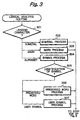
- step 301 a leading character of each token is identified.
- the control proceeds to step 302 which carries out a numeral processing operation.
- the control proceeds to step 303 which carries out a mark processing operation.
- the control proceeds to step 304 which carries out a symbol processing operation.
- step 302 characters down to a space are taken in, and a character string that has been taken in is processed as numerals. Then, the control proceeds to step 202 of Fig. 2.
- step 303 characters down to a space are taken in, and a character string that has been taken in is processed as marks. Then, the control proceeds to step 202 of Fig. 2.
- step 304 characters down to a space are taken in, and a character string that has been taken in is processed as symbols.
- step 305 it is determined whether the symbols are a reserved word or a user symbol. As a result, if the symbols are a reserved word, the control proceeds to step 306 which carries out a reserved word processing operation. On the other hand, if the symbols are a user symbol, the control proceeds to step 307 which carries out a user symbol processing operation. Then, the control at step 306 or 307 proceeds to step 202 of Fig. 2.
- the macro formal parameter is analyzed and registered in the macro symbol table 22c.
- step 402 the macro local symbol is analyzed and registered in the macro symbol table 22c.
- step 403 it is determined whether the leading character of the macro definition program body is an alphabetic character or a non-alphabetic character. As a result, if the leading character is a non-alphabetic character, the control proceeds to step 404 which stores the leading character into the output buffer 23a. On the other hand, the leading character is an alphabetic character, the control proceeds to step 405.
- a token is read, and it is determined if the token is a macro formal parameter, a macro local symbol or a macro definition end word. As a result, if the token is a macro formal parameter, the control proceeds to step 406 which carries out a macro formal parameter transforming process. Also, if the token is a macro local symbol, the control proceeds to step 407 which carries out a macro local symbol transforming process. Further, if the token is a macro definition end word, the control proceeds to step 201 of Fig. 2. Otherwise, the control proceeds to step 408 which stores the token into the output buffer 23a.
- the macro formal parameter is transformed into a character string starting with a metacharacter representing the macro formal parameter, and then, the character string is stored in the output buffer 23a.
- the macro local symbol is transformed into a character string starting with a metacharacter representing the macro local symbol, and then, the character string is stored in the output buffer 23a.
- step 409 the leading character or the character string stored in the output buffer 23a is output to the macro definition memory 22a, and then, the control returns to step 403.
- the macro reference processing step 205 of Fig. 2 is explained next with reference to Fig. 5.
- the macro reference row is analyzed, and as a result, the value of the macro actual parameter obtained by the analysis is set in a macro formal parameter entry area of the macro symbol table 22c.
- step 502 it is determined whether there is an area for the maximum value of the token in the macro expansion area 22b. As a result, if there is no such area, the control proceeds to step 503 which adds a continuous extension of the macro expansion area 22b thereto.
- step 504 it is determined whether or not the read position of the macro definition area 22a is the end position of the macro definition area 22a. As a result, if the read position is the end position the macro definition area 22a, the control proceeds to step 511. On the other hand, if the read position is not the end position definition area 22a, the control proceeds to step 505.
- step 505 it is determined whether or not the character at the position that has been read in the macro definition area 22a is a metacharacter. As a result, if the character is a metacharacter, the control proceeds to step 506. On the other hand, if the character is not a metacharacter, the control proceeds to step 510.
- a token is taken out from the position that has been read in the macro definition area 22a, and, it is determined whether the token is a macro formal parameter or a macro local symbol. As a result, if the token is a macro formal parameter, the control proceeds to step 507. On the other hand, if the token is a macro local symbol, the control proceeds to steps 508 and 509.
- step 507 the character string starting with a metacharacter representing the formal parameter is replaced by an actual parameter and is stored in the output buffer 23a. Then, the control proceeds to step 510.
- step 508 a symbol name different from any other symbol names that have already been used is generated. Then, at step 509, the character string starting with a metacharacter representing the macro local symbol is replaced by the generated symbol name and is stored in the output buffer 23a. Then, the control proceeds to step 510.
- the character string stored in the output buffer 23a is output to the macro expansion area 22b.
- step 511 the input destination of the source program file 1 for the lexical analysis is retained and thereafter, is shifted to the macro expansion area 22b.
- step 512 a syntactical analysis routine of Fig. 2 is called, and at step 513, the control returns from the analysis routine of Fig. 2. Then, at step 514, the input destination of the source program file 1 for the lexical analysis is restored to the input destination retained at step 511, and then, the control proceeds to step 513.
- step 513 the macro expansion area 22b is opened, and then, the control returns to step 201 of Fig. 2.
- the file 1 includes eight rows, of which the rows from the first to the sixth are used for macro definition using the macro name of "m1" and the seventh row is used for referring to the macro "m1".
- “macro” is a reserved word indicating macro definition rows.
- a symbol name is put before “macro”, it becomes a macro name.
- a symbol name is put after “macro”, it becomes a macro local symbol.
- endm is a reserved word indicating the end of the macro definition.
- end is a reserved word indicating the end of the entire source program to be subjected to an assembling processing.
- Fig. 7 (A) shows an example of the macro definition area 22a.
- step 401 the macro formal parameter "paral” is processed for registration.
- step 402 the macro local symbol "lab” is processed for registration and then an end of macro definition area determining processing step 503 is executed.
- the source program file 1 is read at the position of the leading character of the 3rd row, which is a tab, so that the macro definition token output processing step 409 is executed to output the tab to the macro definition area 22a (see the 1st character of Fig. 7 (A)). Then, the leading character determining step 403 is executed.
- the macro symbol token determining step 405 is executed.
- the token "mov" is taken out.
- the macro definition area token outputting step 409 is then executed.
- the token "mov” is output to the macro definition area 22a (see the characters from the 2nd to the 4th in Fig. 7 (A)), and the leading character determining step 402 is resumed.
- the macro symbol token determining step 405 the token "paral” is taken out. Since the token “paral” is a macro formal parameter, the macro formal parameter transformation step 406 is then executed.
- the character string "%p1" is output to the macro definition area 22a (see the characters from the 9th to the 11th in Fig. 7 (A)) and then the leading character determining step 403 is resumed.
- a processing for a token that has a non-alphabetic leading character or that is not any of a macro formal parameter, a macro local symbol and a macro end word is executed and the characters down to the leading character of the 4th row are output to the macro definition area 22a (the 12th character in Fig. 7 (A)).
- the character "1" is determined to be an alphabetic character in the leading character determining step 403, and then the macro symbol token determining step 405 is executed.
- the macro symbol token determining step 405 the token "lab” is taken out. Since the token "lab” is a macro local symbol, the macro local symbol transformation step 406 is then executed.
- the character string "%11" is output to the macro definition area 22a (see the characters from the 13th to the 15th in Fig. 13 (A)), and then the leading character determining step 403 is resumed.
- a processing for a token that has a non-alphabetic leading character or that is not any of a macro formal parameter, a macro local symbol and a macro end word is executed and the characters down to the leading character of the token "lab" in the 5th row are output to the macro definition area 22a (see the characters from the 16th to the 22th in Fig. 7 (A)).
- a processing for a token that has a non-alphabetic leading character or that is not any of a macro formal parameter, a macro local symbol and a macro end word is executed and the characters down to the character immediately before the token "endm" in the 6th row are output to the macro definition area 22a (see the 26th character in Fig. 7 (A)).
- the character "e” is determined to be an alphabetic character and the macro symbol token determining step 405 is executed.
- the token "endm” is taken out.
- the macro definition area 22a as shown in Fig. 7 (A) is created with the above described sequential processings.
- Fig. 5 for the source program of Fig. 6 will be further described with reference to Fig. 7 (B) which shows an example of the macro expansion area 22b.
- the macro reference row is "m1 10110110b" and the first actual parameter is registered as “10110110b” in the macro actual registering step 501, and the control moves to the end of macro expansion area determining step 502.
- the end of macro expansion area determining step 502 it is determined whether or not there is an area for the maximum value of the token in the macro expansion area 22b. Since the macro expansion area 22b is not secured at all yet, it is determined that there is no area for the maximum value or the token, and then the expansion area securing step 503 is executed.
- a memory area having a predetermined size is secured, and then the end position of macro definition area determining step 504 is executed.
- the end position of macro definition area determining step 504 it is determined whether or not the position of the macro definition area 22a that has been read points to the end position of the macro definition area 22a. Since the position that has been read is the first row of the macro definition area 22a, the metacharacter determining step 505 will be executed.
- the metacharacter determining step 505 it is determined whether or not the character at the position that has been read is a metacharacter. As a result, since a tab is not a metacharacter, the macro expansion area token output step 510 will then be executed.
- the tab is output to the macro expansion area 22b, and then the end of macro definition area determining step 504 is resumed.
- the characters down to the 8th one in the macro definition area 22a of Fig. 7 (A) are output to the expansion area 22b in a manner as described above (see the characters from the 1st to the 8th in Fig. 7 (B)).
- the characters from the 9th and on in the macro definition area 22a of Fig. 7 (A) will be processed in a manner as will be described below. Since it is determined in the end position of macro definition area determining step 504 that the position that has been read is not an end, the control proceeds to the metacharacter determining step 505. Since it is determined in the metacharacter determining step 505 that the character at the position of the macro definition are 22a that has been read is a metacharacter, the macro symbol token determining step 506 is executed.
- the token “%p1" is taken out. Since the token “%p1" is a macro formal parameter, it is subjected to the macro actual parameter replacement step 507. In the actual parameter replacement step 507, the token “%p1" is replaced by "10110110b", and then the macro expansion token outputting step 510 will be executed.
- the token "10110110b" is output to the macro expansion area 22b (see the characters from the 9th to the 17th in Fig. 7 (B)), and the control proceeds to the end position of macro definition area determining step 504.
- the characters from the 13th of the macro definition area 22a are processed in a manner as will be described below.
- control proceeds to a metacharacter determining step 505 because the position that has been read does not point to the end position.
- the control proceeds to the macro symbol token determining step 506, because the character at the position of the macro definition area 22a that has been read is a metacharacter.
- the token "%11” is taken out in the macro symbol token determining step 506. Since the token "%11" is a macro local symbol, the local symbol generation step 508 will be executed.
- the token "%11" is replaced by "??lab”, and then the macro expansion token outputting step 510 is executed (see the characters from the 19th to the 23th in Fig. 7 (B)).
- the end position of macro definition area determining step 504 is executed. Since the position of the macro definition area 22a that has been read is found to be pointing to the end position of the macro definition area 22a in the end position of macro definition area determining step 504, the control proceeds to the input destination shifting step 511.
- the macro expansion area 22b as shown in Fig. 7 (B) is generated as a result of the above processing operation.
- the input destination of the lexical analysis step 201 is retained, and then it is replaced by the macro expansion area 22b before the syntactical analysis routine of Fig. 2 is invoked.
- the macro expansion area 22b is syntactically analyzed and, after returning from the syntactical analysis routine of Fig. 2, the control proceeds to the input destination restoring step 512.
- the input destination restoring step 512 the input destination of the retained source program file is restored, and then the macro expansion area opening step 515 is executed.
- the macro expansion area opening step 515 the macro expansion area 22b is opened, and thus, the macro reference processing is terminated.
- the macro expansion processing requires a considerably long time to generate a macro expansion area 22b. That is, the time required by the macro expansion processing is mainly consumed for determining the token being referenced to the entire macro and for copying the entire macro reference.
- Fig. 8 which illustrates an embodiment of the present invention
- the syntactical analysis section 22 of Fig. 1 is modified into a syntactical analysis section 22'.
- the macro expansion area 22b of Fig. 1 is not provided.
- the symbol table 22d of Fig. 1 is replaced by a symbol table 22d' which has a macro formal parameter entry 22d-1 and a macro local symbol entry 22d-2.
- the syntactical analysis section 22' causes a lexical analysis routine to carry out a lexical analysis, to access and reference symbols.
- the syntactical analysis section 22' finds a macro definition row, the syntactical analysis section 22' calls a macro definition processing routine.
- the syntactical analysis section 22' finds a macro reference row, the syntactical analysis section 22' calls a macro reference processing routine.
- a macro-defined program body is stored by the macro definition processing routine into the macro definition area 22a. Also, a macro formal parameter and a macro local symbol are stored by the macro definition processing routine into the macro symbol table 22c.
- the macro reference processing routine accesses and syntactical-analyzes the macro formal parameter as the macro parameter entry 22d-1 and the macro local symbol as the macro local symbol entry 22d-2 and, after the completion of the syntactical analysis processing, the macro formal parameter entry 22d-1 and the macro local symbol entry 22d-2 are deleted.
- the syntactical analysis section 22' performs lexical analysis by way of a lexical analysis routine to perform a symbol registration and reference processing by way of a symbol processing routine.
- the syntactical analysis section 22' performs lexical analysis by way of a lexical analysis routine to perform a symbol registration and reference processing by way of a symbol processing routine.
- the symbol processing routine registers the symbol in the symbol table 22d.
- step 201' tokens are taken out one by one from the source file 1 that has been read. Then, a lexical analysis process is carried out, which will be explained later in detail.
- step 202 it is determined whether or not there is a syntactical agreement between the tokens and a predetermined language specification. As a result, if there is an syntactical agreement, the control proceeds to step 203. On the other hand, if there is no syntactical agreement, the control returns to step 201'.
- the syntax is identified.
- the control proceeds to step 204' which carries out a macro definition processing routine which will be explained later in detail.
- the syntax is a macro reference syntax
- the control proceeds to step 205' which carries out a macro reference processing routine which will be explained later in detail.
- the syntax is an end syntax
- the control proceeds to step 206 which is a code generation processing routine carried out by the code generation processing section 23. Otherwise, the control proceeds to steps 207-1, ⁇ , 207-n which carry out meaning analysis processing operations corresponding to each of the tokens.
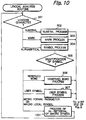
- Fig. 10 The lexical analysis processing step 201' of Fig. 9 is next explained in detail with reference to Fig. 10.
- step 1001 is added to the elements of Fig. 3.
- step 301 a leading character of each token is identified.
- the control proceeds to step 302 which carries out a numeral processing operation.
- the control proceeds to step 303 which carries out a mark processing operation.
- the control proceeds to step 304 which carries out a symbol processing operation.
- step 302 characters down to a space are taken in, and a character string that has been taken in is processed as numerals. Then, the control proceeds to step 202 of Fig. 9.
- step 303 characters down to a space are taken in, and a character string that has been taken in is processed as marks. Then, the control proceeds to step 202 of Fig. 9.
- step 304 characters down to a space are taken in, and a character string that has been taken in is processed as symbols.
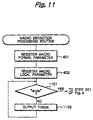
- steps 1101 and 1102 are provided instead of steps 403 through 409 of Fig. 4.
- the macro formal parameter is analyzed and registered in the macro symbol table 22c.
- step 402 the macro local symbol is analyzed and registered in the macro symbol table 22c.
- step 1101 a token is read out, and it is determined whether or not the token is "endm". As a result, if the token is "endm”, the control returns to step 201' of Fig. 9. On the other hand, if the token is not "endm", the control proceeds to step 1102.
- step 1102 the token stored in the output buffer 23a is output to the macro definition area 22a, and the control returns to step 1101.
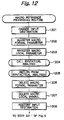
- step 1201 the input destination of the lexical analysis is retained, and then is shifted to the macro definition 22a step.
- step 1202 the macro reference row in the source program is analyzed, and each macro actual parameter obtained by the analysis is set in the macro formal parameter entry 22d-1, which macro formal parameter entry 22d-1 is then registered in the macro symbol table 22d.
- step 1203 a symbol name that differs from any other symbol name is generated and set to the macro local symbol entry 22d-2, which macro local symbol entry 22d-2 is then registered in the macro symbol table 22d.
- step 1204 a syntactical analysis routine of Fig. 9 is called, and at step 1205, the control returns from the analysis routine of Fig. 9.
- step 1206 the macro formal parameter entry 22d-1 is deleted from the symbol table 22d.
- step 1207 the macro local symbol entry 22d-2 is deleted from the symbol table 22d.
- step 1208 the input destination of the lexical analysis is restored as the input destination of the source program file 1 retained in the input destination shift step 1201 and then, the macro reference processing is terminated, and the control returns to step 201' of Fig. 9.
- the macro definition area 22a is generated by the macro definition processing routine of Fig. 11 in a manner as described below.
- macro formal parameter "paral” is registered at the macro formal parameter registering step 1101.
- the end of macro definition area determining processing 1101 is executed.
- the position at which the source program is read is the leading character of the third row, which is a tab and hence is not a macro end word, so that the macro definition area token output step 1102 will be executed to output the tab to the macro definition area 22a (see the 1st character in Fig. 13).
- the end of macro definition area determining step 1101 is resumed.
- the total assemble processing time can be reduced.
- the time reduced due to the present invention is equal to the time for determining tokens within the entire macro reference plus the time for copying the entire macro reference in the prior art.
- the required memory capacity can be reduced, because it is unnecessary to generate a macro expansion area.
- the memory capacity reduced due to the present invention is equal to the maximum macro definition in the assembler program in the prior art.
- T 3 is a time necessary for determining tokens within one macro definition (or a time for determining tokens with 1,000 steps).
- the time necessary for determining tokens within one macro reference is equal to the time for determining tokens in one macro definition program.
Landscapes
- Engineering & Computer Science (AREA)
- General Engineering & Computer Science (AREA)
- Theoretical Computer Science (AREA)
- Software Systems (AREA)
- Physics & Mathematics (AREA)
- General Physics & Mathematics (AREA)
- Devices For Executing Special Programs (AREA)
Applications Claiming Priority (3)
| Application Number | Priority Date | Filing Date | Title |
|---|---|---|---|
| JP09110819A JP3130828B2 (ja) | 1997-04-28 | 1997-04-28 | アセンブル処理方式 |
| JP11081997 | 1997-04-28 | ||
| JP110819/97 | 1997-04-28 |
Publications (2)
| Publication Number | Publication Date |
|---|---|
| EP0875825A2 true EP0875825A2 (de) | 1998-11-04 |
| EP0875825A3 EP0875825A3 (de) | 2002-06-19 |
Family
ID=14545472
Family Applications (1)
| Application Number | Title | Priority Date | Filing Date |
|---|---|---|---|
| EP98107726A Withdrawn EP0875825A3 (de) | 1997-04-28 | 1998-04-28 | Hochgeschwindigkeitsassemblerverarbeitungssystem |
Country Status (3)
| Country | Link |
|---|---|
| US (1) | US5999733A (de) |
| EP (1) | EP0875825A3 (de) |
| JP (1) | JP3130828B2 (de) |
Families Citing this family (12)
| Publication number | Priority date | Publication date | Assignee | Title |
|---|---|---|---|---|
| US6263493B1 (en) * | 1998-07-08 | 2001-07-17 | International Business Machines Corporation | Method and system for controlling the generation of program statements |
| US6631516B1 (en) * | 2000-04-25 | 2003-10-07 | International Business Machines Corporatioin | Extended syntax record for assembler language instructions |
| US7337438B1 (en) | 2003-03-31 | 2008-02-26 | Applied Micro Circuits Corporation | Macros to support structures for an assembler that does not support structures |
| US7571431B2 (en) * | 2003-04-29 | 2009-08-04 | Microsoft Corporation | Processing macro information and displaying via GUI in different tools |
| US7603705B2 (en) * | 2004-05-04 | 2009-10-13 | Next It Corporation | Methods and systems for enforcing network and computer use policy |
| US7565368B2 (en) * | 2004-05-04 | 2009-07-21 | Next It Corporation | Data disambiguation systems and methods |
| US7603506B2 (en) * | 2004-06-18 | 2009-10-13 | Broadcom Corporation | Motherboard with video data processing card capability |
| US20050289523A1 (en) * | 2004-06-24 | 2005-12-29 | Broadcom Corporation | Method and apparatus for transforming code of a non-proprietary program language into proprietary program language |
| US7612779B2 (en) * | 2004-06-25 | 2009-11-03 | Broadcom Corporation | Video data processing circuits and systems comprising programmable blocks or components |
| US7367019B2 (en) * | 2004-09-16 | 2008-04-29 | International Business Machines Corporation | Parameter management using compiler directives |
| JP5385103B2 (ja) * | 2009-11-24 | 2014-01-08 | 株式会社野村総合研究所 | マクロ展開方法およびプリプロセッサ |
| KR101623564B1 (ko) * | 2010-10-19 | 2016-05-24 | 삼성전자주식회사 | 멀티쓰레드 환경을 테스트하는 커버리지 장치 및 방법 |
Family Cites Families (6)
| Publication number | Priority date | Publication date | Assignee | Title |
|---|---|---|---|---|
| US4553205A (en) * | 1982-09-21 | 1985-11-12 | Salvatore Porchia | Flexible macro expansion process |
| US4931928A (en) * | 1988-11-09 | 1990-06-05 | Greenfeld Norton R | Apparatus for analyzing source code |
| EP0413651A3 (en) * | 1989-08-18 | 1993-03-03 | International Business Machines Corporation | Method for dynamic self-modification of data stream constructs |
| US5339419A (en) * | 1990-06-25 | 1994-08-16 | Hewlett-Packard Company | ANDF compiler using the HPcode-plus compiler intermediate language |
| EP0582738A1 (de) * | 1992-08-12 | 1994-02-16 | International Business Machines Corporation | Kompiler |
| US5768564A (en) * | 1994-10-07 | 1998-06-16 | Tandem Computers Incorporated | Method and apparatus for translating source code from one high-level computer language to another |
-
1997
- 1997-04-28 JP JP09110819A patent/JP3130828B2/ja not_active Expired - Fee Related
-
1998
- 1998-04-28 EP EP98107726A patent/EP0875825A3/de not_active Withdrawn
- 1998-04-28 US US09/066,825 patent/US5999733A/en not_active Expired - Fee Related
Also Published As
| Publication number | Publication date |
|---|---|
| JP3130828B2 (ja) | 2001-01-31 |
| EP0875825A3 (de) | 2002-06-19 |
| JPH10301790A (ja) | 1998-11-13 |
| US5999733A (en) | 1999-12-07 |
Similar Documents
| Publication | Publication Date | Title |
|---|---|---|
| US8156471B2 (en) | Multi-language execution method | |
| US5999733A (en) | High speed assemble processing system | |
| EP1038219B1 (de) | Gerät und verfahren welche objektorientierte programme die aus verschiedenen fachwerkversionen erzeugt sind zu kommunizieren ermöglicht | |
| US6363522B1 (en) | Method and apparatus for handling exceptions as normal control flow | |
| US7458071B2 (en) | Compilation method, compiler apparatus and compiler | |
| US6198813B1 (en) | System and method for providing call processing services using call independent building blocks | |
| US6922735B2 (en) | Management of co-processor information by integrating non-program information with program information | |
| KR100305097B1 (ko) | 최적화에 있어서 인터럽트 처리의 경감을 실현하는 컴파일러 및 그의 최적화 방법 | |
| JP2019179383A (ja) | Api処理方法、端末、api処理プログラム | |
| JP2000122876A (ja) | 情報処理装置 | |
| EP0803806A2 (de) | Datenumwandlungsmechanismus für Rechnersystem | |
| EP0348563A1 (de) | System und Verfahren, um Objekt-Programmodule zu erzeugen | |
| KR20020021083A (ko) | 최적의 컴퓨터 데이터 필드 변환 루틴을 생성하는 시스템 | |
| KR100428015B1 (ko) | 빌딩 제어 시스템의 텍스트 파일 임포트 방법 | |
| JP3323147B2 (ja) | コンパイル装置、コンパイル方法およびコンパイラプログラムを記録した記録媒体 | |
| JPH06301549A (ja) | プログラム翻訳装置 | |
| JP2002229801A (ja) | 関数のリンク方法 | |
| JP2002099425A (ja) | グローバル変数のローカル変数変換方法 | |
| RU95118821A (ru) | Способ преобразования входного кода транслятора в объектный код и устройство для его осуществления | |
| CN120343117A (zh) | 一种通讯协议复用的解析方法、装置、设备及存储介质 | |
| JP2000231494A (ja) | ソフトウェア実行システム及びソフトウェア実行方法 | |
| US20050120339A1 (en) | Method for operating a computer system | |
| JPH0561687A (ja) | コンパイラの処理方式 | |
| uIL et al. | i~ IL RIL NIL NIL | |
| COINTMENT III | Ccc--a mixed strategy compiler-compiler |
Legal Events
| Date | Code | Title | Description |
|---|---|---|---|
| PUAI | Public reference made under article 153(3) epc to a published international application that has entered the european phase |
Free format text: ORIGINAL CODE: 0009012 |
|
| AK | Designated contracting states |
Kind code of ref document: A2 Designated state(s): AT BE CH CY DE DK ES FI FR GB GR IE IT LI LU MC NL PT SE |
|
| AX | Request for extension of the european patent |
Free format text: AL;LT;LV;MK;RO;SI |
|
| PUAL | Search report despatched |
Free format text: ORIGINAL CODE: 0009013 |
|
| AK | Designated contracting states |
Kind code of ref document: A3 Designated state(s): AT BE CH CY DE DK ES FI FR GB GR IE IT LI LU MC NL PT SE |
|
| AX | Request for extension of the european patent |
Free format text: AL;LT;LV;MK;RO;SI |
|
| 17P | Request for examination filed |
Effective date: 20020620 |
|
| 17Q | First examination report despatched |
Effective date: 20021202 |
|
| AKX | Designation fees paid |
Designated state(s): DE FR GB |
|
| RAP1 | Party data changed (applicant data changed or rights of an application transferred) |
Owner name: NEC ELECTRONICS CORPORATION |
|
| STAA | Information on the status of an ep patent application or granted ep patent |
Free format text: STATUS: THE APPLICATION HAS BEEN WITHDRAWN |
|
| 18W | Application withdrawn |
Effective date: 20030716 |