EP0879890A1 - Enantioselektive Epoxid-Hydrolasen und dafür kodierende Gene - Google Patents
Enantioselektive Epoxid-Hydrolasen und dafür kodierende Gene Download PDFInfo
- Publication number
- EP0879890A1 EP0879890A1 EP97201515A EP97201515A EP0879890A1 EP 0879890 A1 EP0879890 A1 EP 0879890A1 EP 97201515 A EP97201515 A EP 97201515A EP 97201515 A EP97201515 A EP 97201515A EP 0879890 A1 EP0879890 A1 EP 0879890A1
- Authority
- EP
- European Patent Office
- Prior art keywords
- polypeptide
- epoxide hydrolase
- micro
- organism
- epoxides
- Prior art date
- Legal status (The legal status is an assumption and is not a legal conclusion. Google has not performed a legal analysis and makes no representation as to the accuracy of the status listed.)
- Withdrawn
Links
Images


Classifications
-
- C—CHEMISTRY; METALLURGY
- C12—BIOCHEMISTRY; BEER; SPIRITS; WINE; VINEGAR; MICROBIOLOGY; ENZYMOLOGY; MUTATION OR GENETIC ENGINEERING
- C12N—MICROORGANISMS OR ENZYMES; COMPOSITIONS THEREOF; PROPAGATING, PRESERVING, OR MAINTAINING MICROORGANISMS; MUTATION OR GENETIC ENGINEERING; CULTURE MEDIA
- C12N1/00—Microorganisms; Compositions thereof; Processes of propagating, maintaining or preserving microorganisms or compositions thereof; Processes of preparing or isolating a composition containing a microorganism; Culture media therefor
- C12N1/20—Bacteria; Culture media therefor
- C12N1/205—Bacterial isolates
-
- C—CHEMISTRY; METALLURGY
- C12—BIOCHEMISTRY; BEER; SPIRITS; WINE; VINEGAR; MICROBIOLOGY; ENZYMOLOGY; MUTATION OR GENETIC ENGINEERING
- C12N—MICROORGANISMS OR ENZYMES; COMPOSITIONS THEREOF; PROPAGATING, PRESERVING, OR MAINTAINING MICROORGANISMS; MUTATION OR GENETIC ENGINEERING; CULTURE MEDIA
- C12N9/00—Enzymes; Proenzymes; Compositions thereof; Processes for preparing, activating, inhibiting, separating or purifying enzymes
- C12N9/14—Hydrolases (3)
-
- C—CHEMISTRY; METALLURGY
- C12—BIOCHEMISTRY; BEER; SPIRITS; WINE; VINEGAR; MICROBIOLOGY; ENZYMOLOGY; MUTATION OR GENETIC ENGINEERING
- C12P—FERMENTATION OR ENZYME-USING PROCESSES TO SYNTHESISE A DESIRED CHEMICAL COMPOUND OR COMPOSITION OR TO SEPARATE OPTICAL ISOMERS FROM A RACEMIC MIXTURE
- C12P41/00—Processes using enzymes or microorganisms to separate optical isomers from a racemic mixture
-
- C—CHEMISTRY; METALLURGY
- C12—BIOCHEMISTRY; BEER; SPIRITS; WINE; VINEGAR; MICROBIOLOGY; ENZYMOLOGY; MUTATION OR GENETIC ENGINEERING
- C12P—FERMENTATION OR ENZYME-USING PROCESSES TO SYNTHESISE A DESIRED CHEMICAL COMPOUND OR COMPOSITION OR TO SEPARATE OPTICAL ISOMERS FROM A RACEMIC MIXTURE
- C12P7/00—Preparation of oxygen-containing organic compounds
- C12P7/02—Preparation of oxygen-containing organic compounds containing a hydroxy group
- C12P7/04—Preparation of oxygen-containing organic compounds containing a hydroxy group acyclic
- C12P7/18—Preparation of oxygen-containing organic compounds containing a hydroxy group acyclic polyhydric
-
- C—CHEMISTRY; METALLURGY
- C12—BIOCHEMISTRY; BEER; SPIRITS; WINE; VINEGAR; MICROBIOLOGY; ENZYMOLOGY; MUTATION OR GENETIC ENGINEERING
- C12P—FERMENTATION OR ENZYME-USING PROCESSES TO SYNTHESISE A DESIRED CHEMICAL COMPOUND OR COMPOSITION OR TO SEPARATE OPTICAL ISOMERS FROM A RACEMIC MIXTURE
- C12P7/00—Preparation of oxygen-containing organic compounds
- C12P7/02—Preparation of oxygen-containing organic compounds containing a hydroxy group
- C12P7/22—Preparation of oxygen-containing organic compounds containing a hydroxy group aromatic
-
- C—CHEMISTRY; METALLURGY
- C12—BIOCHEMISTRY; BEER; SPIRITS; WINE; VINEGAR; MICROBIOLOGY; ENZYMOLOGY; MUTATION OR GENETIC ENGINEERING
- C12R—INDEXING SCHEME ASSOCIATED WITH SUBCLASSES C12C - C12Q, RELATING TO MICROORGANISMS
- C12R2001/00—Microorganisms ; Processes using microorganisms
- C12R2001/01—Bacteria or Actinomycetales ; using bacteria or Actinomycetales
Definitions
- the present invention relates to (microbial) epoxide hydrolases and biocatalytic reactions yielding optically pure epoxides and diols.
- Optically active epoxides and 1,2-diols are important building blocks for the production of a range of optically active compounds that are needed for the production of pharmaceuticals and other fine chemicals.
- a number of strategies are available for the production of optically active epoxides (Schurig et al. 1992).
- An example that involves a catalytic asymmetric reaction is the Katsuki-Sharpless oxidation of unactivated double bonds, by means of an optically active titanium tartrate complex.
- a limitation is that the double bond must be in the allylic position relative to the hydroxyl group; this is necessary for coordination of the catalyst.
- Lipases can be used for the resolution of racemic esters of epoxyalcohols to produce both enantiomers of the epoxyalcohol. Similarly, lipases may be used for the stereoselective resolution of esters formed from haloalcohols and a carboxylic acid. By trans-esterification, enantiomerically pure alcohols can be obtained, which may be converted to epoxides.
- Biocatalytic production of epoxides is also possible by using mono-oxygenases. These enzymes require an unsaturated substrate and molecular oxygen. Reducing cosubstrates are required, and in general whole cells must be used to make regeneration of the cofactor economically feasible.
- Haloperoxidase based routes are also known. Haloperoxidases may produce optically active haloalcohols from alkenes.
- Enzymatic kinetic resolution is a possible technique for the production of optically active epoxides.
- Enzymes that hydrolyse epoxides are called epoxide hydrolases. They convert epoxides to diols by cleaving the epoxide ring with water.
- Epoxide hydrolases have been detected in mammals, insects, yeasts, fungi, other eukaryotic organisms, and in prokaryotic organisms.
- the epoxide hydrolases from higher eukaryotic organisms play a role in endogeneous metabolism and do not show strong substrate selectivity. They convert a variety of compounds formed from drugs by oxidative enzymes such as cytochrome P450.
- the sequence similarity of some epoxide hydrolases to dehalogenases suggests that they may act by covalent catalysis via a mechanism that does not allow racemisation (Lacourciere et al.,1993; Pries et al., 1994).
- the epoxide ring is opened by a nucleophilic attack of an carboxylate residue, yielding a covalent ester intermediate. Subsequently this intermediate is hydrolysed and the diol is released.
- epoxide hydrolases Production of epoxide hydrolases by eukaryotic organisms is well known. Most work has been done with crude microsomal preparations of liver tissue from rats or other mammals (Wistuba et al. 1992). Mammalian epoxide hydrolases have been studied in detail because epoxides are important in toxicology and in chemical carcinogenesis (Guengerich, 1982). However, the enzymes from mammals, which are known to be stereoselective in some cases, are difficult to obtain and serve multiple functions in vivo.
- Styrene oxides are well investigated substrates for microsomal epoxide hydrolases. They have been used in a standard assay for determinaton of the activity of the enzyme. Styrene oxides with substituents on the ring were investigated for studies on the mechanism of this enzyme (Dansette et al. 1978). Further research showed that the microsomal epoxide hydrolase was able to hydrolyse enantioselectivily styrene oxide (Watabe et al. 1983). The time course of this enzymatic hydrolysis showed a biphasic shape. At first the (R)-enantiomer is hydrolysed.
- Faber et al remark that, although prokaryotic epoxide hydrolases have some advantages above eukaryotic epoxide hydrolases, the enantioselectivities of microbial hydrolases (expressed as enantiomeric ratio (ee)) are low and highly substrate dependent. Faber further remarks, that only a few microbial strains possessing suitable epoxide hydrolase activity for a given substrate are known and prediction of suitable microbial strains is not yet possible, until, for example, the three-dimensional X-ray structure of an epoxide hydrolase has been solved.
- the present invention now surprisingly provides isolated micro-organisms that express epoxide hydrolases with a high enantioselectivity.
- Said micro-organisms represented and provided for by the invention can selectively degrade epichlorohydrin or related halopropanol compounds and their genome encodes a polypeptide having a highly enantioselective epoxide hydrolase activity.
- a distinct isolated micro-organism which is a representative micro-organism provided by the invention is Agrobacterium spp exhibiting high enantioselectivity.
- the micro-organisms provided by the invention essentially correspond to the micro-organism represented by Agrobacterium radiobacter deposited under deposit number CBS 750.97.
- the terms "essentially correspond” or “essentially corresponding” refer to variations that occur in nature and to artificial variations of representative micro-organisms which can selectively degrade epichlorohydrin or related halopropanol compounds and are having enantioselective epoxide hydrolase activity.
- variations relate to variations in the epoxide hydrolase and functional fragments thereof which can be isolated from said micro-organisms and to variations in the genome of said organisms encoding epoxide hydrolase and functional fragments thereof.
- the terms "essentially correspond” or “essentially corresponding” relate to those variations that still allow detection of epoxide hydrolase or functional fragments thereof in tests for epoxide hydrolase activity or detection of the genome (be it DNA or RNA) or fragments thereof encoding epoxide hydrolase or functional fragments thereof by hybridization techniques, (such as nucleic acid blotting or in situ hybridization) or amplification techniques (such as PCR).
- the invention also provides a pure culture of the micro-organism, and a (lyophilized) preparation thereof.
- the invention also provides a crude or pure enzyme preparation derived from said micro-organism, preparing and purifying enzymes from micro-organisms comprise ordinary skills known in the art.
- the invention provides (partly) purified epoxide hydrolase.
- the enzyme provided by the invention has a molecular weight of 30-40 kD as determined by SDS-polyacrylamide electrophoresis and contains 280-350 amino acids.
- Epoxide hydrolase as provided by the invention is generally water soluble, generally stable in Tris buffer at neutral pH and is generally able to convert epoxides with a broad specificity. It catalyses the conversion by covalent catalysis, using a nucleophilic aspartate.
- the invention now also provides the isolated gene (a recombinant DNA molecule) or parts thereof encoding at least a functional part of a polypeptide having epoxide hydrolase activity.
- genes or fragments thereof can for example be derived from micro-organisms essentially corresponding to those that can selectively degrade epichlorohydrin or related halopropanol compounds.
- the invention provides a recombinant DNA molecule encoding a polypeptide exhibiting enantioselective epoxide hydrolase activity.
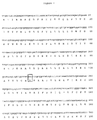
- FIG 1 the coding nucleic acid sequence of the gene encoding the epoxide hydrolase of Agrobacterium radiobacter (deposit number CBS 750.97) is shown.
- the invention provides genetically modified epoxide hydrolases with altered epoxide hydrolase activity. Modification is now possible because the functional catalytic site is known.
- the catalytic site comprises at least the amino acid residues at or around positions 107, 246 and/or 275 of the sequence shown in figure 1.
- the invention provides genomically related epoxide hydrolase in which at least one codon is mutated to encode for an amino acid providing the gene product with a modified epoxide hydrolase activity.
- the invention provides host cells (such as bacteria or yeast cells, but many host cells are known in the field) that can be transformed via recombinant technology to express epoxide hydrolases and modified versions thereof, and functional fragments thereof.
- Such host cells can for instance be transformed with a vector comprising a recombinant DNA molecule encoding epoxide hydrolase activity derived from representative microorganisms that can selectively degrade epichlorohydrin or related halopropanol compounds and which genome encodes a polypeptide having a highly enantioselective epoxide hydrolase activity.
- epoxide hydrolase can be produced via recombinant DNA technology, it is possible to obtain it in large quantities in a pure form. This enables for the first time crystallisation of epoxide hydrolase and resolution of its three-dimensional structure, allowing further prediction of microbial strains possessing suitable epoxide hydrolase activity for a given substrate, and allowing further selection of epoxide hydrolases with various selective specificities.
- the invention also provides a method of stereoselectively converting racemic mixtures of optically active epoxides to diols, using an epoxide hydrolase obtained from a micro-organism or host cell provided by the invention.
- the intermediate- and end-products of this conversion are enantiomerically pure epoxides and/or enantiomerically pure diols that can easily be extracted from the reaction mixture by suitable extraction methods known in the art.
- the reaction can be performed by a pure or semi-pure culture of the micro-organism or by a preparation thereof, or by a crude or pure enzyme preparation derived from said micro-organism or host cell, making industrial application of epoxide hydrolases as biocatalysts in a variety of reactions possible.
- Immobilized or free enzyme may be used.
- a wide range of techniques can be applied, for example the absorption of the isolated enzyme or the whole cells onto a water-insoluble macroscopic carrier.
- Some examples of carriers that can be used are Celite, cellulose, or ion exchange resins such as DEAE-cellulose or DEAE-Sephadex.
- Another technique is the covalent attachment on an macroscopic carrier such as porous glas or dextran.
- the isolated enzyme molecules can be crosslinked to each other using a crosslink molecule such as glutardialdehyde.
- the enzymes can also be entrapped into reversed micelles using an organic solvent and a detergent such as Aerosol OT.
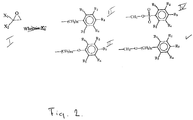
- the epoxide hydrolase activity of epichlorohydrin-degrading organisms can be used for the kinetic resolution of mixtures of stereo-isomers of various epoxides, such as styrene oxides or other epoxides containing an aromatic group. These epoxides are represented by the formula given in figure 2. An epoxide is allowed to react in the presence of the epoxide hydrolase. After a certain amount is converted, the reaction is stopped and the product is isolated.
- An enzyme preparation is obtained from the epichlorohydrin-degrading micro-organism Agrobacterium radiobacter or from a recombinant bacterium that expresses an epoxide hydrolase gene obtained from an epichlorohydrin-degrading micro-organism.
- the epoxide hydrolase gene was cloned by means of the polymerase chain reaction. Based on the N-terminal and C-terminal amino acid sequence, two degenerate primers were designed. Chromosomal DNA was amplified and the resulting 900 bp PCR product was translationally fused in the Ncol-(startcodon)-site of pGEF+, resulting in pEH20.
- the gene is under control of the strong T7 promotor and typically 100-200 mg of purified epoxide hydrolase can be obtained from one liter of culture of E.coli BL21.
- the f1 origin of replication makes it a suitable mutagenesis and sequence vector.
- the epoxide hydrolase is produced by growing a host cell in a fermentor under conditions which cause expression. Both constitutive production or induced production of the enzyme is possible.
- the DNA encoding for the epoxide hydrolase of an epichlorohydrin degrading bacterium is cloned into an expression vector by PCR amplification and cloning of the amplified DNA or by cloning of restriction enzyme fragments.
- the cloned DNA is expressed by induction or by stimulating expression of a specific polymerase. Subsequently, the epoxide hydrolase is produced under standard conditions.
- the epoxide hydrolase is remarkably similar to haloalkane dehalogenase from Xanthobacter autotrophicus GJ10, both in structure and reaction mechanism. Based on homology, we classify this enzyme as an ⁇ / ⁇ hydrolase fold enzyme.
- the catalytic triad residues (Asp 107 -His 275 -Asp 246 ) are identified by sequence similarity and by mutation. Further it is shown that the reaction mechanisms of epoxide hydrolase proceeds via a covalently bound ester intermediate.
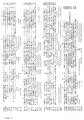
- the three dimensional structures of bromoperoxidase A2 and haloalkane dehalogenase are solved and their structural elements are displayed in the sequence alignment in figure 3.
- the plot in figure 4 shows the topology of the ⁇ / ⁇ -hydrolase fold of bromoperoxidase A2 and haloalkane dehalogenase.
- the main domain consists out of a central ⁇ -sheet surrounded by ⁇ -helices.
- the cap domain is formed out of ⁇ -helices and is specific for each enzyme.
- the catalytic triad residues, the nucleophile (D107), histidine (H275), and the acid residue (D246) occupy preserved positions in the topology.
- the epoxide hydrolase of Agrobacterium spp belongs to the class of ⁇ / ⁇ -hydrolase folded enzymes.
- the displayed sequence similarity, the structural features (secondary structure prediction and circular dichroism), the inactive active site mutants, and the existence of an ester intermediate are all in agreement.
- epoxide hydrolase has the following characteristics.
- the asymmetric hydrolysis of the substrate is generally conducted in aqueous solution.
- the pH of the solution is maintained by means of a buffer.
- Maximum enzyme activity is obtained at pH 9 but a range of pH 5 to 11 can be employed.
- the composition of the buffer can for example be Tris/H 2 SO 4 , potassium phosphate or glycine/NaOH.
- the maximum enzyme activity is obtained at a temperature of 50 o C, but the reaction can be conducted at a temperature ranging from 5 o C to 65 o C.
- the substrate concentration used to measure the enzyme activity is from 1 to 20 mM.
- the water solubility can be increased by adding a miscible organic cosolvent such a DMSO. Also other organic solvents can be used. Generally a higher cosolvent concentration increases the maximum solubility of the substrate, but it must not be so high as to inactivate the enzyme.
- the substrate is dissolved in a quantity of buffer, with or without cosolvent, to a concentration of 1 mM to 20 mM.
- the lyophilised enzyme preparation is dissolved in a small quantity of buffer and is allowed to stabilise for some time.
- the enzyme solution is subsequently mixed with the buffer solution.
- the reaction is monitored by analysis of the degree of conversion of the epoxide or by appearance of the product of the conversion, the diol. This is determined by sampling a part of the reaction liquid and extracting it with an appropriate organic solvent.
- diethyl ether can for example be used and for the diol ethylacetate can for example be used.
- the enantiomeric composition of the epoxides is determined by a gaschromatography using a chiral column such as CP-cyclodextrin-b2,3,6-M19.
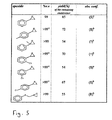
- a large number of epoxides containing an aromatic group can be isolated in enantiomerically pure form by degrading the unwanted enantiomer. This can be done for e.g. styrene oxide, p-methylstyrene oxide, x-methylstyrene oxide, fenylglycidyl ether, and glycidyl tosylate (figure 5).
- the enantiomerically pure product may be used for the synthesis of various other optically active compounds.
- the production of styrene oxide with recombinant epoxide hydrolase Agrobacterium radiobacter strain AD1 expressed in E.coli The epoxide hydrolase gene was cloned by means of PCR by using degenerate primers that were designed on the amino acid sequence of the N-terminus and the C-terminus that was known from publication in literature.
- Total DNA of Agrobacterium radiobacter strain AD1 was isolated from cells cultivated on 1,3-chloro-2-propanol using standard procedures.
- the gene of interest was amplified and cloned in an expression vector behind a T7-promotor of a plasmid such as pGEF, and brought to expressioin in E.coli .
- the recombinant enzyme was produced by fermentation.
- the whole cells were subsequently lyophilised or a crude cell-free extract was prepared by ultrasonic disruption and cetrifugation of the cells followed by a purification step with an anion exchange column. Finally the extract was dialysed against a Tris-buffer, lyophilised and stored at 4 o C.
- the lyophilised cell-free extract (0.50 mg) was suspended in Tris buffer (pH 9.0, 50 mM, 0.5 ml).
- Tris buffer pH 9.0, 50 mM, 0.5 ml
- a flask containing a solution of 5 mM styrene oxide in Tris buffer (pH 9.0, 50 mM, 20 ml) was incubated at 30 o C and the previously prepared enzyme solution was added. After 50 minutes the reaction was stopped and the remaining styrene oxide was extracted with diethyl ether. The enantiomeric purity of the styrene oxide was extracted with diethyl ether.
- the enantiomeric purity of the styrene oxide was determined by chiral gas chromatography on a ⁇ -cyclodextrin phase (CD-cyclodextrin-b-2,3,6-M-19) at 95 o C.
- the remaining (S)-enantiomer of the styrene oxide had an e.e. of 99% and a yield of 65%.
Landscapes
- Chemical & Material Sciences (AREA)
- Organic Chemistry (AREA)
- Life Sciences & Earth Sciences (AREA)
- Engineering & Computer Science (AREA)
- Wood Science & Technology (AREA)
- Zoology (AREA)
- Health & Medical Sciences (AREA)
- Genetics & Genomics (AREA)
- Bioinformatics & Cheminformatics (AREA)
- Biotechnology (AREA)
- Microbiology (AREA)
- General Engineering & Computer Science (AREA)
- General Health & Medical Sciences (AREA)
- Biochemistry (AREA)
- General Chemical & Material Sciences (AREA)
- Chemical Kinetics & Catalysis (AREA)
- Biomedical Technology (AREA)
- Medicinal Chemistry (AREA)
- Tropical Medicine & Parasitology (AREA)
- Virology (AREA)
- Molecular Biology (AREA)
- Analytical Chemistry (AREA)
- Enzymes And Modification Thereof (AREA)
- Micro-Organisms Or Cultivation Processes Thereof (AREA)
Priority Applications (6)
| Application Number | Priority Date | Filing Date | Title |
|---|---|---|---|
| EP97201515A EP0879890A1 (de) | 1997-05-21 | 1997-05-21 | Enantioselektive Epoxid-Hydrolasen und dafür kodierende Gene |
| AU76772/98A AU7677298A (en) | 1997-05-21 | 1998-05-20 | Enantioselective epoxide hydrolases and genes encoding these |
| PCT/NL1998/000290 WO1998053081A1 (en) | 1997-05-21 | 1998-05-20 | Enantioselective epoxide hydrolases and genes encoding these |
| EP98924667A EP0983367B1 (de) | 1997-05-21 | 1998-05-20 | Enantioselektive epoxidhydrolasen und dafür kodierende gene |
| US09/424,349 US6387668B1 (en) | 1997-05-21 | 1998-05-20 | Enantioselective epoxide hydrolases and genes encoding these |
| DE69829962T DE69829962T2 (de) | 1997-05-21 | 1998-05-20 | Enantioselektive epoxidhydrolasen und dafür kodierende gene |
Applications Claiming Priority (1)
| Application Number | Priority Date | Filing Date | Title |
|---|---|---|---|
| EP97201515A EP0879890A1 (de) | 1997-05-21 | 1997-05-21 | Enantioselektive Epoxid-Hydrolasen und dafür kodierende Gene |
Publications (1)
| Publication Number | Publication Date |
|---|---|
| EP0879890A1 true EP0879890A1 (de) | 1998-11-25 |
Family
ID=8228333
Family Applications (2)
| Application Number | Title | Priority Date | Filing Date |
|---|---|---|---|
| EP97201515A Withdrawn EP0879890A1 (de) | 1997-05-21 | 1997-05-21 | Enantioselektive Epoxid-Hydrolasen und dafür kodierende Gene |
| EP98924667A Expired - Lifetime EP0983367B1 (de) | 1997-05-21 | 1998-05-20 | Enantioselektive epoxidhydrolasen und dafür kodierende gene |
Family Applications After (1)
| Application Number | Title | Priority Date | Filing Date |
|---|---|---|---|
| EP98924667A Expired - Lifetime EP0983367B1 (de) | 1997-05-21 | 1998-05-20 | Enantioselektive epoxidhydrolasen und dafür kodierende gene |
Country Status (5)
| Country | Link |
|---|---|
| US (1) | US6387668B1 (de) |
| EP (2) | EP0879890A1 (de) |
| AU (1) | AU7677298A (de) |
| DE (1) | DE69829962T2 (de) |
| WO (1) | WO1998053081A1 (de) |
Cited By (9)
| Publication number | Priority date | Publication date | Assignee | Title |
|---|---|---|---|---|
| EP1013768A1 (de) * | 1998-12-18 | 2000-06-28 | Dsm N.V. | Mutierte Epoxid Hydrolasen |
| EP1158054A1 (de) * | 2000-05-25 | 2001-11-28 | Rijksuniversiteit te Groningen | Enzymatische Umwandlung von Epoxiden |
| US7541171B2 (en) | 2003-08-11 | 2009-06-02 | Codexis, Inc. | Halohydrin dehalogenases and related polynucleotides |
| US7588928B2 (en) | 2003-08-11 | 2009-09-15 | Codexis, Inc. | Halohydrin dehalogenases and related polynucleotides |
| US7807423B2 (en) | 2002-08-09 | 2010-10-05 | Codexis, Inc. | Enzymatic processes for the production of 4-substituted 3-hydroxybutyric acid derivatives |
| US7824898B2 (en) | 2003-08-11 | 2010-11-02 | Codexis, Inc. | Halohydrin dehalogenases and related polynucleotides |
| US8187856B2 (en) | 2008-12-18 | 2012-05-29 | Codexis, Inc. | Recombinant halohydrin dehalogenase polypeptides |
| CN109182241A (zh) * | 2018-09-21 | 2019-01-11 | 清华大学 | 一种表达环氧化物水解酶的工程菌及其构建方法和应用 |
| CN109468347A (zh) * | 2018-08-30 | 2019-03-15 | 湖南师范大学 | 生物催化合成光学活性2r-氟代羧酸和2r-羟基羧酸的方法 |
Families Citing this family (8)
| Publication number | Priority date | Publication date | Assignee | Title |
|---|---|---|---|---|
| EP0879890A1 (de) * | 1997-05-21 | 1998-11-25 | Rijksuniversiteit te Groningen | Enantioselektive Epoxid-Hydrolasen und dafür kodierende Gene |
| DE19935113A1 (de) * | 1999-07-27 | 2001-02-01 | Basf Ag | Epoxidhydrolasen aus Streptomyces |
| CA2456229A1 (en) * | 2001-08-03 | 2003-02-13 | Diversa Corporation | Epoxide hydrolases, nucleic acids encoding them and methods for making and using them |
| US6943001B2 (en) | 2001-08-03 | 2005-09-13 | Diversa Corporation | Epoxide hydrolases, nucleic acids encoding them and methods for making and using them |
| KR100803093B1 (ko) | 2005-10-07 | 2008-02-18 | 한국해양연구원 | 광학선택적 에폭사이드 가수분해효소 및 이를 이용한광학순도 에폭사이드의 제조방법 |
| ATE556141T1 (de) | 2005-12-21 | 2012-05-15 | Basf Se | Verfahren zur herstellung eines optisch angereicherten tertiären alkohols |
| EP3877519B1 (de) | 2018-11-09 | 2026-03-11 | Ginkgo Bioworks, Inc. | Biosynthese von mogrosiden |
| CN119752839B (zh) * | 2024-11-27 | 2025-09-30 | 湖南师范大学 | 生物催化合成光学纯2r-氟代羧酸和2r-羟基羧酸的方法 |
Citations (3)
| Publication number | Priority date | Publication date | Assignee | Title |
|---|---|---|---|---|
| NL8700468A (nl) * | 1987-02-25 | 1988-09-16 | Rijkslandbouwhogeschool | Werkwijze voor het winnen van optisch zuivere 2r-vormen van al dan niet gesubstitueerde 2,3-epoxyalkanen. |
| US5445956A (en) * | 1993-08-13 | 1995-08-29 | The Regents Of The University Of California | Recombinant soluble epoxide hydrolase |
| WO1996012818A1 (en) * | 1994-10-21 | 1996-05-02 | Merck & Co., Inc. | Biological resolution of racemic indene oxide to (1s,2r)-indene oxide |
Family Cites Families (1)
| Publication number | Priority date | Publication date | Assignee | Title |
|---|---|---|---|---|
| EP0879890A1 (de) * | 1997-05-21 | 1998-11-25 | Rijksuniversiteit te Groningen | Enantioselektive Epoxid-Hydrolasen und dafür kodierende Gene |
-
1997
- 1997-05-21 EP EP97201515A patent/EP0879890A1/de not_active Withdrawn
-
1998
- 1998-05-20 WO PCT/NL1998/000290 patent/WO1998053081A1/en not_active Ceased
- 1998-05-20 EP EP98924667A patent/EP0983367B1/de not_active Expired - Lifetime
- 1998-05-20 US US09/424,349 patent/US6387668B1/en not_active Expired - Fee Related
- 1998-05-20 AU AU76772/98A patent/AU7677298A/en not_active Abandoned
- 1998-05-20 DE DE69829962T patent/DE69829962T2/de not_active Expired - Fee Related
Patent Citations (3)
| Publication number | Priority date | Publication date | Assignee | Title |
|---|---|---|---|---|
| NL8700468A (nl) * | 1987-02-25 | 1988-09-16 | Rijkslandbouwhogeschool | Werkwijze voor het winnen van optisch zuivere 2r-vormen van al dan niet gesubstitueerde 2,3-epoxyalkanen. |
| US5445956A (en) * | 1993-08-13 | 1995-08-29 | The Regents Of The University Of California | Recombinant soluble epoxide hydrolase |
| WO1996012818A1 (en) * | 1994-10-21 | 1996-05-02 | Merck & Co., Inc. | Biological resolution of racemic indene oxide to (1s,2r)-indene oxide |
Non-Patent Citations (6)
| Title |
|---|
| CHEMICAL ABSTRACTS, vol. 111, no. 15, 9 October 1989, Columbus, Ohio, US; abstract no. 130494, VAN DEN WIJNGAARD, ARJAN J. ET AL: "Degradation of epichlorohydrin and halohydrins by bacterial cultures isolated from freshwater sediment" XP002045873 * |
| CHEMICAL ABSTRACTS, vol. 116, no. 9, 2 March 1992, Columbus, Ohio, US; abstract no. 79047, JACOBS, M. ET AL.: "Characterization of the epoxide hydrolase from an epichlorohydrin-degrading Pseudomonas sp." page 362; XP002045874 * |
| EUR.J.BIOCHEM., vol. 202, no. 3, 1991, pages 1217 - 1222 * |
| J. GEN. MICROBIOL. (1989), 135(8), 2199-208 CODEN: JGMIAN;ISSN: 0022-1287 * |
| MISCHITZ, M. ET AL: "Asymmetric microbial hydrolysis of epoxides", TETRAHEDRON: ASYMMETRY (1995), 6(6), 1261-72 CODEN: TASYE3;ISSN: 0957-4166, XP004048169 * |
| PEDRAGOSA-MOREAU, S. ET AL: "Microbiological transformations. 33. Fungal epoxide hydrolases applied to the synthesis of enantiopure para-substituted styrene oxides. A mechanistic approach", J. ORG. CHEM. (1996), 61(21), 7402-7407 CODEN: JOCEAH;ISSN: 0022-3263, XP002045872 * |
Cited By (17)
| Publication number | Priority date | Publication date | Assignee | Title |
|---|---|---|---|---|
| WO2000037619A3 (en) * | 1998-12-18 | 2000-08-10 | Dsm Nv | Mutant epoxide hydrolases |
| EP1013768A1 (de) * | 1998-12-18 | 2000-06-28 | Dsm N.V. | Mutierte Epoxid Hydrolasen |
| US7695942B2 (en) | 2000-05-25 | 2010-04-13 | Codexis, Inc. | Enzymatic conversion of epoxides |
| EP1158054A1 (de) * | 2000-05-25 | 2001-11-28 | Rijksuniversiteit te Groningen | Enzymatische Umwandlung von Epoxiden |
| WO2001090397A1 (en) * | 2000-05-25 | 2001-11-29 | Rijksuniversiteit Groningen | Enzymatic conversion of epoxides |
| US7807423B2 (en) | 2002-08-09 | 2010-10-05 | Codexis, Inc. | Enzymatic processes for the production of 4-substituted 3-hydroxybutyric acid derivatives |
| US7824898B2 (en) | 2003-08-11 | 2010-11-02 | Codexis, Inc. | Halohydrin dehalogenases and related polynucleotides |
| US7588928B2 (en) | 2003-08-11 | 2009-09-15 | Codexis, Inc. | Halohydrin dehalogenases and related polynucleotides |
| US7541171B2 (en) | 2003-08-11 | 2009-06-02 | Codexis, Inc. | Halohydrin dehalogenases and related polynucleotides |
| US8101395B2 (en) | 2003-08-11 | 2012-01-24 | Codexis, Inc. | Halohydrin dehalogenases and related polynucleotides |
| US8252554B2 (en) | 2003-08-11 | 2012-08-28 | Codexis, Inc. | Halohydrin dehalogenases and related polynucleotides |
| US8535910B2 (en) | 2003-08-11 | 2013-09-17 | Codexis, Inc. | Halohydrin dehalogenases and related polynucleotides |
| US8187856B2 (en) | 2008-12-18 | 2012-05-29 | Codexis, Inc. | Recombinant halohydrin dehalogenase polypeptides |
| US8580555B2 (en) | 2008-12-18 | 2013-11-12 | Codexis, Inc. | Recombinant halohydrin dehalogenase polypeptides |
| CN109468347A (zh) * | 2018-08-30 | 2019-03-15 | 湖南师范大学 | 生物催化合成光学活性2r-氟代羧酸和2r-羟基羧酸的方法 |
| CN109182241A (zh) * | 2018-09-21 | 2019-01-11 | 清华大学 | 一种表达环氧化物水解酶的工程菌及其构建方法和应用 |
| CN109182241B (zh) * | 2018-09-21 | 2021-11-23 | 清华大学 | 一种表达环氧化物水解酶的工程菌及其构建方法和应用 |
Also Published As
| Publication number | Publication date |
|---|---|
| DE69829962D1 (de) | 2005-06-02 |
| DE69829962T2 (de) | 2006-03-02 |
| WO1998053081A1 (en) | 1998-11-26 |
| EP0983367A1 (de) | 2000-03-08 |
| EP0983367B1 (de) | 2005-04-27 |
| US6387668B1 (en) | 2002-05-14 |
| AU7677298A (en) | 1998-12-11 |
Similar Documents
| Publication | Publication Date | Title |
|---|---|---|
| EP0983367B1 (de) | Enantioselektive epoxidhydrolasen und dafür kodierende gene | |
| ARAND et al. | Cloning and molecular characterization of a soluble epoxide hydrolase from Aspergillus niger that is related to mammalian microsomal epoxide hydrolase | |
| Archelas et al. | Epoxide hydrolases: new tools for the synthesis of fine organic chemicals | |
| You et al. | Properties and biotechnological applications of halohydrin dehalogenases: current state and future perspectives | |
| Lee et al. | Molecular engineering of epoxide hydrolase and its application to asymmetric and enantioconvergent hydrolysis | |
| EP2922963B1 (de) | Verfahren zur herstellung von alpha,omega-diolen aus c4-alkanen oder c4-1-alkanolen unter verwendung einer cyp153 alkanhydroxylase | |
| Qin et al. | Biosynthesis of chiral cyclic and heterocyclic alcohols via C [double bond, length as m-dash] O/C–H/C–O asymmetric reactions | |
| Xu et al. | Bioreductive preparation of ACE inhibitors precursor (R)-2-hydroxy-4-phenylbutanoate esters: recent advances and future perspectives | |
| CN102174432B (zh) | 一种耐有机溶剂高活性脂肪酶产生菌及其所产脂肪酶的基因和应用 | |
| Liu et al. | Isolation and identification of a novel Rhodococcus sp. ML-0004 producing epoxide hydrolase and optimization of enzyme production | |
| CN102329745B (zh) | 高稳定性耐有机溶剂脂肪酶产生菌及脂肪酶和其基因与应用 | |
| CN114150024A (zh) | 一种双功能酶生物催化剂及其制备方法和应用 | |
| EP1185667A2 (de) | 1,3-propanediol dehydrogenase mutant | |
| CN117821417B (zh) | 一种卤醇脱卤酶突变体、编码基因、质粒、基因工程菌及其应用 | |
| EP1013768A1 (de) | Mutierte Epoxid Hydrolasen | |
| CN113355299A (zh) | 酮酸还原酶、基因、工程菌及在合成手性芳香2-羟酸中的应用 | |
| CN114908129A (zh) | 用于制备(r)-4-氯-3-羟基丁酸乙酯的脱氢酶 | |
| CN107937364A (zh) | 一种对映选择性提高的菜豆环氧化物水解酶突变体 | |
| F. Solares et al. | Improvement of the epoxide hydrolase properties for the enantioselective hydrolysis of epoxides | |
| Wu et al. | A novel enantioselective epoxide hydrolase for (R)-phenyl glycidyl ether to generate (R)-3-phenoxy-1, 2-propanediol | |
| JP2008212144A (ja) | アルコール脱水素酵素、これをコードする遺伝子、およびそれを用いた光学活性(r)−3−キヌクリジノールの製造方法 | |
| Naeem et al. | Asymmetric Bioreduction of 4-hydroxy-2-butanone by Carbonyl Reductases PFODH and CpSADH Delivers 1, 3-butanediol Enantiomers with Excellent R-and S-enantioselectivity | |
| CN114774491B (zh) | 制备(2s,3r)-2-(邻苯二甲酰亚胺基甲基)-3-羟基丁酸酯的方法 | |
| JP2016517690A (ja) | (r)−3−キヌクリジノールの製造のための生体触媒法 | |
| Kren et al. | A Career in Biocatalysis: Kurt Faber |
Legal Events
| Date | Code | Title | Description |
|---|---|---|---|
| PUAI | Public reference made under article 153(3) epc to a published international application that has entered the european phase |
Free format text: ORIGINAL CODE: 0009012 |
|
| AK | Designated contracting states |
Kind code of ref document: A1 Designated state(s): AT BE CH DE DK ES FI FR GB GR IE IT LI LU MC NL PT SE |
|
| AX | Request for extension of the european patent |
Free format text: AL;LT;LV;RO;SI |
|
| AKX | Designation fees paid | ||
| STAA | Information on the status of an ep patent application or granted ep patent |
Free format text: STATUS: THE APPLICATION IS DEEMED TO BE WITHDRAWN |
|
| 18D | Application deemed to be withdrawn |
Effective date: 19990526 |
|
| REG | Reference to a national code |
Ref country code: DE Ref legal event code: 8566 |