EP0880743B1 - Systeme de reparation par emulation - Google Patents
Systeme de reparation par emulation Download PDFInfo
- Publication number
- EP0880743B1 EP0880743B1 EP97904106A EP97904106A EP0880743B1 EP 0880743 B1 EP0880743 B1 EP 0880743B1 EP 97904106 A EP97904106 A EP 97904106A EP 97904106 A EP97904106 A EP 97904106A EP 0880743 B1 EP0880743 B1 EP 0880743B1
- Authority
- EP
- European Patent Office
- Prior art keywords
- virus
- repair
- file
- routine
- module
- Prior art date
- Legal status (The legal status is an assumption and is not a legal conclusion. Google has not performed a legal analysis and makes no representation as to the accuracy of the status listed.)
- Expired - Lifetime
Links
Images



Classifications
-
- G—PHYSICS
- G06—COMPUTING OR CALCULATING; COUNTING
- G06F—ELECTRIC DIGITAL DATA PROCESSING
- G06F21/00—Security arrangements for protecting computers, components thereof, programs or data against unauthorised activity
- G06F21/50—Monitoring users, programs or devices to maintain the integrity of platforms, e.g. of processors, firmware or operating systems
- G06F21/52—Monitoring users, programs or devices to maintain the integrity of platforms, e.g. of processors, firmware or operating systems during program execution, e.g. stack integrity ; Preventing unwanted data erasure; Buffer overflow
- G06F21/53—Monitoring users, programs or devices to maintain the integrity of platforms, e.g. of processors, firmware or operating systems during program execution, e.g. stack integrity ; Preventing unwanted data erasure; Buffer overflow by executing in a restricted environment, e.g. sandbox or secure virtual machine
-
- G—PHYSICS
- G06—COMPUTING OR CALCULATING; COUNTING
- G06F—ELECTRIC DIGITAL DATA PROCESSING
- G06F21/00—Security arrangements for protecting computers, components thereof, programs or data against unauthorised activity
- G06F21/50—Monitoring users, programs or devices to maintain the integrity of platforms, e.g. of processors, firmware or operating systems
- G06F21/55—Detecting local intrusion or implementing counter-measures
- G06F21/56—Computer malware detection or handling, e.g. anti-virus arrangements
- G06F21/562—Static detection
- G06F21/564—Static detection by virus signature recognition
-
- G—PHYSICS
- G06—COMPUTING OR CALCULATING; COUNTING
- G06F—ELECTRIC DIGITAL DATA PROCESSING
- G06F21/00—Security arrangements for protecting computers, components thereof, programs or data against unauthorised activity
- G06F21/50—Monitoring users, programs or devices to maintain the integrity of platforms, e.g. of processors, firmware or operating systems
- G06F21/55—Detecting local intrusion or implementing counter-measures
- G06F21/56—Computer malware detection or handling, e.g. anti-virus arrangements
- G06F21/566—Dynamic detection, i.e. detection performed at run-time, e.g. emulation, suspicious activities
-
- G—PHYSICS
- G06—COMPUTING OR CALCULATING; COUNTING
- G06F—ELECTRIC DIGITAL DATA PROCESSING
- G06F21/00—Security arrangements for protecting computers, components thereof, programs or data against unauthorised activity
- G06F21/50—Monitoring users, programs or devices to maintain the integrity of platforms, e.g. of processors, firmware or operating systems
- G06F21/55—Detecting local intrusion or implementing counter-measures
- G06F21/56—Computer malware detection or handling, e.g. anti-virus arrangements
- G06F21/568—Computer malware detection or handling, e.g. anti-virus arrangements eliminating virus, restoring damaged files
Definitions
- This invention relates to systems and methods for repairing files that have been infected with computer viruses, and more particularly to systems and methods that repair infected files using a combination of generic and virus-specific repair routines.
- repair can often be accomplished using a small library of anti-virus repair functions provided the host bytes can be located and restored.
- table-based programs comprising entries for known viruses are usually sufficient. Each entry is associated with a repair routine that includes the storage locations of the host bytes in the virus and subroutines for restoring the host bytes to their proper location in the host file.
- Such table based methods work only with viruses that are identical in each instance of infection and employ standard infection strategies.
- the "Thunderbyte Anti-Virus" employs a repair system that steps through the viral code, one instruction at a time, evaluates each instruction, intercepts those instructions that appear likely to damage the computer system, and allows all other instructions to execute. This system is designed to allow the virus own repair code to execute and restore the host bytes to their proper location in the host file.
- New repair schemes specifically designed to deal with polymorphic viruses include CPU emulators which allow the polymorphic virus to decrypt itself without exposing the computer's memory and files to infection by the virus. Once the virus is decrypted, its type is identified from its static virus body and the repair system tries to locate the host bytes and restore them to their proper location in the host file.
- These emulation based repair systems employ generic subroutines described above for repairing decrypted files, and at least one of these systems employs macros for identifying and dealing with viruses that deviate from the standard infection schemes. However, the macro language has only moderate functionality and is inadequate for repairing complex viruses.
- a system for repairing a computer file infected with a virus comprising;
- An embodiment of the present invention is a system and method for repairing host files infected by a broad range of virus types employing a variety of infection strategies, without exposing unprotected memory and files to infection.
- the system (200) includes an emulator (210) that supports the full functionality of assembly language repair routines without limiting portability and without resorting to macro languages having limited functionality.
- an emulation repair system (ERS)(200) comprises an emulation module (210), a foundation module (240), an overlaymodule 262), and a virus definition file (230).
- the emulation module (210) includes a control program (218) that creates a virtual machine (216) comprising a virtual processor (212) and a virtual memory (214).
- the control program (218) loads various modules into the virtual machine (216).
- the virtual machine (216) allows ERS (200) to step through selected instructions while isolating the computer system from the effects of these instructions.
- the virus-definition file (230) comprises an entry (232) for each known virus, which is used by the emulation module (210) to control decryption of those viruses that are encrypted.
- the foundation module (240) comprises a set of generic, machine language repair routines (242) that are useful for repairing host files (220) infected with common viruses (224).
- the overlay module (262) is a virus specific machine language program that is emulated within the virtual machine (216) to control restoration of the host file (220) once the infecting virus (224) has been decrypted.
- the overlay module (262) may restore the host file (220) through its own virus-specific (overlay) repair routine (262), the virus's repair routine (226), or any of the generic (foundation) repair routines (242).
- the ERS (200) When triggered by a virus detection program, the ERS (200) makes a backup copy (220') of the infected host file (220), locates the appropriate entry (232) for the virus (224) in the virus definition file (230), loads the infected host file into the virtual memory (host file image 220), and, if necessary, emulates infected host file image (220) until the virus (224) decrypts itself.
- the virus definition file entry (232) includes sufficient data to allow the emulation module (210) to determine when the static virus body of an encrypted virus (224) has been exposed.
- An interrupt table (248) allows emulation of interrupts called by the virus (224) during emulation without providing any actual links between the virtual machine 216 and the rest of the computer system (202).
- the overlay module (262) and foundation module (240), including a local interrupt vector table (250), are loaded into the virtual memory (216), and control of the virtual processor (216) is passed to the overlay module (262) designated in the virus entry (232).
- the local vector interrupt table (LIVT) (250) includes interrupts that can be called by programs within the virtual machine (216) to modify back-up file (220').
- the rest of computer system (202) remains isolated from virtual machine (216) and its virus-infected image of host file (220).
- data fields (234) in the virus definition (232) indicate that no emulation is necessary.
- the overlay and foundation modules (262, 240) are loaded directly and control of the virtual processor (216) is passed to the overlay module (262).
- Each overlay module (262) is written for a specific virus (224) and includes information for locating the host bytes (228) and, if necessary, the virus repair routine (226) in the virus (224).
- the overlay module (262) uses this information in conjunction with some combination of overlay, foundation, and virus repair routines (264, 242, 226), to restore the host bytes (228) to their proper locations (114) in the host file (220) and truncate the viral code (224) from the host file (220).
- the overlay module (262) associated with a standard virus (224) may pass control of the virtual processor (216) to one of the foundation repair routines (242), which then makes the necessary modifications to the host file (220).
- An overlay module (262) associated with a virus (224) that employs a non-standard infection strategy may include an overlay repair routine (264) designed specifically for the virus (224) or it may coopt the virus repair routine (226) to restore the host file (220).
- the virus repair routine (226) is first modified, using overlay or foundation routines (264, 242) as necessary, to return control of the virtual processor (216) to the overlay module (262) following repair. Control of the virtual processor (212) is then passed to the modified virus repair routine (226), which restores the host bytes (228) to their proper location (114) in the host file (220) and returns control to the overlay module (262).
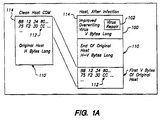
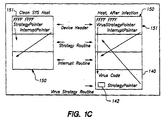
- Figs. 1A-1C are block diagrams of COM, EXE, and SYS files (110, 130, 150) before and after infection by a virus.
- Fig. 2 is a block diagram of an Emulation Repair System (200) in accordance with the present invention.
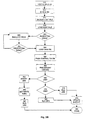
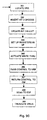
- Fig. 4 is a flow chart of a method employed by an overlay module (162) for using repair routine (226) within a virus (224) to repair an infected host file (220).
- Viruses In order to accomplish the mischief for which they are designed, software viruses must gain control of a computer's central processing unit (CPU). Viruses typically do this by attaching themselves to an executable file (host file) and modifying the executable image of the host file at its entry point to pass control of the CPU to the viral code. The virus conceals its presence by passing control back to the host file after it has run. Typically, the virus does this by restoring the instructions at the host file's entry point that the virus modified when it infected the host file, and passing control back to these instructions. Restoration occurs only in the executable image of the host file, not in the copy of the infected host file stored on disk. In DOS based systems, where the bulk of the software viruses have been found, the executable files are command (COM) files, executable (EXE) files, and system (SYS) files.
- COM command
- EXE executable
- SYS system
- COM file 110 may also be infected by a number of other strategies.
- virus 100 may be prepended to COM file 110 so that host bytes 112 follows virus 100.
- virus 100 may append itself to COM file 110, overwrite host bytes 112 at entry point 114 with a JMP statement to its address following COM file 110, and save overwritten host bytes 112 for running COM file 110 after virus 100 has run.
- EXE file 130 comprises a header 132 that includes basic information on the file.
- CS:IP host bytes 132
- SS:SP host bytes 134
- Figs. 1A-1C represent some but not all of the common strategies employed by various viruses 100, 120, 140 for infecting COM, EXE, and SYS files 110, 130, 150, respectively. These and additional infections strategies are discussed in greater detail in Nachenberg, A New Technique For Detecting Polymorphic Computer Viruses, Master Thesis, UCLA (1995).
- the infecting virus modifies the host file at its entry point to gain control of the processor and stores any host bytes that it modifies so the host file can be run after the infecting virus has finished.
- a file repair system In order to repair infected files 110, 130, 150, a file repair system must be able to locate host bytes 112, 132, 134, 152 in the virus, copy them to their proper location in the file, and truncate the virus from the host file. These repairs will only work if they are reflected to the back-up file that is stored on the computer disc, since the image of the host file in the virtual machine is not typically written back to the disc.
- Virus definition file 230 comprises an entry or virus definition 232 for each known virus.
- Each virus definition 232 contains information specific to a virus or a family of such viruses, including data necessary to decrypt the virus, if it is encrypted, to its static virus body.
- ERS 200 uses the virus type at input 204 as an index to an appropriate virus definition 232 in virus definition file 230.
- Virus definition 232 includes an index to an associated overlay file 262 appropriate for virus 224. If virus 224 is unencrypted, control of virtual processor 212 is passed directly to associated overlay module 262.
- [ViruslD] is a data field for a number that identifies the specific virus or virus strain that ERS 200 is being called upon to repair.
- [SigStart] and [SigEnd] bracket virus signatures, which are strings of bytes characteristic of the static virus body of virus 224.
- these virus signatures are typically the first instructions executed in the static virus body following decryption, and often start with a CALL$ instruction (E8 00 00 in 80x86 processor architecture).
- the virus signatures specified in virus definition 232 are used by emulation module 210 to decrypt encrypted files, as discussed in greater detail below.
- VirusExecutionCap specifies a maximum number of virus instructions necessary to fully decrypt the virus and reveal its static virus body. If more than this maximum number of instructions are emulated without detection of any of the specified virus signatures, the decryption phase of the process ceases and the repair phase commences.
- overlay module 262 identifies 424 the instruction following virus repair routine 226 and inserts 430 an INT 3 instruction at this location. Overlay module 262 also alters 434 the entry in LIVT 250 associated with INT 3 to point to a reentry point 266 in overlay repair routine 264, activates 440 write-thru mode, and passes 444 control of virtual processor 212 to the instruction with which virus repair routine 226 begins. Virus repair routine 226 executes 450 in virtual machine 216 until the INT 3 instruction is reached, at which point control is transferred 450 to reentry point 266 in overlay module 262.
- the system includes an emulator that creates a virtual machine for executing host file, virus, and repair routine instructions in isolation from the rest of the computer system.
- encrypted viruses are emulated under the guidance of a virus definition, until the static virus body is reached.
- a virus specific overlay module and a generic foundation module are loaded into the virtual machine, interrupts for communicating with the rest of the computer system are enabled, and control of the virtual machine is passed to the overlay module.
- the overlay module uses repair routines from the virus, foundation module, or overlay module, alone or in combination. to repair the virus-infected host file. Repairs made to the host file copy loaded in the virtual machine are reflected to the backup host file in the computer system using interrupts reserved especially for that purpose.
Landscapes
- Engineering & Computer Science (AREA)
- Computer Security & Cryptography (AREA)
- Theoretical Computer Science (AREA)
- Software Systems (AREA)
- Computer Hardware Design (AREA)
- General Engineering & Computer Science (AREA)
- Virology (AREA)
- Health & Medical Sciences (AREA)
- General Physics & Mathematics (AREA)
- Physics & Mathematics (AREA)
- General Health & Medical Sciences (AREA)
- Storage Device Security (AREA)
- Information Retrieval, Db Structures And Fs Structures Therefor (AREA)
- Test And Diagnosis Of Digital Computers (AREA)
Claims (20)
- Un système (200) de réparation d'un fichier informatique (220) infecté par un virus comprenant :dans lequel l'exécution de ladite réparation inclut la localisation des octets constituant l'hôte pour le virus (228) dans le fichier informatique infecté par le virus et inscrivant les octets constituant l'hôte pour le virus à des emplacements correspondant à des emplacements/de octet constituant l'hôte pour le virus dans le fichier informatique d'où ils ont été éliminés par le virus.un module d'émulation (210) incluant une machine virtuelle (216) vers laquelle le fichier informatique est chargé ;une routine de contrôle (218) du module d'émulation étant utilisable pour recevoir une information d'identité du virus identifiant le virus infectant et pour entrer l'information de l'identité sur un fichier de définition du virus (230) de la machine virtuelle, le fichier de définition du virus ayant une entrée respective (232) pour chaque pluralité de virus connus dans laquelle chaque entrée inclut une information de déchiffrage et un indicateur pour sélectionner un module de recouvrement spécifique du virus (260), et pour identifier l'entrée correspondant au virus infectant ;la routine de contrôle étant utilisable pour fournir à la machine virtuelle ladite information de déchiffrage sur le virus infectant en se référant à l'entrée dans le fichier de définition du virus ;la routine de contrôle étant en plus utilisable pour déterminer à partir de l'information de déchiffrage si le virus est chiffré et, le cas échéant, pour émuler le fichier informatique utilisant l'information de déchiffrage jusqu'à ce que le virus se déchiffre lui-même ;la routine de contrôle étant en plus utilisable pour charger dans la machine virtuelle un module de base (240) incluant des routines de réparation de la fonction générique (242) pour la réalisation de la réparation du fichier ;la routine de contrôle étant en plus utilisable pour charger dans la machine virtuelle une pluralité de modules de recouvrement (260) chacun incluant des instructions spécifiques des virus respectifs pour le contrôle la machine virtuelle pendant la réparation du fichier ;la routine de contrôle étant en plus utilisable pour sélectionner un module de recouvrement en se référant à l'entrée pour le virus infectant dans le fichier de définition du virus pour obtenir un indicateur du module de recouvrement sélectionné ;la routine de contrôle étant en plus utilisable pour passer le contrôle de la machine virtuelle au module de recouvrement sélectionné ; etle module de recouvrement sélectionné étant utilisable pour exécuter la réparation du fichier informatique infecté par le virus en utilisant une ou plusieurs routines de réparation sélectionnées en accord avec le contenu du module de recouvrement sélectionné et incluant au moins l'un parmi :(a) une des routines de réparation de la fonction générique sélectionnées ;(b) une routine de réparation du virus ; et(c) une routine de réparation spécifique du virus du module de recouvrement sélectionné ;
- Le système de la revendication 1, dans lequel l'information de déchiffrage comprend une pluralité de champs de signature du virus dans lesquels les octets caractéristiques du virus spécifié sont stockés après le déchiffrage.
- Le système de la revendication 2, dans lequel les octets caractéristiques des virus spécifiés sont des instructions apparaissant au point d'entrée ou près du point d'entrée du corps de virus statique du virus spécifié.
- Le système de la revendication 2 dans lequel les champs de signature du virus sont vides pour un virus non chiffré.
- Le système d'une quelconque précédente revendication, dans lequel la routine de contrôle du module d'émulation inclut le moyen de générer une copie de réserve du fichier informatique infecté par le virus et de charger une image représentée par mémoire de la copie de réserve dans la machine virtuelle.
- Le système de la revendication 5, dans lequel le module de recouvrement comprend une routine de recouvrement comprenant des instructions pour la localisation de la routine de réparation du virus dans le fichier infecté par le virus dans la machine virtuelle et la modification de la routine de réparation du virus et la table d'interruption du vecteur local pour retourner le contrôle de la machine virtuelle à la routine de recouvrement après que la routine de réparation du virus s'est exécuté.
- Le système de la revendication 6, dans lequel la table d'interruption du vecteur local une routine d'écriture simultanée pour renvoyer les changements de l'image virtuelle du fichier informatique infecté vers le fichier de secours et la routine de recouvrement comprend en plus des instructions pour l'activation de la fonction d'écriture simultanée préalablement au passage du contrôle de la machine virtuelle au code de réparation du virus.
- Le système d'une quelconque précédente revendication, dans lequel chaque entrée dans le fichier de définition du virus comprend en plus une limite supérieure de déchiffrage-émulation pour la spécification d'un nombre maximum d'instructions nécessaires au déchiffrage du virus spécifié.
- Le système d'une quelconque précédente revendication, dans lequel chaque entrée dans le fichier de définition du virus comprend en plus une limite supérieure de réparation-émulation pour la spécification d'un nombre maximum d'instructions nécessaires à la réparation du virus spécifié.
- Le système d'une quelconque précédente revendication, dans lequel les routines génériques de réparation du module de base comprennent une routine de somme de contrôle pour la vérification de l'identité des instructions dans un virus.
- Le système d'une quelconque précédente revendication, dans lequel les routines génériques de réparation du module de base incluent une routine de recherche de chaíne pour la localisation des instructions spécifiées dans un virus.
- Le système d'une quelconque précédente revendication, dans lequel les routines génériques de réparation du module de base incluent une routine pour l'écriture des octets à un premier emplacement dans la machine virtuelle vers un second emplacement dans la machine virtuelle.
- Le système d'une quelconque précédente revendication, dans lequel les routines génériques de réparation du module de base incluent une routine pour la copie des octets se trouvant à un premier emplacement dans la machine virtuelle vers un second emplacement dans le fichier de secours.
- Un procédé pour la réparation d'un fichier informatique infecté par un virus comprenant les étapes de :dans lequel ladite exécution de la réparation inclut la localisation des octets constituant l'hôte pour le virus (228) dans le fichier informatique infecté par le virus et l'inscription les octets constituant l'hôte pour le virus à des emplacements correspondant à des emplacements d'octets constituant l'hôte pour le virus dans le fichier informatique d'où ils ont été éliminés par le virus.chargement du fichier informatique (220) vers un module d'émulation (210) comprenant une machine virtuelle (216) ;une routine de contrôle (218) du module d'émulation (210) recevant l'information de l'identité du virus, identifiant le virus infectant et entrant l'information de l'identité sur un fichier de définition du virus (230) ayant une entrée respective (232) pour chaque pluralité de virus connus dans laquelle chaque entrée inclut une information de déchiffrage et un indicateur pour sélectionner un module de recouvrement spécifique du virus (260), et identifier l'entrée correspondant au virus infectant ;ladite routine de contrôle (218) fournissant à la machine virtuelle ladite information de déchiffrage sur le virus infectant en se référant à l'entrée dans le fichier de définition du virus ;ladite routine de contrôle (218) déterminant à partir de l'information de déchiffrage si le virus est chiffré et, le cas échéant, émulant le fichier informatique en utilisant l'information de déchiffrage jusqu'à ce que le virus se déchiffre lui-même ;ladite routine de contrôle (218) chargeant dans la machine virtuelle un module de base (240) incluant des routines génériques de réparation (242) pour la réalisation de la réparation du fichier ;ladite routine de contrôle (218) chargeant dans la machine une pluralité de modules de recouvrement (260) chacun incluant des instructions spécifiques des virus respectifs pour le contrôle de la machine virtuelle pendant la réparation du fichier ;sélectionnant un module de recouvrement en se référant à l'entrée pour le virus infectant dans le fichier de définition du virus pour obtenir un indicateur au module de recouvrement sélectionné ;passant le contrôle de la machine virtuelle au module de recouvrement sélectionné ; etexécutant la réparation du fichier informatique infecté par le virus sous le contrôle du module de recouvrement sélectionné en utilisant une ou plusieurs routines de réparation sélectionnée en accord avec le contenu du module de recouvrement sélectionné et incluant l'un parmi :(a) une des routines génériques de réparation sélectionnée ;(b) une routine de réparation du virus ; et(c) une routine de réparation spécifique du virus (262) du module de recouvrement sélectionné ;
- La méthode de la revendication 14, dans laquelle l'étape de fourniture comprend les sous-étapes de :réception de l'information de l'identité du virus d'un module de détection du virus ; etlocalisation d'une définition de virus associée à l'information de l'identité du virus ; etfournissant l'information de déchiffrage dans les champs sélectionnés à l'intérieur de la définition du virus associée.
- La méthode de la revendication 15, comprenant l'étape additionnelle d'identification du module de recouvrement approprié pour le virus dans un champ sélectionné de la définition du virus.
- La méthode de la revendication 14, dans laquelle l'étape d'émulation du fichier informatique infecté comprend les sous-étapes de :extraction d'un nombre d'octets sélectionné à partir du fichier informatique infecté ;comparant les octets extraits avec l'information de déchiffrage pour déterminer si les octets représentent une instruction sélectionnée apparaissant dans le virus quand il est décrypté ;indiquant que le déchiffrage est complet lorsque les octets extraits s'accordent avec une instruction sélectionnée ; etémulant une instruction représentée par les octets extraits et répétant l'extraction et comparant les étapes lorsque les octets extraits ne s'accordent pas avec une instruction sélectionnée.
- La méthode de la revendication 14, dans laquelle l'étape d'exécution comprend les sous-étapes de :localisation du code de réparation du virus dans le virus ;modification du code de réparation du virus pour retourner le contrôle au module de recouvrement lorsque le code de réparation du virus s'est exécuté ; etpassant le contrôle du processeur virtuel au code de réparation du virus.
- La méthode de la revendication 14, dans laquelle l'étape d'exécution comprend les sous-étapes de :localisation des octets constituant l'hôte pour le virus dans le virus ;détermination des emplacements pour les octets constituant l'hôte pour le virus dans le fichier constituant l'hôte pour le virus lorsqu'il n'est pas infecté: etappel des routines de réparation pour inscrire les octets constituant l'hôte pour le virus localisés aux emplacements de l'octet constituant l'hôte pour le virus dans le fichier constituant l'hôte pour le virus.
- Un support de données lisible sur ordinateur sur lequel est stocké un code de programme pour la réparation d'un fichier informatique infecté par le virus en accord avec la méthode d'une quelconque des revendications 14 à 19.
Applications Claiming Priority (3)
| Application Number | Priority Date | Filing Date | Title |
|---|---|---|---|
| US605285 | 1990-10-29 | ||
| US08/605,285 US6067410A (en) | 1996-02-09 | 1996-02-09 | Emulation repair system |
| PCT/US1997/001510 WO1997029425A2 (fr) | 1996-02-09 | 1997-02-03 | Systeme de reparation par emulation |
Publications (2)
| Publication Number | Publication Date |
|---|---|
| EP0880743A2 EP0880743A2 (fr) | 1998-12-02 |
| EP0880743B1 true EP0880743B1 (fr) | 2000-06-21 |
Family
ID=24423027
Family Applications (1)
| Application Number | Title | Priority Date | Filing Date |
|---|---|---|---|
| EP97904106A Expired - Lifetime EP0880743B1 (fr) | 1996-02-09 | 1997-02-03 | Systeme de reparation par emulation |
Country Status (6)
| Country | Link |
|---|---|
| US (1) | US6067410A (fr) |
| EP (1) | EP0880743B1 (fr) |
| AU (1) | AU1848597A (fr) |
| CA (1) | CA2244892C (fr) |
| DE (1) | DE69702335T2 (fr) |
| WO (1) | WO1997029425A2 (fr) |
Cited By (1)
| Publication number | Priority date | Publication date | Assignee | Title |
|---|---|---|---|---|
| EP1933248A1 (fr) * | 2006-12-12 | 2008-06-18 | secunet Security Networks Aktiengesellschaft | Procédé destiné à la transmission sécurisée de données dans un système informatique |
Families Citing this family (91)
| Publication number | Priority date | Publication date | Assignee | Title |
|---|---|---|---|---|
| US6401210B1 (en) * | 1998-09-23 | 2002-06-04 | Intel Corporation | Method of managing computer virus infected files |
| IL143573A0 (en) | 1998-12-09 | 2002-04-21 | Network Ice Corp | A method and apparatus for providing network and computer system security |
| US7389540B2 (en) * | 1999-02-03 | 2008-06-17 | Cybersoft, Inc. | Apparatus and methods for intercepting, examining and controlling code, data and files and their transfer |
| US7346929B1 (en) * | 1999-07-29 | 2008-03-18 | International Business Machines Corporation | Method and apparatus for auditing network security |
| US6543007B1 (en) * | 1999-10-28 | 2003-04-01 | General Electric Company | Process and system for configuring repair codes for diagnostics of machine malfunctions |
| US6851057B1 (en) | 1999-11-30 | 2005-02-01 | Symantec Corporation | Data driven detection of viruses |
| US8006243B2 (en) * | 1999-12-07 | 2011-08-23 | International Business Machines Corporation | Method and apparatus for remote installation of network drivers and software |
| US6954858B1 (en) | 1999-12-22 | 2005-10-11 | Kimberly Joyce Welborn | Computer virus avoidance system and mechanism |
| GB2353372B (en) * | 1999-12-24 | 2001-08-22 | F Secure Oyj | Remote computer virus scanning |
| US6971019B1 (en) | 2000-03-14 | 2005-11-29 | Symantec Corporation | Histogram-based virus detection |
| US7574740B1 (en) | 2000-04-28 | 2009-08-11 | International Business Machines Corporation | Method and system for intrusion detection in a computer network |
| WO2001084285A2 (fr) * | 2000-04-28 | 2001-11-08 | Internet Security Systems, Inc. | Procede et systeme de gestion d'informations de securite informatique |
| AU2001257400A1 (en) * | 2000-04-28 | 2001-11-12 | Internet Security Systems, Inc. | System and method for managing security events on a network |
| US6907396B1 (en) * | 2000-06-01 | 2005-06-14 | Networks Associates Technology, Inc. | Detecting computer viruses or malicious software by patching instructions into an emulator |
| US20040073617A1 (en) | 2000-06-19 | 2004-04-15 | Milliken Walter Clark | Hash-based systems and methods for detecting and preventing transmission of unwanted e-mail |
| US6901519B1 (en) * | 2000-06-22 | 2005-05-31 | Infobahn, Inc. | E-mail virus protection system and method |
| US7162649B1 (en) | 2000-06-30 | 2007-01-09 | Internet Security Systems, Inc. | Method and apparatus for network assessment and authentication |
| US7093239B1 (en) | 2000-07-14 | 2006-08-15 | Internet Security Systems, Inc. | Computer immune system and method for detecting unwanted code in a computer system |
| US7178166B1 (en) | 2000-09-19 | 2007-02-13 | Internet Security Systems, Inc. | Vulnerability assessment and authentication of a computer by a local scanner |
| US9027121B2 (en) * | 2000-10-10 | 2015-05-05 | International Business Machines Corporation | Method and system for creating a record for one or more computer security incidents |
| US7146305B2 (en) * | 2000-10-24 | 2006-12-05 | Vcis, Inc. | Analytical virtual machine |
| US7231440B1 (en) * | 2000-12-18 | 2007-06-12 | Mcafee, Inc. | System and method for distributing portable computer virus definition records with binary file conversion |
| US7130466B2 (en) | 2000-12-21 | 2006-10-31 | Cobion Ag | System and method for compiling images from a database and comparing the compiled images with known images |
| US7058667B2 (en) * | 2000-12-27 | 2006-06-06 | Microsoft Corporation | Method and system for creating and maintaining version-specific properties in a file |
| US7340776B2 (en) * | 2001-01-31 | 2008-03-04 | International Business Machines Corporation | Method and system for configuring and scheduling security audits of a computer network |
| US6898712B2 (en) * | 2001-02-20 | 2005-05-24 | Networks Associates Technology, Inc. | Test driver ordering |
| US7404212B2 (en) * | 2001-03-06 | 2008-07-22 | Cybersoft, Inc. | Apparatus and methods for intercepting, examining and controlling code, data and files and their transfer |
| US7114184B2 (en) | 2001-03-30 | 2006-09-26 | Computer Associates Think, Inc. | System and method for restoring computer systems damaged by a malicious computer program |
| US7010696B1 (en) | 2001-03-30 | 2006-03-07 | Mcafee, Inc. | Method and apparatus for predicting the incidence of a virus |
| US20030167287A1 (en) * | 2001-04-11 | 2003-09-04 | Karl Forster | Information protection system |
| CN1147795C (zh) * | 2001-04-29 | 2004-04-28 | 北京瑞星科技股份有限公司 | 检测和清除已知及未知计算机病毒的方法、系统 |
| US7210041B1 (en) * | 2001-04-30 | 2007-04-24 | Mcafee, Inc. | System and method for identifying a macro virus family using a macro virus definitions database |
| US7237264B1 (en) | 2001-06-04 | 2007-06-26 | Internet Security Systems, Inc. | System and method for preventing network misuse |
| US20020188649A1 (en) * | 2001-06-12 | 2002-12-12 | Ron Karim | Mechanism for safely executing an untrusted program |
| US7657419B2 (en) * | 2001-06-19 | 2010-02-02 | International Business Machines Corporation | Analytical virtual machine |
| IL160757A0 (en) * | 2001-09-14 | 2004-08-31 | Computer Ass Think Inc | Virus detection system |
| US7356736B2 (en) * | 2001-09-25 | 2008-04-08 | Norman Asa | Simulated computer system for monitoring of software performance |
| US7310818B1 (en) * | 2001-10-25 | 2007-12-18 | Mcafee, Inc. | System and method for tracking computer viruses |
| US7673137B2 (en) * | 2002-01-04 | 2010-03-02 | International Business Machines Corporation | System and method for the managed security control of processes on a computer system |
| US7607171B1 (en) | 2002-01-17 | 2009-10-20 | Avinti, Inc. | Virus detection by executing e-mail code in a virtual machine |
| US9652613B1 (en) | 2002-01-17 | 2017-05-16 | Trustwave Holdings, Inc. | Virus detection by executing electronic message code in a virtual machine |
| US7565517B1 (en) | 2002-04-03 | 2009-07-21 | Symantec Corporation | Retargeting a captured image to new hardware while in a pre-boot environment |
| CN1293477C (zh) * | 2002-04-03 | 2007-01-03 | 鲍尔凯斯特公司 | 为计算机和存储资源的管理使用分离的映像 |
| US7290282B1 (en) * | 2002-04-08 | 2007-10-30 | Symantec Corporation | Reducing false positive computer virus detections |
| US7103913B2 (en) * | 2002-05-08 | 2006-09-05 | International Business Machines Corporation | Method and apparatus for determination of the non-replicative behavior of a malicious program |
| US7370360B2 (en) * | 2002-05-13 | 2008-05-06 | International Business Machines Corporation | Computer immune system and method for detecting unwanted code in a P-code or partially compiled native-code program executing within a virtual machine |
| US7409717B1 (en) * | 2002-05-23 | 2008-08-05 | Symantec Corporation | Metamorphic computer virus detection |
| US8069480B1 (en) * | 2002-09-30 | 2011-11-29 | Mcafee, Inc. | Method and system for defining a safe storage area for use in recovering a computer system |
| US7013483B2 (en) * | 2003-01-03 | 2006-03-14 | Aladdin Knowledge Systems Ltd. | Method for emulating an executable code in order to detect maliciousness |
| US7913303B1 (en) | 2003-01-21 | 2011-03-22 | International Business Machines Corporation | Method and system for dynamically protecting a computer system from attack |
| US7657938B2 (en) * | 2003-10-28 | 2010-02-02 | International Business Machines Corporation | Method and system for protecting computer networks by altering unwanted network data traffic |
| US7437764B1 (en) * | 2003-11-14 | 2008-10-14 | Symantec Corporation | Vulnerability assessment of disk images |
| US7971254B1 (en) * | 2004-01-28 | 2011-06-28 | Netgear, Inc. | Method and system for low-latency detection of viruses transmitted over a network |
| US7721334B2 (en) | 2004-01-30 | 2010-05-18 | Microsoft Corporation | Detection of code-free files |
| US7370233B1 (en) * | 2004-05-21 | 2008-05-06 | Symantec Corporation | Verification of desired end-state using a virtual machine environment |
| US7490268B2 (en) * | 2004-06-01 | 2009-02-10 | The Trustees Of Columbia University In The City Of New York | Methods and systems for repairing applications |
| US20060137013A1 (en) * | 2004-12-06 | 2006-06-22 | Simon Lok | Quarantine filesystem |
| US7636856B2 (en) * | 2004-12-06 | 2009-12-22 | Microsoft Corporation | Proactive computer malware protection through dynamic translation |
| US20060179484A1 (en) * | 2005-02-09 | 2006-08-10 | Scrimsher John P | Remediating effects of an undesired application |
| US8046834B2 (en) * | 2005-03-30 | 2011-10-25 | Alcatel Lucent | Method of polymorphic detection |
| US7784098B1 (en) * | 2005-07-14 | 2010-08-24 | Trend Micro, Inc. | Snapshot and restore technique for computer system recovery |
| US8161548B1 (en) | 2005-08-15 | 2012-04-17 | Trend Micro, Inc. | Malware detection using pattern classification |
| US7934229B1 (en) * | 2005-12-29 | 2011-04-26 | Symantec Corporation | Generating options for repairing a computer infected with malicious software |
| US20080016572A1 (en) * | 2006-07-12 | 2008-01-17 | Microsoft Corporation | Malicious software detection via memory analysis |
| US7797743B2 (en) * | 2007-02-26 | 2010-09-14 | Microsoft Corporation | File conversion in restricted process |
| US8856782B2 (en) | 2007-03-01 | 2014-10-07 | George Mason Research Foundation, Inc. | On-demand disposable virtual work system |
| US8011010B2 (en) * | 2007-04-17 | 2011-08-30 | Microsoft Corporation | Using antimalware technologies to perform offline scanning of virtual machine images |
| US8321936B1 (en) | 2007-05-30 | 2012-11-27 | M86 Security, Inc. | System and method for malicious software detection in multiple protocols |
| US8176477B2 (en) | 2007-09-14 | 2012-05-08 | International Business Machines Corporation | Method, system and program product for optimizing emulation of a suspected malware |
| US20090241192A1 (en) * | 2008-03-21 | 2009-09-24 | Thomas Andrew J | Virtual machine configuration sharing between host and virtual machines and between virtual machines |
| US20090241194A1 (en) * | 2008-03-21 | 2009-09-24 | Andrew James Thomas | Virtual machine configuration sharing between host and virtual machines and between virtual machines |
| US8060476B1 (en) | 2008-07-14 | 2011-11-15 | Quest Software, Inc. | Backup systems and methods for a virtual computing environment |
| US8046550B2 (en) | 2008-07-14 | 2011-10-25 | Quest Software, Inc. | Systems and methods for performing backup operations of virtual machine files |
| US9098698B2 (en) | 2008-09-12 | 2015-08-04 | George Mason Research Foundation, Inc. | Methods and apparatus for application isolation |
| US8429649B1 (en) | 2008-09-25 | 2013-04-23 | Quest Software, Inc. | Systems and methods for data management in a virtual computing environment |
| KR101197182B1 (ko) * | 2008-12-23 | 2012-11-02 | 한국전자통신연구원 | 컴퓨터 시스템에서의 해킹 방지 장치 및 방법 |
| US8996468B1 (en) | 2009-04-17 | 2015-03-31 | Dell Software Inc. | Block status mapping system for reducing virtual machine backup storage |
| US8839422B2 (en) | 2009-06-30 | 2014-09-16 | George Mason Research Foundation, Inc. | Virtual browsing environment |
| US9778946B2 (en) * | 2009-08-07 | 2017-10-03 | Dell Software Inc. | Optimized copy of virtual machine storage files |
| US9569446B1 (en) | 2010-06-08 | 2017-02-14 | Dell Software Inc. | Cataloging system for image-based backup |
| US8898114B1 (en) | 2010-08-27 | 2014-11-25 | Dell Software Inc. | Multitier deduplication systems and methods |
| WO2013082437A1 (fr) | 2011-12-02 | 2013-06-06 | Invincia, Inc. | Procédés et appareil de contrôle et de détection de contenu malveillant à l'aide d'un environnement de bac à sable |
| US9311375B1 (en) | 2012-02-07 | 2016-04-12 | Dell Software Inc. | Systems and methods for compacting a virtual machine file |
| US9002798B1 (en) * | 2013-02-11 | 2015-04-07 | Symantec Corporation | Systems and methods for remedying corrupt backup images of host devices |
| CN104239163B (zh) * | 2013-06-19 | 2016-04-13 | 腾讯科技(深圳)有限公司 | 软件修复方法和装置 |
| RU2553056C2 (ru) | 2013-10-24 | 2015-06-10 | Закрытое акционерное общество "Лаборатория Касперского" | Система и способ сохранения состояния эмулятора и его последующего восстановления |
| US20160006754A1 (en) * | 2014-07-01 | 2016-01-07 | Mcafee, Inc. | Secure enclave-rendered contents |
| US9009836B1 (en) | 2014-07-17 | 2015-04-14 | Kaspersky Lab Zao | Security architecture for virtual machines |
| US9742796B1 (en) * | 2015-09-18 | 2017-08-22 | Palo Alto Networks, Inc. | Automatic repair of corrupt files for a detonation engine |
| CN112580037B (zh) * | 2019-09-30 | 2023-12-12 | 奇安信安全技术(珠海)有限公司 | 病毒文件数据的修复方法、装置及设备 |
| CN116192489A (zh) * | 2023-02-14 | 2023-05-30 | 天津丈八网络安全科技有限公司 | 基于网络建模的计算机病毒感染与扩散仿真系统及方法 |
Family Cites Families (16)
| Publication number | Priority date | Publication date | Assignee | Title |
|---|---|---|---|---|
| US5321840A (en) * | 1988-05-05 | 1994-06-14 | Transaction Technology, Inc. | Distributed-intelligence computer system including remotely reconfigurable, telephone-type user terminal |
| GB2222899B (en) * | 1988-08-31 | 1993-04-14 | Anthony Morris Rose | Securing a computer against undesired write operations or from a mass storage device |
| US4975950A (en) * | 1988-11-03 | 1990-12-04 | Lentz Stephen A | System and method of protecting integrity of computer data and software |
| US5121345A (en) * | 1988-11-03 | 1992-06-09 | Lentz Stephen A | System and method for protecting integrity of computer data and software |
| US5319776A (en) * | 1990-04-19 | 1994-06-07 | Hilgraeve Corporation | In transit detection of computer virus with safeguard |
| US5408642A (en) * | 1991-05-24 | 1995-04-18 | Symantec Corporation | Method for recovery of a computer program infected by a computer virus |
| US5421006A (en) * | 1992-05-07 | 1995-05-30 | Compaq Computer Corp. | Method and apparatus for assessing integrity of computer system software |
| US5359659A (en) * | 1992-06-19 | 1994-10-25 | Doren Rosenthal | Method for securing software against corruption by computer viruses |
| US5440723A (en) * | 1993-01-19 | 1995-08-08 | International Business Machines Corporation | Automatic immune system for computers and computer networks |
| US5398196A (en) * | 1993-07-29 | 1995-03-14 | Chambers; David A. | Method and apparatus for detection of computer viruses |
| CA2191205A1 (fr) * | 1994-06-01 | 1995-12-07 | John Schnurer | Piege a virus informatique |
| US5442699A (en) * | 1994-11-21 | 1995-08-15 | International Business Machines Corporation | Searching for patterns in encrypted data |
| US5485575A (en) * | 1994-11-21 | 1996-01-16 | International Business Machines Corporation | Automatic analysis of a computer virus structure and means of attachment to its hosts |
| US5613002A (en) * | 1994-11-21 | 1997-03-18 | International Business Machines Corporation | Generic disinfection of programs infected with a computer virus |
| US5559960A (en) * | 1995-04-21 | 1996-09-24 | Lettvin; Jonathan D. | Software anti-virus facility |
| US5623600A (en) * | 1995-09-26 | 1997-04-22 | Trend Micro, Incorporated | Virus detection and removal apparatus for computer networks |
-
1996
- 1996-02-09 US US08/605,285 patent/US6067410A/en not_active Expired - Lifetime
-
1997
- 1997-02-03 AU AU18485/97A patent/AU1848597A/en not_active Abandoned
- 1997-02-03 WO PCT/US1997/001510 patent/WO1997029425A2/fr not_active Ceased
- 1997-02-03 EP EP97904106A patent/EP0880743B1/fr not_active Expired - Lifetime
- 1997-02-03 DE DE69702335T patent/DE69702335T2/de not_active Expired - Lifetime
- 1997-02-03 CA CA002244892A patent/CA2244892C/fr not_active Expired - Lifetime
Cited By (1)
| Publication number | Priority date | Publication date | Assignee | Title |
|---|---|---|---|---|
| EP1933248A1 (fr) * | 2006-12-12 | 2008-06-18 | secunet Security Networks Aktiengesellschaft | Procédé destiné à la transmission sécurisée de données dans un système informatique |
Also Published As
| Publication number | Publication date |
|---|---|
| AU1848597A (en) | 1997-08-28 |
| DE69702335T2 (de) | 2000-11-30 |
| WO1997029425A3 (fr) | 1997-09-25 |
| CA2244892C (fr) | 2002-05-21 |
| CA2244892A1 (fr) | 1997-08-14 |
| EP0880743A2 (fr) | 1998-12-02 |
| WO1997029425A2 (fr) | 1997-08-14 |
| DE69702335D1 (de) | 2000-07-27 |
| US6067410A (en) | 2000-05-23 |
Similar Documents
| Publication | Publication Date | Title |
|---|---|---|
| US6067410A (en) | Emulation repair system | |
| CA2304163C (fr) | Methode heuristique dynamique de detection des virus informatiques | |
| EP0941512B1 (fr) | Antememoire stockant des etats, destinee a un logiciel antivirus | |
| US5999732A (en) | Techniques for reducing the cost of dynamic class initialization checks in compiled code | |
| CA2285437C (fr) | Gestion des anomalies au cours d'une recherche antivirus en mode emulation | |
| US9275229B2 (en) | System to bypass a compromised mass storage device driver stack and method thereof | |
| US7937764B2 (en) | Metamorphic computer virus detection | |
| US7418729B2 (en) | Heuristic detection of malicious computer code by page tracking | |
| US20050108562A1 (en) | Technique for detecting executable malicious code using a combination of static and dynamic analyses | |
| US5257381A (en) | Method of intercepting a global function of a network operating system and calling a monitoring function | |
| US6704923B1 (en) | System and method for pre-verification of stack usage in bytecode program loops | |
| WO1998003916A1 (fr) | Emulation de files d'attente de preextraction | |
| US20030005168A1 (en) | System and method for auditing system call events with system call wrappers | |
| JP2004517390A (ja) | 解析仮想マシン | |
| US8312202B1 (en) | Kernel acceleration technology for virtual machine optimization | |
| JP2003507811A (ja) | ダウンロードされたプログラム断片を管理するためのプロトコル、ダウンロードされたプログラム断片を検証および変換する方法、および対応するシステム | |
| US6481007B1 (en) | Optimizing parameter passing | |
| WO2005022388A1 (fr) | Techniques de vidage de fichier de memoire multiplatforme pendant une translation binaire dynamique | |
| US8806474B2 (en) | Computer-hardware, life-extension apparatus and method | |
| US20070294675A1 (en) | Method and apparatus for handling exceptions during binding to native code | |
| Ször | Attacks On Win32–Part II | |
| US20120096554A1 (en) | Malware identification | |
| US20080222215A1 (en) | Method for Deleting Virus Program and Method to Get Back the Data Destroyed by the Virus | |
| KR102941355B1 (ko) | 미끼 프로그램과 에뮬레이터를 활용한 취약점 공격 탐지 장치 및 방법 | |
| Arnold | Ksplice: An automatic system for rebootless kernel security updates |
Legal Events
| Date | Code | Title | Description |
|---|---|---|---|
| PUAI | Public reference made under article 153(3) epc to a published international application that has entered the european phase |
Free format text: ORIGINAL CODE: 0009012 |
|
| 17P | Request for examination filed |
Effective date: 19980820 |
|
| AK | Designated contracting states |
Kind code of ref document: A2 Designated state(s): DE FR GB |
|
| RBV | Designated contracting states (corrected) |
Designated state(s): FR GB |
|
| 17Q | First examination report despatched |
Effective date: 19981127 |
|
| REG | Reference to a national code |
Ref country code: DE Ref legal event code: 8566 |
|
| GRAG | Despatch of communication of intention to grant |
Free format text: ORIGINAL CODE: EPIDOS AGRA |
|
| GRAG | Despatch of communication of intention to grant |
Free format text: ORIGINAL CODE: EPIDOS AGRA |
|
| GRAH | Despatch of communication of intention to grant a patent |
Free format text: ORIGINAL CODE: EPIDOS IGRA |
|
| RBV | Designated contracting states (corrected) |
Designated state(s): DE FR GB |
|
| RIN1 | Information on inventor provided before grant (corrected) |
Inventor name: NACHENBERG, CARCY |
|
| RIN1 | Information on inventor provided before grant (corrected) |
Inventor name: NACHENBERG, CAREY |
|
| GRAH | Despatch of communication of intention to grant a patent |
Free format text: ORIGINAL CODE: EPIDOS IGRA |
|
| GRAA | (expected) grant |
Free format text: ORIGINAL CODE: 0009210 |
|
| AK | Designated contracting states |
Kind code of ref document: B1 Designated state(s): DE FR GB |
|
| ET | Fr: translation filed | ||
| REF | Corresponds to: |
Ref document number: 69702335 Country of ref document: DE Date of ref document: 20000727 |
|
| PLBE | No opposition filed within time limit |
Free format text: ORIGINAL CODE: 0009261 |
|
| STAA | Information on the status of an ep patent application or granted ep patent |
Free format text: STATUS: NO OPPOSITION FILED WITHIN TIME LIMIT |
|
| 26N | No opposition filed | ||
| REG | Reference to a national code |
Ref country code: GB Ref legal event code: IF02 |
|
| REG | Reference to a national code |
Ref country code: FR Ref legal event code: PLFP Year of fee payment: 20 |
|
| PGFP | Annual fee paid to national office [announced via postgrant information from national office to epo] |
Ref country code: DE Payment date: 20160121 Year of fee payment: 20 |
|
| PGFP | Annual fee paid to national office [announced via postgrant information from national office to epo] |
Ref country code: GB Payment date: 20160127 Year of fee payment: 20 Ref country code: FR Payment date: 20160121 Year of fee payment: 20 |
|
| REG | Reference to a national code |
Ref country code: DE Ref legal event code: R071 Ref document number: 69702335 Country of ref document: DE |
|
| REG | Reference to a national code |
Ref country code: GB Ref legal event code: PE20 Expiry date: 20170202 |
|
| PG25 | Lapsed in a contracting state [announced via postgrant information from national office to epo] |
Ref country code: GB Free format text: LAPSE BECAUSE OF EXPIRATION OF PROTECTION Effective date: 20170202 |