EP0881838A1 - Korrektur der vorgegebenen Zeit - Google Patents
Korrektur der vorgegebenen Zeit Download PDFInfo
- Publication number
- EP0881838A1 EP0881838A1 EP98303138A EP98303138A EP0881838A1 EP 0881838 A1 EP0881838 A1 EP 0881838A1 EP 98303138 A EP98303138 A EP 98303138A EP 98303138 A EP98303138 A EP 98303138A EP 0881838 A1 EP0881838 A1 EP 0881838A1
- Authority
- EP
- European Patent Office
- Prior art keywords
- bitstream
- buffer
- time stamp
- control signal
- timing
- Prior art date
- Legal status (The legal status is an assumption and is not a legal conclusion. Google has not performed a legal analysis and makes no representation as to the accuracy of the status listed.)
- Granted
Links
Images




Classifications
-
- H—ELECTRICITY
- H04—ELECTRIC COMMUNICATION TECHNIQUE
- H04N—PICTORIAL COMMUNICATION, e.g. TELEVISION
- H04N21/00—Selective content distribution, e.g. interactive television or video on demand [VOD]
- H04N21/40—Client devices specifically adapted for the reception of or interaction with content, e.g. set-top-box [STB]; Operations thereof
- H04N21/43—Processing of content or additional data, e.g. demultiplexing additional data from a digital video stream; Elementary client operations, e.g. monitoring of home network or synchronising decoder's clock; Client middleware
- H04N21/4302—Content synchronisation processes, e.g. decoder synchronisation
- H04N21/4305—Synchronising client clock from received content stream, e.g. locking decoder clock with encoder clock, extraction of the PCR packets
-
- H—ELECTRICITY
- H04—ELECTRIC COMMUNICATION TECHNIQUE
- H04N—PICTORIAL COMMUNICATION, e.g. TELEVISION
- H04N21/00—Selective content distribution, e.g. interactive television or video on demand [VOD]
- H04N21/20—Servers specifically adapted for the distribution of content, e.g. VOD servers; Operations thereof
- H04N21/23—Processing of content or additional data; Elementary server operations; Server middleware
- H04N21/234—Processing of video elementary streams, e.g. splicing of video streams or manipulating encoded video stream scene graphs
- H04N21/23424—Processing of video elementary streams, e.g. splicing of video streams or manipulating encoded video stream scene graphs involving splicing one content stream with another content stream, e.g. for inserting or substituting an advertisement
-
- H—ELECTRICITY
- H04—ELECTRIC COMMUNICATION TECHNIQUE
- H04N—PICTORIAL COMMUNICATION, e.g. TELEVISION
- H04N21/00—Selective content distribution, e.g. interactive television or video on demand [VOD]
- H04N21/20—Servers specifically adapted for the distribution of content, e.g. VOD servers; Operations thereof
- H04N21/23—Processing of content or additional data; Elementary server operations; Server middleware
- H04N21/236—Assembling of a multiplex stream, e.g. transport stream, by combining a video stream with other content or additional data, e.g. inserting a URL [Uniform Resource Locator] into a video stream, multiplexing software data into a video stream; Remultiplexing of multiplex streams; Insertion of stuffing bits into the multiplex stream, e.g. to obtain a constant bit-rate; Assembling of a packetised elementary stream
- H04N21/23605—Creation or processing of packetized elementary streams [PES]
-
- H—ELECTRICITY
- H04—ELECTRIC COMMUNICATION TECHNIQUE
- H04N—PICTORIAL COMMUNICATION, e.g. TELEVISION
- H04N21/00—Selective content distribution, e.g. interactive television or video on demand [VOD]
- H04N21/20—Servers specifically adapted for the distribution of content, e.g. VOD servers; Operations thereof
- H04N21/23—Processing of content or additional data; Elementary server operations; Server middleware
- H04N21/236—Assembling of a multiplex stream, e.g. transport stream, by combining a video stream with other content or additional data, e.g. inserting a URL [Uniform Resource Locator] into a video stream, multiplexing software data into a video stream; Remultiplexing of multiplex streams; Insertion of stuffing bits into the multiplex stream, e.g. to obtain a constant bit-rate; Assembling of a packetised elementary stream
- H04N21/23608—Remultiplexing multiplex streams, e.g. involving modifying time stamps or remapping the packet identifiers
-
- H—ELECTRICITY
- H04—ELECTRIC COMMUNICATION TECHNIQUE
- H04N—PICTORIAL COMMUNICATION, e.g. TELEVISION
- H04N21/00—Selective content distribution, e.g. interactive television or video on demand [VOD]
- H04N21/20—Servers specifically adapted for the distribution of content, e.g. VOD servers; Operations thereof
- H04N21/23—Processing of content or additional data; Elementary server operations; Server middleware
- H04N21/242—Synchronisation processes, e.g. processing of PCR [Programme Clock References]
-
- H—ELECTRICITY
- H04—ELECTRIC COMMUNICATION TECHNIQUE
- H04N—PICTORIAL COMMUNICATION, e.g. TELEVISION
- H04N21/00—Selective content distribution, e.g. interactive television or video on demand [VOD]
- H04N21/40—Client devices specifically adapted for the reception of or interaction with content, e.g. set-top-box [STB]; Operations thereof
- H04N21/43—Processing of content or additional data, e.g. demultiplexing additional data from a digital video stream; Elementary client operations, e.g. monitoring of home network or synchronising decoder's clock; Client middleware
- H04N21/4302—Content synchronisation processes, e.g. decoder synchronisation
- H04N21/4307—Synchronising the rendering of multiple content streams or additional data on devices, e.g. synchronisation of audio on a mobile phone with the video output on the TV screen
- H04N21/43072—Synchronising the rendering of multiple content streams or additional data on devices, e.g. synchronisation of audio on a mobile phone with the video output on the TV screen of multiple content streams on the same device
-
- H—ELECTRICITY
- H04—ELECTRIC COMMUNICATION TECHNIQUE
- H04N—PICTORIAL COMMUNICATION, e.g. TELEVISION
- H04N21/00—Selective content distribution, e.g. interactive television or video on demand [VOD]
- H04N21/40—Client devices specifically adapted for the reception of or interaction with content, e.g. set-top-box [STB]; Operations thereof
- H04N21/43—Processing of content or additional data, e.g. demultiplexing additional data from a digital video stream; Elementary client operations, e.g. monitoring of home network or synchronising decoder's clock; Client middleware
- H04N21/434—Disassembling of a multiplex stream, e.g. demultiplexing audio and video streams, extraction of additional data from a video stream; Remultiplexing of multiplex streams; Extraction or processing of SI; Disassembling of packetised elementary stream
- H04N21/4343—Extraction or processing of packetized elementary streams [PES]
-
- H—ELECTRICITY
- H04—ELECTRIC COMMUNICATION TECHNIQUE
- H04N—PICTORIAL COMMUNICATION, e.g. TELEVISION
- H04N21/00—Selective content distribution, e.g. interactive television or video on demand [VOD]
- H04N21/40—Client devices specifically adapted for the reception of or interaction with content, e.g. set-top-box [STB]; Operations thereof
- H04N21/43—Processing of content or additional data, e.g. demultiplexing additional data from a digital video stream; Elementary client operations, e.g. monitoring of home network or synchronising decoder's clock; Client middleware
- H04N21/434—Disassembling of a multiplex stream, e.g. demultiplexing audio and video streams, extraction of additional data from a video stream; Remultiplexing of multiplex streams; Extraction or processing of SI; Disassembling of packetised elementary stream
- H04N21/4344—Remultiplexing of multiplex streams, e.g. by modifying time stamps or remapping the packet identifiers
-
- H—ELECTRICITY
- H04—ELECTRIC COMMUNICATION TECHNIQUE
- H04N—PICTORIAL COMMUNICATION, e.g. TELEVISION
- H04N21/00—Selective content distribution, e.g. interactive television or video on demand [VOD]
- H04N21/40—Client devices specifically adapted for the reception of or interaction with content, e.g. set-top-box [STB]; Operations thereof
- H04N21/43—Processing of content or additional data, e.g. demultiplexing additional data from a digital video stream; Elementary client operations, e.g. monitoring of home network or synchronising decoder's clock; Client middleware
- H04N21/44—Processing of video elementary streams, e.g. splicing a video clip retrieved from local storage with an incoming video stream or rendering scenes according to encoded video stream scene graphs
- H04N21/44004—Processing of video elementary streams, e.g. splicing a video clip retrieved from local storage with an incoming video stream or rendering scenes according to encoded video stream scene graphs involving video buffer management, e.g. video decoder buffer or video display buffer
-
- H—ELECTRICITY
- H04—ELECTRIC COMMUNICATION TECHNIQUE
- H04N—PICTORIAL COMMUNICATION, e.g. TELEVISION
- H04N21/00—Selective content distribution, e.g. interactive television or video on demand [VOD]
- H04N21/40—Client devices specifically adapted for the reception of or interaction with content, e.g. set-top-box [STB]; Operations thereof
- H04N21/43—Processing of content or additional data, e.g. demultiplexing additional data from a digital video stream; Elementary client operations, e.g. monitoring of home network or synchronising decoder's clock; Client middleware
- H04N21/44—Processing of video elementary streams, e.g. splicing a video clip retrieved from local storage with an incoming video stream or rendering scenes according to encoded video stream scene graphs
- H04N21/44016—Processing of video elementary streams, e.g. splicing a video clip retrieved from local storage with an incoming video stream or rendering scenes according to encoded video stream scene graphs involving splicing one content stream with another content stream, e.g. for substituting a video clip
-
- H—ELECTRICITY
- H04—ELECTRIC COMMUNICATION TECHNIQUE
- H04N—PICTORIAL COMMUNICATION, e.g. TELEVISION
- H04N7/00—Television systems
- H04N7/24—Systems for the transmission of television signals using pulse code modulation
- H04N7/52—Systems for transmission of a pulse code modulated video signal with one or more other pulse code modulated signals, e.g. an audio signal or a synchronizing signal
-
- H—ELECTRICITY
- H04—ELECTRIC COMMUNICATION TECHNIQUE
- H04N—PICTORIAL COMMUNICATION, e.g. TELEVISION
- H04N21/00—Selective content distribution, e.g. interactive television or video on demand [VOD]
- H04N21/40—Client devices specifically adapted for the reception of or interaction with content, e.g. set-top-box [STB]; Operations thereof
- H04N21/41—Structure of client; Structure of client peripherals
- H04N21/426—Internal components of the client ; Characteristics thereof
-
- H—ELECTRICITY
- H04—ELECTRIC COMMUNICATION TECHNIQUE
- H04N—PICTORIAL COMMUNICATION, e.g. TELEVISION
- H04N5/00—Details of television systems
- H04N5/04—Synchronising
Definitions
- MPEG Moving Pictures Experts Group
- MPEG-1 refers to ISO/IEC standards 11172, incorporated herein by reference.
- MPEG-2 refers to ISO/IEC standards 13818, incorporated herein by reference.
- a compressed digital video system is described in the Advanced Television Systems Committee (ATSC) digital television standard document A/53, incorporated herein by reference.
- ATSC Advanced Television Systems Committee
- bitstream generators used for compliance or other tests, usually loop a bitstream endlessly. This is a form of splicing, i.e., joining of the end of the bitstream to the beginning of the bit-stream.
- the presentation time stamp (PTS) and the decode time stamp (DTS) must be retimed if the transport stream included PES streams.
- Prior art retiming systems include a 27MHz (local) station clock which is utilized by a local PCR and PCRB generator.
- a multiplexed transport stream is received and the PTS, DTS and PCR timing information is detected and replaced by locally generated PTS, DTS and PCR timing information to produce a retimed transport stream.
- the transport streams comprising the multiplexed transport stream are constant bitrate data streams and the resultant transport stream is likewise a constant bitrate data stream.
- Another drawback is that the operation of the system can lead to an irregularly spaced PCR packet at the transition of the switching process (i.e., not ATSC compliant).
- merely retiming the PTS and DTS is insufficient to insure proper buffer conditions at a far end subscriber decoder.
- An illustrative embodiment of the present invention seeks to provide a retiming method and apparatus which allows for the insertion of opportunistic data while maintaining timing compliance. Another embodiment seeks to provide a retiming method and apparatus which insures proper buffer conditions at the far-end subscriber decoder.
- One aspect of the present invention provides a retiming apparatus and method which receives an information streams, such as variable length packetized elementary streams, decodes the timing portions of the received streams using a local timing reference, calculates new timing information using the decoded timing information and timing information related to the local timing reference, and retimes the streams using the calculated timing information.
- the retimed streams are re-encoded to form a stream which, when decoded by a decoder, will reproduce the desired information without errors induced by timing discontinuities.
- the invention receives an information stream comprising a plurality of timing portions and associated payload portions, the timing portions being necessary for decoding said associated payload portions to produce a program at a decoder.
- the invention decodes each timing portion of the information stream, determines a duration parameter of a payload portion associated with the decoded timing portion and recodes the timing portion of said information stream using the duration parameter and a local reference time parameter.
- FIG. 1 shows a block diagram of a transport layer switching and retiming system 100 according to the invention.
- the system 100 is illustrated using a transport layer which is compliant with the ATSC digital television system and is useful in, e.g., a television studio or station environment.
- a live video and audio packetized elementary stream (PES) encoder 110 e.g., a camera or remote audio/video feed
- PES packetized elementary stream
- Transport stream encoder 115 converts PES S1 into a first transport stream S2T which is coupled to a transport stream switcher 130.
- Transport stream switcher 130 receives a second transport stream S3T from a transport stream server 120 (e.g., a video disk).
- a transport stream server 120 e.g., a video disk
- the transport stream switcher 130 selects one of the two transport streams S2T, S3T, and sends it as stream S4T to a transport stream decoder 135.
- the transport stream switcher 130 may include more than two input streams and that the input streams may come from a variety of sources, e.g., bitstream servers, active encoders (live camera) or remote feeds, bitstream generators or the like.
- the input streams are not likely to share information such as program clock reference (PCR), presentation time stamp (PTS) and decode time stamp (DTS) timing information.
- PCR program clock reference
- PTS presentation time stamp
- DTS decode time stamp
- the transport stream decoder 135 decodes the selected S4T transport stream to produce a packetized elementary stream S4P.
- a PES demultiplexer 137 demultiplexes stream S4P, if necessary, to produce audio PES S4PA and video PES S4PV.
- the audio S4PA and video S4PV streams are coupled to, respectively, an audio PTS retiming unit 300A and a video PTS-DTS retiming unit 300V.
- Video retiming unit 300V decodes and retimes the old presentation time stamps (PTS) and decode time stamps (DTS) of the video stream using new timing information derived from a Program Clock Reference Base (PCRB) signal S9.
- Audio retiming unit 300A retimes the old PTS of the audio stream using new timing information derived from the PCRB signal S9.
- the selected transport stream S4T is decoded to the PES layer so that the PTS and DTS of the included PES streams can be over written with net relative time extracted from a delayed version of the PCRB.
- Decoding to the PES layer insures that the relationships between visual and aural presentations (i.e., "lip sync") are strictly adhered to. In this manner, a major aspect of seamless splicing is accomplished; namely, processing the PTS and DTS in the PES layer and the PCR in the Transport layer to accurately define these signals in the resultant bitstream S11.
- the retiming system 100 of FIG. 1 also allows for data flow control to insure proper buffer management in the subscriber PES Decoder.
- algorithmic methods which are discussed later with respect to FIG. 3
- the subscriber-side buffer occupancy can be determined and, if the buffer is too full, the retiming units 300A, 300V can reduce their bitrates (or delay delivery) and retime the audio S7PA and video S7PV PES streams to provide time for the subscriber-side buffers to unload.
- the transport stream encoder 150 can issue a RECEIVER NOT READY (S8) signal to the retiming units 300A, 300V to halt delivery of streams S7PA and S7PV if the TSE buffers are full.
- a data stream S5 (if available) can be extracted from the selected transport stream S4T by the transport stream decoder 135.
- the extracted data stream S5 may be, e.g., a private or subscriber data stream which is being included in the transport stream as an add-on service to the far-end subscriber.
- the extracted data stream S5 may also carry information useful to the television studio or station.
- the extracted data stream S5 may be manipulated by a data processing arrangement (not shown) and coupled to TSE 150 as part of an opportunistic data stream S6.
- the opportunistic data stream may also include other data streams (e.g., commercials, station identification, pay per view or subscriber verification codes, etc.).
- the opportunistic data stream S6 is encoded by TSE 150 and included in the output transport stream S11.
- the demultiplexing of PES S4P and subsequent remultiplexing of the elementary streams S7PA and S7PV per the system 100 of FIG. 1 addresses another problem in the prior art arrangement; namely, the requirement of locking the byte clocks of the presently selected stream and the stream to be selected next to a single 27MHz clock source.
- the differential errors i.e., tolerance limit to tolerance limit
- the ATSC requirement of sending a PCR reference packet every 100mS may be consistently adhered to.
- FIG. 2 shows a block diagram of a preferred PES layer switching and retiming system 200 according to the invention.
- the system 200 of FIG. 2 is illustrated using a PES layer which is compliant with the ATSC digital television system and is useful in, e.g., a television studio or station environment.
- a live video and audio PES encoder 210 (e.g., a camera or remote audio/video feed) produces audio S2PA and video S2PV packetized elementary streams which are coupled to a PES switcher 230.
- PES switcher 230 also receives a second pair of audio S3PA and video S3PV packetized elementary streams from a PES server 220 (e.g., a video disk).
- a control signal (not shown) the PES switcher 230 selects and couples one pair of audio S4PA and video S4PV packetized elementary streams to respective audio 300A and video 300V retiming units.
- the video PTS-DTS retiming unit 300V and audio PTS retiming unit 300A perform in substantially the same manner as previously described with respect to FIG. 1 and will be discussed in detail with respect to FIGs. 3 and 7.
- TSE 250 operates in substantially the same manner as previously described with respect to the TSE 150 in the system 100 of FIG 1 and will not be discussed further.
- FIG. 3 shows a block diagram of a video PTS-DTS retiming system 300 suitable for use in the systems of FIGs. 1 and 2.
- An audio PTS retiming unit is discussed below with respect to FIG. 7.
- the following description of the video retiming unit 300V is also applicable to similarly labeled portions of the audio retiming unit 300A.
- the PTS-DTS retiming unit 300V receives a PES input bitstream S4P from a PES switcher 230 (PES layer retiming system 200) or a PES demultiplexer 137 (transport layer retiming system 100) and delivers a PES output bitstream S7P to a TSE 150 in the studio or station case (other cases, such as the home recorder, will be covered subsequently).
- the TSE performs the PCR stamping at its output.
- the TSE feeds back a synchronized PCR base reference at a 90 KHz rate (the station clock of 27 MHz divided by 300).
- the PTS-DTS retiming unit operates as follows.
- PCRB serial to parallel converter 312 converts the PCRB signal S9 from TSE 150 into a parallel (byte) stream S301 which is coupled to an adder 314 and a subtractor 322.
- Adder 314 adds the parallel PCRB S301 to a decoder delay time S304 to produce an adjusted PCRB time reference S302 which is stored in an adjusted time reference register 316.
- the adjusted PCRB time reference S302 reflects the value of the PCRB count when a first picture may be removed from a video buffer and decoded at the far-end decoder.
- the addition of a decoder delay time S304 provides a mechanism for achieving a particular video buffer fullness level in a decoder of the type which uses the DTS for buffer control.
- the additional delay time causes the decoder to maintain a desired level of buffer utilization, e.g., fill video buffer with a certain number of pictures (perhaps all of the pictures representing the end-to-end-delay).
- a desired level of buffer utilization e.g., fill video buffer with a certain number of pictures (perhaps all of the pictures representing the end-to-end-delay).
- One or more of the following factors may be used to determine the decoder delay time S304; the header entries of the VBV buffer size, the VBV delay and frame rate, the number of bytes in a frame and the number of frames (i.e., a frame byte count) in the decoder buffer.
- an initialization command S306 causes a selector 318 to transfer the stored time reference S303 into a new time stamp register 320.
- a selector 318 Each time a PES header is decoded in the input bit stream S4P, an offset number, stored in the frame rate (FR) register 308, is added to the new time stamp S308 by an adder 310. The result of this addition is returned to the new time stamp register 320 via selector 318.
- the adder 310 offset number is specifically the number of cycles of 90 KHz contained in one frame time of the prevailing frame rate.
- the adder 310 offset numbers are shown in Table 1 (third column), and are automatically set as follows.
- a PES, sequence, pix and VBV delay decoder 302 detects a sequence start code in the input data stream S4P and produces a sequence detect signal S312.
- a frame rate decoder 304 extracts the four-bit Frame Rate Code S310 (first column of Table 1). The binary value of the frame rate code S310 corresponds to the frame rates listed in the second column of Table 1, as per the ATSC specification.
- a Look-Up-Table (LUT) 306 provides the offset number S311 (third column of Table 1) to frame rate register 308.
- PTS decode unit 326 decodes the PTS in the input data stream S4P to produce a PTS signal S320.
- the difference S322 between the existing PTS S320 and DTS S321 is provided by subtractor 332 to AND unit 334.
- the new PTS S326 and the new DTS S327 are stored in respective update registers 338,340.
- a multiplex unit 344 inserts the new PTS S326 and DTS S327 values into the output data stream S7P in place of the old values.
- a controller 343 tracks the location of the appropriate bits in the outgoing data stream S7P, and causes the multiplex unit 344 to insert the updates in the correct positions in the stream.
- the outgoing data stream S7P proceeds to the transport stream encoder 150 in the usual manner.
- the PTS-DTS retiming unit 300V also provides the ability to manage end-to-end delay in the system by accounting for buffer behavior in a far-end decoder (e.g., a set-top receiver) and buffer or bitstream generation behavior in the bitstream sources (e.g., encoder 210 and server 220), as will now be described.
- a far-end decoder e.g., a set-top receiver
- buffer or bitstream generation behavior in the bitstream sources e.g., encoder 210 and server 220
- PES, sequence, pix and VBV delay decoder 302 detects the start of a PES packet in the input data stream S4P and produces a PES detect signal S313 which is coupled to the new time stamp register 320.
- the new time stamp register 320 is updated with a Fixed constant S318 which is determined by the prevailing frame rate.
- the updated contents S308 of the new time stamp register 320 are compared with the contents S303 of the adjusted time reference register 316 by a comparator 323.
- the comparator result i.e., less than, greater than, or equal to
- the encoder 210 or server 220 output buffers may be read or emptied at a maximum rate. If the comparison indicates that processing is proceeding too quickly, the reading of the buffers in the encoders or servers can be halted or reduced.
- a buffer control signal S12 may be used to control encoder 210 or server 220 buffer utilization.
- a buffer (not shown) at the input to the TSE 150. If the TSE buffer is receiving data at too high a rate the TSE may supply a RECEIVER NOT READY signal S8 to the PTS-DTS retiming unit 300.
- the RECEIVER NOT READY signal S8 is coupled to a logic unit 325 at the output of comparator 323. The logic unit responsively generates a buffer control signal S12 which halts or reduces the bitrate generation of the encoders 210,220.
- the above-described buffer control method exemplifies an important advantage in dealing with PES switching.
- the video PES data rate can be variable, as compared to the constant bitrate nature of transport stream switching, where stopping the transport bitstream is forbidden.
- the variable bitrate allows insertion of opportunistic data, as shown in FIGs. 1 and 2, which is not possible with constant bitrate data.
- the PTS-DTS retiming unit of FIG. 3 has the ability to calculate the VBV delay number S316 and insert it (via multiplexer 344) into the 16 bit field within the Picture Header.
- the output of the PCRB serial to parallel converter 312 i.e., the current time
- PES, sequence, pix and VBV delay decoder 302 detects a picture header in the input data stream S4P and produces a pix detect signal S314 which is coupled to the VBV delay update register 324.
- the VBV delay update register 324 stores the output S315 of subtractor 322.
- This stored number S316 represents the time, in 90 KHz cycles, that the picture will reside in the far-end decoder buffer, namely, the VBV delay parameter.
- the invention creates a ATSC-compliant bitstream without using the ATSC mode in which the VBV delay fields are set to hexadecimal FFFF.
- Temporal reference in the Picture Header must also be adjusted to reflect the appropriate display order of the pictures in a group of pictures (GOP) as specified by the ATSC standard.
- the temporal reference will be properly set to start at zero in the currently selected stream so that no adjustment is needed as the selected stream switches to another stream.
- the new temporal reference value must be properly updated in the newly selected stream.
- the new temporal reference can be determined by monitoring the previously selected stream. New succeeding temporal reference values can be determined by monitoring the original value relationships on a frame by frame basis and updating the new temporal reference value with values that refer to the temporal reference value at the time the streams were switched. This technique will achieve the result of maintaining the display ordering of the temporal reference, even though the pictures are in transmission order.
- VBV buffer fullness must also be monitored to properly control the flow of the video stream to the decoder.
- initialization i.e., initialization command S306 asserted
- the number of bytes output from the PTS-DTS retiming unit 300V are stored on a frame by frame basis.
- the current time, decode time for each frame, the number of bytes per frame, and the VBV buffer size are used to determine the fullness of the VBV buffer.
- VBV buffer is empty. As the first frames are output to the VBV buffer, a running total of the bytes in the VBV buffer is maintained by a frame byte counter 354. If this total equals the VBV buffer size, an output signal S317 from the frame byte counter 354 to the logic unit 325 causes the logic unit 325 to prevent data from being output from the PTS-DTS retiming unit 300V.
- Mode B initialization bytes are output to the VBV buffer until the calculated value ofVBV delay is greater than or equal to the VBV delay value in the incoming stream S4P.
- the incoming stream should be self consistent and MPEG2 compliant in that the buffer will not over/under flow using the values contained in the stream.
- the calculated value of VBV buffer fullness contained in frame byte counter 354 is used to prevent under/over flow of the VBV buffer. Data flow to the VBV buffer can be regulated using this calculated value if the incoming stream for some reason is not consistent.
- the DTS - PTS values in the stream should be consistent with the VBV delay values contained in the stream.
- the hexadecimal FFFF value of VBV delay in the next-selected stream is overwritten with the calculated value maintained in the PTS-DTS retiming section.
- the hex value of VBV delay in the next-selected stream is overwritten, when necessary, with the calculated value maintained in the PTS-DTS retiming section 300V until the calculated VBV buffer value and the next-selected stream VBV delay value are aligned. Otherwise the incoming stream data flow is held until the VBV delays align.
- This process takes advantage of the re-multiplexing operation that is occurring in the Transport Stream Encoder that follows the retiming circuit. During the alignment period, data may be output to the VBV buffer at maximum video bit rate, to increase the VBV delay in the VBV buffer. This process can continue until the VBV delays align as long as the buffer does not become full.
- a frame of data is removed from the VBV buffer when the current time matches the decode time stamp.
- the number of bytes in that frame are subtracted from the running total kept in the frame byte counter of the PTS-DTS retiming unit 300V. If the VBV buffer had been full, spare has now been made for more data to be sent. If all of the end-to-end delay data had been in the VBV buffer, the frame exiting the VBV buffer at the decode time initiates the sending of the next frame.
- the above-described VBV delay processing function operates by calculating a new VBV delay number and overwriting the VBV delay number present in the input stream S4P, thus maintaining MPEG-2 compliance.
- This method provides control of the VBV delay number on a frame by frame basis until such time as the VBV delay in stream S4P matches the calculated VBV delay in the decoder VBV buffer.
- a second (optional) VBV delay processing function may be implemented to provide finer control, thus allowing a smoother transition between the presently-selected stream and the next-selected stream.
- the optional second VBV delay processing function may be incorporated into the PTS-DTS retiming unit 300 as follows.
- PES, sequence, pix and VBV delay decoder 302 detects the VBV delay parameter included within the PES picture header of input data stream S4P.
- the detected VBV delay S329 is coupled to a second comparator 327 and compared to the updated VBV delay number S315 produced by subtractor 322.
- the result of this comparison S330 is coupled to logic unit 325, where an additional calculation of decoder buffer utilization is performed.
- the additional calculation notes the size of the difference between the two VBV delays and, in response, acts in conjunction with the output of comparator 323 to generate the buffer control signal S12 for regulating data production in the video/audio encoders (for live bitstreams) or the servers (for stored bitstreams).
- the VBV delay number present in the input stream was initially calculated by an encoder (not shown) to maintain the end to end delay of the system as controlled by the buffer at the decoder.
- the logic unit 325 can modulate buffer control signal S12 more precisely.
- the buffer control signal S12 may be used to speed up or slow down the data rate of a bitstream source.
- FIG. 7 shows a block diagram of an audio PTS retiming system 300A suitable for use in retiming systems of FIG. 1 and FIG. 2.
- the audio PTS retiming unit 300A is essentially a functional subset of the video PTS-DTS retiming unit 300V, described above with respect to FIG. 3. As such, only the differences between the video unit 300V and the audio unit 300A will be discussed. It should be noted that the audio PTS retiming system 300A does not include the VBV management structure shown in the video PTS-DTS retiming system 300V of FIG. 3.
- the audio PTS retiming unit 300A receives a PES input bitstream S4P from a PES switcher 230 (PES layer retiming system 200) or a PES demultiplexer 137 (transport layer retiming system 100) and delivers a PES output bitstream S7P to a TSE 150.
- the TSE performs the PCR stamping at its output.
- the TSE feeds back a synchronized PCR base reference at a 90 KHz rate (the station clock of 27 MHz divided by 300).
- the PTS-DTS retiming unit operates as follows.
- an initialization command S306 causes a selector 318 to transfer the stored time reference S303 into a new time stamp register 320.
- an offset number stored in the frame rate (FR) register 308A, is added to the new time stamp S308A by an adder 310. The result of this addition is returned to the new time stamp register 320 via selector 318.
- An audio PES decoder 302A detects an audio PES start code in the input data stream S4P and produces an audio PES detect signal S312.
- a frame rate decoder 304 extracts a four-bit Frame Rate Code S310.
- a Look-Up-Table (LUT) 306A provides an offset number S311A to frame rate register 308A.
- frame rate register 308A provides the stored offset number to adder 310.
- audio PES detect signal S312 is coupled to a new time stamp register 320. At each PES interval, the new time stamp register 320 is updated with a fixed constant S318 which is determined by the prevailing frame rate.
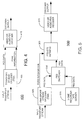
- FIG. 4 shows a block diagram of a receiver/decoder system 400 which may be used in, e.g., a "far end decoder” or home ATSC television system.
- the transport stream decoder (TSD) 405 decodes an input transport stream (from, e.g., a direct broadcast system) in the usual manner to produce a PES data stream and to also provide PCR and PCRB data to a PES decoder 415.
- Decoder 415 decodes the audio and video PES streams in the usual manner to generate an output signal which may be coupled to an appropriate audio/video system (not shown) for audio and video reproduction.
- the system of FIG. 4 does not provide for switching to a recorded sequence (e.g., video disk, CD, computer storage device and the like).
- FIG. 5 shows a block diagram of a home receiver/decoder system 500, such as the system 400 shown in FIG. 4.
- the system 500 of FIG. 5 includes bitstream server 520, illustratively a home recorder tape server, which stores program material in a PES format.
- bitstream server 520 illustratively a home recorder tape server, which stores program material in a PES format.
- PES storage is more efficient than transport stream storage due to the avoidance of storing transport stream overhead.
- TSD 505 operates in substantially the same manner as the TSD 405 of FIG. 4.
- PES switcher 530 and server 520 operate in substantially the same manner as, respectively, PES switcher 230 and PES server 220 of FIG. 2.
- PTS-DTS retiming unit 300 operates in substantially same manner as PTS-DTS retiming unit 300 of FIGs. 2 and 3.
- FIG. 6 shows a block diagram of an illustrative bitstream generator 600 according to the invention.
- the bitstream generator includes a bitstream server 620 which stores, e.g., audio and video test streams in PES format.
- the stored PES data is coupled to a PTS-DTS retiming unit 300 which operates in substantially same manner as PTS-DTS retiming unit 300 of FIGs. 2 and 3.
- the retiming unit 300 produces a continuously looping audio and/or video bitstream which is coupled to a TSE 650.
- TSE 650 operates in substantially the same manner as TSE 250 of the system 200 of FIG. 2 to produce a resultant transport stream S11.
- the continuously looping bitstream system of FIG. 6 addresses a problem similar to that which is addressed by, e.g., the system 200 of FIG. 2, namely the seamless joining together of two bitstreams having unrelated timing information.
- the bitstreams are from different sources.
- the "switching" is from the end of a bitstream to the beginning of the same bitstream.
- the timing information of the "two" (i.e., beginning and end) bitstreams is not synchronized and TSE 650 would possibly produce a non-compliant transport stream without the retiming of the second (i.e., beginning) bitstream.
- Another application of the invention is in the use of Interactive Digital Video Disc (DVD) servers. If bitstreams are recorded as PES streams on Digital Video Discs, then interactive frame switching on the disc is possible using the retiming methods described. For example, in a DVD-based interactive game a user may select one of a number of possible actions (e.g., open a door, pick up a weapon, converse with someone or something, etc.), each of the actions requiring the playing of a different audio/video sequence. These sequences are stored on the DVD with predetermined timing information which may need to be retimed when switching from one stored sequence to another.
- a number of possible actions e.g., open a door, pick up a weapon, converse with someone or something, etc.
- Embodiments of the invention illustrate the method used by the invention performing various operations on, e.g., compressed ATSC transport and PES bitstreams while maintaining compliance with the relevant standards.
- This illustrative method regulates flow control, such that buffer overflow or buffer underflow may be avoided in a straightforward manner.
- Embodiments of the invention also provide a way to exit a bitstream in multiple places, not simply the predefined splice points described in the ATSC standard (referring to the MPEG standard).
- a stream should be entered at, e.g., an I-frame or anchor frame.
- the invention is useful in studios to perform splicing between different services which are not locked.
- the invention allows home (i.e., consumer) recorders to create high quality splices; avoiding waviness, blue-fields and other non-studio quality artifacts.
- the invention allows switching from, e.g., a television picture to a VCR picture w/o disruption in image quality.
- the invention is useful for any data stream, such as auxiliary or control data, which may be transmitted or stored in any storage medium and remultiplexed back into the bitstream.
- auxiliary or control data may be transmitted or stored in any storage medium and remultiplexed back into the bitstream.
- a data delivery service e.g., "pointcast" information service, program guides, assorted telecom services and the like
- the invention provides a tool to accomplish this manipulation.
Landscapes
- Engineering & Computer Science (AREA)
- Multimedia (AREA)
- Signal Processing (AREA)
- Business, Economics & Management (AREA)
- Marketing (AREA)
- Compression Or Coding Systems Of Tv Signals (AREA)
- Synchronisation In Digital Transmission Systems (AREA)
- Time-Division Multiplex Systems (AREA)
Applications Claiming Priority (2)
| Application Number | Priority Date | Filing Date | Title |
|---|---|---|---|
| US08/864,326 US6101195A (en) | 1997-05-28 | 1997-05-28 | Timing correction method and apparatus |
| US864326 | 1997-05-28 |
Publications (2)
| Publication Number | Publication Date |
|---|---|
| EP0881838A1 true EP0881838A1 (de) | 1998-12-02 |
| EP0881838B1 EP0881838B1 (de) | 2004-08-11 |
Family
ID=25343026
Family Applications (1)
| Application Number | Title | Priority Date | Filing Date |
|---|---|---|---|
| EP98303138A Expired - Lifetime EP0881838B1 (de) | 1997-05-28 | 1998-04-23 | Korrektur der vorgegebenen Zeit |
Country Status (7)
| Country | Link |
|---|---|
| US (1) | US6101195A (de) |
| EP (1) | EP0881838B1 (de) |
| JP (1) | JP4157618B2 (de) |
| KR (1) | KR19980087431A (de) |
| CA (1) | CA2234490C (de) |
| DE (1) | DE69825526T2 (de) |
| TW (1) | TW411716B (de) |
Cited By (13)
| Publication number | Priority date | Publication date | Assignee | Title |
|---|---|---|---|---|
| WO2000044175A1 (en) * | 1999-01-22 | 2000-07-27 | Scientific-Atlanta, Inc. | Method and apparatus for delivering reference signal information within a specified time interval |
| WO2000046995A1 (fr) * | 1999-02-05 | 2000-08-10 | Sony Corporation | Systemes et methodes de codage et de decodage, systeme et methode de multiplexage et systeme et methode d'affichage |
| WO2000068946A1 (en) * | 1999-05-07 | 2000-11-16 | Kabushiki Kaisha Toshiba | Data structure of stream data, and method of recording and reproducing stream data |
| WO2000076222A1 (en) * | 1999-06-09 | 2000-12-14 | Sarnoff Corporation | Flow control, latency control and bitrate conversions in a timing correction and frame synchronization apparatus |
| EP1119206A1 (de) * | 2000-01-20 | 2001-07-25 | Nec Corporation | MPEG-Dekodierungsvorrichtung |
| GB2328099B (en) * | 1997-08-08 | 2002-07-03 | British Broadcasting Corp | Processing coded video |
| EP1221815A3 (de) * | 2000-12-28 | 2003-09-24 | Pioneer Corporation | Transportstrom-Multiplexverfahren, Transportstrom-Multiplexgerät sowie Speicherungs- und Wiedergabesystem |
| WO2003010905A3 (en) * | 2001-07-27 | 2003-10-30 | Matsushita Electric Industrial Co Ltd | Digital broadcast system, sync information replacing apparatus and method |
| EP1104179A3 (de) * | 1999-11-26 | 2004-06-09 | Grundig AG | Verfahren und Vorrichtung zur Anpassung der Laufzeitdifferenz von Video- und Audiosignal in einem Fernsehgerät |
| EP1730862A1 (de) * | 2004-03-10 | 2006-12-13 | Scientific-Atlanta, Inc. | Transportstrom-jitterbeseitigungsvorrichtung |
| WO2009097356A1 (en) * | 2008-01-29 | 2009-08-06 | Cisco Technology, Inc. | Restamping transport streams to avoid vertical rolls |
| WO2012025139A1 (en) * | 2010-08-23 | 2012-03-01 | Telefonaktiebolaget L M Ericsson (Publ) | Improved program clock reference insertion |
| EP2974314B1 (de) * | 2013-03-15 | 2020-09-23 | Robert Bosch GmbH | Schaltgerät zum schalten von komprimierten videoströmen, konferenzsystem mit dem schaltgerät |
Families Citing this family (99)
| Publication number | Priority date | Publication date | Assignee | Title |
|---|---|---|---|---|
| CN1161989C (zh) * | 1997-07-25 | 2004-08-11 | 索尼公司 | 编辑装置、编辑方法、接续装置、接续方法、编码装置和编码方法 |
| JP3232052B2 (ja) * | 1997-10-31 | 2001-11-26 | 松下電器産業株式会社 | 画像復号化方法 |
| JPH11261958A (ja) * | 1998-03-09 | 1999-09-24 | Sony Corp | 映像編集装置及び映像編集方法 |
| US6611624B1 (en) * | 1998-03-13 | 2003-08-26 | Cisco Systems, Inc. | System and method for frame accurate splicing of compressed bitstreams |
| JP3937564B2 (ja) * | 1998-03-24 | 2007-06-27 | 三菱電機株式会社 | ディジタルビデオ受信装置 |
| US7031348B1 (en) * | 1998-04-04 | 2006-04-18 | Optibase, Ltd. | Apparatus and method of splicing digital video streams |
| EP1095520A2 (de) * | 1998-06-29 | 2001-05-02 | Limt Technology AB | Verfahren und vorrichtung zur verbindung von datenströmen |
| US6587641B1 (en) * | 1998-07-21 | 2003-07-01 | Matsushita Electric Industrial Co., Ltd. | Apparatus for simultaneously writing and outputting data stream |
| US7457415B2 (en) * | 1998-08-20 | 2008-11-25 | Akikaze Technologies, Llc | Secure information distribution system utilizing information segment scrambling |
| US6259677B1 (en) * | 1998-09-30 | 2001-07-10 | Cisco Technology, Inc. | Clock synchronization and dynamic jitter management for voice over IP and real-time data |
| US6370125B1 (en) | 1998-10-08 | 2002-04-09 | Adtran, Inc. | Dynamic delay compensation for packet-based voice network |
| GB9822087D0 (en) * | 1998-10-09 | 1998-12-02 | Snell & Wilcox Ltd | Improvements in data compression |
| US6603816B1 (en) * | 1998-10-30 | 2003-08-05 | Sony Corporation | Receiver and receiving-decoding method |
| JP2000173181A (ja) * | 1998-12-04 | 2000-06-23 | Sony Corp | データ記録装置及び出力装置、データ出力システム、データ記録方法及び出力方法、並びにデータ記録及び出力方法 |
| US7088725B1 (en) * | 1999-06-30 | 2006-08-08 | Sony Corporation | Method and apparatus for transcoding, and medium |
| US6792047B1 (en) | 2000-01-04 | 2004-09-14 | Emc Corporation | Real time processing and streaming of spliced encoded MPEG video and associated audio |
| US7096481B1 (en) | 2000-01-04 | 2006-08-22 | Emc Corporation | Preparation of metadata for splicing of encoded MPEG video and audio |
| US7187947B1 (en) * | 2000-03-28 | 2007-03-06 | Affinity Labs, Llc | System and method for communicating selected information to an electronic device |
| EP1139665A1 (de) * | 2000-03-29 | 2001-10-04 | Deutsche Thomson-Brandt Gmbh | Verfahren und Gerät für die Ausgabeverzögerungsänderung während der Video- oder Tonkodierung |
| US6871006B1 (en) | 2000-06-30 | 2005-03-22 | Emc Corporation | Processing of MPEG encoded video for trick mode operation |
| JP4612171B2 (ja) * | 2000-10-27 | 2011-01-12 | 株式会社東芝 | 動画像復号再生モジュールと再生時刻管理プログラムとマルチメディア情報受信装置 |
| US7023924B1 (en) | 2000-12-28 | 2006-04-04 | Emc Corporation | Method of pausing an MPEG coded video stream |
| US6937770B1 (en) | 2000-12-28 | 2005-08-30 | Emc Corporation | Adaptive bit rate control for rate reduction of MPEG coded video |
| US7197070B1 (en) * | 2001-06-04 | 2007-03-27 | Cisco Technology, Inc. | Efficient systems and methods for transmitting compressed video data having different resolutions |
| US6931071B2 (en) * | 2001-08-31 | 2005-08-16 | Stmicroelectronics, Inc. | Apparatus and method for synchronizing video and audio MPEG streams in a video playback device |
| US6980594B2 (en) | 2001-09-11 | 2005-12-27 | Emc Corporation | Generation of MPEG slow motion playout |
| US6968091B2 (en) * | 2001-09-18 | 2005-11-22 | Emc Corporation | Insertion of noise for reduction in the number of bits for variable-length coding of (run, level) pairs |
| US6959116B2 (en) * | 2001-09-18 | 2005-10-25 | Emc Corporation | Largest magnitude indices selection for (run, level) encoding of a block coded picture |
| US7096488B1 (en) | 2001-10-19 | 2006-08-22 | Cisco Technology, Inc. | Methods and apparatus for facilitating network splicing |
| US7120168B2 (en) * | 2001-11-20 | 2006-10-10 | Sony Corporation | System and method for effectively performing an audio/video synchronization procedure |
| US7356079B2 (en) * | 2001-11-21 | 2008-04-08 | Vixs Systems Inc. | Method and system for rate control during video transcoding |
| KR100464075B1 (ko) * | 2001-12-28 | 2004-12-30 | 엘지전자 주식회사 | 비디오 하이라이트 자동 생성 방법 및 장치 |
| US9497452B2 (en) * | 2002-01-22 | 2016-11-15 | Broadcom Corporation | System and method of transmission and reception of video using compressed differential time stamps |
| KR100490154B1 (ko) * | 2002-04-13 | 2005-05-16 | 엘지전자 주식회사 | 디지털 텔레비젼 테스트 스트림 생성장치 |
| US7499446B1 (en) * | 2002-04-29 | 2009-03-03 | Cisco Technology, Inc. | Removing jitter in RTP streaming media streams |
| US7496086B2 (en) * | 2002-04-30 | 2009-02-24 | Alcatel-Lucent Usa Inc. | Techniques for jitter buffer delay management |
| US7283566B2 (en) * | 2002-06-14 | 2007-10-16 | Silicon Image, Inc. | Method and circuit for generating time stamp data from an embedded-clock audio data stream and a video clock |
| KR100466237B1 (ko) * | 2002-06-20 | 2005-01-13 | 한국전자통신연구원 | 디지털 방송 프로토콜 변환 방법 및 그 시스템 |
| KR101022744B1 (ko) * | 2002-11-29 | 2011-03-22 | 소니 주식회사 | 복호 장치 및 그 방법 |
| US7940799B2 (en) * | 2003-02-04 | 2011-05-10 | Panasonic Corporation | Code conversion method and device thereof |
| US9456243B1 (en) | 2003-06-06 | 2016-09-27 | Arris Enterprises, Inc. | Methods and apparatus for processing time-based content |
| US7385990B2 (en) * | 2003-07-21 | 2008-06-10 | Zarlink Semiconductor Inc. | Method to improve the resolution of time measurements and alignment in packet networks by time modulation |
| US10613817B2 (en) | 2003-07-28 | 2020-04-07 | Sonos, Inc. | Method and apparatus for displaying a list of tracks scheduled for playback by a synchrony group |
| US8086752B2 (en) | 2006-11-22 | 2011-12-27 | Sonos, Inc. | Systems and methods for synchronizing operations among a plurality of independently clocked digital data processing devices that independently source digital data |
| US11650784B2 (en) | 2003-07-28 | 2023-05-16 | Sonos, Inc. | Adjusting volume levels |
| US8020023B2 (en) | 2003-07-28 | 2011-09-13 | Sonos, Inc. | Systems and methods for synchronizing operations among a plurality of independently clocked digital data processing devices without a voltage controlled crystal oscillator |
| US11294618B2 (en) | 2003-07-28 | 2022-04-05 | Sonos, Inc. | Media player system |
| US11106424B2 (en) | 2003-07-28 | 2021-08-31 | Sonos, Inc. | Synchronizing operations among a plurality of independently clocked digital data processing devices |
| US8234395B2 (en) | 2003-07-28 | 2012-07-31 | Sonos, Inc. | System and method for synchronizing operations among a plurality of independently clocked digital data processing devices |
| US8290603B1 (en) | 2004-06-05 | 2012-10-16 | Sonos, Inc. | User interfaces for controlling and manipulating groupings in a multi-zone media system |
| US11106425B2 (en) | 2003-07-28 | 2021-08-31 | Sonos, Inc. | Synchronizing operations among a plurality of independently clocked digital data processing devices |
| US7961786B2 (en) * | 2003-09-07 | 2011-06-14 | Microsoft Corporation | Signaling field type information |
| US7724827B2 (en) * | 2003-09-07 | 2010-05-25 | Microsoft Corporation | Multi-layer run level encoding and decoding |
| US8345754B2 (en) * | 2003-09-07 | 2013-01-01 | Microsoft Corporation | Signaling buffer fullness |
| US8107531B2 (en) * | 2003-09-07 | 2012-01-31 | Microsoft Corporation | Signaling and repeat padding for skip frames |
| US8582659B2 (en) * | 2003-09-07 | 2013-11-12 | Microsoft Corporation | Determining a decoding time stamp from buffer fullness |
| US9977561B2 (en) | 2004-04-01 | 2018-05-22 | Sonos, Inc. | Systems, methods, apparatus, and articles of manufacture to provide guest access |
| KR100643270B1 (ko) * | 2004-04-02 | 2006-11-10 | 삼성전자주식회사 | 비디오 스트림을 재생하는 클라이언트 및 재생 방법 |
| US8024055B1 (en) | 2004-05-15 | 2011-09-20 | Sonos, Inc. | Method and system for controlling amplifiers |
| US8326951B1 (en) | 2004-06-05 | 2012-12-04 | Sonos, Inc. | Establishing a secure wireless network with minimum human intervention |
| US8868698B2 (en) | 2004-06-05 | 2014-10-21 | Sonos, Inc. | Establishing a secure wireless network with minimum human intervention |
| US20060104356A1 (en) * | 2004-11-15 | 2006-05-18 | Microsoft Corporation | Timing for decoder buffer examination |
| KR100620175B1 (ko) * | 2004-12-15 | 2006-09-01 | 엘지전자 주식회사 | 녹화물에 대한 타이틀 결정 방법 및 장치 |
| JP2008005198A (ja) * | 2006-06-22 | 2008-01-10 | Toshiba Corp | マルチavストリームの再生装置及び再生方法 |
| JP2008005374A (ja) * | 2006-06-26 | 2008-01-10 | Mitsubishi Electric Corp | マルチストリーム対応マルチプレクサ及びデマルチプレクサシステム |
| US8788080B1 (en) | 2006-09-12 | 2014-07-22 | Sonos, Inc. | Multi-channel pairing in a media system |
| US9202509B2 (en) | 2006-09-12 | 2015-12-01 | Sonos, Inc. | Controlling and grouping in a multi-zone media system |
| US8483853B1 (en) | 2006-09-12 | 2013-07-09 | Sonos, Inc. | Controlling and manipulating groupings in a multi-zone media system |
| US12167216B2 (en) | 2006-09-12 | 2024-12-10 | Sonos, Inc. | Playback device pairing |
| US20130002950A1 (en) * | 2006-09-22 | 2013-01-03 | Ken Thompson | Methods and Systems for Transport Stream Time Base Correction |
| US9083994B2 (en) * | 2006-09-26 | 2015-07-14 | Qualcomm Incorporated | Method and system for error robust audio playback time stamp reporting |
| KR101296953B1 (ko) * | 2007-02-14 | 2013-08-14 | 엘지전자 주식회사 | 녹화물 압축 시 타임 스탬프 생성 장치 및 방법 |
| US8335266B2 (en) * | 2007-06-29 | 2012-12-18 | Cisco Technology, Inc. | Expedited splicing of video streams |
| US8966103B2 (en) * | 2007-12-21 | 2015-02-24 | General Instrument Corporation | Methods and system for processing time-based content |
| US8121116B1 (en) | 2008-05-30 | 2012-02-21 | Cisco Technology, Inc. | Intra channel video stream scheduling |
| US8752092B2 (en) * | 2008-06-27 | 2014-06-10 | General Instrument Corporation | Method and apparatus for providing low resolution images in a broadcast system |
| CN102860010A (zh) * | 2010-05-06 | 2013-01-02 | 日本电信电话株式会社 | 视频编码控制方法及装置 |
| JP5295429B2 (ja) | 2010-05-07 | 2013-09-18 | 日本電信電話株式会社 | 動画像符号化制御方法,動画像符号化装置および動画像符号化プログラム |
| WO2012054771A2 (en) * | 2010-10-21 | 2012-04-26 | The Regents Of The University Of California | Synchronizing data streams over a local area network |
| US11265652B2 (en) | 2011-01-25 | 2022-03-01 | Sonos, Inc. | Playback device pairing |
| US11429343B2 (en) | 2011-01-25 | 2022-08-30 | Sonos, Inc. | Stereo playback configuration and control |
| US8938312B2 (en) | 2011-04-18 | 2015-01-20 | Sonos, Inc. | Smart line-in processing |
| US8699646B2 (en) * | 2011-04-18 | 2014-04-15 | Harman International Industries, Inc. | Media clock negotiation |
| US9042556B2 (en) | 2011-07-19 | 2015-05-26 | Sonos, Inc | Shaping sound responsive to speaker orientation |
| US9344292B2 (en) | 2011-12-30 | 2016-05-17 | Sonos, Inc. | Systems and methods for player setup room names |
| US9729115B2 (en) | 2012-04-27 | 2017-08-08 | Sonos, Inc. | Intelligently increasing the sound level of player |
| US9055632B2 (en) * | 2012-08-10 | 2015-06-09 | Infineon Technologies Ag | Bit packer for control signals |
| US9008330B2 (en) | 2012-09-28 | 2015-04-14 | Sonos, Inc. | Crossover frequency adjustments for audio speakers |
| US9244516B2 (en) | 2013-09-30 | 2016-01-26 | Sonos, Inc. | Media playback system using standby mode in a mesh network |
| US9247315B2 (en) * | 2013-11-07 | 2016-01-26 | Hulu, Inc. | Disabling of multiple bitrate algorithm for media programs while playing advertisements |
| US9226087B2 (en) | 2014-02-06 | 2015-12-29 | Sonos, Inc. | Audio output balancing during synchronized playback |
| US9226073B2 (en) | 2014-02-06 | 2015-12-29 | Sonos, Inc. | Audio output balancing during synchronized playback |
| US9838571B2 (en) | 2015-04-10 | 2017-12-05 | Gvbb Holdings S.A.R.L. | Precision timing for broadcast network |
| US10248376B2 (en) | 2015-06-11 | 2019-04-02 | Sonos, Inc. | Multiple groupings in a playback system |
| KR20170068946A (ko) * | 2015-12-10 | 2017-06-20 | 삼성전자주식회사 | 방송 수신 장치 및 방송 수신 장치의 제어 방법 |
| US10303422B1 (en) | 2016-01-05 | 2019-05-28 | Sonos, Inc. | Multiple-device setup |
| US10712997B2 (en) | 2016-10-17 | 2020-07-14 | Sonos, Inc. | Room association based on name |
| JP7213771B2 (ja) | 2019-07-22 | 2023-01-27 | 株式会社ディーアンドエムホールディングス | ワイヤレスオーディオシステム、ワイヤレススピーカ、およびワイヤレススピーカのグループ加入方法 |
| KR20230074234A (ko) | 2020-09-25 | 2023-05-26 | 소노스 인코포레이티드 | 재생 장치에 대한 지능적 셋업 |
Citations (1)
| Publication number | Priority date | Publication date | Assignee | Title |
|---|---|---|---|---|
| EP0668697A2 (de) * | 1994-02-18 | 1995-08-23 | Matsushita Electric Industrial Co., Ltd. | Gerät zur Aufzeichnung und Wiedergabe von digitalen Signalen |
Family Cites Families (16)
| Publication number | Priority date | Publication date | Assignee | Title |
|---|---|---|---|---|
| JPH05114912A (ja) * | 1991-10-21 | 1993-05-07 | Nec Corp | メデイア間同期方式 |
| KR960006466B1 (ko) * | 1992-12-21 | 1996-05-16 | 삼성전자주식회사 | 전송시스템의 데이타 리타이밍회로 |
| US5486864A (en) * | 1993-05-13 | 1996-01-23 | Rca Thomson Licensing Corporation | Differential time code method and apparatus as for a compressed video signal |
| US5602595A (en) * | 1993-12-29 | 1997-02-11 | Zenith Electronics Corporation | ATV/MPEG sync system |
| JP3197766B2 (ja) * | 1994-02-17 | 2001-08-13 | 三洋電機株式会社 | Mpegオーディオデコーダ、mpegビデオデコーダおよびmpegシステムデコーダ |
| US5703793A (en) * | 1994-07-29 | 1997-12-30 | Discovision Associates | Video decompression |
| US5815634A (en) * | 1994-09-30 | 1998-09-29 | Cirrus Logic, Inc. | Stream synchronization method and apparatus for MPEG playback system |
| US5535216A (en) * | 1995-01-17 | 1996-07-09 | Digital Equipment Corporation | Multiplexed gapped constant bit rate data transmission |
| US5588025A (en) * | 1995-03-15 | 1996-12-24 | David Sarnoff Research Center, Inc. | Single oscillator compressed digital information receiver |
| JPH0946390A (ja) * | 1995-08-01 | 1997-02-14 | Matsushita Electric Ind Co Ltd | ディジタル信号伝送装置および記録装置 |
| JP3389747B2 (ja) * | 1995-08-01 | 2003-03-24 | 松下電器産業株式会社 | 伝送装置および伝送記録装置および再生伝送装置 |
| JP2838985B2 (ja) * | 1995-06-22 | 1998-12-16 | 日本電気株式会社 | オーディオビデオ符号復号化装置およびオーディオビデオ符号復号化方法 |
| US5742623A (en) * | 1995-08-04 | 1998-04-21 | General Instrument Corporation Of Delaware | Error detection and recovery for high rate isochronous data in MPEG-2 data streams |
| US5703877A (en) * | 1995-11-22 | 1997-12-30 | General Instrument Corporation Of Delaware | Acquisition and error recovery of audio data carried in a packetized data stream |
| US5892535A (en) * | 1996-05-08 | 1999-04-06 | Digital Video Systems, Inc. | Flexible, configurable, hierarchical system for distributing programming |
| US5856973A (en) * | 1996-09-10 | 1999-01-05 | Thompson; Kenneth M. | Data multiplexing in MPEG server to decoder systems |
-
1997
- 1997-05-28 US US08/864,326 patent/US6101195A/en not_active Expired - Lifetime
-
1998
- 1998-04-08 TW TW087105267A patent/TW411716B/zh not_active IP Right Cessation
- 1998-04-09 CA CA002234490A patent/CA2234490C/en not_active Expired - Lifetime
- 1998-04-23 DE DE69825526T patent/DE69825526T2/de not_active Expired - Lifetime
- 1998-04-23 EP EP98303138A patent/EP0881838B1/de not_active Expired - Lifetime
- 1998-05-28 JP JP14768498A patent/JP4157618B2/ja not_active Expired - Lifetime
- 1998-05-28 KR KR1019980019373A patent/KR19980087431A/ko not_active Abandoned
Patent Citations (1)
| Publication number | Priority date | Publication date | Assignee | Title |
|---|---|---|---|---|
| EP0668697A2 (de) * | 1994-02-18 | 1995-08-23 | Matsushita Electric Industrial Co., Ltd. | Gerät zur Aufzeichnung und Wiedergabe von digitalen Signalen |
Non-Patent Citations (1)
| Title |
|---|
| WEISS S M: "SWITCHING FACILITIES IN MPEG-2: NECESSARY BUT NOT SUFFICIENT", SMPTE JOURNAL, vol. 104, no. 12, 1 December 1995 (1995-12-01), pages 788 - 802, XP000543847 * |
Cited By (24)
| Publication number | Priority date | Publication date | Assignee | Title |
|---|---|---|---|---|
| GB2328099B (en) * | 1997-08-08 | 2002-07-03 | British Broadcasting Corp | Processing coded video |
| WO2000044175A1 (en) * | 1999-01-22 | 2000-07-27 | Scientific-Atlanta, Inc. | Method and apparatus for delivering reference signal information within a specified time interval |
| WO2000046995A1 (fr) * | 1999-02-05 | 2000-08-10 | Sony Corporation | Systemes et methodes de codage et de decodage, systeme et methode de multiplexage et systeme et methode d'affichage |
| US8160134B2 (en) | 1999-02-05 | 2012-04-17 | Sony Corporation | Encoding system and method, decoding system and method, multiplexing apparatus and method, and display system and method |
| US7551672B1 (en) | 1999-02-05 | 2009-06-23 | Sony Corporation | Encoding system and method, decoding system and method, multiplexing apparatus and method, and display system and method |
| US6456783B1 (en) | 1999-05-07 | 2002-09-24 | Kabushiki Kaisha Toshiba | Data structure of stream data, and recording and playback method thereof |
| US7418194B2 (en) | 1999-05-07 | 2008-08-26 | Kabushiki Kaisha Toshiba | Data structure of stream data, and recording and playback method thereof |
| WO2000068946A1 (en) * | 1999-05-07 | 2000-11-16 | Kabushiki Kaisha Toshiba | Data structure of stream data, and method of recording and reproducing stream data |
| WO2000076222A1 (en) * | 1999-06-09 | 2000-12-14 | Sarnoff Corporation | Flow control, latency control and bitrate conversions in a timing correction and frame synchronization apparatus |
| EP1104179A3 (de) * | 1999-11-26 | 2004-06-09 | Grundig AG | Verfahren und Vorrichtung zur Anpassung der Laufzeitdifferenz von Video- und Audiosignal in einem Fernsehgerät |
| US6600787B2 (en) | 2000-01-20 | 2003-07-29 | Nec Electronics Corporation | MPEG decoding device |
| EP1119206A1 (de) * | 2000-01-20 | 2001-07-25 | Nec Corporation | MPEG-Dekodierungsvorrichtung |
| US7092411B2 (en) | 2000-12-28 | 2006-08-15 | Pioneer Corporation | Transport stream multiplexing method, transport stream multiplexing apparatus, and storage and reproduction system |
| EP1221815A3 (de) * | 2000-12-28 | 2003-09-24 | Pioneer Corporation | Transportstrom-Multiplexverfahren, Transportstrom-Multiplexgerät sowie Speicherungs- und Wiedergabesystem |
| WO2003010905A3 (en) * | 2001-07-27 | 2003-10-30 | Matsushita Electric Industrial Co Ltd | Digital broadcast system, sync information replacing apparatus and method |
| US7434248B2 (en) | 2001-07-27 | 2008-10-07 | Matsushita Electric Industrial Co., Ltd. | Broadcast system and apparatus, sync information replacing apparatus and method, program, and recording medium recording the program |
| EP1730862A1 (de) * | 2004-03-10 | 2006-12-13 | Scientific-Atlanta, Inc. | Transportstrom-jitterbeseitigungsvorrichtung |
| WO2009097356A1 (en) * | 2008-01-29 | 2009-08-06 | Cisco Technology, Inc. | Restamping transport streams to avoid vertical rolls |
| US8565318B2 (en) | 2008-01-29 | 2013-10-22 | Cisco Technology, Inc. | Restamping transport streams to avoid vertical rolls |
| WO2012025139A1 (en) * | 2010-08-23 | 2012-03-01 | Telefonaktiebolaget L M Ericsson (Publ) | Improved program clock reference insertion |
| US9374580B2 (en) | 2010-08-23 | 2016-06-21 | Telefonaktiebolaget Lm Ericsson (Publ) | System and method for insertion of a program clock reference during packetization of an encoded data stream |
| US20160269770A1 (en) * | 2010-08-23 | 2016-09-15 | Telefonaktiebolaget Lm Ericsson (Publ) | System And Method For Insertion Of A Program Clock Reference During Packetization Of An Encoded Data Stream |
| US10080050B2 (en) | 2010-08-23 | 2018-09-18 | Telefonakliebolaget LM Ericsson (publ) | System and method for insertion of a program clock reference during packetization of an encoded data stream |
| EP2974314B1 (de) * | 2013-03-15 | 2020-09-23 | Robert Bosch GmbH | Schaltgerät zum schalten von komprimierten videoströmen, konferenzsystem mit dem schaltgerät |
Also Published As
| Publication number | Publication date |
|---|---|
| DE69825526D1 (de) | 2004-09-16 |
| JPH1188314A (ja) | 1999-03-30 |
| US6101195A (en) | 2000-08-08 |
| KR19980087431A (ko) | 1998-12-05 |
| DE69825526T2 (de) | 2005-08-04 |
| CA2234490C (en) | 2005-03-29 |
| TW411716B (en) | 2000-11-11 |
| CA2234490A1 (en) | 1998-11-28 |
| JP4157618B2 (ja) | 2008-10-01 |
| EP0881838B1 (de) | 2004-08-11 |
Similar Documents
| Publication | Publication Date | Title |
|---|---|---|
| EP0881838B1 (de) | Korrektur der vorgegebenen Zeit | |
| CA2234328C (en) | Method and apparatus for information stream frame synchronization | |
| EP1002424B1 (de) | Verarbeitung codierter videodaten | |
| US6137834A (en) | Method and apparatus for splicing compressed information streams | |
| US6038000A (en) | Information stream syntax for indicating the presence of a splice point | |
| US5859660A (en) | Non-seamless splicing of audio-video transport streams | |
| US6330286B1 (en) | Flow control, latency control, and bitrate conversions in a timing correction and frame synchronization apparatus | |
| CA2449124C (en) | Splicing of digital video transport streams | |
| US6993081B1 (en) | Seamless splicing/spot-insertion for MPEG-2 digital video/audio stream | |
| US6298088B1 (en) | Method and apparatus for splicing compressed information signals | |
| EP0954924A1 (de) | Informationsstromsyntax und anzeige des vorhandenseins eines spleisspunkts | |
| EP1119974B1 (de) | Ausrichten komprimierter Datenpakete auf nominierte Bezugspakete eines Transportbitstromes, mit Steuerung der Ausgangsbitrate der Datenkompression abhängig von der Rate der nominierten Bezugspakete | |
| KR100517794B1 (ko) | 압축된정보스트림을스플라이싱하는방법및장치 |
Legal Events
| Date | Code | Title | Description |
|---|---|---|---|
| PUAI | Public reference made under article 153(3) epc to a published international application that has entered the european phase |
Free format text: ORIGINAL CODE: 0009012 |
|
| AK | Designated contracting states |
Kind code of ref document: A1 Designated state(s): DE FR GB IT NL |
|
| AX | Request for extension of the european patent |
Free format text: AL;LT;LV;MK;RO;SI |
|
| 17P | Request for examination filed |
Effective date: 19990510 |
|
| AKX | Designation fees paid |
Free format text: DE FR GB IT NL |
|
| 17Q | First examination report despatched |
Effective date: 20011211 |
|
| GRAH | Despatch of communication of intention to grant a patent |
Free format text: ORIGINAL CODE: EPIDOS IGRA |
|
| GRAH | Despatch of communication of intention to grant a patent |
Free format text: ORIGINAL CODE: EPIDOS IGRA |
|
| GRAA | (expected) grant |
Free format text: ORIGINAL CODE: 0009210 |
|
| AK | Designated contracting states |
Kind code of ref document: B1 Designated state(s): DE FR GB IT NL |
|
| REG | Reference to a national code |
Ref country code: GB Ref legal event code: FG4D |
|
| REF | Corresponds to: |
Ref document number: 69825526 Country of ref document: DE Date of ref document: 20040916 Kind code of ref document: P |
|
| ET | Fr: translation filed | ||
| PLBE | No opposition filed within time limit |
Free format text: ORIGINAL CODE: 0009261 |
|
| STAA | Information on the status of an ep patent application or granted ep patent |
Free format text: STATUS: NO OPPOSITION FILED WITHIN TIME LIMIT |
|
| 26N | No opposition filed |
Effective date: 20050512 |
|
| REG | Reference to a national code |
Ref country code: FR Ref legal event code: PLFP Year of fee payment: 19 |
|
| REG | Reference to a national code |
Ref country code: FR Ref legal event code: PLFP Year of fee payment: 20 |
|
| PGFP | Annual fee paid to national office [announced via postgrant information from national office to epo] |
Ref country code: FR Payment date: 20170327 Year of fee payment: 20 |
|
| PGFP | Annual fee paid to national office [announced via postgrant information from national office to epo] |
Ref country code: NL Payment date: 20170412 Year of fee payment: 20 |
|
| PGFP | Annual fee paid to national office [announced via postgrant information from national office to epo] |
Ref country code: GB Payment date: 20170419 Year of fee payment: 20 Ref country code: DE Payment date: 20170420 Year of fee payment: 20 |
|
| PGFP | Annual fee paid to national office [announced via postgrant information from national office to epo] |
Ref country code: IT Payment date: 20170420 Year of fee payment: 20 |
|
| REG | Reference to a national code |
Ref country code: DE Ref legal event code: R071 Ref document number: 69825526 Country of ref document: DE |
|
| REG | Reference to a national code |
Ref country code: NL Ref legal event code: MK Effective date: 20180422 |
|
| REG | Reference to a national code |
Ref country code: GB Ref legal event code: PE20 Expiry date: 20180422 |
|
| PG25 | Lapsed in a contracting state [announced via postgrant information from national office to epo] |
Ref country code: GB Free format text: LAPSE BECAUSE OF EXPIRATION OF PROTECTION Effective date: 20180422 |