EP0883050A1 - Selbstkonfigurierende Methode und System zur Energieverwaltung in einem Wohnbereich - Google Patents
Selbstkonfigurierende Methode und System zur Energieverwaltung in einem Wohnbereich Download PDFInfo
- Publication number
- EP0883050A1 EP0883050A1 EP98401313A EP98401313A EP0883050A1 EP 0883050 A1 EP0883050 A1 EP 0883050A1 EP 98401313 A EP98401313 A EP 98401313A EP 98401313 A EP98401313 A EP 98401313A EP 0883050 A1 EP0883050 A1 EP 0883050A1
- Authority
- EP
- European Patent Office
- Prior art keywords
- user
- temperature
- comfort
- habitat
- energy
- Prior art date
- Legal status (The legal status is an assumption and is not a legal conclusion. Google has not performed a legal analysis and makes no representation as to the accuracy of the status listed.)
- Granted
Links
- 238000000034 method Methods 0.000 title claims description 34
- 238000003825 pressing Methods 0.000 claims abstract description 3
- 238000010438 heat treatment Methods 0.000 claims description 27
- 230000008569 process Effects 0.000 claims description 16
- 238000012545 processing Methods 0.000 claims description 13
- 238000004378 air conditioning Methods 0.000 claims description 8
- 238000004088 simulation Methods 0.000 claims description 8
- 230000006399 behavior Effects 0.000 claims description 7
- 230000003750 conditioning effect Effects 0.000 claims description 6
- 230000008447 perception Effects 0.000 claims description 6
- 230000009471 action Effects 0.000 claims description 5
- 238000004364 calculation method Methods 0.000 claims description 5
- 238000005259 measurement Methods 0.000 claims description 5
- 230000004044 response Effects 0.000 claims description 4
- 238000009423 ventilation Methods 0.000 claims description 4
- 238000012546 transfer Methods 0.000 claims description 3
- 210000002569 neuron Anatomy 0.000 claims description 2
- 238000007726 management method Methods 0.000 abstract description 20
- 238000004891 communication Methods 0.000 description 8
- 238000012986 modification Methods 0.000 description 4
- 230000004048 modification Effects 0.000 description 4
- 238000013528 artificial neural network Methods 0.000 description 3
- 238000005485 electric heating Methods 0.000 description 3
- 238000010586 diagram Methods 0.000 description 2
- 230000006870 function Effects 0.000 description 2
- 238000009434 installation Methods 0.000 description 2
- 206010003830 Automatism Diseases 0.000 description 1
- 230000004308 accommodation Effects 0.000 description 1
- 230000003213 activating effect Effects 0.000 description 1
- 230000004075 alteration Effects 0.000 description 1
- 238000001816 cooling Methods 0.000 description 1
- 238000012937 correction Methods 0.000 description 1
- 230000002950 deficient Effects 0.000 description 1
- 238000005265 energy consumption Methods 0.000 description 1
- 230000010365 information processing Effects 0.000 description 1
- 239000003607 modifier Substances 0.000 description 1
- 210000000056 organ Anatomy 0.000 description 1
- 238000004806 packaging method and process Methods 0.000 description 1
- 230000002787 reinforcement Effects 0.000 description 1
- 230000000717 retained effect Effects 0.000 description 1
- 230000002441 reversible effect Effects 0.000 description 1
- 238000012552 review Methods 0.000 description 1
- 230000033764 rhythmic process Effects 0.000 description 1
Images

Classifications
-
- G—PHYSICS
- G05—CONTROLLING; REGULATING
- G05D—SYSTEMS FOR CONTROLLING OR REGULATING NON-ELECTRIC VARIABLES
- G05D23/00—Control of temperature
- G05D23/19—Control of temperature characterised by the use of electric means
- G05D23/1917—Control of temperature characterised by the use of electric means using digital means
-
- F—MECHANICAL ENGINEERING; LIGHTING; HEATING; WEAPONS; BLASTING
- F24—HEATING; RANGES; VENTILATING
- F24F—AIR-CONDITIONING; AIR-HUMIDIFICATION; VENTILATION; USE OF AIR CURRENTS FOR SCREENING
- F24F11/00—Control or safety arrangements
- F24F11/30—Control or safety arrangements for purposes related to the operation of the system, e.g. for safety or monitoring
-
- F—MECHANICAL ENGINEERING; LIGHTING; HEATING; WEAPONS; BLASTING
- F24—HEATING; RANGES; VENTILATING
- F24F—AIR-CONDITIONING; AIR-HUMIDIFICATION; VENTILATION; USE OF AIR CURRENTS FOR SCREENING
- F24F11/00—Control or safety arrangements
- F24F11/30—Control or safety arrangements for purposes related to the operation of the system, e.g. for safety or monitoring
- F24F11/46—Improving electric energy efficiency or saving
-
- F—MECHANICAL ENGINEERING; LIGHTING; HEATING; WEAPONS; BLASTING
- F24—HEATING; RANGES; VENTILATING
- F24F—AIR-CONDITIONING; AIR-HUMIDIFICATION; VENTILATION; USE OF AIR CURRENTS FOR SCREENING
- F24F11/00—Control or safety arrangements
- F24F11/62—Control or safety arrangements characterised by the type of control or by internal processing, e.g. using fuzzy logic, adaptive control or estimation of values
-
- G—PHYSICS
- G05—CONTROLLING; REGULATING
- G05D—SYSTEMS FOR CONTROLLING OR REGULATING NON-ELECTRIC VARIABLES
- G05D23/00—Control of temperature
- G05D23/19—Control of temperature characterised by the use of electric means
- G05D23/1902—Control of temperature characterised by the use of electric means characterised by the use of a variable reference value
-
- F—MECHANICAL ENGINEERING; LIGHTING; HEATING; WEAPONS; BLASTING
- F24—HEATING; RANGES; VENTILATING
- F24F—AIR-CONDITIONING; AIR-HUMIDIFICATION; VENTILATION; USE OF AIR CURRENTS FOR SCREENING
- F24F11/00—Control or safety arrangements
- F24F11/62—Control or safety arrangements characterised by the type of control or by internal processing, e.g. using fuzzy logic, adaptive control or estimation of values
- F24F11/63—Electronic processing
- F24F11/65—Electronic processing for selecting an operating mode
-
- F—MECHANICAL ENGINEERING; LIGHTING; HEATING; WEAPONS; BLASTING
- F24—HEATING; RANGES; VENTILATING
- F24F—AIR-CONDITIONING; AIR-HUMIDIFICATION; VENTILATION; USE OF AIR CURRENTS FOR SCREENING
- F24F2120/00—Control inputs relating to users or occupants
- F24F2120/20—Feedback from users
Definitions
- the invention relates to a management method energy intended for individual or collective housing; it also relates to an energy management system autoconfigurable implementing this method.
- the invention finds applications in the home automation field.
- programmable systems are present in the form of a housing comprising a programming interface and acting actuators on devices to be programmed (convectors and others domestic appliances). These actuators can be associated with sensors (counters, thermal measurements, security, etc.).
- the user With common programmable systems, the user must program his system himself in indicating very precisely, on the one hand, the times when he wants his devices to be started and, on the other hand, the operating conditions it required. For example, for heating a home individual, the user must indicate the ranges times and temperatures he wants to get and the corrections that he may wish to see apply, in particular according to the proposed tariff by the energy producer.
- the object of the invention is precisely to propose an energy management system in a habitat that allows ergonomic use and grip account of the comfort felt by the user.
- the invention provides a method and a system for energy management using techniques and a concept of adaptability, which take into account comfort needs of the user and possibly the cost of use without having to perform a system programming.
- One of the aims of the invention is therefore to teach an automatism the wishes of occupants of the habitat, by means of a minimum of controls and manipulations.
- This "autoconfigurable" system is based on the habits of habitat users. He takes take into account the habits of these users, stores in a database and then searches, in the database, the situations that are identical, or most like, to a situation present.
- the system makes it possible to anticipate the heating control (for example a convector). For this, it anticipates the arrival of users in preheating the habitat and it also anticipates their departure by carrying out an early stop of the heating in function of the building's thermal response.
- learning uses logic that compares the comfort temperature it there must be in the habitat and the temperature it will do in this habitat, with current conditions. The result of this comparison will allow us to know if it is necessary to anticipate a start of the heating or heating off. If there is no one in habitat the system can look if someone will present in a certain time interval, in based on stored habits. This allows to obtain the desired comfort temperature at the time the arrival of individuals in the habitat.
- This process can include right after step F2), a step F3) which consists in displaying the setpoint temperature or desired temperature determined to inform the user.
- the processing means and memorization system consists of a double system learning associated with databases, and comprising first learning means for determine and store the temperatures desired by the user and second learning means and simulation to simulate the thermal behavior of the habitat and calculate and memorize the temperatures of setpoint to apply to the generator.
- the first learning system is a system expert and the learning and simulation system is a neural network.
- the means of assessment have at least one +/- sensitive button allowing the user to express qualitatively his dissatisfaction with the level of comfort obtained.
- the means of assessment include means of taking into account exemptions capable of discerning information relating to situations exceptional.
- control means include a module central connected, on the one hand, to the interface system / user and, on the other hand, to a box of heating generator control to manage overall energy in the home.
- control means include a module central connected, on the one hand, by a transfer network information to a plurality of interfaces system / user and, on the other hand, to a plurality heating generator control boxes, in order to manage the different parts of the habitat independently of each other, each of these parts with a system / user interface.
- the invention can also be used for applications other than heating; she may be used, for example, for sound reinforcement, ventilation, air conditioning, lighting or any other application related to the comfort of people in a residential premises, tertiary, industrial premises, or agricultural.
- the process of the invention will be described, as an example, for an application to heating; he can be applied similarly to air conditioning, the generator then being an air conditioner, a pump reversible heat, or any other system of known air conditioning.
- the generator is called (in particular in claims), packaging generator of atmosphere.
- the method of the invention comprises a step A) which consists, on the one hand, in measuring, by means of different sensors, information related to the presence of individuals in the habitat, at temperature interior of habitat and meteorology and, on the other hand, to acquire information relating to the energy prices, in particular, in the case of a electric heating where the price of energy varies in the weather. All this information is time stamped, that is, they are related to the time and day currents.
- This information affects the user comfort. This information is given for example ; they could be completed by other information, such as the orientation of this habitat (north, south, ).
- the method then comprises a step B) which consists in searching the system memory for presence, indoor temperature information, schedule, energy and data costs similar to the weather conditions acquired by the sensors, are already recorded in Memory. If this is the case, then we go to step C1 which consists in searching in memory, the temperature that is associated with this information, that is to say the temperature that had been established when a previous identical situation had arisen presented. Otherwise, at step C2), the temperature desired by the user at from the information provided by the sensors.
- step C1 The desired temperature retained in step C1), or in step C2) is then memorized during step D.
- Determining and memorizing this desired temperature are achieved using means which may consist, for example, of an expert system.
- the method of the invention then comprises a step E) which consists in observing whether the user is satisfied with the comfort obtained. User can then show dissatisfaction by asking to correct the desired temperature upward or decrease, according to his perception of comfort. If it is the case, the system determines, in a step F1, a desired temperature changed; the process continues then by a new step D) in which the desired temperature is the temperature which has just been modified.
- the system calculates a temperature of instructions.
- Calculation of the setpoint temperature of the heating controller can be done using learning and simulation means that allow to simulate the thermal behavior of the building.
- the system is learned by memorizing the indoor temperatures observed during installation service or when the heating generator is stopped.
- the outdoor temperature and sunshine data must also be memorized, as well as the power electric supplied by the generator.
- Means of learning and simulation of the thermal behavior of the building can consist into a neural network.
- the set temperature, or the temperature desired, can optionally be displayed (step F3)).
- the set temperature is then applied to the heating generator regulator in a step G.
- Step G is that of ordering the heating generator; the generator thus controlled, provides the energy necessary for the habitat reaches the desired temperature chosen by the user. But, the user can still indicate (block H), at this time, or at any later time, its perception of comfort (too hot, too cold) in relying on the means of assessment which are, for example, a "+" key for a temperature desired hotter or a "-" key for a cooler desired temperature.
- the system takes into account immediately all manifestations of dissatisfaction on the part of the user to modify the generator operation according to the wishes of this user.
- the system integrates these modifications to learning methods.
- Steps A to H of the process are then reiterated regularly in order to modify automatically the operating regime of the generator whenever at least one of information provided by the multi-sensor assembly is modified or whenever the user intervenes to signal a deficient level of comfort.
- This energy management process thus allows avoid any programming of the system, since it automatically adapts to the habits of user comfort.
- the system according to the invention controls a heating generator (not shown in Figure 1 for the sake of simplification) which is capable of providing the necessary and sufficient energy to reach the desired temperature.
- Control means allow to control the amount of energy that this generator.
- control means include one or several sensors (see page 12), means of action on the heating generator either by download of the temperature setpoint (if the generator allows), either by activating levels setpoint (if the generator regulator allows it), either by sending start and stop orders to an organ of power driving the generator.
- So-called temperature sensors allow to detect the interior temperature of the habitat.
- Weather sensor includes plug outside temperature and, advantageously, a sunshine sensor and speed sensors and wind direction.
- Sensors other than temperature, presence sensors, sensors and a sensor providing the price of energy (electric meter in the case of heating electric) can also be used whose information will be taken into account to establish the desired temperature; we can consider using also electrical intensity sensors, etc.
- the multi-sensor assembly therefore provides the system, at least information relating to the presence of individuals in the habitat and temperature ambient of this habitat.
- the control means further comprise at least one system / user interface, thanks to which the user can give an appreciation qualitative on the temperature set by the system.
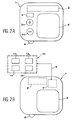
- a system / user interface is shown schematically in Figures 2A and 2B. It's at from this interface that the user can express dissatisfaction with the level of comfort generated by the system.
- Figure 2A shows front view user interface.
- This interface referenced 1
- the alphanumeric display can indicate also, to the user, the tariff period in which the system is in at the moment, the indoor, outdoor temperatures, etc.
- this display can consist of a system light emitting diodes.
- the interface 1 also comprises means assessment, referenced 3a and 3b; depending on the mode of embodiment shown in this figure 2A, a touch sensitive + (referenced 3a) and a sensitive button - (referenced 3b) allow the user to express qualitatively his dissatisfaction by asking increase or decrease the proposed temperature.
- the +/- sensor keys are associated with online processing that measures contentment or user dissatisfaction, for example, by the number of interventions accumulated in a tranche hourly, in the order of a few hours.
- only one button variable in both directions, allows the user to express any dissatisfaction.
- the interface 1 may also include means of taking into account derogation which allow, the user to report a situation to the system exceptional which should not be memorized in the database.
- These means are shown schematically on the FIG. 2A by an override key 4, which, when selected, tells the system not to not take into account, in learning, following user instructions (instructions data by means of the sensitive buttons 3a and 3b).
- an override key 4 which, when selected, tells the system not to not take into account, in learning, following user instructions (instructions data by means of the sensitive buttons 3a and 3b).
- the interface 1 comprises a sensor 5 giving information on the internal situation of the habitat, for example a presence sensor of the type active or passive infrared to detect presence at least one occupant.
- a temperature sensor interior 6 is also integrated into this interface.
- Figure 2B shows in a rear view the system / user interface 1 connected to the central module 10.
- This sensor provides the unit with communication 7, information relating to the presence of individuals in the habitat. These informations are then retransmitted, via the network of communication 9, to the central module 10, symbolized by dashed lines in Figure 2B.
- Information from other sensors are also supplied to the central module 10 via the communication network 9 and the communication unit communication 7.
- This network can be of type IT (for example RS 232).
- Interface 1 further includes a unit of display management, referenced 8, which manages the display of the various data on the display 2.
- the central module 10 includes a unit power supply 11, a communication unit 12 which receives the information sent from interface 1, an acquisition unit 13 for information relating to meteorology, tariffs, etc., and a unit of treatment 14 which determines the temperature desired by the user and calculates the set temperature; this processing unit 14 also ensures the elaboration of the generator regulator control. It is also this processing unit 14 which takes into consideration the appreciation given by the user by means of keys 3a, 3b and 4.
- the system of energy management of the invention includes means of memorization which are apt not only to memorize the different information collected by the sensors, but also to associate them with the set temperature determined for each situation, which is to say that these storage means merge the data relating to the presence of individuals, temperatures indoor and outdoor, at the discretion of user and current pricing.
- the information processing unit 14 incorporates an electronic learning system.
- This unit 14 associated with the storage means, (which can be a database), will learn the user comfort habits, in terms, by example, desired temperature. This temperature will then reproduced whenever the conditions environment, that is to say whenever the current situation (schedule, temperatures, sunshine, ...) will be reproduced.
- the system learning electronics is therefore able to memorize a multitude of situations and to reconcile the present situation of these previous situations for propose a decision, i.e. a temperature desired. When the user intervenes, the system learning takes into account this new user intervention and memorizes news modifications made.
- Communication units 7 and 12 manage the two-way reporting, from central module 10 to interface 1 and interface 1 to the central module 10.
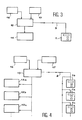
- FIG. 3 there is shown schematically the architecture of a management system electric heating to manage globally home heating.
- This architecture includes a central module 10 connected by a network of communication 9 (or information transfer network) to the system / user interface 1.
- This central module 10 is also connected to a weather sensor 16 and to an electric meter 17 from which it receives the information. After processing the information received sensor 16, electric meter 17 and interface 1, central module 10 sends an order to command to the control box 15 (or transmitter of control or means of action) of the heating generator.
- FIG 4 there is shown schematically the architecture of a management system electric heating to manage the heating independently in several rooms habitat.
- This architecture allows you to choose a different desired temperature in each room of habitat.
- the system includes a plurality interfaces 1a, 1b, 1c, etc., each distributed in a room of the habitat and a plurality of housings of controls 15a, 15b, 15c, etc., generators heating, each unit controlling the emission of heating for one of the rooms in the house.
- the energy management process that comes to be described can also be applied to the building air conditioning, or cooling, ventilation, lighting, sound system of a building which can be an accommodation, or a tertiary, industrial or agricultural premises.
- the management system is approximately the same as the one that comes to be described; only the sensors can differ: sound sensors instead of weather sensors for an application to the sound system of a room, for example.
- the process also remains identical to that which has just been described, the information processed can however be of different natures (in depending on the types of sensors used).
Landscapes
- Engineering & Computer Science (AREA)
- Chemical & Material Sciences (AREA)
- Combustion & Propulsion (AREA)
- Mechanical Engineering (AREA)
- General Engineering & Computer Science (AREA)
- Physics & Mathematics (AREA)
- Automation & Control Theory (AREA)
- General Physics & Mathematics (AREA)
- Signal Processing (AREA)
- Mathematical Physics (AREA)
- Fuzzy Systems (AREA)
- Air Conditioning Control Device (AREA)
- Time Recorders, Dirve Recorders, Access Control (AREA)
- Micro-Organisms Or Cultivation Processes Thereof (AREA)
- Electrotherapy Devices (AREA)
- Liquid Crystal Substances (AREA)
- Lubricants (AREA)
- Non-Silver Salt Photosensitive Materials And Non-Silver Salt Photography (AREA)
Applications Claiming Priority (2)
| Application Number | Priority Date | Filing Date | Title |
|---|---|---|---|
| FR9706870 | 1997-06-04 | ||
| FR9706870A FR2764400B1 (fr) | 1997-06-04 | 1997-06-04 | Procede et systeme de gestion d'energie autoconfigurable pour l'habitat |
Publications (2)
| Publication Number | Publication Date |
|---|---|
| EP0883050A1 true EP0883050A1 (de) | 1998-12-09 |
| EP0883050B1 EP0883050B1 (de) | 2003-08-27 |
Family
ID=9507569
Family Applications (1)
| Application Number | Title | Priority Date | Filing Date |
|---|---|---|---|
| EP98401313A Expired - Lifetime EP0883050B1 (de) | 1997-06-04 | 1998-06-02 | Selbstkonfigurierende Methode und System zur Energieverwaltung in einem Wohnbereich |
Country Status (5)
| Country | Link |
|---|---|
| EP (1) | EP0883050B1 (de) |
| AT (1) | ATE248394T1 (de) |
| DE (1) | DE69817455T2 (de) |
| ES (1) | ES2205405T3 (de) |
| FR (1) | FR2764400B1 (de) |
Cited By (10)
| Publication number | Priority date | Publication date | Assignee | Title |
|---|---|---|---|---|
| GB2408592A (en) * | 2003-11-27 | 2005-06-01 | James Ian Oswald | Household energy management system |
| WO2007090400A1 (en) * | 2006-02-10 | 2007-08-16 | Danfoss A/S | Method and system for controlling the climate in a house |
| EP1275908A4 (de) * | 2000-04-03 | 2009-11-11 | Daikin Ind Ltd | Verfahren und vorrichtung zum betreiben einer anlage, betriebsanlage, verfahren und vorrichtung zur verwaltung und herstellung einer betriebsanlage |
| WO2010014923A1 (en) * | 2008-07-31 | 2010-02-04 | Robert Bosch Gmbh | Sensor-based occupancy and behavior prediction method for intelligently controlling energy consumption within a building |
| EP2725817A4 (de) * | 2011-06-22 | 2014-07-09 | Panasonic Corp | Energieerhaltungssteuerung und energieerhaltungssteuerungssystem |
| EP3100173A4 (de) * | 2014-01-31 | 2018-01-31 | Nokia Technologies Oy | Vorrichtung und verfahren zur korrelation von daten |
| WO2018140640A1 (en) * | 2017-01-26 | 2018-08-02 | Carrier Corporation | System and method for hvac system schedule generation based on user defined comfort level inputs |
| EP2588923B1 (de) * | 2010-06-29 | 2019-03-06 | Orange | Adaption eines gerätebetriebs |
| IT201800005391A1 (it) * | 2018-05-15 | 2019-11-15 | Metodo intelligente per il rilevamento ed il controllo del livello di comfort ambientale. | |
| EP2775369B1 (de) * | 2013-03-08 | 2020-02-19 | Siemens Schweiz AG | Steuerung und Regelung für eine Raumkomfortgrösse |
Families Citing this family (6)
| Publication number | Priority date | Publication date | Assignee | Title |
|---|---|---|---|---|
| FR2873827B1 (fr) * | 2004-07-29 | 2006-11-10 | Ludovic Clement | Procede et systeme pour commander des elements techniques destines a fonctionner dans un lieu d'habitation et/ou de travail |
| JP2008232531A (ja) * | 2007-03-20 | 2008-10-02 | Toshiba Corp | リモート性能監視装置及びリモート性能監視方法 |
| DE102007030492B4 (de) * | 2007-06-30 | 2009-11-26 | Robert Bosch Gmbh | Gebäudemodellbasiertes prädiktives Verfahren zur Generierung und Weitergabe von Informationen über Auswirkungen von Sollwert-Änderungen |
| CN101893302B (zh) * | 2009-05-18 | 2012-10-17 | 中华电信股份有限公司 | 结合人员侦测管理机制的空调管理系统 |
| DE102013014833B4 (de) | 2013-09-10 | 2023-12-07 | Stiebel Eltron Gmbh & Co. Kg | Verfahren zur Regelung einer Temperatur |
| DE102015219199A1 (de) * | 2015-10-05 | 2017-04-06 | Bayerische Motoren Werke Aktiengesellschaft | SOC-Prognose für thermische Speicher zur Laufzeit-Optimierung von Wärmepumpen |
Citations (3)
| Publication number | Priority date | Publication date | Assignee | Title |
|---|---|---|---|---|
| US4873649A (en) * | 1988-06-10 | 1989-10-10 | Honeywell Inc. | Method for operating variable speed heat pumps and air conditioners |
| US5170935A (en) * | 1991-11-27 | 1992-12-15 | Massachusetts Institute Of Technology | Adaptable control of HVAC systems |
| US5570838A (en) * | 1993-06-30 | 1996-11-05 | Ford Motor Company | Method and control system for controlling an automotive HVAC system for increased occupant comfort |
-
1997
- 1997-06-04 FR FR9706870A patent/FR2764400B1/fr not_active Expired - Fee Related
-
1998
- 1998-06-02 EP EP98401313A patent/EP0883050B1/de not_active Expired - Lifetime
- 1998-06-02 AT AT98401313T patent/ATE248394T1/de active
- 1998-06-02 ES ES98401313T patent/ES2205405T3/es not_active Expired - Lifetime
- 1998-06-02 DE DE69817455T patent/DE69817455T2/de not_active Expired - Lifetime
Patent Citations (3)
| Publication number | Priority date | Publication date | Assignee | Title |
|---|---|---|---|---|
| US4873649A (en) * | 1988-06-10 | 1989-10-10 | Honeywell Inc. | Method for operating variable speed heat pumps and air conditioners |
| US5170935A (en) * | 1991-11-27 | 1992-12-15 | Massachusetts Institute Of Technology | Adaptable control of HVAC systems |
| US5570838A (en) * | 1993-06-30 | 1996-11-05 | Ford Motor Company | Method and control system for controlling an automotive HVAC system for increased occupant comfort |
Cited By (15)
| Publication number | Priority date | Publication date | Assignee | Title |
|---|---|---|---|---|
| US7784706B2 (en) | 2000-04-03 | 2010-08-31 | Daikin Industries, Ltd. | Facility operating method and apparatus, facility operating system, managing method and apparatus, and facility |
| EP1275908A4 (de) * | 2000-04-03 | 2009-11-11 | Daikin Ind Ltd | Verfahren und vorrichtung zum betreiben einer anlage, betriebsanlage, verfahren und vorrichtung zur verwaltung und herstellung einer betriebsanlage |
| GB2408592A (en) * | 2003-11-27 | 2005-06-01 | James Ian Oswald | Household energy management system |
| GB2408592B (en) * | 2003-11-27 | 2005-11-16 | James Ian Oswald | Household energy management system |
| WO2007090400A1 (en) * | 2006-02-10 | 2007-08-16 | Danfoss A/S | Method and system for controlling the climate in a house |
| US8121734B2 (en) | 2006-02-10 | 2012-02-21 | Danfoss A/S | Method and system for controlling the climate in a house |
| RU2389949C1 (ru) * | 2006-02-10 | 2010-05-20 | Данфосс А/С | Способ и система управления климатом здания |
| CN102132223A (zh) * | 2008-07-31 | 2011-07-20 | 罗伯特·博世有限公司 | 用于智能控制建筑物内能耗的基于传感器的占用和行为预测方法 |
| WO2010014923A1 (en) * | 2008-07-31 | 2010-02-04 | Robert Bosch Gmbh | Sensor-based occupancy and behavior prediction method for intelligently controlling energy consumption within a building |
| EP2588923B1 (de) * | 2010-06-29 | 2019-03-06 | Orange | Adaption eines gerätebetriebs |
| EP2725817A4 (de) * | 2011-06-22 | 2014-07-09 | Panasonic Corp | Energieerhaltungssteuerung und energieerhaltungssteuerungssystem |
| EP2775369B1 (de) * | 2013-03-08 | 2020-02-19 | Siemens Schweiz AG | Steuerung und Regelung für eine Raumkomfortgrösse |
| EP3100173A4 (de) * | 2014-01-31 | 2018-01-31 | Nokia Technologies Oy | Vorrichtung und verfahren zur korrelation von daten |
| WO2018140640A1 (en) * | 2017-01-26 | 2018-08-02 | Carrier Corporation | System and method for hvac system schedule generation based on user defined comfort level inputs |
| IT201800005391A1 (it) * | 2018-05-15 | 2019-11-15 | Metodo intelligente per il rilevamento ed il controllo del livello di comfort ambientale. |
Also Published As
| Publication number | Publication date |
|---|---|
| ES2205405T3 (es) | 2004-05-01 |
| FR2764400A1 (fr) | 1998-12-11 |
| FR2764400B1 (fr) | 1999-07-16 |
| EP0883050B1 (de) | 2003-08-27 |
| DE69817455D1 (de) | 2003-10-02 |
| ATE248394T1 (de) | 2003-09-15 |
| DE69817455T2 (de) | 2004-06-24 |
Similar Documents
| Publication | Publication Date | Title |
|---|---|---|
| EP0883050B1 (de) | Selbstkonfigurierende Methode und System zur Energieverwaltung in einem Wohnbereich | |
| EP2631723B1 (de) | Verfahren zur Steuerung und Parametrierung einer Gebäudetechnik-Installation, und Gebäudetechnik-Installation zur Umsetzung dieser Verfahren | |
| US10030884B2 (en) | Auto-configuring time-of-day for building control unit | |
| KR102264709B1 (ko) | 리소스 보존을 위한 hvac 스케줄의 자동화된 조절을 위한 방법 및 이를 위한 장치 | |
| US9429962B2 (en) | Auto-configuring time-of day for building control unit | |
| EP2776895B1 (de) | Verfahren zur erstellung einer referenzdatenstruktur und verfahren zur steuerung eines aktors | |
| CN107065961B (zh) | 智能恒温器控制hvac系统的灵活功能划分 | |
| EP3134778B1 (de) | Vorrichtung und system für steuerung und/oder befehl | |
| EP2460057B1 (de) | Energieverwaltung in einem gebäude | |
| FR3054340A1 (fr) | Procede de configuration, de controle ou de supervision d’une installation domotique | |
| FR2850469A1 (fr) | Procede de configuration d'une installation comprenant des dispositifs de protection solaire et/ou d'eclairage | |
| US20150148967A1 (en) | Methods, Systems, Apparatus and Software for Controlling Local Interior Environments | |
| FR3025871B1 (fr) | Equipement de controle d'au moins un appareil de regulation thermique, et ensemble de regulation et systeme de pilotage associes | |
| FR3056706A1 (fr) | Procede d'auto-parametrage auto-adaptatif d'un systeme de chauffage et de production d'eau chaude sanitaire | |
| EP3134777B1 (de) | Verfahren zur steuerung und/oder überwachung von mindestens einem aktuator | |
| EP3488301B1 (de) | Verfahren zur konfiguration und überwachung von heimautomatisierungsausrüstung | |
| EP0716273B1 (de) | Heizungsanlage mit Zentralsteuereinheit und Heizkörper mit Anordnung zur Feststellung der Anwesenheit | |
| EP3087447B1 (de) | Verfahren zur prognose eines inneren komfortparameters und zugehöriges endgerät | |
| EP2950249A1 (de) | Verfahren zur interaktion einer gruppe von nutzern mit einem automatismus | |
| EP2902762B1 (de) | Verfahren zur Bestimmung einer Wärmesignatur eines Gebäudes durch Temperaturmessung im Zeitverlauf, und entsprechende Vorrichtung | |
| FR2771521A1 (fr) | Dispositif de commande d'un moyen de protection solaire motorise | |
| FR2922668A1 (fr) | Procede de fonctionnement d'une installation domotique pour evaluer l'impact energetique d'actions d'un equipement domotique sur un local | |
| EP3764600B1 (de) | Autonome vorrichtung zur verwaltung eines raums | |
| WO2021229045A1 (fr) | Procédé de gestion d'énergie | |
| FR2832532A1 (fr) | Procede de programmation a distance et de telecommande d'equipements situes dans differentes zones d'un batiment |
Legal Events
| Date | Code | Title | Description |
|---|---|---|---|
| PUAI | Public reference made under article 153(3) epc to a published international application that has entered the european phase |
Free format text: ORIGINAL CODE: 0009012 |
|
| AK | Designated contracting states |
Kind code of ref document: A1 Designated state(s): AT BE CH CY DE DK ES FI FR GB GR IE IT LI LU MC NL PT SE |
|
| AX | Request for extension of the european patent |
Free format text: AL;LT;LV;MK;RO;SI |
|
| 17P | Request for examination filed |
Effective date: 19990514 |
|
| AKX | Designation fees paid |
Free format text: AT BE CH CY DE DK ES FI FR GB GR IE IT LI LU MC NL PT SE |
|
| GRAH | Despatch of communication of intention to grant a patent |
Free format text: ORIGINAL CODE: EPIDOS IGRA |
|
| GRAH | Despatch of communication of intention to grant a patent |
Free format text: ORIGINAL CODE: EPIDOS IGRA |
|
| GRAA | (expected) grant |
Free format text: ORIGINAL CODE: 0009210 |
|
| AK | Designated contracting states |
Designated state(s): AT BE CH CY DE DK ES FI FR GB GR IE IT LI LU MC NL PT SE |
|
| PG25 | Lapsed in a contracting state [announced via postgrant information from national office to epo] |
Ref country code: IE Free format text: LAPSE BECAUSE OF FAILURE TO SUBMIT A TRANSLATION OF THE DESCRIPTION OR TO PAY THE FEE WITHIN THE PRESCRIBED TIME-LIMIT Effective date: 20030827 Ref country code: FI Free format text: LAPSE BECAUSE OF FAILURE TO SUBMIT A TRANSLATION OF THE DESCRIPTION OR TO PAY THE FEE WITHIN THE PRESCRIBED TIME-LIMIT Effective date: 20030827 Ref country code: CY Free format text: LAPSE BECAUSE OF FAILURE TO SUBMIT A TRANSLATION OF THE DESCRIPTION OR TO PAY THE FEE WITHIN THE PRESCRIBED TIME-LIMIT Effective date: 20030827 |
|
| REG | Reference to a national code |
Ref country code: GB Ref legal event code: FG4D Free format text: NOT ENGLISH |
|
| REG | Reference to a national code |
Ref country code: CH Ref legal event code: EP |
|
| REG | Reference to a national code |
Ref country code: IE Ref legal event code: FG4D Free format text: FRENCH |
|
| REF | Corresponds to: |
Ref document number: 69817455 Country of ref document: DE Date of ref document: 20031002 Kind code of ref document: P |
|
| GBT | Gb: translation of ep patent filed (gb section 77(6)(a)/1977) |
Effective date: 20031028 |
|
| PG25 | Lapsed in a contracting state [announced via postgrant information from national office to epo] |
Ref country code: SE Free format text: LAPSE BECAUSE OF FAILURE TO SUBMIT A TRANSLATION OF THE DESCRIPTION OR TO PAY THE FEE WITHIN THE PRESCRIBED TIME-LIMIT Effective date: 20031127 Ref country code: GR Free format text: LAPSE BECAUSE OF FAILURE TO SUBMIT A TRANSLATION OF THE DESCRIPTION OR TO PAY THE FEE WITHIN THE PRESCRIBED TIME-LIMIT Effective date: 20031127 Ref country code: DK Free format text: LAPSE BECAUSE OF FAILURE TO SUBMIT A TRANSLATION OF THE DESCRIPTION OR TO PAY THE FEE WITHIN THE PRESCRIBED TIME-LIMIT Effective date: 20031127 |
|
| PG25 | Lapsed in a contracting state [announced via postgrant information from national office to epo] |
Ref country code: PT Free format text: LAPSE BECAUSE OF FAILURE TO SUBMIT A TRANSLATION OF THE DESCRIPTION OR TO PAY THE FEE WITHIN THE PRESCRIBED TIME-LIMIT Effective date: 20040127 |
|
| REG | Reference to a national code |
Ref country code: IE Ref legal event code: FD4D |
|
| REG | Reference to a national code |
Ref country code: ES Ref legal event code: FG2A Ref document number: 2205405 Country of ref document: ES Kind code of ref document: T3 |
|
| PG25 | Lapsed in a contracting state [announced via postgrant information from national office to epo] |
Ref country code: LU Free format text: LAPSE BECAUSE OF NON-PAYMENT OF DUE FEES Effective date: 20040602 |
|
| PG25 | Lapsed in a contracting state [announced via postgrant information from national office to epo] |
Ref country code: MC Free format text: LAPSE BECAUSE OF NON-PAYMENT OF DUE FEES Effective date: 20040630 Ref country code: LI Free format text: LAPSE BECAUSE OF NON-PAYMENT OF DUE FEES Effective date: 20040630 Ref country code: CH Free format text: LAPSE BECAUSE OF NON-PAYMENT OF DUE FEES Effective date: 20040630 |
|
| PLBE | No opposition filed within time limit |
Free format text: ORIGINAL CODE: 0009261 |
|
| STAA | Information on the status of an ep patent application or granted ep patent |
Free format text: STATUS: NO OPPOSITION FILED WITHIN TIME LIMIT |
|
| 26N | No opposition filed |
Effective date: 20040528 |
|
| REG | Reference to a national code |
Ref country code: CH Ref legal event code: PL |
|
| PGFP | Annual fee paid to national office [announced via postgrant information from national office to epo] |
Ref country code: ES Payment date: 20120625 Year of fee payment: 15 |
|
| PGFP | Annual fee paid to national office [announced via postgrant information from national office to epo] |
Ref country code: AT Payment date: 20120523 Year of fee payment: 15 |
|
| PGFP | Annual fee paid to national office [announced via postgrant information from national office to epo] |
Ref country code: DE Payment date: 20130611 Year of fee payment: 16 Ref country code: GB Payment date: 20130620 Year of fee payment: 16 |
|
| PGFP | Annual fee paid to national office [announced via postgrant information from national office to epo] |
Ref country code: NL Payment date: 20130516 Year of fee payment: 16 Ref country code: IT Payment date: 20130618 Year of fee payment: 16 |
|
| PGFP | Annual fee paid to national office [announced via postgrant information from national office to epo] |
Ref country code: BE Payment date: 20130626 Year of fee payment: 16 |
|
| REG | Reference to a national code |
Ref country code: DE Ref legal event code: R119 Ref document number: 69817455 Country of ref document: DE |
|
| REG | Reference to a national code |
Ref country code: NL Ref legal event code: V1 Effective date: 20150101 |
|
| REG | Reference to a national code |
Ref country code: AT Ref legal event code: MM01 Ref document number: 248394 Country of ref document: AT Kind code of ref document: T Effective date: 20140602 |
|
| GBPC | Gb: european patent ceased through non-payment of renewal fee |
Effective date: 20140602 |
|
| PG25 | Lapsed in a contracting state [announced via postgrant information from national office to epo] |
Ref country code: NL Free format text: LAPSE BECAUSE OF NON-PAYMENT OF DUE FEES Effective date: 20150101 |
|
| REG | Reference to a national code |
Ref country code: DE Ref legal event code: R119 Ref document number: 69817455 Country of ref document: DE Effective date: 20150101 |
|
| PG25 | Lapsed in a contracting state [announced via postgrant information from national office to epo] |
Ref country code: DE Free format text: LAPSE BECAUSE OF NON-PAYMENT OF DUE FEES Effective date: 20150101 Ref country code: IT Free format text: LAPSE BECAUSE OF NON-PAYMENT OF DUE FEES Effective date: 20140602 |
|
| PG25 | Lapsed in a contracting state [announced via postgrant information from national office to epo] |
Ref country code: GB Free format text: LAPSE BECAUSE OF NON-PAYMENT OF DUE FEES Effective date: 20140602 Ref country code: AT Free format text: LAPSE BECAUSE OF NON-PAYMENT OF DUE FEES Effective date: 20140602 |
|
| REG | Reference to a national code |
Ref country code: FR Ref legal event code: PLFP Year of fee payment: 18 |
|
| REG | Reference to a national code |
Ref country code: ES Ref legal event code: FD2A Effective date: 20150729 |
|
| PG25 | Lapsed in a contracting state [announced via postgrant information from national office to epo] |
Ref country code: ES Free format text: LAPSE BECAUSE OF NON-PAYMENT OF DUE FEES Effective date: 20140603 |
|
| PGFP | Annual fee paid to national office [announced via postgrant information from national office to epo] |
Ref country code: FR Payment date: 20150630 Year of fee payment: 18 |
|
| REG | Reference to a national code |
Ref country code: FR Ref legal event code: ST Effective date: 20170228 |
|
| PG25 | Lapsed in a contracting state [announced via postgrant information from national office to epo] |
Ref country code: FR Free format text: LAPSE BECAUSE OF NON-PAYMENT OF DUE FEES Effective date: 20160630 |
|
| PG25 | Lapsed in a contracting state [announced via postgrant information from national office to epo] |
Ref country code: BE Free format text: LAPSE BECAUSE OF NON-PAYMENT OF DUE FEES Effective date: 20140630 |