EP0883311A2 - Verfahren und System zur Implementierung intelligenter Telekommunikations-Dienstleistungen - Google Patents
Verfahren und System zur Implementierung intelligenter Telekommunikations-Dienstleistungen Download PDFInfo
- Publication number
- EP0883311A2 EP0883311A2 EP98302354A EP98302354A EP0883311A2 EP 0883311 A2 EP0883311 A2 EP 0883311A2 EP 98302354 A EP98302354 A EP 98302354A EP 98302354 A EP98302354 A EP 98302354A EP 0883311 A2 EP0883311 A2 EP 0883311A2
- Authority
- EP
- European Patent Office
- Prior art keywords
- service
- network
- call
- switching platform
- object driver
- Prior art date
- Legal status (The legal status is an assumption and is not a legal conclusion. Google has not performed a legal analysis and makes no representation as to the accuracy of the status listed.)
- Granted
Links
- 238000000034 method Methods 0.000 title claims abstract description 24
- 238000012545 processing Methods 0.000 claims abstract description 30
- 230000006870 function Effects 0.000 claims abstract description 12
- 238000011084 recovery Methods 0.000 claims description 3
- 238000004891 communication Methods 0.000 description 12
- 230000011664 signaling Effects 0.000 description 3
- 101100046816 Thermoproteus tenax (strain ATCC 35583 / DSM 2078 / JCM 9277 / NBRC 100435 / Kra 1) tpsp gene Proteins 0.000 description 2
- 230000002411 adverse Effects 0.000 description 2
- 238000012544 monitoring process Methods 0.000 description 2
- 230000002093 peripheral effect Effects 0.000 description 2
- KQPKMEYBZUPZGK-UHFFFAOYSA-N 4-[(4-azido-2-nitroanilino)methyl]-5-(hydroxymethyl)-2-methylpyridin-3-ol Chemical compound CC1=NC=C(CO)C(CNC=2C(=CC(=CC=2)N=[N+]=[N-])[N+]([O-])=O)=C1O KQPKMEYBZUPZGK-UHFFFAOYSA-N 0.000 description 1
- 101001111984 Homo sapiens N-acylneuraminate-9-phosphatase Proteins 0.000 description 1
- 102100023906 N-acylneuraminate-9-phosphatase Human genes 0.000 description 1
- 230000002596 correlated effect Effects 0.000 description 1
- 230000000977 initiatory effect Effects 0.000 description 1
- 230000003993 interaction Effects 0.000 description 1
- 230000002452 interceptive effect Effects 0.000 description 1
- 238000012423 maintenance Methods 0.000 description 1
- 238000012360 testing method Methods 0.000 description 1
- 238000012546 transfer Methods 0.000 description 1
Images

Classifications
-
- H—ELECTRICITY
- H04—ELECTRIC COMMUNICATION TECHNIQUE
- H04Q—SELECTING
- H04Q3/00—Selecting arrangements
- H04Q3/0016—Arrangements providing connection between exchanges
- H04Q3/0029—Provisions for intelligent networking
- H04Q3/0054—Service creation techniques
-
- H—ELECTRICITY
- H04—ELECTRIC COMMUNICATION TECHNIQUE
- H04M—TELEPHONIC COMMUNICATION
- H04M3/00—Automatic or semi-automatic exchanges
- H04M3/42—Systems providing special services or facilities to subscribers
- H04M3/4228—Systems providing special services or facilities to subscribers in networks
Definitions
- the present invention relates to implementing intelligent telecommunication services. More specifically, the present invention relates to a method for implementing self-sustaining, fault-tolerant object driver software within a telecommunications network.
- the present invention relates to a method for implementing intelligent telecommunication services by utilizing modular, self-sustaining, fault-tolerate object driver software.
- the present invention allows software for telecommunication services to be modified easier without the risk of adversely affecting existing services, reused among different physical locations, and developed faster to reduce the time of bringing new products to market.
- the present invention provides improved reliability and flexibility.
- the present invention implements intelligent telecommunication services between a calling party making a call request and a called party, within a telecommunication network.
- the present invention receives a trigger based on the call request from a source.
- the trigger activates a service-specific object driver.
- the object driver is built by interacting with service objects. Once the object driver is built, the call is formatted with call processing information based on the newly built object driver. During the entire process, network management functions are executed in a fault-tolerant fashion to ensure reliability. Once the call is formatted, the call can be forwarded to a next switching platform based on the call processing information.
- the present invention can be performed by a database or by at least one network element.
- the network management functions can identify and recover an object driver not received.
- the network management functions can monitor several service objects simultaneously and more than once.
- the network management functions can also include generic network management of call recovery.
- the trigger actuating a service-specific object driver can be initiated by the source or by the network.
- the object driver can be built from many service objects simultaneously.
- Fig. 1 illustrates the configuration and operation of a contemporary telecommunications network.
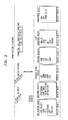
- Fig. 2 illustrates a services functional model according to an embodiment of the present invention.
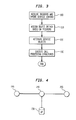
- Fig. 3 shows a flowchart of a process according to an embodiment of the present invention.
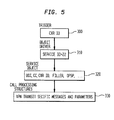
- Fig. 4 shows a network configuration for a VPN transit service according to an embodiment of the present invention.
- Fig. 5 illustrates the functional components of the present invention for the VPN transit service of Fig. 4.
- Fig. 1 illustrates the configuration and operation of a contemporary telecommunication network.
- Network 10 comprises a plurality of switching platforms 20 and links 30.
- Each of the switching platforms 20 also is connected to at least one adjunct platform 50.
- An adjunct platform can be connected to a single switching platform, or can be shared by two or more switching platforms or databases. Note that the depiction of a network comprising only five switching platforms is for convenience of illustration; an operating network can have a much larger number of switching platforms and associated connecting links.
- Fig. 1 shows a specific arrangement of adjunct platforms and switching platforms, any number of arrangements are possible.
- FIG. 1 Various switching platforms are shown illustratively connected to communications devices 40. It should be understood that the individual communications devices shown connected to the switching platforms in the figure are used for simplicity of illustration, and that an actual implementation of such a network would ordinarily have a number of communications devices connected at such switching platforms. Note, as well, that the communications devices shown in Fig. 1 can also represent another network or network devices, such as a LEC or PBX, which is connected to network 10.
- Each communications device 40 can generate information for use by, or receive information from, other communications devices in the network.
- information as used herein is intended to include text, graphics, voice, and/or video.
- Communications device 40 also transmit call request data that can identify the source, the destination and other data related to services available to manage the call.
- Fig. 2 introduces a set of multidimensional capabilities which allow service-related data to be exchanged among and operate with different hardware platforms and software programs.
- Fig. 3 shows a flowchart of a process according to an embodiment of the present invention; Table 1 summarizes the functional components of the present invention and non-exhaustively lists the elements associated with each functional component.
- the process begins at step 100 when a call request is received by a switching platform 20.
- Triggers are instructions or application service elements that direct a switching platform to suspend basic call processing control and invoke the service logic control. For example, the source's number or Calling Party Number (CgPN) can be used as a trigger.
- CgPN Calling Party Number
- the first column of Table 1 lists other possible parameters that can be used as triggers. Triggers can prompt specific actions by the switching platform 20 during call setup or while a call is already established and the source or the network wants to perform a new action (e.g., a sequence call).
- a combination of one or more triggers can be used to prompt a specific action by the switching platform 20.
- the Called Party Number (CdPN) and the Calling Party Number (CgPN) have the unique characteristics of a public or customized dialing plan sequence and can meet the criteria for a trigger.
- the CdPN may be different from the user dialed number (DN), therefore accommodating instructions from database dips.
- the CgPN can be different than the Automatic Number Identification (ANI) but the same as the billing number (BN), therefore the call can be billed properly.
- ANI Automatic Number Identification
- BN billing number
- *ATT *288
- a trigger like *288 (*ATT) could be perceived as a network trigger, which means the user wants to go back to the network functions for additional capabilities or communication, e.g., third party calling.
- step 110 the switching platform 20 assigns a specific object driver for the call.
- Object drivers are service-specific application elements that can dynamically invoke specific service objects as will be discussed below. All object drivers have the unique capability to control all call functions in a multitasking fashion when an application is executed. For example, an object driver can communicate with the user or network at any point during the processing of a call without necessarily interrupting the service logic, e.g., call transfer, call sequence or third party call control.
- the second column of Table 1 lists some possible object drivers.
- the assigned object driver will look for specific capabilities to which the user has subscribed and try to correlate the necessary information before continuing to step 120, the next step in the process. If the switching platform 20 cannot recognize the user or the call, it can assign a "pseudo object driver" and all the information is correlated and the user's request is categorized. Then, for network purposes, the "pseudo object driver" can be overwritten for easier processing of the call (e.g., bill the call to the right system).
- service objects are activated based on the contents of the object driver assigned in step 110.
- Service objects are sets of service-specific instructions that define the call processing segments of a call.
- a service object can exist for each type of network function; see, for example, the third column of Table 1.
- Table 2 non-exhaustively illustrates several service objects organized by function: Application, Resource, Service Group, Routing, User Interface, Network Transport Type, and Management. Table 2 also illustrates several members of each illustrated service object. Appl. Resource Service Group Routing User Interface Network Transport Mngt.
- Service objects can interact/exchange information with each other to create the correct call processing segments, consistent with user-subscribed capabilities and the available network resources. Some of these instructions could be used as unique "pointers" to drive a chain of call processing segments. These pointers (e.g., a country code) could derive both user and network instructions for a particular call. The collection of these service objects can then assist in forming the appropriate communication agents or call processing structures, as will be described below in connection with step 130.
- the Management service object ensures proper handling of the other service object drivers; in other words, the Management service object provides the needed reports, responds to failures by communicating with the user and with the network call maintenance systems (OA&M).
- the Management service object detects the occurrence of any possible errors when building each object driver.
- the management service object can check multiple times during the processing of the other service objects, even though all of the service objects are being processed simultaneously. If an error occurs during processing of one of the other service objects, the Management service object can recover from the error by reinitiating the processing, rather than allowing the call to fail. This recovery can occur at all call levels including when the switching platform is prompted by a trigger, when the object driver is being built, when the service object drivers are being executed or even when the call processing information is being formatted.
- step 130 switching platform 20 must identify and execute call processing structures.
- Call processing structures are stored program instructions responsible for initiating a "call session" that manages the association of interconnections in various media, based on specific service object instructions.
- a communication software module resident at switching platform 20 provides the necessary network-specific instructions (internal and external) on how to execute the call processing structures. In other words, the communication module builds and then processes the necessary protocol structure that incorporates the instructions from the service object's call processing segments.
- networks/elements e.g., switch to database, switch to adjunct/peripheral or switch to switch
- information elements e.g., Call Setup Message.
- the fourth column of Table 2 shows possible types of protocol structures for the call processing structures.
- the switching platform 20 has to format all the data according to the required protocol.
- the switching platform 20 builds the appropriate primitives for the external communications protocol and forwards the information to the next element or network.
- the software associated with the functional components of the present invention can physically reside across various elements in a telecommunications network, i.e., switches, databases, and peripherals/ adjuncts.
- the functional components of the present invention can be integrated into one network element, e.g., a database.
- Fig. 4 shows a network configuration through which a call utilizing the VPN transit service can flow according to an embodiment of the present invention.
- Switching platform 200 a gateway switch located in the U.K., is connected to switching platform 210, a AT&T gateway switch.
- Switching platform 210 is connected to switching platform 220, a gateway switch located in Japan, and to an adjunct platform 230.
- the connections between the switching platforms can be through public facilities or dedicated facilities.
- Fig. 4 shows only a few network elements for convenience of illustration, any number of additional network elements can be present.
- the AT&T gateway switching platform 210 receives a transit call via a CCITT #7 ISUP signaling message. Because this call is intended to be a VPN transit call, the incoming signaling message includes the network destination code (CXR ID) which identifies the terminating service provider. In this example, the CXR ID would refer to a terminating service provider in Japan.
- Fig. 5 illustrates the functional components of the present invention as the VPN transit service call of Fig. 4 is implemented.
- the switching platform 210 recognizes the CXR ID as a trigger 300 and then assigns an object driver 310; in this example the service ID object driver 310 is assigned the specific value of 22.
- Switching platform 210 accesses adjunct platform 230 to build the service ID object driver 310 from the appropriate service objects 320.
- a service ID object driver 310 having a value of 22 is associated with a specific application service object 320, in this case VPN transit.
- the service ID object driver 310 is also associated with other service objects 320.
- the service ID object driver 310 can be associated with user interface service objects, such as POTS; resources service objects, such as call monitoring and customized announcements; and service group service objects, such as GUG.
- user interface service objects such as POTS
- resources service objects such as call monitoring and customized announcements
- service group service objects such as GUG.
- Other service objects can also be used to process the call from a network perspective including routing, network transport, and perhaps billing recording among others.
- Switching platform 210 executes the service objects 320. It can use specific pointers, such as "routing codes" within a routing table to speed the execution process, as illustrated in Table 3. A routing code be used to obtain the complete information needed to construct the call processing structure 330.
- the switching platform 210 can use a routing code to generate the call processing structure 330 (e.g., outgoing trunk information, network routing information, overflow indicator.) Routing Code Network Routing Info Outgoing Trunk Info Overflow Indicator OPSP XXX CdPN XXX-XXX* 1-456-28X
- the switching platform 210 populates the CdPN parameter and constructs the Forward GVNS parameter in the call processing structure 330.
- the switching platform 210 then routes the call to switching platform 220 via public facilities or dedicated facilities. If no match is found for the routing code in the routing table, the call is terminated.
Landscapes
- Engineering & Computer Science (AREA)
- Signal Processing (AREA)
- Computer Networks & Wireless Communication (AREA)
- Telephonic Communication Services (AREA)
- Exchange Systems With Centralized Control (AREA)
- Hardware Redundancy (AREA)
- Stored Programmes (AREA)
- Data Exchanges In Wide-Area Networks (AREA)
- Multi Processors (AREA)
Applications Claiming Priority (2)
| Application Number | Priority Date | Filing Date | Title |
|---|---|---|---|
| US844424 | 1997-04-18 | ||
| US08/844,424 US6002756A (en) | 1997-04-18 | 1997-04-18 | Method and system for implementing intelligent telecommunication services utilizing self-sustaining, fault-tolerant object oriented architecture |
Publications (3)
| Publication Number | Publication Date |
|---|---|
| EP0883311A2 true EP0883311A2 (de) | 1998-12-09 |
| EP0883311A3 EP0883311A3 (de) | 2000-03-08 |
| EP0883311B1 EP0883311B1 (de) | 2006-10-18 |
Family
ID=25292686
Family Applications (1)
| Application Number | Title | Priority Date | Filing Date |
|---|---|---|---|
| EP98302354A Expired - Lifetime EP0883311B1 (de) | 1997-04-18 | 1998-03-27 | Verfahren und System zur Implementierung intelligenter Telekommunikations-Dienstleistungen |
Country Status (5)
| Country | Link |
|---|---|
| US (1) | US6002756A (de) |
| EP (1) | EP0883311B1 (de) |
| JP (1) | JP3024096B2 (de) |
| CA (1) | CA2233124C (de) |
| DE (1) | DE69836169T2 (de) |
Cited By (3)
| Publication number | Priority date | Publication date | Assignee | Title |
|---|---|---|---|---|
| WO2000038397A1 (en) * | 1998-12-23 | 2000-06-29 | Ericsson Inc. | System and method for adding services to computer telephone systems |
| WO2003030506A1 (en) * | 2001-09-28 | 2003-04-10 | Intel Corporation | Software call control agent |
| EP1346516A4 (de) * | 2000-11-30 | 2007-03-07 | George P Mattathil | Dynamisches privates netzwerk |
Families Citing this family (14)
| Publication number | Priority date | Publication date | Assignee | Title |
|---|---|---|---|---|
| US10361802B1 (en) | 1999-02-01 | 2019-07-23 | Blanding Hovenweep, Llc | Adaptive pattern recognition based control system and method |
| GB2338371A (en) * | 1998-06-09 | 1999-12-15 | Ibm | Voice processing system |
| KR20010063677A (ko) * | 1999-12-24 | 2001-07-09 | 박종섭 | 지능망시스템의 인스트럭션 수행방법 |
| WO2002005061A2 (en) | 2000-07-06 | 2002-01-17 | David Paul Felsher | Information record infrastructure, system and method |
| US6807269B1 (en) | 2000-07-20 | 2004-10-19 | Cisco Technology, Inc. | Call management implemented using call routing engine |
| US6674852B1 (en) | 2000-08-31 | 2004-01-06 | Cisco Technology, Inc. | Call management implemented using call routing engine |
| US6690789B1 (en) * | 2000-08-31 | 2004-02-10 | Cisco Technology, Inc. | Fault tolerant telephony control |
| US6801613B1 (en) * | 2000-08-31 | 2004-10-05 | Cisco Technology, Inc. | Associating call appearance with data associated with call |
| US7181017B1 (en) | 2001-03-23 | 2007-02-20 | David Felsher | System and method for secure three-party communications |
| US9818136B1 (en) | 2003-02-05 | 2017-11-14 | Steven M. Hoffberg | System and method for determining contingent relevance |
| ITMI20051742A1 (it) * | 2005-09-20 | 2007-03-21 | Accenture Global Services Gmbh | Architettura di autenticazione ed autorizzazione per una porta di accesso |
| US8874477B2 (en) | 2005-10-04 | 2014-10-28 | Steven Mark Hoffberg | Multifactorial optimization system and method |
| CN101605274B (zh) * | 2009-07-03 | 2012-07-18 | 中兴通讯股份有限公司 | 一种智能业务的升级方法及一种业务控制点装置 |
| EP2648364B1 (de) | 2012-03-07 | 2018-06-06 | Accenture Global Services Limited | Kommunikationskollaboration |
Family Cites Families (12)
| Publication number | Priority date | Publication date | Assignee | Title |
|---|---|---|---|---|
| BR9106586A (pt) * | 1990-06-26 | 1993-03-30 | Australian & Overseas Telecom | Sistema e aparelho de telefonia aperfeicoados e metodos para fornecer servicos de telefonia aperfeicoados |
| US5506894A (en) * | 1991-06-03 | 1996-04-09 | At&T Corp. | System for processing calling party information for international communications services |
| US5333185A (en) * | 1991-06-03 | 1994-07-26 | At&T Bell Laboratories | System for processing calling party information for international communications services |
| US5311572A (en) * | 1991-10-03 | 1994-05-10 | At&T Bell Laboratories | Cooperative databases call processing system |
| US5864614A (en) * | 1992-04-17 | 1999-01-26 | Bell Atlantic Network Services, Inc. | Intelligent peripheral and network control |
| US5515425A (en) * | 1993-01-19 | 1996-05-07 | At&T Corp. | Telecommunications system with active database |
| US5481603A (en) * | 1993-09-28 | 1996-01-02 | At&T Corp. | Intelligent call processing based upon complete identification of calling station |
| SG43031A1 (en) * | 1994-02-28 | 1997-10-17 | British Telecomm | Service provision in communications networks |
| CA2125239A1 (en) * | 1994-06-06 | 1995-12-07 | Kenneth Allan Borg | Network service provisioning |
| SE503021C2 (sv) | 1994-06-13 | 1996-03-11 | Ericsson Telefon Ab L M | Driftstödsnät för ett telekommunikationsnät innefattande nätelement, telekommunikationsnät innefattande nätelement, nätelement samt sätt att strukturera programvara i ett nätelement |
| US5517564A (en) * | 1994-07-29 | 1996-05-14 | British Telecommunications Public Limited Company | Communication apparatus and method |
| CA2147776C (en) * | 1995-04-25 | 1997-09-02 | George W. Turner | Number translation services matrix |
-
1997
- 1997-04-18 US US08/844,424 patent/US6002756A/en not_active Expired - Fee Related
-
1998
- 1998-03-25 CA CA002233124A patent/CA2233124C/en not_active Expired - Fee Related
- 1998-03-27 EP EP98302354A patent/EP0883311B1/de not_active Expired - Lifetime
- 1998-03-27 DE DE69836169T patent/DE69836169T2/de not_active Expired - Lifetime
- 1998-04-13 JP JP10101253A patent/JP3024096B2/ja not_active Expired - Fee Related
Cited By (5)
| Publication number | Priority date | Publication date | Assignee | Title |
|---|---|---|---|---|
| WO2000038397A1 (en) * | 1998-12-23 | 2000-06-29 | Ericsson Inc. | System and method for adding services to computer telephone systems |
| EP1346516A4 (de) * | 2000-11-30 | 2007-03-07 | George P Mattathil | Dynamisches privates netzwerk |
| WO2003030506A1 (en) * | 2001-09-28 | 2003-04-10 | Intel Corporation | Software call control agent |
| US6853720B2 (en) | 2001-09-28 | 2005-02-08 | Intel Corporation | Software call control agent |
| CN100559816C (zh) * | 2001-09-28 | 2009-11-11 | 英特尔公司 | 软件呼叫控制代理 |
Also Published As
| Publication number | Publication date |
|---|---|
| JPH10304075A (ja) | 1998-11-13 |
| US6002756A (en) | 1999-12-14 |
| EP0883311B1 (de) | 2006-10-18 |
| CA2233124C (en) | 2001-01-16 |
| JP3024096B2 (ja) | 2000-03-21 |
| DE69836169D1 (de) | 2006-11-30 |
| EP0883311A3 (de) | 2000-03-08 |
| CA2233124A1 (en) | 1998-10-18 |
| DE69836169T2 (de) | 2007-08-30 |
Similar Documents
| Publication | Publication Date | Title |
|---|---|---|
| US6226289B1 (en) | Method and apparatus for dynamically routing calls in an intelligent network | |
| US6002756A (en) | Method and system for implementing intelligent telecommunication services utilizing self-sustaining, fault-tolerant object oriented architecture | |
| AU701276B2 (en) | System for managing telecommunications | |
| US8279862B2 (en) | Centralized service control for a telecommunication system | |
| EP1040680B1 (de) | Aufruf einer architekturunabhängigen anwendung über ein telefonnetz | |
| EP0974234B1 (de) | Vermittlungsdienststeuerpunkt in einem intelligenten netz | |
| US7277444B2 (en) | Method and system for distributing and executing service logic | |
| JPH07170324A (ja) | 通信ネットワークにおける発呼の処理方法とそのシステム | |
| EP0979573B1 (de) | Verfahren und system für ein telekommunikationsnetzwerk | |
| US6671361B2 (en) | Telecommunications system and method relating to telecommunications services with number translation | |
| EP0830039A1 (de) | Intelligentes Fernmeldenetz | |
| US20010053218A1 (en) | Transaction bridging/forwarding in signaling system of telecommunications network | |
| US5917901A (en) | Telecommunications system | |
| US6055303A (en) | Telecommunications services | |
| US6282190B1 (en) | Network centric call processing architecture using distributed call segments | |
| US6813348B1 (en) | Method and system of call origination using a service circuit node in an advanced intelligent network | |
| US6148073A (en) | Network centric call processing architecture using distributed call segments | |
| EP1236339B1 (de) | System und verfahren zur übertragung von daten zu einem anrufziel | |
| JP2000092198A (ja) | サ―ビス制御プラットフォ―ム | |
| MXPA98001825A (en) | System to manage telecommunication |
Legal Events
| Date | Code | Title | Description |
|---|---|---|---|
| PUAI | Public reference made under article 153(3) epc to a published international application that has entered the european phase |
Free format text: ORIGINAL CODE: 0009012 |
|
| AK | Designated contracting states |
Kind code of ref document: A2 Designated state(s): DE FR GB |
|
| AX | Request for extension of the european patent |
Free format text: AL;LT;LV;MK;RO;SI |
|
| PUAL | Search report despatched |
Free format text: ORIGINAL CODE: 0009013 |
|
| AK | Designated contracting states |
Kind code of ref document: A3 Designated state(s): AT BE CH DE DK ES FI FR GB GR IE IT LI LU MC NL PT SE |
|
| AX | Request for extension of the european patent |
Free format text: AL;LT;LV;MK;RO;SI |
|
| 17P | Request for examination filed |
Effective date: 20000331 |
|
| AKX | Designation fees paid |
Free format text: DE FR GB |
|
| 17Q | First examination report despatched |
Effective date: 20050216 |
|
| GRAP | Despatch of communication of intention to grant a patent |
Free format text: ORIGINAL CODE: EPIDOSNIGR1 |
|
| GRAS | Grant fee paid |
Free format text: ORIGINAL CODE: EPIDOSNIGR3 |
|
| GRAA | (expected) grant |
Free format text: ORIGINAL CODE: 0009210 |
|
| AK | Designated contracting states |
Kind code of ref document: B1 Designated state(s): DE FR GB |
|
| REG | Reference to a national code |
Ref country code: GB Ref legal event code: FG4D |
|
| REF | Corresponds to: |
Ref document number: 69836169 Country of ref document: DE Date of ref document: 20061130 Kind code of ref document: P |
|
| ET | Fr: translation filed | ||
| PLBE | No opposition filed within time limit |
Free format text: ORIGINAL CODE: 0009261 |
|
| STAA | Information on the status of an ep patent application or granted ep patent |
Free format text: STATUS: NO OPPOSITION FILED WITHIN TIME LIMIT |
|
| 26N | No opposition filed |
Effective date: 20070719 |
|
| PGFP | Annual fee paid to national office [announced via postgrant information from national office to epo] |
Ref country code: DE Payment date: 20100331 Year of fee payment: 13 |
|
| PGFP | Annual fee paid to national office [announced via postgrant information from national office to epo] |
Ref country code: FR Payment date: 20110304 Year of fee payment: 14 |
|
| PGFP | Annual fee paid to national office [announced via postgrant information from national office to epo] |
Ref country code: GB Payment date: 20110221 Year of fee payment: 14 |
|
| PG25 | Lapsed in a contracting state [announced via postgrant information from national office to epo] |
Ref country code: DE Free format text: LAPSE BECAUSE OF NON-PAYMENT OF DUE FEES Effective date: 20111001 |
|
| REG | Reference to a national code |
Ref country code: DE Ref legal event code: R119 Ref document number: 69836169 Country of ref document: DE Effective date: 20111001 |
|
| GBPC | Gb: european patent ceased through non-payment of renewal fee |
Effective date: 20120327 |
|
| REG | Reference to a national code |
Ref country code: FR Ref legal event code: ST Effective date: 20121130 |
|
| PG25 | Lapsed in a contracting state [announced via postgrant information from national office to epo] |
Ref country code: FR Free format text: LAPSE BECAUSE OF NON-PAYMENT OF DUE FEES Effective date: 20120402 Ref country code: GB Free format text: LAPSE BECAUSE OF NON-PAYMENT OF DUE FEES Effective date: 20120327 |