EP0885962B1 - Mikroorganismen und Verfahren zur fermentativen Herstellung von L-Cystein, L-Cystin, N-Acetyl-Serin oder Thiazolindinderivaten - Google Patents
Mikroorganismen und Verfahren zur fermentativen Herstellung von L-Cystein, L-Cystin, N-Acetyl-Serin oder Thiazolindinderivaten Download PDFInfo
- Publication number
- EP0885962B1 EP0885962B1 EP98109269A EP98109269A EP0885962B1 EP 0885962 B1 EP0885962 B1 EP 0885962B1 EP 98109269 A EP98109269 A EP 98109269A EP 98109269 A EP98109269 A EP 98109269A EP 0885962 B1 EP0885962 B1 EP 0885962B1
- Authority
- EP
- European Patent Office
- Prior art keywords
- cysteine
- seq
- sequence
- pacyc184
- cystine
- Prior art date
- Legal status (The legal status is an assumption and is not a legal conclusion. Google has not performed a legal analysis and makes no representation as to the accuracy of the status listed.)
- Expired - Lifetime
Links
- LEVWYRKDKASIDU-IMJSIDKUSA-N L-cystine Chemical compound [O-]C(=O)[C@@H]([NH3+])CSSC[C@H]([NH3+])C([O-])=O LEVWYRKDKASIDU-IMJSIDKUSA-N 0.000 title claims abstract description 28
- JJIHLJJYMXLCOY-BYPYZUCNSA-N N-acetyl-L-serine Chemical compound CC(=O)N[C@@H](CO)C(O)=O JJIHLJJYMXLCOY-BYPYZUCNSA-N 0.000 title claims abstract description 28
- 244000005700 microbiome Species 0.000 title claims abstract description 27
- XUJNEKJLAYXESH-REOHCLBHSA-N L-Cysteine Chemical compound SC[C@H](N)C(O)=O XUJNEKJLAYXESH-REOHCLBHSA-N 0.000 title claims description 84
- 238000012262 fermentative production Methods 0.000 title abstract description 7
- 238000000034 method Methods 0.000 title description 21
- 230000008569 process Effects 0.000 title description 7
- 108090000623 proteins and genes Proteins 0.000 claims abstract description 56
- 150000003548 thiazolidines Chemical class 0.000 claims abstract description 35
- 229960003067 cystine Drugs 0.000 claims abstract description 27
- 102000004169 proteins and genes Human genes 0.000 claims abstract description 24
- PWKSKIMOESPYIA-UHFFFAOYSA-N 2-acetamido-3-sulfanylpropanoic acid Chemical compound CC(=O)NC(CS)C(O)=O PWKSKIMOESPYIA-UHFFFAOYSA-N 0.000 claims abstract description 21
- 239000004158 L-cystine Substances 0.000 claims abstract description 21
- 235000019393 L-cystine Nutrition 0.000 claims abstract description 21
- 238000000855 fermentation Methods 0.000 claims description 36
- 230000004151 fermentation Effects 0.000 claims description 36
- 239000004201 L-cysteine Substances 0.000 claims description 25
- 235000013878 L-cysteine Nutrition 0.000 claims description 25
- XUJNEKJLAYXESH-UHFFFAOYSA-N cysteine Natural products SCC(N)C(O)=O XUJNEKJLAYXESH-UHFFFAOYSA-N 0.000 claims description 25
- 235000018417 cysteine Nutrition 0.000 claims description 25
- 235000018102 proteins Nutrition 0.000 claims description 20
- 238000004519 manufacturing process Methods 0.000 claims description 12
- 108700028369 Alleles Proteins 0.000 claims description 11
- 230000014509 gene expression Effects 0.000 claims description 9
- 238000002360 preparation method Methods 0.000 claims description 8
- 230000002074 deregulated effect Effects 0.000 claims description 4
- 230000004060 metabolic process Effects 0.000 claims description 4
- 230000003190 augmentative effect Effects 0.000 claims 1
- 239000013612 plasmid Substances 0.000 abstract description 47
- 239000000126 substance Substances 0.000 abstract description 6
- 239000003242 anti bacterial agent Substances 0.000 abstract 1
- 229940088710 antibiotic agent Drugs 0.000 abstract 1
- 230000001413 cellular effect Effects 0.000 abstract 1
- 230000000813 microbial effect Effects 0.000 abstract 1
- 231100000331 toxic Toxicity 0.000 abstract 1
- 230000002588 toxic effect Effects 0.000 abstract 1
- 230000000692 anti-sense effect Effects 0.000 description 22
- 239000012634 fragment Substances 0.000 description 16
- 101000787090 Lactobacillus delbrueckii subsp. bulgaricus Uncharacterized 33.9 kDa protein in glnA 5'region Proteins 0.000 description 15
- 150000001413 amino acids Chemical class 0.000 description 15
- 210000004027 cell Anatomy 0.000 description 14
- 230000015572 biosynthetic process Effects 0.000 description 12
- 238000005755 formation reaction Methods 0.000 description 12
- 239000002609 medium Substances 0.000 description 12
- 241000588724 Escherichia coli Species 0.000 description 11
- 235000001014 amino acid Nutrition 0.000 description 11
- 229940024606 amino acid Drugs 0.000 description 11
- 241001302584 Escherichia coli str. K-12 substr. W3110 Species 0.000 description 10
- FAPWRFPIFSIZLT-UHFFFAOYSA-M Sodium chloride Chemical compound [Na+].[Cl-] FAPWRFPIFSIZLT-UHFFFAOYSA-M 0.000 description 10
- 230000003321 amplification Effects 0.000 description 10
- 238000003199 nucleic acid amplification method Methods 0.000 description 10
- WQZGKKKJIJFFOK-GASJEMHNSA-N Glucose Natural products OC[C@H]1OC(O)[C@H](O)[C@@H](O)[C@@H]1O WQZGKKKJIJFFOK-GASJEMHNSA-N 0.000 description 9
- 239000008103 glucose Substances 0.000 description 9
- 108020004445 glyceraldehyde-3-phosphate dehydrogenase Proteins 0.000 description 9
- 238000011534 incubation Methods 0.000 description 9
- 230000002018 overexpression Effects 0.000 description 9
- 239000000047 product Substances 0.000 description 9
- JCAKCGQZNBEITC-UHFFFAOYSA-N 2-methyl-1,3-thiazolidine-2,4-dicarboxylic acid Chemical compound OC(=O)C1(C)NC(C(O)=O)CS1 JCAKCGQZNBEITC-UHFFFAOYSA-N 0.000 description 8
- 102100031181 Glyceraldehyde-3-phosphate dehydrogenase Human genes 0.000 description 8
- 108020004707 nucleic acids Proteins 0.000 description 8
- 102000039446 nucleic acids Human genes 0.000 description 8
- 150000007523 nucleic acids Chemical class 0.000 description 8
- 239000002773 nucleotide Substances 0.000 description 8
- 125000003729 nucleotide group Chemical group 0.000 description 8
- 238000003752 polymerase chain reaction Methods 0.000 description 8
- 239000006228 supernatant Substances 0.000 description 8
- JJIHLJJYMXLCOY-UHFFFAOYSA-N N-acetyl-DL-serine Natural products CC(=O)NC(CO)C(O)=O JJIHLJJYMXLCOY-UHFFFAOYSA-N 0.000 description 7
- 150000001299 aldehydes Chemical class 0.000 description 7
- 238000010276 construction Methods 0.000 description 7
- 239000002244 precipitate Substances 0.000 description 7
- 238000012360 testing method Methods 0.000 description 7
- JCAKCGQZNBEITC-FWRGRRDFSA-N (4r)-2-methyl-1,3-thiazolidine-2,4-dicarboxylic acid Chemical compound OC(=O)C1(C)N[C@H](C(O)=O)CS1 JCAKCGQZNBEITC-FWRGRRDFSA-N 0.000 description 6
- 101100498063 Emericella nidulans (strain FGSC A4 / ATCC 38163 / CBS 112.46 / NRRL 194 / M139) cysB gene Proteins 0.000 description 6
- 102000004190 Enzymes Human genes 0.000 description 6
- 108090000790 Enzymes Proteins 0.000 description 6
- PEDCQBHIVMGVHV-UHFFFAOYSA-N Glycerine Chemical compound OCC(O)CO PEDCQBHIVMGVHV-UHFFFAOYSA-N 0.000 description 6
- 238000009833 condensation Methods 0.000 description 6
- 230000005494 condensation Effects 0.000 description 6
- 101150111114 cysE gene Proteins 0.000 description 6
- 150000002576 ketones Chemical class 0.000 description 6
- 239000008188 pellet Substances 0.000 description 6
- 239000007858 starting material Substances 0.000 description 6
- LCTONWCANYUPML-UHFFFAOYSA-M Pyruvate Chemical compound CC(=O)C([O-])=O LCTONWCANYUPML-UHFFFAOYSA-M 0.000 description 5
- 238000000246 agarose gel electrophoresis Methods 0.000 description 5
- 229910052799 carbon Inorganic materials 0.000 description 5
- 238000005119 centrifugation Methods 0.000 description 5
- 108091008146 restriction endonucleases Proteins 0.000 description 5
- 239000011780 sodium chloride Substances 0.000 description 5
- 230000009466 transformation Effects 0.000 description 5
- OGYGFUAIIOPWQD-UHFFFAOYSA-N 1,3-thiazolidine Chemical class C1CSCN1 OGYGFUAIIOPWQD-UHFFFAOYSA-N 0.000 description 4
- 239000004098 Tetracycline Substances 0.000 description 4
- 238000004458 analytical method Methods 0.000 description 4
- 229940041514 candida albicans extract Drugs 0.000 description 4
- 125000004432 carbon atom Chemical group C* 0.000 description 4
- 239000013611 chromosomal DNA Substances 0.000 description 4
- 230000029087 digestion Effects 0.000 description 4
- 238000002955 isolation Methods 0.000 description 4
- 238000000746 purification Methods 0.000 description 4
- 239000000243 solution Substances 0.000 description 4
- 229910052717 sulfur Inorganic materials 0.000 description 4
- 229960002180 tetracycline Drugs 0.000 description 4
- 229930101283 tetracycline Natural products 0.000 description 4
- 235000019364 tetracycline Nutrition 0.000 description 4
- 150000003522 tetracyclines Chemical class 0.000 description 4
- 239000012138 yeast extract Substances 0.000 description 4
- FWMNVWWHGCHHJJ-SKKKGAJSSA-N 4-amino-1-[(2r)-6-amino-2-[[(2r)-2-[[(2r)-2-[[(2r)-2-amino-3-phenylpropanoyl]amino]-3-phenylpropanoyl]amino]-4-methylpentanoyl]amino]hexanoyl]piperidine-4-carboxylic acid Chemical compound C([C@H](C(=O)N[C@H](CC(C)C)C(=O)N[C@H](CCCCN)C(=O)N1CCC(N)(CC1)C(O)=O)NC(=O)[C@H](N)CC=1C=CC=CC=1)C1=CC=CC=C1 FWMNVWWHGCHHJJ-SKKKGAJSSA-N 0.000 description 3
- VZXPDPZARILFQX-BYPYZUCNSA-N O-acetyl-L-serine Chemical compound CC(=O)OC[C@H]([NH3+])C([O-])=O VZXPDPZARILFQX-BYPYZUCNSA-N 0.000 description 3
- NINIDFKCEFEMDL-UHFFFAOYSA-N Sulfur Chemical compound [S] NINIDFKCEFEMDL-UHFFFAOYSA-N 0.000 description 3
- 229930003451 Vitamin B1 Natural products 0.000 description 3
- QVGXLLKOCUKJST-UHFFFAOYSA-N atomic oxygen Chemical compound [O] QVGXLLKOCUKJST-UHFFFAOYSA-N 0.000 description 3
- 239000000872 buffer Substances 0.000 description 3
- VHJLVAABSRFDPM-QWWZWVQMSA-N dithiothreitol Chemical compound SC[C@@H](O)[C@H](O)CS VHJLVAABSRFDPM-QWWZWVQMSA-N 0.000 description 3
- 108010030074 endodeoxyribonuclease MluI Proteins 0.000 description 3
- 239000000203 mixture Substances 0.000 description 3
- 229910052760 oxygen Inorganic materials 0.000 description 3
- 239000001301 oxygen Substances 0.000 description 3
- 238000001556 precipitation Methods 0.000 description 3
- 238000002741 site-directed mutagenesis Methods 0.000 description 3
- 239000011593 sulfur Substances 0.000 description 3
- 238000003786 synthesis reaction Methods 0.000 description 3
- 229960003495 thiamine Drugs 0.000 description 3
- DPJRMOMPQZCRJU-UHFFFAOYSA-M thiamine hydrochloride Chemical compound Cl.[Cl-].CC1=C(CCO)SC=[N+]1CC1=CN=C(C)N=C1N DPJRMOMPQZCRJU-UHFFFAOYSA-M 0.000 description 3
- 238000013518 transcription Methods 0.000 description 3
- 230000035897 transcription Effects 0.000 description 3
- 239000012137 tryptone Substances 0.000 description 3
- 239000011691 vitamin B1 Substances 0.000 description 3
- 235000010374 vitamin B1 Nutrition 0.000 description 3
- KRKNYBCHXYNGOX-UHFFFAOYSA-K Citrate Chemical compound [O-]C(=O)CC(O)(CC([O-])=O)C([O-])=O KRKNYBCHXYNGOX-UHFFFAOYSA-K 0.000 description 2
- 102000012410 DNA Ligases Human genes 0.000 description 2
- 108010061982 DNA Ligases Proteins 0.000 description 2
- XEEYBQQBJWHFJM-UHFFFAOYSA-N Iron Chemical compound [Fe] XEEYBQQBJWHFJM-UHFFFAOYSA-N 0.000 description 2
- 102000003960 Ligases Human genes 0.000 description 2
- 108090000364 Ligases Proteins 0.000 description 2
- 108700026244 Open Reading Frames Proteins 0.000 description 2
- 239000011543 agarose gel Substances 0.000 description 2
- 150000003862 amino acid derivatives Chemical class 0.000 description 2
- 239000012736 aqueous medium Substances 0.000 description 2
- 230000036983 biotransformation Effects 0.000 description 2
- 125000003178 carboxy group Chemical group [H]OC(*)=O 0.000 description 2
- 238000001212 derivatisation Methods 0.000 description 2
- 238000004520 electroporation Methods 0.000 description 2
- 238000002474 experimental method Methods 0.000 description 2
- 230000002779 inactivation Effects 0.000 description 2
- 229910021645 metal ion Inorganic materials 0.000 description 2
- 229930182817 methionine Natural products 0.000 description 2
- 230000003287 optical effect Effects 0.000 description 2
- 239000002243 precursor Substances 0.000 description 2
- 238000000926 separation method Methods 0.000 description 2
- 238000003756 stirring Methods 0.000 description 2
- 239000011550 stock solution Substances 0.000 description 2
- DHCDFWKWKRSZHF-UHFFFAOYSA-N sulfurothioic S-acid Chemical compound OS(O)(=O)=S DHCDFWKWKRSZHF-UHFFFAOYSA-N 0.000 description 2
- 239000011573 trace mineral Substances 0.000 description 2
- 235000013619 trace mineral Nutrition 0.000 description 2
- 238000013519 translation Methods 0.000 description 2
- HORQAOAYAYGIBM-UHFFFAOYSA-N 2,4-dinitrophenylhydrazine Chemical compound NNC1=CC=C([N+]([O-])=O)C=C1[N+]([O-])=O HORQAOAYAYGIBM-UHFFFAOYSA-N 0.000 description 1
- QKNYBSVHEMOAJP-UHFFFAOYSA-N 2-amino-2-(hydroxymethyl)propane-1,3-diol;hydron;chloride Chemical compound Cl.OCC(N)(CO)CO QKNYBSVHEMOAJP-UHFFFAOYSA-N 0.000 description 1
- NKDFYOWSKOHCCO-YPVLXUMRSA-N 20-hydroxyecdysone Chemical compound C1[C@@H](O)[C@@H](O)C[C@]2(C)[C@@H](CC[C@@]3([C@@H]([C@@](C)(O)[C@H](O)CCC(C)(O)C)CC[C@]33O)C)C3=CC(=O)[C@@H]21 NKDFYOWSKOHCCO-YPVLXUMRSA-N 0.000 description 1
- KIUMMUBSPKGMOY-UHFFFAOYSA-N 3,3'-Dithiobis(6-nitrobenzoic acid) Chemical compound C1=C([N+]([O-])=O)C(C(=O)O)=CC(SSC=2C=C(C(=CC=2)[N+]([O-])=O)C(O)=O)=C1 KIUMMUBSPKGMOY-UHFFFAOYSA-N 0.000 description 1
- 229920001817 Agar Polymers 0.000 description 1
- GUBGYTABKSRVRQ-XLOQQCSPSA-N Alpha-Lactose Chemical compound O[C@@H]1[C@@H](O)[C@@H](O)[C@@H](CO)O[C@H]1O[C@@H]1[C@@H](CO)O[C@H](O)[C@H](O)[C@H]1O GUBGYTABKSRVRQ-XLOQQCSPSA-N 0.000 description 1
- QGZKDVFQNNGYKY-UHFFFAOYSA-O Ammonium Chemical compound [NH4+] QGZKDVFQNNGYKY-UHFFFAOYSA-O 0.000 description 1
- 241000193830 Bacillus <bacterium> Species 0.000 description 1
- 235000014469 Bacillus subtilis Nutrition 0.000 description 1
- 241000894006 Bacteria Species 0.000 description 1
- 241000122205 Chamaeleonidae Species 0.000 description 1
- RYGMFSIKBFXOCR-UHFFFAOYSA-N Copper Chemical compound [Cu] RYGMFSIKBFXOCR-UHFFFAOYSA-N 0.000 description 1
- 241000186216 Corynebacterium Species 0.000 description 1
- 241000186226 Corynebacterium glutamicum Species 0.000 description 1
- 241001646716 Escherichia coli K-12 Species 0.000 description 1
- 229930091371 Fructose Natural products 0.000 description 1
- RFSUNEUAIZKAJO-ARQDHWQXSA-N Fructose Chemical compound OC[C@H]1O[C@](O)(CO)[C@@H](O)[C@@H]1O RFSUNEUAIZKAJO-ARQDHWQXSA-N 0.000 description 1
- 239000005715 Fructose Substances 0.000 description 1
- 101150112014 Gapdh gene Proteins 0.000 description 1
- AVXURJPOCDRRFD-UHFFFAOYSA-N Hydroxylamine Chemical compound ON AVXURJPOCDRRFD-UHFFFAOYSA-N 0.000 description 1
- 125000000415 L-cysteinyl group Chemical group O=C([*])[C@@](N([H])[H])([H])C([H])([H])S[H] 0.000 description 1
- FFEARJCKVFRZRR-BYPYZUCNSA-N L-methionine Chemical compound CSCC[C@H](N)C(O)=O FFEARJCKVFRZRR-BYPYZUCNSA-N 0.000 description 1
- GUBGYTABKSRVRQ-QKKXKWKRSA-N Lactose Natural products OC[C@H]1O[C@@H](O[C@H]2[C@H](O)[C@@H](O)C(O)O[C@@H]2CO)[C@H](O)[C@@H](O)[C@H]1O GUBGYTABKSRVRQ-QKKXKWKRSA-N 0.000 description 1
- 239000006142 Luria-Bertani Agar Substances 0.000 description 1
- FYYHWMGAXLPEAU-UHFFFAOYSA-N Magnesium Chemical compound [Mg] FYYHWMGAXLPEAU-UHFFFAOYSA-N 0.000 description 1
- 108091034117 Oligonucleotide Proteins 0.000 description 1
- 108010002747 Pfu DNA polymerase Proteins 0.000 description 1
- 108010009736 Protein Hydrolysates Proteins 0.000 description 1
- 101710130181 Protochlorophyllide reductase A, chloroplastic Proteins 0.000 description 1
- 101150090155 R gene Proteins 0.000 description 1
- 229920002472 Starch Polymers 0.000 description 1
- 241000187747 Streptomyces Species 0.000 description 1
- QAOWNCQODCNURD-UHFFFAOYSA-L Sulfate Chemical compound [O-]S([O-])(=O)=O QAOWNCQODCNURD-UHFFFAOYSA-L 0.000 description 1
- LSNNMFCWUKXFEE-UHFFFAOYSA-N Sulfurous acid Chemical compound OS(O)=O LSNNMFCWUKXFEE-UHFFFAOYSA-N 0.000 description 1
- UCKMPCXJQFINFW-UHFFFAOYSA-N Sulphide Chemical compound [S-2] UCKMPCXJQFINFW-UHFFFAOYSA-N 0.000 description 1
- 229920004890 Triton X-100 Polymers 0.000 description 1
- 239000013504 Triton X-100 Substances 0.000 description 1
- HCHKCACWOHOZIP-UHFFFAOYSA-N Zinc Chemical compound [Zn] HCHKCACWOHOZIP-UHFFFAOYSA-N 0.000 description 1
- ZOIORXHNWRGPMV-UHFFFAOYSA-N acetic acid;zinc Chemical compound [Zn].CC(O)=O.CC(O)=O ZOIORXHNWRGPMV-UHFFFAOYSA-N 0.000 description 1
- 239000002253 acid Substances 0.000 description 1
- 239000008272 agar Substances 0.000 description 1
- 150000004716 alpha keto acids Chemical class 0.000 description 1
- 238000013459 approach Methods 0.000 description 1
- 239000007864 aqueous solution Substances 0.000 description 1
- 125000004429 atom Chemical group 0.000 description 1
- WQZGKKKJIJFFOK-VFUOTHLCSA-N beta-D-glucose Chemical compound OC[C@H]1O[C@@H](O)[C@H](O)[C@@H](O)[C@@H]1O WQZGKKKJIJFFOK-VFUOTHLCSA-N 0.000 description 1
- 238000010170 biological method Methods 0.000 description 1
- 230000006696 biosynthetic metabolic pathway Effects 0.000 description 1
- 238000004113 cell culture Methods 0.000 description 1
- 238000006243 chemical reaction Methods 0.000 description 1
- 239000007795 chemical reaction product Substances 0.000 description 1
- 239000003795 chemical substances by application Substances 0.000 description 1
- 210000000349 chromosome Anatomy 0.000 description 1
- 238000004140 cleaning Methods 0.000 description 1
- 239000010941 cobalt Substances 0.000 description 1
- 229910017052 cobalt Inorganic materials 0.000 description 1
- GUTLYIVDDKVIGB-UHFFFAOYSA-N cobalt atom Chemical compound [Co] GUTLYIVDDKVIGB-UHFFFAOYSA-N 0.000 description 1
- 238000004891 communication Methods 0.000 description 1
- 229910052802 copper Inorganic materials 0.000 description 1
- 239000010949 copper Substances 0.000 description 1
- 238000012937 correction Methods 0.000 description 1
- 230000009089 cytolysis Effects 0.000 description 1
- SUYVUBYJARFZHO-RRKCRQDMSA-N dATP Chemical compound C1=NC=2C(N)=NC=NC=2N1[C@H]1C[C@H](O)[C@@H](COP(O)(=O)OP(O)(=O)OP(O)(O)=O)O1 SUYVUBYJARFZHO-RRKCRQDMSA-N 0.000 description 1
- SUYVUBYJARFZHO-UHFFFAOYSA-N dATP Natural products C1=NC=2C(N)=NC=NC=2N1C1CC(O)C(COP(O)(=O)OP(O)(=O)OP(O)(O)=O)O1 SUYVUBYJARFZHO-UHFFFAOYSA-N 0.000 description 1
- RGWHQCVHVJXOKC-SHYZEUOFSA-J dCTP(4-) Chemical compound O=C1N=C(N)C=CN1[C@@H]1O[C@H](COP([O-])(=O)OP([O-])(=O)OP([O-])([O-])=O)[C@@H](O)C1 RGWHQCVHVJXOKC-SHYZEUOFSA-J 0.000 description 1
- HAAZLUGHYHWQIW-KVQBGUIXSA-N dGTP Chemical compound C1=NC=2C(=O)NC(N)=NC=2N1[C@H]1C[C@H](O)[C@@H](COP(O)(=O)OP(O)(=O)OP(O)(O)=O)O1 HAAZLUGHYHWQIW-KVQBGUIXSA-N 0.000 description 1
- NHVNXKFIZYSCEB-XLPZGREQSA-N dTTP Chemical compound O=C1NC(=O)C(C)=CN1[C@@H]1O[C@H](COP(O)(=O)OP(O)(=O)OP(O)(O)=O)[C@@H](O)C1 NHVNXKFIZYSCEB-XLPZGREQSA-N 0.000 description 1
- 230000009615 deamination Effects 0.000 description 1
- 238000006481 deamination reaction Methods 0.000 description 1
- 230000018044 dehydration Effects 0.000 description 1
- 238000006297 dehydration reaction Methods 0.000 description 1
- 238000001514 detection method Methods 0.000 description 1
- GRWZHXKQBITJKP-UHFFFAOYSA-L dithionite(2-) Chemical compound [O-]S(=O)S([O-])=O GRWZHXKQBITJKP-UHFFFAOYSA-L 0.000 description 1
- 230000002255 enzymatic effect Effects 0.000 description 1
- 231100000171 higher toxicity Toxicity 0.000 description 1
- 238000000338 in vitro Methods 0.000 description 1
- 238000001727 in vivo Methods 0.000 description 1
- 238000010348 incorporation Methods 0.000 description 1
- 238000011081 inoculation Methods 0.000 description 1
- 230000003834 intracellular effect Effects 0.000 description 1
- 229910052742 iron Inorganic materials 0.000 description 1
- 125000000468 ketone group Chemical group 0.000 description 1
- 239000008101 lactose Substances 0.000 description 1
- 229910052749 magnesium Inorganic materials 0.000 description 1
- 239000011777 magnesium Substances 0.000 description 1
- 159000000003 magnesium salts Chemical class 0.000 description 1
- WPBNNNQJVZRUHP-UHFFFAOYSA-L manganese(2+);methyl n-[[2-(methoxycarbonylcarbamothioylamino)phenyl]carbamothioyl]carbamate;n-[2-(sulfidocarbothioylamino)ethyl]carbamodithioate Chemical compound [Mn+2].[S-]C(=S)NCCNC([S-])=S.COC(=O)NC(=S)NC1=CC=CC=C1NC(=S)NC(=O)OC WPBNNNQJVZRUHP-UHFFFAOYSA-L 0.000 description 1
- 238000005259 measurement Methods 0.000 description 1
- 239000002207 metabolite Substances 0.000 description 1
- 125000001360 methionine group Chemical group N[C@@H](CCSC)C(=O)* 0.000 description 1
- 238000012986 modification Methods 0.000 description 1
- 230000004048 modification Effects 0.000 description 1
- 238000002703 mutagenesis Methods 0.000 description 1
- 231100000350 mutagenesis Toxicity 0.000 description 1
- 230000035772 mutation Effects 0.000 description 1
- FEMOMIGRRWSMCU-UHFFFAOYSA-N ninhydrin Chemical compound C1=CC=C2C(=O)C(O)(O)C(=O)C2=C1 FEMOMIGRRWSMCU-UHFFFAOYSA-N 0.000 description 1
- 229910052757 nitrogen Inorganic materials 0.000 description 1
- 230000000269 nucleophilic effect Effects 0.000 description 1
- 230000003647 oxidation Effects 0.000 description 1
- 238000007254 oxidation reaction Methods 0.000 description 1
- 239000003531 protein hydrolysate Substances 0.000 description 1
- 108010009004 proteose-peptone Proteins 0.000 description 1
- 238000005086 pumping Methods 0.000 description 1
- 239000000376 reactant Substances 0.000 description 1
- 239000011535 reaction buffer Substances 0.000 description 1
- 230000008707 rearrangement Effects 0.000 description 1
- 239000013558 reference substance Substances 0.000 description 1
- 238000011160 research Methods 0.000 description 1
- 238000006798 ring closing metathesis reaction Methods 0.000 description 1
- 101150039622 so gene Proteins 0.000 description 1
- 230000002269 spontaneous effect Effects 0.000 description 1
- 239000008107 starch Substances 0.000 description 1
- 235000019698 starch Nutrition 0.000 description 1
- 230000000707 stereoselective effect Effects 0.000 description 1
- 231100000419 toxicity Toxicity 0.000 description 1
- 230000001988 toxicity Effects 0.000 description 1
- 238000012549 training Methods 0.000 description 1
- 238000000844 transformation Methods 0.000 description 1
- 239000001226 triphosphate Substances 0.000 description 1
- 235000011178 triphosphate Nutrition 0.000 description 1
- 125000002264 triphosphate group Chemical class [H]OP(=O)(O[H])OP(=O)(O[H])OP(=O)(O[H])O* 0.000 description 1
- 239000013598 vector Substances 0.000 description 1
- 108700026215 vpr Genes Proteins 0.000 description 1
- 239000011701 zinc Substances 0.000 description 1
- 229910052725 zinc Inorganic materials 0.000 description 1
- 239000004246 zinc acetate Substances 0.000 description 1
Images


Classifications
-
- C—CHEMISTRY; METALLURGY
- C12—BIOCHEMISTRY; BEER; SPIRITS; WINE; VINEGAR; MICROBIOLOGY; ENZYMOLOGY; MUTATION OR GENETIC ENGINEERING
- C12N—MICROORGANISMS OR ENZYMES; COMPOSITIONS THEREOF; PROPAGATING, PRESERVING, OR MAINTAINING MICROORGANISMS; MUTATION OR GENETIC ENGINEERING; CULTURE MEDIA
- C12N15/00—Mutation or genetic engineering; DNA or RNA concerning genetic engineering, vectors, e.g. plasmids, or their isolation, preparation or purification; Use of hosts therefor
- C12N15/09—Recombinant DNA-technology
- C12N15/63—Introduction of foreign genetic material using vectors; Vectors; Use of hosts therefor; Regulation of expression
- C12N15/74—Vectors or expression systems specially adapted for prokaryotic hosts other than E. coli, e.g. Lactobacillus, Micromonospora
-
- C—CHEMISTRY; METALLURGY
- C12—BIOCHEMISTRY; BEER; SPIRITS; WINE; VINEGAR; MICROBIOLOGY; ENZYMOLOGY; MUTATION OR GENETIC ENGINEERING
- C12P—FERMENTATION OR ENZYME-USING PROCESSES TO SYNTHESISE A DESIRED CHEMICAL COMPOUND OR COMPOSITION OR TO SEPARATE OPTICAL ISOMERS FROM A RACEMIC MIXTURE
- C12P13/00—Preparation of nitrogen-containing organic compounds
- C12P13/04—Alpha- or beta- amino acids
- C12P13/12—Methionine; Cysteine; Cystine
-
- C—CHEMISTRY; METALLURGY
- C07—ORGANIC CHEMISTRY
- C07K—PEPTIDES
- C07K14/00—Peptides having more than 20 amino acids; Gastrins; Somatostatins; Melanotropins; Derivatives thereof
- C07K14/195—Peptides having more than 20 amino acids; Gastrins; Somatostatins; Melanotropins; Derivatives thereof from bacteria
- C07K14/24—Peptides having more than 20 amino acids; Gastrins; Somatostatins; Melanotropins; Derivatives thereof from bacteria from Enterobacteriaceae (F), e.g. Citrobacter, Serratia, Proteus, Providencia, Morganella, Yersinia
- C07K14/245—Escherichia (G)
-
- C—CHEMISTRY; METALLURGY
- C07—ORGANIC CHEMISTRY
- C07K—PEPTIDES
- C07K14/00—Peptides having more than 20 amino acids; Gastrins; Somatostatins; Melanotropins; Derivatives thereof
- C07K14/195—Peptides having more than 20 amino acids; Gastrins; Somatostatins; Melanotropins; Derivatives thereof from bacteria
Definitions
- the invention relates to microorganisms and methods for fermentative Production of L-cysteine, L-cystine, N-acetyl-serine or thiazolidine derivatives.
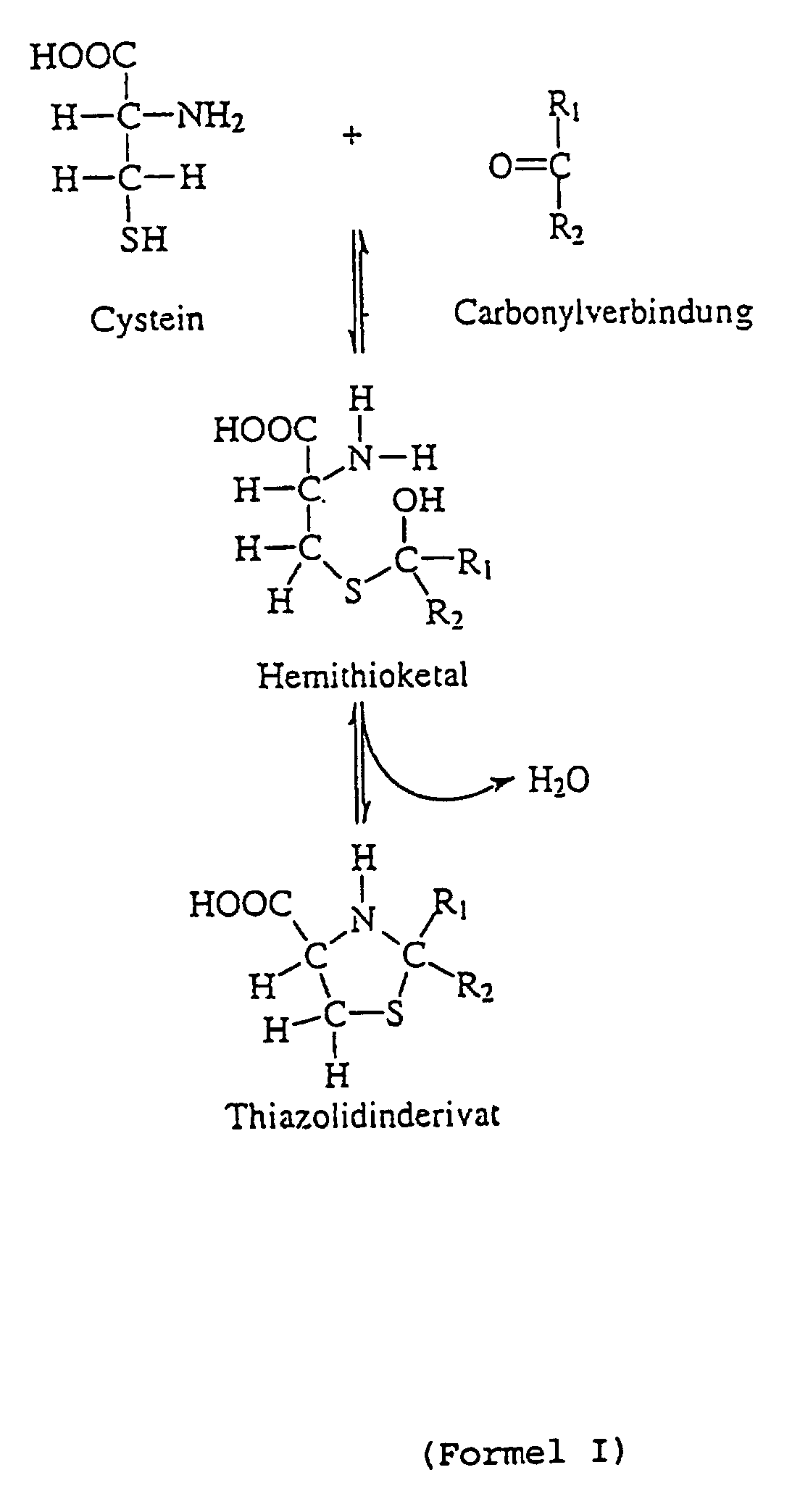
- Thiazolidine derivatives and the corresponding Hemithioketale arise generally in the condensation of cysteine with ketones or aldehydes.
- the chemical condensation of cysteine with various ketones or aldehydes, in particular with ⁇ -keto acids, has long been known.
- the condensation takes place about the hemithioketal as an intermediate, which by the nucleophilic attack of the lone pair of sulfur electrons on the carbon atom of the aldehyde or keto group arises.
- a ring closure with dehydration then leads to corresponding thiazolidine derivative.
- R 1 and R 2 may mean any organic radicals.
- thiazolidine derivative also a balance of these substances with the associated Hemithioketal meant.
- Thiazolidines have not previously been considered as direct metabolites of Cells are described. All reports of thiazolidine formations by cells rely on the excessive external addition of one of the educts, mostly of L-cysteine, then through Desulfhydration and deamination converted into pyruvate which in turn reacts with the added cysteine. (Ronald C. Simpson et al., Biochimica et Biophysic Acta, 496 (1977), 12-19). Kredich et al. described in J. of Biol. Chem.
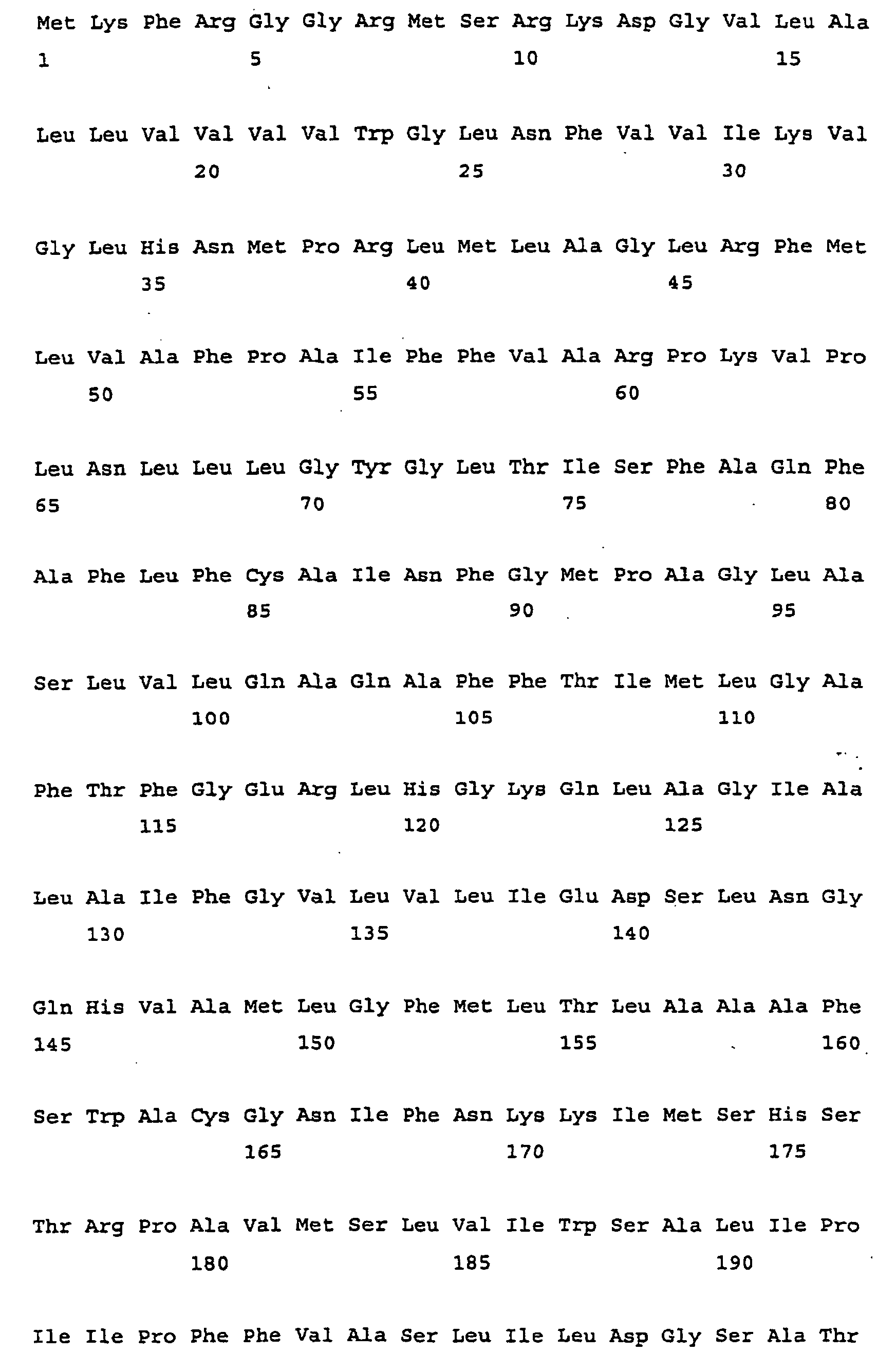
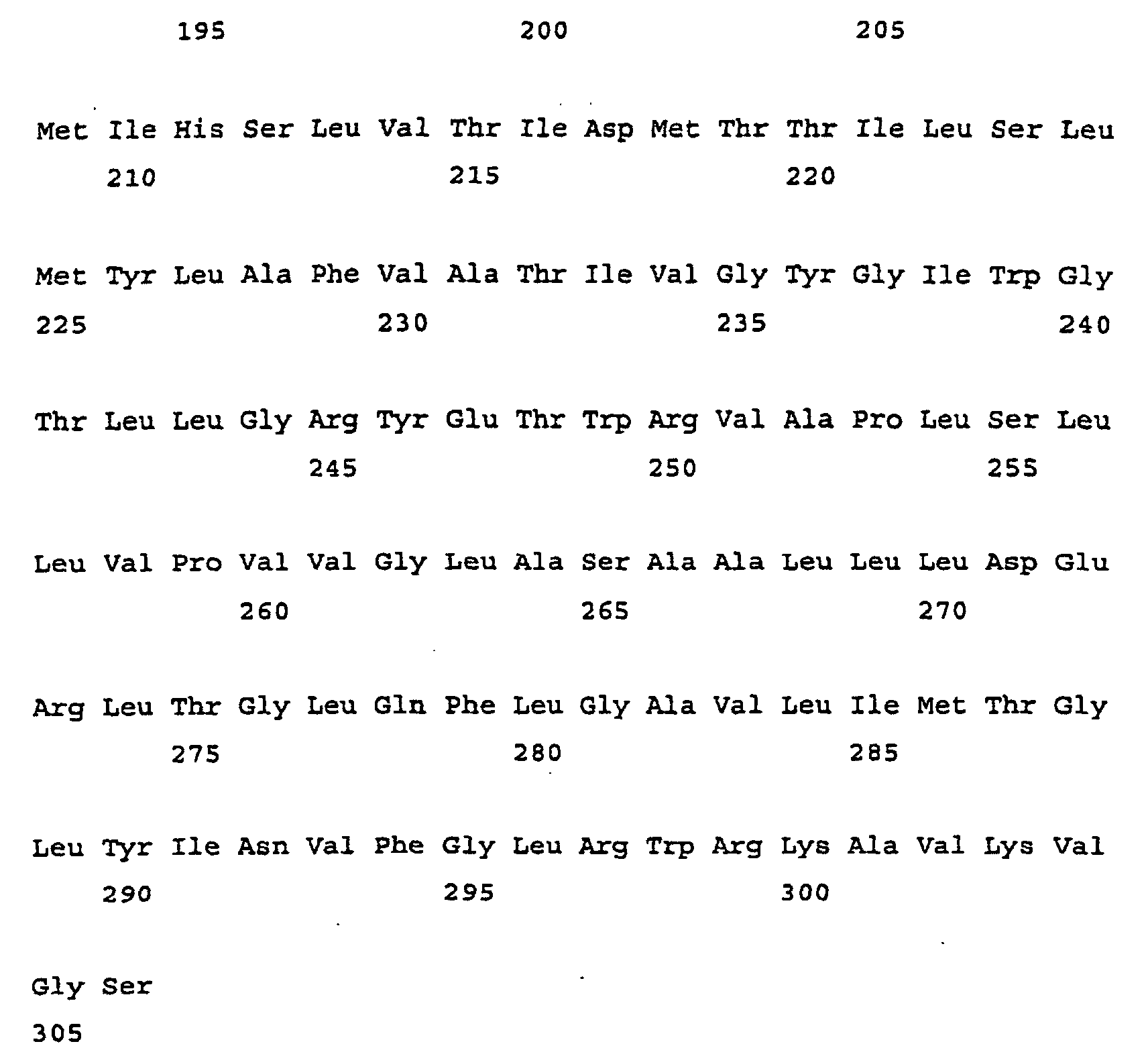
- the present invention relates to a microorganism strain for the fermentative production of L-cysteine, L-cystine, N-acetyl-serine and / or thiazolidine derivatives is suitable, characterized in that it is in his Cysteine metabolism is so deregulated that it increased one Amount of L-cysteine forms and at least one gene coding for a protein with SEQ.ID.NO: 2 or a variant thereof, which for the production of L-cysteine, L-cystine, N-acetyl-serine and / or Thiazolidinderivaten contributes.
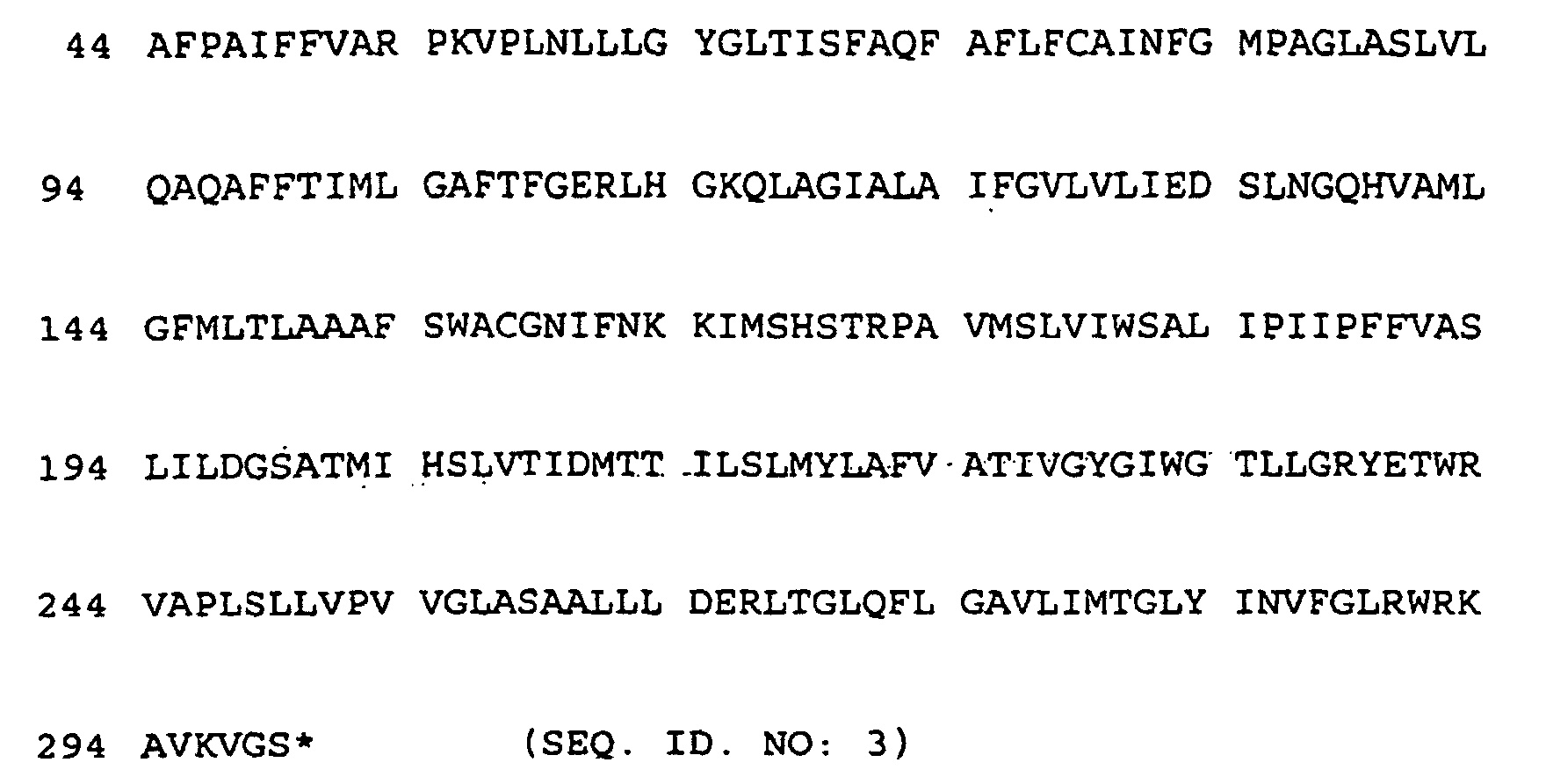
- the invention further relates to proteins comprising the sequence or a variant of the sequence which [contributes to the production of L-cysteine, L-cystine, N-acetyl-serine and / or thiazolidine derivatives].
- the open reading frame coding for the protein with the amino acid sequence according to SEQ. ID. NO: 2 is also referred to below as ORF 306.
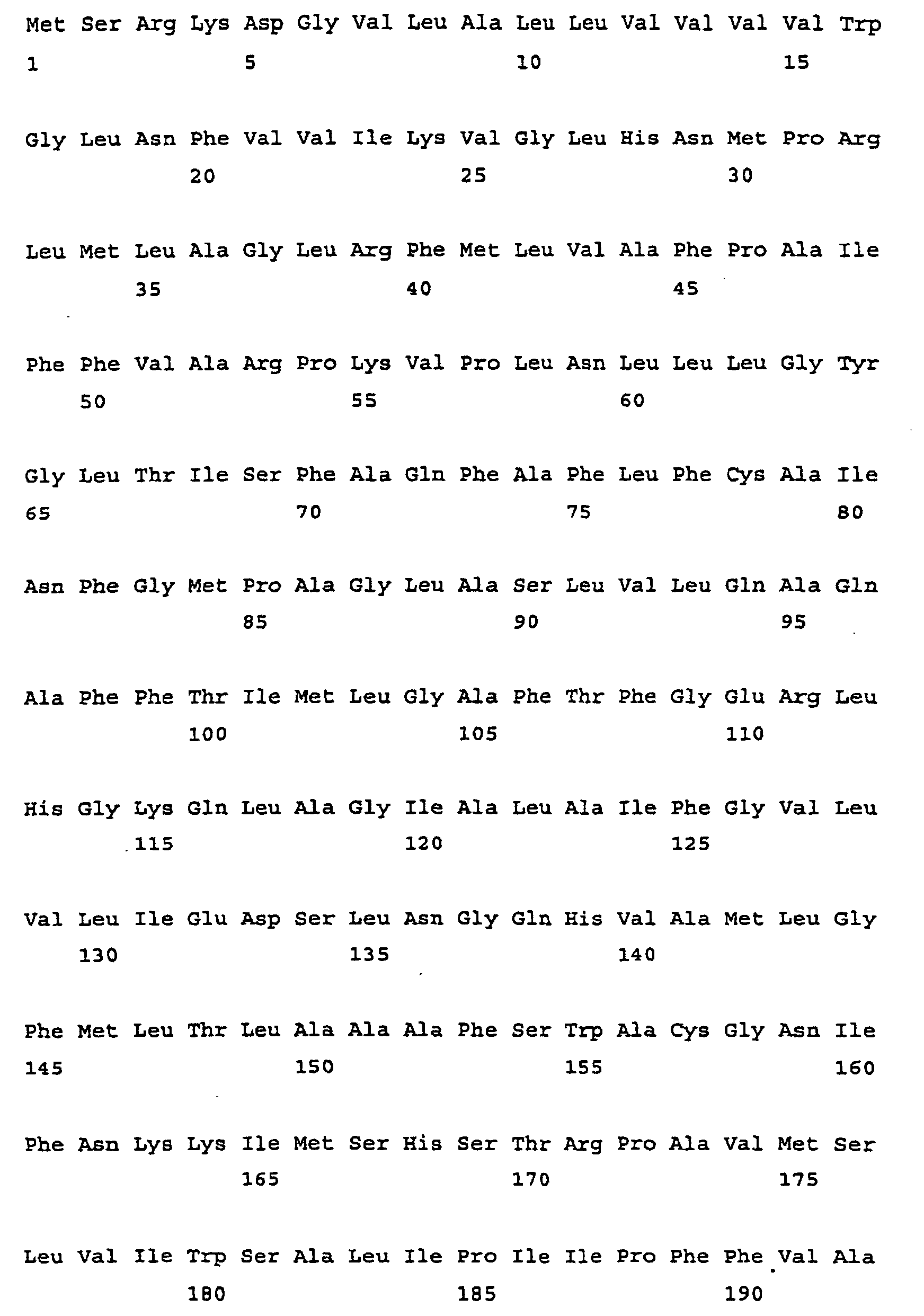
- Another example of a protein according to the invention represents the following sequence.
- Proteins according to the invention are also those proteins Amino acid sequence with a sequence homology at the amino acid level greater than 50% to the amino acid sequence according to SEQ. ID. NO: 2 or SEQ. ID. NO: 3 have as far as they are for the production of L-cysteine, L-cystine, N-acetyl-serine and / or thiazolidine derivatives contribute
- the sequence homology of the invention Proteins to SEQ. ID. NO: 2 or SEQ. ID. NO: 3 greater than 75%, especially the sequence homology to SEQ. ID. NO: 2 or SEQ. ID. NO: 3 greater than 90% as far as they are used to manufacture L-cysteine, L-cystine, N-acetyl-serine and / or thiazolidine derivatives contribute
- a Gene for increasing cysteine production is overexpression a 5.5 kb DNA fragment, which also for the coded mar-locus.
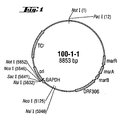
- This plasmid, designated 100-1-1 became with the DSMZ German collection of microorganisms and Zellkulturen GmbH, D-38124 Braunschweig in E. coli K12 W3110 deposited under the number DSM 11545.
- Fig. 1 shows a plasmid card this plasmid.
- This plasmid can be used for amplification be used by genes of the invention by means of PCR.
- a targeted further modification of these genes to each desired Position of the sequence by known methods, For example, the technique of site directed mutagenesis the person skilled in the art. Also microorganisms that modified so Gene genes are therefore according to the invention as long as the thus modified genes for the production of L-cysteine, L-cystine, N-acetyl-serine and / or thiazolidine derivatives contribute.
- Overexpression is to be understood within the meaning of the invention, in that the expression of the protein in the microorganism according to the invention at least twice as strong as in the wild type from which the protein comes.
- the expression of the protein takes place in the invention Microorganism at least five times as strong as in the wild type, more preferably at least ten times as strong as in the wild type from which the protein is derived.
- Plasmids are known. Examples include pACYC177, pACYC184, derivatives of pACYC184, pBR322, other pBR derivatives, pBluescript, pUC18, pUC19 and others in Escherichia coli conventionally used plasmids.
- Preferred plasmids for overexpression according to the invention are pACYC177, pACYC184, derivatives of pACYC184, pBR322 and others pBR derivatives.
- pACYC184 and its derivatives such as For example, pACYC184-LH (deposited with the DSMZ German Collection of microorganisms and cell cultures GmbH, D-38124 Brunswick under the number DSM 10172).
- Suitable strong promoters are, for example, the GAPDH promoter, the tac promoter (p tac ), the lac promoter (p lac ), the trp promoter (p trp ), lambda PL or lambda PR.
- Particularly suitable is the GAPDH promoter.
- elements that positively influence the translation wear to an overexpression of said genes are a good ribosome binding site (eg Shine-Dalgarno sequence) or Downstream Box.
- a preferred element that positively influences the translation is the good ribosome binding site of the GAPDH gene.
- the genes are transformed into microorganisms selected from the group Bacillus such as B. subtilis, Corynebacterium such as C. glutamicum, Streptomyces and E. coli.
- the genes are transformed into organisms, which thus deregulated in their cysteine metabolism are that it leads to the formation of elevated levels of L-cysteine and optionally subsequent to the formation of a thiazolidine derivative of L-cystine or comes from N-acetyl-serine.
- microorganisms include the increased levels of L-cysteine are microorganisms with feedback-resistant CysE Allele.
- microorganisms transformed intracellularly by condensation of L-cysteine and a ketone or aldehyde, in particular Pyruvate, a thiazolidine derivative.
- Microorganisms that produce elevated levels of L-cysteine are described for example in patent application DE 19539952.
- amino acids or intracellular amino acid derivatives such as L-cysteine, L-cystine, N-acetyl-serine or produce thiazolidine derivatives thereof.
- an increased discharge of Amino acids or intracellularly formed amino acid derivatives such as. L-cysteine, L-cystine, N-acetyl-serine and thiazolidine derivatives of which from the cell. This will be much higher Yields of these products achieved in the fermentation.
- the invention thus also relates to processes for the preparation of L-cysteine, L-cystine, N-acetyl-serine or thiazolidine derivatives thereof characterized in that a microorganism according to claim 1 or 2 in a conventional manner and Is used in the fermentation.
- the inventive method for fermentative production of L-cysteine, L-cystine, N-acetyl-serine or thiazolidine derivatives has several advantages:
- At least one radical R 1 or R 2 denotes carboxyl, more preferably in formula IR 1 is COOH and R 2 is CH 3 .
- the starting materials for the condensation to Thiazolidinderivat can either both are formed by the microorganism or it Only one reactant is formed by the microorganism and the second educt is added during the fermentation.
- both Starting materials for the condensation to Thiazolidinderivat by the microorganism is formed.
- Fermantation C sources such as for example, glucose, lactose, fructose, starch and the like
- N sources such as ammonium or protein hydrolysates and the like
- S sources such as Sulfide, sulfite, sulfate, thiosulfate or dithionite in the present invention Procedures used in the fermentation.
- the thiazolidine derivatives obtained by fermentation can not to be used only for the production of cysteine.
- Example 3 fermentation results as in the supernatant amounts of "total cysteine" measured by the Gaitonde test specified. These are especially 2-methylthiazolidine-2,4-dicarboxylic acid, the associated hemithioketal, free L-cysteine and dissolved cystine. Fancy cystine was quantified and reported separately.
- Kits for Execution of mutagenesis are commercially available, for example from Stratagene (Stratagene GmbH, PO Box 105466, D-69044 Heidelberg) available under the trade names ExSite or Chameleon.
- PCR polymerase chain reaction
- PCR experiments were carried out in 30 cycles in the presence of 200 ⁇ M deoxynucleotide triphosphates (dATP, dCTP, dGTP, dTTP), 1 ⁇ M each of the corresponding oligonucleotide, 100 ng of template DNA with the respective cysE allele, 1/10 10-fold reaction buffer (100 mM KCl, 100 mM (NH 4 ) 2 SO 4 , 200 mM Tris-HCl (pH 8.8), 20 mM MgSO 4 , 1% Triton X-100 and 1000 ⁇ g / ml BSA) and 2.5 units of a heat stable , recombinant Pfu DNA polymerase (Stratagene) in a thermocycler (Gene ATAQ Controler, Pharmacia) under the following conditions: 94 ° C for 1 min, 60 ° C for 1 min and 72 ° C for 3 min.
- dATP deoxynucleotide triphosphates
- the amplification product was digested with SacI and NsiI (both of Boehringer Mannheim GmbH) under the manufacturer specified Hydrolyzed, separated on a 1% agarose gel and using the Geneclean method (Geneclean Kit BIO101 P.O. Box 2284 La Jolla, California, 92038-2284) according to the information from the agarose gel manufacturer as about 1.0 kb in size Fragment isolated. Until further use, the fragment became stored at -20 ° C.
- the mar locus of Escherichia coli was amplified by PCR.
- the procedure for obtaining the amplificates is the same as described in Example 1 section A.
- the template DNA the chromosomal DNA from Escherichia coli W3110 (ATCC 27325) was used.
- template DNA plasmid 100-1-1 (DSM 11545) is also suitable. Lysis of the cells and purification of the chromosomal DNA were performed according to the protocol described in Ausubel et al., 1987, 2.4.1 - 2.4.2, Current Protocols in Molecular Biology, Greene Publishing Associates and Wiley-Interscience. The following primers were used for the amplification of the mar locus:
- Amplification of the mar locus resulted in about 3 kb large fragment as described in Example 1 section A. was cleaned.
- the following restriction digest is with the enzymes AscI and PacI (both from New England Biolabs GmbH, PO Box 2750, D-65820 Schwalbach / Taunus) according to the instructions and done with the manufacturer's buffers. After Purification of the fragment by agarose gel electrophoresis stored at -20 ° C.
- the DNA coding for the ORF306 was amplified by PCR as described in Example 1 section A.
- As the template DNA the chromosomal DNA from E. coli W3110 isolated in Example 1 (B) (ATCC 27325) was used. Also suitable as template DNA is plasmid 100-1-1 (DSM 11545).
- the primers used are as follows:
- the amplified DNA fragment is about 1.05 kb in size and was as described, purified by agarose gel electrophoresis. Subsequent restriction digestion with the enzymes AsnI (Boehringer Mannheim) and PacI (New England Biolabs) after enzyme removal to the desired DNA fragment. This was stored at -20 ° C until use.
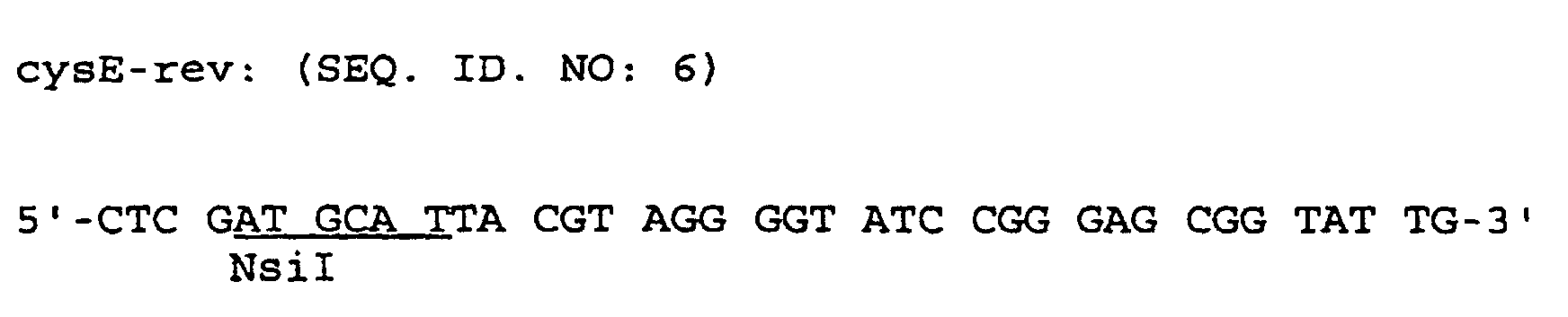
- the template DNA used again was chromosomal DNA from Escherichia coli W3110 (ATCC 27325). Also suitable as template DNA is plasmid 100-1-1. The following primers were used:
- the resulting DNA fragment of about 0.3 kb was replaced by a Isolated and purified by agarose gel electrophoresis as in Ex. 1 Section A described.
- a subsequent restriction digestion with the enzymes MluI and PacI led to the desired DNA fragment.
- the DNA After removal of the restriction enzymes, the DNA became stored at -20 ° C.
- the plasmid pACYC184 was used as a basic plasmid for the construction of the plasmids according to the invention.
- This plasmid was modified as described in DE 19539952, and as a plasmid pACYC184-LH under the accession number DSM 10172 the German Collection of Microorganisms in Braunschweig deposited.
- FIG. 1 A restriction and functional map of plasmid pACYC184-LH is shown in FIG.
- the plasmid pACYC184-LH carries a polylinker. This polylinker has the following restriction sites:
- plasmid pACYC184-LH (DSM 10172) was digested with the restriction enzymes SacI and NsiI according to the manufacturer's instructions (Boehringer Mannheim). The digested DNA was then purified by agarose gel electrophoresis to remove the enzymes, as previously described.
- Example 1 section A which code for the respective cysE allele, were then mixed equimolar with the SacI and NsiI digested plasmid pACYC184-LH and incubated with 1 ⁇ l T4 DNA ligase and 2 ⁇ l 10-fold ligase buffer (both Boehringer Mannheim ) and made up to a total volume of 20 ⁇ l with sterile, doubly distilled H 2 O. The mixture was incubated at 4 ° C overnight and used to transform Escherichia coli W3110 (ATCC 27325). The transformation procedure described below was used for all the transformations mentioned in the examples.
- E. coli W3110 The transformation of E. coli W3110 was carried out by electroporation.
- 500 ml of LB medium (10 g tryptone, 5 g yeast extract, 5 g NaCl) were inoculated in a 1 l Erlenmeyer flask with 1% (v / v) of an overnight culture in the same medium.
- a rotary shaker at 37 ° C to an optical density of 0.5-0.6 at 600 nm
- the cells were harvested by centrifugation at 4 ° C in a sterile beaker. All further steps were now performed on ice and under sterile conditions.
- the cell pellet was then washed twice with 500 ml of ice-cold, sterile, double-distilled H 2 O and finally resuspended in 30 ml of 10% (v / v) sterile glycerol. After another centrifugation, the cell pellet was taken up in 500 ⁇ l 10% (v / v) glycerol and stored in 200 ⁇ l aliquots at -80 ° C. For transformation, the cells were thawed on ice, spiked with about 10-100 ng of DNA and placed in a sterile electroporation cuvette (BioRad).
- SOC medium casein peptone 20.0 g / l, yeast extract 5.0 g / l, NaCl 0.58 g / l, KCl 0.19 g / l, MgCl 2 2.03 g / l , MgSO
- the desired transformants were after plasmid isolation using QIAprep Spin Plasmid Kit (Qiagen GmbH, Max-Volmer-Strckee 4, D-40724 Hilden) by a restriction analysis identified. They were used in Example 3 as a control in used for fermentation.
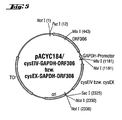
- the plasmids pACYC184 / cysEIV and pACYC184 / cysEX are shown in FIG 3 shown.
- pACYC184 / cysEIV and pACYC184 / cysEX were each labeled with the restriction enzymes MluI (Boehringer Mannheim) and PacI (New England Biolabs) digested according to the manufacturer's instructions.
- Plasmids pACYC184 / cysEIV-GAPDH and pACYC184 / cysEX-GAPDH were used as starting materials for the construction of the plasmids pACYC184 / cysEIV-GAPDH-ORF306 and pACYC184 / cysEX-GAPDH ORF306 used as described in section D below.
- the plasmids prepared in section C were labeled with NdeI (Boehringer Mannheim) and PacI (New England Biolabs) according to the Data of the manufacturer digested. After cleaning the plasmid DNA was digested with the AsnI-PacI cut DNA fragment Example 1, Section C, which encodes the ORF306, two ligations stated.
- FIG. 1 A restriction and functional map of the plasmids pACYC184 / cysEIV-GAPDH-ORF306 and pACYC184 / cysEX-GAPDH ORF306 is shown in FIG.
- the fermentation was carried out in fermenters BIOSTAT M Braun-Melsungen. A culture vessel with 2 l total volume was used.
- the fermentation medium contains 15 g / l glucose, 10 g / l tryptone (Difco), 5 g / l yeast extract (Difco), 5 g / l (NH 4 ) 2 SO 4 , 1.5 g / l KH 2 PO 4 , 0.5 g / l NaCl, 0.3 g / l MgSO 4 ⁇ 7 H 2 O, 0.015 g / l CaCl 2 ⁇ 2 H 2 O, 0.075 g / l FeSO 4 ⁇ 7 H 2 O, 1 g / l Na 3 citrate x 2 H 2 O and 1 ml of trace element solution (see above), 0.005 g / l of vitamin B1 and 15 mg / l of tetracycline.
- the pH in the fermenter was initially adjusted to 7.0 by pumping a 25% NH 4 OH solution. During the fermentation, the pH was maintained at a value of 7.0 by automatic correction with 25% NH 4 OH.
- 100 ml of preculture were pumped into the fermenter vessel. The initial volume was about 1 liter.
- the cultures were first stirred at 200 rpm and gassed with 1.5 vvm of compressed air sterilized via a sterile filter.
- the atmospheric oxygen saturation was adjusted to 50% during the fermentation.
- the control was carried out automatically via the stirring speed.
- the fermentation was carried out at a temperature of 30 ° C.
- a feed was made from a sterile 30% Na thiosulfate ⁇ 5 H 2 O stock solution at a rate of 3 ml per hour. After reaching an OD 600 of 10, a sterile 56% glucose stock solution was added at a rate of about 8-14 ml per hour.
- the determination of the glucose content was carried out enzymatically with the aid of a glucose analyzer from YSI. The glucose concentration was adjusted during fermentation by continuous feeding between 10 and 20 g / l.
- the total content of cysteine of the medium was determined from the cell-free supernatant of the sample colorimetrically according to Gaitonde, MK (1967), Biochem. J. 104, 627-633.
- cysteine remaining in solution during fermentation is mainly present as a thiazolidine derivative, but was nevertheless detected by the test. If the required ketone or aldehyde (pyruvate in this case) is no longer available in sufficient quantities for the conversion of the cysteine formed to the thiazolidine derivative, free L-cysteine is formed, which is also included in the test. When free L-cysteine is formed, this is slowly oxidized to L-cystine by the introduced atmospheric oxygen during the fermentation. Cystine is sparingly soluble in an aqueous medium at pH 7.0 and precipitates as a white pellet. Upon formation of an insoluble cystine pellet, this was resolved after separation of the supernatant from a drawn sample after centrifugation in half-concentrated HCl and also measured under reducing conditions (DTT) in the above-mentioned test.
- DTT reducing conditions
- the precipitate was dissolved in half-concentrated HCl and also subjected to a cysteine test. Here, a concentration of 9.5 g / l cysteine was found. After a 1 H and 13 C NMR examination of the precipitate dissolved in D 2 O + HCl, it was converted into a reference substance (MP Schubert, J. Biol. Chem. 121, 539-548 (1937)) as 2-methylthiazolidine-2 , 4-dicarboxylic acid identified.
- 2-Methyl-thiazolidine-2,4 (R) -dicarboxylic acid was synthesized from L-cysteine and pyruvate according to the method of Schubert (MP Schubert, J. Biol. Chem. 121, 539-548 (1937)).
- An overnight culture of E. coli W3110 in LB medium was inoculated into 20 ml of SM1 medium (see Example 3) supplemented with 10 g / l glucose, 10% LB medium, 5 mg / l vitamin B1, 15 mg / l Tetracycline and respective amounts of L-cysteine or 2-methyl-thiazolidine-2,4 (R) -dicarboxylic acid was supplemented. After incubation at 37 ° C.
- 2-methyl-thiazolidine-2,4 (R) -dicarboxylic acid is much better suited for the production of L-cysteine by fermentative processes, even if a chemical step for the release of L-cysteine is still necessary.
- N-acetyl-L-serine occurs by spontaneous rearrangement from O-acetyl-L-serine.
- This O-acetyl-L-serine is the immediate precursor of L-cysteine in the biosynthetic pathway in bacteria.
- Inadequate or lack of sulfur incorporation into O-acetyl-L-serine is the end product of such a fermentation thus N-acetyl-L-serine.
- the genes of the invention increase in lack of sulfur also the yield of this Fermentation product.
- Example 3 The fermentation described in Example 3 was without Thiosulfat flott für rum ⁇ .
- the constructs used, the the effectiveness of the present genes, in particular the ORF306 were to show pACYC184 / cysEX and pACYC184 / cysEX GAPDH ORF306.
- the genes according to the invention markedly increase the yield of N-acetyl-L-serine in the fermentation. Yields of N-acetyl-L-serine after 24 h fermentation construct N-acetyl-L-serine (g / l) pACYC184 / cysEX 7.6 pACYC184 / cysEX GAPDH ORF306 15.9
Landscapes
- Chemical & Material Sciences (AREA)
- Organic Chemistry (AREA)
- Health & Medical Sciences (AREA)
- Life Sciences & Earth Sciences (AREA)
- Genetics & Genomics (AREA)
- Engineering & Computer Science (AREA)
- Zoology (AREA)
- Wood Science & Technology (AREA)
- General Health & Medical Sciences (AREA)
- Biochemistry (AREA)
- General Engineering & Computer Science (AREA)
- Biotechnology (AREA)
- Bioinformatics & Cheminformatics (AREA)
- Microbiology (AREA)
- Biophysics (AREA)
- Molecular Biology (AREA)
- Proteomics, Peptides & Aminoacids (AREA)
- Gastroenterology & Hepatology (AREA)
- Medicinal Chemistry (AREA)
- Chemical Kinetics & Catalysis (AREA)
- General Chemical & Material Sciences (AREA)
- Biomedical Technology (AREA)
- Physics & Mathematics (AREA)
- Plant Pathology (AREA)
- Preparation Of Compounds By Using Micro-Organisms (AREA)
- Micro-Organisms Or Cultivation Processes Thereof (AREA)
- Enzymes And Modification Thereof (AREA)
Description










| Ausbeuten an Gesamtcystein mit dem cysEIV-Allel | |||
| Ausbeuten an Gesamtcystein (g/l) mit folgenden Plasmidkonstrukten | |||
| Fermentationszeit | pACYC184/ cysEIV | pACYC184/ cysEIV-mar | pACYC184/cysEIV -GAPDH-ORF306 |
| 24 Stunden | 1 | 3,8 | 3,8 |
| 48 Stunden | 1,6 | 5 | 3,2 + 6,3 |
| Ausbeuten an Gesamtcystein mit dem cysEX-Allel | |||
| Ausbeuten an Gesamtcystein (g/l) mit folgenden Plasmidkonstrukten | |||
| Fermentationszeit | pACYC184/cysE X | pACYC184/cysEX -mar | pACYC184/cysEX -GAPDH-ORF306 |
| 24 Stunden | 4,9 | 5,9 | 12,8 |
| 48 Stunden | 6,8 | 11,4 | 7,2 + 12,0 |
L-Cystein eine deutlich höhere Toxizität für E. coli als bei 2-Methyl-Thiazolidin-2,4(R)-dicarbonsäure. 2-Methyl-Thiazolidin-2,4(R)-dicarbonsäure eignet sich daher deutlich besser zur Gewinnung von L-Cystein durch fermentative Verfahren, auch wenn hierbei noch ein chemischer Schritt zur Freisetzung des L-Cysteins notwendig ist.
| Ausbeuten an N-Acetyl-L-Serin nach 24 h Fermentation | |
| Konstrukt | N-Acetyl-L-Serin (g/l) |
| pACYC184/cysEX | 7,6 |
| pACYC184/cysEX-GAPDH-ORF306 | 15,9 |







Claims (5)
- Mikroorganismenstamm, der zur fermentativen Herstellung von L-Cystein, L-Cystin, N-Acetyl-Serin und/oder Thiazolidinderivaten geeignet ist, dadurch gekennzeichnet, daß er in seinem Cysteinstoffwechsel so dereguliert ist, daß er eine erhöhte Menge an L-Cystein bildet und mindestens ein Gen kodierend für ein Protein mit SEQ.ID.NO: 2 oder eine Variante davon, welche zur Herstellung von L-Cystein, L-Cystin, N-Acetyl-Serin und/oder Thiazolidinderivaten beiträgt, überexprimiert.
- Mikroorganismenstamm gemäß Anspruch 1, dadurch gekennzeichnet, daß der Cysteinstoffwechsel durch ein feedbackresistentes Cys-E Allel dereguliert ist.
- Protein umfassend die Sequenzoder eine Variante der Sequenz welche zur Herstellung von L-Cystein, L-Cystin, N-Acetyl-Serin und/oder Thiazolidinderivaten beiträgt.
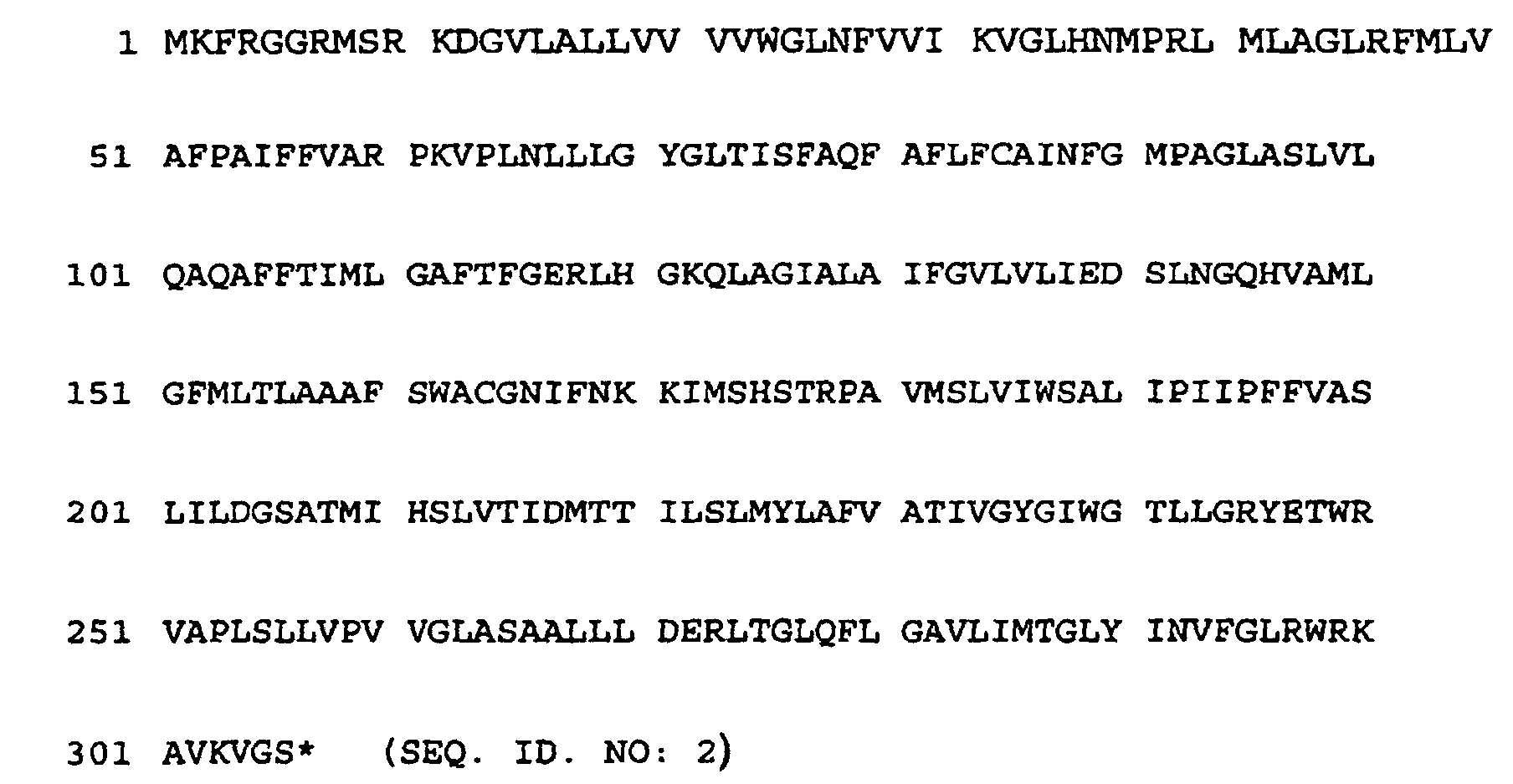
- Verfahren zur Herstellung von L-Cystein, L-Cystin, N-Acetyl-Serin oder Thiazolidinderivaten hiervon dadurch gekennzeichnet, daß ein Mikroorganismenstamm gemäß Anspruch 1 oder 2 in an sich bekannter Art und Weise in der Fermentation eingesetzt wird.
- Verwendung von Proteinen gemäß Anspruch 3 zur verstärkten Expression von L-Cystein, L-Cystin, N-Acetyl-Serin, und oder Thiazolidinderivaten in der Fermentation.
Priority Applications (1)
| Application Number | Priority Date | Filing Date | Title |
|---|---|---|---|
| DK98109269T DK0885962T3 (da) | 1997-06-19 | 1998-05-22 | Mikroorganismer og fremgangsmåde til fermentativ fremstilling af L cystein, L cystin, N acetyl serin eller thiazolidinderivater |
Applications Claiming Priority (2)
| Application Number | Priority Date | Filing Date | Title |
|---|---|---|---|
| DE19726083 | 1997-06-19 | ||
| DE19726083A DE19726083A1 (de) | 1997-06-19 | 1997-06-19 | Mikroorganismen und Verfahren zur fermentativen Herstellung von L-Cystein, L-Cystin, N-Acetyl-Serin oder Thiazolidinderivaten |
Publications (2)
| Publication Number | Publication Date |
|---|---|
| EP0885962A1 EP0885962A1 (de) | 1998-12-23 |
| EP0885962B1 true EP0885962B1 (de) | 2005-04-13 |
Family
ID=7833043
Family Applications (1)
| Application Number | Title | Priority Date | Filing Date |
|---|---|---|---|
| EP98109269A Expired - Lifetime EP0885962B1 (de) | 1997-06-19 | 1998-05-22 | Mikroorganismen und Verfahren zur fermentativen Herstellung von L-Cystein, L-Cystin, N-Acetyl-Serin oder Thiazolindinderivaten |
Country Status (14)
| Country | Link |
|---|---|
| US (1) | US5972663A (de) |
| EP (1) | EP0885962B1 (de) |
| JP (1) | JP2992010B2 (de) |
| KR (1) | KR19990007062A (de) |
| CN (1) | CN100347291C (de) |
| AT (1) | ATE293165T1 (de) |
| BR (1) | BR9803346B1 (de) |
| CA (1) | CA2235419C (de) |
| DE (2) | DE19726083A1 (de) |
| DK (1) | DK0885962T3 (de) |
| ES (1) | ES2236845T3 (de) |
| HU (1) | HU224343B1 (de) |
| ID (1) | ID20467A (de) |
| PL (1) | PL195784B1 (de) |
Cited By (24)
| Publication number | Priority date | Publication date | Assignee | Title |
|---|---|---|---|---|
| WO2007088970A1 (ja) | 2006-02-02 | 2007-08-09 | Ajinomoto Co., Inc. | メタノール資化性細菌を用いたl-リジンの製造法 |
| EP1958933A1 (de) | 2007-02-14 | 2008-08-20 | Wacker Chemie AG | Verfahren zur Reinigung von L-Cystein |
| RU2346038C2 (ru) * | 2002-07-19 | 2009-02-10 | Ваккер Хеми Аг | Способ ферментативного получения аминокислот и производных аминокислот из семейства фосфоглицератов |
| EP2444481A1 (de) | 2010-10-20 | 2012-04-25 | CJ CheilJedang Corporation | O-phosphoserin-herstellender Mikroorganismus und Verfahren zur Herstellung von L-cystein oder Derivaten davon aus O-phosphoserin damit |
| EP2444486A1 (de) | 2010-10-20 | 2012-04-25 | CJ CheilJedang Corporation | O-phosphoserin sulfhydrylase Mutanten und Methode zur Produktion von Cystein durch Verwendung davon |
| DE102011007790A1 (de) | 2011-04-20 | 2012-10-25 | Wacker Chemie Ag | Verfahren zur Reinigung von L-Cystein |
| JP2014512841A (ja) * | 2011-05-11 | 2014-05-29 | ワッカー ケミー アクチエンゲゼルシャフト | 調整された酸素飽和条件下における、発酵によるl−シスチンの製造方法 |
| WO2014182119A1 (en) | 2013-05-10 | 2014-11-13 | Cj Cheiljedang Corporation | Novel rhtb protein variants and the method of producing o-phosphoserine using the same |
| DE102013209274A1 (de) | 2013-05-17 | 2014-11-20 | Wacker Chemie Ag | Mikroorganismus und Verfahren zur fermentativen Überproduktion von Gamma-Glutamylcystein und Derivaten dieses Dipeptids |
| US9689009B2 (en) | 2010-10-20 | 2017-06-27 | Cj Cheiljedang Corporation | Microorganism producing o-phosphoserine and method of producing L-cysteine or derivatives thereof from O-phosphoserine using the same |
| WO2018124778A1 (ko) | 2016-12-29 | 2018-07-05 | 씨제이제일제당 (주) | O-포스포세린을 생산하는 에스케리키아 속 미생물 및 이를 이용한 o-포스포세린 또는 l-시스테인을 생산하는 방법 |
| US10041098B2 (en) | 2013-05-10 | 2018-08-07 | Cj Cheiljedang Corporation | O-phosphoserine export protein and the method of producing O-phosphoserine using the same |
| US10323262B2 (en) | 2014-08-12 | 2019-06-18 | Cj Cheiljedang Corporation | Microorganism producing O-phosphoserine and a method for producing O-phosphoserine or L-cysteine using the same |
| US10696990B2 (en) | 2015-09-11 | 2020-06-30 | Cj Cheiljedang Corporation | Variant of O-phosphoserine exporter and method of producing O-phosphoserine, cysteine, and its derivatives using the same |
| WO2021259491A1 (de) | 2020-06-26 | 2021-12-30 | Wacker Chemie Ag | Verbesserte cystein produzierende stämme |
| WO2022055192A1 (ko) | 2020-09-09 | 2022-03-17 | 씨제이제일제당 (주) | 신규 o-포스포세린 배출 단백질 및 이를 이용한 o-포스포세린, 시스테인 및 이의 유도체의 생산 방법 |
| WO2022255839A1 (ko) | 2021-06-03 | 2022-12-08 | 씨제이제일제당 (주) | 신규한 yhhs 변이체 및 이를 이용한 o-포스포세린, 시스테인 및 이의 유도체의 생산방법 |
| WO2022270857A1 (ko) | 2021-06-23 | 2022-12-29 | 씨제이제일제당 (주) | Nadh:quinone 산화환원효소의 발현이 조절된 재조합 미생물 및 이를 이용한 o-포스포세린, 시스테인 및 이의 유도체의 생산방법 |
| WO2023280382A1 (de) | 2021-07-05 | 2023-01-12 | Wacker Chemie Ag | Verfahren zur enzymatischen oxidation von sulfinsäuren zu sulfonsäuren |
| WO2023128568A1 (ko) | 2021-12-31 | 2023-07-06 | 씨제이제일제당 (주) | O-포스포세린 생산 미생물 및 이를 이용한 o-포스포세린 또는 l-시스테인 생산 방법 |
| WO2023165684A1 (de) | 2022-03-01 | 2023-09-07 | Wacker Chemie Ag | Verbesserte cystein produzierende stämme |
| WO2024205184A1 (ko) | 2023-03-31 | 2024-10-03 | 씨제이제일제당 (주) | 망간 유입 단백질의 활성이 조절된 재조합 미생물 및 이를 이용한 o-포스포세린, 시스테인 및 이의 유도체의 생산방법 |
| WO2024205186A1 (ko) | 2023-03-31 | 2024-10-03 | 씨제이제일제당 (주) | 알킬하이드로퍼옥사이드 환원효소의 발현이 조절된 재조합 미생물 및 이를 이용한 o-포스포세린, 시스테인 및 이의 유도체의 생산방법 |
| WO2024248498A1 (ko) | 2023-06-01 | 2024-12-05 | 씨제이제일제당 (주) | O-포스포세린 설프하이드릴라아제 변이체 및 이를 이용한 시스테인 생산 방법 |
Families Citing this family (87)
| Publication number | Priority date | Publication date | Assignee | Title |
|---|---|---|---|---|
| DE19857690A1 (de) * | 1998-12-14 | 2000-06-15 | Consortium Elektrochem Ind | Verfahren zur Isolierung oder Reinigung von 2-Methyl-thiazolidin-2,4-dicarbonsäure |
| DE19949579C1 (de) * | 1999-10-14 | 2000-11-16 | Consortium Elektrochem Ind | Verfahren zur fermentativen Herstellung von L-Cystein oder L-Cystein-Derivaten |
| DE10046934A1 (de) * | 2000-09-21 | 2002-04-18 | Consortium Elektrochem Ind | Verfahren zur fermentativen Herstellung von nicht-proteinogenen L-Aminosäuren |
| DE60210697T2 (de) * | 2001-02-13 | 2007-04-05 | Ajinomoto Co., Inc. | Verfahren zur Produktion von L-Aminosäuren mittels Bakterien der Gattung Escherichia |
| DE10107002A1 (de) | 2001-02-15 | 2002-08-29 | Consortium Elektrochem Ind | Verfahren zur fermentativen Herstellung von O-Acetyl-L-Serin |
| DE60232120D1 (de) * | 2001-06-12 | 2009-06-10 | Ajinomoto Kk | Verfahren zur Herstellung von L-Lysin oder L-Arginin unter Verwendung methanolassimilierender Bakterien |
| US7252978B2 (en) | 2001-07-25 | 2007-08-07 | Ajinomoto Co., Inc. | Method for producing L-arginine |
| DE60210184T2 (de) * | 2001-09-28 | 2006-11-09 | Ajinomoto Co., Inc. | L-Cystein herstellendes Bakterium und Verfahren zur Herstellung von L-Cystein |
| MXPA04004874A (es) * | 2001-11-23 | 2004-09-03 | Ajinomoto Kk | Procedimiento para producir l-aminoacido utilizando escherichia. |
| RU2229513C2 (ru) * | 2001-11-23 | 2004-05-27 | Закрытое акционерное общество "Научно-исследовательский институт Аджиномото-Генетика" | Способ получения l-аминокислот, штамм escherichia coli - продуцент l-аминокислоты (варианты) |
| DE10219851B4 (de) * | 2002-05-03 | 2004-06-24 | Consortium für elektrochemische Industrie GmbH | Verfahren zur Herstellung von L-Serin |
| DE10237479A1 (de) * | 2002-08-16 | 2004-02-26 | Degussa Ag | Schwefel-haltiges Tierfuttermitteladditiv |
| US7348037B2 (en) | 2002-08-16 | 2008-03-25 | Evonik Degussa Gmbh | Sulfur-containing animal-feed additives |
| JP4120364B2 (ja) * | 2002-11-20 | 2008-07-16 | 味の素株式会社 | メタノール資化性菌を用いたl−リジンまたはl−アルギニンの製造法 |
| JP2004166592A (ja) * | 2002-11-20 | 2004-06-17 | Ajinomoto Co Inc | メチロトローフを用いたl−アミノ酸の製造法 |
| DE10305774A1 (de) * | 2003-02-06 | 2004-08-26 | Consortium für elektrochemische Industrie GmbH | Verfahren zur fermentativen Herstellung von L-Methionin |
| US20060270013A1 (en) | 2003-02-18 | 2006-11-30 | Michel Chateau | Method for the production of evolved microorganisms which permit the generation or modification of metabolic pathways |
| DE10331291A1 (de) | 2003-07-10 | 2005-02-17 | Consortium für elektrochemische Industrie GmbH | Varianten der 3-Phosphoglyceratdehydrogenase mit reduzierter Hemmung durch L-Serin und dafür codierende Gene |
| RU2275425C2 (ru) * | 2003-11-03 | 2006-04-27 | Закрытое акционерное общество "Научно-исследовательский институт Аджиномото-Генетика" (ЗАО АГРИ) | Бактерия, принадлежащая к роду escherichia, - продуцент l-цистеина и способ получения l-цистеина |
| BRPI0506369B1 (pt) * | 2004-01-30 | 2020-11-03 | Ajinomoto Co., Inc | microorganismo transgênico, e, método para produzir um l-aminoácido |
| US20050191684A1 (en) * | 2004-02-25 | 2005-09-01 | Zimenkov Danila V. | Method for producing L-amino acids |
| JP4479283B2 (ja) | 2004-03-04 | 2010-06-09 | 味の素株式会社 | L−システイン生産菌及びl−システインの製造法 |
| JP4604537B2 (ja) * | 2004-03-31 | 2011-01-05 | 味の素株式会社 | L−システイン生産菌及びl−システインの製造法 |
| JP2007185184A (ja) * | 2005-12-16 | 2007-07-26 | Ajinomoto Co Inc | L−アミノ酸生産菌及びl−アミノ酸の製造法 |
| JP2009118740A (ja) | 2006-03-03 | 2009-06-04 | Ajinomoto Co Inc | L−アミノ酸の製造法 |
| EP2004803A2 (de) | 2006-03-23 | 2008-12-24 | Ajinomoto Co., Inc. | Verfahren zur herstellung einer l-aminosäure unter verwendung eines bakteriums der familie enterobacteriaceae mit abgeschwächter expression eines für kleine rna codierenden gens |
| JP2009165355A (ja) | 2006-04-28 | 2009-07-30 | Ajinomoto Co Inc | L−アミノ酸を生産する微生物及びl−アミノ酸の製造法 |
| RU2006143864A (ru) | 2006-12-12 | 2008-06-20 | Закрытое акционерное общество "Научно-исследовательский институт Аджиномото-Генетика" (ЗАО АГРИ) (RU) | СПОСОБ ПОЛУЧЕНИЯ L-АМИНОКИСЛОТ С ИСПОЛЬЗОВАНИЕМ БАКТЕРИИ СЕМЕЙСТВА ENTEROBACTERIACEAE, В КОТОРОЙ ОСЛАБЛЕНА ЭКСПРЕССИЯ ГЕНОВ cynT, cynS, cynX, ИЛИ cynR, ИЛИ ИХ КОМБИНАЦИИ |
| JP2010041920A (ja) | 2006-12-19 | 2010-02-25 | Ajinomoto Co Inc | L−アミノ酸の製造法 |
| JP5540504B2 (ja) | 2007-01-22 | 2014-07-02 | 味の素株式会社 | L−アミノ酸を生産する微生物及びl−アミノ酸の製造法 |
| JP2010110216A (ja) | 2007-02-20 | 2010-05-20 | Ajinomoto Co Inc | L−アミノ酸または核酸の製造方法 |
| JP2010110217A (ja) | 2007-02-22 | 2010-05-20 | Ajinomoto Co Inc | L−アミノ酸生産菌及びl−アミノ酸の製造法 |
| JP2011067095A (ja) | 2008-01-10 | 2011-04-07 | Ajinomoto Co Inc | 発酵法による目的物質の製造法 |
| WO2009093703A1 (ja) | 2008-01-23 | 2009-07-30 | Ajinomoto Co., Inc. | L-アミノ酸の製造法 |
| RU2008105793A (ru) | 2008-02-19 | 2009-08-27 | Закрытое акционерное общество "Научно-исследовательский институт Аджиномото-Генетика" (ЗАО АГРИ) (RU) | Способ конструирования оперонов, содержащих трансляционно сопряженные гены, бактерия, содержащая такой оперон, способ продукции полезного метаболита и способ мониторинга экспрессии гена |
| WO2009104731A1 (ja) | 2008-02-21 | 2009-08-27 | 味の素株式会社 | L-システイン生産菌及びl-システインの製造法 |
| JP5332237B2 (ja) * | 2008-03-06 | 2013-11-06 | 味の素株式会社 | L−システイン生産菌及びl−システインの製造法 |
| US8383372B2 (en) * | 2008-03-06 | 2013-02-26 | Ajinomoto Co., Inc. | L-cysteine producing bacterium and a method for producing L-cysteine |
| US20120231537A1 (en) * | 2008-04-30 | 2012-09-13 | Gradalis, Inc. | Highly Pure Plasmid DNA Preparations |
| US8969068B2 (en) * | 2008-04-30 | 2015-03-03 | Gradalis, Inc. | Processes for the preparation of highly pure plasmid compositions by enzymatic digestion of colanic acid |
| EP2336347B1 (de) | 2008-09-08 | 2017-03-15 | Ajinomoto Co., Inc. | L-aminosäure-produzierender mikroorganismus und verfahren zur herstellung von l-aminosäure |
| BRPI1007069A2 (pt) | 2009-01-23 | 2015-08-25 | Ajinomoto Kk | Método para produzir um l-aminoácido. |
| US8623619B2 (en) | 2009-02-09 | 2014-01-07 | Kyowa Hakko Bio Co., Ltd. | Process for producing L-amino acid |
| JP5521347B2 (ja) * | 2009-02-16 | 2014-06-11 | 味の素株式会社 | L−アミノ酸生産菌及びl−アミノ酸の製造法 |
| JP5463528B2 (ja) * | 2009-02-25 | 2014-04-09 | 味の素株式会社 | L−システイン生産菌及びl−システインの製造法 |
| JP5359409B2 (ja) | 2009-03-12 | 2013-12-04 | 味の素株式会社 | L−システイン生産菌及びl−システインの製造法 |
| BRPI1014661B1 (pt) | 2009-07-29 | 2020-12-15 | Ajinomoto Co., Inc. | Método para produzir um l-aminoácido |
| RU2009136544A (ru) | 2009-10-05 | 2011-04-10 | Закрытое акционерное общество "Научно-исследовательский институт "Аджиномото-Генетика" (ЗАО АГРИ) (RU) | Способ получения l-цистеина с использованием бактерии семейства enterobacteriaceae |
| JP5817529B2 (ja) * | 2009-11-30 | 2015-11-18 | 味の素株式会社 | L−システイン生産菌及びl−システインの製造法 |
| RU2460793C2 (ru) | 2010-01-15 | 2012-09-10 | Закрытое акционерное общество "Научно-исследовательский институт "Аджиномото-Генетика" (ЗАО АГРИ) | Способ получения l-аминокислот с использованием бактерий семейства enterobacteriaceae |
| JP2013074795A (ja) | 2010-02-08 | 2013-04-25 | Ajinomoto Co Inc | 変異型rpsA遺伝子及びL−アミノ酸の製造法 |
| RU2471868C2 (ru) | 2010-02-18 | 2013-01-10 | Закрытое акционерное общество "Научно-исследовательский институт "Аджиномото-Генетика" (ЗАО АГРИ) | Мутантная аденилатциклаза, днк, кодирующая ее, бактерия семейства enterobacteriaceae, содержащая указанную днк, и способ получения l-аминокислот |
| RU2501858C2 (ru) | 2010-07-21 | 2013-12-20 | Закрытое акционерное общество "Научно-исследовательский институт "Аджиномото-Генетика" (ЗАО АГРИ) | СПОСОБ ПОЛУЧЕНИЯ L-АМИНОКИСЛОТЫ С ИСПОЛЬЗОВАНИЕМ БАКТЕРИИ СЕМЕЙСТВА Enterobacteriaceae |
| RU2482188C2 (ru) | 2010-07-21 | 2013-05-20 | Закрытое акционерное общество "Научно-исследовательский институт "Аджиномото-Генетика" (ЗАО АГРИ) | СПОСОБ ПОЛУЧЕНИЯ L-АРГИНИНА С ИСПОЛЬЗОВАНИЕМ БАКТЕРИЙ РОДА Escherichia, В КОТОРОЙ ИНАКТИВИРОВАН ОПЕРОН astCADBE |
| BR112013006031A2 (pt) | 2010-09-14 | 2016-06-07 | Ajinomoto Kk | bactéria,e, método para produzir um aminoácido contendo enxofre, uma substância relacionada ao mesmo, ou uma mnistura dos mesmos. |
| JP2014036576A (ja) | 2010-12-10 | 2014-02-27 | Ajinomoto Co Inc | L−アミノ酸の製造法 |
| JP2014087259A (ja) | 2011-02-22 | 2014-05-15 | Ajinomoto Co Inc | L−システイン生産菌及びl−システインの製造法 |
| EP2695940B1 (de) | 2011-04-01 | 2016-11-30 | Ajinomoto Co., Inc. | Verfahren zur herstellung von l-cystein |
| US9234223B2 (en) | 2011-04-01 | 2016-01-12 | Ajinomoto Co., Inc. | Method for producing L-cysteine |
| JP2014131487A (ja) * | 2011-04-18 | 2014-07-17 | Ajinomoto Co Inc | L−システインの製造法 |
| DE102011078481A1 (de) | 2011-06-30 | 2013-01-03 | Wacker Chemie Ag | Verfahren zur fermentativen Produktion von natürlichem L-Cystein |
| RU2011134436A (ru) | 2011-08-18 | 2013-10-27 | Закрытое акционерное общество "Научно-исследовательский институт Аджиномото-Генетика" (ЗАО "АГРИ") | Способ получения l-аминокислоты с использованием бактерии семейства enterobacteriaceae, обладающей повышенной экспрессией генов каскада образования флагелл и клеточной подвижности |
| DE102012208359A1 (de) | 2012-05-18 | 2013-11-21 | Wacker Chemie Ag | Verfahren zur fermentativen Produktion von L-Cystein und Derivaten dieser Aminosäure |
| DE102012216527A1 (de) | 2012-09-17 | 2014-03-20 | Wacker Chemie Ag | Verfahren zur fermentativen Produktion von L-Cystein und Derivaten dieser Aminosäure |
| JP6288649B2 (ja) | 2013-03-19 | 2018-03-07 | 国立大学法人 奈良先端科学技術大学院大学 | L−システイン生産能が高められた腸内細菌科に属する細菌 |
| RU2013118637A (ru) | 2013-04-23 | 2014-10-27 | Закрытое акционерное общество "Научно-исследовательский институт Аджиномото-Генетика" (ЗАО "АГРИ") | СПОСОБ ПОЛУЧЕНИЯ L-АМИНОКИСЛОТ С ИСПОЛЬЗОВАНИЕМ БАКТЕРИИ СЕМЕЙСТВА ENTEROBACTERIACEAE, В КОТОРОЙ РАЗРЕГУЛИРОВАН ГЕН yjjK |
| JP2016165225A (ja) | 2013-07-09 | 2016-09-15 | 味の素株式会社 | 有用物質の製造方法 |
| RU2013140115A (ru) | 2013-08-30 | 2015-03-10 | Закрытое акционерное общество "Научно-исследовательский институт Аджиномото-Генетика" (ЗАО "АГРИ") | СПОСОБ ПОЛУЧЕНИЯ L-АМИНОКИСЛОТ С ИСПОЛЬЗОВАНИЕМ БАКТЕРИИ СЕМЕЙСТВА Enterobacteriaceae, В КОТОРОЙ НАРУШЕНА ЭКСПРЕССИЯ КЛАСТЕРА ГЕНОВ znuACB |
| JP5958653B2 (ja) | 2013-10-02 | 2016-08-02 | 味の素株式会社 | アンモニア制御装置およびアンモニア制御方法 |
| RU2013144250A (ru) | 2013-10-02 | 2015-04-10 | Закрытое акционерное общество "Научно-исследовательский институт Аджиномото-Генетика" (ЗАО "АГРИ") | СПОСОБ ПОЛУЧЕНИЯ L-АМИНОКИСЛОТ С ИСПОЛЬЗОВАНИЕМ БАКТЕРИИ СЕМЕЙСТВА Enterobacteriaceae, В КОТОРОЙ ОСЛАБЛЕНА ЭКСПРЕССИЯ ГЕНА, КОДИРУЮЩЕГО ФОСФАТНЫЙ ТРАНСПОРТЕР |
| EP2886651B1 (de) | 2013-10-21 | 2018-08-22 | Ajinomoto Co., Inc. | Verfahren zur herstellung von l-aminosäure |
| RU2014105547A (ru) | 2014-02-14 | 2015-08-20 | Адзиномото Ко., Инк. | СПОСОБ ПОЛУЧЕНИЯ L-АМИНОКИСЛОТ С ИСПОЛЬЗОВАНИЕМ БАКТЕРИИ СЕМЕЙСТВА ENTEROBACTERIACEAE, ИМЕЮЩЕЙ СВЕРХЭКСПРЕССИРУЕМЫЙ ГЕН yajL |
| RU2015120052A (ru) | 2015-05-28 | 2016-12-20 | Аджиномото Ко., Инк. | Способ получения L-аминокислоты с использованием бактерии семейства Enterobacteriaceae, в которой ослаблена экспрессия гена gshA |
| CN108463546B (zh) | 2015-12-11 | 2022-03-11 | 瓦克化学股份公司 | 用于无抗生素发酵制备低分子量物质和蛋白质的微生物菌株和方法 |
| WO2017146195A1 (en) | 2016-02-25 | 2017-08-31 | Ajinomoto Co., Inc. | A method for producing l-amino acids using a bacterium of the family enterobacteriaceae overexpressing a gene encoding an iron exporter |
| JP7066977B2 (ja) | 2017-04-03 | 2022-05-16 | 味の素株式会社 | L-アミノ酸の製造法 |
| EP3861109A1 (de) | 2018-10-05 | 2021-08-11 | Ajinomoto Co., Inc. | Verfahren zur herstellung einer zielsubstanz durch bakterielle fermentation |
| US12246056B2 (en) | 2018-11-07 | 2025-03-11 | The Regents Of The University Of Michigan | Compositions and methods for the production of cysteine |
| EP3904521A4 (de) | 2018-12-26 | 2022-03-23 | Daesang Corporation | L-aminosäuren produzierender varianter stamm von e. coli oder corynebacterium glutamicum, und verfahren zur herstellung von l-aminosäuren unter verwendung derselben |
| BR112021014194A2 (pt) | 2019-02-22 | 2021-12-28 | Ajinomoto Kk | Método para a produção de um l-aminoácido |
| BR112021017870A2 (pt) | 2019-04-05 | 2021-12-07 | Ajinomoto Kk | Método para produzir um l-aminoácido |
| JP7655312B2 (ja) | 2019-09-25 | 2025-04-02 | 味の素株式会社 | 細菌の発酵によるl-アミノ酸の製造方法 |
| ES2966310T3 (es) | 2020-04-03 | 2024-04-19 | Wacker Chemie Ag | Biocatalizador como componente de núcleo de un sistema redox catalizado por enzima para la reducción biocatalítica de cistina |
| MY205779A (en) | 2020-06-09 | 2024-11-12 | Cj Cheiljedang Corp | O-phosphoserine export protein variant and method for producing o-phosphoserine, cysteine, and derivatives thereof using the same |
| KR102707457B1 (ko) | 2021-06-11 | 2024-09-20 | 씨제이제일제당 주식회사 | 신규한 MdtH 변이체 및 이를 이용한 O-포스포세린, 시스테인 및 이의 유도체의 생산방법 |
| WO2024125794A1 (de) | 2022-12-15 | 2024-06-20 | Wacker Chemie Ag | Verfahren zur fermentativen herstellung von hypotaurin |
| JP2025541621A (ja) | 2022-12-15 | 2025-12-22 | ワッカー ケミー アクチエンゲゼルシャフト | 微生物発酵後のタウリン及びヒポタウリン含有発酵培地からタウリンを単離する方法 |
Family Cites Families (3)
| Publication number | Priority date | Publication date | Assignee | Title |
|---|---|---|---|---|
| EP0101052B1 (de) * | 1982-08-09 | 1988-04-20 | Ajinomoto Co., Inc. | Verfahren zur Herstellung von 2-substituierter Thiazolidin-4-carbonsäure |
| DE19539952A1 (de) * | 1995-10-26 | 1997-04-30 | Consortium Elektrochem Ind | Verfahren zur Herstellung von O-Acetylserin, L-Cystein und L-Cystein-verwandten Produkten |
| DE19548222A1 (de) * | 1995-12-22 | 1997-06-26 | Forschungszentrum Juelich Gmbh | Verfahren zur mikrobiellen Herstellung von Aminosäuren durch gesteigerte Aktivität von Exportcarriern |
-
1997
- 1997-06-19 DE DE19726083A patent/DE19726083A1/de not_active Withdrawn
-
1998
- 1998-05-22 DE DE59812730T patent/DE59812730D1/de not_active Expired - Lifetime
- 1998-05-22 AT AT98109269T patent/ATE293165T1/de active
- 1998-05-22 EP EP98109269A patent/EP0885962B1/de not_active Expired - Lifetime
- 1998-05-22 ES ES98109269T patent/ES2236845T3/es not_active Expired - Lifetime
- 1998-05-22 DK DK98109269T patent/DK0885962T3/da active
- 1998-06-15 ID IDP980878A patent/ID20467A/id unknown
- 1998-06-16 CA CA002235419A patent/CA2235419C/en not_active Expired - Fee Related
- 1998-06-16 US US09/097,759 patent/US5972663A/en not_active Expired - Lifetime
- 1998-06-17 KR KR1019980022734A patent/KR19990007062A/ko not_active Ceased
- 1998-06-17 BR BRPI9803346-8B1A patent/BR9803346B1/pt not_active IP Right Cessation
- 1998-06-18 HU HU9801369A patent/HU224343B1/hu not_active IP Right Cessation
- 1998-06-18 CN CNB981026176A patent/CN100347291C/zh not_active Expired - Fee Related
- 1998-06-19 JP JP10173278A patent/JP2992010B2/ja not_active Expired - Fee Related
- 1998-06-19 PL PL326915A patent/PL195784B1/pl not_active IP Right Cessation
Cited By (39)
| Publication number | Priority date | Publication date | Assignee | Title |
|---|---|---|---|---|
| RU2346038C2 (ru) * | 2002-07-19 | 2009-02-10 | Ваккер Хеми Аг | Способ ферментативного получения аминокислот и производных аминокислот из семейства фосфоглицератов |
| WO2007088970A1 (ja) | 2006-02-02 | 2007-08-09 | Ajinomoto Co., Inc. | メタノール資化性細菌を用いたl-リジンの製造法 |
| EP1958933A1 (de) | 2007-02-14 | 2008-08-20 | Wacker Chemie AG | Verfahren zur Reinigung von L-Cystein |
| DE102007007333A1 (de) | 2007-02-14 | 2008-08-21 | Wacker Chemie Ag | Verfahren zur Reinigung von L-Cystein |
| EP2796549A1 (de) | 2010-10-20 | 2014-10-29 | CJ CheilJedang Corporation | O-phosphoserin-Sulfhydrylase-Mutanten und Verfahren zur Herstellung von Cystein damit |
| EP2444486A1 (de) | 2010-10-20 | 2012-04-25 | CJ CheilJedang Corporation | O-phosphoserin sulfhydrylase Mutanten und Methode zur Produktion von Cystein durch Verwendung davon |
| EP2444481A1 (de) | 2010-10-20 | 2012-04-25 | CJ CheilJedang Corporation | O-phosphoserin-herstellender Mikroorganismus und Verfahren zur Herstellung von L-cystein oder Derivaten davon aus O-phosphoserin damit |
| US9689009B2 (en) | 2010-10-20 | 2017-06-27 | Cj Cheiljedang Corporation | Microorganism producing o-phosphoserine and method of producing L-cysteine or derivatives thereof from O-phosphoserine using the same |
| US9127324B2 (en) | 2010-10-20 | 2015-09-08 | CJ Cheildjedang Corporation | O-phosphoserine sulfhydrylase mutants and method for production of cysteine using the same |
| DE102011007790A1 (de) | 2011-04-20 | 2012-10-25 | Wacker Chemie Ag | Verfahren zur Reinigung von L-Cystein |
| WO2012143412A1 (de) | 2011-04-20 | 2012-10-26 | Wacker Chemie Ag | Verfahren zur reinigung von l-cystein |
| US9120729B2 (en) | 2011-04-20 | 2015-09-01 | Wacker Chemie Ag | Method for purifying L-cysteine |
| JP2014512841A (ja) * | 2011-05-11 | 2014-05-29 | ワッカー ケミー アクチエンゲゼルシャフト | 調整された酸素飽和条件下における、発酵によるl−シスチンの製造方法 |
| US10041098B2 (en) | 2013-05-10 | 2018-08-07 | Cj Cheiljedang Corporation | O-phosphoserine export protein and the method of producing O-phosphoserine using the same |
| US9765124B2 (en) | 2013-05-10 | 2017-09-19 | Cj Cheiljedang Corporation | RhtB protein variants and the method of producing O-phosphoserine using the same |
| WO2014182119A1 (en) | 2013-05-10 | 2014-11-13 | Cj Cheiljedang Corporation | Novel rhtb protein variants and the method of producing o-phosphoserine using the same |
| US10125179B2 (en) | 2013-05-10 | 2018-11-13 | Cj Cheiljedang Corporation | RhtB protein variants and the method of producing O-phosphoserine using the same |
| US10344059B2 (en) | 2013-05-10 | 2019-07-09 | Cj Cheiljedang Corporation | RhtB protein variants and the method of producing O-phosphoserine using the same |
| US10738091B2 (en) | 2013-05-10 | 2020-08-11 | Cj Cheiljedang Corporation | RHTB protein variants and the method of producing O-phosphoserine using the same |
| US10752659B2 (en) | 2013-05-10 | 2020-08-25 | Cj Cheiljedang Corporation | RHTB protein variants and the method of producing O-phosphoserine using the same |
| EP2808394A1 (de) | 2013-05-17 | 2014-12-03 | Wacker Chemie AG | Mikroorganismus und Verfahren zur fermentativen Überproduktion von Gamma-Glutamylcystein und Derivaten dieses Dipeptids |
| DE102013209274A1 (de) | 2013-05-17 | 2014-11-20 | Wacker Chemie Ag | Mikroorganismus und Verfahren zur fermentativen Überproduktion von Gamma-Glutamylcystein und Derivaten dieses Dipeptids |
| US10323262B2 (en) | 2014-08-12 | 2019-06-18 | Cj Cheiljedang Corporation | Microorganism producing O-phosphoserine and a method for producing O-phosphoserine or L-cysteine using the same |
| US10696990B2 (en) | 2015-09-11 | 2020-06-30 | Cj Cheiljedang Corporation | Variant of O-phosphoserine exporter and method of producing O-phosphoserine, cysteine, and its derivatives using the same |
| WO2018124778A1 (ko) | 2016-12-29 | 2018-07-05 | 씨제이제일제당 (주) | O-포스포세린을 생산하는 에스케리키아 속 미생물 및 이를 이용한 o-포스포세린 또는 l-시스테인을 생산하는 방법 |
| US10947495B2 (en) | 2016-12-29 | 2021-03-16 | Cj Cheiljedang Corporation | Microorganism of the genus Escherichia producing O-phosphoserine and a method for producing O-phosphoserine or L-cysteine using the same |
| WO2021259491A1 (de) | 2020-06-26 | 2021-12-30 | Wacker Chemie Ag | Verbesserte cystein produzierende stämme |
| WO2022055192A1 (ko) | 2020-09-09 | 2022-03-17 | 씨제이제일제당 (주) | 신규 o-포스포세린 배출 단백질 및 이를 이용한 o-포스포세린, 시스테인 및 이의 유도체의 생산 방법 |
| WO2022255839A1 (ko) | 2021-06-03 | 2022-12-08 | 씨제이제일제당 (주) | 신규한 yhhs 변이체 및 이를 이용한 o-포스포세린, 시스테인 및 이의 유도체의 생산방법 |
| WO2022270857A1 (ko) | 2021-06-23 | 2022-12-29 | 씨제이제일제당 (주) | Nadh:quinone 산화환원효소의 발현이 조절된 재조합 미생물 및 이를 이용한 o-포스포세린, 시스테인 및 이의 유도체의 생산방법 |
| WO2023280382A1 (de) | 2021-07-05 | 2023-01-12 | Wacker Chemie Ag | Verfahren zur enzymatischen oxidation von sulfinsäuren zu sulfonsäuren |
| WO2023128568A1 (ko) | 2021-12-31 | 2023-07-06 | 씨제이제일제당 (주) | O-포스포세린 생산 미생물 및 이를 이용한 o-포스포세린 또는 l-시스테인 생산 방법 |
| WO2023165684A1 (de) | 2022-03-01 | 2023-09-07 | Wacker Chemie Ag | Verbesserte cystein produzierende stämme |
| WO2024205184A1 (ko) | 2023-03-31 | 2024-10-03 | 씨제이제일제당 (주) | 망간 유입 단백질의 활성이 조절된 재조합 미생물 및 이를 이용한 o-포스포세린, 시스테인 및 이의 유도체의 생산방법 |
| WO2024205186A1 (ko) | 2023-03-31 | 2024-10-03 | 씨제이제일제당 (주) | 알킬하이드로퍼옥사이드 환원효소의 발현이 조절된 재조합 미생물 및 이를 이용한 o-포스포세린, 시스테인 및 이의 유도체의 생산방법 |
| EP4640836A1 (de) | 2023-03-31 | 2025-10-29 | CJ CheilJedang Corporation | Rekombinanter mikroorganismus mit regulierter expression von alkylhydroperoxid-reduktase, o-phosphoserin damit, cystein und verfahren zur herstellung eines derivats davon |
| EP4647497A1 (de) | 2023-03-31 | 2025-11-12 | CJ CheilJedang Corporation | Rekombinanter mikroorganismus mit regulierter aktivität des mangantransportproteins, o-phosphoserin damit, cystein und verfahren zur herstellung eines derivats davon |
| WO2024248498A1 (ko) | 2023-06-01 | 2024-12-05 | 씨제이제일제당 (주) | O-포스포세린 설프하이드릴라아제 변이체 및 이를 이용한 시스테인 생산 방법 |
| EP4696774A1 (de) | 2023-06-01 | 2026-02-18 | CJ Cheiljedang Corporation | O-phosphoserin-sulfhydrylase-variante und verfahren zur herstellung von cystein damit |
Also Published As
| Publication number | Publication date |
|---|---|
| CA2235419A1 (en) | 1998-12-19 |
| DK0885962T3 (da) | 2005-05-09 |
| ATE293165T1 (de) | 2005-04-15 |
| CN100347291C (zh) | 2007-11-07 |
| BR9803346B1 (pt) | 2013-11-12 |
| BR9803346A (pt) | 2000-02-08 |
| PL326915A1 (en) | 1998-12-21 |
| DE59812730D1 (de) | 2005-05-19 |
| HU9801369D0 (en) | 1998-08-28 |
| HU224343B1 (hu) | 2005-08-29 |
| EP0885962A1 (de) | 1998-12-23 |
| DE19726083A1 (de) | 1998-12-24 |
| ID20467A (id) | 1998-12-24 |
| PL195784B1 (pl) | 2007-10-31 |
| JP2992010B2 (ja) | 1999-12-20 |
| JPH1156381A (ja) | 1999-03-02 |
| CA2235419C (en) | 2009-06-02 |
| ES2236845T3 (es) | 2005-07-16 |
| CN1203274A (zh) | 1998-12-30 |
| KR19990007062A (ko) | 1999-01-25 |
| HUP9801369A2 (hu) | 1999-05-28 |
| US5972663A (en) | 1999-10-26 |
| HUP9801369A3 (en) | 2000-08-28 |
Similar Documents
| Publication | Publication Date | Title |
|---|---|---|
| EP0885962B1 (de) | Mikroorganismen und Verfahren zur fermentativen Herstellung von L-Cystein, L-Cystin, N-Acetyl-Serin oder Thiazolindinderivaten | |
| EP0858510B1 (de) | Verfahren zur herstellung von o-acetylserin, l-cystein und l-cystein-verwandten produkten | |
| EP1220940B2 (de) | Verfahren zur fermentativen herstellung von l-cystein oder l-cystein-derivaten | |
| EP1382684B1 (de) | Verfahren zur fermentativen Herstellung von Aminosäuren und Aminosäure-Derivaten der Phosphoglycerat-Familie | |
| EP2726625B1 (de) | Verfahren zur fermentativen produktion von natürlichem l-cystein | |
| EP1445310B1 (de) | Verfahren zur fermentativen Herstellung von L-Methionin | |
| EP1950287B1 (de) | Varianten der 3-Phosphoglyceratdehydrogenase mit reduzierter Hemmung durch L-Serin und dafür codierende Gene | |
| EP1570066B1 (de) | Feedback-resistente homoserin-transsuccinylasen mit modifiziertem c-terminus | |
| DE10129711B4 (de) | Verfahren zur fermentativen Herstellung von Pyruvat | |
| EP1700864A1 (de) | Verfahren zur fermentativen Herstellung von S-Adenosylmethionin | |
| DE10258127A1 (de) | Verfahen zur fermentativen Herstellung von R-α-Liponsäure | |
| EP1737946B1 (de) | Verfahren zur kultivierung des nitrilhydratase-produzierenden stammes rodococcus rhodochrous m33 | |
| DE10220234B4 (de) | Verfahren sowie Mikroorganismen zur mikrobiellen Herstellung von Pyruvat aus Kohlenhydraten sowie Alkoholen | |
| WO2005014570A1 (de) | ZELLEN UND VERFAHREN ZUR FERMENTATIVEN HERSTELLUNG VON R-α-LIPONSÄURE | |
| KR920005975B1 (ko) | 미생물에 의한 l-글루타민의 제조방법 | |
| DE10235270A1 (de) | Zellen, die R-alpha-Liponsäure sekretieren und Verfahren zur fermentativen Herstellung der R-alpha-Liponsäure | |
| DE10245993A1 (de) | Zellen zur fermentativen Herstellung von R-alpha-Liponsäure | |
| DE102012208359A1 (de) | Verfahren zur fermentativen Produktion von L-Cystein und Derivaten dieser Aminosäure | |
| MXPA98004927A (en) | Microorganisms and procedures for the fermentative obtaining of l-cysteine, l-cistine, n-acetyl-serine or derivatives of tiazolid |
Legal Events
| Date | Code | Title | Description |
|---|---|---|---|
| PUAI | Public reference made under article 153(3) epc to a published international application that has entered the european phase |
Free format text: ORIGINAL CODE: 0009012 |
|
| 17P | Request for examination filed |
Effective date: 19980522 |
|
| AK | Designated contracting states |
Kind code of ref document: A1 Designated state(s): AT BE CH DE DK ES FI FR GB IT LI NL |
|
| AX | Request for extension of the european patent |
Free format text: AL;LT;LV;MK;RO;SI |
|
| AKX | Designation fees paid |
Free format text: AT BE CH DE DK ES FI FR GB IT LI NL |
|
| 17Q | First examination report despatched |
Effective date: 20020205 |
|
| GRAP | Despatch of communication of intention to grant a patent |
Free format text: ORIGINAL CODE: EPIDOSNIGR1 |
|
| GRAS | Grant fee paid |
Free format text: ORIGINAL CODE: EPIDOSNIGR3 |
|
| GRAA | (expected) grant |
Free format text: ORIGINAL CODE: 0009210 |
|
| AK | Designated contracting states |
Kind code of ref document: B1 Designated state(s): AT BE CH DE DK ES FI FR GB IT LI NL |
|
| REG | Reference to a national code |
Ref country code: GB Ref legal event code: FG4D Free format text: NOT ENGLISH |
|
| REG | Reference to a national code |
Ref country code: CH Ref legal event code: EP |
|
| REG | Reference to a national code |
Ref country code: DK Ref legal event code: T3 |
|
| REF | Corresponds to: |
Ref document number: 59812730 Country of ref document: DE Date of ref document: 20050519 Kind code of ref document: P |
|
| GBT | Gb: translation of ep patent filed (gb section 77(6)(a)/1977) |
Effective date: 20050523 |
|
| REG | Reference to a national code |
Ref country code: ES Ref legal event code: FG2A Ref document number: 2236845 Country of ref document: ES Kind code of ref document: T3 |
|
| ET | Fr: translation filed | ||
| PLBE | No opposition filed within time limit |
Free format text: ORIGINAL CODE: 0009261 |
|
| STAA | Information on the status of an ep patent application or granted ep patent |
Free format text: STATUS: NO OPPOSITION FILED WITHIN TIME LIMIT |
|
| 26N | No opposition filed |
Effective date: 20060116 |
|
| PGFP | Annual fee paid to national office [announced via postgrant information from national office to epo] |
Ref country code: FI Payment date: 20070530 Year of fee payment: 10 |
|
| PGFP | Annual fee paid to national office [announced via postgrant information from national office to epo] |
Ref country code: DK Payment date: 20070531 Year of fee payment: 10 |
|
| REG | Reference to a national code |
Ref country code: GB Ref legal event code: 732E |
|
| PGFP | Annual fee paid to national office [announced via postgrant information from national office to epo] |
Ref country code: BE Payment date: 20070615 Year of fee payment: 10 |
|
| REG | Reference to a national code |
Ref country code: CH Ref legal event code: PUE Owner name: WACKER CHEMIE AG Free format text: CONSORTIUM FUER ELEKTROCHEMISCHE INDUSTRIE GMBH#ZIELSTATTSTRASSE 20#81379 MUENCHEN (DE) -TRANSFER TO- WACKER CHEMIE AG#HANNS-SEIDEL-PLATZ 4#81737 MUENCHEN (DE) |
|
| NLS | Nl: assignments of ep-patents |
Owner name: WACKER CHEMIE AG Effective date: 20070516 |
|
| REG | Reference to a national code |
Ref country code: FR Ref legal event code: TP |
|
| BECA | Be: change of holder's address |
Owner name: *WACKER CHEMIE A.G.HANNS-SEIDEL-PLATZ 4, D-81737 M Effective date: 20050413 |
|
| BECH | Be: change of holder |
Owner name: *WACKER CHEMIE A.G. Effective date: 20050413 |
|
| BERE | Be: lapsed |
Owner name: *WACKER CHEMIE A.G. Effective date: 20080531 |
|
| REG | Reference to a national code |
Ref country code: DK Ref legal event code: EBP |
|
| PG25 | Lapsed in a contracting state [announced via postgrant information from national office to epo] |
Ref country code: FI Free format text: LAPSE BECAUSE OF NON-PAYMENT OF DUE FEES Effective date: 20080522 |
|
| PG25 | Lapsed in a contracting state [announced via postgrant information from national office to epo] |
Ref country code: BE Free format text: LAPSE BECAUSE OF NON-PAYMENT OF DUE FEES Effective date: 20080531 |
|
| PG25 | Lapsed in a contracting state [announced via postgrant information from national office to epo] |
Ref country code: DK Free format text: LAPSE BECAUSE OF NON-PAYMENT OF DUE FEES Effective date: 20080531 |
|
| PGFP | Annual fee paid to national office [announced via postgrant information from national office to epo] |
Ref country code: ES Payment date: 20120525 Year of fee payment: 15 |
|
| PGFP | Annual fee paid to national office [announced via postgrant information from national office to epo] |
Ref country code: AT Payment date: 20120511 Year of fee payment: 15 |
|
| PGFP | Annual fee paid to national office [announced via postgrant information from national office to epo] |
Ref country code: GB Payment date: 20130521 Year of fee payment: 16 Ref country code: CH Payment date: 20130523 Year of fee payment: 16 Ref country code: DE Payment date: 20130522 Year of fee payment: 16 |
|
| PGFP | Annual fee paid to national office [announced via postgrant information from national office to epo] |
Ref country code: NL Payment date: 20130521 Year of fee payment: 16 Ref country code: FR Payment date: 20130603 Year of fee payment: 16 Ref country code: IT Payment date: 20130527 Year of fee payment: 16 |
|
| REG | Reference to a national code |
Ref country code: DE Ref legal event code: R119 Ref document number: 59812730 Country of ref document: DE |
|
| REG | Reference to a national code |
Ref country code: NL Ref legal event code: V1 Effective date: 20141201 |
|
| REG | Reference to a national code |
Ref country code: CH Ref legal event code: PL |
|
| REG | Reference to a national code |
Ref country code: AT Ref legal event code: MM01 Ref document number: 293165 Country of ref document: AT Kind code of ref document: T Effective date: 20140522 |
|
| GBPC | Gb: european patent ceased through non-payment of renewal fee |
Effective date: 20140522 |
|
| PG25 | Lapsed in a contracting state [announced via postgrant information from national office to epo] |
Ref country code: LI Free format text: LAPSE BECAUSE OF NON-PAYMENT OF DUE FEES Effective date: 20140531 Ref country code: CH Free format text: LAPSE BECAUSE OF NON-PAYMENT OF DUE FEES Effective date: 20140531 |
|
| PG25 | Lapsed in a contracting state [announced via postgrant information from national office to epo] |
Ref country code: AT Free format text: LAPSE BECAUSE OF NON-PAYMENT OF DUE FEES Effective date: 20140522 Ref country code: NL Free format text: LAPSE BECAUSE OF NON-PAYMENT OF DUE FEES Effective date: 20141201 |
|
| REG | Reference to a national code |
Ref country code: FR Ref legal event code: ST Effective date: 20150130 |
|
| REG | Reference to a national code |
Ref country code: DE Ref legal event code: R119 Ref document number: 59812730 Country of ref document: DE Effective date: 20141202 |
|
| PG25 | Lapsed in a contracting state [announced via postgrant information from national office to epo] |
Ref country code: DE Free format text: LAPSE BECAUSE OF NON-PAYMENT OF DUE FEES Effective date: 20141202 Ref country code: IT Free format text: LAPSE BECAUSE OF NON-PAYMENT OF DUE FEES Effective date: 20140522 |
|
| PG25 | Lapsed in a contracting state [announced via postgrant information from national office to epo] |
Ref country code: GB Free format text: LAPSE BECAUSE OF NON-PAYMENT OF DUE FEES Effective date: 20140522 Ref country code: FR Free format text: LAPSE BECAUSE OF NON-PAYMENT OF DUE FEES Effective date: 20140602 |
|
| REG | Reference to a national code |
Ref country code: ES Ref legal event code: FD2A Effective date: 20150630 |
|
| PG25 | Lapsed in a contracting state [announced via postgrant information from national office to epo] |
Ref country code: ES Free format text: LAPSE BECAUSE OF NON-PAYMENT OF DUE FEES Effective date: 20140523 |