EP0889403B1 - Snoopfilter zur Verwendung in Multiprozessor-Rechnersystemen - Google Patents
Snoopfilter zur Verwendung in Multiprozessor-Rechnersystemen Download PDFInfo
- Publication number
- EP0889403B1 EP0889403B1 EP98305109A EP98305109A EP0889403B1 EP 0889403 B1 EP0889403 B1 EP 0889403B1 EP 98305109 A EP98305109 A EP 98305109A EP 98305109 A EP98305109 A EP 98305109A EP 0889403 B1 EP0889403 B1 EP 0889403B1
- Authority
- EP
- European Patent Office
- Prior art keywords
- processors
- address
- groups
- interest
- group
- Prior art date
- Legal status (The legal status is an assumption and is not a legal conclusion. Google has not performed a legal analysis and makes no representation as to the accuracy of the status listed.)
- Expired - Lifetime
Links
Images




Classifications
-
- G—PHYSICS
- G06—COMPUTING OR CALCULATING; COUNTING
- G06F—ELECTRIC DIGITAL DATA PROCESSING
- G06F9/00—Arrangements for program control, e.g. control units
- G06F9/06—Arrangements for program control, e.g. control units using stored programs, i.e. using an internal store of processing equipment to receive or retain programs
- G06F9/46—Multiprogramming arrangements
- G06F9/50—Allocation of resources, e.g. of the central processing unit [CPU]
- G06F9/5005—Allocation of resources, e.g. of the central processing unit [CPU] to service a request
- G06F9/5011—Allocation of resources, e.g. of the central processing unit [CPU] to service a request the resources being hardware resources other than CPUs, Servers and Terminals
- G06F9/5016—Allocation of resources, e.g. of the central processing unit [CPU] to service a request the resources being hardware resources other than CPUs, Servers and Terminals the resource being the memory
-
- G—PHYSICS
- G06—COMPUTING OR CALCULATING; COUNTING
- G06F—ELECTRIC DIGITAL DATA PROCESSING
- G06F12/00—Accessing, addressing or allocating within memory systems or architectures
- G06F12/02—Addressing or allocation; Relocation
- G06F12/08—Addressing or allocation; Relocation in hierarchically structured memory systems, e.g. virtual memory systems
- G06F12/0802—Addressing of a memory level in which the access to the desired data or data block requires associative addressing means, e.g. caches
- G06F12/0806—Multiuser, multiprocessor or multiprocessing cache systems
- G06F12/0815—Cache consistency protocols
- G06F12/0831—Cache consistency protocols using a bus scheme, e.g. with bus monitoring or watching means
- G06F12/0833—Cache consistency protocols using a bus scheme, e.g. with bus monitoring or watching means in combination with broadcast means (e.g. for invalidation or updating)
Definitions
- the present invention relates to multi-processor computer systems and, more particularly, to the processing of memory access requests within a multi-processor computer system.
- a plurality of individual processors have been interconnected to form a multiprocessor computer system capable of providing parallel processing.
- the first source of delay is the access time to the main memory
- the second source of delay is the communications delays imposed by an interconnection network that connects the various processors. If the bandwidth of the interconnection network is inadequate, the communication delays are greatly increased due to contention for the bandwidth.
- Coherency directories are generally large, separate blocks of memory which keep track of which processor in the multiprocessor computer system owns which lines of memory.
- coherency directories can be expensive since additional memory is required and slow since coherency directories are typically structured in a table lookup format.
- Coherency directories can also severely degrade overall system performance since a memory call must be initiated for every address request.
- shared memory multiprocessing system have interconnected processors (or groups of processors) by a single bus (e.g., an address bus).
- a single bus e.g., an address bus.
- performance degrades as more devices are added to the bus. This means that the bandwidth of a bus available to a processor actually shrinks as more processors are added to the bus.
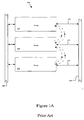
- FIGURE 1A is a block diagram of a portion of a conventional multiprocessor computer system 100 illustrating typical snoop result paths between various processor groups.
- Computer system 100 includes a first processor group 110, a second processor group 120, a third processor group 130, an address interconnect 150, and a data interconnect 160. It should be noted whereas only three (3) processor groups are shown in FIGURE 1 , multiprocessor computer system 100 typically includes any suitable number of processor groups. Communication between the processor 110, 120 and 130 are provided by way of bi-directional buses 140 and 142. Each of processor groups 110, 120, and 130 includes a snoop results distributor and an address repeater. The address repeaters are used to communicate with address interconnect 150 by way of bi-directional buses 140 and 142. Generally, address interconnect 150 broadcasts address requests to every address repeater within computer system 100 whereas data interconnect 160 operates as a point to point router.
- processor groups 110, 120 and 130 transmit their respective memory address requests directly to address interconnect 150.
- Address interconnect 150 will arbitrate any conflicting address requests and will simultaneously broadcast back to all groups of processors (including the original requester group) within system 100 the chosen requested address request.
- each processor group will generate and store a group snoop result in its own snoop results distributor.
- Each group's snoop results distributor will then broadcast to all other snoop results distributors in every processor group in system 100 their respective group snoop result. In this manner, every processor group within computer system 100 obtains the group snoop results of every other processor group. Thereafter, the processor group initiating the address request is directed to the appropriate memory location within the computer system 100.
- a conventional multiprocessor system utilizing a snoop system having such a snoop results distributor is exemplified by the STARFIRE system manufactured by Sun Microsystems, Inc. of Mountain View, CA.
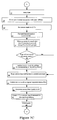
- FIGURE 1B is a flowchart illustrating a typical memory address request transaction in the conventional multiprocessor computer system 100 shown in FIGURE 1A .
- the conventional multiprocessor computer system memory address request transaction process 150 begins with an individual processor sending 10 an address request to the associated address repeater.
- at least one processor in a processor group will typically generate an address request to seek a specific block of memory.
- An address request typically will be associated with a specific memory command indicative of the purpose for which the block of memory is being requested by the processor.
- the address requester will forward 12 the received address request to the address interconnect associated with conventional multiprocessor computer system 100.
- the address interconnect after appropriate conflict arbitration, will broadcast 14 the chosen address request to all address repeaters included within conventional multiprocessor computer system 100, including the address repeater associated with the original requester group of processors. Each associated address repeater will broadcast 16 the received address request to each of its associated individual processors.
- Each individual processor will in turn query 18 their respective memory cache to determine whether they have owned or shared a copy of the requested memory address. Based on the determining 18, each processor will generate an individual snoop result which is subsequently forwarded 20 to the snoop results distributor associated with the group of processors.
- the snoop results distributor then combines 22 all individual snoop results received from individual processors to form a group snoop result.
- the snoop result distributor then broadcasts 24 the group snoop result to all other snoop results distributors within computer system 100 since each snoop results distributor is capable of broadcasting and receiving the group snoop result from all other groups of processors within system 100.
- Each snoop result distributor will combine 26 the group snoop results received from all other snoop results distributors within computer system 100 to form a global snoop result.
- the global snoop result contains all information relating to the ownership of the page of memory associated with the requested memory address for all groups of processors within system 100.
- Each snoop result distributor will forward 28 the global snoop result to all individual processors within its associated group of processors.
- the original requester processor Upon receipt of the global snoop result, the original requester processor will obtain 30 the requested page of memory.
- US 5297265 discloses a data processing apparatus having multiple cells, each with a memory element that stores data pages. At least one of the cells includes a CPU.
- the system includes domains, which include segments, which in turn include the processing cells. Routing elements transfer information between associated segments of successive domains.
- the invention relates to an improved method and apparatus for distributing address requests among a plurality of groups of processors in a multiprocessor computer system.
- An address request is broadcast to only those groups of processors interested in a requested page of memory. In this manner, the address bandwidth necessary for the distribution of the address request is correspondingly reduced.
- the invention can be implemented in numerous ways, including as a method, a computer system, and an apparatus. Several embodiments of the invention are discussed below.
- an embodiment of the invention includes the operations of: receiving an address request at a first group of processors, the address request being associated with a memory address corresponding to a requested memory page; identifying those of the groups of processors that are interested in the address request; and substantially simultaneously broadcasting the address request to the interested groups of processors and not to uninterested groups of processors.
- one embodiment of the invention includes a plurality of groups of processors.
- the plurality of groups of processors includes a first group of processors which receives an address request associated with a memory address corresponding to a requested memory page, an interested group of processors being those of the groups of processors that are interested in the address request, and an uninterested group of processors being those of the groups of processors that are not interested in the address request.
- the multiprocessor computer system further includes a plurality of address repeaters each of which is associated with one of the groups of processors and is capable of receiving and broadcasting an address request.
- the computer system also includes a plurality of snoop filters each being associated with one of the group of processors and each being capable of identifying the interested groups of processors and the uninterested groups of processors. Still further, the computer system includes an address interconnect being electrically connected to each of the snoop filters associated with each of the group of processors. The address interconnect is capable of substantially simultaneously broadcasting the address request to the interested groups of processors and not to the uninterested groups of processors.
- One advantage of the invention is the address interconnect bandwidth is less likely to hinder overall system performance. Another advantage of the invention is that an address interconnect is able to service address requests for large numbers of processors or groups of processors. Another advantage of the invention is the ability to concurrently distribute multiple address requests.
- the invention relates to an improved method and apparatus for distributing address requests among a plurality of groups of processors in a multiprocessor computer system.
- an address request is broadcast to only those groups of processors interested in the requested page of memory.
- a "group of processors" may be any number of processors which share one board (e.g., printed circuit board), or may be any subset of the total processors included in the computer system.
- the processors could be grouped as four groups of three processors, 12 groups of one processor, to name a few examples.
- each group of processors need not contain the same number of processors.
- a snoop filter enables a centralized broadcaster to recognize those groups of processors which are interested and those groups of processors which are not interested in a transaction.
- the snoop filter can be a separate integrated circuit chip or integral to another integrated circuit chip or chips of the computer system.
- An interested group of processors are those that have performed an operation upon the requested block (e.g.; page or line) of memory.
- a group of processors may be interested in the requested block of memory if any processors in that group made a request to obtain a cached copy of any line in the requested block of memory.
- a group of processors is interested in the requested block of memory if any processor in that group is interested in the requested block of memory.
- a Read to Own operation is an operation in which the requester processor wishes to write to or otherwise modify the block of memory associated with the requested memory address.
- a Read to Share is an operation in which a requester processor wishes to only read a requested page of memory but does not preclude other valid copies of the requested block of memory in other processor's caches or in memory.
- FIGURE 2 is a block diagram of a multiprocessor computer system 200 according to an embodiment of the invention.
- the multiprocessor computer system 200 includes a plurality of processor groups, namely at least processor group 210 and processor group 220.
- the processor group 210 has an associated snoop filter 230 and the processor group 220 has an associated snoop filter 232.
- the processor group 210 includes a plurality of processors.
- a processor group includes one or more processing elements.
- processor group 210 includes an address repeater 213 and a snoop results distributor 212. Address repeater 213 forwards an address request received at processor group 210 to snoop filter 230 by way of a address repeater bus interface 240.
- processor group 220 includes an address repeater 263, a snoop results distributor 262, which operate similarly.
- Snoop filter 230 is capable of receiving the address request and generating an appropriate output command. Snoop filter 230 will then forward the output command to address interconnect 250 by way of a bus interfaces 242.
- address interconnect 250 broadcasts transactions (e.g., transaction requests) to every address repeater included within computer system 200 whereas data interconnect 270 operates as a point to point router or a bus.
- All processor groups within computer system 200 forward their individual address requests to address interconnect 250.
- a central address arbiter included in address interconnect 250 then selects an address request from those address requests received at the address interconnect 250 based upon an appropriate arbitration algorithm.
- the selected address request (along with the associated command and memory page address) will then be broadcast substantially simultaneously by address interconnect 250 to the snoop filters for all interested processor groups concurrently with the broadcasting of another non-conflicting address request to the snoop filters of any uninterested processor groups.
- the snoop filter associated with each group of processors will subsequently forward the selected address request and command to the associated address repeater for each interested processor groups. Each of the address repeater will then in turn forward the selected address request and command to all individual processors within the associated group of processors.
- snoop filter 230 receives the selected address request and command and thereafter forwards the same to processor group 210 by way of associated address repeater 213.
- the individual processors included in processor group 210 will then generate individual snoop results by querying their own memory caches to determine whether they have a copy of the requested memory page, In another embodiment the individual processors included in processor group 210 will generate individual snoop results by querying their own memory caches to determine whether they have a copy of any line of memory associated with the requested memory page. Thereafter, each processor within processor group 210 will forward its snoop result to the snoop results distributor 212 for the processor group wherein all such individual snoop results will be cumulated into a group snoop result. Snoop results distributor 212 next broadcasts the group snoop results from processor group 210 to all snoop results distributors in system 200.
- Snoop results distributor 212 is also able to receive group snoop results from other snoop results distributors in computer system 200 and to accumulate them into a global snoop result.
- the global snoop result contains snoop information for all processors in system 200.
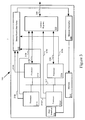
- FIGURE 3 is a detailed block diagram of processor group 210 of multiprocessor computer system 200 illustrated in FIGURE 2 .
- the processor group 210 includes individual processors 211a, 211b, 211c, and 211d.
- the processor group 210 may include any suitable number of processors.
- each one of processors 211 a, 211b, 211c, or 211d can supply an address request to address repeater 213 by way of its respective bi-directional address bus 219a, 219b, 219c, and 219d.
- processor 211b may drive an address request to address repeater 213 by way of bi-directional address bus 219b.
- address repeater 213 forwards only one address request for every cycle. This selection by the address repeater 213 of the address request to forward may be accomplished by use of a local arbitration algorithm as known in the art.
- each of the processors 211a, 211b, 211c, and 211d when requested, also send their individual snoop results to snoop results distributor 212 by way of connectors 218a, 218b, 218c, and 218d, respectively.
- snoop results distributor 212 also produces an input to memory controller 214 to assist with the retrieval of requested pages of memory from a memory 215.
- snoop results distributor 212 supplies a global snoop result to memory controller 214 which then, if appropriate, directs memory 215 to act in accordance with the memory command associated with the address request.
- memory 215 will act upon the requester processor group's page address request by delivering the requested page of memory to a local processor (i.e ., one of the processors 211 a, 211 b, 211c, and 211 d) by way of connector 217 or to a non-local processor by way of data interconnect 270 and data interface 216.
- FIGURE 4 is a block diagram of snoop filter 300 according to an embodiment of the invention.
- the snoop filter 300 illustrated in FIGURE 4 is an exemplary snoop filter that is associated with one of the plurality of groups of processors included in computer system 200 as each processor group has its own associated snoop filter. It should be understood that snoop filter 300 would be replicated for each of the other processor groups included in system 200.
- the snoop filter 300 includes an input queue 322 to stage any address requests received from address repeater 213 by way of address bus interface 240.
- certain address bits from input queue 322 define an index into an interest map 320 and an interest cache 324.
- a multiplexor 323 forwards a queued address request, a quit interest indicator or a new interest indicator to interest map 320, interest cache 324 and a bus interface 242 which is electrically connected to address interconnect 250.
- a decision logic block 328 is disposed to receive output data from both interest map 320 and interest cache 324 as well as the queued address request from input queue 322.
- a remote write map 326 is also included to write data into the interest map 320 and the interest cache 324.
- the remote write map 326 may include at least one bit per page of main memory that is local to an associated processor group. If the bit associated to a page of memory is set, then a non-local processor group has been granted ownership to at least one cache line of the page of memory.
- remote write map 326 may take the form of a 64K x 18 memory device logically configured as a 1M x1 SRAM.
- the snoop filter 300 also includes a page scrubber 350, and a multiplexor 352.
- Page scrubber 350 is disposed to perform a scrub operation on any memory pages with negative snoop results. A scrub operation is used to get rid of unwanted incoming address traffic.
- the page scrubber 350 observes incoming traffic and chooses an address for which the local processor group has no snoop result.
- the page scrubber 350 then starts a series of local reads during any unused cycles and then watches the selected page and if there is any outgoing transaction to this page of memory, or if there are any incoming transactions with a positive snoop, then the scrub of this page is aborted and a new page is chosen.
- the page scrubber 350 generates transactions local to the local group, inserted into otherwise empty cycles, for each line of this page. For each line of memory, first a Read to Share is generated and if no local owned copy is present, it is followed by a Read to Own to invalidate any shared copies in the associated processor group.
- the multiplexor 352 supplies the Read to Own and Read to Share commands from the page scrubber 350 to input queue 322. If, however, an owned copy is present, then the page scrub is aborted an a new page is chosen. If the page scrub does in fact reach the end of the page, a quit interest transaction is generated thereby updating the associated interest maps and interest caches.
- a software scrub is performed by writing a control register in the snoop filter causing the scrubber to generate a second type of quit interest transaction, This is done after the operating system has loaded a page from disk, or zeroed a page, or copied over it with transactions that cause all caches to be invalidated.
- a quit interest transaction of which there are two types, is generated by the page scrubber 350.
- the page scrubber 350 generates a transaction which causes the local processor group to lose interest in a non-local page of memory.
- a quit interest transaction is created which results in all non-local groups losing interest in a local page of memory.
- decision logic block 328 often generates an interest mask 400 which is communicated to address interconnect 250 by way of bus interface 242.
- decision logic block 328 may generate a pipe hold signal 700 which is driven back to pipeline hold circuitry (not shown).
- the pipe hold signal has the effect of temporarily halting any pipeline operations by holding input queue 322 and any pipeline stages in interest map 320 and the input to decision block 328 in its own snoop filter until an interest mask is created for the requested page of memory.
- Interest map 320 may take the form of a SRAM device or other suitable memory device capable of dynamic data storage and retrieval.
- interest map 320 may take the form of a 64K x 18 device logically configured as an 8M x 1 SRAM.
- the interest map 320 includes at least one interest bit per page of main memory and is configured in such a manner as to comprehend local and non-local pages of memory. In the described embodiment, each interest bit corresponds to an 8K page of memory.
- At least one interest bit in interest map 320 associated with each local page of main memory is set if a processor residing in a non-local processor group has previously done an operation on the requested local page of memory.
- at least one interest bit is set for each non-local page of main memory if a processor residing in the local processor group has ever done an operation on the requested non-local page of memory.
- FIGURE 5 illustrates an exemplary interest map 320.
- Interest map 320 is assumed to be associated with processor group 210.
- Interest map 320 includes a number of interest bits, including interest bit 321 and interest 322.
- Interest bit 321 is associated with a non-local page address 610 ( i.e., resides in memory outside of group 210) and interest bit 322 is associated with a local page address 620 (i.e., resides in processor group 210).
- interest bit 321 is set to logical one as shown ( i.e., set may also refer to set to logical zero)
- at least one processor within processor group 210 has some interest in non-local page address 610.
- an interest bit 322 in interest map 320 is set to a logical one, then at least one processor outside group 210 has some interest in local page address 620.
- FIGURE 6 is an exemplary representation of an interest cache 340 associated with interest map 320 and processor group 210 according to an embodiment of the invention.
- each interest cache is associated with an interest map as well as a processor group.
- the interest cache is generally organized as a direct-mapped or set-associate cache of those page addresses in the interest map that the associated processor group has shared with non-local processor groups.
- Each page address included in the interest cache 340 is associated with an interest mask.
- the interest mask includes a single group interest bit 402 for each of the processor groups within the multiprocessor system 200. Each group interest bit indicates the interest of the associated processor group in the requested page address.
- Additional bits required to facilitate the operation of the snoop filter within system may be provided in the interest cache 340.
- an update bit 404 may be added to indicate new interest in the associated page of memory, or in yet another embodiment, a "remote write is OK" bit 406 may be added to indicate the associated page address has had at least one cache line owned by a non-local processor group.
- interest cache 340 includes an interest mask 400 associated with non-local page address tag 610.
- interest mask 400 includes group interest bits for all processor groups in system 200. As described above, since page address tag 610 is non-local with reference to processor group 210 and the interest bit 321 is set, then processor group 210 has an interest in page address tag 610. In this case, the group interest bit 408 associated with processor group 210 in interest mask 400 is set to indicating an interest by processor group 210 in non-local page address 610.
- processor group 210 forwards address request associated with local page address 610 to address repeater 213.
- Address repeater 213 then forwards the address request to input queue 322 of snoop filter 230 by way of address repeater bus interface 240.
- snoop filter 300 determines whether interest bit 321 in interest map 320 associated with local page address 610 is set or not set.
- the interest bit 321 for local page address 610 is set, thus an associated interest mask (based on previous operations not yet comprehending the new address request) will be retrieved from interest cache 340 and forwarded to decision block 328 along with data retrieved from interest map 320.
- Decision logic 328 will generate interest mask 400 for the address request.
- Decision logic 328 will forward interest mask 400 to address interconnect 250 by way of bus interface 242 where it will be combined with the address request and the associated memory command.
- FIGURES 7A - 7C are flowcharts detailing filtered processing 700 of a single memory address request transaction in a multiprocessor computer system 200 according to an embodiment of the invention.
- processor groups of the multiprocessor computer system 200 substantially simultaneously generate address requests.
- the filtered snoop processing 700 is described as carried out for single address request from processor group 210.
- the lifecycle of a memory address request begins with an individual processor within a group of processors generating a request for a page of memory with an associated memory address.
- the address repeater associated with the group of processors which includes the original requester processor will receive the memory page address request 51.
- the snoop filter associated with the requester group of processors will receive 52 the memory page address request.
- an interest map associated with the snoop filter will be retrieved 54.
- the decision logic block determines 55 whether the memory page address is a local or a non-local address.
- the interest map will again be queried 69 to determine if the entry associated with the requested page of memory is a zero or a one. If it is determined that the entry in the interest map associated with the requested page of memory is zero, then the logic block associated with the snoop filter will set 70 the interest mask for the requested page of memory to a "self state" by setting all interest bits for all groups to zero except the requester group of processors which it sets to a one. In this manner, the address request is echoed back to the originator group of processors only so as to maintain priority coherency.
- the interest cache associated with the snoop filter is queried 71 to determine if the requested page address is included in the interest cache. If it is determined that the requested page of memory is not included in the interest cache, then the update bit is set concurrently with setting 72 all interest bits in the interest mask to one. In this manner, all groups of processors will receive the page address request as a special transaction since the update bit has been set. If, however, it is determined that the page address request is included in the interest cache, then the logic block sets 73 an interest mask to the pattern retrieved from the interest cache..
- the decision logic block determines 56 if the entry associated with the requested page of memory is zero or one. However, if it is determined to be one, then the procedure is the same as for a local address. Referring now to FIGURE 7C , if it is determined that the entry in the interest map for the requested page address is zero then the logic block generates a hold pipe signal 52.
- the hold pipe signal has the effect of suspending all transactions for the requester group of processors. In this manner, a new interest transaction is created whereby the requester group of processors is telling all other groups of processors that it is now interested in the requested page of memory which until now it was uninterested.
- the new interest transaction begins by the logic block setting 59 all interest bits in the interest mask associated with the requested page of memory to ones.
- the interest mask is then forwarded 60 to the central address interconnect wherein is contained the central address arbiter.
- the central address arbiter will then prioritize all received address requests and chose one request based upon the system arbitration algorithm.
- the central address arbiter has granted the request it will forward 61 the new interest transaction to all non-local snoop filters.
- Each non-local snoop filter will query 62 their respective interest cache to determine if the requested page of memory is included within. If the address of the requested page of memory is included within the associated interest cache, each non-local snoop filter will update 63 their respective interest masks by setting the bit associated with the requesting board to one.
- each non-local snoop filter will read 64 their interest map and forward the result to the central address arbiter.
- the central address arbiter will send 65 send the results from all non-local snoop filters to the snoop filter associated with the requester group of processors which cumulates and installs 66 the new interest mask into its interest cache and installs 67 a one in the associated interest map.
- the logic block sends 68 an unlock pipe signal which has the effect of unlocking the pipe for the requester group of processors. Once the pipe has been unlocked, the requester group of processors is now able to follow the same procedure.
- the snoop filter sends 74 the updated interest mask along with the memory page address request and original command to the central address arbiter contained within the address interconnect.
- the central address arbiter then broadcasts 76 the address request and associated command to the snoop filters of interested groups of processors concurrently 77 with unrelated transactions to the snoop filters of other groups of processors.
- Each snoop filter of each interested group of processors will then determine 79 whether the update bit is set or not set. If it is determined that the update bit is set, the snoop filter will read 80 the associated interest map and sends 81 the bit from the interest map associated with the requested page of memory to the snoop filter associated with the original requester group of processors.
- Each snoop filter associated with each interested group of processors will simultaneously forward 82 the address request to all snoop filters associated with the interested groups of processors. Each address repeater will then simultaneously broadcast 83 to all processors included within the interested group of processors.
- Each of the individual processors in the interested group of processors will decide 84 whether they have a shared or owned copy of the requested page. All individual processors in the interested group of processors will forward 85 their snoop results to the snoop results to the associated snoop results distributor.
- the associated snoop results distributor will then combine 86 all received individual snoop results to form a group snoop result.
- Each snoop results distributor will distribute 87 the group snoop result to all interested snoop results distributors associated with interested groups of processors included in system 200. Thereafter, processors access 88 the requested page of memory.
- address interconnect 250 may perform any required conflict arbitration between any conflicting address requests and choose an appropriate address request to broadcast.
- an arbitration algorithm will typically have a highest priority processor group. On any given cycle, the algorithm will look to see how many processor groups have outstanding requests and determine which processor groups has the highest priority. The arbitration algorithm will then choose the first unsatisfied processor groups with the highest priority or the processor groups immediately after the first processor groups in a circular order. Once a request has been granted, the processor groups is now assigned the lowest priority and the processor groups that was previously next in line is now assigned the highest priority.
- another arbitration algorithm may apply.
- address interconnect 250 broadcasts simultaneously in lockstep the chosen address request ( address request 290, for example) to all address repeaters associated with the interested processor groups concurrently with any non-conflicting transactions to the address repeaters associated with the uninterested processor groups.
- each individual processor will generate its own individual snoop result by querying its own memory cache. In this manner, determining whether it has shared or owned a copy of the requested block of memory. Upon such a determination, each one of processors will forward its own snoop result to the snoop results distributor associated with that group. The snoop results distributor will thereupon cumulate the received individual snoop results into a group snoop result and transmit the group snoop result to all snoop results distributors in interested groups within system 200.
- each snoop results distributor will receive and cumulate all group snoop results from all other interested processor groups in system 200 to form a global snoop result.
- the global snoop result will be forwarded to all interested processors and memory controllers within system 200.
- processors 211a - 211d will generate individual snoop results by querying their respective memory caches (not shown) and forwarding the result to snoop results distributor 212 by way of connectors 218a - 218d, respectively.
- Snoop results distributors 212 will combine the individual processor snoop results into a group snoop result and thereupon transmit the group snoop result to all other interested processor groups. Substantially simultaneously, the snoop results distributor 212 will receive group snoop results from all other snoop results distributors in system 200.
- snoop results distributors 212 Upon the final cumulation of all group snoop results into a global snoop result, snoop results distributors 212 will forward the global snoop results to each one of the processors 211a - 211d and the memory controller 214. Memory controller 214 will then direct memory 215 to act in accordance with the associated memory command.
Landscapes
- Engineering & Computer Science (AREA)
- Theoretical Computer Science (AREA)
- Physics & Mathematics (AREA)
- General Engineering & Computer Science (AREA)
- General Physics & Mathematics (AREA)
- Software Systems (AREA)
- Memory System Of A Hierarchy Structure (AREA)
- Multi Processors (AREA)
Claims (25)
- Verfahren zum Verteilen von Adreßanforderungen unter einer Mehrzahl von Gruppen von Prozessoren (211) In einem Multiprozessor-Computersystem (200), wobei das Verfahren umfaßt:Empfangen einer Adreßanfofderung an einer ersten Gruppe von Prozessoren (210), wobei die Adreßanforderung zu einer Speicheradresse gehört, die einer angeforderten Speicherselte entspricht.Identifizieren derjenigen der Gruppen von Prozessoren, die an der Adreßanforderung Interessiert sind, und identifizierten derjenigen der Gruppen von Prozessoren, die an der Adreßanforderung nicht interessiert sind, undIm wesentlichen gleichzeitiges Übertragen der Adreßanforderung an die interessierten Gruppen von Prozessoren und nicht an die nicht interessierten Gruppen von Prozessoren.
- Verfahren nach Anspruch 1, wobei das Verfahren weiterhin umfaßt:Identifizieren wenigstens einer nicht kollidierenden Adreßanforderung, die die Verteilung nur an wenigstens eine der nicht interessierten Gruppen von Prozessoren erfordert, undVerteilen der wenigstens einen nicht kollidierenden Adreßanforderung an die wenigstens eine der nicht interessierten Gruppen von Prozessoren im wesentlichen gleichzeitig mit dem Übertragen.
- Verfahren nach Anspruch 1, wobei die Adreßanforderung einen Befehl und eine Speicheradresse beinhaltet.
- Verfahren nach Anspruch 1, wobei das Identifizieren umfaßt:Erhalten einer interessenmaske, welche diejenigen der Gruppen von Prozessoren identifiziert, die an der Adreßanforderung interessiert sind.
- Verfahren nach Anspruch 1, wobei das Verfahren weiterhin umfaßt:Erhalten eines Snoop-Ergebnisses für Jede der interessierten Gruppen von Prozessoren undÜbertragen des Snoop-Ergebnisses von jeder der interessieren Gruppen von Prozessoren an die erste Gruppe von Prozessoren.
- Verfahren nach Anspruch 5, wobei das Erhalten des Snoop-Ergebnisses so betrieben wird, daß eine Datenspeichervorrichtung an jeder der interessierten Gruppen von Prozessoren durchsucht wird.
- Verfahren nach Anspruch 1, wobei das Identifizieren umfaßt:Bereitstellen einer Interesunübersicht innerhalb des Multiprozessor-Computersystems, wobei die Interessenübersicht ein Interessenbit speichern kann, welches zu jeder der innerhalb des Multiprozessor-Computersystems enthaltenen Speicherselten gehört, wobei das Interessenbit festsfellt, ob irgendeine Gruppe von Prozessoren an der zugehörigen Speicherseite Interestsiert ist, undBereitstellen eines interessencaches innerhalb des Multiprozessor-Computersystems, wobei der Interessencache die Speicheradresse derjenigen Spelcherseiten identifizieren kann, die von einer zugehörigen Gruppe von Prozessoren und wenigstens einer weiteren Gruppe von Prozessoren, die an der angeforderten Speicherseite interessiert ist, gemeinsam verwendet werden.
- Verfahren nach Anspruch 7, wobei das Identifizieren weiterhin umfaßt:Abfragen der Interessenübeericht um festzustellen, ob Irgendeine Gruppe von Prozessoren an der angeforderten Speicherseite interessiert ist,Abfragen des Interessencaches, um festzustellen, ob die Adresse der angeforderten Speicherseite darin enthalten ist, wenn bei dem Abfragen der interessenübersicht festgestellt wird, daß wenigstens eine weitere Gruppe von Prozessoren an der angeforderten Speicharseite interessiert ist, undAbrufen der zu der Adresse der angeförderten Speicherseite gehörenden Interessenmaske aus dem Interessancache, wenn festgestellt wird, daß die Adresse der angeforderten Speicherseite in dem Interessencache enthalten ist.
- Verfahren nach Anspruch 8, wobei das Identifizieren weiterhin umfaßt:Setzen der Interessenmaske auf ausschließlich Einen und Setzen eines Aktualisierungsbits in den Interassencache, wenn festgestellt wird, daß die Adresse der angeforderten Speicherseite nicht innerhalb des Interessencaches enthalten ist.
- Verfahren nach Anspruch 8, wobei das Identifizieren weiterhin umfaßtSetzen der Interessenmaske auf einen Selbst-Zustand (self state), wobei ein zu der assoziierten Gruppe von Prozessoren gehörendes Bit gesetzt wird, wenn das Abfragen der Interessenübersicht ergibt, daß keine weitere Gruppe von Prozessoren an der angeforderten Speicherseite Interessiert ist.
- Verfahren nach Anspruch 4, wobei das Übertragen so betrieben wird, daß die Adreßanforderung auf Basis der Interessenmaske an die Interessierten Gruppen von Prozessoren und nicht an die nicht interessierten Gruppen von Prozessoren übertragen wird.
- Verfahren nach Anspruch 9, wobei das Verfahren weiterhin umfaßt:Feststellen, ob das Aktualisierungsbit gesetzt ist, undErhalten des Interessenbits für die angefonderte Speicherseite von allen Gruppen von Prozessoren und Weiterleiten der erhaltenen Interessanbits an eine der Gruppen von Prozessoren, wenn festgestellt wird, daß das Aktualisierungsbit gesetzt ist.
- Verfahren nach Anspruch 7, wobei das Verfahren weiterhin umfaßt:Feststellen, ob die Adresse der Speicherseite eine nicht lokale Speicheradresse ist, undAbfragen der Interessenübersicht, um festzustellen, ob irgendeine Gruppe von Prozessoren an der angeforderten Speicherseite interessiert ist, wenn festgestellt wird, daß die Speicherseite eine nicht lokale Speicheradresse hat.
- Verfahren nach Anspruch 13, wobei das Verfahren weiterhin umfaßt:Erzeugen einer neuen Interessentransaktion für die Speicheradresse, welche der engeforderten Speicherseite entspricht, wenn festgestellt wird, daß die Speicherselte eine nicht lokale Speicheradresse hat, und wenn das Abfragen der Interessenübersicht ergibt, daß keine der Gruppen von Prozessoren an der angeforderten Speicherseite interessiert ist,Weiterleiten einer vorbestimmten Interessenmaske für die lokale Gruppe von Prozessoren an alle anderen Gruppen von Prozessoren,Feststellen, welche der nicht lokalen Gruppen von Prozessoren an der angeforderten Speicherseite interessiert sind,Aktualisieren der Interessenmaske jeder der nicht lokalen Gruppen von Prozessoren, von denen festgestellt wird, daß sie an der angeforderten Speicherseite interessiert sind, indem das Bit in der zugehörigen Interessenmaske auf einen vorbestimmen logischen Zustand gesetzt wird, undAktualisieren der Interessenmaske für die zugehörige Gruppe von Prozessoren auf Basis der Interessenbits von den anderen Gruppen von Prozessoren.
- Multiprozessor-Computersystem (200) mit:einer Mehrzahl von Gruppen von Prozessoren (211), wobei die Mehrzahl von Gruppen von Prozessoren zumindest die folgenden beinhaltet:eine erste Gruppe von Prozessoren (210), die eine Adreßanforderung empfängt, wobei die Adreßanforderung zu einer Speicheradresse gehört, die einer angeforderten Speicherseite entspricht,wenigstens eine Interessiert Gruppe von Prozessoren, wobei die Interessierte Gruppe von Prozessoren diejenigen der Gruppen von Prozessoren enthält, die an der Adreßanforderung Interessiert sind, undwenigstens eine nicht interessierte Gruppe von Prozessoren, wobei die nicht interessierte Gruppe von Prozessoren diejenigen der Gruppen von Prozessoren enthält, die nicht an der Adreßanforderung interessiert sind,wobei das System die interessieren und die nicht interessierten Gruppen von Prozessoren identifiziert und im wesentlichen gleichzeitig die Adreßanforderung an die interessierten Gruppen von Prozessoren und nicht an die nicht interessierten Gruppen von Prozessoren überträgt
- Multiprozessorsystem nach Anspruch 15, welches weiterhin aufweisteine Mehrzahl von Adreßwiederholem (213, 263), wobei jeder der Adreßwiederholer zu einer der Gruppen von Prozessoren gehört und jeder der Adreßwisderholer eine Adreßanforderung empfangen und übertragen kann,eine Mehrzahl von Snoop-Filtern (230, 232), wobei jeder der Snoop-Filter zu einer der Gruppen von Prozessoren gehört und jeder der Snoop-Filter die interessierten Gruppen von Prozessoren und die nicht interessierten Gruppen von Prozessoren, identifizieren kann, undeine Adreßverbindung (250), wobei die Adreßverbindung elektrisch mit jedem der Snoop-Filter verbunden ist, der zu jeder der Gruppen von Prozessoren gehört, und wobei die Adreßverbindung im wesentlichen gleichzeitig die Adreßanforderung an die Interessierten Gruppen von Prozessoren und nicht an die nicht Interessierten Gruppen von Prozessoren übertragen kann.
- Multiprozessorsystem nach Anspruch 16, wobei das Multiprozessorsystem weiterhin auf - weist:eine Mehrzahl von Snoop-Ergebnisvertellem (212, 262), wobei jeder der Snoop-Ergebnisverteiler zu einer der Gruppen von Prozessoren gehört, jeder der Snoop-Ergebnisverteiler elektrisch mit einem Speichercache verbunden ist, welcher zu der assoziierten Gruppe von Prozessoren gehört, und jeder der Snoop-Etgebnisvereiler ein Snoop-Ergebnis von anderen Gruppen von Prozessoren empfangen und weiterleiten kann.
- Multiprozessor-Computersystem nach Anspruch 16, wobei der zu jeder der Gruppen von Prozessoren gehörende Snoop-Filter aufweist:eine Interessenübersichts-Speichervorrichtung (320), die ein Interessenbit speichern kann, welches zu jeder der in dem Computersystem enthaltenen Speicherseiten gehört, wobei das Interessenbit feststellt, ob irgendeine Gruppe von Prozessoren an der zugehörigen Speicherseite interessiert ist.
- Multiprozessor-Computersystem nach Anspruch 16, wobei der zu jeder der Gruppen von Prozessoren gehörende Snoop-Filter weiterhin aufweist:eine Interessencache-Speichervorrichtung (324), welche die Speicheredresse derjenigen Speicherselten Identifizieren kann, die von der zugehörigen Gruppen von Prozessoren und wenigstens einer weiteren Gruppe von Prozessoren, die an der angeforderten Speicherselte Interessiert ist, gemeinsam verwendet werden.
- Multiprozessor-Computersystem nach Anspruch 16, wobei die Adreßverbindung weiterhin einen Konfliktvermittler aufweist, wobei der Konfliktvermittler Konflikte zwischen Adreßanfordarungen klärt bzw. beseitigt.
- Multiprozessor-Computersystem nach Anspruch 20, wobei die Adreßverbindung so betreibbar ist, daß sie wenigstens eine nicht kollidierende Adreßenforderung identifiziert, welche eine Verteilung nur an wenigstens eine der nicht Interessierten Gruppen von Prozessoren erfordert, wobei die wenigstens eine nicht kollidierende Adreßanforderung im wesentlichen gleichzeltig mit der Übertragung der Adreßaniordsrvng an die interessieren Gruppen von Prozessoren an die wenigstens eine der nicht Interessieren Gruppen von Prozessoren verteilt wird.
- Multiprozessor-Computersyetem nach Anspruch 16, wobei die interessierte Gruppe von Prozessoren weiterhin wenigstens einen Prozessor beinhaltet, welcher eine zu der angeforderten Speicherseite gehörende Speicherzelle angefordert hat.
- Multiprozessor-Computersystem nach Anspruch 16, welches weiterhin einen Aussonderer aufweist, um eine Interessenaufgabe-Transaktion für wenigstens eine derjenigen Gruppen von Prozessoren, die an der Adreßanforderung interessiert sind, zu erzeugen.
- Multiprozessor-Computersystem nach Anspruch 23, wobei die Interessenaufgabe-Transaktion bewirkt, daß die wenigstens eine derjenigen Gruppen von Prozessoren, die an der Adreßanforderung Interessiert sind, das Interesse an der Adreßanforderung verliert.
- Multiprozessor-Computersystem nach Anspruch 16, wobei der Snoop-Filter aufweist:einen Eingabepuffer für das Empfangen einer Transaktionsanforderung für die gemeinsam verwendete Ressource undeinen Maskenerzeuger, wobei der Maskenerzeuger eine Verteilungsmaske für die Transaktionsanforderung erhält und wobei die Vorteilungsmaske verwendet wird, um den Verkehr Über don Bus zu reduzieren.
Applications Claiming Priority (2)
| Application Number | Priority Date | Filing Date | Title |
|---|---|---|---|
| US885007 | 1997-06-30 | ||
| US08/885,007 US5966729A (en) | 1997-06-30 | 1997-06-30 | Snoop filter for use in multiprocessor computer systems |
Publications (3)
| Publication Number | Publication Date |
|---|---|
| EP0889403A2 EP0889403A2 (de) | 1999-01-07 |
| EP0889403A3 EP0889403A3 (de) | 2002-05-08 |
| EP0889403B1 true EP0889403B1 (de) | 2009-09-30 |
Family
ID=25385924
Family Applications (1)
| Application Number | Title | Priority Date | Filing Date |
|---|---|---|---|
| EP98305109A Expired - Lifetime EP0889403B1 (de) | 1997-06-30 | 1998-06-29 | Snoopfilter zur Verwendung in Multiprozessor-Rechnersystemen |
Country Status (4)
| Country | Link |
|---|---|
| US (1) | US5966729A (de) |
| EP (1) | EP0889403B1 (de) |
| JP (1) | JPH11161619A (de) |
| DE (1) | DE69841190D1 (de) |
Cited By (1)
| Publication number | Priority date | Publication date | Assignee | Title |
|---|---|---|---|---|
| US10042804B2 (en) | 2002-11-05 | 2018-08-07 | Sanmina Corporation | Multiple protocol engine transaction processing |
Families Citing this family (67)
| Publication number | Priority date | Publication date | Assignee | Title |
|---|---|---|---|---|
| US6490661B1 (en) | 1998-12-21 | 2002-12-03 | Advanced Micro Devices, Inc. | Maintaining cache coherency during a memory read operation in a multiprocessing computer system |
| US6631401B1 (en) | 1998-12-21 | 2003-10-07 | Advanced Micro Devices, Inc. | Flexible probe/probe response routing for maintaining coherency |
| US6370621B1 (en) | 1998-12-21 | 2002-04-09 | Advanced Micro Devices, Inc. | Memory cancel response optionally cancelling memory controller's providing of data in response to a read operation |
| US6324617B1 (en) | 1999-08-04 | 2001-11-27 | International Business Machines Corporation | Method and system for communicating tags of data access target and castout victim in a single data transfer |
| US6502171B1 (en) | 1999-08-04 | 2002-12-31 | International Business Machines Corporation | Multiprocessor system bus with combined snoop responses explicitly informing snoopers to scarf data |
| US6321305B1 (en) | 1999-08-04 | 2001-11-20 | International Business Machines Corporation | Multiprocessor system bus with combined snoop responses explicitly cancelling master allocation of read data |
| US6343344B1 (en) | 1999-08-04 | 2002-01-29 | International Business Machines Corporation | System bus directory snooping mechanism for read/castout (RCO) address transaction |
| US6353875B1 (en) | 1999-08-04 | 2002-03-05 | International Business Machines Corporation | Upgrading of snooper cache state mechanism for system bus with read/castout (RCO) address transactions |
| US6343347B1 (en) | 1999-08-04 | 2002-01-29 | International Business Machines Corporation | Multiprocessor system bus with cache state and LRU snoop responses for read/castout (RCO) address transaction |
| US6349367B1 (en) | 1999-08-04 | 2002-02-19 | International Business Machines Corporation | Method and system for communication in which a castout operation is cancelled in response to snoop responses |
| US6275909B1 (en) * | 1999-08-04 | 2001-08-14 | International Business Machines Corporation | Multiprocessor system bus with system controller explicitly updating snooper cache state information |
| US6338124B1 (en) | 1999-08-04 | 2002-01-08 | International Business Machines Corporation | Multiprocessor system bus with system controller explicitly updating snooper LRU information |
| JP2001167040A (ja) | 1999-12-14 | 2001-06-22 | Hitachi Ltd | 記憶サブシステム及び記憶制御装置 |
| US6389517B1 (en) * | 2000-02-25 | 2002-05-14 | Sun Microsystems, Inc. | Maintaining snoop traffic throughput in presence of an atomic operation a first port for a first queue tracks cache requests and a second port for a second queue snoops that have yet to be filtered |
| WO2001063240A2 (en) * | 2000-02-25 | 2001-08-30 | Sun Microsystems, Inc. | Maintaining high snoop traffic throughput and preventing cache data eviction during an atomic operation |
| US6598123B1 (en) * | 2000-06-28 | 2003-07-22 | Intel Corporation | Snoop filter line replacement for reduction of back invalidates in multi-node architectures |
| US20020133652A1 (en) * | 2001-03-19 | 2002-09-19 | Tai Quan | Apparatus for avoiding starvation in hierarchical computer systems that prioritize transactions |
| US6889343B2 (en) | 2001-03-19 | 2005-05-03 | Sun Microsystems, Inc. | Method and apparatus for verifying consistency between a first address repeater and a second address repeater |
| US6877055B2 (en) | 2001-03-19 | 2005-04-05 | Sun Microsystems, Inc. | Method and apparatus for efficiently broadcasting transactions between a first address repeater and a second address repeater |
| US6826643B2 (en) | 2001-03-19 | 2004-11-30 | Sun Microsystems, Inc. | Method of synchronizing arbiters within a hierarchical computer system |
| EP1255201B1 (de) * | 2001-05-01 | 2009-12-23 | Sun Microsystems, Inc. | Multiprozessorsystem mit gemeinsamem Speicher, welches gemischte Broadcast-Snoop und verzeichnisbasierte Kohärenzprotokolle benutzt |
| US7222220B2 (en) * | 2001-05-01 | 2007-05-22 | Sun Microsystems, Inc. | Multiprocessing system employing address switches to control mixed broadcast snooping and directory based coherency protocols transparent to active devices |
| US6823409B2 (en) * | 2001-09-28 | 2004-11-23 | Hewlett-Packard Development Company, L.P. | Coherency control module for maintaining cache coherency in a multi-processor-bus system |
| RU2189630C1 (ru) * | 2001-11-21 | 2002-09-20 | Бабаян Борис Арташесович | Способ фильтрации межпроцессорных запросов в многопроцессорных вычислительных системах и устройство для его осуществления |
| US6842827B2 (en) | 2002-01-02 | 2005-01-11 | Intel Corporation | Cache coherency arrangement to enhance inbound bandwidth |
| US6857048B2 (en) * | 2002-01-17 | 2005-02-15 | Intel Corporation | Pseudo least-recently-used (PLRU) replacement method for a multi-node snoop filter |
| US7653790B2 (en) * | 2002-05-13 | 2010-01-26 | Glasco David B | Methods and apparatus for responding to a request cluster |
| US7395379B2 (en) * | 2002-05-13 | 2008-07-01 | Newisys, Inc. | Methods and apparatus for responding to a request cluster |
| US7398446B2 (en) * | 2003-05-29 | 2008-07-08 | Lucent Technologies Inc. | Low power operation of an address interleaver |
| US7127562B2 (en) * | 2003-06-11 | 2006-10-24 | International Business Machines Corporation | Ensuring orderly forward progress in granting snoop castout requests |
| US7325102B1 (en) * | 2003-11-17 | 2008-01-29 | Sun Microsystems, Inc. | Mechanism and method for cache snoop filtering |
| US7117312B1 (en) * | 2003-11-17 | 2006-10-03 | Sun Microsystems, Inc. | Mechanism and method employing a plurality of hash functions for cache snoop filtering |
| US7434008B2 (en) * | 2004-04-23 | 2008-10-07 | Hewlett-Packard Development Company, L.P. | System and method for coherency filtering |
| US7698509B1 (en) * | 2004-07-13 | 2010-04-13 | Oracle America, Inc. | Snooping-based cache-coherence filter for a point-to-point connected multiprocessing node |
| JP4484757B2 (ja) * | 2004-12-09 | 2010-06-16 | 株式会社日立製作所 | 情報処理装置 |
| JP4819369B2 (ja) * | 2005-02-15 | 2011-11-24 | 株式会社日立製作所 | ストレージシステム |
| US7383397B2 (en) * | 2005-03-29 | 2008-06-03 | International Business Machines Corporation | Method and apparatus for filtering snoop requests using a scoreboard |
| US7386685B2 (en) * | 2005-03-29 | 2008-06-10 | International Busniess Machines Corporation | Method and apparatus for filtering snoop requests using multiple snoop caches |
| US7386684B2 (en) * | 2005-03-29 | 2008-06-10 | International Business Machines Corporation | Method and apparatus for detecting a cache wrap condition |
| US7373462B2 (en) * | 2005-03-29 | 2008-05-13 | International Business Machines Corporation | Snoop filter for filtering snoop requests |
| US7386683B2 (en) * | 2005-03-29 | 2008-06-10 | International Business Machines Corporation | Method and apparatus for filtering snoop requests in a point-to-point interconnect architecture |
| US7392351B2 (en) * | 2005-03-29 | 2008-06-24 | International Business Machines Corporation | Method and apparatus for filtering snoop requests using stream registers |
| US7380071B2 (en) * | 2005-03-29 | 2008-05-27 | International Business Machines Corporation | Snoop filtering system in a multiprocessor system |
| GB2427715A (en) * | 2005-06-24 | 2007-01-03 | Advanced Risc Mach Ltd | Managing snoop operations in a multiprocessor system |
| US20070073977A1 (en) * | 2005-09-29 | 2007-03-29 | Safranek Robert J | Early global observation point for a uniprocessor system |
| US7512742B2 (en) * | 2006-01-17 | 2009-03-31 | International Business Machines Corporation | Data processing system, cache system and method for precisely forming an invalid coherency state indicating a broadcast scope |
| US8701023B1 (en) | 2006-02-16 | 2014-04-15 | Cypress Semiconductor Corporation | Global parameter management graphical user interface (GUI) for embedded application design |
| US7536515B2 (en) * | 2006-06-30 | 2009-05-19 | Intel Corporation | Repeated conflict acknowledgements in a cache coherency protocol |
| US7721050B2 (en) * | 2006-06-30 | 2010-05-18 | Intel Corporation | Re-snoop for conflict resolution in a cache coherency protocol |
| US7506108B2 (en) * | 2006-06-30 | 2009-03-17 | Intel Corporation | Requester-generated forward for late conflicts in a cache coherency protocol |
| JP2008026944A (ja) * | 2006-07-18 | 2008-02-07 | Renesas Technology Corp | バス結合型マルチプロセッサ |
| GB2442984B (en) | 2006-10-17 | 2011-04-06 | Advanced Risc Mach Ltd | Handling of write access requests to shared memory in a data processing apparatus |
| US7996626B2 (en) * | 2007-12-13 | 2011-08-09 | Dell Products L.P. | Snoop filter optimization |
| US20110145837A1 (en) * | 2009-12-14 | 2011-06-16 | Bower Kenneth S | Filtering Broadcast Recipients In A Multiprocessing Environment |
| US10268583B2 (en) | 2012-10-22 | 2019-04-23 | Intel Corporation | High performance interconnect coherence protocol resolving conflict based on home transaction identifier different from requester transaction identifier |
| KR102485999B1 (ko) * | 2015-07-01 | 2023-01-06 | 삼성전자주식회사 | 마스터-사이드 필터를 포함하는 캐시 코히런트 시스템과 이를 포함하는 데이터 처리 시스템 |
| CN106326148B (zh) * | 2015-07-01 | 2020-06-23 | 三星电子株式会社 | 数据处理系统及其操作方法 |
| US10157133B2 (en) | 2015-12-10 | 2018-12-18 | Arm Limited | Snoop filter for cache coherency in a data processing system |
| US9900260B2 (en) | 2015-12-10 | 2018-02-20 | Arm Limited | Efficient support for variable width data channels in an interconnect network |
| US20170091101A1 (en) * | 2015-12-11 | 2017-03-30 | Mediatek Inc. | Snoop Mechanism And Snoop Filter Structure For Multi-Port Processors |
| US9990292B2 (en) * | 2016-06-29 | 2018-06-05 | Arm Limited | Progressive fine to coarse grain snoop filter |
| US10042766B1 (en) | 2017-02-02 | 2018-08-07 | Arm Limited | Data processing apparatus with snoop request address alignment and snoop response time alignment |
| US10747298B2 (en) | 2017-11-29 | 2020-08-18 | Advanced Micro Devices, Inc. | Dynamic interrupt rate control in computing system |
| US10503648B2 (en) | 2017-12-12 | 2019-12-10 | Advanced Micro Devices, Inc. | Cache to cache data transfer acceleration techniques |
| US11210246B2 (en) | 2018-08-24 | 2021-12-28 | Advanced Micro Devices, Inc. | Probe interrupt delivery |
| US12167102B2 (en) | 2018-09-21 | 2024-12-10 | Advanced Micro Devices, Inc. | Multicast in the probe channel |
| US12332795B2 (en) | 2022-04-12 | 2025-06-17 | Advanced Micro Devices, Inc. | Reducing probe filter accesses for processing in memory requests |
Family Cites Families (1)
| Publication number | Priority date | Publication date | Assignee | Title |
|---|---|---|---|---|
| US5055999A (en) * | 1987-12-22 | 1991-10-08 | Kendall Square Research Corporation | Multiprocessor digital data processing system |
-
1997
- 1997-06-30 US US08/885,007 patent/US5966729A/en not_active Expired - Lifetime
-
1998
- 1998-06-29 DE DE69841190T patent/DE69841190D1/de not_active Expired - Lifetime
- 1998-06-29 EP EP98305109A patent/EP0889403B1/de not_active Expired - Lifetime
- 1998-06-30 JP JP10183806A patent/JPH11161619A/ja active Pending
Cited By (1)
| Publication number | Priority date | Publication date | Assignee | Title |
|---|---|---|---|---|
| US10042804B2 (en) | 2002-11-05 | 2018-08-07 | Sanmina Corporation | Multiple protocol engine transaction processing |
Also Published As
| Publication number | Publication date |
|---|---|
| US5966729A (en) | 1999-10-12 |
| EP0889403A2 (de) | 1999-01-07 |
| DE69841190D1 (de) | 2009-11-12 |
| EP0889403A3 (de) | 2002-05-08 |
| JPH11161619A (ja) | 1999-06-18 |
Similar Documents
| Publication | Publication Date | Title |
|---|---|---|
| EP0889403B1 (de) | Snoopfilter zur Verwendung in Multiprozessor-Rechnersystemen | |
| US6848003B1 (en) | Multi-node data processing system and communication protocol that route write data utilizing a destination ID obtained from a combined response | |
| Karlin et al. | Competitive snoopy caching | |
| JP3644587B2 (ja) | 共用介入サポートを有する不均等メモリ・アクセス(numa)・データ処理システム | |
| EP0365674B1 (de) | Adressenspeichersperrung mit priorität für einen gemeinsamen speicher | |
| US6816947B1 (en) | System and method for memory arbitration | |
| TW544589B (en) | Loosely coupled-multi processor server | |
| US5778429A (en) | Parallel processor system including a cache memory subsystem that has independently addressable local and remote data areas | |
| US4977498A (en) | Data processing system having a data memory interlock coherency scheme | |
| US7627738B2 (en) | Request and combined response broadcasting to processors coupled to other processors within node and coupled to respective processors in another node | |
| US6334177B1 (en) | Method and system for supporting software partitions and dynamic reconfiguration within a non-uniform memory access system | |
| KR100324975B1 (ko) | 잠재적인 제3 노드 트랜잭션을 버퍼에 기록하여 통신 대기시간을 감소시키는 비균일 메모리 액세스(numa) 데이터 프로세싱 시스템 | |
| EP1021764B1 (de) | Ein/ausgabe weiterleitung in einem cachekohärenten rechnersystem mit gemeinsam genutztem plattenspeicher | |
| US20070081516A1 (en) | Data processing system, method and interconnect fabric supporting multiple planes of processing nodes | |
| JP2018109965A (ja) | データ処理 | |
| EP1092188A1 (de) | Auf verteilten adressentabellen basierende technik zur erhaltung der cachekohärenz für ein mehrprozessor rechnersystem | |
| JP2000268006A (ja) | マルチプロセッサシステム | |
| JP2007287142A (ja) | チケット・ベースの動作の追跡をサポートするデータを処理するためのデータ処理システムおよび方法 | |
| US6591307B1 (en) | Multi-node data processing system and method of queue management in which a queued operation is speculatively cancelled in response to a partial combined response | |
| WO1999014676A1 (en) | Method for maintaining multi-level cache coherency in a processor with non-inclusive caches and processor implementing the same | |
| KR100348956B1 (ko) | 재실행 요구를 촉진하여 대기시간을 감소시키는 비균일 메모리액세스 데이터 프로세싱 시스템 | |
| US20020184330A1 (en) | Shared memory multiprocessor expansion port for multi-node systems | |
| US6826644B1 (en) | Peripheral component interconnect arbiter implementation with dynamic priority scheme | |
| US6996681B1 (en) | Modular interconnection architecture for an expandable multiprocessor machine, using a multilevel bus hierarchy and the same building block for all the levels | |
| US6519649B1 (en) | Multi-node data processing system and communication protocol having a partial combined response |
Legal Events
| Date | Code | Title | Description |
|---|---|---|---|
| PUAI | Public reference made under article 153(3) epc to a published international application that has entered the european phase |
Free format text: ORIGINAL CODE: 0009012 |
|
| AK | Designated contracting states |
Kind code of ref document: A2 Designated state(s): AT BE CH CY DE DK ES FI FR GB GR IE IT LI LU MC NL PT SE |
|
| AX | Request for extension of the european patent |
Free format text: AL;LT;LV;MK;RO;SI |
|
| PUAL | Search report despatched |
Free format text: ORIGINAL CODE: 0009013 |
|
| AK | Designated contracting states |
Kind code of ref document: A3 Designated state(s): AT BE CH CY DE DK ES FI FR GB GR IE IT LI LU MC NL PT SE |
|
| AX | Request for extension of the european patent |
Free format text: AL;LT;LV;MK;RO;SI |
|
| 17P | Request for examination filed |
Effective date: 20021002 |
|
| AKX | Designation fees paid |
Designated state(s): DE FR GB NL SE |
|
| RAP1 | Party data changed (applicant data changed or rights of an application transferred) |
Owner name: SUN MICROSYSTEMS, INC. |
|
| 17Q | First examination report despatched |
Effective date: 20030930 |
|
| RIC1 | Information provided on ipc code assigned before grant |
Ipc: G06F 9/50 20060101AFI20090210BHEP |
|
| GRAP | Despatch of communication of intention to grant a patent |
Free format text: ORIGINAL CODE: EPIDOSNIGR1 |
|
| GRAS | Grant fee paid |
Free format text: ORIGINAL CODE: EPIDOSNIGR3 |
|
| GRAA | (expected) grant |
Free format text: ORIGINAL CODE: 0009210 |
|
| AK | Designated contracting states |
Kind code of ref document: B1 Designated state(s): DE FR GB NL SE |
|
| REG | Reference to a national code |
Ref country code: GB Ref legal event code: FG4D |
|
| REF | Corresponds to: |
Ref document number: 69841190 Country of ref document: DE Date of ref document: 20091112 Kind code of ref document: P |
|
| PG25 | Lapsed in a contracting state [announced via postgrant information from national office to epo] |
Ref country code: SE Free format text: LAPSE BECAUSE OF FAILURE TO SUBMIT A TRANSLATION OF THE DESCRIPTION OR TO PAY THE FEE WITHIN THE PRESCRIBED TIME-LIMIT Effective date: 20090930 |
|
| NLV1 | Nl: lapsed or annulled due to failure to fulfill the requirements of art. 29p and 29m of the patents act | ||
| PG25 | Lapsed in a contracting state [announced via postgrant information from national office to epo] |
Ref country code: NL Free format text: LAPSE BECAUSE OF FAILURE TO SUBMIT A TRANSLATION OF THE DESCRIPTION OR TO PAY THE FEE WITHIN THE PRESCRIBED TIME-LIMIT Effective date: 20090930 |
|
| PLBE | No opposition filed within time limit |
Free format text: ORIGINAL CODE: 0009261 |
|
| STAA | Information on the status of an ep patent application or granted ep patent |
Free format text: STATUS: NO OPPOSITION FILED WITHIN TIME LIMIT |
|
| 26N | No opposition filed |
Effective date: 20100701 |
|
| REG | Reference to a national code |
Ref country code: FR Ref legal event code: ST Effective date: 20110228 |
|
| PG25 | Lapsed in a contracting state [announced via postgrant information from national office to epo] |
Ref country code: FR Free format text: LAPSE BECAUSE OF NON-PAYMENT OF DUE FEES Effective date: 20100630 |
|
| PGFP | Annual fee paid to national office [announced via postgrant information from national office to epo] |
Ref country code: GB Payment date: 20170628 Year of fee payment: 20 |
|
| PGFP | Annual fee paid to national office [announced via postgrant information from national office to epo] |
Ref country code: DE Payment date: 20170621 Year of fee payment: 20 |
|
| REG | Reference to a national code |
Ref country code: DE Ref legal event code: R071 Ref document number: 69841190 Country of ref document: DE |
|
| REG | Reference to a national code |
Ref country code: GB Ref legal event code: PE20 Expiry date: 20180628 |
|
| PG25 | Lapsed in a contracting state [announced via postgrant information from national office to epo] |
Ref country code: GB Free format text: LAPSE BECAUSE OF EXPIRATION OF PROTECTION Effective date: 20180628 |