EP0889663B1 - Procede de commande d'acceptation d'appel pour systeme de radiocommunication mobile amcr, et dispositif station mobile - Google Patents
Procede de commande d'acceptation d'appel pour systeme de radiocommunication mobile amcr, et dispositif station mobile Download PDFInfo
- Publication number
- EP0889663B1 EP0889663B1 EP97950396A EP97950396A EP0889663B1 EP 0889663 B1 EP0889663 B1 EP 0889663B1 EP 97950396 A EP97950396 A EP 97950396A EP 97950396 A EP97950396 A EP 97950396A EP 0889663 B1 EP0889663 B1 EP 0889663B1
- Authority
- EP
- European Patent Office
- Prior art keywords
- admission
- base station
- interference amount
- mobile station
- call
- Prior art date
- Legal status (The legal status is an assumption and is not a legal conclusion. Google has not performed a legal analysis and makes no representation as to the accuracy of the status listed.)
- Expired - Lifetime
Links
Images




Classifications
-
- H—ELECTRICITY
- H04—ELECTRIC COMMUNICATION TECHNIQUE
- H04W—WIRELESS COMMUNICATION NETWORKS
- H04W72/00—Local resource management
- H04W72/50—Allocation or scheduling criteria for wireless resources
- H04W72/54—Allocation or scheduling criteria for wireless resources based on quality criteria
- H04W72/541—Allocation or scheduling criteria for wireless resources based on quality criteria using the level of interference
-
- H—ELECTRICITY
- H04—ELECTRIC COMMUNICATION TECHNIQUE
- H04W—WIRELESS COMMUNICATION NETWORKS
- H04W72/00—Local resource management
- H04W72/20—Control channels or signalling for resource management
- H04W72/23—Control channels or signalling for resource management in the downlink direction of a wireless link, i.e. towards a terminal
-
- H—ELECTRICITY
- H04—ELECTRIC COMMUNICATION TECHNIQUE
- H04W—WIRELESS COMMUNICATION NETWORKS
- H04W72/00—Local resource management
- H04W72/50—Allocation or scheduling criteria for wireless resources
- H04W72/54—Allocation or scheduling criteria for wireless resources based on quality criteria
- H04W72/542—Allocation or scheduling criteria for wireless resources based on quality criteria using measured or perceived quality
Definitions
- the present invention relates to a call admission control method and a mobile station device for a CDMA mobile communication system that control admission of calls for a frequency bandwidth shared by a plurality of mobile stations which carry out communications with a plurality of radio base stations by a code division multiple access (abbreviated hereafter as CDMA) scheme.
- CDMA code division multiple access
- a service is provided by dividing an entire service area into relatively small radio zones called cells.
- Such a scheme is called a cellular scheme, and a radius of one cell is set to be about 1 to 2 km, for example.
- radio channels to be provided at each radio base station are determined such that there is a sufficiently low probability for having an interference blocking from the identical channel or an interference blocking from neighboring radio channels in the interleave scheme in which radio channels are formed by allowing overlaps in side band power of radio channels.
- the number of mobile stations that can simultaneously communicate at that radio base station is limited by the number of radio channels provided at that radio base station, and the case of having communication requests in excess of the number of radio channels will result in the call loss.
- the number of channels is fixedly allocated to each base station so that there is a drawback in that it is difficult to flexibly deal with uneven distribution or variation in time of traffics.
- a method for selectively allocating radio channels that satisfy a required communication quality at a time of radio channel allocation has been adopted. For example, there are a method in which allocation is permitted when an interference amount is less than or equal to a specified value and a method in which allocation is permitted when a CIR (Carrier to Interference power Ratio) is greater than or equal to a specified value.
- a CIR Carrier to Interference power Ratio
- the CDMA scheme is a scheme in which the same radio frequency bandwidth is shared as respective users use different spread codes, and channels are formed by spread codes.
- all other communications that use the same frequency bandwidth become interferences. Namely, when the same frequency bandwidth is used at all cells, quite many communications at all cells become interference sources so that the communication quality is determined by a total interference amount regardless of which spread codes are used for communications by respective users.
- Japanese Patent Application No. 7-759 (1995) discloses a call admission control method for the purpose of guaranteeing the communication quality in the CDMA scheme. Also, Japanese Patent Application No. 7-326056 (1995) discloses a method for judging call admission permission/refusal by measuring an uplink interference amount at a radio base station and comparing the measurement result and a predetermined threshold, and a method for setting up the threshold.
- Japanese Patent Application No. 7-759 (1995) is characterized in that, upon newly admitting a call, when the communication qualities of a mobile station corresponding to that call and mobile stations already connected to that radio base station are estimated by referring to the interference amount at a time of newly admitting a call that is estimated according to the past data, if it is estimated that there exists a mobile station that cannot satisfy the prescribed communication quality, the admission of this new call is refused.
- Japanese Patent Application NO. 7-326056 (1995) obtains the maximum offered traffic in a given frequency bandwidth in order to guarantee the required communication quality and satisfy the prescribed call loss rate, from the first relationship between the offered traffic and the threshold of the interference amount for the call admission in order to guarantee the required communication quality which is obtained according to the communication quality degradation rate and the second relationship between the offered traffic and the threshold of the interference amount for the call admission in order to satisfy the required call loss rate which is obtained according to the call loss rate, and controls admission of a new call by determining the threshold of the interference amount for the call admission in that frequency bandwidth in order to satisfy the required call loss rate with respect to the offered traffic within a range of this maximum offered traffic according to said second relationship.
- PCT patent application WO 96/37083 discloses a method for improving the reliability of a handover and call establishment in a cellular radio system comprising at least one base station in each cell and a group of subscriber terminal equipment which communicate with one or more base stations.
- the base stations measure the total interference level of signals that they have received from a terminal equipment and transmit a pilot signal with a known transmit power.
- the terminal equipment measures the power levels of pilot signals received from different base stations.
- At least some transceivers comprise means for estimating, by means of the pilot signals, the path loss between the terminal equipment at the base stations.
- the object of the present invention is to provide a call admission control method and a mobile station device for a CDMA mobile communication system which is capable of not damaging a communication quality of a mobile station in communication even under a situation of large traffic, suppressing a possibility for degrading a communication qualities of mobile stations in communication with surrounding base stations sufficiently low, and improving efficiency without increasing the control signal traffic between the base station and the mobile station, between the base station and surrounding base stations, and between the base station and an upper level control station.
- a call admission control method for a CDMA mobile communication that controls admission of calls for a frequency band which is shared by a plurality of mobile stations which carry out communications with radio base stations by CDMA, this method being as recited in claim 1.
- a mobile station device for a CDMA mobile communication system for controlling admission of calls for a frequency band which is shared by a plurality of mobile stations which carry out communications with radio base stations by a CDMA system has the features set forth in claim 4.
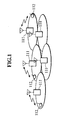
- Fig. 1 is a figure showing a configuration of a mobile communication system to which the call admission control method according to one embodiment of the present invention is applied.
- Fig. 2 is a block diagram showing a configuration of a base station device used in the mobile communication system of Fig. 1.
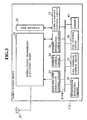
- Fig. 3 is a block diagram showing a configuration of a mobile station device used in the mobile communication system of Fig. 1.
- Fig. 4 is a flow chart showing an operation of the mobile station device.
- Fig. 5 is a flow chart showing another operation of the mobile station device.
- Fig. 6 is a flow chart continuing from Fig. 5 which is showing another operation of the mobile station device.
- Fig. 7 is a flow chart showing still another operation of the mobile station device.
- Fig. 8 is a flow chart continuing from Fig. 5 which is showing still another operation of the mobile station device.
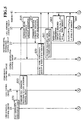
- Fig. 9 is a flow chart showing an operation of each circuit within the mobile station.
- Fig. 1 is a figure showing a configuration of a mobile communication system to which the call admission control method according to one embodiment of the present invention is applied.
- a radio base station device 111 and a mobile station 112 carry out mutual communications using the CDMA scheme each other.
- Fig. 2 is a block diagram showing a configuration of a radio base station device 111 shown in Fig. 1.
- the radio base station device 111 shown in the same figure is connected to an exchange station through an exchange station interface 1 while being connected with the mobile station through an antenna 5, and has a base station transmission and reception device 3 for transmitting and receiving user information through radio, while a common control device 7, a control information control device 9, an interference monitoring control device 11, a memory 13 and a transmission power monitoring control device 17 are mutually connected through a bus 15 as devices for controlling said base station transmission and reception device 3.
- the interference monitoring control device 11 commands a measurement of interference amount to the base station transmission and reception device 3, receives its result, and stores it in the memory 13.
- the control information control device 9 reads out an interference amount information from the memory 13, and controls the base station transmission and reception device 3 so as to broadcast it to the mobile station 112 using the broadcast channel.
- Fig. 3 is a block diagram showing a configuration of the mobile station device 112 shown in Fig. 1.
- the mobile station device 112 shown in the same figure is connected to a user interface 25 while being connected with the base station through an antenna 21, and has a mobile station transmission and reception device 23 for transmitting and receiving user information through radio while a receiving level information control circuit 27, a common control circuit 29, a control information control circuit 31, a user interface control circuit 33, an interference estimation circuit 35, a call admission control circuit 37, a call control circuit 39, and a memory 41 are mutually connected through a bus 43 as circuits for controlling said mobile station transmission and reception device 23.
- the control information control circuit 31 takes out an information that is broadcast from the radio base station device 111 using the broadcast channel, and stores it in the memory 41.
- the user interface control circuit 33 is a circuit for controlling the user interface 25, which is a circuit for interpreting commands from a user and notifying processing results to a user.
- the interference estimation circuit 35 is a circuit for carrying out an estimation calculation of an uplink interference amount after own mobile station is admitted.
- the call admission control circuit 37 is a circuit for judging call admission permission/refusal, which is activated by a command of the call control circuit 39.
- the call control circuit 39 is a circuit for carrying out a call control such as call origination and call termination of the mobile station.
- the receiving level information control circuit 27 commands to the mobile station transmission and reception device 23 a measurement of a receiving level of a control channel which is transmitted by the radio base station, and also stores its result in the memory 41.
- Fig. 4 is a flow chart showing an operation of each circuit within the mobile station, which is showing the case of call origination from the mobile station.
- the call control circuit 39 is not the user interface control circuit 33 but the control information control circuit 31 which detected the paging to the own station, yet a portion related to the call admission permission/refusal judgement is applicable without any change at all, so that the description will be given using an example of the mobile station call origination.
- the user interface control circuit 33 when the user interface control circuit 33 detects the call origination operation by the user, the user interface control circuit 33 commands the execution of the call control to the call control circuit 39 (step S11). Before executing the control control, the call control circuit 39 commands the call admission processing to the call admission control circuit 37 (step S13).
- the call admission control circuit 37 commands the uplink interference amount acquisition and the control channel receiving level measurement to the control information control circuit 31 and the receiving level information control circuit 27 respectively (steps S15, S17).
- the control information control circuit 31 and the receiving level information control circuit 27 that received commands from the call admission control circuit 37 execute the uplink interference amount acquisition and the control channel receiving level measurement respectively, and store the results in the memory 41 (steps S19, S21).
- the call admission control circuit 37 reads out from the memory 41 the uplink interference amount I and the control channel receiving level R, as well as a required quality (E b /I 0 ) req , a transmission power P of the control channel, a margin ⁇ for the sake of call admission, and a maximum transmission power P max of the own station (step S23).
- the call admission control circuit 37 calculates a required energy per bit E b (required receiving power level) after the own station is admitted, as follows (step S25).
- E b I + (E b /I 0 ) req
- ⁇ is a margin for the sake of call admission as mentioned above.
- P req is also going to contain an error.
- This P req is compared with the maximum transmission power P max of the own station (step S29), and if P max ⁇ P req , that is, if it is judged that the required quality cannot be satisfied even by the transmission at the maximum transmission power of the own station, the call admission control circuit 37 notifies the admission refusal to the call control circuit 39 (step S31), and further the call control circuit 39 notifies the admission refusal to the user interface control circuit 33 (step S33).
- the user interface control circuit 33 notifies the admission refusal to the user through the user interface 25 (step S35). If P max ⁇ P req , the call admission control circuit 37 notifies the admission permission to the call control circuit 39 (step S37).
- the call control circuit 39 continues the call origination and termination processing (step S39).
- the call admission control circuit 37 commands the uplink interference amount acquisition and the control channel receiving level measurement to the control information control circuit 31 and the receiving level information control circuit 27 respectively after the user carried out the call origination operation, but these do not limit the embodiment of the present invention. Besides this, it is possible to consider such a method in which the control information control circuit 31 and the receiving level information control circuit 27 respectively carry out the interference amount acquisition and the control channel receiving level measurement constantly or regularly and store the results in the memory, and the same effect can be obtained by either method.
- Fig. 5 and Fig. 6 are a flow chart showing an operation of each circuit within the mobile station, which is showing the case of call origination from the mobile station.
- the user interface control circuit 33 when the user interface control circuit 33 detects the call origination operation by the user, the user interface control circuit 33 commands the execution of the call control to the call control circuit 39 (step S51). Before executing the control control, the call control circuit 39 commands the call admission processing to the call admission control circuit 37 (step S53).
- the call admission control circuit 37 commands the uplink interference amount acquisition and the control channel receiving level measurement to the control information control circuit 31 and the receiving level information control circuit 27 respectively (steps S55, S57).
- the control information control circuit 31 and the receiving level information control circuit 27 that received commands from the call admission control circuit 37 execute the uplink interference amount acquisition and the control channel receiving level measurement respectively, and store the results in the memory 41 (steps S59, S61).
- the call admission control circuit 37 reads out from the memory 41 the uplink interference amount I and the control channel receiving level R, as well as a required quality (E b /I 0 ) req , a transmission power P of the control channel, a first margin ⁇ 1 for the sake of call admission, and a maximum transmission power P max of the own station (step S63).
- the call admission control circuit 37 calculates a required energy per bit E b (required receiving power level) after the own station is admitted, as follows (step S65).
- E b I + (E b /I 0 ) req
- ⁇ 1 is a first margin for the sake of call admission as mentioned above.
- P req is also going to contain an error.
- This P req is compared with the maximum transmission power P max of the own station (step S69), and if P max ⁇ P req , that is, if it is judged that the required quality cannot be satisfied even by the transmission at the maximum transmission power of the own station, the call admission control circuit 37 notifies the admission refusal to the call control circuit 39 (step S71), and further the call control circuit 39 notifies the admission refusal to the user interface control circuit 33 (step S73).
- the user interface control circuit 33 notifies the admission refusal to the user through the user interface 25 (step S75).
- the call admission control circuit 37 next commands the estimation of interference amount to the interference estimation circuit 35 (step S77).
- ⁇ 2 is a second margin for the sake of call admission as mentioned above.
- the calculation of I new is also accompanied by an error so that it is configured to prevent an occurrence of the forced disconnection by introducing ⁇ 2 . However, this does not limit the embodiment of the present invention.
- a threshold T for the uplink interference amount is read out from the memory 41 (step S83), and compared with Inew (step S85). If T ⁇ I new , that is, if it is judged that there is a possibility for degrading communications of users who are already carrying out communications as a result of having the own station admitted, the call admission control circuit 37 notifies the admission refusal to the call control circuit 39 (step S87), and further the call control circuit 39 notifies the admission refusal to the user interface control circuit 33 (step S89). The user interface control circuit 33 notifies the admission refusal to the user through the user interface 25 (step S91). If T ⁇ I new , the admission permission is notified to the call control circuit 39 (step S93). The call control circuit 39 continues the call origination and termination processing (step S95).
- the call admission control circuit 37 commands the uplink interference amount acquisition and the control channel receiving level measurement to the control information control circuit 31 and the receiving level information control circuit 27 respectively after the user carried out the call origination operation, but these do not limit the embodiment of the present invention. Besides this, it is possible to consider such a method in which the control information control circuit 31 and the receiving level information control circuit 27 respectively carry out the interference amount acquisition and the control channel receiving level measurement constantly or regularly and store the results in the memory, and the same effect can be obtained by either method. Also, in the present embodiment, it has been described such that fixed values are stored in the memory for the required quality (E b /I 0 ) req , ⁇ , P, P max and T.
- ROM Read Only Memory
- different ones of these methods may be applied depending on information. In any case, these do not prevent the application of the present invention, and the same effects can be obtained.
- Fig. 7 and Fig. 8 are a flow chart showing an operation of each circuit within the mobile station, which is showing the case of call origination from the mobile station.
- the user interface control circuit 33 when the user interface control circuit 33 detects the call origination operation by the user, the user interface control circuit 33 commands the execution of the call control to the call control circuit 39 (step S101). Before executing the control control, the call control circuit 39 commands the call admission processing to the call admission control circuit 37 (step S103).
- the call admission control circuit 37 commands the uplink interference amount acquisition and the control channel receiving level measurement to the control information control circuit 31 and the receiving level information control circuit 27 respectively (steps S105, S107).
- the control information control circuit 31 and the receiving level information control circuit 27 that received commands from the call admission control circuit 37 execute the uplink interference amount acquisition and the control channel receiving level measurement respectively, for the connection target radio base station (0) and surrounding radio base stations (1-n), and store the results in the memory 41 (steps S109, S111).
- a method for the mobile station to learn surrounding radio base stations of the connection target radio base station various methods can be considered. For example, it is possible to consider a method in which surrounding radio base stations are notified from the connection target radio base station to the mobile station or a method in which the mobile station autonomously scans the control channels of surrounding radio base stations and sets those radio base stations with a certain receiving level or above as surrounding base stations. In either method, the present invention is applicable and the same effects can be obtained.
- the call admission control circuit 37 reads out from the memory 41 the uplink interference amounts I 0-n and the control channel receiving levels R 0-n of the connected target and surrounding radio base stations (0 to n), as well as a required quality (E b /I 0 ) req , transmission powers P 0-n of the control channels, a first margin ⁇ 1 for the sake of call admission, and a maximum transmission power P max of the own station (step S113).
- the call admission control circuit 37 calculates a required energy per bit E b (required receiving power level) after the own station is admitted, as follows (step S115).
- This P req is compared with the maximum transmission power P max of the own station (step S119), and if P max ⁇ P req , that is, if it is judged that the required quality cannot be satisfied even by the transmission at the maximum transmission power of the own station, the call admission control circuit 37 notifies the admission refusal to the call control circuit 39 (step S121), and further the call control circuit 39 notifies the admission refusal to the user interface control circuit 33 (step S123).
- the user interface control circuit 33 notifies the admission refusal to the user through the user interface 25 (step S125).
- the call admission control circuit 37 next commands the estimation of interference amount to the interference estimation circuit 35 (step S127).
- ⁇ 2 is a second margin for the sake of call admission as mentioned above.
- the calculation of I new is also accompanied by an error so that it is configured to prevent an occurrence of the forced disconnection by introducing ⁇ 2 .
- this does not limit the embodiment of the present invention.
- the call admission control circuit 37 notifies the admission refusal to the call control circuit 39 (step S137), and further the call control circuit 39 notifies the admission refusal to the user interface control circuit 33 (step S139).
- the user interface control circuit 33 notifies the admission refusal to the user through the user interface 25 (step S141).
- the call admission control circuit 37 commands the uplink interference amount acquisition and the control channel receiving level measurement to the control information control circuit 31 and the receiving level information control circuit 27 respectively after the user carried out the call origination operation, but these do not limit the embodiment of the present invention. Besides this, it is possible to consider such a method in which the control information control circuit 31 and the receiving level information control circuit 27 respectively carry out the interference amount acquisition and the control channel receiving level measurement constantly or regularly and store the results in the memory, and the same effect can be obtained by either method. Also, in the present embodiment, it has been described such that fixed values are stored in the memory for the required quality (E b /I 0 ) req , ⁇ , P, P max and T.
- the present embodiment describes a case where the call admission information is formed by an information indicating admission permission/refusal, a case where it is formed by the uplink interference amount at the base station and a threshold, a case where it is formed by a remaining capacity calculated from the uplink interference amount, a case where it is formed by a transmission power value of the base station and a threshold, a case where it is formed by a remaining capacity calculated from the transmission power of the base station, a case where it is formed by the number of spread codes or the number of hardware resources that are currently used within the base station and a threshold corresponding to them, and a case where it is formed by a remaining capacity calculated from the number of spread codes or the number of hardware resources that are currently used within the base station.
- the hardware resources stands for devices that carry out processing of information transmitted in correspondence to transmission rates of individual users, which are implemented in the base station. It is an element that constitute the base station transmission and reception device in Fig. 2, and a plurality of hardware resources are implemented according to a scale of the base station. Each user carries out communications by having one or plural of these hardware resources allocated thereto.
- the available hardware resources are limited by the number that is implemented, and the number of hardware resources that are currently implemented will be used as a threshold, for example.
- the number of implemented hardware resources minus the number of hardware resources that are currently used will be used as a remaining capacity, for example.
- the spread codes are used for communications between the base stations and the mobile stations. The mobile station carries out communications by having one or plural of the spread codes allocated thereto. For the spread codes, there is a limit to the number of spread codes that can be generated depending on the code length (the number of bits), and this limit value for the number of codes will be used as a threshold, for example. Else, the limit for the number of codes minus the number of spread codes that are currently used will be used as a remaining capacity, for example.
- Fig. 9 is a flow chart showing an operation of each circuit within the mobile station.
- Fig. 9 is showing the case of call origination from the mobile station.
- the call control circuit 39 is not the user interface control circuit 33 but the control information control circuit 31 which detected the paging to the own station, yet a portion related to the call admission permission/refusal judgement is applicable without any change at all, so that the description will be given using this example of the mobile station call origination.
- the user interface control circuit 33 When the user interface control circuit 33 detects the call origination operation by the user, the user interface control circuit 33 commands the execution of the call control to the call control circuit 39 (step S151). Before executing the control control, the call control circuit 39 commands the call admission processing to the call admission control circuit 37 (step S153). The call admission control circuit 37 commands the call admission information acquisition to the control information control circuit 31 (step S155). The control information control circuit 31 that received command from the call admission control circuit 37 executes the call admission information acquisition, and stores the result in the memory 41 (step S157). After waiting until these are finished, the call admission control circuit 37 reads out the call admission information from the memory 41 (step S159).
- the admission permission/refusal is judged according to the read out call admission information (step S161), and if it is judged as admission refused, the call admission control circuit 37 notifies the admission refusal to the call control circuit 39 (step S163), and further the call control circuit 39 notifies the admission refusal to the user interface control circuit 33 (step S165).
- the user interface control circuit 33 notifies the admission refusal to the user through the user interface 25 (step S167).
- the call admission control circuit 37 notifies the admission permission to the call control circuit 39 (step S169).
- the call control circuit 39 continues the call origination and termination processing (step S171).
- the call admission judgement is carried out according to the content of information acquired by the control information control circuit 31 as follows.
- the call admission information is formed by an information indicating admission permission/refusal
- the call admission is judged by checking whether the acquired call admission information indicates admission permission or admission refusal.
- the acquired uplink interference amount at the base station and a threshold the acquired uplink interference amount and the acquired threshold are compared and it is judged as admission permitted if the uplink interference amount is less than the threshold, or as admission refused otherwise.
- it is formed by a remaining capacity calculated from the uplink interference amount it is judged as admission permitted if the acquired remaining capacity is greater than 0, or as admission refused otherwise.
- the acquired transmission power value and the acquired threshold are compared and it is judged as admission permitted if the transmission power value is less than the threshold, or as admission refused otherwise.
- the acquired number of spread codes or hardware resources and the acquired threshold are compared and it is judged as admission permitted if the number of spread codes or hardware resources is less than the threshold, or as admission refused otherwise.
- it is formed by a remaining capacity calculated from the number of spread codes or the number of hardware resources that are currently used within the base station it is judged as admission permitted if the number of spread codes or hardware resources is less than the threshold, or as admission refused otherwise.
- it is formed by a remaining capacity calculated from the number of spread codes or the number of hardware resources that are currently used within the base station it is judged as admission permitted if the acquired remaining capacity is greater than 0, or as admission refused otherwise.
- the threshold in the comparison of the measured value and the threshold, it is judged as admission permitted when the measured value is less than the threshold, but it is perfectly all right to judge it as admission permitted when the measured value is less than or equal to the threshold. Also, it is judged as admission permitted when the remaining capacity is greater than 0, but it is perfectly all right to judge it as admission permitted when the remaining capacity is greater than or equal to 0. In these cases, it suffices to change the threshold to be set, and it does not affect the embodiment of the present invention at all.
- the call admission control circuit 37 commands the call admission information acquisition to the control information control circuit 31 after the user carried out the call origination operation, but these do not limit the embodiment of the present invention. Besides this, it is possible to consider such a method in which the control information control circuit 31 carries out the call admission information acquisition constantly or regularly and stores the result in the memory, and the same effect can be obtained by either method.
Landscapes
- Engineering & Computer Science (AREA)
- Computer Networks & Wireless Communication (AREA)
- Signal Processing (AREA)
- Quality & Reliability (AREA)
- Mobile Radio Communication Systems (AREA)
Claims (6)
- Procédé de commande d'acceptation d'appel pour un système de communication mobile AMCR, qui commande l'acceptation des appels pour une largeur de bande de fréquence partagée par une pluralité de stations mobiles qui assurent des communications avec des stations radio de base par un accès multiple par répartition en code, ans lequel :caractérisée en ce queune station radio de base diffuse une information d'acceptation d'appel indiquant un état de la station elle-même se rapportant à l'acceptation d'un nouvel appel au moyen d'un canal de radiodiffusion,une station mobile acquiert ladite information d'acceptation d'appel qui est diffusée par une station radio de base cible de connexion désirée sur le canal de radiodiffusion, et juge de l'autorisation ou du refus d'acceptation de ladite station mobile en fonction de cette information d'acceptation d'appel acquise, etla station radio de base mesure une valeur d'interférence ascendante à la station de base elle-même, et l'information d'acceptation d'appel est formée au moins à l'aide de ladite valeur d'interférence ascendante mesurée à la station de base elle-même, et
la station mobile calcule un niveau de réception exigé à la station radio de base qui est attendu dans un cas dans lequel elle est acceptée à la station radio de base cible de connexion désirée, en fonction de la valeur d'interférence acquise à partir du canal de radiodiffusion, et juge que l'acceptation de ladite station mobile est refusée dans un cas dans lequel il est jugé que la station elle-même ne peut pas satisfaire une qualité de communication exigée, en fonction de ladite valeur d'interférence ascendante acquise et dudit niveau de réception exigé calculé. - Procédé de commande d'acceptation d'appel pour un système de communication mobile AMCR selon la revendication 1, caractérisé en ce que la station mobile estime une valeur d'interférence ascendante après que ladite station mobile ait été acceptée, à partir de la valeur d'interférence ascendante à la station de base et du niveau de réception exigé qui est attendu dans un cas dans lequel ladite station mobile est acceptée, et juge que l'acceptation de ladite station mobile est refusée dans un cas dans lequel cette valeur d'interférence ascendante estimée après l'acceptation dépasse un seuil prédéterminé.
- Procédé de commande d'acceptation d'appel pour un système de communication mobile AMCR selon la revendication 1 ou 2, caractérisé en ce que la station radio de base mesure une valeur d'interférence ascendante à la station de base elle-même, et l'information d'acceptation d'appel est formée au moins à l'aide de ladite valeur d'interférence ascendante mesurée à la station de base elle-même, et
la station mobile calcule une valeur d'interférence à délivrer aux stations de base environnantes, qui est attendue dans un cas dans lequel ladite station mobile est acceptée à la station radio de base cible de connexion désirée, en fonction d'un niveau de réception exigé à la station radio de base cible de connexion désirée qui est attendu dans un cas dans lequel elle est acceptée à la station radio de base cible de connexion désirée, estime une valeur d'interférence ascendante aux stations de base environnantes après que ladite station mobile ait été acceptée à la station radio de base cible de connexion, à partir de ladite valeur d'interférence ascendante aux stations de base environnantes acquise et de ladite valeur d'interférence à délivrer aux stations de base environnantes calculée, et juge que l'acceptation de ladite station mobile est refusée si ladite valeur d'interférence ascendante aux stations de base environnantes dépasse un seuil prédéterminé. - Dispositif de station mobile pour système de communication mobile AMCR, destiné à commander l'acceptation des appels pour une largeur de bande de fréquence partagée par une pluralité de stations mobiles qui assurent des communications avec des stations radio de base par un accès multiple par répartition en code, le dispositif de station mobile comprenant :caractérisé en ce queun moyen d'acquisition destiné à acquérir une information d'acceptation d'appel indiquant un état se rapportant à l'acceptation d'un nouvel appel à une station radio de base, qui est diffusée par une station radio de base cible de connexion désirée sur un canal de radiodiffusion,un moyen de jugement destiné à juger l'autorisation ou le refus de l'acceptation de ladite station mobile en fonction de cette information d'acceptation d'appel acquise, etun moyen de fin de traitement d'appel destiné à mettre fin à une opération de traitement d'appel à ladite station mobile dans un cas dans lequel il est jugé que l'acceptation est refusée du fait du résultat de ce jugement,le moyen d'acquisition étant adapté à acquérir une valeur d'interférence ascendante à partir de l'information d'acceptation d'appel qui est diffusée par la station radio de base cible de connexion désirée,
le moyen de jugement est adapté à calculer un niveau de réception exigé à la station radio de base qui est attendu dans un cas dans lequel elle est acceptée à la station radio de base cible de connexion désirée, en fonction de la valeur d'interférence acquise à partir du canal de radiodiffusion, et juge que l'acceptation de ladite station mobile est refusée dans un cas dans lequel il est jugé que la station elle-même ne peut pas satisfaire une qualité de communication exigée, en fonction de ladite valeur d'interférence ascendante acquise et dudit niveau de réception exigé calculé. - Dispositif de station mobile pour système de communication mobile AMCR selon la revendication 4, caractérisé en ce que l'unité de jugement est adaptée à estimer une valeur d'interférence ascendante après que ladite station mobile ait été admise, à partir de la valeur d'interférence ascendante à la station de base et du niveau de réception qui est attendu dans un cas dans lequel la station mobile est acceptée, et juge que l'acceptation de ladite station mobile est refusée dans un cas dans lequel cette valeur d'interférence ascendante estimée après l'acceptation dépasse un seuil prédéterminé.
- Dispositif de station mobile pour système de communication mobile AMCR selon la revendication 4, caractérisé en ce que le moyen d'acquisition est adapté à acquérir une valeur d'interférence ascendante à la station de base à partir de l'information d'admission d'appel qui est radiodiffusée sur le canal de radiodiffusion, et
l'unité de jugement est adaptée à calculer une valeur d'interférence à délivrer aux stations de base environnantes qui est attendue dans un cas dans lequel ladite station mobile est acceptée à la station radio de base cible de connexion désirée, en fonction d'un niveau de réception exigé à la station radio de base cible de connexion désirée qui est attendu dans un cas dans lequel elle est acceptée à la station radio de base cible de connexion désirée, estime une valeur d'interférence ascendante aux stations de base environnantes après que ladite station mobile ait été acceptée à la station radio de base cible de connexion désirée, à partir de ladite valeur d'interférence ascendante aux stations de base environnantes acquise, et à partir de ladite valeur d'interférence à délivrer aux stations de base environnantes calculée, et juge que l'acceptation de ladite station mobile est refusée si cette valeur d'interférence ascendante aux stations de base environnantes estimée dépasse un seuil prédéterminé.
Priority Applications (2)
| Application Number | Priority Date | Filing Date | Title |
|---|---|---|---|
| EP03002685A EP1320276B1 (fr) | 1996-12-27 | 1997-12-25 | Procede de commande d'acceptation d'appel pour systeme de radiocommunication mobile amcr, et dispositif station mobile |
| EP03002686A EP1320277B1 (fr) | 1996-12-27 | 1997-12-25 | Procede de commande d'acceptation d'appel pour systeme de radiocommunication mobile amcr, et dispositif station mobile |
Applications Claiming Priority (7)
| Application Number | Priority Date | Filing Date | Title |
|---|---|---|---|
| JP35127396 | 1996-12-27 | ||
| JP351273/96 | 1996-12-27 | ||
| JP35127396 | 1996-12-27 | ||
| JP20343597 | 1997-07-29 | ||
| JP20343597 | 1997-07-29 | ||
| JP203435/97 | 1997-07-29 | ||
| PCT/JP1997/004827 WO1998030057A1 (fr) | 1996-12-27 | 1997-12-25 | Procede de commande d'acceptation d'appel pour systeme de radiocommunication mobile amcr, et dispositif station mobile |
Related Child Applications (2)
| Application Number | Title | Priority Date | Filing Date |
|---|---|---|---|
| EP03002685A Division EP1320276B1 (fr) | 1996-12-27 | 1997-12-25 | Procede de commande d'acceptation d'appel pour systeme de radiocommunication mobile amcr, et dispositif station mobile |
| EP03002686A Division EP1320277B1 (fr) | 1996-12-27 | 1997-12-25 | Procede de commande d'acceptation d'appel pour systeme de radiocommunication mobile amcr, et dispositif station mobile |
Publications (3)
| Publication Number | Publication Date |
|---|---|
| EP0889663A1 EP0889663A1 (fr) | 1999-01-07 |
| EP0889663A4 EP0889663A4 (fr) | 2001-12-12 |
| EP0889663B1 true EP0889663B1 (fr) | 2004-10-27 |
Family
ID=26513917
Family Applications (3)
| Application Number | Title | Priority Date | Filing Date |
|---|---|---|---|
| EP97950396A Expired - Lifetime EP0889663B1 (fr) | 1996-12-27 | 1997-12-25 | Procede de commande d'acceptation d'appel pour systeme de radiocommunication mobile amcr, et dispositif station mobile |
| EP03002686A Expired - Lifetime EP1320277B1 (fr) | 1996-12-27 | 1997-12-25 | Procede de commande d'acceptation d'appel pour systeme de radiocommunication mobile amcr, et dispositif station mobile |
| EP03002685A Expired - Lifetime EP1320276B1 (fr) | 1996-12-27 | 1997-12-25 | Procede de commande d'acceptation d'appel pour systeme de radiocommunication mobile amcr, et dispositif station mobile |
Family Applications After (2)
| Application Number | Title | Priority Date | Filing Date |
|---|---|---|---|
| EP03002686A Expired - Lifetime EP1320277B1 (fr) | 1996-12-27 | 1997-12-25 | Procede de commande d'acceptation d'appel pour systeme de radiocommunication mobile amcr, et dispositif station mobile |
| EP03002685A Expired - Lifetime EP1320276B1 (fr) | 1996-12-27 | 1997-12-25 | Procede de commande d'acceptation d'appel pour systeme de radiocommunication mobile amcr, et dispositif station mobile |
Country Status (8)
| Country | Link |
|---|---|
| US (1) | US6801515B1 (fr) |
| EP (3) | EP0889663B1 (fr) |
| JP (1) | JP3112173B2 (fr) |
| KR (1) | KR100300224B1 (fr) |
| CN (1) | CN1182750C (fr) |
| CA (1) | CA2247363C (fr) |
| DE (3) | DE69731378T2 (fr) |
| WO (1) | WO1998030057A1 (fr) |
Cited By (2)
| Publication number | Priority date | Publication date | Assignee | Title |
|---|---|---|---|---|
| RU2504925C2 (ru) * | 2005-03-15 | 2014-01-20 | Квэлкомм Инкорпорейтед | Управление помехой в системе беспроводной связи |
| CN101171814B (zh) * | 2005-03-15 | 2015-06-10 | 高通股份有限公司 | 用于减轻无线通信系统中的干扰的方法和装置 |
Families Citing this family (58)
| Publication number | Priority date | Publication date | Assignee | Title |
|---|---|---|---|---|
| US6028851A (en) * | 1997-09-26 | 2000-02-22 | Telefonaktiebolaget L M Ericsson (Publ) | System and method for mobile assisted admission control |
| FI107505B (fi) | 1999-02-16 | 2001-08-15 | Nokia Networks Oy | Pääsynvalvontamenetelmä |
| GB9906005D0 (en) * | 1999-03-17 | 1999-05-12 | Motorola Ltd | A subscriber unit and method of cell selection for a cellular communication system |
| JP2000341358A (ja) * | 1999-05-31 | 2000-12-08 | Nec Mobile Commun Ltd | Cdma基地局及びその通信制御方法 |
| US6487415B1 (en) | 1999-07-19 | 2002-11-26 | Lucent Technologies Inc. | Method for initiating call blocking based upon pilot fraction |
| US7024186B1 (en) | 2000-08-15 | 2006-04-04 | Ntt Docomo, Inc. | Communication performance calculation method and communication performance calculation apparatus in mobile communication system, and blocking probability calculation method and blocking probability calculation apparatus in communication system, and recording medium |
| US6944125B1 (en) * | 1999-08-26 | 2005-09-13 | Nortel Networks Limited | Call admission control method and apparatus for cellular systems |
| US6609007B1 (en) | 1999-09-14 | 2003-08-19 | Lucent Technologies Inc. | Apparatus and method for controlling the transmission power of the forward link of a wireless communication system |
| US6721568B1 (en) | 1999-11-10 | 2004-04-13 | Telefonaktiebolaget Lm Ericsson (Publ) | Admission control in a mobile radio communications system |
| SE516662C2 (sv) * | 1999-11-26 | 2002-02-12 | Ericsson Telefon Ab L M | Förfarande för effektallokering för nedlänkkanaler i ett nedlänk effektbegränsat kommunikationssystem |
| SE515986C2 (sv) * | 1999-12-10 | 2001-11-05 | Ericsson Telefon Ab L M | Förfarande i ett telekommunikationssystem |
| JP3618071B2 (ja) | 1999-12-28 | 2005-02-09 | 株式会社エヌ・ティ・ティ・ドコモ | 移動通信制御方法及びそのシステム及びそれに用いられる基地局及び移動局 |
| JP2001320756A (ja) | 2000-05-11 | 2001-11-16 | Nec Saitama Ltd | 上り回線過負荷検出回路と基地局装置 |
| US6944449B1 (en) * | 2000-05-30 | 2005-09-13 | Lucent Technologies Inc. | Method and system for controlling access of a subscriber station to a wireless system |
| US20020049062A1 (en) * | 2000-10-02 | 2002-04-25 | Robert Petersen | Distributed admission control |
| CN1156180C (zh) | 2000-10-02 | 2004-06-30 | 株式会社Ntt都科摩 | 通信系统及其资源分配方法 |
| CN1135746C (zh) | 2000-10-19 | 2004-01-21 | 华为技术有限公司 | Cdma蜂窝移动通信系统中多业务负载监测和预测的装置及其计算方法 |
| EP1223771A1 (fr) * | 2001-01-15 | 2002-07-17 | Siemens Aktiengesellschaft | L'acces au canal, notamment au canal d'access aleatoire, en fonction de la charge de cellule et de la qualité de service ou de la phase de communication |
| JP3844968B2 (ja) | 2001-02-01 | 2006-11-15 | 株式会社エヌ・ティ・ティ・ドコモ | 呼受付制御装置及び方法 |
| JP3682768B2 (ja) * | 2001-02-09 | 2005-08-10 | 株式会社エヌ・ティ・ティ・ドコモ | 呼受付制御装置及び基地局 |
| JP2002247639A (ja) * | 2001-02-15 | 2002-08-30 | Ntt Docomo Inc | 無線チャネル設定制御方法、無線ネットワーク制御装置、基地局装置及び移動通信システム |
| US8145228B2 (en) * | 2001-05-10 | 2012-03-27 | Qualcomm Incorporated | Method and apparatus for controlling call request in a communication system |
| EP1280364A1 (fr) * | 2001-07-27 | 2003-01-29 | Siemens Aktiengesellschaft | Procédé, système et appareil de communication pour améliorer l'allocation de ressources |
| GB0120033D0 (en) * | 2001-08-16 | 2001-10-10 | Fujitsu Ltd | Cell selection |
| EA007640B1 (ru) * | 2001-12-06 | 2006-12-29 | Зти Корпорейшн | Оборудование и способ приема вызова в системе cdma |
| US6944147B2 (en) | 2001-12-10 | 2005-09-13 | Nortel Networks Limited | System and method for maximizing capacity in a telecommunications system |
| JP3927027B2 (ja) * | 2001-12-21 | 2007-06-06 | 株式会社エヌ・ティ・ティ・ドコモ | リソース制御システム、リソース制御方法、及びこれらに用いて好適な基地局 |
| JP3842666B2 (ja) * | 2002-02-20 | 2006-11-08 | 株式会社エヌ・ティ・ティ・ドコモ | 基地局及び通信方法 |
| JP4154174B2 (ja) | 2002-05-20 | 2008-09-24 | 株式会社エヌ・ティ・ティ・ドコモ | トラフィック量測定装置、トラフィック量測定方法及びトラフィック量測定プログラム |
| US6631269B1 (en) * | 2002-05-23 | 2003-10-07 | Interdigital Technology Corporation | Signaling connection admission control in a wireless network |
| JP2004015342A (ja) | 2002-06-05 | 2004-01-15 | Ntt Docomo Inc | 呼受付制御方法及びその方法が適用される通信システム |
| AU2003279207A1 (en) * | 2002-10-09 | 2004-05-04 | Interdigital Technology Corporation | Information storage for radio resource management |
| US7106708B2 (en) * | 2003-02-19 | 2006-09-12 | Interdigital Technology Corp. | Method for implementing fast dynamic channel allocation (F-DCA) call admission control in radio resource management |
| JP4178055B2 (ja) * | 2003-02-25 | 2008-11-12 | 株式会社エヌ・ティ・ティ・ドコモ | 無線パケット通信システム、無線パケット通信方法、基地局及び移動局 |
| EP1687904B1 (fr) * | 2003-11-07 | 2008-05-28 | Interdigital Technology Corporation | Procede de communication hertzienne et procede pour etablir une commande d'admission d'appel se basant sur des mesures communes |
| EP1721423B1 (fr) * | 2004-03-01 | 2017-01-04 | BAE Systems PLC | Améliorations se rapportant au controle des appels |
| US7864795B2 (en) | 2004-04-19 | 2011-01-04 | Telecom Italia S.P.A. | Method and system for service allocation in communication networks, related network and computer program product therefor |
| US8452316B2 (en) | 2004-06-18 | 2013-05-28 | Qualcomm Incorporated | Power control for a wireless communication system utilizing orthogonal multiplexing |
| US7197692B2 (en) | 2004-06-18 | 2007-03-27 | Qualcomm Incorporated | Robust erasure detection and erasure-rate-based closed loop power control |
| US7594151B2 (en) | 2004-06-18 | 2009-09-22 | Qualcomm, Incorporated | Reverse link power control in an orthogonal system |
| DE602004029097D1 (de) * | 2004-07-29 | 2010-10-21 | Telecom Italia Spa | Verfahren und system zur regelung der zulassung in mobilkommunikationsnetzen, diesbezügliches netz und computerprogrammprodukt dafür |
| US7454174B2 (en) | 2004-08-03 | 2008-11-18 | Qualcomm, Incorporated | Estimation of received signal strength |
| EP1775977A4 (fr) * | 2004-08-05 | 2011-04-06 | Mitsubishi Electric Corp | Station de base, appareil de terminal de communication mobile, et procédé de sélection de cellule primaire |
| US8594704B2 (en) * | 2004-12-16 | 2013-11-26 | Atc Technologies, Llc | Location-based broadcast messaging for radioterminal users |
| US8848574B2 (en) | 2005-03-15 | 2014-09-30 | Qualcomm Incorporated | Interference control in a wireless communication system |
| CN101147417B (zh) * | 2005-03-24 | 2010-12-15 | 日本电气株式会社 | 基于cdma的移动终端、基于cdma的移动通信方法和通信质量估计方法 |
| KR100648926B1 (ko) * | 2005-07-11 | 2006-11-27 | 삼성전자주식회사 | 사용자 식별 정보 부가기능을 갖는 복합기 및 그 방법 |
| US9955438B2 (en) | 2005-09-27 | 2018-04-24 | Qualcomm Incorporated | Method and apparatus for carrier allocation and management in multi-carrier communication systems |
| JP5430938B2 (ja) | 2005-10-27 | 2014-03-05 | クゥアルコム・インコーポレイテッド | 無線通信システムにおける逆方向リンク・ローディングを推定するための方法及び装置 |
| US8670777B2 (en) | 2006-09-08 | 2014-03-11 | Qualcomm Incorporated | Method and apparatus for fast other sector interference (OSI) adjustment |
| US8442572B2 (en) | 2006-09-08 | 2013-05-14 | Qualcomm Incorporated | Method and apparatus for adjustments for delta-based power control in wireless communication systems |
| CN101399562B (zh) * | 2007-09-30 | 2014-05-07 | Nxp股份有限公司 | 混合移动无线电通信网络中的干扰防止方法和移动终端 |
| RU2366096C1 (ru) * | 2008-01-21 | 2009-08-27 | ВОЕННАЯ АКАДЕМИЯ СВЯЗИ им. С.М. Буденного МИНИСТЕРСТВА ОБОРОНЫ РОССИЙСКОЙ ФЕДЕРАЦИИ | Система управления доступом к сети cdma |
| JP2009267815A (ja) * | 2008-04-25 | 2009-11-12 | Nippon Telegr & Teleph Corp <Ntt> | 干渉量推定方法、無線通信方法および無線通信システムと無線通信装置 |
| EP2294877B1 (fr) * | 2008-07-01 | 2015-10-21 | Telefonaktiebolaget L M Ericsson (PUBL) | Gestion de congestion et d'admission cellulaire sur la base de tonalités d'appel dans des appels sans réponse |
| US8285285B2 (en) | 2008-08-08 | 2012-10-09 | Qualcomm Incorporated | Intra-frequency cell reselection restriction in wireless communications |
| KR101487562B1 (ko) | 2008-11-11 | 2015-01-30 | 엘지전자 주식회사 | Tdd에 기반한 무선통신 시스템에서 데이터 중계 방법 |
| KR101497153B1 (ko) | 2008-12-22 | 2015-03-02 | 엘지전자 주식회사 | 무선랜 시스템에서의 기본서비스세트 부하 관리 절차 |
Family Cites Families (22)
| Publication number | Priority date | Publication date | Assignee | Title |
|---|---|---|---|---|
| JPH04286432A (ja) | 1991-03-15 | 1992-10-12 | Nippon Telegr & Teleph Corp <Ntt> | 移動局主導型チャネル選択方式 |
| EP0614598B1 (fr) | 1992-08-11 | 1999-03-17 | Telefonaktiebolaget Lm Ericsson | Reagencement de canaux |
| JPH0738741B2 (ja) * | 1992-08-28 | 1995-04-26 | 日本電気株式会社 | 移動通信システムのチャネル割当方式 |
| SE500830C2 (sv) * | 1993-05-17 | 1994-09-12 | Ericsson Telefon Ab L M | Förfarande och anordning vid kanalutnyttjandet i ett radiokommunikationssystem |
| US5491717A (en) * | 1993-10-18 | 1996-02-13 | Motorola, Inc. | Method for controlling transmission during handoff in a communication system |
| FI107854B (fi) * | 1994-03-21 | 2001-10-15 | Nokia Networks Oy | Menetelmä häiriöiden poistamiseksi CDMA-solukkoverkossa |
| US5633868A (en) * | 1994-10-17 | 1997-05-27 | Lucent Technologies Inc. | Virtual circuit management in cellular telecommunications |
| JP2626597B2 (ja) * | 1994-12-14 | 1997-07-02 | 日本電気株式会社 | セルラ型移動無線通信方式における無線基地局の選択方法 |
| FI100575B (fi) * | 1995-05-17 | 1997-12-31 | Nokia Mobile Phones Ltd | Menetelmä kanavanvaihdon ja yhteydenmuodostuksen luotettavuuden parant amiseksi sekä solukkoradiojärjestelmä |
| FI98108C (fi) * | 1995-05-17 | 1997-04-10 | Nokia Mobile Phones Ltd | Menetelmä yhteyden laadun arvioimiseksi ja vastaanotin |
| US5838671A (en) * | 1995-06-23 | 1998-11-17 | Ntt Mobile Communications Network Inc. | Method and apparatus for call admission control in CDMA mobile communication system |
| US5752193A (en) * | 1995-09-01 | 1998-05-12 | Motorola, Inc. | Method and apparatus for communicating in a wireless communication system |
| US5826169A (en) * | 1995-09-25 | 1998-10-20 | Motorola, Inc. | Admission control system and method in space-based mobile telecommunication system |
| US5666356A (en) * | 1995-10-04 | 1997-09-09 | Motorola, Inc. | Method and apparatus for controlling calls in a code division multiple access system |
| JP2739850B2 (ja) * | 1995-10-11 | 1998-04-15 | 日本電気株式会社 | 移動体通信システム |
| JP3078216B2 (ja) * | 1995-12-13 | 2000-08-21 | 株式会社エヌ・ティ・ティ・ドコモ | 基地局選択方法 |
| US5886988A (en) * | 1996-10-23 | 1999-03-23 | Arraycomm, Inc. | Channel assignment and call admission control for spatial division multiple access communication systems |
| US5901145A (en) * | 1997-02-28 | 1999-05-04 | Telefonaktiebolaget L M Ericsson (Publ) | Mobile station handoff between a spread spectrum communications system and a frequency division communications system |
| US6038448A (en) * | 1997-07-23 | 2000-03-14 | Nortel Networks Corporation | Wireless communication system having hand-off based upon relative pilot signal strengths |
| US6078570A (en) * | 1997-08-21 | 2000-06-20 | Nokia Mobile Phones Limited | Mobile assisted hard hand-off for a code division multiple access (CDMA) system |
| US6028851A (en) * | 1997-09-26 | 2000-02-22 | Telefonaktiebolaget L M Ericsson (Publ) | System and method for mobile assisted admission control |
| US6167035A (en) * | 1997-12-09 | 2000-12-26 | Nortel Networks Corporation | Method an apparatus for designing soft handoff regions in a wireless communications system |
-
1997
- 1997-12-25 EP EP97950396A patent/EP0889663B1/fr not_active Expired - Lifetime
- 1997-12-25 CA CA002247363A patent/CA2247363C/fr not_active Expired - Fee Related
- 1997-12-25 KR KR1019980706743A patent/KR100300224B1/ko not_active Expired - Fee Related
- 1997-12-25 WO PCT/JP1997/004827 patent/WO1998030057A1/fr not_active Ceased
- 1997-12-25 CN CNB971925909A patent/CN1182750C/zh not_active Expired - Fee Related
- 1997-12-25 DE DE69731378T patent/DE69731378T2/de not_active Expired - Lifetime
- 1997-12-25 US US09/125,784 patent/US6801515B1/en not_active Expired - Fee Related
- 1997-12-25 DE DE69736723T patent/DE69736723T2/de not_active Expired - Lifetime
- 1997-12-25 EP EP03002686A patent/EP1320277B1/fr not_active Expired - Lifetime
- 1997-12-25 DE DE69731567T patent/DE69731567T2/de not_active Expired - Lifetime
- 1997-12-25 JP JP10529844A patent/JP3112173B2/ja not_active Expired - Lifetime
- 1997-12-25 EP EP03002685A patent/EP1320276B1/fr not_active Expired - Lifetime
Cited By (4)
| Publication number | Priority date | Publication date | Assignee | Title |
|---|---|---|---|---|
| RU2504925C2 (ru) * | 2005-03-15 | 2014-01-20 | Квэлкомм Инкорпорейтед | Управление помехой в системе беспроводной связи |
| US8942639B2 (en) | 2005-03-15 | 2015-01-27 | Qualcomm Incorporated | Interference control in a wireless communication system |
| CN101171814B (zh) * | 2005-03-15 | 2015-06-10 | 高通股份有限公司 | 用于减轻无线通信系统中的干扰的方法和装置 |
| CN101171811B (zh) * | 2005-03-15 | 2015-11-25 | 高通股份有限公司 | 无线通信系统中的干扰控制方法和设备 |
Also Published As
| Publication number | Publication date |
|---|---|
| EP0889663A1 (fr) | 1999-01-07 |
| DE69736723T2 (de) | 2007-09-13 |
| CA2247363A1 (fr) | 1998-07-09 |
| EP1320276A3 (fr) | 2003-06-25 |
| JP3112173B2 (ja) | 2000-11-27 |
| US6801515B1 (en) | 2004-10-05 |
| DE69731378D1 (de) | 2004-12-02 |
| DE69731567T2 (de) | 2005-10-20 |
| EP1320277B1 (fr) | 2006-09-20 |
| KR100300224B1 (ko) | 2001-10-29 |
| EP1320277A3 (fr) | 2003-06-25 |
| EP1320276A2 (fr) | 2003-06-18 |
| DE69731567D1 (de) | 2004-12-16 |
| EP0889663A4 (fr) | 2001-12-12 |
| DE69731378T2 (de) | 2005-10-20 |
| EP1320276B1 (fr) | 2004-11-10 |
| EP1320277A2 (fr) | 2003-06-18 |
| CN1214182A (zh) | 1999-04-14 |
| KR19990087334A (ko) | 1999-12-27 |
| DE69736723D1 (de) | 2006-11-02 |
| CN1182750C (zh) | 2004-12-29 |
| CA2247363C (fr) | 2003-01-28 |
| WO1998030057A1 (fr) | 1998-07-09 |
Similar Documents
| Publication | Publication Date | Title |
|---|---|---|
| EP1320276B1 (fr) | Procede de commande d'acceptation d'appel pour systeme de radiocommunication mobile amcr, et dispositif station mobile | |
| JPWO1998030057A1 (ja) | Cdma移動通信システムの呼受付制御方法および移動局装置 | |
| EP0814624B1 (fr) | Système de communication à AMDC avec des moyens de contrôle d'accès en fonction de la qualité de la communication | |
| EP0697163B1 (fr) | Procede et systeme pour l'affectation de canaux, utilisant la commande de la puissance et des mesures de handover effectuees depuis les postes mobiles | |
| US7653016B2 (en) | Method of controlling access to resources of a radiocommunication network and base station for implementing the method | |
| US7142867B1 (en) | Method of determining transmission rate from a mobile station to a base station in a wireless communication system | |
| CA2243968C (fr) | Procede et circuit permettant selectivement des communications dans un systeme de communications a utilisateurs multiples | |
| KR100645743B1 (ko) | 아이엠티-2000 시스템에서의 파워 관리 방법 | |
| EP1589776A1 (fr) | Attribution dynamique de ressources radio | |
| US20030100269A1 (en) | Power control in radio system | |
| US20020107021A1 (en) | Call acceptance controlling apparatus and method thereof | |
| US7193978B2 (en) | Communications system employing a scheme of radio channel setting control | |
| FI107667B (fi) | Menetelmä palvelutason asettamiseksi digitaalisessa matkaviestinjärjestelmässä ja digitaalinen matkaviestinjärjestelmä | |
| EP1452065B1 (fr) | Procede et dispositif d'attribution du debit d'un canal a une station mobile en fonction de la qualite mesuree | |
| WO2000030388A1 (fr) | Procede d'attribution des canaux et systeme cellulaire | |
| EP0919102B1 (fr) | Procédé pour fournir un service de radio cellulaire à un unité de radio dans un système de radio cellulaire fixe | |
| CN101027931B (zh) | 用于控制移动通信网络中的准入的方法和系统、及其相关网络 | |
| KR100273137B1 (ko) | 코드분할다중접속이동통신시스템에서단말국의액세스시도시사용하는지속치값의동적할당방법 | |
| HK1105063B (en) | Dynamic allocation of radio resources |
Legal Events
| Date | Code | Title | Description |
|---|---|---|---|
| PUAI | Public reference made under article 153(3) epc to a published international application that has entered the european phase |
Free format text: ORIGINAL CODE: 0009012 |
|
| 17P | Request for examination filed |
Effective date: 19980827 |
|
| AK | Designated contracting states |
Kind code of ref document: A1 Designated state(s): DE FR GB IT SE |
|
| A4 | Supplementary search report drawn up and despatched |
Effective date: 20011025 |
|
| AK | Designated contracting states |
Kind code of ref document: A4 Designated state(s): DE FR GB IT SE |
|
| 17Q | First examination report despatched |
Effective date: 20020214 |
|
| GRAP | Despatch of communication of intention to grant a patent |
Free format text: ORIGINAL CODE: EPIDOSNIGR1 |
|
| RIN1 | Information on inventor provided before grant (corrected) |
Inventor name: SATO, TAKAAKI Inventor name: WATANABE, YASUYUKI Inventor name: ISHIKAWA, YOSHIHIRO |
|
| GRAS | Grant fee paid |
Free format text: ORIGINAL CODE: EPIDOSNIGR3 |
|
| GRAA | (expected) grant |
Free format text: ORIGINAL CODE: 0009210 |
|
| RAP1 | Party data changed (applicant data changed or rights of an application transferred) |
Owner name: NTT DOCOMO, INC. |
|
| AK | Designated contracting states |
Kind code of ref document: B1 Designated state(s): DE FR GB IT SE |
|
| REG | Reference to a national code |
Ref country code: GB Ref legal event code: FG4D |
|
| REF | Corresponds to: |
Ref document number: 69731378 Country of ref document: DE Date of ref document: 20041202 Kind code of ref document: P |
|
| REG | Reference to a national code |
Ref country code: SE Ref legal event code: TRGR |
|
| ET | Fr: translation filed | ||
| PLBE | No opposition filed within time limit |
Free format text: ORIGINAL CODE: 0009261 |
|
| STAA | Information on the status of an ep patent application or granted ep patent |
Free format text: STATUS: NO OPPOSITION FILED WITHIN TIME LIMIT |
|
| 26N | No opposition filed |
Effective date: 20050728 |
|
| PGFP | Annual fee paid to national office [announced via postgrant information from national office to epo] |
Ref country code: GB Payment date: 20101222 Year of fee payment: 14 |
|
| PGFP | Annual fee paid to national office [announced via postgrant information from national office to epo] |
Ref country code: SE Payment date: 20111213 Year of fee payment: 15 Ref country code: FR Payment date: 20111219 Year of fee payment: 15 |
|
| PGFP | Annual fee paid to national office [announced via postgrant information from national office to epo] |
Ref country code: DE Payment date: 20111221 Year of fee payment: 15 |
|
| PGFP | Annual fee paid to national office [announced via postgrant information from national office to epo] |
Ref country code: IT Payment date: 20111228 Year of fee payment: 15 |
|
| PG25 | Lapsed in a contracting state [announced via postgrant information from national office to epo] |
Ref country code: SE Free format text: LAPSE BECAUSE OF NON-PAYMENT OF DUE FEES Effective date: 20121226 |
|
| GBPC | Gb: european patent ceased through non-payment of renewal fee |
Effective date: 20121225 |
|
| REG | Reference to a national code |
Ref country code: FR Ref legal event code: ST Effective date: 20130830 |
|
| REG | Reference to a national code |
Ref country code: DE Ref legal event code: R119 Ref document number: 69731378 Country of ref document: DE Effective date: 20130702 |
|
| PG25 | Lapsed in a contracting state [announced via postgrant information from national office to epo] |
Ref country code: DE Free format text: LAPSE BECAUSE OF NON-PAYMENT OF DUE FEES Effective date: 20130702 |
|
| PG25 | Lapsed in a contracting state [announced via postgrant information from national office to epo] |
Ref country code: FR Free format text: LAPSE BECAUSE OF NON-PAYMENT OF DUE FEES Effective date: 20130102 Ref country code: GB Free format text: LAPSE BECAUSE OF NON-PAYMENT OF DUE FEES Effective date: 20121225 |
|
| PG25 | Lapsed in a contracting state [announced via postgrant information from national office to epo] |
Ref country code: IT Free format text: LAPSE BECAUSE OF NON-PAYMENT OF DUE FEES Effective date: 20121225 |