EP0889664B1 - Régulation de la congestion d'un canal d'accès pour des messages d'accuse de reception d'un teleservice diffusé - Google Patents
Régulation de la congestion d'un canal d'accès pour des messages d'accuse de reception d'un teleservice diffusé Download PDFInfo
- Publication number
- EP0889664B1 EP0889664B1 EP98304342A EP98304342A EP0889664B1 EP 0889664 B1 EP0889664 B1 EP 0889664B1 EP 98304342 A EP98304342 A EP 98304342A EP 98304342 A EP98304342 A EP 98304342A EP 0889664 B1 EP0889664 B1 EP 0889664B1
- Authority
- EP
- European Patent Office
- Prior art keywords
- message
- channel
- mobile
- random access
- telephone
- Prior art date
- Legal status (The legal status is an assumption and is not a legal conclusion. Google has not performed a legal analysis and makes no representation as to the accuracy of the status listed.)
- Expired - Lifetime
Links
Images


Classifications
-
- H—ELECTRICITY
- H04—ELECTRIC COMMUNICATION TECHNIQUE
- H04W—WIRELESS COMMUNICATION NETWORKS
- H04W72/00—Local resource management
- H04W72/04—Wireless resource allocation
- H04W72/044—Wireless resource allocation based on the type of the allocated resource
-
- H—ELECTRICITY
- H04—ELECTRIC COMMUNICATION TECHNIQUE
- H04L—TRANSMISSION OF DIGITAL INFORMATION, e.g. TELEGRAPHIC COMMUNICATION
- H04L1/00—Arrangements for detecting or preventing errors in the information received
- H04L1/12—Arrangements for detecting or preventing errors in the information received by using return channel
- H04L1/16—Arrangements for detecting or preventing errors in the information received by using return channel in which the return channel carries supervisory signals, e.g. repetition request signals
- H04L1/18—Automatic repetition systems, e.g. Van Duuren systems
- H04L1/1829—Arrangements specially adapted for the receiver end
- H04L1/1854—Scheduling and prioritising arrangements
-
- H—ELECTRICITY
- H04—ELECTRIC COMMUNICATION TECHNIQUE
- H04L—TRANSMISSION OF DIGITAL INFORMATION, e.g. TELEGRAPHIC COMMUNICATION
- H04L1/00—Arrangements for detecting or preventing errors in the information received
- H04L2001/0092—Error control systems characterised by the topology of the transmission link
- H04L2001/0096—Channel splitting in point-to-point links
-
- H—ELECTRICITY
- H04—ELECTRIC COMMUNICATION TECHNIQUE
- H04L—TRANSMISSION OF DIGITAL INFORMATION, e.g. TELEGRAPHIC COMMUNICATION
- H04L1/00—Arrangements for detecting or preventing errors in the information received
- H04L1/12—Arrangements for detecting or preventing errors in the information received by using return channel
- H04L2001/125—Arrangements for preventing errors in the return channel
-
- H—ELECTRICITY
- H04—ELECTRIC COMMUNICATION TECHNIQUE
- H04W—WIRELESS COMMUNICATION NETWORKS
- H04W4/00—Services specially adapted for wireless communication networks; Facilities therefor
- H04W4/12—Messaging; Mailboxes; Announcements
-
- H—ELECTRICITY
- H04—ELECTRIC COMMUNICATION TECHNIQUE
- H04W—WIRELESS COMMUNICATION NETWORKS
- H04W74/00—Wireless channel access
- H04W74/08—Non-scheduled access, e.g. ALOHA
- H04W74/0833—Random access procedures, e.g. with 4-step access
Definitions
- This invention relates to methods and devices for controlling transmissions on control channels in a wireless communication system, and to mobile telephones.
- control channels In time division multiple accets (TDMA) wireless communication systems based on the well-known IS-136 standard, a set of channels referred to as control channels are used of communicating control information and short messages between the wireless communication systems and mobile-telephones.
- the control channels typically include at least one reverse channel and one forward channel.
- the reverse channels and forward channels include a set of reverse sub-channels and forward sub-channels, respectively.
- the wireless communication systems use the forward sub-channels to transmit short messages, paging messages, etc. to the mobile-telephones.
- the mobile-telephones use the reverse sub-channels to transmit call processing related messages (e.g., call origination and paging response messages), acknowledgments to short messages, etc. to the wireless communication systems.
- call processing related messages e.g., call origination and paging response messages
- acknowledgments to short messages etc.
- the short messages are transmitted by the wireless communication systems to a particular mobile-telephone on a set of forward sub-channels referred to herein as Short Messaging Services Channels (SMSCH).
- SMSCH Short Messaging Services Channels
- a short message can be one of two types: (1) an informative message, such as a muneric pager or (2) a request for the mobile-telephone to respond with an acknowledgment. If the short message is a request, the mobile-telephone can respond to the wireless communication system with a SM acknowledgment on the RACH.
- the ratio of SM requests to SM acknowledgments is one-to-one.
- Broadcast Tele-services will allow the wireless communication systems to transmit to every mobile-telephone within the coverage area of the wireless communication system, or part thereof, a broadcast short message (BSM) on a set of forward sub-channels referred herein as Broadcast Channels (BCCH).
- BSM broadcast short message
- BCCH Broadcast Channels
- Similar to a short message can be one of two types: (1) an informative message, such as stock quotes, sports news, etc; or (2) a request for a TDMA frame dedicated for packet transmission varies according to transmission needs.
- BSM acknowledgement transmissions on the random access channel are controlled by the wireless communication system using random access channel restrictions and random access techniques. Random access channel restrictions are used to reduce collisions among acknowledging mobile-telephones and call processing mobile-telephones by limiting the BSM acknowledgement transmissions to particular random access channels. Random access techniques are used to reduce collisions among acknowledging mobile-telephones by distributing the BSM acknowledgement transmissions over time.
- the bit map indicates which particular random access channels may be used for transmitting BSM acknowledgements.
- the time delay parameter is used by the mobile-telephone in conjunction with the output of a random number generator to determine the duration of a random delay period. Upon the end of the random delay period, each of the mobile-telephones will attempt to transmit an acknowledgement to the broadcast short message using the random access channels that were indicated in the bit map.
- each of the mobile-telephones to respond with an acknowledgement, such as a vote.
- an acknowledgement such as a vote.
- the mobile-telephone can respond with a BSM acknowledgement on the RACH.
- the ratio of BSM requests to BSM acknowledgements is one-to-many.
- WO 95/19687 discloses a method for allocating channels in a radio system comprising a base station and subscriber stations communicating with the base station on control channels and traffic channels.
- traffic channels are used as control channels by using time slot pairs previously used as traffic channels as control channels. All the traffic channels used as control channels are indicated to the subscriber stations so that all the subscribers are allowed to use all the control channels for all the control messages.
- GB 2 300 090 discloses a radio data transmission system over a digital cordless radio communication system.
- traffic channels on which there is no voice signal are used as a random access channel (RACH) for the transmission of packet data.
- RACH random access channel
- a base station notifies channel information relating to those RACH. Those RACH are not allocated to specific mobile stations.
- EP 0 687 078 discloses a system for transmitting packet data in radio telephone time division multiple access (TDMA) systems.
- TDMA radio telephone time division multiple access
- Wireless communication systems and mobile-telephones communicate via a variety of communication channels, such as traffic channels, control channels, etc.
- the manner in which each communication channel is defined depends, in part, on the particular multiple access technique being employed by the wireless communication system. For example, if the wireless communication system employs a frequency division multiple access (FDMA) techniques, a communication channel is defined by a frequency channel. If direct sequence code division multiple access (DS-CDMA) techniques are employed, then a communication channel is defined by a frequency channel (or band) and a unique high bit rate code sequence that is essentially. uncorrelated with that assigned to any other user.
- FDMA frequency division multiple access
- DS-CDMA direct sequence code division multiple access
- TDMA time division multiple access
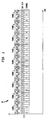
- FIG. 1 illustrates a sequence of time slots 10 along a frequency channel f(t) , CHARACTERIZED IN THAT a set of three consecutive time slots (e.g., time slots 1, and 3) constitutes a block, a set of two consecutive blocks (e.g., blocks 1 and 2) constitutes a frame, and a set of thirty-two frames constitute a hyper-frame.
- signals are transmitted on the first time slots of each block - that is, only the first and fourth time slots of each frame are communication channels for signal transmission. Note that these time slots, i.e., first and fourth, are also referred to herein as sub-channels.
- the broadcast short messages and the corresponding acknowledgments are transmitted on control channels, which are channels for transmitting control information and short messages between a wireless communication system and a mobile-telephone.
- the control channels are referred to as Digital Control Channels (DCCH).
- the DCCH include a frequency channel f x (t) for transmitting messages from the mobile-telephone to the wireless communication system, i.e., reverse channel, and a frequency channel f y (t) for transmitting messages from the wireless communication system to the mobile-telephone, i.e., forward channel.
- the reverse sub-channels R i are the first time slots in each block of the reverse channel f x (t)
- the forward sub-channels F j are the first time slots in each block of the forward channel f y (t) .
- the reverse sub-channels R i are the first time slots in a set of six consecutive blocks, e.g., time slots 1 and 4 in frames 1, 2 and 3.
- the forward sub-channels F j are the first time slots in a set of thirty-two consecutive blocks, e.g., time slots 1 and 4 in frames 1-16. It should be noted that each reverse sub-channel R i repeats every three frames, and each forward sub-channel F j repeats every sixteen frames (or super-frame).
- the six reverse sub-channels R i collectively comprise a set of sub-channels referred to as random access channels (RACH), which are typically used by mobile-telephones to transmit call processing related messages, such as those involving originating calls and responding to pages.
- the forward sub-channels F j include the following groups of sub-channels: Short messaging service, Point-to-point, paging and Access response Channels (SPACH) for broadcasting messages to particular mobile-telephones regarding short messaging service point-to-point, paging and access response; Broadcast Channels (BCCH) for broadcasting generic system related messages or short messages to one or more groups of mobile-telephones; Shared Channel Feedback (SCF) for supporting RACH operation; and reserved channels for future use.
- BCCH Broadcast Channels
- SCF Shared Channel Feedback
- each transmission over a forward sub-channel F j includes a Busy-Reserved-Idle (BRI) flag specifying the current state of a reverse sub-channel R i (i.e., whether the reverse sub-channel is idle, busy or reserved) and an acknowledgment flag indicating whether a BSM acknowledgment was successfully received in a previous transmission over a reverse sub-channel R i .
- a BRI flag indicating the state of the reverse sub-channel R 1 is transmitted on the forward sub-channel F 1 and every sixth forward sub-channel thereafter
- a BRI flag indicating the state of the reverse sub-channel R 2 is transmitted on the forward sub-channel F 2 and every sixth forward sub-channel thereafter, etc. For example, as shown back in FIG.
- a BRI flag for reverse sub-channel R 1 (at frame 1, time slot 1 along reverse sub-channel f x (t) ) is transmitted over forward sub-channel F 1 (at frame 1, time slot 1 along reverse sub-channel f y (t) )
- a BRI flag for reverse sub-channel R 1 (at frame 4, time slot I along reverse sub-channel f x (t) ) is transmitted over forward sub-channel F 7 (at frame 4, time slot 1 along reverse sub-channel f y (t) ), etc.
- an acknowledgment flag indicating successful receipt (by the wireless communication system) of a BSM acknowledgment in a previous transmission over the reverse sub-channel R 1 is transmitted on the forward sub-channel F 1 and every sixth forward sub-channel thereafter
- an acknowledgment flag indicating successful receipt (by the wireless communication system) of a BSM message in a previous transmission over the reverse sub-channel R 2 is transmitted over the forward sub-channel F 2 and every sixth forward sub-channel thereafter, etc.
- an acknowledgment flag for reverse sub-channel R 1 (at frame 1, time slot 1 along reverse sub-channel f x (t) ) is transmitted over forward sub-channel F 7 (at frame 4, time slot 1 along reverse sub-channel f y (t) )
- an acknowledgment flag for reverse sub-channel R 1 (at frame 4, time slot 1 along reverse sub-channel f x (t) ) is transmitted over forward sub-channel F 13 (at frame 7, time slot 1 along reverse sub-channel f y (t) ), etc.
- Broadcast short messages are typically short messages (not longer than 255 characters in length) transmitted to one or more groups of mobile-telephones within the coverage area of the wireless communication system (or part thereof). Broadcast short messages may be transmitted on the BCCH, and can be one of two types: (1) informative messages, such as stock quotes, sports news, etc.; or (2) requests for one or more groups of the mobile-telephones to respond with an acknowledgment, such as a vote. If the broadcast short message is a request, the mobile-telephone can respond with a BSM acknowledgment over the RACH. One BSM request will typically solicit many BSM acknowledgments. If a large number of mobile-telephones attempt to acknowledge, i.e., transmit BSM acknowledgments, at the same time, two types of collisions are likely to occur.
- the first type of collision is among acknowledging mobile-telephones, i.e., mobile-telephones attempting to send a BMS acknowledgment.
- the second type of collision is between the acknowledging mobile-telephones and mobile-telephones transmitting call processing related messages (e.g., mobile-telephones originating calls, responding to pages, etc.).
- the RACH may become congested as a result of numerous mobile-telephones attempting to transmit on the RACH at the same time.
- Such congestion prevents call processing messages and BMS acknowledgments from being successfully received by the wireless communication system.
- a flowchart 30 illustrates one embodiment for controlling RACH congestion.
- a wireless communication system transmits (via one or more base stations) to every mobile-telephone within its coverage area a broadcast short message with an allocation bit map and a Delay Time of Acknowledgment to Broadcast Tele-service Message (DTABTM).
- DTABTM Broadcast Tele-service Message
- the allocation bit map indicates specific reverse sub-channels R i that the mobile-telephones can access for transmitting a BSM acknowledgment
- the allocation bit map is a bit map with six bits corresponding to the six reverse sub-channels R i that comprise the RACH. Each bit is a value indicating whether the corresponding reverse sub-channel R i is allocated or accessible to the acknowledging mobile-telephones. For example, an allocation bit map "101000" indicates that reverse sub-channels R 1 and R 3 can be used by the acknowledging mobile-telephones to transmit the BSM acknowledgment (and reverse sub-channels R 2 , R 4 , R 5 , R 6 , can not be used by the acknowledging mobile-telephones).
- the number of reverse sub-channels R i allocated (for BSM acknowledgments) is determined by the volume of expected BSM acknowledgments and the control channel capacity of the wireless communication system. For example, if the volume of expected BSM acknowledgments is high and the wireless system has sufficient DCCH capacity, then more than one reverse sub-channel R i can be allocated for BSM acknowledgments.
- the DTABTM is a time delay parameter, e.g., twenty minutes, which is multiplied by a random number generated by the mobile-telephone to determine a random delay period for the mobile-telephone to transmit a BSM acknowledgment.
- the DTABTM parameter is set according to the urgency and the volume of the BSM acknowledgments. If the BSM acknowledgment is time critical and expected response volume is small, then the DTABTM parameter can be set to a small value. By contrast, if the BSM acknowledgment is not time critical and expected response volume is large, then the DTABTM parameter can be set to a large value.
- the mobile-telephone receives the broadcast short message request (with the allocation bit map and DTABTM) and waits a first random delay period T 1 where, in one embodiment, T 1 is the product of a random number (between zero and one) generated by the mobile-telephone and the DTABTM. Note that each mobile-telephone generates its own random number, thus the first random delay period T 1 for most mobile-telephones should be different.
- the mobile-telephone Upon the end of the first random delay period T 1 , the mobile-telephone enters a random access state during which the mobile-telephone attempts to transmit a BSM acknowledgment using the next idle allocated reverse sub-channel R i (indicated in the bit map).
- the mobile-telephone determines the identity of the current reverse sub-channel R c and, in step 322, determines whether the current reverse sub-channel R c is one of the allocated reverse subchannels R i .
- the hyper-frame count and/or sub-channel count are initialized by the wireless communication system.
- FIG. 4 shows an example 40 illustrating how the identity of the current reverse sub-channel can be determined using equation (1). In this example, suppose the hyper-frame count is 0 and the sub-channel count is 8. Using equation (1), current reverse sub-channel R c is determined to be R 3 .
- the mobile-telephone Upon determining the current reverse sub-channel Rc , in step 322, the mobile-telephone determines whether the current reverse sub-channel R c is one of the allocated reverse sub-channels R i . If the current reverse sub-channel R c is not one of the allocated reverse sub-channels R i , then the mobile-telephone, in step 324, waits a time interval equal to three time slots (or a block) before returning to step 320 (where the mobile-telephone determines the identity of the next current reverse sub-channel R c ).
- the mobile-telephone proceeds to step 330 where the mobile-telephone checks to determine the state of the current reverse sub-channel R c - that is, the mobile-telephone checks to determine whether the current reverse sub-channel R c is idle, i.e., not being used by another acknowledging or call processing mobile-telephone. In one embodiment, the mobile-telephone determines whether the current reverse sub-channel R c is idle by checking the BRI flag transmitted by the wireless communication system over the corresponding forward sub-channels F j .
- the mobile-telephone waits a second random delay period T 2 before re-checking the state of the reverse sub-channel R c (i.e., return to step 330).
- the second random delay period T 2 is a time interval between zero to eighteen blocks with a granularity of six blocks for full-rate DCCH. In other words, the mobile-telephone waits six, twelve or eighteen blocks before re-attempting to access the RACH (to transmit the BSM acknowledgment) using the reverse sub-channel R c .
- Such an embodiment ensures that the current sub-channel R c at the end of the second random delay period T 2 is the same allocated reverse sub-channels R i (as at the beginning of the second random delay period T 2 ), thereby eliminating the need for the mobile-telephone to repeat steps 320, 322 and 324.
- the mobile-telephone transmits its BSM acknowledgments over the current reverse sub-channel R c .
- the mobile-telephone checks to determine whether the transmitted BSM acknowledgment was successfully received by the wireless communication system. In one embodiment, the mobile-telephone checks the acknowledgment flag in the next forward sub-channel F j (corresponding to the reverse sub-channel R c over which the BSM acknowledgment was transmitted) to determine whether the BSM acknowledgment was successfully received by the wireless communication system. If the BSM acknowledgment was successfully received by the wireless communication system, then the mobile-telephone exits the random access state, in step 390.
- the mobile-telephone determines whether to re-try sending the BSM acknowledgment, in step 370. In one embodiment, in step 370, the mobile-telephone checks to determine whether they have equal or exceeded a maximum number of allowable re-tries, i.e., attempts to successfully transmit the BSM acknowledgment. If yes, then the mobile-telephone waits a third random delay period T 3 , in step 380, before re-checking the state of the selected reverse sub-channel R c (i.e., return to step 330). In one embodiment, the third random delay period T 3 is a time interval between zero to thirty blocks with a granularity of six blocks for full-rate DCCH.
- the mobile-telephone waits six, twelve, eighteen, twenty-four or thirty blocks before re-attempting to access the RACH (to transmit the BSM acknowledgment). If no, then the mobile-telephone exits the random access state without re-attempting to transmit the BSM acknowledgment
Landscapes
- Engineering & Computer Science (AREA)
- Computer Networks & Wireless Communication (AREA)
- Signal Processing (AREA)
- Mobile Radio Communication Systems (AREA)
Claims (11)
- Procédé de commande d'émissions sur un ensemble de sous-voies de commande de sens retour qui sont des voies d'accès aléatoire (C), dans un système de télécommunications sans fil, caractérisé par les étapes consistant :à recevoir un premier message au niveau d'un téléphone mobile (300) sur une voie de commande de sens aller indiquant une affectation de sous-voies de commande de sens retour spécifiant au moins une sous-voie de commande de sens retour qui peut être utilisée par ledit téléphone mobile ; età émettre un second message à partir du téléphone mobile (350) en utilisant l'une desdites au moins une sous-voie de commande de sens retour spécifiée dans le premier message.
- Procédé selon la revendication 1, dans lequel le premier message (300) est reçu sur une voie hertzienne.
- Procédé selon la revendication 1 ou 2, dans lequel chaque voie de commande spécifiée est une voie particulière d'accès aléatoire.
- Procédé selon l'une quelconque des revendications 1 à 3, dans lequel le premier message (300) indique un paramètre de temps de retard.
- Procédé selon l'une quelconque des revendications 1 à 4, dans lequel le premier message (300) est une image en mode point sur une voie de commande de sens aller indiquant une affectation de sous-voies de commande de sens retour.
- Procédé selon la revendication 5, dans lequel l'image en mode point (300) comprend une pluralité de valeurs binaires correspondant à une pluralité de voies (C), chacune des valeurs binaires indiquant si la voie correspondante est affectée pour émission du second message par le téléphone mobile.
- Procédé selon l'une quelconque des revendications 1 à 6, incluant les étapes consistant :à recevoir au niveau d'un téléphone mobile, avec le premier message (300), un paramètre de temps de retard ;à engendrer un nombre aléatoire (310) ; età émettre un second message (350) en réponse au premier message, après achèvement d'une période définie, en utilisant le paramètre de temps de retard et le nombre aléatoire.
- Procédé selon l'une quelconque des revendications 1 à 6, dans lequel le premier message (300) indique une affectation de voie d'accès aléatoire et un paramètre de temps de retard, le procédé comprenant les étapes consistant :à attendre une période définie en utilisant le paramètre de temps de retard et un nombre aléatoire (310) ;à déterminer si une voie courante d'accès aléatoire est une voie (322) d'accès aléatoire affectée ;à répéter, pour la voie d'accès aléatoire courante suivante, l'étape de détermination du fait que la voie d'accès aléatoire courante est, ou non, une voie d'accès aléatoire affectée, si la voie d'accès aléatoire courante n'est pas une voie (320 à 324) d'accès aléatoire affectée ; età émettre le second message à partir du téléphone mobile en utilisant la voie d'accès aléatoire courante si la voie d'accès aléatoire courante est une voie d'accès aléatoire affectée.
- Procédé selon la revendication 8, incluant l'étape consistant à répéter l'étape d'émission du second message (350 à 380) si le message émis n'a pas été reçu avec succès par le système de télécommunications sans fil.
- Téléphone mobile incluant un dispositif destiné à commander les émissions sur des voies de commande dans un système de télécommunications sans fil incluant le téléphone mobile, caractérisé en ce que le dispositif comprend :un moyen de réception destiné à recevoir un premier message indiquant une affectation de voie de commande spécifiant quelle voie de commande peut être utilisée par ledit téléphone mobile ; etun moyen d'émission destiné à émettre un second message en utilisant la voie de commande spécifiée dans le premier message.
- Dispositif destiné à commander des émissions sur des voies de commande dans un système de télécommunications sans fil, caractérisé en ce que le dispositif comprend :un moyen d'émission destiné à émettre un premier message indiquant une affectation de voie de commande pour un téléphone mobile qui spécifie une voie de commande à utiliser par ledit téléphone mobile pour émettre un second message ; etun moyen de réception destiné à recevoir le second message provenant dudit téléphone mobile sur la voie de commande spécifiée dans le premier message.
Applications Claiming Priority (2)
| Application Number | Priority Date | Filing Date | Title |
|---|---|---|---|
| US08/871,108 US6075779A (en) | 1997-06-09 | 1997-06-09 | Random access channel congestion control for broadcast teleservice acknowledgment messages |
| US871108 | 1997-06-09 |
Publications (3)
| Publication Number | Publication Date |
|---|---|
| EP0889664A2 EP0889664A2 (fr) | 1999-01-07 |
| EP0889664A3 EP0889664A3 (fr) | 1999-03-17 |
| EP0889664B1 true EP0889664B1 (fr) | 2002-01-30 |
Family
ID=25356749
Family Applications (1)
| Application Number | Title | Priority Date | Filing Date |
|---|---|---|---|
| EP98304342A Expired - Lifetime EP0889664B1 (fr) | 1997-06-09 | 1998-06-02 | Régulation de la congestion d'un canal d'accès pour des messages d'accuse de reception d'un teleservice diffusé |
Country Status (9)
| Country | Link |
|---|---|
| US (2) | US6075779A (fr) |
| EP (1) | EP0889664B1 (fr) |
| JP (1) | JPH1155179A (fr) |
| KR (1) | KR100487174B1 (fr) |
| CN (1) | CN1215963A (fr) |
| BR (1) | BR9801790A (fr) |
| CA (1) | CA2237828A1 (fr) |
| DE (1) | DE69803635T2 (fr) |
| TW (1) | TW385601B (fr) |
Cited By (13)
| Publication number | Priority date | Publication date | Assignee | Title |
|---|---|---|---|---|
| US6665292B1 (en) | 1999-08-27 | 2003-12-16 | Tachyon, Inc. | Transmission and reception of TCP/IP data over a wireless communication channel |
| US6674730B1 (en) | 1998-08-04 | 2004-01-06 | Tachyon, Inc. | Method of and apparatus for time synchronization in a communication system |
| US6674731B1 (en) | 1999-08-27 | 2004-01-06 | Tachyon, Inc. | Transmission and reception of TCP/IP data over a wireless communication channel |
| CN1951057B (zh) * | 2004-05-06 | 2010-12-08 | 皇家飞利浦电子股份有限公司 | 具有应答映射的arq通信系统和方法 |
| US8463300B2 (en) | 2007-06-18 | 2013-06-11 | Lg Electronics Inc. | Paging information transmission method for effective call setup |
| US8493911B2 (en) | 2007-09-20 | 2013-07-23 | Lg Electronics Inc. | Method of restricting scheduling request for effective data transmission |
| US8543089B2 (en) | 2007-04-30 | 2013-09-24 | Lg Electronics Inc. | Method for performing an authentication of entities during establishment of wireless call connection |
| US8619685B2 (en) | 2006-10-02 | 2013-12-31 | Lg Electronics Inc. | Method for transmitting and receiving paging message in wireless communication system |
| US8649366B2 (en) | 2007-06-18 | 2014-02-11 | Lg Electronics Inc. | Method of performing uplink synchronization in wireless communication system |
| US8798070B2 (en) | 2007-05-02 | 2014-08-05 | Lg Electronics Inc. | Method of transmitting data in a wireless communication system |
| US8811336B2 (en) | 2006-08-22 | 2014-08-19 | Lg Electronics Inc. | Method of performing handover and controlling thereof in a mobile communication system |
| USRE45347E1 (en) | 2007-04-30 | 2015-01-20 | Lg Electronics Inc. | Methods of transmitting data blocks in wireless communication system |
| US8964652B2 (en) | 2007-06-18 | 2015-02-24 | Lg Electronics Inc. | Method for enhancing of controlling radio resources, method for transmitting status report, and receiver in mobile communication system |
Families Citing this family (74)
| Publication number | Priority date | Publication date | Assignee | Title |
|---|---|---|---|---|
| DE69927198T2 (de) * | 1998-03-19 | 2006-06-29 | Hitachi, Ltd. | Rundfunk-Informationsversorgungssystem |
| CN1134937C (zh) | 1998-07-21 | 2004-01-14 | 塔奇昂公司 | 通信系统内用于多址接入的方法和装置 |
| US6256483B1 (en) | 1998-10-28 | 2001-07-03 | Tachyon, Inc. | Method and apparatus for calibration of a wireless transmitter |
| US6553237B1 (en) * | 1998-12-02 | 2003-04-22 | At&T Wireless Services, Inc. | Method and apparatus for remote unit passivation |
| USRE47895E1 (en) | 1999-03-08 | 2020-03-03 | Ipcom Gmbh & Co. Kg | Method of allocating access rights to a telecommunications channel to subscriber stations of a telecommunications network and subscriber station |
| DE19913363A1 (de) * | 1999-03-24 | 2000-10-05 | Siemens Ag | Verfahren und Einrichtung für eine Verbindungsaufnahme innerhalb eines digitalen Funk-Kommunikationssystems |
| US6937609B1 (en) * | 1999-05-25 | 2005-08-30 | Cingular Wireless Ii, Inc. | Method for improving efficiency in a time sharing network |
| CA2374854C (fr) * | 1999-05-26 | 2008-02-05 | Nokia Networks Oy | Procede et systeme de commande a acces selectif |
| US6721281B1 (en) | 1999-06-18 | 2004-04-13 | Interdigital Technology Corporation | Random access channel access and backoff mechanism |
| US6982969B1 (en) | 1999-09-28 | 2006-01-03 | Tachyon, Inc. | Method and system for frequency spectrum resource allocation |
| US6650636B1 (en) | 1999-08-27 | 2003-11-18 | Tachyon, Inc. | Transmission and reception of TCP/IP data over a wireless communication channel |
| US6218896B1 (en) | 1999-08-27 | 2001-04-17 | Tachyon, Inc. | Vectored demodulation and frequency estimation apparatus and method |
| US6532220B1 (en) | 1999-08-27 | 2003-03-11 | Tachyon, Inc. | System and method for efficient channel assignment |
| US6735188B1 (en) | 1999-08-27 | 2004-05-11 | Tachyon, Inc. | Channel encoding and decoding method and apparatus |
| US6278742B1 (en) * | 1999-11-19 | 2001-08-21 | Siemens Information And Communication Mobile Llc. | Method and system for power-conserving interference avoidance in communication between a mobile unit and a base unit in a wireless telecommunication system |
| CA2392886C (fr) | 1999-11-29 | 2008-01-22 | Samsung Electronics Co., Ltd. | Dispositif et procede d'attribution d'un canal commun pour transmission de paquets dans un systeme de communication amcr |
| US6810263B1 (en) * | 1999-12-22 | 2004-10-26 | Denso Corporation | Packet data reconnection timing control in mobile communication systems |
| US6862038B1 (en) * | 2000-02-11 | 2005-03-01 | Ipac Acquisition Subsidiary I, Llc | Efficient image categorization |
| WO2001082503A1 (fr) * | 2000-04-20 | 2001-11-01 | Ico Services Ltd. | Evitement de collision entre signaux rach dans un systeme de communication satellite amrt |
| US7468972B2 (en) * | 2000-07-26 | 2008-12-23 | Hughes Network Systems, Llc | Method and system for providing efficient data transmission based upon a contention protocol |
| DE10040821A1 (de) * | 2000-08-21 | 2002-03-07 | Siemens Ag | Verfahren zur Zugriffssteuerung in einem Funk-Kommunikationssystem |
| US7072327B2 (en) * | 2000-11-28 | 2006-07-04 | Interdigital Technology Corporation | Contention access control system and method |
| KR100406088B1 (ko) | 2000-12-16 | 2003-11-15 | 황주환 | 절첩식 의자 |
| US7088734B2 (en) * | 2001-03-27 | 2006-08-08 | Motorola, Inc. | Slot format and method for increasing random access opportunities in a wireless communication system |
| US6839336B2 (en) | 2002-04-29 | 2005-01-04 | Qualcomm, Incorporated | Acknowledging broadcast transmissions |
| US7227857B2 (en) * | 2002-06-21 | 2007-06-05 | Innovative Sonic Limited | Correction to HFN initialization for RB2 during SRNS relocation |
| US8320922B2 (en) * | 2002-08-07 | 2012-11-27 | Qualcomm Incorporated | Registration in a broadcast communications system |
| US7653012B2 (en) * | 2002-09-26 | 2010-01-26 | Sharp Laboratories Of America, Inc. | Relay transmission of data in a centralized network |
| US8046484B2 (en) * | 2002-09-26 | 2011-10-25 | Sharp Laboratories Of America, Inc. | Transmitting data across a contention channel in a centralized network |
| US20040081089A1 (en) * | 2002-09-26 | 2004-04-29 | Sharp Laboratories Of America, Inc. | Transmitting data on scheduled channels in a centralized network |
| AU2003278432A1 (en) * | 2002-11-04 | 2004-06-07 | Nokia Corporation | Method for controlling terminal fault corrections in cellular system |
| US7346349B2 (en) * | 2002-11-06 | 2008-03-18 | Nokia Corporation | Method for controlling terminal fault corrections in cellular system |
| GB0225903D0 (en) * | 2002-11-07 | 2002-12-11 | Siemens Ag | Method for uplink access transmissions in a radio communication system |
| KR20040064867A (ko) * | 2003-01-10 | 2004-07-21 | 삼성전자주식회사 | 이동통신 시스템에서 역방향 메시지의 전송 구간을제공하는 방법 |
| KR100547844B1 (ko) * | 2003-02-05 | 2006-01-31 | 삼성전자주식회사 | 이동 통신 시스템에서 데이터 브로드캐스팅 방법 |
| US7224957B2 (en) * | 2003-03-17 | 2007-05-29 | Spector Shelley J | Apparatus and method for broadcasting messages to selected group(s) of users |
| WO2004100589A2 (fr) * | 2003-05-06 | 2004-11-18 | Siemens Aktiengesellschaft | Procede de transmission de donnees |
| DE10320156A1 (de) * | 2003-05-06 | 2004-12-16 | Siemens Ag | Verfahren zur Datenübertragung |
| US20050136910A1 (en) * | 2003-12-18 | 2005-06-23 | Qinghua Li | Multicast SDMA training polls |
| US8699508B2 (en) * | 2003-12-18 | 2014-04-15 | Intel Corporation | Response scheduling for multiple receivers |
| KR101100979B1 (ko) | 2004-03-09 | 2011-12-29 | 파나소닉 주식회사 | 랜덤 액세스 방법 및 무선 통신 단말 장치 |
| US7636331B2 (en) * | 2004-04-19 | 2009-12-22 | Lg Electronic Inc. | Transmission of control information in wireless communication system |
| US8376855B2 (en) * | 2004-06-28 | 2013-02-19 | Winview, Inc. | Methods and apparatus for distributed gaming over a mobile device |
| US8870639B2 (en) | 2004-06-28 | 2014-10-28 | Winview, Inc. | Methods and apparatus for distributed gaming over a mobile device |
| US10226698B1 (en) | 2004-07-14 | 2019-03-12 | Winview, Inc. | Game of skill played by remote participants utilizing wireless devices in connection with a common game event |
| US7379705B1 (en) * | 2004-09-08 | 2008-05-27 | Cellco Partnership | Mobile station randomizing of message transmission timing to mitigate mass message event |
| EP1904196A2 (fr) | 2005-06-20 | 2008-04-02 | Airplay Network, Inc. | Procede et systeme de gestion de ressources et actifs client pour activites sur dispositifs de calcul |
| US10721543B2 (en) | 2005-06-20 | 2020-07-21 | Winview, Inc. | Method of and system for managing client resources and assets for activities on computing devices |
| EP1911286A4 (fr) * | 2005-08-01 | 2009-11-18 | Airplay Network Inc | Emission de television en direct utilisant des informations en temps reel provenant des telespectateurs |
| US9511287B2 (en) | 2005-10-03 | 2016-12-06 | Winview, Inc. | Cellular phone games based upon television archives |
| US8149530B1 (en) | 2006-04-12 | 2012-04-03 | Winview, Inc. | Methodology for equalizing systemic latencies in television reception in connection with games of skill played in connection with live television programming |
| US9919210B2 (en) | 2005-10-03 | 2018-03-20 | Winview, Inc. | Synchronized gaming and programming |
| US8705195B2 (en) | 2006-04-12 | 2014-04-22 | Winview, Inc. | Synchronized gaming and programming |
| US9056251B2 (en) | 2006-01-10 | 2015-06-16 | Winview, Inc. | Method of and system for conducting multiple contests of skill with a single performance |
| US10556183B2 (en) | 2006-01-10 | 2020-02-11 | Winview, Inc. | Method of and system for conducting multiple contest of skill with a single performance |
| US8002618B1 (en) | 2006-01-10 | 2011-08-23 | Winview, Inc. | Method of and system for conducting multiple contests of skill with a single performance |
| US11082746B2 (en) | 2006-04-12 | 2021-08-03 | Winview, Inc. | Synchronized gaming and programming |
| US8687542B2 (en) * | 2006-05-18 | 2014-04-01 | Qualcomm Incorporated | Method of improving throughput in a system including sticky assignments |
| US8599799B2 (en) | 2006-05-18 | 2013-12-03 | Qualcomm Incorporated | Method of improving throughput in a system including persistent assignments |
| US8428013B2 (en) | 2006-10-30 | 2013-04-23 | Lg Electronics Inc. | Method of performing random access in a wireless communcation system |
| EP2057862B1 (fr) * | 2006-10-30 | 2017-02-01 | LG Electronics Inc. | Procédé permettant de réacheminer un accès de liaison montante |
| WO2008054119A2 (fr) | 2006-10-30 | 2008-05-08 | Lg Electronics Inc. | Procédé de transmission d'un message par canal d'accès aléatoire |
| JP4611965B2 (ja) * | 2006-12-22 | 2011-01-12 | クアルコム,インコーポレイテッド | ランダムアクセス制御方法及びシステム |
| KR101526971B1 (ko) | 2007-06-18 | 2015-06-11 | 엘지전자 주식회사 | 방송 또는 멀티캐스트 서비스 송수신 방법 및 단말 |
| JP4575409B2 (ja) * | 2007-08-22 | 2010-11-04 | 株式会社東芝 | 無線通信装置 |
| US8813112B1 (en) | 2007-10-23 | 2014-08-19 | Winview, Inc. | Method of and apparatus for utilizing SMS while running an application on a mobile device controlling a viewer's participation with a broadcast |
| EP2173133A1 (fr) | 2008-10-03 | 2010-04-07 | Nokia Corporation | Contrôle d'accès pour un canal d'accèss aléatoire |
| US9716918B1 (en) | 2008-11-10 | 2017-07-25 | Winview, Inc. | Interactive advertising system |
| JP5732753B2 (ja) * | 2010-06-23 | 2015-06-10 | ソニー株式会社 | 無線通信装置、無線通信システムおよび無線通信方法 |
| TWI628930B (zh) * | 2013-09-20 | 2018-07-01 | 新力股份有限公司 | 通訊裝置及方法 |
| US9277428B2 (en) * | 2014-04-29 | 2016-03-01 | Motorola Solutions, Inc. | Method and apparatus for responding to a potential mass random access event |
| GB2544321A (en) * | 2015-11-12 | 2017-05-17 | Vodafone Ip Licensing Ltd | Router and message handler for providing scalable receipts of control messages |
| US11551529B2 (en) | 2016-07-20 | 2023-01-10 | Winview, Inc. | Method of generating separate contests of skill or chance from two independent events |
| US11308765B2 (en) | 2018-10-08 | 2022-04-19 | Winview, Inc. | Method and systems for reducing risk in setting odds for single fixed in-play propositions utilizing real time input |
Family Cites Families (23)
| Publication number | Priority date | Publication date | Assignee | Title |
|---|---|---|---|---|
| GB2178271B (en) * | 1985-07-24 | 1988-12-29 | Stc Plc | Statistical multiplexing |
| US5276911A (en) * | 1990-11-02 | 1994-01-04 | Motorola, Inc. | Contention reducing technique for a radio frequency communication system |
| US5353287A (en) * | 1992-03-25 | 1994-10-04 | Alcatel Network Systems, Inc. | Local area network with message priority |
| SE470152B (sv) * | 1992-04-16 | 1993-11-15 | Ericsson Telefon Ab L M | Förfarande i ett mobiltelesystem vid tilldelning av en trafikkanal |
| US5603081A (en) * | 1993-11-01 | 1997-02-11 | Telefonaktiebolaget Lm Ericsson | Method for communicating in a wireless communication system |
| SE500565C2 (sv) * | 1992-10-26 | 1994-07-18 | Ericsson Telefon Ab L M | Metod att åstadkomma slumpmässig access i ett mobilradiosystem |
| DE69433336T3 (de) | 1993-03-05 | 2008-06-19 | Ntt Mobile Communications Network Inc. | Cdma kommunikationsverfahren mit selektivem zugriff und anordnung für mobile stationen in denen dieses verfahren angewandt wird |
| US5594740A (en) * | 1993-08-27 | 1997-01-14 | Axion Logistics Corporation | Wireless communications application specific enabling method and apparatus |
| FI940196L (fi) * | 1994-01-14 | 1995-07-15 | Nokia Telecommunications Oy | Menetelmä kanavien allokoimiseksi radiojärjestelmässä, tilaaja-asema ja tukiasema |
| US5799018A (en) * | 1994-05-19 | 1998-08-25 | Nippon Telegraph And Telephone Corp. | Method and system for private communication with efficient use of bus type transmission path |
| FI98427C (fi) * | 1994-06-08 | 1997-06-10 | Nokia Mobile Phones Ltd | Järjestelmäpakettidatan siirtämiseksi eri bittinopeuksilla TDMA-solukkojärjestelmässä |
| JPH0856378A (ja) * | 1994-08-12 | 1996-02-27 | Saitama Nippon Denki Kk | 移動体パケット通信方式 |
| WO1996009713A1 (fr) * | 1994-09-22 | 1996-03-28 | Glenayre Electronics, Inc. | Systeme de recherche de personnes synchronise |
| AUPN240195A0 (en) * | 1995-04-13 | 1995-05-11 | Alcatel Australia Limited | A gsm base station arrangement |
| JP3231575B2 (ja) * | 1995-04-18 | 2001-11-26 | 三菱電機株式会社 | 無線データ伝送装置 |
| US5598417A (en) * | 1995-04-28 | 1997-01-28 | Motorola, Inc. | Dynamic control of a data channel in a TDM wireless communication system |
| EP0767945B1 (fr) * | 1995-04-28 | 2004-06-30 | Koninklijke Philips Electronics N.V. | Systeme de telecommunication sans fils permettant d'assurer des communications fiables entre plusieurs dispositifs |
| US5673259A (en) | 1995-05-17 | 1997-09-30 | Qualcomm Incorporated | Random access communications channel for data services |
| US5850602A (en) * | 1995-08-15 | 1998-12-15 | Tisdale; William R. | Communication protocol for mobile earth terminal communication device used in mobile satellite communication system |
| US5734646A (en) * | 1995-10-05 | 1998-03-31 | Lucent Technologies Inc. | Code division multiple access system providing load and interference based demand assignment service to users |
| US5842125A (en) * | 1995-11-30 | 1998-11-24 | Amsc Subsidiary Corporation | Network control center for satellite communication system |
| US5822311A (en) | 1996-03-05 | 1998-10-13 | Ericsson Inc. | Random access scheme for mobile satellite communications |
| US6097961A (en) * | 1996-11-06 | 2000-08-01 | Nokia Mobile Phones Limited | Mobile station originated SMS using digital traffic channel |
-
1997
- 1997-06-09 US US08/871,108 patent/US6075779A/en not_active Expired - Lifetime
-
1998
- 1998-05-19 TW TW087107738A patent/TW385601B/zh not_active IP Right Cessation
- 1998-05-19 CA CA002237828A patent/CA2237828A1/fr not_active Abandoned
- 1998-06-02 EP EP98304342A patent/EP0889664B1/fr not_active Expired - Lifetime
- 1998-06-02 DE DE69803635T patent/DE69803635T2/de not_active Expired - Lifetime
- 1998-06-05 BR BR9801790A patent/BR9801790A/pt not_active Application Discontinuation
- 1998-06-08 CN CN98109591A patent/CN1215963A/zh active Pending
- 1998-06-08 KR KR10-1998-0021014A patent/KR100487174B1/ko not_active Expired - Fee Related
- 1998-06-09 JP JP10160943A patent/JPH1155179A/ja active Pending
-
1999
- 1999-12-22 US US09/469,281 patent/US6690661B1/en not_active Expired - Lifetime
Cited By (14)
| Publication number | Priority date | Publication date | Assignee | Title |
|---|---|---|---|---|
| US6674730B1 (en) | 1998-08-04 | 2004-01-06 | Tachyon, Inc. | Method of and apparatus for time synchronization in a communication system |
| US6665292B1 (en) | 1999-08-27 | 2003-12-16 | Tachyon, Inc. | Transmission and reception of TCP/IP data over a wireless communication channel |
| US6674731B1 (en) | 1999-08-27 | 2004-01-06 | Tachyon, Inc. | Transmission and reception of TCP/IP data over a wireless communication channel |
| CN1951057B (zh) * | 2004-05-06 | 2010-12-08 | 皇家飞利浦电子股份有限公司 | 具有应答映射的arq通信系统和方法 |
| US8811336B2 (en) | 2006-08-22 | 2014-08-19 | Lg Electronics Inc. | Method of performing handover and controlling thereof in a mobile communication system |
| US8619685B2 (en) | 2006-10-02 | 2013-12-31 | Lg Electronics Inc. | Method for transmitting and receiving paging message in wireless communication system |
| US8543089B2 (en) | 2007-04-30 | 2013-09-24 | Lg Electronics Inc. | Method for performing an authentication of entities during establishment of wireless call connection |
| USRE45347E1 (en) | 2007-04-30 | 2015-01-20 | Lg Electronics Inc. | Methods of transmitting data blocks in wireless communication system |
| US8798070B2 (en) | 2007-05-02 | 2014-08-05 | Lg Electronics Inc. | Method of transmitting data in a wireless communication system |
| US9131003B2 (en) | 2007-05-02 | 2015-09-08 | Lg Electronics Inc. | Method of transmitting data in a wireless communication system |
| US8649366B2 (en) | 2007-06-18 | 2014-02-11 | Lg Electronics Inc. | Method of performing uplink synchronization in wireless communication system |
| US8463300B2 (en) | 2007-06-18 | 2013-06-11 | Lg Electronics Inc. | Paging information transmission method for effective call setup |
| US8964652B2 (en) | 2007-06-18 | 2015-02-24 | Lg Electronics Inc. | Method for enhancing of controlling radio resources, method for transmitting status report, and receiver in mobile communication system |
| US8493911B2 (en) | 2007-09-20 | 2013-07-23 | Lg Electronics Inc. | Method of restricting scheduling request for effective data transmission |
Also Published As
| Publication number | Publication date |
|---|---|
| DE69803635D1 (de) | 2002-03-14 |
| US6075779A (en) | 2000-06-13 |
| TW385601B (en) | 2000-03-21 |
| BR9801790A (pt) | 1999-06-15 |
| DE69803635T2 (de) | 2002-08-14 |
| JPH1155179A (ja) | 1999-02-26 |
| US6690661B1 (en) | 2004-02-10 |
| KR100487174B1 (ko) | 2005-08-24 |
| KR19990006735A (ko) | 1999-01-25 |
| EP0889664A2 (fr) | 1999-01-07 |
| CN1215963A (zh) | 1999-05-05 |
| EP0889664A3 (fr) | 1999-03-17 |
| MX9804518A (es) | 1998-12-31 |
| CA2237828A1 (fr) | 1998-12-09 |
Similar Documents
| Publication | Publication Date | Title |
|---|---|---|
| US6075779A (en) | Random access channel congestion control for broadcast teleservice acknowledgment messages | |
| US5729541A (en) | System for transmitting packet data in radio telephone TDMA systems | |
| US6038223A (en) | Access scheme for packet data in a digital cellular communication system | |
| EP1559293B1 (fr) | Procédé de transmission d'accès radio à liaison montante dans un système de communications radio, station de base et equipement d'utilisateur | |
| US5701298A (en) | Automatic retransmission request | |
| US6226279B1 (en) | Allowing several multiple access schemes for packet data in a digital cellular communication system | |
| US5742592A (en) | Method for communicating data in a wireless communication system | |
| US5633874A (en) | Automatic retransmission request | |
| US6999441B2 (en) | Method and apparatus for contention management in a radio-based packet network | |
| US5752193A (en) | Method and apparatus for communicating in a wireless communication system | |
| EP0872144B1 (fr) | Procede concernant un systeme de communication radio et agencement correspondant | |
| US20040146019A1 (en) | Methods for controlling random access to prevent collision between uplink messages in a mobile communication system | |
| EP1143754A1 (fr) | Déclenchent évènementiel du changement de classe de service d'accès dans un canal à access aléatoire | |
| CN1178044A (zh) | 用于接入通信系统的方法与装置 | |
| JP4446642B2 (ja) | 無線通信システム | |
| MXPA98004518A (en) | Checking the congestion of the random access channel to transmit teleservi recognition messages | |
| CA2296777C (fr) | Demande automatique de retransmission |
Legal Events
| Date | Code | Title | Description |
|---|---|---|---|
| PUAI | Public reference made under article 153(3) epc to a published international application that has entered the european phase |
Free format text: ORIGINAL CODE: 0009012 |
|
| 17P | Request for examination filed |
Effective date: 19980617 |
|
| AK | Designated contracting states |
Kind code of ref document: A2 Designated state(s): DE FI FR GB NL SE |
|
| AX | Request for extension of the european patent |
Free format text: AL;LT;LV;MK;RO;SI |
|
| PUAL | Search report despatched |
Free format text: ORIGINAL CODE: 0009013 |
|
| AK | Designated contracting states |
Kind code of ref document: A3 Designated state(s): AT BE CH CY DE DK ES FI FR GB GR IE IT LI LU MC NL PT SE |
|
| AX | Request for extension of the european patent |
Free format text: AL;LT;LV;MK;RO;SI |
|
| 17Q | First examination report despatched |
Effective date: 19990426 |
|
| AKX | Designation fees paid |
Free format text: DE FI FR GB NL SE |
|
| GRAG | Despatch of communication of intention to grant |
Free format text: ORIGINAL CODE: EPIDOS AGRA |
|
| GRAG | Despatch of communication of intention to grant |
Free format text: ORIGINAL CODE: EPIDOS AGRA |
|
| GRAH | Despatch of communication of intention to grant a patent |
Free format text: ORIGINAL CODE: EPIDOS IGRA |
|
| GRAH | Despatch of communication of intention to grant a patent |
Free format text: ORIGINAL CODE: EPIDOS IGRA |
|
| GRAA | (expected) grant |
Free format text: ORIGINAL CODE: 0009210 |
|
| REG | Reference to a national code |
Ref country code: GB Ref legal event code: IF02 |
|
| AK | Designated contracting states |
Kind code of ref document: B1 Designated state(s): DE FI FR GB NL SE |
|
| PG25 | Lapsed in a contracting state [announced via postgrant information from national office to epo] |
Ref country code: NL Free format text: LAPSE BECAUSE OF FAILURE TO SUBMIT A TRANSLATION OF THE DESCRIPTION OR TO PAY THE FEE WITHIN THE PRESCRIBED TIME-LIMIT Effective date: 20020130 Ref country code: FI Free format text: LAPSE BECAUSE OF FAILURE TO SUBMIT A TRANSLATION OF THE DESCRIPTION OR TO PAY THE FEE WITHIN THE PRESCRIBED TIME-LIMIT Effective date: 20020130 |
|
| REF | Corresponds to: |
Ref document number: 69803635 Country of ref document: DE Date of ref document: 20020314 |
|
| PG25 | Lapsed in a contracting state [announced via postgrant information from national office to epo] |
Ref country code: SE Free format text: LAPSE BECAUSE OF FAILURE TO SUBMIT A TRANSLATION OF THE DESCRIPTION OR TO PAY THE FEE WITHIN THE PRESCRIBED TIME-LIMIT Effective date: 20020430 |
|
| NLV1 | Nl: lapsed or annulled due to failure to fulfill the requirements of art. 29p and 29m of the patents act | ||
| ET | Fr: translation filed | ||
| PLBE | No opposition filed within time limit |
Free format text: ORIGINAL CODE: 0009261 |
|
| STAA | Information on the status of an ep patent application or granted ep patent |
Free format text: STATUS: NO OPPOSITION FILED WITHIN TIME LIMIT |
|
| 26N | No opposition filed | ||
| PGFP | Annual fee paid to national office [announced via postgrant information from national office to epo] |
Ref country code: FR Payment date: 20140609 Year of fee payment: 17 |
|
| REG | Reference to a national code |
Ref country code: DE Ref legal event code: R082 Ref document number: 69803635 Country of ref document: DE Representative=s name: DILG HAEUSLER SCHINDELMANN PATENTANWALTSGESELL, DE |
|
| PGFP | Annual fee paid to national office [announced via postgrant information from national office to epo] |
Ref country code: GB Payment date: 20150527 Year of fee payment: 18 |
|
| REG | Reference to a national code |
Ref country code: FR Ref legal event code: ST Effective date: 20160229 |
|
| PG25 | Lapsed in a contracting state [announced via postgrant information from national office to epo] |
Ref country code: FR Free format text: LAPSE BECAUSE OF NON-PAYMENT OF DUE FEES Effective date: 20150630 |
|
| GBPC | Gb: european patent ceased through non-payment of renewal fee |
Effective date: 20160602 |
|
| PG25 | Lapsed in a contracting state [announced via postgrant information from national office to epo] |
Ref country code: GB Free format text: LAPSE BECAUSE OF NON-PAYMENT OF DUE FEES Effective date: 20160602 |
|
| PGFP | Annual fee paid to national office [announced via postgrant information from national office to epo] |
Ref country code: DE Payment date: 20170522 Year of fee payment: 20 |
|
| REG | Reference to a national code |
Ref country code: DE Ref legal event code: R071 Ref document number: 69803635 Country of ref document: DE |
|
| REG | Reference to a national code |
Ref country code: DE Ref legal event code: R082 Ref document number: 69803635 Country of ref document: DE Representative=s name: DILG HAEUSLER SCHINDELMANN PATENTANWALTSGESELL, DE Ref country code: DE Ref legal event code: R081 Ref document number: 69803635 Country of ref document: DE Owner name: AVAGO TECHNOLOGIES GENERAL IP (SINGAPORE) PTE., SG Free format text: FORMER OWNER: LUCENT TECHNOLOGIES INC., MURRAY HILL, N.J., US |