EP0891396B1 - Revetements en poudre avec effet colore dependant de l'angle d'observation - Google Patents
Revetements en poudre avec effet colore dependant de l'angle d'observation Download PDFInfo
- Publication number
- EP0891396B1 EP0891396B1 EP97914268A EP97914268A EP0891396B1 EP 0891396 B1 EP0891396 B1 EP 0891396B1 EP 97914268 A EP97914268 A EP 97914268A EP 97914268 A EP97914268 A EP 97914268A EP 0891396 B1 EP0891396 B1 EP 0891396B1
- Authority
- EP
- European Patent Office
- Prior art keywords
- powder
- noncurable
- viewing angle
- coated
- mol
- Prior art date
- Legal status (The legal status is an assumption and is not a legal conclusion. Google has not performed a legal analysis and makes no representation as to the accuracy of the status listed.)
- Expired - Lifetime
Links
- 239000000843 powder Substances 0.000 title claims description 148
- 238000000576 coating method Methods 0.000 title claims description 75
- 230000000694 effects Effects 0.000 title claims description 53
- 239000011248 coating agent Substances 0.000 claims description 56
- 238000000034 method Methods 0.000 claims description 47
- 229920000106 Liquid crystal polymer Polymers 0.000 claims description 29
- 230000015572 biosynthetic process Effects 0.000 claims description 25
- 230000003098 cholesteric effect Effects 0.000 claims description 25
- 238000004519 manufacturing process Methods 0.000 claims description 20
- 239000000758 substrate Substances 0.000 claims description 19
- 238000003786 synthesis reaction Methods 0.000 claims description 19
- -1 aromatic hydroxycarboxylic acids Chemical class 0.000 claims description 17
- 239000000049 pigment Substances 0.000 claims description 9
- 239000004033 plastic Substances 0.000 claims description 8
- 229920003023 plastic Polymers 0.000 claims description 8
- 150000001875 compounds Chemical class 0.000 claims description 7
- 230000001419 dependent effect Effects 0.000 claims description 7
- 125000000524 functional group Chemical group 0.000 claims description 7
- 238000010285 flame spraying Methods 0.000 claims description 5
- 239000000463 material Substances 0.000 claims description 5
- 239000000126 substance Substances 0.000 claims description 5
- 230000001588 bifunctional effect Effects 0.000 claims description 4
- 150000001991 dicarboxylic acids Chemical class 0.000 claims description 4
- 150000002009 diols Chemical class 0.000 claims description 4
- 239000000945 filler Substances 0.000 claims description 4
- 229910052751 metal Inorganic materials 0.000 claims description 4
- 239000002184 metal Substances 0.000 claims description 4
- 238000006116 polymerization reaction Methods 0.000 claims description 4
- 238000005245 sintering Methods 0.000 claims description 4
- 238000010521 absorption reaction Methods 0.000 claims description 3
- 150000004984 aromatic diamines Chemical class 0.000 claims description 3
- BVKZGUZCCUSVTD-UHFFFAOYSA-N carbonic acid Chemical class OC(O)=O BVKZGUZCCUSVTD-UHFFFAOYSA-N 0.000 claims description 3
- 239000004611 light stabiliser Substances 0.000 claims description 3
- 125000001997 phenyl group Chemical group [H]C1=C([H])C([H])=C(*)C([H])=C1[H] 0.000 claims description 3
- 125000004169 (C1-C6) alkyl group Chemical group 0.000 claims description 2
- 239000002318 adhesion promoter Substances 0.000 claims description 2
- 239000003795 chemical substances by application Substances 0.000 claims description 2
- 239000005267 main chain polymer Substances 0.000 claims description 2
- 238000000518 rheometry Methods 0.000 claims description 2
- 239000003381 stabilizer Substances 0.000 claims description 2
- 229920002994 synthetic fiber Polymers 0.000 claims description 2
- 239000000654 additive Substances 0.000 claims 1
- 238000003801 milling Methods 0.000 claims 1
- 239000007921 spray Substances 0.000 description 61
- 229920000642 polymer Polymers 0.000 description 56
- IJGRMHOSHXDMSA-UHFFFAOYSA-N Atomic nitrogen Chemical compound N#N IJGRMHOSHXDMSA-UHFFFAOYSA-N 0.000 description 48
- 101100181504 Mus musculus Clc gene Proteins 0.000 description 28
- WFDIJRYMOXRFFG-UHFFFAOYSA-N Acetic anhydride Chemical compound CC(=O)OC(C)=O WFDIJRYMOXRFFG-UHFFFAOYSA-N 0.000 description 27
- QTBSBXVTEAMEQO-UHFFFAOYSA-N Acetic acid Chemical compound CC(O)=O QTBSBXVTEAMEQO-UHFFFAOYSA-N 0.000 description 24
- 229910052757 nitrogen Inorganic materials 0.000 description 24
- 239000002245 particle Substances 0.000 description 23
- 239000000155 melt Substances 0.000 description 21
- FJKROLUGYXJWQN-UHFFFAOYSA-N 4-hydroxybenzoic acid Chemical compound OC(=O)C1=CC=C(O)C=C1 FJKROLUGYXJWQN-UHFFFAOYSA-N 0.000 description 20
- 238000000227 grinding Methods 0.000 description 19
- 239000000203 mixture Substances 0.000 description 19
- 238000002360 preparation method Methods 0.000 description 17
- KKEYFWRCBNTPAC-UHFFFAOYSA-N Terephthalic acid Chemical compound OC(=O)C1=CC=C(C(O)=O)C=C1 KKEYFWRCBNTPAC-UHFFFAOYSA-N 0.000 description 16
- XLYOFNOQVPJJNP-UHFFFAOYSA-N water Substances O XLYOFNOQVPJJNP-UHFFFAOYSA-N 0.000 description 16
- 239000002904 solvent Substances 0.000 description 14
- 238000005507 spraying Methods 0.000 description 14
- KLDXJTOLSGUMSJ-JGWLITMVSA-N Isosorbide Chemical compound O[C@@H]1CO[C@@H]2[C@@H](O)CO[C@@H]21 KLDXJTOLSGUMSJ-JGWLITMVSA-N 0.000 description 13
- 229910052782 aluminium Inorganic materials 0.000 description 11
- XAGFODPZIPBFFR-UHFFFAOYSA-N aluminium Chemical compound [Al] XAGFODPZIPBFFR-UHFFFAOYSA-N 0.000 description 11
- 238000005520 cutting process Methods 0.000 description 11
- 229940090248 4-hydroxybenzoic acid Drugs 0.000 description 10
- KAUQJMHLAFIZDU-UHFFFAOYSA-N 6-Hydroxy-2-naphthoic acid Chemical compound C1=C(O)C=CC2=CC(C(=O)O)=CC=C21 KAUQJMHLAFIZDU-UHFFFAOYSA-N 0.000 description 10
- 239000000178 monomer Substances 0.000 description 9
- 238000000926 separation method Methods 0.000 description 9
- 238000009833 condensation Methods 0.000 description 8
- 230000005494 condensation Effects 0.000 description 8
- 238000010926 purge Methods 0.000 description 8
- 238000001816 cooling Methods 0.000 description 7
- 239000010931 gold Substances 0.000 description 7
- 229910052737 gold Inorganic materials 0.000 description 7
- 239000008187 granular material Substances 0.000 description 7
- 229960002479 isosorbide Drugs 0.000 description 7
- 239000003973 paint Substances 0.000 description 7
- 238000009826 distribution Methods 0.000 description 6
- 238000003756 stirring Methods 0.000 description 6
- 239000007788 liquid Substances 0.000 description 5
- 230000000717 retained effect Effects 0.000 description 5
- 0 CC(C)(*(CC1)C(O)=O)C1(C=I)C(O)=O Chemical compound CC(C)(*(CC1)C(O)=O)C1(C=I)C(O)=O 0.000 description 4
- QIGBRXMKCJKVMJ-UHFFFAOYSA-N Hydroquinone Chemical compound OC1=CC=C(O)C=C1 QIGBRXMKCJKVMJ-UHFFFAOYSA-N 0.000 description 4
- 238000004132 cross linking Methods 0.000 description 4
- 239000011521 glass Substances 0.000 description 4
- QQVIHTHCMHWDBS-UHFFFAOYSA-N isophthalic acid Chemical compound OC(=O)C1=CC=CC(C(O)=O)=C1 QQVIHTHCMHWDBS-UHFFFAOYSA-N 0.000 description 4
- 239000004922 lacquer Substances 0.000 description 4
- 238000006068 polycondensation reaction Methods 0.000 description 4
- 239000013615 primer Substances 0.000 description 4
- 239000002987 primer (paints) Substances 0.000 description 4
- GHMLBKRAJCXXBS-UHFFFAOYSA-N resorcinol Chemical compound OC1=CC=CC(O)=C1 GHMLBKRAJCXXBS-UHFFFAOYSA-N 0.000 description 4
- 229910001112 rose gold Inorganic materials 0.000 description 4
- 239000002966 varnish Substances 0.000 description 4
- SGHZXLIDFTYFHQ-UHFFFAOYSA-L Brilliant Blue Chemical compound [Na+].[Na+].C=1C=C(C(=C2C=CC(C=C2)=[N+](CC)CC=2C=C(C=CC=2)S([O-])(=O)=O)C=2C(=CC=CC=2)S([O-])(=O)=O)C=CC=1N(CC)CC1=CC=CC(S([O-])(=O)=O)=C1 SGHZXLIDFTYFHQ-UHFFFAOYSA-L 0.000 description 3
- 239000011230 binding agent Substances 0.000 description 3
- 238000006243 chemical reaction Methods 0.000 description 3
- 125000002887 hydroxy group Chemical group [H]O* 0.000 description 3
- 238000012545 processing Methods 0.000 description 3
- LSPHULWDVZXLIL-LDWIPMOCSA-N (?)-Camphoric acid Chemical compound CC1(C)[C@@H](C(O)=O)CC[C@@]1(C)C(O)=O LSPHULWDVZXLIL-LDWIPMOCSA-N 0.000 description 2
- IUVCFHHAEHNCFT-INIZCTEOSA-N 2-[(1s)-1-[4-amino-3-(3-fluoro-4-propan-2-yloxyphenyl)pyrazolo[3,4-d]pyrimidin-1-yl]ethyl]-6-fluoro-3-(3-fluorophenyl)chromen-4-one Chemical compound C1=C(F)C(OC(C)C)=CC=C1C(C1=C(N)N=CN=C11)=NN1[C@@H](C)C1=C(C=2C=C(F)C=CC=2)C(=O)C2=CC(F)=CC=C2O1 IUVCFHHAEHNCFT-INIZCTEOSA-N 0.000 description 2
- CDAWCLOXVUBKRW-UHFFFAOYSA-N 2-aminophenol Chemical class NC1=CC=CC=C1O CDAWCLOXVUBKRW-UHFFFAOYSA-N 0.000 description 2
- LSPHULWDVZXLIL-UHFFFAOYSA-N Camphoric acid Natural products CC1(C)C(C(O)=O)CCC1(C)C(O)=O LSPHULWDVZXLIL-UHFFFAOYSA-N 0.000 description 2
- 239000004977 Liquid-crystal polymers (LCPs) Substances 0.000 description 2
- 239000004594 Masterbatch (MB) Substances 0.000 description 2
- 239000004640 Melamine resin Substances 0.000 description 2
- 229920000877 Melamine resin Polymers 0.000 description 2
- 229910000831 Steel Inorganic materials 0.000 description 2
- QVGXLLKOCUKJST-UHFFFAOYSA-N atomic oxygen Chemical compound [O] QVGXLLKOCUKJST-UHFFFAOYSA-N 0.000 description 2
- VCCBEIPGXKNHFW-UHFFFAOYSA-N biphenyl-4,4'-diol Chemical group C1=CC(O)=CC=C1C1=CC=C(O)C=C1 VCCBEIPGXKNHFW-UHFFFAOYSA-N 0.000 description 2
- 239000012159 carrier gas Substances 0.000 description 2
- HVYWMOMLDIMFJA-DPAQBDIFSA-N cholesterol Chemical group C1C=C2C[C@@H](O)CC[C@]2(C)[C@@H]2[C@@H]1[C@@H]1CC[C@H]([C@H](C)CCCC(C)C)[C@@]1(C)CC2 HVYWMOMLDIMFJA-DPAQBDIFSA-N 0.000 description 2
- 210000003298 dental enamel Anatomy 0.000 description 2
- 150000004985 diamines Chemical class 0.000 description 2
- 238000010438 heat treatment Methods 0.000 description 2
- 238000010309 melting process Methods 0.000 description 2
- 125000002496 methyl group Chemical group [H]C([H])([H])* 0.000 description 2
- RXOHFPCZGPKIRD-UHFFFAOYSA-N naphthalene-2,6-dicarboxylic acid Chemical compound C1=C(C(O)=O)C=CC2=CC(C(=O)O)=CC=C21 RXOHFPCZGPKIRD-UHFFFAOYSA-N 0.000 description 2
- 229910052760 oxygen Inorganic materials 0.000 description 2
- 239000001301 oxygen Substances 0.000 description 2
- 229920000058 polyacrylate Polymers 0.000 description 2
- 229920000193 polymethacrylate Polymers 0.000 description 2
- 229920001296 polysiloxane Polymers 0.000 description 2
- 238000010791 quenching Methods 0.000 description 2
- 238000012216 screening Methods 0.000 description 2
- 239000010959 steel Substances 0.000 description 2
- ARCGXLSVLAOJQL-UHFFFAOYSA-N trimellitic acid Chemical compound OC(=O)C1=CC=C(C(O)=O)C(C(O)=O)=C1 ARCGXLSVLAOJQL-UHFFFAOYSA-N 0.000 description 2
- SYEOWUNSTUDKGM-RXMQYKEDSA-N (3r)-3-methylhexanedioic acid Chemical compound OC(=O)C[C@H](C)CCC(O)=O SYEOWUNSTUDKGM-RXMQYKEDSA-N 0.000 description 1
- BYEAHWXPCBROCE-UHFFFAOYSA-N 1,1,1,3,3,3-hexafluoropropan-2-ol Chemical compound FC(F)(F)C(O)C(F)(F)F BYEAHWXPCBROCE-UHFFFAOYSA-N 0.000 description 1
- ARRQNZZBVOIEQQ-UHFFFAOYSA-N 1,3-dioxoisoindole-5-carboxylic acid Chemical compound OC(=O)C1=CC=C2C(=O)NC(=O)C2=C1 ARRQNZZBVOIEQQ-UHFFFAOYSA-N 0.000 description 1
- XBNGYFFABRKICK-UHFFFAOYSA-N 2,3,4,5,6-pentafluorophenol Chemical compound OC1=C(F)C(F)=C(F)C(F)=C1F XBNGYFFABRKICK-UHFFFAOYSA-N 0.000 description 1
- 125000004203 4-hydroxyphenyl group Chemical group [H]OC1=C([H])C([H])=C(*)C([H])=C1[H] 0.000 description 1
- KXDHJXZQYSOELW-UHFFFAOYSA-N Carbamic acid Chemical class NC(O)=O KXDHJXZQYSOELW-UHFFFAOYSA-N 0.000 description 1
- OKTJSMMVPCPJKN-UHFFFAOYSA-N Carbon Chemical compound [C] OKTJSMMVPCPJKN-UHFFFAOYSA-N 0.000 description 1
- 239000004986 Cholesteric liquid crystals (ChLC) Substances 0.000 description 1
- 239000004988 Nematic liquid crystal Substances 0.000 description 1
- 239000004952 Polyamide Substances 0.000 description 1
- 239000004642 Polyimide Substances 0.000 description 1
- 239000004372 Polyvinyl alcohol Substances 0.000 description 1
- UCKMPCXJQFINFW-UHFFFAOYSA-N Sulphide Chemical compound [S-2] UCKMPCXJQFINFW-UHFFFAOYSA-N 0.000 description 1
- 239000012963 UV stabilizer Substances 0.000 description 1
- HCHKCACWOHOZIP-UHFFFAOYSA-N Zinc Chemical compound [Zn] HCHKCACWOHOZIP-UHFFFAOYSA-N 0.000 description 1
- 239000002253 acid Substances 0.000 description 1
- 125000001931 aliphatic group Chemical group 0.000 description 1
- 229920000180 alkyd Polymers 0.000 description 1
- HSFWRNGVRCDJHI-UHFFFAOYSA-N alpha-acetylene Natural products C#C HSFWRNGVRCDJHI-UHFFFAOYSA-N 0.000 description 1
- 238000000149 argon plasma sintering Methods 0.000 description 1
- 125000003118 aryl group Chemical group 0.000 description 1
- 238000010009 beating Methods 0.000 description 1
- 230000009286 beneficial effect Effects 0.000 description 1
- 238000009835 boiling Methods 0.000 description 1
- 229960001506 brilliant green Drugs 0.000 description 1
- 229910052799 carbon Inorganic materials 0.000 description 1
- 125000003178 carboxy group Chemical group [H]OC(*)=O 0.000 description 1
- 150000001732 carboxylic acid derivatives Chemical class 0.000 description 1
- 150000001733 carboxylic acid esters Chemical class 0.000 description 1
- 150000001735 carboxylic acids Chemical class 0.000 description 1
- 239000001913 cellulose Substances 0.000 description 1
- 229920002678 cellulose Polymers 0.000 description 1
- 150000001805 chlorine compounds Chemical class 0.000 description 1
- 235000012000 cholesterol Nutrition 0.000 description 1
- 150000001851 cinnamic acid derivatives Chemical class 0.000 description 1
- ZPUCINDJVBIVPJ-LJISPDSOSA-N cocaine Chemical compound O([C@H]1C[C@@H]2CC[C@@H](N2C)[C@H]1C(=O)OC)C(=O)C1=CC=CC=C1 ZPUCINDJVBIVPJ-LJISPDSOSA-N 0.000 description 1
- 239000003086 colorant Substances 0.000 description 1
- 238000007796 conventional method Methods 0.000 description 1
- QYQADNCHXSEGJT-UHFFFAOYSA-N cyclohexane-1,1-dicarboxylate;hydron Chemical compound OC(=O)C1(C(O)=O)CCCCC1 QYQADNCHXSEGJT-UHFFFAOYSA-N 0.000 description 1
- 238000006731 degradation reaction Methods 0.000 description 1
- 230000008021 deposition Effects 0.000 description 1
- 238000013461 design Methods 0.000 description 1
- 150000005169 dihydroxybenzoic acids Chemical class 0.000 description 1
- 238000011143 downstream manufacturing Methods 0.000 description 1
- 230000005611 electricity Effects 0.000 description 1
- 229910001254 electrum Inorganic materials 0.000 description 1
- 238000005516 engineering process Methods 0.000 description 1
- 230000007613 environmental effect Effects 0.000 description 1
- 125000002534 ethynyl group Chemical group [H]C#C* 0.000 description 1
- 230000003203 everyday effect Effects 0.000 description 1
- 238000001125 extrusion Methods 0.000 description 1
- 239000012530 fluid Substances 0.000 description 1
- 239000002737 fuel gas Substances 0.000 description 1
- 239000007789 gas Substances 0.000 description 1
- 239000010940 green gold Substances 0.000 description 1
- 229910052736 halogen Inorganic materials 0.000 description 1
- 150000002367 halogens Chemical class 0.000 description 1
- 229910052739 hydrogen Inorganic materials 0.000 description 1
- 150000002440 hydroxy compounds Chemical class 0.000 description 1
- 125000004464 hydroxyphenyl group Chemical group 0.000 description 1
- 238000010348 incorporation Methods 0.000 description 1
- 238000002844 melting Methods 0.000 description 1
- 230000008018 melting Effects 0.000 description 1
- 125000000956 methoxy group Chemical group [H]C([H])([H])O* 0.000 description 1
- RUAIJHHRCIHFEV-UHFFFAOYSA-N methyl 4-amino-5-chlorothiophene-2-carboxylate Chemical compound COC(=O)C1=CC(N)=C(Cl)S1 RUAIJHHRCIHFEV-UHFFFAOYSA-N 0.000 description 1
- 239000004570 mortar (masonry) Substances 0.000 description 1
- 230000003287 optical effect Effects 0.000 description 1
- 238000007591 painting process Methods 0.000 description 1
- IZUPBVBPLAPZRR-UHFFFAOYSA-N pentachloro-phenol Natural products OC1=C(Cl)C(Cl)=C(Cl)C(Cl)=C1Cl IZUPBVBPLAPZRR-UHFFFAOYSA-N 0.000 description 1
- 150000001564 phenyl benzoates Chemical class 0.000 description 1
- 229920003055 poly(ester-imide) Polymers 0.000 description 1
- 229920002647 polyamide Polymers 0.000 description 1
- 229920000728 polyester Polymers 0.000 description 1
- 229920006149 polyester-amide block copolymer Polymers 0.000 description 1
- 229920001721 polyimide Polymers 0.000 description 1
- 229920001343 polytetrafluoroethylene Polymers 0.000 description 1
- 239000004810 polytetrafluoroethylene Substances 0.000 description 1
- 239000004814 polyurethane Substances 0.000 description 1
- 229920002635 polyurethane Polymers 0.000 description 1
- 229920002451 polyvinyl alcohol Polymers 0.000 description 1
- 239000002243 precursor Substances 0.000 description 1
- 125000001436 propyl group Chemical group [H]C([*])([H])C([H])([H])C([H])([H])[H] 0.000 description 1
- WQGWDDDVZFFDIG-UHFFFAOYSA-N pyrogallol Chemical class OC1=CC=CC(O)=C1O WQGWDDDVZFFDIG-UHFFFAOYSA-N 0.000 description 1
- 230000000171 quenching effect Effects 0.000 description 1
- 239000010819 recyclable waste Substances 0.000 description 1
- 239000004576 sand Substances 0.000 description 1
- 238000007873 sieving Methods 0.000 description 1
- 239000012798 spherical particle Substances 0.000 description 1
- 239000004575 stone Substances 0.000 description 1
- 125000001424 substituent group Chemical group 0.000 description 1
- 230000008961 swelling Effects 0.000 description 1
- 238000012360 testing method Methods 0.000 description 1
- 238000012546 transfer Methods 0.000 description 1
- 230000007704 transition Effects 0.000 description 1
- SRPWOOOHEPICQU-UHFFFAOYSA-N trimellitic anhydride Chemical compound OC(=O)C1=CC=C2C(=O)OC(=O)C2=C1 SRPWOOOHEPICQU-UHFFFAOYSA-N 0.000 description 1
- 238000001238 wet grinding Methods 0.000 description 1
- 239000002023 wood Substances 0.000 description 1
Classifications
-
- C—CHEMISTRY; METALLURGY
- C09—DYES; PAINTS; POLISHES; NATURAL RESINS; ADHESIVES; COMPOSITIONS NOT OTHERWISE PROVIDED FOR; APPLICATIONS OF MATERIALS NOT OTHERWISE PROVIDED FOR
- C09D—COATING COMPOSITIONS, e.g. PAINTS, VARNISHES OR LACQUERS; FILLING PASTES; CHEMICAL PAINT OR INK REMOVERS; INKS; CORRECTING FLUIDS; WOODSTAINS; PASTES OR SOLIDS FOR COLOURING OR PRINTING; USE OF MATERIALS THEREFOR
- C09D5/00—Coating compositions, e.g. paints, varnishes or lacquers, characterised by their physical nature or the effects produced; Filling pastes
-
- C—CHEMISTRY; METALLURGY
- C09—DYES; PAINTS; POLISHES; NATURAL RESINS; ADHESIVES; COMPOSITIONS NOT OTHERWISE PROVIDED FOR; APPLICATIONS OF MATERIALS NOT OTHERWISE PROVIDED FOR
- C09D—COATING COMPOSITIONS, e.g. PAINTS, VARNISHES OR LACQUERS; FILLING PASTES; CHEMICAL PAINT OR INK REMOVERS; INKS; CORRECTING FLUIDS; WOODSTAINS; PASTES OR SOLIDS FOR COLOURING OR PRINTING; USE OF MATERIALS THEREFOR
- C09D5/00—Coating compositions, e.g. paints, varnishes or lacquers, characterised by their physical nature or the effects produced; Filling pastes
- C09D5/36—Pearl essence, e.g. coatings containing platelet-like pigments for pearl lustre
-
- C—CHEMISTRY; METALLURGY
- C09—DYES; PAINTS; POLISHES; NATURAL RESINS; ADHESIVES; COMPOSITIONS NOT OTHERWISE PROVIDED FOR; APPLICATIONS OF MATERIALS NOT OTHERWISE PROVIDED FOR
- C09D—COATING COMPOSITIONS, e.g. PAINTS, VARNISHES OR LACQUERS; FILLING PASTES; CHEMICAL PAINT OR INK REMOVERS; INKS; CORRECTING FLUIDS; WOODSTAINS; PASTES OR SOLIDS FOR COLOURING OR PRINTING; USE OF MATERIALS THEREFOR
- C09D167/00—Coating compositions based on polyesters obtained by reactions forming a carboxylic ester link in the main chain; Coating compositions based on derivatives of such polymers
-
- C—CHEMISTRY; METALLURGY
- C09—DYES; PAINTS; POLISHES; NATURAL RESINS; ADHESIVES; COMPOSITIONS NOT OTHERWISE PROVIDED FOR; APPLICATIONS OF MATERIALS NOT OTHERWISE PROVIDED FOR
- C09D—COATING COMPOSITIONS, e.g. PAINTS, VARNISHES OR LACQUERS; FILLING PASTES; CHEMICAL PAINT OR INK REMOVERS; INKS; CORRECTING FLUIDS; WOODSTAINS; PASTES OR SOLIDS FOR COLOURING OR PRINTING; USE OF MATERIALS THEREFOR
- C09D177/00—Coating compositions based on polyamides obtained by reactions forming a carboxylic amide link in the main chain; Coating compositions based on derivatives of such polymers
-
- C—CHEMISTRY; METALLURGY
- C09—DYES; PAINTS; POLISHES; NATURAL RESINS; ADHESIVES; COMPOSITIONS NOT OTHERWISE PROVIDED FOR; APPLICATIONS OF MATERIALS NOT OTHERWISE PROVIDED FOR
- C09D—COATING COMPOSITIONS, e.g. PAINTS, VARNISHES OR LACQUERS; FILLING PASTES; CHEMICAL PAINT OR INK REMOVERS; INKS; CORRECTING FLUIDS; WOODSTAINS; PASTES OR SOLIDS FOR COLOURING OR PRINTING; USE OF MATERIALS THEREFOR
- C09D5/00—Coating compositions, e.g. paints, varnishes or lacquers, characterised by their physical nature or the effects produced; Filling pastes
- C09D5/03—Powdery paints
- C09D5/032—Powdery paints characterised by a special effect of the produced film, e.g. wrinkle, pearlescence, matt finish
-
- C—CHEMISTRY; METALLURGY
- C09—DYES; PAINTS; POLISHES; NATURAL RESINS; ADHESIVES; COMPOSITIONS NOT OTHERWISE PROVIDED FOR; APPLICATIONS OF MATERIALS NOT OTHERWISE PROVIDED FOR
- C09K—MATERIALS FOR MISCELLANEOUS APPLICATIONS, NOT PROVIDED FOR ELSEWHERE
- C09K19/00—Liquid crystal materials
-
- C—CHEMISTRY; METALLURGY
- C09—DYES; PAINTS; POLISHES; NATURAL RESINS; ADHESIVES; COMPOSITIONS NOT OTHERWISE PROVIDED FOR; APPLICATIONS OF MATERIALS NOT OTHERWISE PROVIDED FOR
- C09K—MATERIALS FOR MISCELLANEOUS APPLICATIONS, NOT PROVIDED FOR ELSEWHERE
- C09K2323/00—Functional layers of liquid crystal optical display excluding electroactive liquid crystal layer characterised by chemical composition
- C09K2323/03—Viewing layer characterised by chemical composition
Definitions
- the invention relates to powder coatings with a brilliant, from Viewing angle dependent color impression, in the following Called powder effect coating, process for their preparation and their Use.
- DE 44 16 993 A1 describes effect coatings in which the Pigment can be applied without a binder.
- That in the Polymer described in DE-A-44 16 993 is based on 4- (hydroxyphenyl) (1- [3-hydroxy-2-methyl] propyl) sulfide as a chiral component, which in a elaborate synthesis must be prepared.
- the liquid crystal polymers are soluble in solvents, so that swelling problems with a clear varnish also occur here occur, which also leads to a change in the pitch and thus to a Changes in coloristics leads.
- the object of the present invention was to make it easy to process To develop effect coating systems and in particular effect basecoats, little or no solvents are required to process them are.
- not curable is meant that the polymers in question are such that they do not form crosslinking reactions with themselves or other partners, such as through light-induced crosslinking in those used in DE-A-44 16 993 Cinnamic acid derivatives can take place.
- the present invention relates in particular to powder effect coatings and Process for their preparation, in which for the production of the effect layer no solvents and no other usual binders are used.
- the powder effect coatings of the invention contain cholesteric liquid crystalline polymers (cLCPs) that have a helical superstructure.
- superstructure means that the material no longer complies with nematic liquid crystal polymers usual anisotropy of mechanical Has properties.
- the material shows pronounced Color effects. These are based on the selective reflection of the incident light on the helical superstructure. The exact reflection color depends on Viewing angle and especially on the pitch of the helix. For each any viewing angle - for example, vertical supervision of one Test specimen - a color with a wavelength that appears as the reflection color corresponds to the pitch of the helical superstructure. This means that reflected light has a shorter wavelength, the shorter the pitch the helix is.
- the developing pitch of the helix depends essentially the proportion of the chiral comonomer in the total composition, the type the incorporation into the polymer, the degree of polymerization and the structure of the chiral comonomers ("helical twisting power").
- helical twisting power a more or less pronounced temperature dependence of the Pitch in the cholesteric phase and thus also a variation of the coloristic properties. It is easily possible through the variation the proportion of the chiral comonomer, for example a polymer with a blue, green or golden color effect.
- cholesteric can be used as cLCP main chain liquid crystalline polymers as well as cholesteric liquid crystalline Side group polymers or combined main chain / side group polymers.
- Cholesteric side group polymers are polysiloxanes, cyclic siloxanes, polyacrylates or polymethacrylates in non-curable Shape, with mesogens in the side groups.
- the mesogens in the side group can all structures known to the expert, such as with Contain cholesterol substituted phenylbenzoates or biphenols.
- Main chain cholesteric polymers are generally derived from a chiral Component as well as from hydroxycarboxylic acids and / or a combination of Dicarboxylic acids and diols are produced.
- the polymers consist of essentially from aromatic components.
- aliphatic and cycloaliphatic components e.g. Cyclohexanedicarboxylic acid to use.
- the polymers can also contain components with more than two functional groups, such as, for example, dihydroxybenzoic acids, trihydroxybenzenes or trimellitic acid. These components act as a branching point in the polymer and may only be added in small concentrations, for example 0 to 5 mol%, in order to avoid crosslinking of the material.
- Polymers containing camphoric acid are particularly preferred as cLCP or / and isosorbide as a chiral component and p-hydroxybenzoic acid and / or 2-hydroxy-6-naphthoic acid and / or terephthalic acid and / or Isophthalic acid and / or hydroquinone and / or resorcinol and / or 4,4'-dihydroxybiphenyl and / or 2,6-naphthalenedicarboxylic acid.
- the chiral comonomers are preferably enantiomerically pure Form used. When using enantiomer mixtures one It is important to ensure that an enantiomer form in one effective excess is present.
- the monomers used according to the invention can either be direct be used, or appropriate precursors can also be used be, which under the following reaction conditions to the implement desired monomers.
- appropriate precursors can also be used be, which under the following reaction conditions to the implement desired monomers.
- N- (4-hydroxyphenyl) trimellitimide Aminophenol and trimellitic anhydride used become.
- the polycondensation can be carried out via all known to those skilled in the art Polycondensation processes are carried out. For example, is suitable melt condensation with acetic anhydride described in EP-A-0 391 368 is.
- the monomers are preferably linked via ester bonds (Polyester) and / or via amide bonds (polyester amide / poly amide), however the link can also be made via other known to the expert Linking types take place, for example polyester imide.
- carboxylic acids examples include carboxylic acids, others known to the person skilled in the art.
- Carboxylic acid derivatives such as acid chlorides or carboxylic acid esters be used.
- hydroxy components you can also corresponding hydroxy derivatives, such as the acetylated Hydroxy compounds can be used.
- the polymer building blocks described can also have other substituents, such as for example methyl, methoxy or halogen.
- nematic liquid-crystalline polymers are those Consider p-hydroxybenzoic acid and / or 2-hydroxy-6-naphthoic acid; 2,6-naphthalene dicarboxylic acid, Terephthalic acid and / or isophthalic acid; Contain hydroquinone, resorcinol and / or 4,4'-dihydroxybiphenyl.
- the cLCPs When using backbone polymers, the cLCPs have one preferred embodiment a very low solubility, so that their Molecular weights not determined using conventional methods (GPC, light scattering) can be.
- the intrinsic Viscosity of the polymers in a solution made of pentafluorophenol / Hexafluoroisopropanol can be used. Polymers with a intrinsic viscosity between 0.1 dl / g and 10 dl / g.
- the preferred backbone polymers have high thermal stability and, due to their poor solubility, excellent stability the solvents used in paints. That's why you do it Crosslinking reactions after application to the substrate surface superfluous. This not only shapes the application, but also the Synthesis considerably easier.
- the invention also relates to a method for producing a Powder effect coating with a depending on the viewing angle Color impression, characterized in that the non-curable, cholesteric liquid crystalline polymers and possibly not curable nematic liquid crystalline polymers directly during their synthesis or converted into a fine powder in a downstream process be, which with the help of a powder coating process to the coating object applied and by heat treatment in one Conveyed film with a color impression depending on the viewing angle becomes.
- the cLCPs and possibly LCPs do not fall as early as the synthesis finely divided powder, the cLCPs or LCPs must be in one after synthesis finely divided powder can be transferred. If the synthesis as Melt condensation carried out, so it is the first after the synthesis Comminution step a strand or ribbon extrusion.
- the received Strands or tapes can be cut in a known manner or with Transfer granulators into chips or strand granules. The polymers leave isolate themselves in other ways and then by cutting and Roughly shred sawing processes.
- grinding units of all types and are available for further shredding Embodiments.
- the required fineness can be combined in one Process step or in several sub-steps in the same or different mill types can be achieved. Is carried out by the Grinding process does not directly achieve the desired minimum fineness and Grain size distribution achieved, it is appropriate, the regrind during the Grinding process or after the grinding process sieving or classification processes subject to guarantee the desired minimum fineness and one to obtain the desired optimal grain size fraction.
- grinding units are for example suitable vibration, disc vibration, disc, planet, Centrifugal force, mortar, ball, cross, beating rotor, cutting, hammer, Knife, rotor-stator, baffle, and in particular ultra-centrifugal, Universal, pin and air jet mills. In special cases, a Wet grinding can be carried out in ball, sand, vibrating or pearl mills.
- a grinding of the cLPCs and possibly LCPs can be omitted if the cLPCs or LCPs by polymerization in an emulsified or dispersed Phase are produced, whereby a very fine powder is obtained.
- powder effect coatings according to the invention can be according to the following Apply preferred methods:
- Polymer powder becomes electrostatic during the actual spraying process charged.
- this is done by passing the Powder on a loaded corona.
- the powder itself is charged.
- the principle of Frictional electricity made use of.
- the powder receives one in the sprayer electrostatic charge, the charge of the friction partner, in generally a hose or a spray tube (e.g. from Polytetrafluoroethylene), is opposite.
- the electrostatic charge leads to a high degree of separation of the powder on the to be coated Object.
- the powder layer becomes heated to temperatures above the softening point of the powder at which the polymers form a homogeneous film and the helical ones Train superstructures.
- the temperature at which the formation of the helical structure begins, is referred to below as the chiralization temperature designated.
- the special optical properties of the invention Powder effect coatings are only observed when the molecules the helical structure above the chiralization temperature of the polymer form.
- the transition to the cholesteric phase occurs in many cases already in the synthesis of the polymers.
- the wavelength of the selective reflection The cLCPs used according to the invention are determined by the pitch of the helical Structure determined.
- the pitch depends on the structure of the polymer, the melt viscosity, the presence of solvents and in particular of the twisting power of the chiral monomer ("helical twisting power"). She is also a function of temperature.
- the pitch can be adjusted accordingly the helix can also be set via the temperature.
- the formation of the helical structure in addition to the Temperature and the influence of shear forces caused by substrates polymeric layers, such as polyvinyl alcohol, cellulose derivatives and Polyimides.
- the orientation process of the polymer molecules can vary depending on the structure of the polymers also positively influenced by electrical and magnetic fields become.
- Another preferred way of coating objects with powdery substances is the flame spraying process.
- the powder is fluidized with a carrier gas (e.g. in a fluidized bed) and fed to the central nozzle of a flame spray gun.
- a carrier gas e.g. in a fluidized bed
- the Flame spray gun produces a fuel gas / oxygen mixture, which in many small flames ring-shaped around the center burned becomes.
- the powdery particles melt and become then deposited as droplets on the object to be coated, which flow together into a film during the spraying process.
- This The method offers the particular advantage that the melting process in the Spraying process is integrated, so that the application of the Coating on the object and film formation can be done.
- Vortex sintering process This is done in a suitable container using a Carrier gas and the polymer powder according to the invention a fluidized bed generated.
- the object to be coated is in a separate heat chamber heated to the temperature necessary for the coating, and after reaching this temperature, it gets into the fluidized bed for a certain time immersed. Powdery particles remain on the surface of the object adhere, melt, flow into a film and form the helical Structure.
- the method offers the particular advantage that the melting process in the Coating process is integrated, so that the order in one step the coating on the object, the orientation of the polymer molecules and film formation can take place.
- the desired grain size is decisive for the layer thickness of the powder effect coating, the type of object to be coated and the application method used. If thin layers of lacquer are desired on the object to be coated, an average particle size of the powder between 1 and 100 ⁇ m , preferably between 15 and 80 ⁇ m , should be aimed for. If thick layers are desired on the object, as would normally be applied during fluid sintering and flame spraying, an average particle size between 80 and 300 ⁇ m , preferably 100 to 250 ⁇ m , is advantageous. When whirling and flame spraying, particular attention must be paid to compliance with the grain size limits. Particles that are too small are heated too much by the high flame temperatures and charred or are blown away by the gas flow. On the other hand, particles that are too coarse are not melted completely and cannot orient themselves optimally during the subsequent film formation. In exceptional cases, however, it can also be advantageous to use a grain size distribution outside this range.
- the powder effect coatings according to the invention can be applied to the various substrates can be applied.
- Articles made of natural and synthetic materials such as Wood, plastics, metal or glass. If the effect coating is without a If a pre-coating is applied, an application in one is recommended Layer thickness that covers the substrate. Of course it can too applied multiple layers or semi-transparent coatings getting produced.
- the coating of the body is particularly preferred or of body parts of motor vehicles.
- the powder effect coating on metal or Plastic substrates applied. These are usually pre-coated.
- plastic substrates can be provided with a plastic primer and metallic substrates are generally electrophoretic applied primer and optionally one or more others Lacquer layers such as a filler layer.
- Dark substrates are particularly preferred. Is underground in this Don't just connect one on the surface to a dark one Understand the lacquered substrate, but also a dark in itself colored substrate, for example a plastic substrate or one with a dark oxide layer coated metal substrate.
- Examples of dark ones Lacquer layers are electrophoretic or by spray or powder coating applied primers, plastic primers, filler and Stone chip protection layers or plain-colored base and top coat layers. Examples of dark backgrounds are dark red, dark blue, dark green, dark brown, dark gray and especially black.
- the invention Powder coatings can also be used on light substrates or in opaque ones Layers are applied. However, this comes from the viewing angle dependent color impression only weakened expression.
- the powder effect coatings according to the invention can be customary Methods are coated with a clear varnish.
- a clear coat are basically all known clear coats or transparent pigmented coating agents suitable. Both solvent-containing one-component or Two-component paints and preferably water-borne clear coats and in particular powder coatings are used. In some cases it can it should be advisable to choose a slightly thicker layer of clear lacquer or 2 Clearcoat layers from the same or different liquid clearcoats or Apply powder clear coats.
- the clear coat contains more Auxiliary materials, the surface properties of the coated objects improve. For example, UV stabilizers and Light stabilizers that protect the underlying layers from degradation reactions protect.
- the powder effect coatings according to the invention can be used before or during other substances are added to the application, as in Plastic processing, painting and coating processes are common.
- plastic processing, painting and coating processes are common.
- To Examples include polymers that are not liquid-crystalline, Charge control agents, absorption and interference pigments, fillers, Adhesion promoters, light stabilizers, stabilizers and substances that affect the rheology and influence the course.
- the powder effect coatings according to the invention can be simple process steps, in high yield and without the occurrence of one Produce recyclable waste and all technically known Process for powder coating without the use of solvents or otherwise Apply usual binders. They stand out in addition to the simple Processability due to high temperature stability, solvent and Chemical resistance and very brilliant colors with a pronounced dependence the color impression from the viewing angle.
- parts mean parts by weight.
- the melt is left for another 30 minutes stirred under vacuum (approx. 5 mbar). Then the polymer with Nitrogen vented, cooled and isolated. The polymer shows at vertical Sight a brilliant golden color when viewed at an oblique angle blue-green appears.
- the nitrogen purge is then stopped and a vacuum is applied.
- the melt is stirred for a further 30 minutes under vacuum (approx. 5 mbar). It is then aerated with nitrogen and the polymer is discharged and pelletized using an extruder.
- the polymer melts at 180 ° C and has a bluish green color from a vertical viewing angle. The color already appears during the condensation in a vacuum and is retained after cooling.
- 22582 parts of 2-hydroxy-6-naphthoic acid, 49723 parts of 4-hydroxy-benzoic acid, 9968 parts of terephthalic acid, 8714 parts of 1,4: 3,6-dianhydro-D-sorbitol (isosorbide) are mixed in a reactor with 63283 parts of acetic anhydride and flushed with a gentle stream of nitrogen.
- the mixture is heated to 140 ° C. with stirring in the course of 15 minutes and this temperature is maintained for 30 minutes.
- the temperature is then raised to 335 ° C. within 165 minutes and the melt is stirred at this temperature for a further 30 minutes.
- Acetic acid begins to distill off at approx. 220 ° C.
- the nitrogen purge is then stopped and a vacuum is applied.
- the melt is stirred for a further 30 minutes under vacuum (approx. 5 mbar). It is then aerated with nitrogen and the polymer is discharged and pelletized using an extruder.
- the polymer has a dark purple, dirty-looking color. The color already appears during the condensation in a vacuum.
- the melt is stirred for a further 30 minutes under vacuum (approx. 5 mbar). It is then aerated with nitrogen and the polymer is discharged and pelletized using an extruder.
- the polymer has a beige, slightly shimmering color. The color already appears during the condensation in a vacuum and is retained after cooling.
- the nitrogen purge is then stopped and a vacuum is applied.
- the melt is stirred for a further 30 minutes under vacuum (approx. 5 mbar). It is then aerated with nitrogen and the polymer is discharged and pelletized using an extruder.
- the polymer melts at 148 ° C and has a red-gold color from a vertical viewing angle. The color already appears during the condensation in a vacuum and is retained after cooling.
- the nitrogen purge is then stopped and a vacuum is applied.
- the melt is stirred for a further 30 minutes under vacuum (approx. 5 mbar). It is then aerated with nitrogen and the polymer is discharged and pelletized using an extruder.
- the polymer melts at 158 ° C and has a green-golden color when viewed from a vertical angle. The color already appears during the condensation in a vacuum and is retained after cooling.
- Example A4 The pelletized polymer produced in Example A4 is pre-ground on a cutting mill to a particle size of ⁇ 2 mm. The final grinding takes place on a high-performance ultracentrifugal mill with a 0.2 mm sieve separation. A powder with an average grain size D 50 of 69 ⁇ m is obtained.
- Example A3 The polymer produced in Example A3 is ground on a cutting mill to a particle size of ⁇ 2 mm. The final grinding takes place on an air jet mill with dosing system. A powder with an average grain size D 50 of 31 ⁇ m is obtained.
- Example A4 The pelletized polymer produced in Example A4 is pre-ground on a cutting mill to a particle size of ⁇ 2 mm. The final grinding takes place with increased throughput on a high-performance ultracentrifugal mill with a 0.2 mm sieve separation. A powder with an average grain size D 50 of 117 ⁇ m is obtained.
- Example B4 Preparation of a cLCP powder with a narrow grain size fraction:
- All particles larger than 150 ⁇ m and smaller than 90 ⁇ m are separated from the powder produced in Example B3 with the aid of a vibrating sieve, so that a powder with a particle size fraction between 90 and 150 ⁇ m is obtained.
- Example B5 Production of an LCP blend:
- Example A5 2000 parts of the cLCP produced in Example A5 are on a Cutting mill ground to a grain size ⁇ 2 mm and with 1000 parts of the cLCPs prepared in Example A6, which were ground in the same manner was mixed. Then the mixture is on a Single screw extruder at temperatures between 250 ° C and 320 ° C as a strand extruded, cooled with air and granulated. A blend is obtained which is a brilliant blue color from a vertical viewing angle shows.
- Example B6 Preparation of a cLCP blend:
- Example B5 is used with a mixture of 15 parts of that in Example A5 cLCPs produced and 15 parts of the cLCPs produced in Example A6 repeated.
- a blend is obtained which is under vertical Viewing angle shows a brilliant, green-blue color.
- Example B5 The strand granules produced in Example B5 are ground to a particle size of ⁇ 2 mm using a universal mill with a knife insert. The final grinding takes place at medium throughput on a high-performance ultracentrifugal mill with a 0.2 mm sieve separation. A powder with a grain size of ⁇ 200 ⁇ m is obtained.
- Example B6 The strand granules produced in Example B6 are ground to a particle size of ⁇ 2 mm using a universal mill with a knife insert. The final grinding takes place at medium throughput on a high-performance ultracentrifugal mill with a 0.2 mm sieve separation. A powder with a grain size of ⁇ 200 ⁇ m is obtained.
- Example A1 The polymer produced in Example A1 is pre-comminuted into pieces the size of centimeters and ground to a particle size of ⁇ 1 mm using a universal mill with a knife insert. The final grinding takes place at medium throughput on a high-performance ultracentrifugal mill with a 0.2 mm sieve separation. A powder with a grain size of ⁇ 200 ⁇ m is obtained.
- Example A2 The polymer produced in Example A2 is pre-shredded into centimeter-sized pieces and ground to a particle size of ⁇ 2 mm using a universal mill with a knife insert. The final grinding takes place at medium throughput on a high-performance ultracentrifugal mill with a 0.2 mm sieve separation. A powder with a grain size of ⁇ 200 ⁇ m is obtained.
- Example A3 The polymer produced in Example A3 is ground on a cutting mill to a particle size of ⁇ 2 mm. The final grinding takes place on an air jet mill with dosing system and high throughput. A powder with an average grain size D 50 of 322 ⁇ m is obtained.
- Example B12 Preparation of a cLCP powder with a narrow grain size fraction:
- All particles larger than 150 ⁇ m and smaller than 90 ⁇ m are separated from the powder produced in Example B11 with the aid of a vibrating sieve, so that a powder with a particle size fraction between 90 and 150 ⁇ m is obtained.
- Example A7 1470 parts of the cLCP produced in Example A7 are on a Cutting mill ground to a grain size ⁇ 1 mm and with 30 parts of C.I. Pigment Red 149 mixed. Then the mixture is on a Single screw extruder at temperatures between 240 ° C and 290 ° C as a belt extruded, cooled with air and granulated. A granulate is obtained which is a strong red-gold color from a vertical viewing angle shows.
- Pigment Black 7 mixed. Then the mixture is on a Single screw extruder at temperatures between 240 ° C and 290 ° C as a belt extruded, cooled with air and granulated. A granulate is obtained which is a strong, green golden one from a vertical viewing angle Color shows.
- Example B13 The granules produced in Example B13 are pre-comminuted on a cutting mill and ground to a grain size of ⁇ 1 mm using a universal mill with a knife insert. The final grinding takes place at medium throughput on a high-performance ultracentrifugal mill with a 0.2 mm sieve separation. A powder with a grain size of ⁇ 200 ⁇ m is obtained.
- Example B14 The granules produced in Example B14 are pre-comminuted on a cutting mill and ground to a grain size of ⁇ 1 mm using a universal mill with a knife insert. The final grinding takes place at medium throughput on a high-performance ultracentrifugal mill with a 0.2 mm sieve separation. A powder with a grain size of ⁇ 200 ⁇ m is obtained.
- Example B2 The powder produced in Example B2 is in the powder container of Sprayer "® Tribostar” from Intec, Dortmund.
- the sprayer is equipped with a standard spray pipe and an inner star rod. With this sprayer is in a spray booth from Intec, Dortmund high powder throughput and a spray pressure of 3 bar one with one black powder coated primed aluminum sheet by crosswise application coated.
- the coated sheet is heated to 275 ° C. for 5 minutes to form a film heated and then immersed in water. It becomes a homogeneous one Get film, which from a vertical viewing angle a brilliant, green-blue color and from a slanted viewing angle a brilliant, reddish shows blue color.
- Example B1 The powder produced in Example B1 is placed in the powder container of a corona spray gun from Intec, Dortmund. To the electrodes of the Spray gun is applied a voltage of 35 kV. With this sprayer is in a spray booth from Werner & Pfleiderer, Stuttgart, in medium Powder throughput is primed with a black powder coating Aluminum sheet coated by crosswise application. For film formation the coated sheet is heated to 275 ° C. for 5 minutes and the sheet then submerged in water. A homogeneous film is obtained, which a brilliant green-blue color when viewed vertically and under oblique viewing angle shows a brilliant, reddish blue color.
- Example B12 Part of the powder produced in Example B12 is poured into the powder container of the flame spray gun ® Unisprayjet SIJ, equipped with the LTA nozzle from UTP, Bad Krotzingen.
- the gun is operated with an acetylene pressure of 0.6 bar and an oxygen pressure of 2.5 bar.
- the powder is sprayed onto a 3 mm thick, sandblasted steel sheet which has been preheated to 280 to 300 ° C. 60 seconds after the job has been completed, the sheet is immersed in a water bath.
- a homogeneous, approx. 250 ⁇ m thick, blue-green coating is obtained, which shows a red-blue color from an oblique viewing angle. If the sheet is allowed to cool in the air, a film is obtained which shows a green-gold color from a vertical viewing angle and a blue-green color from an oblique viewing angle.
- Example B4 A portion of the powder made in Example B4 is placed in a fluidized bed chamber filled and fluidized with dry air.
- a fluidized bed 2 Immersed a 3 mm thick steel sheet for seconds, which previously opened 320 ° C was heated.
- One immediately becomes on the surface of the sheet Deposition of powder deposited, which begins to melt and a blue-green Film trains. After quenching in water one becomes under vertical Viewing angle blue-green film obtained, which under oblique Viewing angle shows a red-blue hue.
- Example B9 The powder produced in Example B9 is filled into the powder container of the "® Tribostar" spraying device from Intec, Dortmund.
- the sprayer is equipped with a standard spray pipe and an inner star rod.
- This spray device is used to coat an aluminum plate primed with a black powder coating in a spray booth from Intec, Dortmund, with high powder throughput and a spray pressure of 3 bar, by crosswise application.
- the coated sheet is heated to 275 ° C. for 5 minutes and then the sheet is immersed in water.
- a homogeneous film with a layer thickness of approximately 25 ⁇ m is obtained, which shows a brilliant, reddish-gold color from a vertical viewing angle and a brilliant, yellow-green color from an oblique viewing angle.
- Example B10 The powder produced in Example B10 is filled into the powder container of the "® Tribostar" spraying device from Intec, Dortmund.
- the sprayer is equipped with a standard spray pipe and an inner star rod.
- This spray device is used to coat an aluminum plate primed with a black aikyd / melamine resin stove enamel in a spray booth from Intec, Dortmund, with high powder throughput and a spray pressure of 3 bar, by crosswise application.
- the coated sheet is heated to 200 ° C. for 5 minutes and then the sheet is immersed in water.
- a homogeneous film with a layer thickness of approximately 25 ⁇ m is obtained, which shows a brilliant, reddish-gold color from a vertical viewing angle and a brilliant bluish green color from an oblique viewing angle.
- Example B10 The powder produced in Example B10 is filled into the powder container of the "® Tribostar" spraying device from Intec, Dortmund.
- the sprayer is equipped with a standard spray pipe and an inner star rod.
- This spraying device is used to coat an aluminum plate primed with a red alkyd / melamine resin stove enamel in a spray booth from Intec, Dortmund, with high powder throughput and a spray pressure of 3 bar, by crosswise application.
- the coated sheet is heated to 200 ° C. for 5 minutes and then the sheet is immersed in water.
- a homogeneous film with a layer thickness of approximately 20 ⁇ m is obtained, which shows a brilliant, reddish-gold color from a vertical viewing angle and a brilliant, greenish-gold color from an oblique viewing angle.
- Example B10 The powder produced in Example B10 is filled into the powder container of the "® Tribostar" spraying device from Intec, Dortmund.
- the sprayer is equipped with a standard spray pipe and an inner star rod.
- This spraying device is used to coat an aluminum plate primed with a blue powder coating in a spray booth from Intec, Dortmund, with high powder throughput and a spray pressure of 3 bar, by crosswise application.
- the coated sheet is heated to 200 ° C. for 5 minutes and then the sheet is immersed in water.
- a homogeneous film with a layer thickness of approximately 25 ⁇ m is obtained, which shows a brilliant, golden color from a vertical viewing angle and a brilliant, greenish-golden color from an oblique viewing angle.
- Example B7 The powder produced in Example B7 is filled into the powder container of the "® Tribostar" spraying device from Intec, Dortmund.
- the sprayer is equipped with a standard spray pipe and an inner star rod.
- This spray device is used to coat an aluminum plate primed with a black powder coating in a spray booth from Intec, Dortmund, with high powder throughput and a spray pressure of 3 bar, by crosswise application.
- the coated sheet is heated to 275 ° C. for 5 minutes and then the sheet is immersed in water.
- a homogeneous film with a layer thickness of approximately 25 ⁇ m is obtained, which shows a brilliant blue color under a vertical viewing angle and a brilliant reddish blue color under an oblique viewing angle.
- Example B8 The powder produced in Example B8 is filled into the powder container of the "® Tribostar" spraying device from Intec, Dortmund.
- the sprayer is equipped with a standard spray pipe and an inner star rod.
- This spray device is used to coat an aluminum plate primed with a black powder coating in a spray booth from Intec, Dortmund, with high powder throughput and a spray pressure of 3 bar, by crosswise application.
- the coated sheet is heated to 275 ° C. for 5 minutes and then the sheet is immersed in water.
- a homogeneous film with a layer thickness of approximately 25 ⁇ m is obtained, which shows a brilliant, green-blue color from a vertical viewing angle and a brilliant, reddish-blue color from an oblique viewing angle.
- the effect coating is coated with a commercially available 2-component polyurethane clearcoat or with a water-dilutable clearcoat, the brilliance of the coating, the selective reflection and the color intensity are enhanced.
- Example B2 The powder produced in Example B2 is in the powder container of Sprayer "® Tribostar” from Intec, Dortmund.
- the sprayer is equipped with a standard spray pipe and an inner star rod. With this sprayer is in a spray booth from Intec, Dortmund high powder throughput and a spray pressure of 3 bar a dark red ® Ceran glass plate from Schott, Mainz, by crosswise application coated.
- the glass plate is heated to 275 ° C. for 5 minutes to form a film and then submerged the glass plate in water.
- a film will be received which is a brilliant green color when viewed from a vertical angle shows a brilliant blue color from an oblique viewing angle.
- Example B15 The powder produced in Example B15 is filled into the powder container of the "® Tribostar" spraying device from Intec, Dortmund.
- the sprayer is equipped with a standard spray pipe and an inner star rod.
- This spray device is used to coat an aluminum plate primed with a black powder coating in a spray booth from Intec, Dortmund, with high powder throughput and a spray pressure of 3 bar, by crosswise application.
- the coated sheet is heated to 275 ° C. for 5 minutes and then the sheet is immersed in water.
- a homogeneous film with a layer thickness of approximately 30 ⁇ m is obtained, which shows a brilliant, red-gold color from a vertical viewing angle and a brilliant, greenish-gold color with a reddish shimmer from an oblique viewing angle.
- Example B16 The powder produced in Example B16 is filled into the powder container of the "® Tribostar" spraying device from Intec, Dortmund.
- the sprayer is equipped with a standard spray pipe and an inner star rod.
- This spray device is used to coat an aluminum plate primed with a black powder coating in a spray booth from Intec, Dortmund, with high powder throughput and a spray pressure of 3 bar, by crosswise application.
- the coated sheet is heated to 275 ° C. for 5 minutes and then the sheet is immersed in water.
- a homogeneous film with a layer thickness of approximately 20 ⁇ m is obtained, which shows a greenish-gold color from a vertical viewing angle and a brilliant blue-gold color from an oblique viewing angle.
- Example B10 A portion of the powder made in Example B10 is placed in a fluidized bed chamber filled and fluidized with dry air. in this fluidized bed 2 Immersed a wooden board for a few seconds, which previously heated to 220 ° C has been. A layer is slowly deposited on the surface of the board, which begins to melt and forms a golden film. After a 5th minutes heating to 220 ° C becomes a from a vertical viewing angle red-gold film obtained, which from an oblique viewing angle shows green-golden hue.
- Example B1 1000 parts of the powder produced in Example B1 are mixed intensively with 1000 parts of the powder produced in Example B2 and poured into the powder container of the "® Tribostar" spraying device from Intec, Dortmund.
- the sprayer is equipped with a standard spray pipe and an inner star rod.
- This spray device is used to coat an aluminum plate primed with a black powder coating in a spray booth from Intec, Dortmund, with high powder throughput and a spray pressure of 3 bar, by crosswise application.
- the coated sheet is heated to 270 ° C. for 5 minutes and then the sheet is immersed in water.
- a homogeneous film is obtained with a layer thickness of approximately 20 ⁇ m , which shows a greenish blue color from a vertical viewing angle and a brilliant, reddish blue color from an oblique viewing angle.
Landscapes
- Chemical & Material Sciences (AREA)
- Engineering & Computer Science (AREA)
- Materials Engineering (AREA)
- Organic Chemistry (AREA)
- Life Sciences & Earth Sciences (AREA)
- Wood Science & Technology (AREA)
- Chemical Kinetics & Catalysis (AREA)
- Crystallography & Structural Chemistry (AREA)
- Paints Or Removers (AREA)
- Application Of Or Painting With Fluid Materials (AREA)
Claims (12)
- Revêtement en poudre à effet présentant une perception de couleur dépendant de l'angle d'observation, constitué essentiellement d'un ou plusieurs polymères à cristaux liquides cholestériques non durcissables, ou essentiellement d'au moins un polymère à cristaux liquides nématiques non durcissable et d'au moins un polymère à cristaux liquides cholestériques non durcissable, caractérisé en ce que le polymère à cristaux liquides cholestériques non durcissable est un polymère à cristaux liquides cholestériques à groupements latéraux, qui présente dans la chaíne principale des polysiloxanes, des siloxanes cycliques, des polyacrylates et/ou polyméthacrylates sous forme non durcissable et dans les chaínes latérales des groupes mésogènes, ou est un polymère à cristaux liquides cholestériques à chaíne principale, lequel est constitué essentiellementa) de 0 à 99 % molaires d'au moins un composé pris dans le groupe des acides hydroxycarboxyliques aromatiques, des acides hydroxycarboxyliques cycloaliphatiques et des acides aminocarboxyliques aromatiques ;b) de 0 à 49,5 % d'au moins un composé pris dans le groupe des acides dicarboxyliques aromatiques et des acides dicarboxyliques cycloaliphatiques ;c) de 0 à 49,5 % d'au moins un composé pris dans le groupes des diols aromatiques, diols cycloaliphatiques et diamines aromatiques ;d) de 1 à 40 % molaires de comonomères bifonctionnels chiraux ; ete) de 0 à 5 % molaires d'un constituants ramifiable possédant plus de deux groupes fonctionnels, la somme donnant 100 % molaires, ou d'une combinaison de ces constituants.
- Revêtement en poudre à effet selon la revendication 1, caractérisé en ce que le comonomère bifonctionnel chiral représente un ou plusieurs composés de formules
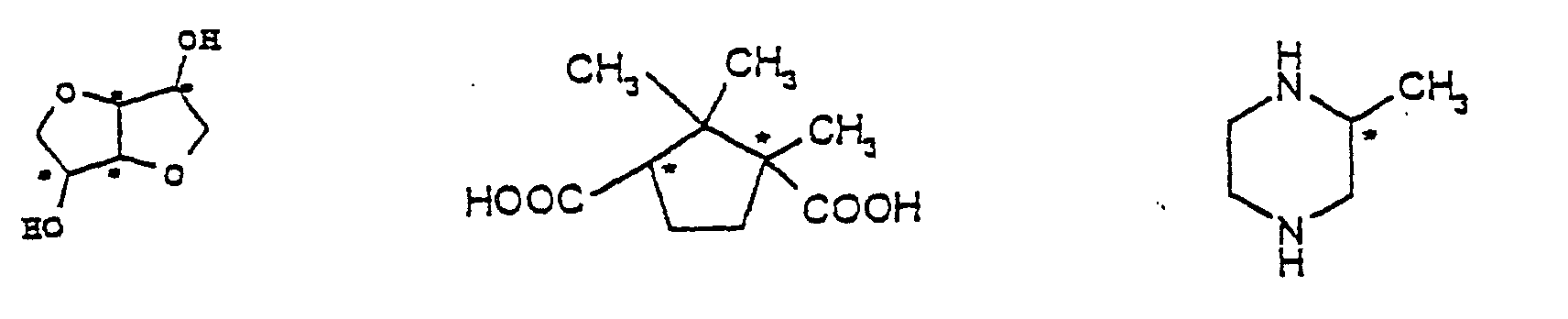 et
et R et R' représentant chacun, indépendamment l'un de l'autre, un atome d'hydrogène, des groupes alkyle en C1-C6 ou phényle.
- Revêtement en poudre à effet selon la revendication 1 ou 2, caractérisé en qu'il contient d'autres matières d'addition, qui ne sont pas des cristaux liquides, prises dans le groupe des pigments d'absorption et/ou d'interférence, des agents de contrôle de charge, des charges, des agents d'accrochage, des agents photoprotecteurs, des stabilisants ainsi que des matières qui influencent la rhéologie et l'écoulement.
- Procédé pour la préparation d'un revêtement en poudre à effet selon au moins l'une des revendications 1 à 3, caractérisé en ce qu'on peut transformer les polymères à cristaux liquides cholestériques non durcissables et éventuellement les polymères à cristaux liquides nématiques non durcissables directement, au cours de leur synthèse ou dans un procédé ultérieur, en une poudre finement divisée, que l'on applique sur l'objet à revêtir à l'aide d'un procédé de laquage en poudre et que l'on transforme par un traitement thermique en un film présentant une perception de couleur dépendant de l'angle d'observation.
- Procédé selon la revendication 4, caractérisé en ce qu'on prépare les polymères à cristaux liquides cholestériques _non durcissables et éventuellement les polymères à cristaux liquides nématiques non durcissables sous forme de poudre par polymérisation en une phase émulsionnée ou dispersée.
- Procédé selon la revendication 4, caractérisé en ce qu'on transforme les polymères à cristaux liquides cholestériques non durcissables et éventuellement les polymères à cristaux liquides nématiques, après leur synthèse à l'aide d'un procédé de broyage, en une poudre finement divisée.
- Procédé selon une ou plusieurs des revendications 4 à 6, caractérisé en ce qu'on applique la poudre finement divisée à l'aide du procédé corona, d'un procédé triboélectrique ou électrocinétique, d'un procédé de pistolage à la flamme ou d'un procédé de frittage en lit fluidisé, sur l'objet à revêtir.
- Procédé selon une ou plusieurs des revendications 4 à 7, caractérisé en ce qu'on réalise le revêtement en poudre à effet sur un subjectile ou penture d'apprêt foncés, de préférence noirs.
- Procédé selon une ou plusieurs des revendications 4 à 8, caractérisé en ce que le revêtement en poudre à effet est revêtu d'une ou plusieurs couches de vernis clair.
- Utilisation d'un revêtement en poudre à effet selon une ou plusieurs des revendications 1 à 3 pour le revêtement de matières naturelles ou synthétiques.
- Utilisation selon la revendication 10, caractérisée en ce que les matières à revêtir sont des objets en métal ou matières plastiques.
- Utilisation selon la revendication 10, caractérisée en ce que les objets à revêtir sont des carosseries ou des pièces de carrosserie de véhicules automobiles.
Applications Claiming Priority (3)
| Application Number | Priority Date | Filing Date | Title |
|---|---|---|---|
| DE19612974 | 1996-04-01 | ||
| DE19612974A DE19612974A1 (de) | 1996-04-01 | 1996-04-01 | Pulverbeschichtungen mit vom Betrachtungswinkel abhängigem Farbeindruck |
| PCT/EP1997/001368 WO1997036962A1 (fr) | 1996-04-01 | 1997-03-19 | Revetements en poudre avec effet colore dependant de l'angle d'observation |
Publications (2)
| Publication Number | Publication Date |
|---|---|
| EP0891396A1 EP0891396A1 (fr) | 1999-01-20 |
| EP0891396B1 true EP0891396B1 (fr) | 2001-10-17 |
Family
ID=7790133
Family Applications (1)
| Application Number | Title | Priority Date | Filing Date |
|---|---|---|---|
| EP97914268A Expired - Lifetime EP0891396B1 (fr) | 1996-04-01 | 1997-03-19 | Revetements en poudre avec effet colore dependant de l'angle d'observation |
Country Status (10)
| Country | Link |
|---|---|
| US (1) | US5834072A (fr) |
| EP (1) | EP0891396B1 (fr) |
| JP (1) | JP2000507625A (fr) |
| KR (1) | KR20000005153A (fr) |
| CN (1) | CN1217008A (fr) |
| BR (1) | BR9708411A (fr) |
| CA (1) | CA2250779A1 (fr) |
| CZ (1) | CZ316598A3 (fr) |
| DE (2) | DE19612974A1 (fr) |
| WO (1) | WO1997036962A1 (fr) |
Families Citing this family (15)
| Publication number | Priority date | Publication date | Assignee | Title |
|---|---|---|---|---|
| DE19756974C2 (de) * | 1997-12-20 | 2001-04-19 | Clariant Gmbh | Organisches Material mit metallischem Glanz |
| DE19848130A1 (de) * | 1998-10-19 | 2000-04-20 | Basf Ag | Verwendung von cholesterisch-flüssigkristallinen Polymeren als UV-Filter in kosmetischen und pharmazeutischen Zubereitungen |
| US6120854A (en) * | 1999-02-19 | 2000-09-19 | Northrop Grumman | Liquid crystal polymer coating process |
| GB0011284D0 (en) * | 2000-05-11 | 2000-06-28 | Univ Belfast | Coating process |
| WO2002024791A2 (fr) * | 2000-09-20 | 2002-03-28 | World Properties, Inc. | Depot electrostatique de thermoplastiques de haute temperature et a haute performance |
| CA2445080A1 (fr) | 2001-04-24 | 2002-10-31 | Merck Patent Gesellschaft Mit Beschraenkter Haftung | Marquage birefringent |
| JP2003161835A (ja) * | 2001-07-02 | 2003-06-06 | Merck Patent Gmbh | 光学可変マーキング |
| US7227179B2 (en) * | 2002-09-30 | 2007-06-05 | World Properties, Inc. | Circuit materials, circuits, multi-layer circuits, and methods of manufacture thereof |
| CN100366688C (zh) * | 2003-03-03 | 2008-02-06 | 宗雪晶 | 随观察角度变化而变色的粉末涂料的生产方法 |
| CN1898301A (zh) * | 2003-12-23 | 2007-01-17 | 镇泰有限公司 | 干粉着色剂混合和分配方法 |
| CN1600535B (zh) * | 2004-09-16 | 2010-05-12 | 上海复旦天臣新技术有限公司 | 一种具有双重功能特性的复合薄膜及其制备方法 |
| CN106283920B (zh) * | 2016-08-22 | 2018-08-28 | 嘉力丰科技股份有限公司 | 一种随观察角度变化的变色墙纸及其制备工艺 |
| DE202018100825U1 (de) | 2018-02-15 | 2019-05-20 | Schwan-Stabilo Cosmetics Gmbh & Co. Kg | Puderminen |
| CN111013979A (zh) * | 2019-11-22 | 2020-04-17 | 圣象(江苏)木业研究有限公司 | 一种可视角度变色木地板的油漆工艺 |
| CN113265191B (zh) * | 2021-05-08 | 2022-09-27 | 江苏耀坤液压股份有限公司 | 一种粉末喷涂工艺 |
Family Cites Families (6)
| Publication number | Priority date | Publication date | Assignee | Title |
|---|---|---|---|---|
| DE68922137T2 (de) * | 1988-05-26 | 1995-08-10 | Sanko Kaihatsu Kagaku Kenk | Polyester und daraus hergestellter Formkörper. |
| US5093025A (en) * | 1989-04-07 | 1992-03-03 | Tosoh Corporation | Cholesteric liquid crystal polyester containing optically active group |
| DE4408170A1 (de) * | 1994-03-11 | 1995-09-14 | Basf Ag | Neue polymerisierbare flüssigkristalline Verbindungen |
| DE4416191A1 (de) * | 1994-05-06 | 1995-11-09 | Consortium Elektrochem Ind | Interferenzpigmente aus in cholesterischer Anordnung fixierten Molekülen sowie deren Verwendung |
| DE4430919A1 (de) * | 1994-08-31 | 1996-03-07 | Daimler Benz Ag | Lack, insbsondere Pulverlack zum Lackieren der Oberflächen von Substraten, insbesondere von Fahrzeugkarosserien |
| DE19505161A1 (de) * | 1995-02-16 | 1996-08-22 | Daimler Benz Ag | Effektlack bzw. Effektlackierung, insbesondere für Kraftfahrzeugkarosserien |
-
1996
- 1996-04-01 DE DE19612974A patent/DE19612974A1/de not_active Withdrawn
-
1997
- 1997-03-19 KR KR1019980707820A patent/KR20000005153A/ko not_active Withdrawn
- 1997-03-19 JP JP9534865A patent/JP2000507625A/ja active Pending
- 1997-03-19 CA CA002250779A patent/CA2250779A1/fr not_active Abandoned
- 1997-03-19 BR BR9708411A patent/BR9708411A/pt not_active Application Discontinuation
- 1997-03-19 CZ CZ983165A patent/CZ316598A3/cs unknown
- 1997-03-19 DE DE59704966T patent/DE59704966D1/de not_active Expired - Fee Related
- 1997-03-19 WO PCT/EP1997/001368 patent/WO1997036962A1/fr not_active Ceased
- 1997-03-19 CN CN97193588A patent/CN1217008A/zh active Pending
- 1997-03-19 EP EP97914268A patent/EP0891396B1/fr not_active Expired - Lifetime
- 1997-04-01 US US08/825,634 patent/US5834072A/en not_active Expired - Fee Related
Also Published As
| Publication number | Publication date |
|---|---|
| EP0891396A1 (fr) | 1999-01-20 |
| KR20000005153A (ko) | 2000-01-25 |
| CZ316598A3 (cs) | 1999-01-13 |
| US5834072A (en) | 1998-11-10 |
| BR9708411A (pt) | 1999-08-03 |
| JP2000507625A (ja) | 2000-06-20 |
| DE59704966D1 (de) | 2001-11-22 |
| WO1997036962A1 (fr) | 1997-10-09 |
| DE19612974A1 (de) | 1997-10-02 |
| CN1217008A (zh) | 1999-05-19 |
| CA2250779A1 (fr) | 1997-10-09 |
Similar Documents
| Publication | Publication Date | Title |
|---|---|---|
| EP0891397B1 (fr) | Procede pour la production de revetements a effets avec lesquels la perception de la couleur depend de l'angle d'observation | |
| EP0950701A1 (fr) | Produits colorants réfléchissant le rayonnenment infrarouge | |
| DE19612974A1 (de) | Pulverbeschichtungen mit vom Betrachtungswinkel abhängigem Farbeindruck | |
| US6153722A (en) | Cholesteric liquid-crystal polymers with increased weather stability | |
| EP0891403A1 (fr) | Melanges de polymeres cristallins liquides | |
| EP0902820B1 (fr) | Polymeres a cristaux liquides cholesteriques chiraux contenant des monomeres colores | |
| DE4416191A1 (de) | Interferenzpigmente aus in cholesterischer Anordnung fixierten Molekülen sowie deren Verwendung | |
| EP0946670B1 (fr) | Polymeres a cristaux liquides cholesteriques teintes presentant des proprietes optiquement variables | |
| DE19739263A1 (de) | Verfahren zur Herstellung von dünnen Filmen aus nicht-wäßriger Dispersion und daraus hergestellte Effektpigmente mit vom Betrachtungswinkel abhängiger Farbigkeit | |
| DE19739260A1 (de) | Pulverbeschichtungen mit vom Betrachtungswinkel abhängigem Farbeindruck | |
| WO2020216880A1 (fr) | Composition de revêtement en poudre | |
| EP0872534B1 (fr) | Revêtement à effets, dont la couleur perçue dépend de l'angle d'observation | |
| DE19739262A1 (de) | Verfahren zur Herstellung von dünnen Filmen aus wäßriger Dispersion und daraus hergestellte Effektpigmente mit vom Betrachtungswinkel abhängiger Farbigkeit | |
| MXPA98008112A (en) | Powder coatings whose color perceived depends on the angle of observac |
Legal Events
| Date | Code | Title | Description |
|---|---|---|---|
| PUAI | Public reference made under article 153(3) epc to a published international application that has entered the european phase |
Free format text: ORIGINAL CODE: 0009012 |
|
| 17P | Request for examination filed |
Effective date: 19981102 |
|
| AK | Designated contracting states |
Kind code of ref document: A1 Designated state(s): DE FR GB |
|
| 17Q | First examination report despatched |
Effective date: 19991029 |
|
| GRAG | Despatch of communication of intention to grant |
Free format text: ORIGINAL CODE: EPIDOS AGRA |
|
| GRAG | Despatch of communication of intention to grant |
Free format text: ORIGINAL CODE: EPIDOS AGRA |
|
| GRAH | Despatch of communication of intention to grant a patent |
Free format text: ORIGINAL CODE: EPIDOS IGRA |
|
| RBV | Designated contracting states (corrected) |
Designated state(s): DE FR GB |
|
| GRAH | Despatch of communication of intention to grant a patent |
Free format text: ORIGINAL CODE: EPIDOS IGRA |
|
| GRAA | (expected) grant |
Free format text: ORIGINAL CODE: 0009210 |
|
| AK | Designated contracting states |
Kind code of ref document: B1 Designated state(s): DE FR GB |
|
| REF | Corresponds to: |
Ref document number: 59704966 Country of ref document: DE Date of ref document: 20011122 |
|
| REG | Reference to a national code |
Ref country code: GB Ref legal event code: IF02 |
|
| GBT | Gb: translation of ep patent filed (gb section 77(6)(a)/1977) |
Effective date: 20020118 |
|
| ET | Fr: translation filed | ||
| PG25 | Lapsed in a contracting state [announced via postgrant information from national office to epo] |
Ref country code: GB Free format text: LAPSE BECAUSE OF NON-PAYMENT OF DUE FEES Effective date: 20020319 |
|
| PLBE | No opposition filed within time limit |
Free format text: ORIGINAL CODE: 0009261 |
|
| STAA | Information on the status of an ep patent application or granted ep patent |
Free format text: STATUS: NO OPPOSITION FILED WITHIN TIME LIMIT |
|
| PG25 | Lapsed in a contracting state [announced via postgrant information from national office to epo] |
Ref country code: DE Free format text: LAPSE BECAUSE OF NON-PAYMENT OF DUE FEES Effective date: 20021001 |
|
| 26N | No opposition filed | ||
| GBPC | Gb: european patent ceased through non-payment of renewal fee |
Effective date: 20020319 |
|
| PG25 | Lapsed in a contracting state [announced via postgrant information from national office to epo] |
Ref country code: FR Free format text: LAPSE BECAUSE OF NON-PAYMENT OF DUE FEES Effective date: 20021129 |
|
| REG | Reference to a national code |
Ref country code: FR Ref legal event code: ST |