EP0892365A2 - Verfahren und System zum Bestimmen der Bewegungsbahn eines Multimedia Objekts - Google Patents
Verfahren und System zum Bestimmen der Bewegungsbahn eines Multimedia Objekts Download PDFInfo
- Publication number
- EP0892365A2 EP0892365A2 EP98303503A EP98303503A EP0892365A2 EP 0892365 A2 EP0892365 A2 EP 0892365A2 EP 98303503 A EP98303503 A EP 98303503A EP 98303503 A EP98303503 A EP 98303503A EP 0892365 A2 EP0892365 A2 EP 0892365A2
- Authority
- EP
- European Patent Office
- Prior art keywords
- path
- paths
- motion
- layout area
- saved
- Prior art date
- Legal status (The legal status is an assumption and is not a legal conclusion. Google has not performed a legal analysis and makes no representation as to the accuracy of the status listed.)
- Withdrawn
Links
Images





Classifications
-
- G—PHYSICS
- G06—COMPUTING OR CALCULATING; COUNTING
- G06T—IMAGE DATA PROCESSING OR GENERATION, IN GENERAL
- G06T13/00—Animation
-
- G—PHYSICS
- G06—COMPUTING OR CALCULATING; COUNTING
- G06T—IMAGE DATA PROCESSING OR GENERATION, IN GENERAL
- G06T2200/00—Indexing scheme for image data processing or generation, in general
- G06T2200/24—Indexing scheme for image data processing or generation, in general involving graphical user interfaces [GUIs]
Definitions
- This invention relates in general to computer software, and in particular to a method and system for defining the movement path of a multimedia object in an application development environment using motion paths as independent entities.
- path definition is found in. for example. Premier by Adobe. To construct a path for an object/part, the part must be taken from the layout area and placed in a separate window. Then, the user can draw a path for the part using a pointing device. There is no one-to-one scale and the path is drawn without the perspective of the actual environment including lack of surrounding parts. Thus, the user must create the path and then assign it, return to the layout area and run a test. If the path does not look right, the user must return the part to the separate path definition window and try again. This is awkward and time consuming, especially in complex layouts.
- path definition can be found in Director by Macromedia. This type of path definition allows the use of the actual layout area for construction but also requires the use of a "score" area. The user must drag the part to the start time in the score. Then the user must drag the part to the next movement position in the layout are followed by another dragging to the score area for the time it should appear in that position. Once these steps have occurred from start point to finish point. the score area is highlighted and the placement is made on the layout area. Thus, this method can also be slow and tedious.
- the present invention relates to a method and system for creating motion paths as independent entities in a multimedia motion path editor.
- a motion path is drawn in a path editor layout window without associating the path with an object in the layout area.
- the path is then saved for subsequent assignment to any desired object in the layout area.
- the saved path may be manipulated as any other object.
- a plurality of the saved paths may be joined together, and/or combined into one extrapolated path.
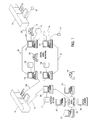
- data processing system 8 may include a plurality of networks, such as Local Area Networks (LAN) 10 and 32, each of which preferably includes a plurality of individual computers 12 and 30, respectively.
- LAN Local Area Networks
- IWS Intelligent Work Stations
- Each said network may also consist of a plurality of processors coupled via a communications medium, such as shared memory, shared storage, or an interconnection network.
- a communications medium such as shared memory, shared storage, or an interconnection network.
- each individual computer may be coupled to a storage device 14 and/or a printer/output device 16 and may be provided with a pointing device such as a mouse 17.
- the data processing system 8 may also include multiple mainframe computers, such as mainframe computer 18, which may be preferably coupled to LAN 10 by means of communications link 22.
- the mainframe computer 18 may also be coupled to a storage device 20 which may serve as remote storage for LAN 10.
- LAN 10 may be coupled via communications link 24 through a sub-system control unit/communications controller 26 and communications link 34 to a gateway server 28.
- the gateway server 28 is preferably an IWS which serves to link LAN 32 to LAN 10.
- LAN 32 and LAN 10 a plurality of documents or resource objects may be stored within storage device 20 and controlled by mainframe computer 18, as resource manager or library service for the resource objects thus stored.
- mainframe computer 18 may be located a great geographic distance from LAN 10 and similarly, LAN 10 may be located a substantial distance from LAN 32.
- LAN 32 may be located in California while LAN 10 may be located within North Carolina and mainframe computer 18 may be located in New York.
- Software program code which employs the present invention is typically stored in the memory of a storage device 14 of a stand alone workstation or LAN server from which a developer may access the code for distribution purposes, the software program code may be embodied on any of a variety of known media for use with a data processing system such as a diskette or CD-ROM or may be distributed to users from a memory of one computer system over a network of some type to other computer systems for use by users of such other systems.
- Such techniques and methods for embodying software code on media and/or distributing software code are well-known and will not be further discussed herein.
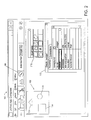
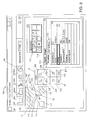
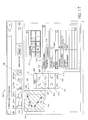
- a graphical representation of a multimedia part editor is shown in window 100.
- a layout area generally indicated by a reference numeral 102, in which a plurality of multimedia objects/parts, for example, square 104, triangle 106 and circle 108, are positioned for manipulation.
- a palette window 110 and a Details window 112 are also provided.
- the palette window 110 contains a collection of parts available for use in the current application being developed. These may include multimedia parts(image, sound, animation, etc) and/or controls (buttons, labels, listboxes, etc).
- the Details window 112 is used to modify and customise the specific parts used in the current application and add logic between parts.
- a Properties tab 113 in the Details window 112 provides a method to modify the parts by allowing the user to customise specific characteristics of parts in the current application.
- the picture property of an image part can be any source file (in the correct format) that the user desires.
- a Connections tab 115 of the Details window 112 provides a method to add logic between parts in the "part, event - part, action/property" format. For example, a user can add logic between a button and a sound file so that when the button is clicked, the sound file will play. This connection would read: "button clicked - sound play”.
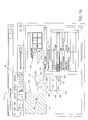
- a path editor window 114 appears adjacent to the layout area 102.
- a part specific path can also be created by first selecting a part to apply the path to and then pressing the motion path button 98 on the main toolbar or by selecting "Motion Path Editor” via the appropriate menu choice.
- the path window 114 is provided with a plurality of buttons and tools (which will be subsequently described in greater detail), including a "Record” push-button 130 and a "Join” push-button 132.
- all the parts/images within the layout area 102 are slightly ghosted when the motion path window 114 is first displayed, as indicated by the diagonal lines appearing therethrough.
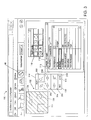
- the user has selected an object, for example. the square 104, to which a path will be assigned.
- the square 104 has become unghosted (shown without diagonal lines).
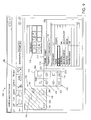
- FIG. 5 an example of the manual drag technique to assign a path is shown.
- the user presses the Record push-button 130, and then places a cursor 150 over the object to be moved, for example, the square 104, and drags the object along a path (shown as line 105) of the desired movement.
- a cursor 150 over the object to be moved, for example, the square 104
- the user releases the mouse button and the path "record" activity ceases.
- the square 104 will then move along the path 105 as drawn.
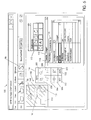
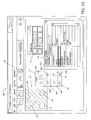
- the setting of anchor points technique is shown.
- the user can define as many anchor points as desired, for example, anchor point 160 and anchor point 162 with the initial anchor point defined as the physical centre (not shown) of the object.
- a connecting line is automatically drawn between anchor points as each subsequent anchor point is defined.
- the user double-clicks the mouse at the location of the end point, this action completes the path.
- the object square 1014 will then move along the path as defined by the anchor points.
- the user decides that the path 170 needs to be modified.
- the user selects an anchor point "Add" tool 204 from the path editor window 114 and moves the cursor 150 over the desired location for a new anchor point 171 and presses the mouse button. This adds the new anchor point 171 on the path 170.
- the user selects the anchor point "Delete" tool 208 from the path editor window 114, moves the cursor 150 over the existing point to be deleted and presses the mouse button. This deletes the indicated anchor point from the path 170.
- a technique for curving a path is illustrated.
- the user defines a curve by simply holding and dragging the mouse as the anchor point is being laid, producing an anchor point with two handles 175 and 177 which the user can define and smooth the curve (as shown, handle 177 is dragged "clockwise”).
- the user can select the anchor point and press an anchor point "curve point” tool 210 in the path editor window 114.
- the user can select the curve point anchor point on the layout area 102 and press an anchor point "straight line” tool 206 on the path editor window 114.
- an independent path entity is created in accordance with the present invention.
- a user has entered a motion path mode causing the layout area 102 to be ghosted (shown with diagonal lines).
- the present invention can also be used to join stored paths together.
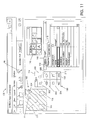
- the user first loads the saved paths, one at a time, into the layout area 102. This is done by selecting a "Load Path" command (not shown) from an appropriate menu and selecting the desired path to load from the resulting dialogue.
- Figure 10 shows a first path 303 loaded into the layout area 102.
- a second path 304 is subsequently loaded into the layout area 102 in the same manner.
- additional saved paths can be loaded and placed into the layout area 102 in the same manner as described above.
- the paths 303 and 304 may then be manipulated or moved in the layout area 102, if desired.
- the paths 303 and 304 have been loaded and positioned as desired in the layout area 102, they can be joined together.
- the user has selected adjacent endpoints 320 and 322 of the paths 303 and 304, respectively, by using area select (placing box 324 around the endpoints 320 and 322).
- the user may also use a series of point and click commands to select the endpoints 320 and 322.
- the present invention is also used to create a single extrapolated motion path from two or more separate paths.
- two independent motion paths 305 and 306 have already been created and defined. as previously described above.
- the motion paths 305 and 306 are positioned in the layout area 102.
- the user selects all or portions of each path that is to be extrapolated into a new third path.
- the user has selected both paths 305 and 306 in their entirety by using area select (placing a box 308 around both paths 305 and 306).
- area select placing a box 308 around both paths 305 and 306.
- the user may also use a series of point and click commands to select all the points that make up each of the paths 305 and 306 (see Fig. 17).
- the present invention extrapolates the paths 305 and 306 into a new, third path by selecting an "Extrapolate Paths" command (not shown) from the appropriate menu.
- the result as shown in Fig. 18, is a new path 310 comprised of an average of the "X" and "Y" coordinates of the paths 305 and 306.
- the new path 310 can be saved, modified and manipulated in the same manner as any other path, as described previously herein.
Landscapes
- Physics & Mathematics (AREA)
- General Physics & Mathematics (AREA)
- Engineering & Computer Science (AREA)
- Theoretical Computer Science (AREA)
- Processing Or Creating Images (AREA)
- User Interface Of Digital Computer (AREA)
Applications Claiming Priority (2)
| Application Number | Priority Date | Filing Date | Title |
|---|---|---|---|
| US08/896,815 US6111590A (en) | 1997-07-18 | 1997-07-18 | Method and system for a true scale motion path editor to create motion paths as independent entities |
| US896815 | 1997-07-18 |
Publications (2)
| Publication Number | Publication Date |
|---|---|
| EP0892365A2 true EP0892365A2 (de) | 1999-01-20 |
| EP0892365A3 EP0892365A3 (de) | 1999-05-06 |
Family
ID=25406898
Family Applications (1)
| Application Number | Title | Priority Date | Filing Date |
|---|---|---|---|
| EP98303503A Withdrawn EP0892365A3 (de) | 1997-07-18 | 1998-05-05 | Verfahren und System zum Bestimmen der Bewegungsbahn eines Multimedia Objekts |
Country Status (3)
| Country | Link |
|---|---|
| US (1) | US6111590A (de) |
| EP (1) | EP0892365A3 (de) |
| JP (1) | JPH1166339A (de) |
Families Citing this family (29)
| Publication number | Priority date | Publication date | Assignee | Title |
|---|---|---|---|---|
| US6384829B1 (en) * | 1999-11-24 | 2002-05-07 | Fuji Xerox Co., Ltd. | Streamlined architecture for embodied conversational characters with reduced message traffic |
| US6600491B1 (en) * | 2000-05-30 | 2003-07-29 | Microsoft Corporation | Video-based rendering with user-controlled movement |
| US20080040227A1 (en) * | 2000-11-03 | 2008-02-14 | At&T Corp. | System and method of marketing using a multi-media communication system |
| US6990452B1 (en) | 2000-11-03 | 2006-01-24 | At&T Corp. | Method for sending multi-media messages using emoticons |
| US6976082B1 (en) | 2000-11-03 | 2005-12-13 | At&T Corp. | System and method for receiving multi-media messages |
| US7203648B1 (en) | 2000-11-03 | 2007-04-10 | At&T Corp. | Method for sending multi-media messages with customized audio |
| US7091976B1 (en) * | 2000-11-03 | 2006-08-15 | At&T Corp. | System and method of customizing animated entities for use in a multi-media communication application |
| US6963839B1 (en) | 2000-11-03 | 2005-11-08 | At&T Corp. | System and method of controlling sound in a multi-media communication application |
| US20060129933A1 (en) * | 2000-12-19 | 2006-06-15 | Sparkpoint Software, Inc. | System and method for multimedia authoring and playback |
| US7155676B2 (en) * | 2000-12-19 | 2006-12-26 | Coolernet | System and method for multimedia authoring and playback |
| US7671861B1 (en) * | 2001-11-02 | 2010-03-02 | At&T Intellectual Property Ii, L.P. | Apparatus and method of customizing animated entities for use in a multi-media communication application |
| US8456475B2 (en) * | 2003-06-30 | 2013-06-04 | Microsoft Corporation | Motion line switching in a virtual environment |
| US7358973B2 (en) * | 2003-06-30 | 2008-04-15 | Microsoft Corporation | Mixture model for motion lines in a virtual reality environment |
| JP4356593B2 (ja) * | 2004-02-23 | 2009-11-04 | セイコーエプソン株式会社 | レイアウト要素の配置装置、配置方法、配置プログラム。 |
| JP2006058985A (ja) * | 2004-08-18 | 2006-03-02 | Sony Corp | 表示制御装置および方法、並びにプログラム |
| JP4581924B2 (ja) * | 2004-09-29 | 2010-11-17 | 株式会社ニコン | 画像再生装置、および画像再生プログラム |
| US20060274070A1 (en) | 2005-04-19 | 2006-12-07 | Herman Daniel L | Techniques and workflows for computer graphics animation system |
| US20090079744A1 (en) * | 2007-09-21 | 2009-03-26 | Microsoft Corporation | Animating objects using a declarative animation scheme |
| WO2009117363A1 (en) | 2008-03-17 | 2009-09-24 | The Board Of Regents Of The University Of Texas System | Superfine fiber creating spinneret and uses thereof |
| US8683429B2 (en) | 2008-08-25 | 2014-03-25 | Adobe Systems Incorporated | Systems and methods for runtime control of hierarchical objects |
| US20100118037A1 (en) * | 2008-09-08 | 2010-05-13 | Apple Inc. | Object-aware transitions |
| US7721209B2 (en) * | 2008-09-08 | 2010-05-18 | Apple Inc. | Object-aware transitions |
| US20100064222A1 (en) | 2008-09-08 | 2010-03-11 | Apple Inc. | Object-aware transitions |
| JP4752921B2 (ja) * | 2009-01-28 | 2011-08-17 | ソニー株式会社 | 情報処理装置、アニメーション付加方法、及びプログラム |
| US20110261060A1 (en) * | 2010-04-23 | 2011-10-27 | Markus Waibel | Drawing method and computer program |
| US9981439B2 (en) | 2012-08-06 | 2018-05-29 | Clarcor Inc. | Systems and methods of heating a fiber producing device |
| KR101640377B1 (ko) | 2016-01-06 | 2016-07-18 | 스튜디오씨드코리아 주식회사 | 그래픽 사용자 인터페이스의 프로토타입 제작 방법 및 그 시스템 |
| EP3400132A4 (de) | 2016-01-08 | 2019-08-07 | Clarcor Inc. | Verwendung von mikrofasern und/oder nanofasern in bekleidung und schuhwerk |
| US11004249B2 (en) | 2019-03-18 | 2021-05-11 | Apple Inc. | Hand drawn animation motion paths |
Family Cites Families (22)
| Publication number | Priority date | Publication date | Assignee | Title |
|---|---|---|---|---|
| US3637212A (en) * | 1969-03-24 | 1972-01-25 | Funtronics Inc | Bird shoot game and the like |
| US4841291A (en) * | 1987-09-21 | 1989-06-20 | International Business Machines Corp. | Interactive animation of graphics objects |
| US5355314A (en) * | 1990-03-26 | 1994-10-11 | Hammond Incorporated | Method and apparatus for automatically generating symbol images against a background image without collision utilizing distance-dependent attractive and repulsive forces in a computer simulation |
| US5287446A (en) * | 1990-10-15 | 1994-02-15 | Sierra On-Line, Inc. | System and methods for intelligent movement on computer displays |
| GB2258790A (en) * | 1991-08-12 | 1993-02-17 | Cambridge Animation Syst | Animation |
| US5261041A (en) * | 1990-12-28 | 1993-11-09 | Apple Computer, Inc. | Computer controlled animation system based on definitional animated objects and methods of manipulating same |
| GB2303281B (en) * | 1992-09-10 | 1997-04-09 | Fujitsu Ltd | Graphic editing apparatus and method |
| US5758180A (en) * | 1993-04-15 | 1998-05-26 | Sony Corporation | Block resizing function for multi-media editing which moves other blocks in response to the resize only as necessary |
| WO1995005639A2 (en) * | 1993-08-04 | 1995-02-23 | Ricorso | Computerized game teaching method |
| US5510995A (en) * | 1993-08-13 | 1996-04-23 | Iowa State University Research Foundation, Inc. | Sculptured surface synthesis based on functional design constraints |
| JPH0816820A (ja) * | 1994-04-25 | 1996-01-19 | Fujitsu Ltd | 3次元アニメーション作成装置 |
| US5818462A (en) * | 1994-07-01 | 1998-10-06 | Digital Equipment Corporation | Method and apparatus for producing complex animation from simpler animated sequences |
| US5767861A (en) * | 1994-08-11 | 1998-06-16 | Kabushiki Kaisha Sega Enterprises | Processing apparatus and method for displaying a moving figure constrained to provide appearance of fluid motion |
| US5594856A (en) * | 1994-08-25 | 1997-01-14 | Girard; Michael | Computer user interface for step-driven character animation |
| US5680533A (en) * | 1994-10-31 | 1997-10-21 | Nintendo Co., Ltd. | Videographics program/video game fabricating system and method |
| US5577185A (en) * | 1994-11-10 | 1996-11-19 | Dynamix, Inc. | Computerized puzzle gaming method and apparatus |
| US5680619A (en) * | 1995-04-03 | 1997-10-21 | Mfactory, Inc. | Hierarchical encapsulation of instantiated objects in a multimedia authoring system |
| US5572639A (en) * | 1995-05-08 | 1996-11-05 | Gantt; Brian D. | Method and apparatus for interactively manipulating and displaying presumptive relationships between graphic objects |
| JP2915826B2 (ja) * | 1995-07-11 | 1999-07-05 | 富士通株式会社 | 干渉チェック装置 |
| US5692144A (en) * | 1995-08-03 | 1997-11-25 | Microsoft Corporation | Method and system for depicting an object springing back from a position |
| US5793382A (en) * | 1996-06-10 | 1998-08-11 | Mitsubishi Electric Information Technology Center America, Inc. | Method for smooth motion in a distributed virtual reality environment |
| US5982389A (en) * | 1996-06-17 | 1999-11-09 | Microsoft Corporation | Generating optimized motion transitions for computer animated objects |
-
1997
- 1997-07-18 US US08/896,815 patent/US6111590A/en not_active Expired - Fee Related
-
1998
- 1998-05-05 EP EP98303503A patent/EP0892365A3/de not_active Withdrawn
- 1998-06-16 JP JP16833398A patent/JPH1166339A/ja active Pending
Non-Patent Citations (3)
| Title |
|---|
| JENNINGS AND POIZNER: "COMPUTERGRAPHIC MODELLING AND ANALYSIS II: THREE-DIMENSIONAL RECONSTRUCTION AND INTERACTIVE ANALYSIS" JOURNAL OF NEUROSCIENCE METHODS, vol. 24, no. 1, May 1988, pages 45-55, XP002093357 NETHERLANDS * |
| SNIBBE: "A DIRECT MANIPULATION INTERFACE FOR 3D COMPUTER ANIMATION" COMPUTER GRAPHICS FORUM, vol. 14, no. 3, 1995, pages C-271-C-283, XP002093356 UK * |
| STASKO J T: "A PRACTICAL ANIMATION LANGUAGE FOR SOFTWARE DEVELOPMENT" PROCEEDINGS OF THE INTERNATIONAL CONFERENCE ON COMPUTER LANGUAGES, NEW ORLEANS, MAR. 12 - 15, 1990,12 March 1990, pages 1-10, XP000289116 INSTITUTE OF ELECTRICAL AND ELECTRONICS ENGINEERS * |
Also Published As
| Publication number | Publication date |
|---|---|
| EP0892365A3 (de) | 1999-05-06 |
| JPH1166339A (ja) | 1999-03-09 |
| US6111590A (en) | 2000-08-29 |
Similar Documents
| Publication | Publication Date | Title |
|---|---|---|
| US6111590A (en) | Method and system for a true scale motion path editor to create motion paths as independent entities | |
| US6091427A (en) | Method and system for a true-scale motion path editor using time segments, duration and synchronization | |
| US5675753A (en) | Method and system for presenting an electronic user-interface specification | |
| US5555354A (en) | Method and apparatus for navigation within three-dimensional information landscape | |
| US5528735A (en) | Method and apparatus for displaying data within a three-dimensional information landscape | |
| JP2741826B2 (ja) | 協働的コンピュータ・ベース・システムおよび操作する方法 | |
| US8024672B1 (en) | System and method for generating presentations | |
| US5694532A (en) | Method for selecting a three-dimensional object from a graphical user interface | |
| US7023452B2 (en) | Image generation system, image generating method, and storage medium storing image generation program | |
| US9430749B2 (en) | Architectural planning system and process therefor | |
| EP0199909A2 (de) | Aktualisierung von Geschäftsdiagrammdaten durch die Diagrammaufbereitung | |
| US20080276184A1 (en) | Computerized collaborative work | |
| EP0892339B1 (de) | Verfahren und System zur Bestimmung des Bewegungsablaufes eines Multimediaobjekts | |
| US20080189616A1 (en) | Method to manage speaker notes in a computer implemented slide show | |
| JPH08305663A (ja) | 共同作業支援システム | |
| JPH05210722A (ja) | グラフィックス・ディスプレイ・ツール | |
| CN112783488A (zh) | 一种商业模式画布绘制方法和装置 | |
| US7000197B1 (en) | Method and apparatus for inferred selection of objects | |
| US6417865B1 (en) | Affinitive placement by proximity in a computer-implemented graphics system | |
| Bath et al. | CERVI: collaborative editing of raster and vector images | |
| US6392662B1 (en) | Draw order preservation in a computer-implemented graphics system | |
| JPH076076A (ja) | ハイパーメディアシステム | |
| JPH04304567A (ja) | 画像処理システム | |
| US7298382B1 (en) | Figure selection method, figure selection device, and storage medium storing figure selection program | |
| JP3251662B2 (ja) | データ表示処理システム |
Legal Events
| Date | Code | Title | Description |
|---|---|---|---|
| PUAI | Public reference made under article 153(3) epc to a published international application that has entered the european phase |
Free format text: ORIGINAL CODE: 0009012 |
|
| AK | Designated contracting states |
Kind code of ref document: A2 Designated state(s): DE FR GB |
|
| AX | Request for extension of the european patent |
Free format text: AL;LT;LV;MK;RO;SI |
|
| PUAL | Search report despatched |
Free format text: ORIGINAL CODE: 0009013 |
|
| AK | Designated contracting states |
Kind code of ref document: A3 Designated state(s): AT BE CH CY DE DK ES FI FR GB GR IE IT LI LU MC NL PT SE |
|
| AX | Request for extension of the european patent |
Free format text: AL;LT;LV;MK;RO;SI |
|
| 17P | Request for examination filed |
Effective date: 19991012 |
|
| AKX | Designation fees paid |
Free format text: DE FR GB |
|
| 17Q | First examination report despatched |
Effective date: 20020628 |
|
| STAA | Information on the status of an ep patent application or granted ep patent |
Free format text: STATUS: THE APPLICATION IS DEEMED TO BE WITHDRAWN |
|
| 18D | Application deemed to be withdrawn |
Effective date: 20021109 |