EP0892786B1 - Nouveaux derives d'acides carboxyliques, leur preparation et leur utilisation - Google Patents
Nouveaux derives d'acides carboxyliques, leur preparation et leur utilisation Download PDFInfo
- Publication number
- EP0892786B1 EP0892786B1 EP97915481A EP97915481A EP0892786B1 EP 0892786 B1 EP0892786 B1 EP 0892786B1 EP 97915481 A EP97915481 A EP 97915481A EP 97915481 A EP97915481 A EP 97915481A EP 0892786 B1 EP0892786 B1 EP 0892786B1
- Authority
- EP
- European Patent Office
- Prior art keywords
- alkyl
- radical
- alkoxy
- phenyl
- alkylthio
- Prior art date
- Legal status (The legal status is an assumption and is not a legal conclusion. Google has not performed a legal analysis and makes no representation as to the accuracy of the status listed.)
- Expired - Lifetime
Links
- 150000001875 compounds Chemical class 0.000 claims abstract description 35
- 150000001732 carboxylic acid derivatives Chemical class 0.000 claims abstract description 19
- 239000003814 drug Substances 0.000 claims abstract description 4
- -1 difluoromethoxy, trifluoromethoxy, chlorodifluoromethoxy, 1-fluoroethoxy, 2-fluoroethoxy, 2,2-difluoroethoxy, 1,1,2,2-tetrafluoroethoxy, 2,2,2-trifluoroethoxy, 2-chloro-1,1,2-trifluoroethoxy Chemical group 0.000 claims description 235
- 125000004178 (C1-C4) alkyl group Chemical group 0.000 claims description 45
- 125000001997 phenyl group Chemical group [H]C1=C([H])C([H])=C(*)C([H])=C1[H] 0.000 claims description 44
- 125000000229 (C1-C4)alkoxy group Chemical group 0.000 claims description 39
- IJGRMHOSHXDMSA-UHFFFAOYSA-N Atomic nitrogen Chemical compound N#N IJGRMHOSHXDMSA-UHFFFAOYSA-N 0.000 claims description 27
- 229910052760 oxygen Inorganic materials 0.000 claims description 26
- 239000001301 oxygen Substances 0.000 claims description 26
- 229910052736 halogen Inorganic materials 0.000 claims description 25
- 150000002367 halogens Chemical group 0.000 claims description 25
- 125000000956 methoxy group Chemical group [H]C([H])([H])O* 0.000 claims description 23
- 125000004093 cyano group Chemical group *C#N 0.000 claims description 21
- 125000002496 methyl group Chemical group [H]C([H])([H])* 0.000 claims description 21
- 125000000449 nitro group Chemical group [O-][N+](*)=O 0.000 claims description 21
- UFHFLCQGNIYNRP-UHFFFAOYSA-N Hydrogen Chemical compound [H][H] UFHFLCQGNIYNRP-UHFFFAOYSA-N 0.000 claims description 20
- 125000005843 halogen group Chemical group 0.000 claims description 20
- 229910052757 nitrogen Inorganic materials 0.000 claims description 20
- 229910052717 sulfur Inorganic materials 0.000 claims description 18
- NINIDFKCEFEMDL-UHFFFAOYSA-N Sulfur Chemical compound [S] NINIDFKCEFEMDL-UHFFFAOYSA-N 0.000 claims description 17
- MYMOFIZGZYHOMD-UHFFFAOYSA-N Dioxygen Chemical compound O=O MYMOFIZGZYHOMD-UHFFFAOYSA-N 0.000 claims description 14
- 239000001257 hydrogen Substances 0.000 claims description 14
- 229910052739 hydrogen Inorganic materials 0.000 claims description 14
- ZAMOUSCENKQFHK-UHFFFAOYSA-N Chlorine atom Chemical compound [Cl] ZAMOUSCENKQFHK-UHFFFAOYSA-N 0.000 claims description 13
- 125000006552 (C3-C8) cycloalkyl group Chemical group 0.000 claims description 12
- QVGXLLKOCUKJST-UHFFFAOYSA-N atomic oxygen Chemical compound [O] QVGXLLKOCUKJST-UHFFFAOYSA-N 0.000 claims description 12
- 239000011593 sulfur Substances 0.000 claims description 12
- 125000003178 carboxy group Chemical group [H]OC(*)=O 0.000 claims description 11
- PXGOKWXKJXAPGV-UHFFFAOYSA-N Fluorine Chemical compound FF PXGOKWXKJXAPGV-UHFFFAOYSA-N 0.000 claims description 10
- 125000001624 naphthyl group Chemical group 0.000 claims description 10
- 125000004433 nitrogen atom Chemical group N* 0.000 claims description 10
- 239000000460 chlorine Substances 0.000 claims description 9
- 229910052801 chlorine Inorganic materials 0.000 claims description 9
- 125000004209 (C1-C8) alkyl group Chemical group 0.000 claims description 8
- 125000000217 alkyl group Chemical group 0.000 claims description 8
- 125000001072 heteroaryl group Chemical group 0.000 claims description 8
- 125000000876 trifluoromethoxy group Chemical group FC(F)(F)O* 0.000 claims description 8
- 125000002887 hydroxy group Chemical group [H]O* 0.000 claims description 7
- 125000001570 methylene group Chemical group [H]C([H])([*:1])[*:2] 0.000 claims description 7
- CIUQDSCDWFSTQR-UHFFFAOYSA-N [C]1=CC=CC=C1 Chemical compound [C]1=CC=CC=C1 CIUQDSCDWFSTQR-UHFFFAOYSA-N 0.000 claims description 6
- 229910052731 fluorine Inorganic materials 0.000 claims description 6
- 239000011737 fluorine Substances 0.000 claims description 6
- 125000005842 heteroatom Chemical group 0.000 claims description 6
- 125000000951 phenoxy group Chemical group [H]C1=C([H])C([H])=C(O*)C([H])=C1[H] 0.000 claims description 6
- 125000001424 substituent group Chemical group 0.000 claims description 6
- 125000000472 sulfonyl group Chemical group *S(*)(=O)=O 0.000 claims description 6
- 125000004434 sulfur atom Chemical group 0.000 claims description 6
- QGZKDVFQNNGYKY-UHFFFAOYSA-O Ammonium Chemical compound [NH4+] QGZKDVFQNNGYKY-UHFFFAOYSA-O 0.000 claims description 5
- OYPRJOBELJOOCE-UHFFFAOYSA-N Calcium Chemical compound [Ca] OYPRJOBELJOOCE-UHFFFAOYSA-N 0.000 claims description 5
- 229910052784 alkaline earth metal Inorganic materials 0.000 claims description 5
- 125000002947 alkylene group Chemical group 0.000 claims description 5
- 229910052791 calcium Inorganic materials 0.000 claims description 5
- 239000011575 calcium Substances 0.000 claims description 5
- 125000000753 cycloalkyl group Chemical group 0.000 claims description 5
- 125000001495 ethyl group Chemical group [H]C([H])([H])C([H])([H])* 0.000 claims description 5
- 125000000959 isobutyl group Chemical group [H]C([H])([H])C([H])(C([H])([H])[H])C([H])([H])* 0.000 claims description 5
- 125000001449 isopropyl group Chemical group [H]C([H])([H])C([H])(*)C([H])([H])[H] 0.000 claims description 5
- 125000002914 sec-butyl group Chemical group [H]C([H])([H])C([H])([H])C([H])(*)C([H])([H])[H] 0.000 claims description 5
- 125000000999 tert-butyl group Chemical group [H]C([H])([H])C(*)(C([H])([H])[H])C([H])([H])[H] 0.000 claims description 5
- 125000006527 (C1-C5) alkyl group Chemical group 0.000 claims description 4
- 206010020772 Hypertension Diseases 0.000 claims description 4
- DGAQECJNVWCQMB-PUAWFVPOSA-M Ilexoside XXIX Chemical compound C[C@@H]1CC[C@@]2(CC[C@@]3(C(=CC[C@H]4[C@]3(CC[C@@H]5[C@@]4(CC[C@@H](C5(C)C)OS(=O)(=O)[O-])C)C)[C@@H]2[C@]1(C)O)C)C(=O)O[C@H]6[C@@H]([C@H]([C@@H]([C@H](O6)CO)O)O)O.[Na+] DGAQECJNVWCQMB-PUAWFVPOSA-M 0.000 claims description 4
- 125000003342 alkenyl group Chemical group 0.000 claims description 4
- 125000004450 alkenylene group Chemical group 0.000 claims description 4
- IYABWNGZIDDRAK-UHFFFAOYSA-N allene Chemical group C=C=C IYABWNGZIDDRAK-UHFFFAOYSA-N 0.000 claims description 4
- 150000001768 cations Chemical class 0.000 claims description 4
- 125000005678 ethenylene group Chemical group [H]C([*:1])=C([H])[*:2] 0.000 claims description 4
- 239000003112 inhibitor Substances 0.000 claims description 4
- 150000002825 nitriles Chemical group 0.000 claims description 4
- 238000002360 preparation method Methods 0.000 claims description 4
- 125000004758 (C1-C4) alkoxyimino group Chemical group 0.000 claims description 3
- WHXSMMKQMYFTQS-UHFFFAOYSA-N Lithium Chemical compound [Li] WHXSMMKQMYFTQS-UHFFFAOYSA-N 0.000 claims description 3
- FYYHWMGAXLPEAU-UHFFFAOYSA-N Magnesium Chemical compound [Mg] FYYHWMGAXLPEAU-UHFFFAOYSA-N 0.000 claims description 3
- ZLMJMSJWJFRBEC-UHFFFAOYSA-N Potassium Chemical compound [K] ZLMJMSJWJFRBEC-UHFFFAOYSA-N 0.000 claims description 3
- 229910052783 alkali metal Inorganic materials 0.000 claims description 3
- 150000001342 alkaline earth metals Chemical class 0.000 claims description 3
- 229910052788 barium Inorganic materials 0.000 claims description 3
- DSAJWYNOEDNPEQ-UHFFFAOYSA-N barium atom Chemical compound [Ba] DSAJWYNOEDNPEQ-UHFFFAOYSA-N 0.000 claims description 3
- 125000003236 benzoyl group Chemical group [H]C1=C([H])C([H])=C(C([H])=C1[H])C(*)=O 0.000 claims description 3
- 125000001028 difluoromethyl group Chemical group [H]C(F)(F)* 0.000 claims description 3
- 125000004705 ethylthio group Chemical group C(C)S* 0.000 claims description 3
- 125000002883 imidazolyl group Chemical group 0.000 claims description 3
- 229910052744 lithium Inorganic materials 0.000 claims description 3
- 229910052749 magnesium Inorganic materials 0.000 claims description 3
- 239000011777 magnesium Substances 0.000 claims description 3
- 125000002816 methylsulfanyl group Chemical group [H]C([H])([H])S[*] 0.000 claims description 3
- 125000004108 n-butyl group Chemical group [H]C([H])([H])C([H])([H])C([H])([H])C([H])([H])* 0.000 claims description 3
- 125000004123 n-propyl group Chemical group [H]C([H])([H])C([H])([H])C([H])([H])* 0.000 claims description 3
- 125000002924 primary amino group Chemical group [H]N([H])* 0.000 claims description 3
- 208000002815 pulmonary hypertension Diseases 0.000 claims description 3
- 125000003226 pyrazolyl group Chemical group 0.000 claims description 3
- 125000000168 pyrrolyl group Chemical group 0.000 claims description 3
- 125000001425 triazolyl group Chemical group 0.000 claims description 3
- 125000003866 trichloromethyl group Chemical group ClC(Cl)(Cl)* 0.000 claims description 3
- 125000002023 trifluoromethyl group Chemical group FC(F)(F)* 0.000 claims description 3
- 125000000008 (C1-C10) alkyl group Chemical group 0.000 claims description 2
- FIARMZDBEGVMLV-UHFFFAOYSA-N 1,1,2,2,2-pentafluoroethanolate Chemical group [O-]C(F)(F)C(F)(F)F FIARMZDBEGVMLV-UHFFFAOYSA-N 0.000 claims description 2
- 125000004776 1-fluoroethyl group Chemical group [H]C([H])([H])C([H])(F)* 0.000 claims description 2
- 125000000453 2,2,2-trichloroethyl group Chemical group [H]C([H])(*)C(Cl)(Cl)Cl 0.000 claims description 2
- 125000004206 2,2,2-trifluoroethyl group Chemical group [H]C([H])(*)C(F)(F)F 0.000 claims description 2
- 125000004781 2,2-dichloro-2-fluoroethyl group Chemical group [H]C([H])(*)C(F)(Cl)Cl 0.000 claims description 2
- 125000004778 2,2-difluoroethyl group Chemical group [H]C([H])(*)C([H])(F)F 0.000 claims description 2
- 125000004780 2-chloro-2,2-difluoroethyl group Chemical group [H]C([H])(*)C(F)(F)Cl 0.000 claims description 2
- 125000004777 2-fluoroethyl group Chemical group [H]C([H])(F)C([H])([H])* 0.000 claims description 2
- 208000009304 Acute Kidney Injury Diseases 0.000 claims description 2
- 206010008120 Cerebral ischaemia Diseases 0.000 claims description 2
- 206010019280 Heart failures Diseases 0.000 claims description 2
- 208000000236 Prostatic Neoplasms Diseases 0.000 claims description 2
- 208000033626 Renal failure acute Diseases 0.000 claims description 2
- 201000011040 acute kidney failure Diseases 0.000 claims description 2
- 208000012998 acute renal failure Diseases 0.000 claims description 2
- 150000001340 alkali metals Chemical class 0.000 claims description 2
- 238000002399 angioplasty Methods 0.000 claims description 2
- 125000004775 chlorodifluoromethyl group Chemical group FC(F)(Cl)* 0.000 claims description 2
- 125000004774 dichlorofluoromethyl group Chemical group FC(Cl)(Cl)* 0.000 claims description 2
- 125000004216 fluoromethyl group Chemical group [H]C([H])(F)* 0.000 claims description 2
- 150000002431 hydrogen Chemical class 0.000 claims description 2
- 125000006340 pentafluoro ethyl group Chemical group FC(F)(F)C(F)(F)* 0.000 claims description 2
- 229910052700 potassium Inorganic materials 0.000 claims description 2
- 239000011591 potassium Substances 0.000 claims description 2
- 230000036454 renin-angiotensin system Effects 0.000 claims description 2
- 208000037803 restenosis Diseases 0.000 claims description 2
- 229910052708 sodium Inorganic materials 0.000 claims description 2
- 239000011734 sodium Substances 0.000 claims description 2
- 125000006528 (C2-C6) alkyl group Chemical group 0.000 claims 1
- 125000005913 (C3-C6) cycloalkyl group Chemical group 0.000 claims 1
- 206010060862 Prostate cancer Diseases 0.000 claims 1
- 230000001154 acute effect Effects 0.000 claims 1
- 125000006193 alkinyl group Chemical group 0.000 claims 1
- 230000001684 chronic effect Effects 0.000 claims 1
- 208000020832 chronic kidney disease Diseases 0.000 claims 1
- 208000022831 chronic renal failure syndrome Diseases 0.000 claims 1
- QJGQUHMNIGDVPM-UHFFFAOYSA-N nitrogen group Chemical group [N] QJGQUHMNIGDVPM-UHFFFAOYSA-N 0.000 claims 1
- 125000003831 tetrazolyl group Chemical group 0.000 claims 1
- 238000004519 manufacturing process Methods 0.000 abstract description 5
- 150000003254 radicals Chemical class 0.000 description 61
- RTZKZFJDLAIYFH-UHFFFAOYSA-N Diethyl ether Chemical compound CCOCC RTZKZFJDLAIYFH-UHFFFAOYSA-N 0.000 description 29
- 102000002045 Endothelin Human genes 0.000 description 19
- 108050009340 Endothelin Proteins 0.000 description 19
- ZUBDGKVDJUIMQQ-UBFCDGJISA-N endothelin-1 Chemical compound C([C@@H](C(=O)N[C@@H](CC(C)C)C(=O)N[C@@H](CC(O)=O)C(=O)N[C@@H]([C@@H](C)CC)C(=O)N[C@@H]([C@@H](C)CC)C(=O)N[C@@H](CC=1C2=CC=CC=C2NC=1)C(O)=O)NC(=O)[C@H]1NC(=O)[C@H](CC=2C=CC=CC=2)NC(=O)[C@@H](CC=2C=CC(O)=CC=2)NC(=O)[C@H](C(C)C)NC(=O)[C@H]2CSSC[C@@H](C(N[C@H](CO)C(=O)N[C@@H](CO)C(=O)N[C@H](CC(C)C)C(=O)N[C@@H](CCSC)C(=O)N[C@H](CC(O)=O)C(=O)N[C@@H](CCCCN)C(=O)N[C@@H](CCC(O)=O)C(=O)N2)=O)NC(=O)[C@@H](CO)NC(=O)[C@H](N)CSSC1)C1=CNC=N1 ZUBDGKVDJUIMQQ-UBFCDGJISA-N 0.000 description 19
- XEKOWRVHYACXOJ-UHFFFAOYSA-N Ethyl acetate Chemical compound CCOC(C)=O XEKOWRVHYACXOJ-UHFFFAOYSA-N 0.000 description 18
- 238000012360 testing method Methods 0.000 description 18
- 125000004765 (C1-C4) haloalkyl group Chemical group 0.000 description 16
- 125000004767 (C1-C4) haloalkoxy group Chemical group 0.000 description 15
- 210000004027 cell Anatomy 0.000 description 14
- HEDRZPFGACZZDS-MICDWDOJSA-N Trichloro(2H)methane Chemical compound [2H]C(Cl)(Cl)Cl HEDRZPFGACZZDS-MICDWDOJSA-N 0.000 description 12
- VLKZOEOYAKHREP-UHFFFAOYSA-N n-Hexane Chemical compound CCCCCC VLKZOEOYAKHREP-UHFFFAOYSA-N 0.000 description 12
- 239000000203 mixture Substances 0.000 description 11
- 101800004490 Endothelin-1 Proteins 0.000 description 10
- 239000000243 solution Substances 0.000 description 10
- 102100033902 Endothelin-1 Human genes 0.000 description 9
- 102000005962 receptors Human genes 0.000 description 9
- 108020003175 receptors Proteins 0.000 description 9
- 238000006243 chemical reaction Methods 0.000 description 8
- 241001465754 Metazoa Species 0.000 description 7
- ZMXDDKWLCZADIW-UHFFFAOYSA-N N,N-Dimethylformamide Chemical compound CN(C)C=O ZMXDDKWLCZADIW-UHFFFAOYSA-N 0.000 description 7
- 239000002904 solvent Substances 0.000 description 7
- 238000005160 1H NMR spectroscopy Methods 0.000 description 6
- KWYUFKZDYYNOTN-UHFFFAOYSA-M Potassium hydroxide Chemical compound [OH-].[K+] KWYUFKZDYYNOTN-UHFFFAOYSA-M 0.000 description 6
- 239000002585 base Substances 0.000 description 6
- IAZDPXIOMUYVGZ-UHFFFAOYSA-N Dimethylsulphoxide Chemical compound CS(C)=O IAZDPXIOMUYVGZ-UHFFFAOYSA-N 0.000 description 5
- 102000010180 Endothelin receptor Human genes 0.000 description 5
- 108050001739 Endothelin receptor Proteins 0.000 description 5
- 239000012074 organic phase Substances 0.000 description 5
- HEMHJVSKTPXQMS-UHFFFAOYSA-M sodium hydroxide Inorganic materials [OH-].[Na+] HEMHJVSKTPXQMS-UHFFFAOYSA-M 0.000 description 5
- 239000000126 substance Substances 0.000 description 5
- 125000003626 1,2,4-triazol-1-yl group Chemical group [*]N1N=C([H])N=C1[H] 0.000 description 4
- 125000004173 1-benzimidazolyl group Chemical group [H]C1=NC2=C([H])C([H])=C([H])C([H])=C2N1* 0.000 description 4
- 125000004974 2-butenyl group Chemical group C(C=CC)* 0.000 description 4
- 125000003903 2-propenyl group Chemical group [H]C([*])([H])C([H])=C([H])[H] 0.000 description 4
- 125000006050 3-methyl-2-pentenyl group Chemical group 0.000 description 4
- XDTMQSROBMDMFD-UHFFFAOYSA-N Cyclohexane Chemical compound C1CCCCC1 XDTMQSROBMDMFD-UHFFFAOYSA-N 0.000 description 4
- VEXZGXHMUGYJMC-UHFFFAOYSA-N Hydrochloric acid Chemical compound Cl VEXZGXHMUGYJMC-UHFFFAOYSA-N 0.000 description 4
- FAPWRFPIFSIZLT-UHFFFAOYSA-M Sodium chloride Chemical compound [Na+].[Cl-] FAPWRFPIFSIZLT-UHFFFAOYSA-M 0.000 description 4
- 239000004480 active ingredient Substances 0.000 description 4
- 229940077464 ammonium ion Drugs 0.000 description 4
- 239000005557 antagonist Substances 0.000 description 4
- 239000000872 buffer Substances 0.000 description 4
- 239000012528 membrane Substances 0.000 description 4
- 125000001844 prenyl group Chemical group [H]C([*])([H])C([H])=C(C([H])([H])[H])C([H])([H])[H] 0.000 description 4
- 239000003826 tablet Substances 0.000 description 4
- RYHBNJHYFVUHQT-UHFFFAOYSA-N 1,4-Dioxane Chemical compound C1COCCO1 RYHBNJHYFVUHQT-UHFFFAOYSA-N 0.000 description 3
- ZWEHNKRNPOVVGH-UHFFFAOYSA-N 2-Butanone Chemical compound CCC(C)=O ZWEHNKRNPOVVGH-UHFFFAOYSA-N 0.000 description 3
- QKNYBSVHEMOAJP-UHFFFAOYSA-N 2-amino-2-(hydroxymethyl)propane-1,3-diol;hydron;chloride Chemical compound Cl.OCC(N)(CO)CO QKNYBSVHEMOAJP-UHFFFAOYSA-N 0.000 description 3
- 125000001494 2-propynyl group Chemical group [H]C#CC([H])([H])* 0.000 description 3
- HBAQYPYDRFILMT-UHFFFAOYSA-N 8-[3-(1-cyclopropylpyrazol-4-yl)-1H-pyrazolo[4,3-d]pyrimidin-5-yl]-3-methyl-3,8-diazabicyclo[3.2.1]octan-2-one Chemical class C1(CC1)N1N=CC(=C1)C1=NNC2=C1N=C(N=C2)N1C2C(N(CC1CC2)C)=O HBAQYPYDRFILMT-UHFFFAOYSA-N 0.000 description 3
- CSCPPACGZOOCGX-UHFFFAOYSA-N Acetone Chemical compound CC(C)=O CSCPPACGZOOCGX-UHFFFAOYSA-N 0.000 description 3
- WEVYAHXRMPXWCK-UHFFFAOYSA-N Acetonitrile Chemical compound CC#N WEVYAHXRMPXWCK-UHFFFAOYSA-N 0.000 description 3
- UHOVQNZJYSORNB-UHFFFAOYSA-N Benzene Chemical compound C1=CC=CC=C1 UHOVQNZJYSORNB-UHFFFAOYSA-N 0.000 description 3
- YMWUJEATGCHHMB-UHFFFAOYSA-N Dichloromethane Chemical compound ClCCl YMWUJEATGCHHMB-UHFFFAOYSA-N 0.000 description 3
- 229940118365 Endothelin receptor antagonist Drugs 0.000 description 3
- LFQSCWFLJHTTHZ-UHFFFAOYSA-N Ethanol Chemical compound CCO LFQSCWFLJHTTHZ-UHFFFAOYSA-N 0.000 description 3
- LYCAIKOWRPUZTN-UHFFFAOYSA-N Ethylene glycol Chemical compound OCCO LYCAIKOWRPUZTN-UHFFFAOYSA-N 0.000 description 3
- PEDCQBHIVMGVHV-UHFFFAOYSA-N Glycerine Chemical compound OCC(O)CO PEDCQBHIVMGVHV-UHFFFAOYSA-N 0.000 description 3
- OKKJLVBELUTLKV-UHFFFAOYSA-N Methanol Chemical compound OC OKKJLVBELUTLKV-UHFFFAOYSA-N 0.000 description 3
- 208000001647 Renal Insufficiency Diseases 0.000 description 3
- VYPSYNLAJGMNEJ-UHFFFAOYSA-N Silicium dioxide Chemical compound O=[Si]=O VYPSYNLAJGMNEJ-UHFFFAOYSA-N 0.000 description 3
- YXFVVABEGXRONW-UHFFFAOYSA-N Toluene Chemical compound CC1=CC=CC=C1 YXFVVABEGXRONW-UHFFFAOYSA-N 0.000 description 3
- 150000001298 alcohols Chemical class 0.000 description 3
- 239000003513 alkali Substances 0.000 description 3
- 230000037396 body weight Effects 0.000 description 3
- 230000002490 cerebral effect Effects 0.000 description 3
- 238000004587 chromatography analysis Methods 0.000 description 3
- 239000013078 crystal Substances 0.000 description 3
- 201000010099 disease Diseases 0.000 description 3
- 208000037265 diseases, disorders, signs and symptoms Diseases 0.000 description 3
- 230000000694 effects Effects 0.000 description 3
- 239000002308 endothelin receptor antagonist Substances 0.000 description 3
- 201000006370 kidney failure Diseases 0.000 description 3
- 239000007788 liquid Substances 0.000 description 3
- 239000000741 silica gel Substances 0.000 description 3
- 229910002027 silica gel Inorganic materials 0.000 description 3
- 230000002792 vascular Effects 0.000 description 3
- KWGRBVOPPLSCSI-WPRPVWTQSA-N (-)-ephedrine Chemical compound CN[C@@H](C)[C@H](O)C1=CC=CC=C1 KWGRBVOPPLSCSI-WPRPVWTQSA-N 0.000 description 2
- 125000006079 1,1,2-trimethyl-2-propenyl group Chemical group 0.000 description 2
- 125000006059 1,1-dimethyl-2-butenyl group Chemical group 0.000 description 2
- 125000006033 1,1-dimethyl-2-propenyl group Chemical group 0.000 description 2
- 125000006060 1,1-dimethyl-3-butenyl group Chemical group 0.000 description 2
- 125000004747 1,1-dimethylethoxycarbonyl group Chemical group CC(C)(OC(=O)*)C 0.000 description 2
- 125000004866 1,1-dimethylethylcarbonyl group Chemical group CC(C)(C(=O)*)C 0.000 description 2
- 125000005919 1,2,2-trimethylpropyl group Chemical group 0.000 description 2
- 125000006062 1,2-dimethyl-2-butenyl group Chemical group 0.000 description 2
- 125000006035 1,2-dimethyl-2-propenyl group Chemical group 0.000 description 2
- 125000006063 1,2-dimethyl-3-butenyl group Chemical group 0.000 description 2
- 125000005918 1,2-dimethylbutyl group Chemical group 0.000 description 2
- 125000006065 1,3-dimethyl-2-butenyl group Chemical group 0.000 description 2
- 125000006066 1,3-dimethyl-3-butenyl group Chemical group 0.000 description 2
- 125000006080 1-ethyl-1-methyl-2-propenyl group Chemical group 0.000 description 2
- 125000006074 1-ethyl-2-butenyl group Chemical group 0.000 description 2
- 125000006082 1-ethyl-2-methyl-2-propenyl group Chemical group 0.000 description 2
- 125000006037 1-ethyl-2-propenyl group Chemical group 0.000 description 2
- 125000006075 1-ethyl-3-butenyl group Chemical group 0.000 description 2
- 125000006218 1-ethylbutyl group Chemical group [H]C([H])([H])C([H])([H])C([H])([H])C([H])(*)C([H])([H])C([H])([H])[H] 0.000 description 2
- 125000006028 1-methyl-2-butenyl group Chemical group 0.000 description 2
- 125000006048 1-methyl-2-pentenyl group Chemical group 0.000 description 2
- 125000006021 1-methyl-2-propenyl group Chemical group 0.000 description 2
- 125000006030 1-methyl-3-butenyl group Chemical group 0.000 description 2
- 125000006055 1-methyl-4-pentenyl group Chemical group 0.000 description 2
- 125000004743 1-methylethoxycarbonyl group Chemical group CC(C)OC(=O)* 0.000 description 2
- 125000004677 1-methylethylcarbonyl group Chemical group CC(C)C(=O)* 0.000 description 2
- 125000004678 1-methylpropylcarbonyl group Chemical group CC(CC)C(=O)* 0.000 description 2
- 125000004745 1-methylpropyloxycarbonyl group Chemical group CC(CC)OC(=O)* 0.000 description 2
- 125000006067 2,2-dimethyl-3-butenyl group Chemical group 0.000 description 2
- 125000006069 2,3-dimethyl-2-butenyl group Chemical group 0.000 description 2
- 125000006070 2,3-dimethyl-3-butenyl group Chemical group 0.000 description 2
- 125000000069 2-butynyl group Chemical group [H]C([H])([H])C#CC([H])([H])* 0.000 description 2
- 125000006077 2-ethyl-2-butenyl group Chemical group 0.000 description 2
- 125000006078 2-ethyl-3-butenyl group Chemical group 0.000 description 2
- 125000006176 2-ethylbutyl group Chemical group [H]C([H])([H])C([H])([H])C([H])(C([H])([H])*)C([H])([H])C([H])([H])[H] 0.000 description 2
- 125000006040 2-hexenyl group Chemical group 0.000 description 2
- 125000006029 2-methyl-2-butenyl group Chemical group 0.000 description 2
- 125000006049 2-methyl-2-pentenyl group Chemical group 0.000 description 2
- 125000006022 2-methyl-2-propenyl group Chemical group 0.000 description 2
- 125000006031 2-methyl-3-butenyl group Chemical group 0.000 description 2
- 125000006056 2-methyl-4-pentenyl group Chemical group 0.000 description 2
- 125000004493 2-methylbut-1-yl group Chemical group CC(C*)CC 0.000 description 2
- 125000005916 2-methylpentyl group Chemical group 0.000 description 2
- 125000004746 2-methylpropyloxycarbonyl group Chemical group CC(COC(=O)*)C 0.000 description 2
- 125000006024 2-pentenyl group Chemical group 0.000 description 2
- SYBYTAAJFKOIEJ-UHFFFAOYSA-N 3-Methylbutan-2-one Chemical compound CC(C)C(C)=O SYBYTAAJFKOIEJ-UHFFFAOYSA-N 0.000 description 2
- 125000004975 3-butenyl group Chemical group C(CC=C)* 0.000 description 2
- 125000006041 3-hexenyl group Chemical group 0.000 description 2
- 125000004207 3-methoxyphenyl group Chemical group [H]C1=C([H])C(*)=C([H])C(OC([H])([H])[H])=C1[H] 0.000 description 2
- 125000006032 3-methyl-3-butenyl group Chemical group 0.000 description 2
- 125000006054 3-methyl-3-pentenyl group Chemical group 0.000 description 2
- 125000006057 3-methyl-4-pentenyl group Chemical group 0.000 description 2
- 125000003542 3-methylbutan-2-yl group Chemical group [H]C([H])([H])C([H])(*)C([H])(C([H])([H])[H])C([H])([H])[H] 0.000 description 2
- 125000005917 3-methylpentyl group Chemical group 0.000 description 2
- 125000004801 4-cyanophenyl group Chemical group [H]C1=C([H])C(C#N)=C([H])C([H])=C1* 0.000 description 2
- 125000006042 4-hexenyl group Chemical group 0.000 description 2
- NCSJCLQCRJIZMP-UHFFFAOYSA-N 4-methoxy-6-methyl-2-methylsulfonylpyrimidine Chemical compound COC1=CC(C)=NC(S(C)(=O)=O)=N1 NCSJCLQCRJIZMP-UHFFFAOYSA-N 0.000 description 2
- 125000006051 4-methyl-2-pentenyl group Chemical group 0.000 description 2
- 125000003119 4-methyl-3-pentenyl group Chemical group [H]\C(=C(/C([H])([H])[H])C([H])([H])[H])C([H])([H])C([H])([H])* 0.000 description 2
- 125000006058 4-methyl-4-pentenyl group Chemical group 0.000 description 2
- 125000006043 5-hexenyl group Chemical group 0.000 description 2
- 201000001320 Atherosclerosis Diseases 0.000 description 2
- 206010004446 Benign prostatic hyperplasia Diseases 0.000 description 2
- KZMGYPLQYOPHEL-UHFFFAOYSA-N Boron trifluoride etherate Chemical compound FB(F)F.CCOCC KZMGYPLQYOPHEL-UHFFFAOYSA-N 0.000 description 2
- 241000700199 Cavia porcellus Species 0.000 description 2
- HEDRZPFGACZZDS-UHFFFAOYSA-N Chloroform Chemical compound ClC(Cl)Cl HEDRZPFGACZZDS-UHFFFAOYSA-N 0.000 description 2
- KFZMGEQAYNKOFK-UHFFFAOYSA-N Isopropanol Chemical compound CC(C)O KFZMGEQAYNKOFK-UHFFFAOYSA-N 0.000 description 2
- 206010062575 Muscle contracture Diseases 0.000 description 2
- LRHPLDYGYMQRHN-UHFFFAOYSA-N N-Butanol Chemical compound CCCCO LRHPLDYGYMQRHN-UHFFFAOYSA-N 0.000 description 2
- MZRVEZGGRBJDDB-UHFFFAOYSA-N N-Butyllithium Chemical compound [Li]CCCC MZRVEZGGRBJDDB-UHFFFAOYSA-N 0.000 description 2
- 208000004403 Prostatic Hyperplasia Diseases 0.000 description 2
- 102000001708 Protein Isoforms Human genes 0.000 description 2
- 108010029485 Protein Isoforms Proteins 0.000 description 2
- JUJWROOIHBZHMG-UHFFFAOYSA-N Pyridine Chemical compound C1=CC=NC=C1 JUJWROOIHBZHMG-UHFFFAOYSA-N 0.000 description 2
- LOUPRKONTZGTKE-WZBLMQSHSA-N Quinine Chemical compound C([C@H]([C@H](C1)C=C)C2)C[N@@]1[C@@H]2[C@H](O)C1=CC=NC2=CC=C(OC)C=C21 LOUPRKONTZGTKE-WZBLMQSHSA-N 0.000 description 2
- 241000700159 Rattus Species 0.000 description 2
- KEAYESYHFKHZAL-UHFFFAOYSA-N Sodium Chemical compound [Na] KEAYESYHFKHZAL-UHFFFAOYSA-N 0.000 description 2
- QAOWNCQODCNURD-UHFFFAOYSA-N Sulfuric acid Chemical compound OS(O)(=O)=O QAOWNCQODCNURD-UHFFFAOYSA-N 0.000 description 2
- WYURNTSHIVDZCO-UHFFFAOYSA-N Tetrahydrofuran Chemical compound C1CCOC1 WYURNTSHIVDZCO-UHFFFAOYSA-N 0.000 description 2
- DTQVDTLACAAQTR-UHFFFAOYSA-N Trifluoroacetic acid Chemical compound OC(=O)C(F)(F)F DTQVDTLACAAQTR-UHFFFAOYSA-N 0.000 description 2
- 125000000304 alkynyl group Chemical group 0.000 description 2
- 150000001408 amides Chemical class 0.000 description 2
- VIROVYVQCGLCII-UHFFFAOYSA-N amobarbital Chemical compound CC(C)CCC1(CC)C(=O)NC(=O)NC1=O VIROVYVQCGLCII-UHFFFAOYSA-N 0.000 description 2
- 239000008346 aqueous phase Substances 0.000 description 2
- 208000006673 asthma Diseases 0.000 description 2
- 230000036772 blood pressure Effects 0.000 description 2
- 238000009835 boiling Methods 0.000 description 2
- 125000000484 butyl group Chemical group [H]C([*])([H])C([H])([H])C([H])([H])C([H])([H])[H] 0.000 description 2
- 125000006251 butylcarbonyl group Chemical group 0.000 description 2
- 125000004744 butyloxycarbonyl group Chemical group 0.000 description 2
- 150000001735 carboxylic acids Chemical class 0.000 description 2
- 238000005119 centrifugation Methods 0.000 description 2
- 238000012512 characterization method Methods 0.000 description 2
- 210000004978 chinese hamster ovary cell Anatomy 0.000 description 2
- LOUPRKONTZGTKE-UHFFFAOYSA-N cinchonine Natural products C1C(C(C2)C=C)CCN2C1C(O)C1=CC=NC2=CC=C(OC)C=C21 LOUPRKONTZGTKE-UHFFFAOYSA-N 0.000 description 2
- 208000006111 contracture Diseases 0.000 description 2
- 238000002425 crystallisation Methods 0.000 description 2
- 230000008025 crystallization Effects 0.000 description 2
- 125000001995 cyclobutyl group Chemical group [H]C1([H])C([H])([H])C([H])(*)C1([H])[H] 0.000 description 2
- 125000000582 cycloheptyl group Chemical group [H]C1([H])C([H])([H])C([H])([H])C([H])([H])C([H])(*)C([H])([H])C1([H])[H] 0.000 description 2
- 125000000113 cyclohexyl group Chemical group [H]C1([H])C([H])([H])C([H])([H])C([H])(*)C([H])([H])C1([H])[H] 0.000 description 2
- 125000000640 cyclooctyl group Chemical group [H]C1([H])C([H])([H])C([H])([H])C([H])([H])C([H])(*)C([H])([H])C([H])([H])C1([H])[H] 0.000 description 2
- 125000001511 cyclopentyl group Chemical group [H]C1([H])C([H])([H])C([H])([H])C([H])(*)C1([H])[H] 0.000 description 2
- 125000001559 cyclopropyl group Chemical group [H]C1([H])C([H])([H])C1([H])* 0.000 description 2
- KWGRBVOPPLSCSI-UHFFFAOYSA-N d-ephedrine Natural products CNC(C)C(O)C1=CC=CC=C1 KWGRBVOPPLSCSI-UHFFFAOYSA-N 0.000 description 2
- 239000003085 diluting agent Substances 0.000 description 2
- DLNKOYKMWOXYQA-UHFFFAOYSA-N dl-pseudophenylpropanolamine Chemical class CC(N)C(O)C1=CC=CC=C1 DLNKOYKMWOXYQA-UHFFFAOYSA-N 0.000 description 2
- 150000002148 esters Chemical class 0.000 description 2
- 125000003754 ethoxycarbonyl group Chemical group C(=O)(OCC)* 0.000 description 2
- IIEWJVIFRVWJOD-UHFFFAOYSA-N ethyl cyclohexane Natural products CCC1CCCCC1 IIEWJVIFRVWJOD-UHFFFAOYSA-N 0.000 description 2
- 125000004672 ethylcarbonyl group Chemical group [H]C([H])([H])C([H])([H])C(*)=O 0.000 description 2
- 125000001188 haloalkyl group Chemical group 0.000 description 2
- 125000004051 hexyl group Chemical group [H]C([H])([H])C([H])([H])C([H])([H])C([H])([H])C([H])([H])C([H])([H])* 0.000 description 2
- 125000003037 imidazol-2-yl group Chemical group [H]N1C([*])=NC([H])=C1[H] 0.000 description 2
- 238000011534 incubation Methods 0.000 description 2
- 239000000543 intermediate Substances 0.000 description 2
- 208000001286 intracranial vasospasm Diseases 0.000 description 2
- 238000001990 intravenous administration Methods 0.000 description 2
- 125000004491 isohexyl group Chemical group C(CCC(C)C)* 0.000 description 2
- 125000001972 isopentyl group Chemical group [H]C([H])([H])C([H])(C([H])([H])[H])C([H])([H])C([H])([H])* 0.000 description 2
- 150000002576 ketones Chemical class 0.000 description 2
- 231100000518 lethal Toxicity 0.000 description 2
- 230000001665 lethal effect Effects 0.000 description 2
- ZCSHNCUQKCANBX-UHFFFAOYSA-N lithium diisopropylamide Chemical compound [Li+].CC(C)[N-]C(C)C ZCSHNCUQKCANBX-UHFFFAOYSA-N 0.000 description 2
- 239000012139 lysis buffer Substances 0.000 description 2
- 125000001160 methoxycarbonyl group Chemical group [H]C([H])([H])OC(*)=O 0.000 description 2
- ILXKNKDKHCSQTL-UHFFFAOYSA-N methyl 3,3-diphenyloxirane-2-carboxylate Chemical compound COC(=O)C1OC1(C=1C=CC=CC=1)C1=CC=CC=C1 ILXKNKDKHCSQTL-UHFFFAOYSA-N 0.000 description 2
- PITFMWSVSBIUIM-UHFFFAOYSA-N methyl 3-(2-acetyloxyethoxy)-2-hydroxy-3,3-diphenylpropanoate Chemical compound C=1C=CC=CC=1C(OCCOC(C)=O)(C(O)C(=O)OC)C1=CC=CC=C1 PITFMWSVSBIUIM-UHFFFAOYSA-N 0.000 description 2
- KKRHWJXUNGRFTO-UHFFFAOYSA-N methyl 3-(2-hydroxy-3-methoxy-3-oxo-1,1-diphenylpropoxy)-2,2-dimethylpropanoate Chemical compound C=1C=CC=CC=1C(OCC(C)(C)C(=O)OC)(C(O)C(=O)OC)C1=CC=CC=C1 KKRHWJXUNGRFTO-UHFFFAOYSA-N 0.000 description 2
- PLRPOFUDQMNTSO-UHFFFAOYSA-N methyl 3-[3-methoxy-2-(4-methoxy-6-methylpyrimidin-2-yl)oxy-3-oxo-1,1-diphenylpropoxy]-2,2-dimethylpropanoate Chemical compound C=1C=CC=CC=1C(OCC(C)(C)C(=O)OC)(C=1C=CC=CC=1)C(C(=O)OC)OC1=NC(C)=CC(OC)=N1 PLRPOFUDQMNTSO-UHFFFAOYSA-N 0.000 description 2
- 125000004674 methylcarbonyl group Chemical group CC(=O)* 0.000 description 2
- BQJCRHHNABKAKU-KBQPJGBKSA-N morphine Chemical compound O([C@H]1[C@H](C=C[C@H]23)O)C4=C5[C@@]12CCN(C)[C@@H]3CC5=CC=C4O BQJCRHHNABKAKU-KBQPJGBKSA-N 0.000 description 2
- 208000010125 myocardial infarction Diseases 0.000 description 2
- 125000001971 neopentyl group Chemical group [H]C([*])([H])C(C([H])([H])[H])(C([H])([H])[H])C([H])([H])[H] 0.000 description 2
- 125000003261 o-tolyl group Chemical group [H]C1=C([H])C(*)=C(C([H])=C1[H])C([H])([H])[H] 0.000 description 2
- 125000004287 oxazol-2-yl group Chemical group [H]C1=C([H])N=C(*)O1 0.000 description 2
- 150000002924 oxiranes Chemical class 0.000 description 2
- 239000008188 pellet Substances 0.000 description 2
- 125000003538 pentan-3-yl group Chemical group [H]C([H])([H])C([H])([H])C([H])(*)C([H])([H])C([H])([H])[H] 0.000 description 2
- 125000001147 pentyl group Chemical group C(CCCC)* 0.000 description 2
- DLNKOYKMWOXYQA-APPZFPTMSA-N phenylpropanolamine Chemical class C[C@@H](N)[C@H](O)C1=CC=CC=C1 DLNKOYKMWOXYQA-APPZFPTMSA-N 0.000 description 2
- BWHMMNNQKKPAPP-UHFFFAOYSA-L potassium carbonate Chemical compound [K+].[K+].[O-]C([O-])=O BWHMMNNQKKPAPP-UHFFFAOYSA-L 0.000 description 2
- 108090000765 processed proteins & peptides Proteins 0.000 description 2
- 125000001436 propyl group Chemical group [H]C([*])([H])C([H])([H])C([H])([H])[H] 0.000 description 2
- 125000004673 propylcarbonyl group Chemical group 0.000 description 2
- 125000004742 propyloxycarbonyl group Chemical group 0.000 description 2
- 238000000746 purification Methods 0.000 description 2
- LOUPRKONTZGTKE-LHHVKLHASA-N quinidine Chemical compound C([C@H]([C@H](C1)C=C)C2)C[N@@]1[C@H]2[C@@H](O)C1=CC=NC2=CC=C(OC)C=C21 LOUPRKONTZGTKE-LHHVKLHASA-N 0.000 description 2
- 150000003839 salts Chemical class 0.000 description 2
- 125000003548 sec-pentyl group Chemical group [H]C([H])([H])C([H])([H])C([H])([H])C([H])(*)C([H])([H])[H] 0.000 description 2
- 239000011780 sodium chloride Substances 0.000 description 2
- 239000007921 spray Substances 0.000 description 2
- UCSJYZPVAKXKNQ-HZYVHMACSA-N streptomycin Chemical compound CN[C@H]1[C@H](O)[C@@H](O)[C@H](CO)O[C@H]1O[C@@H]1[C@](C=O)(O)[C@H](C)O[C@H]1O[C@@H]1[C@@H](NC(N)=N)[C@H](O)[C@@H](NC(N)=N)[C@H](O)[C@H]1O UCSJYZPVAKXKNQ-HZYVHMACSA-N 0.000 description 2
- 125000001973 tert-pentyl group Chemical group [H]C([H])([H])C([H])([H])C(*)(C([H])([H])[H])C([H])([H])[H] 0.000 description 2
- VZGDMQKNWNREIO-UHFFFAOYSA-N tetrachloromethane Chemical compound ClC(Cl)(Cl)Cl VZGDMQKNWNREIO-UHFFFAOYSA-N 0.000 description 2
- 150000003536 tetrazoles Chemical group 0.000 description 2
- 125000000437 thiazol-2-yl group Chemical group [H]C1=C([H])N=C(*)S1 0.000 description 2
- JOXIMZWYDAKGHI-UHFFFAOYSA-N toluene-4-sulfonic acid Chemical compound CC1=CC=C(S(O)(=O)=O)C=C1 JOXIMZWYDAKGHI-UHFFFAOYSA-N 0.000 description 2
- XLYOFNOQVPJJNP-UHFFFAOYSA-N water Substances O XLYOFNOQVPJJNP-UHFFFAOYSA-N 0.000 description 2
- 125000006273 (C1-C3) alkyl group Chemical group 0.000 description 1
- CYSGHNMQYZDMIA-UHFFFAOYSA-N 1,3-Dimethyl-2-imidazolidinon Chemical compound CN1CCN(C)C1=O CYSGHNMQYZDMIA-UHFFFAOYSA-N 0.000 description 1
- DURPTKYDGMDSBL-UHFFFAOYSA-N 1-butoxybutane Chemical compound CCCCOCCCC DURPTKYDGMDSBL-UHFFFAOYSA-N 0.000 description 1
- RTCUCQWIICFPOD-UHFFFAOYSA-N 1-naphthalen-1-ylethanamine Chemical compound C1=CC=C2C(C(N)C)=CC=CC2=C1 RTCUCQWIICFPOD-UHFFFAOYSA-N 0.000 description 1
- KHSYYLCXQKCYQX-UHFFFAOYSA-N 1-naphthalen-2-ylethanamine Chemical compound C1=CC=CC2=CC(C(N)C)=CC=C21 KHSYYLCXQKCYQX-UHFFFAOYSA-N 0.000 description 1
- RQEUFEKYXDPUSK-UHFFFAOYSA-N 1-phenylethylamine Chemical compound CC(N)C1=CC=CC=C1 RQEUFEKYXDPUSK-UHFFFAOYSA-N 0.000 description 1
- 125000004201 2,4-dichlorophenyl group Chemical group [H]C1=C([H])C(*)=C(Cl)C([H])=C1Cl 0.000 description 1
- IOXOZOPLBFXYLM-UHFFFAOYSA-N 2-(4-nitrophenyl)ethanamine Chemical class NCCC1=CC=C([N+]([O-])=O)C=C1 IOXOZOPLBFXYLM-UHFFFAOYSA-N 0.000 description 1
- JKMHFZQWWAIEOD-UHFFFAOYSA-N 2-[4-(2-hydroxyethyl)piperazin-1-yl]ethanesulfonic acid Chemical compound OCC[NH+]1CCN(CCS([O-])(=O)=O)CC1 JKMHFZQWWAIEOD-UHFFFAOYSA-N 0.000 description 1
- 125000004198 2-fluorophenyl group Chemical group [H]C1=C([H])C(F)=C(*)C([H])=C1[H] 0.000 description 1
- HXDLWJWIAHWIKI-UHFFFAOYSA-N 2-hydroxyethyl acetate Chemical compound CC(=O)OCCO HXDLWJWIAHWIKI-UHFFFAOYSA-N 0.000 description 1
- AMUGUCSDBXGNJE-UHFFFAOYSA-N 3-(2-hydroxyethoxy)-2-(4-methoxy-6-methylpyrimidin-2-yl)oxy-3,3-diphenylpropanoic acid Chemical compound COC1=CC(C)=NC(OC(C(O)=O)C(OCCO)(C=2C=CC=CC=2)C=2C=CC=CC=2)=N1 AMUGUCSDBXGNJE-UHFFFAOYSA-N 0.000 description 1
- MYCIFULLLOVNHX-UHFFFAOYSA-N 3-[2-carboxy-2-(4-methoxy-6-methylpyrimidin-2-yl)oxy-1,1-diphenylethoxy]-2,2-dimethylpropanoic acid Chemical compound COC1=CC(C)=NC(OC(C(O)=O)C(OCC(C)(C)C(O)=O)(C=2C=CC=CC=2)C=2C=CC=CC=2)=N1 MYCIFULLLOVNHX-UHFFFAOYSA-N 0.000 description 1
- 125000000474 3-butynyl group Chemical group [H]C#CC([H])([H])C([H])([H])* 0.000 description 1
- 125000004179 3-chlorophenyl group Chemical group [H]C1=C([H])C(*)=C([H])C(Cl)=C1[H] 0.000 description 1
- CSDQQAQKBAQLLE-UHFFFAOYSA-N 4-(4-chlorophenyl)-4,5,6,7-tetrahydrothieno[3,2-c]pyridine Chemical compound C1=CC(Cl)=CC=C1C1C(C=CS2)=C2CCN1 CSDQQAQKBAQLLE-UHFFFAOYSA-N 0.000 description 1
- 125000004800 4-bromophenyl group Chemical group [H]C1=C([H])C(*)=C([H])C([H])=C1Br 0.000 description 1
- ZCYVEMRRCGMTRW-UHFFFAOYSA-N 7553-56-2 Chemical compound [I] ZCYVEMRRCGMTRW-UHFFFAOYSA-N 0.000 description 1
- 206010002383 Angina Pectoris Diseases 0.000 description 1
- 108010001478 Bacitracin Proteins 0.000 description 1
- 108091003079 Bovine Serum Albumin Proteins 0.000 description 1
- 201000006474 Brain Ischemia Diseases 0.000 description 1
- WKBOTKDWSSQWDR-UHFFFAOYSA-N Bromine atom Chemical compound [Br] WKBOTKDWSSQWDR-UHFFFAOYSA-N 0.000 description 1
- TYSAAJZTICGGFM-UHFFFAOYSA-N C1C(C)O1.C(C)(C)(C)OC Chemical compound C1C(C)O1.C(C)(C)(C)OC TYSAAJZTICGGFM-UHFFFAOYSA-N 0.000 description 1
- BVKZGUZCCUSVTD-UHFFFAOYSA-L Carbonate Chemical compound [O-]C([O-])=O BVKZGUZCCUSVTD-UHFFFAOYSA-L 0.000 description 1
- 206010049993 Cardiac death Diseases 0.000 description 1
- 206010007558 Cardiac failure chronic Diseases 0.000 description 1
- 235000001258 Cinchona calisaya Nutrition 0.000 description 1
- 206010011906 Death Diseases 0.000 description 1
- ZAFNJMIOTHYJRJ-UHFFFAOYSA-N Diisopropyl ether Chemical compound CC(C)OC(C)C ZAFNJMIOTHYJRJ-UHFFFAOYSA-N 0.000 description 1
- 102400000686 Endothelin-1 Human genes 0.000 description 1
- 102100029110 Endothelin-2 Human genes 0.000 description 1
- 108090000387 Endothelin-2 Proteins 0.000 description 1
- 102100029109 Endothelin-3 Human genes 0.000 description 1
- 108010072844 Endothelin-3 Proteins 0.000 description 1
- 206010014824 Endotoxic shock Diseases 0.000 description 1
- WQZGKKKJIJFFOK-GASJEMHNSA-N Glucose Natural products OC[C@H]1OC(O)[C@H](O)[C@@H](O)[C@@H]1O WQZGKKKJIJFFOK-GASJEMHNSA-N 0.000 description 1
- 239000007995 HEPES buffer Substances 0.000 description 1
- 239000002841 Lewis acid Substances 0.000 description 1
- NTIZESTWPVYFNL-UHFFFAOYSA-N Methyl isobutyl ketone Chemical compound CC(C)CC(C)=O NTIZESTWPVYFNL-UHFFFAOYSA-N 0.000 description 1
- UIHCLUNTQKBZGK-UHFFFAOYSA-N Methyl isobutyl ketone Natural products CCC(C)C(C)=O UIHCLUNTQKBZGK-UHFFFAOYSA-N 0.000 description 1
- 208000019695 Migraine disease Diseases 0.000 description 1
- 241000699666 Mus <mouse, genus> Species 0.000 description 1
- 241000699670 Mus sp. Species 0.000 description 1
- FXHOOIRPVKKKFG-UHFFFAOYSA-N N,N-Dimethylacetamide Chemical compound CN(C)C(C)=O FXHOOIRPVKKKFG-UHFFFAOYSA-N 0.000 description 1
- SECXISVLQFMRJM-UHFFFAOYSA-N N-Methylpyrrolidone Chemical compound CN1CCCC1=O SECXISVLQFMRJM-UHFFFAOYSA-N 0.000 description 1
- 206010028980 Neoplasm Diseases 0.000 description 1
- QMGVPVSNSZLJIA-UHFFFAOYSA-N Nux Vomica Natural products C1C2C3C4N(C=5C6=CC=CC=5)C(=O)CC3OCC=C2CN2C1C46CC2 QMGVPVSNSZLJIA-UHFFFAOYSA-N 0.000 description 1
- CTQNGGLPUBDAKN-UHFFFAOYSA-N O-Xylene Chemical compound CC1=CC=CC=C1C CTQNGGLPUBDAKN-UHFFFAOYSA-N 0.000 description 1
- 206010053159 Organ failure Diseases 0.000 description 1
- 241000283973 Oryctolagus cuniculus Species 0.000 description 1
- 229930182555 Penicillin Natural products 0.000 description 1
- JGSARLDLIJGVTE-MBNYWOFBSA-N Penicillin G Chemical compound N([C@H]1[C@H]2SC([C@@H](N2C1=O)C(O)=O)(C)C)C(=O)CC1=CC=CC=C1 JGSARLDLIJGVTE-MBNYWOFBSA-N 0.000 description 1
- CWRVKFFCRWGWCS-UHFFFAOYSA-N Pentrazole Chemical compound C1CCCCC2=NN=NN21 CWRVKFFCRWGWCS-UHFFFAOYSA-N 0.000 description 1
- 229940078123 Ras inhibitor Drugs 0.000 description 1
- 208000003782 Raynaud disease Diseases 0.000 description 1
- 208000012322 Raynaud phenomenon Diseases 0.000 description 1
- 206010040070 Septic Shock Diseases 0.000 description 1
- 208000000453 Skin Neoplasms Diseases 0.000 description 1
- 208000006011 Stroke Diseases 0.000 description 1
- 208000032851 Subarachnoid Hemorrhage Diseases 0.000 description 1
- 206010049418 Sudden Cardiac Death Diseases 0.000 description 1
- 206010042434 Sudden death Diseases 0.000 description 1
- LCKIEQZJEYYRIY-UHFFFAOYSA-N Titanium ion Chemical compound [Ti+4] LCKIEQZJEYYRIY-UHFFFAOYSA-N 0.000 description 1
- XSTXAVWGXDQKEL-UHFFFAOYSA-N Trichloroethylene Chemical group ClC=C(Cl)Cl XSTXAVWGXDQKEL-UHFFFAOYSA-N 0.000 description 1
- 102000004142 Trypsin Human genes 0.000 description 1
- 108090000631 Trypsin Proteins 0.000 description 1
- 206010047139 Vasoconstriction Diseases 0.000 description 1
- BLGXFZZNTVWLAY-CCZXDCJGSA-N Yohimbine Natural products C1=CC=C2C(CCN3C[C@@H]4CC[C@@H](O)[C@H]([C@H]4C[C@H]33)C(=O)OC)=C3NC2=C1 BLGXFZZNTVWLAY-CCZXDCJGSA-N 0.000 description 1
- JVVXZOOGOGPDRZ-SLFFLAALSA-N [(1R,4aS,10aR)-1,4a-dimethyl-7-propan-2-yl-2,3,4,9,10,10a-hexahydrophenanthren-1-yl]methanamine Chemical compound NC[C@]1(C)CCC[C@]2(C)C3=CC=C(C(C)C)C=C3CC[C@H]21 JVVXZOOGOGPDRZ-SLFFLAALSA-N 0.000 description 1
- 230000002159 abnormal effect Effects 0.000 description 1
- 150000001241 acetals Chemical class 0.000 description 1
- 150000001242 acetic acid derivatives Chemical class 0.000 description 1
- 239000002253 acid Substances 0.000 description 1
- 150000007513 acids Chemical class 0.000 description 1
- 125000002723 alicyclic group Chemical group 0.000 description 1
- 125000001931 aliphatic group Chemical group 0.000 description 1
- 229910001854 alkali hydroxide Inorganic materials 0.000 description 1
- 229910000288 alkali metal carbonate Inorganic materials 0.000 description 1
- 150000008041 alkali metal carbonates Chemical class 0.000 description 1
- 229910001860 alkaline earth metal hydroxide Inorganic materials 0.000 description 1
- 150000001336 alkenes Chemical class 0.000 description 1
- 125000004390 alkyl sulfonyl group Chemical group 0.000 description 1
- 150000003862 amino acid derivatives Chemical class 0.000 description 1
- 150000001413 amino acids Chemical class 0.000 description 1
- 229960001301 amobarbital Drugs 0.000 description 1
- 229940072049 amyl acetate Drugs 0.000 description 1
- 150000008064 anhydrides Chemical class 0.000 description 1
- PGMYKACGEOXYJE-UHFFFAOYSA-N anhydrous amyl acetate Natural products CCCCCOC(C)=O PGMYKACGEOXYJE-UHFFFAOYSA-N 0.000 description 1
- 239000003963 antioxidant agent Substances 0.000 description 1
- 150000004945 aromatic hydrocarbons Chemical class 0.000 description 1
- 125000003118 aryl group Chemical group 0.000 description 1
- 229960003071 bacitracin Drugs 0.000 description 1
- 229930184125 bacitracin Natural products 0.000 description 1
- CLKOFPXJLQSYAH-ABRJDSQDSA-N bacitracin A Chemical compound C1SC([C@@H](N)[C@@H](C)CC)=N[C@@H]1C(=O)N[C@@H](CC(C)C)C(=O)N[C@H](CCC(O)=O)C(=O)N[C@@H]([C@@H](C)CC)C(=O)N[C@@H]1C(=O)N[C@H](CCCN)C(=O)N[C@@H]([C@@H](C)CC)C(=O)N[C@H](CC=2C=CC=CC=2)C(=O)N[C@@H](CC=2N=CNC=2)C(=O)N[C@H](CC(O)=O)C(=O)N[C@@H](CC(N)=O)C(=O)NCCCC1 CLKOFPXJLQSYAH-ABRJDSQDSA-N 0.000 description 1
- BLGXFZZNTVWLAY-UHFFFAOYSA-N beta-Yohimbin Natural products C1=CC=C2C(CCN3CC4CCC(O)C(C4CC33)C(=O)OC)=C3NC2=C1 BLGXFZZNTVWLAY-UHFFFAOYSA-N 0.000 description 1
- 239000011230 binding agent Substances 0.000 description 1
- 230000004071 biological effect Effects 0.000 description 1
- 230000015572 biosynthetic process Effects 0.000 description 1
- 210000004204 blood vessel Anatomy 0.000 description 1
- GDTBXPJZTBHREO-UHFFFAOYSA-N bromine Substances BrBr GDTBXPJZTBHREO-UHFFFAOYSA-N 0.000 description 1
- 229910052794 bromium Inorganic materials 0.000 description 1
- RRKTZKIUPZVBMF-IBTVXLQLSA-N brucine Chemical compound O([C@@H]1[C@H]([C@H]2C3)[C@@H]4N(C(C1)=O)C=1C=C(C(=CC=11)OC)OC)CC=C2CN2[C@@H]3[C@]41CC2 RRKTZKIUPZVBMF-IBTVXLQLSA-N 0.000 description 1
- RRKTZKIUPZVBMF-UHFFFAOYSA-N brucine Natural products C1=2C=C(OC)C(OC)=CC=2N(C(C2)=O)C3C(C4C5)C2OCC=C4CN2C5C31CC2 RRKTZKIUPZVBMF-UHFFFAOYSA-N 0.000 description 1
- 239000002775 capsule Substances 0.000 description 1
- 235000013877 carbamide Nutrition 0.000 description 1
- 150000001718 carbodiimides Chemical class 0.000 description 1
- 125000004432 carbon atom Chemical group C* 0.000 description 1
- 210000001715 carotid artery Anatomy 0.000 description 1
- 239000003054 catalyst Substances 0.000 description 1
- 229960003609 cathine Drugs 0.000 description 1
- 206010008118 cerebral infarction Diseases 0.000 description 1
- 239000007809 chemical reaction catalyst Substances 0.000 description 1
- 239000003153 chemical reaction reagent Substances 0.000 description 1
- HRYZWHHZPQKTII-UHFFFAOYSA-N chloroethane Chemical compound CCCl HRYZWHHZPQKTII-UHFFFAOYSA-N 0.000 description 1
- 230000015271 coagulation Effects 0.000 description 1
- 238000005345 coagulation Methods 0.000 description 1
- 239000012230 colorless oil Substances 0.000 description 1
- 239000000470 constituent Substances 0.000 description 1
- 230000008602 contraction Effects 0.000 description 1
- 210000004351 coronary vessel Anatomy 0.000 description 1
- 239000006071 cream Substances 0.000 description 1
- 230000034994 death Effects 0.000 description 1
- 239000012024 dehydrating agents Substances 0.000 description 1
- 230000005595 deprotonation Effects 0.000 description 1
- 238000010537 deprotonation reaction Methods 0.000 description 1
- 238000001085 differential centrifugation Methods 0.000 description 1
- 125000004786 difluoromethoxy group Chemical group [H]C(F)(F)O* 0.000 description 1
- BVURNMLGDQYNAF-UHFFFAOYSA-N dimethyl(1-phenylethyl)amine Chemical class CN(C)C(C)C1=CC=CC=C1 BVURNMLGDQYNAF-UHFFFAOYSA-N 0.000 description 1
- 150000002009 diols Chemical class 0.000 description 1
- 239000002270 dispersing agent Substances 0.000 description 1
- GUVUOGQBMYCBQP-UHFFFAOYSA-N dmpu Chemical compound CN1CCCN(C)C1=O GUVUOGQBMYCBQP-UHFFFAOYSA-N 0.000 description 1
- 239000000975 dye Substances 0.000 description 1
- 239000003995 emulsifying agent Substances 0.000 description 1
- 210000003989 endothelium vascular Anatomy 0.000 description 1
- 239000002158 endotoxin Substances 0.000 description 1
- 229960002179 ephedrine Drugs 0.000 description 1
- 150000002170 ethers Chemical class 0.000 description 1
- 229960003750 ethyl chloride Drugs 0.000 description 1
- 239000012894 fetal calf serum Substances 0.000 description 1
- 239000000945 filler Substances 0.000 description 1
- 238000001914 filtration Methods 0.000 description 1
- 239000007850 fluorescent dye Substances 0.000 description 1
- 125000002485 formyl group Chemical group [H]C(*)=O 0.000 description 1
- 125000000524 functional group Chemical group 0.000 description 1
- 239000007789 gas Substances 0.000 description 1
- 239000003365 glass fiber Substances 0.000 description 1
- 239000008103 glucose Substances 0.000 description 1
- ZDXPYRJPNDTMRX-UHFFFAOYSA-N glutamine Natural products OC(=O)C(N)CCC(N)=O ZDXPYRJPNDTMRX-UHFFFAOYSA-N 0.000 description 1
- 239000008187 granular material Substances 0.000 description 1
- 150000004820 halides Chemical class 0.000 description 1
- 125000004438 haloalkoxy group Chemical group 0.000 description 1
- MNWFXJYAOYHMED-UHFFFAOYSA-M heptanoate Chemical compound CCCCCCC([O-])=O MNWFXJYAOYHMED-UHFFFAOYSA-M 0.000 description 1
- JBFYUZGYRGXSFL-UHFFFAOYSA-N imidazolide Chemical compound C1=C[N-]C=N1 JBFYUZGYRGXSFL-UHFFFAOYSA-N 0.000 description 1
- 238000000338 in vitro Methods 0.000 description 1
- 238000001727 in vivo Methods 0.000 description 1
- 239000003701 inert diluent Substances 0.000 description 1
- 239000012442 inert solvent Substances 0.000 description 1
- 230000005764 inhibitory process Effects 0.000 description 1
- 238000002347 injection Methods 0.000 description 1
- 239000007924 injection Substances 0.000 description 1
- 230000035987 intoxication Effects 0.000 description 1
- 231100000566 intoxication Toxicity 0.000 description 1
- 230000003834 intracellular effect Effects 0.000 description 1
- 238000007918 intramuscular administration Methods 0.000 description 1
- 238000010253 intravenous injection Methods 0.000 description 1
- 239000011630 iodine Substances 0.000 description 1
- 229910052740 iodine Inorganic materials 0.000 description 1
- 230000000302 ischemic effect Effects 0.000 description 1
- 210000004731 jugular vein Anatomy 0.000 description 1
- 150000007517 lewis acids Chemical class 0.000 description 1
- AFRJJFRNGGLMDW-UHFFFAOYSA-N lithium amide Chemical compound [Li+].[NH2-] AFRJJFRNGGLMDW-UHFFFAOYSA-N 0.000 description 1
- DZNKOAWEHDKBEP-UHFFFAOYSA-N methyl 2-[6-[bis(2-methoxy-2-oxoethyl)amino]-5-[2-[2-[bis(2-methoxy-2-oxoethyl)amino]-5-methylphenoxy]ethoxy]-1-benzofuran-2-yl]-1,3-oxazole-5-carboxylate Chemical compound COC(=O)CN(CC(=O)OC)C1=CC=C(C)C=C1OCCOC(C(=C1)N(CC(=O)OC)CC(=O)OC)=CC2=C1OC(C=1OC(=CN=1)C(=O)OC)=C2 DZNKOAWEHDKBEP-UHFFFAOYSA-N 0.000 description 1
- JFNSORWJLKDFCB-UHFFFAOYSA-N methyl 3,3-diphenylpropanoate Chemical compound C=1C=CC=CC=1C(CC(=O)OC)C1=CC=CC=C1 JFNSORWJLKDFCB-UHFFFAOYSA-N 0.000 description 1
- WRKJYZNXMYTMAU-UHFFFAOYSA-N methyl 3-(2-acetyloxyethoxy)-2-(4-methoxy-6-methylpyrimidin-2-yl)oxy-3,3-diphenylpropanoate Chemical compound C=1C=CC=CC=1C(OCCOC(C)=O)(C=1C=CC=CC=1)C(C(=O)OC)OC1=NC(C)=CC(OC)=N1 WRKJYZNXMYTMAU-UHFFFAOYSA-N 0.000 description 1
- KJRFTNVYOAGTHK-UHFFFAOYSA-N methyl 3-hydroxy-2,2-dimethylpropanoate Chemical compound COC(=O)C(C)(C)CO KJRFTNVYOAGTHK-UHFFFAOYSA-N 0.000 description 1
- 125000004170 methylsulfonyl group Chemical group [H]C([H])([H])S(*)(=O)=O 0.000 description 1
- 206010027599 migraine Diseases 0.000 description 1
- 238000002156 mixing Methods 0.000 description 1
- 229960005181 morphine Drugs 0.000 description 1
- RCSSHZGQHHEHPZ-UHFFFAOYSA-N n-methyl-1-phenylethanamine Chemical class CNC(C)C1=CC=CC=C1 RCSSHZGQHHEHPZ-UHFFFAOYSA-N 0.000 description 1
- MYWUZJCMWCOHBA-UHFFFAOYSA-N n-methyl-1-phenylpropan-2-amine Chemical compound CNC(C)CC1=CC=CC=C1 MYWUZJCMWCOHBA-UHFFFAOYSA-N 0.000 description 1
- 210000001989 nasopharynx Anatomy 0.000 description 1
- 210000000885 nephron Anatomy 0.000 description 1
- 239000003921 oil Substances 0.000 description 1
- 239000002674 ointment Substances 0.000 description 1
- 150000002902 organometallic compounds Chemical class 0.000 description 1
- 238000007911 parenteral administration Methods 0.000 description 1
- 229940049954 penicillin Drugs 0.000 description 1
- 230000002093 peripheral effect Effects 0.000 description 1
- 230000002085 persistent effect Effects 0.000 description 1
- 239000003208 petroleum Substances 0.000 description 1
- 229960000395 phenylpropanolamine Drugs 0.000 description 1
- 230000001766 physiological effect Effects 0.000 description 1
- 239000004014 plasticizer Substances 0.000 description 1
- 229920001983 poloxamer Polymers 0.000 description 1
- 229910000027 potassium carbonate Inorganic materials 0.000 description 1
- NTTOTNSKUYCDAV-UHFFFAOYSA-N potassium hydride Chemical compound [KH] NTTOTNSKUYCDAV-UHFFFAOYSA-N 0.000 description 1
- 229910000105 potassium hydride Inorganic materials 0.000 description 1
- 230000003389 potentiating effect Effects 0.000 description 1
- 239000000843 powder Substances 0.000 description 1
- 239000003755 preservative agent Substances 0.000 description 1
- 239000000047 product Substances 0.000 description 1
- 230000000644 propagated effect Effects 0.000 description 1
- 239000003380 propellant Substances 0.000 description 1
- FVSKHRXBFJPNKK-UHFFFAOYSA-N propionitrile Chemical compound CCC#N FVSKHRXBFJPNKK-UHFFFAOYSA-N 0.000 description 1
- 210000002307 prostate Anatomy 0.000 description 1
- 125000006239 protecting group Chemical group 0.000 description 1
- 102000004169 proteins and genes Human genes 0.000 description 1
- 108090000623 proteins and genes Proteins 0.000 description 1
- KWGRBVOPPLSCSI-WCBMZHEXSA-N pseudoephedrine Chemical class CN[C@@H](C)[C@@H](O)C1=CC=CC=C1 KWGRBVOPPLSCSI-WCBMZHEXSA-N 0.000 description 1
- 229960003908 pseudoephedrine Drugs 0.000 description 1
- UMJSCPRVCHMLSP-UHFFFAOYSA-N pyridine Natural products COC1=CC=CN=C1 UMJSCPRVCHMLSP-UHFFFAOYSA-N 0.000 description 1
- 229960001404 quinidine Drugs 0.000 description 1
- 229960000948 quinine Drugs 0.000 description 1
- 239000002287 radioligand Substances 0.000 description 1
- 206010038464 renal hypertension Diseases 0.000 description 1
- CDBYLPFSWZWCQE-UHFFFAOYSA-L sodium carbonate Substances [Na+].[Na+].[O-]C([O-])=O CDBYLPFSWZWCQE-UHFFFAOYSA-L 0.000 description 1
- 229910000029 sodium carbonate Inorganic materials 0.000 description 1
- 239000012312 sodium hydride Substances 0.000 description 1
- 229910000104 sodium hydride Inorganic materials 0.000 description 1
- SNOOUWRIMMFWNE-UHFFFAOYSA-M sodium;6-[(3,4,5-trimethoxybenzoyl)amino]hexanoate Chemical compound [Na+].COC1=CC(C(=O)NCCCCCC([O-])=O)=CC(OC)=C1OC SNOOUWRIMMFWNE-UHFFFAOYSA-M 0.000 description 1
- 239000007787 solid Substances 0.000 description 1
- 239000011877 solvent mixture Substances 0.000 description 1
- 229960005322 streptomycin Drugs 0.000 description 1
- 238000007920 subcutaneous administration Methods 0.000 description 1
- HXJUTPCZVOIRIF-UHFFFAOYSA-N sulfolane Chemical compound O=S1(=O)CCCC1 HXJUTPCZVOIRIF-UHFFFAOYSA-N 0.000 description 1
- 150000003457 sulfones Chemical class 0.000 description 1
- 150000003462 sulfoxides Chemical class 0.000 description 1
- 239000006228 supernatant Substances 0.000 description 1
- 239000000829 suppository Substances 0.000 description 1
- 230000004083 survival effect Effects 0.000 description 1
- 238000003786 synthesis reaction Methods 0.000 description 1
- 239000007885 tablet disintegrant Substances 0.000 description 1
- YLQBMQCUIZJEEH-UHFFFAOYSA-N tetrahydrofuran Natural products C=1C=COC=1 YLQBMQCUIZJEEH-UHFFFAOYSA-N 0.000 description 1
- 230000001225 therapeutic effect Effects 0.000 description 1
- 150000003573 thiols Chemical class 0.000 description 1
- 125000005147 toluenesulfonyl group Chemical group C=1(C(=CC=CC1)S(=O)(=O)*)C 0.000 description 1
- 230000001960 triggered effect Effects 0.000 description 1
- 239000012588 trypsin Substances 0.000 description 1
- 230000006442 vascular tone Effects 0.000 description 1
- 230000025033 vasoconstriction Effects 0.000 description 1
- 239000005526 vasoconstrictor agent Substances 0.000 description 1
- 238000005406 washing Methods 0.000 description 1
- 238000005303 weighing Methods 0.000 description 1
- 239000000080 wetting agent Substances 0.000 description 1
- 239000008096 xylene Substances 0.000 description 1
- GQDDNDAYOVNZPG-SCYLSFHTSA-N yohimbine Chemical compound C1=CC=C[C]2C(CCN3C[C@@H]4CC[C@H](O)[C@@H]([C@H]4C[C@H]33)C(=O)OC)=C3N=C21 GQDDNDAYOVNZPG-SCYLSFHTSA-N 0.000 description 1
- 229960000317 yohimbine Drugs 0.000 description 1
- AADVZSXPNRLYLV-UHFFFAOYSA-N yohimbine carboxylic acid Natural products C1=CC=C2C(CCN3CC4CCC(C(C4CC33)C(O)=O)O)=C3NC2=C1 AADVZSXPNRLYLV-UHFFFAOYSA-N 0.000 description 1
Classifications
-
- C—CHEMISTRY; METALLURGY
- C07—ORGANIC CHEMISTRY
- C07D—HETEROCYCLIC COMPOUNDS
- C07D239/00—Heterocyclic compounds containing 1,3-diazine or hydrogenated 1,3-diazine rings
- C07D239/02—Heterocyclic compounds containing 1,3-diazine or hydrogenated 1,3-diazine rings not condensed with other rings
- C07D239/24—Heterocyclic compounds containing 1,3-diazine or hydrogenated 1,3-diazine rings not condensed with other rings having three or more double bonds between ring members or between ring members and non-ring members
- C07D239/28—Heterocyclic compounds containing 1,3-diazine or hydrogenated 1,3-diazine rings not condensed with other rings having three or more double bonds between ring members or between ring members and non-ring members with hetero atoms or with carbon atoms having three bonds to hetero atoms with at the most one bond to halogen, directly attached to ring carbon atoms
- C07D239/46—Two or more oxygen, sulphur or nitrogen atoms
- C07D239/52—Two oxygen atoms
-
- A—HUMAN NECESSITIES
- A61—MEDICAL OR VETERINARY SCIENCE; HYGIENE
- A61K—PREPARATIONS FOR MEDICAL, DENTAL OR TOILETRY PURPOSES
- A61K31/00—Medicinal preparations containing organic active ingredients
- A61K31/33—Heterocyclic compounds
- A61K31/395—Heterocyclic compounds having nitrogen as a ring hetero atom, e.g. guanethidine or rifamycins
- A61K31/495—Heterocyclic compounds having nitrogen as a ring hetero atom, e.g. guanethidine or rifamycins having six-membered rings with two or more nitrogen atoms as the only ring heteroatoms, e.g. piperazine or tetrazines
- A61K31/505—Pyrimidines; Hydrogenated pyrimidines, e.g. trimethoprim
-
- A—HUMAN NECESSITIES
- A61—MEDICAL OR VETERINARY SCIENCE; HYGIENE
- A61P—SPECIFIC THERAPEUTIC ACTIVITY OF CHEMICAL COMPOUNDS OR MEDICINAL PREPARATIONS
- A61P13/00—Drugs for disorders of the urinary system
-
- A—HUMAN NECESSITIES
- A61—MEDICAL OR VETERINARY SCIENCE; HYGIENE
- A61P—SPECIFIC THERAPEUTIC ACTIVITY OF CHEMICAL COMPOUNDS OR MEDICINAL PREPARATIONS
- A61P13/00—Drugs for disorders of the urinary system
- A61P13/08—Drugs for disorders of the urinary system of the prostate
-
- A—HUMAN NECESSITIES
- A61—MEDICAL OR VETERINARY SCIENCE; HYGIENE
- A61P—SPECIFIC THERAPEUTIC ACTIVITY OF CHEMICAL COMPOUNDS OR MEDICINAL PREPARATIONS
- A61P13/00—Drugs for disorders of the urinary system
- A61P13/12—Drugs for disorders of the urinary system of the kidneys
-
- A—HUMAN NECESSITIES
- A61—MEDICAL OR VETERINARY SCIENCE; HYGIENE
- A61P—SPECIFIC THERAPEUTIC ACTIVITY OF CHEMICAL COMPOUNDS OR MEDICINAL PREPARATIONS
- A61P7/00—Drugs for disorders of the blood or the extracellular fluid
-
- A—HUMAN NECESSITIES
- A61—MEDICAL OR VETERINARY SCIENCE; HYGIENE
- A61P—SPECIFIC THERAPEUTIC ACTIVITY OF CHEMICAL COMPOUNDS OR MEDICINAL PREPARATIONS
- A61P9/00—Drugs for disorders of the cardiovascular system
-
- A—HUMAN NECESSITIES
- A61—MEDICAL OR VETERINARY SCIENCE; HYGIENE
- A61P—SPECIFIC THERAPEUTIC ACTIVITY OF CHEMICAL COMPOUNDS OR MEDICINAL PREPARATIONS
- A61P9/00—Drugs for disorders of the cardiovascular system
- A61P9/02—Non-specific cardiovascular stimulants, e.g. drugs for syncope, antihypotensives
-
- A—HUMAN NECESSITIES
- A61—MEDICAL OR VETERINARY SCIENCE; HYGIENE
- A61P—SPECIFIC THERAPEUTIC ACTIVITY OF CHEMICAL COMPOUNDS OR MEDICINAL PREPARATIONS
- A61P9/00—Drugs for disorders of the cardiovascular system
- A61P9/12—Antihypertensives
-
- C—CHEMISTRY; METALLURGY
- C07—ORGANIC CHEMISTRY
- C07D—HETEROCYCLIC COMPOUNDS
- C07D239/00—Heterocyclic compounds containing 1,3-diazine or hydrogenated 1,3-diazine rings
- C07D239/02—Heterocyclic compounds containing 1,3-diazine or hydrogenated 1,3-diazine rings not condensed with other rings
- C07D239/24—Heterocyclic compounds containing 1,3-diazine or hydrogenated 1,3-diazine rings not condensed with other rings having three or more double bonds between ring members or between ring members and non-ring members
- C07D239/28—Heterocyclic compounds containing 1,3-diazine or hydrogenated 1,3-diazine rings not condensed with other rings having three or more double bonds between ring members or between ring members and non-ring members with hetero atoms or with carbon atoms having three bonds to hetero atoms with at the most one bond to halogen, directly attached to ring carbon atoms
- C07D239/32—One oxygen, sulfur or nitrogen atom
- C07D239/34—One oxygen atom
-
- C—CHEMISTRY; METALLURGY
- C07—ORGANIC CHEMISTRY
- C07D—HETEROCYCLIC COMPOUNDS
- C07D239/00—Heterocyclic compounds containing 1,3-diazine or hydrogenated 1,3-diazine rings
- C07D239/02—Heterocyclic compounds containing 1,3-diazine or hydrogenated 1,3-diazine rings not condensed with other rings
- C07D239/24—Heterocyclic compounds containing 1,3-diazine or hydrogenated 1,3-diazine rings not condensed with other rings having three or more double bonds between ring members or between ring members and non-ring members
- C07D239/28—Heterocyclic compounds containing 1,3-diazine or hydrogenated 1,3-diazine rings not condensed with other rings having three or more double bonds between ring members or between ring members and non-ring members with hetero atoms or with carbon atoms having three bonds to hetero atoms with at the most one bond to halogen, directly attached to ring carbon atoms
- C07D239/46—Two or more oxygen, sulphur or nitrogen atoms
- C07D239/60—Three or more oxygen or sulfur atoms
-
- C—CHEMISTRY; METALLURGY
- C07—ORGANIC CHEMISTRY
- C07D—HETEROCYCLIC COMPOUNDS
- C07D239/00—Heterocyclic compounds containing 1,3-diazine or hydrogenated 1,3-diazine rings
- C07D239/70—Heterocyclic compounds containing 1,3-diazine or hydrogenated 1,3-diazine rings condensed with carbocyclic rings or ring systems
-
- C—CHEMISTRY; METALLURGY
- C07—ORGANIC CHEMISTRY
- C07D—HETEROCYCLIC COMPOUNDS
- C07D403/00—Heterocyclic compounds containing two or more hetero rings, having nitrogen atoms as the only ring hetero atoms, not provided for by group C07D401/00
- C07D403/02—Heterocyclic compounds containing two or more hetero rings, having nitrogen atoms as the only ring hetero atoms, not provided for by group C07D401/00 containing two hetero rings
- C07D403/12—Heterocyclic compounds containing two or more hetero rings, having nitrogen atoms as the only ring hetero atoms, not provided for by group C07D401/00 containing two hetero rings linked by a chain containing hetero atoms as chain links
Definitions
- the present invention relates to new carboxylic acid derivatives, their Manufacture and use.
- Endothelin is a peptide made up of 21 amino acids that is synthesized and released by the vascular endothelium. Endothelin exists in three isoforms, ET-1, ET-2, and ET-3. In the following, “endothelin” or “ET” denotes one or all isoforms of endothelin. Endothelin is a potent vasoconstrictor and has a strong effect on vascular tone. It is known that this vasoconstriction is caused by the binding of endothelin to its receptor (Nature, 332 , 411-415, 1988; FEBS Letters, 231 , 440-444, 1988 and Biochem. Biophys. Res. Commun., 154 , 868-875, 1988).
- endothelin causes persistent vascular contraction in peripheral, renal, and cerebral blood vessels, which can lead to disease.
- endothelin is involved in a number of diseases; these include hypertension, myocardial infarction, heart failure, kidney failure, pulmonary hypertension, Raynaud's syndrome, cerebral vasospasm, atherosclerosis, stroke, benign prostatic hypertrophy and asthma (Japan J. Hypertension 12 , 79 (1989), J. Vascular Med. Biology 2 , 207 ( 1990), J. Am. Med. Association 264 , 2868 (1990), Nature 344 , 11 (1990), N. Engl. J. Med. 322 , 205 (1989), N. Engl. J. Med.
- substances that specifically bind endothelin should be used to inhibit the receptor, including the various above-mentioned antagonize the physiological effects of endothelin and therefore represent valuable pharmaceuticals.
- the compounds and also the intermediates for their production, such as IV and VI, one or more asymmetric have substituted carbon atoms.
- Such connections can as pure enantiomers or pure diastereomers or as their Mixture present.
- the use of an enantiomerically pure one is preferred Compound as an active ingredient.
- the invention also relates to the use of the above named carboxylic acid derivatives for the production of pharmaceuticals, in particular for the production of inhibitors for endothelin receptors.
- the preparation of the compounds according to the invention starts from the epoxides IV, which can be obtained in a generally known manner, for example as described in J. March, Advanced Organic Chemistry, 2nd ed., 1983, p. 862 and p. 750, from the ketones II or the olefins III receives:
- R 6 Further functional groups in R 6 are initially protected in a generally known manner in the reaction with compounds of the formula IV; for example, alcohols can be protected as acetates, diols as acetals and carboxyl groups as esters.
- the protective groups can be split off after the reaction of compounds of the formula VI with VII.
- the reaction can also be carried out in the presence of a diluent take place.
- a diluent take place.
- all of the used Reagents inert solvents are used.
- solvents or diluents are water, aliphatic, alicyclic and aromatic Hydrocarbons, each of which may be chlorinated can, such as hexane, cyclohexane, petroleum ether, ligroin, Benzene, toluene, xylene, methylene chloride, chloroform, carbon tetrachloride, Ethyl chloride and trichlorethylene, ethers, such as for Example diisopropyl ether, dibutyl ether, methyl tert-butyl ether-propylene oxide, Dioxane and tetrahydrofuran, ketones such as Acetone, methyl ethyl ketone, methyl isopropyl ketone and methyl isobutyl ketone, Nitriles, such as acetonitrile and propionitrile, Alcohols, such as methanol, ethanol, isopropanol, Butanol and ethylene glyco
- the reaction is preferred in a temperature range between 0 ° C and the boiling point of the solvent or solvent mixture carried out.
- reaction catalyst can be advantageous. Strong organic and inorganic are used as catalysts Acids and Lewis acids in question. Examples are below other sulfuric acid, hydrochloric acid, trifluoroacetic acid, p-toluenesulfonic acid, Boron trifluoride etherate and titanium (IV) alcoholates.
- the compounds of the general formula I according to the invention can be prepared, for example, by mixing the carboxylic acid derivatives of the general formula VI, in which the substituents have the meaning given, with compounds of the general formula VII, in which R 15 denotes halogen or R 16 -SO 2 -, where R 16 can be C 1 -C 4 -alkyl, C 1 -C 4 -haloalkyl or phenyl.
- the reaction preferably takes place in one of the above-mentioned inert diluents with the addition of a suitable base, ie a base which causes the deprotonation of the intermediate VI, in a temperature range from room temperature to the boiling point of the solvent.
- An alkali or alkaline earth metal hydride such as sodium hydride, Potassium hydride or calcium hydride, a carbonate such as alkali metal carbonate, e.g. sodium or potassium carbonate, an alkali or alkaline earth metal hydroxide such as sodium or potassium hydroxide, an organometallic compound such as butyllithium or a Alkali amide such as lithium diisopropylamide or lithium amide are used.
- Compounds of the formula I can also be prepared by starting from the corresponding carboxylic acids, ie compounds of the formula I in which R 1 is hydroxyl, and converting these first in the usual way into an activated form such as a halide, an anhydride or imidazolide and this then reacts with a corresponding hydroxyl compound HOR 10 .
- This reaction can be carried out in the usual solvents and often requires the addition of a base, those mentioned above being suitable.
- These two steps can also be simplified, for example, by allowing the carboxylic acid to act on the hydroxyl compound in the presence of a dehydrating agent such as a carbodiimide.
- compounds of the formula I can also be prepared by starting from the salts of the corresponding carboxylic acids, ie from compounds of the formula I in which R is a group COR 1 and R 1 is OM, where M is an alkali metal cation or the equivalent an alkaline earth metal cation.
- These salts can be reacted with many compounds of the formula R 1 -A, where A is a customary nucleofugic leaving group, for example halogen such as chlorine, bromine, iodine or aryl or alkylsulfonyl optionally substituted by halogen, alkyl or haloalkyl such as toluenesulfonyl and Methylsulfonyl or other equivalent leaving group.
- Compounds of the formula R 1 -A with a reactive substituent A are known or can easily be obtained with general specialist knowledge. This reaction can be carried out in the customary solvents and is advantageously carried out with the addition of a base, those mentioned above being suitable
- the compounds of the present invention offer a new one therapeutic potential for the treatment of hypertension, pulmonary hypertension, myocardial infarction, angina pectoris, acute Renal failure, renal insufficiency, cerebral vasospasm, cerebral ischemia, subarachnoid hemorrhage, migraine, asthma, Atherosclerosis, endotoxic shock, endotoxin-induced Organ failure, intravascular coagulation, restenosis after Angioplasty, benign prostatic hyperplasia, ischemic and Renal failure or hypertension caused by intoxication and cancers, particularly prostate and skin cancers.
- Another object of the invention is the combination of Compounds of the formula I with inhibitors of the renin-angiotensin system (RAS).
- RAS inhibitors are for example from EP 634 175 known.
- the combinations according to the invention are suitable for treatment of such diseases for which also the compounds of the formula I alone show efficacy, especially for the treatment of Hypertomy and chronic heart failure.
- the ET A receptor-expressing CHO cells were propagated in F 12 medium with 10% fetal calf serum, 1% glutamine, 100 U / ml penicillin and 0.2% streptomycin (Gibco BRL, Gaithersburg, MD, USA). After 48 hours, the cells were washed with PBS and incubated with PBS containing 0.05% trypsin for 5 minutes. It was then neutralized with F 12 medium and the cells were collected by centrifugation at 300 ⁇ g. To lyse the cells, the pellet was briefly washed with lysis buffer (5 mM Tris-HCl, pH 7.4 with 10% glycerol) and then incubated at 4 ° C. in a concentration of 10 7 cells / ml lysis buffer for 30 min. The membranes were centrifuged at 20,000 ⁇ g for 10 min and the pellet was stored in liquid nitrogen.
- lysis buffer 5 mM Tris-HCl, pH 7.4 with 10% glycerol
- Guinea pig cerebellar were in the Potter-Elvejhem homogenizer homogenized and by differential centrifugation for 10 min 1,000 x g and repeated centrifugation of the supernatant for 10 min gained at 20,000 x g.
- the membranes were placed in incubation buffer (50 mM Tris-HCl, pH 7.4 with 5 mM MnCl 2 , 40 ⁇ g / ml bacitracin and 0.2% BSA) in a concentration of 50 ⁇ g Suspended protein per test mixture and incubated at 25 ° C. with 25 pM [125J] -ET 1 (ET A receptor test) or 25 pM [125J] -RZ 3 (ET B receptor test) in the presence and absence of test substance.
- the unspecific binding was determined to be 10 -7 M ET 1 .
- the radioactivity collected on the filters was with a Packard 2200 CA Liquid Scintillation Counter Quantified.
- This test system is a functional, cell-based one Test for endothelin receptors. Certain cells show when they are stimulated with endothelin 1 (ET1), an increase in intracellular calcium concentration. This increase can be in intact cells that are loaded with calcium-sensitive dyes have to be measured.
- ET1 endothelin 1
- buffer A 120 mM NaCl, 5 mM KC1, 1, 5 mM MgCl 2 , 1 mM CaCl 2 , 25 mM HEPES,
- the fluorescence signal of 2 ⁇ 10 5 cells per ml with Ex / Em 380/510 was recorded continuously at 30 ° C.
- the test substances were added to the cells and, after an incubation time of 3 min ET1, the maximum change in fluorescence was determined.
- the response of the cells to ET1 without prior addition of a test substance served as a control and was set equal to 100%.
- Intravenous administration of 1 ⁇ g / kg ET1 in control animals a significant increase in blood pressure over a long period of time persists.
- test compounds were given to the test animals 5 min before the ET1 administration i.v. injected (1 ml / kg).
- ET-antagonistic Properties was the rise in blood pressure in the test animals compared to that in the control animals.
- the test principle consists in the inhibition of the endothelin caused sudden cardiac death in the mouse, which is likely caused by narrowing of the coronary arteries, by pretreatment with endothelin receptor antagonists. After intravenous Injection of 10 nmol / kg endothelin in a volume of 5 ml / kg Body weight, the death occurs within a few minutes Animals.
- the lethal endothelin-1 dose is administered to a small group of animals checked. If the test substance is administered intravenously, Endothelin-1, which is lethal in the reference group, usually takes place 5 minutes later Injection. With other types of application they are longer the default times, possibly up to several hours.
- endothelin antagonists are applied to other preparations in the same vessel 15 minutes before the start of the endothelin dose-effect curve.
- the effects of the endothelin are calculated in% of the K + contracture. With effective endothelin antagonists, the endothelin dose-effect curve is shifted to the right.
- the compounds according to the invention can be administered orally in the customary manner or parenteral (subcutaneous, intravenous, intramuscular, intraperotoneal) administered.
- parenteral subcutaneous, intravenous, intramuscular, intraperotoneal
- the application can also be used with Vapors or sprays can be done through the nasopharynx.
- the dosage depends on the age, condition and weight of the patient as well as the type of application.
- the daily Active ingredient dose between about 0.5 and 50 mg / kg body weight for oral administration and between about 0.1 and 10 mg / kg body weight for parenteral administration.
- the new compounds can be used in the usual galenicals
- Application forms can be used solid or liquid, e.g. as Tablets, film tablets, capsules, powder, granules, coated tablets, Suppositories, solutions, ointments, creams or sprays. These will produced in the usual way.
- the active ingredients can with it the usual galenic aids such as tablet binders, fillers, Preservatives, tablet disintegrants, flow regulators, Plasticizers, wetting agents, dispersants, Emulsifiers, solvents, retarders, antioxidants and / or propellant gases are processed (see H. Sucker et al .: Pharmaceutical technology, Thieme-Verlag, Stuttgart, 1991).
- the administration forms obtained in this way contain the active ingredient usually in an amount of 0.1 to 90% by weight.
- reaction solution was washed successively with NaCl solution and NaHCO 3 solution and the organic phase was dried over MgSO 4 and concentrated. 12.3 g of a pale yellow oil were obtained which were reacted without further purification and characterization.
Landscapes
- Chemical & Material Sciences (AREA)
- Organic Chemistry (AREA)
- Health & Medical Sciences (AREA)
- Life Sciences & Earth Sciences (AREA)
- Engineering & Computer Science (AREA)
- Bioinformatics & Cheminformatics (AREA)
- Veterinary Medicine (AREA)
- Public Health (AREA)
- General Health & Medical Sciences (AREA)
- Medicinal Chemistry (AREA)
- Animal Behavior & Ethology (AREA)
- Pharmacology & Pharmacy (AREA)
- Chemical Kinetics & Catalysis (AREA)
- Nuclear Medicine, Radiotherapy & Molecular Imaging (AREA)
- General Chemical & Material Sciences (AREA)
- Heart & Thoracic Surgery (AREA)
- Cardiology (AREA)
- Urology & Nephrology (AREA)
- Diabetes (AREA)
- Hematology (AREA)
- Epidemiology (AREA)
- Pharmaceuticals Containing Other Organic And Inorganic Compounds (AREA)
- Organic Low-Molecular-Weight Compounds And Preparation Thereof (AREA)
- Plural Heterocyclic Compounds (AREA)
- Acyclic And Carbocyclic Compounds In Medicinal Compositions (AREA)
Abstract
Claims (9)
- Dérivés d'acides carboxyliques de formule Idans laquelle R est un tétrazole, un nitrile, ou un groupe
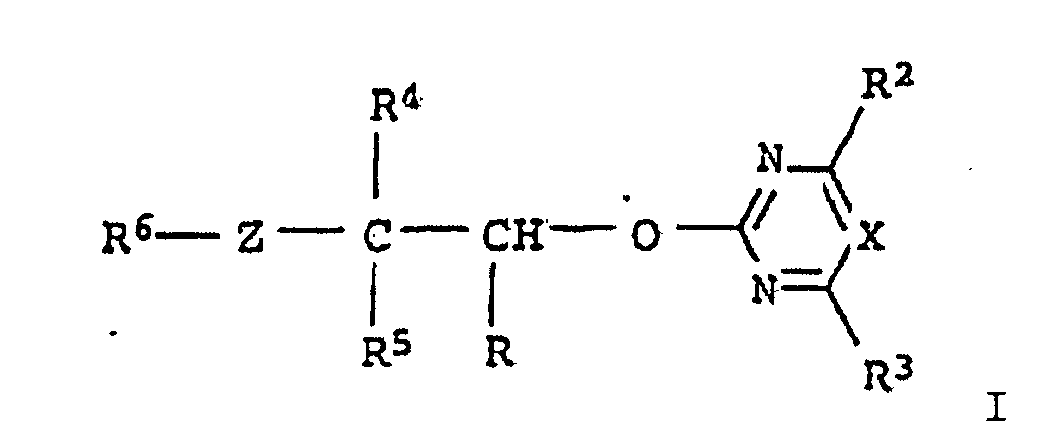 et les autres substituants ont la signification suivante :
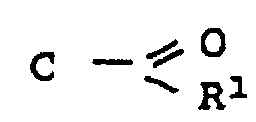
dans laquelle R1 a la signification suivante :a) un hydrogène ;b) un groupe succinylimidoxy ;c) un groupe hétéroaromatique à 5 chaínons lié au moyen d'un atome d'azote, comme un groupe pyrrolyle, un pyrazolyle, un imidazolyle et un triazolyle, lequel peut porter un à deux atomes d'halogène, en particulier le fluor et le chlore et/ou un à deux des radicaux suivants :un groupe alkyle en C1 à C4, comme un méthyle, un éthyle, un 1-propyle, un 2-propyle, un 2-méthyl-2-propyle, un 2-méthyl-1-propyle, un 1-butyle, un 2-butyle,un groupe alkyle halogéné en C1 à C4, en particulier un groupe alkyle halogéné en C1 à C2, comme par exemple un fluorométhyle, un difluorométhyle, un trifluorométhyle, un chlorodifluorométhyle, un dichlorofluorométhyle, un trichlorométhyle, un 1-fluoroéthyle, un 2-fluoroéthyle, un 2,2-difluoroéthyle, un 2,2,2-trifluoroéthyle, un 2-chloro-2,2-difluoroéthyle, un 2,2-dichloro-2-fluoroéthyle, un 2,2,2-trichloroéthyle et un pentafluoroéthyle ;un groupe alcoxy halogéné en C1 à C4, en particulier un groupe alcoxy halogéné en C1 à C2 comme un difluorométhoxy, un trifluorométhoxy, un chlorodifluorométhoxy, un 1-fluoroéthoxy, un 2-fluoroéthoxy, un 2,2-difluoroéthoxy, un 1,1,2,2-tétrafluoroéthoxy, un 2,2,2-trifluoroéthoxy, un 2-chloro-1,1,2-trifluoroéthoxy et un pentafluoroéthoxy, en particulier un trifluorométhoxy ;un groupe alcoxy en C1 à C4 comme un méthoxy, un éthoxy, un propoxy, un 1-méthyléthoxy, un butoxy, un 1-méthylpropoxy, un 2-méthylpropoxy, un 1,1-diméthyléthoxy, en particulier un méthoxy, un éthoxy, un 1-méthyléthoxy ;un groupe alkylthio en C1 à C4 comme un méthylthio, un éthylthio, un propylthio, un 1-méthyléthylthio, un butylthio, un 1-méthylpropylthio, un 2-méthylpropylthio, un 1,1-diméthyléthylthio, en particulier un méthylthio et un éthylthio ;d) R1 pouvant être en outre un radicaldans lequel m représente 0 ou 1 et R7 et R8, qui peuvent être identiques ou différents, ont la signification suivante :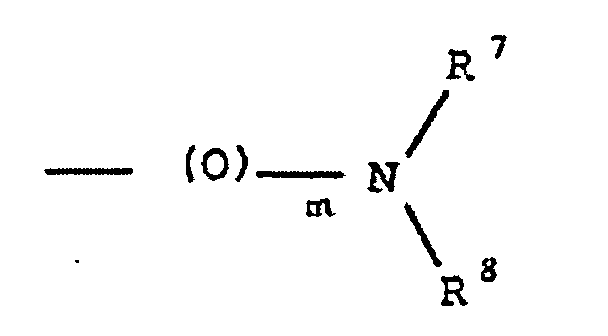 un hydrogène,un groupe alkyle en C1 à C8,un groupe alcényle en C3 à C6,un groupe alcinyle en C3 à C6,un groupe cycloalkyle en C3 à C8,ces groupes alkyles, cycloalkyles, alcényles et alcinyles pouvant porter respectivement un à cinq atomes d'halogènes, en particulier le fluor ou le chlore et/ou un à deux des groupes suivants :un groupe alkyle en C1 à C4, un groupe alcoxy en C1 à C4, un groupe alkylthio en C1 à C4, un groupe alcoxy halogéné en C1 à C4 comme dénommé précédemment, un groupe alcényloxy en C3 à C6, un groupe alcénylthio en C3 à C6, un groupe alcinyloxy en C3 à C6, un groupe alcinylthio en C3 à C6,un groupe alkylcarbonyle en C1 à C4,un groupe alcoxycarbonyle en C1 à C4,un groupe alcénylcarbonyle en C3 à C6, un groupe alcinylcarbonyle en C3 à C6,un groupe alcényloxycarbonyle en C3 à C6 et un groupe alcinyloxycarbonyle en C3 à C6,un phényle, le cas échéant substitué une ou plusieurs fois, par exemple une à trois fois par un halogène, un groupe nitro, cyano, un groupe alkyle en C1 à C4, un groupe alkyle halogéné en C1 à C4, un groupe alcoxy en C1 à C4, un groupe alcoxy halogéné en C1 à C4 ou un groupe alkylthio en C1 à C4,un groupe dialkylamino en C1 à C4,R7 et R8 signifiant en outre un phényle, qui peut être substitué par un ou plusieurs des radicaux suivants : un halogène, un groupe nitro, cyano, un groupe alkyle en C1 à C4, un groupe alkyle halogéné en C1 à C4, un groupe alcoxy en C1 à C4, un groupe alcoxy halogéné en C1 à C4 ou un groupe alkylthio en C1 à C4,ou R7 et R8 forment ensemble une chaíne alkylène en C4 à C7 fermée en un cycle qui peut contenir un hétéroatome choisi parmi le groupe constitué de l'oxygène, du soufre ou de l'azote,e) R1 pouvant signifier en outre un groupedans lequel k prend les valeurs 0, 1 et 2, p les valeurs 1, 2, 3 et 4 et R9 représente
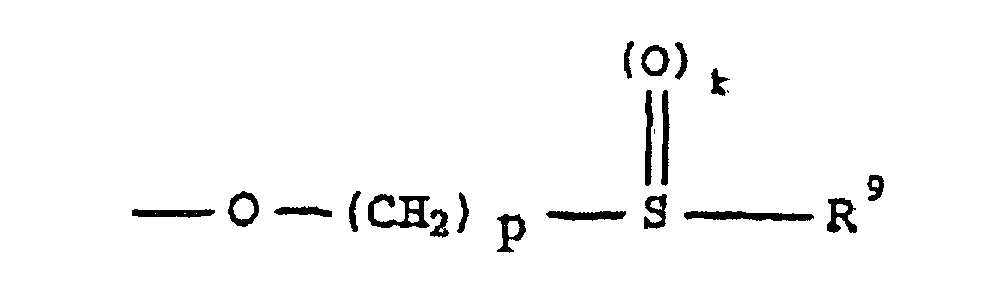
un groupe alkyle en C1 à C4, un groupe alkyle halogéné en C1 à C4, un groupe alcényle en C3 à C6, un groupe alcinyle en C3 à C6 ou phényle substitué le cas échéantf) R1 pouvant signifier en outre un radical OR10, dans lequel R10 signifie :un hydrogène, le cation d'un métal alcalin comme le lithium, le sodium, le potassium ou le cation d'un métal alcalinoterreux comme le calcium, le magnésium et le baryum ou un ion ammonium organique ;un groupe cycloalkyle en C3 à C8, lequel peut porter un à trois groupes alkyles en C1 à C4,un groupe alkyle en C1 à C8, lequel peut porter un à cinq atomes d'halogènes et/ou un des radicaux suivants :un groupe alcoxy en C1 à C4, un groupe alkylthio en C1 à C4, un groupe cyano, un groupe alkylcarbonyle en C1 à C4, un groupe cycloalkyle en C3 à C8, un groupe alcoxycarbonyle en C1 à C4, un phényle, un groupe phénoxy ou phénylcarbonyle, les radicaux aromatiques pouvant porter de leur côté respectivement un à cinq atomes d'halogènes et/ou un à trois des radicaux suivants : un groupe nitro, cyano, un groupe alkyle en C1 à C4, un groupe alkyle halogéné en C1 à C4, un groupe alcoxy en C1 à C4, un groupe alcoxy halogéné en C1 à C4 et/ou un groupe alkylthio en C1 à C4,un groupe alkyle en C1 à C8, lequel peut porter un à cinq atomes d'halogènes et porte un des radicaux suivants : un groupe hétéroaromatique à 5 chaínons contenant un à trois atomes d'azote, ou un groupe hétéroaromatique à 5 chaínons contenant un atome d'azote et un atome d'oxygène ou de soufre, lequel groupe peut porter un à quatre atomes d'halogènes et/ou un à deux des radicaux suivants :un groupe nitro, cyano, un groupe alkyle en C1 à C4, un groupe alkyle halogéné en C1 à C4, un groupe alcoxy en C1 à C4, un phényle, un groupe alcoxy halogéné en C1 à C4 et/ou un groupe alkylthio en C1 à C4,un groupe alkyle en C2 à C6, lequel porte en position 2 un des radicaux suivants : un groupe alcoxyimino en C1 à C4, un groupe alcinyloxyimino en C3 à C6, un groupe alcényloxyimino halogéné en C3 à C6 ou un groupe benzyloxyimino ;un groupe alcényle ou alcinyle en C3 à C6, ces groupes pouvant de leur côté porter un à cinq atomes d'halogènes ;R10 pouvant signifier en outre un radical phényle, lequel peut porter un à cinq atomes d'halogènes et/ou un à trois des radicaux suivants : un groupe nitro, cyano, un groupe alkyle en C1 à C4, un groupe alkyle halogéné en C1 à C4, un groupe alcoxy en C1 à C4, un groupe alcoxy halogéné en C1 à C4 et/ou un groupe alkylthio en C1 à C4,un groupe hétéroaromatique à 5 chaínons lié au moyen d'un atome d'azote, contenant un à trois atomes d'azote, lequel peut porter un à deux atomes d'halogènes et/ou un à deux des radicaux suivants :R10 pouvant signifier en outre un groupedans lequel R11 et R12, qui peuvent être identiques ou différents, signifient : un groupe alkyle en C1 à C8, un groupe alcényle en C3 à C6, un groupe alcinyle en C3 à C6, un groupe cycloalkyle en C3 à C8, ces radicaux pouvant porter un groupe alcoxy en C1 à C4, un groupe alkylthio en C1 à C4 et/ou un radical phényle substitué le cas échéant ;un phényle qui peut être substitué par un ou plusieurs des radicaux suivants : un halogène, un groupe nitro, cyano, un groupe alkyle en C1 à C4, un groupe alkyle halogéné en C1 à C4, un groupe alcoxy en C1 à C4, un groupe alcoxy halogéné en C1 à C4 ou un groupe alkylthio en C1 à C4,ou R11 et R12 forment ensemble une chaíne alkylène en C3 à C12, laquelle peut porter un à trois groupes alkyles en C1 à C4 et contenir un hétéroatome choisi dans le groupe consistant en l'oxygène, le soufre et l'azoteg) R1 pouvant signifier en outre un radicaldans lequel R13 signifie :
 un groupe alkyle en C1 à C4, un groupe alcényle en C3 à C6, un groupe alcinyle en C3 à C6, un groupe cycloalkyle en C3 à C8, ces radicaux pouvant porter un groupe alcoxy en C1 à C4, un groupe alkylthio en C1 à C4 et/ou un radical phényle ;un phényle, substitué le cas échéant.h) R1 pouvant signifier un radicaldans lequel R13 a la signification dénommée ci-dessus;
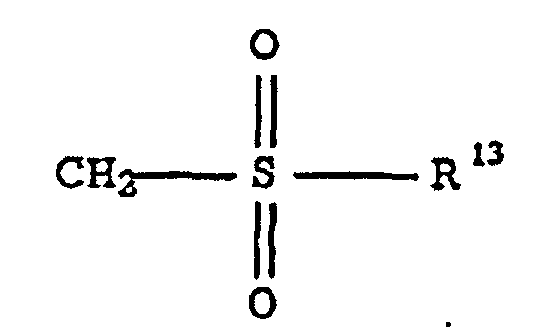 R2 signifie un halogène, un groupe alkyle en C1 à C4, un groupe alkyle halogéné en C1 à C4, un groupe alcoxy en C1 à C4, un groupe alcoxy halogéné en C1 à C4 ou un groupe alkylthio en C1 à C4,X signifie l'azote ou un groupe CR14, dans lequel R14 signifie l'hydrogène ou un alkyle en C1-5 ou CR14 forme conjointement avec CR3 un cycle alkylène ou alcénylène à 5 ou 6 chaínons qui peut être substitué par un ou deux groupes alkyles en C1-4 et dans lequel respectivement un groupe méthylène peut être remplacé par l'oxygène, le soufre, un groupe -NH ou un groupe N-alkyle en C1-4 ;R3 signifie un halogène, un groupe alkyle en C1 à C4, un groupe alkyle halogéné en C1 à C4, un groupe alcoxy en C1 à C4, un groupe alcoxy halogéné en C1 à C4, un groupe -NH-O-C1-4-alkyle, un groupe alkylthio en C1 à C4 ou un groupe CR3 combiné avec CR14 comme indiqué ci-dessus en un cycle à 5 ou 6 chaínons ;R4 et R5 (qui peuvent être identiques ou différents) sont :un groupe phényle ou naphtyle, qui peuvent être substitués par un ou plusieurs des radicaux suivants : un halogène, un groupe nitro, cyano, hydroxy, un groupe alkyle en C1 à C4, un groupe alkyle halogéné en C1 à C4, un groupe alcoxy en C1 à C4, un groupe alcoxy halogéné en C1 à C4, un groupe phénoxy, un groupe alkylthio en C1 à C4, un groupe amino, un groupe alkylamino en C1 à C4 ou dialkylamino en C1 à C4 ; oudes groupes phényle ou naphtyle, qui sont liés l'un à l'autre en position ortho au moyen d'une liaison directe, d'un groupe méthylène, éthylène ou éthénylène, d'un atome d'oxygène ou de soufre ou d'un groupe SO2-, NH- ou N-alkyle, ou un groupe cycloalkyle en C3 à C7,R6 signifie un groupe alkyle en C1 à C10, un groupe alcényle C3 à C10 ou alcinyle en C3 à C10, les radicaux étant respectivement substitués une ou plusieurs fois par un groupe hydroxy, mercapto, carboxy,Ry et Rz signifiant indépendamment l'un de l'autre un hydrogène ou un groupe alkyle en C1 à C5 ; un groupe sulfonyle, cyano, guanidino, un groupe alcoxy en C1 à C4,
 Z signifie le soufre ou l'oxygène, à condition que les dérivés d'acides carboxyliques de formule I soient exclus quand le radical R est COOH, le radical R2 est Ome, les radicaux R4 et R5 sont un phényle, et les radicaux Y et Z sont O, et(1) les radicaux sont en même temps : R6 = CH2-CH2-SO2-CH(CH3)2, R3 = OMe et X = CH, ou(2) les radicaux sont en même temps : R6 = CH2-CH2-SO2-CH(CH3)2, R3 = NH-OCH3 et X = CH, ou(3) les radicaux sont en même temps : R6 = OH-CH2-CH2, R3 = OMe et X = CH, ou(4) les radicaux sont en même temps : R6 = HOOC-(CH2)2 -, R3 = OMe et X = CH, ou(5) les radicaux sont en même temps : R6 = OH-CH2-CH2 et R3 et X forment ensemble un radical CH2-CH2-CH2-C.
- Dérivés d'acides carboxyliques selon la revendication 1, caractérisés en ce que R signifie COOH.
- Dérivés d'acides carboxyliques selon l'une quelconque des revendications précédentes, caractérisés en ce qu'au moins un des radicaux R4 et R5 signifie le phényle.
- Dérivés d'acides carboxyliques selon la revendication 3, caractérisés en ce que R4 et R5 signifient tous les deux le phényle.
- Dérivés d'acides carboxyliques selon l'une quelconque des revendications précédentes, caractérisés en ce que R6 signifie un groupe alkyle en C1 à C8, le cas échéant substitué par un OH ou un groupe alcoxy en C1 à C4, et en ce que Z signifie O.
- Dérivés d'acides carboxyliques selon l'une quelconque des revendications précédentes, caractérisés en ce que X signifie CH.
- Dérivés d'acides carboxyliques selon l'une quelconque des revendications précédentes, caractérisés en ce qu'au moins un des radicaux R2, R3 signifie un groupe alkyle en C1 à C4.
- Utilisation de composés selon les revendications 1 à 7 pour la préparation de médicaments pour le traitement de l'hypertension, de l'hypertension pulmonaire, des insuffisances rénales aiguës et chroniques, des insuffisances cardiaques chroniques, de l'ischémie cérébrale, de la resténose après angioplastie, du cancer de la prostate.
- Utilisation d'une combinaison d'un composé selon les revendications 1 à 7, avec un inhibiteur du système rénine-angiotensine.
Applications Claiming Priority (3)
| Application Number | Priority Date | Filing Date | Title |
|---|---|---|---|
| DE19614534 | 1996-04-12 | ||
| DE19614534A DE19614534A1 (de) | 1996-04-12 | 1996-04-12 | Neue Carbonsäurederivate, ihre Herstellung und Verwendung |
| PCT/EP1997/001684 WO1997038980A1 (fr) | 1996-04-12 | 1997-04-04 | Nouveaux derives d'acides carboxyliques, leur preparation et leur utilisation |
Publications (2)
| Publication Number | Publication Date |
|---|---|
| EP0892786A1 EP0892786A1 (fr) | 1999-01-27 |
| EP0892786B1 true EP0892786B1 (fr) | 2004-06-09 |
Family
ID=7791118
Family Applications (1)
| Application Number | Title | Priority Date | Filing Date |
|---|---|---|---|
| EP97915481A Expired - Lifetime EP0892786B1 (fr) | 1996-04-12 | 1997-04-04 | Nouveaux derives d'acides carboxyliques, leur preparation et leur utilisation |
Country Status (26)
| Country | Link |
|---|---|
| US (1) | US6610691B1 (fr) |
| EP (1) | EP0892786B1 (fr) |
| JP (1) | JP2000508324A (fr) |
| KR (1) | KR20000005367A (fr) |
| CN (1) | CN1216041A (fr) |
| AR (1) | AR006616A1 (fr) |
| AT (1) | ATE268760T1 (fr) |
| AU (1) | AU714717B2 (fr) |
| BG (1) | BG63201B1 (fr) |
| BR (1) | BR9708609A (fr) |
| CA (1) | CA2251381A1 (fr) |
| CO (1) | CO4900039A1 (fr) |
| CZ (1) | CZ324798A3 (fr) |
| DE (2) | DE19614534A1 (fr) |
| HR (1) | HRP970199A2 (fr) |
| HU (1) | HUP9901315A3 (fr) |
| ID (1) | ID16824A (fr) |
| IL (1) | IL126027A0 (fr) |
| NO (1) | NO311571B1 (fr) |
| NZ (1) | NZ331735A (fr) |
| PL (1) | PL329238A1 (fr) |
| SK (1) | SK133998A3 (fr) |
| TR (1) | TR199802044T2 (fr) |
| TW (1) | TW426672B (fr) |
| WO (1) | WO1997038980A1 (fr) |
| ZA (1) | ZA973098B (fr) |
Families Citing this family (14)
| Publication number | Priority date | Publication date | Assignee | Title |
|---|---|---|---|---|
| US6448248B1 (en) * | 1996-12-18 | 2002-09-10 | Abbott Laboratories | Heterocyclic carboxylic acid derivatives, the production and use thereof as endothelin receptor antagonists |
| US6030975A (en) * | 1997-03-14 | 2000-02-29 | Basf Aktiengesellschaft | Carboxylic acid derivatives, their preparation and use in treating cancer |
| PL340871A1 (en) * | 1997-10-31 | 2001-03-12 | Basf Ag | Novel derivatives of carboxylic with admidic side chains, method of obtaining them and application of such novel derivatives as antagonists of endothelin rceptors |
| DE19806438A1 (de) * | 1998-02-17 | 1999-08-19 | Basf Ag | Neue Carbonsäurederivate mit 5-substituiertem Pyrimidinring, ihre Herstellung und Verwendung |
| US7566452B1 (en) | 1999-05-04 | 2009-07-28 | New York University | Cancer treatment with endothelin receptor antagonists |
| DE10025728A1 (de) * | 2000-05-25 | 2001-11-29 | Basf Ag | Neue Carbamate und Harnstoffe, ihre Herstellung und Verwendung als Endothelin-Rezeptorantagonisten |
| WO2002064573A1 (fr) * | 2001-02-14 | 2002-08-22 | Abbott Gmbh & Co. Kg | Nouveaux derives d'acide carboxylique contenant des triazines a substitution alkyle, leur production et leur utilisation en tant qu'antagonistes du recepteur d'endotheline |
| ATE327744T1 (de) | 2001-03-20 | 2006-06-15 | Sanol Arznei Schwarz Gmbh | Neue verwendung von peptidverbindungen bei der behandlung von nicht-neuropathischem entzündungsschmerz |
| DE60100055T2 (de) | 2001-03-21 | 2003-07-24 | Schwarz Pharma Ag | Neue Verwendung einer Klasse von Peptidverbindungen zur Behandlung von Allodynie oder andere Arten von chronischen oder Phantomschmerzen |
| KR20070007931A (ko) | 2004-04-16 | 2007-01-16 | 쉬바르츠파르마에이지 | 만성 두통의 예방 및 치료를 위한 펩티드 화합물의 용도 |
| EP1604656A1 (fr) | 2004-06-09 | 2005-12-14 | Schwarz Pharma Ag | Utilisation nouvelle de peptides pour le traitement de la sclérose amytrophique latérale (ALS) |
| PL1781276T3 (pl) | 2004-08-27 | 2010-11-30 | Ucb Pharma Gmbh | Zastosowanie związków peptydowych do leczenia bólu związanego z rakiem kości, bólu indukowanego przez chemioterapię oraz nukleozydy |
| CA2615048A1 (fr) * | 2005-07-22 | 2007-01-25 | Merck Frosst Canada Ltd. | Inhibiteurs de la renine |
| EA019757B1 (ru) | 2006-06-15 | 2014-06-30 | ЮСиБи ФАРМА ГМБХ | Фармацевтическая композиция с синергетическим противосудорожным эффектом |
Family Cites Families (3)
| Publication number | Priority date | Publication date | Assignee | Title |
|---|---|---|---|---|
| CA2053603A1 (fr) * | 1990-10-19 | 1992-04-20 | Katsumasa Harada | Derive d'acide 3-alkoxyalcanoique, procede d'obtention et herbicide qui en contient. |
| DE4313412A1 (de) | 1993-04-23 | 1994-10-27 | Basf Ag | 3-(Het)aryl-Carbonsäurederivate, Verfahren und Zwischenprodukte zu ihrer Herstellung |
| DE19533023B4 (de) * | 1994-10-14 | 2007-05-16 | Basf Ag | Neue Carbonsäurederivate, ihre Herstellung und Verwendung |
-
1996
- 1996-04-12 DE DE19614534A patent/DE19614534A1/de not_active Withdrawn
-
1997
- 1997-04-04 CN CN97193749A patent/CN1216041A/zh active Pending
- 1997-04-04 CZ CZ983247A patent/CZ324798A3/cs unknown
- 1997-04-04 EP EP97915481A patent/EP0892786B1/fr not_active Expired - Lifetime
- 1997-04-04 BR BR9708609A patent/BR9708609A/pt not_active IP Right Cessation
- 1997-04-04 TR TR1998/02044T patent/TR199802044T2/xx unknown
- 1997-04-04 SK SK1339-98A patent/SK133998A3/sk unknown
- 1997-04-04 DE DE59711704T patent/DE59711704D1/de not_active Expired - Fee Related
- 1997-04-04 NZ NZ331735A patent/NZ331735A/en unknown
- 1997-04-04 CA CA002251381A patent/CA2251381A1/fr not_active Abandoned
- 1997-04-04 US US09/155,946 patent/US6610691B1/en not_active Expired - Fee Related
- 1997-04-04 AU AU22940/97A patent/AU714717B2/en not_active Ceased
- 1997-04-04 PL PL97329238A patent/PL329238A1/xx unknown
- 1997-04-04 KR KR1019980708089A patent/KR20000005367A/ko not_active Ceased
- 1997-04-04 AT AT97915481T patent/ATE268760T1/de not_active IP Right Cessation
- 1997-04-04 IL IL12602797A patent/IL126027A0/xx unknown
- 1997-04-04 WO PCT/EP1997/001684 patent/WO1997038980A1/fr not_active Ceased
- 1997-04-04 JP JP9536697A patent/JP2000508324A/ja active Pending
- 1997-04-04 HU HU9901315A patent/HUP9901315A3/hu unknown
- 1997-04-11 AR ARP970101461A patent/AR006616A1/es unknown
- 1997-04-11 ZA ZA973098A patent/ZA973098B/xx unknown
- 1997-04-11 TW TW086104677A patent/TW426672B/zh not_active IP Right Cessation
- 1997-04-11 HR HR19614534.1A patent/HRP970199A2/xx not_active Application Discontinuation
- 1997-04-11 CO CO97018893A patent/CO4900039A1/es unknown
- 1997-04-14 ID IDP971241A patent/ID16824A/id unknown
-
1998
- 1998-10-05 BG BG102814A patent/BG63201B1/bg unknown
- 1998-10-09 NO NO19984714A patent/NO311571B1/no not_active IP Right Cessation
Non-Patent Citations (2)
| Title |
|---|
| "Pschyrembel Klinisches Wörterbuch, 256. Auflage", 1990, DE GRUYTER * |
| "Roche Lexicon Medizin, 2. Auflage", 1984, URBAN UND SCHWARZENBERG * |
Also Published As
| Publication number | Publication date |
|---|---|
| KR20000005367A (ko) | 2000-01-25 |
| NO984714L (no) | 1998-10-09 |
| TR199802044T2 (xx) | 1999-02-22 |
| HUP9901315A3 (en) | 2000-03-28 |
| TW426672B (en) | 2001-03-21 |
| DE19614534A1 (de) | 1997-10-16 |
| HRP970199A2 (en) | 1998-06-30 |
| AU2294097A (en) | 1997-11-07 |
| ZA973098B (en) | 1998-10-12 |
| CZ324798A3 (cs) | 1999-04-14 |
| NO984714D0 (no) | 1998-10-09 |
| AU714717B2 (en) | 2000-01-06 |
| ATE268760T1 (de) | 2004-06-15 |
| PL329238A1 (en) | 1999-03-15 |
| JP2000508324A (ja) | 2000-07-04 |
| EP0892786A1 (fr) | 1999-01-27 |
| AR006616A1 (es) | 1999-09-08 |
| BG102814A (en) | 1999-11-30 |
| NZ331735A (en) | 2000-06-23 |
| US6610691B1 (en) | 2003-08-26 |
| CA2251381A1 (fr) | 1997-10-23 |
| NO311571B1 (no) | 2001-12-10 |
| HUP9901315A2 (hu) | 1999-08-30 |
| BR9708609A (pt) | 1999-08-03 |
| BG63201B1 (bg) | 2001-06-29 |
| CO4900039A1 (es) | 2000-03-27 |
| SK133998A3 (en) | 1999-03-12 |
| DE59711704D1 (de) | 2004-07-15 |
| ID16824A (id) | 1997-11-13 |
| CN1216041A (zh) | 1999-05-05 |
| IL126027A0 (en) | 1999-05-09 |
| WO1997038980A1 (fr) | 1997-10-23 |
Similar Documents
| Publication | Publication Date | Title |
|---|---|---|
| EP0785926B1 (fr) | Derives d'acide carboxylique, leur preparation et leur utilisation comme medicaments | |
| JP4769742B2 (ja) | カルボン酸誘導体を有する医薬組成物 | |
| DE19536891A1 (de) | Neue Aminosäurederivate, ihre Herstellung und Verwendung | |
| US6610691B1 (en) | Carboxylic acid derivatives, their production and use | |
| DE19614542A1 (de) | Neue Carbonsäurederivate, ihre Herstellung und Verwendung | |
| HRP980126A2 (en) | Novel carboxilic acid derivatives, their preparation and use in treating cancer | |
| EP0862550B1 (fr) | Nouveaux derives d'acide carboxylique, leur preparation et leur utilisation | |
| MXPA98008197A (en) | Derivatives of novel carboxylic acids, its preparation and its | |
| CZ324199A3 (cs) | Léčivo k zabránění růstu solidního tumoru u člověka a způsob jeho výroby |
Legal Events
| Date | Code | Title | Description |
|---|---|---|---|
| PUAI | Public reference made under article 153(3) epc to a published international application that has entered the european phase |
Free format text: ORIGINAL CODE: 0009012 |
|
| 17P | Request for examination filed |
Effective date: 19980827 |
|
| AK | Designated contracting states |
Kind code of ref document: A1 Designated state(s): AT BE CH DE DK ES FI FR GB GR IE IT LI LU NL PT SE |
|
| AX | Request for extension of the european patent |
Free format text: RO PAYMENT 980827;SI PAYMENT 980827 |
|
| 17Q | First examination report despatched |
Effective date: 20010619 |
|
| GRAH | Despatch of communication of intention to grant a patent |
Free format text: ORIGINAL CODE: EPIDOS IGRA |
|
| RAP1 | Party data changed (applicant data changed or rights of an application transferred) |
Owner name: ABBOTT GMBH & CO. KG |
|
| GRAS | Grant fee paid |
Free format text: ORIGINAL CODE: EPIDOSNIGR3 |
|
| GRAA | (expected) grant |
Free format text: ORIGINAL CODE: 0009210 |
|
| AK | Designated contracting states |
Kind code of ref document: B1 Designated state(s): AT BE CH DE DK ES FI FR GB GR IE IT LI LU NL PT SE |
|
| AX | Request for extension of the european patent |
Extension state: RO SI |
|
| PG25 | Lapsed in a contracting state [announced via postgrant information from national office to epo] |
Ref country code: NL Free format text: LAPSE BECAUSE OF FAILURE TO SUBMIT A TRANSLATION OF THE DESCRIPTION OR TO PAY THE FEE WITHIN THE PRESCRIBED TIME-LIMIT Effective date: 20040609 Ref country code: IT Free format text: LAPSE BECAUSE OF FAILURE TO SUBMIT A TRANSLATION OF THE DESCRIPTION OR TO PAY THE FEE WITHIN THE PRESCRIBED TIME-LIMIT;WARNING: LAPSES OF ITALIAN PATENTS WITH EFFECTIVE DATE BEFORE 2007 MAY HAVE OCCURRED AT ANY TIME BEFORE 2007. THE CORRECT EFFECTIVE DATE MAY BE DIFFERENT FROM THE ONE RECORDED. Effective date: 20040609 Ref country code: IE Free format text: LAPSE BECAUSE OF FAILURE TO SUBMIT A TRANSLATION OF THE DESCRIPTION OR TO PAY THE FEE WITHIN THE PRESCRIBED TIME-LIMIT Effective date: 20040609 Ref country code: GB Free format text: LAPSE BECAUSE OF FAILURE TO SUBMIT A TRANSLATION OF THE DESCRIPTION OR TO PAY THE FEE WITHIN THE PRESCRIBED TIME-LIMIT Effective date: 20040609 Ref country code: FR Free format text: LAPSE BECAUSE OF FAILURE TO SUBMIT A TRANSLATION OF THE DESCRIPTION OR TO PAY THE FEE WITHIN THE PRESCRIBED TIME-LIMIT Effective date: 20040609 Ref country code: FI Free format text: LAPSE BECAUSE OF FAILURE TO SUBMIT A TRANSLATION OF THE DESCRIPTION OR TO PAY THE FEE WITHIN THE PRESCRIBED TIME-LIMIT Effective date: 20040609 |
|
| REG | Reference to a national code |
Ref country code: GB Ref legal event code: FG4D Free format text: NOT ENGLISH |
|
| REG | Reference to a national code |
Ref country code: CH Ref legal event code: EP |
|
| REF | Corresponds to: |
Ref document number: 59711704 Country of ref document: DE Date of ref document: 20040715 Kind code of ref document: P |
|
| REG | Reference to a national code |
Ref country code: IE Ref legal event code: FG4D Free format text: GERMAN |
|
| PG25 | Lapsed in a contracting state [announced via postgrant information from national office to epo] |
Ref country code: SE Free format text: LAPSE BECAUSE OF FAILURE TO SUBMIT A TRANSLATION OF THE DESCRIPTION OR TO PAY THE FEE WITHIN THE PRESCRIBED TIME-LIMIT Effective date: 20040909 Ref country code: GR Free format text: LAPSE BECAUSE OF FAILURE TO SUBMIT A TRANSLATION OF THE DESCRIPTION OR TO PAY THE FEE WITHIN THE PRESCRIBED TIME-LIMIT Effective date: 20040909 Ref country code: DK Free format text: LAPSE BECAUSE OF FAILURE TO SUBMIT A TRANSLATION OF THE DESCRIPTION OR TO PAY THE FEE WITHIN THE PRESCRIBED TIME-LIMIT Effective date: 20040909 |
|
| PG25 | Lapsed in a contracting state [announced via postgrant information from national office to epo] |
Ref country code: ES Free format text: LAPSE BECAUSE OF FAILURE TO SUBMIT A TRANSLATION OF THE DESCRIPTION OR TO PAY THE FEE WITHIN THE PRESCRIBED TIME-LIMIT Effective date: 20040920 |
|
| NLV1 | Nl: lapsed or annulled due to failure to fulfill the requirements of art. 29p and 29m of the patents act | ||
| GBV | Gb: ep patent (uk) treated as always having been void in accordance with gb section 77(7)/1977 [no translation filed] |
Effective date: 20040609 |
|
| REG | Reference to a national code |
Ref country code: IE Ref legal event code: FD4D |
|
| PG25 | Lapsed in a contracting state [announced via postgrant information from national office to epo] |
Ref country code: LU Free format text: LAPSE BECAUSE OF NON-PAYMENT OF DUE FEES Effective date: 20050404 Ref country code: AT Free format text: LAPSE BECAUSE OF NON-PAYMENT OF DUE FEES Effective date: 20050404 |
|
| PLBE | No opposition filed within time limit |
Free format text: ORIGINAL CODE: 0009261 |
|
| STAA | Information on the status of an ep patent application or granted ep patent |
Free format text: STATUS: NO OPPOSITION FILED WITHIN TIME LIMIT |
|
| PG25 | Lapsed in a contracting state [announced via postgrant information from national office to epo] |
Ref country code: LI Free format text: LAPSE BECAUSE OF NON-PAYMENT OF DUE FEES Effective date: 20050430 Ref country code: CH Free format text: LAPSE BECAUSE OF NON-PAYMENT OF DUE FEES Effective date: 20050430 Ref country code: BE Free format text: LAPSE BECAUSE OF NON-PAYMENT OF DUE FEES Effective date: 20050430 |
|
| 26N | No opposition filed |
Effective date: 20050310 |
|
| EN | Fr: translation not filed | ||
| BERE | Be: lapsed |
Owner name: *ABBOTT G.M.B.H. & CO. K.G. Effective date: 20050430 |
|
| PG25 | Lapsed in a contracting state [announced via postgrant information from national office to epo] |
Ref country code: DE Free format text: LAPSE BECAUSE OF NON-PAYMENT OF DUE FEES Effective date: 20051101 |
|
| REG | Reference to a national code |
Ref country code: CH Ref legal event code: PL |
|
| BERE | Be: lapsed |
Owner name: *ABBOTT G.M.B.H. & CO. K.G. Effective date: 20050430 |
|
| PG25 | Lapsed in a contracting state [announced via postgrant information from national office to epo] |
Ref country code: PT Free format text: LAPSE BECAUSE OF NON-PAYMENT OF DUE FEES Effective date: 20041109 |