EP0893504B1 - Von Kaposi-sarkom assoziiertem Herpes-Virus (KSHV, HHV-8) kodiertes Polypeptid und dessen Verwendung in Diagnostik und Therapie - Google Patents
Von Kaposi-sarkom assoziiertem Herpes-Virus (KSHV, HHV-8) kodiertes Polypeptid und dessen Verwendung in Diagnostik und Therapie Download PDFInfo
- Publication number
- EP0893504B1 EP0893504B1 EP97111879A EP97111879A EP0893504B1 EP 0893504 B1 EP0893504 B1 EP 0893504B1 EP 97111879 A EP97111879 A EP 97111879A EP 97111879 A EP97111879 A EP 97111879A EP 0893504 B1 EP0893504 B1 EP 0893504B1
- Authority
- EP
- European Patent Office
- Prior art keywords
- polypeptide
- sequence
- polypeptide according
- hiv
- amino acids
- Prior art date
- Legal status (The legal status is an assumption and is not a legal conclusion. Google has not performed a legal analysis and makes no representation as to the accuracy of the status listed.)
- Expired - Lifetime
Links
Images


Classifications
-
- C—CHEMISTRY; METALLURGY
- C07—ORGANIC CHEMISTRY
- C07K—PEPTIDES
- C07K14/00—Peptides having more than 20 amino acids; Gastrins; Somatostatins; Melanotropins; Derivatives thereof
- C07K14/005—Peptides having more than 20 amino acids; Gastrins; Somatostatins; Melanotropins; Derivatives thereof from viruses
-
- A—HUMAN NECESSITIES
- A61—MEDICAL OR VETERINARY SCIENCE; HYGIENE
- A61P—SPECIFIC THERAPEUTIC ACTIVITY OF CHEMICAL COMPOUNDS OR MEDICINAL PREPARATIONS
- A61P31/00—Antiinfectives, i.e. antibiotics, antiseptics, chemotherapeutics
- A61P31/12—Antivirals
- A61P31/20—Antivirals for DNA viruses
- A61P31/22—Antivirals for DNA viruses for herpes viruses
-
- C—CHEMISTRY; METALLURGY
- C07—ORGANIC CHEMISTRY
- C07K—PEPTIDES
- C07K16/00—Immunoglobulins [IG], e.g. monoclonal or polyclonal antibodies
- C07K16/08—Immunoglobulins [IG], e.g. monoclonal or polyclonal antibodies against material from viruses
- C07K16/081—DNA viruses
- C07K16/085—Orthoherpesviridae (F), e.g. pseudorabies virus or Epstein-Barr virus
-
- A—HUMAN NECESSITIES
- A61—MEDICAL OR VETERINARY SCIENCE; HYGIENE
- A61K—PREPARATIONS FOR MEDICAL, DENTAL OR TOILETRY PURPOSES
- A61K38/00—Medicinal preparations containing peptides
-
- A—HUMAN NECESSITIES
- A61—MEDICAL OR VETERINARY SCIENCE; HYGIENE
- A61K—PREPARATIONS FOR MEDICAL, DENTAL OR TOILETRY PURPOSES
- A61K39/00—Medicinal preparations containing antigens or antibodies
-
- C—CHEMISTRY; METALLURGY
- C12—BIOCHEMISTRY; BEER; SPIRITS; WINE; VINEGAR; MICROBIOLOGY; ENZYMOLOGY; MUTATION OR GENETIC ENGINEERING
- C12N—MICROORGANISMS OR ENZYMES; COMPOSITIONS THEREOF; PROPAGATING, PRESERVING, OR MAINTAINING MICROORGANISMS; MUTATION OR GENETIC ENGINEERING; CULTURE MEDIA
- C12N2710/00—MICROORGANISMS OR ENZYMES; COMPOSITIONS THEREOF; PROPAGATING, PRESERVING, OR MAINTAINING MICROORGANISMS; MUTATION OR GENETIC ENGINEERING; CULTURE MEDIA dsDNA viruses
- C12N2710/00011—Details
- C12N2710/16011—Herpesviridae
- C12N2710/16211—Lymphocryptovirus, e.g. human herpesvirus 4, Epstein-Barr Virus
- C12N2710/16222—New viral proteins or individual genes, new structural or functional aspects of known viral proteins or genes
-
- C—CHEMISTRY; METALLURGY
- C12—BIOCHEMISTRY; BEER; SPIRITS; WINE; VINEGAR; MICROBIOLOGY; ENZYMOLOGY; MUTATION OR GENETIC ENGINEERING
- C12N—MICROORGANISMS OR ENZYMES; COMPOSITIONS THEREOF; PROPAGATING, PRESERVING, OR MAINTAINING MICROORGANISMS; MUTATION OR GENETIC ENGINEERING; CULTURE MEDIA
- C12N2710/00—MICROORGANISMS OR ENZYMES; COMPOSITIONS THEREOF; PROPAGATING, PRESERVING, OR MAINTAINING MICROORGANISMS; MUTATION OR GENETIC ENGINEERING; CULTURE MEDIA dsDNA viruses
- C12N2710/00011—Details
- C12N2710/16011—Herpesviridae
- C12N2710/16411—Rhadinovirus, e.g. human herpesvirus 8
- C12N2710/16422—New viral proteins or individual genes, new structural or functional aspects of known viral proteins or genes
Definitions
- Kaposi's sarcoma is a vascular tumor of the skin that meanwhile of great clinical and epidemiological Meaning is. Originally, Kaposi's sarcoma was rare, mainly among the older male population in the south and south Southern / Eastern Europe (especially Italy and Greece).
- HIV human immunodeficiency virus
- Kaposi's sarcoma tissue from AIDS patients A herpes virus has been discovered in recent years, which too a very high percentage in Kaposi's sarcoma tissue from AIDS patients was found. This virus was associated with Kaposi's sarcoma Herpes virus (KSHV) or HHV-8 called. Of Russo et al. recently became the nucleotide sequence of Kaposi's sarcoma associated herpes virus [Proc.Natl.Acad.Sci., USA, Vol. 93 (December 1996), pp. 14862-14867].
- the nucleotide sequence of the KSHV shows striking Sequence homologies to known gamma herpes viruses, such as the Herpes virus Saimiri (HVS), which occurs in monkeys, and the Epstein-Barr Virus (EBV). Taxonomically, the virus gets into the Group of Rhadinoviridae classified.
- HVS Herpes virus Saimiri
- EBV Epstein-Barr Virus
- the genome of the virus spans approximately 165 kilobases and Russo has identified 81 open reading frames within this sequence, of which 66 open reading frames of the herpes virus Saimiri are homologous.
- KSHV Body Cavity Based Lymphoma
- CD Castleman's Disease
- the KSHV transmission mechanism is not yet complete elucidated. Since the virus can be detected in sperm, is likely to be a sexual transmission in homosexual men are out of the question. In endemic areas, however, it still has to give another transmission path.
- B cell culture systems e.g. BC-1 and BCBL-1, in which the Virus latently persisted and with a phorbol ester, namely Tetradecanoyl phorbol acetate (TPA) for lytic Replication cycle can be stimulated.
- TPA Tetradecanoyl phorbol acetate
- the cell line BCBL-1 was used according to the invention, which is only infected with KSHV. If this cell line with TPA KSHV-specific antigen expression occurs in cell culture and the antigens so expressed were used Provision of the polypeptides according to the invention used.
- the cell culture-dependent Western blot and immunofluorescence analyzes convey a 95% sensitivity with the sera from AIDS patient with Kaposi's sarcoma.
- these analyzes could be shown that the seroprevalence of KSHV in homosexual, HIV-positive men is significantly larger than in hemophilic HIV-positive patients, so that one of them can assume that the virus is transmitted sexually.
- the seroprevalence in the normal population is subject to strong regional fluctuations. It is located in the USA and Northern Europe Seroprevalence below 0.5%, while in Italy 5% and in Kenya 50% of blood samples from healthy blood donors antibodies against KSHV exhibit.
- Capsid protein encoded by the open reading frame 65 (ORF65). It could be shown that the C-terminal part of the protein (AS 86-170) has the same serological reactivity as that Full-length protein [Simpson et al., Lancet, Vol. 348 (October 1996), pp. 11033-11038]. Lin et al. use recombinant OR65 antigen in serological tests for Detection of antibodies to Kaposi's sarcoma associated Herpes virus. It is the “little viral Capsid antigen "(small viral capsid antigen, sVCA) [Journal of Virology (April 1997), pp. 3069-3076], which describes the homologous protein to BFRF3 from EBV.
- ORF65 open reading frame 65
- polypeptides according to the invention are represented by a reading frame encoded that has not yet been identified and is referred to according to the invention as ORF K8.1. This reading frame was identified as follows:
- ORF47 glycoprotein L
- K2 IL6 homologous
- ORF70 thymidylate synthase
- K1 and K8.1 open reading frame
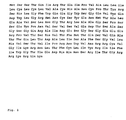
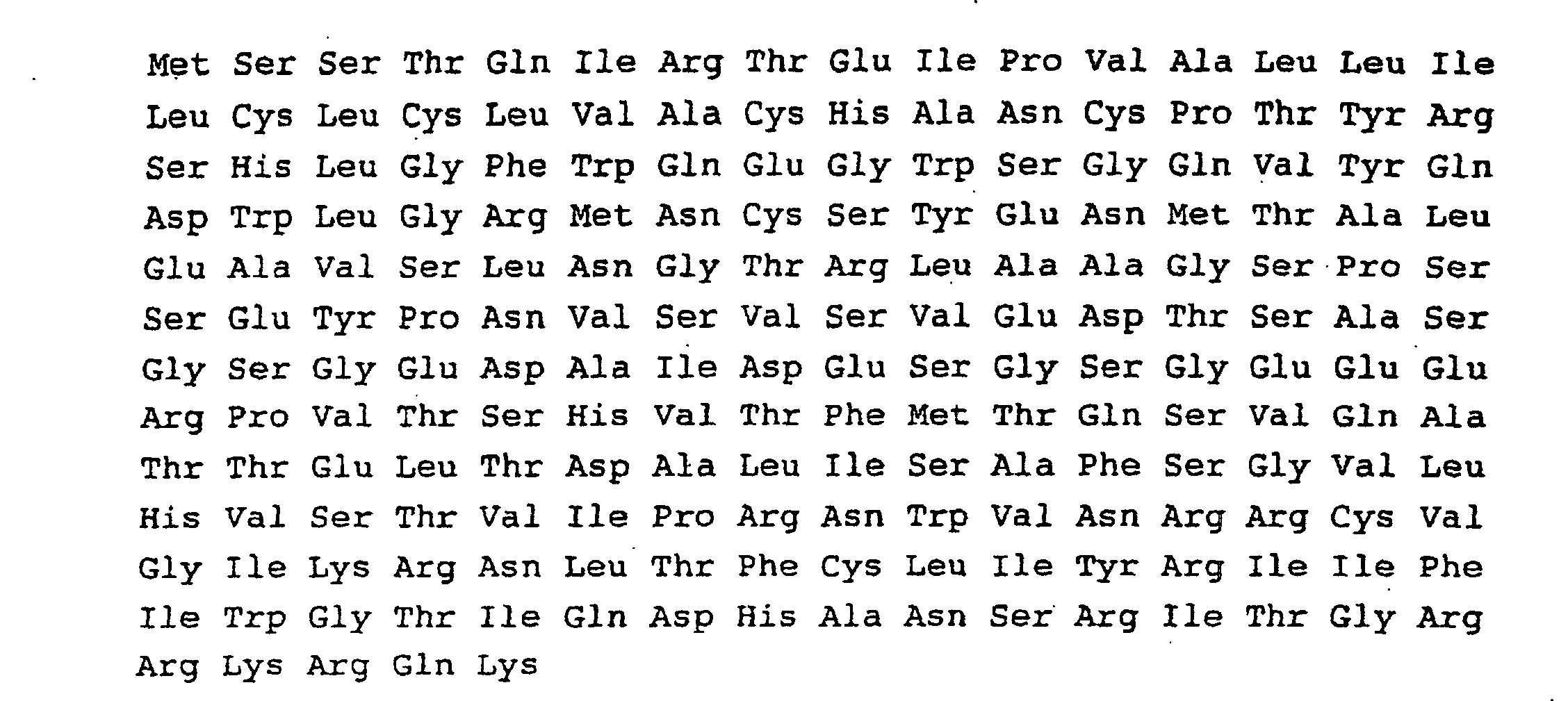
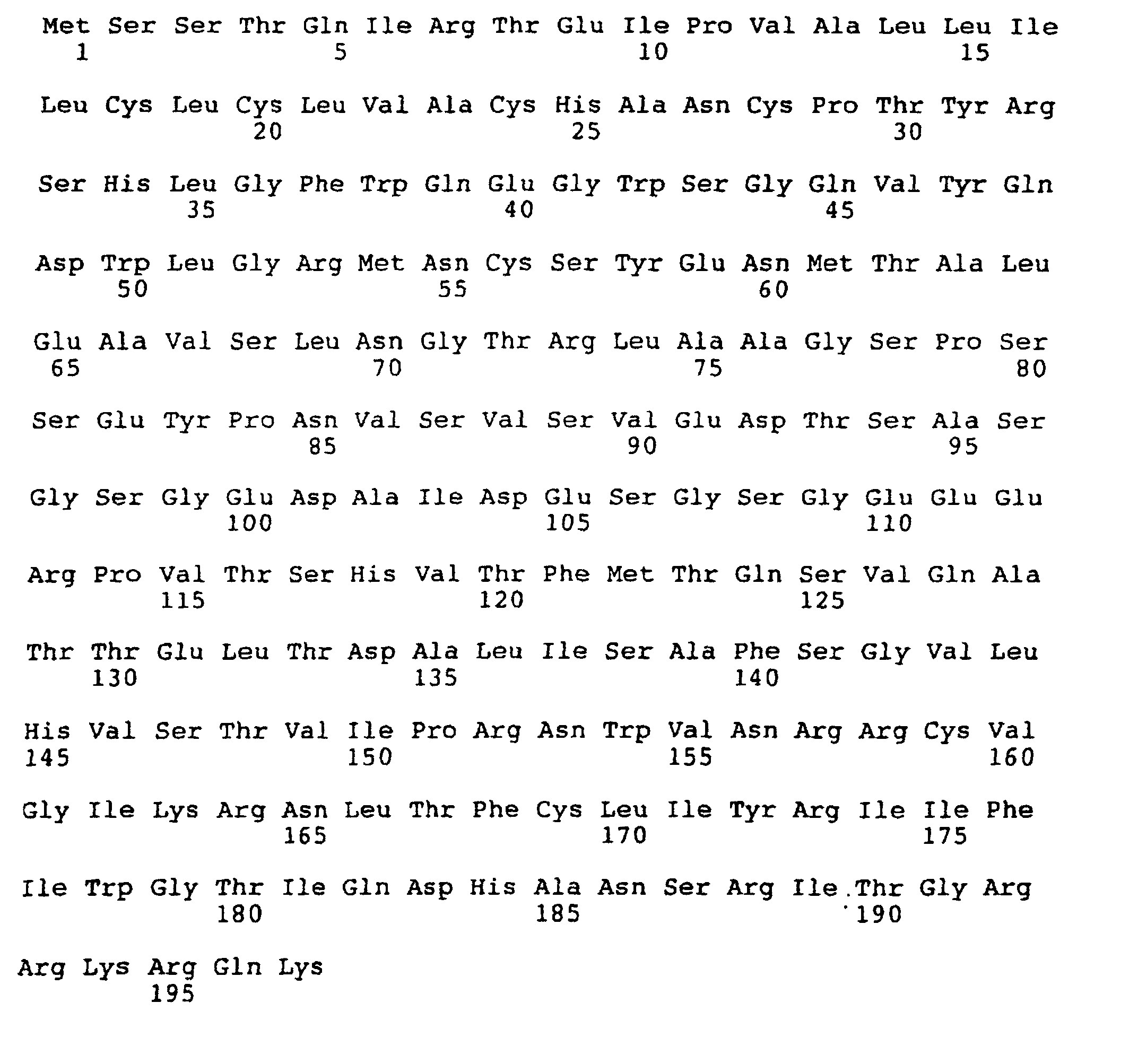
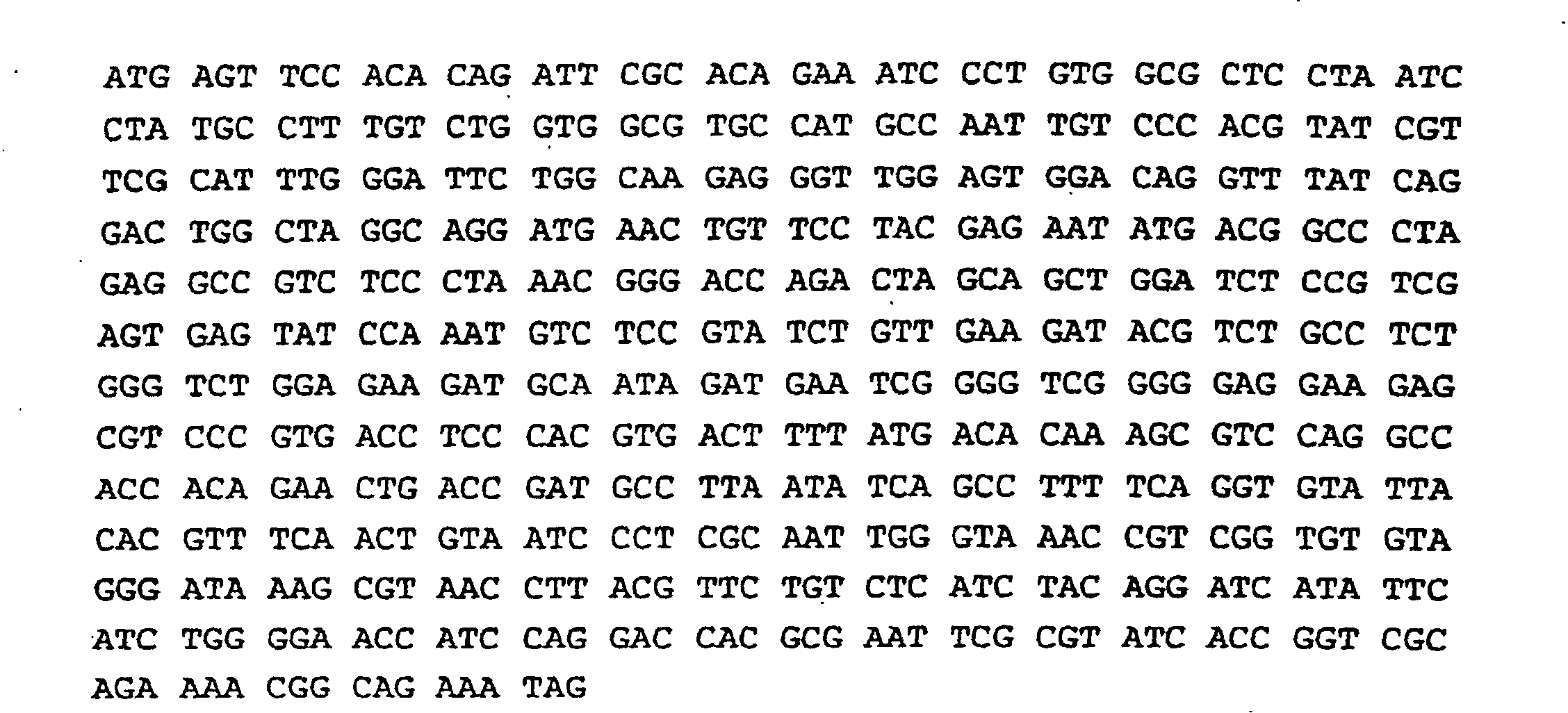
- the present invention therefore relates to polypeptides which are characterized in that they are a partial sequence of at least 10 consecutive amino acids of the sequence exhibit.
- polypeptide in the sense of the present Registration means connections that are at least 10 amino acids and their upper limit of amino acids is around 250 to 300 amino acids. So the term includes also those compounds, also known as proteins can be. Oligopeptides, i.e. Connections with a very small number of amino acids, namely less than 10 amino acids are not included in the term.
- polypeptide K8.1 preferably used, in particular such sub-areas of the polypeptide that contain antigenic determinants.
- the polypeptide K8.1 according to the invention consists of a Signal peptide that contains the first 26 amino acids (Met ... Ala) and the recombinant polypeptide, i.e. Polypeptide without Signal peptide. This has 170 amino acids, the Sequence begins at Asn and ends at Lys.
- Polypeptides b) and d) are particularly preferred, it being the latter about the 14 C-terminal amino acids acts that represent a strongly basic region. Also Combinations of polypeptides a) and b) or b) and d) and of a) and c) are preferred according to the invention.
- the present invention also relates to variants of the polypeptides according to the invention.
- the skilled worker is aware that the polypeptides changed slightly at certain positions can be e.g. through deletions or exchanges of Amino acids, in particular an exchange of an amino acid regularly due to an immunologically equivalent amino acid no change in the immunological activity of the Leads polypeptide.
- polypeptide according to the invention without the signal peptide has the following sequence:
- Preferred partial sequences of the polypeptide according to the invention have at least 14, 25, 30 or particularly preferred 40 amino acids, the fragments of the specified sequences represent.
- the polypeptides according to the invention correspond in terms of Sequence of a protein associated with a Kaposi sarcoma Herpes virus is encoded. Therefore antibodies react one Patients infected with this virus, specifically with the polypeptides according to the invention. Specific means that an antigen-antibody response indicates that infection with KSHV is available. This requires that none Cross-reactivity with another virus or with others Antigens occurs. Such an unspecific response would lead to false positive results.
- polypeptides according to the invention can be different and way are made.
- the chemical synthesis can be chosen.
- the chemical synthesis of Polypeptides are well known per se and are usually made on a solid phase.
- a disadvantage of chemical synthesis is however, that longer polypeptides produce products that are no longer correct in the sequence because wrong Amino acids were built in and that such products only are difficult to separate from the desired polypeptides can. They are also chemically synthesized polypeptides often not folded correctly.
- polypeptides are therefore inherently known methods in genetic engineering in host cells manufactured.
- the coding nucleic acid is in a suitable vector, for example into an expression plasmid, built-in.
- the expression of the polypeptides according to the invention can then either in prokaryotic host cells, for example E.coli.
- prokaryotic host cells for example E.coli.
- these products exhibit no glycosylation due to bacteria Have glycosylation mechanisms.
- expression can be in eukaryotic Host cells take place. Suitable examples would be Yeast cells, insect cells or mammalian cells that are in Cell cultures are grown.
- the present invention also relates to test kits for Evidence of infection associated with Kaposi's sarcoma Herpes virus in a mammal that has at least one comprise polypeptide according to the invention.
- test kit describes a suitable arrangement for Understood detection of antibodies. It can be about prepared sets act in the diagnostic laboratories for Detection of the antibodies can be used. at Such test kits can be Western blot strips, for example or ELISA plates that are already with the polypeptides according to the invention are coated. Furthermore A test kit can also include other components that are used for Execution of the test are required, such as the Detection components used to detect the polypeptide specific Antibody complex serve.
- Such a further component for the detection of the complex comprising a polypeptide according to the invention and at least one Antibody specifically bound to it can be an anti-antibody or be another antibody against a polypeptide according to the invention is directed.
- This component for the detection of the complex can be marked, for example with an enzyme that has a color reaction catalyzed (e.g. peroxidase). But it can also be the polypeptide be marked. When it comes to genetic engineering, it can Polypeptide can be expressed as a fusion protein, with the Fusion portion a slight marking or separation is made possible.
- an enzyme that has a color reaction catalyzed e.g. peroxidase
- polypeptide can also be marked.
- Polypeptide can be expressed as a fusion protein, with the Fusion portion a slight marking or separation is made possible.
- polypeptides according to the invention are therefore preferred for Evidence of infection associated with Kaposi's sarcoma Herpes virus used.
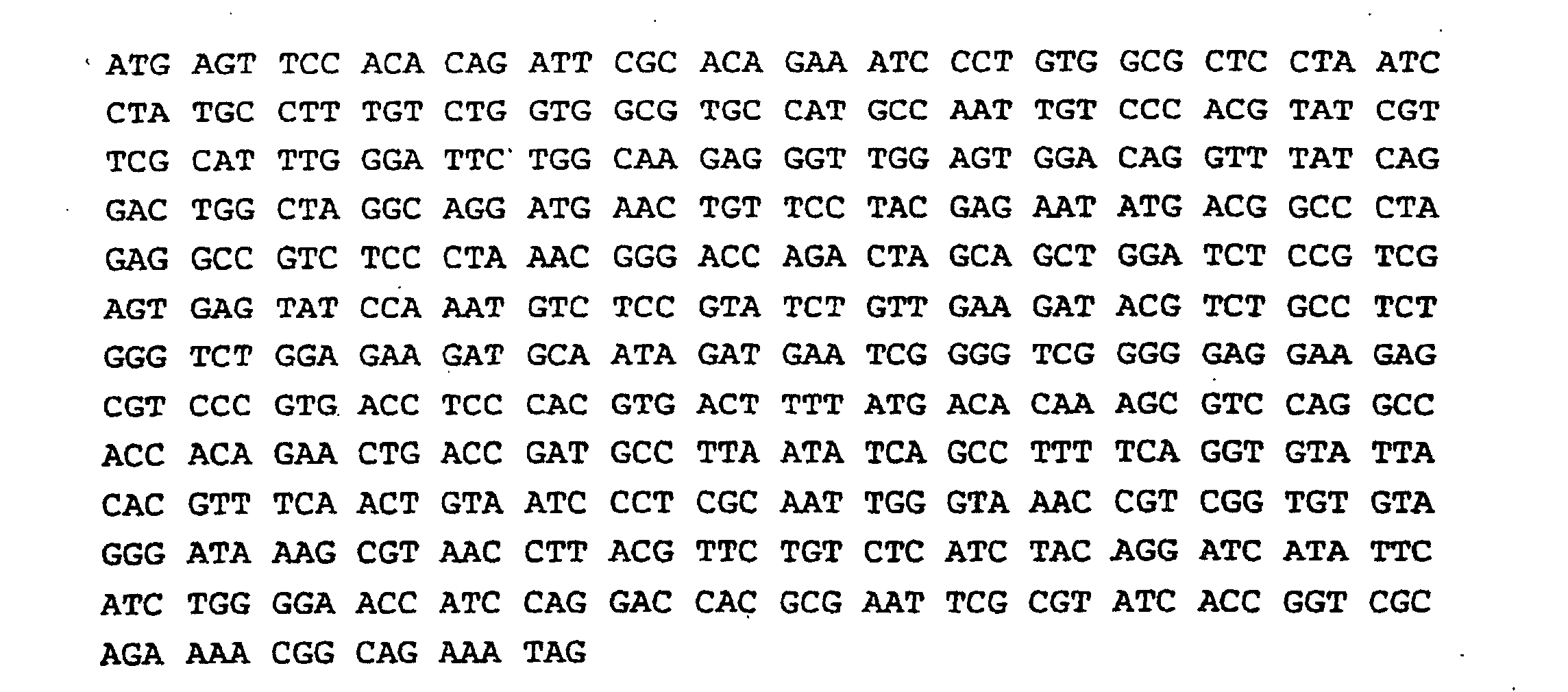
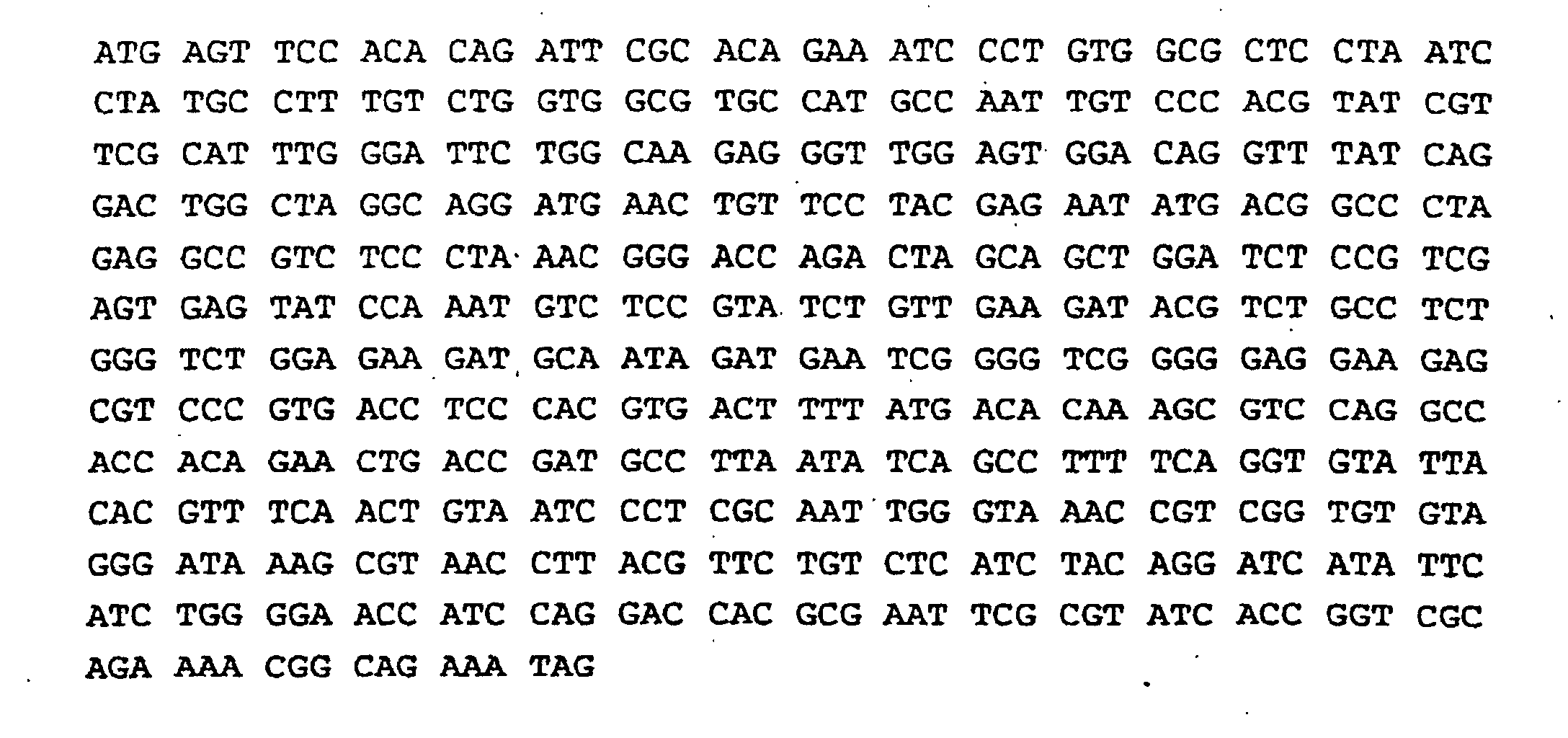
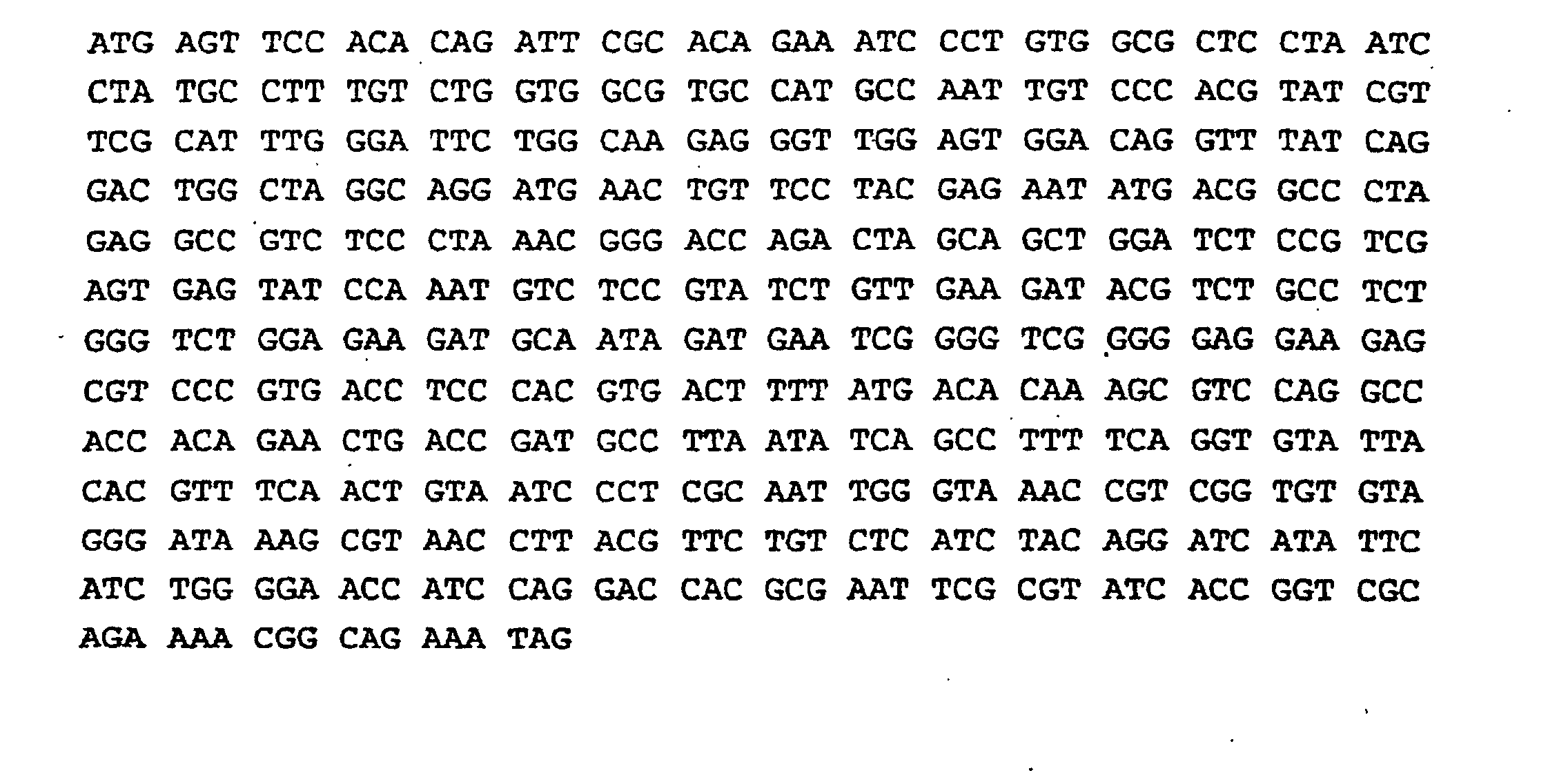
- the invention also relates to nucleic acid constructs for the genetic engineering production of a polypeptide which contain the nucleic acid sequence or comprise a partial sequence thereof with at least 30 nucleotides.
- nucleic acid construct is used according to the invention understood a nucleic acid entity that is a suitable one Nucleic acid sequence coding for an inventive Polypeptide contains and that replicates this construct in the host cell and expression of the desired Allows polypeptide in the host cell. Both Nucleic acids used according to the invention are in preferred embodiment around DNA.
- such is Nucleic acid construct an expression vector, i.e. on Nucleic acid structure that is in the introduced host cell can multiply itself and causes the host cell to to express the polypeptide according to the invention.
- a partial sequence with 15 to 35 nucleotides can be derived from the nucleic acid sequence or a complementary nucleic acid sequence can be used for the detection of an infection with a Kaposi's sarcoma associated herpes virus with the aid of the polymerase chain reaction.
- primers i.e. Nucleic acid fragments with a Length from about 15 to about 35 nucleotides used.
- This Primers hybridize specifically to the nucleic acid fragment to be detected. Through several cycles of amplification one becomes certain DNA fragment multiplied and detected. When a such fragment can be detected, it means that the nucleic acid sought (here from KSHV) in the to be detected Sample is present.
- the primers according to the invention can therefore be used, are short nucleic acid fragments with 15 to 35 bases in length. These primers are preferred on the 3 'and 5 'end of the nucleic acid sequence specified above selected, where each primer has a sequence that is complementary to the specified nucleic acid sequence.
- the polypeptides according to the invention can also be used for production a vaccine against the KSHV can be used.
- a vaccine can be used in the polypeptides according to the invention also with other proteins or polypeptides from KSHV be combined.
- immunizing those to be treated Patients are raised neutralizing antibodies that are associated with if the infection is imminent, inactivate the virus.
- a Such vaccination is also conceivable if the person to be treated The patient is already infected by the KSHV, but that Kaposi's sarcoma has not yet broken out.
- Another aspect of the present invention relates to antibodies directed against the polypeptides of the invention are. These can either be polyclonal antibodies act by immunizing an animal (horse, cattle, Goat) or monoclonal antibodies.
- the technique of producing monoclonal antibodies has been improved already described and presented by Köhler and Millstein in 1974 is currently a standard technology (especially mice) immunized and the thymus cells fused with immortalized cells (cancer cell lines). These cell lines then produce monoclonal antibodies.
- the present invention is preferred humanized monoclonal antibodies used because of these Antibodies do not have undesirable immunological reactions against the parts of the antibody that are not expected from the People descended.
- This is known per se genetic engineering methods of for the variable range (Fab) the antibody coding region from the mouse cell lines transferred in cell lines for the desired antibody encode. This gives a human antibody which includes sequences from the variable regions for example mouse cell lines.
- polypeptides of the invention entirely significant unexpected benefits for diagnostics and therapy exhibit.
- the polypeptides according to the invention Sera from Kaposi's sarcoma patients as well as the absence of Cross-reactivity. It is particularly useful for diagnostics important that no cross-reactivity with other, similar Viruses, such as EBV in particular. When a If there is cross reactivity, this leads to false positives Results because then wrongly antibodies that are against another virus (EBV) are targeted as antibodies against KSHV are rated.
- EBV similar Viruses
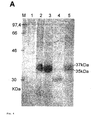
- Lane 1 BJAB cells
- Lane 2 BCBL-1 cells, 4 days induced with TPA
- Lane 3 recombinant polypeptide K8.1, 200ng
- Lane 4 recombinant fusion protein with GST content, where the antigenic portion is from ORF65, 200ng
- Lane 5 recombinant vIL-6, 200 ng.
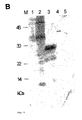
- FIG. 5 a different serum than in FIG. 4 was used, in which - in contrast to the one used in FIG. 4 - one third band in the range from 35 to 37 kDa is visible.
- This clear, sharp band is good in about 50% of all sera recognizable.
- this is another viral one Protein, because unlike gp35 / 37 it is a protein sharp, atypical band for glycoproteins.
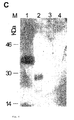
- Figure 6 shows the identity of the polypeptide according to the invention K8.1 with the glycoprotein gp35 / 37. The separation took place with a 15% polyacrylamide gel. There were specific ones Antibodies against recombinant polypeptide K8.1 from the serum of an HIV-positive Kaposi sarcoma patient by binding to the recombinant polypeptide is purified. These were used in a dilution of 1/200. On lane 1, BCBL-1 cells, 4 days induced with TPA, applied. On track 2 was recombinant polypeptide K8.1 applied (200 ng). On track 3 recombinant p18 GST was applied in an amount of 200 ng. P18-GST is a fusion protein with a GST share and a share of ORF65. On track 4 was recombinant vIL-6, 200 ng applied.
- the KSHV (HHV-8) positive BCBL-1 cells were obtained from the ..AIDS Research and Reference Reagent "program.
- the HSB-1 and BJAB cells are readily available from the ATCC.
- the cells were in RPMI 1640- Medium incubated with 15% fetal calf serum, glutamine and gentamycin under standard conditions.
- TPA induction the cells were induced at approximately 1 x 10 6 cells / ml with 20 ng / TPA.
- the Western blots the cells were washed twice in PBS standard buffer , resuspended in 1/100 of the starting volume PBS and the protein concentration was determined using the "Pierce assay" according to the manufacturer's instructions.
- BCBL-1 cells were induced with TPA for 4 days. To washing twice in PBS the cells were in 1% of the Output volume PBS resuspended. 45 ⁇ l of this Cell suspension, corresponding to 400 ⁇ g total protein, were first in a 100 ⁇ l batch with denaturation buffer (0.5% SDS, 1% ⁇ -mercaptoethanol) denatured at 96 ° C for 10 minutes. After adding 15 ⁇ l 10% NP-40 (Biolabs) and 15 ⁇ l G7 Gap buffer (Biolabs) was digested with 10,000 units PNGase F (New England Biolabs) for 1 hour at 37 ° C. 17 ⁇ l this reaction approach, corresponding to 45 ⁇ g cellular Protein, were for the Western blot of Figure 4, lane 4, used.
- denaturation buffer 0.5% SDS, 1% ⁇ -mercaptoethanol
- the Incubation with the human sera was carried out at room temperature for 2 hours also in block buffer, the sera were always Diluted 1/200. After washing 3 times in TBS-Tween (150 mM NaCl, 20 mM Tris pH 7.5, 0.5% Tween) for 15 minutes each the sera were incubated with the second antibody for 60 minutes (Anti-human alkaline phosphatase conjugated antibody from Rabbit, Dako). The membranes were then 3x TBS-Tween washed, then 1x in TBS (150 mM NaCl, 20 mM Tris pH 7.5) and washed with a substrate solution (RAD-Free BCIP / NBT tablets, Schleicher & Schüll) according to the information provided by the Manufacturer colored.
- TBS-Tween 150 mM NaCl, 20 mM Tris pH 7.5
- a substrate solution RAD-Free BCIP / NBT tablets, Schleicher & Schüll
- the DNA fragment obtained was digested with HindIII and BamHI. 50 ng of the split Amplificates were with 100 ng of BamHI and HindIII cleaved vector pQE9 (Quiagen) according to the instructions of the Manufacturer ligated (T4 DNA ligase, Gibco BRL). To Transfection of the ligation mixture into the E. coli strain JM 109 (Stratagene Inc., La Jolla) became a positive clone (pQK8-Im) selected and the nucleic acid sequence of the viral portion as well as that important for prokaryotic expression Vector sections (promoter, histidine Taq) determined.
- the Nucleic acid sequence was generated using the ABI377 sequencer (ABI Inc., Foster City, USA) according to the manufacturer's protocols checked.
- ABI377 sequencer (ABI Inc., Foster City, USA) according to the manufacturer's protocols checked.
- the bacteria with 2 mM IPTG induces, lyses and under denaturing conditions purified via metal affinity chromatography as of Manufacturer (Quiagen AG, Hilden: ..The Quiaexpressionist ", Summer 1992 edition, pp. 45 ff.).
- the clarified supernatant was on Ni-NTA matrix absorbed and with increasing concentrations of imidazole in 8 M urea, pH 6.5, eluted.
- the fractions were in Polyacrylamide gel (15%) after Comassie staining for protein content examined.
- the protein was used in Western blot and ELISA containing fractions and pooled overnight against 10 mM Tris pH 7.5 dialyzed.
- the calculated molecular weight of the so expressed protein is 20.4 kDa.
- the apparent Molecular weight in the polyacrylamide gel is about 28 kDa.
- prokaryont expressed plasmid pQK8-1m
- K8.1 polypeptide purified by affinity chromatography separated in a 15% polyacrylamide gel and as described transferred to nitrocellulose membrane.
- coloring with Ponceau red was the running height of the prokaryont expressed Protein determined and the corresponding area of the filter cut out.
- After removing the Ponceau red stain by repeated washing in 150 mM NaCl, 20 mM Tris, 1% Tween the NC strip initially in block buffer for 4 h at 20 ° C incubated. This was followed by the NC strip with the immobilized K8.1 protein 16 hours at 4 ° C with the 1/200 diluted serum from a Kaposi sarcoma patient.
- the natural and recombinant gp35 / 37 protein showed perfect match with the different serums, one can see two of the reactions in question (No. 22 and 37) from. This is another indication of identity.
- the gp35 / 37 reacted positively with 24 out of 29 sera from Kaposi patients, while ORF65 only recorded a maximum of 10/29. This clearly proves the superiority of the polypeptides according to the invention. Only one of 12 KS-negative sera (No. 37) had reacted with gp35 / 37.
- This serum from an HIV positive also reacted with GST-ORF65. Because HHV-8 antibodies are already before a clinical manifestation Such results can be expected if it can be demonstrated.
- the Test wells of the ELISA plates diluted with 100 ⁇ l 1:21 Serum solution filled, taped with a plastic wrap and attached Incubated at 37 ° C in the incubator (Binder, BED53) for 1 h.
- TMB 5,5'-tetramethylbenzidine
- the Chromogen reaction lasted 30 min at room temperature and was ended by adding 100 ⁇ l of 1 N sulfuric acid.
- the optical density (OD) of the individual samples was measured at 495 nm (Reference: 620 nm) determined in the Anthos HTII ELISA reader. All OD values greater than 400 mOD were found in the case of HHV8 specific tests (gp35 / 37 and ORF65) rated as positive. A cut-off of 0.15 OD was used for the EBV-dependent test Are defined.
- HHV8 Numerous reading frames from HHV8 assign sequence homologies to EBV genome. For this purpose, it should be checked whether serums with high Antibody titers against EBV cross-react with gp35 / 37. For this 7 sera from nasopharyngeal carcinoma (NPC) patients were treated are known to have high titers against EBV antigens, tested. The recombinant EBV was used as a positive control Virus capsid protein (VCA) p18 as a GST fusion protein used. All NPC sera were negative with gp35 / 37. Three serums C6, C19 and C28 were positive with ORF65 and all sera were highly positive with EBV p18 VCA antigen. The results showed that a possible cross reactivity with gp35 / 37 is excluded can be. In contrast, the HHV 8 antigen ORF65 could Cross reactivity can be observed.
- VCA Virus capsid protein
Landscapes
- Health & Medical Sciences (AREA)
- Chemical & Material Sciences (AREA)
- Life Sciences & Earth Sciences (AREA)
- Organic Chemistry (AREA)
- Virology (AREA)
- Medicinal Chemistry (AREA)
- Molecular Biology (AREA)
- General Health & Medical Sciences (AREA)
- Biophysics (AREA)
- Genetics & Genomics (AREA)
- Proteomics, Peptides & Aminoacids (AREA)
- Biochemistry (AREA)
- Tropical Medicine & Parasitology (AREA)
- Immunology (AREA)
- Gastroenterology & Hepatology (AREA)
- Biotechnology (AREA)
- Public Health (AREA)
- Chemical Kinetics & Catalysis (AREA)
- General Chemical & Material Sciences (AREA)
- Nuclear Medicine, Radiotherapy & Molecular Imaging (AREA)
- Pharmacology & Pharmacy (AREA)
- Animal Behavior & Ethology (AREA)
- Oncology (AREA)
- Veterinary Medicine (AREA)
- Communicable Diseases (AREA)
- Engineering & Computer Science (AREA)
- Peptides Or Proteins (AREA)
- Micro-Organisms Or Cultivation Processes Thereof (AREA)
- Medicines Containing Material From Animals Or Micro-Organisms (AREA)
- Medicines That Contain Protein Lipid Enzymes And Other Medicines (AREA)
Description

| Reaktivität im Westernblot | ||||
| Serum | Kategorie/Status | gp35/37nat | gp35/37rec | GST-ORF65 |
| 1 | HIV+, KS+ | + | + | + |
| 2 | HIV+, KS+ | + | + | + |
| 3 | HIV+, KS+ | + | + | + |
| 4 | HIV+, KS+ | + | + | + |
| 5 | HIV+, KS+ | + | + | + |
| 6 | HIV+, KS+ | + | + | + |
| 7 | HIV+, KS+ | + | + | ? |
| 8 | HIV+, KS+ | + | + | ? |
| 9 | HIV+, KS+ | + | + | - |
| 10 | HIV+, KS+ | + | + | - |
| 11 | HIV+, KS+ | - + | + | - |
| 12 | HIV+, KS+ | + | + | - |
| 13 | HIV+, KS+ | + | + | - |
| 14 | HIV+, KS+ | + | + | - |
| 15 | HIV+, KS+ | + | + | - |
| 16 | HIV+, KS+ | + | + | - |
| 17 | HIV+, KS+ | + | + | - |
| 18 | HIV+, KS+ | + | + | - |
| 19 | HIV+, KS+ | + | + | - |
| 20 | HIV+, KS+ | + | + | - |
| 21 | HIV+, KS+ | + | + | - |
| 22 | HIV+, KS+ | ? | + | ? |
| 23 | HIV+, KS+ | - | - | ? |
| 24 | HIV+, KS+. | - | - | - |
| 25 | HIV+, KS+ | - | - | - |
| 26 | HIV+, KS+ | - | - | - |
| 27 | HIV+, KS+ | - | - | - |
| 28 | HIV -, KS+ | + | + | - |
| 29 | HIV -, KS+ | + | + | - |
| 30 | HIV+, KS - | - | - | - |
| 31 | HIV+, KS - | - | - | - |
| 32 | HIV+, KS - | - | - | - |
| 33 | HIV+, KS - | - | - | - |
| 34 | HIV+, KS - | - | - | - |
| 35 | HIV+, KS - | - | - | - |
| 36 | HIV+, KS - | - | - | - |
| 37 | HIV+, KS - | + | ? | + |
| 38 | HIV -, KS - | - | - | - |
| 39 | HIV -, KS - | - | - | - |
| 40 | HIV -, KS - | - | - | ? |
| 41 | EBV-Primärinf. | - | - | + |
| EBV | HHV 8 | EBV | HHV 8 | ||||
| gp35/37 | GST p18 | GST ORF65 | gp35/37 | GST p18 | GST ORF 65 | ||
| KS+/HIV+ | BS | ||||||
| 26295 | 6,9 | 20,0 | 1,3 | Suhl 789 | 0,2 | 20,0 | 0,6 |
| 22675 | 7,0 | 20,0 | 1,2 | Suhl 790 | 0,3 | 12,9 | 0,4 |
| 26673 | 7,5 | 20,0 | 1,2 | Suhl 791 | 0,3 | 20,0 | 0,7 |
| 43742 | 7,5 | 20,0 | 2,0 | Suhl 792 | 0,2 | 20,0 | 1,0 |
| 23971 | 6,9 | 20,0 | 0,5 | Suhl 793 | 0,1 | 18,4 | 0,3 |
| 43630 | 4,5 | 20,0 | 3,0 | Suhl 794 | 0,2 | 20,0 | 0,4 |
| 5942 | 0,5 | 20,0 | 0,5 | Suhl 795 | 0,2 | 20,0 | 0,3 |
| SH | 3,0 | 20,0 | 1,1 | Suhl 796 | 0,2 | 20,0 | 0,4 |
| BP | 1,1 | 20,0 | 1,2 | Suhl 797 | 0,1 | 13,9 | 0,4 |
| AC(53) | 6,5 | 20,0 | 1,8 | Suhl 798 | 0,2 | 18,0 | 0,4 |
| Suhl 799 | 0,2 | 20,0 | 0,4 | ||||
| KS-/HIV+ | Suhl 800 | 0,2 | 20,0 | 0,4 | |||
| MM | 0,4 | 20,0 | 0,3 | NPC | |||
| WU | 0,6 | 20,0 | 0,8 | C 6 | 0,4 | 17,6 | 1,7 |
| FP | 0,6 | 13,1 | 0,6 | C 9 | 0,2 | 18,6 | 0,8 |
| L D | 1,0 | 20,0 | 3,4 | C 10 | 0,3 | 20,0 | 0,8 |
| RK | 0,7 | 0,9 | 0,6 | C 19 | 0,3 | 20,0 | 1,1 |
| D J | 0,5 | 1,0 | 0,6 | C 21 | 0,2 | 20,0 | 0,6 |
| A E | 0,6 | 20,0 | 0,4 | C 22 | 0,4 | 20,0 | 0,7 |
| AP | 0,5 | 4,2 | 0,5 | C 28 | 0,2 | 20,0 | 1,1 |
| EBV | HHV8 | EBV | HHV8 | ||||
| gp35/37 | GST p18 | GST ORF 65 | gp35/37 | GST p18 | GST ORF 65 | ||
| KS-Risiko | |||||||
| 0744 | 0,8 | 18,7 | 0,5 | 0773 | 6,1 | 20,0 | 0,6 |
| 0745 | 7,5 | 17,3 | 1,2 | 0774 | 4,0 | 19,0 | 0,3 |
| 0746 | 0,7 | 20,0 | 0,3 | 0775 | 7,5 | 18,4 | 0,3 |
| 0747 | 0,5 | 17,3 | 0,2 | 0776 | 0,8 | 18,7 | 0,4 |
| 0748 | 0,6 | 20,0 | 0,5 | 0777 | 7,5 | 18,5 | 0,6 |
| 0749 | 7,5 | 18,3 | 0,4 | 0778 | 0,5 | 17,9 | 0,3 |
| 0750 | 2,7 | 15,2 | 1,8 | 0779 | 7,5 | 18,4 | 1,7 |
| 0751 | 0,7 | 18,5 | 0,3 | 0780 | 7,5 | 18,6 | 0,7 |
| 0752 | 0,7 | 20,0 | 0,3 | 0781 | 1,1 | 17,6 | 0,5 |
| 0753 | 2,1 | 20,0 | 0,4 | 0782 | 2,6 | 20,0 | 0,4 |
| 0754 | 2,0 | 20,0 | 0,7 | 0783 | 7,5 | 18,4 | 1,5 |
| 0755 | 0,6 | 16,4 | 0,3 | 0784 | 1,0 | 20,0 | 0,3 |
| 0756 | 0,5 | 20,0 | 0,3 | 0785 | 7,5 | 20,0 | 0,8 |
| 0757 | 2,6 | 20,0 | 0,3 | 0786 | 7,5 | 20,0 | 0,7 |
| 0758 | 0,7 | 18,4 | 0,3 | 0787 | 6,1 | 20,0 | 0,3 |
| 0759 | 0,5 | 18,5 | 0,4 | 0788 | 0,8 | 20,0 | 0,2 |
| 0760 | 1,3 | 20,0 | 0,4 | 0789 | 2,1 | 16,7 | 0,3 |
| 0761 | 7,5 | 20,0 | 0,9 | 0790 | 0,3 | 19,0 | 0,5 |
| 0762 | 7,5 | 20,0 | 1,2 | 0791 | 0,6 | 20,0 | 0,5 |
| 0763 | 0,8 | 20,0 | 1,1 | 0792 | 0,9 | 18,6 | 0,7 |
| 0764 | 2,5 | 20,0 | 0,3 | 0793 | 6,4 | 17,8 | 1,0 |
| 0765 | 0,9 | 20,0 | 0,3 | ||||
| 0766 | 7,5 | 20,0 | 0,7 | % | 58% | 100% | 14% |
| 0767 | 1,7 | 20,0 | 0,2 | ||||
| 0768 | 0,9 | 20,0 | 0,5 | ||||
| 0769 | 0,5 | 20,0 | 0,2 | ||||
| 0770 | 0,3 | 20,0 | 0,2 | ||||
| 0771 | 3,2 | 20,0 | 0,3 | ||||
| 0772 | 2,0 | 20,0 | 0,3 |

Claims (26)
- Polypeptid, dadurch gekennzeichnet, daß es eine Teilsequenz von wenigstens 10 aufeinanderfolgenden Aminosäuren der Sequenzaufweist.

- Polypeptid, dadurch gekennzeichnet, daß es eine Teilsequenz von wenigstens 10 aufeinanderfolgenden Aminosäuren der Sequenzaufweist.

- Polypeptid nach Anspruch 1 oder 2, dadurch gekennzeichnet, daß es eine Teilsequenz von wenigstens 14 aufeinanderfolgenden Aminosäuren aufweist.
- Polypeptid nach Anspruch 1 oder 2, dadurch gekennzeichnet, daß es eine Teilsequenz von wenigstens 25 aufeinanderfolgenden Aminosäuren aufweist.
- Polypeptid nach Anspruch 1 oder 2, dadurch gekennzeichnet, daß es eine Teilsequenz von wenigstens 30 aufeinanderfolgenden Aminosäuren aufweist.
- Polypeptid nach Anspruch oder 2, dadurch gekennzeichnet, daß es eine Teilsequenz von wenigstens 40 aufeinanderfolgenden Aminosäuren aufweist.
- Polypeptid nach einem der vorhergehenden Ansprüche, dadurch gekennzeichnet, daß das Polypeptid von dem Kaposi-Sarkom assoziierten Herpes-Virus kodiert wird.
- Polypeptid nach einem der vorhergehenden Ansprüche, dadurch gekennzeichnet, daß es mit solchen Antikörpern reagiert, die spezifisch für das Kaposi-Sarkom assoziierte Herpes-Virus sind.
- Polypeptid nach einem der Ansprüche 1 bis 8, dadurch gekennzeichnet, daß es chemisch synthetisiert wurde.
- Polypeptid nach einem der Ansprüche 1 bis 8, dadurch gekennzeichnet, daß es gentechnisch in einer prokaryontischen Wirtszelle exprimiert wurde.
- Polypeptid nach einem der Ansprüche 1 bis 8, dadurch gekennzeichnet, daß es gentechnisch in einer eukaryontischen Wirtszelle exprimiert wurde.
- Testkit zum Nachweis einer Infektion mit einem Kaposi-Sarkom assoziierten Herpes-Virus in einem Menschen oder Säugetier, dadurch gekennzeichnet, daß es ein Polypeptid nach einem der Ansprüche 1 bis 11 umfaßt.
- Testkit nach Anspruch 12, dadurch gekennzeichnet, daß es eine weitere Komponente zum Nachweis des Komplexes umfassend ein Polypeptid nach einem der Ansprüche 1 bis 11 und wenigstens eines hieran spezifisch gebundenen Antikörpers aufweist.
- Testkit nach Anspruch 13, dadurch gekennzeichnet, daß die Komponente zum Nachweis des Komplexes ein Anti-Antikörper ist.
- Testkit nach Anspruch 13, dadurch gekennzeichnet, daß die Komponente zum Nachweis des Komplexes ein weiterer Antikörper gegen ein Polypeptid nach einem der Ansprüche 1 bis 11 ist.
- Testkit nach einem der Ansprüche 13 bis 15, dadurch gekennzeichnet, daß die Komponente zum Nachweis des Komplexes markiert ist.
- Testkit nach Anspruch 16, dadurch gekennzeichnet, daß die Komponente zum Nachweis des Komplexes mit einem Enzym markiert ist.
- Testkit nach Anspruch 12, dadurch gekennzeichnet, daß das Polypeptid markiert ist.
- Verwendung eines Polypeptids nach einem der Ansprüche 1 bis 11 zum Nachweis einer Infektion mit einem Kaposi-Sarkom assoziierten Herpes-Virus.
- Nucleinsäurekonstrukt zur gentechnologischen Herstellung eines Polypeptids nach einem der Ansprüche 1 bis 11, dadurch gekennzeichnet, daß es die Nucleinsäuresequenzoder eine Teilsequenz davon mit wenigstens 30 Nucleotiden umfaßt.
- Nucleinsäurekonstrukt nach Anspruch 20, dadurch gekennzeichnet, daß es ein Expressionsvektor ist.
- Verwendung einer Partialsequenz mit 15 bis 35 Nucleotiden aus der Nucleinsäuresequenzoder der hierzu komplementären Nucleinsäuresequenz zum Nachweis einer Infektion mit einem Kaposi-Sarkom assoziierten Herpes-Virus mit Hilfe der Polymerase Kettenreaktion.
- Impfstoff, dadurch gekennzeichnet, daß er ein Polypeptid nach einem der Ansprüche 1 bis 11 umfaßt.
- Antikörper, dadurch gekennzeichnet, daß er gegen ein Polypeptid nach einem der Ansprüche 1 bis 11 gerichtet ist.
- Antikörper nach Anspruch 24, dadurch gekennzeichnet, daß es ein monoklonaler Antikörper ist.
- Antikörper nach Anspruch 25, dadurch gekennzeichnet, daß es ein humanisierter monoklonaler Antikörper ist.
Priority Applications (4)
| Application Number | Priority Date | Filing Date | Title |
|---|---|---|---|
| AT97111879T ATE240398T1 (de) | 1997-07-11 | 1997-07-11 | Von kaposi-sarkom assoziiertem herpes-virus (kshv,hhv-8) kodiertes polypeptid und dessen verwendung in diagnostik und therapie |
| EP97111879A EP0893504B1 (de) | 1997-07-11 | 1997-07-11 | Von Kaposi-sarkom assoziiertem Herpes-Virus (KSHV, HHV-8) kodiertes Polypeptid und dessen Verwendung in Diagnostik und Therapie |
| DE59710091T DE59710091D1 (de) | 1997-07-11 | 1997-07-11 | Von Kaposi-sarkom assoziiertem Herpes-Virus (KSHV, HHV-8) kodiertes Polypeptid und dessen Verwendung in Diagnostik und Therapie |
| US09/112,248 US6177080B1 (en) | 1997-07-11 | 1998-07-08 | Polypeptides encoded by Kaposi sarcoma-associated herpes virus the use thereof in diagnosis and therapy |
Applications Claiming Priority (1)
| Application Number | Priority Date | Filing Date | Title |
|---|---|---|---|
| EP97111879A EP0893504B1 (de) | 1997-07-11 | 1997-07-11 | Von Kaposi-sarkom assoziiertem Herpes-Virus (KSHV, HHV-8) kodiertes Polypeptid und dessen Verwendung in Diagnostik und Therapie |
Publications (2)
| Publication Number | Publication Date |
|---|---|
| EP0893504A1 EP0893504A1 (de) | 1999-01-27 |
| EP0893504B1 true EP0893504B1 (de) | 2003-05-14 |
Family
ID=8227053
Family Applications (1)
| Application Number | Title | Priority Date | Filing Date |
|---|---|---|---|
| EP97111879A Expired - Lifetime EP0893504B1 (de) | 1997-07-11 | 1997-07-11 | Von Kaposi-sarkom assoziiertem Herpes-Virus (KSHV, HHV-8) kodiertes Polypeptid und dessen Verwendung in Diagnostik und Therapie |
Country Status (4)
| Country | Link |
|---|---|
| US (1) | US6177080B1 (de) |
| EP (1) | EP0893504B1 (de) |
| AT (1) | ATE240398T1 (de) |
| DE (1) | DE59710091D1 (de) |
Families Citing this family (5)
| Publication number | Priority date | Publication date | Assignee | Title |
|---|---|---|---|---|
| WO1997018322A2 (de) | 1995-11-16 | 1997-05-22 | Dahm Michael W | Verfahren zur quantifizierung von tumorzellen in einer körperflüssigkeit und dazu geeignete testkits |
| DE19804372A1 (de) | 1998-02-04 | 1999-08-05 | Michael W Dr Dr Dahm | Verfahren zur quantitativen Bestimmung von Tumorzellen in einer Körperflüssigkeit und dazu geeignete Testkits |
| WO1999061909A2 (en) * | 1998-05-26 | 1999-12-02 | The Government Of The United States Of America, As Represented By The Secretary, Department Of Health And Human Services | Methods and compositions for the detection of human herpesvirus |
| US6669939B1 (en) | 1998-05-29 | 2003-12-30 | Biotrin International Properties Limited | (Poly)peptides which represent the epitopes of the human herpes virus type 8 |
| WO2009020628A1 (en) * | 2007-08-06 | 2009-02-12 | Epiphany Biosciences, Inc. | Diagnosis of kaposi's sarcoma-associated herpesvirus (kshv) infection |
Family Cites Families (7)
| Publication number | Priority date | Publication date | Assignee | Title |
|---|---|---|---|---|
| EP0524421B1 (de) | 1991-07-08 | 2003-03-26 | Dade Behring Marburg GmbH | Protein p100von menschlichem Herpesvirus Typ 6, die korrespondierenden DNS Squenzen, ihre Herstellung und Verwendung |
| WO1994016062A1 (en) | 1993-01-12 | 1994-07-21 | Alexion Pharmaceuticals, Inc. | Complement regulatory proteins of herpesvirus saimiri |
| DE4307970A1 (de) | 1993-03-12 | 1994-09-15 | Behringwerke Ag | Verwendung von mit Herpesvirus saimiri transformierten Lymphozyten in einem Verfahren zur Vermehrung von Immunschwäche verursachenden Viren vom HIV-Typ |
| US5670352A (en) | 1993-03-18 | 1997-09-23 | Behringwerke Aktiengesellschaft | Stable growth transformation of human T-lymphocytes by Herpesvirus saimiri (H. saimiri) subgroup C |
| WO1996006159A1 (en) * | 1994-08-18 | 1996-02-29 | The Trustees Of Columbia University In The City Of New York | Unique associated kaposi's sarcoma virus sequences and uses thereof |
| WO1998003657A1 (en) | 1996-07-19 | 1998-01-29 | Dade Behring Marburg Gmbh | Viral interleukin-6 |
| WO1998004284A1 (en) | 1996-07-25 | 1998-02-05 | The Johns Hopkins University | Novel genes of kaposi's sarcoma associated herpesvirus |
-
1997
- 1997-07-11 AT AT97111879T patent/ATE240398T1/de active
- 1997-07-11 EP EP97111879A patent/EP0893504B1/de not_active Expired - Lifetime
- 1997-07-11 DE DE59710091T patent/DE59710091D1/de not_active Expired - Lifetime
-
1998
- 1998-07-08 US US09/112,248 patent/US6177080B1/en not_active Expired - Fee Related
Also Published As
| Publication number | Publication date |
|---|---|
| DE59710091D1 (de) | 2003-06-18 |
| ATE240398T1 (de) | 2003-05-15 |
| EP0893504A1 (de) | 1999-01-27 |
| US6177080B1 (en) | 2001-01-23 |
Similar Documents
| Publication | Publication Date | Title |
|---|---|---|
| DE3856586T2 (de) | Respiratory Syncytial-Virus, Impfstoffe und diagnostische Assays | |
| DE68929529T2 (de) | Rekombinante HIV-2 Antigene, abgeleitet aus synthetischen DNA | |
| DE68918867T2 (de) | Mutanten des hiv-1 Hüllproteins mit fehlenden hypervariabelen domänen. | |
| EP0770679B1 (de) | HCV-spezifische Peptide, Mittel dazu und ihre Verwendung | |
| DE68929478T2 (de) | Rekombinante CMV-Neutralisierungsproteine | |
| DE4428705A1 (de) | Rekombinantes Antigen aus der NS3-Region des Hepatitis C Virus | |
| DE69734387T2 (de) | Ein kombiniertes antigen vom menschlichen cytomegalievirus und seine anwendung | |
| EP0252531B1 (de) | Strukturelles Phosphoprotein (pp 150) des menschlichen Cytomegalovirus, seine Herstellung und Verwendung | |
| DE69716305T2 (de) | Peptidereagenz zum nachweis von humanem cytomegalovirus (cmv) | |
| HK1044463A1 (en) | Anti-hiv 1 vaccine comprising the entire or part of the tat hiv-1 protein | |
| DE69614393T2 (de) | Herpes simplex viren diagnostik | |
| EP0893504B1 (de) | Von Kaposi-sarkom assoziiertem Herpes-Virus (KSHV, HHV-8) kodiertes Polypeptid und dessen Verwendung in Diagnostik und Therapie | |
| EP0918865B1 (de) | Immunologisch aktive proteine von borrelia burgdorferi, dafür kodierende nukleinsäuren sowie deren verwendung in testkits und als impfstoffe | |
| DE69110891T2 (de) | Peptide und analoge und mischungen davon zum nachweis der gegen die viren htlv-1 und htlv-ii gerichteten antikörper. | |
| DE69332375T2 (de) | Hundecoronavirus s gen und verwendung davon | |
| DE69934810T2 (de) | Neues hepatitis c viruspeptid und seine verwendung | |
| DE19627031C2 (de) | Nachweisverfahren für spezifische, gegen frühe HPV-Proteine gerichtete Antikörper | |
| DE69631380T2 (de) | Synthetische hpv11 virusartige partikel | |
| DE19756214C1 (de) | Polypeptide mit Aminosäuresequenzen aus dem N-terminalen Bereich von gp116 und deren Verwendung bei der Diagnostik, Prophylaxe und Therapie | |
| EP0702083A2 (de) | Polypeptide und Fusionsproteine bestehend aus dem UL 57 Leserahmen bzw. dem C-terminalen Bereich des Tegumentproteins pp150 aus HCMV, entsprechende Oligonucleotide und Nachweis reagentien | |
| DE4426453C1 (de) | Rekombinant hergestellte Fusionsproteine des Cytomegalievirus und diese enthaltende diagnostische Testkits | |
| DE69132404T2 (de) | Varicella-zoster virusantigen | |
| EP0238618A1 (de) | Pseudorabiesvirus-protein | |
| EP0754755B1 (de) | Rekombinante autologe Fusionsproteine des Epstein-Barr-Virus, diese enthaltende Testkits und Verfahren zum Nachweis von Epstein-Barr-Virus-spezifischen Antikörpern | |
| DE69824001T2 (de) | Reagenz zum nachweis und weiterverfolgen von virusinfektionen |
Legal Events
| Date | Code | Title | Description |
|---|---|---|---|
| PUAI | Public reference made under article 153(3) epc to a published international application that has entered the european phase |
Free format text: ORIGINAL CODE: 0009012 |
|
| 17P | Request for examination filed |
Effective date: 19980324 |
|
| AK | Designated contracting states |
Kind code of ref document: A1 Designated state(s): AT BE CH DE FR GB IT LI NL |
|
| AKX | Designation fees paid |
Free format text: AT BE CH DE FR GB IT LI NL |
|
| GRAH | Despatch of communication of intention to grant a patent |
Free format text: ORIGINAL CODE: EPIDOS IGRA |
|
| GRAH | Despatch of communication of intention to grant a patent |
Free format text: ORIGINAL CODE: EPIDOS IGRA |
|
| GRAH | Despatch of communication of intention to grant a patent |
Free format text: ORIGINAL CODE: EPIDOS IGRA |
|
| GRAA | (expected) grant |
Free format text: ORIGINAL CODE: 0009210 |
|
| RAP1 | Party data changed (applicant data changed or rights of an application transferred) |
Owner name: ALBRECHT, JENS-CHRISTIAN Owner name: NEIPEL, FRANK, DR. Owner name: FLECKENSTEIN, BERNARD, PROF. DR. |
|
| AK | Designated contracting states |
Designated state(s): AT BE CH DE FR GB IT LI NL |
|
| REG | Reference to a national code |
Ref country code: GB Ref legal event code: FG4D Free format text: NOT ENGLISH |
|
| REG | Reference to a national code |
Ref country code: CH Ref legal event code: EP |
|
| RAP2 | Party data changed (patent owner data changed or rights of a patent transferred) |
Owner name: FRIEDRICH-ALEXANDER-UNIVERSITAET ERLANGEN-NUERNBER |
|
| GBT | Gb: translation of ep patent filed (gb section 77(6)(a)/1977) |
Effective date: 20030521 |
|
| REF | Corresponds to: |
Ref document number: 59710091 Country of ref document: DE Date of ref document: 20030618 Kind code of ref document: P |
|
| REG | Reference to a national code |
Ref country code: CH Ref legal event code: NV Representative=s name: PATENTANWAELTE FELDMANN & PARTNER AG |
|
| NLT2 | Nl: modifications (of names), taken from the european patent patent bulletin |
Owner name: FRIEDRICH-ALEXANDER-UNIVERSITAET ERLANGEN-NUERNBER |
|
| ET | Fr: translation filed | ||
| PLBE | No opposition filed within time limit |
Free format text: ORIGINAL CODE: 0009261 |
|
| STAA | Information on the status of an ep patent application or granted ep patent |
Free format text: STATUS: NO OPPOSITION FILED WITHIN TIME LIMIT |
|
| 26N | No opposition filed |
Effective date: 20040217 |
|
| PGFP | Annual fee paid to national office [announced via postgrant information from national office to epo] |
Ref country code: CH Payment date: 20110725 Year of fee payment: 15 Ref country code: FR Payment date: 20110729 Year of fee payment: 15 |
|
| PGFP | Annual fee paid to national office [announced via postgrant information from national office to epo] |
Ref country code: AT Payment date: 20110720 Year of fee payment: 15 Ref country code: GB Payment date: 20110721 Year of fee payment: 15 Ref country code: DE Payment date: 20110728 Year of fee payment: 15 |
|
| PGFP | Annual fee paid to national office [announced via postgrant information from national office to epo] |
Ref country code: IT Payment date: 20110726 Year of fee payment: 15 Ref country code: BE Payment date: 20110725 Year of fee payment: 15 Ref country code: NL Payment date: 20110725 Year of fee payment: 15 |
|
| BERE | Be: lapsed |
Owner name: *FRIEDRICH-ALEXANDER-UNIVERSITAT ERLANGEN-NURNBERG Effective date: 20120731 |
|
| REG | Reference to a national code |
Ref country code: NL Ref legal event code: V1 Effective date: 20130201 |
|
| REG | Reference to a national code |
Ref country code: CH Ref legal event code: PL |
|
| REG | Reference to a national code |
Ref country code: AT Ref legal event code: MM01 Ref document number: 240398 Country of ref document: AT Kind code of ref document: T Effective date: 20120711 |
|
| GBPC | Gb: european patent ceased through non-payment of renewal fee |
Effective date: 20120711 |
|
| REG | Reference to a national code |
Ref country code: FR Ref legal event code: ST Effective date: 20130329 |
|
| PG25 | Lapsed in a contracting state [announced via postgrant information from national office to epo] |
Ref country code: GB Free format text: LAPSE BECAUSE OF NON-PAYMENT OF DUE FEES Effective date: 20120711 Ref country code: FR Free format text: LAPSE BECAUSE OF NON-PAYMENT OF DUE FEES Effective date: 20120731 Ref country code: LI Free format text: LAPSE BECAUSE OF NON-PAYMENT OF DUE FEES Effective date: 20120731 Ref country code: CH Free format text: LAPSE BECAUSE OF NON-PAYMENT OF DUE FEES Effective date: 20120731 Ref country code: DE Free format text: LAPSE BECAUSE OF NON-PAYMENT OF DUE FEES Effective date: 20130201 Ref country code: NL Free format text: LAPSE BECAUSE OF NON-PAYMENT OF DUE FEES Effective date: 20130201 |
|
| PG25 | Lapsed in a contracting state [announced via postgrant information from national office to epo] |
Ref country code: BE Free format text: LAPSE BECAUSE OF NON-PAYMENT OF DUE FEES Effective date: 20120731 Ref country code: IT Free format text: LAPSE BECAUSE OF NON-PAYMENT OF DUE FEES Effective date: 20120711 |
|
| PG25 | Lapsed in a contracting state [announced via postgrant information from national office to epo] |
Ref country code: AT Free format text: LAPSE BECAUSE OF NON-PAYMENT OF DUE FEES Effective date: 20120711 |
|
| REG | Reference to a national code |
Ref country code: DE Ref legal event code: R119 Ref document number: 59710091 Country of ref document: DE Effective date: 20130201 |