EP0896248A2 - Verschleierungslösung für ein photographisches Umkehrverfahren - Google Patents
Verschleierungslösung für ein photographisches Umkehrverfahren Download PDFInfo
- Publication number
- EP0896248A2 EP0896248A2 EP98202616A EP98202616A EP0896248A2 EP 0896248 A2 EP0896248 A2 EP 0896248A2 EP 98202616 A EP98202616 A EP 98202616A EP 98202616 A EP98202616 A EP 98202616A EP 0896248 A2 EP0896248 A2 EP 0896248A2
- Authority
- EP
- European Patent Office
- Prior art keywords
- solution
- compound
- photographic
- reversal
- group
- Prior art date
- Legal status (The legal status is an assumption and is not a legal conclusion. Google has not performed a legal analysis and makes no representation as to the accuracy of the status listed.)
- Withdrawn
Links
Images



Classifications
-
- G—PHYSICS
- G03—PHOTOGRAPHY; CINEMATOGRAPHY; ANALOGOUS TECHNIQUES USING WAVES OTHER THAN OPTICAL WAVES; ELECTROGRAPHY; HOLOGRAPHY
- G03C—PHOTOSENSITIVE MATERIALS FOR PHOTOGRAPHIC PURPOSES; PHOTOGRAPHIC PROCESSES, e.g. CINE, X-RAY, COLOUR, STEREO-PHOTOGRAPHIC PROCESSES; AUXILIARY PROCESSES IN PHOTOGRAPHY
- G03C5/00—Photographic processes or agents therefor; Regeneration of such processing agents
- G03C5/26—Processes using silver-salt-containing photosensitive materials or agents therefor
- G03C5/50—Reversal development; Contact processes
-
- G—PHYSICS
- G03—PHOTOGRAPHY; CINEMATOGRAPHY; ANALOGOUS TECHNIQUES USING WAVES OTHER THAN OPTICAL WAVES; ELECTROGRAPHY; HOLOGRAPHY
- G03C—PHOTOSENSITIVE MATERIALS FOR PHOTOGRAPHIC PURPOSES; PHOTOGRAPHIC PROCESSES, e.g. CINE, X-RAY, COLOUR, STEREO-PHOTOGRAPHIC PROCESSES; AUXILIARY PROCESSES IN PHOTOGRAPHY
- G03C5/00—Photographic processes or agents therefor; Regeneration of such processing agents
- G03C5/26—Processes using silver-salt-containing photosensitive materials or agents therefor
- G03C5/29—Development processes or agents therefor
- G03C5/305—Additives other than developers
-
- G—PHYSICS
- G03—PHOTOGRAPHY; CINEMATOGRAPHY; ANALOGOUS TECHNIQUES USING WAVES OTHER THAN OPTICAL WAVES; ELECTROGRAPHY; HOLOGRAPHY
- G03C—PHOTOSENSITIVE MATERIALS FOR PHOTOGRAPHIC PURPOSES; PHOTOGRAPHIC PROCESSES, e.g. CINE, X-RAY, COLOUR, STEREO-PHOTOGRAPHIC PROCESSES; AUXILIARY PROCESSES IN PHOTOGRAPHY
- G03C7/00—Multicolour photographic processes or agents therefor; Regeneration of such processing agents; Photosensitive materials for multicolour processes
- G03C7/30—Colour processes using colour-coupling substances; Materials therefor; Preparing or processing such materials
- G03C7/305—Substances liberating photographically active agents, e.g. development-inhibiting releasing couplers
- G03C7/30511—Substances liberating photographically active agents, e.g. development-inhibiting releasing couplers characterised by the releasing group
-
- G—PHYSICS
- G03—PHOTOGRAPHY; CINEMATOGRAPHY; ANALOGOUS TECHNIQUES USING WAVES OTHER THAN OPTICAL WAVES; ELECTROGRAPHY; HOLOGRAPHY
- G03C—PHOTOSENSITIVE MATERIALS FOR PHOTOGRAPHIC PURPOSES; PHOTOGRAPHIC PROCESSES, e.g. CINE, X-RAY, COLOUR, STEREO-PHOTOGRAPHIC PROCESSES; AUXILIARY PROCESSES IN PHOTOGRAPHY
- G03C7/00—Multicolour photographic processes or agents therefor; Regeneration of such processing agents; Photosensitive materials for multicolour processes
- G03C7/30—Colour processes using colour-coupling substances; Materials therefor; Preparing or processing such materials
- G03C7/392—Additives
- G03C7/39208—Organic compounds
- G03C7/3924—Heterocyclic
- G03C7/39244—Heterocyclic the nucleus containing only nitrogen as hetero atoms
- G03C7/39252—Heterocyclic the nucleus containing only nitrogen as hetero atoms two nitrogen atoms
-
- G—PHYSICS
- G03—PHOTOGRAPHY; CINEMATOGRAPHY; ANALOGOUS TECHNIQUES USING WAVES OTHER THAN OPTICAL WAVES; ELECTROGRAPHY; HOLOGRAPHY
- G03C—PHOTOSENSITIVE MATERIALS FOR PHOTOGRAPHIC PURPOSES; PHOTOGRAPHIC PROCESSES, e.g. CINE, X-RAY, COLOUR, STEREO-PHOTOGRAPHIC PROCESSES; AUXILIARY PROCESSES IN PHOTOGRAPHY
- G03C7/00—Multicolour photographic processes or agents therefor; Regeneration of such processing agents; Photosensitive materials for multicolour processes
- G03C7/30—Colour processes using colour-coupling substances; Materials therefor; Preparing or processing such materials
- G03C7/407—Development processes or agents therefor
- G03C7/413—Developers
-
- Y—GENERAL TAGGING OF NEW TECHNOLOGICAL DEVELOPMENTS; GENERAL TAGGING OF CROSS-SECTIONAL TECHNOLOGIES SPANNING OVER SEVERAL SECTIONS OF THE IPC; TECHNICAL SUBJECTS COVERED BY FORMER USPC CROSS-REFERENCE ART COLLECTIONS [XRACs] AND DIGESTS
- Y10—TECHNICAL SUBJECTS COVERED BY FORMER USPC
- Y10S—TECHNICAL SUBJECTS COVERED BY FORMER USPC CROSS-REFERENCE ART COLLECTIONS [XRACs] AND DIGESTS
- Y10S430/00—Radiation imagery chemistry: process, composition, or product thereof
- Y10S430/141—Direct positive material
Definitions
- the present invention relates to a new fogging photographic processing solution for a reversal process.
- the present invention also concerns a process of producing a positive photographic image by imagewise exposure of a photographic reversal material, the reversal step being carried out with the new fogging solution of the present invention.
- photographic products contain three superimposed units of silver halide emulsion layers, one to form a latent image corresponding to exposure to blue light (blue-sensitive), one to form a latent image corresponding to exposure to green and one to form a latent image corresponding to exposure to red.
- the developing agent reduces the silver ions of each latent image.
- the thus-oxidised developing agent then reacts in each unit with a dye-forming coupler to produce yellow, magenta and cyan dye images respectively from the recordings in blue, green and red. This produces negative colour images.
- the reversal photographic products which enable positive images to be obtained comprise the same three superimposed units of silver halide emulsion layers, each of these units containing respectively a yellow, magenta and cyan dye-forming coupler.
- the reversal photographic product is first developed with a first black-and-white developing bath (latent image development), then it is uniformly exposed and the exposed material is subjected to a second development with a colour developing bath. The process is completed by fixing and bleaching the color photographic material.
- fogging agents are, for example, boranocarbonates, borohydrides, alkylaminoboranes, tin (II) compounds and thioureas.
- Applicant's co-opending UK patent application no. 9716555.9 of even date herewith describes a photographic material comprising a coupler capable of releasing a development accelerator which is a 1-phenyl-3-pyrazolidinone.
- a photographic processing solution for a reversal process comprising a compound (I) and a bi-nucleophilic agent, wherein the compound (I) corresponds to the following formula : wherein
- the present invention further provides a process of processing a positive photographic image by imagewise exposure of a photographic reversal silver halide material, comprising the step of contacting the photographic material with the solution of the present invention.
- the present invention also provides a process of producing a positive photographic image by imagewise exposure of a photographic reversal silver halide material, the reversal material containing a compound (I) as defined above, comprising the step of contacting the photographic material with a photographic solution comprising a bi-nucleophilic agent.
- the compound (I) when associated with a bi-nucleophilic agent, acts as a fogging agent.
- the fogging activity of the compound (I) in the presence of a bi-nucleophilic agent increases as less of the compound (I) is used except at very low levels of compound (I).
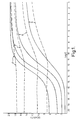
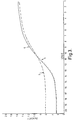
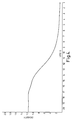
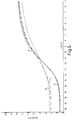
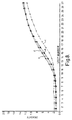
- Figures 1 to 8 are the graphs which illustrate the sensitometric results obtained from the solutions of the present invention and comparative solutions exemplified in the examples of the invention.
- R 1 and R 2 of the above formula (I) may independently be an alkyl group having from 1 to 12 carbon atoms, which may be substituted or unsubstituted.
- the alkyl groups include straight or branched chain unsaturated or saturated alkyl groups or cycloalkyl groups.
- R 1 and R 2 are independently an alkyl group having from 1 to 4 carbon atoms.
- substituents of the alkyl groups a large number of substituent groups can be contemplated.
- the substituent can be hydroxy, alkoxy, carboxy, amino, amido, carbamoyl, sulphonamido and sulphamoyl, each of these being capable of further substitution, e.g. with an alkyl group.
- the alkyl groups can be for example methyl, ethyl, or propyl, especially methyl or ethyl.
- R 1 and R 2 may independently be an aryl group, especially a phenyl group, optionally substituted in particular by one or more halogen, alkyl or alkoxy groups.
- the group A capable of being adsorbed to the silver halide surface defines a group well known in the photographic field.
- A can be selected from thioureas, triazoles, benzotriazoles, mercaptotetrazoles, mercaptoimidazoles, mercaptothiazoles, mercaptooxazoles, mercaptotriazoles, indazoles, imidazoles, benzimidazoles and thioethers.
- A is a benzotriazole group.
- L is in particular the group -O-CO, linked via the oxygen atom to the phenyl group in formula (I), the linking group being hydrolysable in developer solutions.
- the compound (I) when present in the developer is hydrolysed which results in the deactivation of the nucleating ability of the compound after a period of time, for example after a period of time from 15 sec. to one hour, i.e. it self-destructs.
- a bi-nucleophilic agent is an agent which comprises two active nucleophilic sites.
- a bi-nucleophilic agent is for example hydroxylamine, hydrogen peroxide, hydrazine or substituted hydrazine.
- the bi-nucleophilic agent is hydroxylamine. Indeed, it is advantageous to use hydroxylamine as the bi-nucleophilic agent since hydroxylamine is generally already present in developing solutions in order to prevent oxidation of the solution.
- both the compound (I) and the bi-nucleophilic agent are present in a processing solution.
- a processing solution can be, for example, a fogging solution or a colour developing solution.
- the amount of the bi-nucleophilic agent is from 1 x 10 -3 M to 0.3 M, preferably 6 x 10 -3 M to 0.12 M, more preferably 1.2 x 10 -2 M to 0.06 M.
- the amount of compound (I) is from 3 x 10 -7 M to 3 x 10 -3 M, preferably 3 x 10 -6 M to 3 x 10 -5 M.
- the compound (I) can be incorporated in the reversal photographic material, whereas the binucleophilic agent is present in a processing solution.
- the amount of the binucleophilic agent is as defined hereinabove and the coverage of compound (I) is from 1 x 10 -6 mol/m 2 to 3 x 10 -3 mol/m 2 , preferably 10 -5 mol/m 2 to 10 -4 mol/m 2 .
- the reversal photographic processing conventionally comprises a black-and-white developing step, a reversal step, a color developing step, a bleaching step, a fixing step and one or more washing steps.
- the bleaching step and the fixing step can be combined in a single bleach-fixing step.
- Black-and-white developers are well known and include a silver halide reducing agent such as an aminophenol, a polyhydroxybenzene e.g., hydroquinone and its derivatives, a 3-pyrazolidone, a pyrogallol, pyrocatechol and ascorbic acid. Black-and-white developers have been described in Research Disclosure ; September 1994, No 36544 (called thereafter Research Disclosure), Section XIX.A.
- Colour developers comprise compositions which, in their oxidised form, react with a colour coupler to form an image dye, the coupler being present either in the developer or in the photographic material.
- Preferred colour developing agents are p-phenylene diamines.
- 4-amino-3-methyl-N,N-diethylaniline hydrochloride 4-amino-3-methyl-N-ethyl-N- ⁇ -(methanesulphonamido)ethylaniline sulphate hydrate, 4-amino-3-methyl-N-ethyl-N- ⁇ -hydroxyethylaniline sulphate, 4-amino-3- ⁇ - (methanesulphonamido)ethyl-N,N-diethylaniline hydrochloride and 4-amino-N-ethyl-N-(2-methoxyethyl)-m-toluidine di-p-toluene sulphate.
- Developers can contain a large number of materials. They can contain preservatives, antifogging agents, chelating agents for avoiding calcium or magnesium precipitation, ect. Materials which can be used in the developer baths were described in detail in Research Disclosure , Section XIX.
- the bleaching baths conventionally contains metallic ions chelated with aminopolycarboxylic acids such as chelated Fe(III), Co(III), Cr(VI), Cu(II) etc.
- metallic ions chelated with aminopolycarboxylic acids such as chelated Fe(III), Co(III), Cr(VI), Cu(II) etc.
- Compounds useful for bleaching baths are disclosed in Research Disclosure , Section XXA.
- the fixing bath consists of complexing non-exposed silver halides to form soluble complexes, such complexes being eliminated by washing.
- the compounds useful for the fixing step are disclosed in Research Disclosure , Section XXB. Such compounds are conventionally thiosulphates such as ammonium thiosulphate.
- the bleaching solution and the fixing solution can be combined in a single solution called a bleach-fixing solution.
- a bleach-fixing solution is disclosed in Research Disclosure , Section XXC.
- the reversal photographic processing can include one or more additional steps such as washing steps, stabilizing steps or stopping steps as disclosed in Research Disclosure , Section XXD.
- emulsions useful for the present invention can be prepared according to different methods known and described in Research Disclosure , Section I-C.
- the hydrophilic colloidal binder frequently used to manufacture the emulsions is generally gelatine or a gelatine derivative.
- This gelatine can be replaced in part by other synthetic or natural hydrophilic colloids such as albumen, casein, ze ⁇ n, a polyvinyl alcohol, cellulose derivatives such as carboxymethylcellulose for example.
- Such colloids are described in Section II of Research Disclosure .
- the silver halide emulsions of the present invention can be chemically sensitised as described in Research Disclosure , Section IV.
- the emulsions are sensitised with sulphur, selenium and/or gold It is also possible to sensitise the emulsions chemically by reduction.
- the silver halide emulsions can be sensitised spectrally as described in Research Disclosure , Section V.
- the conventional sensitising dyes are polymethine dyes, which comprise cyanines, merocyanines, complex cyanines and merocyanine, oxonols, hemioxonols, styryls, merostyryls, streptocyanines, hemicyanines and arylidenes.
- the colour photographic product of the invention comprises in a conventional fashion dye-forming couplers with 2 or 4 equivalents. These couplers react with the colour developer in its oxidised form to form respectively a cyan, magenta or yellow image dye. These couplers are generally colourless and non-diffusible. According to another known embodiment, these couplers are contained in the development bath. Couplers which can be used are described in Research Disclosure , Section X.
- the photographic product can contain other useful photographic compounds, for example coating aids, stabilising agents, plasticisers, anti-fog agents, tanning agents, antistatic agents, matting agents, etc. Examples of these compounds are described in Research Disclosure , Sections VI, VII, VIII, X.
- the supports which can be used in photography are described in Section XV of Research Disclosure ; Section XV. These supports are generally polymer supports such as cellulose, polystyrene, polyamide or polyvinyl polymers, polyethylene or polyester, paper or metal supports.
- the photographic products can contain other layers, for example a protective top layer, intermediate layers, an antihalation layer, an anti-UV layer, an antistatic layer, etc. These different layers and their arrangements are described in Section XI of Research Disclosure .
- the product of the invention can contain other emulsions known in the field of photography.
- Examples of compounds within formula (I) include the following:
- a monoformat photographic material with the coating structure (CN1) shown below was used in all the examples.
- the silver halide is a 400ASA iodo-bromide tabular grain emulsion with 4% iodide.
- Film strips having the above (CN1) structure were processed in the developer of the composition shown above (Table 1).
- a time-of-development series was run for 2, 3.25, 5 and 8 minutes, represented on Figure 1 by curves a,b,c and d respectively.
- the anti-calcium agent is a 40 % (w/w) aqueous solution of the penta sodium salt of diethylene triamine penta-acetic acid.
- the process cycle was as follows ; where the bleaching step was carried out with a KODAK C-41® bleach(II) solution, and the fixing step with KODAK C-41b® fixing solution.
- Film strips having the above (CN1) structure were processed with the developer composition of Table 1 except that 7 mg/l of the compound N1 was added to the developer composition.
- a time-of-development series was run for 2, 3.25, 5 and 8 minutes, represented by curves a,b,c and d respectively.
- the dashed lines are the sensitometric responses obtained from a developer composition containing the compound N1 and hydroxylamine as bi-nucleophilic agent in accordance with the present invention.
- Film strips having the above (CN1) structure were processed with the developer composition of Example 2 wherein different levels of the compound N1 were added (from 0.01 mg/l to 35 mg/l).
- film strips having the above (CN1) structure were processed with the developer composition of Table 1 except that the compound N2 was added at a level of 10 mg/l.
- a time-of-development series was run for 1, 2.5, 5 and 8 minutes, represented by curves a,b,c and d respectively.
- a film strip having the above (CN1) structure was processed with the developer composition of Table 1 (control).
- a second film strip having the above (CN1) structure was processed with the developer composition of Example 4 wherein the amount of the compound N2 was 3 mg/l.
- the film strip was processed for a 2.5 minutes development time.
- a third film strip having the above (CN1) structure was processed with the developer composition containing N2 (3 mg/l) but free of hydroxylamine.
- a comparison of lines (a) and (b) shows the fogging action of N2.
- the line (c) is very close to the control line (a) demonstrating that the fogging action is no longer operating. This shows clearly that the presence of hydroxylamine was necessary in this example for there to be a fogging effect.
- a film strip having the above CN1 structure is processed with a colour reversal processing, which comprises the following steps : where the bleach and fix are the same as used in Example 1 and the colour developer has the composition shown below.
- the black-and-white developer was Kodak Readymatic® Developer.
- a film strip having the above (CN1) structure was processed with the developer composition of Table 1 (control).
- a second film strip was processed with a developer solution of Table 1 except that N3 was added at a level of 10 mg/l.
- a time-of-development series was run for 1, 2.5, 5 and 8 minutes, represented by curves a,b,c and d respectively.
- This material acts as a nucleator initially but then loses its activity after time of standing in the developer composition.
- the N3 compound thus can advantageously be incorporated into the photographic material, carrying-out its fogging function when contacted with a composition containing a bi-nucleophilic agent. If any fogging compound washes out into the developer solution it is deactivated and so does not build up to unacceptable levels.
- the material N2 was incorporated in an emulsion layer similar to that shown in coating structure (CN1).
- N2 was incorporated at three different levels 1, 10 and 100 ⁇ mol/m 2 , represented on Figure 7 by curves a,b and c respectively, d being a control with no N2.
- Example 9 the experiment in Example 9 was repeated but now with hydroxylamine sulphate removed from the developer solution. It can be seen from Figure 8 that the fogging effect is now not present and the effect of increasing levels of N2 in the coating is to retard development.
- the carboxylic acid (1) (12.0 g, 47.4 mmol) was stirred at room temperature in thionyl chloride (190 ml) for 4.5 h. The excess thionyl chloride was distilled off under reduced pressure to give a yellow syrup. Dry THF (150 ml) was added and the solvent evaporated off under reduced pressure; this process was repeated again and a yellow solid was obtained. The above solid was dissolved in dry THF (80 ml) and added dropwise to a solution of the hydroxy compound (2) (8.4 g, 45.9 mmol) and triethylamine (6.0 g, 59.4 mmol) in dry THF at ca. 7°C.
- the aniline (4) (8.0 g, 20.6 mmol) was added portionwise to a mixture of water (40 ml) and conc. HCl (96 ml) at room temperature with rapid stirring. After stirring for 0.5 h, acetic acid (80 ml) was added to the above suspension. The mixture was then cooled to 5°C and an ice cold solution of sodium nitrite (1.64 g, 23.7 mmol) in water (8 ml) was added dropwise over 10 minutes. Stirring was continued for a further 20 minutes at 5°C. The mixture was filtered under suction, directly into a rapidly stirred solution of stannous chloride (16 g, 84.4 mmol) in conc.
Landscapes
- Physics & Mathematics (AREA)
- General Physics & Mathematics (AREA)
- Spectroscopy & Molecular Physics (AREA)
- Silver Salt Photography Or Processing Solution Therefor (AREA)
Applications Claiming Priority (2)
| Application Number | Priority Date | Filing Date | Title |
|---|---|---|---|
| GB9716554 | 1997-08-06 | ||
| GBGB9716554.2A GB9716554D0 (en) | 1997-08-06 | 1997-08-06 | New fogging solution for a reversal process |
Publications (2)
| Publication Number | Publication Date |
|---|---|
| EP0896248A2 true EP0896248A2 (de) | 1999-02-10 |
| EP0896248A3 EP0896248A3 (de) | 1999-02-24 |
Family
ID=10817027
Family Applications (1)
| Application Number | Title | Priority Date | Filing Date |
|---|---|---|---|
| EP98202616A Withdrawn EP0896248A3 (de) | 1997-08-06 | 1998-08-03 | Verschleierungslösung für ein photographisches Umkehrverfahren |
Country Status (4)
| Country | Link |
|---|---|
| US (2) | US5962203A (de) |
| EP (1) | EP0896248A3 (de) |
| JP (1) | JPH11109571A (de) |
| GB (1) | GB9716554D0 (de) |
Families Citing this family (1)
| Publication number | Priority date | Publication date | Assignee | Title |
|---|---|---|---|---|
| AU2012272644B2 (en) | 2011-06-23 | 2017-03-23 | Rho Renewables, Inc. | Recombinant production systems for aromatic molecules |
Family Cites Families (5)
| Publication number | Priority date | Publication date | Assignee | Title |
|---|---|---|---|---|
| DE1213241B (de) * | 1964-07-24 | 1966-03-24 | Agfa Gevaert Ag | Verfahren zur Herstellung von photographischen direktpositiven Farbstoffbildern |
| DE69122641T2 (de) * | 1990-02-26 | 1997-06-05 | Agfa Gevaert Nv | Photographische Stabilisatoren mit einer Entwicklergruppe |
| EP0449340B1 (de) * | 1990-02-26 | 1996-10-16 | Agfa-Gevaert N.V. | Photographische Stabilisatoren mit einer Entwicklergruppe |
| DE4217022A1 (de) * | 1992-05-22 | 1993-11-25 | Agfa Gevaert Ag | Verarbeitung von Umkehrmaterialien |
| JP2774909B2 (ja) * | 1992-10-23 | 1998-07-09 | 富士写真フイルム株式会社 | ハロゲン化銀カラー反転写真感光材料 |
-
1997
- 1997-08-06 GB GBGB9716554.2A patent/GB9716554D0/en active Pending
-
1998
- 1998-08-03 EP EP98202616A patent/EP0896248A3/de not_active Withdrawn
- 1998-08-05 JP JP10221663A patent/JPH11109571A/ja active Pending
- 1998-08-06 US US09/130,411 patent/US5962203A/en not_active Expired - Fee Related
-
1999
- 1999-04-29 US US09/301,913 patent/US6033833A/en not_active Expired - Fee Related
Also Published As
| Publication number | Publication date |
|---|---|
| GB9716554D0 (en) | 1997-10-08 |
| JPH11109571A (ja) | 1999-04-23 |
| US6033833A (en) | 2000-03-07 |
| EP0896248A3 (de) | 1999-02-24 |
| US5962203A (en) | 1999-10-05 |
Similar Documents
| Publication | Publication Date | Title |
|---|---|---|
| US4546070A (en) | Method for processing color photographic light-sensitive material | |
| JPH0473573B2 (de) | ||
| JPH0246932B2 (de) | ||
| JPS6327706B2 (de) | ||
| JPH0349090B2 (de) | ||
| US4474874A (en) | Color photographic light-sensitive material | |
| JPS609257B2 (ja) | カラ−写真処理方法 | |
| US4555477A (en) | Photographic element and process utilizing metal complex color masking dyes | |
| US4485169A (en) | Silver halide photographic light-sensitive materials | |
| JPS59162546A (ja) | ハロゲン化銀写真感光材料 | |
| JPH0410061B2 (de) | ||
| US5962203A (en) | Fogging solution for a reversal process | |
| JPH0244053B2 (de) | ||
| JPS6151147A (ja) | カラ−写真処理法 | |
| JPS6118947A (ja) | ハロゲン化銀カラ−写真感光材料 | |
| JPH0443345A (ja) | ハロゲン化銀カラー写真感光材料 | |
| JPH03293662A (ja) | ハロゲン化銀カラー写真感光材料 | |
| US4299913A (en) | Photographic reversal process without second exposure | |
| JPH0135339B2 (de) | ||
| JPS63271343A (ja) | ハロゲン化銀感光材料 | |
| US5256529A (en) | Silver halide photographic materials containing sulfonamido-solubilized pyrazolotriazole couplers | |
| EP0577182B1 (de) | Photographisches Material und Verfahren, einen Kuppler umfassend, das einen auswaschbaren Farbstoff zu bilden vermag | |
| JPH0756296A (ja) | 色素安定剤の製造方法及び写真要素 | |
| JPH1048789A (ja) | ハロゲン化銀カラー写真感光材料の処理方法 | |
| JPS6134665B2 (de) |
Legal Events
| Date | Code | Title | Description |
|---|---|---|---|
| PUAI | Public reference made under article 153(3) epc to a published international application that has entered the european phase |
Free format text: ORIGINAL CODE: 0009012 |
|
| PUAL | Search report despatched |
Free format text: ORIGINAL CODE: 0009013 |
|
| AK | Designated contracting states |
Kind code of ref document: A2 Designated state(s): DE FR GB |
|
| AX | Request for extension of the european patent |
Free format text: AL;LT;LV;MK;RO;SI |
|
| AK | Designated contracting states |
Kind code of ref document: A3 Designated state(s): AT BE CH CY DE DK ES FI FR GB GR IE IT LI LU MC NL PT SE |
|
| AX | Request for extension of the european patent |
Free format text: AL;LT;LV;MK;RO;SI |
|
| 17P | Request for examination filed |
Effective date: 19990722 |
|
| AKX | Designation fees paid |
Free format text: DE FR GB |
|
| STAA | Information on the status of an ep patent application or granted ep patent |
Free format text: STATUS: THE APPLICATION HAS BEEN WITHDRAWN |
|
| 18W | Application withdrawn |
Effective date: 20040213 |