EP0896286A2 - Méthode d'analyse et de conception optimale d'une structure de materiau micro-inhomogéne par une procédure unifiée de simulation moleculaire et d'analyse d'homogenisation - Google Patents
Méthode d'analyse et de conception optimale d'une structure de materiau micro-inhomogéne par une procédure unifiée de simulation moleculaire et d'analyse d'homogenisation Download PDFInfo
- Publication number
- EP0896286A2 EP0896286A2 EP98306039A EP98306039A EP0896286A2 EP 0896286 A2 EP0896286 A2 EP 0896286A2 EP 98306039 A EP98306039 A EP 98306039A EP 98306039 A EP98306039 A EP 98306039A EP 0896286 A2 EP0896286 A2 EP 0896286A2
- Authority
- EP
- European Patent Office
- Prior art keywords
- micro
- inhomogeneous material
- particle
- procedure
- constituent materials
- Prior art date
- Legal status (The legal status is an assumption and is not a legal conclusion. Google has not performed a legal analysis and makes no representation as to the accuracy of the status listed.)
- Withdrawn
Links
- 239000000463 material Substances 0.000 title claims abstract description 91
- 238000000034 method Methods 0.000 title claims abstract description 67
- 238000012900 molecular simulation Methods 0.000 title claims abstract description 11
- 238000004458 analytical method Methods 0.000 title claims abstract description 9
- 238000000265 homogenisation Methods 0.000 title claims abstract description 7
- 238000013461 design Methods 0.000 title description 6
- 239000000470 constituent Substances 0.000 claims abstract description 32
- 239000002245 particle Substances 0.000 claims abstract description 26
- 230000001133 acceleration Effects 0.000 claims abstract description 7
- 239000002131 composite material Substances 0.000 description 10
- 239000010438 granite Substances 0.000 description 10
- 238000004364 calculation method Methods 0.000 description 7
- 239000010453 quartz Substances 0.000 description 7
- VYPSYNLAJGMNEJ-UHFFFAOYSA-N silicon dioxide Inorganic materials O=[Si]=O VYPSYNLAJGMNEJ-UHFFFAOYSA-N 0.000 description 7
- 229910052500 inorganic mineral Inorganic materials 0.000 description 5
- 239000011707 mineral Substances 0.000 description 5
- 230000000737 periodic effect Effects 0.000 description 5
- 239000000919 ceramic Substances 0.000 description 4
- 239000004567 concrete Substances 0.000 description 4
- 230000001419 dependent effect Effects 0.000 description 4
- 239000010433 feldspar Substances 0.000 description 4
- 230000003993 interaction Effects 0.000 description 4
- 238000003970 interatomic potential Methods 0.000 description 4
- 238000012986 modification Methods 0.000 description 4
- 230000004048 modification Effects 0.000 description 4
- XLYOFNOQVPJJNP-UHFFFAOYSA-N water Substances O XLYOFNOQVPJJNP-UHFFFAOYSA-N 0.000 description 4
- 239000013078 crystal Substances 0.000 description 3
- 238000006073 displacement reaction Methods 0.000 description 3
- 239000010445 mica Substances 0.000 description 3
- 229910052618 mica group Inorganic materials 0.000 description 3
- 238000000329 molecular dynamics simulation Methods 0.000 description 3
- 230000005624 perturbation theories Effects 0.000 description 3
- XKRFYHLGVUSROY-UHFFFAOYSA-N Argon Chemical compound [Ar] XKRFYHLGVUSROY-UHFFFAOYSA-N 0.000 description 2
- 238000010586 diagram Methods 0.000 description 2
- 230000004069 differentiation Effects 0.000 description 2
- 238000002474 experimental method Methods 0.000 description 2
- 238000004519 manufacturing process Methods 0.000 description 2
- 230000000704 physical effect Effects 0.000 description 2
- 238000005293 physical law Methods 0.000 description 2
- 239000011435 rock Substances 0.000 description 2
- 239000002689 soil Substances 0.000 description 2
- 239000000126 substance Substances 0.000 description 2
- 238000012935 Averaging Methods 0.000 description 1
- OKTJSMMVPCPJKN-UHFFFAOYSA-N Carbon Chemical compound [C] OKTJSMMVPCPJKN-UHFFFAOYSA-N 0.000 description 1
- 239000004593 Epoxy Substances 0.000 description 1
- 238000000342 Monte Carlo simulation Methods 0.000 description 1
- 238000013459 approach Methods 0.000 description 1
- 229910052786 argon Inorganic materials 0.000 description 1
- 229910052799 carbon Inorganic materials 0.000 description 1
- 239000004568 cement Substances 0.000 description 1
- 230000008859 change Effects 0.000 description 1
- 238000005094 computer simulation Methods 0.000 description 1
- 229910052593 corundum Inorganic materials 0.000 description 1
- 239000010431 corundum Substances 0.000 description 1
- 150000001924 cycloalkanes Chemical class 0.000 description 1
- 238000009792 diffusion process Methods 0.000 description 1
- 230000007613 environmental effect Effects 0.000 description 1
- 239000000835 fiber Substances 0.000 description 1
- 239000003365 glass fiber Substances 0.000 description 1
- 239000007788 liquid Substances 0.000 description 1
- 238000011089 mechanical engineering Methods 0.000 description 1
- 239000002184 metal Substances 0.000 description 1
- 238000000324 molecular mechanic Methods 0.000 description 1
- 229920000642 polymer Polymers 0.000 description 1
- 238000005381 potential energy Methods 0.000 description 1
- 238000012552 review Methods 0.000 description 1
- 239000004576 sand Substances 0.000 description 1
- 238000000926 separation method Methods 0.000 description 1
- 238000004088 simulation Methods 0.000 description 1
- 239000007787 solid Substances 0.000 description 1
- 230000003068 static effect Effects 0.000 description 1
- 230000000930 thermomechanical effect Effects 0.000 description 1
- 239000002759 woven fabric Substances 0.000 description 1
Images


Classifications
-
- G—PHYSICS
- G16—INFORMATION AND COMMUNICATION TECHNOLOGY [ICT] SPECIALLY ADAPTED FOR SPECIFIC APPLICATION FIELDS
- G16C—COMPUTATIONAL CHEMISTRY; CHEMOINFORMATICS; COMPUTATIONAL MATERIALS SCIENCE
- G16C10/00—Computational theoretical chemistry, i.e. ICT specially adapted for theoretical aspects of quantum chemistry, molecular mechanics, molecular dynamics or the like
-
- G—PHYSICS
- G16—INFORMATION AND COMMUNICATION TECHNOLOGY [ICT] SPECIALLY ADAPTED FOR SPECIFIC APPLICATION FIELDS
- G16C—COMPUTATIONAL CHEMISTRY; CHEMOINFORMATICS; COMPUTATIONAL MATERIALS SCIENCE
- G16C60/00—Computational materials science, i.e. ICT specially adapted for investigating the physical or chemical properties of materials or phenomena associated with their design, synthesis, processing, characterisation or utilisation
Definitions
- This invention relates to a method of analysis and optimal design for a structure made of a micro-inhomogeneous material such as composite material, ceramics, concrete, geological material (such as rock and soil) and polycrystalline material including metal by using a unified procedure of a molecular simulation method (hereafter abbreviated as MS) and a homogenization analysis (hereafter abbreviated as HA).
- MS molecular simulation method
- HA homogenization analysis
- the first phase of the profile is at a macro-continuum level of the structure. That is, the structure is built as an assembly of macro-continuum elements.
- the second phase is at a micro-continuum level of the structure. It should be noted that most of macro-continuum materials, which seem to be homogeneous in the macro-continuum level, in fact comprise several constituent components when considered from the microscopic point of view. This kind of materials is said to be micro-inhomogeneous.
- the third phase of the profile is at a molecular level. This phase is founded on the physical fact that each constituent material of the micro-continuum consists of a vast number of atoms and/or molecules.
- a bridge is considered as a target structure that is made of granite.
- the granite is a macro-continuum material.
- Granite includes three major component minerals such as quartz, feldspar and mica in the micro-continuum level thereof. That is, the micro-structure of granite comprises three constituent minerals, each in turn including a set of atoms/molecules that constitutes a molecular system.
- a concrete dam structure has the same phases. That is, the concrete is a macro-continuum material; gravel, sand and cement past are micro-continuum materials; and each of the micro-continuum materials constitutes a molecular system.
- the conventional macro-phenomenological procedure is not appropriate for analyzing the behavior of the micro-inhomogeneous material, especially where such a material is used under very extreme engineering condition such as high pressure, high temperature and/or long elapsed time.
- MS is a known type of a computer simulation technique.
- a material system which consists of particles, of atoms and/or molecules, and provides two physical laws, that is, the interatomic interaction potential and the equation of motion or equilibrium. Positions, velocities and/or accelerations of all particles are then calculated under the foregoing physical laws.
- a statistical thermodynamics procedure is applied to the simulated results, and one can estimate bulk-based physicochemical properties of the material (hereafter called the bulk properties of the material) such as structure factor of the solid crystal. It is noted that the bulk properties represent thermodynamics averages of the ensemble of particles.
- MC developed by Metropolis et al., estimates the statistical equilibrium state of particles by generating their displacements randomly. Various thermomechanical properties are then calculated by averaging over the states in the Markov chain.
- MM is applied for a molecular system which consists of finite number of atoms, and determines the equilibrium state by optimizing the structure and potential energy.
- the bulk properties are calculated by using statistical thermodynamics procedure.
- MM is mainly used in the field of organic chemistry.
- MD solves the equation of motion for a system of particles under a given interatomic interaction potential by using a time-discrete finite difference scheme, and the whole time trajectories of particles are specified.
- the bulk properties are calculated by using statistical thermodynamics procedure for the results.
- the MD system usually contains many particles of atoms and/or molecules in a basic cell, and (for simplicity of calculation) the method uses a three dimensional periodic lattice, which is repeated in each direction. Under these conditions one solves a time discrete form of the equation of motion, and the instantaneous position, velocity and acceleration of each particle are specified. Then, using these results and statistical thermodynamics theory, one computes for the material the bulk properties and their change with time, such as density, diffusivity of atoms, molecular vibrations, temperature- and/or pressure-dependent nonlinear elastic moduli, viscosity, heat capacity and heat conductivity.
- Equation (3) presents a potential function developed by Kawamura so as to reproduce structural and physical properties of several oxide crystals such as quartz, corundum and feldspars properly.
- 2-body term: U ij ( r ij ) z i z j e 2 4 ⁇ 0 r ij + f 0 ( b i + b j )exp[ a i +a j -r ij b i +b j ]- c i c i r 6 ij + D ij [exp ⁇ -2 ⁇ ij ( r ij - r * ij ) ⁇ - 2exp ⁇ - ⁇ ij ( r ij - r * ij ) ⁇ ].
- MD generates information at the molecular level such as position, velocity and acceleration of each particle.
- ⁇ A > gives the time average of a quantity A ( t ) taken over a long time interval:
- the right hand side term is used for a discrete system with N -particles for N s -number of a time slice ⁇ .
- the pressure P is calculated as where r i is the position vector and F i the force acting on the i -th particle. Similar to this, one can calculate the stress tensor which is the force per unit area acting on three coordinate surfaces in the three dimensional case.
- Other components of strains including shear components can be calculated in the similar manner. If the pressure is changed, one gets different value of strain. Plotting these values yields a stress-strain relation in the micro-continuum level. Thus, one gets a stress or strain dependent type of the Young's modulus E .
- the HA method which is based on a new type of perturbation theory, has been developed for a micro-inhomogeneous media with a periodic microstructure. This method allows a determination both macroscopic and microscopic distribution of field variables such as temperature, displacement, stress and strain. It is note that the perturbation theory is a method mainly for solving nonlinear problems.
- HA The simplest example of HA is shown here for applying the one dimensional static equilibrium problem, which is described by the following equation.
- u ⁇ ( x ) denotes the displacement which changes rapidly in the micro-continuum level, E Young's modulus, and f the body force.
- E also varies in that micro-continuum level.
- the size of the microstructure be ⁇ Y , and one introduces a local coordinate system y in the micro-continuum level.
- a finite element approximation method is applied for solving the above mentioned microscale and macroscale equations.
- MS methods and HA have been developed in different fields, and no intercorrelation has been tried in these two fields. Both the MS methods and HA involve difficulties in attempting to apply them to simulate the behavior of a practical engineering structure made by a micro-inhomogeneous material: MS methods can only treat a system with far less particles than in a practical structure, while in HA it is difficult to find bulk properties of each constituent material and their interfaces. In view of the difficulties of the prior art, it is thus important to establish an accurate method for analyzing the behavior of a structure made of micro-inhomogeneous material and for designing the micro-structure of the micro-inhomogeneous material optimally in the case of manufacturing.
- the present invention overcomes the difficulties of the prior art, by providing a unified MS and HA procedure for analyzing the behavior of a micro-inhomogeneous material and for designing the micro-structure of the micro-inhomogeneous material optimally in the case of manufacturing.
- inventive method it is possible to calculate an accurate behavior of the micro-inhomogeneous material in a seamless manner starting from the molecular level to the macro-continuum level, and to design its micro-structure optimally.
- the invention makes possible an accurate prediction of the behavior of micro-inhomogeneous materials which are used under extreme conditions such as high temperature and/or high pressure, and because the optimal arrangement of the micro-structure is made possible, the invention thus makes it possible to design properly a practical structure made of micro-inhomogeneous materials. That is, even if the structure is used under ultimate conditions, the invention makes it possible to predict the behavior accurately and to show the effective way to maintain such structures safely.
- the invention provides an innovative method for analyzing the structure made of micro-inhomogeneous materials, such as composite material, ceramics, concrete, geological material (rock and soil) and polycrystalline material, and for designing the micro-structure optimally.
- the inventive method may include the following procedures: (a) By applying MS, positions r i , velocities v i and/or accelerations a i of all particles are determined for a system of particles of atoms and/or molecules that consists of constituent materials and interfaces of the micro-inhomogeneous material under given physicochemical conditions such that temperature T and pressure P are constant. Symbolically the results of MS are here called a particle-data.
- E ( T ( r i , v i , a i ) ,P ( r i , v i , a i )) E ( r i , v i , a i )).
- FIG. 1 Shown in Figure 1 is a micro-inhomogeneous material as treated in accordance with the present invention. This material involves three phases of the profiles, that is, the macro-continuum level, the micro-continuum level with micro-inhomogeneity and the molecular level. It should be noted that constituent components of the micro-continuum shown in Figure 1 are Mat. 1, 2, 3 and 4, which gives the micro-structure.
- FIG. 2 shows the schematic diagram of the present invention, that is, the unified method of MS and HA which includes the following procedures: (a) Calculation starts by using MS.
- MS the positions r i , velocities v i and/or accelerations a i of all particles are determined under given physicochemical conditions such that temperature T and pressure P are constant,.
- the results of MS are called a particle-data.
- the statistical thermodynamics procedure for the particle-data is applied to determine physicochemical properties such as Young's modulus E and the thermal conductivity k of each constituent material and their interfaces that consist of the micro-continuum body.
- the specified properties are functions of the given physicochemical conditions, and are thus functions of the particle-data.
- the targeted micro-inhomogeneous material is artificial such as composite material and ceramic, it is judged whether the micro-structure is appropriate in the sense that the field variables such as stress are allowable. (g) If not, the steps (a) to (f) are repeatedly applied after changing the geometry and/or type of the constituent material(s). Then, the micro-structure can be optimally arranged.
- MD is employed as a typical exemplary method of MS. It should be recognized, however, that any other method of MS (wether or not as hereinabove described) may be used.
- Figure 3 shows the schematic diagram of MD and the subsequent statistical thermodynamic procedure. Details of MD are presented in the preceding section BACKGROUND OF THE INVENTION.
- HA Macroscale and microscale problems in HA are shown in Figure 4.
- HA is developed for a micro-inhomogeneous media with a periodic micro-structure based on a new type of perturbation theory.
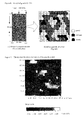
- Figure 5 shows a typical example of a micro-inhomogeneous material, that is, a granite specimen.
- the constituent minerals of granite are quartz, feldspar and mica.
- the interatomic potential models employed are given by Equation (3) and Equation (4), and the parameters for each mineral are found in Figure 6.
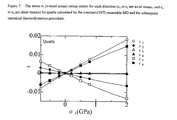
- the stress ⁇ 1 (that is, the x-axial stress) is calculated as shown in Figure 7 corresponding to the strains for each direction (that is, ⁇ 1 to ⁇ 3 are the axial strains, and ⁇ 4 to ⁇ 6 are the shear strains) for quartz under the constant-(NPT) ensemble MD and by the subsequent statistical thermodynamics procedure.
- the quartz is of a trigonal crystal system, so the responses shown in Figure 7 are completely anisotropic.
- a model of HA is formed as shown in Figure 8.
- the micro-structure is specified by microscope observation.
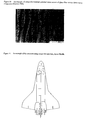
- the present invention thus makes it possible to redesign its micro-structure optimally, for example, by changing the size of fibers.
Landscapes
- Engineering & Computer Science (AREA)
- Computing Systems (AREA)
- Theoretical Computer Science (AREA)
- Life Sciences & Earth Sciences (AREA)
- Bioinformatics & Cheminformatics (AREA)
- Bioinformatics & Computational Biology (AREA)
- Physics & Mathematics (AREA)
- Health & Medical Sciences (AREA)
- General Health & Medical Sciences (AREA)
- Spectroscopy & Molecular Physics (AREA)
- Management, Administration, Business Operations System, And Electronic Commerce (AREA)
- Investigating Strength Of Materials By Application Of Mechanical Stress (AREA)
Applications Claiming Priority (5)
| Application Number | Priority Date | Filing Date | Title |
|---|---|---|---|
| JP9207596A JP2973190B2 (ja) | 1997-08-01 | 1997-08-01 | 分子シミュレ−ション法と均質化法の結合解析による材料及び構造物の設計手法 |
| JP20759697 | 1997-08-01 | ||
| JP207596/97 | 1997-08-01 | ||
| US151997A | 1997-12-31 | 1997-12-31 | |
| US1519 | 1997-12-31 |
Publications (2)
| Publication Number | Publication Date |
|---|---|
| EP0896286A2 true EP0896286A2 (fr) | 1999-02-10 |
| EP0896286A3 EP0896286A3 (fr) | 2001-01-17 |
Family
ID=26516350
Family Applications (1)
| Application Number | Title | Priority Date | Filing Date |
|---|---|---|---|
| EP98306039A Withdrawn EP0896286A3 (fr) | 1997-08-01 | 1998-07-29 | Méthode d'analyse et de conception optimale d'une structure de materiau micro-inhomogéne par une procédure unifiée de simulation moleculaire et d'analyse d'homogenisation |
Country Status (2)
| Country | Link |
|---|---|
| US (1) | US6212485B1 (fr) |
| EP (1) | EP0896286A3 (fr) |
Cited By (2)
| Publication number | Priority date | Publication date | Assignee | Title |
|---|---|---|---|---|
| CN104361167A (zh) * | 2014-11-04 | 2015-02-18 | 南京航空航天大学 | 一种基于相场法分析的含电极铁电单晶有限元预测方法 |
| WO2019179905A3 (fr) * | 2018-03-19 | 2020-01-02 | Cosmologic Gmbh & Co. Kg | Cosmoplex : simulation auto-cohérente de systèmes à auto-organisation |
Families Citing this family (6)
| Publication number | Priority date | Publication date | Assignee | Title |
|---|---|---|---|---|
| US7016825B1 (en) * | 2000-10-26 | 2006-03-21 | Vextec Corporation | Method and apparatus for predicting the failure of a component |
| US7359841B1 (en) * | 2001-06-21 | 2008-04-15 | Hixon Technologies, Ltd. | Method and system for the efficient calculation of unsteady processes on arbitrary space-time domains |
| US20040122625A1 (en) * | 2002-08-07 | 2004-06-24 | Nasser Loren A. | Apparatus and method for predicting total ownership cost |
| US8959128B1 (en) | 2011-11-16 | 2015-02-17 | Google Inc. | General and nested Wiberg minimization |
| EP3447717A1 (fr) * | 2017-08-24 | 2019-02-27 | Tata Consultancy Services Limited | Systèmes et procédés pour déterminer des propriétés de matériaux composites pour prédire le comportement de structures |
| CN118136188B (zh) * | 2024-05-08 | 2024-07-26 | 洛阳船舶材料研究所(中国船舶集团有限公司第七二五研究所) | 一种金属结构全塑性断裂设计方法 |
Family Cites Families (2)
| Publication number | Priority date | Publication date | Assignee | Title |
|---|---|---|---|---|
| US5260882A (en) * | 1991-01-02 | 1993-11-09 | Rohm And Haas Company | Process for the estimation of physical and chemical properties of a proposed polymeric or copolymeric substance or material |
| US5553004A (en) * | 1993-11-12 | 1996-09-03 | The Board Of Trustees Of The Leland Stanford Jr. University | Constrained langevin dynamics method for simulating molecular conformations |
-
1998
- 1998-07-29 EP EP98306039A patent/EP0896286A3/fr not_active Withdrawn
-
2000
- 2000-01-24 US US09/490,873 patent/US6212485B1/en not_active Expired - Fee Related
Non-Patent Citations (2)
| Title |
|---|
| SWAN C C ET AL: "Homogenization-based analysis and design of composites" PROCEEDINGS OF THE 1994 2ND INTERNATIONAL CONFERENCE ON COMPUTATIONAL STRUCTURES TECHNOLOGY;ATHENS, GREECE AUG 30-SEP 1 1994, vol. 64, no. 1-4, 30 August 1994 (1994-08-30), pages 603-621, XP000965775 Comput Struct;Computers and Structures Jul-Aug 1997 Elsevier Science Ltd, Oxford, Engl * |
| TAKEUCHI M ET AL: "DEVELOPMENT AND APPLICATION OF MASPHYC COMPUTATIONAL MATERIAL DESIGN SYSTEM APPLICATION PACKAGE IN HPC" FUJITSU-SCIENTIFIC AND TECHNICAL JOURNAL,JP,FUJITSU LIMITED. KAWASAKI, vol. 33, no. 1, 1 June 1997 (1997-06-01), pages 52-61, XP000736496 ISSN: 0016-2523 * |
Cited By (5)
| Publication number | Priority date | Publication date | Assignee | Title |
|---|---|---|---|---|
| CN104361167A (zh) * | 2014-11-04 | 2015-02-18 | 南京航空航天大学 | 一种基于相场法分析的含电极铁电单晶有限元预测方法 |
| CN104361167B (zh) * | 2014-11-04 | 2017-09-05 | 南京航空航天大学 | 一种基于相场法分析的含电极铁电单晶有限元预测方法 |
| WO2019179905A3 (fr) * | 2018-03-19 | 2020-01-02 | Cosmologic Gmbh & Co. Kg | Cosmoplex : simulation auto-cohérente de systèmes à auto-organisation |
| JP2021519475A (ja) * | 2018-03-19 | 2021-08-10 | ダッソー システムズ ドイチェラント ゲーエムベーハー | COSMOplex:自己組織化システムの自己一貫性シミュレーション |
| US12451218B2 (en) | 2018-03-19 | 2025-10-21 | Dassault Systemes Americas Corp. | Cosmoplex: self-consistent simulation of self-organizing systems |
Also Published As
| Publication number | Publication date |
|---|---|
| US6212485B1 (en) | 2001-04-03 |
| EP0896286A3 (fr) | 2001-01-17 |
Similar Documents
| Publication | Publication Date | Title |
|---|---|---|
| Zhai et al. | Micromechanical simulation of dynamic fracture using the cohesive finite element method | |
| Feng et al. | Damage micromechanics for constitutive relations and failure of microcracked quasi-brittle materials | |
| Tiwari et al. | Thermo-viscoelastic transversely isotropic rotating hollow cylinder based on three-phase lag thermoelastic model and fractional Kelvin–Voigt type | |
| Urata et al. | Higher order Cauchy–Born rule based multiscale cohesive zone model and prediction of fracture toughness of silicon thin films | |
| Nebab et al. | Warping and porosity effects on the mechanical response of FG-Beams on non-homogeneous foundations via a Quasi-3D HSDT | |
| Mohammadi et al. | Stochastic analysis of pull-in instability of geometrically nonlinear size-dependent FGM micro beams with random material properties | |
| EP0896286A2 (fr) | Méthode d'analyse et de conception optimale d'une structure de materiau micro-inhomogéne par une procédure unifiée de simulation moleculaire et d'analyse d'homogenisation | |
| Kabore et al. | Micromechanical model for sintering and damage in viscoelastic porous ice and snow. Part II: Validation | |
| Zhu et al. | A comprehensive approach for mesoscale discrete element modelling of mechanical and fracture behavior of concrete: R. Zhu et al. | |
| CN114818404B (zh) | 一种脆性材料裂纹扩展的预测方法 | |
| Hazeghian et al. | DEM-aided study of Coulomb and Roscoe theories for shear band inclination | |
| Abbès et al. | A FEM multiscale homogenization procedure using nanoindentation for high performance concrete | |
| Valliappan et al. | Earthquake analysis of gravity dams based on damage mechanics concept | |
| JP2973190B2 (ja) | 分子シミュレ−ション法と均質化法の結合解析による材料及び構造物の設計手法 | |
| Khan et al. | An analysis of deformation and failure in rectangular tensile bars accounting for void shape changes | |
| Ahmed et al. | The thermal study of wave propagation in functionally graded material plates (FGM) based on neutral surface position | |
| Becker et al. | Incorporation of microstructural geometry in material modelling | |
| Timothy et al. | Effective diffusivity of porous materials with microcracks: Self-similar mean-field homogenization and pixel finite element simulations | |
| Randjbaran et al. | A review paper on comparison of numerical techniques for finding approximate solutions to boundary value problems on post-buckling in functionally graded materials | |
| Davis et al. | Investigating shock wave propagation, evolution, and anisotropy using a moving window concurrent atomistic–continuum framework | |
| Bai et al. | Trans-scale mechanics: looking for the missing links between continuum and micro/nanoscopic reality | |
| McMillan et al. | Predicting Bubble Fragmentation in Superfluids | |
| Mastilović | Introduction to Computational Mechanics of Discontinua | |
| Stupkiewicz | Micromechanics of contact and interphase layers | |
| Li | Micromechanics and Multi-Physics of Quasi-Brittle Materials with Application to Fiber Reinforced Concrete and Granular Rocks |
Legal Events
| Date | Code | Title | Description |
|---|---|---|---|
| PUAI | Public reference made under article 153(3) epc to a published international application that has entered the european phase |
Free format text: ORIGINAL CODE: 0009012 |
|
| AK | Designated contracting states |
Kind code of ref document: A2 Designated state(s): CH DE FR GB LI SE |
|
| AX | Request for extension of the european patent |
Free format text: AL;LT;LV;MK;RO;SI |
|
| PUAL | Search report despatched |
Free format text: ORIGINAL CODE: 0009013 |
|
| AK | Designated contracting states |
Kind code of ref document: A3 Designated state(s): AT BE CH CY DE DK ES FI FR GB GR IE IT LI LU MC NL PT SE |
|
| AX | Request for extension of the european patent |
Free format text: AL;LT;LV;MK;RO;SI |
|
| 17P | Request for examination filed |
Effective date: 20010216 |
|
| AKX | Designation fees paid |
Free format text: CH DE FR GB LI SE |
|
| 17Q | First examination report despatched |
Effective date: 20041203 |
|
| STAA | Information on the status of an ep patent application or granted ep patent |
Free format text: STATUS: THE APPLICATION IS DEEMED TO BE WITHDRAWN |
|
| 18D | Application deemed to be withdrawn |
Effective date: 20050414 |