EP0897960A2 - Composition d'encre à changement de phase - Google Patents
Composition d'encre à changement de phase Download PDFInfo
- Publication number
- EP0897960A2 EP0897960A2 EP98306746A EP98306746A EP0897960A2 EP 0897960 A2 EP0897960 A2 EP 0897960A2 EP 98306746 A EP98306746 A EP 98306746A EP 98306746 A EP98306746 A EP 98306746A EP 0897960 A2 EP0897960 A2 EP 0897960A2
- Authority
- EP
- European Patent Office
- Prior art keywords
- colorant
- black
- phase change
- absorbance
- region
- Prior art date
- Legal status (The legal status is an assumption and is not a legal conclusion. Google has not performed a legal analysis and makes no representation as to the accuracy of the status listed.)
- Granted
Links
Images


Classifications
-
- C—CHEMISTRY; METALLURGY
- C09—DYES; PAINTS; POLISHES; NATURAL RESINS; ADHESIVES; COMPOSITIONS NOT OTHERWISE PROVIDED FOR; APPLICATIONS OF MATERIALS NOT OTHERWISE PROVIDED FOR
- C09D—COATING COMPOSITIONS, e.g. PAINTS, VARNISHES OR LACQUERS; FILLING PASTES; CHEMICAL PAINT OR INK REMOVERS; INKS; CORRECTING FLUIDS; WOODSTAINS; PASTES OR SOLIDS FOR COLOURING OR PRINTING; USE OF MATERIALS THEREFOR
- C09D11/00—Inks
- C09D11/30—Inkjet printing inks
- C09D11/34—Hot-melt inks
-
- B—PERFORMING OPERATIONS; TRANSPORTING
- B41—PRINTING; LINING MACHINES; TYPEWRITERS; STAMPS
- B41J—TYPEWRITERS; SELECTIVE PRINTING MECHANISMS, i.e. MECHANISMS PRINTING OTHERWISE THAN FROM A FORME; CORRECTION OF TYPOGRAPHICAL ERRORS
- B41J2/00—Typewriters or selective printing mechanisms characterised by the printing or marking process for which they are designed
- B41J2/005—Typewriters or selective printing mechanisms characterised by the printing or marking process for which they are designed characterised by bringing liquid or particles selectively into contact with a printing material
- B41J2/01—Ink jet
-
- B—PERFORMING OPERATIONS; TRANSPORTING
- B41—PRINTING; LINING MACHINES; TYPEWRITERS; STAMPS
- B41M—PRINTING, DUPLICATING, MARKING, OR COPYING PROCESSES; COLOUR PRINTING
- B41M5/00—Duplicating or marking methods; Sheet materials for use therein
- B41M5/025—Duplicating or marking methods; Sheet materials for use therein by transferring ink from the master sheet
- B41M5/0256—Duplicating or marking methods; Sheet materials for use therein by transferring ink from the master sheet the transferable ink pattern being obtained by means of a computer driven printer, e.g. an ink jet or laser printer, or by electrographic means
-
- B—PERFORMING OPERATIONS; TRANSPORTING
- B41—PRINTING; LINING MACHINES; TYPEWRITERS; STAMPS
- B41M—PRINTING, DUPLICATING, MARKING, OR COPYING PROCESSES; COLOUR PRINTING
- B41M7/00—After-treatment of prints, e.g. heating, irradiating, setting of the ink, protection of the printed stock
-
- C—CHEMISTRY; METALLURGY
- C09—DYES; PAINTS; POLISHES; NATURAL RESINS; ADHESIVES; COMPOSITIONS NOT OTHERWISE PROVIDED FOR; APPLICATIONS OF MATERIALS NOT OTHERWISE PROVIDED FOR
- C09D—COATING COMPOSITIONS, e.g. PAINTS, VARNISHES OR LACQUERS; FILLING PASTES; CHEMICAL PAINT OR INK REMOVERS; INKS; CORRECTING FLUIDS; WOODSTAINS; PASTES OR SOLIDS FOR COLOURING OR PRINTING; USE OF MATERIALS THEREFOR
- C09D11/00—Inks
- C09D11/30—Inkjet printing inks
- C09D11/32—Inkjet printing inks characterised by colouring agents
-
- B—PERFORMING OPERATIONS; TRANSPORTING
- B41—PRINTING; LINING MACHINES; TYPEWRITERS; STAMPS
- B41M—PRINTING, DUPLICATING, MARKING, OR COPYING PROCESSES; COLOUR PRINTING
- B41M3/00—Printing processes to produce particular kinds of printed work, e.g. patterns
Definitions
- the present invention relates to a specific phase change ink composition that is useful for printing on various substrates, particularly transparencies, to produce high quality medical images such as x-ray, ultrasound, nuclear medicine, magnetic resonance, computer tomography, positron emission tomography, and angiography.
- the present invention relates to a phase change ink which may be used to create images that match the print quality and perceived appearance of black silver halide medical images.
- the ink is formulated by combining a black colorant, preferably a dye, having a deficient low absorbance region in the human visible response spectrum with at least one other colorant, preferably a dye, having a high absorbance region corresponding to the deficient low absorbance region of the black dye.
- X-ray photographic films have long been used in medical imaging to help perform medical diagnoses.
- the black color generated from the development of silver halide photographic film has a somewhat brownish-black hue.
- a majority of the medical imaging photographic films today are produced on a blue tinted polyester transparent support to produce a more neutral black shade upon development of the silver halide film. Radiologists have been trained to read these films by looking for subtle gradations in optical densities in this particular black shade.
- Silver halide films for medical imaging have proven extremely useful in making medical diagnoses.
- the use of silver halide compositions for medical imaging has several disadvantages. These unimaged films are expensive, have limited shelf life, must be protected from light and other radiation, require chemical wet processing to develop an image, and disposal of the development chemicals employed raise environmental concerns.
- phase change ink compositions having a black dye colorant on non-silver halide x-ray substrates having the same blue-tint or a clear or opaque appearance in medical diagnostic imaging applications.
- the absorbance in the 475 nm region was only about 60-70 percent of the absorbance in the 580 nm region. Accordingly, more light passes through the imaged substrate in the low absorbance region than in the higher absorbance region, causing an unintended shading difference on the imaged film substrate, again compared to an image created on a silver halide film.
- phase change ink composition which overcomes this problem created by the attempted use of commercially available black phase change ink for use on non-silver halide photographic film in medical diagnostic imaging applications.
- one aspect of the present invention is directed to a phase change ink composition
- a phase change ink composition comprising a phase change ink base in combination with a lightfast, thermally stable compatible black colorant system that includes a black coloring agent having at least one low absorbance region and at least one high absorbance region in the visible spectrum and at least one other coloring agent having a high absorbance band in the low absorbance region of the black coloring agent.
- the colorant system comprises a combination of (1) a black coloring agent having an absorbance in the 475 nanometer region which is less than 80% of the absorbance at the 580 nanometer region and (2) a sufficient amount of at least one other color agent having an absorbance in the 475 nanometer region whereby the colorant system has a ratio of absorbances in the 475 nanometer region to the 580 nanometer region from about 0.92:1.0 to about 1.01:1.0.
- Another aspect of the present invention is directed to a printed substrate comprising a substrate that has this phase change ink printed thereon.
- a black coloring agent and another coloring agent are combined in a phase change ink to obtain the desired optical density in the final imaged non-silver halide-containing transparency film for use in medical diagnostic imaging applications.
- the second coloring agent combined with the black coloring agent in the phase change ink is an orange dye.
- the ratio of the dyes comprising the colorant system when incorporated into an ink can be adjusted to yield an absorbance spectrum comparable to the absorbance spectrum on silver halide films between about 380 nanometers and about 650 nanometers.
- the image produced from the phase change inks incorporating the black colorant system duplicates the silver halide black color perceived by the human eye when observed in the environment in which the medical images are normally viewed on a fluorescent lightbox.
- phase change ink produced from the combining of a process or composite black colorant, such as dye, and another colorant, such as dye, with a phase change ink base can be used in an ink jet imaging system that is environmentally friendly and a relatively low cost alternative imaging system to the chemical wet processing system using silver halide photographic film currently employed in medical diagnostic imaging.
- phase change inks employing the compatible black colorant system manifest no precipitates or print head ink jet orifice clogging when used in an ink jet printer.
- the black colorant system is compatible in a phase change ink when used in an ink jet printer in medical diagnostic imaging applications.
- the black colorant system is stationary and does not migrate over time in the imaged areas.
- a black coloring agent such as a dye having a low absorbance region
- at least a second coloring agent such as a dye having a high absorbance region corresponding to the low absorbance region of the black coloring agent to produce an ink that is useful in ink jet medical diagnostic imaging applications to create images with black colored regions in the human visible response spectrum of from about 380 to about 670 nanometers that are comparable to images produced using black silver halide photographic film when viewed using a fluorescent light source typically used by radiologists.
- a compatible black colorant system means at least one coloring agent that is black in color and which is chemically and physically compatible (e.g. non-reactive and soluble) with the phase change ink base and the coloring agents or colorants themselves.
- the black coloring agent used in the compatible black colorant system can be a process black (a single colorant) or a composite black (a blend of colorants).
- Lightfast means the colorant system is resistant to fading upon exposure to light.
- Thermally stable means the colorant system will not discolor, readily oxidize or otherwise react at operating temperatures of the ink jet printing system.
- Low absorbance region and high absorbance region mean the absorbance of light in the low absorbance region in the human visible response spectrum is less than about 80% of the absorbance of light in the high absorbance region of the human visible response spectrum for colorants used in the present invention.
- the black dye spectrum has a low absorbance region from about 425 to about 525 nanometers (nm) and has high absorbance regions from about 350 to about 400 nm and from about 550 to about 630 nm. It shall be noted that the human visible response is only significant from about 400 to about 670 nm.
- compatibility preferably includes colorants that are non-blooming and tinctorially strong.
- Non-blooming means that no colorant will crystallize and migrate to the surface manifesting itself by a dust-like powder on the surface of the printed image.
- Non-migrating means that one colorant, such as a dye, will not migrate over time within the imaged areas, for example, from a dark area to a clear or light area.
- Tinctorially strong means a colorant that produces strong absorbance per unit weight or a very deep (optically dense) color from a minimum amount of colorant.
- Colorant or coloring agent will be understood to preferably include dyes, but could as well include appropriate pigments, colored isocyanate-derived urethane waxes, polymeric colorants and their derivatives, and colored isocyanate-derived mixed urea/urethane resins.
- phase change inks of the present invention are composed of two parts, namely, a colorant system portion and a phase change ink carrier or base portion.
- the percentage of black colorant system to the phase change ink base is determined by the sufficient amount of black colorant system necessary to achieve the desired absorbance.
- the percentage of black colorant system to the ink base is from about 0.1 to about 7 parts per hundred parts by weight (.1%-7%) and more preferably is from about 0.2 to about 4 parts per hundred parts by weight (.2%-4%).
- the colorant portion of the present invention preferably is made up of two or more dyes.
- One of those dyes is a black dye, such as Color Index (C.I.) Solvent Black 45.
- Other suitable dyes can include C.I. Solvent Black dyes 22, 27, 28, 29 and 35. The most preferred is C.I. Solvent Black 45.
- any black dyes may be acceptable that has the combination of properties of (1) solubility in the phase change ink base portion, (2) thermal stability, and (3) sufficiently lightfastness to be useful for medical imaging applications.
- the other colorants of the colorant system of the present invention are primarily chosen because they provide increased absorbance in the deficient low absorbance region of the visible spectrum of the black colorants (i.e. at about 425 to about 525 nm for C.I. Solvent Black 45). Furthermore, these other colorants should also possess sufficient solubility in the phase change ink base portion; thermal stability, compatibility with the black colorant, non-migrating and lightfastness to be of utility in medical imaging applications. Furthermore, it is preferred that this additional colorant or colorants be environmentally safe and non-toxic, have Toxic Substance Control Act (TSCA) registration, be non-blooming, be tinctorially strong, and be commercially available. Two particular dyes, C.I. Disperse Orange 47 and C.I. Solvent Orange 60, are preferred as colorants.
- TSCA Toxic Substance Control Act
- C.I. Disperse Orange 47 and C.I. Solvent Black 45 are used in combination, it has been found that the parts by weight ratio of C.I. Disperse Orange 47 to C.I. Solvent Black 45 is preferably from about 5 parts to about 10 parts of orange dye per 100 parts of black dye, more preferably, about 7 parts to about 8.5 parts of orange dye per 100 parts of black dye. It is believed that the ratios of the other suitable dyes would be adjusted dependent upon their individual tinctorial strengths.
- the resulting absorbance of the colorant system in the phase change ink should be approximately equal throughout the visible spectrum from about 380 nm to about 630 nm (i.e. the absorbance in any one region will be not less than 80 percent ofthe absorbance in any other region).
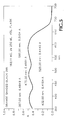
- the functional approach is to balance out the absorbance between the high absorbance and low absorbance regions. This is illustrated in Fig. 5 wherein the individual dye absorbances in Figs. 3 and 4 are combined, resulting in a substantially balanced absorbance across the portion of the visible spectrum to which humans respond.
- the ink of the present invention should possess all of the above recited desired properties of the colorants. Where pigments are employed as the colorant, a dispersant or surfactant may be used to prevent settling or aggregation of the pigments.
- phase change ink base system Any suitable phase change ink base system may be utilized for the ink composition of the present invention.
- suitable phase change ink base systems include those described in U.S. Patent No. 4,889,560 to Jaeger et al. and assigned to the assignee of the present invention.
- the phase change ink base compositions employed with the particular black inks of desired optical density comprise a tetra-amide and a functional mono-amide compound and a modifying agent which includes a tackifier, a plasticizer, and an antioxidant.
- phase change ink base composition is as follows: from about 10 to about 50 and most preferably from about 15 to about 30 percent by weight of a tetra-amide compound, from about 30 to about 80 and most preferably from about 40 to about 55 percent by weight of a mono-amide compound, from about 0 to about 40 and most preferably about 15 to about 35 weight percent of a tackifier, from about 0 to about 30 and most preferably about 4 to about 10 percent by weight of a plasticizer and about 0 to about 2 and most preferably .05 to about 1 percent by weight of an antioxidant.
- phase change ink bases are described in further detail in U.S. Patent No. 5,372,852, issued December 13, 1994 and assigned to the assignee of the present invention.
- the ink utilized in the process and system of the instant invention is preferably initially in solid form and is then changed to a molten state by the application of heat energy to raise the temperature from about 85°C to about 150°C. Temperatures above this range will cause degradation or chemical breakdown of the ink over time.
- the molten ink is then applied in raster fashion from the ink jets in the print head to the exposed surface of the liquid layer forming the intermediate transfer surface, where it is cooled to an intermediate temperature and solidifies to a malleable state in which it is transferred to the final receiving surface via a contact transfer by entering the nip between the pressure and fusing roller and the liquid layer forming the intermediate transfer surface on the support surface or drum.
- This intermediate temperature where the solidified ink is maintained in its malleable state is between about 30°C to about 80°C.
- the solid malleable ink image Once the solid malleable ink image enters the nip, it is deformed to its final image conformation and adheres or is fixed to the final receiving substrate either by the pressure exerted against the ink image on the final receiving substrate by the pressure and fusing roller alone, or by the combination of the pressure and heat supplied by an appropriate heating apparatus. An additional heating apparatus could optionally be employed to supply heat to facilitate the process at this point.
- the pressure exerted on the ink image is between about 10 to about 2000 pounds per square inch (psi) and more preferably between about 200 to about 1000 psi.
- the pressure must be sufficient to have the ink image adhere to the final receiving substrate and be sufficiently deformed to ensure that light is transmitted through the ink image rectilinearly or without significant deviation in its path from the inlet to the outlet in those instances when the final receiving substrate is a transparency.
- the ink image is cooled to an ambient temperature of about 20° to about 25°C.
- the ink forming the image must be ductile, or be able to yield or experience plastic deformation without fracture when kept above the glass transition temperature. Below the glass transition temperature the ink is brittle.
- the temperature of the ink image in the ductile state is between about -10°C and to about the melting point, or less than about 85°C.
- phase change inks Another important property of phase change inks is viscosity.
- the viscosity of the molten ink must be matched to the requirements of the ink jet print head.
- the viscosity of the phase change ink is measured on a Bohlin Model CS-50 Rheometer utilizing a cup and bob geometry. It is preferred that the viscosity of the phase change ink composition of the present invention, at about 140°C, is from about 10 to about 16 centipoise (cPs), and more preferably about 12 to about 14 cPs.
- the viscosity of the preferred phase change ink composition can be adjusted by adding either more mono-amide or tetra-amide compound. Adding more mono-amide compound will reduce the viscosity, while adding more tetra-amide compound will increase the viscosity.
- the final receiving substrate for use with the ink ofthe present invention can be a variety of media including permeable or impermeable, transparent, semi-transparent or opaque substrates.
- the amount of ink deposited by the printer to achieve the same apparent optical density will be approximately half of the amount deposited on a transparent substrate, such as polyester film transparencies. -This is because light passes through the ink on paper twice in reflective mode, both going away from and returning toward the eye. In contrast, with a transparency that is viewed in the transmittance mode, light passes through once going toward the eye.
- the greater dynamic range in the optical density for transparencies compared with reflection prints makes transparencies the preferred medium for medical diagnostic imaging providing distinguishably discernable useful gray levels.
- Paper has a limited maximum optical density range achievable in reflective mode viewing which does not permit sufficient levels of black to be achieved to be reliably useful in diagnostic applications.
- transparencies are the preferred medium for diagnostic imaging because they are capable of a greater range of optical density compared with reflection prints.
- One preferred embodiment of the present invention permits multiple gray levels to be obtained by using inks with four different concentrations of colorant systems individually and mixed by overlapping printing.
- a clear ink using only the base without any of the black colorant system is used in combination with inks having three different percentages by weight of black dye; specifically about 0.41 percent by weight black dye, about 1.18 percent by weight black dye and about 3.15 percent by weight black dye. These dye percentages give inks of low, medium and high optical density black ink, respectively. All of the black inks include the same ratio of orange dye to black dye to obtain a more uniform absorbance across the visible spectrum.
- C.I. Disperse Orange 47 dye and C.I. Solvent Black 45 dye are used together.
- the ratio of C.I. Disperse Orange 47 dye to C.I. Solvent Black 45 dye is from about .070 to about .085 parts of orange to one part of black.
- This constant ratio of orange dye to black dye simulates the black color obtained in x-ray films using silver halide film for medical imaging.
- the composite black colorant system of the present invention can be employed whereby individual colorant components can be adjusted to give an absorbance spectrum comparable to that of an image on silver halide film. Preparation of the three level ink system, not including the clear ink, will have inks of different overall intensities, yet the individual colorant components will have a constant ratio to each other in each of the three inks.
- the different levels of colorants in the inks used herein allow the generation of multiple levels of optical density.
- a clear ink base without any black or orange dye is used in medical imaging applications to obtain the dynamic range in optical densities with low, medium and high optical density inks.
- phase change ink formulations that can be successfully employed both with and without a liquid intermediate transfer surface, without any intent to limit the invention to the specific materials, process or structure employed. All parts and percentages are by weight unless explicitly stated otherwise.
- a plasticizer 1 (722 grams) and molten stearyl stearamide 2 (3746 grams, and an antioxidant 3 (16.00 grams) were added (in that order) to a pre-heated 110°C stainless steel container.
- the components were then mixed with a propeller mixer and a rosin ester resin 4 (1781.92 grams) was slowly added to the mixture over 20 minutes, maintaining a mixture temperature of at least 100°C.
- a dimer acid-based tetra-amide 5 (1509.84 grams) was then added to the mixture over 15 minutes, while also maintaining a minimum mixture temperature of 100°C. The blend was allowed to mix for 1 hour until all the tetra-amide had dissolved.
- an orange dye 6 (16.08 grams) and a black dye 7 (208.01 grams) were added and allowed to mix for approximately 2 hours.
- the ink was then passed through a 2.0 micron filter (Pall Filter P/N PFY1U2-20ZJ, S/N 416) under approximately 5 psi of nitrogen pressure.
- glass transition temperature (T g ) 10.8°C
- storage modulus E' 2.5 x 10 9 dynes/cm 2 at 25°C and 1.5 x 10 9 dynes/cm 2 at 50°C
- the integral of log tan ⁇ was 25.4 from about -40°C to about 40°C.
- the ink displayed a phase change transition of about 90°C by the technique of differential scanning calorimetry (DSC) using a TA Instrument DSC 2910 Modulated DSC.
- a plasticizer 217.5 grams
- molten stearyl stearamide 1382.9 grams
- an antioxidant 5.4 grams
- the components were then mixed with a propeller mixer and a rosin ester resin (579.3 grams) was slowly added to the mixture over 20 minutes, maintaining a mixture temperature of at least 100°C.
- a dimer acid-based tetra-amide 516.5 grams was then added to the mixture over 15 minutes, while also maintaining a minimum mixture temperature of 100°C.
- the blend was allowed to mix for 1 hour until all the tetra-amide had dissolved.
- glass transition temperature (T g ) 10.8°C
- storage modulus E' 2.3 x 10 9 dynes/cm 2 at 25°C and 1.4 x 10 9 dynes/cm 2 at 50°C
- the integral of log tan ⁇ was 25.2 from about -40°C to about 40°C.
- the ink displayed a phase change transition of about 90°C by the technique of differential scanning calorimetry (DSC) using a TA Instrument DSC 2910 Modulated DSC.
- a plasticizer (226.8 grams) and molten stearyl stearamide (1229.7 grams), and an antioxidant (5.4 grams) were added (in that order) to a pre-heated 110°C stainless steel container.
- the components were then mixed with a propeller mixer and a rosin ester resin (668.6 grams) was slowly added to the mixture over 20 minutes, maintaining a mixture temperature of at least 100°C.
- a dimer acid-based tetra-amide (567. 8 grams) was then added to the mixture over 15 minutes, while also maintaining a minimum mixture temperature of 100°C. The blend was allowed to mix for 1 hour until all the tetra-amide had dissolved.
- a sample ofthis product was tested for spectral strength. It was found to have 1.21% black dye and 0.086% orange dye in the filtered product. The ratio by weight of the orange dye to the black dye was 0.071 to 1.0. The viscosity of the ink was found to be 12.78 centipoise at 140°C measured in a Bohlin Model CS-50 Rheometer using a cup and bob geometry. The ratio of absorbance at the 475 nanometer region to the 580 nanometer region for this ink was 0.957:1. Dynamic mechanical analyses (DMA)were used on a Rheometrics Solids Analyzer (RSA II) manufactured by Rheometrics, Inc. ofPiscataway, N.J.
- DMA Dynamic mechanical analyses
- glass transition temperature (T g ) 9.0°C
- storage modulus E' 2.3 x 10 9 dynes/cm 2 at 25°C and 1.2 x 10 9 dynes/cm 2 at 50°C
- the integral of log tan ⁇ was 27.6 from about -40°C to about 40°C.
- the ink displayed a phase change transition of about 92°C by the technique of differential scanning calorimetry (DSC) using a TA Instrument DSC 2910 Modulated DSC.
- a plasticizer 212.5 grams
- molten stearyl stearamide(1180.2 grams), and an antioxidant 5 grams were added (in that order) to a pre-heated 110°C stainless steel container.
- the components were then mixed with a propeller mixer and rosin ester resin (689.0 grams) was slowly added to the mixture over 20 minutes, maintaining a mixture temperature of at least 100°C.
- a dimer acid-based tetra-amide (614.8 grams) was then added to the mixture over 15 minutes, while also maintaining a minimum mixture temperature of 100°C.
- the blend was allowed to mix for 1 hour until all the tetra-amide had dissolved.
- glass transition temperature (T g ) 9.5°C
- storage modulus E' 2.3 x 10 9 dynes/cm 2 at 25°C and 1.2 x 10 9 dynes/cm 2 at 50°C
- the integral of log tan ⁇ was 27.7 from about -40°C to about 40°C.
- the ink displayed a phase change transition of about 93°C by the technique of differential scanning calorimetry (DSC) using a TA Instrument DSC 2910 Modulated DSC.
- a clear ink unshaded with any colorant system was prepared according to the following procedure and used to obtain the dynamic range in optical densities when employed in an ink jet printer with black shaded low, medium, and high optical density inks.
- a plasticizer 207.9 grams
- molten stearyl stearamide (1169.7 grams)
- an antioxidant 5.4 grams
- the components were then mixed with a propeller mixer and a rosin ester resin (711.0 grams) was slowly added to the mixture over 20 minutes, maintaining a mixture temperature of at least 100°C.
- a dimer acid-based tetra-amide (605.8 grams) was then added to the mixture over 15 minutes, while also maintaining a minimum mixture temperature of 100°C. The blend was allowed to mix for 1 hour until all the tetra-amide had dissolved. The clear ink was then passed through a 2.0 micron filter (Pall Filter P/N PFylU2-20ZJ, S/N 416) under approximately 5 psi of nitrogen pressure.
- the viscosity of the clear ink was found to be 12.79 centipoise at 140°C measured with a Bohlin Model CS-50 Rheometer CS-50 using a cup and bob geometry.
- Dynamic mechanical analyses (DMA) were used on a Rheometrics Solids Analyzer (RSA II) manufactured by Rheometrics, Inc. of Piscataway, N.J.
- glass transition temperature (T g ) 11.1°C
- storage modulus E' 2.1 x 10 9 dynes/cm 2 at 25°C and 1.1 x 10 9 dynes/cm 2 at 50°C
- the integral of log tan 6 was 27.0 from about -40°C to about 40°C.
- the ink displayed a phase change transition of about 94°C by the technique of differential scanning calorimetry (DSC) using a TA Instrument DSC 2910 Modulated DSC.
- a solution of the orange shaded black ink was prepared by weighing about 0.16211 grams of the ink of Example 1 and graphically illustrated in Fig. 5 into a 250 mL volumetric flask.
- the ink was dissolved in n-butanol. When the ink was completely dissolved, the volumetric flask was filled to volume with n-butanol.
- the solution was thoroughly mixed.
- the absorbance spectrum of the sample was measured against a reference cell containing the solvent, n-butanol, in a dual beam Perkin-Elmer Lambda 2S UV-Visible Spectrometer scanning from 350 nm to 750 nm. The absorbances at 580 nm and 475 nm were used to calculate the actual amounts of the two dyes incorporated into the ink after filtering.
- the absorbance at 580 nm is 0.5104 for 0.16211 grams of the ink sample in 250.0 mL of n-butanol.
- a commercially available black ink for the Phaser® 340 and 350 color printers containing 2.344% C.I. Solvent Black 45 dye has a spectral strength of 710 mL A/gram. Therefore the ink of Example 1 and graphically illustrated in Fig. 5 contains 787/710 X 2.344%, or 2.60% black dye.
- the absorbance at 580 nm in the visible spectrum of the ink in Example 1 is 0.5104, and is due entirely to the black dye. No portion ofthe orange dye absorbs in this region of the spectrum.
- a sample size of 162.11 mg of the ink of Example 1 was used to generate the visible spectrum (see Fig. 5). Therefore the orange content of the sample of the ink of Example 1 and as graphically illustrated in Fig. 5 is 0.319 mg divided by 162.11 mg or 0.197% orange dye in the black ink.
- the ratio of orange to black dyes as shown in Fig. 5 is 0.197 to 2.60 or 0.076 to 1.00.
- Example 2 An ink the same as described in Example 1 above was heated for 408 hours in a glass beaker with a simulated print head reservoir in an oven at about 145°C.
- the spectral strength (milliliters Absorbance per gram) decreased from about 771 to 645 or alternatively, the ink lost about 16.3% of its initial dye strength. This compares very favorably with actual operating conditions where it can be expected that the ink would be subjected to the elevated operating temperature in the print head of about 140° C for at most and routinely less than about 8 hours.
- the black and orange dyes from Examples 1-4 were found to be mutually compatible when used in a Tektronix Phaser® 350 printer with a modified print head in which the cyan, yellow, magenta and black colors were replaced by the clear, low, medium and high optical density inks of Examples 5, 4, 3 and 2, respectively. No clogging of any of the orifices of the ink jet print head was observed, even with multiple purging/wiping cycles in the printer or even with extended dwell time of the test inks in the printers.
- Samples of the inks in Examples 1-5 and a commercially available black ink used in a Tektronix Phaser® 350 color printer were tested for adhesion durability on transparent films or substrates routinely used for fluorescent lightbox viewing in medical diagnoses as follows.
- the first set of data is for a sample that was imaged twice, first with the ink of Example 1 and then with the ink of Example 3 to achieve 125% coverage of the imaged area.
- the remaining samples were imaged just once with the indicated ink of high, medium, low and clear optical density, and with commercially available black ink to compare adhesion to the transparent film substrate.
- a small test fixture that holds tautly a 1.9" square imaged sample of a 100 % solid fill phase change ink on a transparency final receiving substrate was utilized for each test.
- the hammer is driven by a 3-5 inch long, 7/16 inch wide and about 0.0035 inch tick metal spring that is cocked back about 1 inch using a trigger and release method.
- the sample is secured by two upright poles on either side that clamp the sample along the entire length of each side by sandwiching the sample between the upright and another piece of bracket.
- the amount of ink remaining on the imaged transparency substrate after impact is determined by use of a software image analysis program and a flat bed scanner that first scans a selected area (a 1.46 x 1.09" rectangle) of the hammer impacted image at a resolution of 439 dots per inch and then analyzes the scanned area. The software program then calculates the percentage of ink that has been removed from the scanned rectangular area which permits an interpolation to be done to provide the percentage of ink remaining on the transparency substrate as shown in Table 1.
- Durability testing for gouging of solid fill phase change ink imaged transparency substrates using samples of the inks and printing method for the samples described above for adhesion durability testing was performed as follows.
- a variable weight gouge test fixture was employed which is composed of three arms with weighted gouge fingers and a metal plate to which a print sample is secured. The metal plate moves the imaged print beneath the gouge fingers.
- a print with a 100% solid fill image (at least 10" long and wide enough for up to six interlaced scratch passes of the gouge fingers, each pass about 2 inches in width) on transparency substrate was secured to the metal moveable plate so the gouge was along the length of the substrate on the ink image side.
- the three gouge fingers have a net weight of 924, 660, and 396 grams, respectively, during the first gouge.
- Each gouge finger is 0.5" wide by 1.245" long with a point of contact curve equivalent to a 0.995" diameter disc. The disc is free of any ink particulate prior to all gouging.
- the gouge fingers are gently lowered at one end of the imaged portion ofthe substrate so that the gouge finger edges make a contact angle of approximately 75° along the leading edge of the gouge and approximately 15° along the trailing edge (i.e. the image was pulled against the gouge fingers, not pushed).
- the moveable metal plate was advanced for 9 ⁇ 1/32 inches at a speed of 0.45 ⁇ 0.05 inches/second.
- a second gouge was performed on the transparencies on the same print samples with the three gouge fingers containing a net weight of 1188, 1056, and 792 grams, respectively.
- the ink base or carrier composition to form the ink composition of the present invention can be a low viscosity semicrystalline or crystalline amide wax, an ester wax, a polyethylene wax, a microcrystalline wax or a paraffin in combination with a hydrocarbon or resin based amorphous material, or an oligomer, or low molecular weight polymer or copolymer, or a tackifier, or a plasticizer and combinations thereof.
- phase change ink base or carrier composition can comprise isocyanate-derived urethane resins, isocyanate-derived urethane/urea mixed resins, isocyanate-derived urethane waxes, and combinations thereof as disclosed in co-pending US Patent Application Serial No 08/672,815 entitled “Phase Change Ink Formulation Using Urethane and Urethane/Urea Isocyanate Derived Resins” filed June 28, 1996 (corresponding European Patent Application No 97 304727.7) and 08/907,805, Docket No 6222 US 1, entitled “Phase Change Ink Formulation Using an Isocyanate-Derived Wax and a Clear Ink Carrier Base", filed August 8, 1997 (corresponding European Patent Application No 98 306380.1), both assigned to the assignee of the present invention.
- phase change inks employing the colorant system of the present invention can be used in conjunction with an adhesion promoting coating that is applied to the transparent substrate prior to imaging. All patents and patent applications referenced herein are hereby specifically incorporated by reference in pertinent part.
- phase change ink composition comprising:-
- the invention includes a black colorant combination for use in an ink as defined above, said colorant combination comprising first and second colorants as defined above as separate ingredients in an unmixed combination or as an optionally homogenized admixture of said first and second colorants.
- An important aspect of the invention is a composition
- a phase change ink base system in combination with a compatible colorant system comprising a combination of (1) a black colorant having an absorbance in the 450 to 500 (eg 475)nm region which is less than 80% of the absorbance at the 550 to 600 (eg 580)nm region and (2) a sufficient amount of at least one other colorant having an absorbance in the 450 to 500 nm region whereby the colorant system has a ratio of absorbances in the 450 to 500 nm region to the 550 to 600 nm region from about 0.9:1 to about 1.1:1 (eg 0.92:1 to 1.01:1).
Landscapes
- Chemical & Material Sciences (AREA)
- Engineering & Computer Science (AREA)
- Life Sciences & Earth Sciences (AREA)
- Materials Engineering (AREA)
- Wood Science & Technology (AREA)
- Organic Chemistry (AREA)
- General Engineering & Computer Science (AREA)
- Inks, Pencil-Leads, Or Crayons (AREA)
- Ink Jet (AREA)
- Ink Jet Recording Methods And Recording Media Thereof (AREA)
- Duplication Or Marking (AREA)
Applications Claiming Priority (2)
| Application Number | Priority Date | Filing Date | Title |
|---|---|---|---|
| US916588 | 1997-08-22 | ||
| US08/916,588 US6245135B1 (en) | 1997-08-22 | 1997-08-22 | Phase change ink composition |
Publications (3)
| Publication Number | Publication Date |
|---|---|
| EP0897960A2 true EP0897960A2 (fr) | 1999-02-24 |
| EP0897960A3 EP0897960A3 (fr) | 2000-05-31 |
| EP0897960B1 EP0897960B1 (fr) | 2004-06-02 |
Family
ID=25437516
Family Applications (1)
| Application Number | Title | Priority Date | Filing Date |
|---|---|---|---|
| EP98306746A Expired - Lifetime EP0897960B1 (fr) | 1997-08-22 | 1998-08-24 | Composition d'encre à changement de phase |
Country Status (4)
| Country | Link |
|---|---|
| US (2) | US6245135B1 (fr) |
| EP (1) | EP0897960B1 (fr) |
| JP (1) | JP3988268B2 (fr) |
| DE (1) | DE69824245T2 (fr) |
Cited By (1)
| Publication number | Priority date | Publication date | Assignee | Title |
|---|---|---|---|---|
| EP1845139A1 (fr) * | 2006-04-11 | 2007-10-17 | Brother Kogyo Kabushiki Kaisha | Encre pour enregistrement par jet d'encre, cartouche d'encre et appareil d'enregistrement par jet d'encre |
Families Citing this family (19)
| Publication number | Priority date | Publication date | Assignee | Title |
|---|---|---|---|---|
| NL1012549C2 (nl) * | 1999-07-09 | 2001-01-10 | Ocu Technologies B V | Inktsamenstelling voor een smeltbare inkt en een werkwijze voor het bedrukken van een substraat met een dergelijke inktsamenstelling. |
| US20030101902A1 (en) * | 2001-12-04 | 2003-06-05 | Ann Reitnauer | Hot melt inks |
| US7029450B2 (en) | 2001-12-14 | 2006-04-18 | Boston Scientific Scimed, Inc. | Dilation catheter assembly and related methods |
| US6702884B2 (en) | 2001-12-31 | 2004-03-09 | Markem Corporation | Pigmented hot melt inks |
| NL1020682C2 (nl) * | 2002-05-27 | 2003-11-28 | Oce Tech Bv | Smeltbare inktsamenstelling. |
| MXPA04012555A (es) * | 2002-06-26 | 2005-04-19 | Mars Inc | Tintas para comestibles para impresion por inyeccion de tinta (ink-jet) en substratos de comestibles. |
| US7297454B2 (en) * | 2002-07-30 | 2007-11-20 | Hewlett-Packard Development Company, L.P. | Colorless inkjet ink compositions for improved image quality |
| US6878198B1 (en) * | 2003-11-25 | 2005-04-12 | Xerox Corporation | Phase change inks and process for the preparation thereof |
| US7186762B2 (en) * | 2003-11-25 | 2007-03-06 | Xerox Corporation | Processes for preparing phase change inks |
| US6858070B1 (en) * | 2003-11-25 | 2005-02-22 | Xerox Corporation | Phase change inks |
| JP2006256124A (ja) | 2005-03-17 | 2006-09-28 | Fuji Xerox Co Ltd | 磁性ワイヤー付与装置およびその方法 |
| US7381255B2 (en) * | 2005-11-30 | 2008-06-03 | Xerox Corporation | Phase change inks |
| US7442242B2 (en) * | 2005-11-30 | 2008-10-28 | Xerox Corporation | Phase change inks containing specific colorants |
| US7294730B2 (en) * | 2005-11-30 | 2007-11-13 | Xerox Corporation | Colorant compounds |
| JP5577564B2 (ja) * | 2006-04-11 | 2014-08-27 | ブラザー工業株式会社 | インクジェット記録用インク及びインクジェット記録装置 |
| US8240834B2 (en) * | 2006-04-11 | 2012-08-14 | Brother Kogyo Kabushiki Kaisha | Ink for ink-jet recording, ink cartridge, and ink-jet recording apparatus |
| JP2010247519A (ja) * | 2009-03-24 | 2010-11-04 | Seiko Epson Corp | 印刷装置 |
| US20110203943A1 (en) * | 2010-02-24 | 2011-08-25 | Perry David J | Printed sorbents |
| US8367020B2 (en) * | 2010-08-05 | 2013-02-05 | Xerox Corporation | Hydroxyl group-containing solid inks |
Family Cites Families (13)
| Publication number | Priority date | Publication date | Assignee | Title |
|---|---|---|---|---|
| US5000786A (en) * | 1987-11-02 | 1991-03-19 | Seiko Epson Corporation | Ink composition and ink jet recording apparatus and method |
| US4889560A (en) | 1988-08-03 | 1989-12-26 | Tektronix, Inc. | Phase change ink composition and phase change ink produced therefrom |
| WO1991010710A1 (fr) | 1990-01-22 | 1991-07-25 | Spectra, Inc. | Encre noire pour systemes a jet d'encre |
| DE69220011T2 (de) | 1991-11-29 | 1997-09-25 | Sony Corp | Thermisches Übertragungsaufzeichnungsmaterial |
| US5372852A (en) | 1992-11-25 | 1994-12-13 | Tektronix, Inc. | Indirect printing process for applying selective phase change ink compositions to substrates |
| US5389958A (en) | 1992-11-25 | 1995-02-14 | Tektronix, Inc. | Imaging process |
| US5764252A (en) * | 1995-06-06 | 1998-06-09 | Tektronix, Inc. | Method and apparatus for producing ink intensity modulated ink jet printing |
| US5731398A (en) * | 1996-05-31 | 1998-03-24 | Milliken Research Corporation | Black colorant composition exhibiting low flairing |
| US5750604A (en) * | 1996-06-28 | 1998-05-12 | Tektronix, Inc. | Phase change ink formulation using a urethane isocyanate-derived resin |
| US5780528A (en) * | 1996-06-28 | 1998-07-14 | Tektronix, Inc. | Isocyanate-derived colored resins for use in phase change ink jet inks |
| US5966150A (en) * | 1996-11-27 | 1999-10-12 | Tektronix, Inc. | Method to improve solid ink output resolution |
| US5821956A (en) * | 1996-11-27 | 1998-10-13 | Tektronix, Inc. | Method to improve solid ink output resolution |
| US5803942A (en) * | 1997-04-14 | 1998-09-08 | Owens-Brockway Glass Container Inc. | Method and apparatus for delivering a cased glass stream |
-
1997
- 1997-08-22 US US08/916,588 patent/US6245135B1/en not_active Expired - Lifetime
-
1998
- 1998-08-20 JP JP23429998A patent/JP3988268B2/ja not_active Expired - Fee Related
- 1998-08-24 DE DE69824245T patent/DE69824245T2/de not_active Expired - Lifetime
- 1998-08-24 EP EP98306746A patent/EP0897960B1/fr not_active Expired - Lifetime
- 1998-12-29 US US09/222,021 patent/US6147140A/en not_active Expired - Lifetime
Cited By (2)
| Publication number | Priority date | Publication date | Assignee | Title |
|---|---|---|---|---|
| EP1845139A1 (fr) * | 2006-04-11 | 2007-10-17 | Brother Kogyo Kabushiki Kaisha | Encre pour enregistrement par jet d'encre, cartouche d'encre et appareil d'enregistrement par jet d'encre |
| US7914138B2 (en) | 2006-04-11 | 2011-03-29 | Brother Kogyo Kabushiki Kaisha | Ink for ink-jet recording, ink cartridge, and ink-jet recording apparatus |
Also Published As
| Publication number | Publication date |
|---|---|
| US6245135B1 (en) | 2001-06-12 |
| JPH11172172A (ja) | 1999-06-29 |
| DE69824245D1 (de) | 2004-07-08 |
| EP0897960A3 (fr) | 2000-05-31 |
| JP3988268B2 (ja) | 2007-10-10 |
| EP0897960B1 (fr) | 2004-06-02 |
| DE69824245T2 (de) | 2004-09-23 |
| US6147140A (en) | 2000-11-14 |
Similar Documents
| Publication | Publication Date | Title |
|---|---|---|
| EP0897960B1 (fr) | Composition d'encre à changement de phase | |
| US6059404A (en) | Method and apparatus for producing ink intensity modulated ink jet printing | |
| CA2253510C (fr) | Methode pour ameliorer la resolution des imprimes avec encre solide | |
| US5621022A (en) | Use of polymeric dyes in hot melt ink jet inks | |
| US4889761A (en) | Substrates having a light-transmissive phase change ink printed thereon and methods for producing same | |
| US6730155B2 (en) | Aqueous ink composition | |
| KR970007198B1 (ko) | 열적 염료 전달 물질 | |
| US4992304A (en) | Methods for coating a light-transmissive substrate to promote adhesion of a phase-change ink | |
| US6695443B2 (en) | Ink for ink jet recording, ink set for ink jet recording, method for ink jet recording, ink cartridge for ink jet recording, ink jet recording apparatus and recorded article | |
| EP0769537A2 (fr) | Composition d'encre présentant une excellente résistance à l'eau | |
| EP0763569B1 (fr) | Complexe métallique de colorant méthinique | |
| KR20210091653A (ko) | 잉크 조성물 및 잉크 인쇄 방법 | |
| CA2376109C (fr) | Compositions d'encre fluorescente rouge a base aqueuse lisible par machine | |
| CA2245374C (fr) | Procede et dispositif d'impression par jet d'encre en niveaux de gris | |
| JPH11236523A (ja) | 画像形成用インク及びこれを用いた画像形成方法 | |
| US5110665A (en) | Light-transmissive substrates coated to promote adhesion of phase-change inks | |
| JP4621040B2 (ja) | 色素体、それを用いた水分散液、インク、インクタンク、記録ユニット、記録装置及び記録方法 | |
| JP2819741B2 (ja) | インクジェット用記録液 | |
| JPH01281991A (ja) | 熱転写記録用媒体 | |
| JP4029493B2 (ja) | 記録液及び該記録液を用いたカラー画像の形成方法 | |
| WO2009073675A1 (fr) | Éléments donneurs de colorant par transfert thermique contenant des hydroxydes métalliques, et processus d'enregistrement | |
| JP5066882B2 (ja) | 染料インキ及び熱転写シート | |
| JP4481581B2 (ja) | 水性インク及び画像形成方法 | |
| Freeman et al. | R. BRADBURY | |
| JPH10118350A (ja) | 絵付け方法 |
Legal Events
| Date | Code | Title | Description |
|---|---|---|---|
| PUAI | Public reference made under article 153(3) epc to a published international application that has entered the european phase |
Free format text: ORIGINAL CODE: 0009012 |
|
| AK | Designated contracting states |
Kind code of ref document: A2 Designated state(s): CH DE FR GB IE LI NL |
|
| AX | Request for extension of the european patent |
Free format text: AL;LT;LV;MK;RO;SI |
|
| PUAL | Search report despatched |
Free format text: ORIGINAL CODE: 0009013 |
|
| AK | Designated contracting states |
Kind code of ref document: A3 Designated state(s): AT BE CH CY DE DK ES FI FR GB GR IE IT LI LU MC NL PT SE |
|
| AX | Request for extension of the european patent |
Free format text: AL;LT;LV;MK;RO;SI |
|
| RIC1 | Information provided on ipc code assigned before grant |
Free format text: 7C 09D 11/00 A, 7B 41M 1/30 B, 7B 41M 5/38 B, 7B 41M 5/025 B |
|
| RAP1 | Party data changed (applicant data changed or rights of an application transferred) |
Owner name: XEROX CORPORATION |
|
| 17P | Request for examination filed |
Effective date: 20000801 |
|
| AKX | Designation fees paid |
Free format text: CH DE FR GB LI NL |
|
| RBV | Designated contracting states (corrected) |
Designated state(s): CH DE FR GB IE LI NL |
|
| 17Q | First examination report despatched |
Effective date: 20011123 |
|
| GRAP | Despatch of communication of intention to grant a patent |
Free format text: ORIGINAL CODE: EPIDOSNIGR1 |
|
| GRAS | Grant fee paid |
Free format text: ORIGINAL CODE: EPIDOSNIGR3 |
|
| GRAA | (expected) grant |
Free format text: ORIGINAL CODE: 0009210 |
|
| AK | Designated contracting states |
Kind code of ref document: B1 Designated state(s): CH DE FR GB IE LI NL |
|
| REG | Reference to a national code |
Ref country code: GB Ref legal event code: FG4D |
|
| REG | Reference to a national code |
Ref country code: CH Ref legal event code: NV Representative=s name: E. BLUM & CO. PATENTANWAELTE Ref country code: CH Ref legal event code: EP |
|
| REF | Corresponds to: |
Ref document number: 69824245 Country of ref document: DE Date of ref document: 20040708 Kind code of ref document: P |
|
| REG | Reference to a national code |
Ref country code: IE Ref legal event code: FG4D |
|
| ET | Fr: translation filed | ||
| PLBE | No opposition filed within time limit |
Free format text: ORIGINAL CODE: 0009261 |
|
| STAA | Information on the status of an ep patent application or granted ep patent |
Free format text: STATUS: NO OPPOSITION FILED WITHIN TIME LIMIT |
|
| 26N | No opposition filed |
Effective date: 20050303 |
|
| REG | Reference to a national code |
Ref country code: CH Ref legal event code: PFA Owner name: XEROX CORPORATION Free format text: XEROX CORPORATION#800 LONG RIDGE RD., P.O. BOX 1600#STAMFORD, CT 06904-1600 (US) -TRANSFER TO- XEROX CORPORATION#800 LONG RIDGE RD., P.O. BOX 1600#STAMFORD, CT 06904-1600 (US) |
|
| PGFP | Annual fee paid to national office [announced via postgrant information from national office to epo] |
Ref country code: CH Payment date: 20110812 Year of fee payment: 14 |
|
| PGFP | Annual fee paid to national office [announced via postgrant information from national office to epo] |
Ref country code: IE Payment date: 20120727 Year of fee payment: 15 |
|
| PGFP | Annual fee paid to national office [announced via postgrant information from national office to epo] |
Ref country code: NL Payment date: 20120730 Year of fee payment: 15 |
|
| REG | Reference to a national code |
Ref country code: NL Ref legal event code: V1 Effective date: 20140301 |
|
| REG | Reference to a national code |
Ref country code: CH Ref legal event code: PL |
|
| PG25 | Lapsed in a contracting state [announced via postgrant information from national office to epo] |
Ref country code: NL Free format text: LAPSE BECAUSE OF NON-PAYMENT OF DUE FEES Effective date: 20140301 Ref country code: CH Free format text: LAPSE BECAUSE OF NON-PAYMENT OF DUE FEES Effective date: 20130831 Ref country code: LI Free format text: LAPSE BECAUSE OF NON-PAYMENT OF DUE FEES Effective date: 20130831 |
|
| REG | Reference to a national code |
Ref country code: IE Ref legal event code: MM4A |
|
| PG25 | Lapsed in a contracting state [announced via postgrant information from national office to epo] |
Ref country code: IE Free format text: LAPSE BECAUSE OF NON-PAYMENT OF DUE FEES Effective date: 20130824 |
|
| REG | Reference to a national code |
Ref country code: FR Ref legal event code: PLFP Year of fee payment: 18 |
|
| PGFP | Annual fee paid to national office [announced via postgrant information from national office to epo] |
Ref country code: DE Payment date: 20150722 Year of fee payment: 18 Ref country code: GB Payment date: 20150724 Year of fee payment: 18 |
|
| PGFP | Annual fee paid to national office [announced via postgrant information from national office to epo] |
Ref country code: FR Payment date: 20150727 Year of fee payment: 18 |
|
| REG | Reference to a national code |
Ref country code: DE Ref legal event code: R119 Ref document number: 69824245 Country of ref document: DE |
|
| GBPC | Gb: european patent ceased through non-payment of renewal fee |
Effective date: 20160824 |
|
| REG | Reference to a national code |
Ref country code: FR Ref legal event code: ST Effective date: 20170428 |
|
| PG25 | Lapsed in a contracting state [announced via postgrant information from national office to epo] |
Ref country code: GB Free format text: LAPSE BECAUSE OF NON-PAYMENT OF DUE FEES Effective date: 20160824 Ref country code: FR Free format text: LAPSE BECAUSE OF NON-PAYMENT OF DUE FEES Effective date: 20160831 Ref country code: DE Free format text: LAPSE BECAUSE OF NON-PAYMENT OF DUE FEES Effective date: 20170301 |