EP0897984A2 - D-Sorbitol dehydrogenase gene - Google Patents
D-Sorbitol dehydrogenase gene Download PDFInfo
- Publication number
- EP0897984A2 EP0897984A2 EP98115231A EP98115231A EP0897984A2 EP 0897984 A2 EP0897984 A2 EP 0897984A2 EP 98115231 A EP98115231 A EP 98115231A EP 98115231 A EP98115231 A EP 98115231A EP 0897984 A2 EP0897984 A2 EP 0897984A2
- Authority
- EP
- European Patent Office
- Prior art keywords
- dna
- sldh
- recombinant
- protein
- orf2
- Prior art date
- Legal status (The legal status is an assumption and is not a legal conclusion. Google has not performed a legal analysis and makes no representation as to the accuracy of the status listed.)
- Granted
Links
Images


Classifications
-
- C—CHEMISTRY; METALLURGY
- C12—BIOCHEMISTRY; BEER; SPIRITS; WINE; VINEGAR; MICROBIOLOGY; ENZYMOLOGY; MUTATION OR GENETIC ENGINEERING
- C12N—MICROORGANISMS OR ENZYMES; COMPOSITIONS THEREOF; PROPAGATING, PRESERVING, OR MAINTAINING MICROORGANISMS; MUTATION OR GENETIC ENGINEERING; CULTURE MEDIA
- C12N9/00—Enzymes; Proenzymes; Compositions thereof; Processes for preparing, activating, inhibiting, separating or purifying enzymes
- C12N9/0004—Oxidoreductases (1.)
- C12N9/0006—Oxidoreductases (1.) acting on CH-OH groups as donors (1.1)
-
- C—CHEMISTRY; METALLURGY
- C12—BIOCHEMISTRY; BEER; SPIRITS; WINE; VINEGAR; MICROBIOLOGY; ENZYMOLOGY; MUTATION OR GENETIC ENGINEERING
- C12P—FERMENTATION OR ENZYME-USING PROCESSES TO SYNTHESISE A DESIRED CHEMICAL COMPOUND OR COMPOSITION OR TO SEPARATE OPTICAL ISOMERS FROM A RACEMIC MIXTURE
- C12P19/00—Preparation of compounds containing saccharide radicals
- C12P19/02—Monosaccharides
Definitions
- the present invention relates to a novel DNA coding for sorbitol dehydrogenase of a microorganism belonging to acetic acid bacteria including the genus Gluconobacter and the genus Acetobacter , an expression vector containing the said DNA, and recombinant organisms containing the said expression vector. Furthermore, the present invention relates to a process for producing recombinant D-sorbitol dehydrogenase and a process for producing L-sorbose by utilizing the said recombinant enzymes or recombinant organisms containing the said expression vector.
- L-Sorbose is an important intermediate in the actual industrial process of vitamin C production, which is mainly practiced by Reichstein method (Helveticahibia Acta, 17: 311, 1934). In the process, the only microbial conversion is the L-sorbose production from D-sorbitol by Gluconobacter or Acetobacter strains. The conversion is considered to be carried out by NAD/NADP independent D-sorbitol dehydrogenase (SLDH). L-Sorbose is also a well known substrate in the art for microbiologically producing 2-keto-L-gulonic acid, which is a useful intermediate in the production of vitamin C.
- D-sorbitol dehydrogenase which catalyzes the oxidation of D-sorbitol to L-sorbose.
- the said D-sorbitol dehydrogenase was isolated and characterized from Gluconobacter suboxydans var ⁇ IFO 3254 (E. Shinagawa et al., Agric Biol.
- the inventors also purified and characterized the NAD/NADP-independent SLDH from G . suboxydans IFO 3255 (T.
- the SLDH consists of one Kind of subunit with the molecular weight of 79.0 +/- 0.5 KDa and shows its optimal pH at 6 to 7 and shows dehydrogenase activity on mannitol and glycerol as well as on D-sorbitol.
- SLDHs Although several SLDHs have been purified, their genes have not been cloned yet. It is useful to clone the SLDH gene for efficient production of the SLDH enzyme and for constructing recombinant organism having enhanced SLDH activity to improve the production yield of L-sorbose. It is also useful to introduce the said SLDH gene into desired organisms, for example, Gluconobacter converting L-sorbose to 2-keto-L-gulonic acid for constructing recombinant microorganisms which directly produce 2-keto-L-gulonic acid from D-sorbitol.
- the present invention provides a nucleotide sequence (gene) coding for D-sorbitol dehydrogenase (SLDH) originating from a microorganism belonging to acetic acid bacteria including the genus Gluconobacter and the genus Acetobacter ; a DNA molecule comprising said nucleotide sequence as well as a combination of the said DNA with a DNA comprising a nucleotide sequence of a protein functional in activating the said SLDH in vivo, expression vectors carrying the DNA comprising SLDH nucleotide sequence or the said combination of the DNAs; recombinant organisms carrying the expression vectors; a process for producing the recombinant SLDH; and a process for producing L-sorbose by utilizing the recombinant SLDH or the recombinant organisms.
- gene gene
- SLDH D-sorbitol dehydrogenase
- the present invention is also directed to functional derivatives of the present case.
- Such functional derivatives are defined on the basis of the amino acid sequences of the present invention by addition, insertion, deletion and/or substitution of one or more amino acid residues of such sequences wherein such derivatives still have SLDH activity measured by an assay known in the art or specifically described herein.
- Such functional derivatives can be made either by chemical peptide synthesis known in the art or by recombinant means on the basis of the DNA sequences as disclosed herein by methods known in the state of the art and disclosed e.g. by Sambrook et al. (Molecular Cloning, Cold Spring Harbour Laboratory Press, New York, USA, second edition 1989).
- the present invention is directed to DNA sequences encoding the polypeptides with SLDH activity and polypeptides functional in activating the said SLDH in vivo as disclosed e.g. in the sequence list as SEQ ID NO:2 and NO:3 as well as their complementary strands, or those which include these sequences, DNA sequences which hybridize under standard conditions with such sequences or fragments thereof and DNA sequences, which because of the degeneration of the genetic code, do not hybridize under standard conditions with such sequences but which code for polypeptides having exactly the same amino acid sequence.
- ⁇ Standard conditions ⁇ for hybridization mean in this context the conditions which are generally used by a man skilled in the art to detect specific hybridization signals and which are described, e. g. by Molecular Cloning, Cold Spring Harbour Laboratory Press, New York, USA, second edition 1989, or preferably so called stringent hybridization and stringent washing conditions a man skilled in the art is familiar with and which are described, e. g. in Sambrook et al. (s. a.). In the following a brief description of the drawings is given.
- the inventors have isolated SLDH gene together with a gene functionable in developing SLDH activity in vivo by DNA recombinant techniques and determined the nucleotide sequences.
- the present invention provides DNA sequences encoding Gluconobacter SLDH and a gene functionable in developing SLDH activity in vivo herein after referred to as ORF2 gene, expression vectors containing the said DNA for SLDH and host cells carrying the said expression vectors.
- the SLDH and/or ORF2 gene(s), the DNA molecule containing the said gene(s), the recombinant expression vector and the recombinant organism utilized in the present invention can be obtained by the following steps:
- a total chromosomal DNA can be purified by a procedure well known in the art.
- the aimed gene can be cloned in either plasmid or phage vectors from a total chromosomal DNA typically by either of the following illustrative methods:
- DNA sequences which can be made by the polymerase chain reaction by using primers designed on the basis of the DNA sequences disclosed therein by methods known in the art are also an object of the present invention. It is understood that the DNA sequences of the present invention can also be made synthetically as described, e.g. in EP 747 483.
- antibody can be prepared with purified SLDH protein or its peptide fragment as an antigen by such method described in Methods in Enzymology, vol. 73, p 46, 1981.
- the nucleotide sequence of the aimed gene can be determined by a well known method such as dideoxy chain termination method with M13 phage (Sanger F. et al., Proc. Natl. Acad. Sci. USA, 74:5463-5467, 1977).
- the desired gene expressing the D-sorbitol dehydrogenase activity of the present invention is illustrated in Fig. 2 and Fig. 3.
- This specific gene encodes the SLDH enzyme having 716 amino acid residues together with a signal peptide of 24 amino acid residues.
- the inventors found an open reading frame just upstream of the above SLDH structure gene and designated it as ORF2.
- This ORF2 gene encodes a protein having 126 amino acid residues, and was suggested to be functional in providing the desired enzymatic activity to the recombinant SLDH of the present invention, in particular when the said SLDH is expressed in a host cell of a different genus from acetic acid bacteria.
- promoters can be used; for example, the original promoter of the gene, promoters of antibiotic resistance genes such as kanamycin resistant gene of Tn5 (D. E. Berg, and C. M. Berg. 1983. Bio/Technology 1:417-435), ampicillin resistant gene of pBR322, and ⁇ -galactosidase of E . coli (lac), trp-, tac-, trc-promoter, promoters of lambda phage and any promoters which can be functional in a host organism.
- antibiotic resistance genes such as kanamycin resistant gene of Tn5 (D. E. Berg, and C. M. Berg. 1983. Bio/Technology 1:417-435)
- ampicillin resistant gene of pBR322 ampicillin resistant gene of pBR322
- ⁇ -galactosidase of E . coli (lac) trp-, tac-, trc-promoter
- the host organism can be selected from microorganisms including bacteria such as Escherichia coli , Pseudomonas putida , Acetobacter xylinum , Acetobacter pasteurianus , Acetobacter aceti , Acetobacter hansenii , and Gluconobacter albidus , Gluconobacter capsulatus , Gluconobacter cerinus , Gluconobacter dioxyacetonicus , Gluconobacter gluconicus , Gluconobacter industrius , Gluconobacter melanogenus , Gluconobacter nonoxygluconicus , Gluconobacter oxydans , e .
- bacteria such as Escherichia coli , Pseudomonas putida , Acetobacter xylinum , Acetobacter pasteurianus , Acetobacter aceti , Acetobacter hansenii , and Glu
- Gluconobacter oxydans DSM 4025 which had been deposited as DSM 4025 on March 17, 1987 under the conditions of the Budapest Treaty at the Deutsche Sammlung von Mikroorganismen und Zellkulturen GmbH , Braunschweig, BRD , Gluconobacter oxydans subsp . sphaericus , Gluconobacter roseus , Gluconobacter rubiginosus , Gluconobacter suboxydans , mammalian cells and plant cells.
- a Shine-Dalgarno (SD) sequence for example, AGGAGG etc. including natural and synthetic sequences operable in the host cell
- a transcriptional terminator inverted repeat structure including any natural and synthetic sequence operable in the host cell
- a signal peptide which contains usually 15 to 50 amino acid residues and is totally hydrophobic, is preferably associated.
- a DNA encoding a signal peptide can be selected from any natural and synthetic sequence operable in the desired host cell.
- the cloning vector is generally a plasmid or phage which contains a replication origin, regulatory elements, a cloning site including a multi-cloning site and selection markers such as antibiotic resistance genes including resistance genes for ampicillin, tetracycline, kanamycin, streptomycin, gentamicin, spectinomycin etc.
- Preferred vectors for the expression of the gene of the present invention in E . coli is selected from any vectors usually used in E . coli , such as pBR322 or its derivatives including pUC18 and pBluescript II (Stratagene Cloning Systems, CA, USA), pACYC177 and pACYC184 (J. Bacteriol., 134:1141-1156, 1978) and their derivatives, and a vector derived from a broad host range plasmid such as RK2 (C. M. Thomas, Plasmid 5: 10, 1981) and RSF1010 (P. Guerry et al., J. Bacteriol. 117: 619-630, 1974).
- RK2 C. M. Thomas, Plasmid 5: 10, 1981
- RSF1010 P. Guerry et al., J. Bacteriol. 117: 619-630, 1974.
- a preferred vector for the expression of the nucleotide sequence of the present invention in bacteria including Gluconobacter , Acetobacter and P . putida is selected from any vectors which can replicate in Gluconobacter , Acetobacter and/or P . putida , as well as in a preferred cloning organism such as E . coli .
- the preferred vector is a broad-host-range vector such as a cosmid vector like pVK100 (V. C. Knauf et al., Plasmid 8: 45-54, 1982) and its derivatives and RSF1010.
- DNA molecules containing transposable elements such as Tn5 can be also used as a vector to introduce the desired gene into the preferred host, especially on a chromosome.
- DNA molecules containing any DNAs isolated from the preferred host together with the gene of the present invention is also useful to introduce this gene into the preferred host, especially on a chromosome.
- Such DNA molecules can be transferred to the preferred host by applying any of a conventional method, e.g. transformation, transduction, transconjugation or electroporation, which are well known to those skilled in the art, considering the nature of the host and the DNA molecule.
- Useful hosts may include microorganisms, mammalian cells, and plant cells and the like.
- bacteria such as E . coli , P . putida , A . xylinum , A . pasteurianus , A . aceti , A .
- Gluconobacter albidus Gluconobacter capsulatus , Gluconobacter cerinus , Gluconobacter dioxyacetonicus , Gluconobacter gluconicus , Gluconobacter industrius , Gluconobacter melanogenus , Gluconobacter nonoxygluconicus , Gluconobacter oxydans , Gluconobacter oxydans subsp . sphaericus , Gluconobacter roseus , Gluconobacter rubiginosus , Gluconobacter suboxydans , and any bacteria which are capable of expressing recombinant SLDH and/or ORF2 gene(s).
- a preferred strain is E . coli K12 or its derivatives, P . putida , Gluconobacter , or Acetobacter strains.
- the SLDH and/or ORF2 gene(s)/nucleotide sequences provided in this invention are ligated into a suitable vector containing a regulatory region such as a promoter, a ribosomal binding site and a transcriptional terminator operable in the host cell described above with a well-known methods in the art to produce an expression vector.
- a regulatory region such as a promoter, a ribosomal binding site and a transcriptional terminator operable in the host cell described above with a well-known methods in the art to produce an expression vector.
- the two genes can be cloned either in tandem or separately on the same plasmid and also on the chromosomal DNA.
- Figures 4 and 5 exemplifies the form of the combined cloning of SLDH and ORF2 genes on the plasmid.
- a recombinant microorganism carrying a recombinant expression vector various gene transfer methods including transformation, transduction, conjugal mating (Chapters 14 and 15, Methods for general and molecular bacteriology, Philipp Gerhardt et al. ed., American Society for Microbiology, 1994), and electroporation can be used.
- the method for constructing a recombinant organism may be selected from the methods well-known in the field of molecular biology.
- Usual transformation systems can be used for E . coli , Pseudomonas , Gluconobacter and Acetobacter .
- a transduction system can also be used for E . coli .
- Conjugal mating system can be widely used in Gram-positive and Gram-negative bacteria including E . coli , P. putida and Gluconobacter .
- a preferred conjugal mating is disclosed in WO89/06688. The conjugation can occur in liquid medium or on a solid surface.
- the preferred recipient for SLDH and/or ORF2 production is selected from E. coli, P. putida , Gluconobacter and Acetobacter .
- a selective marker is usually added; for example, resistance against nalidixic acid or rifampicin is usually selected. Natural resistance can be also used; e.g. resistance against polymyxin B is useful for many Gluconobacters .
- the present invention provides recombinant SLDH.
- One can increase the production yield of the SLDH enzyme by introducing the gene of SLDH provided by the present invention into organisms including acetic acid bacteria including the genus Gluconobacter and the genus Acetobacter .
- One can also produce active SLDH in microorganisms beside Gluconobacter by using the SLDH gene of the present invention in combination with the ORF2 gene of the present invention.
- the recombinant SLDH can be immobilized on a solid carrier for solid phase enzyme reaction?
- the present invention also provides recombinant organisms.
- One can produce L-sorbose from D-sorbitol with the recombinant organisms.
- One can also produce L-sorbose from D-sorbitol even in a host organism beside acetic acid bacteria by introducing the SLDH gene in combination with the ORF2 gene of the present invention.
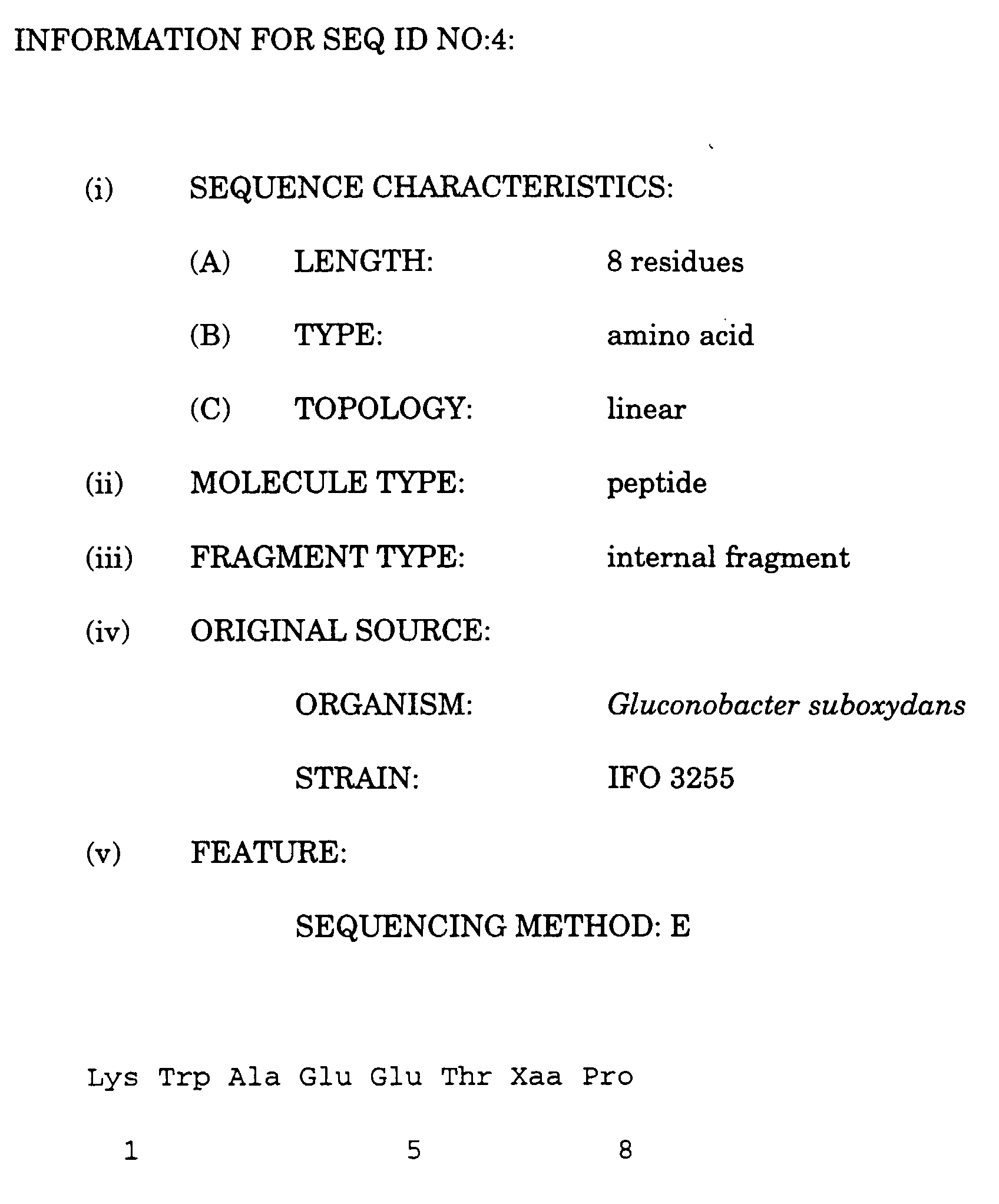
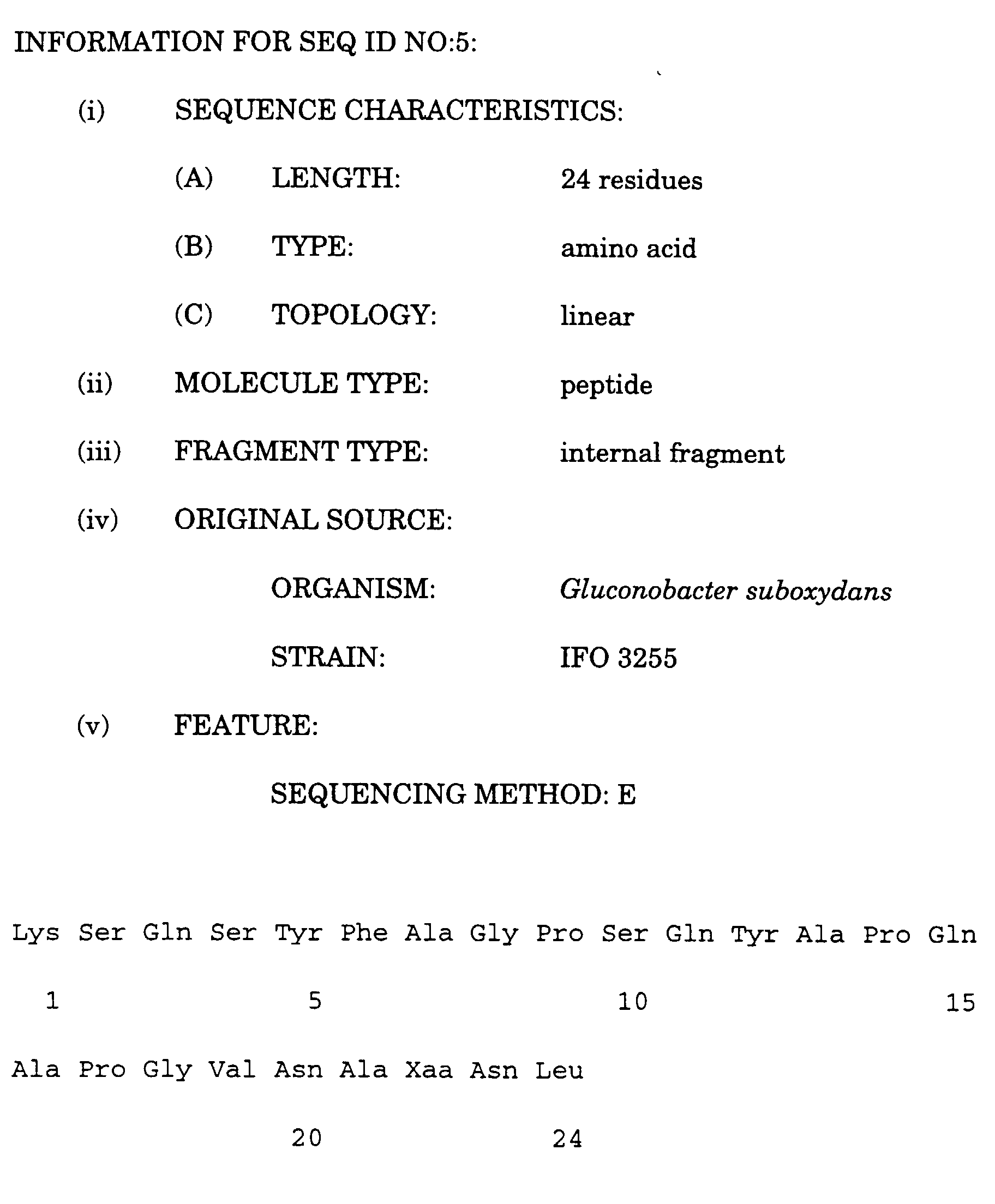
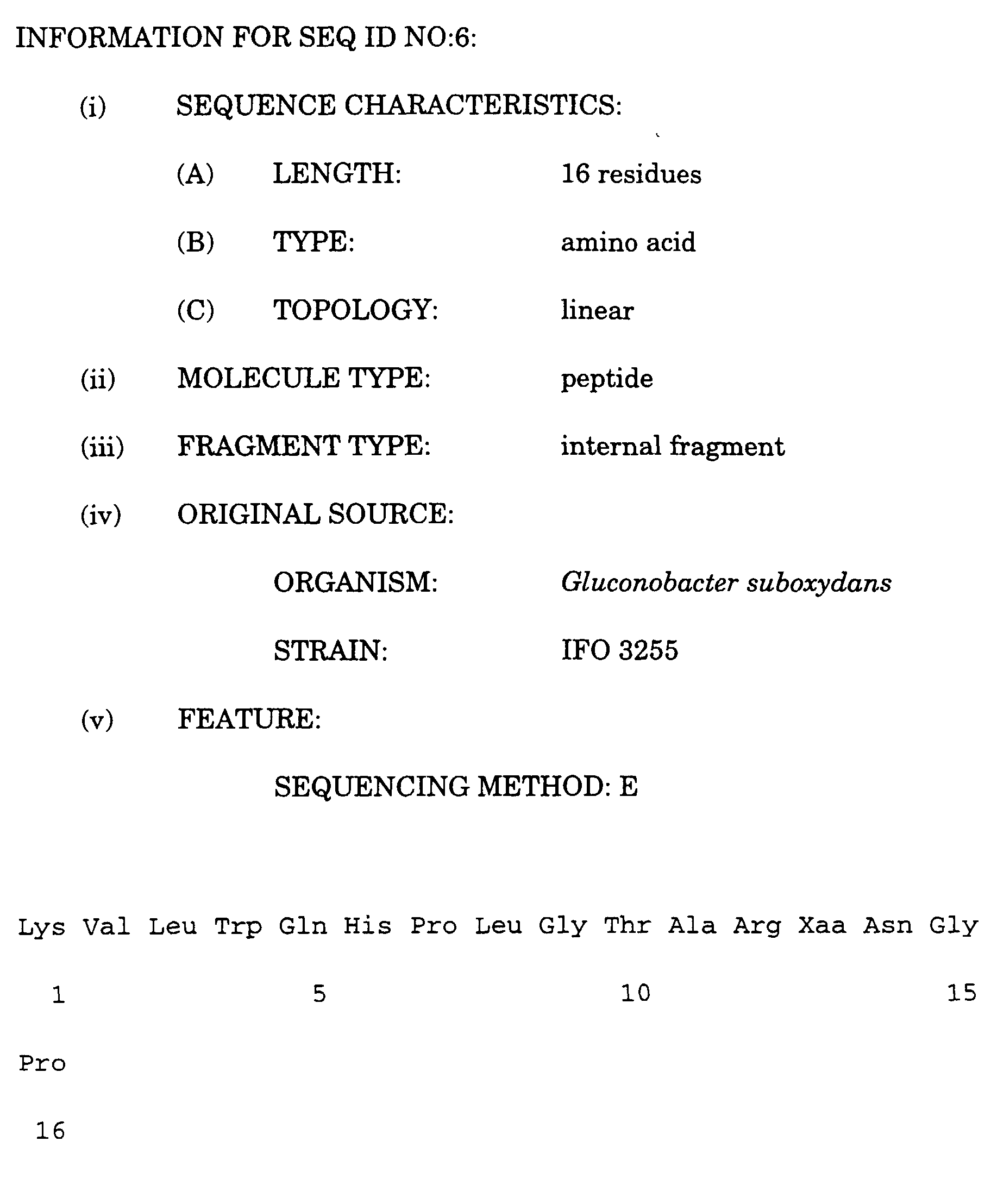
- Partial amino acid sequences of peptides No.1, 3 and 8 prepared from SLDH protein were determined (Fig. 1; SEQ ID NO:4 to 6).
- Purified SLDH of G. suboxydans IFO 3255 (T. Hoshino et al., EP 728840) was digested with lysylendopeptidase; the reaction mixture (25 ml) contained 1.2 mM of lysylendopeptidase and 3 nmol of the SLDH protein in 100 mM Tris-HCl buffer, pH9.0, and the reaction was carried out at 37°C for 15 hours.
- the resulting peptide fragments were separated by HPLC (column : protein C-4, VYDAC, California, USA) with acetonitrile/isopropanol gradient in 0.1% TFA at a flow rate of 1.0 ml/min. Elution of the peptides was monitored by UV absorbance at 214 nm, and the peak fractions were collected manually and subjected to N-terminal amino acid sequence analysis with an amino acid sequencer (Applied Biosystems model 470A, The Perkin Elmer Corp., Conn., USA).
- PCR was conducted with chromosomal DNA of G. suboxydans IFO 3255 and degenerate oligonucleotide DNA primers, s7 and s6R whose sequences are shown in Fig. 1.
- the PCR amplification was carried out with thermostable polymerase Amplitaq (Perkin-Elmer, Roche Molecular Systems Inc., NJ, USA), using a thermal cycler (ZYMOREACTOR II AB-1820, ATTO, Tokyo, Japan).
- the following reaction mixture (50 ⁇ l) was used for PCR: 200 ⁇ M of dNTPs, 10 ⁇ 20 pmol of each primer (54 ⁇ 288 degeneracy), 6 ng of chromosomal DNA of G.
- the reaction consisted of 30 cycles of 1) denaturation step at 94°C for 1 min; 2) annealing step at 48°C for 1 min; 3) synthesis step at 72°C for 2 min. Consequently, 1.6 kb DNA was amplified and cloned in E. coli vector, pUC57/T (MBI Fermentas, Vilnius, Lithuania), which has 3 ⁇ -ddT-tailed ends for direct ligation of an amplified DNA fragment to obtain a recombinant plasmid pMT20.
- the cloned DNA was subjected to nucleotide sequencing by the method of dideoxy-chain termination (F. Sanger et al, Proc. Natl. Acad. Sci. USA, 74:5463-5467, 1977); the 1.6 kb fragment encoded the peptides No. 3 and No. 8.
- the chromosomal DNA of G. suboxydan s IFO 3255 was prepared from the cells grown on MB agar plate for 2 days.
- the chromosomal DNA (160 ⁇ g) was partially digested with 20 units of Eco RI in 500 ⁇ l of reaction mixture. Portions of the sample were withdrawn at 5, 10, 15, 30, and 60 minutes and the degree of the digestion was detected by agarose gel electrophoresis. Former four portions which contained partially-digested DNA fragments were combined and subjected to preparative gel electrophoresis (agarose: 0.6%). Fragments of 15 - 35 kb were cut out and electroeluted from the gel. The eluate was filtered and precipitated with sodium acetate and ethanol at -80°C. The DNA fragments were collected by centrifugation and suspended in 200 ⁇ l of 10 mM Tris-HCl, pH8.0, buffer containing 1 mM EDTA.
- a cosmid vector pVK100 was completely digested with Eco RI and treated with calf intestine alkaline phosphatase.
- the linearized and dephosphorylated pVK100 was ligated with 15 - 35 kb Eco RI fragments of the chromosomal DNA of G. suboxydan s IFO 3255 (5 ⁇ g) with the ligation kit (Takara Shuzo, Kyoto, Japan) in 20 separate tubes under the condition recommended by the supplier to obtain highly polymerized DNA.
- the ligated DNA was then used for in vitro packaging according to the method described by the supplier (Amersham Japan).
- the resulting phage particles were used to infect E. coli ED8767, a host for the genomic library. Consequently, 4,271 colonies were obtained and all of the colonies tested (20 colonies) possessed the insert DNAs with the average size of about 25 kb.
- the cosmid library described above was screened to isolate the clone carrying complete SLDH gene by colony hybridization method with 32 P-labeled 1.6 kb DNA of pMT20.
- One clone was isolated and designated pSLII, which carry about 25 kb insert in pVK100 vector.
- pSLII 6.2 kb Pst I fragment was isolated and cloned into pUC18 to obtain plasmid pUSLIIP.
- the 6.2 kb Pst I fragment containing ORF2 and SLDH genes was isolated from pUSLIIP and subcloned into pCRII vector (Invitrogen Corporation, CA, USA) to produce pCRSLIIP.
- the DNA fragment containing the 6.2 kb Pst I fragment was isolated as Hind III- Xho I fragment and cloned between Hind III and Xho I sites of pVK100 to obtain pVKSLIIP.
- Transposon Tn5 mutagenesis was performed with G. melanogenus IFO 3293 as the parent.
- Tn5 a transposable element coding for Kmr, causes null mutations at random on DNA of its host organism and widely used as a mutagen in Gram-negative bacteria.
- the IFO 3293 was selected as the parent in the following reasons: (i) it produced L-sorbose from D-sorbitol, (ii) it showed immuno-positive polypeptide of about 80 kDa in Western-blot analysis with the antibody prepared against SLDH purified from G. suboxydans IFO 3255 and (iii) its frequency for generating Tn5 mutants was much higher than that of G. suboxydans IFO 3255.
- G. melanogenus IFO 3293 was cultivated in a test tube containing 5 ml of the MB medium containing 25 g/l of mannitol, 5 g/l of yeast extract (Difco Laboratories, ), 3 g/l of Bactopepton (Difco) at 30°C overnight.
- E. coli HB101 (pRK2013) [D. H. Figurski, Proc, Natl. Acad. Sci. USA 76: 1648 - 1652, 1979] and E. coli HB101 (pSUP2021) [R. Simon, et al., BIO/TECHNOL.
- the resulting 3,436 Tn5 mutants were subjected to the immuno-dot blot screening with the anti-SLDH antibody.
- the cells of each strain were independently suspended in 50 ⁇ l Laemmli buffer consisting of 62.5 mM Tris-HCl (pH6.5), 10% glycerol, 2% SDS and 5% ⁇ -mercaptoethanol in 96-well microtiter plate and incubated at 60°C for 2 hours.
- the Cell Free Extracts (CFEs) were stamped on the nitrocellulose filter and the immuno-positive samples in the CFEs were screened with AP conjugate substrate Kit (Bio-RAD Laboratories, Richmond, Calif., USA). As a result, only one strain 26A11 without positive signal in the immuno-dot blot screening was obtained.
- SLDH-deficiency of the strain 26A11 was confirmed by Western-blot analysis; it expressed at most 1/500 amount of SLDH compared with its parent strain.
- 26A11 was not a complete SLDH-deficient strain but the strain with SLDH gene repressed by Tn5 insertion; the insertion site was found to be close to the C-terminus by determining the nucleotide sequence around Tn5-insertion point.
- a resting cell reaction was conducted to examine the whole SLDH activity in 26A11 and the wild Gluconobacter strains.
- Plasmids pSLII and pVKSLIIP were introduced into 26A11 by a conjugal mating.
- the transconjugant carrying pSLII or pVKSLIIP restored the activity of SLDH in a mini-resting cell reaction and showed immuno-reactive polypeptide of about 80 kDa in Western-blot analysis.
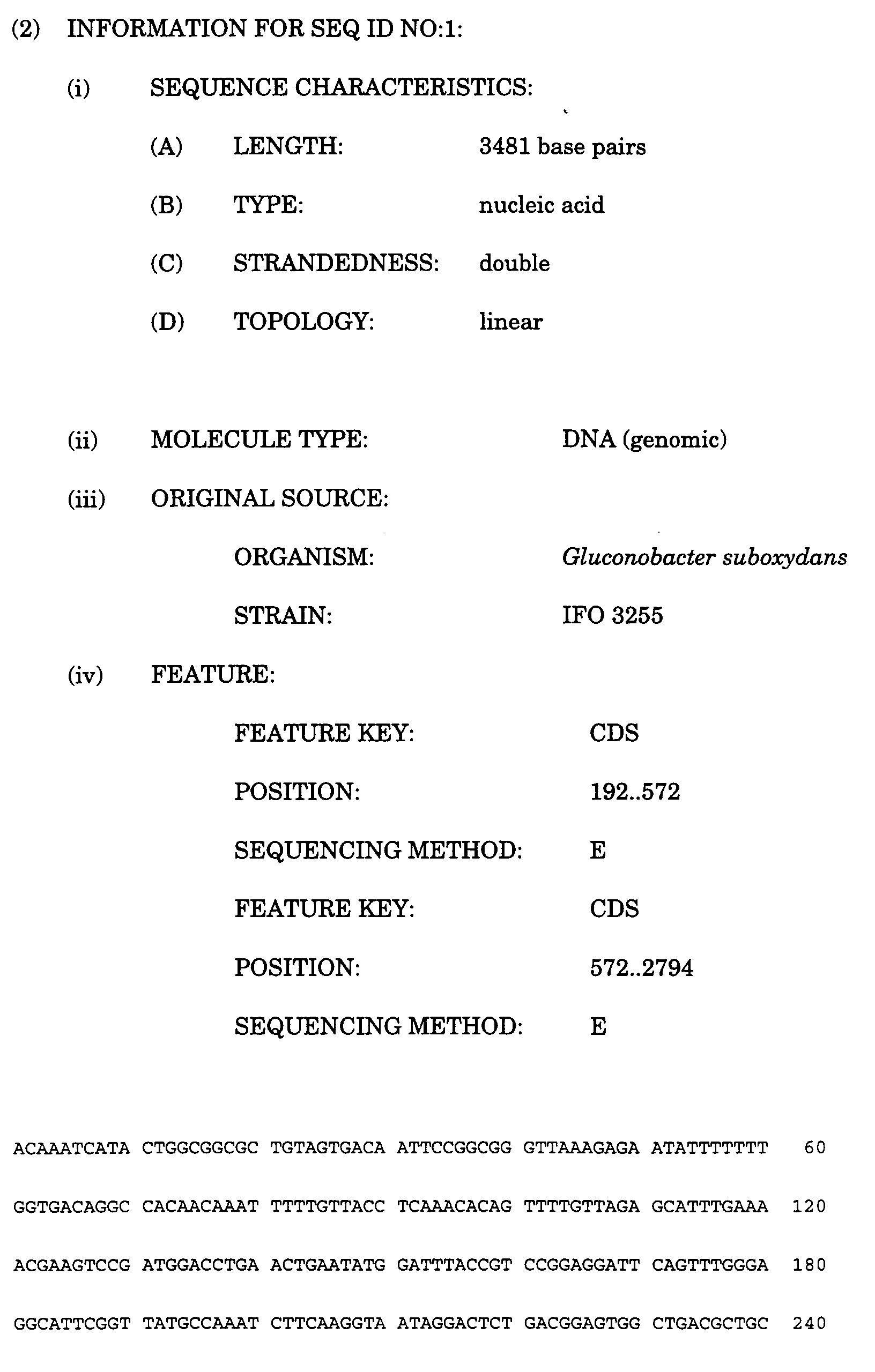
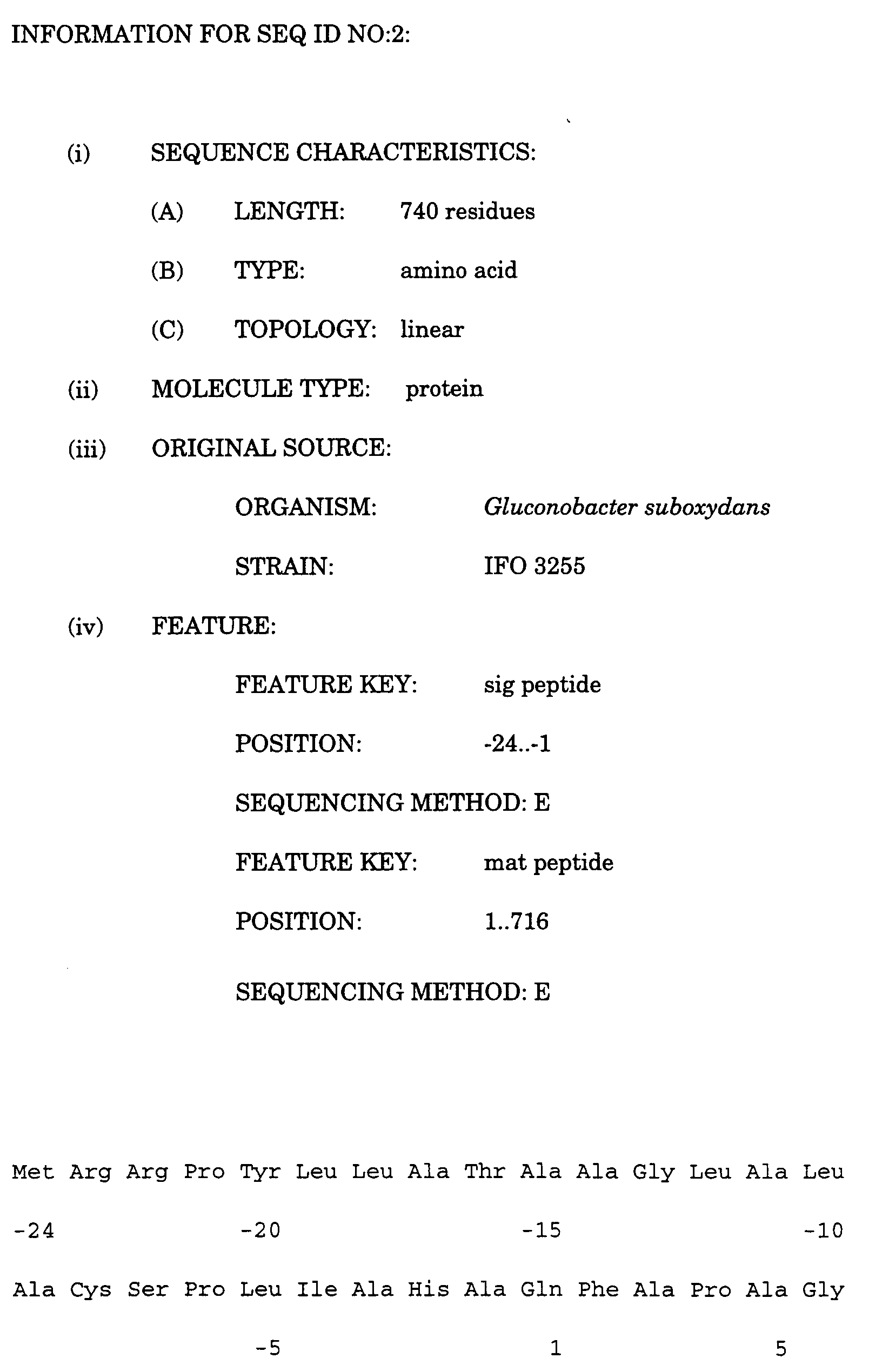
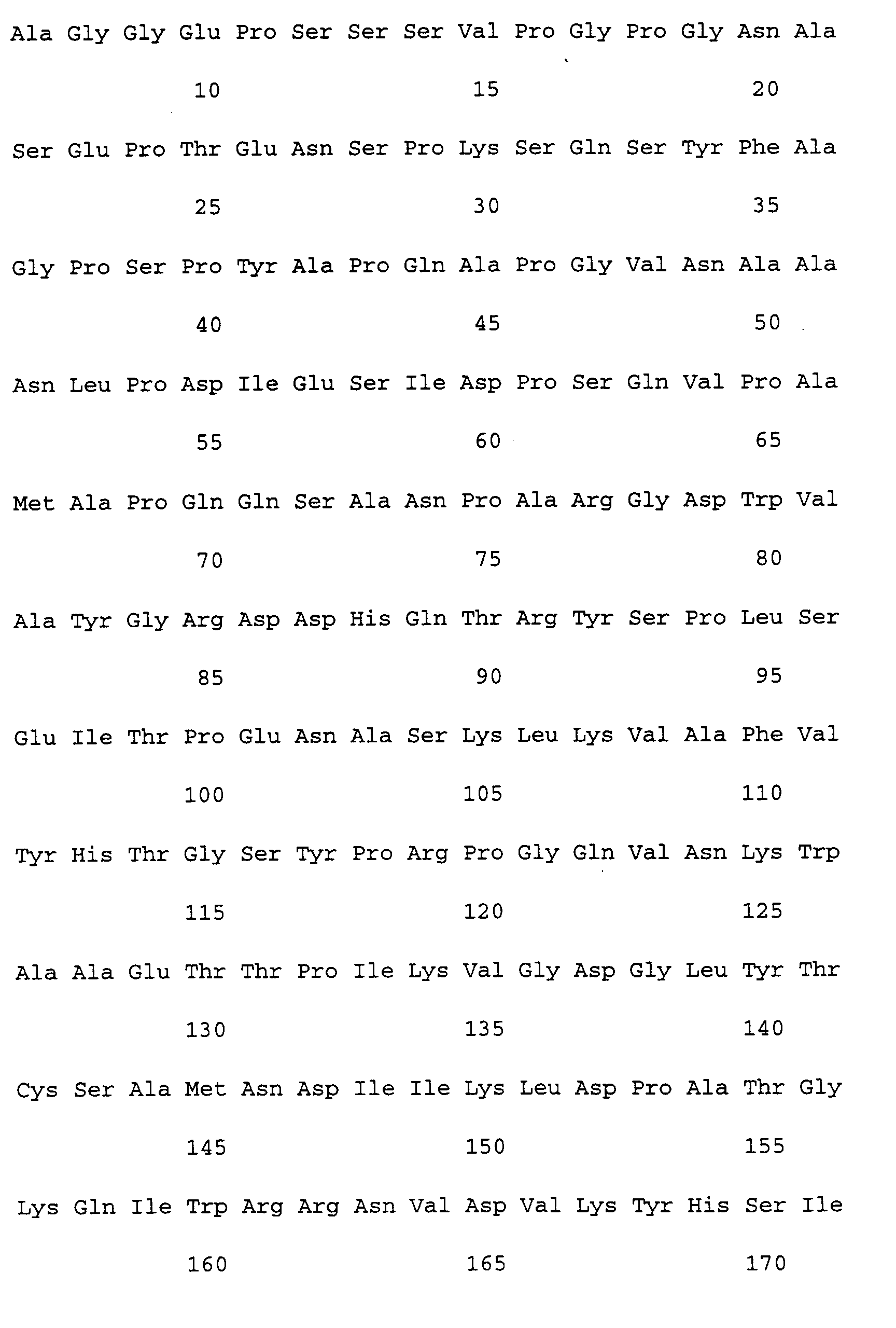
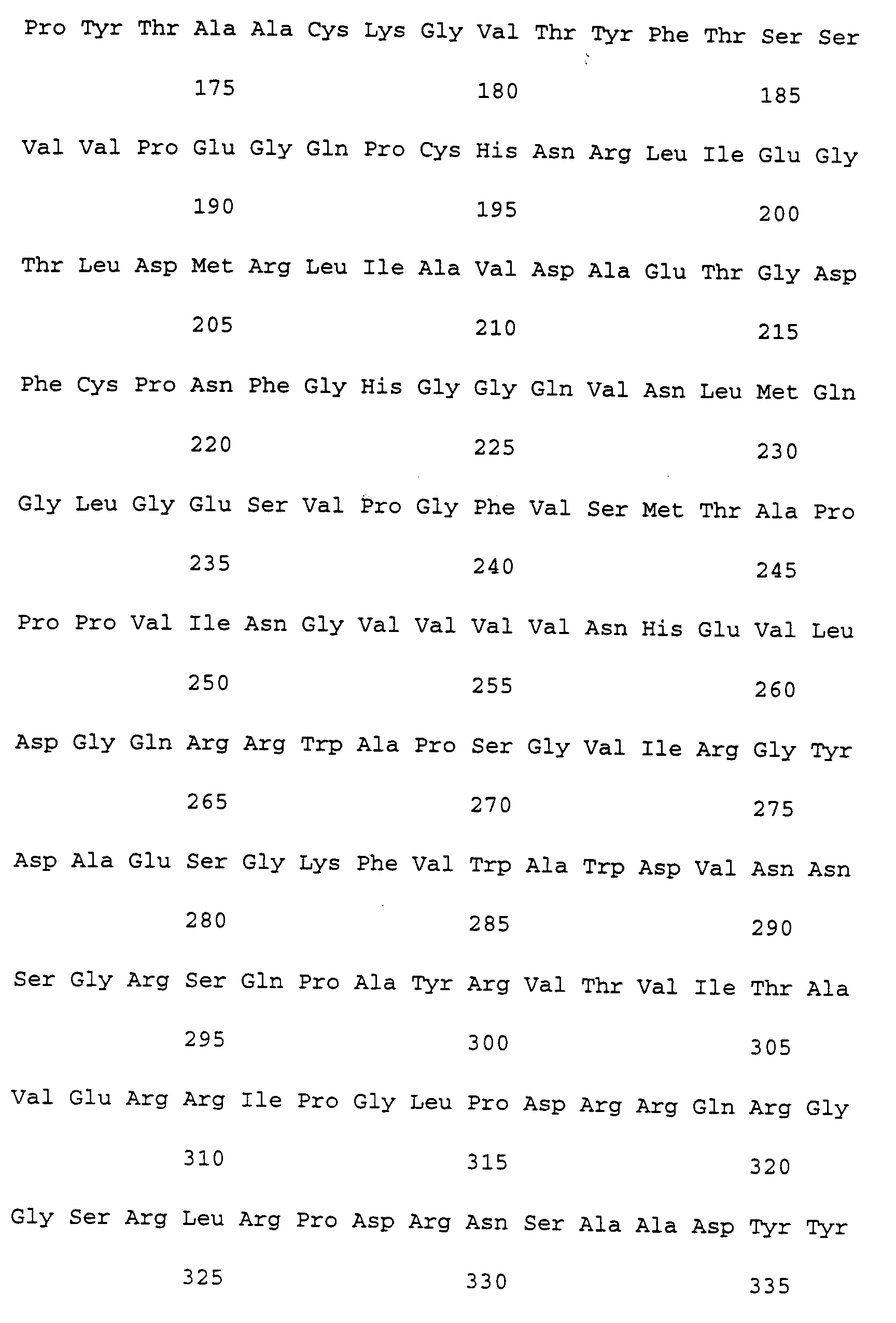
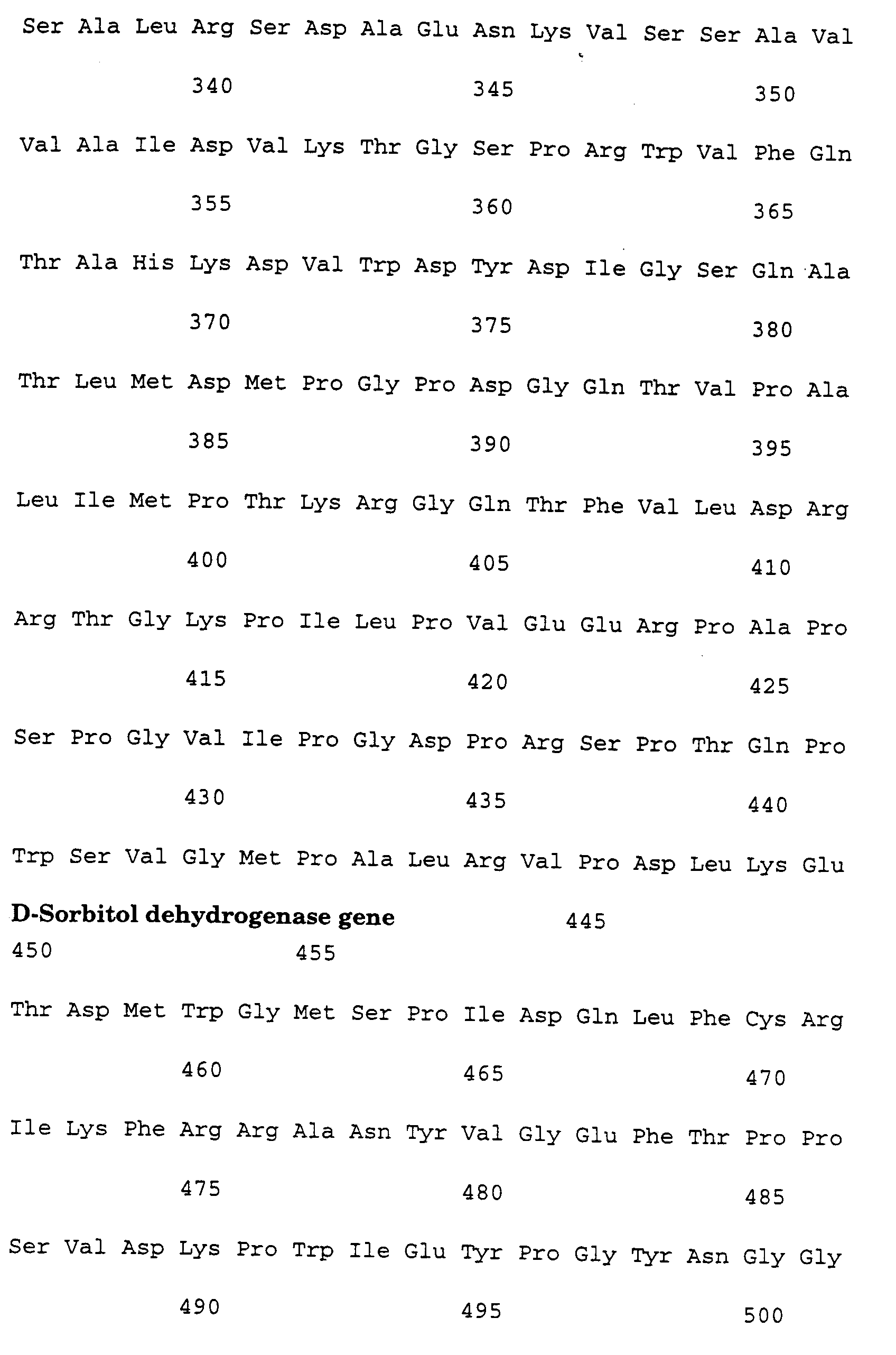
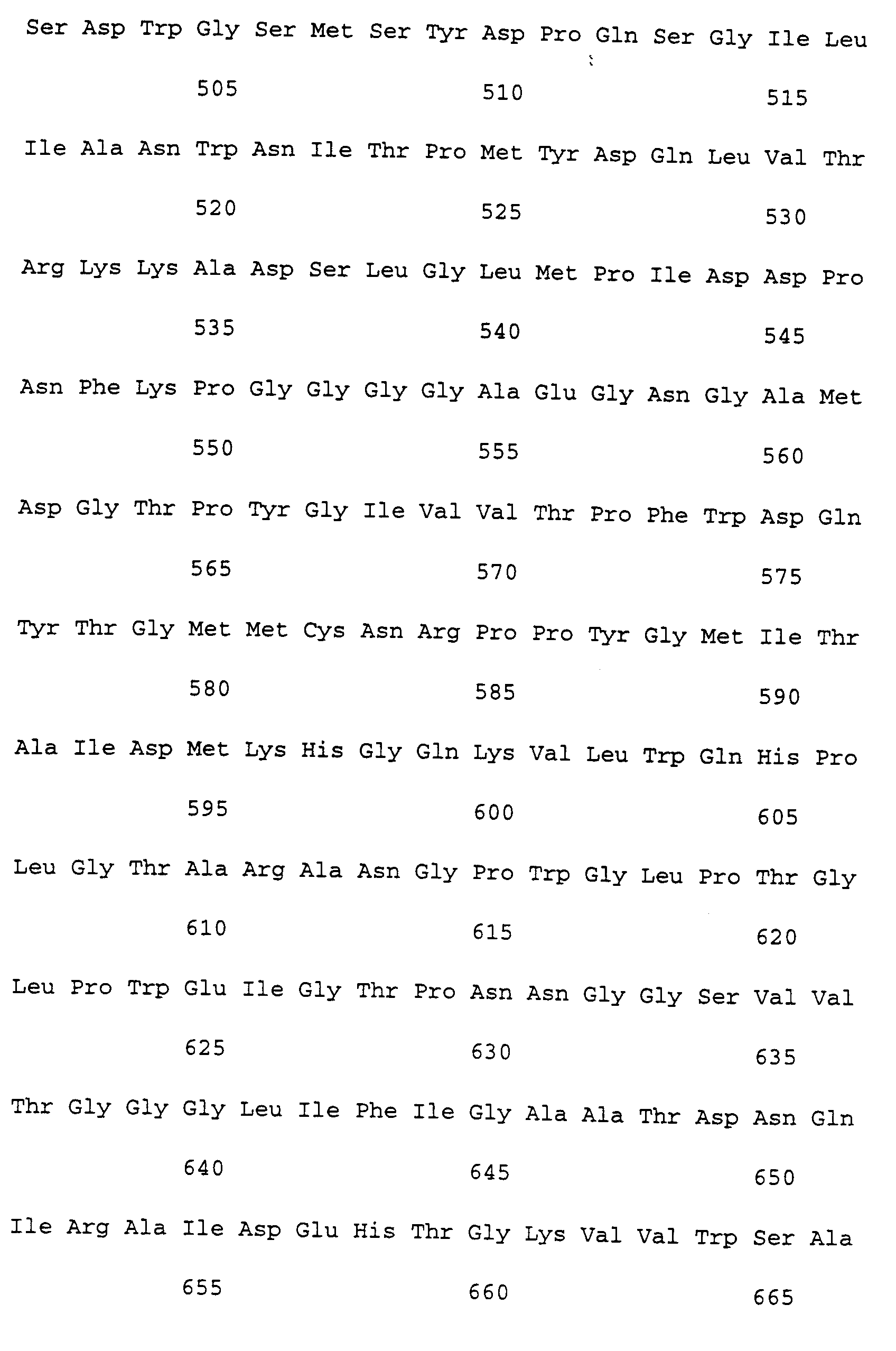
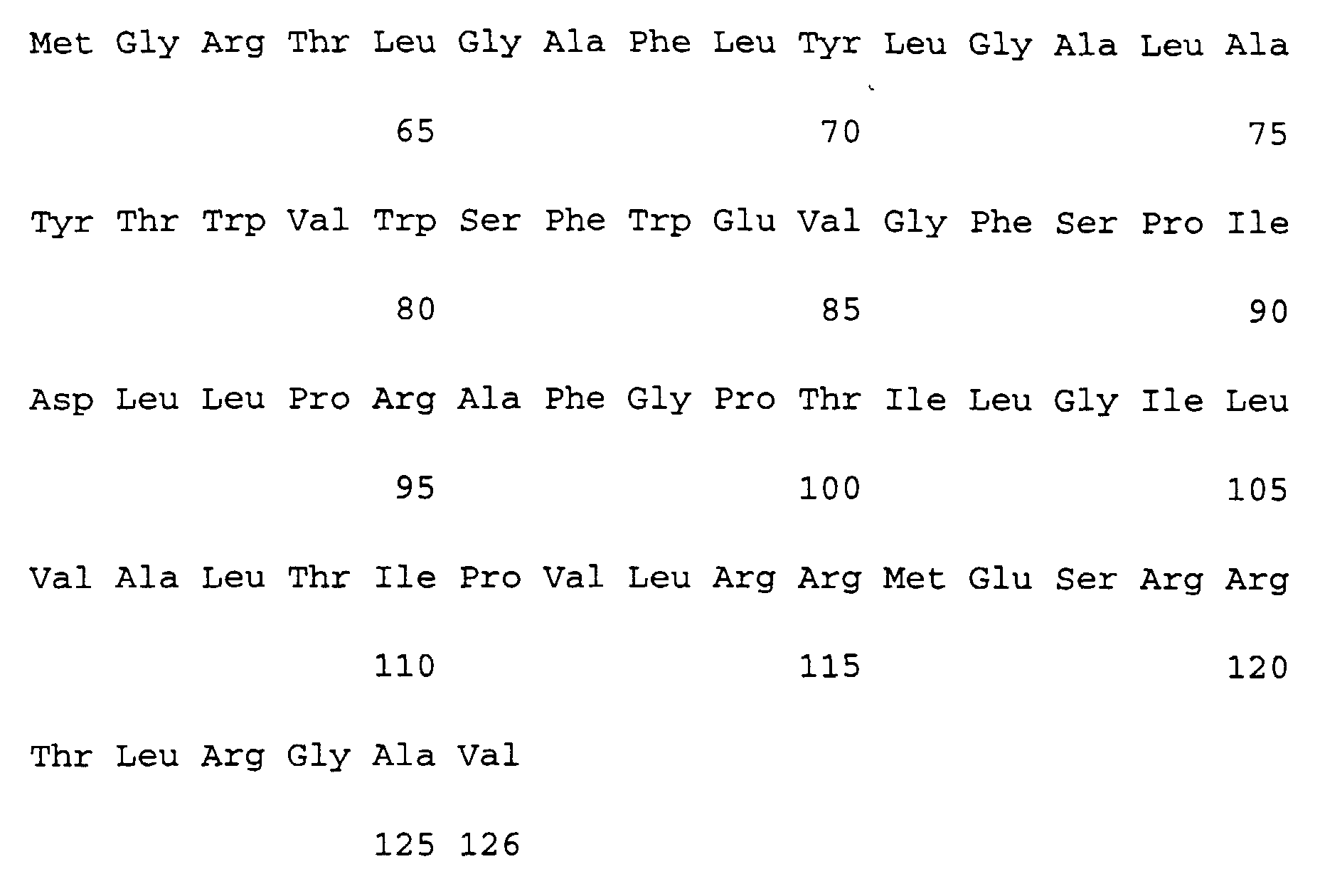
- Plasmid pUSLIIP was used for nucleotide sequencing of SLDH and ORF2 genes. Determined nucleotide sequence (SEQ ID NO: 1; 3,481 bp) revealed that ORF of SLDH gene (2,223 bp, nucleotide No. 572 to 2794 in SEQ ID NO: 1) encoded the polypeptide of 740 amino acid residues (SEQ ID NO: 2), in which there were three amino acid sequences (Peptides No. 1, 3, and 8 shown in SEQ ID NO: 4 to 6) determined from the purified SLDH polypeptide. In addition to the SLDH ORF, one more ORF, ORF2, was found just upstream of SLDH ORF as illustrated in Figs. 2 and 3. The ORF of ORF2 (381 bp, nucleotide No. 192 to 572 in SEQ ID NO: 1) encoded the polypeptide of 126 amino acid residues (SEQ ID NO. 3).
- the 4 th amino acid sequence of Peptide No.1 was determined as Glu by the amino acid sequencer, but it was Ala according to the DNA sequence.
- the 11 th amino acid sequence of Peptide No.3 was determined as Gln by the amino acid sequencer, but it was Pro according to the DNA sequence.
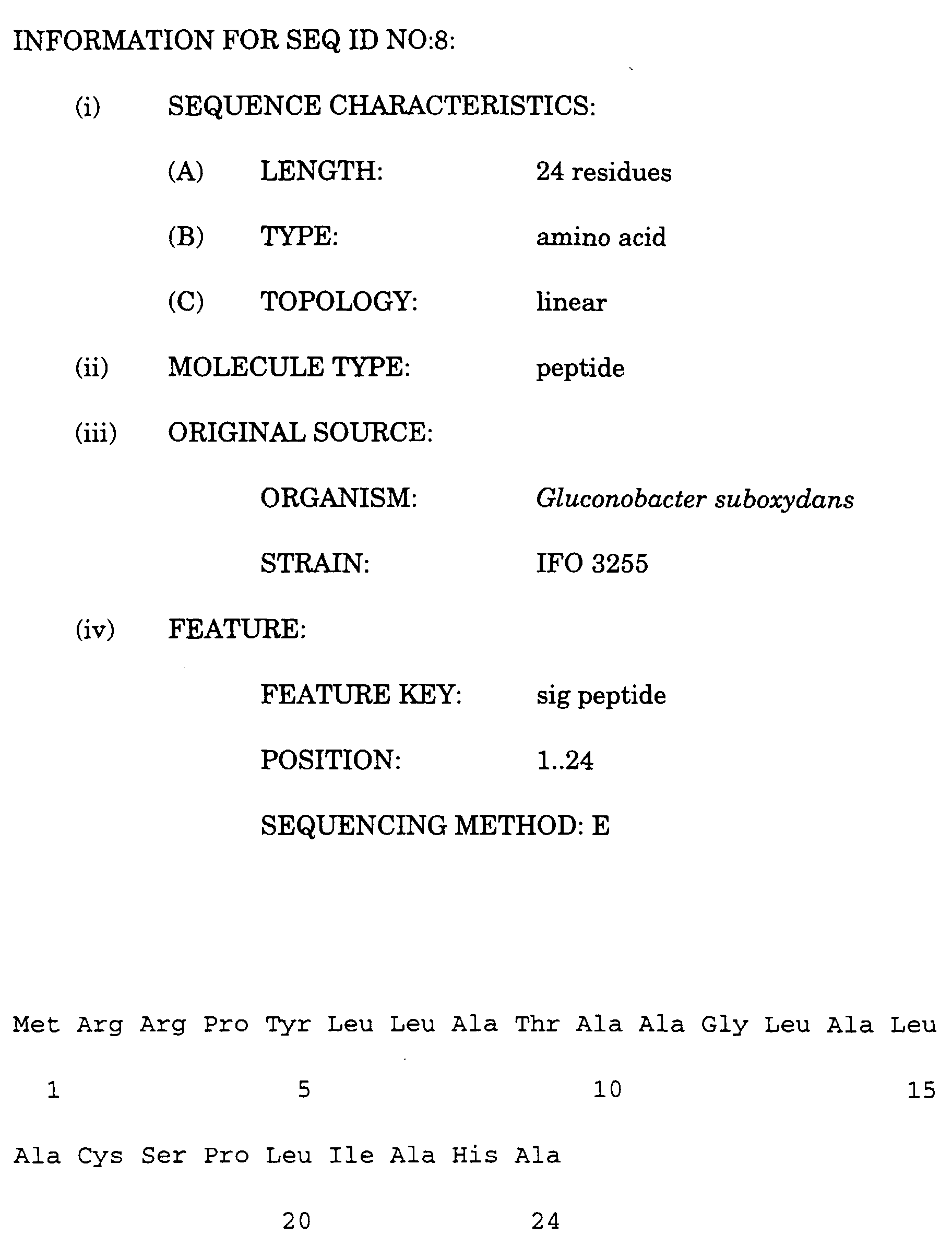
- a signal peptide-like region (SEQ ID NO: 8) is possibly included in the deduced amino acid sequence: it contains (i) many hydrophobic residues, (ii) a positively-charged residues near N-terminus, and (iii) Ala-Xaa-Ala site as a cleaved signal.
- the actual signal sequence was determined as described in Example 3 (7).
- the putative ribosome-binding site (Shine-Dalgarno, SD, sequence) for SLDH gene was located at 8 bp upstream of the initiation codon (AGAGGAG at nucleotide No. 558 - 564 of Seq ID NO: 1).
- the putative SD sequence for ORF2 gene was located at 10 bp upstream of the initiation codon (GGGAGG at nucleotide No. 177 to 182 of Seq ID NO: 1).
- There were some inverted repeat sequences immediately downstream the SLDH structure gene (nucleotide sequences of No. 2803 - 2833 and of No. 2838 - 2892) as illustrated in Fig. 3; they may action as transcription termination loops for SLDH gene.
- the inverted repeat sequence was found at No. 684 - 704.
- SLDH polypeptide had the sequence commonly conserved in quinoprotein at the region near C-terminus (within amino acid residue No. 632 to 692 of SEQ ID No. 2) and the other sequence identified as a quinoprotein motifs (Prosite No. PS00363: [DN]W. ⁇ 3 ⁇ G[RK]. ⁇ 6 ⁇ [FY]S. ⁇ 4 ⁇ [LIVM]N. ⁇ 2 ⁇ NV. ⁇ 2 ⁇ L[RK]; amino acid residue No. 79 to 107 of SEQ ID No. 2).
- ORF2 showed homology with the N-terminal region of the membrane-bound PQQ-dependent D-glucose dehydrogenase (GDH) of G. oxydans , E. coli , Acinetobacter calcoaceticus , which is known as a membrane-spanning region to bind the GDH to the membrane. Identities of ORF2 to the N-terminal region of the GDHs of G. oxydans , E. coli, A. calcoaceticus were 30%, 32%, and 37%, respectively.
- the ORF2 protein may function as an anchoring protein to make the SLDH membrane-bound type.
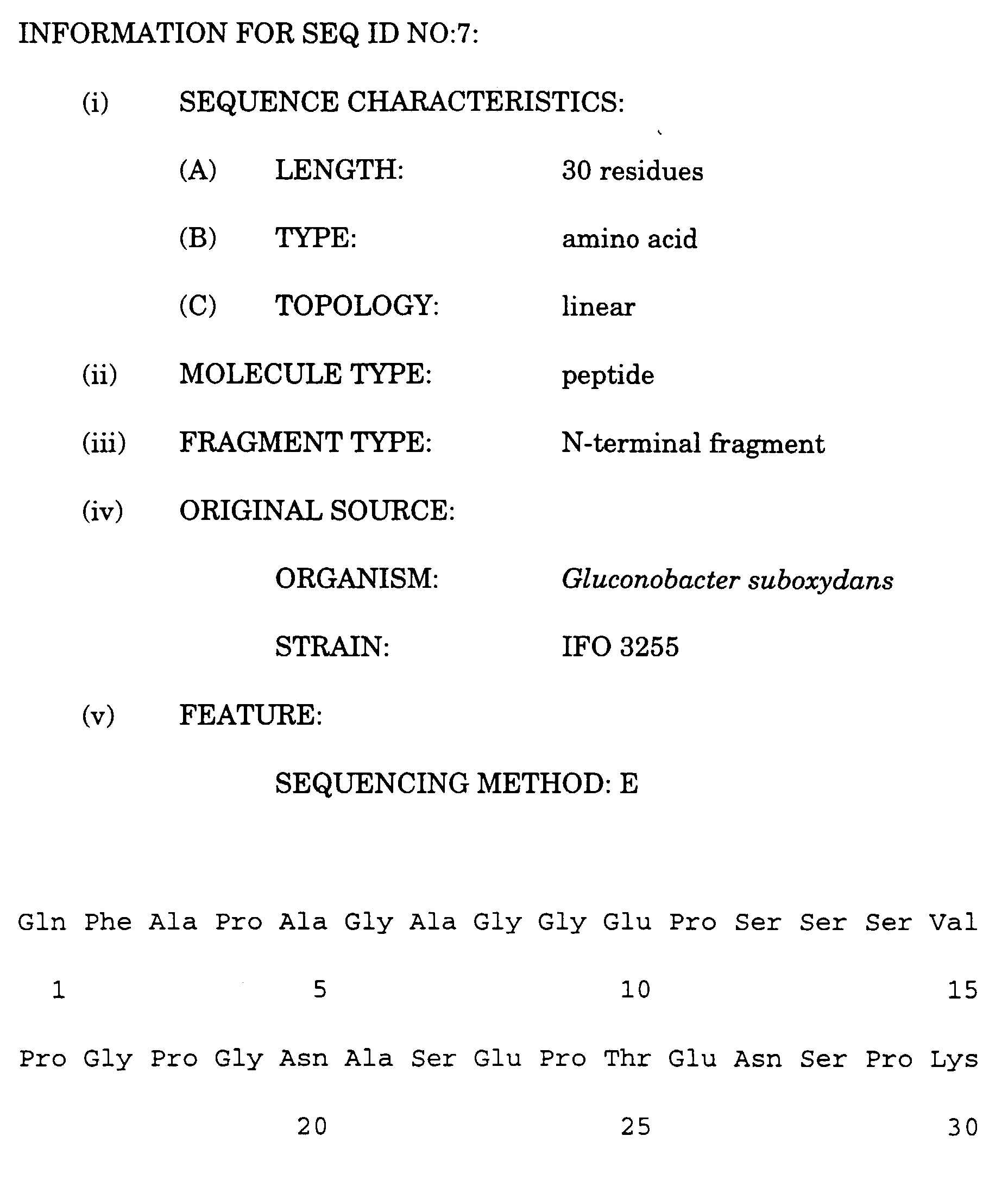
- N-terminal sequence 7 was assigned as the N-terminal sequence by the mass spectrometric analysis and amino acid composition analysis together with the amino acid composition predicted from determined nucleotide sequence shown as SEQ ID NO: 1. Further analysis with collisional induced dissociation (CID) was carried out to confirm the identity of the peptide with N-terminal sequence. The N-terminus was determined to be pyroglutamyl residue.
- N-terminus of SLDH was determined to be Gln-Phe-Ala-Pro-Ala-Gly-Ala-Gly-Gly-Glu-Pro-Ser-Ser-Ser-Val-Pro-Gly-Pro-Gly-Asn-Ala-Ser-Glu-Pro-Thr-Glu-Asn-Ser-Pro-Lys as shown in SEQ ID NO.
- the signal sequence was confirmed to be 24 amino acid residue long with the sequence of Met-Arg-Arg-Pro-Tyr-Leu-Leu-Ala-Thr-Ala-Ala-Gly-Leu-Ala-Leu-Ala-Cys-Ser-Pro-Leu-Ile-Ala-His-Ala as listed as SEQ ID NO: 8.
- the C-terminal sequence was also determined by using the peptide recovered from V8 protease digest to be Pro-Asp-Ala-Ile-Lys-Gln (SEQ ID NO: 9).
- Example 5 Expression of the SLDH and/or ORF2 gene(s) in E. coli
- plasmids carrying SLDH gene with or without ORF2 gene under the lac promoter control were constructed as illustrated in Fig. 4.
- the resulting three plasmids are pTNB114 carrying SLDH and ORF2 genes, pTNB115 carrying SLDH gene and ORF2 gene truncated at its N-terminus containing ribosome binding site and start codon (ATG) and pTNB116 carrying mostly-truncated ORF2 gene and intact SLDH gene.
- ATG ribosome binding site and start codon
- pTNB116 carrying mostly-truncated ORF2 gene and intact SLDH gene.
- the production of the SLDH polypeptide was detected by Western-blot analysis with cell free extracts of the resulting transformants and the SLDH activity was assayed with resting cells.
- the resting cell reaction was carried out in the reaction mixture consisting of 0.3% NaCl, 1% CaCO 3 , 4% D-sorbitol, and 1 mM PMS with or without 1 ⁇ g/ml of PQQ at room temperature for 17 hours.
- the SLDH activity to produce L-sorbose was analyzed by TLC assay with Silica gel 60 F 254 , 0.25 mm, Merck with the developing solvent consisting of n -propanol-H 2 O-1% H 3 PO 4 -HCOOH (400:100:10:1) and spray reagent of naphthoresorcinol. Consequently, SLDH polypeptide was detected in all transformants, even without ORF2 gene expression, in Western-blot analysis, but SLDH activity to produce L-sorbose was detected only in transformant carrying pTNB114 containing intact ORF2 gene under the resting cell reaction condition in the presence of PQQ.
- Example 6 Expression of the SLDH and/or ORF2 gene(s) in E. coli
- Figure 5 illustrates construction steps of pTNB110 and pTNB143.
- Plasmid pTNB110 carrying ORF2 and SLDH genes under control of the promoter of Enzyme A gene (pA) of DSM4025 (T. Hoshino et al., European Patent Application No. 9611500.8) was constructed by inserting Hind III- Kpn I fragment containing pA, Kpn I- Xho I fragment from pTNB114 between Hind III- Xho I of pUC18.
- Plasmid pTNB143 carrying ORF2 and SLDH genes as independent expression units ORF2 gene with pA and SLDH gene with pA, was constructed by inserting 0.9 kb Sal I fragment from pTNB141 and 3.2 kb Hind III- Xho I fragment from pTNB135 into pUC57/pCRII hybrid vector ( Sca I- Hind III fragment with plac from pUC57 and Xho I to Sca I fragment without plac from pCRII) as shown in Fig. 5.
- the plasmids, pTNB110 and pTNB143 were introduced into E. coli by conventional transformation. The resulting transformants were subjected to Western-blot analysis and resting cell reaction as described in Example 5. Consequently, both of the transformants carrying pTNB110 and pTNB143 produced SLDH protein and showed SLDH activity to produce L-sorbose from D-sorbitol in the presence of PQQ.
- the plasmid pTNB136 for the expression of SLDH gene in G. oxydans DSM 4025 having strong L-sorbose and L-sorbosone dehydrogenase activities together with weak D-sorbitol dehydrogenase activity to produce L-sorbose was constructed by inserting Hind III- Xho I fragment from pTNB135 (Fig. 5) between Hind III and Xho I sites of pVK100.
- the plasmid pTNB136 and its vector pVK100 were introduced by conjugal mating into strain GOB ⁇ K, which is a mutant of G.
- oxydans DSM 4025 whose gene of Enzyme B (EP 832 974) having D-sorbitol dehydrogenase to produce L-sorbose is deleted by replacing two Eco RI fragments containing Enzyme B gene with kanamycin resistant gene cassette (1.28 kb Eco RI fragment of pUC4K; Pharmacia Uppsala, Sweden).
- the gene disruption was conducted by the recombinant DNA techniques well-known in the art.
- the resulting transconjugant, GOB ⁇ K carrying pTNB136 or pVK100 produced 5 g/L or below 2 g/l of 2KGA in 10% D-sorbitol, respectively, by flask fermentation conducted at 30°C for 4 days (medium: 10% D-sorbitol, 1.6% urea, 0.05% glycerol, 0.25% MgSO 4 _7H 2 O, 3% corn steep liquor, 6.25% baker's yeast wet cells and 1.5% CaCO 3 ).
- Western-blot analysis with anti-SLDH antibody revealed that the transconjugants carrying pTNB136 expressed the immuno-reactive SLDH polypeptides.
Landscapes
- Chemical & Material Sciences (AREA)
- Organic Chemistry (AREA)
- Life Sciences & Earth Sciences (AREA)
- Engineering & Computer Science (AREA)
- Health & Medical Sciences (AREA)
- Zoology (AREA)
- Wood Science & Technology (AREA)
- Genetics & Genomics (AREA)
- Bioinformatics & Cheminformatics (AREA)
- General Health & Medical Sciences (AREA)
- Biochemistry (AREA)
- General Engineering & Computer Science (AREA)
- Microbiology (AREA)
- Biotechnology (AREA)
- Chemical Kinetics & Catalysis (AREA)
- General Chemical & Material Sciences (AREA)
- Medicinal Chemistry (AREA)
- Molecular Biology (AREA)
- Biomedical Technology (AREA)
- Micro-Organisms Or Cultivation Processes Thereof (AREA)
- Preparation Of Compounds By Using Micro-Organisms (AREA)
Abstract
Description
- The present invention relates to a novel DNA coding for sorbitol dehydrogenase of a microorganism belonging to acetic acid bacteria including the genus Gluconobacter and the genus Acetobacter, an expression vector containing the said DNA, and recombinant organisms containing the said expression vector. Furthermore, the present invention relates to a process for producing recombinant D-sorbitol dehydrogenase and a process for producing L-sorbose by utilizing the said recombinant enzymes or recombinant organisms containing the said expression vector.
- L-Sorbose is an important intermediate in the actual industrial process of vitamin C production, which is mainly practiced by Reichstein method (Helvetica chimica Acta, 17: 311, 1934). In the process, the only microbial conversion is the L-sorbose production from D-sorbitol by Gluconobacter or Acetobacter strains. The conversion is considered to be carried out by NAD/NADP independent D-sorbitol dehydrogenase (SLDH). L-Sorbose is also a well known substrate in the art for microbiologically producing 2-keto-L-gulonic acid, which is a useful intermediate in the production of vitamin C.
- It is known that there are NAD/NADP-independent D-sorbitol dehydrogenase which catalyzes the oxidation of D-sorbitol to L-sorbose. The said D-sorbitol dehydrogenase was isolated and characterized from Gluconobacter suboxydans var α IFO 3254 (E. Shinagawa et al., Agric Biol. Chem., 46: 135-141, 1982), and found to consist of three subunits with the molecular weight of 63 kDa, 51 kDa, and 17 kDa; the largest subunit is dehydrogenase containing FAD as a cofactor, the second one is cytochrome c AB/vs / 26.6.98 and the smallest one is a protein with unknown function; and shows its optimal pH at 4.5. Such SLDH was also purified and characterized from G. suboxydans ATCC 621 (KCTC 2111) (E-S Choi et al., FEMS Microbiol. Lett. 125:45-50, 1995) and found to consist of three subunits with the molecular weight of 75 kDa, 50 kDa, and 14 kDa; the large subunit is dehydrogenase containing pyrroloquinoline quinone (PQQ) as a cofactor, the second one is cytochrome c and the small one is a protein with unknown function. The inventors also purified and characterized the NAD/NADP-independent SLDH from G. suboxydans IFO 3255 (T. Hoshino et al., EP 728840); the SLDH consists of one Kind of subunit with the molecular weight of 79.0 +/- 0.5 KDa and shows its optimal pH at 6 to 7 and shows dehydrogenase activity on mannitol and glycerol as well as on D-sorbitol.
- Although several SLDHs have been purified, their genes have not been cloned yet. It is useful to clone the SLDH gene for efficient production of the SLDH enzyme and for constructing recombinant organism having enhanced SLDH activity to improve the production yield of L-sorbose. It is also useful to introduce the said SLDH gene into desired organisms, for example, Gluconobacter converting L-sorbose to 2-keto-L-gulonic acid for constructing recombinant microorganisms which directly produce 2-keto-L-gulonic acid from D-sorbitol.
- The present invention provides a nucleotide sequence (gene) coding for D-sorbitol dehydrogenase (SLDH) originating from a microorganism belonging to acetic acid bacteria including the genus Gluconobacter and the genus Acetobacter; a DNA molecule comprising said nucleotide sequence as well as a combination of the said DNA with a DNA comprising a nucleotide sequence of a protein functional in activating the said SLDH in vivo, expression vectors carrying the DNA comprising SLDH nucleotide sequence or the said combination of the DNAs; recombinant organisms carrying the expression vectors; a process for producing the recombinant SLDH; and a process for producing L-sorbose by utilizing the recombinant SLDH or the recombinant organisms.
- The present invention is also directed to functional derivatives of the present case. Such functional derivatives are defined on the basis of the amino acid sequences of the present invention by addition, insertion, deletion and/or substitution of one or more amino acid residues of such sequences wherein such derivatives still have SLDH activity measured by an assay known in the art or specifically described herein. Such functional derivatives can be made either by chemical peptide synthesis known in the art or by recombinant means on the basis of the DNA sequences as disclosed herein by methods known in the state of the art and disclosed e.g. by Sambrook et al. (Molecular Cloning, Cold Spring Harbour Laboratory Press, New York, USA, second edition 1989). Amino acid exchanges in proteins and peptides which do not generally alter the activity of such molecules are known in the state of the art and are described, for example, by H. Neurath and R. L. Hill in ÒThe ProteinsÓ (Academic Press, New York, 1979, see especially Figure 6, page 14). The most commonly occurring exchanges are: Ala/Ser, Val/Ile, Asp/Glu, Thr/Ser, Ala/Gly, Ala/Thr, Ser/Asn, Ala/Val, Ser/Gly, Tyr/Phe, Ala/Pro, Lys/Arg, Asp/Asn, Leu/Ile, Leu/Val, Ala/Glu, Asp/Gly as well as these in reverse.
- Furthermore the present invention is directed to DNA sequences encoding the polypeptides with SLDH activity and polypeptides functional in activating the said SLDH in vivo as disclosed e.g. in the sequence list as SEQ ID NO:2 and NO:3 as well as their complementary strands, or those which include these sequences, DNA sequences which hybridize under standard conditions with such sequences or fragments thereof and DNA sequences, which because of the degeneration of the genetic code, do not hybridize under standard conditions with such sequences but which code for polypeptides having exactly the same amino acid sequence.
- ÒStandard conditionsÓ for hybridization mean in this context the conditions which are generally used by a man skilled in the art to detect specific hybridization signals and which are described, e. g. by Molecular Cloning, Cold Spring Harbour Laboratory Press, New York, USA, second edition 1989, or preferably so called stringent hybridization and stringent washing conditions a man skilled in the art is familiar with and which are described, e. g. in Sambrook et al. (s. a.).
In the following a brief description of the drawings is given. - Figure 1 illustrates the partial amino acid sequences of SLDH polypeptide and oligonucleotides. The amino acid sequences in boldface in the figure were used for synthesizing two oligonucleotide sequences (S7 and S6R) for PCR. Arrow shows direction of DNA synthesis. All primers were degenerate DNA mixtures having bias for Gluconobacter codon usage.
- Figure 2 illustrates a restriction map of the SLDH gene cloned in the present invention and the genetic structure of the DNA region encoding SLDH and ORF2.
- Figure 3 illustrates the nucleotide sequence encoding SLDH and ORF2 with upstream and downstream sequences and illustrates deduced amino acid sequences of SLDH and ORF2. Figure 3 also illustrates putative ribosome-binding sites (SD sequences) of SLDH and ORF2 genes and the possible transcription terminator sequences.
- Figure 4 illustrates the steps for constructing plasmids pTNB114, pTNB115, and pTNB116 for the expression of SLDH and/or ORF2 genes in E. coli under the control of lac promoter.
- Figure 5 illustrates the steps for constructing plasmids pTNB110 which carries ORF2 and SLDH genes under the control of common pA promoter (described below in Example 6) and pTNB143 which carries ORF2 gene under the control of pA located adjacent to the gene in the upstream and SLDH gene under the control of another pA promoter located adjacent to the SLDH gene in its upstream.
-
- The inventors have isolated SLDH gene together with a gene functionable in developing SLDH activity in vivo by DNA recombinant techniques and determined the nucleotide sequences.
- The present invention provides DNA sequences encoding Gluconobacter SLDH and a gene functionable in developing SLDH activity in vivo herein after referred to as ORF2 gene, expression vectors containing the said DNA for SLDH and host cells carrying the said expression vectors.
- Briefly, the SLDH and/or ORF2 gene(s), the DNA molecule containing the said gene(s), the recombinant expression vector and the recombinant organism utilized in the present invention can be obtained by the following steps:
- (1) Isolating chromosomal DNA from the microorganisms which can provide SLDH activity that converts D-sorbitol to L-sorbose and constructing the gene library with the chromosomal DNA in an appropriate host cell, e. g. E. coli.
- (2) Cloning SLDH and/or ORF2 gene(s) from a chromosomal DNA by colony-, plaque-, or Southern-hybridization, PCR (polymerase chain reaction) cloning, Western-blot analysis and the like.
- (3) Determining the nucleotide sequence of the SLDH and/or ORF2 gene(s) obtained as above by conventional methods to select DNA molecule containing said SLDH and/or ORF2 gene(s) and constructing the recombinant expression vector on which SLDH and/or ORF2 gene(s) can express efficiently.
- (4) Constructing recombinant organisms carrying SLDH and/or ORF2 gene(s) by an appropriate method for introducing DNA into host cell, e. g. transformation, transduction, transconjugation and/or electroporation.
-
- The materials and the techniques used in the above aspect of the present invention are exemplified in details as follows:
- A total chromosomal DNA can be purified by a procedure well known in the art. The aimed gene can be cloned in either plasmid or phage vectors from a total chromosomal DNA typically by either of the following illustrative methods:
- (i) The partial amino acid sequences are determined from the purified proteins or peptide fragments thereof. Such whole protein or peptide fragments can be prepared by the isolation of such a whole protein or by peptidase-treatment from the gel after SDS-polyacrylamide gel electrophoresis. Thus obtained protein or fragments thereof are applied to protein sequencer such as Applied Biosystems automatic gas-phase sequencer 470A. The amino acid sequences can be utilized to design and prepare oligonucleotide probes and/or primers with DNA synthesizer such as Applied Biosystems automatic DNA sequencer 381A. The said probes can be used for isolating clones carrying the objective gene from a gene library of the strain carrying the objective gene with the aid of Southern-, colony- or plaque-hybridization.
- (ii) Alternatively, for the purpose of selecting clones expressing aimed protein from the gene library, immunological methods with antibody prepared against the aimed protein can be applied.
- (iii) The DNA fragment of the aimed gene can be amplified from the total chromosomal DNA by PCR method with a set of primers, i.e. two oligonucleotides synthesized according to the amino acid sequences determined as above. Then a clone carrying the aimed-whole gene can be isolated from the gene library constructed, e.g. in E. coli by Southern-, colony-, or plaque-hybridization with the PCR product obtained above as the probe.
- (iv) A further alternative way of the cloning is screening of the clone complementing SLDH-deficient strain constructed by conventional mutation with chemical mutagenesis or by recombinant DNA techniques e.g. with transposon Tn5 to disrupt aimed gene.
-
- DNA sequences which can be made by the polymerase chain reaction by using primers designed on the basis of the DNA sequences disclosed therein by methods known in the art are also an object of the present invention. It is understood that the DNA sequences of the present invention can also be made synthetically as described, e.g. in EP 747 483.
- Above mentioned antibody can be prepared with purified SLDH protein or its peptide fragment as an antigen by such method described in Methods in Enzymology, vol. 73, p 46, 1981.
- Once a clone carrying the desired gene is obtained, the nucleotide sequence of the aimed gene can be determined by a well known method such as dideoxy chain termination method with M13 phage (Sanger F. et al., Proc. Natl. Acad. Sci. USA, 74:5463-5467, 1977).
- The desired gene expressing the D-sorbitol dehydrogenase activity of the present invention is illustrated in Fig. 2 and Fig. 3. This specific gene encodes the SLDH enzyme having 716 amino acid residues together with a signal peptide of 24 amino acid residues. The inventors found an open reading frame just upstream of the above SLDH structure gene and designated it as ORF2. This ORF2 gene encodes a protein having 126 amino acid residues, and was suggested to be functional in providing the desired enzymatic activity to the recombinant SLDH of the present invention, in particular when the said SLDH is expressed in a host cell of a different genus from acetic acid bacteria.
- To express the desired gene/nucleotide sequence isolated from acetic acid bacteria including genus Gluconobacter and genus Acetobacter efficiently, various promoters can be used; for example, the original promoter of the gene, promoters of antibiotic resistance genes such as kanamycin resistant gene of Tn5 (D. E. Berg, and C. M. Berg. 1983. Bio/Technology 1:417-435), ampicillin resistant gene of pBR322, and β-galactosidase of E. coli (lac), trp-, tac-, trc-promoter, promoters of lambda phage and any promoters which can be functional in a host organism. For this purpose, the host organism can be selected from microorganisms including bacteria such as Escherichia coli, Pseudomonas putida, Acetobacter xylinum, Acetobacter pasteurianus, Acetobacter aceti, Acetobacter hansenii, and Gluconobacter albidus, Gluconobacter capsulatus, Gluconobacter cerinus, Gluconobacter dioxyacetonicus, Gluconobacter gluconicus, Gluconobacter industrius, Gluconobacter melanogenus, Gluconobacter nonoxygluconicus, Gluconobacter oxydans, e.g.
Gluconobacter oxydans DSM 4025, which had been deposited asDSM 4025 on March 17, 1987 under the conditions of the Budapest Treaty at the Deutsche Sammlung von Mikroorganismen und Zellkulturen GmbH, Braunschweig, BRD, Gluconobacter oxydans subsp. sphaericus, Gluconobacter roseus, Gluconobacter rubiginosus, Gluconobacter suboxydans, mammalian cells and plant cells. - For expression, other regulatory elements, such as a Shine-Dalgarno (SD) sequence (for example, AGGAGG etc. including natural and synthetic sequences operable in the host cell) and a transcriptional terminator (inverted repeat structure including any natural and synthetic sequence operable in the host cell) which are operable in the host cell into which the coding sequence will be introduced can be used with the above described promoters.
- For the expression of membrane-bound polypeptides, like the SLDH protein of the present invention, a signal peptide, which contains usually 15 to 50 amino acid residues and is totally hydrophobic, is preferably associated. A DNA encoding a signal peptide can be selected from any natural and synthetic sequence operable in the desired host cell.
- A wide variety of host/cloning vector combinations may be employed in cloning the double-stranded DNA. The cloning vector is generally a plasmid or phage which contains a replication origin, regulatory elements, a cloning site including a multi-cloning site and selection markers such as antibiotic resistance genes including resistance genes for ampicillin, tetracycline, kanamycin, streptomycin, gentamicin, spectinomycin etc.
- Preferred vectors for the expression of the gene of the present invention in E. coli is selected from any vectors usually used in E. coli, such as pBR322 or its derivatives including pUC18 and pBluescript II (Stratagene Cloning Systems, CA, USA), pACYC177 and pACYC184 (J. Bacteriol., 134:1141-1156, 1978) and their derivatives, and a vector derived from a broad host range plasmid such as RK2 (C. M. Thomas, Plasmid 5: 10, 1981) and RSF1010 (P. Guerry et al., J. Bacteriol. 117: 619-630, 1974). A preferred vector for the expression of the nucleotide sequence of the present invention in bacteria including Gluconobacter, Acetobacter and P. putida is selected from any vectors which can replicate in Gluconobacter, Acetobacter and/or P. putida, as well as in a preferred cloning organism such as E. coli. The preferred vector is a broad-host-range vector such as a cosmid vector like pVK100 (V. C. Knauf et al., Plasmid 8: 45-54, 1982) and its derivatives and RSF1010. Copy number and stability of the vector should be carefully considered for stable and efficient expression of the cloned gene and also for efficient cultivation of the host cell carrying the cloned gene. DNA molecules containing transposable elements such as Tn5 can be also used as a vector to introduce the desired gene into the preferred host, especially on a chromosome. DNA molecules containing any DNAs isolated from the preferred host together with the gene of the present invention is also useful to introduce this gene into the preferred host, especially on a chromosome. Such DNA molecules can be transferred to the preferred host by applying any of a conventional method, e.g. transformation, transduction, transconjugation or electroporation, which are well known to those skilled in the art, considering the nature of the host and the DNA molecule.
- Useful hosts may include microorganisms, mammalian cells, and plant cells and the like. As a preferable microorganism, there may be mentioned bacteria such as E. coli, P. putida, A. xylinum, A. pasteurianus, A. aceti, A. hansenii, Gluconobacter albidus, Gluconobacter capsulatus, Gluconobacter cerinus, Gluconobacter dioxyacetonicus, Gluconobacter gluconicus, Gluconobacter industrius, Gluconobacter melanogenus, Gluconobacter nonoxygluconicus, Gluconobacter oxydans, Gluconobacter oxydans subsp. sphaericus, Gluconobacter roseus, Gluconobacter rubiginosus, Gluconobacter suboxydans, and any bacteria which are capable of expressing recombinant SLDH and/or ORF2 gene(s). Functional equivalents, subcultures, mutants and variants of said microorganism can be also used in the present invention. A preferred strain is E. coli K12 or its derivatives, P. putida, Gluconobacter, or Acetobacter strains.
- The SLDH and/or ORF2 gene(s)/nucleotide sequences provided in this invention are ligated into a suitable vector containing a regulatory region such as a promoter, a ribosomal binding site and a transcriptional terminator operable in the host cell described above with a well-known methods in the art to produce an expression vector. When the SLDH and ORF2 genes are cloned in combination, the two genes can be cloned either in tandem or separately on the same plasmid and also on the chromosomal DNA. Figures 4 and 5 exemplifies the form of the combined cloning of SLDH and ORF2 genes on the plasmid. One may clone also one gene on a plasmid and the other one on chromosomal DNA.
- To construct a recombinant microorganism carrying a recombinant expression vector, various gene transfer methods including transformation, transduction, conjugal mating (Chapters 14 and 15, Methods for general and molecular bacteriology, Philipp Gerhardt et al. ed., American Society for Microbiology, 1994), and electroporation can be used. The method for constructing a recombinant organism may be selected from the methods well-known in the field of molecular biology. Usual transformation systems can be used for E. coli, Pseudomonas, Gluconobacter and Acetobacter. A transduction system can also be used for E. coli. Conjugal mating system can be widely used in Gram-positive and Gram-negative bacteria including E. coli, P. putida and Gluconobacter. A preferred conjugal mating is disclosed in WO89/06688. The conjugation can occur in liquid medium or on a solid surface. The preferred recipient for SLDH and/or ORF2 production is selected from E. coli, P. putida, Gluconobacter and Acetobacter. To the recipient for conjugal mating, a selective marker is usually added; for example, resistance against nalidixic acid or rifampicin is usually selected. Natural resistance can be also used; e.g. resistance against polymyxin B is useful for many Gluconobacters.
- The present invention provides recombinant SLDH. One can increase the production yield of the SLDH enzyme by introducing the gene of SLDH provided by the present invention into organisms including acetic acid bacteria including the genus Gluconobacter and the genus Acetobacter. One can also produce active SLDH in microorganisms beside Gluconobacter by using the SLDH gene of the present invention in combination with the ORF2 gene of the present invention. The recombinant SLDH can be immobilized on a solid carrier for solid phase enzyme reaction? The present invention also provides recombinant organisms. One can produce L-sorbose from D-sorbitol with the recombinant organisms. One can also produce L-sorbose from D-sorbitol even in a host organism beside acetic acid bacteria by introducing the SLDH gene in combination with the ORF2 gene of the present invention.
- Partial amino acid sequences of peptides No.1, 3 and 8 prepared from SLDH protein were determined (Fig. 1; SEQ ID NO:4 to 6). Purified SLDH of G. suboxydans IFO 3255 (T. Hoshino et al., EP 728840) was digested with lysylendopeptidase; the reaction mixture (25 ml) contained 1.2 mM of lysylendopeptidase and 3 nmol of the SLDH protein in 100 mM Tris-HCl buffer, pH9.0, and the reaction was carried out at 37°C for 15 hours. The resulting peptide fragments were separated by HPLC (column : protein C-4, VYDAC, California, USA) with acetonitrile/isopropanol gradient in 0.1% TFA at a flow rate of 1.0 ml/min. Elution of the peptides was monitored by UV absorbance at 214 nm, and the peak fractions were collected manually and subjected to N-terminal amino acid sequence analysis with an amino acid sequencer (Applied Biosystems model 470A, The Perkin Elmer Corp., Conn., USA).
- PCR was conducted with chromosomal DNA of G. suboxydans IFO 3255 and degenerate oligonucleotide DNA primers, s7 and s6R whose sequences are shown in Fig. 1. The PCR amplification was carried out with thermostable polymerase Amplitaq (Perkin-Elmer, Roche Molecular Systems Inc., NJ, USA), using a thermal cycler (ZYMOREACTOR II AB-1820, ATTO, Tokyo, Japan). The following reaction mixture (50 µl) was used for PCR: 200 µM of dNTPs, 10 ∼ 20 pmol of each primer (54 ∼ 288 degeneracy), 6 ng of chromosomal DNA of G. suboxydans IFO 3255 and 0.5 unit of the DNA polymerase in the buffer provided from the supplier. The reaction consisted of 30 cycles of 1) denaturation step at 94°C for 1 min; 2) annealing step at 48°C for 1 min; 3) synthesis step at 72°C for 2 min. Consequently, 1.6 kb DNA was amplified and cloned in E. coli vector, pUC57/T (MBI Fermentas, Vilnius, Lithuania), which has 3Õ-ddT-tailed ends for direct ligation of an amplified DNA fragment to obtain a recombinant plasmid pMT20. The cloned DNA was subjected to nucleotide sequencing by the method of dideoxy-chain termination (F. Sanger et al, Proc. Natl. Acad. Sci. USA, 74:5463-5467, 1977); the 1.6 kb fragment encoded the peptides No. 3 and No. 8.
- The chromosomal DNA of G. suboxydans IFO 3255 was prepared from the cells grown on MB agar plate for 2 days. The chromosomal DNA (160 µg) was partially digested with 20 units of Eco RI in 500 µl of reaction mixture. Portions of the sample were withdrawn at 5, 10, 15, 30, and 60 minutes and the degree of the digestion was detected by agarose gel electrophoresis. Former four portions which contained partially-digested DNA fragments were combined and subjected to preparative gel electrophoresis (agarose: 0.6%). Fragments of 15 - 35 kb were cut out and electroeluted from the gel. The eluate was filtered and precipitated with sodium acetate and ethanol at -80°C. The DNA fragments were collected by centrifugation and suspended in 200 µl of 10 mM Tris-HCl, pH8.0, buffer containing 1 mM EDTA.
- In parallel, 1.8 µg of a cosmid vector pVK100 was completely digested with Eco RI and treated with calf intestine alkaline phosphatase. The linearized and dephosphorylated pVK100 was ligated with 15 - 35 kb Eco RI fragments of the chromosomal DNA of G. suboxydans IFO 3255 (5 µg) with the ligation kit (Takara Shuzo, Kyoto, Japan) in 20 separate tubes under the condition recommended by the supplier to obtain highly polymerized DNA. The ligated DNA was then used for in vitro packaging according to the method described by the supplier (Amersham Japan). The resulting phage particles were used to infect E. coli ED8767, a host for the genomic library. Consequently, 4,271 colonies were obtained and all of the colonies tested (20 colonies) possessed the insert DNAs with the average size of about 25 kb.
- The cosmid library described above was screened to isolate the clone carrying complete SLDH gene by colony hybridization method with 32P-labeled 1.6 kb DNA of pMT20. One clone was isolated and designated pSLII, which carry about 25 kb insert in pVK100 vector. From the pSLII, 6.2 kb Pst I fragment was isolated and cloned into pUC18 to obtain plasmid pUSLIIP. The 6.2 kb Pst I fragment containing ORF2 and SLDH genes was isolated from pUSLIIP and subcloned into pCRII vector (Invitrogen Corporation, CA, USA) to produce pCRSLIIP. From the resulting plasmid, the DNA fragment containing the 6.2 kb Pst I fragment was isolated as Hind III-Xho I fragment and cloned between Hind III and Xho I sites of pVK100 to obtain pVKSLIIP.
- To confirm whether 6.2 kb Pst I-fragment encodes the aimed SLDH, cells of E. coli JM109 carrying pUSLIIP was subjected to Western-blot analysis with anti-SLDH antibody as described above. Immuno-positive proteins with a molecular weight of about 80 kDa were observed in the transformant, indicating that the Pst I-fragment encodes the polypeptides with the molecular weight of the intact SLDH (79 kDa +/- 0.5 kDa).
- Transposon Tn5 mutagenesis was performed with G. melanogenus IFO 3293 as the parent. Tn5, a transposable element coding for Kmr, causes null mutations at random on DNA of its host organism and widely used as a mutagen in Gram-negative bacteria. The IFO 3293 was selected as the parent in the following reasons: (i) it produced L-sorbose from D-sorbitol, (ii) it showed immuno-positive polypeptide of about 80 kDa in Western-blot analysis with the antibody prepared against SLDH purified from G. suboxydans IFO 3255 and (iii) its frequency for generating Tn5 mutants was much higher than that of G. suboxydans IFO 3255.
- G. melanogenus IFO 3293 was cultivated in a test tube containing 5 ml of the MB medium containing 25 g/l of mannitol, 5 g/l of yeast extract (Difco Laboratories, ), 3 g/l of Bactopepton (Difco) at 30°C overnight. E. coli HB101 (pRK2013) [D. H. Figurski, Proc, Natl. Acad. Sci. USA 76: 1648 - 1652, 1979] and E. coli HB101 (pSUP2021) [R. Simon, et al., BIO/TECHNOL. 1:784-791, 1983] were cultivated in test tubes containing 5 ml of LB medium with 50 µg/ml of kanamycin at 37°C overnight. The cells was separately collected by centrifugation and suspended in the half volume of MB medium. The each cell suspension was mixed in the ratio of 1:1:1 and the mixture was placed on the nitrocellulose filter on the surface of MB agar plate. The plate was incubated at 27°C overnight and the resulting cells on the filter was scraped, suspended in the appropriate volume of MB medium and spread on the selection plate (MPK plate), MB containing 10 µg/ml of polymyxin B and 50 µg/ml of kanamycin. The MPK plate was incubated at 27°C for 3 to 4 days.
- The resulting 3,436 Tn5 mutants were subjected to the immuno-dot blot screening with the anti-SLDH antibody. The cells of each strain were independently suspended in 50 µl Laemmli buffer consisting of 62.5 mM Tris-HCl (pH6.5), 10% glycerol, 2% SDS and 5% β-mercaptoethanol in 96-well microtiter plate and incubated at 60°C for 2 hours. The Cell Free Extracts (CFEs) were stamped on the nitrocellulose filter and the immuno-positive samples in the CFEs were screened with AP conjugate substrate Kit (Bio-RAD Laboratories, Richmond, Calif., USA). As a result, only one strain 26A11 without positive signal in the immuno-dot blot screening was obtained.
- SLDH-deficiency of the strain 26A11 was confirmed by Western-blot analysis; it expressed at most 1/500 amount of SLDH compared with its parent strain. 26A11 was not a complete SLDH-deficient strain but the strain with SLDH gene repressed by Tn5 insertion; the insertion site was found to be close to the C-terminus by determining the nucleotide sequence around Tn5-insertion point. Next, a resting cell reaction was conducted to examine the whole SLDH activity in 26A11 and the wild Gluconobacter strains. In the
potassium phosphate buffer 100 mM (pH7.0) containing 2% D-sorbitol, 26A11 slightly converted D-sorbitol to L-sorbose, whereas the wild strains IFO 3293 and IFO 3255 completely did it in 39.5 hr at 30°C. - To confirm the SLDH activity of the SLDH clones obtained, complementation test was conducted. Plasmids pSLII and pVKSLIIP were introduced into 26A11 by a conjugal mating. The transconjugant carrying pSLII or pVKSLIIP restored the activity of SLDH in a mini-resting cell reaction and showed immuno-reactive polypeptide of about 80 kDa in Western-blot analysis.
- Plasmid pUSLIIP was used for nucleotide sequencing of SLDH and ORF2 genes. Determined nucleotide sequence (SEQ ID NO: 1; 3,481 bp) revealed that ORF of SLDH gene (2,223 bp, nucleotide No. 572 to 2794 in SEQ ID NO: 1) encoded the polypeptide of 740 amino acid residues (SEQ ID NO: 2), in which there were three amino acid sequences (Peptides No. 1, 3, and 8 shown in SEQ ID NO: 4 to 6) determined from the purified SLDH polypeptide. In addition to the SLDH ORF, one more ORF, ORF2, was found just upstream of SLDH ORF as illustrated in Figs. 2 and 3. The ORF of ORF2 (381 bp, nucleotide No. 192 to 572 in SEQ ID NO: 1) encoded the polypeptide of 126 amino acid residues (SEQ ID NO. 3).
- The 4th amino acid sequence of Peptide No.1 was determined as Glu by the amino acid sequencer, but it was Ala according to the DNA sequence. The 11th amino acid sequence of Peptide No.3 was determined as Gln by the amino acid sequencer, but it was Pro according to the DNA sequence. A signal peptide-like region (SEQ ID NO: 8) is possibly included in the deduced amino acid sequence: it contains (i) many hydrophobic residues, (ii) a positively-charged residues near N-terminus, and (iii) Ala-Xaa-Ala site as a cleaved signal. The actual signal sequence was determined as described in Example 3 (7). The putative ribosome-binding site (Shine-Dalgarno, SD, sequence) for SLDH gene was located at 8 bp upstream of the initiation codon (AGAGGAG at nucleotide No. 558 - 564 of Seq ID NO: 1). The putative SD sequence for ORF2 gene was located at 10 bp upstream of the initiation codon (GGGAGG at nucleotide No. 177 to 182 of Seq ID NO: 1). There were some inverted repeat sequences immediately downstream the SLDH structure gene (nucleotide sequences of No. 2803 - 2833 and of No. 2838 - 2892) as illustrated in Fig. 3; they may action as transcription termination loops for SLDH gene. For ORF2 gene, the inverted repeat sequence was found at No. 684 - 704.
- Homology search for SLDH and ORF2 was performed with the programs of mpBlast (NCBI, Bethesda, Md. USA) and Motifs in GCG (Genetics Computer Group, University Research Park, WI, USA). SLDH polypeptide had the sequence commonly conserved in quinoprotein at the region near C-terminus (within amino acid residue No. 632 to 692 of SEQ ID No. 2) and the other sequence identified as a quinoprotein motifs (Prosite No. PS00363: [DN]W.{3}G[RK].{6}[FY]S.{4}[LIVM]N.{2}NV.{2}L[RK]; amino acid residue No. 79 to 107 of SEQ ID No. 2).
- ORF2 showed homology with the N-terminal region of the membrane-bound PQQ-dependent D-glucose dehydrogenase (GDH) of G. oxydans, E. coli, Acinetobacter calcoaceticus, which is known as a membrane-spanning region to bind the GDH to the membrane. Identities of ORF2 to the N-terminal region of the GDHs of G. oxydans, E. coli, A. calcoaceticus were 30%, 32%, and 37%, respectively. The ORF2 protein may function as an anchoring protein to make the SLDH membrane-bound type.
- Direct sequencing of the N-terminus gave no results, indicating that the N-terminus is blocked. Then, SLDH polypeptide was treated with the endoproteinase Lys-C (Wako, Osaka Japan ) in 0.1 M Tris-HCl at 37°C for 20 hours with a substrate-to-enzyme ratio of 20:1 (w/w). Total digest was analyzed by reversed phase HPLC (RP300, 1 mm x 25 cm, Applied Biosystems, Foster City, CA) and each peak was subjected to mass spectrometer (TSQ700 triple quadrupole instrument, Finnigan-MAT, San Jose, California) for determining molecular weight. One of the digest described as SEQ ID No. 7 was assigned as the N-terminal sequence by the mass spectrometric analysis and amino acid composition analysis together with the amino acid composition predicted from determined nucleotide sequence shown as SEQ ID NO: 1. Further analysis with collisional induced dissociation (CID) was carried out to confirm the identity of the peptide with N-terminal sequence. The N-terminus was determined to be pyroglutamyl residue.
- Since the N-terminus of SLDH was determined to be Gln-Phe-Ala-Pro-Ala-Gly-Ala-Gly-Gly-Glu-Pro-Ser-Ser-Ser-Val-Pro-Gly-Pro-Gly-Asn-Ala-Ser-Glu-Pro-Thr-Glu-Asn-Ser-Pro-Lys as shown in SEQ ID NO. 7, the signal sequence was confirmed to be 24 amino acid residue long with the sequence of Met-Arg-Arg-Pro-Tyr-Leu-Leu-Ala-Thr-Ala-Ala-Gly-Leu-Ala-Leu-Ala-Cys-Ser-Pro-Leu-Ile-Ala-His-Ala as listed as SEQ ID NO: 8. The C-terminal sequence was also determined by using the peptide recovered from V8 protease digest to be Pro-Asp-Ala-Ile-Lys-Gln (SEQ ID NO: 9).
- From the pCRSLIIP described in Example 3 (2), plasmids carrying SLDH gene with or without ORF2 gene under the lac promoter control were constructed as illustrated in Fig. 4. The resulting three plasmids are pTNB114 carrying SLDH and ORF2 genes, pTNB115 carrying SLDH gene and ORF2 gene truncated at its N-terminus containing ribosome binding site and start codon (ATG) and pTNB116 carrying mostly-truncated ORF2 gene and intact SLDH gene. These three plasmids were introduced into E. coli by conventional transformation. The production of the SLDH polypeptide was detected by Western-blot analysis with cell free extracts of the resulting transformants and the SLDH activity was assayed with resting cells. The resting cell reaction was carried out in the reaction mixture consisting of 0.3% NaCl, 1% CaCO3, 4% D-sorbitol, and 1 mM PMS with or without 1 µg/ml of PQQ at room temperature for 17 hours. The SLDH activity to produce L-sorbose was analyzed by TLC assay with Silica gel 60 F254, 0.25 mm, Merck with the developing solvent consisting of n-propanol-H2O-1% H3PO4-HCOOH (400:100:10:1) and spray reagent of naphthoresorcinol. Consequently, SLDH polypeptide was detected in all transformants, even without ORF2 gene expression, in Western-blot analysis, but SLDH activity to produce L-sorbose was detected only in transformant carrying pTNB114 containing intact ORF2 gene under the resting cell reaction condition in the presence of PQQ.
- Figure 5 illustrates construction steps of pTNB110 and pTNB143. Plasmid pTNB110 carrying ORF2 and SLDH genes under control of the promoter of Enzyme A gene (pA) of DSM4025 (T. Hoshino et al., European Patent Application No. 9611500.8) was constructed by inserting Hind III-Kpn I fragment containing pA, Kpn I-Xho I fragment from pTNB114 between Hind III-Xho I of pUC18. Plasmid pTNB143 carrying ORF2 and SLDH genes as independent expression units, ORF2 gene with pA and SLDH gene with pA, was constructed by inserting 0.9 kb Sal I fragment from pTNB141 and 3.2 kb Hind III-Xho I fragment from pTNB135 into pUC57/pCRII hybrid vector (Sca I-Hind III fragment with plac from pUC57 and Xho I to Sca I fragment without plac from pCRII) as shown in Fig. 5. The plasmids, pTNB110 and pTNB143, were introduced into E. coli by conventional transformation. The resulting transformants were subjected to Western-blot analysis and resting cell reaction as described in Example 5. Consequently, both of the transformants carrying pTNB110 and pTNB143 produced SLDH protein and showed SLDH activity to produce L-sorbose from D-sorbitol in the presence of PQQ.
- The plasmid pTNB136 for the expression of SLDH gene in G. oxydans
DSM 4025 having strong L-sorbose and L-sorbosone dehydrogenase activities together with weak D-sorbitol dehydrogenase activity to produce L-sorbose, was constructed by inserting Hind III-Xho I fragment from pTNB135 (Fig. 5) between Hind III and Xho I sites of pVK100. The plasmid pTNB136 and its vector pVK100 were introduced by conjugal mating into strain GOBΔK, which is a mutant of G. oxydansDSM 4025 whose gene of Enzyme B (EP 832 974) having D-sorbitol dehydrogenase to produce L-sorbose is deleted by replacing two Eco RI fragments containing Enzyme B gene with kanamycin resistant gene cassette (1.28 kb Eco RI fragment of pUC4K; Pharmacia Uppsala, Sweden). The gene disruption was conducted by the recombinant DNA techniques well-known in the art. The resulting transconjugant, GOBΔK carrying pTNB136 or pVK100, produced 5 g/L or below 2 g/l of 2KGA in 10% D-sorbitol, respectively, by flask fermentation conducted at 30°C for 4 days (medium: 10% D-sorbitol, 1.6% urea, 0.05% glycerol, 0.25% MgSO4_7H2O, 3% corn steep liquor, 6.25% baker's yeast wet cells and 1.5% CaCO3). Western-blot analysis with anti-SLDH antibody revealed that the transconjugants carrying pTNB136 expressed the immuno-reactive SLDH polypeptides.






Claims (19)
- A DNA comprising a nucleotide sequence which encodes a protein as defined by (a) or (b)and having sorbitol dehydrogenase activity:(a) a protein having the amino acid sequence from the position 1 to 716 of the sequence described in SEQ ID NO: 2, or(b) a protein derived from the protein of (a) by substitution, deletion, insertion or addition of one or more amino acids in the amino acid sequence defined in (a).
- A DNA according to claim 1, which encodes sorbitol dehydrogenase of a microorganism belonging to acetic acid bacteria.
- A DNA according to claim 2, wherein the said microorganism belongs to the genus Gluconobacter or the genus Acetobacter.
- A DNA according to any one of claims 1-4, which is selected from the group consisting of:(e) a DNA comprising a nucleotide sequence from the position 644 to 2791 or from the position 572 to 2791 of the sequence represented by SEQ ID NO: 1, and(f) a DNA which is capable of hybridizing to the DNA defined in (e) and encodes the protein having the function of the protein defined in (a) of claim 1.
- A combination of DNAs comprising;(1) a DNA as defined in any one of claims 1-4; and(2) a DNA encoding ORF2 having a nucleotide sequence from the position 192 to 569 of the sequence represented by SEQ ID NO: 1 and/or a DNA encoding an ORF2 derivative with substitution, deletion, insertion or addition of one or more amino acids of the sequence defined in SEQ ID NO: 3 and with the function equivalent to the one of ORF2.
- A combination of DNAs according to claim 5 comprising;(1) a DNA having a nucleotide sequence from the position 644 to 2791 or from the position 572 to 2791 of the sequence represented by SEQ ID NO: 1; or a DNA which is capable of hybridizing to this DNA which encodes the protein having the function of the protein defined claim 1; and(2) a DNA encoding ORF2 having a nucleotide sequence from the position 192 to 569 of the sequence represented by SEQ ID NO: 1 or a DNA encoding an ORF2 derivative with substitution, deletion, insertion or addition of one or more amino acids of the sequence defined in SEQ ID NO: 3 with the function equivalent to one of ORF2.
- An expression vector comprising a DNA as claimed in any one of claims 1 - 6.
- A combination of DNAs according to claims 5 or 6, wherein the respective DNAs are separately carried on different expression vectors or on the same expression vector.
- A combination of DNAs according to claims 5 or 6, which are in a tandem form as described in SEQ ID NO: 1.
- The expression vector of claim 7, which is functional in a microorganism selected from those belonging to the genus Gluconobacter, Acetobacter or E. coli..
- A recombinant organism which has been transformed by an expression vector as claimed in any one of claims 7 to 10.
- A recombinant organism having the DNA as claimed in any one of claims 1 - 4 or the combination of the DNAs as defined in any one of claims 5, 6, 8 or 9 on a chromosomal DNA of the host organism.
- The recombinant organism as claimed in claim 11 or 12, wherein the host organism is a microorganism selected from those belonging to the genus Gluconobacter, Acetobacter or E. coli..
- A process for producing recombinant D-sorbitol dehydrogenase which comprises cultivating the recombinant organism as claimed in any one of claims 11 - 13 in an appropriate medium and recovering the said recombinant D-sorbitol dehydrogenase from the culture.
- A recombinant D-sorbitol dehydrogenase produced by the expression of the DNA as claimed in any one of claims 1 - 4 or a combination of DNAs as claimed in any one of claims 5, 6, 8 or 9.
- A recombinant D-sorbitol dehydrogenase produced by the process claimed in claim 14.
- A recombinant D-sorbitol dehydrogenase according to claim 15 or 16, which is immobilized on a solid carrier for solid phase enzymatic reaction.
- A process for producing L-sorbose which comprises converting D-sorbitol into L-sorbose with the aid of the recombinant D-sorbitol dehydrogenase claimed in claim 16 or 17..
- A process for producing L-sorbose which comprises converting D-sorbitol into L-sorbose by fermentation of the recombinant organism claimed in any one of claims 11 - 13 in an appropriate medium.
Priority Applications (2)
| Application Number | Priority Date | Filing Date | Title |
|---|---|---|---|
| EP98115231A EP0897984B1 (en) | 1997-08-21 | 1998-08-13 | D-Sorbitol dehydrogenase gene |
| ES98115231T ES2304792T3 (en) | 1997-08-21 | 1998-08-13 | GEN D-SORBITOL DEHYDROGENASE. |
Applications Claiming Priority (3)
| Application Number | Priority Date | Filing Date | Title |
|---|---|---|---|
| EP97114432 | 1997-08-21 | ||
| EP97114432 | 1997-08-21 | ||
| EP98115231A EP0897984B1 (en) | 1997-08-21 | 1998-08-13 | D-Sorbitol dehydrogenase gene |
Publications (3)
| Publication Number | Publication Date |
|---|---|
| EP0897984A2 true EP0897984A2 (en) | 1999-02-24 |
| EP0897984A3 EP0897984A3 (en) | 2002-07-10 |
| EP0897984B1 EP0897984B1 (en) | 2008-04-23 |
Family
ID=26145734
Family Applications (1)
| Application Number | Title | Priority Date | Filing Date |
|---|---|---|---|
| EP98115231A Expired - Lifetime EP0897984B1 (en) | 1997-08-21 | 1998-08-13 | D-Sorbitol dehydrogenase gene |
Country Status (2)
| Country | Link |
|---|---|
| EP (1) | EP0897984B1 (en) |
| ES (1) | ES2304792T3 (en) |
Cited By (3)
| Publication number | Priority date | Publication date | Assignee | Title |
|---|---|---|---|---|
| WO2000065066A1 (en) * | 1999-04-22 | 2000-11-02 | Korea Research Institute Of Bioscience And Biotechnology | Gluconobacter suboxydans sorbitol dehydrogenase, genes and methods of use thereof |
| DE19963126A1 (en) * | 1999-12-24 | 2001-07-12 | Suedzucker Ag | Process for the preparation of 6-O-alpha-D-glucopyranosyl-D-sorbitol |
| EP1164192A4 (en) * | 1999-03-17 | 2003-03-05 | Fujisawa Pharmaceutical Co | SORBITOL DEHYDROGENASE, GENE ENCODING SAME AND THEIR USE |
-
1998
- 1998-08-13 EP EP98115231A patent/EP0897984B1/en not_active Expired - Lifetime
- 1998-08-13 ES ES98115231T patent/ES2304792T3/en not_active Expired - Lifetime
Non-Patent Citations (5)
| Title |
|---|
| CHOI E-S ET AL: "PURIFICATION OF A MEMBRANE-BOUND SORBITOL DEHYDROGENASE FROM GLUCONOBACTER SUBOXYDANS" FEMS MICROBIOLOGY LETTERS, AMSTERDAM, NL, vol. 125, no. 1, 1995, pages 45-49, XP000852950 ISSN: 0378-1097 * |
| KONDO K ET AL: "CHARACTERIZATION OF THE GENES ENCODING THE THREE-COMPONENT MEMBRANE-BOUND ALCOHOL DEHYDROGENASE FROM GLUCONOBACTER SUBOXYDANS AND THEIR EXPRESSION IN ACETOBACTER PASTEURIANUS" APPLIED AND ENVIRONMENTAL MICROBIOLOGY, WASHINGTON,DC, US, vol. 63, no. 3, March 1994 (1994-03), pages 1131-1138, XP002914612 ISSN: 0099-2240 * |
| NG KENNETH ET AL: "Sorbitol dehydrogenase from Bacillus subtilis: Purification, characterization, and gene cloning" JOURNAL OF BIOLOGICAL CHEMISTRY, AMERICAN SOCIETY OF BIOLOGICAL CHEMISTS, BALTIMORE, MD, US, vol. 267, no. 35, 1992, pages 24989-24994, XP002151857 ISSN: 0021-9258 * |
| SHINJOH, M ET AL: "Main Polyol Dehydrogenase of Gluconobacter suboxydans IFO 3255, Membrane-bound D-Sorbitol Dehydrogenase, That Needs Product of Upstream Gene, sldB, for Activity" BIOSCI. BIOTECHNO. BIOCHEM., vol. 66, no. 1, 2002, pages 2314-2322, * |
| SUGISAWA T AND HOSHINO T: "Purification and Properties of Membrane-bound D-Sorbitol Dehydrogenase from Gluconobacter suboxydans IFO 3255" BIOSCI. BIOTECHNOL. BIOCHEM., vol. 66, no. 11, 2002, pages 57-64, * |
Cited By (6)
| Publication number | Priority date | Publication date | Assignee | Title |
|---|---|---|---|---|
| EP1164192A4 (en) * | 1999-03-17 | 2003-03-05 | Fujisawa Pharmaceutical Co | SORBITOL DEHYDROGENASE, GENE ENCODING SAME AND THEIR USE |
| US6825018B1 (en) | 1999-03-17 | 2004-11-30 | Fujisawa Pharmaceutical Co. Ltd. | Sorbitol dehydrogenase, gene encoding the same and use thereof |
| WO2000065066A1 (en) * | 1999-04-22 | 2000-11-02 | Korea Research Institute Of Bioscience And Biotechnology | Gluconobacter suboxydans sorbitol dehydrogenase, genes and methods of use thereof |
| US6204040B1 (en) | 1999-04-22 | 2001-03-20 | Korea Research Institute Of Bioscience And Biotechnology | Gluconobacter suboxydans sorbitol dehydrogenase, genes and methods of use thereof |
| DE19963126A1 (en) * | 1999-12-24 | 2001-07-12 | Suedzucker Ag | Process for the preparation of 6-O-alpha-D-glucopyranosyl-D-sorbitol |
| US7208301B2 (en) | 1999-12-24 | 2007-04-24 | Südzucker Aktiengesellschaft Mannheim/Ochsenfurt | Method for producing 6-0-α-D-glucopyranosyl-D-sorbitol |
Also Published As
| Publication number | Publication date |
|---|---|
| EP0897984A3 (en) | 2002-07-10 |
| EP0897984B1 (en) | 2008-04-23 |
| ES2304792T3 (en) | 2008-10-16 |
Similar Documents
| Publication | Publication Date | Title |
|---|---|---|
| US6444449B1 (en) | D-sorbitol dehydrogenase gene | |
| JP4187774B2 (en) | Novel alcohol aldehyde dehydrogenase | |
| US7135315B2 (en) | Aldehyde dehydrogenase gene | |
| US20100203598A1 (en) | Microbial production of l-ascorbic acid | |
| WO2002036779A1 (en) | Novel glucose dehydrogenase and process for producing the dehydrogenase | |
| Shinjoh et al. | Cloning and nucleotide sequencing of the membrane-bound L-sorbosone dehydrogenase gene of Acetobacter liquefaciens IFO 12258 and its expression in Gluconobacter oxydans | |
| US5352599A (en) | Co-enzyme-independent L-sorbosone dehydrogenase of gluconobacter oxydans: isolation, characterization, and cloning and autologus expression of the gene | |
| US6825018B1 (en) | Sorbitol dehydrogenase, gene encoding the same and use thereof | |
| EP0897984B1 (en) | D-Sorbitol dehydrogenase gene | |
| EP0869175A2 (en) | Cytochrome C and its gene | |
| KR100227960B1 (en) | Sorbitol dehydrogenase of gluconobacter suboxydans and gene thereof | |
| US7432089B2 (en) | DNA encoding favin-adenine-dinucleotide-dependent-D-erythronate-4-phosphate-de-hydrogenase, pdxR, and microbial production of vitamin B6 | |
| KR100633603B1 (en) | Cytochrome c and its gene | |
| JP4318473B2 (en) | Method for producing glucose dehydrogenase | |
| MXPA98002646A (en) | Citocromo c and its |
Legal Events
| Date | Code | Title | Description |
|---|---|---|---|
| PUAI | Public reference made under article 153(3) epc to a published international application that has entered the european phase |
Free format text: ORIGINAL CODE: 0009012 |
|
| AK | Designated contracting states |
Kind code of ref document: A2 Designated state(s): AT BE CH CY DE DK ES FI FR GB GR IE IT LI LU MC NL PT SE |
|
| AX | Request for extension of the european patent |
Free format text: AL;LT;LV;MK;RO;SI |
|
| 17P | Request for examination filed |
Effective date: 19990922 |
|
| PUAL | Search report despatched |
Free format text: ORIGINAL CODE: 0009013 |
|
| AK | Designated contracting states |
Kind code of ref document: A3 Designated state(s): AT BE CH CY DE DK ES FI FR GB GR IE IT LI LU MC NL PT SE |
|
| AX | Request for extension of the european patent |
Free format text: AL;LT;LV;MK;RO;SI |
|
| RIC1 | Information provided on ipc code assigned before grant |
Free format text: 7C 12N 15/53 A, 7C 12N 9/04 B, 7C 12P 19/02 B, 7C 12N 1/21 B |
|
| RIN1 | Information on inventor provided before grant (corrected) |
Inventor name: MIYAZAKI, TARO Inventor name: TOMIYAMA, NORIBUMI Inventor name: SHINJOH, MASAKO Inventor name: OJIMA, SETSUKO Inventor name: HOSHINO, TATSUO |
|
| AKX | Designation fees paid |
Designated state(s): BE CH DE DK ES FR GB IE IT LI NL SE |
|
| 17Q | First examination report despatched |
Effective date: 20030718 |
|
| RAP1 | Party data changed (applicant data changed or rights of an application transferred) |
Owner name: DSM IP ASSETS B.V. |
|
| GRAP | Despatch of communication of intention to grant a patent |
Free format text: ORIGINAL CODE: EPIDOSNIGR1 |
|
| GRAS | Grant fee paid |
Free format text: ORIGINAL CODE: EPIDOSNIGR3 |
|
| GRAA | (expected) grant |
Free format text: ORIGINAL CODE: 0009210 |
|
| AK | Designated contracting states |
Kind code of ref document: B1 Designated state(s): BE CH DE DK ES FR GB IE IT LI NL SE |
|
| REG | Reference to a national code |
Ref country code: GB Ref legal event code: FG4D |
|
| REG | Reference to a national code |
Ref country code: CH Ref legal event code: EP |
|
| REF | Corresponds to: |
Ref document number: 69839381 Country of ref document: DE Date of ref document: 20080605 Kind code of ref document: P |
|
| REG | Reference to a national code |
Ref country code: IE Ref legal event code: FG4D Free format text: LANGUAGE OF EP DOCUMENT: FRENCH |
|
| NLV1 | Nl: lapsed or annulled due to failure to fulfill the requirements of art. 29p and 29m of the patents act | ||
| REG | Reference to a national code |
Ref country code: ES Ref legal event code: FG2A Ref document number: 2304792 Country of ref document: ES Kind code of ref document: T3 |
|
| PG25 | Lapsed in a contracting state [announced via postgrant information from national office to epo] |
Ref country code: NL Free format text: LAPSE BECAUSE OF FAILURE TO SUBMIT A TRANSLATION OF THE DESCRIPTION OR TO PAY THE FEE WITHIN THE PRESCRIBED TIME-LIMIT Effective date: 20080423 |
|
| PGFP | Annual fee paid to national office [announced via postgrant information from national office to epo] |
Ref country code: ES Payment date: 20080826 Year of fee payment: 11 Ref country code: CH Payment date: 20080825 Year of fee payment: 11 |
|
| PGFP | Annual fee paid to national office [announced via postgrant information from national office to epo] |
Ref country code: IT Payment date: 20080826 Year of fee payment: 11 Ref country code: FR Payment date: 20080818 Year of fee payment: 11 |
|
| PGFP | Annual fee paid to national office [announced via postgrant information from national office to epo] |
Ref country code: GB Payment date: 20080827 Year of fee payment: 11 |
|
| PG25 | Lapsed in a contracting state [announced via postgrant information from national office to epo] |
Ref country code: SE Free format text: LAPSE BECAUSE OF FAILURE TO SUBMIT A TRANSLATION OF THE DESCRIPTION OR TO PAY THE FEE WITHIN THE PRESCRIBED TIME-LIMIT Effective date: 20080723 Ref country code: DK Free format text: LAPSE BECAUSE OF FAILURE TO SUBMIT A TRANSLATION OF THE DESCRIPTION OR TO PAY THE FEE WITHIN THE PRESCRIBED TIME-LIMIT Effective date: 20080423 |
|
| ET | Fr: translation filed | ||
| PG25 | Lapsed in a contracting state [announced via postgrant information from national office to epo] |
Ref country code: BE Free format text: LAPSE BECAUSE OF FAILURE TO SUBMIT A TRANSLATION OF THE DESCRIPTION OR TO PAY THE FEE WITHIN THE PRESCRIBED TIME-LIMIT Effective date: 20080423 |
|
| PLBE | No opposition filed within time limit |
Free format text: ORIGINAL CODE: 0009261 |
|
| STAA | Information on the status of an ep patent application or granted ep patent |
Free format text: STATUS: NO OPPOSITION FILED WITHIN TIME LIMIT |
|
| 26N | No opposition filed |
Effective date: 20090126 |
|
| REG | Reference to a national code |
Ref country code: IE Ref legal event code: MM4A |
|
| PG25 | Lapsed in a contracting state [announced via postgrant information from national office to epo] |
Ref country code: IE Free format text: LAPSE BECAUSE OF NON-PAYMENT OF DUE FEES Effective date: 20080813 |
|
| REG | Reference to a national code |
Ref country code: CH Ref legal event code: PL |
|
| GBPC | Gb: european patent ceased through non-payment of renewal fee |
Effective date: 20090813 |
|
| PG25 | Lapsed in a contracting state [announced via postgrant information from national office to epo] |
Ref country code: LI Free format text: LAPSE BECAUSE OF NON-PAYMENT OF DUE FEES Effective date: 20090831 Ref country code: CH Free format text: LAPSE BECAUSE OF NON-PAYMENT OF DUE FEES Effective date: 20090831 |
|
| REG | Reference to a national code |
Ref country code: FR Ref legal event code: ST Effective date: 20100430 |
|
| PG25 | Lapsed in a contracting state [announced via postgrant information from national office to epo] |
Ref country code: FR Free format text: LAPSE BECAUSE OF NON-PAYMENT OF DUE FEES Effective date: 20090831 |
|
| REG | Reference to a national code |
Ref country code: ES Ref legal event code: FD2A Effective date: 20090814 |
|
| PG25 | Lapsed in a contracting state [announced via postgrant information from national office to epo] |
Ref country code: GB Free format text: LAPSE BECAUSE OF NON-PAYMENT OF DUE FEES Effective date: 20090813 |
|
| PG25 | Lapsed in a contracting state [announced via postgrant information from national office to epo] |
Ref country code: IT Free format text: LAPSE BECAUSE OF NON-PAYMENT OF DUE FEES Effective date: 20090813 |
|
| PG25 | Lapsed in a contracting state [announced via postgrant information from national office to epo] |
Ref country code: ES Free format text: LAPSE BECAUSE OF NON-PAYMENT OF DUE FEES Effective date: 20090814 |
|
| PGFP | Annual fee paid to national office [announced via postgrant information from national office to epo] |
Ref country code: DE Payment date: 20160809 Year of fee payment: 19 |
|
| REG | Reference to a national code |
Ref country code: DE Ref legal event code: R119 Ref document number: 69839381 Country of ref document: DE |
|
| PG25 | Lapsed in a contracting state [announced via postgrant information from national office to epo] |
Ref country code: DE Free format text: LAPSE BECAUSE OF NON-PAYMENT OF DUE FEES Effective date: 20180301 |