EP0899737A2 - Reconnaissance de scénario et reconnaissance de la parole - Google Patents
Reconnaissance de scénario et reconnaissance de la parole Download PDFInfo
- Publication number
- EP0899737A2 EP0899737A2 EP98306540A EP98306540A EP0899737A2 EP 0899737 A2 EP0899737 A2 EP 0899737A2 EP 98306540 A EP98306540 A EP 98306540A EP 98306540 A EP98306540 A EP 98306540A EP 0899737 A2 EP0899737 A2 EP 0899737A2
- Authority
- EP
- European Patent Office
- Prior art keywords
- file
- script
- speech recognition
- audio
- recognition
- Prior art date
- Legal status (The legal status is an assumption and is not a legal conclusion. Google has not performed a legal analysis and makes no representation as to the accuracy of the status listed.)
- Withdrawn
Links
Images

Classifications
-
- G—PHYSICS
- G11—INFORMATION STORAGE
- G11B—INFORMATION STORAGE BASED ON RELATIVE MOVEMENT BETWEEN RECORD CARRIER AND TRANSDUCER
- G11B27/00—Editing; Indexing; Addressing; Timing or synchronising; Monitoring; Measuring tape travel
- G11B27/10—Indexing; Addressing; Timing or synchronising; Measuring tape travel
- G11B27/19—Indexing; Addressing; Timing or synchronising; Measuring tape travel by using information detectable on the record carrier
- G11B27/28—Indexing; Addressing; Timing or synchronising; Measuring tape travel by using information detectable on the record carrier by using information signals recorded by the same method as the main recording
-
- G—PHYSICS
- G10—MUSICAL INSTRUMENTS; ACOUSTICS
- G10L—SPEECH ANALYSIS TECHNIQUES OR SPEECH SYNTHESIS; SPEECH RECOGNITION; SPEECH OR VOICE PROCESSING TECHNIQUES; SPEECH OR AUDIO CODING OR DECODING
- G10L15/00—Speech recognition
- G10L15/26—Speech to text systems
-
- G—PHYSICS
- G11—INFORMATION STORAGE
- G11B—INFORMATION STORAGE BASED ON RELATIVE MOVEMENT BETWEEN RECORD CARRIER AND TRANSDUCER
- G11B27/00—Editing; Indexing; Addressing; Timing or synchronising; Monitoring; Measuring tape travel
- G11B27/02—Editing, e.g. varying the order of information signals recorded on, or reproduced from, record carriers
- G11B27/031—Electronic editing of digitised analogue information signals, e.g. audio or video signals
- G11B27/034—Electronic editing of digitised analogue information signals, e.g. audio or video signals on discs
-
- G—PHYSICS
- G11—INFORMATION STORAGE
- G11B—INFORMATION STORAGE BASED ON RELATIVE MOVEMENT BETWEEN RECORD CARRIER AND TRANSDUCER
- G11B27/00—Editing; Indexing; Addressing; Timing or synchronising; Monitoring; Measuring tape travel
- G11B27/10—Indexing; Addressing; Timing or synchronising; Measuring tape travel
- G11B27/34—Indicating arrangements
Definitions
- the present invention relates to video and film systems, and more particularly to script recognition using speech recognition techniques in order to increase the creativity and productivity of film and video editors.
- Script recognition is the process of matching dialog with a preexisting script.
- the dialog may be associated with a motion picture, television show, video production, theatrical production, radio show or any presentation that follows a script.
- the purpose of script recognition is to relate dialog to a script to simplify editing of the dialog or material related to the dialog, such as video or film clips.
- simplifications may be made in the editing process, such as cataloging clips and locating portions of the clips by selecting them from the integrated script.
- the present invention provides script recognition using speech recognition by converting a script file representing a script for an image sequence into a context file via an intermediate grammar file and by dividing an audio file corresponding to the dialog for the image sequence into utterances.
- the utterances and the context file are input to a speech recognition engine to derive a text for the utterances, and the text is fitted against the script file to determine a match.
- the script file is marked with a time code from the image sequence corresponding to the dialog in the audio file that produced the match.
- the audio file is location marked with respect to the script file.
- the resulting marked script/audio files are available for an operator performing an edit.
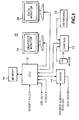
- Fig. 1 is a block diagram of an editing system incorporating script recognition according to the present invention.
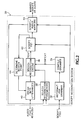
- Fig. 2 is a block diagram view of a script recognition system for the editing system of Fig. 1 according to the present invention.
- Fig. 3 is a block diagram view of a portion of the script recognition system according to the present invention.
- a typical editing system 10 has a central processing unit (CPU) 12 to which are input digitized video from a source (not shown), such as video tape recorders, digital disk recorders, telecines, etc.
- the audio from the source including dialog, also is input to the CPU 12 via an audio processor 14 where it may be digitized, if not already in digital form.
- a script file via any suitable means, such as tape, disc, word processor or the like.
- the CPU 12 has a large storage capacity for editing purposes and an associated random access memory 16 in which the digitized video and audio are stored for subsequent retrieval during the editing process.
- Operator input/output (I/O) devices for communicating with the CPU 12 may include a mouse 18 , a keyboard 20 and a specialized editing control console 22 .
- the CPU 12 provides a graphic display on one monitor 24 and a data display on another monitor 26 for interaction with the operator, which monitors may be combined into a single monitor with both graphics and data displays.
- script recognition The most basic task in script recognition is to take a video clip and locate the point in the script where the dialog from the clip occurs. Clips then may be cataloged by processing several of them in this manner. Once the clips are processed, a story board may be generated by displaying "in” and "out” shots for each clip or scene. By opening up a script window and highlighting a point in the script, all associated clips may be called in. In a similar manner the frames within a clip where the dialog occurred may be located. Another application is, while editing a clip or calling in a new clip, to find out where the clip fits within the script.
- a voice/speech recognition algorithm is used to perform script recognition.
- a grammar based speech recognition algorithm is preferred that supports speaker independence and large vocabularies.
- the grammar for the speech recognition algorithm is developed by processing the script.
- a grammar is essentially a template of a sentence or two which includes key words that the user is expected to say, along with some blanks that are filled in by the user supplying some desired information.
- the interest is more in which of several grammars the current sentence of dialog, or utterance, matches rather than filling in blanks.
- the blank variables may be used to distinguish between two similar utterances in the script.
- a script recognition system 30 starts with a script file in a specified format, such as ASCII, and an audio file in a specified format, such as .WAV audio files, from the memory 16 .
- the script file is reformatted into a grammar file in the specified format, i.e., ASCII (Step 32 ).
- the grammar file is compiled (Step 34 ) to make a context file, which is a binary coded file that a recognition engine 36 can use.
- the script and audio files are scanned (Step 38 ) to set recognition parameters that are provided to the recognition engine 36 .
- Some of the parameters include: Start Threshold -- how loud the speech needs to be to start recognizing it; End Threshold -- how quiet the speech needs to be to indicate silence; Silence Duration -- how long a period of silence is needed to indicate the end of an utterance; Allowable Noise Count -- how much noise is allowed in an utterance; Word Search Scope -- trades speed and accuracy, i.e., trims words earlier in the utterance; Min Duration -- minimum duration of an utterance ; and Max Duration -- maximum duration for an utterance. Word recognition is based on the highest probability that a part of an utterance matches a word in the grammar.
- Insertion Penalty -- penalty to the probability when a new word is added to the search
- Language Weight -- weighting of language mode over acoustic evidence (using only acoustic evidence doesn't distinguish between "right” and "Wright”, for example);
- Grammar Weight -- weighting of bigram to word pair in recognition control where word pairs treat all valid second words as having an equal probability while bigrams have computed probabilities based on context.
- Some of these parameters may be set by looking at statistics of audio levels in the input file and the length of utterances put into the grammar file. Parameters also may be adjusted by the feedback from invalid utterances that are returned.
- the audio file is broken up into utterances (Step 40 ).
- the audio file in the form of a .WAV file is initially opened at step 48 and the header is decoded at step 50 .
- An audio data point is read at step 52 and the file is checked at step 54 to see if it is the last data point in the file. If it is the last data point, then the file is closed in step 56 and there are no more utterances in the dialog. Otherwise the data point is tested to determine if it is the first data point related to an utterance in step 58 . If the data point is not the start of an utterance, then control returns to step 52 .
- step 60 the data point is stored in step 60 and the next data point is read from the file.
- the newly read data point is tested in step 62 to determine if it represents the end of the utterance. If not, end of file is checked at step 64 , with exit to step 56 if at the end of file or storage of the data point as part of the utterance and reading of the next data point in step 60 .
- step 64 end of file is checked at step 64 , with exit to step 56 if at the end of file or storage of the data point as part of the utterance and reading of the next data point in step 60 .
- the end of the utterance is detected in step 62 , then the utterance is input to the speech recognition engine 36 .
- the recognition engine 36 "reads” an utterance and, based upon the context file and recognition parameters, outputs a "guess" at the utterance in the form of a text message.
- the text message is then matched to the script and checked to see if it makes sense (Step 42 ).
- the information gained from this script fitting step may be used as feedback (Step 44 ) to determine new parameters for the recognition and to reenter the break into utterances step 40 at step 52 to determine where the next utterance is taken from the audio file. This may be used for progressive scan of the audio file to minimize the time needed to get a rough match of the audio file to the script file.
- the script fit output is used either to time mark the script file or to location mark the audio file (Step 46 ).
- the marked script or audio file is provided by the CPU 12 on the monitors 24 , 26 to simplify the editing process.
- the whole production process centers on the script.
- the script is imported into an editing machine in text form, it is parsed into a series of scenes. As each new "take” is digitized, if the soundtrack finds a match with the script, a series of "Reel Ids”, the unique identifier for each film or tape reel, and "TimeCodes”, the unique identifier for each part of a tape reel, or "KeyCodes”, the unique identifier for each part of a film reel, are associated with each scene.
- the editor may perform the following tasks:
- the technique described above eliminates a completely manual one of associating each scene as it is digitized to the lines of the script.
- the manual technique does not allow matching of each line of dialog and, as some scenes may be several minutes long, it actually is more of a nuisance than a help.
- a sample grammar corresponding to a script file for a portion of a video image sequence, such as a movie or television show, has as an example four utterances from the corresponding dialog in the audio file, as shown below:
- the audio file and the context file derived from the sample grammar file are input to the recognition engine 38 to form the "guess" for each utterance.
- the "guess” is then input to the script fit step 42 to find a match to the script.
- the script fit step 42 finds a match to the script.
- the corresponding time code of the image sequence is marked on the script file, or alternatively the script location is marked in the audio file.
- Vendors of current speech recognition packages include IBM, Speech Systems, Inc., Dragon Systems, Lemout & Hauspie, Kurzweil, Microsoft, Philips, BBN Hark, Verbex and Voice Control Systems.
- Features for consideration in the script recognition scenario include: continuous or discrete speech; speaker dependent or independent; specialized or standard hardware required; custom or off-the-shelf solutions, operating system, vocabulary size and API or higher level interface. Industry trends are toward speaker independence, more standard APIs and running on the main CPU instead of using sound cards, and possibly a move toward the Windows NT operating environment.
- the present invention provides script recognition using speech recognition to assist an editor in correlating a script to dialog associated with an image sequence, such as a move or television show.
Landscapes
- Engineering & Computer Science (AREA)
- Multimedia (AREA)
- Computational Linguistics (AREA)
- Health & Medical Sciences (AREA)
- Audiology, Speech & Language Pathology (AREA)
- Human Computer Interaction (AREA)
- Physics & Mathematics (AREA)
- Acoustics & Sound (AREA)
- Management Or Editing Of Information On Record Carriers (AREA)
- Television Signal Processing For Recording (AREA)
Applications Claiming Priority (2)
| Application Number | Priority Date | Filing Date | Title |
|---|---|---|---|
| US914905 | 1986-10-03 | ||
| US91490597A | 1997-08-18 | 1997-08-18 |
Publications (2)
| Publication Number | Publication Date |
|---|---|
| EP0899737A2 true EP0899737A2 (fr) | 1999-03-03 |
| EP0899737A3 EP0899737A3 (fr) | 1999-08-25 |
Family
ID=25434944
Family Applications (1)
| Application Number | Title | Priority Date | Filing Date |
|---|---|---|---|
| EP98306540A Withdrawn EP0899737A3 (fr) | 1997-08-18 | 1998-08-17 | Reconnaissance de scénario et reconnaissance de la parole |
Country Status (1)
| Country | Link |
|---|---|
| EP (1) | EP0899737A3 (fr) |
Cited By (16)
| Publication number | Priority date | Publication date | Assignee | Title |
|---|---|---|---|---|
| WO1999036918A1 (fr) * | 1998-01-16 | 1999-07-22 | Avid Technology, Inc. | Appareil et procede utilisant la reconnaissance de parole et des scripts pour saisir, editer et lire des donnees audio et video synchronisees |
| EP0902431A3 (fr) * | 1997-09-12 | 1999-08-11 | Philips Patentverwaltung GmbH | Système pour éditer des informations vidéo et audio numériques |
| WO2003023765A1 (fr) * | 2001-09-12 | 2003-03-20 | Ryshco Media Inc. | Procede et dispositif pour traiter des donnees audiovisuelles a l'aide d'une reconnaissance vocale |
| EP1339061A1 (fr) * | 2002-02-26 | 2003-08-27 | Koninklijke Philips Electronics N.V. | Procédé de montage vidéo |
| WO2007030481A3 (fr) * | 2005-09-07 | 2007-05-31 | Portal Video Inc | Approximation temporelle pour une localisation de texte dans un procede et un appareil de montage video |
| US7631015B2 (en) | 1997-03-14 | 2009-12-08 | Microsoft Corporation | Interactive playlist generation using annotations |
| US7689420B2 (en) | 2006-04-06 | 2010-03-30 | Microsoft Corporation | Personalizing a context-free grammar using a dictation language model |
| US7752152B2 (en) | 2006-03-17 | 2010-07-06 | Microsoft Corporation | Using predictive user models for language modeling on a personal device with user behavior models based on statistical modeling |
| US7954049B2 (en) | 2006-05-15 | 2011-05-31 | Microsoft Corporation | Annotating multimedia files along a timeline |
| US8032375B2 (en) | 2006-03-17 | 2011-10-04 | Microsoft Corporation | Using generic predictive models for slot values in language modeling |
| US8468879B2 (en) | 2011-06-16 | 2013-06-25 | Ford Global Technologies, Llc | Method and system for diagnosing a vacuum system |
| US20130166303A1 (en) * | 2009-11-13 | 2013-06-27 | Adobe Systems Incorporated | Accessing media data using metadata repository |
| US8567239B2 (en) | 2011-06-16 | 2013-10-29 | Ford Global Technologies, Llc | Method and system for determining vacuum leaks |
| US8959910B2 (en) | 2011-06-16 | 2015-02-24 | Ford Global Technologies, Llc | Method and system for determining conditions of an air filter |
| CN112035702A (zh) * | 2020-08-31 | 2020-12-04 | 西安君悦网络科技有限公司 | 一种快速选择短视频脚本的方法及系统 |
| CN113923521A (zh) * | 2021-12-14 | 2022-01-11 | 深圳市大头兄弟科技有限公司 | 一种视频的脚本化方法 |
Family Cites Families (5)
| Publication number | Priority date | Publication date | Assignee | Title |
|---|---|---|---|---|
| US5136655A (en) * | 1990-03-26 | 1992-08-04 | Hewlett-Pacard Company | Method and apparatus for indexing and retrieving audio-video data |
| JP2986345B2 (ja) * | 1993-10-18 | 1999-12-06 | インターナショナル・ビジネス・マシーンズ・コーポレイション | 音声記録指標化装置及び方法 |
| JPH0991928A (ja) * | 1995-09-25 | 1997-04-04 | Nippon Telegr & Teleph Corp <Ntt> | 映像の編集方法 |
| US5794249A (en) * | 1995-12-21 | 1998-08-11 | Hewlett-Packard Company | Audio/video retrieval system that uses keyword indexing of digital recordings to display a list of the recorded text files, keywords and time stamps associated with the system |
| US5801685A (en) * | 1996-04-08 | 1998-09-01 | Tektronix, Inc. | Automatic editing of recorded video elements sychronized with a script text read or displayed |
-
1998
- 1998-08-17 EP EP98306540A patent/EP0899737A3/fr not_active Withdrawn
Cited By (20)
| Publication number | Priority date | Publication date | Assignee | Title |
|---|---|---|---|---|
| US7631015B2 (en) | 1997-03-14 | 2009-12-08 | Microsoft Corporation | Interactive playlist generation using annotations |
| EP0902431A3 (fr) * | 1997-09-12 | 1999-08-11 | Philips Patentverwaltung GmbH | Système pour éditer des informations vidéo et audio numériques |
| WO1999036918A1 (fr) * | 1998-01-16 | 1999-07-22 | Avid Technology, Inc. | Appareil et procede utilisant la reconnaissance de parole et des scripts pour saisir, editer et lire des donnees audio et video synchronisees |
| US6336093B2 (en) | 1998-01-16 | 2002-01-01 | Avid Technology, Inc. | Apparatus and method using speech recognition and scripts to capture author and playback synchronized audio and video |
| WO2003023765A1 (fr) * | 2001-09-12 | 2003-03-20 | Ryshco Media Inc. | Procede et dispositif pour traiter des donnees audiovisuelles a l'aide d'une reconnaissance vocale |
| US7343082B2 (en) | 2001-09-12 | 2008-03-11 | Ryshco Media Inc. | Universal guide track |
| EP1339061A1 (fr) * | 2002-02-26 | 2003-08-27 | Koninklijke Philips Electronics N.V. | Procédé de montage vidéo |
| FR2836567A1 (fr) * | 2002-02-26 | 2003-08-29 | Koninkl Philips Electronics Nv | Procede de montage video |
| WO2007030481A3 (fr) * | 2005-09-07 | 2007-05-31 | Portal Video Inc | Approximation temporelle pour une localisation de texte dans un procede et un appareil de montage video |
| US7752152B2 (en) | 2006-03-17 | 2010-07-06 | Microsoft Corporation | Using predictive user models for language modeling on a personal device with user behavior models based on statistical modeling |
| US8032375B2 (en) | 2006-03-17 | 2011-10-04 | Microsoft Corporation | Using generic predictive models for slot values in language modeling |
| US7689420B2 (en) | 2006-04-06 | 2010-03-30 | Microsoft Corporation | Personalizing a context-free grammar using a dictation language model |
| US7954049B2 (en) | 2006-05-15 | 2011-05-31 | Microsoft Corporation | Annotating multimedia files along a timeline |
| US20130166303A1 (en) * | 2009-11-13 | 2013-06-27 | Adobe Systems Incorporated | Accessing media data using metadata repository |
| US8468879B2 (en) | 2011-06-16 | 2013-06-25 | Ford Global Technologies, Llc | Method and system for diagnosing a vacuum system |
| US8567239B2 (en) | 2011-06-16 | 2013-10-29 | Ford Global Technologies, Llc | Method and system for determining vacuum leaks |
| US8959910B2 (en) | 2011-06-16 | 2015-02-24 | Ford Global Technologies, Llc | Method and system for determining conditions of an air filter |
| US9121787B2 (en) | 2011-06-16 | 2015-09-01 | Ford Global Technologies, Llc | Method and system for diagnosing a vacuum system |
| CN112035702A (zh) * | 2020-08-31 | 2020-12-04 | 西安君悦网络科技有限公司 | 一种快速选择短视频脚本的方法及系统 |
| CN113923521A (zh) * | 2021-12-14 | 2022-01-11 | 深圳市大头兄弟科技有限公司 | 一种视频的脚本化方法 |
Also Published As
| Publication number | Publication date |
|---|---|
| EP0899737A3 (fr) | 1999-08-25 |
Similar Documents
| Publication | Publication Date | Title |
|---|---|---|
| US6792409B2 (en) | Synchronous reproduction in a speech recognition system | |
| US9774747B2 (en) | Transcription system | |
| US7676365B2 (en) | Method and apparatus for constructing and using syllable-like unit language models | |
| US8311832B2 (en) | Hybrid-captioning system | |
| US7124080B2 (en) | Method and apparatus for adapting a class entity dictionary used with language models | |
| US6308151B1 (en) | Method and system using a speech recognition system to dictate a body of text in response to an available body of text | |
| US6601027B1 (en) | Position manipulation in speech recognition | |
| JP2986345B2 (ja) | 音声記録指標化装置及び方法 | |
| US6801897B2 (en) | Method of providing concise forms of natural commands | |
| EP0965978B9 (fr) | Enregistrement non interactif pour reconnaissance de la parole | |
| US7580838B2 (en) | Automatic insertion of non-verbalized punctuation | |
| US6334102B1 (en) | Method of adding vocabulary to a speech recognition system | |
| JP3232289B2 (ja) | 記号挿入装置およびその方法 | |
| US6418410B1 (en) | Smart correction of dictated speech | |
| US6839667B2 (en) | Method of speech recognition by presenting N-best word candidates | |
| US6172675B1 (en) | Indirect manipulation of data using temporally related data, with particular application to manipulation of audio or audiovisual data | |
| US20130035936A1 (en) | Language transcription | |
| US6456973B1 (en) | Task automation user interface with text-to-speech output | |
| US20050114131A1 (en) | Apparatus and method for voice-tagging lexicon | |
| EP1126438A1 (fr) | Dispositif de reconnaissance de la parole | |
| GB2347774A (en) | Distinguishing between text insertion and replacement in speech dictation system | |
| US6577999B1 (en) | Method and apparatus for intelligently managing multiple pronunciations for a speech recognition vocabulary | |
| JP3277579B2 (ja) | 音声認識方法および装置 | |
| JPH06202688A (ja) | 音声認識装置 | |
| Rudnicky | The design of spoken language interfaces |
Legal Events
| Date | Code | Title | Description |
|---|---|---|---|
| PUAI | Public reference made under article 153(3) epc to a published international application that has entered the european phase |
Free format text: ORIGINAL CODE: 0009012 |
|
| AK | Designated contracting states |
Kind code of ref document: A2 Designated state(s): DE GB |
|
| AX | Request for extension of the european patent |
Free format text: AL;LT;LV;MK;RO;SI |
|
| PUAL | Search report despatched |
Free format text: ORIGINAL CODE: 0009013 |
|
| AK | Designated contracting states |
Kind code of ref document: A3 Designated state(s): AT BE CH CY DE DK ES FI FR GB GR IE IT LI LU MC NL PT SE |
|
| AX | Request for extension of the european patent |
Free format text: AL;LT;LV;MK;RO;SI |
|
| RIC1 | Information provided on ipc code assigned before grant |
Free format text: 6G 11B 27/031 A, 6G 11B 27/28 B, 6G 06F 17/30 B, 6G 10L 5/04 B, 6G 11B 27/34 B |
|
| 17P | Request for examination filed |
Effective date: 20000221 |
|
| AKX | Designation fees paid |
Free format text: DE GB |
|
| 17Q | First examination report despatched |
Effective date: 20011127 |
|
| STAA | Information on the status of an ep patent application or granted ep patent |
Free format text: STATUS: THE APPLICATION HAS BEEN WITHDRAWN |
|
| 18W | Application withdrawn |
Withdrawal date: 20020429 |