EP0900261B1 - Flüssige zusammensetzungen mit hydrophob modifizierten polyalkyleneglycolen als schonsubstanzen - Google Patents
Flüssige zusammensetzungen mit hydrophob modifizierten polyalkyleneglycolen als schonsubstanzen Download PDFInfo
- Publication number
- EP0900261B1 EP0900261B1 EP97908190A EP97908190A EP0900261B1 EP 0900261 B1 EP0900261 B1 EP 0900261B1 EP 97908190 A EP97908190 A EP 97908190A EP 97908190 A EP97908190 A EP 97908190A EP 0900261 B1 EP0900261 B1 EP 0900261B1
- Authority
- EP
- European Patent Office
- Prior art keywords
- oil
- hydrophobically modified
- composition
- modified polyalkylene
- anionic
- Prior art date
- Legal status (The legal status is an assumption and is not a legal conclusion. Google has not performed a legal analysis and makes no representation as to the accuracy of the status listed.)
- Revoked
Links
- 239000000203 mixture Substances 0.000 title claims description 85
- 229920001515 polyalkylene glycol Polymers 0.000 title claims description 31
- 239000007788 liquid Substances 0.000 title claims description 27
- -1 polyoxyethylene Polymers 0.000 claims description 41
- 239000003945 anionic surfactant Substances 0.000 claims description 32
- 239000004094 surface-active agent Substances 0.000 claims description 23
- 229920003171 Poly (ethylene oxide) Polymers 0.000 claims description 22
- 125000000217 alkyl group Chemical class 0.000 claims description 18
- 239000003921 oil Chemical class 0.000 claims description 18
- 235000019198 oils Nutrition 0.000 claims description 18
- 125000000129 anionic group Chemical group 0.000 claims description 16
- 239000002280 amphoteric surfactant Substances 0.000 claims description 14
- 239000003599 detergent Substances 0.000 claims description 13
- 229940075529 glyceryl stearate Drugs 0.000 claims description 12
- VBICKXHEKHSIBG-UHFFFAOYSA-N 1-monostearoylglycerol Chemical compound CCCCCCCCCCCCCCCCCC(=O)OCC(O)CO VBICKXHEKHSIBG-UHFFFAOYSA-N 0.000 claims description 11
- 125000002947 alkylene group Chemical class 0.000 claims description 11
- 150000001875 compounds Chemical class 0.000 claims description 10
- 125000002252 acyl group Chemical class 0.000 claims description 9
- 229920000642 polymer Polymers 0.000 claims description 8
- 230000002209 hydrophobic effect Effects 0.000 claims description 7
- QIQXTHQIDYTFRH-UHFFFAOYSA-N octadecanoic acid Chemical group CCCCCCCCCCCCCCCCCC(O)=O QIQXTHQIDYTFRH-UHFFFAOYSA-N 0.000 claims description 7
- 239000004359 castor oil Substances 0.000 claims description 6
- 235000019438 castor oil Nutrition 0.000 claims description 6
- ZEMPKEQAKRGZGQ-XOQCFJPHSA-N glycerol triricinoleate Natural products CCCCCC[C@@H](O)CC=CCCCCCCCC(=O)OC[C@@H](COC(=O)CCCCCCCC=CC[C@@H](O)CCCCCC)OC(=O)CCCCCCCC=CC[C@H](O)CCCCCC ZEMPKEQAKRGZGQ-XOQCFJPHSA-N 0.000 claims description 6
- 125000003976 glyceryl group Chemical group [H]C([*])([H])C(O[H])([H])C(O[H])([H])[H] 0.000 claims description 6
- 239000004166 Lanolin Substances 0.000 claims description 4
- 229940039717 lanolin Drugs 0.000 claims description 4
- 235000019388 lanolin Nutrition 0.000 claims description 4
- 235000014571 nuts Nutrition 0.000 claims description 4
- FBPFZTCFMRRESA-JGWLITMVSA-N D-glucitol Chemical compound OC[C@H](O)[C@@H](O)[C@H](O)[C@H](O)CO FBPFZTCFMRRESA-JGWLITMVSA-N 0.000 claims description 3
- 244000018633 Prunus armeniaca Species 0.000 claims description 3
- 235000009827 Prunus armeniaca Nutrition 0.000 claims description 3
- 235000003434 Sesamum indicum Nutrition 0.000 claims description 3
- 244000000231 Sesamum indicum Species 0.000 claims description 3
- 125000003118 aryl group Chemical class 0.000 claims description 3
- 235000019864 coconut oil Nutrition 0.000 claims description 3
- 239000003240 coconut oil Substances 0.000 claims description 3
- 235000005687 corn oil Nutrition 0.000 claims description 3
- 239000002285 corn oil Substances 0.000 claims description 3
- 235000019197 fats Nutrition 0.000 claims description 3
- 229930182478 glucoside Natural products 0.000 claims description 3
- 150000008131 glucosides Chemical class 0.000 claims description 3
- 238000002844 melting Methods 0.000 claims description 3
- 230000008018 melting Effects 0.000 claims description 3
- 238000000034 method Methods 0.000 claims description 3
- 239000004006 olive oil Substances 0.000 claims description 3
- 235000008390 olive oil Nutrition 0.000 claims description 3
- 239000003813 safflower oil Substances 0.000 claims description 3
- 235000012424 soybean oil Nutrition 0.000 claims description 3
- 239000003549 soybean oil Substances 0.000 claims description 3
- 235000020234 walnut Nutrition 0.000 claims description 3
- 235000019489 Almond oil Nutrition 0.000 claims description 2
- 244000144730 Amygdalus persica Species 0.000 claims description 2
- 240000002791 Brassica napus Species 0.000 claims description 2
- 235000004977 Brassica sinapistrum Nutrition 0.000 claims description 2
- FBPFZTCFMRRESA-FSIIMWSLSA-N D-Glucitol Natural products OC[C@H](O)[C@H](O)[C@@H](O)[C@H](O)CO FBPFZTCFMRRESA-FSIIMWSLSA-N 0.000 claims description 2
- 235000019487 Hazelnut oil Nutrition 0.000 claims description 2
- 241000758791 Juglandaceae Species 0.000 claims description 2
- 235000019483 Peanut oil Nutrition 0.000 claims description 2
- 240000006711 Pistacia vera Species 0.000 claims description 2
- 235000003447 Pistacia vera Nutrition 0.000 claims description 2
- 235000006040 Prunus persica var persica Nutrition 0.000 claims description 2
- 235000019774 Rice Bran oil Nutrition 0.000 claims description 2
- 235000018936 Vitellaria paradoxa Nutrition 0.000 claims description 2
- 241001135917 Vitellaria paradoxa Species 0.000 claims description 2
- 125000002877 alkyl aryl group Chemical class 0.000 claims description 2
- 239000008168 almond oil Substances 0.000 claims description 2
- 235000021302 avocado oil Nutrition 0.000 claims description 2
- 239000008163 avocado oil Substances 0.000 claims description 2
- 239000010480 babassu oil Substances 0.000 claims description 2
- 230000002708 enhancing effect Effects 0.000 claims description 2
- 239000008169 grapeseed oil Substances 0.000 claims description 2
- 239000010468 hazelnut oil Substances 0.000 claims description 2
- 229940119170 jojoba wax Drugs 0.000 claims description 2
- 239000008633 juniper tar Substances 0.000 claims description 2
- 239000000944 linseed oil Substances 0.000 claims description 2
- 235000021388 linseed oil Nutrition 0.000 claims description 2
- 239000000312 peanut oil Substances 0.000 claims description 2
- 239000010665 pine oil Substances 0.000 claims description 2
- 235000020233 pistachio Nutrition 0.000 claims description 2
- 239000010491 poppyseed oil Substances 0.000 claims description 2
- 239000008165 rice bran oil Substances 0.000 claims description 2
- 235000005713 safflower oil Nutrition 0.000 claims description 2
- 229940057910 shea butter Drugs 0.000 claims description 2
- 239000000600 sorbitol Substances 0.000 claims description 2
- 235000020238 sunflower seed Nutrition 0.000 claims description 2
- 239000010497 wheat germ oil Substances 0.000 claims description 2
- 238000009472 formulation Methods 0.000 description 18
- 125000004432 carbon atom Chemical group C* 0.000 description 13
- 229920001223 polyethylene glycol Polymers 0.000 description 13
- 235000014113 dietary fatty acids Nutrition 0.000 description 11
- 239000000194 fatty acid Substances 0.000 description 11
- 229930195729 fatty acid Natural products 0.000 description 11
- 239000002736 nonionic surfactant Substances 0.000 description 11
- 229920002494 Zein Polymers 0.000 description 10
- 239000011734 sodium Substances 0.000 description 10
- 229910052708 sodium Inorganic materials 0.000 description 10
- 239000005019 zein Substances 0.000 description 10
- 229940093612 zein Drugs 0.000 description 10
- DNIAPMSPPWPWGF-UHFFFAOYSA-N Propylene glycol Chemical compound CC(O)CO DNIAPMSPPWPWGF-UHFFFAOYSA-N 0.000 description 9
- LFQSCWFLJHTTHZ-UHFFFAOYSA-N Ethanol Chemical compound CCO LFQSCWFLJHTTHZ-UHFFFAOYSA-N 0.000 description 8
- IAYPIBMASNFSPL-UHFFFAOYSA-N Ethylene oxide Chemical compound C1CO1 IAYPIBMASNFSPL-UHFFFAOYSA-N 0.000 description 8
- 150000004665 fatty acids Chemical class 0.000 description 8
- 239000002562 thickening agent Substances 0.000 description 8
- DGAQECJNVWCQMB-PUAWFVPOSA-M Ilexoside XXIX Chemical compound C[C@@H]1CC[C@@]2(CC[C@@]3(C(=CC[C@H]4[C@]3(CC[C@@H]5[C@@]4(CC[C@@H](C5(C)C)OS(=O)(=O)[O-])C)C)[C@@H]2[C@]1(C)O)C)C(=O)O[C@H]6[C@@H]([C@H]([C@@H]([C@H](O6)CO)O)O)O.[Na+] DGAQECJNVWCQMB-PUAWFVPOSA-M 0.000 description 7
- 239000003974 emollient agent Substances 0.000 description 7
- NQLVQOSNDJXLKG-UHFFFAOYSA-N prosulfocarb Chemical compound CCCN(CCC)C(=O)SCC1=CC=CC=C1 NQLVQOSNDJXLKG-UHFFFAOYSA-N 0.000 description 7
- 239000000126 substance Substances 0.000 description 7
- BDHFUVZGWQCTTF-UHFFFAOYSA-M sulfonate Chemical compound [O-]S(=O)=O BDHFUVZGWQCTTF-UHFFFAOYSA-M 0.000 description 7
- XSQUKJJJFZCRTK-UHFFFAOYSA-N Urea Chemical compound NC(N)=O XSQUKJJJFZCRTK-UHFFFAOYSA-N 0.000 description 6
- 239000004202 carbamide Substances 0.000 description 6
- 150000002148 esters Chemical class 0.000 description 6
- 239000004615 ingredient Substances 0.000 description 6
- SUMDYPCJJOFFON-UHFFFAOYSA-N isethionic acid Chemical compound OCCS(O)(=O)=O SUMDYPCJJOFFON-UHFFFAOYSA-N 0.000 description 6
- IJGRMHOSHXDMSA-UHFFFAOYSA-N Atomic nitrogen Chemical compound N#N IJGRMHOSHXDMSA-UHFFFAOYSA-N 0.000 description 5
- 229910019142 PO4 Inorganic materials 0.000 description 5
- 206010040880 Skin irritation Diseases 0.000 description 5
- ULUAUXLGCMPNKK-UHFFFAOYSA-N Sulfobutanedioic acid Chemical compound OC(=O)CC(C(O)=O)S(O)(=O)=O ULUAUXLGCMPNKK-UHFFFAOYSA-N 0.000 description 5
- 239000002253 acid Substances 0.000 description 5
- 150000001768 cations Chemical class 0.000 description 5
- 230000007794 irritation Effects 0.000 description 5
- 150000003254 radicals Chemical class 0.000 description 5
- 231100000475 skin irritation Toxicity 0.000 description 5
- 230000036556 skin irritation Effects 0.000 description 5
- XLYOFNOQVPJJNP-UHFFFAOYSA-N water Substances O XLYOFNOQVPJJNP-UHFFFAOYSA-N 0.000 description 5
- ASKIVFGGGGIGKH-UHFFFAOYSA-N 2,3-dihydroxypropyl 16-methylheptadecanoate Chemical compound CC(C)CCCCCCCCCCCCCCC(=O)OCC(O)CO ASKIVFGGGGIGKH-UHFFFAOYSA-N 0.000 description 4
- RTZKZFJDLAIYFH-UHFFFAOYSA-N Diethyl ether Chemical compound CCOCC RTZKZFJDLAIYFH-UHFFFAOYSA-N 0.000 description 4
- PEDCQBHIVMGVHV-UHFFFAOYSA-N Glycerol Natural products OCC(O)CO PEDCQBHIVMGVHV-UHFFFAOYSA-N 0.000 description 4
- 241001465754 Metazoa Species 0.000 description 4
- 229920002594 Polyethylene Glycol 8000 Polymers 0.000 description 4
- FAPWRFPIFSIZLT-UHFFFAOYSA-M Sodium chloride Chemical compound [Na+].[Cl-] FAPWRFPIFSIZLT-UHFFFAOYSA-M 0.000 description 4
- 125000003342 alkenyl group Chemical group 0.000 description 4
- 150000001408 amides Chemical class 0.000 description 4
- 150000007942 carboxylates Chemical class 0.000 description 4
- MRUAUOIMASANKQ-UHFFFAOYSA-N cocamidopropyl betaine Chemical compound CCCCCCCCCCCC(=O)NCCC[N+](C)(C)CC([O-])=O MRUAUOIMASANKQ-UHFFFAOYSA-N 0.000 description 4
- 239000003925 fat Substances 0.000 description 4
- KWIUHFFTVRNATP-UHFFFAOYSA-N glycine betaine Chemical compound C[N+](C)(C)CC([O-])=O KWIUHFFTVRNATP-UHFFFAOYSA-N 0.000 description 4
- 229940079776 sodium cocoyl isethionate Drugs 0.000 description 4
- 239000007787 solid Substances 0.000 description 4
- 230000003381 solubilizing effect Effects 0.000 description 4
- 238000012360 testing method Methods 0.000 description 4
- 235000015112 vegetable and seed oil Nutrition 0.000 description 4
- 239000002888 zwitterionic surfactant Substances 0.000 description 4
- ALSTYHKOOCGGFT-KTKRTIGZSA-N (9Z)-octadecen-1-ol Chemical compound CCCCCCCC\C=C/CCCCCCCCO ALSTYHKOOCGGFT-KTKRTIGZSA-N 0.000 description 3
- QGZKDVFQNNGYKY-UHFFFAOYSA-O Ammonium Chemical compound [NH4+] QGZKDVFQNNGYKY-UHFFFAOYSA-O 0.000 description 3
- 244000060011 Cocos nucifera Species 0.000 description 3
- 235000013162 Cocos nucifera Nutrition 0.000 description 3
- WQZGKKKJIJFFOK-GASJEMHNSA-N Glucose Natural products OC[C@H]1OC(O)[C@H](O)[C@@H](O)[C@@H]1O WQZGKKKJIJFFOK-GASJEMHNSA-N 0.000 description 3
- 235000021355 Stearic acid Nutrition 0.000 description 3
- QAOWNCQODCNURD-UHFFFAOYSA-L Sulfate Chemical compound [O-]S([O-])(=O)=O QAOWNCQODCNURD-UHFFFAOYSA-L 0.000 description 3
- 150000001298 alcohols Chemical class 0.000 description 3
- 125000001931 aliphatic group Chemical group 0.000 description 3
- 239000006185 dispersion Substances 0.000 description 3
- 239000008103 glucose Substances 0.000 description 3
- 125000003147 glycosyl group Chemical group 0.000 description 3
- BXWNKGSJHAJOGX-UHFFFAOYSA-N hexadecan-1-ol Chemical compound CCCCCCCCCCCCCCCCO BXWNKGSJHAJOGX-UHFFFAOYSA-N 0.000 description 3
- 229910052757 nitrogen Inorganic materials 0.000 description 3
- OQCDKBAXFALNLD-UHFFFAOYSA-N octadecanoic acid Natural products CCCCCCCC(C)CCCCCCCCC(O)=O OQCDKBAXFALNLD-UHFFFAOYSA-N 0.000 description 3
- 229940055577 oleyl alcohol Drugs 0.000 description 3
- XMLQWXUVTXCDDL-UHFFFAOYSA-N oleyl alcohol Natural products CCCCCCC=CCCCCCCCCCCO XMLQWXUVTXCDDL-UHFFFAOYSA-N 0.000 description 3
- 239000010452 phosphate Substances 0.000 description 3
- 235000021317 phosphate Nutrition 0.000 description 3
- 229920001282 polysaccharide Polymers 0.000 description 3
- 239000005017 polysaccharide Substances 0.000 description 3
- 238000012545 processing Methods 0.000 description 3
- 239000002453 shampoo Substances 0.000 description 3
- 239000008117 stearic acid Substances 0.000 description 3
- 239000008158 vegetable oil Substances 0.000 description 3
- YWWVWXASSLXJHU-AATRIKPKSA-N (9E)-tetradecenoic acid Chemical compound CCCC\C=C\CCCCCCCC(O)=O YWWVWXASSLXJHU-AATRIKPKSA-N 0.000 description 2
- WNWHHMBRJJOGFJ-UHFFFAOYSA-N 16-methylheptadecan-1-ol Chemical compound CC(C)CCCCCCCCCCCCCCCO WNWHHMBRJJOGFJ-UHFFFAOYSA-N 0.000 description 2
- XDOFQFKRPWOURC-UHFFFAOYSA-N 16-methylheptadecanoic acid Chemical compound CC(C)CCCCCCCCCCCCCCC(O)=O XDOFQFKRPWOURC-UHFFFAOYSA-N 0.000 description 2
- RFVNOJDQRGSOEL-UHFFFAOYSA-N 2-hydroxyethyl octadecanoate Chemical compound CCCCCCCCCCCCCCCCCC(=O)OCCO RFVNOJDQRGSOEL-UHFFFAOYSA-N 0.000 description 2
- BJRXGOFKVBOFCO-UHFFFAOYSA-N 2-hydroxypropyl 16-methylheptadecanoate Chemical compound CC(C)CCCCCCCCCCCCCCC(=O)OCC(C)O BJRXGOFKVBOFCO-UHFFFAOYSA-N 0.000 description 2
- NLXLAEXVIDQMFP-UHFFFAOYSA-N Ammonia chloride Chemical compound [NH4+].[Cl-] NLXLAEXVIDQMFP-UHFFFAOYSA-N 0.000 description 2
- 239000004322 Butylated hydroxytoluene Substances 0.000 description 2
- NLZUEZXRPGMBCV-UHFFFAOYSA-N Butylhydroxytoluene Chemical compound CC1=CC(C(C)(C)C)=C(O)C(C(C)(C)C)=C1 NLZUEZXRPGMBCV-UHFFFAOYSA-N 0.000 description 2
- OKTJSMMVPCPJKN-UHFFFAOYSA-N Carbon Chemical compound [C] OKTJSMMVPCPJKN-UHFFFAOYSA-N 0.000 description 2
- ZQPPMHVWECSIRJ-UHFFFAOYSA-N Oleic acid Natural products CCCCCCCCC=CCCCCCCCC(O)=O ZQPPMHVWECSIRJ-UHFFFAOYSA-N 0.000 description 2
- 239000002202 Polyethylene glycol Substances 0.000 description 2
- ZLMJMSJWJFRBEC-UHFFFAOYSA-N Potassium Chemical compound [K] ZLMJMSJWJFRBEC-UHFFFAOYSA-N 0.000 description 2
- GOOHAUXETOMSMM-UHFFFAOYSA-N Propylene oxide Chemical compound CC1CO1 GOOHAUXETOMSMM-UHFFFAOYSA-N 0.000 description 2
- 235000019484 Rapeseed oil Nutrition 0.000 description 2
- PPBRXRYQALVLMV-UHFFFAOYSA-N Styrene Chemical compound C=CC1=CC=CC=C1 PPBRXRYQALVLMV-UHFFFAOYSA-N 0.000 description 2
- GWEVSGVZZGPLCZ-UHFFFAOYSA-N Titan oxide Chemical compound O=[Ti]=O GWEVSGVZZGPLCZ-UHFFFAOYSA-N 0.000 description 2
- 150000001335 aliphatic alkanes Chemical class 0.000 description 2
- 150000008051 alkyl sulfates Chemical class 0.000 description 2
- 150000001280 alpha hydroxy acids Chemical class 0.000 description 2
- 125000003368 amide group Chemical group 0.000 description 2
- 239000010775 animal oil Substances 0.000 description 2
- 238000013459 approach Methods 0.000 description 2
- 230000008901 benefit Effects 0.000 description 2
- 150000001277 beta hydroxy acids Chemical class 0.000 description 2
- 229960003237 betaine Drugs 0.000 description 2
- 235000010354 butylated hydroxytoluene Nutrition 0.000 description 2
- 229940095259 butylated hydroxytoluene Drugs 0.000 description 2
- 229910052799 carbon Inorganic materials 0.000 description 2
- 239000007795 chemical reaction product Substances 0.000 description 2
- 239000003795 chemical substances by application Substances 0.000 description 2
- GHVNFZFCNZKVNT-UHFFFAOYSA-N decanoic acid Chemical compound CCCCCCCCCC(O)=O GHVNFZFCNZKVNT-UHFFFAOYSA-N 0.000 description 2
- 150000005690 diesters Chemical class 0.000 description 2
- 238000004090 dissolution Methods 0.000 description 2
- WSDISUOETYTPRL-UHFFFAOYSA-N dmdm hydantoin Chemical compound CC1(C)N(CO)C(=O)N(CO)C1=O WSDISUOETYTPRL-UHFFFAOYSA-N 0.000 description 2
- NOPFSRXAKWQILS-UHFFFAOYSA-N docosan-1-ol Chemical compound CCCCCCCCCCCCCCCCCCCCCCO NOPFSRXAKWQILS-UHFFFAOYSA-N 0.000 description 2
- UKMSUNONTOPOIO-UHFFFAOYSA-N docosanoic acid Chemical compound CCCCCCCCCCCCCCCCCCCCCC(O)=O UKMSUNONTOPOIO-UHFFFAOYSA-N 0.000 description 2
- 230000000694 effects Effects 0.000 description 2
- ZQPPMHVWECSIRJ-MDZDMXLPSA-N elaidic acid Chemical compound CCCCCCCC\C=C\CCCCCCCC(O)=O ZQPPMHVWECSIRJ-MDZDMXLPSA-N 0.000 description 2
- 150000002170 ethers Chemical class 0.000 description 2
- 235000011187 glycerol Nutrition 0.000 description 2
- 229940074052 glyceryl isostearate Drugs 0.000 description 2
- IPCSVZSSVZVIGE-UHFFFAOYSA-N hexadecanoic acid Chemical compound CCCCCCCCCCCCCCCC(O)=O IPCSVZSSVZVIGE-UHFFFAOYSA-N 0.000 description 2
- 125000002768 hydroxyalkyl group Chemical group 0.000 description 2
- MTNDZQHUAFNZQY-UHFFFAOYSA-N imidazoline Chemical class C1CN=CN1 MTNDZQHUAFNZQY-UHFFFAOYSA-N 0.000 description 2
- QXJSBBXBKPUZAA-UHFFFAOYSA-N isooleic acid Natural products CCCCCCCC=CCCCCCCCCC(O)=O QXJSBBXBKPUZAA-UHFFFAOYSA-N 0.000 description 2
- 239000006210 lotion Substances 0.000 description 2
- HQKMJHAJHXVSDF-UHFFFAOYSA-L magnesium stearate Chemical compound [Mg+2].CCCCCCCCCCCCCCCCCC([O-])=O.CCCCCCCCCCCCCCCCCC([O-])=O HQKMJHAJHXVSDF-UHFFFAOYSA-L 0.000 description 2
- 125000002496 methyl group Chemical group [H]C([H])([H])* 0.000 description 2
- 238000002156 mixing Methods 0.000 description 2
- WWZKQHOCKIZLMA-UHFFFAOYSA-N octanoic acid Chemical compound CCCCCCCC(O)=O WWZKQHOCKIZLMA-UHFFFAOYSA-N 0.000 description 2
- SECPZKHBENQXJG-FPLPWBNLSA-N palmitoleic acid Chemical compound CCCCCC\C=C/CCCCCCCC(O)=O SECPZKHBENQXJG-FPLPWBNLSA-N 0.000 description 2
- UEZVMMHDMIWARA-UHFFFAOYSA-M phosphonate Chemical compound [O-]P(=O)=O UEZVMMHDMIWARA-UHFFFAOYSA-M 0.000 description 2
- 229910052698 phosphorus Inorganic materials 0.000 description 2
- 229920000151 polyglycol Polymers 0.000 description 2
- 239000010695 polyglycol Substances 0.000 description 2
- 239000011591 potassium Substances 0.000 description 2
- 229910052700 potassium Inorganic materials 0.000 description 2
- 239000000047 product Substances 0.000 description 2
- 239000011780 sodium chloride Substances 0.000 description 2
- 235000010199 sorbic acid Nutrition 0.000 description 2
- 239000004334 sorbic acid Substances 0.000 description 2
- AGGIJOLULBJGTQ-UHFFFAOYSA-N sulfoacetic acid Chemical class OC(=O)CS(O)(=O)=O AGGIJOLULBJGTQ-UHFFFAOYSA-N 0.000 description 2
- 125000004434 sulfur atom Chemical group 0.000 description 2
- 238000005406 washing Methods 0.000 description 2
- OYHQOLUKZRVURQ-NTGFUMLPSA-N (9Z,12Z)-9,10,12,13-tetratritiooctadeca-9,12-dienoic acid Chemical compound C(CCCCCCC\C(=C(/C\C(=C(/CCCCC)\[3H])\[3H])\[3H])\[3H])(=O)O OYHQOLUKZRVURQ-NTGFUMLPSA-N 0.000 description 1
- 125000004178 (C1-C4) alkyl group Chemical group 0.000 description 1
- WRIDQFICGBMAFQ-UHFFFAOYSA-N (E)-8-Octadecenoic acid Natural products CCCCCCCCCC=CCCCCCCC(O)=O WRIDQFICGBMAFQ-UHFFFAOYSA-N 0.000 description 1
- RZRNAYUHWVFMIP-KTKRTIGZSA-N 1-oleoylglycerol Chemical compound CCCCCCCC\C=C/CCCCCCCC(=O)OCC(O)CO RZRNAYUHWVFMIP-KTKRTIGZSA-N 0.000 description 1
- LGEZTMRIZWCDLW-UHFFFAOYSA-N 14-methylpentadecyl octadecanoate Chemical compound CCCCCCCCCCCCCCCCCC(=O)OCCCCCCCCCCCCCC(C)C LGEZTMRIZWCDLW-UHFFFAOYSA-N 0.000 description 1
- FLPJVCMIKUWSDR-UHFFFAOYSA-N 2-(4-formylphenoxy)acetamide Chemical compound NC(=O)COC1=CC=C(C=O)C=C1 FLPJVCMIKUWSDR-UHFFFAOYSA-N 0.000 description 1
- FKOKUHFZNIUSLW-UHFFFAOYSA-N 2-Hydroxypropyl stearate Chemical compound CCCCCCCCCCCCCCCCCC(=O)OCC(C)O FKOKUHFZNIUSLW-UHFFFAOYSA-N 0.000 description 1
- QTDIEDOANJISNP-UHFFFAOYSA-N 2-dodecoxyethyl hydrogen sulfate Chemical compound CCCCCCCCCCCCOCCOS(O)(=O)=O QTDIEDOANJISNP-UHFFFAOYSA-N 0.000 description 1
- NJABRXOHTVDOSH-UHFFFAOYSA-N 2-hydroxypropane-1,2,3-tricarboxylic acid;2-sulfobutanedioic acid Chemical class OC(=O)CC(C(O)=O)S(O)(=O)=O.OC(=O)CC(O)(C(O)=O)CC(O)=O NJABRXOHTVDOSH-UHFFFAOYSA-N 0.000 description 1
- JZSMZIOJUHECHW-GTJZZHROSA-N 2-hydroxypropyl (z,12r)-12-hydroxyoctadec-9-enoate Chemical compound CCCCCC[C@@H](O)C\C=C/CCCCCCCC(=O)OCC(C)O JZSMZIOJUHECHW-GTJZZHROSA-N 0.000 description 1
- BHIZVZJETFVJMJ-UHFFFAOYSA-N 2-hydroxypropyl dodecanoate Chemical compound CCCCCCCCCCCC(=O)OCC(C)O BHIZVZJETFVJMJ-UHFFFAOYSA-N 0.000 description 1
- OJIBJRXMHVZPLV-UHFFFAOYSA-N 2-methylpropyl hexadecanoate Chemical compound CCCCCCCCCCCCCCCC(=O)OCC(C)C OJIBJRXMHVZPLV-UHFFFAOYSA-N 0.000 description 1
- LQJBNNIYVWPHFW-UHFFFAOYSA-N 20:1omega9c fatty acid Natural products CCCCCCCCCCC=CCCCCCCCC(O)=O LQJBNNIYVWPHFW-UHFFFAOYSA-N 0.000 description 1
- OSPOJLWAJPWJTO-UHFFFAOYSA-N 3-[hexadecyl(dimethyl)azaniumyl]-2-hydroxypropane-1-sulfonate Chemical compound CCCCCCCCCCCCCCCC[N+](C)(C)CC(O)CS([O-])(=O)=O OSPOJLWAJPWJTO-UHFFFAOYSA-N 0.000 description 1
- TUBRCQBRKJXJEA-UHFFFAOYSA-N 3-[hexadecyl(dimethyl)azaniumyl]propane-1-sulfonate Chemical compound CCCCCCCCCCCCCCCC[N+](C)(C)CCCS([O-])(=O)=O TUBRCQBRKJXJEA-UHFFFAOYSA-N 0.000 description 1
- QOXOZONBQWIKDA-UHFFFAOYSA-N 3-hydroxypropyl Chemical group [CH2]CCO QOXOZONBQWIKDA-UHFFFAOYSA-N 0.000 description 1
- HIQIXEFWDLTDED-UHFFFAOYSA-N 4-hydroxy-1-piperidin-4-ylpyrrolidin-2-one Chemical compound O=C1CC(O)CN1C1CCNCC1 HIQIXEFWDLTDED-UHFFFAOYSA-N 0.000 description 1
- AMMZWVVFSDXSAX-UHFFFAOYSA-N 5-[2-hydroxydodecyl-bis(2-hydroxyethyl)azaniumyl]pentanoate Chemical compound CCCCCCCCCCC(O)C[N+](CCO)(CCO)CCCCC([O-])=O AMMZWVVFSDXSAX-UHFFFAOYSA-N 0.000 description 1
- UWQGQQYXWFQSQC-UHFFFAOYSA-N 5-[bis(2-hydroxyethyl)-octadecylazaniumyl]pentanoate Chemical compound CCCCCCCCCCCCCCCCCC[N+](CCO)(CCO)CCCCC([O-])=O UWQGQQYXWFQSQC-UHFFFAOYSA-N 0.000 description 1
- AMEMLELAMQEAIA-UHFFFAOYSA-N 6-(tert-butyl)thieno[3,2-d]pyrimidin-4(3H)-one Chemical compound N1C=NC(=O)C2=C1C=C(C(C)(C)C)S2 AMEMLELAMQEAIA-UHFFFAOYSA-N 0.000 description 1
- ZCYVEMRRCGMTRW-UHFFFAOYSA-N 7553-56-2 Chemical compound [I] ZCYVEMRRCGMTRW-UHFFFAOYSA-N 0.000 description 1
- QSBYPNXLFMSGKH-UHFFFAOYSA-N 9-Heptadecensaeure Natural products CCCCCCCC=CCCCCCCCC(O)=O QSBYPNXLFMSGKH-UHFFFAOYSA-N 0.000 description 1
- YWWVWXASSLXJHU-UHFFFAOYSA-N 9E-tetradecenoic acid Natural products CCCCC=CCCCCCCCC(O)=O YWWVWXASSLXJHU-UHFFFAOYSA-N 0.000 description 1
- 235000003911 Arachis Nutrition 0.000 description 1
- 244000105624 Arachis hypogaea Species 0.000 description 1
- 235000021357 Behenic acid Nutrition 0.000 description 1
- OKORAVWNQQYVNK-UHFFFAOYSA-N CCCCCCCCCCCC[P+](C)(C)CCCP([O-])(O)=O Chemical compound CCCCCCCCCCCC[P+](C)(C)CCCP([O-])(O)=O OKORAVWNQQYVNK-UHFFFAOYSA-N 0.000 description 1
- 239000005632 Capric acid (CAS 334-48-5) Substances 0.000 description 1
- 239000005635 Caprylic acid (CAS 124-07-2) Substances 0.000 description 1
- 229920002134 Carboxymethyl cellulose Polymers 0.000 description 1
- RWSOTUBLDIXVET-UHFFFAOYSA-N Dihydrogen sulfide Chemical class S RWSOTUBLDIXVET-UHFFFAOYSA-N 0.000 description 1
- KCXVZYZYPLLWCC-UHFFFAOYSA-N EDTA Chemical compound OC(=O)CN(CC(O)=O)CCN(CC(O)=O)CC(O)=O KCXVZYZYPLLWCC-UHFFFAOYSA-N 0.000 description 1
- 206010015150 Erythema Diseases 0.000 description 1
- PIICEJLVQHRZGT-UHFFFAOYSA-N Ethylenediamine Chemical compound NCCN PIICEJLVQHRZGT-UHFFFAOYSA-N 0.000 description 1
- DBVJJBKOTRCVKF-UHFFFAOYSA-N Etidronic acid Chemical compound OP(=O)(O)C(O)(C)P(O)(O)=O DBVJJBKOTRCVKF-UHFFFAOYSA-N 0.000 description 1
- HDIFHQMREAYYJW-XGXNLDPDSA-N Glyceryl Ricinoleate Chemical compound CCCCCC[C@@H](O)C\C=C/CCCCCCCC(=O)OCC(O)CO HDIFHQMREAYYJW-XGXNLDPDSA-N 0.000 description 1
- CMBYOWLFQAFZCP-UHFFFAOYSA-N Hexyl dodecanoate Chemical compound CCCCCCCCCCCC(=O)OCCCCCC CMBYOWLFQAFZCP-UHFFFAOYSA-N 0.000 description 1
- UFHFLCQGNIYNRP-UHFFFAOYSA-N Hydrogen Chemical compound [H][H] UFHFLCQGNIYNRP-UHFFFAOYSA-N 0.000 description 1
- 239000004354 Hydroxyethyl cellulose Substances 0.000 description 1
- 229920000663 Hydroxyethyl cellulose Polymers 0.000 description 1
- 240000007049 Juglans regia Species 0.000 description 1
- 235000009496 Juglans regia Nutrition 0.000 description 1
- 239000012901 Milli-Q water Substances 0.000 description 1
- IZWSFJTYBVKZNK-UHFFFAOYSA-O N-dodecyl-N,N-dimethyl-3-ammonio-1-propanesulfonic acid Chemical compound CCCCCCCCCCCC[N+](C)(C)CCCS(O)(=O)=O IZWSFJTYBVKZNK-UHFFFAOYSA-O 0.000 description 1
- 241000772415 Neovison vison Species 0.000 description 1
- 239000005642 Oleic acid Substances 0.000 description 1
- 239000008118 PEG 6000 Substances 0.000 description 1
- 235000021314 Palmitic acid Nutrition 0.000 description 1
- 235000021319 Palmitoleic acid Nutrition 0.000 description 1
- 241000282372 Panthera onca Species 0.000 description 1
- 239000004264 Petrolatum Substances 0.000 description 1
- OAICVXFJPJFONN-UHFFFAOYSA-N Phosphorus Chemical compound [P] OAICVXFJPJFONN-UHFFFAOYSA-N 0.000 description 1
- 229920002584 Polyethylene Glycol 6000 Polymers 0.000 description 1
- 229920000289 Polyquaternium Polymers 0.000 description 1
- 235000019485 Safflower oil Nutrition 0.000 description 1
- 244000044822 Simmondsia californica Species 0.000 description 1
- 235000004433 Simmondsia californica Nutrition 0.000 description 1
- PMZURENOXWZQFD-UHFFFAOYSA-L Sodium Sulfate Chemical compound [Na+].[Na+].[O-]S([O-])(=O)=O PMZURENOXWZQFD-UHFFFAOYSA-L 0.000 description 1
- DBMJMQXJHONAFJ-UHFFFAOYSA-M Sodium laurylsulphate Chemical compound [Na+].CCCCCCCCCCCCOS([O-])(=O)=O DBMJMQXJHONAFJ-UHFFFAOYSA-M 0.000 description 1
- 239000004141 Sodium laurylsulphate Substances 0.000 description 1
- 229920002125 Sokalan® Polymers 0.000 description 1
- PHYFQTYBJUILEZ-UHFFFAOYSA-N Trioleoylglycerol Natural products CCCCCCCCC=CCCCCCCCC(=O)OCC(OC(=O)CCCCCCCC=CCCCCCCCC)COC(=O)CCCCCCCC=CCCCCCCCC PHYFQTYBJUILEZ-UHFFFAOYSA-N 0.000 description 1
- 150000007513 acids Chemical class 0.000 description 1
- 229910052783 alkali metal Inorganic materials 0.000 description 1
- 150000001336 alkenes Chemical class 0.000 description 1
- 150000004996 alkyl benzenes Chemical class 0.000 description 1
- 125000005037 alkyl phenyl group Chemical group 0.000 description 1
- DTOSIQBPPRVQHS-PDBXOOCHSA-N alpha-linolenic acid Chemical compound CC\C=C/C\C=C/C\C=C/CCCCCCCC(O)=O DTOSIQBPPRVQHS-PDBXOOCHSA-N 0.000 description 1
- 235000020661 alpha-linolenic acid Nutrition 0.000 description 1
- SNAAJJQQZSMGQD-UHFFFAOYSA-N aluminum magnesium Chemical compound [Mg].[Al] SNAAJJQQZSMGQD-UHFFFAOYSA-N 0.000 description 1
- 235000019270 ammonium chloride Nutrition 0.000 description 1
- 150000003863 ammonium salts Chemical class 0.000 description 1
- 239000004599 antimicrobial Substances 0.000 description 1
- 239000003963 antioxidant agent Substances 0.000 description 1
- 239000012736 aqueous medium Substances 0.000 description 1
- BTFJIXJJCSYFAL-UHFFFAOYSA-N arachidyl alcohol Natural products CCCCCCCCCCCCCCCCCCCCO BTFJIXJJCSYFAL-UHFFFAOYSA-N 0.000 description 1
- 239000011324 bead Substances 0.000 description 1
- 229940116226 behenic acid Drugs 0.000 description 1
- 229940077388 benzenesulfonate Drugs 0.000 description 1
- 230000015572 biosynthetic process Effects 0.000 description 1
- DHAZIUXMHRHVMP-UHFFFAOYSA-N butyl tetradecanoate Chemical compound CCCCCCCCCCCCCC(=O)OCCCC DHAZIUXMHRHVMP-UHFFFAOYSA-N 0.000 description 1
- 125000003178 carboxy group Chemical group [H]OC(*)=O 0.000 description 1
- 239000001768 carboxy methyl cellulose Substances 0.000 description 1
- 235000010948 carboxy methyl cellulose Nutrition 0.000 description 1
- 125000004181 carboxyalkyl group Chemical group 0.000 description 1
- 150000001732 carboxylic acid derivatives Chemical class 0.000 description 1
- 239000008112 carboxymethyl-cellulose Substances 0.000 description 1
- 125000002091 cationic group Chemical group 0.000 description 1
- 239000001913 cellulose Substances 0.000 description 1
- 229920002678 cellulose Polymers 0.000 description 1
- 229960000541 cetyl alcohol Drugs 0.000 description 1
- 229940074979 cetyl palmitate Drugs 0.000 description 1
- SECPZKHBENQXJG-UHFFFAOYSA-N cis-palmitoleic acid Natural products CCCCCCC=CCCCCCCCC(O)=O SECPZKHBENQXJG-UHFFFAOYSA-N 0.000 description 1
- 235000019868 cocoa butter Nutrition 0.000 description 1
- 229940110456 cocoa butter Drugs 0.000 description 1
- 239000003086 colorant Substances 0.000 description 1
- 239000012612 commercial material Substances 0.000 description 1
- 238000009833 condensation Methods 0.000 description 1
- 230000005494 condensation Effects 0.000 description 1
- 239000007859 condensation product Substances 0.000 description 1
- 229920001577 copolymer Polymers 0.000 description 1
- 239000002537 cosmetic Substances 0.000 description 1
- 239000002385 cottonseed oil Substances 0.000 description 1
- 235000012343 cottonseed oil Nutrition 0.000 description 1
- 239000006071 cream Substances 0.000 description 1
- SASYSVUEVMOWPL-NXVVXOECSA-N decyl oleate Chemical compound CCCCCCCCCCOC(=O)CCCCCCC\C=C/CCCCCCCC SASYSVUEVMOWPL-NXVVXOECSA-N 0.000 description 1
- 239000007933 dermal patch Substances 0.000 description 1
- MTHSVFCYNBDYFN-UHFFFAOYSA-N diethylene glycol Chemical compound OCCOCCO MTHSVFCYNBDYFN-UHFFFAOYSA-N 0.000 description 1
- 238000000113 differential scanning calorimetry Methods 0.000 description 1
- 239000004205 dimethyl polysiloxane Substances 0.000 description 1
- 235000013870 dimethyl polysiloxane Nutrition 0.000 description 1
- 208000037265 diseases, disorders, signs and symptoms Diseases 0.000 description 1
- 238000007922 dissolution test Methods 0.000 description 1
- 229960000735 docosanol Drugs 0.000 description 1
- POULHZVOKOAJMA-UHFFFAOYSA-M dodecanoate Chemical group CCCCCCCCCCCC([O-])=O POULHZVOKOAJMA-UHFFFAOYSA-M 0.000 description 1
- 125000003438 dodecyl group Chemical group [H]C([H])([H])C([H])([H])C([H])([H])C([H])([H])C([H])([H])C([H])([H])C([H])([H])C([H])([H])C([H])([H])C([H])([H])C([H])([H])C([H])([H])* 0.000 description 1
- 239000003995 emulsifying agent Substances 0.000 description 1
- 239000003623 enhancer Substances 0.000 description 1
- 238000011067 equilibration Methods 0.000 description 1
- 231100000321 erythema Toxicity 0.000 description 1
- BEFDCLMNVWHSGT-UHFFFAOYSA-N ethenylcyclopentane Chemical compound C=CC1CCCC1 BEFDCLMNVWHSGT-UHFFFAOYSA-N 0.000 description 1
- 229940071106 ethylenediaminetetraacetate Drugs 0.000 description 1
- 238000002474 experimental method Methods 0.000 description 1
- 239000000499 gel Substances 0.000 description 1
- 229940074047 glyceryl cocoate Drugs 0.000 description 1
- 229940074046 glyceryl laurate Drugs 0.000 description 1
- 229940116338 glyceryl ricinoleate Drugs 0.000 description 1
- 150000002334 glycols Chemical class 0.000 description 1
- PXDJXZJSCPSGGI-UHFFFAOYSA-N hexadecanoic acid hexadecyl ester Natural products CCCCCCCCCCCCCCCCOC(=O)CCCCCCCCCCCCCCC PXDJXZJSCPSGGI-UHFFFAOYSA-N 0.000 description 1
- 229940100463 hexyl laurate Drugs 0.000 description 1
- 239000001257 hydrogen Substances 0.000 description 1
- 229910052739 hydrogen Inorganic materials 0.000 description 1
- 125000004435 hydrogen atom Chemical group [H]* 0.000 description 1
- 125000001165 hydrophobic group Chemical group 0.000 description 1
- 150000001261 hydroxy acids Chemical class 0.000 description 1
- 125000002887 hydroxy group Chemical group [H]O* 0.000 description 1
- 235000019447 hydroxyethyl cellulose Nutrition 0.000 description 1
- 238000000338 in vitro Methods 0.000 description 1
- 238000001727 in vivo Methods 0.000 description 1
- 238000010348 incorporation Methods 0.000 description 1
- 239000011630 iodine Substances 0.000 description 1
- 229910052740 iodine Inorganic materials 0.000 description 1
- 229940078545 isocetyl stearate Drugs 0.000 description 1
- 229940093629 isopropyl isostearate Drugs 0.000 description 1
- 229940033357 isopropyl laurate Drugs 0.000 description 1
- 229940074928 isopropyl myristate Drugs 0.000 description 1
- XUGNVMKQXJXZCD-UHFFFAOYSA-N isopropyl palmitate Chemical compound CCCCCCCCCCCCCCCC(=O)OC(C)C XUGNVMKQXJXZCD-UHFFFAOYSA-N 0.000 description 1
- 229940075495 isopropyl palmitate Drugs 0.000 description 1
- 229940089456 isopropyl stearate Drugs 0.000 description 1
- 229940099367 lanolin alcohols Drugs 0.000 description 1
- 229940070765 laurate Drugs 0.000 description 1
- 229960004488 linolenic acid Drugs 0.000 description 1
- KQQKGWQCNNTQJW-UHFFFAOYSA-N linolenic acid Natural products CC=CCCC=CCC=CCCCCCCCC(O)=O KQQKGWQCNNTQJW-UHFFFAOYSA-N 0.000 description 1
- 239000012669 liquid formulation Substances 0.000 description 1
- 235000019359 magnesium stearate Nutrition 0.000 description 1
- 150000002688 maleic acid derivatives Chemical class 0.000 description 1
- 229920000609 methyl cellulose Polymers 0.000 description 1
- 229940044591 methyl glucose dioleate Drugs 0.000 description 1
- 239000001923 methylcellulose Substances 0.000 description 1
- 239000002480 mineral oil Substances 0.000 description 1
- 235000010446 mineral oil Nutrition 0.000 description 1
- 239000000178 monomer Substances 0.000 description 1
- WQEPLUUGTLDZJY-UHFFFAOYSA-N n-Pentadecanoic acid Natural products CCCCCCCCCCCCCCC(O)=O WQEPLUUGTLDZJY-UHFFFAOYSA-N 0.000 description 1
- QJGQUHMNIGDVPM-UHFFFAOYSA-N nitrogen group Chemical group [N] QJGQUHMNIGDVPM-UHFFFAOYSA-N 0.000 description 1
- 229960002446 octanoic acid Drugs 0.000 description 1
- 229940049964 oleate Drugs 0.000 description 1
- 239000003605 opacifier Substances 0.000 description 1
- 150000007524 organic acids Chemical class 0.000 description 1
- 239000003960 organic solvent Substances 0.000 description 1
- MPQXHAGKBWFSNV-UHFFFAOYSA-N oxidophosphanium Chemical group [PH3]=O MPQXHAGKBWFSNV-UHFFFAOYSA-N 0.000 description 1
- 239000003002 pH adjusting agent Substances 0.000 description 1
- 239000003346 palm kernel oil Substances 0.000 description 1
- 235000019865 palm kernel oil Nutrition 0.000 description 1
- 229940023569 palmate Drugs 0.000 description 1
- 229940098695 palmitic acid Drugs 0.000 description 1
- 239000002245 particle Substances 0.000 description 1
- 239000002304 perfume Substances 0.000 description 1
- 229940066842 petrolatum Drugs 0.000 description 1
- 235000019271 petrolatum Nutrition 0.000 description 1
- NBIIXXVUZAFLBC-UHFFFAOYSA-K phosphate Chemical compound [O-]P([O-])([O-])=O NBIIXXVUZAFLBC-UHFFFAOYSA-K 0.000 description 1
- 125000002467 phosphate group Chemical group [H]OP(=O)(O[H])O[*] 0.000 description 1
- XYFCBTPGUUZFHI-UHFFFAOYSA-O phosphonium Chemical compound [PH4+] XYFCBTPGUUZFHI-UHFFFAOYSA-O 0.000 description 1
- 150000003013 phosphoric acid derivatives Chemical class 0.000 description 1
- 125000004437 phosphorous atom Chemical group 0.000 description 1
- 239000011574 phosphorus Substances 0.000 description 1
- 229920000435 poly(dimethylsiloxane) Polymers 0.000 description 1
- 229940093429 polyethylene glycol 6000 Drugs 0.000 description 1
- 229920001184 polypeptide Polymers 0.000 description 1
- 239000000843 powder Substances 0.000 description 1
- 239000003755 preservative agent Substances 0.000 description 1
- 102000004196 processed proteins & peptides Human genes 0.000 description 1
- 108090000765 processed proteins & peptides Proteins 0.000 description 1
- XEIOPEQGDSYOIH-MURFETPASA-N propan-2-yl (9z,12z)-octadeca-9,12-dienoate Chemical compound CCCCC\C=C/C\C=C/CCCCCCCC(=O)OC(C)C XEIOPEQGDSYOIH-MURFETPASA-N 0.000 description 1
- NEOZOXKVMDBOSG-UHFFFAOYSA-N propan-2-yl 16-methylheptadecanoate Chemical compound CC(C)CCCCCCCCCCCCCCC(=O)OC(C)C NEOZOXKVMDBOSG-UHFFFAOYSA-N 0.000 description 1
- ZPWFUIUNWDIYCJ-UHFFFAOYSA-N propan-2-yl octadecanoate Chemical compound CCCCCCCCCCCCCCCCCC(=O)OC(C)C ZPWFUIUNWDIYCJ-UHFFFAOYSA-N 0.000 description 1
- 229940026235 propylene glycol monolaurate Drugs 0.000 description 1
- 125000001453 quaternary ammonium group Chemical group 0.000 description 1
- ARIWANIATODDMH-UHFFFAOYSA-N rac-1-monolauroylglycerol Chemical compound CCCCCCCCCCCC(=O)OCC(O)CO ARIWANIATODDMH-UHFFFAOYSA-N 0.000 description 1
- WBHHMMIMDMUBKC-XLNAKTSKSA-N ricinelaidic acid Chemical compound CCCCCC[C@@H](O)C\C=C\CCCCCCCC(O)=O WBHHMMIMDMUBKC-XLNAKTSKSA-N 0.000 description 1
- 229960003656 ricinoleic acid Drugs 0.000 description 1
- FEUQNCSVHBHROZ-UHFFFAOYSA-N ricinoleic acid Natural products CCCCCCC(O[Si](C)(C)C)CC=CCCCCCCCC(=O)OC FEUQNCSVHBHROZ-UHFFFAOYSA-N 0.000 description 1
- 150000003839 salts Chemical class 0.000 description 1
- 150000004671 saturated fatty acids Chemical class 0.000 description 1
- 239000003352 sequestering agent Substances 0.000 description 1
- 229920002545 silicone oil Polymers 0.000 description 1
- 229940045998 sodium isethionate Drugs 0.000 description 1
- 229940079862 sodium lauryl sarcosinate Drugs 0.000 description 1
- 235000019333 sodium laurylsulphate Nutrition 0.000 description 1
- 229910052938 sodium sulfate Inorganic materials 0.000 description 1
- 235000011152 sodium sulphate Nutrition 0.000 description 1
- ADWNFGORSPBALY-UHFFFAOYSA-M sodium;2-[dodecyl(methyl)amino]acetate Chemical compound [Na+].CCCCCCCCCCCCN(C)CC([O-])=O ADWNFGORSPBALY-UHFFFAOYSA-M 0.000 description 1
- LADXKQRVAFSPTR-UHFFFAOYSA-M sodium;2-hydroxyethanesulfonate Chemical compound [Na+].OCCS([O-])(=O)=O LADXKQRVAFSPTR-UHFFFAOYSA-M 0.000 description 1
- 229940075582 sorbic acid Drugs 0.000 description 1
- 229960004274 stearic acid Drugs 0.000 description 1
- 238000003756 stirring Methods 0.000 description 1
- 150000003890 succinate salts Chemical class 0.000 description 1
- BDHFUVZGWQCTTF-UHFFFAOYSA-N sulfonic acid Chemical group OS(=O)=O BDHFUVZGWQCTTF-UHFFFAOYSA-N 0.000 description 1
- 229910052717 sulfur Inorganic materials 0.000 description 1
- 239000000375 suspending agent Substances 0.000 description 1
- 239000000725 suspension Substances 0.000 description 1
- 239000003760 tallow Substances 0.000 description 1
- 150000003512 tertiary amines Chemical class 0.000 description 1
- BORJONZPSTVSFP-UHFFFAOYSA-N tetradecyl 2-hydroxypropanoate Chemical compound CCCCCCCCCCCCCCOC(=O)C(C)O BORJONZPSTVSFP-UHFFFAOYSA-N 0.000 description 1
- UEUXEKPTXMALOB-UHFFFAOYSA-J tetrasodium;2-[2-[bis(carboxylatomethyl)amino]ethyl-(carboxylatomethyl)amino]acetate Chemical compound [Na+].[Na+].[Na+].[Na+].[O-]C(=O)CN(CC([O-])=O)CCN(CC([O-])=O)CC([O-])=O UEUXEKPTXMALOB-UHFFFAOYSA-J 0.000 description 1
- 235000019871 vegetable fat Nutrition 0.000 description 1
- XOOUIPVCVHRTMJ-UHFFFAOYSA-L zinc stearate Chemical compound [Zn+2].CCCCCCCCCCCCCCCCCC([O-])=O.CCCCCCCCCCCCCCCCCC([O-])=O XOOUIPVCVHRTMJ-UHFFFAOYSA-L 0.000 description 1
Images

Classifications
-
- A—HUMAN NECESSITIES
- A61—MEDICAL OR VETERINARY SCIENCE; HYGIENE
- A61K—PREPARATIONS FOR MEDICAL, DENTAL OR TOILETRY PURPOSES
- A61K8/00—Cosmetics or similar toiletry preparations
- A61K8/18—Cosmetics or similar toiletry preparations characterised by the composition
- A61K8/72—Cosmetics or similar toiletry preparations characterised by the composition containing organic macromolecular compounds
- A61K8/84—Cosmetics or similar toiletry preparations characterised by the composition containing organic macromolecular compounds obtained by reactions otherwise than those involving only carbon-carbon unsaturated bonds
- A61K8/86—Polyethers
-
- A—HUMAN NECESSITIES
- A61—MEDICAL OR VETERINARY SCIENCE; HYGIENE
- A61K—PREPARATIONS FOR MEDICAL, DENTAL OR TOILETRY PURPOSES
- A61K8/00—Cosmetics or similar toiletry preparations
- A61K8/18—Cosmetics or similar toiletry preparations characterised by the composition
- A61K8/30—Cosmetics or similar toiletry preparations characterised by the composition containing organic compounds
- A61K8/40—Cosmetics or similar toiletry preparations characterised by the composition containing organic compounds containing nitrogen
- A61K8/44—Aminocarboxylic acids or derivatives thereof, e.g. aminocarboxylic acids containing sulfur; Salts; Esters or N-acylated derivatives thereof
- A61K8/442—Aminocarboxylic acids or derivatives thereof, e.g. aminocarboxylic acids containing sulfur; Salts; Esters or N-acylated derivatives thereof substituted by amido group(s)
-
- A—HUMAN NECESSITIES
- A61—MEDICAL OR VETERINARY SCIENCE; HYGIENE
- A61K—PREPARATIONS FOR MEDICAL, DENTAL OR TOILETRY PURPOSES
- A61K8/00—Cosmetics or similar toiletry preparations
- A61K8/18—Cosmetics or similar toiletry preparations characterised by the composition
- A61K8/30—Cosmetics or similar toiletry preparations characterised by the composition containing organic compounds
- A61K8/46—Cosmetics or similar toiletry preparations characterised by the composition containing organic compounds containing sulfur
- A61K8/463—Cosmetics or similar toiletry preparations characterised by the composition containing organic compounds containing sulfur containing sulfuric acid derivatives, e.g. sodium lauryl sulfate
-
- A—HUMAN NECESSITIES
- A61—MEDICAL OR VETERINARY SCIENCE; HYGIENE
- A61K—PREPARATIONS FOR MEDICAL, DENTAL OR TOILETRY PURPOSES
- A61K8/00—Cosmetics or similar toiletry preparations
- A61K8/18—Cosmetics or similar toiletry preparations characterised by the composition
- A61K8/30—Cosmetics or similar toiletry preparations characterised by the composition containing organic compounds
- A61K8/46—Cosmetics or similar toiletry preparations characterised by the composition containing organic compounds containing sulfur
- A61K8/466—Cosmetics or similar toiletry preparations characterised by the composition containing organic compounds containing sulfur containing sulfonic acid derivatives; Salts
-
- A—HUMAN NECESSITIES
- A61—MEDICAL OR VETERINARY SCIENCE; HYGIENE
- A61Q—SPECIFIC USE OF COSMETICS OR SIMILAR TOILETRY PREPARATIONS
- A61Q19/00—Preparations for care of the skin
- A61Q19/10—Washing or bathing preparations
-
- C—CHEMISTRY; METALLURGY
- C11—ANIMAL OR VEGETABLE OILS, FATS, FATTY SUBSTANCES OR WAXES; FATTY ACIDS THEREFROM; DETERGENTS; CANDLES
- C11D—DETERGENT COMPOSITIONS; USE OF SINGLE SUBSTANCES AS DETERGENTS; SOAP OR SOAP-MAKING; RESIN SOAPS; RECOVERY OF GLYCEROL
- C11D1/00—Detergent compositions based essentially on surface-active compounds; Use of these compounds as a detergent
- C11D1/88—Ampholytes; Electroneutral compounds
- C11D1/94—Mixtures with anionic, cationic or non-ionic compounds
-
- C—CHEMISTRY; METALLURGY
- C11—ANIMAL OR VEGETABLE OILS, FATS, FATTY SUBSTANCES OR WAXES; FATTY ACIDS THEREFROM; DETERGENTS; CANDLES
- C11D—DETERGENT COMPOSITIONS; USE OF SINGLE SUBSTANCES AS DETERGENTS; SOAP OR SOAP-MAKING; RESIN SOAPS; RECOVERY OF GLYCEROL
- C11D3/00—Other compounding ingredients of detergent compositions covered in group C11D1/00
- C11D3/16—Organic compounds
- C11D3/37—Polymers
- C11D3/3703—Macromolecular compounds obtained otherwise than by reactions only involving carbon-to-carbon unsaturated bonds
- C11D3/3707—Polyethers, e.g. polyalkyleneoxides
-
- A—HUMAN NECESSITIES
- A61—MEDICAL OR VETERINARY SCIENCE; HYGIENE
- A61K—PREPARATIONS FOR MEDICAL, DENTAL OR TOILETRY PURPOSES
- A61K2800/00—Properties of cosmetic compositions or active ingredients thereof or formulation aids used therein and process related aspects
- A61K2800/40—Chemical, physico-chemical or functional or structural properties of particular ingredients
- A61K2800/59—Mixtures
- A61K2800/596—Mixtures of surface active compounds
-
- C—CHEMISTRY; METALLURGY
- C11—ANIMAL OR VEGETABLE OILS, FATS, FATTY SUBSTANCES OR WAXES; FATTY ACIDS THEREFROM; DETERGENTS; CANDLES
- C11D—DETERGENT COMPOSITIONS; USE OF SINGLE SUBSTANCES AS DETERGENTS; SOAP OR SOAP-MAKING; RESIN SOAPS; RECOVERY OF GLYCEROL
- C11D1/00—Detergent compositions based essentially on surface-active compounds; Use of these compounds as a detergent
- C11D1/02—Anionic compounds
- C11D1/12—Sulfonic acids or sulfuric acid esters; Salts thereof
- C11D1/126—Acylisethionates
-
- C—CHEMISTRY; METALLURGY
- C11—ANIMAL OR VEGETABLE OILS, FATS, FATTY SUBSTANCES OR WAXES; FATTY ACIDS THEREFROM; DETERGENTS; CANDLES
- C11D—DETERGENT COMPOSITIONS; USE OF SINGLE SUBSTANCES AS DETERGENTS; SOAP OR SOAP-MAKING; RESIN SOAPS; RECOVERY OF GLYCEROL
- C11D1/00—Detergent compositions based essentially on surface-active compounds; Use of these compounds as a detergent
- C11D1/02—Anionic compounds
- C11D1/12—Sulfonic acids or sulfuric acid esters; Salts thereof
- C11D1/28—Sulfonation products derived from fatty acids or their derivatives, e.g. esters, amides
-
- C—CHEMISTRY; METALLURGY
- C11—ANIMAL OR VEGETABLE OILS, FATS, FATTY SUBSTANCES OR WAXES; FATTY ACIDS THEREFROM; DETERGENTS; CANDLES
- C11D—DETERGENT COMPOSITIONS; USE OF SINGLE SUBSTANCES AS DETERGENTS; SOAP OR SOAP-MAKING; RESIN SOAPS; RECOVERY OF GLYCEROL
- C11D1/00—Detergent compositions based essentially on surface-active compounds; Use of these compounds as a detergent
- C11D1/02—Anionic compounds
- C11D1/12—Sulfonic acids or sulfuric acid esters; Salts thereof
- C11D1/29—Sulfates of polyoxyalkylene ethers
-
- C—CHEMISTRY; METALLURGY
- C11—ANIMAL OR VEGETABLE OILS, FATS, FATTY SUBSTANCES OR WAXES; FATTY ACIDS THEREFROM; DETERGENTS; CANDLES
- C11D—DETERGENT COMPOSITIONS; USE OF SINGLE SUBSTANCES AS DETERGENTS; SOAP OR SOAP-MAKING; RESIN SOAPS; RECOVERY OF GLYCEROL
- C11D1/00—Detergent compositions based essentially on surface-active compounds; Use of these compounds as a detergent
- C11D1/88—Ampholytes; Electroneutral compounds
- C11D1/90—Betaines
Definitions
- the present invention relates to liquid personal wash compositions (e.g., shower gels), particularly, to compositions comprising (1) one or more anionic surfactants and (2) one or more amphoteric surfactants.
- the invention relates to the incorporation of relatively low addition levels of specific hydrophobically modified polyalkylene glycols (HMPEG) in the liquids.
- HMPEG hydrophobically modified polyalkylene glycols
- HMPEG High molecular weight hydrophobically modified polyalkylene glycols
- Dias et al. teach that the combination of urea, alpha- or beta-hydroxy acid, and animal/oil derived ethoxylated nonionic surfactants (some of them are the HMPEG of the subject invention) are needed to achieve desired skin feel effect.
- Patent No. WO 9,423,695 to Unilever NV teaches a personal washing formulation that contains 3-15% sodium lauryl (EO) sulfate, 3-10% sulphosuccinate surfactants, 0.5-3% thickener such as fatty acid glyceride polyglycol ether (a HMPEG), and 0.1-5% of an emulsifier such as PEG 40 hydrogenated castor oil.
- EO sodium lauryl
- a HMPEG fatty acid glyceride polyglycol ether
- an emulsifier such as PEG 40 hydrogenated castor oil.
- the percentage of the fatty acid glyceride polyglycol ether is outside the range of choice of our invention, and the molecular weight of PEG 40 hydrogenated castor oil is below 4000, which is also outside the range of choice of our invention.
- Patent No. SU 1,330,148 to S. Navardausk, R. Zilberman, and D. Kurdyumova teaches a liquid cleanser formulation containing 2-4 % wt. of polyethylene glycol ester of 10-16C (a HMPEG) as thickener mixed with other ingredients.
- the percentage of the 10-16C polyethylene glycol ester in total composition is below 5%, which is outside the range of choice of our invention.
- Patent No. DE 4,409,189 to Chem-Y Chem Fab GMBH teaches a surfactant composition containing 5-20% anionic surfactants, 2.5-10% alkyl polyglucoside, 1-4% ethoxylated rape seed oil fatty acid (can be a HMPEG), and 0.5-2.5% polyoxyethylene propylene dioleate (a HMPEG) as thickener.
- the percentage of the HMPEG in total composition is outside the range of choice of our invention.
- Patent No. FR 2,336,475 to Gillette Co. teaches the use of amphoteric surfactant and nonionic surfactant as major actives and anionic surfactant as coactives in a PW liquid.
- the formulation contains 2% thickener such as polyethylene glycol 6000 distearate (a HMPEG).
- a HMPEG polyethylene glycol 6000 distearate
- the percentage of the HMPEG in total composition is outside the range of choice of our invention.
- Patent No. US 4,828,750 to F. Simion, L. Rhein, J. Blake-Haskins, S. Babulak and R. Cantore teaches a formulation containing 0.25-6% nonionic surfactant, 0.05-5% of an organic acid, 0.1-4% of a thickening agent, such as a diester of stearic acid and polyoxyethylene (can be a HMPEG of the subject invention).
- a thickening agent such as a diester of stearic acid and polyoxyethylene (can be a HMPEG of the subject invention).
- the level of the diester of stearic acid and polyoxyethylene is below 5% by wt. total composition, which is outside the range of choice of our invention.
- UK Patent Application Nos. GB 2,288,811A and GB 2, 288, 812A to L. Dias, M. Giret, C. Leahy, and R. Elliot teach liquid skin cleansing formulations containing 5 to 50% of anionic, amphoteric and zwitterionic surfactants in general, 0.1 to 20% of a soluble or dispersible nonionic surfactant selected from ethoxylated animal and vegetable oils and fats and mixtures thereof, 0.5-8% urea, and 0.1-5% alpha or beta hydroxy acid.
- the art of this invention is to use a combination of urea, the animal/vegetable oil derived ethoxylated nonionic surfactants (some of them can be the HMPEG of the subject invention), and hydroxy acid to achieve desirable skin feel and mildness (PG11, Line 4 to 6, and PG4, Line 26 to 28).
- urea the animal/vegetable oil derived ethoxylated nonionic surfactants
- hydroxy acid to achieve desirable skin feel and mildness
- WO-A-92/04882 describes a mild shampoo composition which comprises an anionic surfactant and a combination of two amphoteric surfactants, the first being an imidazolinium derivative, the second being an aminoalkanoate or iminodialkanoate and optionally a nonionic surfactant.
- WO93/15711 describes a shampoo premix composition
- a shampoo premix composition comprising an alkyl ethoxylated sulphate surfactant, a specific imidazolinium amphoteric surfactant, a PEG glycerol fatty ester nonionic surfactant, a suspending agent and a pH adjuster.
- US 4426310 describes a mild shampoo which contains a blend of five surfactants in specific ratios in an aqueous medium.
- the subject invention differs from the prior art referred above, alone or in combination, in that the applicants have found that at relatively low levels, defined hydrophobically modified polyalkylene glycols (e.g., having specific HMPEG to anionic surfactant weight ratio below 1:1, specific range of molecular weight, and specific ethylene oxide : hydrophobe ratio) in specific surfactant systems (e.g., containing greater than or equal to 50% anionic surfactant(s); and also necessarily containing at least some amphoteric surfactant) will result in enhanced mildness of the specific systems without sacrificing processibility and user properties. Additionally, the low levels of addition of HMPEG avoids the problem of over-thickening and can reduce the cost of the liquid compositions.
- defined hydrophobically modified polyalkylene glycols e.g., having specific HMPEG to anionic surfactant weight ratio below 1:1, specific range of molecular weight, and specific ethylene oxide : hydrophobe ratio
- specific surfactant systems e.g., containing greater than or
- liquid personal wash compositions comprising a surfactant system comprising:
- Weight ratio of HMPEG to anionic surfactant is between 1:1.1 to 1:10. This ratio is a criticality because above the range of this ratio, special efforts have to be made to control the high viscosity of liquid personal wash compositions, and the cost of the composition can be raised; below this range, skin irritation potential of anionic surfactant can not be effectively mitigated.
- the HMPEG has molecular weight of 6,667 to 14,667. This MW range is a criticality because, above this range of molecular weight, HMPEG can cause over-thickening and cause processing and handling difficulties. Below this MW range, HMPEG approaches the structure of a conventional ethoxylated nonionic detergent and may impair lather performance and other desired user properties.
- the present invention relates to novel liquid personal water compositions, particularly compositions in which the surfactant system comprises greater than 50% of the surfactant system anionic surfactant or surfactants, and additionally comprises one or more amphoteric surfactants.
- the surfactant system of the subject invention generally comprises 5 to 50% by weight, preferably 10 to 40% by wt. of the composition and comprises:
- the anionic surfactant may be, for example, an aliphatic sulfonate, such as a primary alkane (e.g., C 8 -C 22 ) sulfonate, primary alkane (e.g., C 8 -C 22 ) disulfonate, C 8 -C 22 alkene sulfonate, C 8 -C 22 hydroxyalkane sulfonate or alkyl glyceryl ether sulfonate (AGS); or an aromatic sulfonate such as alkyl benzene sulfonate.
- a primary alkane e.g., C 8 -C 22
- primary alkane e.g., C 8 -C 22
- disulfonate C 8 -C 22 alkene sulfonate
- C 8 -C 22 hydroxyalkane sulfonate C 8 -C 22 hydroxyalkane sulfonate or al
- the anionic may also be an alkyl sulfate (e.g., C 12 -C 18 alkyl sulfate) or alkyl ether sulfate (including alkyl glyceryl ether sulfates).
- alkyl ether sulfates are those having the formula: RO(CH 2 CH 2 O) n SO 3 M wherein R is an alkyl or alkenyl having 8 to 18 carbons, preferably 12 to 18 carbons, n has an average value of greater than 1.0, preferably between 2 and 3; and M is a solubilizing cation such as sodium, potassium, ammonium or substituted ammonium. Ammonium and sodium lauryl ether sulfates are preferred.
- the anionic may also be alkyl sulfosuccinates (including mono- and dialkyl, e.g., C 6 -C 22 sulfosuccinates); alkyl and acyl taurates, alkyl and acyl sarcosinates, sulfoacetates, C 8 -C 22 alkyl phosphates and phosphates, alkyl phosphate esters and alkoxyl alkyl phosphate esters, acyl lactates, C 8 -C 22 monoalkyl succinates and maleates, sulphoacetates, and acyl isethionates.
- alkyl sulfosuccinates including mono- and dialkyl, e.g., C 6 -C 22 sulfosuccinates
- alkyl and acyl taurates alkyl and acyl sarcosinates
- sulfoacetates C 8 -C 22 al
- Sulfosuccinates may be monoalkyl sulfosuccinates having the formula: R 4 O 2 CCH 2 CH(SO 3 M)CO 2 M; amido-MEA sulfosuccinates of the formula R 4 CONHCH 2 CH 2 O 2 CCH 2 CH (SO 3 M)CO 2 M wherein R 4 ranges from C 8 -C 22 alkyl and M is a solubilizing cation; amido-MIPA sulfosuccinates of formula RCONH(CH 2 )CH(CH 3 ) (SO 3 M)CO 2 M where M is as defined above.
- Sarcosinates are generally indicated by the formula RCON(CH 3 )CH 2 CO 2 M, wherein R ranges from C 8 -C 20 alkyl and M is a solubilizing cation.
- Taurates are generally identified by formula R 2 CONR 3 CH 2 CH 2 SO 3 M wherein R 2 ranges from C 8 -C 20 alkyl, R 3 ranges from C 1 -C 4 alkyl and M is a solubilizing cation.
- Another class of anionics are carboxylates such as follows: R- (CH 2 CH 2 O) n CO 2 M wherein R is C 8 to C 20 alkyl; n is 0 to 20; and M is as defined above.
- amido alkyl polypeptide carboxylates such as, for example, Monteine LCQ (R) by Seppic.
- C 8 -C 18 acyl isethionates Another surfactant which may be used are the C 8 -C 18 acyl isethionates. These esters are prepared by reaction between alkali metal isethionate with mixed aliphatic fatty acids having from 6 to 18 carbon atoms and an iodine value of less than 20. At least 75% of the mixed fatty acids have from 12 to 18 carbon atoms and up to 25% have from 6 to 10 carbon atoms.
- Acyl isethionates when present, will generally range from about 0.5-15% by weight of the total composition. Preferably, this component is present from about 1 to about 10%.
- the acyl isethionate may be an alkoxylated isethionate such as is described in Ilardi et al., U.S. Patent No. 5,393,466.
- This compound has the general formula: wherein R is an alkyl group having 8 to 18 carbons, m is an integer from 1 to 4, X and Y are hydrogen or an alkyl group having 1 to 4 carbons and M + is a monovalent cation such as, for example, sodium, potassium or ammonium.
- the anionic component will comprise from about 1 to 20% by weight of the composition, preferably 5 to 15%, most preferably 5 to 12% by weight of the composition.
- Zwitterionic surfactants are exemplified by those which can be broadly described as derivatives of aliphatic quaternary ammonium, phosphonium, and sulfonium compounds, in which the aliphatic radicals can be straight or branched chain, and wherein one of the aliphatic substituents contains from about 8 to about 18 carbon atoms and one contains an anionic group, e.g., carboxy, sulfonate,sulfate, phosphate, or phosphonate.
- R 2 contains an alkyl, alkenyl, or hydroxy alkyl radical of from about 8 to about 18 carbon atoms, from 0 to about 10 ethylene oxide moieties and from 0 to about 1 glyceryl moiety;
- Y is selected from the group consisting of nitrogen, phosphorus, and sulfur atoms;
- R 3 is an alkyl or monohydroxyalkyl group containing about 1 to about 3 carbon atoms;
- X is 1 when Y is a sulfur atom, and 2 when Y is a nitrogen or phosphorus atom;
- R 4 is an alkylene or hydroxyalkylene of from about 1 to about 4 carbon atoms and Z is a radical selected from the group consisting of carboxylate, sulfonate, sulfate, phosphonate, and phosphate groups.
- surfactants examples include:
- Amphoteric detergents which may be used in this invention include at least one acid group. This may be a carboxylic or a sulphonic acid group. They include quaternary nitrogen and therefore are quaternary amido acids. They should generally include an alkyl or alkenyl group of 7 to 18 carbon atoms.
- R 1 is alkyl or alkenyl of 7 to 18 carbon atoms
- R 2 and R 3 are each independently alkyl, hydroxyalkyl or carboxyalkyl of 1 to 3 carbon atoms
- n is 2 to 4
- m is 0 to 1
- X is alkylene of 1 to 3 carbon atoms optionally substituted with hydroxyl
- Y is -CO 2 - or -SO 3 -
- Suitable amphoteric detergents within the above general formula include simple betaines of formula: and amido betaines of formula: where m is 2 or 3.
- R 1 , R 2 and R 3 are as defined previously.
- R 1 may in particular be a mixture of C 12 and C 14 alkyl groups derived from coconut so that at least half, preferably at least three quarters of the groups R 1 have 10 to 14 carbon atoms.
- R 2 and R 3 are preferably methyl.
- amphoteric detergent is a sulphobetaine of formula or where m is 2 or 3, or variants of these in which - (CH 2 ) 3 SO 3 - is replaced by
- R 1 , R 2 and R 3 are as discussed previously.
- Amphoacetates and diamphoacetates are also intended to be covered in possible zwitterionic and/or amphoteric compounds which may be used.
- the amphoteric/zwitterionic generally comprises 0.1 to 20% by weight, preferably 0.1% to 15%, more preferably 0.1 to 10% by wt. of the composition.
- the surfactant system may optionally comprise a nonionic surfactant.
- the nonionic which may be used includes in particular the reaction products of compounds having a hydrophobic group and a reactive hydrogen atom, for example aliphatic alcohols, acids, amides or alkyl phenols with alkylene oxides, especially ethylene oxide either alone or with propylene oxide.
- Specific nonionic detergent compounds are alkyl (C 6 -C 22 ) phenols-ethylene oxide condensates, the condensation products of aliphatic (C 8 -C 18 ) primary or secondary linear or branched alcohols with ethylene oxide, and products made by condensation of ethylene oxide with the reaction products of propylene oxide and ethylenediamine.
- Other so-called nonionic detergent compounds include long chain tertiary amine oxides, long chain tertiary phosphine oxides and dialkyl sulphoxides.
- the nonionic may also be a sugar amide, such as a polysaccharide amide.
- the surfactant may be one of the lactobionamides described in U.S. Patent No. 5,389,279 to Au et al. or it may be one of the sugar amides described in Patent No. 5,009,814 to Kelkenberg.
- Preferred alkyl polysaccharides are alkylpolyglycosides of the formula R 2 O(C n H 2n O) t (glycosyl) x wherein R 2 is selected from the group consisting of alkyl, alkylphenyl, hydroxyalkyl, hydroxyalkylphenyl, and mixtures thereof in which alkyl groups contain from about 10 to about 18, preferably from about 12 to about 14, carbon atoms; n is 0 to 3, preferably 2; t is from 0 to about 10, preferably 0; and x is from 1.3 to about 10, preferably from 1.3 to about 2.7.
- the glycosyl is preferably derived from glucose.
- the alcohol or alkylpolyethoxy alcohol is formed first and then reacted with glucose, or a source of glucose, to form the glucoside (attachment at the 1-position).
- the additional glycosyl units can then be attached between their 1-position and the preceding glycosyl units 2-, 3-, 4- and/or 6-position, preferably predominantly the 2-position.
- Nonionic comprises 0 to 10% by wt. of the composition.
- HMPEG Hydrophobically Modified Polyalkylene Glycols
- the hydrophobically modified polyalkylene glycols (HMPEG) of the subject invention are generally commercially available nonionic polymeric surfactants having a broad molecular weight range from about 6,667 to 14,667. This range of molecular weight is a criticality because, above the defined range of molecular weight, HMPEG can make liquid formulations sticky and viscous, which causes processing problems, such as difficulties in mixing and handling. Below this range, HMPEG approaches the structure of a conventional nonionic detergent that may impair lather performance and desired user properties.
- the polymers will be selected from alkylene nonionic polymers chemically and terminally attached by hydrophobic moieties, wherein the hydrophobic moiety can be derivatives of linear or branched alkyl, aryl, alkylaryl, alkylene, acyl (e.g., having a carbon number of C4 to C40); fat and oil derivatives of alkylglyceryl, glyceryl, sorbitol, lanolin oil, coconut oil, jojoba oil, castor oil, almond oil, peanut oil, wheat germ oil, rice bran oil, linseed oil, apricot pits oil, walnuts, palm nuts, pistachio nuts, sesame seeds, rapeseed, cade oil, corn oil, peach pit oil, poppyseed oil, pine oil, soybean oil, avocado oil, sunflower seed oil, hazelnut oil, olive oil, grapeseed oil, and safflower oil, Shea butter, babassu oil, etc.
- the portion of ethylene oxide moiety per mole of HMPEG is between 60% wt. and 99 % wt. (preferably 85 % wt. to 97 % wt.).
- the total content of the hydrophobic moiety is between 1 % wt. and 40 % wt. (preferably 3% wt. to 15% wt.) per mole of the defined HMPEG.
- hydrophobically modified polyalkylene glycols examples are set forth in Table 1 below wherein T m (°C) were obtained from literature from the corresponding chemical suppliers or measured by the inventors using a differential scanning calorimetry technique.
- melting temperature of the compounds is preferred to be about 25°-85°.
- the weight ratio of hydrophobically modified polyalkylene glycol to anionic surfactant should be in the range of 1:1.1 to 1:10. While not wishing to be bound by theory, this ratio is believed critical because, at ratios below 1:10, improvement on mildness is not significant and, at ratios above 1:1.1, special efforts have to be made to adjust the high viscosity of liquid wash compositions (see the prior art in Patent No. US 4,247,425, US 4,343,726, and US 4,256,611).
- the defined hydrophobically modified polyalkylene glycols generally comprise 5 to 25% by wt. (preferably 5 to 15% by wt) of the total liquid composition.
- compositions of the invention may include optional ingredients as follows:
- Organic solvents such as ethanol; auxiliary thickeners, such as carboxymethylcellulose, magnesium aluminum silicate, hydroxyethylcellulose, methylcellulose, carbopols, glucamides, or Antil (R) from Rhone Poulenc; perfumes; sequestering agents, such as tetrasodium ethylenediaminetetraacetate (EDTA), EHDP or mixtures in an amount of 0.01 to 1%, preferably 0.01 to 0.05%; and coloring agents, opacifiers and pearlizers such as zinc stearate, magnesium stearate, TiO 2 , EGMS (ethylene glycol monostearate) or Lytron 621 (Styrene/Acrylate copolymer); all of which are useful in enhancing the appearance or cosmetic properties of the product.
- auxiliary thickeners such as carboxymethylcellulose, magnesium aluminum silicate, hydroxyethylcellulose, methylcellulose, carbopols, glucamides, or Antil (R) from Rhone Poulen
- compositions may further comprise antimicrobials such as 2-hydroxy-4,2'4'-trichlorodiphenylether (DP300); preservatives such as dimethyloldimethylhydantoin (Glydant XL1000), parabens, sorbic acid etc.
- antimicrobials such as 2-hydroxy-4,2'4'-trichlorodiphenylether (DP300); preservatives such as dimethyloldimethylhydantoin (Glydant XL1000), parabens, sorbic acid etc.
- compositions may also comprise coconut acyl mono- or diethanol amides as suds boosters, and strongly ionizing salts such as sodium chloride and sodium sulfate may also be used to advantage.
- Antioxidants such as, for example, butylated hydroxytoluene (BHT) may be used advantageously in amounts of about 0.01% or higher if appropriate.
- BHT butylated hydroxytoluene
- Cationic conditioners which may be used include Quatrisoft LM-200 Polyquaternium-24, Merquat Plus 3330 - Polyquaternium 39; and Jaguar (R) type conditioners.
- Polyethylene glycols which may be used include: Polyox WSR-205 PEG 14M, Polyox WSR-N-60K PEG 45M, Polyox WSR-N-750 PEG 7M. or
- Thickeners which may be used include Amerchol Polymer HM 1500 (Nonoxynyl Hydroethyl Cellulose); Glucam DOE 120 (PEG 120 Methyl Glucose Dioleate); Rewoderm (R) (PEG modified glyceryl cocoate, palmate or tallowate) from Rewo Chemicals; Antil (R) 141 (from Goldschmidt).
- deflocculating polymers such as are taught in U.S. Patent No. 5,147,576 to Montague.
- exfoliants such as polyoxyethylene beads, walnut shells and apricot seeds
- compositions may also contain 0.1 to 15% by wt., preferably 1 to 10% by wt. of a structurant.
- a structurant e.g., cross linked polyacylates and clays
- Such structurants can be used to avoid addition of external structurants (e.g., cross linked polyacylates and clays) if suspending particles is desired as well as to provide desirable consumer attributes.
- the structurant is generally an unsaturated and/or branched long chain (C 8 -C 24 ) liquid fatty acid or ester derivative thereof; and/or unsaturated and/or branched long chain liquid alcohol or ether derivatives thereof. It may also be a short chain saturated fatty acid such as capric acid or caprylic acid. While not wishing to be bound by theory, it is believed that the unsaturated part of the fatty acid of alcohol or the branched part of the fatty acid or alcohol acts to "disorder" the surfactant hydrophobic chains and induce formation of lamellar phase.
- liquid fatty acids which may be used are oleic acid, isostearic acid, linoleic acid, linolenic acid, ricinoleic acid, elaidic acid, arichidonic acid, myristoleic acid and palmitoleic acid.
- Ester derivatives include propylene glycol isostearate, propylene glycol oleate, glyceryl isostearate, glyceryl oleate and polyglyceryl diisostearate.
- alcohols include oleyl alcohol and isostearyl alcohol.
- ether derivatives include isosteareth or oleth carboxylic acid; or isosteareth or oleth alcohol.
- the structuring agent may be defined as having melting point below about 25°C centigrade.
- Another optional ingredient is oil/emollient which may be added as a benefit agent to the liquid compositions.
- Vegetable oils Arachis oil, castor oil, cocoa butter, coconut oil, corn oil, cotton seed oil, olive oil, palm kernel oil, rapeseed oil, safflower seed oil, sesame seed oil and soybean oil.
- Esters Butyl myristate, cetyl palmitate, decyloleate, glyceryl laurate, glyceryl ricinoleate, glyceryl stearate, glyceryl isostearate, hexyl laurate, isobutyl palmitate, isocetyl stearate, isopropyl isostearate, isopropyl laurate, isopropyl linoleate, isopropyl myristate, isopropyl palmitate, isopropyl stearate, propylene glycol monolaurate, propylene glycol ricinoleate, propylene glycol stearate, and propylene glycol isostearate.
- Animal Fats Acytylated lanolin alcohols, lanolin, lard, mink oil and tallow.
- Fatty acids and alcohols Behenic acid, palmitic acid, stearic acid, behenyl alcohol, cetyl alcohol, eicosanyl alcohol and isocetyl alcohol.
- oil/emollients include mineral oil, petrolatum, silicone oil such as dimethyl polysiloxane, lauryl and myristyl lactate.
- the emollient may also function as a structurant, it should not be doubly included such that, for example, if the structurant is 15% oleyl alcohol, no more than 5% oleyl alcohol as "emollient” would be added since the emollient (whether functioning as emollient or structurant) should not comprise more than 20%, preferably no more than 15% of the composition.
- the emollient/oil is generally used in an amount from about 1 to 20%, preferably 1 to 15% by wt. of the composition. Generally, it should comprise no more than 20% of the composition.
- Zein dissolution test was used to preliminary screen the irritation potential of the formulations studied.
- 30 mL of an aqueous dispersion of a formulation were prepared.
- the dispersions sat in a 45°C bath until fully dissolved.
- 1.5 g of zein powder were added to each solution with rapid stirring for one hour.
- the solutions were then transferred to centrifuge tubes and centrifuged for 30 minutes at approximately 3,000 rpm.
- the undissolved zein was isolated, rinsed and allowed to dry in a 60°C vacuum oven to a constant weight.
- the percent zein solubilized which is proportional to irritation potential, was determined gravimetrically.
- Patch test was used to evaluate skin mildness of aqueous dispersions containing 1% DEFI active (sodium cocoyl isethionate) and different levels of the structurant/coactives.
- Patches Hilltop (R) Chambers, 25 mm in size
- Scanpor (R) tape bandage type dressings
- Formulation Processing shows in the examples of this invention were prepared in 400 mL beakers in a 40-60C oil bath. Mixing was accomplished with a variable speed overhead motor. Batch size was varied from 100-250 g. All chemicals used were commercial materials and used as supplied. Those chemicals were dispersed in Milli-Q water, which accounted for 50-80% of the whole formulation. After the batch was homogeneously mixed, it was allowed to be cooled under room temperature.
- HMPEG hydrophobically modified polyalylene glycols
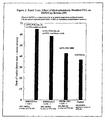
- POE(200) glyceryl stearate significantly reduced the skin irritation caused by even a mild surfactant system, such as sodium acyl isethionate/cocoamido propyl betaine.
- SAI sodium acyl isethionate
- POE(200) glyceryl stearate reduced the skin irritation of a DEFI/betaine liquor significantly.
- the formulation (A) was a stable milky white cream, which provided rich, creamy, and slippery lather that was rinsed off easily.
- the formulation (B) and (C) were stable milky white lotions that were pourable and pumpable. These lotions provided rich and creamy lather.
Landscapes
- Life Sciences & Earth Sciences (AREA)
- Health & Medical Sciences (AREA)
- Animal Behavior & Ethology (AREA)
- General Health & Medical Sciences (AREA)
- Public Health (AREA)
- Veterinary Medicine (AREA)
- Birds (AREA)
- Epidemiology (AREA)
- Chemical & Material Sciences (AREA)
- Engineering & Computer Science (AREA)
- Chemical Kinetics & Catalysis (AREA)
- Oil, Petroleum & Natural Gas (AREA)
- Wood Science & Technology (AREA)
- Organic Chemistry (AREA)
- Dermatology (AREA)
- Cosmetics (AREA)
- Detergent Compositions (AREA)
- Compositions Of Macromolecular Compounds (AREA)
Claims (7)
- Flüssige Waschmittelzusammensetzung, umfassend:(a) ein Waschmitteltensidsystem, umfassend:(i) 3% bis 30 Gewichtsprozent der gesamten Zusammensetzung anionisches Tensid oder Gemische von anionischen Tensiden, wobei das anionische Tensid 50% oder mehr des Waschmittelaktivstoffsystems umfasst; und(ii) 0,1% bis 20 Gewichtsprozent der gesamten Zusammensetzung, umfassend ein oder mehrere amphotere Tenside, und(b) 5 bis 25 Gewichtsprozent hydrophob modifizierte Polyalkylenglycole der Formel I oder II:
wobei das Verhältnis von hydrophob modifiziertem Polyalkylenglycol zu anionischem Tensid oder anionischen Tensiden 1:1,1 bis 1:10 ist, und
wobei das hydrophob modifizierte Polyalkylenglycol dadurch definiert ist, das es ein Molekulargewicht von 6667 bis 14667 Dalton; einen Gewichtsprozentsatz an das Polymer umfassendem Alkylenoxid zwischen 60% und 99%; und eine Schmelztemperatur von 25°C bis 85°C aufweist. - Zusammensetzung nach Anspruch 1, wobei das hydrophob modifizierte Polyalkylenglycol durch eine Verbindung der Formel I
- Zusammensetzung nach Anspruch 1 oder 2, wobei das anionische Tensid oder die anionischen Tenside 5% bis 20% der Zusammensetzung umfassen.
- Zusammensetzung nach einem der Ansprüche 1 bis 3, wobei das amphotere Tensid 3% bis 10% der Zusammensetzung umfasst.
- Zusammensetzung nach einem vorangehenden Anspruch, wobei das Gewichtsverhältnis von hydrophob modifiziertem Polyalkylenglycol zu anionischen Tensiden zwischen 1:1,1 bis 1:7 liegt.
- Zusammensetzung nach einem vorangehenden Anspruch, wobei das Alkylenoxid 85% bis 97 Gewichtsprozent des hydrophob modifizierten Polyalkylenglycols umfasst.
- Verfahren zum Erhöhen der Mildheit einer flüssigen Waschmittelzusammensetzung, umfassend ein 3% bis 30 Gewichtsprozent anionisches Tensid oder Gemisch von anionischen Tensiden umfassendes Tensidsystem, wobei das Verfahren Zugeben von 5 bis 25 Gewichtsprozent eines hydrophob modifizierten Polyalkylenglycols, wie in Anspruch 1 oder 2 definiert, zu der Zusammensetzung umfasst;
wobei das Verhältnis von hydrophob modifiziertem Polyalkylenglycol zu anionischem Tensid oder anionischen Tensiden 1:1,1 bis 1:10 ist;
wobei das hydrophob modifizierte Polyalkylenglycol dadurch definiert ist, dass es einen Prozentsatz an das hydrophob modifiziertes Polyalkylenglycol umfassendem Alkylenoxid zwischen 60% und 99% aufweist; und ein Molekulargewicht von 6667 bis 14667 Dalton aufweist.
Applications Claiming Priority (3)
| Application Number | Priority Date | Filing Date | Title |
|---|---|---|---|
| US637144 | 1996-04-24 | ||
| US08/637,144 US5792739A (en) | 1996-04-24 | 1996-04-24 | Liquid compositions comprising hydrophobically modified polyalkylene glycols as mildness actives |
| PCT/EP1997/001147 WO1997040125A1 (en) | 1996-04-24 | 1997-03-06 | Liquid compositions comprising hydrophobically modified polyalkylene glycols as mildness actives |
Publications (2)
| Publication Number | Publication Date |
|---|---|
| EP0900261A1 EP0900261A1 (de) | 1999-03-10 |
| EP0900261B1 true EP0900261B1 (de) | 2002-06-12 |
Family
ID=24554727
Family Applications (1)
| Application Number | Title | Priority Date | Filing Date |
|---|---|---|---|
| EP97908190A Revoked EP0900261B1 (de) | 1996-04-24 | 1997-03-06 | Flüssige zusammensetzungen mit hydrophob modifizierten polyalkyleneglycolen als schonsubstanzen |
Country Status (7)
| Country | Link |
|---|---|
| US (1) | US5792739A (de) |
| EP (1) | EP0900261B1 (de) |
| AU (1) | AU725259B2 (de) |
| BR (1) | BR9708729A (de) |
| CA (1) | CA2248150C (de) |
| DE (1) | DE69713324T2 (de) |
| WO (1) | WO1997040125A1 (de) |
Families Citing this family (19)
| Publication number | Priority date | Publication date | Assignee | Title |
|---|---|---|---|---|
| US5948745A (en) * | 1995-12-29 | 1999-09-07 | Colgate-Palmolive Co. | Detergent composition having improved cleaning power |
| US5935917A (en) * | 1996-06-26 | 1999-08-10 | Lever Brothers Company | Bar composition comprising entrapped emollient droplets dispersed therein |
| US6174846B1 (en) * | 1997-12-18 | 2001-01-16 | Lever Brothers Company, A Division Of Conopco, Inc. | Liquid composition with enhanced low temperature stability |
| EP1218023B8 (de) | 1999-10-01 | 2006-05-03 | Johnson & Johnson Consumer Companies, Inc. | Verfahren zur beruhigen von menschen unter verwendung von körperpflegemitteln |
| US6670313B1 (en) | 2000-06-05 | 2003-12-30 | Colormetric Laboratories, Inc. | Method and composition for minimizing percutaneous absorption of industrial chemicals |
| EP1313428A2 (de) * | 2000-07-14 | 2003-05-28 | Johnson & Johnson Consumer Companies, Inc. | Selbst-schäumendes reinigungsgel |
| US20020146469A1 (en) * | 2000-12-20 | 2002-10-10 | Benjamin Wiegand | Methods for reducing chronic stress in mammals |
| US20020151527A1 (en) * | 2000-12-20 | 2002-10-17 | Benjamin Wiegand | Method for reducing acne or improving skin tone |
| GB2411478A (en) * | 2002-01-29 | 2005-08-31 | Johnson & Johnson Consumer | Method of measuring the stress or relaxation level of a mammal |
| GB0203045D0 (en) * | 2002-02-08 | 2002-03-27 | Johnson & Johnson Consumer | Method of afefecting sleep and sleep-related behaviours |
| US20040175438A1 (en) * | 2003-03-03 | 2004-09-09 | Benjamin Wiegand | Methods for alleviating symptoms associated with menopause using sensory regimen |
| US20050070452A1 (en) * | 2003-08-28 | 2005-03-31 | Joseph Librizzi | Methods of reducing irritation in personal care compositions |
| ES2528668T3 (es) * | 2003-08-28 | 2015-02-11 | Johnson & Johnson Consumer Companies, Inc. | Composiciones para el cuidado personal con irritación reducida |
| DE10342418A1 (de) * | 2003-09-13 | 2005-04-07 | Beiersdorf Ag | Verwendung von waschaktiven Substanzen, gewählt aus der Gruppe der N-Acylaminosäuren und der Salze von N-Acylaminosäuren zur Steigerung der Verträglichkeit kosmetischer oder dermatologischer Reinigungszubereitungen |
| AU2006244386B2 (en) * | 2005-05-10 | 2011-12-22 | Johnson & Johnson Consumer Companies, Inc. | Low-irritation compositions and methods of making the same |
| US7803403B2 (en) * | 2006-11-09 | 2010-09-28 | Johnson & Johnson Consumer Companies, Inc. | Low-irritation compositions and methods of making the same |
| EP2110119A1 (de) * | 2008-04-15 | 2009-10-21 | KPSS-Kao Professional Salon Services GmbH | Scher-verdickende Reinigungszusammensetzung |
| EP2110117A1 (de) * | 2008-04-15 | 2009-10-21 | KPSS-Kao Professional Salon Services GmbH | Volumenspendende Reinigungszusammensetzung |
| AU2015236281B2 (en) | 2014-03-24 | 2017-10-05 | S.C. Johnson & Son, Inc. | Corrosive ingredient (s) - containing compositions having reduced toxicity and method of obtaining |
Family Cites Families (18)
| Publication number | Priority date | Publication date | Assignee | Title |
|---|---|---|---|---|
| JPS609693B2 (ja) * | 1977-09-12 | 1985-03-12 | ライオン株式会社 | シヤンプ−組成物 |
| US4256611A (en) * | 1978-09-13 | 1981-03-17 | Sherex Chemical Company, Inc. | Light duty non-irritating detergent compositions |
| US4343726A (en) * | 1979-05-07 | 1982-08-10 | Sherex Chemical Company, Inc. | Low irritating high viscosity detergent composition |
| US4247425A (en) * | 1979-05-07 | 1981-01-27 | Sherex Chemical Company, Inc. | Light duty non-irritating detergent compositions |
| AU554574B2 (en) * | 1982-03-19 | 1986-08-28 | Colgate-Palmolive Pty. Ltd. | Shampoo |
| US4450091A (en) * | 1983-03-31 | 1984-05-22 | Basf Wyandotte Corporation | High foaming liquid shampoo composition |
| SU1330148A1 (ru) * | 1985-12-30 | 1987-08-15 | Проектно-Технологическое Бюро Всесоюзного Промышленного Объединения По Производству Товаров Бытовой Химии | Средство дл сухой чистки рук |
| US4828750A (en) * | 1987-12-02 | 1989-05-09 | Colgate-Polmolive Company | Fabric rinse composition to remove surfactant residues |
| JPH04122797A (ja) * | 1990-09-14 | 1992-04-23 | Shiseido Co Ltd | 洗浄剤組成物 |
| TR26415A (tr) * | 1990-09-21 | 1995-03-15 | Procter & Gamble | Yumusak sampuan terkipleri |
| CA2129129A1 (en) * | 1992-02-10 | 1993-08-19 | Everett Inman Jr. | Shampoo premix compositions |
| CA2146117A1 (en) * | 1992-10-05 | 1994-04-14 | Dennis L. Fost | Synthetic detergent bars and the method of making the same |
| GB9307449D0 (en) * | 1993-04-08 | 1993-06-02 | Unilever Plc | Surfactant composition |
| DE4409189C2 (de) * | 1994-03-17 | 1996-08-14 | Chem Y | Tensid-Zusammensetzung, insbesondere zur Verwendung in Körperreinigungsmitteln |
| GB2288812B (en) * | 1994-04-26 | 1998-08-26 | Procter & Gamble | Cleansing compositions |
| GB2288811B (en) * | 1994-04-26 | 1998-07-15 | Procter & Gamble | Cleansing compositions |
| US5520840A (en) * | 1995-03-22 | 1996-05-28 | Lever Brothers Company | Detergent bars comprising water soluble starches |
| US5540854A (en) * | 1995-04-28 | 1996-07-30 | Lever Brothers Company, Division Of Conopco, Inc. | Polyalkylene structured detergent bars comprising organic amide |
-
1996
- 1996-04-24 US US08/637,144 patent/US5792739A/en not_active Expired - Lifetime
-
1997
- 1997-03-06 BR BR9708729A patent/BR9708729A/pt not_active IP Right Cessation
- 1997-03-06 CA CA002248150A patent/CA2248150C/en not_active Expired - Lifetime
- 1997-03-06 DE DE69713324T patent/DE69713324T2/de not_active Revoked
- 1997-03-06 WO PCT/EP1997/001147 patent/WO1997040125A1/en not_active Ceased
- 1997-03-06 AU AU20249/97A patent/AU725259B2/en not_active Ceased
- 1997-03-06 EP EP97908190A patent/EP0900261B1/de not_active Revoked
Also Published As
| Publication number | Publication date |
|---|---|
| DE69713324D1 (de) | 2002-07-18 |
| WO1997040125A1 (en) | 1997-10-30 |
| CA2248150A1 (en) | 1997-10-30 |
| AU2024997A (en) | 1997-11-12 |
| BR9708729A (pt) | 1999-08-03 |
| CA2248150C (en) | 2004-06-22 |
| DE69713324T2 (de) | 2003-04-03 |
| AU725259B2 (en) | 2000-10-12 |
| EP0900261A1 (de) | 1999-03-10 |
| US5792739A (en) | 1998-08-11 |
Similar Documents
| Publication | Publication Date | Title |
|---|---|---|
| EP1003462B1 (de) | Stabile flüssige zusammensetzung mit hohem gehalt an weichmachern | |
| AU725259B2 (en) | Liquid compositions comprising hydrophobically modified polyalkylene glycols as mildness actives | |
| EP0839023B1 (de) | Flüssiges reinigungsmittel, das einen löslichen eine lamellare phase induzierenden strukturgeber enthält | |
| EP0885001B1 (de) | Reinigungsmittel die xanthangummi und vernetzte polyacylsäure enthalten | |
| US5962395A (en) | Method of enhancing low temperature stability of liquid cleansing compositions | |
| EP1051468B1 (de) | Hautreinigungsstück | |
| US6074998A (en) | Bar compositions comprising amphiphilic polyol ester structurant which releases oil | |
| EP0888427B1 (de) | Flüssige zusammensetzungen enthaltend copolymer als sanftheitsmittel | |
| EP0834307A2 (de) | Flüssige Zusammensetzungen, die von EDTA-abgeleitete, chelatierende Tenside enthalten | |
| WO1997029736A1 (en) | Liquid cleansing compositions comprising select cationic polymers | |
| US5869441A (en) | Bar compositions comprising novel chelating surfactants | |
| WO1998013022A1 (en) | Liquid compositions comprising stability enhancing surfactants and a method of enhancing low temperature stability thereof | |
| US5801139A (en) | Process for making bar compositions comprising novel chelating surfactants | |
| EP0976392A1 (de) | Flüssige Zusammensetzungen, die Antioxydantien und von ED3A-abgeleitete, chelatierende Tenside als Stabilisierungsmittel enthalten | |
| KR20000048538A (ko) | 안정성 증진 계면활성제를 포함하는 액체 조성물 및 그의 저온안정성 증진 방법 | |
| HK1029050B (en) | Stable liquid composition comprising high levels of emollients | |
| HK1030964B (en) | Skin cleansing bar composition |
Legal Events
| Date | Code | Title | Description |
|---|---|---|---|
| PUAI | Public reference made under article 153(3) epc to a published international application that has entered the european phase |
Free format text: ORIGINAL CODE: 0009012 |
|
| 17P | Request for examination filed |
Effective date: 19980821 |
|
| AK | Designated contracting states |
Kind code of ref document: A1 Designated state(s): DE FR GB IT |
|
| 17Q | First examination report despatched |
Effective date: 19991021 |
|
| GRAG | Despatch of communication of intention to grant |
Free format text: ORIGINAL CODE: EPIDOS AGRA |
|
| GRAG | Despatch of communication of intention to grant |
Free format text: ORIGINAL CODE: EPIDOS AGRA |
|
| GRAG | Despatch of communication of intention to grant |
Free format text: ORIGINAL CODE: EPIDOS AGRA |
|
| GRAH | Despatch of communication of intention to grant a patent |
Free format text: ORIGINAL CODE: EPIDOS IGRA |
|
| GRAH | Despatch of communication of intention to grant a patent |
Free format text: ORIGINAL CODE: EPIDOS IGRA |
|
| GRAA | (expected) grant |
Free format text: ORIGINAL CODE: 0009210 |
|
| AK | Designated contracting states |
Kind code of ref document: B1 Designated state(s): DE FR GB IT |
|
| REG | Reference to a national code |
Ref country code: GB Ref legal event code: FG4D |
|
| REF | Corresponds to: |
Ref document number: 69713324 Country of ref document: DE Date of ref document: 20020718 |
|
| ET | Fr: translation filed | ||
| PLBQ | Unpublished change to opponent data |
Free format text: ORIGINAL CODE: EPIDOS OPPO |
|
| PLBI | Opposition filed |
Free format text: ORIGINAL CODE: 0009260 |
|
| PLBF | Reply of patent proprietor to notice(s) of opposition |
Free format text: ORIGINAL CODE: EPIDOS OBSO |
|
| 26 | Opposition filed |
Opponent name: L'OREAL Effective date: 20030312 |
|
| PLBB | Reply of patent proprietor to notice(s) of opposition received |
Free format text: ORIGINAL CODE: EPIDOSNOBS3 |
|
| PGFP | Annual fee paid to national office [announced via postgrant information from national office to epo] |
Ref country code: GB Payment date: 20070327 Year of fee payment: 11 |
|
| PGFP | Annual fee paid to national office [announced via postgrant information from national office to epo] |
Ref country code: DE Payment date: 20070430 Year of fee payment: 11 |
|
| RDAF | Communication despatched that patent is revoked |
Free format text: ORIGINAL CODE: EPIDOSNREV1 |
|
| PLAB | Opposition data, opponent's data or that of the opponent's representative modified |
Free format text: ORIGINAL CODE: 0009299OPPO |
|
| PGFP | Annual fee paid to national office [announced via postgrant information from national office to epo] |
Ref country code: IT Payment date: 20070521 Year of fee payment: 11 |
|
| R26 | Opposition filed (corrected) |
Opponent name: L'OREAL Effective date: 20030312 |
|
| RDAG | Patent revoked |
Free format text: ORIGINAL CODE: 0009271 |
|
| STAA | Information on the status of an ep patent application or granted ep patent |
Free format text: STATUS: PATENT REVOKED |
|
| 27W | Patent revoked |
Effective date: 20071116 |
|
| GBPR | Gb: patent revoked under art. 102 of the ep convention designating the uk as contracting state |
Free format text: 20071116 |
|
| PGFP | Annual fee paid to national office [announced via postgrant information from national office to epo] |
Ref country code: FR Payment date: 20070319 Year of fee payment: 11 |
|
| PLAB | Opposition data, opponent's data or that of the opponent's representative modified |
Free format text: ORIGINAL CODE: 0009299OPPO |