EP0900524A1 - Waterbourne microbial pesticides - Google Patents
Waterbourne microbial pesticides Download PDFInfo
- Publication number
- EP0900524A1 EP0900524A1 EP97949229A EP97949229A EP0900524A1 EP 0900524 A1 EP0900524 A1 EP 0900524A1 EP 97949229 A EP97949229 A EP 97949229A EP 97949229 A EP97949229 A EP 97949229A EP 0900524 A1 EP0900524 A1 EP 0900524A1
- Authority
- EP
- European Patent Office
- Prior art keywords
- product
- water
- formulation
- chemical industries
- wako pure
- Prior art date
- Legal status (The legal status is an assumption and is not a legal conclusion. Google has not performed a legal analysis and makes no representation as to the accuracy of the status listed.)
- Withdrawn
Links
- 239000000575 pesticide Substances 0.000 title claims abstract description 86
- 230000000813 microbial effect Effects 0.000 title claims abstract description 81
- 239000003921 oil Substances 0.000 claims abstract description 124
- 238000007667 floating Methods 0.000 claims abstract description 60
- 244000005700 microbiome Species 0.000 claims abstract description 44
- 239000000843 powder Substances 0.000 claims abstract description 25
- 239000004094 surface-active agent Substances 0.000 claims abstract description 22
- 238000000034 method Methods 0.000 claims abstract description 15
- 230000005484 gravity Effects 0.000 claims abstract description 13
- 238000004519 manufacturing process Methods 0.000 claims abstract description 4
- PEDCQBHIVMGVHV-UHFFFAOYSA-N Glycerol Natural products OCC(O)CO PEDCQBHIVMGVHV-UHFFFAOYSA-N 0.000 claims description 162
- VYPSYNLAJGMNEJ-UHFFFAOYSA-N Silicium dioxide Chemical group O=[Si]=O VYPSYNLAJGMNEJ-UHFFFAOYSA-N 0.000 claims description 109
- 239000000725 suspension Substances 0.000 claims description 102
- XLYOFNOQVPJJNP-UHFFFAOYSA-N water Substances O XLYOFNOQVPJJNP-UHFFFAOYSA-N 0.000 claims description 66
- 241000371679 Setosphaeria monoceras Species 0.000 claims description 55
- 230000002363 herbicidal effect Effects 0.000 claims description 45
- 239000011369 resultant mixture Substances 0.000 claims description 37
- -1 sorbitan ester Chemical class 0.000 claims description 36
- 235000014113 dietary fatty acids Nutrition 0.000 claims description 33
- 239000000194 fatty acid Substances 0.000 claims description 33
- 229930195729 fatty acid Natural products 0.000 claims description 33
- 241000196324 Embryophyta Species 0.000 claims description 32
- 229910052500 inorganic mineral Inorganic materials 0.000 claims description 11
- 239000011707 mineral Substances 0.000 claims description 11
- HVUMOYIDDBPOLL-XWVZOOPGSA-N Sorbitan monostearate Chemical compound CCCCCCCCCCCCCCCCCC(=O)OC[C@@H](O)[C@H]1OC[C@H](O)[C@H]1O HVUMOYIDDBPOLL-XWVZOOPGSA-N 0.000 claims description 6
- QIQXTHQIDYTFRH-UHFFFAOYSA-N octadecanoic acid Chemical compound CCCCCCCCCCCCCCCCCC(O)=O QIQXTHQIDYTFRH-UHFFFAOYSA-N 0.000 claims description 5
- 229940049964 oleate Drugs 0.000 claims description 5
- ZQPPMHVWECSIRJ-KTKRTIGZSA-N oleic acid Chemical compound CCCCCCCC\C=C/CCCCCCCC(O)=O ZQPPMHVWECSIRJ-KTKRTIGZSA-N 0.000 claims description 5
- 150000002148 esters Chemical class 0.000 claims description 4
- 241000306559 Exserohilum Species 0.000 claims description 3
- IGFHQQFPSIBGKE-UHFFFAOYSA-N Nonylphenol Natural products CCCCCCCCCC1=CC=C(O)C=C1 IGFHQQFPSIBGKE-UHFFFAOYSA-N 0.000 claims description 3
- 238000002156 mixing Methods 0.000 claims description 3
- SNQQPOLDUKLAAF-UHFFFAOYSA-N nonylphenol Chemical compound CCCCCCCCCC1=CC=CC=C1O SNQQPOLDUKLAAF-UHFFFAOYSA-N 0.000 claims description 3
- 241000192043 Echinochloa Species 0.000 claims description 2
- 239000002736 nonionic surfactant Substances 0.000 claims description 2
- 229950011392 sorbitan stearate Drugs 0.000 claims description 2
- NWGKJDSIEKMTRX-AAZCQSIUSA-N Sorbitan monooleate Chemical compound CCCCCCCC\C=C/CCCCCCCC(=O)OC[C@@H](O)[C@H]1OC[C@H](O)[C@H]1O NWGKJDSIEKMTRX-AAZCQSIUSA-N 0.000 claims 1
- 229950004959 sorbitan oleate Drugs 0.000 claims 1
- 239000000203 mixture Substances 0.000 description 333
- 238000009472 formulation Methods 0.000 description 227
- 239000000126 substance Substances 0.000 description 163
- 235000019198 oils Nutrition 0.000 description 121
- 239000002245 particle Substances 0.000 description 43
- 238000009826 distribution Methods 0.000 description 39
- 239000008187 granular material Substances 0.000 description 36
- 239000004166 Lanolin Substances 0.000 description 35
- 235000019388 lanolin Nutrition 0.000 description 35
- 229940039717 lanolin Drugs 0.000 description 35
- 229920002134 Carboxymethyl cellulose Polymers 0.000 description 34
- 238000001816 cooling Methods 0.000 description 34
- 239000012188 paraffin wax Substances 0.000 description 34
- 239000001768 carboxy methyl cellulose Substances 0.000 description 33
- 235000010948 carboxy methyl cellulose Nutrition 0.000 description 33
- 239000008112 carboxymethyl-cellulose Substances 0.000 description 33
- 229940105329 carboxymethylcellulose Drugs 0.000 description 33
- NBOCQTNZUPTTEI-UHFFFAOYSA-N 4-[4-(hydrazinesulfonyl)phenoxy]benzenesulfonohydrazide Chemical compound C1=CC(S(=O)(=O)NN)=CC=C1OC1=CC=C(S(=O)(=O)NN)C=C1 NBOCQTNZUPTTEI-UHFFFAOYSA-N 0.000 description 32
- 239000005909 Kieselgur Substances 0.000 description 32
- 239000000243 solution Substances 0.000 description 25
- 244000058871 Echinochloa crus-galli Species 0.000 description 24
- 235000011999 Panicum crusgalli Nutrition 0.000 description 24
- 239000004009 herbicide Substances 0.000 description 19
- 239000013504 Triton X-100 Substances 0.000 description 16
- 229920004890 Triton X-100 Polymers 0.000 description 16
- 230000001276 controlling effect Effects 0.000 description 14
- 241000282320 Panthera leo Species 0.000 description 11
- 238000005516 engineering process Methods 0.000 description 11
- 239000007864 aqueous solution Substances 0.000 description 10
- 230000000694 effects Effects 0.000 description 10
- 239000004359 castor oil Substances 0.000 description 9
- 235000019438 castor oil Nutrition 0.000 description 9
- ZEMPKEQAKRGZGQ-XOQCFJPHSA-N glycerol triricinoleate Natural products CCCCCC[C@@H](O)CC=CCCCCCCCC(=O)OC[C@@H](COC(=O)CCCCCCCC=CC[C@@H](O)CCCCCC)OC(=O)CCCCCCCC=CC[C@H](O)CCCCCC ZEMPKEQAKRGZGQ-XOQCFJPHSA-N 0.000 description 9
- 240000007594 Oryza sativa Species 0.000 description 8
- HQKMJHAJHXVSDF-UHFFFAOYSA-L magnesium stearate Chemical compound [Mg+2].CCCCCCCCCCCCCCCCCC([O-])=O.CCCCCCCCCCCCCCCCCC([O-])=O HQKMJHAJHXVSDF-UHFFFAOYSA-L 0.000 description 8
- 238000003860 storage Methods 0.000 description 8
- 230000000052 comparative effect Effects 0.000 description 7
- 238000012360 testing method Methods 0.000 description 7
- 229910021536 Zeolite Inorganic materials 0.000 description 6
- HNPSIPDUKPIQMN-UHFFFAOYSA-N dioxosilane;oxo(oxoalumanyloxy)alumane Chemical compound O=[Si]=O.O=[Al]O[Al]=O HNPSIPDUKPIQMN-UHFFFAOYSA-N 0.000 description 6
- 239000010457 zeolite Substances 0.000 description 6
- 241001558166 Curvularia sp. Species 0.000 description 5
- 239000002609 medium Substances 0.000 description 5
- 244000000010 microbial pathogen Species 0.000 description 5
- 239000012085 test solution Substances 0.000 description 5
- GPRLSGONYQIRFK-MNYXATJNSA-N triton Chemical compound [3H+] GPRLSGONYQIRFK-MNYXATJNSA-N 0.000 description 5
- IIZPXYDJLKNOIY-JXPKJXOSSA-N 1-palmitoyl-2-arachidonoyl-sn-glycero-3-phosphocholine Chemical compound CCCCCCCCCCCCCCCC(=O)OC[C@H](COP([O-])(=O)OCC[N+](C)(C)C)OC(=O)CCC\C=C/C\C=C/C\C=C/C\C=C/CCCCC IIZPXYDJLKNOIY-JXPKJXOSSA-N 0.000 description 4
- CEGOLXSVJUTHNZ-UHFFFAOYSA-K aluminium tristearate Chemical compound [Al+3].CCCCCCCCCCCCCCCCCC([O-])=O.CCCCCCCCCCCCCCCCCC([O-])=O.CCCCCCCCCCCCCCCCCC([O-])=O CEGOLXSVJUTHNZ-UHFFFAOYSA-K 0.000 description 4
- 229940063655 aluminum stearate Drugs 0.000 description 4
- 239000011248 coating agent Substances 0.000 description 4
- 238000000576 coating method Methods 0.000 description 4
- 239000000839 emulsion Substances 0.000 description 4
- 230000035784 germination Effects 0.000 description 4
- 239000004615 ingredient Substances 0.000 description 4
- 235000010445 lecithin Nutrition 0.000 description 4
- 239000000787 lecithin Substances 0.000 description 4
- 229940067606 lecithin Drugs 0.000 description 4
- 230000007774 longterm Effects 0.000 description 4
- 235000019359 magnesium stearate Nutrition 0.000 description 4
- 239000002689 soil Substances 0.000 description 4
- 239000001587 sorbitan monostearate Substances 0.000 description 4
- 235000011076 sorbitan monostearate Nutrition 0.000 description 4
- 229940035048 sorbitan monostearate Drugs 0.000 description 4
- DCXXMTOCNZCJGO-UHFFFAOYSA-N tristearoylglycerol Chemical compound CCCCCCCCCCCCCCCCCC(=O)OCC(OC(=O)CCCCCCCCCCCCCCCCC)COC(=O)CCCCCCCCCCCCCCCCC DCXXMTOCNZCJGO-UHFFFAOYSA-N 0.000 description 4
- 239000004034 viscosity adjusting agent Substances 0.000 description 4
- ZORQXIQZAOLNGE-UHFFFAOYSA-N 1,1-difluorocyclohexane Chemical compound FC1(F)CCCCC1 ZORQXIQZAOLNGE-UHFFFAOYSA-N 0.000 description 3
- 240000007124 Brassica oleracea Species 0.000 description 3
- 235000003899 Brassica oleracea var acephala Nutrition 0.000 description 3
- 235000011301 Brassica oleracea var capitata Nutrition 0.000 description 3
- 235000001169 Brassica oleracea var oleracea Nutrition 0.000 description 3
- 240000008067 Cucumis sativus Species 0.000 description 3
- 235000010799 Cucumis sativus var sativus Nutrition 0.000 description 3
- ZVFDTKUVRCTHQE-UHFFFAOYSA-N Diisodecyl phthalate Chemical compound CC(C)CCCCCCCOC(=O)C1=CC=CC=C1C(=O)OCCCCCCCC(C)C ZVFDTKUVRCTHQE-UHFFFAOYSA-N 0.000 description 3
- 235000010469 Glycine max Nutrition 0.000 description 3
- 244000068988 Glycine max Species 0.000 description 3
- 241000238631 Hexapoda Species 0.000 description 3
- 244000061458 Solanum melongena Species 0.000 description 3
- 235000002597 Solanum melongena Nutrition 0.000 description 3
- 229930006000 Sucrose Natural products 0.000 description 3
- CZMRCDWAGMRECN-UGDNZRGBSA-N Sucrose Chemical compound O[C@H]1[C@H](O)[C@@H](CO)O[C@@]1(CO)O[C@@H]1[C@H](O)[C@@H](O)[C@H](O)[C@@H](CO)O1 CZMRCDWAGMRECN-UGDNZRGBSA-N 0.000 description 3
- 241000607479 Yersinia pestis Species 0.000 description 3
- 239000011230 binding agent Substances 0.000 description 3
- 239000003795 chemical substances by application Substances 0.000 description 3
- 150000001875 compounds Chemical class 0.000 description 3
- 238000004062 sedimentation Methods 0.000 description 3
- 239000001593 sorbitan monooleate Substances 0.000 description 3
- 235000011069 sorbitan monooleate Nutrition 0.000 description 3
- 229940035049 sorbitan monooleate Drugs 0.000 description 3
- 239000003381 stabilizer Substances 0.000 description 3
- 239000005720 sucrose Substances 0.000 description 3
- 239000004563 wettable powder Substances 0.000 description 3
- 229920001817 Agar Polymers 0.000 description 2
- 241000431271 Alternaria scirpicola Species 0.000 description 2
- QGZKDVFQNNGYKY-UHFFFAOYSA-N Ammonia Chemical compound N QGZKDVFQNNGYKY-UHFFFAOYSA-N 0.000 description 2
- IJGRMHOSHXDMSA-UHFFFAOYSA-N Atomic nitrogen Chemical compound N#N IJGRMHOSHXDMSA-UHFFFAOYSA-N 0.000 description 2
- OKTJSMMVPCPJKN-UHFFFAOYSA-N Carbon Chemical compound [C] OKTJSMMVPCPJKN-UHFFFAOYSA-N 0.000 description 2
- 241000254171 Curculionidae Species 0.000 description 2
- MQIUGAXCHLFZKX-UHFFFAOYSA-N Di-n-octyl phthalate Natural products CCCCCCCCOC(=O)C1=CC=CC=C1C(=O)OCCCCCCCC MQIUGAXCHLFZKX-UHFFFAOYSA-N 0.000 description 2
- 229920000663 Hydroxyethyl cellulose Polymers 0.000 description 2
- 239000004354 Hydroxyethyl cellulose Substances 0.000 description 2
- 241000396080 Lissorhoptrus Species 0.000 description 2
- 229920001213 Polysorbate 20 Polymers 0.000 description 2
- 235000019484 Rapeseed oil Nutrition 0.000 description 2
- 241000209140 Triticum Species 0.000 description 2
- 235000021307 Triticum Nutrition 0.000 description 2
- 239000000654 additive Substances 0.000 description 2
- 239000008272 agar Substances 0.000 description 2
- 150000001413 amino acids Chemical class 0.000 description 2
- BJQHLKABXJIVAM-UHFFFAOYSA-N bis(2-ethylhexyl) phthalate Chemical compound CCCCC(CC)COC(=O)C1=CC=CC=C1C(=O)OCC(CC)CCCC BJQHLKABXJIVAM-UHFFFAOYSA-N 0.000 description 2
- 239000002775 capsule Substances 0.000 description 2
- 229910052799 carbon Inorganic materials 0.000 description 2
- 238000007796 conventional method Methods 0.000 description 2
- 238000011161 development Methods 0.000 description 2
- 230000018109 developmental process Effects 0.000 description 2
- HBGGXOJOCNVPFY-UHFFFAOYSA-N diisononyl phthalate Chemical compound CC(C)CCCCCCOC(=O)C1=CC=CC=C1C(=O)OCCCCCCC(C)C HBGGXOJOCNVPFY-UHFFFAOYSA-N 0.000 description 2
- 238000003912 environmental pollution Methods 0.000 description 2
- 235000019447 hydroxyethyl cellulose Nutrition 0.000 description 2
- 230000000749 insecticidal effect Effects 0.000 description 2
- 229940119170 jojoba wax Drugs 0.000 description 2
- 239000002480 mineral oil Substances 0.000 description 2
- XNGIFLGASWRNHJ-UHFFFAOYSA-N phthalic acid Chemical compound OC(=O)C1=CC=CC=C1C(O)=O XNGIFLGASWRNHJ-UHFFFAOYSA-N 0.000 description 2
- 239000010773 plant oil Substances 0.000 description 2
- 239000000256 polyoxyethylene sorbitan monolaurate Substances 0.000 description 2
- 235000010486 polyoxyethylene sorbitan monolaurate Nutrition 0.000 description 2
- 241000894007 species Species 0.000 description 2
- 239000000230 xanthan gum Substances 0.000 description 2
- 235000010493 xanthan gum Nutrition 0.000 description 2
- 229920001285 xanthan gum Polymers 0.000 description 2
- 229940082509 xanthan gum Drugs 0.000 description 2
- KIUKXJAPPMFGSW-DNGZLQJQSA-N (2S,3S,4S,5R,6R)-6-[(2S,3R,4R,5S,6R)-3-Acetamido-2-[(2S,3S,4R,5R,6R)-6-[(2R,3R,4R,5S,6R)-3-acetamido-2,5-dihydroxy-6-(hydroxymethyl)oxan-4-yl]oxy-2-carboxy-4,5-dihydroxyoxan-3-yl]oxy-5-hydroxy-6-(hydroxymethyl)oxan-4-yl]oxy-3,4,5-trihydroxyoxane-2-carboxylic acid Chemical compound CC(=O)N[C@H]1[C@H](O)O[C@H](CO)[C@@H](O)[C@@H]1O[C@H]1[C@H](O)[C@@H](O)[C@H](O[C@H]2[C@@H]([C@@H](O[C@H]3[C@@H]([C@@H](O)[C@H](O)[C@H](O3)C(O)=O)O)[C@H](O)[C@@H](CO)O2)NC(C)=O)[C@@H](C(O)=O)O1 KIUKXJAPPMFGSW-DNGZLQJQSA-N 0.000 description 1
- CUNWUEBNSZSNRX-RKGWDQTMSA-N (2r,3r,4r,5s)-hexane-1,2,3,4,5,6-hexol;(z)-octadec-9-enoic acid Chemical compound OC[C@H](O)[C@@H](O)[C@H](O)[C@H](O)CO.OC[C@H](O)[C@@H](O)[C@H](O)[C@H](O)CO.CCCCCCCC\C=C/CCCCCCCC(O)=O.CCCCCCCC\C=C/CCCCCCCC(O)=O.CCCCCCCC\C=C/CCCCCCCC(O)=O CUNWUEBNSZSNRX-RKGWDQTMSA-N 0.000 description 1
- CRBBOOXGHMTWOC-NPDDRXJXSA-N 1,4-Anhydro-6-O-dodecanoyl-2,3-bis-O-(2-hydroxyethyl)-D-glucitol Chemical compound CCCCCCCCCCCC(=O)OC[C@@H](O)[C@H]1OC[C@H](OCCO)[C@H]1OCCO CRBBOOXGHMTWOC-NPDDRXJXSA-N 0.000 description 1
- IXPNQXFRVYWDDI-UHFFFAOYSA-N 1-methyl-2,4-dioxo-1,3-diazinane-5-carboximidamide Chemical compound CN1CC(C(N)=N)C(=O)NC1=O IXPNQXFRVYWDDI-UHFFFAOYSA-N 0.000 description 1
- UHPMCKVQTMMPCG-UHFFFAOYSA-N 5,8-dihydroxy-2-methoxy-6-methyl-7-(2-oxopropyl)naphthalene-1,4-dione Chemical compound CC1=C(CC(C)=O)C(O)=C2C(=O)C(OC)=CC(=O)C2=C1O UHPMCKVQTMMPCG-UHFFFAOYSA-N 0.000 description 1
- 244000215068 Acacia senegal Species 0.000 description 1
- 241001019659 Acremonium <Plectosphaerellaceae> Species 0.000 description 1
- 244000144706 Aeschynomene indica Species 0.000 description 1
- 235000004051 Aeschynomene indica Nutrition 0.000 description 1
- 241000223600 Alternaria Species 0.000 description 1
- 239000005995 Aluminium silicate Substances 0.000 description 1
- 241000208327 Apocynaceae Species 0.000 description 1
- 241000471439 Araujia odorata Species 0.000 description 1
- 241001465178 Bipolaris Species 0.000 description 1
- 241001619326 Cephalosporium Species 0.000 description 1
- 241001157813 Cercospora Species 0.000 description 1
- 102000008186 Collagen Human genes 0.000 description 1
- 108010035532 Collagen Proteins 0.000 description 1
- 241000222199 Colletotrichum Species 0.000 description 1
- 229920000114 Corrugated plastic Polymers 0.000 description 1
- 241000223208 Curvularia Species 0.000 description 1
- 241000223211 Curvularia lunata Species 0.000 description 1
- 241000220485 Fabaceae Species 0.000 description 1
- 241000233866 Fungi Species 0.000 description 1
- 241000223218 Fusarium Species 0.000 description 1
- 229920000084 Gum arabic Polymers 0.000 description 1
- DGAQECJNVWCQMB-PUAWFVPOSA-M Ilexoside XXIX Chemical compound C[C@@H]1CC[C@@]2(CC[C@@]3(C(=CC[C@H]4[C@]3(CC[C@@H]5[C@@]4(CC[C@@H](C5(C)C)OS(=O)(=O)[O-])C)C)[C@@H]2[C@]1(C)O)C)C(=O)O[C@H]6[C@@H]([C@H]([C@@H]([C@H](O6)CO)O)O)O.[Na+] DGAQECJNVWCQMB-PUAWFVPOSA-M 0.000 description 1
- 229920001732 Lignosulfonate Polymers 0.000 description 1
- 240000000982 Malva neglecta Species 0.000 description 1
- 235000000060 Malva neglecta Nutrition 0.000 description 1
- 241000320042 Nimbya Species 0.000 description 1
- 235000007164 Oryza sativa Nutrition 0.000 description 1
- 235000019482 Palm oil Nutrition 0.000 description 1
- 239000005662 Paraffin oil Substances 0.000 description 1
- 241000233614 Phytophthora Species 0.000 description 1
- 239000002202 Polyethylene glycol Substances 0.000 description 1
- 241000221300 Puccinia Species 0.000 description 1
- 241000228453 Pyrenophora Species 0.000 description 1
- 235000019774 Rice Bran oil Nutrition 0.000 description 1
- 235000019485 Safflower oil Nutrition 0.000 description 1
- 241000221662 Sclerotinia Species 0.000 description 1
- XUIMIQQOPSSXEZ-UHFFFAOYSA-N Silicon Chemical compound [Si] XUIMIQQOPSSXEZ-UHFFFAOYSA-N 0.000 description 1
- 229920002472 Starch Polymers 0.000 description 1
- 235000021355 Stearic acid Nutrition 0.000 description 1
- 241000779819 Syncarpia glomulifera Species 0.000 description 1
- 241000221566 Ustilago Species 0.000 description 1
- 241000007071 Ustilago trichophora Species 0.000 description 1
- PZQBWGFCGIRLBB-NJYHNNHUSA-N [(2r)-2-[(2s,3r,4s)-3,4-dihydroxyoxolan-2-yl]-2-octadecanoyloxyethyl] octadecanoate Chemical compound CCCCCCCCCCCCCCCCCC(=O)OC[C@@H](OC(=O)CCCCCCCCCCCCCCCCC)[C@H]1OC[C@H](O)[C@H]1O PZQBWGFCGIRLBB-NJYHNNHUSA-N 0.000 description 1
- 235000010489 acacia gum Nutrition 0.000 description 1
- 239000000205 acacia gum Substances 0.000 description 1
- DPXJVFZANSGRMM-UHFFFAOYSA-N acetic acid;2,3,4,5,6-pentahydroxyhexanal;sodium Chemical compound [Na].CC(O)=O.OCC(O)C(O)C(O)C(O)C=O DPXJVFZANSGRMM-UHFFFAOYSA-N 0.000 description 1
- 230000002411 adverse Effects 0.000 description 1
- XAGFODPZIPBFFR-UHFFFAOYSA-N aluminium Chemical compound [Al] XAGFODPZIPBFFR-UHFFFAOYSA-N 0.000 description 1
- 229910052782 aluminium Inorganic materials 0.000 description 1
- 235000012211 aluminium silicate Nutrition 0.000 description 1
- 229910021529 ammonia Inorganic materials 0.000 description 1
- 230000000845 anti-microbial effect Effects 0.000 description 1
- 235000013871 bee wax Nutrition 0.000 description 1
- 239000012166 beeswax Substances 0.000 description 1
- 229940092738 beeswax Drugs 0.000 description 1
- 238000007664 blowing Methods 0.000 description 1
- VSGNNIFQASZAOI-UHFFFAOYSA-L calcium acetate Chemical compound [Ca+2].CC([O-])=O.CC([O-])=O VSGNNIFQASZAOI-UHFFFAOYSA-L 0.000 description 1
- 239000001639 calcium acetate Substances 0.000 description 1
- 229960005147 calcium acetate Drugs 0.000 description 1
- 235000011092 calcium acetate Nutrition 0.000 description 1
- 239000007963 capsule composition Substances 0.000 description 1
- 235000010418 carrageenan Nutrition 0.000 description 1
- 229920001525 carrageenan Polymers 0.000 description 1
- 239000000969 carrier Substances 0.000 description 1
- 239000012876 carrier material Substances 0.000 description 1
- 229920001436 collagen Polymers 0.000 description 1
- 239000012141 concentrate Substances 0.000 description 1
- 239000002537 cosmetic Substances 0.000 description 1
- 239000002385 cottonseed oil Substances 0.000 description 1
- 235000012343 cottonseed oil Nutrition 0.000 description 1
- 239000010779 crude oil Substances 0.000 description 1
- 238000012258 culturing Methods 0.000 description 1
- 230000007547 defect Effects 0.000 description 1
- 238000010586 diagram Methods 0.000 description 1
- 201000010099 disease Diseases 0.000 description 1
- 208000037265 diseases, disorders, signs and symptoms Diseases 0.000 description 1
- YDEXUEFDPVHGHE-GGMCWBHBSA-L disodium;(2r)-3-(2-hydroxy-3-methoxyphenyl)-2-[2-methoxy-4-(3-sulfonatopropyl)phenoxy]propane-1-sulfonate Chemical compound [Na+].[Na+].COC1=CC=CC(C[C@H](CS([O-])(=O)=O)OC=2C(=CC(CCCS([O-])(=O)=O)=CC=2)OC)=C1O YDEXUEFDPVHGHE-GGMCWBHBSA-L 0.000 description 1
- 239000003995 emulsifying agent Substances 0.000 description 1
- 238000002474 experimental method Methods 0.000 description 1
- 235000013305 food Nutrition 0.000 description 1
- 150000004676 glycans Chemical class 0.000 description 1
- 229960005150 glycerol Drugs 0.000 description 1
- 239000001963 growth medium Substances 0.000 description 1
- 229920000591 gum Polymers 0.000 description 1
- 239000000383 hazardous chemical Substances 0.000 description 1
- 239000003906 humectant Substances 0.000 description 1
- 229920002674 hyaluronan Polymers 0.000 description 1
- 229960003160 hyaluronic acid Drugs 0.000 description 1
- 230000005661 hydrophobic surface Effects 0.000 description 1
- 239000005414 inactive ingredient Substances 0.000 description 1
- 238000011081 inoculation Methods 0.000 description 1
- 239000002917 insecticide Substances 0.000 description 1
- NLYAJNPCOHFWQQ-UHFFFAOYSA-N kaolin Chemical compound O.O.O=[Al]O[Si](=O)O[Si](=O)O[Al]=O NLYAJNPCOHFWQQ-UHFFFAOYSA-N 0.000 description 1
- 239000012669 liquid formulation Substances 0.000 description 1
- 239000010721 machine oil Substances 0.000 description 1
- 159000000003 magnesium salts Chemical class 0.000 description 1
- 230000014759 maintenance of location Effects 0.000 description 1
- 235000010446 mineral oil Nutrition 0.000 description 1
- URXNVXOMQQCBHS-UHFFFAOYSA-N naphthalene;sodium Chemical compound [Na].C1=CC=CC2=CC=CC=C21 URXNVXOMQQCBHS-UHFFFAOYSA-N 0.000 description 1
- 150000002823 nitrates Chemical class 0.000 description 1
- 229910052757 nitrogen Inorganic materials 0.000 description 1
- OQCDKBAXFALNLD-UHFFFAOYSA-N octadecanoic acid Natural products CCCCCCCC(C)CCCCCCCCC(O)=O OQCDKBAXFALNLD-UHFFFAOYSA-N 0.000 description 1
- 235000014593 oils and fats Nutrition 0.000 description 1
- 239000004006 olive oil Substances 0.000 description 1
- 235000008390 olive oil Nutrition 0.000 description 1
- 239000002540 palm oil Substances 0.000 description 1
- 230000000361 pesticidal effect Effects 0.000 description 1
- 239000001739 pinus spp. Substances 0.000 description 1
- 229920001223 polyethylene glycol Polymers 0.000 description 1
- 229920001282 polysaccharide Polymers 0.000 description 1
- 239000005017 polysaccharide Substances 0.000 description 1
- 239000001965 potato dextrose agar Substances 0.000 description 1
- 238000002360 preparation method Methods 0.000 description 1
- 102000004169 proteins and genes Human genes 0.000 description 1
- 108090000623 proteins and genes Proteins 0.000 description 1
- 239000008262 pumice Substances 0.000 description 1
- 238000003908 quality control method Methods 0.000 description 1
- 238000011160 research Methods 0.000 description 1
- 235000009566 rice Nutrition 0.000 description 1
- 239000008165 rice bran oil Substances 0.000 description 1
- 235000005713 safflower oil Nutrition 0.000 description 1
- 239000003813 safflower oil Substances 0.000 description 1
- 239000013049 sediment Substances 0.000 description 1
- 230000001568 sexual effect Effects 0.000 description 1
- 229910052710 silicon Inorganic materials 0.000 description 1
- 239000010703 silicon Substances 0.000 description 1
- 229920002545 silicone oil Polymers 0.000 description 1
- 239000011734 sodium Substances 0.000 description 1
- 229910052708 sodium Inorganic materials 0.000 description 1
- 235000010413 sodium alginate Nutrition 0.000 description 1
- 239000000661 sodium alginate Substances 0.000 description 1
- 229940005550 sodium alginate Drugs 0.000 description 1
- 229960005078 sorbitan sesquioleate Drugs 0.000 description 1
- 239000003549 soybean oil Substances 0.000 description 1
- 235000012424 soybean oil Nutrition 0.000 description 1
- 239000007921 spray Substances 0.000 description 1
- 239000008107 starch Substances 0.000 description 1
- 235000019698 starch Nutrition 0.000 description 1
- 239000008117 stearic acid Substances 0.000 description 1
- 229940036248 turpentine Drugs 0.000 description 1
- 239000007164 v-8 juice agar Substances 0.000 description 1
- 229940099259 vaseline Drugs 0.000 description 1
Images
Classifications
-
- A—HUMAN NECESSITIES
- A01—AGRICULTURE; FORESTRY; ANIMAL HUSBANDRY; HUNTING; TRAPPING; FISHING
- A01N—PRESERVATION OF BODIES OF HUMANS OR ANIMALS OR PLANTS OR PARTS THEREOF; BIOCIDES, e.g. AS DISINFECTANTS, AS PESTICIDES OR AS HERBICIDES; PEST REPELLANTS OR ATTRACTANTS; PLANT GROWTH REGULATORS
- A01N25/00—Biocides, pest repellants or attractants, or plant growth regulators, characterised by their forms, or by their non-active ingredients or by their methods of application, e.g. seed treatment or sequential application; Substances for reducing the noxious effect of the active ingredients to organisms other than pests
- A01N25/12—Powders or granules
- A01N25/14—Powders or granules wettable
-
- A—HUMAN NECESSITIES
- A01—AGRICULTURE; FORESTRY; ANIMAL HUSBANDRY; HUNTING; TRAPPING; FISHING
- A01N—PRESERVATION OF BODIES OF HUMANS OR ANIMALS OR PLANTS OR PARTS THEREOF; BIOCIDES, e.g. AS DISINFECTANTS, AS PESTICIDES OR AS HERBICIDES; PEST REPELLANTS OR ATTRACTANTS; PLANT GROWTH REGULATORS
- A01N63/00—Biocides, pest repellants or attractants, or plant growth regulators containing microorganisms, viruses, microbial fungi, animals or substances produced by, or obtained from, microorganisms, viruses, microbial fungi or animals, e.g. enzymes or fermentates
- A01N63/20—Bacteria; Substances produced thereby or obtained therefrom
-
- A—HUMAN NECESSITIES
- A01—AGRICULTURE; FORESTRY; ANIMAL HUSBANDRY; HUNTING; TRAPPING; FISHING
- A01N—PRESERVATION OF BODIES OF HUMANS OR ANIMALS OR PLANTS OR PARTS THEREOF; BIOCIDES, e.g. AS DISINFECTANTS, AS PESTICIDES OR AS HERBICIDES; PEST REPELLANTS OR ATTRACTANTS; PLANT GROWTH REGULATORS
- A01N63/00—Biocides, pest repellants or attractants, or plant growth regulators containing microorganisms, viruses, microbial fungi, animals or substances produced by, or obtained from, microorganisms, viruses, microbial fungi or animals, e.g. enzymes or fermentates
- A01N63/30—Microbial fungi; Substances produced thereby or obtained therefrom
Definitions
- the present invention relates to a water-floating microbial pesticide, a method for producing the microbial pesticide and a method for using the microbial pesticide.
- “Collego” is usually sold as a set composed of powder containing spores as effective ingredient and a solution containing sucrose for suspending the powder therein, and these two components must be mixed with each other and diluted with water before use, which requires a great deal of labor. In addition, in such formulation, raising of powder in the air tends to be caused.
- “DeVine” is sold in a form of a concentrate solution of the microorganism cells. This herbicide also has a defect that it can not be stored for a long period of time. [Weed Science 34 (Suppl. 1) (1986):15-16]
- the finished pesticide When a W/O type surfactant is used, the finished pesticide must be applied with a specially designed spreader, which is disadvantageous in practical use. Further, when lecithin derived from crude plant oil is used as the W/O type surfactant, problems in quality control of a lecithin product would arise owing to lot-to-lot variation in lecithin content, color variation in the crude oil and malodor of the lecithin product. Therefore, such formulation has not been practically used yet.
- a granular formulation tends to settle on paddy sail in water, so that the pathogenic microorganisms contained in the granular formulation have little chance to adhere onto the leave of Echinochloa crus-galli , resulting in low herbicidal activity.
- Wettalbe powders have also been considered to have problems such as uneven spreadability onto the field, raising of powder in the air which is observed when diluted with water upon use, and the like. Furthermore, such wettable powders have not been used as herbicides for paddy fields because of their inconvenience in treatment and handling. Liquid formulations including floable formulations also have disadvantages such as poor storage properties.
- Oil formulations have also been developed which are designed to spread the pathogenic microorganisms contained therein over water surface [Japanese Patent Application Laid-open No. 6-179243].
- oil formulations have a problem in storage since they should be treated as hazardous materials.
- dropwise application to a paddy filed would be adversely influenced by wind blowing, and therefore, if it is directly splashed and adhered onto the leaf surface of the cultured rice plants, it would damage the rice plants.
- weeds e.g., Echinochloa corus-galli
- insect pests e.g., water weevil ( Lissorhoptrus orvzophilue )
- water weevil Lissorhoptrus orvzophilue
- carrier materials are not useful for formulation of microbial pesticides since they have poor adhere property with microorganisms.
- the conventional methods for formulating pesticides could not provide water-floating microbial pesticides having easy handling property and excellent storage property.
- the present inventors have made extensive and intensive studies on developing microbial pesticides having easy handling properties for application to paddy fields under flooding.
- a microbial pesticide which spreads over water surface rapidly like oil formulations and floable formulations, floats on water, and exerts herbicidal and insecticidal effects on water surface can be produced by coating a microorganism with oil containing a W/O type (water-in-oil type) surfactant and further coating the oil-coated microorganism with powder having a low bulk specific gravity in a form of powder or granule.
- the present invention relates to a water-floating microbial pesticide comprising a microorganism, a W/O type surfactant, oil, and powder having a low bulk specific gravity, a method for producing the microbial pesticide and, a method for using the microbial pesticide.
- the microbial pesticide of the present invention does not sediment in water and can float on water for a long period of time, and therefore can effectively act on weeds such as Echinochloa crus-galli and insect pests such as water weevil ( Lissorhoptrus orvzophilue ). Furthermore, unlike conventional floable pesticides and oil-type pesticides, the microbial pesticide of the present invention has no problem in storage and handling. Still further, since the microbial pesticide of the present invention employs a microorganism as an effective ingredient, it has extremely low influence on environment.
- the microbial pesticide of the present invention can be prepared by suspending a microorganism in water, adding oil containing a W/O type surfactant to the resultant suspension and mixing with each other, and further adding powder with a small specific gravity to the mixture.
- microorganism used in the microbial pesticide of the present invention may be any one as long as it acts as an effective ingredient of the microbial pesticide.
- microorganisms include those having a herbicidal activity, those having an insecticidal activity and those having an antimicrobial activity.
- microorganism having a herbicidal activity include fungi belonging to the genera Acremonium , Alternaria , Bipolaris , Cephalosporium , Cercospora , Cochlioborus , Colletotrichum , Curvularia , Drechslera , Epicoccosorus , Exserohirum , Fusarium , Nimbya , Phytophthora , Puccinia , Sclerotinia and Ustilago .
- FERM BP-4215 Exserohilum monoceras JTB-012, Exserohilum monoceras JTB-013, Exserohilum monoceras JTB-799, Exserohilum monoceras JTB-803 and Exserohilum monoceras JTB-808, all of which were deposited on October 27, 1995 with the National Institute of Bioscience and Human-Technology, Agency of Industrial Science and Technology (1-3, Higashi 1-chome, Tsukuba-shi, Ibaraki-ken, Japan) under the Accession Nos.
- FERM BP-4249, FERM BP-4248 and FERM BP-4247 were deposited on June 2, 1990 with the National Institute of Bioscience and Human-Technology, Agency of Industrial Science and Technology (1-3, Higashi 1-chome, Tsukuba-shi, Ibaraki-ken, Japan) under the Accession No. FERM BP-4448 and Epicoccosorus nematosporus K-035 of which was deposited on November 25, 1993 with the National Institute of Bioscience and Human-Technology, Agency of Industrial Science and Technology (1-3, Higashi 1-chome, Tsukuba-shi, Ibaraki-ken, Japan) under the Accession No.
- microorganisms have conidia having hydrophobic surface. Therefore, the use of their conidia in a dried form has a disadvantage they are easily raised in the air. The process of the present invention can improve such disadvantage and enables to treat such dried conidia easily and safety.
- These microorganisms are preferably used in a from of asexual spore such as conidium, but may also be used in a form of sexual spore or mycelium.
- the amount of the microorganism used is not particularly limited as long as it is effective for providing satisfactory pesticidal properties to the final pesticide and may vary depending on the species of the microorganism employed.
- the final content of conidia in the form ulation of microbial pesticide is preferably 1x10 3 to 1x10 9 conidia/g, more preferably 1x10 5 to 1x10 8 conidia/g; whereas when conidium of Curvularia sp. is used, the final content of conidia in the form ulation of microbial pesticide is preferably 1x10 5 to 1x10 12 conidia/g, more preferably 1x10 7 to 1x10 10 conidia/g.
- the spores of the microorganism used in the microbial pesticide of the invention can be prepared by any conventional method.
- conidium of a microorganism belonging to the genus Exserohilum can be readily prepared by inoculating the microorganism cells onto oatmeal sucrose agar medium, a V8 juice agar medium, etc. and then culturing the medium at 25°C for 20 days.
- the microorganism may be coated with the oil directly.
- a mineral carrier used is not particularly limited, but is preferably a porous type one such as diatomaceous earth, zeolite and white carbon.
- the coating of the microorganism with a mineral carrier enables to supply air and moisture necessary for growth of the microorganism through the mineral carrier and consequently improve the durability of the microorganism in the final pesticide.
- binder include soluble starch, gum arabic, xanthan gum, carrageenin gum, lignin sulfonate, hydroxyethyl cellulose (HEC) and carboxymethyl cellulose (CMC).
- oils used in the present invention include but not limited to plant oils such as soy bean oil, rapeseed oil, caster oil, cotton seed oil, rice bran oil, palm oil, olive oil, safflower oil and jojoba oil; mineral oils such as spindle oil, heavy white oil, light white oil, mineral spirit, mineral turpentine, naphtene oil, paraffin oil and machine oil for microbial pesticides; silicone oil and other silicon-containing oil; and the like.
- the amount of the oil used is not particularly limited. However, it is preferable to use the oil in the final microbial pesticide in an amount of 10 to 70%, preferably 10 to 50% based on the weight of the final microbial pesticide.
- the oil is admixed with a W/O type surfactant prior to mixing with the microorganism.
- the surfactant used is not particularly limited as long as it has a low HLB (hydrophile-lypophile balance) value. However, it is preferred to use a surfactant having an HLB value within the range of 3 to 7.
- a nonionic surfactant such as polyglyceryl stearate type, polyglyceryl oleate type, monoglycerol ester type, sorbitane stearate type, sorbitane oleate type, sorbitane ester type, nonylphenol type and glycerol fatty acid ester type ones.
- surfactant examples include: as polyglyceryl stearate type, "Hostacerin WOL” [polyglyceryl-2-sesquisisostearate] (Hoechst); as polyglyceryl oleate, “Hostacerin DGO” [polyglyceryl-2-sesquiisooleate] (Hoechst); as monoglycerol ester type, "Kadenax GS-90" (Lion Corporation); as sorbitan stearate type, "Leodol SP-S10” [sorbitan monostearate] (Kao Corporation), “Leodol AS-10” [sorbitan monostearate] (Kao Corporation), “Emasol S-10” [sorbitan monostearate] (Kao Corpoation) and “Emasol S-20” [sorbitan distearate] (Kao Corporation); as sortitan oleate type, "Leodol SP-010" [sorbitan
- the amount of the surfactant used is not particularly limited. However, it is preferred for the surfactant to be used in an amount of 0.1 to 10%, preferably 1 to 5% based on the weight of the final microbial pesticide.
- a viscosity modifier may be added to the mixture of the oil and the W/O type surfactant to control the viscosity of the oil.
- examples of such viscosity modifier include lanolin, vaseline, beeswax and glycerol.
- the amount of the viscosity modifier used is also not particularly limited. However, it is preferred for the viscosity modifier to be used in an amount of 0 to 60%, preferably 5 to 20% based on the weight of the finished microbial pesticide.
- a phthalic acid-based compound such as diisononyl phthalate (DINP), diisodecyl phthalate (DIDP) and dioctyl phthalate (DOP) may be added to improve the developing property over water surface of the final microbial pesticide.
- the amount of such compound used is not particularly limited. However, it is preferred for the compound to be used in an amount of 0 to 20%, preferably 5 to 15% based on the weight of the final microbial pesticide.
- an emulsion stabilizer such as an aluminum or magnesium salt of stearic acid or glycerol tristearate may also be used in the microbial pesticide to stabilize the W/O emulsion of the oil.
- the amount of such emulsion stabilizer used is not particularly limited. However, it is preferred for the emulsion stabilizer to be used in an amount of 0 to 5%, preferably 0 to 2% based on the weight of the final microbial pesticide.
- the microbial pesticide of the present invention may contain other additives as required.
- additives include nitrogen sources (e.g., nitrates, ammonia, amino acids, etc.) and carbon sources effective for growth of the microorganism; substances capable of accelerating the germination of spores of the microorganism (e.g., carboxymethyl cellulose sodium salt, sodium naphthalene sulfonate-formalin condensate, polyethylene glycol, etc.); humectants (e.g., polysaccharides such as hyaluronic acid, collagen, amino acids, proteins, glycerol, oils and fats, etc.); and the like.
- any one may be employed as long as it has a specific gravity of not more than 1.
- preferably used as such powder are white carbons (e.g., "Carplex 67" and “Carplex 80", products by Shionogi & Co., Ltd.; "Hisil 233", a product by Sanyo Trading Co., Ltd.; etc.) and active carbon.
- the amount of the powder used is not particularly limited. However, it is preferred for the powder to be used in an mount of 10 to 80%, preferably 30 to 60% based on the amount of the final microbial pesticide.
- the above-mentioned components are mixed, dried and then ground to thereby obtain the microbial pesticide of the present invention in a powdery or granular form.
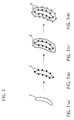
- Spore 1 of a microorganism used generally has a bulk specific gravity of 1 or higher and does not float in water by itself (Fig.1a).
- a binder e.g., carboxymethyl cellulose
- a mineral carrier e.g., diatomaceous earth
- particles 2 of the mineral carrier allow to adhere to the periphery of spore 1 (Fig.1b).
- an oil specifically gravity: about 0.7
- a W/O type surfactant is added to the suspension of spore 1 and mixed with each other to form oil layer 3 surrounding spore 1 (Fig.1c).
- an microbial pesticide comprising spores of a microorganism capable of floating in water can be prepared.
- the microbial pesticide of the present invention can be used as a herbicide against weeds in a paddy filed, particularly against Echinochloa crus-galli .
- the above-mentioned formulation can also be used as an insecticide, a disease control agent for plants or the like depending on the nature and the properties of the microorganism employed.
- the microbial pesticide of the invention When the microbial pesticide of the invention is used as a herbicide, the microbial pesticide may be applied to weeds in any growth stage. However, because of the floating property on water of the microbial pesticide, it is especially effective to apply the microbial pesticide to weeds in early growth stage under conditions where their plant bodies are submarged in a paddy field. For example, for controlling Echinochloa crus-galli in a paddy field which is flooded to 3-10 cm in water depth, it is effective to apply the microbial pesticide to the weed in 2-leaf stage or earlier.
- the microbial pesticide of the present invention containing any of the above-mentioned microorganisms has no influence on the growth of a rice plant which is a useful crop in a paddy field.
- the microbial pesticide of the invention When the microbial pesticide of the invention is used for controlling weeds in a paddy field, the microbial pesticide may be applied in any manner as long as the weeds are effectively controlled. However, it is preferably for the microbial pesticide to be applied to a paddy filed under flooding. In this case, the season for application of the microbial pesticide to a paddy field is not particularly limited. However, since the microbial pesticide of the invention is particularly effective against seedlings in submarged, it is preferably for the microbial pesticide to be applied to a paddy field after paddling, preferably soon after transplanting of rice seedlings.
- the microbial pesticide of the invention when used for controlling weeds in a field, its dosage may vary depending on the species of the microorganisms employed. For example, when Exserohilum monoceras is employed, it is preferred for the microbial pesticide to be applied to a plowed field in a dose amount of 1x10 6 to 1x10 15 conidia/10-are, preferably 1x10 7 to 1x10 12 conidia/10-are in terms of the population of conidia of the microorganism; whereas when Culvularia sp.
- Hostaserin WOL (a product by Hoechst; 9.7%), light white oil (a product by Sigma; 48.4%), lanolin (a product by Wako Pure Chemical Industries, Ltd.; 24.2%), paraffin wax (a product by Wako Pure Chemical Industries, Ltd.; 9.7%), a glycerol fatty acid ester (a product by Wako Pure Chemical Industries, Ltd.; 4%) and glycerol (a product by Wako Pure Chemical Industries, Ltd.; 4%) were mixed at 80°C to obtain a homogeneous oil mixture.
- this oil mixture (40g) was blended with the above-prepared conidium suspension and further blended with white carbon (Carplex 80, a product by Shionogi & Co., Ltd.; 48g).
- the resultant mixture was dried in air, and the dried mass was ground to obtain fine granules having a particle size distribution of 105-300 ⁇ m.
- Hostaserin WOL (a product by Hoechst; 10.0%), castor oil (a product by Wako Pure Chemical Industries, Ltd.; 62.9%), lanolin (a product by Wako Pure Chemical Industries, Ltd.; 12.7%), paraffin wax (a product by Wako Pure Chemical Industries, Ltd.; 6.4%), a glycerol fatty acid ester (a product by Wako Pure Chemical Industries, Ltd.; 4%) and glycerol (a product by Wako Pure Chemical Industries, Ltd.; 4%) were mixed at 80°C to obtain a homogeneous oil mixture.
- this oil mixture (40g) was blended with the above-prepared conidium suspension and further blended with white carbon (Carplex 80, a product by Shionogi & Co., Ltd.; 48g).
- the resultant mixture was dried in air, and the dried mass was ground to obtain fine granules having a particle size distribution of 105-300 ⁇ m.
- Hostaserin WOL (a product by Hoechst; 9.7%), jojoba oil (a product by Sigma; 48.4%), lanolin (a product by Wako Pure Chemical Industries, Ltd.; 24.2%), paraffin wax (a product by Wako Pure Chemical Industries, Ltd.; 9.7%), a glycerol fatty acid ester (a product by Wako Pure Chemical Industries, Ltd.; 4%) and glycerol (a product by Wako Pure Chemical Industries, Ltd.; 4%) were mixed at 80°C to obtain a homogeneous oil mixture.
- this oil mixture (40g) was blended with the above-prepared conidium suspension and further blended with white carbon (Carplex 80, a product by Shionogi & Co., Ltd.; 48g).
- the resultant mixture was dried in air, and the dried mass was ground to obtain fine granules having a particle size distribution of 105-300 ⁇ m.
- Liponox NC-10 (a product by Lion corporation; 10%), castor oil (a product by Wako Pure Chemical Industries, Ltd.; 65%), lanolin (a product by Wako Pure Chemical Industries, Ltd.; 15%), paraffin wax (a product by Wako Pure Chemical Industries, Ltd.; 8%), aluminum stearate (a product by Wako Pure Chemical Industries, Ltd.; 0.7%) and magnesium stearate (a product by Wako Pure Chemical Industries, Ltd.; 1.3%) were mixed at 80°C to obtain a homogeneous oil mixture. After cooling to room temperature, this oil mixture (40g) was blended with the above-prepared conidium suspension and further blended with white carbon (Carplex 80, a product by Shionogi & Co., Ltd.; 48g). The resultant mixture was dried in air, and the dried mass was ground to obtain fine granules having a particle size distribution of 105-300 ⁇ m.
- Kadenax GS90 (a product by Lion corporation; 10%), castor oil (a product by Wako Pure Chemical Industries, Ltd.; 65%), lanolin (a product by Wako Pure Chemical Industries, Ltd.; 1%), paraffin wax (a product by Wako Pure Chemical Industries, Ltd.; 8%), aluminum stearate (a product by Wako Pure Chemical Industries, Ltd.; 0.7%) and magnesium stearate (a product by Wako Pure Chemical Industries, Ltd.; 1.3%) were mixed at 80°C to obtain a homogeneous oil mixture.
- this oil mixture (40g) was blended with the above-prepared conidium suspension and further blended with white carbon (Carplex 80, a product by Shionogi & Co., Ltd.; 48g).
- the resultant mixture was dried in air, and the dried mass was ground to obtain fine granules having a particle size distribution of 105-300 ⁇ m.
- Castor oil (a product by Wako Pure Chemical Industries, Ltd.; 75%), lanolin (a product by Wako Pure Chemical Industries, Ltd.; 9.3%), paraffin wax (a product by Wako Pure Chemical Industries, Ltd.; 4.3%), a glycerol fatty acid ester (a product by Wako Pure Chemical Industries, Ltd.; 9.3%), aluminum stearate (a product by Wako Pure Chemical Industries, Ltd.; 0.7%) and magnesium stearate (a product by Wako Pure Chemical Industries, Ltd.; 1.4%) were mixed at 80°C to obtain a homogeneous oil mixture.
- this oil mixture (40g) was blended with the above-prepared conidium suspension and further blended with white carbon (Carplex 80, a product by Shionogi & Co., Ltd.; 48g).
- the resultant mixture was dried in air, and the dried mass was ground to obtain fine granules having a particle size distribution of 105-300 ⁇ m.
- Castor oil (a product by Wako Pure Chemical Industries, Ltd.; 71%), lanolin (a product by Wako Pure Chemical Industries, Ltd.; 14.3%), paraffin wax (a product by Wako Pure Chemical Industries, Ltd.; 7.7%), glycerol tristearate (a product by Wako Pure Chemical Industries, Ltd.; 1.4%), sorbitan monostearate (a product by Wako Pure Chemical Industries, Ltd.; 2.8%) and POE (20) sorbitan monostearate (a product by Wako Pure Chemical Industries, Ltd.; 2.8%) were mixed at 80°C to obtain a homogeneous oil mixture.
- this oil mixture (40g) was blended with the above-prepared conidium suspension and further blended with white carbon (Carplex 80, a product by Shionogi & Co., Ltd.; 48g).
- the resultant mixture was dried in air, and the dried mass was ground to obtain fine granules having a particle size distribution of 105-300 ⁇ m.
- Kadenax SO-80 (a product by Lion Corporation; 10.3%), rapeseed oil (51.5%), lanolin (a product by Wako Pure Chemical Industries, Ltd.; 19.3%), paraffin wax (a product by Wako Pure Chemical Industries, Ltd.; 10.3%), a glycerol fatty acid ester (a product by Wako Pure Chemical Industries, Ltd.; 4.3%) and glycerol (a product by Wako Pure Chemical Industries, Ltd.; 4.3%) were mixed at 80°C to obtain a homogeneous oil mixture. After cooling to room temperature, this oil mixture (40g) was blended with the above-prepared conidium suspension and further blended with white carbon (Carplex 80, a product by Shionogi & Co., Ltd.; 48g). The resultant mixture was dried in air, and the dried mass was ground to obtain fine granules having a particle size distribution of 105-300 ⁇ m.
- Hostaserin DGO (a product by Hoechst; 10%), castor oil (a product by Wako Pure Chemical Industries, Ltd.; 50%), DIDP (12.6%), lanolin (a product by Wako Pure Chemical Industries, Ltd.; 12.6%), paraffin wax (a product by Wako Pure Chemical Industries, Ltd.; 6.4%), a glycerol fatty acid ester (a product by Wako Pure Chemical Industries, Ltd.; 4.2%) and glycerol (a product by Wako Pure Chemical Industries, Ltd.; 4.2%) were mixed at 80°C to obtain a homogeneous oil mixture.
- this oil mixture (40g) was blended with the above-prepared conidium suspension and further blended with white carbon (Carplex 80, a product by Shionogi & Co., Ltd.; 48g).
- the resultant mixture was dried in air, and the dried mass was ground to obtain fine granules having a particle size distribution of 105-300 ⁇ m.
- this oil mixture (0.75g) was blended with the above-prepared conidium suspension and further blended with white carbon (Carplex 80, a product by Shionogi & Co., Ltd.; 1.5g).
- white carbon Carplex 80, a product by Shionogi & Co., Ltd.; 1.5g.
- the resultant mixture was dried in air, and the dried mass was ground to obtain fine granules having a particle size distribution of 105-300 ⁇ m.
- Hostaserin WOL (a product by Hoechst; 9.7%), light white oil (a product by Sigma; 48.4%), lanolin (a product by Wako Pure Chemical Industries, Ltd.; 24.2%), paraffin wax (a product by Wako Pure Chemical Industries, Ltd.; 9.7%), a glycerol fatty acid ester (a product by Wako Pure Chemical Industries, Ltd.; 4%) and glycerol (a product by Wako Pure Chemical Industries, Ltd.; 4%) were mixed at 80°C to obtain a homogeneous oil mixture.
- this oil mixture (0.75g) was blended with the above-prepared conidium suspension and further blended with white carbon (Carplex 80, a product by Shionogi & Co., Ltd.; 1.5g).
- white carbon Carplex 80, a product by Shionogi & Co., Ltd.; 1.5g.
- the resultant mixture was dried in air, and the dried mass was ground to obtain fine granules having a particle size distribution of 105-300 ⁇ m.
- Hostaserin WOL (a product by Hoechst; 9.7%), light white oil (a product by Sigma; 48.4%), lanolin (a product by Wako Pure Chemical Industries, Ltd.; 24.2%), paraffin wax (a product by Wako Pure Chemical Industries, Ltd.; 9.7%), a glycerol fatty acid ester (a product by Wako Pure Chemical Industries, Ltd.; 4%) and glycerol (a product by Wako Pure Chemical Industries, Ltd.; 4%) were mixed at 80°C to obtain a homogeneous oil mixture.
- this oil mixture (1.0g) was blended with the above-prepared conidium suspension and further blended with white carbon (Carplex 80, a product by Shionogi & Co., Ltd.; 1.5g).
- the resultant mixture was dried in air, and the dried mass was ground to obtain fine granules having a particle size distribution of 105-300 ⁇ m.
- Hostaserin WOL (a product by Hoechst; 9.7%), light white oil (a product by Sigma; 48.4%), lanolin (Wako Pure Chemical Industries, Ltd.; 24.2%), paraffin wax (a product by Wako Pure Chemical Industries, Ltd.; 9.7%), a glycerol fatty acid ester (a product by Wako Pure Chemical Industries, Ltd.; 4%) and glycerol (a product by Wako Pure Chemical Industries, Ltd.; 4%) were mixed at 80°C to obtain a homogeneous oil mixture. After cooling to room temperature, this oil mixture (1.25g) was blended with the above-prepared conidium suspension and further blended with white carbon (Carplex 80, a product by Shionogi & Co., Ltd.; 1.5g). The resultant mixture was dried in air, and the dried mass was ground to obtain fine granules having a particle size distribution of 105-300 ⁇ m.
- Hostaserin WOL (a product by Hoechst; 9.7%), light white oil (a product by Sigma; 48.4%), lanolin (a product by Wako Pure Chemical Industries, Ltd.; 24.2%), paraffin wax (a product by Wako Pure Chemical Industries, Ltd.; 9.7%), a glycerol fatty acid ester (a product by Wako Pure Chemical Industries, Ltd.; 4%) and glycerol (a product by Wako Pure Chemical Industries, Ltd.; 4%) were mixed at 80°C to obtain a homogeneous oil mixture.
- this oil mixture (1.5g) was blended with the above-prepared conidium suspension and further blended with white carbon (Carplex 80, a product by Shionogi & Co., Ltd.; 3.0g).
- the resultant mixture was dried in air, and the dried mass was ground to obtain fine granules having a particle size distribution of 105-300 ⁇ m.
- Hostaserin WOL (a product by Hoechst; 9.7%), light white oil (a product by Sigma; 48.4%), lanolin (a product by Wako Pure Chemical Industries, Ltd.; 24.2%), paraffin wax (a product by Wako Pure Chemical Industries, Ltd.; 9.7%), a glycerol fatty acid ester (a product by Wako Pure Chemical Industries, Ltd.; 4%) and glycerol (a product by Wako Pure Chemical Industries, Ltd.; 4%) were mixed at 80°C to obtain a homogeneous oil mixture.
- this oil mixture (2.0g) was blended with the above-prepared conidium suspension and further blended with white carbon (Carplex 80, a product by Shionogi & Co., Ltd.; 3.0g).
- the resultant mixture was dried in air, and the dried mass was ground to obtain fine granules having a particle size distribution of 105-300 ⁇ m.
- Hostaserin WOL (a product by Hoechst; 9.7%), light white oil (a product by Sigma; 48.4%), lanolin (a product by Wako Pure Chemical Industries, Ltd.; 24.2%), paraffin wax (a product by Wako Pure Chemical Industries, Ltd.; 9.7%), a glycerol fatty acid ester (a product by Wako Pure Chemical Industries, Ltd.; 4%) and glycerol (a product by Wako Pure Chemical Industries, Ltd.; 4%) were mixed at 80°C to obtain a homogeneous oil mixture.
- this oil mixture (2.5g) was blended with the above-prepared conidium suspension and further blended with white carbon (Carplex 80, a product by Shionogi & Co., Ltd.; 3.0g).
- the resultant mixture was dried in air, and the dried mass was ground to obtain fine granules having a particle size distribution of 105-300 ⁇ m.
- Hostaserin WOL (a product by Hoechst; 9.7%), light white oil (a product by Sigma; 48.4%), lanolin (a product by Wako Pure Chemical Industries, Ltd.; 24.2%), paraffin wax (a product by Wako Pure Chemical Industries, Ltd.; 9.7%), a glycerol fatty acid ester (a product by Wako Pure Chemical Industries, Ltd.; 4%) and glycerol (a product by Wako Pure Chemical Industries, Ltd.; 4%) were mixed at 80°C to obtain a homogeneous oil mixture.
- this oil mixture (4.0g) was blended with the above-prepared conidium suspension and further blended with white carbon (Carplex 80, a product by Shionogi & Co., Ltd.; 4.4g).
- the resultant mixture was dried in air, and the dried mass was ground to obtain fine granules having a particle size distribution of 105-300 ⁇ m.
- Hostaserin WOL (a product by Hoechst; 9.7%), light white oil (a product by Sigma; 48.4%), lanolin (a product by Wako Pure Chemical Industries, Ltd.; 24.2%), paraffin wax (a product by Wako Pure Chemical Industries, Ltd.; 9.7%), a glycerol fatty acid ester (a product by Wako Pure Chemical Industries, Ltd.; 4%) and glycerol (a product by Wako Pure Chemical Industries, Ltd.; 4%) were mixed at 80°C to obtain a homogeneous oil mixture.
- this oil mixture (40g) was blended with the above-prepared conidium suspension and further blended with white carbon (Carplex 80, a product by Shionogi & Co., Ltd.; 48g).
- the resultant mixture was dried in air, and the dried mass was ground to obtain seven kinds of fine granules each having a particle size distribution of >1700, 1700-710, 710-300, 300-212, 212-106, 106-63 and 63> ⁇ m, respectively.
- Hostaserin WOL (a product by Hoechst; 9.7%), light white oil (a product by Sigma; 48.4%), lanolin (a product by Wako Pure Chemical Industries, Ltd.; 24.2%), paraffin wax (a product by Wako Pure Chemical Industries, Ltd.; 9.7%), a glycerol fatty acid ester (a product by Wako Pure Chemical Industries, Ltd.; 4%) and glycerol (a product by Wako Pure Chemical Industries, Ltd.; 4%) were mixed at 80°C to obtain a homogeneous oil mixture.
- this oil mixture (8g) was blended with the above-prepared conidium suspension and further blended with white carbon (Carplex 80, a product by Shionogi & Co., Ltd.; 9.6g).
- the resultant mixture was dried in air, and the dried mass was ground to obtain fine granules having a particle size distribution of 105-300 ⁇ m.
- Hostaserin WOL (a product by Hoechst; 9.7%), light white oil (a product by Sigma; 48.4%), lanolin (a product by Wako Pure Chemical Industries, Ltd.; 24.2%), paraffin wax (a product by Wako Pure Chemical Industries, Ltd.; 9.7%), a glycerol fatty acid ester (a product by Wako Pure Chemical Industries, Ltd.; 4%) and glycerol (a product by Wako Pure Chemical Industries, Ltd.; 4%) were mixed at 80°C to obtain a homogeneous oil mixture.
- this oil mixture (8g) was blended with the above-prepared conidium suspension and further blended with white carbon (Carplex 80, a product by Shionogi & Co., Ltd.; 9.6g).
- the resultant mixture was dried in air, and the dried mass was ground to obtain fine granules having a particle size distribution of 105-300 ⁇ m.
- Hostaserin WOL (a product by Hoechst; 9.7%), light white oil (a product by Sigma; 48.4%), lanolin (a product by Wako Pure Chemical Industries, Ltd.; 24.2%), paraffin wax (a product by Wako Pure Chemical Industries, Ltd.; 9.7%), a glycerol fatty acid ester (a product by Wako Pure Chemical Industries, Ltd.; 4%) and glycerol (a product by Wako Pure Chemical Industries, Ltd.; 4%) were mixed at 80°C to obtain a homogeneous oil mixture.
- this oil mixture (8g) was blended with the above-prepared conidium suspension and further blended with white carbon (Carplex 80, a product by Shionogi & Co., Ltd.; 9.6g).
- the resultant mixture was dried in air, and the dried mass was ground to obtain fine granules having a particle size distribution of 105-300 ⁇ m.
- Hostaserin WOL (a product by Hoechst; 9.7%), light white oil (a product by Sigma; 48.4%), lanolin (a product by Wako Pure Chemical Industries, Ltd.; 24.2%), paraffin wax (a product by Wako Pure Chemical Industries, Ltd.; 9.7%), a glycerol fatty acid ester (a product by Wako Pure Chemical Industries, Ltd.; 4%) and glycerol (a product by Wako Pure Chemical Industries, Ltd.; 4%) were mixed at 80°C to obtain a homogeneous oil mixture.
- this oil mixture (74.4g) was blended with the above-prepared conidium suspension and further blended with white carbon (a product by Carplex 80, Shionogi & Co., Ltd.; 154g).
- white carbon a product by Carplex 80, Shionogi & Co., Ltd.; 154g.
- the resultant mixture was dried in air, and the dried mass was ground to obtain fine granules (470g) having a particle size distribution of 105-300 ⁇ m.
- Emasol O-15R (a product by Kao Corporation; 9.7%), light white oil (Sigma; 48.4%), lanolin (a product by Wako Pure Chemical Industries, Ltd.; 24.2%), paraffin wax (a product by Wako Pure Chemical Industries, Ltd.; 9.7%), a glycerol fatty acid ester (a product by Wako Pure Chemical Industries, Ltd.; 4%) and glycerol (a product by Wako Pure Chemical Industries, Ltd.; 4%) were mixed at 80°C to obtain a homogeneous oil mixture.
- this oil mixture (0.75g) was blended with the above-prepared conidium suspension and further blended with white carbon (Carplex 80, a product by Shionogi & Co., Ltd.; 1.5g).
- white carbon Carplex 80, a product by Shionogi & Co., Ltd.; 1.5g.
- the resultant mixture was dried in air, and the dried mass was ground to obtain fine granules having a particle size distribution of 105-300 ⁇ m.
- Hostaserin WOL (a product by Hoechst; 9.7%), light white oil (a product by Sigma; 48.4%), lanolin (a product by Wako Pure Chemical Industries, Ltd.; 24.2%), paraffin wax (a product by Wako Pure Chemical Industries, Ltd.; 9.7%), a glycerol fatty acid ester (a product by Wako Pure Chemical Industries, Ltd.; 4%) and glycerol (a product by Wako Pure Chemical Industries, Ltd.; 4%) were mixed at 80°C to obtain a homogeneous oil mixture.
- this oil mixture (74.4g) was blended with the above-prepared conidium suspension and further blended with white carbon (Carplex 80, a product by Shionogi & Co., Ltd.; 154g).
- the resultant mixture was dried in air, and the dried mass was ground to obtain fine granules having a particle size distribution of 105-300 ⁇ m.
- Hostaserin WOL (a product by Hoechst; 9.7%), light white oil (a product by Sigma; 48.4%), lanolin (a product by Wako Pure Chemical Industries, Ltd.; 24.2%), paraffin wax (a product by Wako Pure Chemical Industries, Ltd.; 9.7%), a glycerol fatty acid ester (a product by Wako Pure Chemical Industries, Ltd.; 4%) and glycerol (a product by Wako Pure Chemical Industries, Ltd.; 4%) were mixed at 80°C to obtain a homogeneous oil mixture.
- this oil mixture (74.4g) was blended with the above-prepared conidium suspension and further blended with white carbon (Carplex 80, a product by Shionogi & Co., Ltd.; 154g).
- the resultant mixture was dried in air, and the dried mass was ground to obtain fine granules having a particle size distribution of 105-300 ⁇ m.
- Liponox NC-10 (a product by Lion Corporation; 10%), castor oil (a product by Wako Pure Chemical Industries, Ltd.; 65%), lanolin (a product by Wako Pure Chemical Industries, Ltd.; 15%), paraffin wax (a product by Wako Pure Chemical Industries, Ltd.;8%), aluminum stearate ( a product by Wako Pure Chemical Industries, Ltd.; 0.7%) and magnesium stearate (a product by Wako Pure Chemical Industries, Ltd.; 1.3%) were mixed at 80°C to obtain a homogeneous oil mixture. After cooling to room temperature, this oil mixture (74.4g) was blended with the above-prepared conidium suspension and further blended with white carbon (Carplex 80, a product by Shionogi & Co., Ltd.; 154g). The resultant mixture was dried in air, and the dried mass was ground to obtain fine granules having a particle size distribution of 105-300 ⁇ m.
- Emasol O-15R (a product by Kao Corporation; 9.7%), light white oil (a product by Sigma; 48.4%), lanolin (a product by Wako Pure Chemical Industries, Ltd.; 24.2%), paraffin wax (a product by Wako Pure Chemical Industries, Ltd.; 9.7%), a glycerol fatty acid ester (a product by Wako Pure Chemical Industries, Ltd.; 4%) and glycerol (a product by Wako Pure Chemical Industries, Ltd.; 4%) were mixed at 80°C to obtain a homogeneous oil mixture.
- this oil mixture (74.4g) was blended with the above-prepared conidium suspension and further blended with white carbon (Carplex 80, a product by Shionogi & Co., Ltd.; 154g).
- the resultant mixture was dried in air, and the dried mass was ground to obtain fine granules having a particle size distribution of 105-300 ⁇ m.
- Leodol SP-010 (a product by Kao Corporation; 9.7%), light white oil (a product by Sigma; 48.4%), lanolin (a product by Wako Pure Chemical Industries, Ltd.; 24.2%), paraffin wax (a product by Wako Pure Chemical Industries, Ltd.; 9.7%), a glycerol fatty acid ester (a product by Wako Pure Chemical Industries, Ltd.; 4%) and glycerol (a product by Wako Pure Chemical Industries, Ltd.; 4%) were mixed at 80°C to obtain a homogeneous oil mixture.
- this oil mixture (74.4g) was blended with the above-prepared conidium suspension and further blended with white carbon (Carplex 80, a product by Shionogi & Co., Ltd.; 154g).
- the resultant mixture was dried in air, and the dried mass was ground to obtain fine granules having a particle size distribution of 105-300 ⁇ m.
- Emasol O-10 (a product by Kao Corporation; 9.7%), light white oil (a product by Sigma; 48.4%), lanolin (a product by Wako Pure Chemical Industries, Ltd.; 24.2%), paraffin wax (a product by Wako Pure Chemical Industries, Ltd.; 9.7%), a glycerol fatty acid ester (a product by Wako Pure Chemical Industries, Ltd.; 4%) and glycerol (a product by Wako Pure Chemical Industries, Ltd.; 4%) were mixed at 80°C to obtain a homogeneous oil mixture.
- this oil mixture (74.4g) was blended with the above-prepared conidium suspension and further blended with white carbon (Carplex 80, a product by Shionogi & Co., Ltd.; 154g).
- the resultant mixture was dried in air, and the dried mass was ground to obtain fine granules having a particle size distribution of 105-300 ⁇ m.
- Hostaserin WOL (a product by Hoechst; 9.7%), light white oil (a product by Sigma; 48.4%), lanolin (a product by Wako Pure Chemical Industries, Ltd.; 24.2%), paraffin wax (a product by Wako Pure Chemical Industries, Ltd.; 9.7%), a glycerol fatty acid ester (a product by Wako Pure Chemical Industries, Ltd.; 4%) and glycerol (a product by Wako Pure Chemical Industries, Ltd.; 4%) were mixed at 80°C to obtain a homogeneous oil mixture.
- this oil mixture (74.4g) was blended with the above-prepared conidium suspension and further blended with white carbon (Carplex 80, a product by Shionogi & Co., Ltd.; 154g).
- the resultant mixture was dried in air, and the dried mass was ground to obtain fine granules having a particle size distribution of 105-300 ⁇ m.
- Kadenax SO-80 (a product by Lion Corporation; 10.3%), castor oil (51.1%), lanolin (a product by Wako Pure Chemical Industries, Ltd.; 19.3%), paraffin wax (a product by Wako Pure Chemical Industries, Ltd.; 10.3%), a glycerol fatty acid ester (a product by Wako Pure Chemical Industries, Ltd.; 4.3%) and glycerol (a product by Wako Pure Chemical Industries, Ltd.; 4.3%) were mixed at 80°C to obtain a homogeneous oil mixture. After cooling to room temperature, this oil mixture (40g) was blended with the above-prepared conidium suspension and further blended with white carbon (Carplex 80, a product by Shionogi & Co., Ltd.; 48g). The resultant mixture was dried in air, and the dried mass was ground to obtain fine granules having a particle size distribution of 105-300 ⁇ m.
- Kadenax SO-80 (a product by Lion Corporation; 10.3%), castor oil (51.5%), lanolin (a product by Wako Pure Chemical Industries, Ltd.; 19.3%), paraffin wax (a product by Wako Pure Chemical Industries, Ltd.; 10.3%), a glycerol fatty acid ester ( a product by Wako Pure Chemical Industries, Ltd.; 4.3%) and glycerol (a product by Wako Pure Chemical Industries, Ltd.; 4.3%) were mixed at 80°C to obtain a homogeneous oil mixture. After cooling to room temperature, this oil mixture (40g) was blended with the above-prepared conidium suspension and further blended with white carbon (Carplex 80, a product by Shionogi & Co., Ltd.; 48g). The resultant mixture was dried in air, and the dried mass was ground to obtain fine granules having a particle size distribution of 105-300 ⁇ m.
- this oil mixture (74.4g) was blended with the above-prepared conidium suspension and further blended with white carbon (Carplex 80, a product by Shionogi & Co., Ltd.; 154g).
- the resultant mixture was dried in air, and the dried mass was ground to obtain fine granules (470g) having a particle size distribution of 105-300 ⁇ m.
- Hostaserin WOL (a product by Hoechst; 9.7%), light white oil (a product by Sigma; 48.4%), lanolin (a product by Wako Pure Chemical Industries, Ltd.; 24.2%), paraffin wax (a product by Wako Pure Chemical Industries, Ltd.; 9.7%), a glycerol fatty acid ester (a product by Wako Pure Chemical Industries, Ltd.; 4%) and glycerol (a product by Wako Pure Chemical Industries, Ltd.; 4%) were mixed at 80°C to obtain a homogeneous oil mixture. After cooling to room temperature, this oil mixture (74.4g) was blended with the above-prepared conidium suspension and further blended with white carbon (Carplex 80, a product by Shionogi & Co., Ltd. 154g). The resultant mixture was dried in air, and the dried mass was ground to obtain fine granules having a particle size distribution of 105-300 ⁇ m.
- Zeolite a product by Wako Pure chemical Industries, Ltd.; 96%), sodium lignin sulfonate (SunEkis, a product by Nippon Paper Industries Co., Ltd.; 2%) and Neopelex (a product by Kao Corporation; 2%) were thoroughly mixed to obtain a powder mix (total 100%).
- the powder mix (13.6%) was mixed with a suspension of conidia of Exserohilum monoceras JTB-808 (10 9 conidia; 46.4%) in water (40 mL; 40%).
- the resultant mixture was dried in air, and the dried mass was ground to obtain granules having a particle size distribution of 0.3-3 mm.
- Neopelex (a product by Kao Corporation; 2% [regarding the total amount of an inactive ingredient as 100%]), Triton X-100 (a product by Wako Pure chemical Industries, Ltd.; 2%), white carbon (Carplex 80, a product by Shionogi & Co., Ltd.; 5%) and a suspension of conidia of Exserohilum monoceras JTB-808 (10 9 conidia) in 80 mL of water were mixed. The resultant mixture was dried in air, and then blended with diatomaceous earth (91%). The resultant was fully ground to obtain wettable powder.
- Exserohilum monoceras JTB-808 (10 8 conidia) was suspended in a mix solution (1 mL) comprising sodium alginate (a product by Wako Pure Chemical Industries, Ltd.; 0.7%), kaolin (a product by Wako Pure Chemical Industries, Ltd.; 5%) and glycerol (a product by Wako Pure Chemical Industries, Ltd.; 15%) in water (79.3%).
- the resultant suspension was dripped into a 0.2M solution of calcium acetate (a product by Wako Pure Chemical Industries, Ltd.) to prepare capsular products.
- the capsular products were cut into individual capsules, filtered and then dried in air to obtain capsule formulation.
- the formulations prepared in by the above methods and a control solution were stored at 4°C, and sampled at certain time intervals. About 0.1g of each of the formulations was suspended into a 0.02% Tween-20 solution and inoculated on a pre-sterilized potato dextrose agar medium (a product by DIFCO). After cultivating in the dark at 25°C for 15 hours, the culture medium was subjected to determination of germination percentage of spores. The germination percentage was determined by counting the population of germ spores in a randomly selected 100 spores under microscopic observation. This counting procedure was repeated five times and the numbers obtained were averaged to evaluate the long-term storage property of each formulation. The results are shown in Table 1.
- Echinochloa crus-galli seedlings were grown approximately to the 1-leaf stage in a pot of 1/10000-are containing soils from a paddy field, and 20 of the seedlings which grew in a same level were selected and left in the pot.
- the pot was flooded to keep the seedlings submarged.
- the pot was treated with each the formulations prepared in Formulation Examples 1-9, 23-31 and Comparative Formulation Examples 1-3.
- As control test solutions each of a Triton 100-X solution with no conidium (no treatment) and a conidium suspension in a Triton X-100 solution were used to treat the pot.
- the treatment conditions are as follows.
- Triton X-100 One mL of a 0.02% aqueous solution of Triton X-100 was applied to the pot dropwise (equivalent to 10 L/are).
- Echinochloa crus-galli seedlings were growin approximately to the 1-leaf stage in a pot of 1/10000-are containing soils from a paddy field, and 20 of the seedlings which grew in a same level were selected and left in the pot.
- the pot was flooded to keep the seedlings submarged.
- the pot was treated with each the formulations prepared in Formulation Example 18.
- As control test solutions each of a Triton 100-X solution with no conidium (no treatment) and a conidium suspension in a Triton X-100 solution were used to treat the pot.
- the treatment conditions are as follows.
- Triton X-100 One mL of a 0.02% aqueous solution of Triton X-100 was applied to the pot dropwise (equivalent to 10 L/are).
- the seedlings in the pot were allowed to grow for four weeks and observed their growth in the pot.
- the herbicidal activity was evaluated as follows: when there was no difference in growth of the seedling between a treated pot and the untreated pot, the herbicidal activity in the treated pot was judged as "0%", whereas when all of the seedlings in a treated pot was dead, the herbicidal activity was judged as "100%”. The results are shown in Table 4.
- Echinochloa crus-galli seedlings were grown approximately to the 1-leaf stage in a pot of 1/10000-are containing soils from a paddy field, and 20 of the seedlings which grew in a same level were selected and left in the pot.
- the pot was flooded to keep the seedlings submarged.
- the pot was treated with each of the formulations prepared in Formulation Examples 19-21.
- As control test solutions each of a Triton 100-X solution with no conidium (no treatment) and a conidium suspension in a Triton X-100 solution were used to treat the pot.
- the treatment conditions are as follows.
- Triton X-100 One mL of a 0.02% aqueous solution of Triton X-100 was applied to the pot dropwise (equivalent to 10 L/are).
- Echinochloa crus-galli seedlings were grown approximately to the 1-leaf stage in a pot of 1/10000-are containing soils from a paddy field, and 20 of the seedlings which grew in a same level were selected and left in the pot.
- the pot was flooded to keep the seedlings submarged.
- the pot was treated with each of the formulations prepared in Formulation Examples 10-17.
- As control test solutions each of a Triton 100-X solution with no conidium (no treatment) and a conidium suspension in a Triton X-100 solution were used to treat the pot.
- the treatment conditions are as follows.
- Triton X-100 One mL of a 0.02% aqueous solution of Triton X-100 was applied to the pot dropwise (equivalent to 10 L/are).
- rice plant, wheat, eggplant, soybean, cabbage, cucumber and Echinochloa crus-galli were used as the plants to be tested. Seedlings of each of these plants were allowed to grow to the 2-5 leaf stage and provided as test plants.
- a microbial pesticide of the invention was prepared according to the procedure as mentioned in Formulation Example 1 using conidia of Exserohilum monoceras JTB-808 strain which had been cultured in oatmeal sucrose agar medium.
- the resultant microbial pesticide was suspended in a 0.02% solution of Tween-20 in a concentration of 10 6 conidia/mL and the resultant suspension was inoculated to the seedlings of each of the plants with an air spray.
- the seedlings were allowed to stand in a moisture chamber which had been maintained at 25°C and then transferred to a green house which had also been maintained at 25°C. After three weeks, the rate of diseased seedlings and the controlling rate were determined with respect to each of the plants.
- the microbial pesticide of the present invention showed no herbicidal effect against rice plant, wheat, eggplant, soybean, cabbage and cucumber.
- a field was partitioned into 1/100-are sections using corrugated plastic sheeting, and rice plant was transplanted into each of the section and germinated Echinochloa crus-galli seedlings was also seeded thereinto.
- the section was flooded to keep the Echinochloa crus-galli underwater of 7cm in water depth, and then treated with the formulation prepared in Formulation Example 22 in various application amount.
- each of a Triton 100-X solution with no conidium (no treatment) and a conidium suspension in a Triton X-100 solution were used to treat the pot.
- the treatment conditions are as follows.
- Triton X-100 One hundred mL of a 0.02% aqueous solution of Triton X-100 was applied to the section dropwise (equivalent to 10 L/are).
- the formulation prepared in Formulation Example 22 was applied to the field in such an amount that the conidium concentration in each section became 3x10 7 conidia or 1x10 8 conidia per section (equivalent to 3x10 9 conidia/are and 1x10 10 conidia/are), respectively.
- the seedlings in the section were allowed to grow for four weeks, observed their growth, and counted the population of the seedlings remaining in the section to determine the controlling rate. Further, comprehensive controlling rate was evaluated as follows: when there was no difference in growth of the seedlings between a treated section and the untreated section, the conprehensive controlling rate in the test section was judged as "0%", whereas when all of the seedlings in a treated section was dead, the comprehensive controlling rate was judged as "100%”. The results are shown in Table 8.
- the microbial pesticides of the invention exhibited excellent controlling effect against Echinochloa crus-galli but exhibited no effect against rice plant.
- novel water-floating microbial pesticides having easy handling property and excellent storage property can be provided.
Landscapes
- Life Sciences & Earth Sciences (AREA)
- General Health & Medical Sciences (AREA)
- Health & Medical Sciences (AREA)
- Zoology (AREA)
- Engineering & Computer Science (AREA)
- Pest Control & Pesticides (AREA)
- Agronomy & Crop Science (AREA)
- Plant Pathology (AREA)
- Dentistry (AREA)
- Wood Science & Technology (AREA)
- Environmental Sciences (AREA)
- Microbiology (AREA)
- Biotechnology (AREA)
- Virology (AREA)
- Toxicology (AREA)
- Mycology (AREA)
- Agricultural Chemicals And Associated Chemicals (AREA)
Abstract
Disclosed is a water-floating microbial pesticide comprising a
microorganism, a water-in-oil type surfactant, oil, and powder
having a low bulk specific gravity. Also disclosed are a method
for producing the water-floating microbial pesticide and a method
for using the water-floating microbial pesticide.
Description
The present invention relates to a water-floating microbial
pesticide, a method for producing the microbial pesticide and a
method for using the microbial pesticide.
For controlling weeds, chemical herbicides have been mainly
used. However, serious problems including environmental pollution
have been arisen in last several years from the excessive use of
chemical pesticides and, therefore, development of weed control
agents employing no chemical substances and methods for utilizing
such weed control agents has been demanded. In particular,
microbial pesticides employing pathogenic microorganisms against
weeds has been strongly expected. Up to now, as such microbial
pesticides, some commercially available ones have been registered,
including "DeVine" which is a herbicide against Stranglervine
(Asclepiadaceae) developed in the United States, "Collego" which
is a herbicide against Northern jointvetch (Leguminosae) developed
in the United States and "BioMal" which is a herbicide against
Round-leaved mallow (Malvacceae) developed in Canada.
"Collego" is usually sold as a set composed of powder
containing spores as effective ingredient and a solution
containing sucrose for suspending the powder therein, and these
two components must be mixed with each other and diluted with
water before use, which requires a great deal of labor. In
addition, in such formulation, raising of powder in the air tends
to be caused. On the other hand, "DeVine" is sold in a form of a
concentrate solution of the microorganism cells. This herbicide
also has a defect that it can not be stored for a long period of
time. [Weed Science 34 (Suppl. 1) (1986):15-16]
In recent years, in the United States and Canada, for the
purpose of making the microbial herbicides as mentioned above
applicable to plowed fields, improving the adhesion properties of
the microbial herbicides to the target weeds and imparting
moisture retention on leaves of the weed to make it easy for the
microbial herbicides to penetrate in host weeds, studies have been
made on using a W/O type surfactant (emulsifier) [Weed Technology
5, (1991):442-444]. W/O type surfactants have been mainly used in
the fields of cosmetics and foods and generally commercially
available. However, such surfactants have been rarely used in
pesticides. When a W/O type surfactant is used, the finished
pesticide must be applied with a specially designed spreader,
which is disadvantageous in practical use. Further, when lecithin
derived from crude plant oil is used as the W/O type surfactant,
problems in quality control of a lecithin product would arise
owing to lot-to-lot variation in lecithin content, color variation
in the crude oil and malodor of the lecithin product. Therefore,
such formulation has not been practically used yet.
On the other hand, in recent years in Japan, microbial
herbicides employing pathogenic microorganisms against weeds have
also been studied. In particular, the development of microbial
herbicides against Echinochloa crus-galli has been advanced. For
example, as such microbial herbicides applicable to paddy fields,
those employing as effective ingredient Cochliobolus lunatus [Weed
Research (1987), 27, 43-47; Japanese Patent Application Laid-open
No. 5-284963], Ustilago trichophora [WO93/05656], Drechslera
monoceras
(another name of Exserohilum monoceras) [Japanese Patent
Application Laid-open Nos. 3-219883, 4-226905, 4-360678, 4-370090,
6-277042, 6-329513, 6-247822, 7-31467, 7-79784 and 8-175917] have
been known. It has also been proposed to formulate a herbicide
containing a pathogenic microorganism against Echinochloa crus-galli
alone or in combination with a base component of a
conventional chemical herbicide in the similar manner as those for
formulating a conventional chemical herbicide [Japanese Patent
Application Laid-open Nos. 4-226905 and 4-360678]. However, these
formulations have same forms as those of conventional chemical
herbicides. For example, a granular formulation tends to settle on
paddy sail in water, so that the pathogenic microorganisms
contained in the granular formulation have little chance to adhere
onto the leave of Echinochloa crus-galli, resulting in low
herbicidal activity. Wettalbe powders have also been considered to
have problems such as uneven spreadability onto the field, raising
of powder in the air which is observed when diluted with water
upon use, and the like. Furthermore, such wettable powders have
not been used as herbicides for paddy fields because of their
inconvenience in treatment and handling. Liquid formulations
including floable formulations also have disadvantages such as
poor storage properties. Oil formulations have also been developed
which are designed to spread the pathogenic microorganisms
contained therein over water surface [Japanese Patent Application
Laid-open No. 6-179243]. However, such oil formulations have a
problem in storage since they should be treated as hazardous
materials. Furthermore, in such an oil formulation as disclosed in
Japanese Patent Application Laid-open No. 6-179243, the dropwise
application to a paddy filed would be adversely influenced by wind
blowing, and therefore, if it is directly splashed and adhered
onto the leaf surface of the cultured rice plants, it would damage
the rice plants. For controlling weeds (e.g.,
Echinochloa corus-galli)
or insect pests (e.g., water weevil
(Lissorhoptrus orvzophilue)) in paddy fields, it has been known that it is
effective to attack the weeds or the insect pests on the water
surface. In view of this knowledge, water-floating chemical
pesticides have been developed [Japanese Patent Application Laid-open
No. 5-78204], in which glassy mineral and pumice are used as
carriers. However, such carrier materials are not useful for
formulation of microbial pesticides since they have poor adhere
property with microorganisms.
As described above, the conventional methods for formulating
pesticides could not provide water-floating microbial pesticides
having easy handling property and excellent storage property.
In these situations, for solving problems accompanied with the
conventional chemical pesticides applicable to paddy fields
including environmental pollution, the present inventors have made
extensive and intensive studies on developing microbial pesticides
having easy handling properties for application to paddy fields
under flooding. As a result, the present inventors have found that
a microbial pesticide which spreads over water surface rapidly
like oil formulations and floable formulations, floats on water,
and exerts herbicidal and insecticidal effects on water surface
can be produced by coating a microorganism with oil containing a
W/O type (water-in-oil type) surfactant and further coating the
oil-coated microorganism with powder having a low bulk specific
gravity in a form of powder or granule. This finding leads the
completion of the present invention.
Accordingly, the present invention relates to a water-floating
microbial pesticide comprising a microorganism, a W/O type
surfactant, oil, and powder having a low bulk specific gravity, a
method for producing the microbial pesticide and, a method for
using the microbial pesticide.
Unlike conventional granular pesticides, the microbial
pesticide of the present invention does not sediment in water and
can float on water for a long period of time, and therefore can
effectively act on weeds such as Echinochloa crus-galli and insect
pests such as water weevil (Lissorhoptrus orvzophilue).
Furthermore, unlike conventional floable pesticides and oil-type
pesticides, the microbial pesticide of the present invention has
no problem in storage and handling. Still further, since the
microbial pesticide of the present invention employs a
microorganism as an effective ingredient, it has extremely low
influence on environment.
The present invention will be described more specifically
below.
The microbial pesticide of the present invention can be
prepared by suspending a microorganism in water, adding oil
containing a W/O type surfactant to the resultant suspension and
mixing with each other, and further adding powder with a small
specific gravity to the mixture.
The microorganism used in the microbial pesticide of the
present invention may be any one as long as it acts as an
effective ingredient of the microbial pesticide. Such
microorganisms include those having a herbicidal activity, those
having an insecticidal activity and those having an antimicrobial
activity. Specific examples of the microorganism having a
herbicidal activity include fungi belonging to the genera
Acremonium, Alternaria, Bipolaris, Cephalosporium, Cercospora,
Cochlioborus, Colletotrichum, Curvularia, Drechslera,
Epicoccosorus, Exserohirum, Fusarium, Nimbya, Phytophthora,
Puccinia, Sclerotinia and Ustilago. Among them, especially
preferred are Exserohilum monoceras B026, Exserohilum monoceras
B232, Exserohilum monoceras B263, Exserohilum monoceras B267 and
Exserohilum monoceras B276, all of which were deposited on March 5,
1993 with the National Institute of Bioscience and Human-Technology,
Agency of Industrial Science and Technology (1-3,
Higashi 1-chome, Tsukuba-shi, Ibaraki-ken, Japan) under the
Accession Nos. FERM BP-4215, FERM BP-4217, FERM BP-4218, FERM BP-4219
and FERM BP-4220, respectively; Exserohilum monoceras JTB-012,
Exserohilum monoceras JTB-013, Exserohilum monoceras JTB-799,
Exserohilum monoceras JTB-803 and Exserohilum monoceras JTB-808,
all of which were deposited on October 27, 1995 with the National
Institute of Bioscience and Human-Technology, Agency of Industrial
Science and Technology (1-3, Higashi 1-chome, Tsukuba-shi,
Ibaraki-ken, Japan) under the Accession Nos. FERM BP-5271, FERM
BP-5272, FERM BP-5273, FERM BP-5274 and FERM BP-5275,
respectively; Curvularia sp. B-261, Curvularia sp. B-236,
Curvularia sp. B-245, all of which were deposited on March 4, 1992
with the National Institute of Bioscience and Human-Technology,
Agency of Industrial Science and Technology (1-3, Higashi 1-chome,
Tsukuba-shi, Ibaraki-ken, Japan) under the Accession Nos. FERM BP-4249,
FERM BP-4248 and FERM BP-4247, respectively; Nimbya
scirpicola K-004 of which was deposited on June 2, 1990 with the
National Institute of Bioscience and Human-Technology, Agency of
Industrial Science and Technology (1-3, Higashi 1-chome, Tsukuba-shi,
Ibaraki-ken, Japan) under the Accession No. FERM BP-4448 and
Epicoccosorus nematosporus K-035 of which was deposited on
November 25, 1993 with the National Institute of Bioscience and
Human-Technology, Agency of Industrial Science and Technology (1-3,
Higashi 1-chome, Tsukuba-shi, Ibaraki-ken, Japan) under the
Accession No. FERM BP-4477. These microorganisms have conidia
having hydrophobic surface. Therefore, the use of their conidia in
a dried form has a disadvantage they are easily raised in the air.
The process of the present invention can improve such disadvantage
and enables to treat such dried conidia easily and safety. These
microorganisms are preferably used in a from of asexual spore such
as conidium, but may also be used in a form of sexual spore or
mycelium. In the present invention, the amount of the
microorganism used is not particularly limited as long as it is
effective for providing satisfactory pesticidal properties to the
final pesticide and may vary depending on the species of the
microorganism employed. For example, when conidium of
Exserohilum monoceras is used, the final content of conidia in the form
ulation of microbial pesticide is preferably 1x10³ to 1x10⁹
conidia/g, more preferably 1x10⁵ to 1x10⁸ conidia/g; whereas when
conidium of Curvularia sp. is used, the final content of conidia
in the form ulation of microbial pesticide is preferably 1x10⁵ to
1x10¹² conidia/g, more preferably 1x10⁷ to 1x10¹⁰ conidia/g. The
spores of the microorganism used in the microbial pesticide of the
invention can be prepared by any conventional method. For example,
conidium of a microorganism belonging to the genus Exserohilum can
be readily prepared by inoculating the microorganism cells onto
oatmeal sucrose agar medium, a V8 juice agar medium, etc. and then
culturing the medium at 25°C for 20 days.
In the present invention, the microorganism may be coated with
the oil directly. However, it is preferred to mix the
microorganism with a mineral carrier prior to coating the
microorganism with the oil. The mineral carrier used is not
particularly limited, but is preferably a porous type one such as
diatomaceous earth, zeolite and white carbon. The coating of the
microorganism with a mineral carrier enables to supply air and
moisture necessary for growth of the microorganism through the
mineral carrier and consequently improve the durability of the
microorganism in the final pesticide. In the present invention, it
is more preferred to incorporate a binder to the mixture of the
microorganism and the mineral oil to improve the adhesion property
of the mineral carrier to the microorganism. Examples of such
binder include soluble starch, gum arabic, xanthan gum,
carrageenin gum, lignin sulfonate, hydroxyethyl cellulose (HEC)
and carboxymethyl cellulose (CMC).
Examples of the oil used in the present invention include but
not limited to plant oils such as soy bean oil, rapeseed oil,
caster oil, cotton seed oil, rice bran oil, palm oil, olive oil,
safflower oil and jojoba oil; mineral oils such as spindle oil,
heavy white oil, light white oil, mineral spirit, mineral
turpentine, naphtene oil, paraffin oil and machine oil for
microbial pesticides; silicone oil and other silicon-containing
oil; and the like. The amount of the oil used is not particularly
limited. However, it is preferable to use the oil in the final
microbial pesticide in an amount of 10 to 70%, preferably 10 to
50% based on the weight of the final microbial pesticide.
In the present invention, the oil is admixed with a W/O type
surfactant prior to mixing with the microorganism. The surfactant
used is not particularly limited as long as it has a low HLB
(hydrophile-lypophile balance) value. However, it is preferred to
use a surfactant having an HLB value within the range of 3 to 7.
Preferably used as such surfactant is a nonionic surfactant such
as polyglyceryl stearate type, polyglyceryl oleate type,
monoglycerol ester type, sorbitane stearate type, sorbitane oleate
type, sorbitane ester type, nonylphenol type and glycerol fatty
acid ester type ones. Specific examples of such surfactant
include: as polyglyceryl stearate type, "Hostacerin WOL"
[polyglyceryl-2-sesquisisostearate] (Hoechst); as polyglyceryl
oleate, "Hostacerin DGO" [polyglyceryl-2-sesquiisooleate]
(Hoechst); as monoglycerol ester type, "Kadenax GS-90" (Lion
Corporation); as sorbitan stearate type, "Leodol SP-S10" [sorbitan
monostearate] (Kao Corporation), "Leodol AS-10" [sorbitan
monostearate] (Kao Corporation), "Emasol S-10" [sorbitan
monostearate] (Kao Corpoation) and "Emasol S-20" [sorbitan
distearate] (Kao Corporation); as sortitan oleate type, "Leodol
SP-010" [sorbitan monooleate] (Kao Corporation), "Leodol AO-10"
[sorbitan monooleate] (Kao Corporation), "Emasol O-10" [sorbitan
monooleate] (Kao Corporation) and "Emasol O-15R" [sorbitan
sesquioleate] (Kao Corporation); as sorbitan ester type, "Kadenax
SO-80" (Lion Corporation) and "Kadenax SO-80C" (Lion Corporation);
as nonyl phenol type, "Liponox NC-10" (Lion Corporation), "Liponox
NC-20" (Lion Corporation); and glycerol fatty acid esters.
The amount of the surfactant used is not particularly limited.
However, it is preferred for the surfactant to be used in an
amount of 0.1 to 10%, preferably 1 to 5% based on the weight of
the final microbial pesticide.
In addition, a viscosity modifier may be added to the mixture
of the oil and the W/O type surfactant to control the viscosity of
the oil. Examples of such viscosity modifier include lanolin,
vaseline, beeswax and glycerol. The amount of the viscosity
modifier used is also not particularly limited. However, it is
preferred for the viscosity modifier to be used in an amount of 0
to 60%, preferably 5 to 20% based on the weight of the finished
microbial pesticide.
In the microbial pesticide of the present invention, a
phthalic acid-based compound such as diisononyl phthalate (DINP),
diisodecyl phthalate (DIDP) and dioctyl phthalate (DOP) may be
added to improve the developing property over water surface of the
final microbial pesticide. The amount of such compound used is not
particularly limited. However, it is preferred for the compound to
be used in an amount of 0 to 20%, preferably 5 to 15% based on the
weight of the final microbial pesticide.
In the present invention, an emulsion stabilizer such as an
aluminum or magnesium salt of stearic acid or glycerol tristearate
may also be used in the microbial pesticide to stabilize the W/O
emulsion of the oil. The amount of such emulsion stabilizer used
is not particularly limited. However, it is preferred for the
emulsion stabilizer to be used in an amount of 0 to 5%, preferably
0 to 2% based on the weight of the final microbial pesticide.
Besides the above-mentioned components, the microbial
pesticide of the present invention may contain other additives as
required. Examples of such additives include nitrogen sources
(e.g., nitrates, ammonia, amino acids, etc.) and carbon sources
effective for growth of the microorganism; substances capable of
accelerating the germination of spores of the microorganism (e.g.,
carboxymethyl cellulose sodium salt, sodium naphthalene sulfonate-formalin
condensate, polyethylene glycol, etc.); humectants (e.g.,
polysaccharides such as hyaluronic acid, collagen, amino acids,
proteins, glycerol, oils and fats, etc.); and the like.
As the powder having a low bulk specific gravity used in the
present invention, any one may be employed as long as it has a
specific gravity of not more than 1. However, preferably used as
such powder are white carbons (e.g., "Carplex 67" and "Carplex 80",
products by Shionogi & Co., Ltd.; "Hisil 233", a product by Sanyo
Trading Co., Ltd.; etc.) and active carbon. The amount of the
powder used is not particularly limited. However, it is preferred
for the powder to be used in an mount of 10 to 80%, preferably 30
to 60% based on the amount of the final microbial pesticide.
The above-mentioned components are mixed, dried and then
ground to thereby obtain the microbial pesticide of the present
invention in a powdery or granular form.
The process for producing the microbial pesticide of the
present invention will be illustrated below with reference to Fig.
1.
Spore 1 of a microorganism used generally has a bulk specific
gravity of 1 or higher and does not float in water by itself
(Fig.1a). To a suspension of spore 1 are added a binder (e.g.,
carboxymethyl cellulose) and a mineral carrier (e.g., diatomaceous
earth), whereby particles 2 of the mineral carrier allow to adhere
to the periphery of spore 1 (Fig.1b). Subsequently, an oil
(specific gravity: about 0.7) containing a W/O type surfactant is
added to the suspension of spore 1 and mixed with each other to
form oil layer 3 surrounding spore 1 (Fig.1c). To the resultant is
added powder having a low bulk specific gravity such as white
carbon (specific gravity: about 0.25) and mixed, whereby particles
4 of the powder allow to adhere to the outer periphery of oil
layer 3 (Fig.1d). In this manner, an microbial pesticide
comprising spores of a microorganism capable of floating in water
can be prepared.
The microbial pesticide of the present invention can be used
as a herbicide against weeds in a paddy filed, particularly
against Echinochloa crus-galli. Besides as herbicide, the above-mentioned
formulation can also be used as an insecticide, a
disease control agent for plants or the like depending on the
nature and the properties of the microorganism employed.
When the microbial pesticide of the invention is used as a
herbicide, the microbial pesticide may be applied to weeds in any
growth stage. However, because of the floating property on water
of the microbial pesticide, it is especially effective to apply
the microbial pesticide to weeds in early growth stage under
conditions where their plant bodies are submarged in a paddy field.
For example, for controlling Echinochloa crus-galli in a paddy
field which is flooded to 3-10 cm in water depth, it is effective
to apply the microbial pesticide to the weed in 2-leaf stage or
earlier. The microbial pesticide of the present invention
containing any of the above-mentioned microorganisms has no
influence on the growth of a rice plant which is a useful crop in
a paddy field.
When the microbial pesticide of the invention is used for
controlling weeds in a paddy field, the microbial pesticide may be
applied in any manner as long as the weeds are effectively
controlled. However, it is preferably for the microbial pesticide
to be applied to a paddy filed under flooding. In this case, the
season for application of the microbial pesticide to a paddy field
is not particularly limited. However, since the microbial
pesticide of the invention is particularly effective against
seedlings in submarged, it is preferably for the microbial
pesticide to be applied to a paddy field after paddling,
preferably soon after transplanting of rice seedlings.
On the other hand, when the microbial pesticide of the
invention is used for controlling weeds in a field, its dosage may
vary depending on the species of the microorganisms employed. For
example, when Exserohilum monoceras is employed, it is preferred
for the microbial pesticide to be applied to a plowed field in a
dose amount of 1x10⁶ to 1x10¹⁵ conidia/10-are, preferably 1x10⁷ to
1x10¹² conidia/10-are in terms of the population of conidia of the
microorganism; whereas when Culvularia sp. is employed, it is
preferred to be applied to a field in a dose amount of 1x10⁷ to
1x10¹⁶ conidia/10-are, preferably 1x10⁸ to 1x10¹³ conidia/10-are in
terms of the population of conidia of the microorganism.
To a mixture of diatomaceous earth (Oplite P-1200, a product
by Hokushu Keisoudo; 5g) and carboxymethyl cellulose (Celogen 7A,
a product by Dai-ichi Kogyo Seiyaku Co., Ltd.; 0.1 g) was added a
suspension of conidia of Exserohilum monoceras JTB-808 (109
conidia) in 40 mL of water and mixed with each other. Hostaserin
WOL (a product by Hoechst; 9.7%), light white oil (a product by
Sigma; 48.4%), lanolin (a product by Wako Pure Chemical Industries,
Ltd.; 24.2%), paraffin wax (a product by Wako Pure Chemical
Industries, Ltd.; 9.7%), a glycerol fatty acid ester (a product by
Wako Pure Chemical Industries, Ltd.; 4%) and glycerol (a product
by Wako Pure Chemical Industries, Ltd.; 4%) were mixed at 80°C to
obtain a homogeneous oil mixture. After cooling to room
temperature, this oil mixture (40g) was blended with the above-prepared
conidium suspension and further blended with white carbon
(Carplex 80, a product by Shionogi & Co., Ltd.; 48g). The
resultant mixture was dried in air, and the dried mass was ground
to obtain fine granules having a particle size distribution of
105-300 µm.
To a mixture of diatomaceous earth (Oplite P-1200, a product
by Hokushu Keisoudo; 5g) and carboxymethyl cellulose (Celogen 7A,
a product by Dai-ichi Kogyo Seiyaku Co., Ltd.; 0.1 g) was added a
suspension of conidia of Exserohilum monoceras JTB-808 (109
conidium) in 40 mL of water and mixed with each other. Hostaserin
WOL (a product by Hoechst; 10.0%), castor oil (a product by Wako
Pure Chemical Industries, Ltd.; 62.9%), lanolin (a product by Wako
Pure Chemical Industries, Ltd.; 12.7%), paraffin wax (a product by
Wako Pure Chemical Industries, Ltd.; 6.4%), a glycerol fatty acid
ester (a product by Wako Pure Chemical Industries, Ltd.; 4%) and
glycerol (a product by Wako Pure Chemical Industries, Ltd.; 4%)
were mixed at 80°C to obtain a homogeneous oil mixture. After
cooling to room temperature, this oil mixture (40g) was blended
with the above-prepared conidium suspension and further blended
with white carbon (Carplex 80, a product by Shionogi & Co., Ltd.;
48g). The resultant mixture was dried in air, and the dried mass
was ground to obtain fine granules having a particle size
distribution of 105-300 µm.
To a mixture of diatomaceous earth (Oplite P-1200, a product
by Hokushu Keisoudo; 5g) and carboxymethyl cellulose (Celogen 7A,
a product by Dai-ichi Kogyo Seiyaku Co., Ltd.; 0.1 g) was added a
suspension of conidia of Exserohilum monoceras JTB-808 (109
conidia) in 40 mL of water and mixed with each other. Hostaserin
WOL (a product by Hoechst; 9.7%), jojoba oil (a product by Sigma;
48.4%), lanolin (a product by Wako Pure Chemical Industries, Ltd.;
24.2%), paraffin wax (a product by Wako Pure Chemical Industries,
Ltd.; 9.7%), a glycerol fatty acid ester (a product by Wako Pure
Chemical Industries, Ltd.; 4%) and glycerol (a product by Wako
Pure Chemical Industries, Ltd.; 4%) were mixed at 80°C to obtain a
homogeneous oil mixture. After cooling to room temperature, this
oil mixture (40g) was blended with the above-prepared conidium
suspension and further blended with white carbon (Carplex 80, a
product by Shionogi & Co., Ltd.; 48g). The resultant mixture was
dried in air, and the dried mass was ground to obtain fine
granules having a particle size distribution of 105-300 µm.
To a mixture of diatomaceous earth (Oplite P-1200, a product
by Hokushu Keisoudo; 5g) and carboxymethyl cellulose (Celogen 7A,
a product by Dai-ichi Kogyo Seiyaku Co., Ltd.; 0.1g) was added a
suspension of conidia of Exserohilum monoceras JTB-808 (109
conidia) in 40 mL of water and mixed with each other. Liponox NC-10
(a product by Lion corporation; 10%), castor oil (a product by
Wako Pure Chemical Industries, Ltd.; 65%), lanolin (a product by
Wako Pure Chemical Industries, Ltd.; 15%), paraffin wax (a product
by Wako Pure Chemical Industries, Ltd.; 8%), aluminum stearate (a
product by Wako Pure Chemical Industries, Ltd.; 0.7%) and
magnesium stearate (a product by Wako Pure Chemical Industries,
Ltd.; 1.3%) were mixed at 80°C to obtain a homogeneous oil mixture.
After cooling to room temperature, this oil mixture (40g) was
blended with the above-prepared conidium suspension and further
blended with white carbon (Carplex 80, a product by Shionogi & Co.,
Ltd.; 48g). The resultant mixture was dried in air, and the dried
mass was ground to obtain fine granules having a particle size
distribution of 105-300 µm.
To a mixture of diatomaceous earth (Oplite P-1200, a product
by Hokushu Keisoudo; 5g) and carboxymethyl cellulose (Serogen 7A,
a product by Dai-ichi Kogyo Seiyaku Co., Ltd.; 0.1g) was added a
suspension of conidia of Exserohilum monoceras JTB-808 (109
conidia) in 40 mL of water and mixed with each other. Kadenax GS90
(a product by Lion corporation; 10%), castor oil (a product by
Wako Pure Chemical Industries, Ltd.; 65%), lanolin (a product by
Wako Pure Chemical Industries, Ltd.; 1%), paraffin wax (a product
by Wako Pure Chemical Industries, Ltd.; 8%), aluminum stearate (a
product by Wako Pure Chemical Industries, Ltd.; 0.7%) and
magnesium stearate (a product by Wako Pure Chemical Industries,
Ltd.; 1.3%) were mixed at 80°C to obtain a homogeneous oil mixture.
After cooling to room temperature, this oil mixture (40g) was
blended with the above-prepared conidium suspension and further
blended with white carbon (Carplex 80, a product by Shionogi & Co.,
Ltd.; 48g). The resultant mixture was dried in air, and the dried
mass was ground to obtain fine granules having a particle size
distribution of 105-300 µm.
To a mixture of diatomaceous earth (Oplite P-1200, a product
by Hokushu Keisoudo; 5g) and carboxymethyl cellulose (Serogen 7A,
a product by Dai-ichi Kogyo Seiyaku Co., Ltd.; 0.1g) was added a
suspension of conidia of Exserohilum monoceras JTB-808 (109
conidia) in 40 mL of water and mixed with each other. Castor oil
(a product by Wako Pure Chemical Industries, Ltd.; 75%), lanolin
(a product by Wako Pure Chemical Industries, Ltd.; 9.3%), paraffin
wax (a product by Wako Pure Chemical Industries, Ltd.; 4.3%), a
glycerol fatty acid ester (a product by Wako Pure Chemical
Industries, Ltd.; 9.3%), aluminum stearate (a product by Wako Pure
Chemical Industries, Ltd.; 0.7%) and magnesium stearate (a product
by Wako Pure Chemical Industries, Ltd.; 1.4%) were mixed at 80°C
to obtain a homogeneous oil mixture. After cooling to room
temperature, this oil mixture (40g) was blended with the above-prepared
conidium suspension and further blended with white carbon
(Carplex 80, a product by Shionogi & Co., Ltd.; 48g). The
resultant mixture was dried in air, and the dried mass was ground
to obtain fine granules having a particle size distribution of
105-300 µm.
To a mixture of diatomaceous earth (Oplite P-1200, a product
by Hokushu Keisoudo; 5g) and carboxymethyl cellulose (Serogen 7A,
a product by Dai-ichi Kogyo Seiyaku Co., Ltd.; 0.1g) was added a
suspension of conidia of Exserohilum monoceras JTB-808 (109
conidia) in 40 mL of water and mixed with each other. Castor oil
(a product by Wako Pure Chemical Industries, Ltd.; 71%), lanolin
(a product by Wako Pure Chemical Industries, Ltd.; 14.3%),
paraffin wax (a product by Wako Pure Chemical Industries, Ltd.;
7.7%), glycerol tristearate (a product by Wako Pure Chemical
Industries, Ltd.; 1.4%), sorbitan monostearate (a product by Wako
Pure Chemical Industries, Ltd.; 2.8%) and POE (20) sorbitan
monostearate (a product by Wako Pure Chemical Industries, Ltd.;
2.8%) were mixed at 80°C to obtain a homogeneous oil mixture.
After cooling to room temperature, this oil mixture (40g) was
blended with the above-prepared conidium suspension and further
blended with white carbon (Carplex 80, a product by Shionogi & Co.,
Ltd.; 48g). The resultant mixture was dried in air, and the dried
mass was ground to obtain fine granules having a particle size
distribution of 105-300 µm.
To a mixture of diatomaceous earth (Oplite P-1200, a product
by Hokushu Keisoudo; 5g) and carboxymethyl cellulose (Serogen 7A,
a product by Dai-ichi Kogyo Seiyaku Co., Ltd.; 0.1g) was added a
suspension of conidia of Exserohilum monoceras JTB-808 (109
conidia) in 40 mL of water and mixed with each other. Kadenax SO-80
(a product by Lion Corporation; 10.3%), rapeseed oil (51.5%),
lanolin (a product by Wako Pure Chemical Industries, Ltd.; 19.3%),
paraffin wax (a product by Wako Pure Chemical Industries, Ltd.;
10.3%), a glycerol fatty acid ester (a product by Wako Pure
Chemical Industries, Ltd.; 4.3%) and glycerol (a product by Wako
Pure Chemical Industries, Ltd.; 4.3%) were mixed at 80°C to obtain
a homogeneous oil mixture. After cooling to room temperature, this
oil mixture (40g) was blended with the above-prepared conidium
suspension and further blended with white carbon (Carplex 80, a
product by Shionogi & Co., Ltd.; 48g). The resultant mixture was
dried in air, and the dried mass was ground to obtain fine
granules having a particle size distribution of 105-300 µm.
To a mixture of diatomaceous earth (Oplite P-1200, a product
by Hokushu Keisoudo; 5g) and carboxymethyl cellulose (Serogen 7A,
a product by Dai-ichi Kogyo Seiyaku Co., Ltd.; 0.1g) was added a
suspension of conidia of Exserohilum monoceras JTB-808 (109
conidia) in 40 mL of water and mixed with each other. Hostaserin
DGO (a product by Hoechst; 10%), castor oil (a product by Wako
Pure Chemical Industries, Ltd.; 50%), DIDP (12.6%), lanolin (a
product by Wako Pure Chemical Industries, Ltd.; 12.6%), paraffin
wax (a product by Wako Pure Chemical Industries, Ltd.; 6.4%), a
glycerol fatty acid ester (a product by Wako Pure Chemical
Industries, Ltd.; 4.2%) and glycerol (a product by Wako Pure
Chemical Industries, Ltd.; 4.2%) were mixed at 80°C to obtain a
homogeneous oil mixture. After cooling to room temperature, this
oil mixture (40g) was blended with the above-prepared conidium
suspension and further blended with white carbon (Carplex 80, a
product by Shionogi & Co., Ltd.; 48g). The resultant mixture was
dried in air, and the dried mass was ground to obtain fine
granules having a particle size distribution of 105-300 µm.
A suspension of conidia of Exserohilum monoceras JTB-808 (108
conidia) in 40 mL of water was prepared. Hostaserin WOL (a product
by Hoechst; 9.7%), light white oil (a product by Sigma; 48.4%),
lanolin (a product by Wako Pure Chemical Industries, Ltd.; 24.2%),
paraffin wax (a product by Wako Pure Chemical Industries, Ltd.;
9.7%), a glycerol fatty acid ester (a product by Wako Pure
Chemical Industries, Ltd.; 4%) and glycerol (a product by Wako
Pure Chemical Industries, Ltd.; 4%) were mixed at 80°C to obtain a
homogeneous oil mixture. After cooling to room temperature, this
oil mixture (0.75g) was blended with the above-prepared conidium
suspension and further blended with white carbon (Carplex 80, a
product by Shionogi & Co., Ltd.; 1.5g). The resultant mixture was
dried in air, and the dried mass was ground to obtain fine
granules having a particle size distribution of 105-300 µm.
To a mixture of diatomaceous earth (Oplite P-1200, a product
by Hokushu Keisoudo; 0.5g) and carboxymethyl cellulose (Serogen 7A,
a product by Dai-ichi Kogyo Seiyaku Co., Ltd.; 0.01g) was added a
suspension of conidia of Exserohilum monoceras JTB-808 (108
conidia) in 40 mL of water and mixed with each other. Hostaserin
WOL (a product by Hoechst; 9.7%), light white oil (a product by
Sigma; 48.4%), lanolin (a product by Wako Pure Chemical Industries,
Ltd.; 24.2%), paraffin wax (a product by Wako Pure Chemical
Industries, Ltd.; 9.7%), a glycerol fatty acid ester (a product by
Wako Pure Chemical Industries, Ltd.; 4%) and glycerol (a product
by Wako Pure Chemical Industries, Ltd.; 4%) were mixed at 80°C to
obtain a homogeneous oil mixture. After cooling to room
temperature, this oil mixture (0.75g) was blended with the above-prepared
conidium suspension and further blended with white carbon
(Carplex 80, a product by Shionogi & Co., Ltd.; 1.5g). The
resultant mixture was dried in air, and the dried mass was ground
to obtain fine granules having a particle size distribution of
105-300 µm.
To a mixture of diatomaceous earth (Oplite P-1200, a product
by Hokushu Keisoudo; 0.5g) and carboxymethyl cellulose (Serogen 7A,
a product by Dai-ichi Kogyo Seiyaku Co., Ltd.; 0.01g) was added a
suspension of conidia of Exserohilum monoceras JTB-808 (108
conidia) in 40 mL of water and mixed with each other. Hostaserin
WOL (a product by Hoechst; 9.7%), light white oil (a product by
Sigma; 48.4%), lanolin (a product by Wako Pure Chemical Industries,
Ltd.; 24.2%), paraffin wax (a product by Wako Pure Chemical
Industries, Ltd.; 9.7%), a glycerol fatty acid ester (a product by
Wako Pure Chemical Industries, Ltd.; 4%) and glycerol (a product
by Wako Pure Chemical Industries, Ltd.; 4%) were mixed at 80°C to
obtain a homogeneous oil mixture. After cooling to room
temperature, this oil mixture (1.0g) was blended with the above-prepared
conidium suspension and further blended with white carbon
(Carplex 80, a product by Shionogi & Co., Ltd.; 1.5g). The
resultant mixture was dried in air, and the dried mass was ground
to obtain fine granules having a particle size distribution of
105-300 µm.
To a mixture of diatomaceous earth (Oplite P-1200, a product
by Hokushu Keisoudo; 0.5g) and carboxymethyl cellulose (Serogen 7A,
a product by Dai-ichi Kogyo Seiyaku Co., Ltd.; 0.01g) was added a
suspension of conidia of Exserohilum monoceras JTB-808 (108
conidia) in 40 mL of water and mixed with each other. Hostaserin
WOL (a product by Hoechst; 9.7%), light white oil (a product by
Sigma; 48.4%), lanolin (Wako Pure Chemical Industries, Ltd.;
24.2%), paraffin wax (a product by Wako Pure Chemical Industries,
Ltd.; 9.7%), a glycerol fatty acid ester (a product by Wako Pure
Chemical Industries, Ltd.; 4%) and glycerol (a product by Wako
Pure Chemical Industries, Ltd.; 4%) were mixed at 80°C to obtain a
homogeneous oil mixture. After cooling to room temperature, this
oil mixture (1.25g) was blended with the above-prepared conidium
suspension and further blended with white carbon (Carplex 80, a
product by Shionogi & Co., Ltd.; 1.5g). The resultant mixture was
dried in air, and the dried mass was ground to obtain fine
granules having a particle size distribution of 105-300 µm.
To a mixture of diatomaceous earth (Oplite P-1200, a product
by Hokushu Keisoudo; 1.0g) and carboxymethyl cellulose (Serogen 7A,
a product by Dai-ichi Kogyo Seiyaku Co., Ltd.; 0.01g) was added a
suspension of conidia of Exserohilum monoceras JTB-808 (108
conidia) in 40 mL of water and mixed with each other. Hostaserin
WOL (a product by Hoechst; 9.7%), light white oil (a product by
Sigma; 48.4%), lanolin (a product by Wako Pure Chemical Industries,
Ltd.; 24.2%), paraffin wax (a product by Wako Pure Chemical
Industries, Ltd.; 9.7%), a glycerol fatty acid ester (a product by
Wako Pure Chemical Industries, Ltd.; 4%) and glycerol (a product
by Wako Pure Chemical Industries, Ltd.; 4%) were mixed at 80°C to
obtain a homogeneous oil mixture. After cooling to room
temperature, this oil mixture (1.5g) was blended with the above-prepared
conidium suspension and further blended with white carbon
(Carplex 80, a product by Shionogi & Co., Ltd.; 3.0g). The
resultant mixture was dried in air, and the dried mass was ground
to obtain fine granules having a particle size distribution of
105-300 µm.
To a mixture of diatomaceous earth (Oplite P-1200, a product
by Hokushu Keisoudo; 1.0g) and carboxymethyl cellulose (Serogen 7A,
a product by Dai-ichi Kogyo Seiyaku Co., Ltd.; 0.01g) was added a
suspension of conidia of Exserohilum monoceras JTB-808 (108
conidia) in 40 mL of water and mixed with each other. Hostaserin
WOL (a product by Hoechst; 9.7%), light white oil (a product by
Sigma; 48.4%), lanolin (a product by Wako Pure Chemical Industries,
Ltd.; 24.2%), paraffin wax (a product by Wako Pure Chemical
Industries, Ltd.; 9.7%), a glycerol fatty acid ester (a product by
Wako Pure Chemical Industries, Ltd.; 4%) and glycerol (a product
by Wako Pure Chemical Industries, Ltd.; 4%) were mixed at 80°C to
obtain a homogeneous oil mixture. After cooling to room
temperature, this oil mixture (2.0g) was blended with the above-prepared
conidium suspension and further blended with white carbon
(Carplex 80, a product by Shionogi & Co., Ltd.; 3.0g). The
resultant mixture was dried in air, and the dried mass was ground
to obtain fine granules having a particle size distribution of
105-300 µm.
To a mixture of diatomaceous earth (Oplite P-1200, a product
by Hokushu Keisoudo; 1.0g) and carboxymethyl cellulose (Serogen 7A,
Dai-ichi Kogyo Seiyaku Co., Ltd.; 0.01g) was added a suspension of
conidia of Exserohilum monoceras JTB-808 (108 conidia) in 40 mL of
water and mixed with each other. Hostaserin WOL (a product by
Hoechst; 9.7%), light white oil (a product by Sigma; 48.4%),
lanolin (a product by Wako Pure Chemical Industries, Ltd.; 24.2%),
paraffin wax (a product by Wako Pure Chemical Industries, Ltd.;
9.7%), a glycerol fatty acid ester (a product by Wako Pure Chemical
Industries, Ltd.; 4%) and glycerol (a product by Wako Pure
Chemical Industries, Ltd.; 4%) were mixed at 80°C to obtain a
homogeneous oil mixture. After cooling to room temperature, this
oil mixture (2.5g) was blended with the above-prepared conidium
suspension and further blended with white carbon (Carplex 80, a
product by Shionogi & Co., Ltd.; 3.0g). The resultant mixture was
dried in air, and the dried mass was ground to obtain fine
granules having a particle size distribution of 105-300 µm.
To a mixture of diatomaceous earth (Oplite P-1200, a product
by Hokushu Keisoudo; 2.0g) and carboxymethyl cellulose (Serogen 7A,
a product by Dai-ichi Kogyo Seiyaku Co., Ltd.; 0.02g) was added a
suspension of conidia of Exserohilum monoceras JTB-808 (109
conidia) in 40 mL of water and mixed with each other. Hostaserin
WOL (a product by Hoechst; 9.7%), light white oil (a product by
Sigma; 48.4%), lanolin (a product by Wako Pure Chemical Industries,
Ltd.; 24.2%), paraffin wax (a product by Wako Pure Chemical
Industries, Ltd.; 9.7%), a glycerol fatty acid ester (a product by
Wako Pure Chemical Industries, Ltd.; 4%) and glycerol (a product
by Wako Pure Chemical Industries, Ltd.; 4%) were mixed at 80°C to
obtain a homogeneous oil mixture. After cooling to room
temperature, this oil mixture (4.0g) was blended with the above-prepared
conidium suspension and further blended with white carbon
(Carplex 80, a product by Shionogi & Co., Ltd.; 4.4g). The
resultant mixture was dried in air, and the dried mass was ground
to obtain fine granules having a particle size distribution of
105-300 µm.
To a mixture of diatomaceous earth (Oplite P-1200, a product
by Hokushu Keisoudo; 15.68g) and carboxymethyl cellulose (Serogen
7A, a product by Dai-ichi Kogyo Seiyaku Co., Ltd.; 0.32g) was
added a suspension of conidia of Exserohilum monoceras JTB-808 (109
conidia) in 50 mL of water and mixed with each other. Hostaserin
WOL (a product by Hoechst; 9.7%), light white oil (a product by
Sigma; 48.4%), lanolin (a product by Wako Pure Chemical Industries,
Ltd.; 24.2%), paraffin wax (a product by Wako Pure Chemical
Industries, Ltd.; 9.7%), a glycerol fatty acid ester (a product by
Wako Pure Chemical Industries, Ltd.; 4%) and glycerol (a product
by Wako Pure Chemical Industries, Ltd.; 4%) were mixed at 80°C to
obtain a homogeneous oil mixture. After cooling to room
temperature, this oil mixture (40g) was blended with the above-prepared
conidium suspension and further blended with white carbon
(Carplex 80, a product by Shionogi & Co., Ltd.; 48g). The
resultant mixture was dried in air, and the dried mass was ground
to obtain seven kinds of fine granules each having a particle size
distribution of >1700, 1700-710, 710-300, 300-212, 212-106, 106-63
and 63> µm, respectively.
To a mixture of diatomaceous earth (Oplite P-1200, a product
by Hokushu Keisoudo; 3.36g) and carboxymethyl cellulose (Serogen
7A, a product by Dai-ichi Kogyo Seiyaku Co., Ltd.; 0.06g) was
added a suspension of conidia of Exserohilum monoceras JTB-808 (109
conidia) in 40 mL of water and mixed with each other. Hostaserin
WOL (a product by Hoechst; 9.7%), light white oil (a product by
Sigma; 48.4%), lanolin (a product by Wako Pure Chemical Industries,
Ltd.; 24.2%), paraffin wax (a product by Wako Pure Chemical
Industries, Ltd.; 9.7%), a glycerol fatty acid ester (a product by
Wako Pure Chemical Industries, Ltd.; 4%) and glycerol (a product
by Wako Pure Chemical Industries, Ltd.; 4%) were mixed at 80°C to
obtain a homogeneous oil mixture. After cooling to room
temperature, this oil mixture (8g) was blended with the above-prepared
conidium suspension and further blended with white carbon
(Carplex 80, a product by Shionogi & Co., Ltd.; 9.6g). The
resultant mixture was dried in air, and the dried mass was ground
to obtain fine granules having a particle size distribution of
105-300 µm.
To a mixture of diatomaceous earth (Oplite P-1200, a product
by Hokushu Keisoudo; 3.36g) and carboxymethyl cellulose (Serogen
7A, a product by Dai-ichi Kogyo Seiyaku Co., Ltd.; 0.06g) was
added a suspension of conidia of Exserohilum monoceras JTB-808
(2x10⁸ conidia) in 40 mL of water and mixed with each other.
Hostaserin WOL (a product by Hoechst; 9.7%), light white oil (a
product by Sigma; 48.4%), lanolin (a product by Wako Pure Chemical
Industries, Ltd.; 24.2%), paraffin wax (a product by Wako Pure
Chemical Industries, Ltd.; 9.7%), a glycerol fatty acid ester (a
product by Wako Pure Chemical Industries, Ltd.; 4%) and glycerol
(a product by Wako Pure Chemical Industries, Ltd.; 4%) were mixed
at 80°C to obtain a homogeneous oil mixture. After cooling to room
temperature, this oil mixture (8g) was blended with the above-prepared
conidium suspension and further blended with white carbon
(Carplex 80, a product by Shionogi & Co., Ltd.; 9.6g). The
resultant mixture was dried in air, and the dried mass was ground
to obtain fine granules having a particle size distribution of
105-300 µm.
To a mixture of diatomaceous earth (Oplite P-1200, a product
by Hokushu Keisoudo; 3.36g) and carboxymethyl cellulose (Serogen
7A, a product by Dai-ichi Kogyo Seiyaku Co., Ltd.; 0.06g) was
added a suspension of conidia of Exserohilum monoceras JTB-808
(0.4x10⁸ conidia) in 40 mL of water and mixed with each other.
Hostaserin WOL (a product by Hoechst; 9.7%), light white oil (a
product by Sigma; 48.4%), lanolin (a product by Wako Pure Chemical
Industries, Ltd.; 24.2%), paraffin wax (a product by Wako Pure
Chemical Industries, Ltd.; 9.7%), a glycerol fatty acid ester (a
product by Wako Pure Chemical Industries, Ltd.; 4%) and glycerol
(a product by Wako Pure Chemical Industries, Ltd.; 4%) were mixed
at 80°C to obtain a homogeneous oil mixture. After cooling to room
temperature, this oil mixture (8g) was blended with the above-prepared
conidium suspension and further blended with white carbon
(Carplex 80, a product by Shionogi & Co., Ltd.; 9.6g). The
resultant mixture was dried in air, and the dried mass was ground
to obtain fine granules having a particle size distribution of
105-300 µm.
To a mixture of diatomaceous earth (Oplite P-1200, a product
by Hokushu Keisoudo; 55g) and carboxymethyl cellulose (Serogen 7A,
a product by Dai-ichi Kogyo Seiyaku Co., Ltd.; 1.1g) was added a
suspension of conidia of Exserohilum monoceras JTB-808 (1010
conidia) in 400 mL of water and mixed with each other. Hostaserin
WOL (a product by Hoechst; 9.7%), light white oil (a product by
Sigma; 48.4%), lanolin (a product by Wako Pure Chemical Industries,
Ltd.; 24.2%), paraffin wax (a product by Wako Pure Chemical
Industries, Ltd.; 9.7%), a glycerol fatty acid ester (a product by
Wako Pure Chemical Industries, Ltd.; 4%) and glycerol (a product
by Wako Pure Chemical Industries, Ltd.; 4%) were mixed at 80°C to
obtain a homogeneous oil mixture. After cooling to room
temperature, this oil mixture (74.4g) was blended with the above-prepared
conidium suspension and further blended with white carbon
(a product by Carplex 80, Shionogi & Co., Ltd.; 154g). The
resultant mixture was dried in air, and the dried mass was ground
to obtain fine granules (470g) having a particle size distribution
of 105-300 µm.
A suspension of conidia of Exserohilum monoceras JTB-808 (108
conidia) in 40 mL of water was prepared. Emasol O-15R (a product
by Kao Corporation; 9.7%), light white oil (Sigma; 48.4%), lanolin
(a product by Wako Pure Chemical Industries, Ltd.; 24.2%),
paraffin wax (a product by Wako Pure Chemical Industries, Ltd.;
9.7%), a glycerol fatty acid ester (a product by Wako Pure Chemical
Industries, Ltd.; 4%) and glycerol (a product by Wako Pure
Chemical Industries, Ltd.; 4%) were mixed at 80°C to obtain a
homogeneous oil mixture. After cooling to room temperature, this
oil mixture (0.75g) was blended with the above-prepared conidium
suspension and further blended with white carbon (Carplex 80, a
product by Shionogi & Co., Ltd.; 1.5g). The resultant mixture was
dried in air, and the dried mass was ground to obtain fine
granules having a particle size distribution of 105-300 µm.
To a mixture of zeolite (synthetic zeolite powder, a product
by Wako Pure Chemical Industries, Ltd.; 55g) and carboxymethyl
cellulose (Serogen 7A, a product by Dai-ichi Kogyo Seiyaku Co.,
Ltd.; 1.1g) was added a suspension of conidia of Exserohilum
monoceras JTB-799 (1010 conidia) in 400 mL of water and mixed with
each other. Hostaserin WOL (a product by Hoechst; 9.7%), light
white oil (a product by Sigma; 48.4%), lanolin (a product by Wako
Pure Chemical Industries, Ltd.; 24.2%), paraffin wax (a product by
Wako Pure Chemical Industries, Ltd.; 9.7%), a glycerol fatty acid
ester (a product by Wako Pure Chemical Industries, Ltd.; 4%) and
glycerol (a product by Wako Pure Chemical Industries, Ltd.; 4%)
were mixed at 80°C to obtain a homogeneous oil mixture. After
cooling to room temperature, this oil mixture (74.4g) was blended
with the above-prepared conidium suspension and further blended
with white carbon (Carplex 80, a product by Shionogi & Co., Ltd.;
154g). The resultant mixture was dried in air, and the dried mass
was ground to obtain fine granules having a particle size
distribution of 105-300 µm.
To a mixture of zeolite (Zeolite 150G, a product by Kunimine
Kogyo Kabushiki-gaisha; 55g) and carboxymethyl cellulose (Serogen
7A, a product by Dai-ichi Kogyo Seiyaku Co., Ltd.; 1.1g) was added
a suspension of conidia of Exserohilum monoceras JTB-012 (1010
conidia) in 400 mL of water and mixed with each other. Hostaserin
WOL (a product by Hoechst; 9.7%), light white oil (a product by
Sigma; 48.4%), lanolin (a product by Wako Pure Chemical Industries,
Ltd.; 24.2%), paraffin wax (a product by Wako Pure Chemical
Industries, Ltd.; 9.7%), a glycerol fatty acid ester (a product by
Wako Pure Chemical Industries, Ltd.; 4%) and glycerol (a product
by Wako Pure Chemical Industries, Ltd.; 4%) were mixed at 80°C to
obtain a homogeneous oil mixture. After cooling to room
temperature, this oil mixture (74.4g) was blended with the above-prepared
conidium suspension and further blended with white carbon
(Carplex 80, a product by Shionogi & Co., Ltd.; 154g). The
resultant mixture was dried in air, and the dried mass was ground
to obtain fine granules having a particle size distribution of
105-300 µm.
To a mixture of diatomaceous earth (Radiorite 700, a product
by Showa chemical Industry Co., Ltd.; 55g) and carboxymethyl
cellulose (Serogen 7A, a product by Dai-ichi Kogyo Seiyaku Co.,
Ltd.; 1.1g) was added a suspension of conidia of Exserohilum
monoceras JTB-013 (1010 conidia) in 400 mL of water and mixed with
each other. Liponox NC-10 (a product by Lion Corporation; 10%),
castor oil (a product by Wako Pure Chemical Industries, Ltd.; 65%),
lanolin (a product by Wako Pure Chemical Industries, Ltd.; 15%),
paraffin wax (a product by Wako Pure Chemical Industries, Ltd.;8%),
aluminum stearate ( a product by Wako Pure Chemical Industries,
Ltd.; 0.7%) and magnesium stearate (a product by Wako Pure
Chemical Industries, Ltd.; 1.3%) were mixed at 80°C to obtain a
homogeneous oil mixture. After cooling to room temperature, this
oil mixture (74.4g) was blended with the above-prepared conidium
suspension and further blended with white carbon (Carplex 80, a
product by Shionogi & Co., Ltd.; 154g). The resultant mixture was
dried in air, and the dried mass was ground to obtain fine
granules having a particle size distribution of 105-300 µm.
To a mixture of white carbon (Carplex 67, a product by
Shionogi & Co., Ltd.; 55g) and carboxymethyl cellulose (Serogen 7A,
a product by Dai-ichi Kogyo Seiyaku Co., Ltd.; 1.1g) was added a
suspension of conidia of Exserohilum monoceras B026 (1010 conidia)
in 400 mL of water and mixed with each other. Emasol O-15R (a
product by Kao Corporation; 9.7%), light white oil (a product by
Sigma; 48.4%), lanolin (a product by Wako Pure Chemical Industries,
Ltd.; 24.2%), paraffin wax (a product by Wako Pure Chemical
Industries, Ltd.; 9.7%), a glycerol fatty acid ester (a product by
Wako Pure Chemical Industries, Ltd.; 4%) and glycerol (a product
by Wako Pure Chemical Industries, Ltd.; 4%) were mixed at 80°C to
obtain a homogeneous oil mixture. After cooling to room
temperature, this oil mixture (74.4g) was blended with the above-prepared
conidium suspension and further blended with white carbon
(Carplex 80, a product by Shionogi & Co., Ltd.; 154g). The
resultant mixture was dried in air, and the dried mass was ground
to obtain fine granules having a particle size distribution of
105-300 µm.
To a mixture of diatomaceous earth (Oplite P-1200, a product
by Hokushu Keisoudo; 55g) and carboxymethyl cellulose (Serogen 7A,
a product by Dai-ichi Kogyo Seiyaku Co., Ltd.; 1.1g) was added a
suspension of conidia of Exserohilum monoceras B232 (1010 conidia)
in 400 mL of water and mixed with each other. Leodol SP-010 (a
product by Kao Corporation; 9.7%), light white oil (a product by
Sigma; 48.4%), lanolin (a product by Wako Pure Chemical Industries,
Ltd.; 24.2%), paraffin wax (a product by Wako Pure Chemical
Industries, Ltd.; 9.7%), a glycerol fatty acid ester (a product by
Wako Pure Chemical Industries, Ltd.; 4%) and glycerol (a product
by Wako Pure Chemical Industries, Ltd.; 4%) were mixed at 80°C to
obtain a homogeneous oil mixture. After cooling to room
temperature, this oil mixture (74.4g) was blended with the above-prepared
conidium suspension and further blended with white carbon
(Carplex 80, a product by Shionogi & Co., Ltd.; 154g). The
resultant mixture was dried in air, and the dried mass was ground
to obtain fine granules having a particle size distribution of
105-300 µm.
To a mixture of diatomaceous earth (Oplite P-1200, a product
by Hokushu Keisoudo; 55g) and carboxymethyl cellulose (Serogen 7A,
a product by Dai-ichi Kogyo Seiyaku Co., Ltd.; 1.1g) was added a
suspension of conidia of Exserohilum monoceras B263 (1010 conidia)
in 400 mL of water and mixed with each other. Emasol O-10 (a
product by Kao Corporation; 9.7%), light white oil (a product by
Sigma; 48.4%), lanolin (a product by Wako Pure Chemical Industries,
Ltd.; 24.2%), paraffin wax (a product by Wako Pure Chemical
Industries, Ltd.; 9.7%), a glycerol fatty acid ester (a product by
Wako Pure Chemical Industries, Ltd.; 4%) and glycerol (a product
by Wako Pure Chemical Industries, Ltd.; 4%) were mixed at 80°C to
obtain a homogeneous oil mixture. After cooling to room
temperature, this oil mixture (74.4g) was blended with the above-prepared
conidium suspension and further blended with white carbon
(Carplex 80, a product by Shionogi & Co., Ltd.; 154g). The
resultant mixture was dried in air, and the dried mass was ground
to obtain fine granules having a particle size distribution of
105-300 µm.
To a mixture of diatomaceous earth (Oplite P-1200, a product
by Hokushu Keisoudo; 55g) and carboxymethyl cellulose (Serogen 7A,
a product by Dai-ichi Kogyo Seiyaku Co., Ltd.; 1.1g) was added a
suspension of conidia of Exserohilum monoceras B276 (1010 conidia)
in 400 mL of water and mixed with each other. Hostaserin WOL (a
product by Hoechst; 9.7%), light white oil (a product by Sigma;
48.4%), lanolin (a product by Wako Pure Chemical Industries, Ltd.;
24.2%), paraffin wax (a product by Wako Pure Chemical Industries,
Ltd.; 9.7%), a glycerol fatty acid ester (a product by Wako Pure
Chemical Industries, Ltd.; 4%) and glycerol (a product by Wako
Pure Chemical Industries, Ltd.; 4%) were mixed at 80°C to obtain a
homogeneous oil mixture. After cooling to room temperature, this
oil mixture (74.4g) was blended with the above-prepared conidium
suspension and further blended with white carbon (Carplex 80, a
product by Shionogi & Co., Ltd.; 154g). The resultant mixture was
dried in air, and the dried mass was ground to obtain fine
granules having a particle size distribution of 105-300 µm.
To a mixture of diatomaceous earth (Oplite P-1200, a product
by Hokushu Keisoudo; 5g) and carboxymethyl cellulose (Serogen 7A,
a product by Dai-ichi Kogyo Seiyaku Co., Ltd.; 0.1g) was added a
suspension of conidia of Curvularia sp. B236 (1010 conidia) in 40
mL of water and mixed with each other. Kadenax SO-80 (a product by
Lion Corporation; 10.3%), castor oil (51.1%), lanolin (a product
by Wako Pure Chemical Industries, Ltd.; 19.3%), paraffin wax (a
product by Wako Pure Chemical Industries, Ltd.; 10.3%), a glycerol
fatty acid ester (a product by Wako Pure Chemical Industries, Ltd.;
4.3%) and glycerol (a product by Wako Pure Chemical Industries,
Ltd.; 4.3%) were mixed at 80°C to obtain a homogeneous oil mixture.
After cooling to room temperature, this oil mixture (40g) was
blended with the above-prepared conidium suspension and further
blended with white carbon (Carplex 80, a product by Shionogi & Co.,
Ltd.; 48g). The resultant mixture was dried in air, and the dried
mass was ground to obtain fine granules having a particle size
distribution of 105-300 µm.
To a mixture of diatomaceous earth (Oplite P-1200, a product
by Hokushu Keisoudo; 5g) and carboxymethyl cellulose (Serogen 7A,
a product by Dai-ichi Kogyo Seiyaku Co., Ltd.; 0.1g) was added a
suspension of conidia of Altenaria helianthi IFO-9089 (109 conidia)
in 40 mL of water and mixed with each other. Kadenax SO-80 (a
product by Lion Corporation; 10.3%), castor oil (51.5%), lanolin
(a product by Wako Pure Chemical Industries, Ltd.; 19.3%),
paraffin wax (a product by Wako Pure Chemical Industries, Ltd.;
10.3%), a glycerol fatty acid ester ( a product by Wako Pure
Chemical Industries, Ltd.; 4.3%) and glycerol (a product by Wako
Pure Chemical Industries, Ltd.; 4.3%) were mixed at 80°C to obtain
a homogeneous oil mixture. After cooling to room temperature, this
oil mixture (40g) was blended with the above-prepared conidium
suspension and further blended with white carbon (Carplex 80, a
product by Shionogi & Co., Ltd.; 48g). The resultant mixture was
dried in air, and the dried mass was ground to obtain fine
granules having a particle size distribution of 105-300 µm.
To a mixture of diatomaceous earth (Oplite P-1200, a product
by Hokushu Keisoudo; 55g) and carboxymethyl cellulose (Serogen 7A,
a product by Dai-ichi Kogyo Seiyaku Co., Ltd.; 1.1g) was added a
suspension of conidia of Nimbya scirpicola K-004 (109 conidia) in
400 mL of water and mixed with each other Hostaserin WOL (a
product by Hoechst; 9.7%), light white oil (a product by Sigma;
48.4%), lanolin (a product by Wako Pure Chemical Industries, Ltd.;
24.2%), paraffin wax (a product by Wako Pure Chemical Industries,
Ltd.; 9.7%), a glycerol fatty acid ester (a product by Wako Pure
Chemical Industries, Ltd.; 4%) and glycerol (a product by Wako
Pure Chemical Industries, Ltd.; 4%) were mixed at 80°C to obtain a
homogeneous oil mixture. After cooling to room temperature, this
oil mixture (74.4g) was blended with the above-prepared conidium
suspension and further blended with white carbon (Carplex 80, a
product by Shionogi & Co., Ltd.; 154g). The resultant mixture was
dried in air, and the dried mass was ground to obtain fine
granules (470g) having a particle size distribution of 105-300 µm.
To a mixture of diatomaceous earth (Radiorite 700, a product
by Showa chemical Industry, Co., Ltd.; 55g) and carboxymethyl
cellulose (Serogen 7A, a product by Dai-ichi Kogyo Seiyaku Co.,
Ltd.; 1.1g) was added a suspension of conidia of
Epiciccosorus nematosporus K-035 (1011 conidia) in 400 mL of water and mixed with
each other. Hostaserin WOL (a product by Hoechst; 9.7%), light
white oil (a product by Sigma; 48.4%), lanolin (a product by Wako
Pure Chemical Industries, Ltd.; 24.2%), paraffin wax (a product by
Wako Pure Chemical Industries, Ltd.; 9.7%), a glycerol fatty acid
ester (a product by Wako Pure Chemical Industries, Ltd.; 4%) and
glycerol (a product by Wako Pure Chemical Industries, Ltd.; 4%)
were mixed at 80°C to obtain a homogeneous oil mixture. After
cooling to room temperature, this oil mixture (74.4g) was blended
with the above-prepared conidium suspension and further blended
with white carbon (Carplex 80, a product by Shionogi & Co., Ltd.
154g). The resultant mixture was dried in air, and the dried mass
was ground to obtain fine granules having a particle size
distribution of 105-300 µm.
The below-described comparative formulations were prepared
according to the procedures described in the specifications of
Japanese Patent Application Laid-open Nos. 4-226905, 4-360678 and
6-329513.
Zeolite (a product by Wako Pure chemical Industries, Ltd.;
96%), sodium lignin sulfonate (SunEkis, a product by Nippon Paper
Industries Co., Ltd.; 2%) and Neopelex (a product by Kao
Corporation; 2%) were thoroughly mixed to obtain a powder mix
(total 100%). The powder mix (13.6%) was mixed with a suspension
of conidia of Exserohilum monoceras JTB-808 (109 conidia; 46.4%) in
water (40 mL; 40%). The resultant mixture was dried in air, and
the dried mass was ground to obtain granules having a particle
size distribution of 0.3-3 mm.
Neopelex (a product by Kao Corporation; 2% [regarding the
total amount of an inactive ingredient as 100%]), Triton X-100 (a
product by Wako Pure chemical Industries, Ltd.; 2%), white carbon
(Carplex 80, a product by Shionogi & Co., Ltd.; 5%) and a
suspension of conidia of Exserohilum monoceras JTB-808 (109
conidia) in 80 mL of water were mixed. The resultant mixture was
dried in air, and then blended with diatomaceous earth (91%). The
resultant was fully ground to obtain wettable powder.
To a 10% sodium alkylbenzenesulfonate solution (SunEkis P252,
a product by Nippon Paper Industries Co., Ltd.; 80mL) was
suspended conidia of Exserohilum monoceras JTB-808 so that the
population density of the conidia in the finished floable
formulation became 109 conidia/mL. To the resultant conidium
suspension was dissolved a 4% xanthan gum solution (Keruzan S, a
product by Keruko) (9.6mL) to obtain a floable formulation.
Conidia of Exserohilum monoceras JTB-808 (108 conidia) was
suspended in a mix solution (1 mL) comprising sodium alginate (a
product by Wako Pure Chemical Industries, Ltd.; 0.7%), kaolin (a
product by Wako Pure Chemical Industries, Ltd.; 5%) and glycerol
(a product by Wako Pure Chemical Industries, Ltd.; 15%) in water
(79.3%). The resultant suspension was dripped into a 0.2M
solution of calcium acetate (a product by Wako Pure Chemical
Industries, Ltd.) to prepare capsular products. The capsular
products were cut into individual capsules, filtered and then
dried in air to obtain capsule formulation.
The formulations prepared in by the above methods and a
control solution (a conidium suspension) were stored at 4°C, and
sampled at certain time intervals. About 0.1g of each of the
formulations was suspended into a 0.02% Tween-20 solution and
inoculated on a pre-sterilized potato dextrose agar medium (a
product by DIFCO). After cultivating in the dark at 25°C for 15
hours, the culture medium was subjected to determination of
germination percentage of spores. The germination percentage was
determined by counting the population of germ spores in a randomly
selected 100 spores under microscopic observation. This counting
procedure was repeated five times and the numbers obtained were
averaged to evaluate the long-term storage property of each
formulation. The results are shown in Table 1.
| Long-term Stability | |||
| Formulations | Germination percentage of spores (%) | ||
| after 4 months | after 8 months | after 17 months | |
| Formulation Ex.1 (stored at 4°C) | 98 | 96 | 82 |
| Formulation Ex.2 (stored at 4°C) | 99 | 85 | 77 |
| Com.Formulation Ex.3 (stored at 4°C) | 20 | 0 | 0 |
| Conidium suspension (stored at 4°C) | 0 | -- | -- |
As shown in Table 1, it has become proven that the microbial
pesticides of the invention are excellent in long-term storage
stability.
The above-prepared formulations and comparative formulations
were evaluated on their floating property on water.
Desalted water (300 mL) was pored into a 500 mL-beaker. 0.1g
of each of the formulations was dripped onto the center portion of
the water surface in the beaker and was allowed to stand at room
temperature, and the time required for sedimentation of all of the
formulation was determined. In this test, a formulation sample
which did not cause sedimentation even after 24 hours was judged
to have a water floating property. The results are shown in Table
2.
| Water Floating Property | ||
| Formulation | Time for sedimentation | Water floating property |
| Formulation Ex.1 | >24 hours | floating |
| Formulation Ex.2 | >24 hours | floating |
| Formulation Ex.3 | >24 hours | floating |
| Formulation Ex.4 | >24 hours | floating |
| Formulation Ex.5 | >24 hours | floating |
| Formulation Ex.6 | >24 hours | floating |
| Formulation Ex.7 | >24 hours | floating |
| Formulation Ex.8 | >24 hours | floating |
| Formulation Ex.9 | >24 hours | floating |
| Formulation Ex.10 | >24 hours | floating |
| Formulation Ex.11 | >24 hours | floating |
| Formulation Ex.12 | >24 hours | floating |
| Formulation Ex.13 | >24 hours | floating |
| Formulation Ex.14 | >24 hours | floating |
| Formulation Ex.15 | >24 hours | floating |
| Formulation Ex.16 | >24 hours | floating |
| Formulation Ex.17 | >24 hours | floating |
| Formulation Ex.18 | >24 hours | floating |
| (samples of all particle size distributions) | ||
| Formulation Ex.19 | >24 hours | floating |
| Formulation Ex.20 | >24 hours | floating |
| Formulation Ex.21 | >24 hours | floating |
| Formulation Ex.22 | >24 hours | floating |
| Formulation Ex.23 | >24 hours | floating |
| Formulation Ex.24 | >24 hours | floating |
| Formulation Ex.25 | >24 hours | floating |
| Formulation Ex.26 | >24 hours | floating |
| Formulation Ex.27 | >24 hours | floating |
| Formulation Ex.28 | >24 hours | floating |
| Formulation Ex.29 | >24 hours | floating |
| Formulation Ex.30 | >24 hours | floating |
| Formulation Ex.31 | >24 hours | floating |
| Formulation Ex.32 | >24 hours | floating |
| Formulation Ex.33 | >24 hours | floating |
| Formulation Ex.34 | >24 hours | floating |
| Com.Formulation Ex.1 | 10 sec. | no |
| Com.Formulation Ex.2 | 10 sec. | no |
| (wettable powder) | ||
| Com.Formulation Ex.3 | >24 hours | floating |
| Com.Formulation Ex.4 | 10 sec. | no |
Thirty-five of Echinochloa crus-galli seedlings were grown
approximately to the 1-leaf stage in a pot of 1/10000-are
containing soils from a paddy field, and 20 of the seedlings which
grew in a same level were selected and left in the pot. The pot
was flooded to keep the seedlings submarged. The pot was treated
with each the formulations prepared in Formulation Examples 1-9,
23-31 and Comparative Formulation Examples 1-3. As control test
solutions, each of a Triton 100-X solution with no conidium (no
treatment) and a conidium suspension in a Triton X-100 solution
were used to treat the pot. The treatment conditions are as
follows.
One mL of a 0.02% aqueous solution of Triton X-100 was applied
to the pot dropwise (equivalent to 10 L/are).
A suspension of 1x10⁵ conidia of Exserohilum monoceras JTB-808
(equivalent to to 1x10⁹ conidia/are) in 1 mL of a 0.02% aqueous
solution of Triton X-100 (equivalent to 10 L/are) was prepared and
applied to the pot dropwise
Each of the above-mentioned formulations was applied to the
pot so that the population of the microorganism conidia became
1x10⁵ conidia/pot (equivalent to 1x10⁹ conidia/are).
After applying each of the above-mentioned application
solution, the seedlings in the pot were allowed to grow for four
weeks and observed their growth in the pot. The herbicidal
activity was evaluated as follows: when there was no difference in
growth of the seedlings between a treated pot and the untreated
pot, the herbicidal activity of the treated pot was judged as "0%",
whereas when all of the seedlings in a treated pot was dead, the
herbicidal activity was judged as "100%". The results are shown in
Table 3.
| Herbicidal effect of formulations | |
| Formulation | Herbicidal activity 1%) |
| Formulation Ex. 1 | 100 |
| Formulation Ex. 2 | 100 |
| Formulation Ex. 3 | 100 |
| Formulation Ex. 4 | 100 |
| Formulation Ex. 5 | 100 |
| Formulation Ex. 6 | 100 |
| Formulation Ex. 7 | 100 |
| Formulation Ex. 8 | 100 |
| Formulation Ex. 9 | 100 |
| Formulation Ex. 23 | 100 |
| Formulation Ex. 24 | 100 |
| Formulation Ex. 25 | 100 |
| Formulation Ex. 26 | 100 |
| Formulation Ex. 27 | 100 |
| Formulation Ex. 28 | 100 |
| Formulation Ex. 29 | 100 |
| Formulation Ex. 30 | 100 |
| Formulation Ex. 31 | 100 |
| Com.Formulation Ex. 1 | 30 |
| Com.Formulation Ex. 2 | 30 |
| Com.Formulation Ex. 3 | 50 |
| Com.Formulation Ex. 4 | 20 |
| Conidium suspension | 98 |
| No treatment | 0 |
Thirty-five of Echinochloa crus-galli seedlings were growin
approximately to the 1-leaf stage in a pot of 1/10000-are
containing soils from a paddy field, and 20 of the seedlings which
grew in a same level were selected and left in the pot. The pot
was flooded to keep the seedlings submarged. The pot was treated
with each the formulations prepared in Formulation Example 18. As
control test solutions, each of a Triton 100-X solution with no
conidium (no treatment) and a conidium suspension in a Triton X-100
solution were used to treat the pot. The treatment conditions
are as follows.
One mL of a 0.02% aqueous solution of Triton X-100 was applied
to the pot dropwise (equivalent to 10 L/are).
A suspension of 1x10⁵ conidia of Exserohilum monoceras JTB-808
(equivalent to 1x10⁹ conidia/are) in 1 mL of a 0.02% aqueous
solution of Triton X-100 (equivalent to 10 L/are) was prepared and
applied to the pot dropwise.
Each of the above-mentioned formulations was applied to the
pot so that the population of the microorganism conidium became
1x10⁵ conidia/pot (equivalent to 1x10⁹ conidia/are).
After applying each of the above-mentioned application
solution, the seedlings in the pot were allowed to grow for four
weeks and observed their growth in the pot. The herbicidal
activity was evaluated as follows: when there was no difference in
growth of the seedling between a treated pot and the untreated pot,
the herbicidal activity in the treated pot was judged as "0%",
whereas when all of the seedlings in a treated pot was dead, the
herbicidal activity was judged as "100%". The results are shown in
Table 4.
| Effect of particle size of formulation on herbicidal activity | ||
| Formulation | Particle size distribution (µm) | Herbicidal activity (%) |
| Large granular formulation | 1700< | 58 |
| Granular formulation | 710-1700 | 70 |
| Small granular formulation | 300-710 | 77 |
| Fine granular formulation | 212-300 | 95 |
| Fine granular formulation | 106-212 | 93 |
| Fine granular formulation F | 63-106 | 96 |
| Powder formulation | 63> | 94 |
| Conidium suspension | 85 | |
| No treatment | 0 |
As shown in Table 4, although all of the formulations floated
on water and exhibited a herbicidal activity against
Echinochloa crus-galli, the formulations having a smaller particle size
distribution exhibited better dispersibility of the conidia into
water and therefore showed higher herbicidal activity. From these
results, it was found that formulations having a particle size
distribution of not larger than 300 µm are preferable.
Thirty-five of Echinochloa crus-galli seedlings were grown
approximately to the 1-leaf stage in a pot of 1/10000-are
containing soils from a paddy field, and 20 of the seedlings which
grew in a same level were selected and left in the pot. The pot
was flooded to keep the seedlings submarged. The pot was treated
with each of the formulations prepared in Formulation Examples 19-21.
As control test solutions, each of a Triton 100-X solution
with no conidium (no treatment) and a conidium suspension in a
Triton X-100 solution were used to treat the pot. The treatment
conditions are as follows.
One mL of a 0.02% aqueous solution of Triton X-100 was applied
to the pot dropwise (equivalent to 10 L/are).
A suspension of 1x10⁴ conidia of Exserohilum monoceras JTB-808
(equivalent to 1x10⁸ conidia/are) in 1 mL of a 0.02% aqueous
solution of Triton X-100 (equivalent to 10 L/are) was prepared and
applied to the pot dropwise.
Each of the above-mentioned formulations was applied to the
pot so that the population of the conidium became 1x10⁴ conidia/pot
(equivalent to 1x10⁸ conidia/are).
After applying each of the above-mentioned application
solution, the seedlings in the pot were allowed to grow for four
weeks and observed their growth in the pot. The herbicidal
activity was evaluated as follows: when there was no difference in
growth of the seedlings between a treated pot and the untreated
pot, the herbicidal activity in the treated pot was judged as "0%",
whereas when all of the seedlings in a treated pot was dead, the
herbicidal activity was judged as "100%". The results are shown in
Table 5.
| Effect of conidium content in formulation on herbicidal activity | ||
| Formulation | Conidium content | Herbicidal activity (%) |
| Powder formulation | 1.77x10⁴/g | 33 |
| Formulation Ex. 19 | 1.68x10⁴/g | 40 |
| Formulation Ex. 20 | 3.99x10³/g | 70 |
| Formulation Ex. 21 | 1.20x10³/g | 60 |
| Conidium suspension | 1x10⁴/mL | 33 |
| No treatment | 0 |
Thirty-five of Echinochloa crus-galli seedlings were grown
approximately to the 1-leaf stage in a pot of 1/10000-are
containing soils from a paddy field, and 20 of the seedlings which
grew in a same level were selected and left in the pot. The pot
was flooded to keep the seedlings submarged. The pot was treated
with each of the formulations prepared in Formulation Examples 10-17.
As control test solutions, each of a Triton 100-X solution
with no conidium (no treatment) and a conidium suspension in a
Triton X-100 solution were used to treat the pot. The treatment
conditions are as follows.
One mL of a 0.02% aqueous solution of Triton X-100 was applied
to the pot dropwise (equivalent to 10 L/are).
A suspension of 1x10⁵ conidia of Exserohilum monoceras JTB-808
(equivalent to 1x10⁹ conidia/are) in 1 mL of a 0.02% aqueous
solution of Triton X-100 (equivalent to 10 L/are) was prepared and
applied to the pot dropwise.
Each of the above-mentioned formulations having various oil
contents was applied to the pot so that the population of the
conidium became 1x10⁵ conidia/pot (equivalent to 1x10⁹ conidia/are).
After applying each of the above-mentioned application
solution, the seedlings in the pot were allowed to grow for four
weeks and observed their growth in the pot. The herbicidal
activity was evaluated as follows: when there was no difference in
growth of the seedlings between a treated pot and the untreated
pot, the herbicidal activity in the treated pot was judged as "0%",
whereas when all of the seedlings in a treated pot was dead, the
herbicidal activity was judged as "100%". The results are shown in
Table 6.
| Effect of oil content in formulation on herbicidal activity | |
| Formulation | Herbicidal activity (%) |
| Formulation Ex. 10 | 62 |
| Formulation Ex. 11 | 88 |
| Formulation Ex. 12 | 88 |
| Formulation Ex. 13 | 91 |
| Formulation Ex. 14 | 65 |
| Formulation Ex. 15 | 91 |
| Formulation Ex. 16 | 94 |
| Formulation Ex. 17 | 82 |
| Conidium suspension | 97 |
| No treatment | 0 |
As shown in Table 6, significant difference was not observed
in herbicidal activity among the formulations having various oil
contents.
In this experiment, rice plant, wheat, eggplant, soybean,
cabbage, cucumber and Echinochloa crus-galli were used as the
plants to be tested. Seedlings of each of these plants were
allowed to grow to the 2-5 leaf stage and provided as test plants.
A microbial pesticide of the invention was prepared according
to the procedure as mentioned in Formulation Example 1 using
conidia of Exserohilum monoceras JTB-808 strain which had been
cultured in oatmeal sucrose agar medium. The resultant microbial
pesticide was suspended in a 0.02% solution of Tween-20 in a
concentration of 106 conidia/mL and the resultant suspension was
inoculated to the seedlings of each of the plants with an air
spray. Just after the inoculation, the seedlings were allowed to
stand in a moisture chamber which had been maintained at 25°C and
then transferred to a green house which had also been maintained
at 25°C. After three weeks, the rate of diseased seedlings and the
controlling rate were determined with respect to each of the
plants. The results are shown in Table 7. With respect to
Echinochloa crus galli, the rate of diseased seedlings was 100%.
| Effect on various crops | |
| Plant | Pathogenisity |
| Rice | |
| Wheat | |
| Eggplant | |
| Soybean | |
| Cabbage | |
| Cucumber | |
| Echinochloa crus-galli |
As shown in Table 7, the microbial pesticide of the present
invention showed no herbicidal effect against rice plant, wheat,
eggplant, soybean, cabbage and cucumber.
A field was partitioned into 1/100-are sections using
corrugated plastic sheeting, and rice plant was transplanted into
each of the section and germinated Echinochloa crus-galli
seedlings was also seeded thereinto. When the Echinochloa crus-galli
was grown approximately to the 1-leaf stage, the section was
flooded to keep the Echinochloa crus-galli underwater of 7cm in
water depth, and then treated with the formulation prepared in
Formulation Example 22 in various application amount. As control
test solutions, each of a Triton 100-X solution with no conidium
(no treatment) and a conidium suspension in a Triton X-100
solution were used to treat the pot. The treatment conditions are
as follows.
One hundred mL of a 0.02% aqueous solution of Triton X-100 was
applied to the section dropwise (equivalent to 10 L/are).
Two kinds of suspensions of conidium of Exserohilum monoceras
JTB-808 in 100 mL of a 0.02% aqueous solution of Triton X-100 were
prepared, which respectively contained 3x10⁷ and 1x10⁸ conidia.
Each of these suspensions was applied to the section dropwise
(equivalent to 3x10⁹ conidia/are and 1x10¹⁰ conidia/are,
respectively).
The formulation prepared in Formulation Example 22 was applied
to the field in such an amount that the conidium concentration in
each section became 3x10⁷ conidia or 1x10⁸ conidia per section
(equivalent to 3x10⁹ conidia/are and 1x10¹⁰ conidia/are),
respectively.
After applying each of the above-mentioned application
solution, the seedlings in the section were allowed to grow for
four weeks, observed their growth, and counted the population of
the seedlings remaining in the section to determine the
controlling rate. Further, comprehensive controlling rate was
evaluated as follows: when there was no difference in growth of
the seedlings between a treated section and the untreated section,
the conprehensive controlling rate in the test section was judged
as "0%", whereas when all of the seedlings in a treated section
was dead, the comprehensive controlling rate was judged as "100%".
The results are shown in Table 8.
| Herbicidal effect of formulations against Echinochloa crus-galli | |||
| Herbicidal activity (%) | |||
| Formulation | Amount treated | Controlling rate based on population of plant | Comprehensive Controlling rate |
| Forml.Ex.22 | 2kg(3x10¹⁰/10a) | 96 | 96 |
| Forml.Ex.22 | 6kg(1x10¹¹/10a) | 100 | 100 |
| Conidium suspension | (3x10¹⁰/10a) | 99 | 100 |
| Conidium suspension | (1x10¹¹/10a) | 100 | 100 |
| No treatment | 0 | 0 |
As shown in Table 8, the microbial pesticides of the invention
exhibited excellent controlling effect against Echinochloa crus-galli
but exhibited no effect against rice plant.
As described above, according to the present invention, novel
water-floating microbial pesticides having easy handling property
and excellent storage property can be provided.
Claims (11)
- A water-floating microbial pesticide comprising a microorganism, a water-in-oil type surfactant, oil, and powder having a low bulk specific gravity.
- The water-floating microbial pesticide containing a microorganism according to claim 1, wherein the microorganism has herbicidal activities.
- The water-floating microbial pesticide according to claim 2, wherein the microorganism belongs to the genus Exserohilum.
- The water-floating microbial pesticide according to claim 3, wherein the microorganism belonging to the genus Exserohilum is Exserohilum monoceras.
- The water-floating microbial pesticide according to any one of claims 1 to 4, wherein the water-in-oil type surfactant has an HLB value within the range of 3 to 7.
- The water-floating microbial pesticide according to claim 5, wherein the water-in-oil type surfactant is a nonionic surfactant selected from the group consisting of polyglyceryl stearate type, sorbitan stearate type, polyglyceryl oleate type, sorbitan oleate type, monoglycerin ester type, sorbitan ester type, glycerol fatty acid ester type and nonyl phenol type ones.
- The water-floating microbial pesticide according to any one of claims 1 to 6, wherein the powder having a low bulk specific gravity is white carbon.
- A method for producing a water-floating microbial pesticide, which Comprises suspending a microorganism in water, adding oil containing a water-in-oil type surfactant to the resultant suspension and mixing with each other, and adding powder having a low bulk specific gravity to the resultant mixture to obtain the microbial pesticide.
- The method according to claim 8, wherein the suspension further comprises a mineral carrier suspended therein.
- A method for using the water-floating microbial pesticide according to any one of claims 1 to 7, which comprises applying the water-floating microbial pesticide to a paddy filed.
- The method according to claim 10, for controlling plants belonging to the genus Echinochloa.
Applications Claiming Priority (3)
| Application Number | Priority Date | Filing Date | Title |
|---|---|---|---|
| JP345127/96 | 1996-12-25 | ||
| JP8345127A JPH10182309A (en) | 1996-12-25 | 1996-12-25 | Water-floating microbial agrochemical |
| PCT/JP1997/004800 WO1998028977A1 (en) | 1996-12-25 | 1997-12-24 | Waterbourne microbial pesticides |
Publications (1)
| Publication Number | Publication Date |
|---|---|
| EP0900524A1 true EP0900524A1 (en) | 1999-03-10 |
Family
ID=18374474
Family Applications (1)
| Application Number | Title | Priority Date | Filing Date |
|---|---|---|---|
| EP97949229A Withdrawn EP0900524A1 (en) | 1996-12-25 | 1997-12-24 | Waterbourne microbial pesticides |
Country Status (9)
| Country | Link |
|---|---|
| US (1) | US6143312A (en) |
| EP (1) | EP0900524A1 (en) |
| JP (1) | JPH10182309A (en) |
| KR (1) | KR100321277B1 (en) |
| CN (1) | CN1211898A (en) |
| AU (1) | AU709557B2 (en) |
| CA (1) | CA2247010A1 (en) |
| ID (1) | ID20169A (en) |
| WO (1) | WO1998028977A1 (en) |
Cited By (4)
| Publication number | Priority date | Publication date | Assignee | Title |
|---|---|---|---|---|
| EP0839449A1 (en) * | 1996-11-05 | 1998-05-06 | Mitsui Toatsu Chemicals, Inc. | Herbicide containing phytopathogenic microorganisms |
| WO2002069705A1 (en) * | 2001-02-19 | 2002-09-12 | Cognis Deutschland Gmbh & Co. Kg | Adjuvants for biological pesticides |
| EP1312263A4 (en) * | 2000-08-16 | 2006-07-19 | Yuen Foong Yu Paper Mfg Compan | Method for producing working reagent and for biological prevention or control |
| EP2046123A4 (en) * | 2006-07-24 | 2012-08-22 | Syngenta Participations Ag | CONTROLLED RELEASE GRANULES |
Families Citing this family (5)
| Publication number | Priority date | Publication date | Assignee | Title |
|---|---|---|---|---|
| US7579017B2 (en) | 2003-06-18 | 2009-08-25 | Brook Chandler Murphy | Physical mode of action pesticide |
| JP2010100597A (en) * | 2008-10-21 | 2010-05-06 | Hinode Sangyo Kk | Bacteriostatic composition and odor controlling probiotic agent comprising spore-forming bacteria |
| US9433219B2 (en) * | 2011-04-20 | 2016-09-06 | The Regents Of The University Of California | Fungi antagonistic to xylella fastidiosa |
| IN2014CH00327A (en) * | 2014-01-27 | 2015-08-14 | Mr Praharaju Laxminarayana | |
| CN112075424A (en) * | 2020-09-24 | 2020-12-15 | 瑞楚生物科技(江苏)有限公司 | Solution formula capable of promoting adherence of onchocercaria and infecting dodder leaves |
Family Cites Families (9)
| Publication number | Priority date | Publication date | Assignee | Title |
|---|---|---|---|---|
| US5283060A (en) * | 1982-09-29 | 1994-02-01 | Shieh Tsuong R | Bacillus-containing pesticide granules |
| JP2962757B2 (en) * | 1990-03-12 | 1999-10-12 | 日本化薬株式会社 | Waterborne floating pesticide granular composition |
| US5273749A (en) * | 1991-05-23 | 1993-12-28 | Korea Research Institute Of Chemical Technology | Process for preparing coated microbial pesticides and pesticides produced therefrom |
| JPH06321721A (en) * | 1993-05-10 | 1994-11-22 | Japan Tobacco Inc | Microbial herbicide |
| JPH0840816A (en) * | 1994-07-29 | 1996-02-13 | Japan Tobacco Inc | Microorganism-containing herbicide and method for applying the same |
| JPH0899804A (en) * | 1994-08-05 | 1996-04-16 | Sankyo Co Ltd | Waterborne floating spread pesticide formulation with no active ingredient unevenly distributed at the dropping point |
| JPH08291001A (en) * | 1995-02-25 | 1996-11-05 | Nippon Nohyaku Co Ltd | Water-applied pesticide composition, its package, and its use |
| US5833733A (en) * | 1995-05-12 | 1998-11-10 | Nihon Bayer Agrochem K.K. | Agrochemical formulations for water surface application |
| JP3085895B2 (en) * | 1995-11-20 | 2000-09-11 | 日本たばこ産業株式会社 | Novel strain belonging to Exerohilum monoceras and its use |
-
1996
- 1996-12-25 JP JP8345127A patent/JPH10182309A/en active Pending
-
1997
- 1997-12-24 AU AU78401/98A patent/AU709557B2/en not_active Ceased
- 1997-12-24 WO PCT/JP1997/004800 patent/WO1998028977A1/en not_active Ceased
- 1997-12-24 US US09/125,746 patent/US6143312A/en not_active Expired - Fee Related
- 1997-12-24 CN CN97192564A patent/CN1211898A/en active Pending
- 1997-12-24 ID IDW980067A patent/ID20169A/en unknown
- 1997-12-24 EP EP97949229A patent/EP0900524A1/en not_active Withdrawn
- 1997-12-24 KR KR10-1998-0706613A patent/KR100321277B1/en not_active Expired - Fee Related
- 1997-12-24 CA CA002247010A patent/CA2247010A1/en not_active Abandoned
Non-Patent Citations (1)
| Title |
|---|
| See references of WO9828977A1 * |
Cited By (4)
| Publication number | Priority date | Publication date | Assignee | Title |
|---|---|---|---|---|
| EP0839449A1 (en) * | 1996-11-05 | 1998-05-06 | Mitsui Toatsu Chemicals, Inc. | Herbicide containing phytopathogenic microorganisms |
| EP1312263A4 (en) * | 2000-08-16 | 2006-07-19 | Yuen Foong Yu Paper Mfg Compan | Method for producing working reagent and for biological prevention or control |
| WO2002069705A1 (en) * | 2001-02-19 | 2002-09-12 | Cognis Deutschland Gmbh & Co. Kg | Adjuvants for biological pesticides |
| EP2046123A4 (en) * | 2006-07-24 | 2012-08-22 | Syngenta Participations Ag | CONTROLLED RELEASE GRANULES |
Also Published As
| Publication number | Publication date |
|---|---|
| KR19990087216A (en) | 1999-12-15 |
| WO1998028977A1 (en) | 1998-07-09 |
| AU709557B2 (en) | 1999-09-02 |
| AU7840198A (en) | 1998-07-31 |
| US6143312A (en) | 2000-11-07 |
| CA2247010A1 (en) | 1998-07-09 |
| JPH10182309A (en) | 1998-07-07 |
| KR100321277B1 (en) | 2005-01-15 |
| CN1211898A (en) | 1999-03-24 |
| ID20169A (en) | 1998-10-15 |
Similar Documents
| Publication | Publication Date | Title |
|---|---|---|
| EP0706321B1 (en) | Use of streptomyces wyec 108 to control plant pathogens | |
| WO2006060213A2 (en) | Storage stable compositions for biological materials | |
| BG62753B1 (en) | Composition and method for controlling plant diseases | |
| CA2408392C (en) | Sprayable mycelium-based formulation for biological control agents | |
| US6143312A (en) | Waterborne microbial pesticides | |
| CA3063091A1 (en) | Compositions and methods to reduce the population of wheat-stem sawfly and hessian fly | |
| US3420933A (en) | Oral larvicidal composition containing bacillus sphaericus | |
| AU692576B2 (en) | Microbe-containing herbicide and method of application thereof | |
| US5945099A (en) | Mycoherbicidal delivery compositions, preparation and methods for controlling aquatic weeds | |
| EP4486122A1 (en) | Carrier material for living biologicals and preparation thereof | |
| WO2002013608A1 (en) | Water soluble uv-protective coatings for biological pesticides and process for making same | |
| US6313069B1 (en) | Strain belonging to Exserohilum monoceras, and uses thereof | |
| Shearer et al. | Mycoherbicidal compositions and methods of preparing and using the same | |
| US6066595A (en) | Herbicide containing phytopathogenic microorganisms | |
| AU2003299477B2 (en) | Mycoherbicidal compositions and methods of preparing and using the same | |
| JPH10182327A (en) | Herbicides containing phytopathogenic microorganisms | |
| US5861152A (en) | Humicola grisea var. grisea antagonistic against snow-mold pathogenic fungi, and snow-mold control agent and method using the same | |
| RU2333644C1 (en) | Method of potato beetle abatement and instrument for its realisation | |
| JPH1045520A (en) | Microbial-containing weed control composition and weed control method | |
| JPH09315918A (en) | Weed control agent and new weed control composition containing a new strain of the genus Dolex Rera | |
| JPH0881322A (en) | Microbial weed control composition | |
| MXPA99007193A (en) | Antifungal biocontrol agents, a process for preparing and treating the same | |
| JPWO1996028977A1 (en) | Antagonistic filamentous fungus that causes snow rot, and snow rot disease control agent and snow rot disease control method using the same |
Legal Events
| Date | Code | Title | Description |
|---|---|---|---|
| PUAI | Public reference made under article 153(3) epc to a published international application that has entered the european phase |
Free format text: ORIGINAL CODE: 0009012 |
|
| 17P | Request for examination filed |
Effective date: 19980923 |
|
| AK | Designated contracting states |
Kind code of ref document: A1 Designated state(s): ES IT |
|
| STAA | Information on the status of an ep patent application or granted ep patent |
Free format text: STATUS: THE APPLICATION HAS BEEN WITHDRAWN |
|
| 18W | Application withdrawn |
Withdrawal date: 20010321 |