EP0901231A2 - Verfahren und Vorrichtung zur kostenreduzierten Erzeugung einer temperaturbeständigen Frequenz - Google Patents
Verfahren und Vorrichtung zur kostenreduzierten Erzeugung einer temperaturbeständigen Frequenz Download PDFInfo
- Publication number
- EP0901231A2 EP0901231A2 EP98307110A EP98307110A EP0901231A2 EP 0901231 A2 EP0901231 A2 EP 0901231A2 EP 98307110 A EP98307110 A EP 98307110A EP 98307110 A EP98307110 A EP 98307110A EP 0901231 A2 EP0901231 A2 EP 0901231A2
- Authority
- EP
- European Patent Office
- Prior art keywords
- frequency
- signal
- oscillations
- calibration factor
- temperature
- Prior art date
- Legal status (The legal status is an assumption and is not a legal conclusion. Google has not performed a legal analysis and makes no representation as to the accuracy of the status listed.)
- Withdrawn
Links
Images
Classifications
-
- H—ELECTRICITY
- H03—ELECTRONIC CIRCUITRY
- H03L—AUTOMATIC CONTROL, STARTING, SYNCHRONISATION OR STABILISATION OF GENERATORS OF ELECTRONIC OSCILLATIONS OR PULSES
- H03L1/00—Stabilisation of generator output against variations of physical values, e.g. power supply
- H03L1/02—Stabilisation of generator output against variations of physical values, e.g. power supply against variations of temperature only
-
- G—PHYSICS
- G01—MEASURING; TESTING
- G01R—MEASURING ELECTRIC VARIABLES; MEASURING MAGNETIC VARIABLES
- G01R15/00—Details of measuring arrangements of the types provided for in groups G01R17/00 - G01R29/00, G01R33/00 - G01R33/26 or G01R35/00
- G01R15/12—Circuits for multi-testers, i.e. multimeters, e.g. for measuring voltage, current, or impedance at will
- G01R15/125—Circuits for multi-testers, i.e. multimeters, e.g. for measuring voltage, current, or impedance at will for digital multimeters
-
- G—PHYSICS
- G04—HOROLOGY
- G04G—ELECTRONIC TIME-PIECES
- G04G3/00—Producing timing pulses
- G04G3/02—Circuits for deriving low frequency timing pulses from pulses of higher frequency
-
- G—PHYSICS
- G01—MEASURING; TESTING
- G01R—MEASURING ELECTRIC VARIABLES; MEASURING MAGNETIC VARIABLES
- G01R35/00—Testing or calibrating of apparatus covered by the other groups of this subclass
- G01R35/005—Calibrating; Standards or reference devices, e.g. voltage or resistance standards, "golden" references
Definitions
- This invention relates to methods and apparatus employing frequency sources, such as crystal oscillators and the like, in electronic measuring apparatus. More particularly, the invention relates to producing an electrical signal having a temperature stable frequency for use in a relatively low cost digital electronic measuring apparatus, such as a hand-held digital multi-meter, for increasing the accuracy of measurements requiring a stable base of time.
- frequency sources such as crystal oscillators and the like
- Such bases are typically provided by oscillator circuits which are adapted to produce a signal that oscillates at a predetermined frequency. For example, counting the number of oscillations of a relatively high, fixed frequency signal that occur between the oscillations of a lower frequency signal provides a measurement of the frequency of the lower frequency signal. Similarly, counting the number of oscillations of a signal between two events provides a measurement of the time between the events.
- a resident oscillator is employed having a frequency that is assumedly temperature stable or temperature compensable.
- the oscillator has a high frequency of oscillation to provide for a desired resolution in a time or frequency measurement.
- oscillators typically do not provide high frequencies of oscillation, high temperature stability and low cost.
- a standard quartz crystal that oscillates in the frequency range 1.5 MHz to 66 MHz and which costs about $1 may have a frequency stability of only about 100 parts-per-million over a temperature range of 0-70 degrees.
- To enjoy a temperature stability that is, roughly, ten times greater requires, roughly, a ten-fold increase in cost.
- a digital electronic measuring apparatus such as a digital multimeter (“DMM”)
- DMM digital multimeter
- the ubiquitous crystal employed in wrist-watches (“watch crystal”) is capable of providing relatively high temperature stability, e.g., .04 ppm/(degree C) 2 , at a cost much less than $1.
- the frequency of the watch crystal is a relatively low frequency of 32.768 Khz, so that the timing resolution desired in many kinds of electronic measuring apparatus is too low.
- the method and apparatus for producing a temperature stable frequency at reduced cost of the present invention solves the aforementioned problems and meets the aforementioned needs by providing, preferably in a low cost digital electronic measuring apparatus such as a DMM, a relatively temperature insensitive, low frequency and low cost first oscillator and a high frequency, low cost, but relatively temperature sensitive second oscillator.
- a calibration module is coupled to the first oscillator and the second oscillator.
- the calibration module is adapted for calibrating the frequency of the first oscillator with the frequency of a reference signal at a reference temperature, and for calibrating the frequency of the second oscillator with the frequency of the first oscillator at an operating temperature which, in general, is not equal to the reference temperature.
- the frequency of the second oscillator is thereby relatable, at the desired operating temperature of the apparatus, to the known frequency of the reference signal.
- Employing the relatively high frequency second oscillator as a time or frequency base provides the benefit of high resolution, while calibrating the second oscillator to the first oscillator provides the benefit of temperature stability, all at low cost.
- the present invention provides a novel and improved method and apparatus for producing a temperature stable frequency at reduced cost.
- An outstanding advantage of the use of this method and apparatus over the prior art are a greater frequency resolution and temperature stability at the same or lower cost. It is particularly advantageous that the subject method and apparatus is suitable for use in an existing, hand-held DMM.
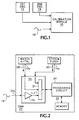
- Figure 1 is a block diagram of an apparatus for producing a temperature stable frequency at reduced cost, according to the present invention.
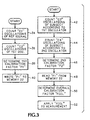
- FIG. 2 is a block diagram of the apparatus as implemented in a low cost digital electronic measuring apparatus, according to the present invention
- Figure 3 is a flow chart of a method for producing a temperature stable frequency at reduced cost, according to the present invention.
- an apparatus 10 for producing a temperature stable frequency is most advantageously employed in cost-sensitive applications, such as in a hand-held DMM wherein, however, it is desired to retain the capability to resolve small increments of time or frequency and, therefore, to provide a relatively high frequency clock for measuring the time or frequency.
- the apparatus 10 employs two clocks: a low cost, low frequency, temperature stable first oscillator 12 and a low cost, high frequency, temperature sensitive second oscillator 14.
- the apparatus 10 includes a calibration module 16.
- the calibration module 16 is adapted for (1) calibrating the frequency of the first oscillator 12 with a reference frequency signal 18 having a known reference frequency at a reference temperature, and (2) for calibrating the frequency of the second oscillator 14 with the frequency of the first oscillator 12 at an arbitrary operating temperature of the apparatus 10 which is, in general, different from the reference temperature. Where the frequency of oscillation of the first oscillator 12 is presumed to have a negligible temperature dependence, the frequency of the second oscillator is thereby relatable, to the known frequency reference signal.
- the aforedescribed elements are preferably formed from hardware pre-existing in a low cost digital electronic measuring apparatus, such as a DMM 20
- the existing DMM 20 typically includes an electrical input 20a for receiving an electrical signal for calibration or measurement, a comparator 19 and counter 21 referred hereinafter as a counter 26, coupled to the input for producing counts of the number of cycles of the signal of signals provided to the input, a memory 22, and a processor 24 coupled to the memory and the counter for reading the counts and the data stored in the memory, manipulating the counts and data and writing the manipulated counts and data to the memory.
- the DMM 20 typically includes a watch crystal for providing a time base from which to measure and report the time of day. It is advantageous to employ this existing structure as the first oscillator 12.
- the frequency of the oscillator 12 is then substantially about 32.768 Khz, which is too low to provide for desired resolution for measuring signal parameters in the DMM.
- the DMM also includes a system clock for clocking the processing circuit 24, such as a ceramic resonator, the system clock having a frequency in the megahertz range. While low cost versions of such system clock circuits are typically temperature sensitive, this temperature sensitivity is not of great importance to the function of clocking for the processor.
- the present invention recognizes the advantage of employing this structure as the second oscillator 14, and of employing the first oscillator 12 to substantially reduce the temperature sensitivity of the second oscillator.
- the first oscillator 12 has an output 12a through which is provided a time base signal 28 of about 32.768 Khz to the processing circuit 24.
- the second oscillator 14 has an output 14a through which is provided a clock signal 30 to the processor, the clock signal being employed to clock the processor.
- the counter 26 is coupled to the outputs 12a and 14a of the first and second oscillators, and to the input 20a of the DMM, for receiving and converting the signals 28, 30 and 18 respectively, as well as the subject signals, to a digital form for processing in the processor.
- the processor 24 includes logic circuitry for executing a computer program adapted for reading data generated by the counter 26 and from the memory 22, arithmetically operating on the data, and writing the results to the memory for subsequent use or for display to a user.
- the invention takes advantage of the memory, the processor and the counter by employing these components as the calibration module 16.
- step 34 beginning a reference calibration the counter 26, in conjunction with the processor 24, produces a first count "C1" of the number of oscillations at the reference temperature "Tref' of the reference signal 18 that occur in a predetermined time, such as defined by a predetermined number of oscillations of the clock signal 30 of the second oscillator 14.
- the frequency of the clock signal may be greater than the frequency of the reference signal, less than the frequency of the reference signal, or equal to the frequency of the reference signal.
- the first count “C1" will be the number of oscillations of the clock signal that occur in a predetermined number of oscillations of the reference signal.
- the count “C1" corresponds to the measured frequency of the reference signal at the reference temperature.
- step 36 the counter 26 produces a second count "C2" of the number of oscillations of the time base signal 28 of the first oscillator 12 that occur in a substantially identical time, such as during the same number of oscillations of the clock signal 30 employed for the count "C1."
- the count "C2" corresponds to the measured frequency of the time base signal at the reference temperature. As will be appreciated, it is not necessary that the value of the reference temperature be known to perform the step 36.
- the processor 24 determines a calibration factor "F1" by comparing the count “C1” and the count “C2", such as by dividing one of the counts into the other
- the factor "F1" correlates the frequency of the time base signal and the frequency of the reference signal 18. It will then be assumed either that (1) the changes or error in the frequency of the time base signal that would result from changing the temperature of the DMM 20 is negligible for purposes of the measurement, or (2) the manner in which the relatively small error increases with temperature excursions from the reference temperature is well known, easily characterized, and may be easily compensated for, to achieve even greater accuracy. Accordingly, however, it should be appreciated that it is preferable to select the reference temperature to lie at the statistical median or mode of the temperatures contemplated for use with the DMM.
- step 40 the processor writes the calibration factor "F1" to the memory for storage for later use. All of the aforementioned steps are, generally, most advantageously performed during manufacture of the DMM, and the factor "F1" may be incorporated in ROM or other non-volatile memory resident in the memory 22. However, the aforementioned steps may be performed during use of the DMM 20 as well, and the factor "F1" may be stored in either volatile memory or non-volatile memory by the user as desired.
- the counter 26 In measuring subject signals, in step 42, the counter 26 produces a third count "C3" of the number of oscillations of the subject signal over a predetermined time, by counting the number of oscillations of the time base signal 28 over the predetermined time.
- the predetermined time may be conveniently represented by a predetermined number of oscillations of either the time base signal or the clock signal 30, or may be determined from some other time base.
- step 44 the counter produces a fourth count "C4" of the number of oscillations of the subject signal by counting the number of oscillations of the clock signal 30 over the same predetermined time.
- step 46 the processor determines a second calibration factor "F2" by comparing the counts "C3" and "C4", such as by dividing one of the counts into the other
- the second calibration factor correlates the frequency of the second oscillator 14 and the frequency of the first oscillator 12 at the operating temperature.
- the processor 24 reads the first calibration factor "F1" from the memory circuit 22. Then, in a final calibration step 50, the processor determines an overall calibration factor "Fcal” relating the frequency of oscillation of the second oscillator 14 at the operating temperature to the reference frequency provided to the apparatus 10 at the reference temperature. Particularly, the processor compares the second calibration factor "F2" with the first calibration factor, such as by multiplying the calibration factors. The processor then, in a frequency correcting step 52, applies "Fcal" to the measurement to correct the measurement for frequency drift in the oscillator 14.
- “Fcal F1 X F2”
- a measurement of frequency obtained by counting the number of oscillations of the clock signal should be multiplied by "Fcal” to adjust for frequency error in the clock signal.
- Equivalent formulations will be apparent to those of ordinary skill.
- the overall calibration factor "Fcal” is applied to a measured value of time or frequency that is determined in the apparatus 10 using the oscillations of the second oscillator 14 as a base, to correct for temperature variation error in the frequency of the second oscillator.
- the apparatus obtains a low cost measurement of time or frequency that is relatively insensitive to the difference between the operating temperature and the reference temperature.
- the frequency of oscillation of the watch crystal has a relatively small temperature coefficient, its temperature dependence varies substantially as the square of temperature.
- the magnitude of drift remains small over reasonable ranges of temperature.
- a representative watch crystal having a temperature drift about 0.04 ppm/(degree C) 2
- an inexpensive system clock having a high temperature drift.
- the watch crystal will have a temperature drift 100 times less than that of the system clock.
- the watch crystal provides far less frequency error than does the system clock.
- the square dependence of frequency drift with temperature of the watch crystal is particularly mitigated because the DMM is often specified to operate within a relatively narrow temperature range, such as +/- 5 degrees C.
- the apparatus 10 may employ a compensation module coupled to the first oscillator 12 in which the temperature is measured and the frequency of oscillation of the first oscillator is compensated by well known techniques.
- a device having properties that change nearly linearly with temperature such as the 2mv/degree C voltage across a diode junction, may be employed where the voltage is initially calibrated at the reference temperature, and stored in the memory circuit 22.
Landscapes
- Physics & Mathematics (AREA)
- General Physics & Mathematics (AREA)
- Oscillators With Electromechanical Resonators (AREA)
- Electric Clocks (AREA)
- Stabilization Of Oscillater, Synchronisation, Frequency Synthesizers (AREA)
- Measuring Instrument Details And Bridges, And Automatic Balancing Devices (AREA)
Applications Claiming Priority (2)
| Application Number | Priority Date | Filing Date | Title |
|---|---|---|---|
| US923712 | 1978-07-12 | ||
| US08/923,712 US5831485A (en) | 1997-09-04 | 1997-09-04 | Method and apparatus for producing a temperature stable frequency using two oscillators |
Publications (2)
| Publication Number | Publication Date |
|---|---|
| EP0901231A2 true EP0901231A2 (de) | 1999-03-10 |
| EP0901231A3 EP0901231A3 (de) | 2001-02-07 |
Family
ID=25449147
Family Applications (1)
| Application Number | Title | Priority Date | Filing Date |
|---|---|---|---|
| EP98307110A Withdrawn EP0901231A3 (de) | 1997-09-04 | 1998-09-03 | Verfahren und Vorrichtung zur kostenreduzierten Erzeugung einer temperaturbeständigen Frequenz |
Country Status (5)
| Country | Link |
|---|---|
| US (1) | US5831485A (de) |
| EP (1) | EP0901231A3 (de) |
| JP (1) | JP3174910B2 (de) |
| KR (1) | KR19990029482A (de) |
| CN (1) | CN1160860C (de) |
Families Citing this family (14)
| Publication number | Priority date | Publication date | Assignee | Title |
|---|---|---|---|---|
| US6304517B1 (en) * | 1999-06-18 | 2001-10-16 | Telefonaktiebolaget Lm Ericsson (Publ) | Method and apparatus for real time clock frequency error correction |
| US7058149B2 (en) * | 2001-12-14 | 2006-06-06 | Freescale Semiconductor, Inc. | System for providing a calibrated clock and methods thereof |
| US7546097B2 (en) * | 2002-03-06 | 2009-06-09 | Qualcomm Incorporated | Calibration techniques for frequency synthesizers |
| US7421251B2 (en) * | 2005-03-31 | 2008-09-02 | Silicon Laboratories Inc. | Precise frequency generation for low duty cycle transceivers using a single crystal oscillator |
| ITBO20060031A1 (it) * | 2006-01-18 | 2007-07-19 | Marposs Spa | Sistema e metodo di trasmissione a distanza di segnali via etere per sonde di controllo |
| US7791419B1 (en) * | 2007-05-14 | 2010-09-07 | Dust Networks, Inc. | Timing calibration for crystal oscillators within a mesh network |
| CN101944899A (zh) * | 2009-07-02 | 2011-01-12 | 瑞昱半导体股份有限公司 | 具有低温度系数的集成电路及其校正方法 |
| WO2014039817A2 (en) * | 2012-09-07 | 2014-03-13 | Calhoun Benton H | Low power clock source |
| EP2854294B1 (de) * | 2013-09-30 | 2016-03-30 | Micro Crystal AG | Temperaturkompensierter taktsignalgenerator |
| NL2011982C2 (en) * | 2013-12-18 | 2015-06-22 | Frapinv S B V | System and method for operating a mechanical resonator in an electronic oscillator. |
| GB2521635A (en) * | 2013-12-24 | 2015-07-01 | Nordic Semiconductor Asa | Improved low-power oscillator |
| US10992301B1 (en) * | 2020-01-09 | 2021-04-27 | Microsemi Semiconductor Ulc | Circuit and method for generating temperature-stable clocks using ordinary oscillators |
| CN112737574B (zh) * | 2020-11-30 | 2024-01-12 | 珠海格力电器股份有限公司 | 一种芯片内部时钟源的计时校准方法及相关装置 |
| JP2022128670A (ja) * | 2021-02-24 | 2022-09-05 | セイコーエプソン株式会社 | 発振器および通信方法 |
Family Cites Families (8)
| Publication number | Priority date | Publication date | Assignee | Title |
|---|---|---|---|---|
| CH620087B (de) * | 1979-03-09 | Suisse Horlogerie | Oszillator mit einem hochfrequenz-quarzresonator. | |
| CH621680B (de) * | 1979-05-22 | Suisse Horlogerie | Oszillator mit temperaturkompensation. | |
| CH626500B (de) * | 1980-01-10 | Suisse Horlogerie | Oszillator mit digitaler temperaturkompensation. | |
| CH625670B (de) * | 1980-01-10 | Suisse Horlogerie | Oszillator mit digitaler temperaturkompensation. | |
| US4443116A (en) * | 1981-01-09 | 1984-04-17 | Citizen Watch Company Limited | Electronic timepiece |
| CH650122GA3 (de) * | 1981-12-17 | 1985-07-15 | ||
| US4448543A (en) | 1983-01-17 | 1984-05-15 | Rockwell International Corporation | Time-of-day clock having a temperature compensated low power frequency source |
| US5943613A (en) | 1996-11-07 | 1999-08-24 | Telefonaktiebolaget Lm Ericsson | Method and apparatus for reducing standby current in communications equipment |
-
1997
- 1997-09-04 US US08/923,712 patent/US5831485A/en not_active Expired - Fee Related
-
1998
- 1998-09-01 JP JP24726298A patent/JP3174910B2/ja not_active Expired - Fee Related
- 1998-09-03 EP EP98307110A patent/EP0901231A3/de not_active Withdrawn
- 1998-09-03 KR KR1019980036236A patent/KR19990029482A/ko not_active Ceased
- 1998-09-04 CN CNB981188699A patent/CN1160860C/zh not_active Expired - Fee Related
Also Published As
| Publication number | Publication date |
|---|---|
| CN1212520A (zh) | 1999-03-31 |
| CN1160860C (zh) | 2004-08-04 |
| JP3174910B2 (ja) | 2001-06-11 |
| KR19990029482A (ko) | 1999-04-26 |
| EP0901231A3 (de) | 2001-02-07 |
| US5831485A (en) | 1998-11-03 |
| JPH11154826A (ja) | 1999-06-08 |
Similar Documents
| Publication | Publication Date | Title |
|---|---|---|
| US5831485A (en) | Method and apparatus for producing a temperature stable frequency using two oscillators | |
| US5899570A (en) | Time-based temperature sensor system and method therefor | |
| US8314662B2 (en) | Temperature compensation method for piezoelectric oscillator, and piezoelectric oscillator | |
| US7961033B2 (en) | DLL-based temperature sensor | |
| US7800457B2 (en) | Self-calibrating temperature-compensated oscillator | |
| US10028239B2 (en) | Method and system for precise temperature and timebase PPM error estimation using multiple timebases | |
| US5546810A (en) | Pressure measuring device and method using quartz resonators | |
| TW201351874A (zh) | 利用共同參考訊號之晶體系統及其方法 | |
| US20110040509A1 (en) | High Resolution Time Interpolator | |
| US11513012B2 (en) | Aging calibration for temperature sensor | |
| CN102195562A (zh) | 振荡电路以及频率校正型振荡电路 | |
| US11567529B2 (en) | Real-time clock device and electronic apparatus | |
| Bloch et al. | The microcomputer compensated crystal oscillator (MCXO) | |
| JP5534182B2 (ja) | 振動デバイスの周波数温度特性の測定システム及び測定方法 | |
| Kim et al. | Retrace and disciplining time constant effects on holdover clock drifts in chip-scale atomic clock | |
| CN112910461A (zh) | Rc振荡器的自校准方法和自校准电路 | |
| Zhou et al. | An MCXO test system and its function in MCXO performances | |
| Stan et al. | Simple method to increase precision and stability for frequency counters | |
| JP2007500479A (ja) | タイムベース用のレイアウト | |
| JPH1125831A (ja) | 温度補正機能付きタイマおよび温度調節器 | |
| JP2011114859A (ja) | 圧電発振器の温度補償方法、圧電発振器 | |
| JP2011120199A (ja) | 発振回路システム | |
| JP2011114860A (ja) | 発振回路システム | |
| JPH08161076A (ja) | 時間計測装置 | |
| JPWO1995002173A1 (ja) | 水晶振動子を用いた圧力検出方法及び圧力検出装置 |
Legal Events
| Date | Code | Title | Description |
|---|---|---|---|
| PUAI | Public reference made under article 153(3) epc to a published international application that has entered the european phase |
Free format text: ORIGINAL CODE: 0009012 |
|
| AK | Designated contracting states |
Kind code of ref document: A2 Designated state(s): AT BE CH CY DE DK ES FI FR GB GR IE IT LI LU MC NL PT SE |
|
| AX | Request for extension of the european patent |
Free format text: AL;LT;LV;MK;RO;SI |
|
| PUAL | Search report despatched |
Free format text: ORIGINAL CODE: 0009013 |
|
| AK | Designated contracting states |
Kind code of ref document: A3 Designated state(s): AT BE CH CY DE DK ES FI FR GB GR IE IT LI LU MC NL PT SE |
|
| AX | Request for extension of the european patent |
Free format text: AL;LT;LV;MK;RO;SI |
|
| RIC1 | Information provided on ipc code assigned before grant |
Free format text: 7H 03L 1/02 A, 7G 01R 15/12 B |
|
| 17P | Request for examination filed |
Effective date: 20010724 |
|
| AKX | Designation fees paid |
Free format text: DE FR |
|
| 17Q | First examination report despatched |
Effective date: 20030311 |
|
| RAP1 | Party data changed (applicant data changed or rights of an application transferred) |
Owner name: TEKTRONIX INC. |
|
| GRAP | Despatch of communication of intention to grant a patent |
Free format text: ORIGINAL CODE: EPIDOSNIGR1 |
|
| STAA | Information on the status of an ep patent application or granted ep patent |
Free format text: STATUS: THE APPLICATION IS DEEMED TO BE WITHDRAWN |
|
| 18D | Application deemed to be withdrawn |
Effective date: 20050401 |