EP0903888B1 - Méthode et appareil pour l'enregistrement du temps réel d'utilisation d'un service de télecommunication - Google Patents
Méthode et appareil pour l'enregistrement du temps réel d'utilisation d'un service de télecommunication Download PDFInfo
- Publication number
- EP0903888B1 EP0903888B1 EP98307349A EP98307349A EP0903888B1 EP 0903888 B1 EP0903888 B1 EP 0903888B1 EP 98307349 A EP98307349 A EP 98307349A EP 98307349 A EP98307349 A EP 98307349A EP 0903888 B1 EP0903888 B1 EP 0903888B1
- Authority
- EP
- European Patent Office
- Prior art keywords
- service
- data
- rate
- timer
- timers
- Prior art date
- Legal status (The legal status is an assumption and is not a legal conclusion. Google has not performed a legal analysis and makes no representation as to the accuracy of the status listed.)
- Expired - Lifetime
Links
Images




Classifications
-
- H—ELECTRICITY
- H04—ELECTRIC COMMUNICATION TECHNIQUE
- H04M—TELEPHONIC COMMUNICATION
- H04M15/00—Arrangements for metering, time-control or time indication ; Metering, charging or billing arrangements for voice wireline or wireless communications, e.g. VoIP
- H04M15/68—Payment of value-added services
-
- G—PHYSICS
- G06—COMPUTING OR CALCULATING; COUNTING
- G06Q—INFORMATION AND COMMUNICATION TECHNOLOGY [ICT] SPECIALLY ADAPTED FOR ADMINISTRATIVE, COMMERCIAL, FINANCIAL, MANAGERIAL OR SUPERVISORY PURPOSES; SYSTEMS OR METHODS SPECIALLY ADAPTED FOR ADMINISTRATIVE, COMMERCIAL, FINANCIAL, MANAGERIAL OR SUPERVISORY PURPOSES, NOT OTHERWISE PROVIDED FOR
- G06Q20/00—Payment architectures, schemes or protocols
- G06Q20/08—Payment architectures
- G06Q20/12—Payment architectures specially adapted for electronic shopping systems
- G06Q20/127—Shopping or accessing services according to a time-limitation
-
- G—PHYSICS
- G06—COMPUTING OR CALCULATING; COUNTING
- G06Q—INFORMATION AND COMMUNICATION TECHNOLOGY [ICT] SPECIALLY ADAPTED FOR ADMINISTRATIVE, COMMERCIAL, FINANCIAL, MANAGERIAL OR SUPERVISORY PURPOSES; SYSTEMS OR METHODS SPECIALLY ADAPTED FOR ADMINISTRATIVE, COMMERCIAL, FINANCIAL, MANAGERIAL OR SUPERVISORY PURPOSES, NOT OTHERWISE PROVIDED FOR
- G06Q30/00—Commerce
- G06Q30/02—Marketing; Price estimation or determination; Fundraising
- G06Q30/0283—Price estimation or determination
-
- G—PHYSICS
- G06—COMPUTING OR CALCULATING; COUNTING
- G06Q—INFORMATION AND COMMUNICATION TECHNOLOGY [ICT] SPECIALLY ADAPTED FOR ADMINISTRATIVE, COMMERCIAL, FINANCIAL, MANAGERIAL OR SUPERVISORY PURPOSES; SYSTEMS OR METHODS SPECIALLY ADAPTED FOR ADMINISTRATIVE, COMMERCIAL, FINANCIAL, MANAGERIAL OR SUPERVISORY PURPOSES, NOT OTHERWISE PROVIDED FOR
- G06Q30/00—Commerce
- G06Q30/02—Marketing; Price estimation or determination; Fundraising
- G06Q30/0283—Price estimation or determination
- G06Q30/0284—Time or distance, e.g. usage of parking meters or taximeters
-
- G—PHYSICS
- G07—CHECKING-DEVICES
- G07F—COIN-FREED OR LIKE APPARATUS
- G07F17/00—Coin-freed apparatus for hiring articles; Coin-freed facilities or services
- G07F17/0014—Coin-freed apparatus for hiring articles; Coin-freed facilities or services for vending, access and use of specific services not covered anywhere else in G07F17/00
-
- H—ELECTRICITY
- H04—ELECTRIC COMMUNICATION TECHNIQUE
- H04L—TRANSMISSION OF DIGITAL INFORMATION, e.g. TELEGRAPHIC COMMUNICATION
- H04L12/00—Data switching networks
- H04L12/02—Details
- H04L12/14—Charging, metering or billing arrangements specially adapted for data communications, e.g. authentication, authorisation and accounting [AAA] framework
-
- H—ELECTRICITY
- H04—ELECTRIC COMMUNICATION TECHNIQUE
- H04L—TRANSMISSION OF DIGITAL INFORMATION, e.g. TELEGRAPHIC COMMUNICATION
- H04L12/00—Data switching networks
- H04L12/02—Details
- H04L12/14—Charging, metering or billing arrangements specially adapted for data communications, e.g. authentication, authorisation and accounting [AAA] framework
- H04L12/1428—Invoice generation, e.g. customization, lay-out, database processing, algorithms for calculating the bill or formatting invoices as WWW pages
-
- H—ELECTRICITY
- H04—ELECTRIC COMMUNICATION TECHNIQUE
- H04L—TRANSMISSION OF DIGITAL INFORMATION, e.g. TELEGRAPHIC COMMUNICATION
- H04L12/00—Data switching networks
- H04L12/02—Details
- H04L12/14—Charging, metering or billing arrangements specially adapted for data communications, e.g. authentication, authorisation and accounting [AAA] framework
- H04L12/1432—Metric aspects
- H04L12/1439—Metric aspects time-based
-
- H—ELECTRICITY
- H04—ELECTRIC COMMUNICATION TECHNIQUE
- H04L—TRANSMISSION OF DIGITAL INFORMATION, e.g. TELEGRAPHIC COMMUNICATION
- H04L12/00—Data switching networks
- H04L12/02—Details
- H04L12/14—Charging, metering or billing arrangements specially adapted for data communications, e.g. authentication, authorisation and accounting [AAA] framework
- H04L12/1453—Methods or systems for payment or settlement of the charges for data transmission involving significant interaction with the data transmission network
-
- H—ELECTRICITY
- H04—ELECTRIC COMMUNICATION TECHNIQUE
- H04L—TRANSMISSION OF DIGITAL INFORMATION, e.g. TELEGRAPHIC COMMUNICATION
- H04L12/00—Data switching networks
- H04L12/02—Details
- H04L12/14—Charging, metering or billing arrangements specially adapted for data communications, e.g. authentication, authorisation and accounting [AAA] framework
- H04L12/1453—Methods or systems for payment or settlement of the charges for data transmission involving significant interaction with the data transmission network
- H04L12/1464—Methods or systems for payment or settlement of the charges for data transmission involving significant interaction with the data transmission network using a card, such as credit card, prepay card or SIM
-
- H—ELECTRICITY
- H04—ELECTRIC COMMUNICATION TECHNIQUE
- H04L—TRANSMISSION OF DIGITAL INFORMATION, e.g. TELEGRAPHIC COMMUNICATION
- H04L12/00—Data switching networks
- H04L12/02—Details
- H04L12/14—Charging, metering or billing arrangements specially adapted for data communications, e.g. authentication, authorisation and accounting [AAA] framework
- H04L12/1453—Methods or systems for payment or settlement of the charges for data transmission involving significant interaction with the data transmission network
- H04L12/1467—Methods or systems for payment or settlement of the charges for data transmission involving significant interaction with the data transmission network involving prepayment
-
- H—ELECTRICITY
- H04—ELECTRIC COMMUNICATION TECHNIQUE
- H04L—TRANSMISSION OF DIGITAL INFORMATION, e.g. TELEGRAPHIC COMMUNICATION
- H04L9/00—Cryptographic mechanisms or cryptographic arrangements for secret or secure communications; Network security protocols
- H04L9/40—Network security protocols
-
- H—ELECTRICITY
- H04—ELECTRIC COMMUNICATION TECHNIQUE
- H04M—TELEPHONIC COMMUNICATION
- H04M15/00—Arrangements for metering, time-control or time indication ; Metering, charging or billing arrangements for voice wireline or wireless communications, e.g. VoIP
-
- H—ELECTRICITY
- H04—ELECTRIC COMMUNICATION TECHNIQUE
- H04M—TELEPHONIC COMMUNICATION
- H04M17/00—Prepayment of wireline communication systems, wireless communication systems or telephone systems
-
- H—ELECTRICITY
- H04—ELECTRIC COMMUNICATION TECHNIQUE
- H04M—TELEPHONIC COMMUNICATION
- H04M17/00—Prepayment of wireline communication systems, wireless communication systems or telephone systems
- H04M17/02—Coin-freed or check-freed systems, e.g. mobile- or card-operated phones, public telephones or booths
-
- H—ELECTRICITY
- H04—ELECTRIC COMMUNICATION TECHNIQUE
- H04L—TRANSMISSION OF DIGITAL INFORMATION, e.g. TELEGRAPHIC COMMUNICATION
- H04L69/00—Network arrangements, protocols or services independent of the application payload and not provided for in the other groups of this subclass
- H04L69/28—Timers or timing mechanisms used in protocols
-
- H—ELECTRICITY
- H04—ELECTRIC COMMUNICATION TECHNIQUE
- H04M—TELEPHONIC COMMUNICATION
- H04M2215/00—Metering arrangements; Time controlling arrangements; Time indicating arrangements
- H04M2215/01—Details of billing arrangements
- H04M2215/0196—Payment of value-added services, mainly when their charges are added on the telephone bill, e.g. payment of non-telecom services, e-commerce, on-line banking
-
- H—ELECTRICITY
- H04—ELECTRIC COMMUNICATION TECHNIQUE
- H04M—TELEPHONIC COMMUNICATION
- H04M2215/00—Metering arrangements; Time controlling arrangements; Time indicating arrangements
- H04M2215/14—Billing aspects relating to the actual charge
-
- H—ELECTRICITY
- H04—ELECTRIC COMMUNICATION TECHNIQUE
- H04M—TELEPHONIC COMMUNICATION
- H04M2215/00—Metering arrangements; Time controlling arrangements; Time indicating arrangements
- H04M2215/22—Bandwidth or usage-sensitve billing
Definitions
- This invention relates to a method and apparatus for recording actual time used by method and apparatus for recording actual time used by a service which makes requests for data.
- Pay telephones are common in the prior art. With the recent advent of multimedia, it is desirable to vend multimedia services at a multimedia services terminal, much in a similar way to the way in the which public pay phone services are provided.
- public terminals charge a user either a set fee or charge by the minute, irrespective of the response of the terminal as seen by the user. Delays in such responses may be due to delays in receiving data from a network and it is not acceptable to expect a user to pay for delays or resource problems experienced by the network.
- the present invention seeks to address these and other needs.
- Prior art US5393964 discloses a mechanism for determining a time period.
- a method of recording actual time used by a service which makes requests for data includes the steps of:
- the method includes the steps of:
- the method includes the step of producing a billing record identifying the service, the recorded time value and a charge amount associated with the service, the charge amount being calculated from rate information associated with the service and the recorded time.
- the method includes the steps of:
- the method includes the steps of:
- the method includes the step of storing a plurality of pre-defined values and associating separate pre-defined values with each service.
- the method includes the step of producing a billing record identifying each service requested by the user, each time value accumulated on each first timer associated with each service requested by the user respectively and a charge amount associated with each service, the charge amount being calculated from rate information associated with each service respectively and the time indicated by the first timers associated with each service respectively.
- a method of recording actual time used by a service comprising the steps of:
- the method includes the steps of:
- the method includes the steps of:
- the method includes the steps of:
- the method includes the step of storing a plurality of pre-defined rate values and associating separate pre-defined rate values with each service.
- the method includes the step of producing a billing record identifying each service requested by the user, each time value accumulated on each first timer associated with each service requested by the user respectively and a charge amount associated with each service, the charge amount being calculated from rate information associated with each service respectively and the time indicated by the first timers associated with each service respectively.
- an apparatus for recording actual time used by a service which makes requests for data comprising:
- the apparatus includes memory for storing rate information relating to a billing for charging a user for the use of the service.
- the apparatus includes a billing device for producing a billing record identifying the service, the time value accumulated on the first timer and a charge amount associated with the service, the charge amount being calculated from the rate information associated with the service and the time indicated by the first timer.
- the apparatus includes a plurality of first timers associated with respective services for recording times during which a plurality of respective services are in operation and a plurality of second timers.
- Each of the second timers is rendered operable when its associated service requests data, the second timers being operable to disable the respective first timers to suspend the recording of the time for a service when the second timer associated with the service acquires a value exceeding a pre-defined value, representing the time during which the service is waiting for data in response to a request for data.
- the second timers are also operable to re-enable the respective first timers when the data is received.
- the apparatus includes memory for storing a plurality of pre-defined values and associating separate pre-defined values with each service.
- the apparatus includes memory for storing rate information relating to a billing for charging a user for the use of the service.
- the apparatus includes a billing device for producing a billing record identifying each service requested by the user, each time value accumulated on each first timer associated with each service requested by the user respectively and a charge amount associated with each service, the charge amount being calculated from rate information associated with the each service respectively and the time indicated by the first timers associated with each service respectively.
- an apparatus for recording actual time used by a service includes a first timer for recording time during a period in which the service is in operation and a data rate determiner.
- the data rate determiner determines rate at which data is received, the data rate determiner being in communication with the first timer for disabling the first timer during periods during which the rate at which data is received is less than a pre-defined rate.
- the apparatus includes a plurality of first timers for recording times during respective periods in which respective services are in operation and at least one data rate determiner for determining respective data rates at which data is received by each of the services and for disabling the first timers of each service receiving data at a rate less than a pre-defined data rate and for re-enabling the first timers when the data rate exceeds the pre-defined data rate.
- the apparatus includes memory for storing a plurality of pre-defined rate values, each rate value being associated with a respective service.
- the apparatus includes a billing device for producing a billing record identifying each service requested by the user, each time value accumulated on each first timer associated with each service requested by the user respectively and a charge amount associated with each service, the charge amount being calculated from rate information associated with the each service respectively and the time indicated by the first timers associated with each service respectively.
- a method of recording actual time used by a service comprising the steps of:
- the method includes the steps of:
- the method includes the step of storing a plurality of pre-defined rate values, each rate value being associated with a respective service.
- the method includes the step of producing a billing record identifying each service requested by the user, each time value accumulated on each first timer associated with each service requested by the user respectively and a charge amount associated with each service, the charge amount being calculated from rate information associated with the each service respectively and the time indicated by the first timers associated with each service respectively.
- the apparatus allows users to pay for services rendered, using a smart card or electronic purse or a credit card.
- the user may pay for a voice call and may also simultaneously pay for a multimedia service such as electronic mail, Internet browsing or a one time purchase from an electronic mall.
- the terminal reacts to user actions by automatically adjusting a smart card debit value or decrementing a certain amount per minute based on the user's specific actions and any associated rates.
- a number of services may be used simultaneously by a user, such as speaking on the phone while browsing the Internet and/or purchasing an item.
- the invention integrates payment timers closely with data delivery and suspends payment while the service is in a wait state such as waiting for an abnormally long response from the network or slow delivery of data.
- a wait state such as waiting for an abnormally long response from the network or slow delivery of data.
- users are not charged for network outages or slow data transfer rates.
- users are charged more fairly for services rendered by the terminal.
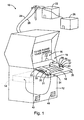
- an apparatus for vending public communications services is shown generally at 10 .
- the apparatus includes a public communications services Kiosk apparatus having a base 12 in which is mounted a computer 14 , a display 16 and a keyboard 18 , together acting as a multimedia terminal 19 .
- the base 12 also has a telephone mounted thereon, the telephone being shown generally at 20.
- the telephone 20 is in communication with a public telephone network 22 via a central office telephone line 24 equipped with an answer supervision feature.
- the telephone includes a microphone 21 and a telephone receiver 23 , the telephone receiver being operable to communicate audio signals to a user.
- the computer 14 is connected to a central server 26 by a communications line 28 which may include an Ethernet 10 base T connection.
- a credit card reader 30 Also mounted on the base 12 is a credit card reader 30 , a printer 31 and a telephone dial pad 33 .
- a physical scroll actuators shown generally at 32 which are in communication with the computer 14 for directing the computer 14 to effect functions associated with the display 16 .
- the physical scroll actuators include left, right, up and down actuators 35 , 37 , 39 and 41 for receiving user input for scrolling information displayed by the display left, right, up and down respectively, line by line or page by page.
- a common volume control 47 common to the telephone receiver 23 and the speakers 43 and 45 includes first and second actuator buttons mounted on the base 12 for selectively controlling the volume of signals produced by the telephone receiver 23 or the speakers 43 and 45 , depending upon which of the telephone and multimedia terminal 19 is in use by a user.
- the keyboard has semi-transparent keys and a low power light source mounted thereunder selectively operable to be turned on and off.
- the computer 14 controls all operations of components mounted on the base 12 , including the telephone 20 and multimedia terminal 19 .
- FIG. 2 a schematic diagram of the connection of the computer 14 , shown in Figure 1 to the central server 26 is shown generally at 34 .
- the public communications services Kiosk apparatus 10 is one of a plurality 36 of kiosk apparatus connected to an intranet 38 private network on the communications line 28 in communication with the central server 26 .
- a plurality 27 of vendor servers are also connected to the intranet 38 , for communication with the central server 26 .
- the central server 26 is further in communication with the Internet 40 to which a plurality of further vendor servers 42 and content providers 49 are connected.
- the vendor servers 27 are in communication with the central server 26
- the central server 26 is in communication with the kiosk apparatus 36 .
- the central server includes an internet gateway interface 44 , a web server interface 46 , a file server interface 48 , a transaction server interface 50 , an automated services interface 52 , a terminal monitoring interface 54 , a reporting interface 56 , a terminal configuration interface 58 , a content manager interface 60 and a database 62 .
- the internet gateway interface 44 provides a high speed dedicated high bandwidth connection such as a T1 connection to the Internet 40 , for receiving HTML pages or at least one multimedia file from an Internet provider and for providing uniform resource locators (URLs) to vendor servers ( 42 ) and content providers ( 43 ) connected to the Internet 40 .
- a high speed dedicated high bandwidth connection such as a T1 connection to the Internet 40 , for receiving HTML pages or at least one multimedia file from an Internet provider and for providing uniform resource locators (URLs) to vendor servers ( 42 ) and content providers ( 43 ) connected to the Internet 40 .
- URLs uniform resource locators
- the Internet gateway interface 44 is also in communication with the web server interface 46 which is in communication with the database 62 and is in communication with the kiosk terminals 36 by way of an HTML/applet pipe 64 .
- the web server interface 46 is thus able to transmit HTML pages and applet programs to the kiosk apparatus 36 by way of the HTML/applet pipe 64 .
- the web server interface 46 is operable to provide content files from the database 62 to the Kiosk apparatus 36 through the HTML/applet pipe 64. Effectively, the web server determines the type of content requested by a apparatus and extracts the requested files from the database 62 or the Internet 40 and transmits the requested files to the public communications services Kiosk apparatus.
- the file server interface 48 is also in communication with the database 62 and with Kiosk apparatus 36 . Communication with the apparatus is conducted by way of a configuration and content file pipe 66 by way of which configuration and content files obtained from the database 62 are transmitted by the file server interface 48 to the kiosk apparatus 36 .
- the transaction server interface 50 is further in communication with the database 62 and with the kiosk apparatus 36 . Communication between the transaction server and the kiosk apparatus 36 is provided by a request/reply pipe 68 . The transaction server is thus able to receive request messages from the kiosk apparatus 36 , interpret such requests, and transmit suitable replies on the request/reply pipe 68 .
- the transaction server is further in communication with a credit card service 70 such as Bank of Montreal and is further in communication with at least one rating system 72 which, in this embodiment, includes MORRIS (trademark) offered by Bell-Canada.
- the transaction server interface 50 communicates with the credit card service 70 by transferring validations and billings. Validations include requests from the transaction server interface 50 for card validation to authorize charges to appear on a card and include the transfer of billing information, such as amounts and card numbers to which charges are to be applied by the credit card service 70 .
- the transaction server interface 50 also communicates with the credit card service to store files in the data base, relating to local card clearing information.
- the transaction server interface 50 communicates rate requests and receives replies from the rating system 72 , in relation to telephone billing rates, commercial services rates, etc. Rate requests are made by the transaction server to the rating system 72 and the rating system 72 replies with the requested rates. Such rates are then provided to the kiosk apparatus 36 by way of the request reply pipe 68 .
- the automated services interface 52 is in communication with the database 62 , a billing system 74 and a backup system 76 .
- the automated services interface 52 provides billing records to the database 62 and to off-premises billing systems 74 and further provides data relating to the contents of the database 62 to backup systems 76 .
- the terminal monitoring interface 54 , reporting interface 56 , terminal configuration interface 58 and content manager interface 60 are all in communication with an administrative staff terminal 78 which administrative staff use to configure the central server 26 and monitor its functions.
- the terminal monitoring interface 54 effectively provides to the administrative staff terminal 78 a typical control room interface and maintains a monitor of alarms associated with various functions of the central server, for example, loss of communication to any one of the kiosk apparatus 36 .
- the terminal monitoring interface 54 maintains an alarm table in the data base 62 .
- the reporting interface 56 monitors transactions between the central server and the database to accumulate statistics regarding the amount of money made by each kiosk apparatus 36 and the number of times particular services are used etc.
- the reporting interface 56 thus stores statistical files and usage rate files in the data base 62 .
- the terminal configuration interface 58 is used to receive operational information from operators, such as timeout numbers, screen information, etc., serial number of units, service records including service identifications, service types and service rates etc. and stores such information in the database 62 as configuration files which identify how a apparatus is to be configured to present multimedia services to a user.
- the content manager interface 60 receives advertising and information regarding user interface buttons, from the administrative staff terminal 78 .
- the content manager interface 60 stores such information as advertising content files, HTML pages and applets in the database 62.
- the database 62 thus includes configuration files for configuring apparatus 36 to present multimedia services to a user, billing records, advertising or multimedia content files for providing multimedia content to the apparatus, statistical information relating to services rendered, HTML pages and multimedia files received from an Internet provider for use at the apparatus, applets for execution at the apparatus, usage rates, an alarm table, and local credit card information for validating credit cards used at the apparatus.
- Each of the interfaces of the central server 26 includes respective program steps for directing a computer within the central server to perform the indicated interface functions.
- the central server may be formed as a single computer or may be formed over a distributed network.
- a single computer or distributed network acts as a transmitter for transmitting for receipt by at least one public communications services Kiosk apparatus 36 , over a private network, a multimedia configuration file for configuring the apparatus to present multimedia services to a user.
- Such transmitter also transmits multimedia content files of actual multimedia content available to users at the public communications services Kiosk apparatus.
- the kiosk apparatus effectively includes a multimedia terminal 19 and a telephone 20 .
- the multimedia terminal portion includes a microprocessor 82 in communication with non-volatile memory 84 , volatile memory 86 and an I/O port 88 .
- the I/O port is in communication with display 16 which includes a video display 92 and a touchscreen 94 , each individually in communication with the I/O port 88 .
- the display and touchscreen are integrated into a single unit approximately 10 to 12 inches diagonal and has an adjustable viewing cone for public and private usage applications.
- the I/O port is further in communication with the card reader 30 , the printer 31 , the keyboard 18 and a speaker driver 25 for driving the speakers 43 and 45 .
- the I/O port also has first and second communications ports 100 and 102 , the first communications port 100 being connected to an Ethernet interface 104 which is connected to the intranet via a high speed connection such as an ISDN line and is operable to signal to the microprocessor through the I/O port an indication of whether or not a message has been received and whether or not a complete transmission of a file has been received.
- the second communications port 102 is connected to a pay phone interface which is connected to the central office line 24 . Also, connected to the pay phone interface, are the telephone dial pad 33 and a handset 108 on which is mounted the microphone 21 and receiver 23 .
- the microprocessor 82 is in communication with the display 16 , the card reader 30 , the printer 31 , the keyboard 18 and the speaker driver 25 , the Ethernet interface 104 and the pay phone interface 106 via the I/O port 88 .
- the keyboard has transparent keys and a light adjacent the keys for selectively lighting the keys to indicate a user response is to be entered at the keys. After a user response has been entered, the light is turned off. The light is controlled by any application program running at the apparatus.
- the pay phone interface is operable to pick up and drop the central office line and includes a sensor 101 to indicate to the second communications port 102 , whether or not the central office line is in use by the pay phone interface 106 .
- the volatile memory 86 is organized by the microprocessor 82 to include a plurality of buffers including:
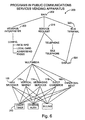
- the architecture of the multimedia apparatus is shown generally at 150 .
- the architecture includes the components shown in Figure 4 in a hardware layer 152 thereof.
- the architecture further includes an operating system 154.
- the operating system in this embodiment is of the type provided by Microware, known as 0S/9 (trademark).
- the properties of this operating systems are that it has high recoverability, it is suitable for real time operation, it has compatibility with the indicated hardware devices, it has built-in fault recovery, and it is well supported by the microprocessor.
- this operating system is licensed to interact with the Java programming language.
- the architecture further includes a Java virtual machine 156 which allows programs to run without recompiling.
- Java also provides an easy high level interface and has a convenient class library which gives programmers a convenient application programmatic interface (API) set.
- API application programmatic interface
- the architecture further includes a core program layer 158 including billing programs 160 , hardware drivers 162 and administration software 164 , and pay telephoning programs 165.
- the core program layer looks after such features as maintenance such as notifying the central server of a time to load more paper into the printer, provides a user interface, manages network connectivity and download features for downloading files from the central server and for providing pay phone functionality.
- the architecture 150 further includes a virtual machine 166 which includes a custom web browser 168 and an audio video player 170 .
- the custom web browser 168 provides an interface between the user and the multimedia terminal and the audio video player provides visual images on the display 16 and audio/sound bytes on the speakers for advertising, for example.
- the architecture further includes an application layer shown generally at 172 including a messaging services application 174 , a vertical market application 176 , an electronic commerce application 178 and an entertainment application 180 .
- the messaging services application 174 includes features such as e-mail, voice e-mail and fax.
- the vertical market application 176 includes government services and banking.
- the electronic commerce application 178 includes ticket sales and virtual mall displays.
- the entertainment application 180 includes Internet browsing capabilities, gaming, chat rooms and newsclips.
- a chart of high level programs stored in the non-volatile memory is shown generally at 200 .
- Each of the programs listed in the chart is associated with the core program layer 158 shown in Figure 5 , with the exception of the custom web browser 168 which is associated with the virtual machine 166 of Figure 5 , and the vertical market 176 , messaging services 174 , electronic commerce 178 and entertainment 180 applications modules shown in Figure 5 .
- the programs include a main program 202 which the apparatus runs in the background.
- a message interpreter program is invoked.
- the message interpreter includes a block 204 which directs the microprocessor 82 shown in Figure 4 to read the I/O port 88 to determine whether or not the receive message buffer 206 is loaded. If not, the microprocessor is directed to continue to test the I/O port 88 to determine when the buffer is loaded. If the buffer is not loaded within a timeout period, the microprocessor 82 is returned to the main program 202 shown in Figure 6 .
- block 208 directs the microprocessor 82 to determine the type of message received. If the message is of a configuration type, it indicates that a configuration file has been downloaded from the central server. The configuration file includes information relating to rates, advertising, content, and local card clearing information. Block 210 directs the processor to load this information into non-volatile memory 84 shown in Figure 4 . Thus, a configuration file 212 is stored in the non-volatile memory 84 .
- the microprocessor 82 Upon completion of storing the configuration file, the microprocessor 82 is returned to the main program 202 shown in Figure 6 .
- block 214 directs the microprocessor 82 to return to the calling program, which in this embodiment, is the main program 202 .
- a service request program 216 shown in Figure 8 is invoked.
- a service request for use of the pay telephone is provided by a user by simply lifting the handset 108 shown in Figure 4 , whereupon the sensor 101 detects connection to the central office line and provides a signal over the second communications port 102 to the I/O port to indicate to the microprocessor 82 that a request to use the telephone has been made.
- Block 218 directs the processor to store this code as a type code to indicate whether telephone services or multimedia services have been requested.
- Block 220 then directs the microprocessor 82 to a telephone branch 222 or to a multimedia branch 224 specified by the service type code stored at block 218 .
- block 228 directs the microprocessor to cause to be displayed on the display 92 , a menu of available multimedia services and to wait for a user selection of a desired service.
- the user does this by pressing on the touch screen 94 whereupon a message indicating the area of the touch screen touched, is provided to the microprocessor.
- the microprocessor interprets the message as an indication of the user's selection and on reference to a lookup table (not shown), an identification code for the selected service is obtained.
- the microprocessor 82 then augments the initial code previously stored in connection with the service request program (at Block 218 in Figure 8 ) to produce a service identification code to indicate the specific multimedia service requested. If the user had selected to use the telephone, a service identification code associated with the telephone service is produced. Thus, a service identification code is produced to indicate the type of service requested by the user.
- Block 230 then uses the service identification code to lookup a service record stored in non-volatile memory.
- a service record 231 includes a service identification field 233 , a service type field 235 and a service rate field 237 .
- the contents of these fields are provided from the configuration file received from the central server.
- the service record relates service identifications with service types and associated service rates.
- the service record associated with the service identification specified by the user is retrieved from memory and stored in a current service record buffer in volatile memory.
- block 232 directs the microprocessor 82 to launch the service specified by the contents of the service identification field 233 and at the same time to launch a corresponding service usage task associated with the requested service.
- a web browser application, virtual market interface application, messaging service application or electronic commerce application is loaded and run, depending upon the service requested by the user.
- a telephone application is launched. It will be appreciated that more than one application can be launched at a time and, therefore, it is possible for the user to simultaneously use telephone services and multimedia services at the same time.
- the corresponding service usage task begins with block 236 which directs the processor to produce a service usage record as shown in Figure 11 .
- the service usage record includes a transaction identification field 240 , a service identification field 242 , a date/time field 244 , a duration field 246 , a charge field 248 , a payment method field 250 and a card number field 252 .
- the contents of each of these fields is zero, however, after the blank record has been created, the transaction identification field is loaded with a unique reference number to uniquely identify the transaction, the service identification field is loaded with the service identification of the service record shown in Figure 9 , the date and time field 244 is loaded with the date and time of the current transaction, and the duration, charge payment method and card number fields 246-252 are left blank.
- block 254 directs the processor to present a prompt on the display 92 to request the user to indicate the preferred payment method, if applicable.
- the use of some services may be free and, if so, the payment method block 254 will receive a code from the launched service indicating that such service is free. In this event, the service usage record 238 is unchanged at this point.
- the card reader presents to the microprocessor a code indicating that a credit card has been inserted in which case, the payment method is selected as post-pay.
- a code indicating a pre-payment method is presented by the card reader to the microprocessor such that at block 254 , the microprocessor interprets the preferred method of payment as pre-pay.
- card number information relating to the card to which charges are to be applied is stored in the card number field 252 and the payment method field 250 is loaded with a code indicating post-payment method.
- the duration and charge fields 246 and 248 are left blank.
- block 258 then directs the processor to launch a usage timer task associated with the service.
- the usage timer task is shown generally at 260 in Figure 12 and begins with a first block 262 which directs the processor to start a timer for cumulatively recording the time during which the corresponding service is in operation.
- a first timer which is enable in response to a request for access to at least one multimedia service at the public communications service vending apparatus.
- the timer counts seconds.
- a usage timer task is launched in association with each service requested by the user. Therefore, there are a plurality of timers associated with the multimedia services respectively, for simultaneously cumulatively recording times during which respective multimedia services are in operation and furthermore, such timers are enabled in response to respective requests for access to respective services.
- Block 264 then directs the processor to determine which payment method has been selected by the user and if the free payment method has been selected, the processor is directed to block 266 which determines whether or not the user has pressed an exit button on the touchscreen indicating the service is to be ended. If so, block 268 directs the usage timer to stop and the usage timer task is ended. If the user has not quit the service, as detected at block 266 , the processor is directed back to block 262 which continues the operation of the usage timer and the above process is repeated.
- block 270 directs the processor to determine whether or not the service has requested data from the remote server. If it has not, blocks 266, 268, 262 and 264 are repeated until data is requested.
- block 274 directs the microprocessor 82 to read the first communications port 100 to determine whether or not a complete response has been received. It will be appreciated that the data request may require the transfer from the central server to the apparatus of a rather large file which may take some time to receive.
- blocks 266, 268, 262, 264, 270 and 272 are repeated until a situation exists where a request for data has been sent to the remote service, but a complete response has not yet been received.
- block 276 directs the processor to determine a data receive rate at which data is received by observing the number of blocks of data received each second. The processor thus acts as a data receive rate measurement device.
- block 278 directs the processor to compare the receive data rate with a predefined threshold rate stored in non-volatile memory. If the data receive rate is at or above the predefined threshold rate, the processor is directed to block 279 where the usage timer is re-enabled if it had been previously disabled or is simply left running if it already was running. The processor is then directed back to block 274 , whereupon the receive data rate is continually determined and tested against the threshold rate unless the data arrives at a rate below the threshold rate in which case block 280 directs the processor to disable the usage timer started at block 262 , but maintain its current value and to return to block 274 which again calculates the data arrival rate and compares it against the threshold rate, etc.
- blocks 274-280 is to disable or pause the usage timer when data is received at a rate less than the predefined threshold data rate value and to re-enable or maintain the operation of the usage timer when data arrives at or above, that is exceeds the predefined threshold rate, until the complete response has been received.
- the usage timer cumulatively records the time during which the associated multimedia service is in operation and maintains the recording of such time while data is received at the apparatus at a rate within a first range ie., above the threshold rate and suspends the recording of time associated with the service when data is received at a rate within a second range, ie., below the threshold rate.
- block 282 directs the processor to launch a pre-pay card task.
- the pre-pay card task is shown generally at 282 .
- This task begins with Block 284 which directs the processor to debit the user's debit card by a predetermined amount corresponding to a pre-pay time increment, which, in this embodiment, is one minute.
- Block 286 then directs the processor to start or reset a pre-pay timer implemented by the processor.
- the pre-pay timer is operable to calculate time in minutes.
- Block 288 then directs the processor to determine whether or not the usage timer to which reference was made in Figure 12 at block 262 , is running.
- block 290 directs the processor to disable or pause the pre-pay timer.
- the pre-pay card task then is maintained in a loop comprised of blocks 288 and 290 until the usage timer (of Figure 12 ) is re-enabled.
- block 292 directs the processor to re-enable the pre-pay timer.
- Block 294 then directs the processor to determine whether or not the user has requested to exit the service and if so, the pre-pay card task is exited.
- block 296 directs the processor to determine whether or not the pre-pay period has expired. If the pre-pay period has not expired, the processor is directed back to block 288 and the above steps beginning at block 288 are repeated.
- the processor is returned to block 284 which again debits the user's smart card by a predefined amount corresponding to the pre-paid time increment.
- block 298 directs the processor to determine whether or not the service has ended. If the service has ended, block 300 directs the processor to apply the service rate stored in the service rate field 237 of the service record 231 shown in Figure 9 , to the usage timer value stored in the duration field 246 of the service usage record shown in Figure 11 , to calculate the contents of the charge field 248.
- the processor is then directed to block 302 which directs the processor to submit the service usage record 238 to the central server by transmitting it on the intranet.
- the processor is then directed to block 304 which directs the processor to determine whether or not the user has requested the pre-payment or post-payment method in which case the processor is directed to block 306 which causes the microprocessor 82 to print a receipt at the receipt printer 31 . If the user has requested a free service, the service usage task is ended.
- the service usage task therefore also, acts a billing program code operable to direct the processor to identify each service requested by the user and a charge amount associated with each service, the charge amount being calculated from rate information associated with the service and the time indicated by the first timer associated with the service. More generally, the service usage task program acts as a billing program for directing the microprocessor to produce a bill for services rendered by the multimedia terminal and for usage of the telephone.
- the statistical files in the database may be updated to reflect usage of the service.
- blocks 230 and 232 are executed as described above, only instead of a multimedia service being launched, a telephone service program is launched.
- the telephone service program is shown generally at 348 .
- This program begins with block 350 which launches a telephone advertising program shown in Figure 15 .
- the telephone advertising program is shown generally at 350 .
- the program begins with block 354 which directs the processor to read the second communications port 102 to determine whether or not the pay phone interface 106 indicates that the central office line is offhook. If the central office line is not offhook, the telephone advertising program is ended and the telephone program is ended.
- block 356 directs the processor to retrieve the content file to obtain display advertising content. Such content is loaded into the display buffer and the processor is directed to block 358 which directs the processor to run a display advertising program to cause advertising to be displayed on the display 92 while the telephone is in use.
- block 352 launches a conventional telephone routine program.
- the conventional telephone routines include routines which receive visual information and drivers contained within the core program layer 158 serve to take control of, at least, a portion of the display 92 to provide various pay telephone options to the user.
- the multimedia apparatus is used to display options for pay telephone usage.
- further drivers allow the user to enter answers to options presented on the display, using the keyboard to enter user names, calling card numbers, etc.
- certain functionality of the pay phone is rendered operational.
- the multimedia apparatus is operable to display and receive information relating to the operation of the pay telephone.
- the apparatus also includes an idle terminal program shown generally at 400 .
- This program is run when no messages have been received and no service requests have been made, ie. the apparatus is idle.
- the idle terminal program begins with block 402 which directs the processor to retrieve a content file from the non-volatile memory.
- the content file includes multimedia display and sound information for displaying and annunciating advertising while the apparatus is idle or, in other words, not in operation by the user. Such advertising may be used to attract users to the apparatus or to simply expose users to advertising.
- a display image program is launched to cause the display 92 and speakers to be driven by graphics files and sound byte files accordingly.
- the idle terminal program acts as an idle program for automatically producing a display image at the public communications services Kiosk when the public communications services Kiosk is not in use.
- the display program acts as a display image program for producing a display image at the public communications services Kiosk apparatus in response to the contents of the content file.
- the applications programs including the messaging services, vertical market, electronic commerce and entertainment programs, retrieve from the content file, HTML pages which interact with the custom web browser 168 in the virtual machine layer of the apparatus architecture.
- content providers associated with these applications are able to submit HTML pages to the administrative staff terminal 78 shown in Figure 3 for inclusion by the content manager interface 60 in content files stored in the database 62 .
- the administrative staff terminal 78 then directs the terminal configuration interface 58 to make a notation in a configuration file, identifying content files which are to be made available to users and the configuration file and content files are sent to Kiosk apparatus 36 by the file server interface 48 .
- HTML pages are designed to cooperate with a physical screen size of 800 pixels wide by 600 pixels high.
- each HTML page is intended to be compatible with Netscape Navigator 3.01 (Trademark) upon which the custom web browser 168 shown in Figure 6 is based.
- the browser is customized in that it is programmed to respond to non-conventional HTML commands including a Kiosk:print command, a Kiosk:quit command, a Kiosk:phone command, a Kiosk:help command and a Kiosk:card command.
- the web browser is customized to be responsive to Java and JavaScript.
- the HTML pages provided by content providers are designed to define virtual buttons on the display, such that the user can employ the touchscreen to signify actuation of a button shown in the display to cause the function associated with such button to be effected.
- Scrolling of a large HTML page is provided by actuation of the scroll actuators shown generally at 32 in Figure 1 .
- the functionality associated with certain virtual buttons specified by an HTML page may involve the dispatch of uniform resource locators (URLs) to web addresses on the World Wide Web.
- URLs uniform resource locators
- Such URLs are received at the web server interface 46 which sends the URL through the Internet gateway interface 44 to the Internet 40 to access the identified web site and download an HTML page associated with such web site.
- the HTML page to be downloaded is received at the Internet gateway interface 44 from the Internet 40 and the Internet gateway interface 44 forwards the HTML page to the web server interface 46 which forwards the HTML page to the requesting apparatus via the HTML/applet pipe 64 .
- the HTML page is received by the custom web browser 168 which executes the functionality specified by the downloaded HTML page.
- Any HTML page provided from an external World Wide Web site or from a content provider may include one of the additional HTML commands referred to above.
- the Kiosk:print command is used to cause the printer 31 , shown in Figure 4 to print simple, unformatted strings.
- the Kiosk quit command provides a vehicle to exit a web-based application or HTML page of a current content provider.
- the Kiosk:phone command includes a URL definition which is interpreted by the web browser as a request to dial a telephone number.
- the content provider may present a display with a plurality of buttons, resembling an automatic dialler and upon contacting the touchscreen adjacent one of such buttons, the Kiosk:phone command is invoked to cause a telephone number to be dialled.
- the microprocessor takes control of the telephone interface, causing the telephone line to go offhook. A timeout period may then be provided to allow the user time to pick up the handset which, if not picked up, will direct the microprocessor to terminate the telephone call.
- the Kiosk:help command is associated with a URL defining a help window within which there may be a Kiosk:phone command which provides immediate access to a help desk operated by the content provider.
- the Kiosk:card command directs the web browser to present to the user, display indicia requesting the user to insert a credit card or debit card to which a purchase of services or merchandise is to be applied. After the card has been read, the web browser calls a result URL predefined by the content provider.
- This command is associated with certain parameters such as a clear parameter indicating whether or not the vender is to clear the card or whether the operator of the central server is to clear the card, a card type parameter which lists card types supported, an amount field identifying the dollar amount of the transaction, a transaction type to identify a sale or return, a prompt operable to override any default prompt provided by the web browser, an authorization number for providing an authorization number associated with the charge, an operator identification for use with debit card transactions and a product information parameter for information such as delivery address, buyer name, model number, etc.
- a card purchase program for allowing a user to purchase a service or goods provided by a content provider is shown generally at 400 .
- the content provider creates an HTML order page including a "Kiosk:card" command.
- the web browser calls the HTML page associated with the related content provider.
- a display purchase menu specified in the HTML page by the content provider, is displayed as indicated at 402 .
- a virtual button associated with a Kiosk:card command is included. If the user actuates the button, block 404 detects the issuance of the Kiosk:card command with directs the processor to launch a card clearing task 406 shown in Figure 17 .
- the card clearing task begins with block 360 which directs the processor to actuate the card reader to identify the type of card.
- Block 362 then directs the processor to a lookup table which is addressed to determine whether or not the card inserted is supported by the apparatus. If the card is not supported, block 364 directs the processor to reject the card. If the card is supported, however, block 366 directs the processor to perform a card format and valid data test on the data read from the card. If the card format or data is not valid, block 368 directs the processor to reject the card.
- block 370 directs the processor to send the card data to the central server 26 by way of a message sent through the request and reply pipe 68 shown in Figure 3 to the transaction server interface 50 .
- the transaction server looks up local card clearing files stored in the database 62 to determine whether or not the card should be rejected and if, based on these files, the card should be rejected, a reply message to this effect is sent back to the apparatus where block 374 directs the processor to reject the card. If the server determines that the card should not be rejected, a message to this effect is sent back to the apparatus where block 376 directs the processor to determine, by reference to the HTML page containing such information, whether or not the goods or services presented by the content provider for purchase can be purchased or acquired by pre-authorization. In other words, there is a code in the HTML file indicating whether or not the goods or services sought by the user can be purchased outright or purchased on the basis of a pre-authorization.
- block 378 directs the processor to prepare a request to send to the server to obtain clearance from the credit card service 70 .
- block 380 directs the processor prepare a request message including the purchase price of the goods or services sought by the user and to send the request message to the server via the request and reply pipe 68 .
- the request message is received at the transaction server interface 50 which queries the credit card service 70 for validation of the purchase and card information. If such information is validated by credit card service 70, the credit card service issues a reply message to the transaction server interface 50 which forwards such message via the request and reply pipe 68 to the requesting apparatus 36 .
- Block 382 directs the processor to read the reply message to determine whether or not the card has been accepted by the credit card service. If the card has not been accepted, block 384 directs the processor to reject the card. On the other hand, if the card is accepted, block 386 directs the processor to allow the purchase to proceed.
- block 408 then directs the processor to advise the seller of the purchase by sending a message through the HTML applet pipe 64 to the web server interface 46 and though the Internet gateway interface 44 to the Internet and to the content provider.
- the content provider issues a Kiosk:print command, which is received via the web server at the requested apparatus and which is interpreted by the microprocessor as a request to print information accompanying the Kiosk:print command at the printer 31 .
- the printer is used to print a receipt for the transaction just enacted.
- an alternative apparatus includes first timers associated with respective services, the first timers being started in response to respective requests for access to respective services.
- the apparatus includes second timers associated with each service respectively, the second timers being started in response to transmission of special requests to external services, such requests being initiated by the respective services. The apparatus then checks each of the second timers to determine whether or not any of such timers holds a value greater than a predefined value associated with its respective service. Corresponding first timers are disabled for each service having a second timer having a value greater than a predefined value.
- the first timers are re-enabled when the service has received a response to its request. In effect, this amounts to timing the time taken to receive a response to a request and if the time taken exceeds a predefined value, suspending charging the user while the data is received.
- the steps of billing and producing a billing record as described above, are generally the same.
- the apparatus records times during which a plurality of respective services are in operation and suspends the recording of such times for each service waiting for data for a period of time greater than a predetermined time, until the data is received.
- first timer for recording time during which a service is in operation and there is a second timer rendered operable when the service requests data, the second timer being operable to disable the first timer to suspend the recording of time when the second timer acquires a value exceeding a predefined value representing the time during which the service is waiting for data, in response to a request for data, and the second timer re-enabling the first timer when the data is received.
- Each service may have a respective predefined value and thus, effectively, each first timer is suspended in operation or paused, according to its own predefined value.
- apparatus and method for recording actual time used by a service which makes requests for data.
- the apparatus includes a first timer for recording time during which the service is in operation and a second timer rendered operable when the service requests data.
- the second timer is operable to disable the first timer to suspend the recording of the time when the second timer acquires a value exceeding a pre-defined value, representing the time during which the service is waiting for data in response to a request for data and the second timer re-enables the first timer when the data is received.
Landscapes
- Engineering & Computer Science (AREA)
- Computer Networks & Wireless Communication (AREA)
- Signal Processing (AREA)
- Business, Economics & Management (AREA)
- Accounting & Taxation (AREA)
- Development Economics (AREA)
- Strategic Management (AREA)
- Finance (AREA)
- General Physics & Mathematics (AREA)
- Computer Security & Cryptography (AREA)
- Physics & Mathematics (AREA)
- General Business, Economics & Management (AREA)
- Theoretical Computer Science (AREA)
- Game Theory and Decision Science (AREA)
- Economics (AREA)
- Marketing (AREA)
- Entrepreneurship & Innovation (AREA)
- Databases & Information Systems (AREA)
- Management, Administration, Business Operations System, And Electronic Commerce (AREA)
- Accessory Devices And Overall Control Thereof (AREA)
- Meter Arrangements (AREA)
- Signal Processing For Digital Recording And Reproducing (AREA)
Claims (28)
- Un procédé d'enregistrement du temps réel utilisé par un service (174, 176, 178, 180) qui effectue des requêtes pour obtenir des données, le procédé comprenant les étapes suivantes :a) on enregistre le temps pendant lequel le service (174, 176, 178, 180) est en fonctionnement; etb) on suspend l'enregistrement de ce temps pendant des périodes dépassant une durée prédéfinie, au cours desquelles le service (174, 176, 178, 180) attend des données en réponse à une requête de données.
- Un procédé selon la revendication 1, incluant en outre les étapes suivantes ;a) on fait démarrer un premier temporisateur en réponse à une requête d'accès au service (174, 176, 178, 180);b) on fait démarrer un second temporisateur en réponse à l'émission d'une requête de données;c) on contrôle le second temporisateur pour déterminer s'il contient ou non une valeur plus grande qu'une valeur prédéfinie, et on désactive le premier temporisateur lorsque le second temporisateur contient une valeur plus grande que la valeur prédéfinie; etd) on réactive le premier temporisateur lorsque lesdites données sont reçues.
- Un procédé selon la revendication 2, incluant en outre l'étape consistant à produire un enregistrement de facturation identifiant le service (174, 176, 178, 180), la valeur de temps accumulée sur le premier temporisateur et un montant de facturation associé au service (174, 176, 178, 180), ce montant de facturation étant calculé d'après une information de tarif (237) associée au service (174, 176, 178, 180) et le temps indiqué par le premier temporisateur.
- Un procédé selon la revendication 1, incluant en outre les étapes suivantes :a) on enregistre des temps pendant lesquels une multiplicité de services respectifs (174, 176, 178, 180) sont en fonctionnement;b) on suspend l'enregistrement du temps pour chaque service (174, 176, 178, 180) qui est en attente de données pendant une durée plus grande qu'un temps prédéterminé, jusqu'à ce que les données soient reçues.
- Procédé selon la revendication 4, incluant en outre les étapes suivantes :a) on fait démarrer des premiers temporisateurs respectifs en réponse à des requêtes respectives pour l'accès aux données;b) on fait démarrer des seconds temporisateurs respectifs en réponse à l'émission de requêtes respectives pour obtenir les données;c) on contrôle chacun des seconds temporisateurs respectifs pour, déterminer si n'importe lequel des seconds temporisateurs contient ou non une valeur plus grande que la valeur prédéfinie, et on désactive les premiers temporisateurs associés à chaque service ayant un second temporisateur avec une valeur plus grande que la valeur prédéfinie; etd) on réactive les premiers temporisateurs associés à chaque service (174, 176, 178, 180) qui a reçu une réponse à sa requête de données.
- Un procédé selon la revendication 5, incluant en outre l'étape consistant à stocker une multiplicité de valeurs prédéfinies et à associer à chaque service (174, 176, 178, 180) des valeurs prédéfinies séparées.
- Un procédé selon la revendication 5, incluant en outre l'étape consistant à produire un enregistrement de facturation identifiant chaque service (174, 176, 178, 180) demandé par un utilisateur, chaque valeur de temps accumulée sur chaque premier temporisateur associé à chaque service (174, 176, 178, 180) demandé par l'utilisateur, respectivement, et un montant de facturation associé à chaque service, ce montant de facturation étant calculé d'après une information de tarif (237) associée respectivement à chaque service (174, 176, 178, 180), et le temps indiqué par les premiers temporisateurs associés respectivement à chaque service (174, 176, 178, 180).
- Un procédé d'enregistrement du temps réel utilisé par un service (174, 176, 178, 180), le procédé comprenant les étapes suivantes:a) on détermine un débit auquel des données sont reçues à chaque service (174, 176, 178, 180);b) on enregistre le temps au cours d'une période dans laquelle le service (174, 176, 178, 180) est en fonctionnement et dans laquelle le débit auquel des données sont reçues est plus grand qu'une valeur de débit prédéfinie; etc) on suspend l'enregistrement du temps au cours de périodes dans lesquelles le débit auquel des données sont reçues est inférieur au débit prédéfini.
- Un procédé selon la revendication 8, incluant en outre les étapes suivantes :a) on active un premier temporisateur en réponse à une requête d'utilisation du service (174, 176, 178, 180);b) on détermine un débit de données de réception auquel des données sont reçues en réponse à la requête;c) on compare le débit de données de réception avec une valeur de débit prédéfinie et on désactive le premier temporisateur lorsque le débit de données de réception est inférieur à la valeur de débit prédéfinie, et on réactive le premier temporisateur lorsque le débit de données de réception dépasse la valeur de débit prédéfinie.
- Un procédé selon la revendication 8, incluant en outre l'étape suivantea) on enregistre des temps associés respectivement à une multiplicité de services, pendant que des données sont reçues auxdits services (174, 176, 178, 180) à un débit dépassant une valeur de débit prédéfinie; etb) on suspend l'enregistrement du temps pour l'un au moins de la multiplicité de services (174, 176, 178, 180) pendant des périodes au cours desquelles des données sont reçues à un débit inférieur à la valeur de débit prédéfinie.
- Un procédé selon la revendication 10, incluant en outre les étapes suivantes :a) on active des temporisateurs associés à des services respectifs (174, 176, 178, 180) en réponse à une requête d'utilisation de l'un au moins desdits services;b) on détermine des débits de données de réception respectifs auxquels des données sont reçues en réponse à une requête de données par un service respectif (174, 176, 178, 180); etc) pour chaque service (174, 176, 178, 180), on compare le débit de données de réception avec au moins une valeur de débit prédéfinie et on désactive le premier temporisateur lorsque le débit de données de réception est inférieur à la valeur de débit prédéfinie, et on réactive le premier temporisateur lorsque le débit de données de réception dépasse la valeur de débit prédéfinie.
- Un procédé selon la revendication 11, incluant en outre l'étape consistant à stocker une multiplicité de valeurs de débit prédéfinies et à associer à chaque service (174. 176, 178, 180) des valeurs de débit prédéfinies séparées.
- Un procédé selon la revendication 11, incluant en outre l'étape consistant à produire un enregistrement de facturation identifiant chaque service (174, 176, 178, 180) demandé par un utilisateur, chaque valeur de temps accumulée sur chaque temporisateur associé à chaque service (174, 176, 178, 180) demandé respectivement par l'utilisateur, et un montant de facturation associé à chaque service (174, 176, 178, 180), ce montant de facturation étant calculé d'après une information de tarif (237) associée respectivement à chaque service (174, 176, 178, 180), et le temps indiqué par les temporisateurs respectivement associés à chaque service (174, 176, 178, 180).
- Un appareil pour enregistrer le temps réel utilisé par un service (174, 176, 178, 180) conçu pour effectuer des requêtes pour obtenir des données, l'appareil comprenant :a) un premier temporisateur adapté pour enregistrer le temps au cours du quel le service (174, 176, 178, 180) est en fonctionnement; etb) un second temporisateur arrangé pour entrer en fonctionnement lorsque le service (174, 176, 178, 180) demande des données, ce second temporisateur étant arrangé pour pouvoir désactiver le premier temporisateur pour suspendre l'enregistrement du temps lorsque le second temporisateur prend une valeur dépassant une valeur prédéfinie. représentant le temps au cours duquel le service (174, 176, 178. 180) attend des données en réponse à une requête de données, et le second temporisateur étant adapté pour réactiver le premier temporisateur lorsque les données sont reçues.
- Un appareil selon la revendication 14, incluant en outre une mémoire (86) arrangée pour stocker une information de tarif (237) concernant une facturation pour facturer un utilisateur pour l'utilisation du service (174, 176, 178, 180).
- Un appareil selon la revendication 14, incluant en outre un dispositif de facturation pour produire un enregistrement de facturation identifiant le service (174, 176, 178, 180), la valeur de temps accumulée sur le premier temporisateur et un montant de facturation associé au service (174, 176, 178, 180), ce montant de facturation étant calculé d'après l'information de tarif associée au service (174, 176, 178, 180) et le temps indiqué par le premier temporisateur.
- Un appareil selon la revendication 14, incluant en outre :a) une multiplicité de temporisateurs associés à des services respectifs (174, 176, 178, 180) adaptés pour enregistrer des temps pendant lesquels une multiplicité de services respectifs (174, 176, 178, 180) sont en fonctionnement; etb) une multiplicité de seconds temporisateurs, chacun des seconds temporisateurs étant arrangé pour entrer en fonctionnement lorsque son service associé (174, 176, 178, 180) demande des données, les seconds temporisateurs étant arrangés pour pouvoir désactiver les premiers temporisateurs respectifs afin de suspendre l'enregistrement du temps pour un service (174, 176, 178, 180) lorsque le second temporisateur associé à ce service (174, 176, 178, 180) prend une valeur dépassant une valeur prédéfinie, représentant le temps pendant lequel ce service (174, 176, 178, 180) attend des données en réponse à une requête de données, et les seconds temporisateurs étant arrangés pour pouvoir réactiver les premiers temporisateurs respectifs lorsque les données sont reçues.
- Un appareil selon la revendication 17, incluant en outre une mémoire (86) pour stocker une multiplicité de valeurs prédéfinies (235, 237) et pour associer à chaque service (174, 176, 178, 180) des valeurs prédéfinies (235, 237) séparées.
- Un appareil selon la revendication 18, incluant en outre une mémoire (86) pour stocker une information de tarif (237) concernant une facturation pour facturer un utilisateur pour l'utilisation du service (174, 176, 178, 180).
- Un appareil selon la revendication 19, incluant en outre un dispositif de facturation pour produire un enregistrement de facturation identifiant chaque service (174, 176, 178, 180) demandé par l'utilisateur, chaque valeur de temps accumulée sur chaque temporisateur associé à chaque service demandé respectivement par l'utilisateur, et un montant de facturation associé à chaque service (174, 176, 178, 180), ce montant de facturation étant calculé d'après une information de tarif (237) associée respectivement à chaque service (174, 176, 178, 180) et le temps indiqué par les premiers temporisateurs associés respectivement à chaque service (174, 176, 178, 180).
- Un appareil pour enregistrer le temps réel utilisé par un service (174, 176, 178, 180), l'appareil comprenant :a) un premier temporisateur adapté pour enregistrer le temps au cours d'une période dans laquelle le service (174, 176, 178, 180) est en fonctionnement; etb) un dispositif de détermination de débit de données (82) arrangé pour déterminer un débit auquel des données sont reçues, ce dispositif de détermination de débit de données étant arrangé pour être en communication avec le premier temporisateur pour désactiver le premier temporisateur pendant des périodes au cours desquelles le débit avec lequel des données sont reçues est inférieur à un débit prédéfini.
- Un appareil selon la revendication 21, incluant en outre :a) une multiplicité de premiers temporisateurs pour enregistrer des temps au cours de périodes respectives dans lesquelles des services respectifs (174, 176, 178, 180) sont en fonctionnement; etb) au moins un dispositif de détermination de débit de données pour déterminer des débits de données respectifs avec lesquels des données sont reçues par chacun des services (174, 176, 178, 180), et pour désactiver les premiers temporisateurs de chaque service (174, 176, 178. 180) recevant des données à un débit inférieur à un débit de données prédéfini, et pour réactiver les premiers temporisateurs lorsque le débit de données dépasse le débit de données prédéfini.
- Un appareil selon la revendication 22, incluant en outre une mémoire (86) pour stocker une multiplicité de valeurs de débit prédéfinies (235, 237), chaque valeur de débit (235, 237) étant associée à un service respectif (174, 176, 178, 180).
- Un appareil selon la revendication 23, incluant en outre un dispositif de facturation pour produire un enregistrement de facturation identifiant chaque service (174, 176. 178, 180) demandé par un utilisateur, chaque valeur de temps accumulée sur chaque premier temporisateur associé à chaque service (174, 176, 178, 180) demandé par l'utilisateur, respectivement, et un montant de facturation associé à chaque service (174, 176, 178, 180), ce montant de facturation étant calculé d'après une information de tarif (237) associée respectivement à chaque service (174. 176, 178, 180) et le temps indiqué par les premiers temporisateurs associés respectivement à chaque service (174, 176, 178, 180).
- Un procédé d'enregistrement du temps réel utilisé par un service (174. 176, 178, 180), le procédé comprenant les étapes suivantes:a) on enregistre le temps avec un premier temporisateur pendant une période au cours de laquelle le service (174, 176, 178, 180) est en fonctionnement;b) on détermine un débit auquel des données utilisées par le service (174, 176, 178, 180) sont reçues; etc) on désactive le premier temporisateur pendant des périodes au cours desquelles le débit auquel des données sont reçues est inférieur à un débit prédéfini.
- Un procédé selon la revendication 25, incluant en outre les étapes suivantes :a) on enregistre des temps au cours de périodes respectives dans lesquelles des services respectifs (174, 176, 178, 180) sont en fonctionnement;b) on détermine des débits de données respectifs auxquels des données sont reçues par chacun des services (174, 176, 178, 180);c) on désactive les premiers temporisateurs de chaque service (174, 176, 178, 180) recevant des données à un débit inférieur à un débit de données prédéfini; etd) on réactive des premiers temporisateurs désactivés lorsque le débit de données associé à un service correspondant (174, 176, 178, 180) dépasse le débit de données prédéfini.
- Un procédé selon la revendication 26, incluant en outre l'étape consistant à stocker une multiplicité de valeurs de débit prédéfinies (235, 237), chaque valeur de débit (235, 237) étant associée à un service respectif (174, 176, 178, 180).
- Un procédé selon la revendication 27, incluant en outre l'étape consistant à produire un enregistrement de facturation identifiant chaque service (174, 176, 178, 180) demandé par un utilisateur, chaque valeur de temps accumulée sur chaque premier temporisateur associé à chaque service (174, 176, 178, 180) demandé par l'utilisateur, respectivement, et un montant de facturation associé à chaque service (174, 176, 178, 180), ce montant de facturation étant calculé d'après une information de tarif (237) associée respectivement à chaque service (174, 176, 178, 180) et le temps indiqué par les premiers temporisateurs associés respectivement à chaque service (174, 176, 178, 180).
Applications Claiming Priority (2)
| Application Number | Priority Date | Filing Date | Title |
|---|---|---|---|
| US928518 | 1997-09-12 | ||
| US08/928,518 US6094644A (en) | 1997-09-12 | 1997-09-12 | Method and apparatus for recording actual time used by a service which makes requests for data |
Publications (3)
| Publication Number | Publication Date |
|---|---|
| EP0903888A2 EP0903888A2 (fr) | 1999-03-24 |
| EP0903888A3 EP0903888A3 (fr) | 2002-01-02 |
| EP0903888B1 true EP0903888B1 (fr) | 2004-11-10 |
Family
ID=25456350
Family Applications (1)
| Application Number | Title | Priority Date | Filing Date |
|---|---|---|---|
| EP98307349A Expired - Lifetime EP0903888B1 (fr) | 1997-09-12 | 1998-09-11 | Méthode et appareil pour l'enregistrement du temps réel d'utilisation d'un service de télecommunication |
Country Status (4)
| Country | Link |
|---|---|
| US (2) | US6094644A (fr) |
| EP (1) | EP0903888B1 (fr) |
| CA (1) | CA2246844C (fr) |
| DE (1) | DE69827451T2 (fr) |
Cited By (2)
| Publication number | Priority date | Publication date | Assignee | Title |
|---|---|---|---|---|
| US7831027B2 (en) | 2006-01-25 | 2010-11-09 | Accenture Global Services Limited | Configurable charging system for a telecommunications service provider |
| AU2013205629B2 (en) * | 2006-01-25 | 2014-09-25 | Accenture Global Services Limited | Configurable charging system for a telecommunications service provider |
Families Citing this family (57)
| Publication number | Priority date | Publication date | Assignee | Title |
|---|---|---|---|---|
| US6094644A (en) * | 1997-09-12 | 2000-07-25 | Nortel Networks Corporation | Method and apparatus for recording actual time used by a service which makes requests for data |
| DE19806557C2 (de) * | 1998-02-17 | 2000-08-17 | Ericsson Telefon Ab L M | Anzeige von Gebühreninformation unter Einsatz USSD-Mechanismus |
| US6374286B1 (en) * | 1998-04-06 | 2002-04-16 | Rockwell Collins, Inc. | Real time processor capable of concurrently running multiple independent JAVA machines |
| KR20000012882A (ko) * | 1998-08-01 | 2000-03-06 | 윤종용 | 전전자 교환기의 과금 처리 방법 |
| US7962367B1 (en) | 1999-03-09 | 2011-06-14 | Privateer Ltd. | Method and apparatus for permitting stage-door access to on-line vendor information |
| US6636905B1 (en) * | 1999-03-26 | 2003-10-21 | Unisys Corporation | Method for analyzing input/output performance of a data processing system |
| CA2374161C (fr) * | 1999-06-01 | 2008-01-08 | America Online Incorporated | Systeme de messagerie vocale |
| US7418407B2 (en) * | 1999-10-14 | 2008-08-26 | Jarbridge, Inc. | Method for electronic gifting using merging images |
| US7917397B1 (en) | 1999-10-14 | 2011-03-29 | Jarbridge, Inc. | Merging private images for gifting |
| US6903756B1 (en) * | 1999-10-14 | 2005-06-07 | Jarbridge, Inc. | Merged images viewed via a virtual storage closet |
| SE518977C2 (sv) * | 1999-11-22 | 2002-12-17 | Transmode Systems Ab | Arrangemang för övervakning och/eller styrning av bithastigheten av datapulser |
| US6934372B1 (en) * | 1999-12-21 | 2005-08-23 | Paymentone Corporation | System and method for accessing the internet on a per-time-unit basis |
| US9959115B2 (en) * | 2000-01-11 | 2018-05-01 | Ecora.Com Corp. | Method and system for automatic documentation of configurable systems |
| US6981207B1 (en) * | 2000-01-11 | 2005-12-27 | Ecora Software Corporation | Automatic documentation of configurable systems by outputting explanatory information of configuration parameters in a narrative format and configuration parameters differences |
| SE522315C2 (sv) * | 2000-02-01 | 2004-02-03 | Telia Ab | Debitering baserad på kvalitetskrav i ett telekommunikationsnät |
| US6744383B1 (en) | 2000-02-01 | 2004-06-01 | At&T Wireless Services, Inc. | Intelligent roadway system |
| US6508398B1 (en) * | 2000-03-20 | 2003-01-21 | Penny A. Estes | ATM enhancement system |
| EP1277144A4 (fr) * | 2000-03-27 | 2005-08-03 | Tfhc Inc | Bavardage en reseau avec systeme integre de facturation |
| US20090059271A1 (en) * | 2000-03-28 | 2009-03-05 | Mongonet | Methods and apparatus for web-based status of facsimile transmissions to electronic storage destinations |
| US20070236750A1 (en) * | 2000-03-28 | 2007-10-11 | Mongonet | Methods and apparatus for facilitating facsimile transmissions to electronic storage destinations |
| US8275100B2 (en) * | 2000-03-28 | 2012-09-25 | Mongonet | Methods and apparatus for billing of facsimile transmissions to electronic storage destinations |
| AU2001263330A1 (en) * | 2000-05-09 | 2001-12-03 | Ztango, Inc. | A method and system for biling over a wireless application protocol gateway |
| US6847708B1 (en) * | 2000-06-19 | 2005-01-25 | Sprint Communications Company L.P. | Method and apparatus for validating pre-pay and post-pay communication services using the same integrated database |
| US6535727B1 (en) * | 2000-06-19 | 2003-03-18 | Sprint Communications Company, L.P. | Method and apparatus for providing pre-pay and post-pay communication services using the same integrated |
| US6898786B1 (en) * | 2000-11-15 | 2005-05-24 | Sun Microsystems, Inc. | Javascript interpreter engine written in Java |
| US7130889B2 (en) * | 2000-11-29 | 2006-10-31 | Ncr Corporation | Method of printing information by a network kiosk |
| US6619543B1 (en) | 2001-01-23 | 2003-09-16 | Tokheim Holding B.V. | URL-encoded internet access card for retrieving and viewing e-mail at a fuel dispenser |
| US20020124175A1 (en) * | 2001-03-02 | 2002-09-05 | Seiko Epson Corporation | Data processing system utilizing discrete operating device |
| US20020169796A1 (en) * | 2001-05-14 | 2002-11-14 | Schwartz Cynthia L. | System and method for writing a hypermedia file to a multimedia storage device |
| US7565353B2 (en) * | 2001-05-21 | 2009-07-21 | Mudalla Technology, Inc. | Trusted transactional internet kiosk |
| US20020179704A1 (en) * | 2001-06-05 | 2002-12-05 | Ncr Corporation | Enhanced digital wallet |
| US20030003894A1 (en) * | 2001-06-27 | 2003-01-02 | Kumar Anil K. | Developing mobile unit based estimates of metered packet charges |
| US7054430B2 (en) | 2001-08-23 | 2006-05-30 | Paymentone Corporation | Method and apparatus to validate a subscriber line |
| US7310415B1 (en) * | 2001-08-30 | 2007-12-18 | At&T Bls Intellectual Property, Inc. | Tracking and notification of telephone plan minute status |
| US20030065567A1 (en) * | 2001-09-05 | 2003-04-03 | David Dodson | Internet access device to facilitate financial services at a fuel dispenser |
| US7080049B2 (en) * | 2001-09-21 | 2006-07-18 | Paymentone Corporation | Method and system for processing a transaction |
| US20030110044A1 (en) * | 2001-12-06 | 2003-06-12 | Nix John A. | Distributed resource metering system for billing |
| US7594855B2 (en) * | 2002-03-29 | 2009-09-29 | Futurelogic, Inc. | Method and apparatus for gaming promotional printer |
| US7812992B2 (en) * | 2002-03-29 | 2010-10-12 | Futurelogic, Inc. | Method and apparatus for gaming promotional printer |
| US7666078B2 (en) * | 2002-05-07 | 2010-02-23 | Future Logic, Inc. | Financial transaction printer with promotional printing capabilities |
| US7386618B2 (en) * | 2002-05-09 | 2008-06-10 | Matsushita Electric Industrial Co., Ltd. | Distribution system, distribution apparatus, and reception apparatus for distributing contents having usage expiry |
| AU2002314834A1 (en) * | 2002-05-30 | 2003-12-19 | Cyberscan Technology, Inc. | Trusted transactional internet kiosk |
| AU2003261299A1 (en) * | 2002-07-30 | 2004-02-16 | Acs State And Local Solutions, Inc. | Systems and methods for processing benefits |
| US20040022380A1 (en) * | 2002-07-31 | 2004-02-05 | Lynam Joe M. | Method and system to validate payment method |
| WO2004030364A1 (fr) * | 2002-09-30 | 2004-04-08 | Matsushita Electric Industrial Co., Ltd. | Appareil d'utilisation de contenu |
| US7587434B2 (en) | 2002-10-01 | 2009-09-08 | Acs State & Local Solutions, Inc. | Method and system for managing a distributed transaction process |
| US8265663B2 (en) * | 2002-12-17 | 2012-09-11 | Nokia Corporation | Messaging services for pre-pay users |
| US7013127B2 (en) | 2003-01-07 | 2006-03-14 | Inphonic, Inc. | Systems and methods for employing “pay-as-you-go” telecommunication services |
| US20040181531A1 (en) * | 2003-03-12 | 2004-09-16 | Clark Becker | Speed pass system |
| US20050021460A1 (en) * | 2003-07-21 | 2005-01-27 | Don Teague | Method and system to process a transaction in a network based commerce facility |
| US20050021462A1 (en) * | 2003-07-21 | 2005-01-27 | Don Teague | Method and system to process a billing failure in a network-based commerce facility |
| WO2008022111A2 (fr) * | 2006-08-15 | 2008-02-21 | American Dryer Corporation | Méthode de séchage de linge avec arrêt automatique et facturation au prorata |
| US8212805B1 (en) | 2007-01-05 | 2012-07-03 | Kenneth Banschick | System and method for parametric display of modular aesthetic designs |
| US8458057B1 (en) * | 2008-07-22 | 2013-06-04 | Rita Ann Youngs | Meeting cost accounting and analysis system and method |
| US8195540B2 (en) * | 2008-07-25 | 2012-06-05 | Mongonet | Sponsored facsimile to e-mail transmission methods and apparatus |
| US9961211B1 (en) * | 2016-10-21 | 2018-05-01 | Avaya Inc. | System and method for tracking call billing |
| US20220076222A1 (en) * | 2020-09-08 | 2022-03-10 | Monetimze LLC | System and Method for Usage-Based Payment Processing |
Family Cites Families (44)
| Publication number | Priority date | Publication date | Assignee | Title |
|---|---|---|---|---|
| US2599357A (en) | 1946-02-23 | 1952-06-03 | Bell Telephone Labor Inc | Automatic telephone billing system |
| NL219059A (fr) | 1956-07-21 | |||
| US3106613A (en) | 1957-07-16 | 1963-10-08 | British Telecomm Res Ltd | Telephone call fee registering arrangements |
| US3294911A (en) | 1963-10-16 | 1966-12-27 | Bell Telephone Labor Inc | Telephone system calculator |
| US3512355A (en) | 1967-10-26 | 1970-05-19 | Goldentone Electronics Inc | Telephone timing device |
| JPS5017298A (fr) | 1973-06-12 | 1975-02-24 | ||
| US4065663A (en) | 1975-12-11 | 1977-12-27 | Edwards Ii James T | Rate/time computer and control device |
| US4041291A (en) | 1975-12-19 | 1977-08-09 | Pavda Philip D | Dollars and cents telephone metering computer |
| US4122308A (en) | 1977-06-03 | 1978-10-24 | Utility Verification Corp. | Telephone call metering device |
| US4161626A (en) | 1978-01-25 | 1979-07-17 | Waldo Tim R | Telephone time recorder |
| US4264956A (en) | 1978-06-26 | 1981-04-28 | Delaney John M | Call cost monitor |
| FR2477346A1 (fr) * | 1980-02-29 | 1981-09-04 | Yvan Decouzon | Procede et dispositif pour connaitre a tout instant le cout des communications telephoniques et leur totalisation |
| FR2493648A1 (fr) * | 1980-11-06 | 1982-05-07 | Crde | Procede et dispositif pour elaborer et delivrer le montant de taxes telephoniques |
| US4445181A (en) | 1981-06-02 | 1984-04-24 | Teoman Yatman | Meeting cost calculator and/or timer |
| JPS62183644A (ja) | 1986-02-08 | 1987-08-12 | Canon Inc | デ−タ通信装置 |
| US4900905A (en) * | 1988-08-01 | 1990-02-13 | Pavo Pusic | Automated mail collecting and telecommunication machine |
| JPH02166942A (ja) * | 1988-12-21 | 1990-06-27 | Hitachi Ltd | パケット通信料金のカウント方式 |
| WO1992007327A1 (fr) * | 1990-10-12 | 1992-04-30 | Tpi, Inc. | Cabine de telecommunications et procede d'utilisation |
| US5174056A (en) * | 1991-01-07 | 1992-12-29 | King Products Limited | Display system |
| US5146491A (en) * | 1991-08-08 | 1992-09-08 | Pilgrim Telephone, Inc. | Telephone billing method |
| US5481534A (en) * | 1991-09-27 | 1996-01-02 | At&T Corp. | Data packet switch apparatus and method with enhanced charge assessment capability |
| AU3238793A (en) | 1991-12-12 | 1993-07-19 | Cellular Technical Services Company, Inc. | Real-time information system for cellular telephones |
| JPH05268216A (ja) * | 1992-03-19 | 1993-10-15 | Fujitsu Ltd | 電子メールの料金方式 |
| US5504744A (en) * | 1994-03-09 | 1996-04-02 | British Telecommunications Public Limited Company | Broadband switching network |
| US5768521A (en) | 1994-05-16 | 1998-06-16 | Intel Corporation | General purpose metering mechanism for distribution of electronic information |
| CA2156556C (fr) * | 1994-11-18 | 1998-12-15 | David B. Smith | Methode de facturation pour segments d'appel de communication ou il n'y a pas de communication |
| US5752185A (en) * | 1994-11-21 | 1998-05-12 | Lucent Technologies Inc. | Disconnection management system for wireless voice communications |
| US5634012A (en) | 1994-11-23 | 1997-05-27 | Xerox Corporation | System for controlling the distribution and use of digital works having a fee reporting mechanism |
| USD377784S (en) | 1994-12-22 | 1997-02-04 | King Products Inc. | Freestanding interactive computerized information system |
| US5602905A (en) * | 1995-01-23 | 1997-02-11 | Mettke; Richard P. | On-line communication terminal/apparatus |
| US5696906A (en) | 1995-03-09 | 1997-12-09 | Continental Cablevision, Inc. | Telecommunicaion user account management system and method |
| US5875110A (en) * | 1995-06-07 | 1999-02-23 | American Greetings Corporation | Method and system for vending products |
| US5710918A (en) * | 1995-06-07 | 1998-01-20 | International Business Machines Corporation | Method for distributed task fulfillment of web browser requests |
| KR0143308B1 (ko) * | 1995-07-14 | 1998-08-01 | 김광호 | 전화기를 이용한 데이타 통신회로 및 그 방법 |
| US5799072A (en) | 1995-07-21 | 1998-08-25 | Callmanage | Telecommunications call management system |
| US5852812A (en) | 1995-08-23 | 1998-12-22 | Microsoft Corporation | Billing system for a network |
| GB2314729B (en) * | 1995-12-19 | 2001-01-17 | Motorola Inc | Method and apparatus for rate governing communications |
| US5812765A (en) * | 1996-03-22 | 1998-09-22 | Axxs Technologies Corporation | Multi-media remote data access terminals and system |
| US5729594A (en) * | 1996-06-07 | 1998-03-17 | Klingman; Edwin E. | On-line secured financial transaction system through electronic media |
| US5761071A (en) * | 1996-07-27 | 1998-06-02 | Lexitech, Inc. | Browser kiosk system |
| US5822215A (en) * | 1996-08-26 | 1998-10-13 | Hohmann; Kurt D. | Public on-line computer terminal with pliant currency acceptor |
| US5845267A (en) * | 1996-09-06 | 1998-12-01 | At&T Corp | System and method for billing for transactions conducted over the internet from within an intranet |
| US5920613A (en) * | 1997-04-25 | 1999-07-06 | Ameritech Corporation | Method and system for generating a billing record |
| US6094644A (en) * | 1997-09-12 | 2000-07-25 | Nortel Networks Corporation | Method and apparatus for recording actual time used by a service which makes requests for data |
-
1997
- 1997-09-12 US US08/928,518 patent/US6094644A/en not_active Expired - Fee Related
-
1998
- 1998-09-09 CA CA002246844A patent/CA2246844C/fr not_active Expired - Fee Related
- 1998-09-11 EP EP98307349A patent/EP0903888B1/fr not_active Expired - Lifetime
- 1998-09-11 DE DE69827451T patent/DE69827451T2/de not_active Expired - Fee Related
-
2000
- 2000-01-13 US US09/482,638 patent/US6324528B1/en not_active Expired - Lifetime
Cited By (2)
| Publication number | Priority date | Publication date | Assignee | Title |
|---|---|---|---|---|
| US7831027B2 (en) | 2006-01-25 | 2010-11-09 | Accenture Global Services Limited | Configurable charging system for a telecommunications service provider |
| AU2013205629B2 (en) * | 2006-01-25 | 2014-09-25 | Accenture Global Services Limited | Configurable charging system for a telecommunications service provider |
Also Published As
| Publication number | Publication date |
|---|---|
| EP0903888A2 (fr) | 1999-03-24 |
| EP0903888A3 (fr) | 2002-01-02 |
| CA2246844C (fr) | 2005-12-13 |
| DE69827451T2 (de) | 2005-03-24 |
| US6324528B1 (en) | 2001-11-27 |
| DE69827451D1 (de) | 2004-12-16 |
| US6094644A (en) | 2000-07-25 |
| CA2246844A1 (fr) | 1999-03-12 |
Similar Documents
| Publication | Publication Date | Title |
|---|---|---|
| US6094644A (en) | Method and apparatus for recording actual time used by a service which makes requests for data | |
| US6141684A (en) | Multimedia public communication services distribution method and apparatus with distribution of configuration files | |
| CA2246964C (fr) | Methode et appareil de distribution automatique de services de communication publique | |
| US5915093A (en) | Computer network debit disk used for prepayment to transfer information from a central computer | |
| US5774652A (en) | Restricted access computer system | |
| EP1245010B1 (fr) | Achat de produit d'un distributeur automatique via un telephone cellulaire | |
| US5025373A (en) | Portable personal-banking system | |
| EP0725376B1 (fr) | Système de débit pour un service interactif en ligne | |
| US20030046231A1 (en) | Access terminal for telecommunication and automated teller machine services | |
| NO323859B1 (no) | Fremgangsmate og system for a tilveiebringe en tjeneste | |
| CN101069219A (zh) | 用于自动售货机的通信控制单元和通信系统 | |
| CA2424037C (fr) | Systeme et procede d'achat de produits et de services via des points d'acces de reseaux de donnees financieres | |
| AU2001247953A1 (en) | System and method for purchasing goods and services through financial data network access points | |
| WO2003042939A2 (fr) | Dispositif de vente d'informations a des telephones mobiles | |
| US20030187793A1 (en) | Billing system, billing method and billing apparatus | |
| JP2002014918A (ja) | 端末クライアント,サーバ及びクライアントサーバシステム並びに端末クライアントにおける料金支払い方法及びプログラムが記録されたコンピュータ読み取り可能な記録媒体並びにネットワーク上における料金支払い方法 | |
| WO1996009591A1 (fr) | Procedes et systemes pour acheter et vendre des biens et des services au moyen d'un reseau de terminaux d'ordinateurs connectes | |
| KR100484903B1 (ko) | 멀티미디어 공중단말기를 이용한 원클릭 모금 시스템 및그 방법 | |
| KR100608399B1 (ko) | 원격 자동판매 시스템 및 그 방법 | |
| KR100422171B1 (ko) | 공중통신 단말기를 이용한 식권 발급시스템 | |
| KR20010112210A (ko) | 멀티미디어 공중단말기 시스템 및 그 운용방법 | |
| US20020013769A1 (en) | Automated billing type information providing system | |
| JP3048670B2 (ja) | カード端末の回線接続装置 | |
| JP2002209032A (ja) | 多機能電話機及び多機能電話機の制御方法 | |
| JPH0468650A (ja) | 多機能型公衆電話機 |
Legal Events
| Date | Code | Title | Description |
|---|---|---|---|
| PUAI | Public reference made under article 153(3) epc to a published international application that has entered the european phase |
Free format text: ORIGINAL CODE: 0009012 |
|
| AK | Designated contracting states |
Kind code of ref document: A2 Designated state(s): AT BE CH CY DE DK ES FI FR GB GR IE IT LI LU MC NL PT SE Kind code of ref document: A2 Designated state(s): DE FR GB |
|
| AX | Request for extension of the european patent |
Free format text: AL;LT;LV;MK;RO;SI |
|
| RAP3 | Party data changed (applicant data changed or rights of an application transferred) |
Owner name: NORTEL NETWORKS CORPORATION |
|
| RAP1 | Party data changed (applicant data changed or rights of an application transferred) |
Owner name: NORTEL NETWORKS LIMITED |
|
| PUAL | Search report despatched |
Free format text: ORIGINAL CODE: 0009013 |
|
| AK | Designated contracting states |
Kind code of ref document: A3 Designated state(s): AT BE CH CY DE DK ES FI FR GB GR IE IT LI LU MC NL PT SE |
|
| AX | Request for extension of the european patent |
Free format text: AL;LT;LV;MK;RO;SI |
|
| 17P | Request for examination filed |
Effective date: 20020605 |
|
| AKX | Designation fees paid |
Free format text: DE FR GB |
|
| 17Q | First examination report despatched |
Effective date: 20030728 |
|
| RAP1 | Party data changed (applicant data changed or rights of an application transferred) |
Owner name: NORTEL NETWORKS LIMITED |
|
| GRAP | Despatch of communication of intention to grant a patent |
Free format text: ORIGINAL CODE: EPIDOSNIGR1 |
|
| GRAS | Grant fee paid |
Free format text: ORIGINAL CODE: EPIDOSNIGR3 |
|
| GRAA | (expected) grant |
Free format text: ORIGINAL CODE: 0009210 |
|
| AK | Designated contracting states |
Kind code of ref document: B1 Designated state(s): DE FR GB |
|
| REG | Reference to a national code |
Ref country code: GB Ref legal event code: FG4D |
|
| REG | Reference to a national code |
Ref country code: IE Ref legal event code: FG4D |
|
| REF | Corresponds to: |
Ref document number: 69827451 Country of ref document: DE Date of ref document: 20041216 Kind code of ref document: P |
|
| ET | Fr: translation filed | ||
| PLBE | No opposition filed within time limit |
Free format text: ORIGINAL CODE: 0009261 |
|
| STAA | Information on the status of an ep patent application or granted ep patent |
Free format text: STATUS: NO OPPOSITION FILED WITHIN TIME LIMIT |
|
| 26N | No opposition filed |
Effective date: 20050811 |
|
| PGFP | Annual fee paid to national office [announced via postgrant information from national office to epo] |
Ref country code: GB Payment date: 20070822 Year of fee payment: 10 |
|
| PGFP | Annual fee paid to national office [announced via postgrant information from national office to epo] |
Ref country code: DE Payment date: 20070928 Year of fee payment: 10 |
|
| PGFP | Annual fee paid to national office [announced via postgrant information from national office to epo] |
Ref country code: FR Payment date: 20070904 Year of fee payment: 10 |
|
| GBPC | Gb: european patent ceased through non-payment of renewal fee |
Effective date: 20080911 |
|
| REG | Reference to a national code |
Ref country code: FR Ref legal event code: ST Effective date: 20090529 |
|
| PG25 | Lapsed in a contracting state [announced via postgrant information from national office to epo] |
Ref country code: DE Free format text: LAPSE BECAUSE OF NON-PAYMENT OF DUE FEES Effective date: 20090401 |
|
| PG25 | Lapsed in a contracting state [announced via postgrant information from national office to epo] |
Ref country code: FR Free format text: LAPSE BECAUSE OF NON-PAYMENT OF DUE FEES Effective date: 20080930 |
|
| PG25 | Lapsed in a contracting state [announced via postgrant information from national office to epo] |
Ref country code: GB Free format text: LAPSE BECAUSE OF NON-PAYMENT OF DUE FEES Effective date: 20080911 |