EP0905234A2 - Allele Formen vom Menschlicher STAT3 - Google Patents
Allele Formen vom Menschlicher STAT3 Download PDFInfo
- Publication number
- EP0905234A2 EP0905234A2 EP98102774A EP98102774A EP0905234A2 EP 0905234 A2 EP0905234 A2 EP 0905234A2 EP 98102774 A EP98102774 A EP 98102774A EP 98102774 A EP98102774 A EP 98102774A EP 0905234 A2 EP0905234 A2 EP 0905234A2
- Authority
- EP
- European Patent Office
- Prior art keywords
- sequence
- protein
- human
- seq
- dna
- Prior art date
- Legal status (The legal status is an assumption and is not a legal conclusion. Google has not performed a legal analysis and makes no representation as to the accuracy of the status listed.)
- Withdrawn
Links
Images




Classifications
-
- C—CHEMISTRY; METALLURGY
- C07—ORGANIC CHEMISTRY
- C07K—PEPTIDES
- C07K14/00—Peptides having more than 20 amino acids; Gastrins; Somatostatins; Melanotropins; Derivatives thereof
- C07K14/435—Peptides having more than 20 amino acids; Gastrins; Somatostatins; Melanotropins; Derivatives thereof from animals; from humans
- C07K14/46—Peptides having more than 20 amino acids; Gastrins; Somatostatins; Melanotropins; Derivatives thereof from animals; from humans from vertebrates
- C07K14/47—Peptides having more than 20 amino acids; Gastrins; Somatostatins; Melanotropins; Derivatives thereof from animals; from humans from vertebrates from mammals
- C07K14/4701—Peptides having more than 20 amino acids; Gastrins; Somatostatins; Melanotropins; Derivatives thereof from animals; from humans from vertebrates from mammals not used
- C07K14/4702—Regulators; Modulating activity
-
- A—HUMAN NECESSITIES
- A61—MEDICAL OR VETERINARY SCIENCE; HYGIENE
- A61P—SPECIFIC THERAPEUTIC ACTIVITY OF CHEMICAL COMPOUNDS OR MEDICINAL PREPARATIONS
- A61P29/00—Non-central analgesic, antipyretic or antiinflammatory agents, e.g. antirheumatic agents; Non-steroidal antiinflammatory drugs [NSAID]
-
- A—HUMAN NECESSITIES
- A61—MEDICAL OR VETERINARY SCIENCE; HYGIENE
- A61P—SPECIFIC THERAPEUTIC ACTIVITY OF CHEMICAL COMPOUNDS OR MEDICINAL PREPARATIONS
- A61P37/00—Drugs for immunological or allergic disorders
- A61P37/02—Immunomodulators
- A61P37/06—Immunosuppressants, e.g. drugs for graft rejection
-
- A—HUMAN NECESSITIES
- A61—MEDICAL OR VETERINARY SCIENCE; HYGIENE
- A61K—PREPARATIONS FOR MEDICAL, DENTAL OR TOILETRY PURPOSES
- A61K38/00—Medicinal preparations containing peptides
Definitions
- the present invention relates to a human STAT3 allelic variant, the cDNA sequence encoding it, its use in therapy and/or in diagnosis of autoimmune and/or inflammatory diseases, as well as pharmaceutical compositions comprising it.
- STAT proteins Signal Transducer and Activator of Transcription (STAT) proteins are a new class of intracellular transcription factors which play an essential function in the cellular responses to cytokines (Stahl et al., 1994; Gouilleux et al., 1995; Azam et al., 1995; Tian et al., 1994; May et al., 1996; and Iwatsuki et al., 1997).
- STAT proteins then bind to the phosphorylated receptor, through their SH2 domain, and are in turn phosphorylated by JAKs (Stahl et al., 1995). Phosphorylated STAT proteins then dimerize and translocate to the nucleus, where they are able to recognize specific DNA responsive elements (Seidel et al., 1995; and Harroch et al., 1994).
- STAT3 has been identified as an important mediator of the signal imparted by the IL-6 family of cytokines, as well as by EGF and by a number of other interleukins and growth factors.
- STAT3 has been shown to play a central role in the upregulation of hepatic acute-phase proteins (Wegenka et al., 1993; and Zhang et al., 1996) in the growth arrest of monocytic cells (Yamanaka et al., 1996; and Minami et al., 1996) as well as in the survival of myeloma cells (Harroch et al., 1994).
- the new variant corresponds to at least the most frequent allele of human STAT3.
- the main object of this invention is the above-mentioned allelic variant of human STAT3 protein.
- the object of the invention is a polypeptide comprising the amino acid sequence of SEQ ID NO: 2, or a functionally equivalent salt, or a functionally equivalent derivative, or an active fraction, or a fusion protein.
- salt refers both to salts of the carboxyl-groups and to the salts of the amino functions of the compound obtainable through known methods.
- the salts of the carboxyl-groups comprise inorganic salts as, for example, sodium, potassium, calcium salts and salts with organic bases as those formed with an amine as triethanolamine, arginine or lisine.
- the salts of the amino groups comprise for example salts with inorganic acids as hydrochloric acid and with organic acids as acetic acid.
- derivatives refers to derivatives which can be prepared from the functional groups present on the lateral chains of the amino acid moieties or on the terminal N- or C- groups according to known methods and are comprised in the invention when they are pharmaceutically acceptable i.e. when they do not destroy the protein activity or do not impart toxicity to the pharmaceutical compositions containing them.
- Such derivatives include for example esters or aliphatic amides of the carboxyl-groups and N-acyl derivatives of free amino groups or O-acyl derivatives of free hydroxyl-groups and are formed with acyl-groups as for example alcanoyl- or aroyl-groups.
- active fraction of the protein refers to any fragment or precursor of the polypeptidic chain of the compound itself, alone or in combination with related molecules or residues bound to it, for example residues of sugars or phosphates, or aggregates of the polypeptide molecule when such fragments or precursors show the same activity of the protein of the invention, as medicament.
- fusion protein refers to polypeptides comprising the polypeptide of the invention above specified fused with another protein and having a longer lasting half-life in body fluids. It can for example be fused with another protein such as, for example, an immunoglobulin.
- Another object of the invention is the DNA molecule comprising the DNA sequence coding for the allelic variant of the invention, including nucleotide sequences substantially the same.
- Nucleotide sequences substantially the same includes all other nucleic acid sequences which, by virtue of the degeneracy of the genetic code, also code for the given amino acid sequences.
- the present invention refers to the nucleotide sequence comprising the SEQ ID NO: 1.
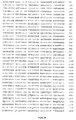
- the present invention also refers to recombinant DNA molecules which hybridize with the DNA sequence coding for the above-mentioned allelic variant of hSTAT3 and whose nucleotide sequences show at least the same 13 differences in the SH2 domain (with respect to the human STAT3 sequence in Akira et al., 1994), as shown in Figure 1.
- the gene can contain, or not, the natural introns and can be obtained for example by extraction from appropriate cells and purification with known methods.
- the present invention also includes recombinant DNA molecules which hybridize under stringent conditions with a probe having a nucleotide sequence selected between SEQ ID NO: 16 and SEQ ID NO: 17.
- the invention also includes expression vectors which comprise the above DNAs, host-cells transformed with such vectors and a process of preparation of such allelic variant of hSTAT3, its active fragments or fusion proteins, through the culture in appropriate culture media of said transformed cells.
- the DNA sequence coding for the protein of the invention can be inserted and ligated into a suitable plasmid. Once formed, the expression vector is introduced into a suitable host cell, which then expresses the vector(s) to yield the desired protein.
- telomeres eukaryotic cells
- prokaryotic cells e.g. yeasts, insect or mammalian cells
- Any method known in the art can be employed.
- DNA molecules coding for the proteins obtained by any of the above methods are inserted into appropriately constructed expression vectors by techniques well known in the art (see Sambrook et al, 1989). Double stranded cDNA is linked to plasmid vectors by homopolymeric tailing or by restriction linking involving the use of synthetic DNA linkers or blunt-ended ligation techniques: DNA ligases are used to ligate the DNA molecules and undesirable joining is avoided by treatment with alkaline phosphatase.
- an expression vector should comprise also specific nucleotide sequences containing transcriptional and translational regulatory information linked to the DNA coding the desired protein in such a way as to permit gene expression and production of the protein.
- RNA polymerase binds and thus initiates the transcription process.
- promoters There are a variety of such promoters in use, which work with different efficiencies (strong and weak promoters).
- transcriptional and translational regulatory sequences may be employed, depending on the nature of the host. They may be derived form viral sources, such as adenovirus, bovine papilloma virus, Simian virus or the like, where the regulatory signals are associated with a particular gene which has a high level of expression. Examples are the TK promoter of the Herpes virus, the SV40 early promoter, the yeast gal4 gene promoter, etc. Transcriptional initiation regulatory signals may be selected which allow for repression and activation, so that expression of the genes can be modulated.
- the DNA molecule comprising the nucleotide sequence coding for the protein of the invention is inserted into vector(s), having the operably linked transcriptional and translational regulatory signals, which is capable of integrating the desired gene sequences into the host cell.
- the cells which have been stably transformed by the introduced DNA can be selected by also introducing one or more markers which allow for selection of host cells which contain the expression vector.
- the marker may also provide for phototrophy to a auxotropic host, biocide resistance, e.g. antibiotics, or heavy metals such as copper, or the like.
- the selectable marker gene can either be directly linked to the DNA gene sequences to be expressed, or introduced into the same cell by co-transfection. Additional elements may also be needed for optimal synthesis of proteins of the invention.
- Factors of importance in selecting a particular plasmid or viral vector include: the ease with which recipient cells, that contain the vector may be recognized and selected form those recipient cells which do not contain the vector; the number of copies of the vector which are desired in a particular host; and whether it is desirable to be able to "shuttle" the vector between host cells of different species.
- the DNA construct(s) may be introduced into an appropriate host cell by any of a variety of suitable means: transformation, transfection, conjugation, protoplast fusion, electroporation, calcium phosphate-precipitation, direct microinjection, etc.
- Host cells may be either prokaryotic or eukayotic.
- eukaryotic hosts e.g. mammalian cells, such as human, monkey, mouse, and Chinese hamster ovary (CHO) cells, because they provide post-translational modifications to protein molecules, including correct folding or glycosylation at correct sites.
- yeast cells can carry out post-translational peptide modifications including glycosylation.
- Yeast recognizes leader sequences on cloned mammalian gene products and secretes peptides bearing leader sequences (i.e., pre-peptides).
- the host cells After the introduction of the vector(s), the host cells are grown in a selective medium, which selects for the growth of vector-containing cells. Expression of the cloned gene sequence(s) results in the production of the desired proteins.
- Purification of the recombinant proteins is carried out by any one of the methods known for this purpose, i.e. any conventional procedure involving extraction, precipitation, chromatography, electrophoresis, or the like.
- a further purification procedure that may be used in preference for purifying the protein of the invention is affinity chromatography using monoclonal antibodies which bind the target protein and which are produced and immobilized on a gel matrix contained within a column. Impure preparations containing the recombinant protein are passed through the column. The protein will be bound to the column by the specific antibody while the impurities will pass through. After washing, the protein is eluted from the gel by a change in pH or ionic strength.
- the protein of the invention is useful in the therapy and/or diagnosis of autoimmune and/or inflammatory diseases. Therefore, in a further aspect, the present invention provides the use of the protein of the invention in the manufacture of a medicament for the treatment of autoimmune diseases and/or inflammatory diseases.
- the medicament is preferably presented in the form of a pharmaceutical composition
- a pharmaceutical composition comprising the protein of the invention together with one or more pharmaceutically acceptable carriers and/or excipients.
- Such pharmaceutical compositions form yet a further aspect of the present invention.
- HepG2 human hepatoma cell line was from ATCC (Rockville, MD, USA).
- Total human RNA from heart, liver, fetal liver, small intestine placenta and human genomic DNA were obtained from Clontech (Palo Alto, CA, USA).
- Other RNAs used in this patent application were prepared in our laboratory.
- Pfu polymerase was from Stratagene (La Jolla, CA, USA); DNA Taq polymerase was from Advanced Biotechnology, Leatherhead, UK. DNA Sequencing Kit was from Perkin Elmer (Applied Biosystems Division, Foster City, CA, USA); SuperScript II reverse transcriptase (200 U/ ⁇ l) and Trizol Reagent for RNA extraction were from Gibco (Grand Island, NY, USA).
- Additional primers for isolating the entire human STAT 3 cDNA were: Primer STAU, Primer STAL, Primer STBU and Primer STBL.
- the US3/LS3 pair of primers was uniquely specific for the variant hSTAT3 sequence described in this patent application. This US3/LS3 pair of primers did amplify a 111 bp fragment specifically in the hSTAT3 variant sequence, corresponding to the sequence amplified by the US1/LS2 primers in the original published hSTAT3 cDNA sequence.
- RNA from human HepG2 cells was prepared by the method of Birnboim (Birnboim, 1988). For other tissues and cells, RNA was extracted with the Trizol reagent available from Gibco, Grand Island, NY, USA, following manufacturer instructions.
- Oligo(dT) was used to prime reverse transcription of 5 ⁇ g of total RNA with 200 U of SuperScript II reverse transcriptase (RT) in 50 ⁇ l reaction mixture.
- the RT reaction was carried out at 37°C for 1h and 30 min.
- Preparative PCR was then performed using the RT products as the cDNA templates.
- PCR reactions contained 10 ⁇ l of cDNA, 50 pmoles of each primer (see below), 2.5 units of Stratagene Pfu polymerase, 0.2 mM of each of the four deoxynucleotide triphosphates, 10 ⁇ l of Pfu buffer, in a reaction volume of 100 ⁇ l, overlaid with 50 ⁇ l of mineral oil.
- Amplifcation was usually performed for 30 cycles with a temperature profile of 45 seconds at 94°C (denaturation), 45 seconds at 50 to 60°C (annealing) and 5 minutes at 72°C (extention).
- PCR products were purified by centrifugation through Microcon 100 filters (Amicon) and then subjected to electrophoresis on 1.5 % agarose gels in Tris/borate/EDTA buffer.
- Analytical PCRs were performed in capillary tubes, with the same concentration of reagents described above in ten-fold less volume, except for the Pfu polymerase which was substituted with 0.5 U of Taq polymerase.
- the temperature profile was 94°C for denaturation, 55°C for annealing and 72°C for extention.
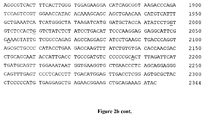
- STAT3 PCR products were sequenced as depicted in Figure 2.
- DNA sequences were performed with the dideoxy method, using a DNA sequencing kit (Perkin Elmer, Applied Biosystems Division, Foster City, CA, USA) on an ABI model 373A automated sequencer, following manufacturer instructions.
- the nucleotide sequences of all cDNA fragments were determined from sequencing both DNA strands. Nucleotide and deduced amino acid sequences were compared with those in GenBank and the Swiss-Prot database.
- the new human STAT3 sequence results in a slightly increased evolutionary distance with the mouse sequence.
- a region ranging between nucleotides 1680 and 1940 of the original human sequence showed a high nucleotide conservation between man and mouse. Such conservation is lost when the new human sequence presented in this patent application is considered.
- STAT3 like other STAT family members, is known to bind several different proteins in order to accomplish its multiple functions (Darnell, 1997).
- the SH2 domain of STAT3 interacts with the intracellular portion of signal transducing receptor molecules, while the C-terminal region is important for activation and dimerization (Sasse et al., 1997), and the central region is important for DNA binding (Horvath et al., 1995).
- Validation primers US4/LS4 were thus designed to match exactly primers US1/LS1, but each primer with a 3' extention matching the hSTAT3 variant sequence determined in this work.
- Amplification would then result in an artificial hybrid template composed of the hSTAT3 variant sequence fragment, with its 5' and 3' ends identical to primers US1 and LS1 respectively.
- This artificial template should allow effective amplification with primers US1/LS1, even in the absence of the corresponding natural DNA template (i.e., the original, published hSTAT3 cDNA fragment of 285 bp).
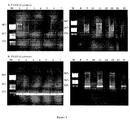
- This artificial template was obtained by PCR with primers US4/LS4, and spiked at differnt concentrations in human placental cDNA and in other human cDNAs. Primers US1/LS1 were then used to amplify these spiked cDNAs, and a PCR product of the expected size was readly obtained ( Figure 4). This result therefore excluded a failure of the US1/LS1 pair of primers in the amplification reaction.
- the new variant sequence is likely to be predominant, since it was represented in all nucleic acid samples tested, derived from a total of 31 individuals.
- the original published hSTAT3 sequence was not represented at all in these individuals.
Landscapes
- Health & Medical Sciences (AREA)
- Chemical & Material Sciences (AREA)
- Life Sciences & Earth Sciences (AREA)
- Organic Chemistry (AREA)
- Medicinal Chemistry (AREA)
- General Health & Medical Sciences (AREA)
- Immunology (AREA)
- Animal Behavior & Ethology (AREA)
- Veterinary Medicine (AREA)
- Nuclear Medicine, Radiotherapy & Molecular Imaging (AREA)
- Chemical Kinetics & Catalysis (AREA)
- Bioinformatics & Cheminformatics (AREA)
- Proteomics, Peptides & Aminoacids (AREA)
- Genetics & Genomics (AREA)
- Pharmacology & Pharmacy (AREA)
- Public Health (AREA)
- General Chemical & Material Sciences (AREA)
- Molecular Biology (AREA)
- Engineering & Computer Science (AREA)
- Toxicology (AREA)
- Zoology (AREA)
- Gastroenterology & Hepatology (AREA)
- Biochemistry (AREA)
- Biophysics (AREA)
- Rheumatology (AREA)
- Pain & Pain Management (AREA)
- Transplantation (AREA)
- Peptides Or Proteins (AREA)
- Micro-Organisms Or Cultivation Processes Thereof (AREA)
- Medicines That Contain Protein Lipid Enzymes And Other Medicines (AREA)
- Preparation Of Compounds By Using Micro-Organisms (AREA)
- Pyridine Compounds (AREA)
- Acyclic And Carbocyclic Compounds In Medicinal Compositions (AREA)
- Polysaccharides And Polysaccharide Derivatives (AREA)
- Measuring Or Testing Involving Enzymes Or Micro-Organisms (AREA)
- Pyrane Compounds (AREA)
- Medicines Containing Material From Animals Or Micro-Organisms (AREA)
Priority Applications (12)
| Application Number | Priority Date | Filing Date | Title |
|---|---|---|---|
| EP98102774A EP0905234A3 (de) | 1997-09-16 | 1998-02-18 | Allele Formen vom Menschlicher STAT3 |
| DE69836278T DE69836278T2 (de) | 1997-09-16 | 1998-09-15 | Allele formen von menschlichem stat3 |
| DK98951396T DK1012286T3 (da) | 1997-09-16 | 1998-09-15 | Allelvariant af humant STAT3 |
| JP2000511862A JP2001516578A (ja) | 1997-09-16 | 1998-09-15 | ヒトstat3の対立遺伝子変異体 |
| ES98951396T ES2272010T3 (es) | 1997-09-16 | 1998-09-15 | Variantes alelicas de la stat3 humana. |
| EP98951396A EP1012286B1 (de) | 1997-09-16 | 1998-09-15 | Allele formen von menschlichem stat3 |
| PCT/EP1998/005844 WO1999014322A2 (en) | 1997-09-16 | 1998-09-15 | Allelic variant of human stat3 |
| PT98951396T PT1012286E (pt) | 1997-09-16 | 1998-09-15 | Variante alélica stat3 humana |
| AU97436/98A AU9743698A (en) | 1997-09-16 | 1998-09-15 | Allelic variant of human stat3 |
| AT98951396T ATE343633T1 (de) | 1997-09-16 | 1998-09-15 | Allele formen von menschlichem stat3 |
| US09/526,542 US6369198B1 (en) | 1997-09-16 | 2000-03-16 | Allelic variant of human STAT3 |
| US10/117,087 US6660848B2 (en) | 1997-09-16 | 2002-04-08 | Allelic variant of human STAT3 |
Applications Claiming Priority (3)
| Application Number | Priority Date | Filing Date | Title |
|---|---|---|---|
| EP97116061A EP0906953A1 (de) | 1997-09-16 | 1997-09-16 | Allele Formen von menschlicher STAT3 |
| EP97116061 | 1997-09-16 | ||
| EP98102774A EP0905234A3 (de) | 1997-09-16 | 1998-02-18 | Allele Formen vom Menschlicher STAT3 |
Publications (2)
| Publication Number | Publication Date |
|---|---|
| EP0905234A2 true EP0905234A2 (de) | 1999-03-31 |
| EP0905234A3 EP0905234A3 (de) | 1999-06-23 |
Family
ID=26145781
Family Applications (2)
| Application Number | Title | Priority Date | Filing Date |
|---|---|---|---|
| EP98102774A Withdrawn EP0905234A3 (de) | 1997-09-16 | 1998-02-18 | Allele Formen vom Menschlicher STAT3 |
| EP98951396A Expired - Lifetime EP1012286B1 (de) | 1997-09-16 | 1998-09-15 | Allele formen von menschlichem stat3 |
Family Applications After (1)
| Application Number | Title | Priority Date | Filing Date |
|---|---|---|---|
| EP98951396A Expired - Lifetime EP1012286B1 (de) | 1997-09-16 | 1998-09-15 | Allele formen von menschlichem stat3 |
Country Status (10)
| Country | Link |
|---|---|
| US (2) | US6369198B1 (de) |
| EP (2) | EP0905234A3 (de) |
| JP (1) | JP2001516578A (de) |
| AT (1) | ATE343633T1 (de) |
| AU (1) | AU9743698A (de) |
| DE (1) | DE69836278T2 (de) |
| DK (1) | DK1012286T3 (de) |
| ES (1) | ES2272010T3 (de) |
| PT (1) | PT1012286E (de) |
| WO (1) | WO1999014322A2 (de) |
Cited By (1)
| Publication number | Priority date | Publication date | Assignee | Title |
|---|---|---|---|---|
| US20210299243A1 (en) * | 2018-08-15 | 2021-09-30 | The Regents Of The University Of California | Il-10 inhibition for vaccines and immunotherapy |
Families Citing this family (6)
| Publication number | Priority date | Publication date | Assignee | Title |
|---|---|---|---|---|
| US6391572B1 (en) | 1999-08-31 | 2002-05-21 | The Rockefeller University | Methods for identifying modulators of transcriptional activator protein interactions |
| US7094140B2 (en) * | 2003-06-03 | 2006-08-22 | Onfloor Technologies, L.L.C. | Abrasive sanding surface |
| US20060148715A1 (en) * | 2004-12-20 | 2006-07-06 | Baylor College Of Medicine | Structural requirements for STAT3 binding and recruitment to phosphotyrosine ligands |
| JP5495249B2 (ja) | 2009-02-23 | 2014-05-21 | 富士通株式会社 | 新規化合物、リン酸化阻害剤、インスリン抵抗性改善剤、及び糖尿病の予防乃至治療剤、並びに、スクリーニング方法 |
| US20130177979A1 (en) * | 2010-06-22 | 2013-07-11 | University Of Central Florida Research Foundation, Inc. | Methods and compositions for cell permeable stat3 inhibitor |
| CA2840408A1 (en) * | 2011-06-27 | 2013-01-03 | Galderma Research & Development | New th-17 differentiation markers for rosacea and uses thereof |
Family Cites Families (3)
| Publication number | Priority date | Publication date | Assignee | Title |
|---|---|---|---|---|
| JPH09506243A (ja) * | 1993-09-24 | 1997-06-24 | ザ ロックフェラー ユニヴァーシティ | レセプター認識因子、蛋白配列およびその使用方法 |
| EP0676469A3 (de) * | 1994-04-04 | 1998-03-25 | Tadamitsu Kishimoto | Transkriptionsfaktor APRF |
| US5716622A (en) * | 1995-01-06 | 1998-02-10 | The Rockefeller University | Functionally active regions of signal transducer and activators of transcription |
-
1998
- 1998-02-18 EP EP98102774A patent/EP0905234A3/de not_active Withdrawn
- 1998-09-15 EP EP98951396A patent/EP1012286B1/de not_active Expired - Lifetime
- 1998-09-15 AT AT98951396T patent/ATE343633T1/de not_active IP Right Cessation
- 1998-09-15 PT PT98951396T patent/PT1012286E/pt unknown
- 1998-09-15 ES ES98951396T patent/ES2272010T3/es not_active Expired - Lifetime
- 1998-09-15 WO PCT/EP1998/005844 patent/WO1999014322A2/en not_active Ceased
- 1998-09-15 DK DK98951396T patent/DK1012286T3/da active
- 1998-09-15 AU AU97436/98A patent/AU9743698A/en not_active Abandoned
- 1998-09-15 DE DE69836278T patent/DE69836278T2/de not_active Expired - Fee Related
- 1998-09-15 JP JP2000511862A patent/JP2001516578A/ja active Pending
-
2000
- 2000-03-16 US US09/526,542 patent/US6369198B1/en not_active Expired - Fee Related
-
2002
- 2002-04-08 US US10/117,087 patent/US6660848B2/en not_active Expired - Fee Related
Cited By (2)
| Publication number | Priority date | Publication date | Assignee | Title |
|---|---|---|---|---|
| US20210299243A1 (en) * | 2018-08-15 | 2021-09-30 | The Regents Of The University Of California | Il-10 inhibition for vaccines and immunotherapy |
| US12558413B2 (en) * | 2018-08-15 | 2026-02-24 | The Regents Of The University Of California | IL-10 inhibition for vaccines and immunotherapy |
Also Published As
| Publication number | Publication date |
|---|---|
| US20030166854A1 (en) | 2003-09-04 |
| EP1012286B1 (de) | 2006-10-25 |
| US6660848B2 (en) | 2003-12-09 |
| JP2001516578A (ja) | 2001-10-02 |
| WO1999014322A3 (en) | 1999-08-05 |
| US6369198B1 (en) | 2002-04-09 |
| ES2272010T3 (es) | 2007-04-16 |
| DE69836278D1 (de) | 2006-12-07 |
| EP1012286A2 (de) | 2000-06-28 |
| WO1999014322A2 (en) | 1999-03-25 |
| EP0905234A3 (de) | 1999-06-23 |
| DE69836278T2 (de) | 2007-09-13 |
| DK1012286T3 (da) | 2007-02-12 |
| PT1012286E (pt) | 2006-12-29 |
| AU9743698A (en) | 1999-04-05 |
| ATE343633T1 (de) | 2006-11-15 |
Similar Documents
| Publication | Publication Date | Title |
|---|---|---|
| JP3769189B2 (ja) | T細胞誘導性因子(tif)をコードする単離された核酸分子、コードされたタンパク質およびその使用 | |
| EP1012286B1 (de) | Allele formen von menschlichem stat3 | |
| WO2002020651A2 (en) | Human phermone polypeptide | |
| KR0142675B1 (ko) | 유전자 발현 조절인자 | |
| EP0906953A1 (de) | Allele Formen von menschlicher STAT3 | |
| US20030017980A1 (en) | Mammalian Wnt polypeptide-5 | |
| US20030157686A1 (en) | Rattlesnake venom gland proteins | |
| NZ230399A (en) | Recombinant interferon regulatory factor-1 (irf-1) dna, hosts and method of production | |
| US20020164764A1 (en) | Transmembrane polypeptide expressed by lymphocytes | |
| CA2415095A1 (en) | Secreted alpha-helical protein-36 | |
| JPS60126088A (ja) | 新規dνaおよびその用途 | |
| WO2001092305A2 (en) | Mammalian transforming growth factor beta-10 | |
| US20040180398A1 (en) | Mammalian secretory protein Zsig43 | |
| WO2001004307A1 (en) | Alpha protein - 27 | |
| US20040058354A1 (en) | Mammalian alpha-helical protein-53 | |
| CA2347679A1 (en) | Human gene marker for metabolic disease | |
| EP1180146A1 (de) | Sekretierte alpha-helix protein-32 | |
| CA2352560A1 (en) | Mammalian secretory protein zsig43 | |
| WO2001077152A2 (en) | Mammalian disulfide core protein-4 | |
| JPH03123487A (ja) | 新規ポリペプチドの製造法 | |
| MXPA01003359A (en) | Secretory protein - 48 | |
| CA2392044A1 (en) | Educational kit and method using colipase-like protein-1 | |
| MXPA01007331A (en) | Tumor marker zsig62 | |
| CA2426624A1 (en) | Human cyclic nucleotide binding protein | |
| AU2007317232A1 (en) | Variants and methods of using transforming growth factor beta-9 |
Legal Events
| Date | Code | Title | Description |
|---|---|---|---|
| PUAI | Public reference made under article 153(3) epc to a published international application that has entered the european phase |
Free format text: ORIGINAL CODE: 0009012 |
|
| AK | Designated contracting states |
Kind code of ref document: A2 Designated state(s): AT |
|
| AX | Request for extension of the european patent |
Free format text: AL;LT;LV;MK;RO;SI |
|
| PUAL | Search report despatched |
Free format text: ORIGINAL CODE: 0009013 |
|
| AK | Designated contracting states |
Kind code of ref document: A3 Designated state(s): AT BE CH DE DK ES FI FR GB GR IE IT LI LU MC NL PT SE |
|
| AX | Request for extension of the european patent |
Free format text: AL;LT;LV;MK;RO;SI |
|
| AKX | Designation fees paid |
Free format text: AT |
|
| REG | Reference to a national code |
Ref country code: DE Ref legal event code: 8566 |
|
| STAA | Information on the status of an ep patent application or granted ep patent |
Free format text: STATUS: THE APPLICATION IS DEEMED TO BE WITHDRAWN |
|
| 18D | Application deemed to be withdrawn |
Effective date: 20000504 |