EP0905301A1 - Schlichte für das Niedertemperatur-Schlichtsystem - Google Patents
Schlichte für das Niedertemperatur-Schlichtsystem Download PDFInfo
- Publication number
- EP0905301A1 EP0905301A1 EP97115138A EP97115138A EP0905301A1 EP 0905301 A1 EP0905301 A1 EP 0905301A1 EP 97115138 A EP97115138 A EP 97115138A EP 97115138 A EP97115138 A EP 97115138A EP 0905301 A1 EP0905301 A1 EP 0905301A1
- Authority
- EP
- European Patent Office
- Prior art keywords
- size
- weight
- sizing
- ester oils
- low
- Prior art date
- Legal status (The legal status is an assumption and is not a legal conclusion. Google has not performed a legal analysis and makes no representation as to the accuracy of the status listed.)
- Withdrawn
Links
Images


Classifications
-
- D—TEXTILES; PAPER
- D06—TREATMENT OF TEXTILES OR THE LIKE; LAUNDERING; FLEXIBLE MATERIALS NOT OTHERWISE PROVIDED FOR
- D06M—TREATMENT, NOT PROVIDED FOR ELSEWHERE IN CLASS D06, OF FIBRES, THREADS, YARNS, FABRICS, FEATHERS OR FIBROUS GOODS MADE FROM SUCH MATERIALS
- D06M15/00—Treating fibres, threads, yarns, fabrics, or fibrous goods made from such materials, with macromolecular compounds; Such treatment combined with mechanical treatment
- D06M15/19—Treating fibres, threads, yarns, fabrics, or fibrous goods made from such materials, with macromolecular compounds; Such treatment combined with mechanical treatment with synthetic macromolecular compounds
- D06M15/21—Macromolecular compounds obtained by reactions only involving carbon-to-carbon unsaturated bonds
- D06M15/327—Macromolecular compounds obtained by reactions only involving carbon-to-carbon unsaturated bonds of unsaturated alcohols or esters thereof
- D06M15/333—Macromolecular compounds obtained by reactions only involving carbon-to-carbon unsaturated bonds of unsaturated alcohols or esters thereof of vinyl acetate; Polyvinylalcohol
-
- D—TEXTILES; PAPER
- D06—TREATMENT OF TEXTILES OR THE LIKE; LAUNDERING; FLEXIBLE MATERIALS NOT OTHERWISE PROVIDED FOR
- D06M—TREATMENT, NOT PROVIDED FOR ELSEWHERE IN CLASS D06, OF FIBRES, THREADS, YARNS, FABRICS, FEATHERS OR FIBROUS GOODS MADE FROM SUCH MATERIALS
- D06M13/00—Treating fibres, threads, yarns, fabrics or fibrous goods made from such materials, with non-macromolecular organic compounds; Such treatment combined with mechanical treatment
- D06M13/10—Treating fibres, threads, yarns, fabrics or fibrous goods made from such materials, with non-macromolecular organic compounds; Such treatment combined with mechanical treatment with compounds containing oxygen
- D06M13/224—Esters of carboxylic acids; Esters of carbonic acid
-
- D—TEXTILES; PAPER
- D06—TREATMENT OF TEXTILES OR THE LIKE; LAUNDERING; FLEXIBLE MATERIALS NOT OTHERWISE PROVIDED FOR
- D06M—TREATMENT, NOT PROVIDED FOR ELSEWHERE IN CLASS D06, OF FIBRES, THREADS, YARNS, FABRICS, FEATHERS OR FIBROUS GOODS MADE FROM SUCH MATERIALS
- D06M15/00—Treating fibres, threads, yarns, fabrics, or fibrous goods made from such materials, with macromolecular compounds; Such treatment combined with mechanical treatment
- D06M15/01—Treating fibres, threads, yarns, fabrics, or fibrous goods made from such materials, with macromolecular compounds; Such treatment combined with mechanical treatment with natural macromolecular compounds or derivatives thereof
- D06M15/03—Polysaccharides or derivatives thereof
-
- D—TEXTILES; PAPER
- D06—TREATMENT OF TEXTILES OR THE LIKE; LAUNDERING; FLEXIBLE MATERIALS NOT OTHERWISE PROVIDED FOR
- D06M—TREATMENT, NOT PROVIDED FOR ELSEWHERE IN CLASS D06, OF FIBRES, THREADS, YARNS, FABRICS, FEATHERS OR FIBROUS GOODS MADE FROM SUCH MATERIALS
- D06M15/00—Treating fibres, threads, yarns, fabrics, or fibrous goods made from such materials, with macromolecular compounds; Such treatment combined with mechanical treatment
- D06M15/01—Treating fibres, threads, yarns, fabrics, or fibrous goods made from such materials, with macromolecular compounds; Such treatment combined with mechanical treatment with natural macromolecular compounds or derivatives thereof
- D06M15/03—Polysaccharides or derivatives thereof
- D06M15/05—Cellulose or derivatives thereof
- D06M15/09—Cellulose ethers
-
- D—TEXTILES; PAPER
- D06—TREATMENT OF TEXTILES OR THE LIKE; LAUNDERING; FLEXIBLE MATERIALS NOT OTHERWISE PROVIDED FOR
- D06M—TREATMENT, NOT PROVIDED FOR ELSEWHERE IN CLASS D06, OF FIBRES, THREADS, YARNS, FABRICS, FEATHERS OR FIBROUS GOODS MADE FROM SUCH MATERIALS
- D06M15/00—Treating fibres, threads, yarns, fabrics, or fibrous goods made from such materials, with macromolecular compounds; Such treatment combined with mechanical treatment
- D06M15/01—Treating fibres, threads, yarns, fabrics, or fibrous goods made from such materials, with macromolecular compounds; Such treatment combined with mechanical treatment with natural macromolecular compounds or derivatives thereof
- D06M15/03—Polysaccharides or derivatives thereof
- D06M15/11—Starch or derivatives thereof
-
- D—TEXTILES; PAPER
- D06—TREATMENT OF TEXTILES OR THE LIKE; LAUNDERING; FLEXIBLE MATERIALS NOT OTHERWISE PROVIDED FOR
- D06M—TREATMENT, NOT PROVIDED FOR ELSEWHERE IN CLASS D06, OF FIBRES, THREADS, YARNS, FABRICS, FEATHERS OR FIBROUS GOODS MADE FROM SUCH MATERIALS
- D06M15/00—Treating fibres, threads, yarns, fabrics, or fibrous goods made from such materials, with macromolecular compounds; Such treatment combined with mechanical treatment
- D06M15/19—Treating fibres, threads, yarns, fabrics, or fibrous goods made from such materials, with macromolecular compounds; Such treatment combined with mechanical treatment with synthetic macromolecular compounds
- D06M15/21—Macromolecular compounds obtained by reactions only involving carbon-to-carbon unsaturated bonds
- D06M15/263—Macromolecular compounds obtained by reactions only involving carbon-to-carbon unsaturated bonds of unsaturated carboxylic acids; Salts or esters thereof
-
- D—TEXTILES; PAPER
- D06—TREATMENT OF TEXTILES OR THE LIKE; LAUNDERING; FLEXIBLE MATERIALS NOT OTHERWISE PROVIDED FOR
- D06M—TREATMENT, NOT PROVIDED FOR ELSEWHERE IN CLASS D06, OF FIBRES, THREADS, YARNS, FABRICS, FEATHERS OR FIBROUS GOODS MADE FROM SUCH MATERIALS
- D06M2200/00—Functionality of the treatment composition and/or properties imparted to the textile material
- D06M2200/40—Reduced friction resistance, lubricant properties; Sizing compositions
Definitions
- the invention relates to an aqueous sizing for sizing warp threads before the weaving process.
- this size contains dissolved in water Polyvinyl alcohols or acrylates or starch derivatives or cellulose ether or Galactomannans.
- This base size is a synthetic ester oil admitted.
- the size is especially for low-temperature size systems generally develops and works at room temperature with an upper one Guide value of approx. 40 ° C.
- the low-temperature finishing process is a relative one new process. Using conventional finishing technology in so-called hot finishing processes, finishing devices are used, which are unsuitable for finishing at low temperatures.
- the object of the invention is therefore to develop a Size with good network properties for thread penetration, at low Degree of sizing, good strength and best abrasion values of the Size films and at the same time good washability and good ecological degradation values.
- the ester oils are carboxylic acid esters with chain length C8 - C24, preferably C14 - C20.
- the alcohol component can be 1-5-valent, but preferably 1-3 valued.
- the chain length of the alcohol is between C2 and C18, preferably C2 - C6.
- the proportion of ester oils in the ready to use Sizing solution is a maximum of 20 percent by weight, but preferred 3-10%.
- the product according to the invention is a cream-colored, odorless emulsion.
- the product is easy to handle, liquid with a viscosity range of 200 - 4000 mPa.s, but preferably used in the viscosity range of 450 - 1500 mPa.s and has a pH value of 5 - 7.
- the new size has the following advantages in particular: It is universally applicable in the low-temperature sizing system in compatibility with the sizing device according to the EP application. 95115925.0. Above all, the size has excellent affinity for all types of fibers. Both low and highest levels of sizing can be achieved with the corresponding efficiency of the effects in the weaving mill. The smooth surface of the sizing film and the good thread closure result in a much easier dry division of the chain, which reduces hairiness.
- the washout behavior in the equipment is due to its water solubility
- the product is extremely simple and can be removed from the fabric at one Wash out temperature of over 40 ° C in the neutral area.
Landscapes
- Engineering & Computer Science (AREA)
- Textile Engineering (AREA)
- Chemical & Material Sciences (AREA)
- Chemical Kinetics & Catalysis (AREA)
- Treatments For Attaching Organic Compounds To Fibrous Goods (AREA)
Abstract
Die Erfindung betrifft eine Schlichte für das Niedertemperatur-Schlichtsystem wobei synthetische Esteröle im Gemisch mit Basisschlichte-Rezepturen eingesetzt werden, wobei es sich bei den Esterölen handelt um; Carbonsäureester mit Kettenlänge C8 - C24, bevorzugt C14 - C20. Die Alkoholkomponente kann 1-5wertig sein, bevorzugt jedoch 1-3wertig. Die Kettenlänge des Alkohols liegt zwischen C2 und C18, bevorzugt C2 - C6. Der Anteil der Esteröle in der gebrauchsfertigen Schlichtelösung beträgt im Maximum 20 Gewichtsprozente, bevorzugt jedoch 3-10 %. <IMAGE>
Description
Die Erfindung betrifft eine wässrige Schlichte zum Schlichten von Kettfäden
vor dem Webprozess. Als Basis enthält diese Schlichte in Wasser gelöste
Polyvinylalkohole oder Acrylate oder Stärkederivate oder Celluloseäther oder
Galaktomannane. Dieser Basis-Schlichte wird jeweils ein synthetisches Esteröl
zugegeben. Die Schlichte ist speziell für Niedertemperatur-Schlichtsysteme
entwickelt und arbeitet generell bei Raumtemperatur mit einem oberen
Richtwert von ca. 40° C. Das Niedertemperatur-Schlichtverfahren ist ein relativ
neues Verfahren. Mittels der konventionellen Schlichttechnologie im
sogenannten Heißschlichtverfahren werden Schlichtvorrichtungen eingesetzt,
die für den Schlichtauftrag bei Niedertemperatur ungeeignet sind. Da das
Heißschlichtverfahren einige technologische als auch umweltrelevante
Nachteile aufweist, war es unumgänglich Lösungen zu finden, um mit einer
völlig neuen, der Niedertemperatur-Schlichttechnologie, einen technischen
Durchbruch zu erzielen. Voraussetzung zur Lösung der Problemstellung waren
deshalb neu zu entwickelnde Niedertemperatur-Schlichtvorrichtungen. Solche
wurden entwickelt und arbeiten inzwischen zufriedenstellend in der
Textilindustrie weltweit. Die neuen Niedertemperatur-Schlichtvorrichtungen
sind beispielsweise in den DE-4118076 A1, der DE 4205515 A1 und der EP-Anm.
95115925.0 beschrieben.
Nach Lösung des Problems der Applikationsvorrichtung war es unabdingbar,
eine spezielle Schlichte zu entwickeln, die den Anforderungen der
Schlichtvorrichtungen des Niedertemperatur-Schlichtverfahrens entspricht.
Einige Lösungen wurden gefunden auf der Basis von filmbildenden Polymeren.
Solche Schlichten wurden z.B. in der genannten EP-Anmeldung beschrieben.
Trotz dieser zwischenzeitlichen Entwicklungsfortschritte besteht weiterhin ein
dringender Bedarf auf noch effizientere Schlichten für das Niedertemperatur-Schlichtverfahren.
Aufgabe der Erfindung ist deshalb die Entwicklung einer
Schlichte mit guten Netzeigenschaften zur Fadendurchdringung, bei niedrigem
Beschlichtungsgrad, guter Festigkeit und besten Abriebwerten des
Schlichtefilms und gleichzeitig guter Auswaschbarkeit sowie guten
ökologischen Abbauwerten.
Die Aufgabe der Erfindung wurde gelöst durch eine Schlichte zum Schlichten
von textilen Kettfäden bestehend aus:
Polyethylenglycol, Harnstoff, Fettalkoholpolyglycolether, Phosphorsäureteilester
und handelsübliche Konservierstoffe.
Bei den Esterölen handelt es sich um Carbonsäureester mit Kettenlänge C8 -
C24, bevorzugt C14 - C20. Die Alkoholkomponente kann 1-5wertig sein,
bevorzugt jedoch 1-3wertig. Die Kettenlänge des Alkohols liegt zwischen C2
und C18, bevorzugt C2 - C6. Der Anteil der Esteröle in der gebrauchsfertigen
Schlichtelösung beträgt im Maximum 20 Gewichtsprozente, bevorzugt jedoch
3-10 %.
Das erfindungsgemäße Produkt ist eine cremefarbene geruchlose Emulsion.
Das Produkt ist gut handhabbar, flüssig mit einem Viskositätsbereich von 200 -
4000 mPa.s, jedoch vorzugsweise eingesetzt im Viskositätsbereich von 450 -
1500 mPa.s und hat einen PH-Wert von 5 - 7.
Die neue Schlichte besitzt insbesondere folgende Vorteile:
Sie ist universell anwendbar im Niedertemperatur-Schlichtsystem in Compatibilität mit der Schlichtevorrichtung gemäß der EP-Anm. 95115925.0. Die Schlichte hat vor allem hervorragende Affinität zu allen Faserarten. Es lassen sich niedrige als auch höchste Beschlichtungsgrade erzielen mit entsprechender Effizienz der Nutzeffekte in der Weberei. Durch die geschmeidige Oberfläche des Schlichtefilms und dem guten Fadenschluß wird eine sehr viel leichtere Trockenteilung der Kette erzielt, was die Reduzierung der Haarigkeit bewirkt.
Sie ist universell anwendbar im Niedertemperatur-Schlichtsystem in Compatibilität mit der Schlichtevorrichtung gemäß der EP-Anm. 95115925.0. Die Schlichte hat vor allem hervorragende Affinität zu allen Faserarten. Es lassen sich niedrige als auch höchste Beschlichtungsgrade erzielen mit entsprechender Effizienz der Nutzeffekte in der Weberei. Durch die geschmeidige Oberfläche des Schlichtefilms und dem guten Fadenschluß wird eine sehr viel leichtere Trockenteilung der Kette erzielt, was die Reduzierung der Haarigkeit bewirkt.
Durch das Minimalauftragsverfahren werden nur bis zu 50 % der sonst
üblichen Schlichtemenge benötigt, um damit sogar bessere Schlichteffekte als
bisher zu erzielen. Dies wird erreicht aufgrund der guten Netzeigenschaften
und des Verteilungsgrades der Schlichte auf dem Faden. Es entsteht eine gute
Verfestigung und eine hohe Glättung des Fadens. Die mechanischen
Abriebwerte werden um ein Vielfaches verbessert.
Das Auswaschverhalten in der Ausrüstung ist aufgrund der Wasserlöslichkeit
des Produktes äußerst einfach und läßt sich vom Gewebe bei einer
Temperatur von über 40° C im neutralen Bereich auswaschen.
Die folgenden Beispiele demonstrieren die Fortschrittlichkeit der neuen
Schlichte.
Um den Fortschritt des Schlichtens mit der erfinderischen Schlichte demonstrieren
zu können, ist es sinnvoll, mittels Vergleichsbeispielen zu zeigen,
wie sich die Beimischung von Esteröl zu den Basisbestandteilen der Basis-Rezeptur
auf das Schlichtergebnis auswirkt.
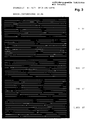
Die Vergleichsresultate werden mittels der Fig.1 bis 3 veranschaulicht, wobei jeweils unter identischen Bedingungen mit gleichem Beschlichtungsgrad von 12,5% geschlichtet wurde unter Verwendung der gleichen Type Nm 20/1 eines open end-Baumwollgarns.
Die Skala auf der rechten Seite der Figuren bedeutet Reibtouren mit dem Webtester von zwischen 0 bis 1000 Touren als Testergebnis der Jeweiligen Vergleichsbeispiele.
Eine beispielhafte Schlichte-Basisrezeptur ist wie folgend;
Die Vergleichsresultate werden mittels der Fig.1 bis 3 veranschaulicht, wobei jeweils unter identischen Bedingungen mit gleichem Beschlichtungsgrad von 12,5% geschlichtet wurde unter Verwendung der gleichen Type Nm 20/1 eines open end-Baumwollgarns.
Die Skala auf der rechten Seite der Figuren bedeutet Reibtouren mit dem Webtester von zwischen 0 bis 1000 Touren als Testergebnis der Jeweiligen Vergleichsbeispiele.
Eine beispielhafte Schlichte-Basisrezeptur ist wie folgend;
Diese wässrige Schlichte wird nun bezogen auf 101,3 beziehungsweise 101,5
Gew. Anteile mit 7,0 Gew. Anteilen eines synthetischen Esteröls versetzt und
zur Emulsion emulgiert. Mit der so erhaltenen Schlichte wird ein Ergebnis erhalten
wie in Fig.3.
- Fig. 1 -
- zeigt das Testresultat von ungeschlichtetem Faden,
- Fig. 2 -
- zeigt das Testresultat bei Anwendung einer Basisschlichte ohne Esterölzusatz,
- Fig. 3 -
- wie Fig.2, jedoch mit Esterölzusatz zur Basisschlichte.
Das Vergleichsresultat spricht eindeutig für Fig.3 der erfindungsgemässen
Schlichte. Während bei Anwendung der Basisschlichte gemäss Fig.2, bei
500 bis 750 Reibtouren des Webtesters schon Sprinkel wie in Fig.1 auftreten,
ist das Resultat bei 1000 Touren gemäss Fig.3 einwandfrei und fehlerlos.
Claims (4)
- Eine Schlichte zum Schlichten von textilen Kettfäden bestehend aus:a) hochkonzentrierten wässrigen Lösungen mit einem Feststoffanteil von 10 bis 35 Gew.%, bevorzugt 15 bis 32 Gew.% aus Polyvinyl- alkohole, acrylate,Stärkederivate,Celluloseether,Galaktomannane nieder bis hochmolekularer Typen,b) Hilfsmitteln wie; Weichmacher,Emulgatoren,Wachse,Netzmittel und Konservierungsmittel,c) Esteröle
- Schlichte gemäss Anspruch 1, wobei die Esteröle synthetischer Natur sind und es sich bei den Esterölen handelt um Carbonsäureester mit Kettenlänge C8 - C24, bevorzugt C14 - C20. Die Alkoholkomponente kann 1-5wertig sein, bevorzugt jedoch 1-3wertig. Die Kettenlänge des Alkohols liegt zwischen C2 und C18, bevorzugt C2 - C6.
- Schlichte gemäss der Ansprüche 1 und 2, wobei der Esterölölanteil in der gebrauchsfertigen Schlichte gemäss a) bis c) im Maximum 20 Gew.% beträgt, vorzugsweise 3 bis 10 Gew.%.
- Schlichte gemäss den Ansprüchen 1 bis 3, wobei die gebrauchsfertige Schlichte eine Flüssigkeit mit einem Viskositätswert von 200 bis 4 000 mPa.s ist, vorzugsweise von 450 bis 1 500 mPa.s.
Priority Applications (1)
| Application Number | Priority Date | Filing Date | Title |
|---|---|---|---|
| EP97115138A EP0905301A1 (de) | 1997-09-02 | 1997-09-02 | Schlichte für das Niedertemperatur-Schlichtsystem |
Applications Claiming Priority (1)
| Application Number | Priority Date | Filing Date | Title |
|---|---|---|---|
| EP97115138A EP0905301A1 (de) | 1997-09-02 | 1997-09-02 | Schlichte für das Niedertemperatur-Schlichtsystem |
Publications (1)
| Publication Number | Publication Date |
|---|---|
| EP0905301A1 true EP0905301A1 (de) | 1999-03-31 |
Family
ID=8227302
Family Applications (1)
| Application Number | Title | Priority Date | Filing Date |
|---|---|---|---|
| EP97115138A Withdrawn EP0905301A1 (de) | 1997-09-02 | 1997-09-02 | Schlichte für das Niedertemperatur-Schlichtsystem |
Country Status (1)
| Country | Link |
|---|---|
| EP (1) | EP0905301A1 (de) |
Cited By (3)
| Publication number | Priority date | Publication date | Assignee | Title |
|---|---|---|---|---|
| CN1317446C (zh) * | 2005-03-11 | 2007-05-23 | 武汉科技学院 | 一种直接用淀粉乳液进行经纱上浆的方法 |
| CN105908504A (zh) * | 2016-05-13 | 2016-08-31 | 武汉纺织大学 | 一种牛仔经纱上浆用复合浆料及其制备方法和应用 |
| CN111636203A (zh) * | 2020-05-29 | 2020-09-08 | 内蒙古工业大学 | 一种废弃马铃薯渣制备生物基纺织浆料的方法 |
Citations (7)
| Publication number | Priority date | Publication date | Assignee | Title |
|---|---|---|---|---|
| US2694021A (en) * | 1951-03-30 | 1954-11-09 | Atlas Powder Co | Textile bearing a starch size |
| EP0108925A2 (de) * | 1982-10-16 | 1984-05-23 | Henkel Kommanditgesellschaft auf Aktien | Glättemittel für Textilfasermaterial |
| US4584110A (en) * | 1984-06-11 | 1986-04-22 | Owens-Corning Fiberglas Corporation | Size compositions for glass fibers |
| JPH03249277A (ja) * | 1990-02-21 | 1991-11-07 | Nippon Ester Co Ltd | ポリエステル系合成繊維の延伸整経方法 |
| WO1995034709A1 (de) * | 1994-06-16 | 1995-12-21 | Henkel Kommanditgesellschaft Auf Aktien | Thermostabile textile glättemittel |
| JPH0813331A (ja) * | 1994-06-23 | 1996-01-16 | Kuraray Co Ltd | 糸の糊付方法 |
| WO1997008278A1 (en) * | 1995-08-28 | 1997-03-06 | Milliken Research Corporation | Lubricant and soil release finish for yarns |
-
1997
- 1997-09-02 EP EP97115138A patent/EP0905301A1/de not_active Withdrawn
Patent Citations (7)
| Publication number | Priority date | Publication date | Assignee | Title |
|---|---|---|---|---|
| US2694021A (en) * | 1951-03-30 | 1954-11-09 | Atlas Powder Co | Textile bearing a starch size |
| EP0108925A2 (de) * | 1982-10-16 | 1984-05-23 | Henkel Kommanditgesellschaft auf Aktien | Glättemittel für Textilfasermaterial |
| US4584110A (en) * | 1984-06-11 | 1986-04-22 | Owens-Corning Fiberglas Corporation | Size compositions for glass fibers |
| JPH03249277A (ja) * | 1990-02-21 | 1991-11-07 | Nippon Ester Co Ltd | ポリエステル系合成繊維の延伸整経方法 |
| WO1995034709A1 (de) * | 1994-06-16 | 1995-12-21 | Henkel Kommanditgesellschaft Auf Aktien | Thermostabile textile glättemittel |
| JPH0813331A (ja) * | 1994-06-23 | 1996-01-16 | Kuraray Co Ltd | 糸の糊付方法 |
| WO1997008278A1 (en) * | 1995-08-28 | 1997-03-06 | Milliken Research Corporation | Lubricant and soil release finish for yarns |
Non-Patent Citations (2)
| Title |
|---|
| DATABASE WPI Section Ch Week 9151, Derwent World Patents Index; Class A23, AN 91-372443, XP002053514 * |
| PATENT ABSTRACTS OF JAPAN vol. 096, no. 005 31 May 1996 (1996-05-31) * |
Cited By (3)
| Publication number | Priority date | Publication date | Assignee | Title |
|---|---|---|---|---|
| CN1317446C (zh) * | 2005-03-11 | 2007-05-23 | 武汉科技学院 | 一种直接用淀粉乳液进行经纱上浆的方法 |
| CN105908504A (zh) * | 2016-05-13 | 2016-08-31 | 武汉纺织大学 | 一种牛仔经纱上浆用复合浆料及其制备方法和应用 |
| CN111636203A (zh) * | 2020-05-29 | 2020-09-08 | 内蒙古工业大学 | 一种废弃马铃薯渣制备生物基纺织浆料的方法 |
Similar Documents
| Publication | Publication Date | Title |
|---|---|---|
| EP0076443A2 (de) | Verfahren zur Herstellung von wässriger Überzugsemulsion aus zähflüssigen cellulosehaltigen Gemischen (Pasten) | |
| EP1149945A1 (de) | Zusammensetzung für die Vorbehandlung von Fasermaterialien | |
| DE69307497T2 (de) | Verfahren zur Ausrüstung von Fasern | |
| DE68925178T2 (de) | Beschichtungszusammensetzung und Emulsionen | |
| EP0905301A1 (de) | Schlichte für das Niedertemperatur-Schlichtsystem | |
| DE3107008A1 (de) | Schlichtemittel fuer synthesefasern | |
| DE2628480A1 (de) | Fleckenentfernungsmittel fuer gewebe und ihre herstellung | |
| DE1769139B1 (de) | Aerosol-Staerke-Gemische | |
| DE4430818A1 (de) | Pflegeemulsion für automatische Fahrzeugwaschanlagen | |
| DE3123726C2 (de) | Haftöle | |
| DE2557409C2 (de) | Emulsion von Harzsäureisocyanaten als Leimungsmittel für Papier | |
| WO1996016147A1 (de) | Kationische wachsdispersionen | |
| DE1004134B (de) | Verfahren zur Behandlung von Faserstoffen | |
| DE1617136B1 (de) | Verfahren zum Chemisch-Reinigen von Textilien | |
| DE69531347T2 (de) | Formverfahren und verdünner für formtrennmittel | |
| DE10015174A1 (de) | Stabile wäßrige Polymeremulsionen, ihre Herstellung und Verwendung | |
| DE1619107C3 (de) | Antistatischmachendes Textilhilfsmittel für synthetische Fasern | |
| EP0046507B1 (de) | Präparationsmittel für Synthesefasern und deren Verwendung | |
| DE566944C (de) | Verfahren zur Verminderung der elektrischen Aufladung von Textilfasern | |
| DE1669153C3 (de) | ||
| DE764031C (de) | Wachsersatzstoffe | |
| DE2356296C3 (de) | Verfahren zur Oberflächenleimung von Papier | |
| DE765123C (de) | Verfahren zum Wasserdicht- und Wasserabstossendmachen von Textilstoffen unter Erhaltung der Luftdurchlaessigkeit | |
| DE2627213C3 (de) | Mittel zur Masseleimung von Papier, Verfahren zur Herstellung und Verwendung desselben | |
| DE2346751C3 (de) | Flammwidrig ausgerüstete, holzschlifffreie und holzschlitfhaltige Papiere sowie Verfahren zu ihrer Ausrüstung |
Legal Events
| Date | Code | Title | Description |
|---|---|---|---|
| PUAI | Public reference made under article 153(3) epc to a published international application that has entered the european phase |
Free format text: ORIGINAL CODE: 0009012 |
|
| AK | Designated contracting states |
Kind code of ref document: A1 Designated state(s): AT BE CH DE DK ES FI FR GB GR IE IT LI LU MC NL PT SE |
|
| AKX | Designation fees paid | ||
| STAA | Information on the status of an ep patent application or granted ep patent |
Free format text: STATUS: THE APPLICATION IS DEEMED TO BE WITHDRAWN |
|
| 18D | Application deemed to be withdrawn |
Effective date: 19991001 |
|
| REG | Reference to a national code |
Ref country code: DE Ref legal event code: 8566 |