EP0905636A2 - Triage local des tableaux téléchargés - Google Patents
Triage local des tableaux téléchargés Download PDFInfo
- Publication number
- EP0905636A2 EP0905636A2 EP98307726A EP98307726A EP0905636A2 EP 0905636 A2 EP0905636 A2 EP 0905636A2 EP 98307726 A EP98307726 A EP 98307726A EP 98307726 A EP98307726 A EP 98307726A EP 0905636 A2 EP0905636 A2 EP 0905636A2
- Authority
- EP
- European Patent Office
- Prior art keywords
- sort
- computer
- hidden
- key
- data
- Prior art date
- Legal status (The legal status is an assumption and is not a legal conclusion. Google has not performed a legal analysis and makes no representation as to the accuracy of the status listed.)
- Withdrawn
Links
Images




Classifications
-
- G—PHYSICS
- G06—COMPUTING OR CALCULATING; COUNTING
- G06F—ELECTRIC DIGITAL DATA PROCESSING
- G06F7/00—Methods or arrangements for processing data by operating upon the order or content of the data handled
- G06F7/22—Arrangements for sorting or merging computer data on continuous record carriers, e.g. tape, drum, disc
-
- Y—GENERAL TAGGING OF NEW TECHNOLOGICAL DEVELOPMENTS; GENERAL TAGGING OF CROSS-SECTIONAL TECHNOLOGIES SPANNING OVER SEVERAL SECTIONS OF THE IPC; TECHNICAL SUBJECTS COVERED BY FORMER USPC CROSS-REFERENCE ART COLLECTIONS [XRACs] AND DIGESTS
- Y10—TECHNICAL SUBJECTS COVERED BY FORMER USPC
- Y10S—TECHNICAL SUBJECTS COVERED BY FORMER USPC CROSS-REFERENCE ART COLLECTIONS [XRACs] AND DIGESTS
- Y10S707/00—Data processing: database and file management or data structures
- Y10S707/99931—Database or file accessing
- Y10S707/99933—Query processing, i.e. searching
Definitions
- the invention relates to computer systems and, more particularly, to the sorting of tables and particularly tables which have been downloaded across a network.
- sorting of tables is well known in the art. Such sorting is found widely in spreadsheet programs. Commonly, one column of the spreadsheet is specified and functions as a sort key for the ordering of the tuples or rows of the spreadsheet. In data bases, it is common that one or more fields in the data base are specified as a sort key. However, these sort keys take up display space and a change in sort key requires generation of a new index.
- Tables downloaded across networks are becoming larger and larger. It would be desirable to view the data from these downloaded tables from a variety of perspectives.
- typical browsers do not provide for the sorting of table data
- sort keys are required to be displayed as a field in a data base or a table in order to be used for sorting.
- a hidden sort key is provided and associated with cell data in a table.
- this takes the form of an attribute to be added to a table data descriptor, such as ⁇ TD>, which attribute can be utilized to sort the cells in the table column.
- ⁇ TD> table data descriptor
- One aspect of the invention relates to expanded browser functionality by which tables can be sorted utilizing a hidden sort key.
- the invention relates to a computer having a graphical user interface, running on a processor, said graphical user interface comprising a sort routine for rearrangig table data based on one or more hidden sort keys.
- the invention also relates to a method of sorting table data by associating a hidden sort key with at least one cell of table data and selectively sorting said table data based on said hidden sort key.
- the invention also relates to a method of authoring table data by associating a sort key with cell data so that the sort key is not displayed.
- the invention also relates to a method of displaying table data, by retrieving table information containing at least one hidden sort key over a network and selectively sorting said table information based on said hidden sort key.
- the invention also relates to systems and computer program products for carrying out these techniques.
- Figure 1A is a view of exemplary computer system suitable for use in carrying out the invention.
- Figure 1B is a block diagram of an exemplary hardware configuration of the computer of Figure 1 .
- Figure 1C is an illustration of an exemplary memory medium suitable for storing program and data information in accordance with the invention.
- Figure 1D is a block diagram of a network architecture suitable for carrying data and programs in accordance with some aspects of the invention.
- Figure 2A is an example of an HTML-like table specification.
- Figure 2B illustrates an extension of a table data HTML tag to include a hidden sort key associated with a cell entry.
- Figure 3 illustrates an exemplary browser display of the table shown in Figure 2A .
- Figure 4 is a flow chart of an exemplary process for carrying out local table sorting in accordance with one aspect of the invention.
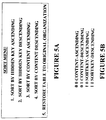
- Figure 5A is an exemplary pop-up menu used in accordance with one embodiment of the invention.
- Figure 5B shows the semantics of exemplary flags used in accordance with one embodiment of the invention.
- Figure 6A is a flow chart of a first exemplary embodiment of a mouse click interpretation routine shown in Figure 4.
- Figure 6B is a flow chart of a second exemplary embodiment of a mouse click interpretation routine shown in Figure 4.
- Figure 7 is a flow chart of an exemplary sort table routine shown in Figure 4 .
- Figure 8 is an exemplary but preferred list of rules used during sorting.
- a procedure is here, and generally, conceived to be a self-consistent sequence of steps leading to a desired result. These steps are those requiring physical manipulations of physical quantities. Usually, though not necessarily, these quantities take the form of electrical or magnetic signals capable of being stored, transferred, combined, compared, and otherwise manipulated. It proves convenient at times, principally for reasons of common usage, to refer to these signals as bits, values, elements, symbols, characters, terms, numbers, or the like. It should be noted, however, that all of these and similar terms are to be associated with the appropriate physical quantities and are merely convenient labels applied to these quantities.
- the manipulations performed are often referred to in terms, such as adding or comparing, which are commonly associated with mental operations performed by a human operator. No such capability of a human operator is necessary, or desirable in most cases, in any of the operations described herein which form part of the present invention; the operations are machine operations.
- Useful machines for performing the operation of the present invention include general purpose digital computers or similar devices.
- the present invention also relates to apparatus for performing these operations.
- This apparatus may be specially constructed for the required purpose or it may comprise a general purpose computer as selectively activated or reconfigured by a computer program stored in the computer.
- the procedures presented herein are not inherently related to a particular computer or other apparatus.
- Various general purpose machines may be used with programs written in accordance with the teachings herein, or it may prove more convenient to construct more specialized apparatus to perform the required method steps. The required structure for a variety of these machines will appear from the description given.
- Figure 1A illustrates a computer of a type suitable for carrying out the invention.
- a computer system has a central processing unit 100 having disk drives 110A and 110B .
- Disk drive indications 110A and 110B are merely symbolic of a number of disk drives which might be accommodated by the computer system. Typically, these would include a floppy disk drive such as 110A , a hard disk drive (not shown externally) and a CD ROM drive indicated by slot 110B .
- the number and type of drives varies, typically, with different computer configurations.
- the computer has the display 120 upon which information is displayed.
- a keyboard 130 and a mouse 140 are typically also available as input devices.
- the computer illustrated in Figure 1A is a SPARC workstation from Sun Microsystems, Inc.
- FIG. 1B illustrates a block diagram of the internal hardware of the computer of Figure 1A .
- a bus 150 serves as the main information highway interconnecting the other components of the computer.
- CPU 155 is the central processing unit of the system, performing calculations and logic operations required to execute programs.
- Read only memory ( 160 ) and random access memory ( 165 ) constitute the main memory of the computer.
- Disk controller 170 interfaces one or more disk drives to the system bus 150 . These disk drives may be floppy disk drives, such as 173 , internal or external hard drives, such as 172 , or CD ROM or DVD (Digital Video Disks) drives such as 171 .
- a display interface 175 interfaces a display 120 and permits information from the bus to be viewed on the display. Communications with external devices can occur over communications port 185.
- Figure 1C illustrates an exemplary memory medium which can be used with drives such as 173 in Figure 1B or 110A in Figure 1A .
- memory media such as a floppy disk, or a CD ROM, or a Digital Video Disk, will contain the program information for controlling the computer to enable the computer to perform its functions in accordance with the invention.
- FIG. 1D is a block diagram of a network architecture suitable for carrying data and programs in accordance with some aspects of the invention.
- a network 190 serves to connect a user computer 100 with one or more servers, such as server 195 for the download of program and data information.
- a user 100' can also connect to the network via a network service provider, such as ISP 180.
- Figure 2A is an example of an HTML-like table specification.
- table heading entries each preceded by the table heading tag ⁇ TH>. These table headings have been given the functional description Header 1, Header 2 and Header 3.
- a plurality of cells of the table are defined using the table data tag ⁇ TD>. The contents of each table data entry are specified following the table data tag and, have been given, in this example, the designator Cellij.
- Figure 2B illustrates an extension of a table data HTML tag to include a sort key attribute.
- FIG 2B only a portion of the table data associated with a single column is illustrated.
- the column heading is specified by the table heading ⁇ TH> Rank.
- Three entries are shown for that column. The first has table data entry for a rank of 2nd Boat.
- the second has table data entry for a rank of Colonel and a third table data entry has an entry for a rank of Brigadier General. These ranks represent the specific content of the cells of the table.
- an attribute has been added to each of the table data tags to specify a sort key.
- the sort key is a numeric.
- Sortkey attributes in the table data entries is preferably an authoring function applied by the author during the creation of the table page. Note that since the sort key is an attribute of and contained within a table data tag, it is not displayed. That is, it is hidden. Thus, hidden sort keys can permit an alternative arrangement of the data for a particular column in a way that is natural and useful.
- Figure 3 illustrates an exemplary browser display of the table data shown in Figure 2A .
- the browser makes an arrangement of the data by setting the headers at the top of each column and allocating space based on the widths of the various columns so that an orderly tabular presentation of data results.
- Figure 3 shows such an exemplary arrangement.
- FIG 4 is a flow chart of an exemplary process for carrying out local table sorting in accordance with one embodiment of the invention.
- a copy of the table e.g. a copy of a table received across the network
- a check is made to determine whether or not Sortkeys are present in the column data. This can be done by simply by checking whether or not there are attributes associated with the ⁇ TD> entry in the column data. If Sortkeys are present (420-Y) , a content/Sortkey flag is set to "Sortkey" (440) .
- Figure 5A is an exemplary pop-up menu used in accordance with one embodiment of the invention. Under certain conditions, discussed more hereinafter, it is appropriate to display a pop-up menu such as shown in Figure 5A .
- This permits a user to specify a set of options conveniently.
- the options include settings for the sorting process. If menu selection 1 is selected, the table sorting will occur by hidden key in an ascending order. If menu selection 2 is selected, the sorting will be by hidden key in a descending order. If menu selection 3 is selected, the table data will be sorted by the content of the column in question. If menu selection 4 is selected, the table will be sorted by content in a descending order.
- menu selection 5 the table will be restored to its default condition, that is, the condition before any sorting occurred. This is done by simply replacing the existing table information with a stored copy of the table information which was stored in conjunction with step 410 of Figure 4. Menu selections 1-4 set flags which control the sort process as described more hereinafter.
- Figure 5B shows the semantics of exemplary flags used in accordance with one embodiment of the invention.
- there are two flags the first describes whether sorting is to be done based on the content of a table cell or upon the Sortkey contained as a hidden attribute in the table data tag.
- the second flag specifies whether data is to be sorted in an ascending or descending order.
- Figure 5B illustrates the four combinations of two binary flags and their respective meanings.
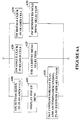
- Figure 6A is a flow chart of a first exemplary embodiment of a mouse click interpretation routine as shown at step 450 in Figure 4 .
- the cursor is in a header cell
- the left mouse button is held down for a period of time greater than T1 ( 600 )
- a display menu is popped up (605) which is the display menu shown in Figure 5A .
- the content/sort key flag and the ascending descending flags are set based on the user selection ( 610 ).
- the default settings of the flags are utilized for the sort.
- Figure 6B is a flow chart of a second exemplary embodiment of a mouse click interpretation routine shown in Figure 4 .
- the pop-up menu described in conjunction with Figure 5A is displayed (645) .
- the user makes a selection from the pop-up menu and the content/Sortkey flag and ascending/descending flag are set (650) .
- a left mouse button double click is detected in the header cell ( 655 )
- a check is made to see whether the table is sorted in ascending order for that column based on the existing value for the content/sort key flag.
- the ascending/descending flag will be set to ascending (655) and the sort will occur. If the table is already sorted in ascending order (660-Y) , the ascending/descending flag will be toggled to the descending state (670) before the sort occurs.
- Figure 7 is a flow chart of an exemplary sort table routine shown in Figure 4 at step 460 .
- the state of the content/Sortkey flag is checked (700) and utilized to establish which information will be utilized for the sort.
- the ascending/descending flag will be checked (710) to determine whether or not the sort should be in an ascending or descending order.
- the table is sorted using the sort rules described hereinafter (720) .
- Figure 8 is an exemplary, but preferred list of rules used during sorting. These rules are stated with respect to an ascending sort, however, a descending sort can be defined by changing the word "before” in the rules to "after.”
- alpha characters When alpha characters are compared, they are compared as if they were all upper case or all lower case.
- the smaller value is placed before a cell with a higher value.
- Cells with a sort key are placed before cells which do not have a sort key. Smaller numbers are placed before higher numbers. Numbers are placed before letters. Letters earlier in the alphabet are placed before letters later in the alphabet.
- Sortkey If the cell contains an image, the cell is sorted by Sortkey, or, if it contains no Sortkey, it is sorted by the ALT text description of the image.
- the ALT text description of an image is one recommended by the HTML specifications to permit a visually impaired user to receive a description of the image by converting the text into audible words.
- table data can be sorted locally in a variety of manners permitting a user to take different views of the data which greatly facilitates data analysis.
Landscapes
- Engineering & Computer Science (AREA)
- General Engineering & Computer Science (AREA)
- Theoretical Computer Science (AREA)
- Computer Hardware Design (AREA)
- Physics & Mathematics (AREA)
- General Physics & Mathematics (AREA)
- Information Retrieval, Db Structures And Fs Structures Therefor (AREA)
- User Interface Of Digital Computer (AREA)
- Input From Keyboards Or The Like (AREA)
Applications Claiming Priority (2)
| Application Number | Priority Date | Filing Date | Title |
|---|---|---|---|
| US941186 | 1997-09-30 | ||
| US08/941,186 US6373504B1 (en) | 1997-09-30 | 1997-09-30 | Local sorting of downloaded tables |
Publications (2)
| Publication Number | Publication Date |
|---|---|
| EP0905636A2 true EP0905636A2 (fr) | 1999-03-31 |
| EP0905636A3 EP0905636A3 (fr) | 1999-12-08 |
Family
ID=25476071
Family Applications (1)
| Application Number | Title | Priority Date | Filing Date |
|---|---|---|---|
| EP98307726A Withdrawn EP0905636A3 (fr) | 1997-09-30 | 1998-09-23 | Triage local des tableaux téléchargés |
Country Status (4)
| Country | Link |
|---|---|
| US (1) | US6373504B1 (fr) |
| EP (1) | EP0905636A3 (fr) |
| JP (1) | JPH11175218A (fr) |
| CA (1) | CA2249067A1 (fr) |
Families Citing this family (21)
| Publication number | Priority date | Publication date | Assignee | Title |
|---|---|---|---|---|
| DE69908121T2 (de) * | 1998-03-23 | 2004-04-01 | Microsoft Corp., Redmond | Anwendungsprogrammierungsschnittstelle in einem betriebssystem |
| US9262383B2 (en) | 1999-05-21 | 2016-02-16 | E-Numerate Solutions, Inc. | System, method, and computer program product for processing a markup document |
| US6920608B1 (en) * | 1999-05-21 | 2005-07-19 | E Numerate Solutions, Inc. | Chart view for reusable data markup language |
| US7249328B1 (en) * | 1999-05-21 | 2007-07-24 | E-Numerate Solutions, Inc. | Tree view for reusable data markup language |
| US9268748B2 (en) | 1999-05-21 | 2016-02-23 | E-Numerate Solutions, Inc. | System, method, and computer program product for outputting markup language documents |
| US9262384B2 (en) | 1999-05-21 | 2016-02-16 | E-Numerate Solutions, Inc. | Markup language system, method, and computer program product |
| US7421648B1 (en) | 1999-05-21 | 2008-09-02 | E-Numerate Solutions, Inc. | Reusable data markup language |
| WO2001061568A2 (fr) * | 2000-02-17 | 2001-08-23 | E-Numerate Solutions, Inc. | Moteur de recherche rdl |
| US9600842B2 (en) * | 2001-01-24 | 2017-03-21 | E-Numerate Solutions, Inc. | RDX enhancement of system and method for implementing reusable data markup language (RDL) |
| US7155665B1 (en) * | 2001-06-18 | 2006-12-26 | Microsoft Corporation | Method for creating an embedded database in a spreadsheet |
| US20030126130A1 (en) * | 2001-12-31 | 2003-07-03 | Koninklijke Philips Electronics N.V. | Sort slider with context intuitive sort keys |
| US7089492B2 (en) * | 2003-04-03 | 2006-08-08 | International Business Machines Corporation | Automated conversion of CALS-compatible tables to accessible HTML tables |
| US7243096B2 (en) | 2003-04-29 | 2007-07-10 | International Business Machines Corporation | Method and system in an electronic data table for managing order oriented criteria |
| US9405507B2 (en) | 2003-10-31 | 2016-08-02 | Adobe Systems Incorporated | Tabular data sorting and display |
| JP4617167B2 (ja) * | 2004-02-04 | 2011-01-19 | キヤノン株式会社 | 放送受信装置及びその制御方法 |
| US8271866B2 (en) * | 2004-08-19 | 2012-09-18 | International Business Machines Corporation | User-controlled web browser table reduction |
| US20060041834A1 (en) * | 2004-08-19 | 2006-02-23 | International Business Machines Corporation | User-controlled web browser table sorting |
| US8812551B2 (en) * | 2004-11-18 | 2014-08-19 | International Business Machines Corporation | Client-side manipulation of tables |
| JP4656428B2 (ja) * | 2006-04-26 | 2011-03-23 | ソニー株式会社 | コンテンツ処理装置および方法、並びにプログラム |
| US20080104074A1 (en) * | 2006-11-01 | 2008-05-01 | Lynch Thomas W | Cascading sort interface |
| US8990675B2 (en) * | 2011-10-04 | 2015-03-24 | Microsoft Technology Licensing, Llc | Automatic relationship detection for spreadsheet data items |
Family Cites Families (7)
| Publication number | Priority date | Publication date | Assignee | Title |
|---|---|---|---|---|
| US5396621A (en) * | 1991-05-10 | 1995-03-07 | Claris Corporation | Sorting a table by rows or columns in response to interactive prompting with a dialog box graphical icon |
| CA2095753A1 (fr) | 1992-08-21 | 1994-02-22 | John Franklin Carroll | Methode et dispositif de tri et de manipulation de donnees pour systeme de traitement de donnees |
| US5563997A (en) * | 1992-11-16 | 1996-10-08 | Canon Kabushiki Kaisha | Method and apparatus for sorting records into a list box in a graphic user interface |
| US5551018A (en) | 1993-02-02 | 1996-08-27 | Borland International, Inc. | Method of storing national language support text by presorting followed by insertion sorting |
| US5907837A (en) | 1995-07-17 | 1999-05-25 | Microsoft Corporation | Information retrieval system in an on-line network including separate content and layout of published titles |
| JP3020849B2 (ja) * | 1995-09-28 | 2000-03-15 | シャープ株式会社 | データ検索装置 |
| US5710901A (en) * | 1995-12-29 | 1998-01-20 | Tci Summitrak Of Texas, Inc. | Method and apparatus for validating data entered by a user |
-
1997
- 1997-09-30 US US08/941,186 patent/US6373504B1/en not_active Expired - Lifetime
-
1998
- 1998-09-23 EP EP98307726A patent/EP0905636A3/fr not_active Withdrawn
- 1998-09-29 CA CA002249067A patent/CA2249067A1/fr not_active Abandoned
- 1998-09-30 JP JP27777198A patent/JPH11175218A/ja not_active Withdrawn
Also Published As
| Publication number | Publication date |
|---|---|
| JPH11175218A (ja) | 1999-07-02 |
| CA2249067A1 (fr) | 1999-03-30 |
| EP0905636A3 (fr) | 1999-12-08 |
| US6373504B1 (en) | 2002-04-16 |
Similar Documents
| Publication | Publication Date | Title |
|---|---|---|
| US6373504B1 (en) | Local sorting of downloaded tables | |
| US6411924B1 (en) | System and method for linguistic filter and interactive display | |
| US6252597B1 (en) | Scalable user interface for graphically representing hierarchical data | |
| Egan et al. | Formative design evaluation of superbook | |
| US6236400B1 (en) | Method and apparatus for controlling the display of hierarchical information | |
| US8359550B2 (en) | Method for dynamically generating a “table of contents” view of the HTML-based information system | |
| US6240410B1 (en) | Virtual bookshelf | |
| CA2546514C (fr) | Systeme de recherche legale | |
| US6243723B1 (en) | Document classification apparatus | |
| US6163775A (en) | Method and apparatus configured according to a logical table having cell and attributes containing address segments | |
| US6513032B1 (en) | Search and navigation system and method using category intersection pre-computation | |
| US5483651A (en) | Generating a dynamic index for a file of user creatable cells | |
| US5499368A (en) | Scaled depiction of information from a database | |
| US7523095B2 (en) | System and method for generating refinement categories for a set of search results | |
| US5983170A (en) | System and method for generating semantic analysis of textual information | |
| US7277879B2 (en) | Concept navigation in data storage systems | |
| EP0610760A2 (fr) | Système de détection de documents avec une éfficacité de détection de documents améliorée | |
| US7552398B2 (en) | Systems and methods for semantically zooming information | |
| WO2000065483A2 (fr) | Procede et dispositif de representation amelioree d'informations | |
| US20010035883A1 (en) | Data item list display apparatus, data item list display method, and computer-readable recording medium recorded with data item list display program | |
| US20100005383A1 (en) | Data Storage Using Spreadsheet and Metatags | |
| US5940842A (en) | Character string retrieval system having a variable display range | |
| US20030218640A1 (en) | System and method for displaying results in tabular and tree views | |
| US5673429A (en) | Database display system using list management of display formats | |
| Bergström et al. | CircleView: Scalable visualization and navigation of citation networks |
Legal Events
| Date | Code | Title | Description |
|---|---|---|---|
| PUAI | Public reference made under article 153(3) epc to a published international application that has entered the european phase |
Free format text: ORIGINAL CODE: 0009012 |
|
| AK | Designated contracting states |
Kind code of ref document: A2 Designated state(s): DE FR GB |
|
| AX | Request for extension of the european patent |
Free format text: AL;LT;LV;MK;RO;SI |
|
| PUAL | Search report despatched |
Free format text: ORIGINAL CODE: 0009013 |
|
| RIC1 | Information provided on ipc code assigned before grant |
Free format text: 6G 06F 3/033 A, 6G 06F 17/30 B |
|
| AK | Designated contracting states |
Kind code of ref document: A3 Designated state(s): AT BE CH CY DE DK ES FI FR GB GR IE IT LI LU MC NL PT SE |
|
| AX | Request for extension of the european patent |
Free format text: AL;LT;LV;MK;RO;SI |
|
| 17P | Request for examination filed |
Effective date: 20000511 |
|
| AKX | Designation fees paid |
Free format text: DE FR GB |
|
| 17Q | First examination report despatched |
Effective date: 20020627 |
|
| STAA | Information on the status of an ep patent application or granted ep patent |
Free format text: STATUS: THE APPLICATION IS DEEMED TO BE WITHDRAWN |
|
| 18D | Application deemed to be withdrawn |
Effective date: 20030308 |