EP0905932B1 - System für den Empfang, Entwürflung und Wiedergabe von digitalen Rundfunksignalen - Google Patents
System für den Empfang, Entwürflung und Wiedergabe von digitalen Rundfunksignalen Download PDFInfo
- Publication number
- EP0905932B1 EP0905932B1 EP98307884.1A EP98307884A EP0905932B1 EP 0905932 B1 EP0905932 B1 EP 0905932B1 EP 98307884 A EP98307884 A EP 98307884A EP 0905932 B1 EP0905932 B1 EP 0905932B1
- Authority
- EP
- European Patent Office
- Prior art keywords
- data stream
- descrambling
- output
- interface
- descrambler
- Prior art date
- Legal status (The legal status is an assumption and is not a legal conclusion. Google has not performed a legal analysis and makes no representation as to the accuracy of the status listed.)
- Expired - Lifetime
Links
Images




Classifications
-
- H—ELECTRICITY
- H04—ELECTRIC COMMUNICATION TECHNIQUE
- H04N—PICTORIAL COMMUNICATION, e.g. TELEVISION
- H04N21/00—Selective content distribution, e.g. interactive television or video on demand [VOD]
- H04N21/40—Client devices specifically adapted for the reception of or interaction with content, e.g. set-top-box [STB]; Operations thereof
- H04N21/43—Processing of content or additional data, e.g. demultiplexing additional data from a digital video stream; Elementary client operations, e.g. monitoring of home network or synchronising decoder's clock; Client middleware
- H04N21/434—Disassembling of a multiplex stream, e.g. demultiplexing audio and video streams, extraction of additional data from a video stream; Remultiplexing of multiplex streams; Extraction or processing of SI; Disassembling of packetised elementary stream
- H04N21/4347—Demultiplexing of several video streams
-
- H—ELECTRICITY
- H04—ELECTRIC COMMUNICATION TECHNIQUE
- H04H—BROADCAST COMMUNICATION
- H04H60/00—Arrangements for broadcast applications with a direct linking to broadcast information or broadcast space-time; Broadcast-related systems
- H04H60/09—Arrangements for device control with a direct linkage to broadcast information or to broadcast space-time; Arrangements for control of broadcast-related services
- H04H60/14—Arrangements for conditional access to broadcast information or to broadcast-related services
-
- H—ELECTRICITY
- H04—ELECTRIC COMMUNICATION TECHNIQUE
- H04N—PICTORIAL COMMUNICATION, e.g. TELEVISION
- H04N7/00—Television systems
- H04N7/12—Systems in which the television signal is transmitted via one channel or a plurality of parallel channels, the bandwidth of each channel being less than the bandwidth of the television signal
-
- G—PHYSICS
- G06—COMPUTING OR CALCULATING; COUNTING
- G06F—ELECTRIC DIGITAL DATA PROCESSING
- G06F21/00—Security arrangements for protecting computers, components thereof, programs or data against unauthorised activity
- G06F21/60—Protecting data
- G06F21/62—Protecting access to data via a platform, e.g. using keys or access control rules
-
- H—ELECTRICITY
- H04—ELECTRIC COMMUNICATION TECHNIQUE
- H04N—PICTORIAL COMMUNICATION, e.g. TELEVISION
- H04N21/00—Selective content distribution, e.g. interactive television or video on demand [VOD]
- H04N21/20—Servers specifically adapted for the distribution of content, e.g. VOD servers; Operations thereof
- H04N21/21—Server components or server architectures
-
- H—ELECTRICITY
- H04—ELECTRIC COMMUNICATION TECHNIQUE
- H04N—PICTORIAL COMMUNICATION, e.g. TELEVISION
- H04N21/00—Selective content distribution, e.g. interactive television or video on demand [VOD]
- H04N21/20—Servers specifically adapted for the distribution of content, e.g. VOD servers; Operations thereof
- H04N21/23—Processing of content or additional data; Elementary server operations; Server middleware
-
- H—ELECTRICITY
- H04—ELECTRIC COMMUNICATION TECHNIQUE
- H04N—PICTORIAL COMMUNICATION, e.g. TELEVISION
- H04N21/00—Selective content distribution, e.g. interactive television or video on demand [VOD]
- H04N21/40—Client devices specifically adapted for the reception of or interaction with content, e.g. set-top-box [STB]; Operations thereof
-
- H—ELECTRICITY
- H04—ELECTRIC COMMUNICATION TECHNIQUE
- H04N—PICTORIAL COMMUNICATION, e.g. TELEVISION
- H04N21/00—Selective content distribution, e.g. interactive television or video on demand [VOD]
- H04N21/40—Client devices specifically adapted for the reception of or interaction with content, e.g. set-top-box [STB]; Operations thereof
- H04N21/41—Structure of client; Structure of client peripherals
- H04N21/414—Specialised client platforms, e.g. receiver in car or embedded in a mobile appliance
- H04N21/4147—PVR [Personal Video Recorder]
-
- H—ELECTRICITY
- H04—ELECTRIC COMMUNICATION TECHNIQUE
- H04N—PICTORIAL COMMUNICATION, e.g. TELEVISION
- H04N21/00—Selective content distribution, e.g. interactive television or video on demand [VOD]
- H04N21/40—Client devices specifically adapted for the reception of or interaction with content, e.g. set-top-box [STB]; Operations thereof
- H04N21/41—Structure of client; Structure of client peripherals
- H04N21/418—External card to be used in combination with the client device, e.g. for conditional access
- H04N21/4184—External card to be used in combination with the client device, e.g. for conditional access providing storage capabilities, e.g. memory stick
-
- H—ELECTRICITY
- H04—ELECTRIC COMMUNICATION TECHNIQUE
- H04N—PICTORIAL COMMUNICATION, e.g. TELEVISION
- H04N21/00—Selective content distribution, e.g. interactive television or video on demand [VOD]
- H04N21/40—Client devices specifically adapted for the reception of or interaction with content, e.g. set-top-box [STB]; Operations thereof
- H04N21/43—Processing of content or additional data, e.g. demultiplexing additional data from a digital video stream; Elementary client operations, e.g. monitoring of home network or synchronising decoder's clock; Client middleware
- H04N21/434—Disassembling of a multiplex stream, e.g. demultiplexing audio and video streams, extraction of additional data from a video stream; Remultiplexing of multiplex streams; Extraction or processing of SI; Disassembling of packetised elementary stream
-
- H—ELECTRICITY
- H04—ELECTRIC COMMUNICATION TECHNIQUE
- H04N—PICTORIAL COMMUNICATION, e.g. TELEVISION
- H04N21/00—Selective content distribution, e.g. interactive television or video on demand [VOD]
- H04N21/40—Client devices specifically adapted for the reception of or interaction with content, e.g. set-top-box [STB]; Operations thereof
- H04N21/43—Processing of content or additional data, e.g. demultiplexing additional data from a digital video stream; Elementary client operations, e.g. monitoring of home network or synchronising decoder's clock; Client middleware
- H04N21/436—Interfacing a local distribution network, e.g. communicating with another STB or one or more peripheral devices inside the home
- H04N21/43607—Interfacing a plurality of external cards, e.g. through a DVB Common Interface [DVB-CI]
-
- H—ELECTRICITY
- H04—ELECTRIC COMMUNICATION TECHNIQUE
- H04N—PICTORIAL COMMUNICATION, e.g. TELEVISION
- H04N21/00—Selective content distribution, e.g. interactive television or video on demand [VOD]
- H04N21/40—Client devices specifically adapted for the reception of or interaction with content, e.g. set-top-box [STB]; Operations thereof
- H04N21/43—Processing of content or additional data, e.g. demultiplexing additional data from a digital video stream; Elementary client operations, e.g. monitoring of home network or synchronising decoder's clock; Client middleware
- H04N21/436—Interfacing a local distribution network, e.g. communicating with another STB or one or more peripheral devices inside the home
- H04N21/43615—Interfacing a Home Network, e.g. for connecting the client to a plurality of peripherals
-
- H—ELECTRICITY
- H04—ELECTRIC COMMUNICATION TECHNIQUE
- H04N—PICTORIAL COMMUNICATION, e.g. TELEVISION
- H04N21/00—Selective content distribution, e.g. interactive television or video on demand [VOD]
- H04N21/40—Client devices specifically adapted for the reception of or interaction with content, e.g. set-top-box [STB]; Operations thereof
- H04N21/43—Processing of content or additional data, e.g. demultiplexing additional data from a digital video stream; Elementary client operations, e.g. monitoring of home network or synchronising decoder's clock; Client middleware
- H04N21/436—Interfacing a local distribution network, e.g. communicating with another STB or one or more peripheral devices inside the home
- H04N21/4363—Adapting the video stream to a specific local network, e.g. a Bluetooth® network
- H04N21/43632—Adapting the video stream to a specific local network, e.g. a Bluetooth® network involving a wired protocol, e.g. IEEE 1394
-
- H—ELECTRICITY
- H04—ELECTRIC COMMUNICATION TECHNIQUE
- H04N—PICTORIAL COMMUNICATION, e.g. TELEVISION
- H04N21/00—Selective content distribution, e.g. interactive television or video on demand [VOD]
- H04N21/40—Client devices specifically adapted for the reception of or interaction with content, e.g. set-top-box [STB]; Operations thereof
- H04N21/43—Processing of content or additional data, e.g. demultiplexing additional data from a digital video stream; Elementary client operations, e.g. monitoring of home network or synchronising decoder's clock; Client middleware
- H04N21/44—Processing of video elementary streams, e.g. splicing a video clip retrieved from local storage with an incoming video stream or rendering scenes according to encoded video stream scene graphs
- H04N21/4405—Processing of video elementary streams, e.g. splicing a video clip retrieved from local storage with an incoming video stream or rendering scenes according to encoded video stream scene graphs involving video stream decryption
-
- H—ELECTRICITY
- H04—ELECTRIC COMMUNICATION TECHNIQUE
- H04N—PICTORIAL COMMUNICATION, e.g. TELEVISION
- H04N21/00—Selective content distribution, e.g. interactive television or video on demand [VOD]
- H04N21/40—Client devices specifically adapted for the reception of or interaction with content, e.g. set-top-box [STB]; Operations thereof
- H04N21/43—Processing of content or additional data, e.g. demultiplexing additional data from a digital video stream; Elementary client operations, e.g. monitoring of home network or synchronising decoder's clock; Client middleware
- H04N21/44—Processing of video elementary streams, e.g. splicing a video clip retrieved from local storage with an incoming video stream or rendering scenes according to encoded video stream scene graphs
- H04N21/4408—Processing of video elementary streams, e.g. splicing a video clip retrieved from local storage with an incoming video stream or rendering scenes according to encoded video stream scene graphs involving video stream encryption, e.g. re-encrypting a decrypted video stream for redistribution in a home network
-
- H—ELECTRICITY
- H04—ELECTRIC COMMUNICATION TECHNIQUE
- H04N—PICTORIAL COMMUNICATION, e.g. TELEVISION
- H04N21/00—Selective content distribution, e.g. interactive television or video on demand [VOD]
- H04N21/40—Client devices specifically adapted for the reception of or interaction with content, e.g. set-top-box [STB]; Operations thereof
- H04N21/43—Processing of content or additional data, e.g. demultiplexing additional data from a digital video stream; Elementary client operations, e.g. monitoring of home network or synchronising decoder's clock; Client middleware
- H04N21/442—Monitoring of processes or resources, e.g. detecting the failure of a recording device, monitoring the downstream bandwidth, the number of times a movie has been viewed, the storage space available from the internal hard disk
- H04N21/44204—Monitoring of content usage, e.g. the number of times a movie has been viewed, copied or the amount which has been watched
-
- H—ELECTRICITY
- H04—ELECTRIC COMMUNICATION TECHNIQUE
- H04N—PICTORIAL COMMUNICATION, e.g. TELEVISION
- H04N21/00—Selective content distribution, e.g. interactive television or video on demand [VOD]
- H04N21/40—Client devices specifically adapted for the reception of or interaction with content, e.g. set-top-box [STB]; Operations thereof
- H04N21/45—Management operations performed by the client for facilitating the reception of or the interaction with the content or administrating data related to the end-user or to the client device itself, e.g. learning user preferences for recommending movies, resolving scheduling conflicts
- H04N21/462—Content or additional data management e.g. creating a master electronic programme guide from data received from the Internet and a Head-end or controlling the complexity of a video stream by scaling the resolution or bit-rate based on the client capabilities
- H04N21/4622—Retrieving content or additional data from different sources, e.g. from a broadcast channel and the Internet
-
- H—ELECTRICITY
- H04—ELECTRIC COMMUNICATION TECHNIQUE
- H04N—PICTORIAL COMMUNICATION, e.g. TELEVISION
- H04N21/00—Selective content distribution, e.g. interactive television or video on demand [VOD]
- H04N21/40—Client devices specifically adapted for the reception of or interaction with content, e.g. set-top-box [STB]; Operations thereof
- H04N21/45—Management operations performed by the client for facilitating the reception of or the interaction with the content or administrating data related to the end-user or to the client device itself, e.g. learning user preferences for recommending movies, resolving scheduling conflicts
- H04N21/462—Content or additional data management e.g. creating a master electronic programme guide from data received from the Internet and a Head-end or controlling the complexity of a video stream by scaling the resolution or bit-rate based on the client capabilities
- H04N21/4627—Rights management associated to the content
-
- H—ELECTRICITY
- H04—ELECTRIC COMMUNICATION TECHNIQUE
- H04N—PICTORIAL COMMUNICATION, e.g. TELEVISION
- H04N21/00—Selective content distribution, e.g. interactive television or video on demand [VOD]
- H04N21/60—Network structure or processes for video distribution between server and client or between remote clients; Control signalling between clients, server and network components; Transmission of management data between server and client, e.g. sending from server to client commands for recording incoming content stream; Communication details between server and client
- H04N21/61—Network physical structure; Signal processing
- H04N21/6156—Network physical structure; Signal processing specially adapted to the upstream path of the transmission network
- H04N21/6175—Network physical structure; Signal processing specially adapted to the upstream path of the transmission network involving transmission via Internet
-
- H—ELECTRICITY
- H04—ELECTRIC COMMUNICATION TECHNIQUE
- H04N—PICTORIAL COMMUNICATION, e.g. TELEVISION
- H04N7/00—Television systems
- H04N7/16—Analogue secrecy systems; Analogue subscription systems
- H04N7/167—Systems rendering the television signal unintelligible and subsequently intelligible
- H04N7/1675—Providing digital key or authorisation information for generation or regeneration of the scrambling sequence
-
- H—ELECTRICITY
- H04—ELECTRIC COMMUNICATION TECHNIQUE
- H04H—BROADCAST COMMUNICATION
- H04H60/00—Arrangements for broadcast applications with a direct linking to broadcast information or broadcast space-time; Broadcast-related systems
- H04H60/09—Arrangements for device control with a direct linkage to broadcast information or to broadcast space-time; Arrangements for control of broadcast-related services
- H04H60/14—Arrangements for conditional access to broadcast information or to broadcast-related services
- H04H60/23—Arrangements for conditional access to broadcast information or to broadcast-related services using cryptography, e.g. encryption, authentication, key distribution
Definitions
- the present invention relates to an information processing system which receives a digital broadcast transmitted from a plurality of broadcasting providers and reproduces this digital broadcast.
- Conventional digital broadcast receiving apparatuses respond to only broadcasting signals from a specific broadcasting provider. Therefore, when a broadcast from a plurality of broadcasting providers is to be received, there is a problem in that a plurality of receiving apparatuses are required, and the financial burden on a user is consequently large.
- EP-A-0,784,401 discloses a digital broadcast receiving apparatus in which a selected decoded program may be output through an IEEE1394 channel to a recording device and later replayed through that channel.
- Bloks R.H.J. "The IEEE-1394 high speed serial bus", PHILIPS JOURNAL OF RESEARCH, ELSEVIER, AMSTERDAM, NL, vol. 50, no. 1, 1996, pages 209-216 discloses aspects of the IEEE-1394 bus, which may be used for connecting audio video equipment.
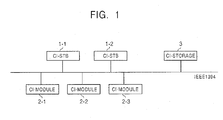
- Fig. 1 is a view showing an example of the construction of an embodiment of an information processing system of the present invention.
- CI-STBs 1-1 and 1-2 receive a broadcasting signal from a broadcasting provider and demodulate it, and then output the demodulated data stream via an IEEE1394 interface.
- the demodulated data stream is subjected to a predetermined process by CI-Modules 2-1 to 2-3, is input to the CI-STBs 1-1 and 1-2 again, whereby the plurality of information contained in the data stream is separated and then the obtained information is reproduced, respectively.
- the CI-Modules 2-1 to 2-3 perform a descrambling process on the data stream output from the CI-STBs 1-1 and 1-2, and output the obtained stream via the IEEE1394 interface.
- each of the CI-Modules 2-1 to 2-3 performs a descrambling process on a data stream from a predetermined broadcasting provider.
- a CI-Storage 3 records a data stream output from the CI-STBs 1-1 and 1-2 or the CI-Modules 2-1 to 2-3.
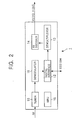
- Fig. 2 is a block diagram showing a detailed example of the construction of the CI-STB 1 shown in Fig. 1 .
- a tuner 10 receives an RF (radio frequency) signal from a broadcasting provider and extracts a signal of a predetermined frequency.
- a demodulator 11 demodulates the signal of the predetermined frequency extracted by the tuner 10 so as to be converted into a data stream.
- a digital interface 12 which is an interface that complies with the IEEE1394 standard, outputs a data stream demodulated by the demodulator 11 to an external apparatus and inputs a data stream from an external apparatus.
- a demultiplexer 13 separates a plurality of information which form a data stream (a data stream on which a descrambling process has been performed) input from the external apparatus through the digital interface 12, and supplies it to an AV (Audio Video) decoder 14.
- AV Audio Video
- the AV decoder 14 decodes each of the plurality of information separated by the demultiplexer 13. More specifically, the AV decoder 14 decodes, for example, each of the sound information and the image information separated by the demultiplexer 13, and outputs the obtained sound signals and image signals.
- An MPU (Microprocessor Unit) 15 controls each section of the apparatus and performs a predetermined computation process as required.
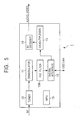
- Fig. 3 is a block diagram showing a detailed example of the construction of the CI-Modules 2-1 to 2-3 shown in Fig. 1 .
- a digital interface 21 which is an interface that complies with the IEEE1394 standard, inputs a data stream output from the CI-STBs 1-1 and 1-2 and outputs a data stream on which a descrambling process has been performed by a descrambler 22.
- An MPU 23 controls each section of the apparatus, and performs various computations as required.
- Fig. 4 is a block diagram showing a detailed example of the construction of the CI-Storage 3 shown in Fig. 1 .
- a digital interface 31 is an interface that complies with the IEEE1394 standard in the same manner as in the above-described case.
- a storage section 32 formed of a semiconductor memory and a magnetic recording medium, stores a data stream output from the digital interface 31, and reads a stored data stream and outputs it to the digital interface 31, under the control of an MPU 33.
- the MPU 33 controls each section of the apparatus and performs a predetermined computation as required.
- a broadcasting signal (RF signal) from a particular broadcasting provider A is received by the tuner 10 of the CI-STB 1-1.
- the tuner 10 extracts a signal of a predetermined frequency from the broadcasting signal and outputs it to the demodulator 11.
- the demodulator 11 performs a demodulation process on the broadcasting signal of the predetermined frequency extracted by the tuner 10 and outputs the obtained data stream to the digital interface 12.
- the digital interface 12 outputs the data stream supplied from the demodulator 11 as a sequence of packets that comply with the IEEE1394 standard. At this time, the data stream is transmitted in an Isochronous transfer mode suitable for real-time reproduction of images, sound, etc.
- the communications among the MPUs of respective apparatuses through the IEEE1394 are performed by asynchronous transfer.
- the data stream output from the CI-STB 1-1 is supplied, for example, to the CI-Module 2-1.
- the digital interface 21 of the CI-Module 2-1 inputs the data stream output from the CI-STB 1-1 and supplies it to the descrambler 22.
- the descrambler 22 performs a descrambling process on the data stream supplied from the digital interface 21. As a result, the scrambling, which has been performed on the data stream by the broadcasting provider in order to prohibit viewing by someone other than a subscriber, is released.
- the output of the descrambler 22 is supplied to the digital interface 21 again.
- the digital interface 21 outputs the output of the descrambler 22 as a sequence of packets that comply with the IEEE1394 standard.
- the sequence of packets output from the CI-Module 2-1 are received by the CI-STB 1-1 again.
- the digital interface 12 of the CI-STB 1-1 receives the sequence of packets sent from the CI-Module 2-1 and supplies them to the demultiplexer 13.
- the demultiplexer 13 separates a plurality of information contained in the data stream output from the digital interface 12. For example, in the case where this data stream is composed of sound data and image data, the demultiplexer 13 separates it into the sound data and the image data and supplies them to the AV decoder 14.
- the AV decoder 14 decodes the information separated by the demultiplexer 13 and outputs it. For example, in the case where the data stream is composed of sound data and image data, the AV decoder 14 performs a decompression process on each of the sound data and the image data and outputs the obtained sound signals and image signals.
- the CI-Storage 3 records the data stream transmitted between the CI-STB 1-1 and the CI-Module 2-1. More specifically, the MPU 33 receiving a control command instructing that the data stream be recorded controls the digital interface 31 so that the received data stream is supplied to the storage section 32. As a result, the data stream is stored in the storage section 32.
- a broadcasting signal from the broadcasting provider A is received.
- a broadcasting signal from a broadcasting provider B is received and a descrambling process corresponding to the broadcasting provider B is performed by the CI-Module 2-2
- a data stream received by the CI-STB 1-1 is subjected to a descrambling process by the CI-Module 2-2, and then is supplied to the CI-STB 1-1 again, whereby the data stream is decoded into the original sound signals and image signals.
- the CI-Module 2-3 corresponds to a broadcasting provider C
- the CI-STB 1-1 is receiving the broadcast of the broadcasting provider A by using the CI-Module 2-1
- the CI-STB 1-2 is able to receive a broadcast of the broadcasting provider B or the broadcasting provider C by using the CI-Module 2-2 or the CI-Module 2-3.
- the CI-STB 1-1 and the CI-STB 1-2 to receive the data stream which is being output by the CI-Module 2-1 at the same time.
- Fig. 5 is a block diagram showing another example of the construction of the CI-STBs 1-1 and 1-2 shown in Fig. 1 .
- Components in Fig. 5 which correspond to those of Fig. 2 are given the same reference numeral, and accordingly, a description thereof has been omitted.
- a PID (Packet ID) filter 100 is newly added.
- the remaining construction is the same as in the case of Fig. 2 .
- the PID filter 100 extracts only a predetermined program from the data stream output from the demodulator 11 and supplies it to the digital interface 12.
- the PID filter 100 extracts only the packet for the desired program from the transport stream output from the demodulator 11 by referring to a PID (Packet ID of MPEG) and supplies it to the digital interface 12.
- a PID Packet ID of MPEG
- the CI-STBs 1-1 and 1-2 include the PID filter 100, it is possible for the CI-Modules 2-1 to 2-3 to include it. Also, with such a construction, it is possible to reduce the amount of data transmitted over the IEEE1394 bus.
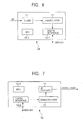
- Figs. 6 and 7 are block diagrams showing another example of the construction of the CI-STBs 1-1 and 1-2 shown in Fig. 1 .
- Components in Figs. 6 and 7 which correspond to those of Fig. 2 are given the same reference numeral, and accordingly, a description thereof has been omitted.
- the CI-STBs 1-1 and 1-2 shown in Fig. 2 are divided into two portions. More specifically, the CI-STBs 1-1 and 1-2 shown in Fig. 2 are divided into the portion ( Fig. 6 : CI-Pre_STB 1a) including the tuner 10 and the demodulator 11 and the portion ( Fig. 7 : CI-Post_STB 1b) including the demultiplexer 13 and the AV decoder 14.
- the respective portions include MPUs 15-1 and 15-2 required for control and digital interfaces 12-1 and 12-2 required for exchanging data.
- the broadcasting signal (RF signal) from the broadcasting provider A received by the tuner 10 is received by the tuner 10 of the CI-Pre_STB 1a.
- the tuner 10 extracts a signal of a predetermined frequency from the broadcasting signal and outputs it to the demodulator 11.
- the demodulator 11 performs a demodulation process on the broadcasting signal of the predetermined frequency extracted by the tuner 10 and outputs the obtained data stream to the digital interface 12-1.
- the digital interface 12-1 outputs the data stream supplied from the demodulator 11 as a sequence of packets that comply with the IEEE1394 standard.
- the data stream output from the digital interface 12-1 is supplied, for example, to the CI-Module 2-1 whereby it is subjected to a descrambling process and is sent out to the IEEE1394 bus again.
- the sequence of packets output from the CI-Module 2-1 are received by the digital interface 12-2 of the CI-Post_STB 1b.
- the digital interface 12-2 receives the sequence of packets sent out from the CI-Module 2-1 and supplies them to the demultiplexer 13.
- the demultiplexer 13 separates a plurality of information contained in the data stream output from the digital interface 12-2 and supplies it to the AV decoder 14.
- the AV decoder 14 decodes the information separated by the demultiplexer 13 and outputs the original image and sound signals.
- Fig. 8 is a block diagram showing another example of the construction of the CI-Post_STB 1b shown in Fig. 7 .
- Components in Fig. 8 which correspond to those of Fig. 7 are given the same reference numeral, and accordingly, a description thereof has been omitted.
- a speaker 111 and a CRT monitor 112 are added.
- the remaining construction is the same as in the case of Fig. 7 .
- the speaker 111 converts a sound signal output from the AV decoder 14 into sound. Also, the CRT monitor 112 displays and outputs image signals output from the AV decoder 14.
- the sequence of packets output from the CI-Module 2-1 are received by the digital interface 12-2 of the CI-Post_STB 1b.
- the digital interface 12-2 receives the sequence of packets sent out from the CI-Module 2-1 and supplies them to the demultiplexer 13.
- the demultiplexer 13 separates a plurality of information contained in the data stream output from the digital interface 12-2 and supplies it to the AV decoder 14.
- the AV decoder 14 decodes the information separated by the demultiplexer 13, and outputs the sound signals to the speaker 111 and outputs the image signals to the CRT monitor 112.
- the image is displayed on the CRT monitor 112, and the corresponding sound is output from the speaker 111.
- the CI-Post_STB 1b, and the speaker 111 and the CRT monitor 112 can be formed into one unit.
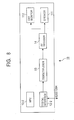
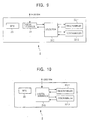
- Fig. 9 is a block diagram showing another example of the construction of the CI-Module 2 shown in Fig. 1 .
- Components in Fig. 9 which correspond to those of Fig. 3 are given the same reference numeral, and accordingly, a description thereof has been omitted.
- a selector 200 is newly added, and also, the descrambler 22 is increased in number to two descramblers 22-1 and 22-2. The remaining construction is the same as in the case shown in Fig. 3 .
- the selector 200 supplies the data stream output from the digital interface 21 to either the descrambler 22-1 or the descrambler 22-2, selects either of the data streams output from the descrambler 22-1 and the descrambler 22-2, and supplies it to the digital interface 21.
- the descrambler 22-1 and the descrambler 22-2 perform, for example, a descrambling process corresponding to the broadcasting provider A and the broadcasting provider B, respectively.
- the descrambler 22-1 corresponds to the broadcasting provider A
- the descrambler 22-2 corresponds to the broadcasting provider B.
- the MPU 23 controls the selector 200 so that it selects the descrambler 22-2.
- the digital interface 21 receives the data stream and outputs it to the selector 200. Since the selector 200 is connected to the descrambler 22-2 as described above, the data stream is subjected to a descrambling process by the descrambler 22-2, and then supplied to the digital interface 21 again through the selector 200.
- the data stream output from the digital interface 21 is reproduced by the CI-STB 1-1.
- the selector 200 selects the descrambler 22-1.
- the CI-Module 2 since the CI-Module 2 includes the descramblers 22-1 and 22-1 corresponding to different broadcasting providers, and the selector 200, so that a desired descrambler is selected by the selector 200 in such a manner as to correspond to the broadcasting provider of a broadcast to be received, it is possible for one CI-Module 2 to receive broadcasts of a plurality of broadcasting providers.
- Fig. 10 is a block diagram showing another example of the construction of the CI-Module 2 shown in Fig. 1 .
- Components in Fig. 10 which correspond to those of Fig. 9 are given the same reference numeral, and accordingly, a description thereof has been omitted.
- the selector 200 has been omitted, and also, the digital interface 21 has been replaced with a digital interface 210.
- the remaining construction is the same as in the case shown in Fig. 9 .
- the descrambler 22-1 corresponds to the broadcasting provider A
- the descrambler 22-2 corresponds to the broadcasting provider B.
- the digital interface 210 receives these data streams and supplies them to the descramblers 22-1 and 22-2, respectively.
- the data streams are subjected to the descrambling process by the descramblers 22-1 and 22-2 and then are sent out through the digital interface 210.
- the data streams corresponding to the broadcasting provider A and the broadcasting provider B output from the digital interface 210 are reproduced simultaneously by the CI-STB 1-1 and the CI-STB 1-2, respectively.
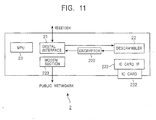
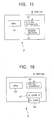
- Fig. 11 is a view showing another example of the construction of the CI-Module 2 shown in Fig. 1 .
- Components in Fig. 11 which correspond to those of Fig. 3 are given the same reference numeral, and accordingly, a description thereof has been omitted.
- an encryptor 220, an IC card IF 221, an IC card 222, and a modem section 223 are newly added. The remaining construction is the same as in the case of Fig. 3 .
- the encryptor 220 encrypts a data stream output from the descrambler 22.
- the IC (Integrated Circuit) card IF (Interface) 221 writes predetermined information into the IC card 222 and reads predetermined information stored in the IC card 222.
- the IC card 222 can be inserted into and removed from the IC card IF 221.
- the modem section 223 is connected to the broadcasting provider side through a public network so that information, such as accounting information, can be exchanged with the provider.
- Fig. 12 is a block diagram showing an example of the construction of the CI-STB 1 corresponding to the CI-Module 2 of Fig. 11 .
- Components in Fig. 12 which correspond to those of Fig. 2 are given the same reference numeral, and accordingly, a description thereof has been omitted.
- a decryptor 120 is newly added.
- the remaining construction is the same as in the case of Fig. 2 .
- the decryptor 120 decodes the data stream encrypted by the encryptor 220 of Fig. 11 into the original data stream.
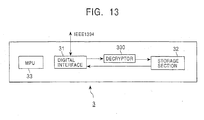
- Fig. 13 is a block diagram showing an example of the construction of the CI-Storage 3 corresponding to that of Fig. 11 .
- Components in Fig. 13 which correspond to those of Fig. 4 are given the same reference numeral, and accordingly, a description thereof has been omitted.
- a decryptor 300 is newly added.
- the remaining construction is the same as in the case of Fig. 4 .
- Fig. 14 is a flowchart illustrating an example of the process performed in the embodiment of Figs. 11 to 13 .
- the MPU 23 obtains a viewing program. More specifically, when the system is powered on and a desired program is selected by the user, the MPU 23 obtains a packet which is contained in the data stream output from the digital interface 21 and which contains information for the selected program.
- step S2 the accounting information is obtained. More specifically, the MPU 23 obtains the accounting information of the program which is viewed currently by referring to the packet containing the accounting information from among the packets obtained in step S1. The process then proceeds to step S3.
- step S3 limitation information is obtained. More specifically, the MPU 23 obtains information, such as the limitation number of the output apparatuses, by referring to the limitation information in the packet containing the accounting information referred to in step S2.
- step S4 the MPU 23 detects the number of apparatuses as the objects of output of data stream output from the descrambler 22 and compares it with the limitation information obtained in step S3, thereby determining whether or not the number of output apparatuses is greater than the limitation number (step 5).
- the output apparatuses corresponding to the limitation number from among the output apparatuses as the objects of output are determined (step 6). For example, the output apparatus selected earlier is given priority in the sequence in which the user specified as an output apparatus.
- the data encrypted by the encryptor 220 is transmitted to only output apparatuses within the limitation number, selected in this manner, in isochronous communication, and information for decoding the encrypted data is transmitted in asynchronous communication of IEEE1394 (step 7).
- Limitation of the number of apparatuses as the objects of output may be performed for each type of apparatus, for example, in such a manner that N is a limitation number for model A and M is a limitation number for model B.
- step S5 when it is determined that the number of output apparatuses is smaller (NO) than the limitation number, the process proceeds to step S7 where the data encrypted by the encryptor 220 is transmitted in the isochronous communication to only the selected output apparatuses within the limitation number, and information for decoding the encrypted data is transmitted in the asynchronous communication of IEEE1394 (step 7).
- step S8 the MPU 23 computes the account charge.
- the MPU 23 computes the sum of the product of the number of CI-Modules 2 which are the output destinations at present and the account charge f 1 per CI-Module 2, and the product of the number of CI-Storages 3 which are the output destinations and the account charge f 2 per CI-Storage 3.
- the computed value is supplied as the account charge to the IC card 222 in which it is stored therein in step S9. Then, the process is terminated (END).
- the number of apparatuses for the objects of output can be smaller than the limitation number, and accounting can be performed according to the type of output apparatus and the number thereof. Therefore, on the broadcasting provider side, it is possible to limit, as required, the use of an apparatus on the user side. Furthermore, for example, by setting the account charge f 2 in the case where the information is stored in the CI-Storage 3 higher than the account charge f 1 in the case where information is viewed by the CI-Module 2, it is possible to perform accounting which is appropriate to the use of the information and to the number of output apparatuses.
- the account charge stored in the IC card 222 can be transmitted to the broadcasting provider side through the modem section 223, for example, at an incidence of once per day, and the account charge of each user can be computed.
- a certain function block of the CI-Module 2 is, for example, formed as an independent block so that it can be used by another CI-Module 2, thereby making it possible to simplify the construction of the CI-Module 2.
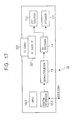
- Figs. 15 and 16 show block diagrams of a case in which a function block which can be shared among different broadcasting providers is formed as an independent block.
- Fig. 15 shows an example of the construction of a CI-Modem 4 in which only a modem section 41 is an independent block.
- This embodiment comprises a digital interface 40, a modem section 41, and an MPU 42.
- Fig. 16 shows an example of the construction of a CI-Card 5 in which only the IC card is formed as an independent block.
- This embodiment comprises a digital interface 50, an IC card IF 51, an IC card 52, and an MPU 53.
- Fig. 17 is a view showing an example of the construction of the CI-Post_STB 1b. Components in Fig. 17 which correspond to those of Fig. 7 are given the same reference numeral, and accordingly, a description thereof has been omitted.
- an IC card IF 221, an IC card 222, a speaker 111, and a CRT monitor 112 are newly added.
- Each block is the same as in the above-described case, and accordingly, a description thereof has been omitted.
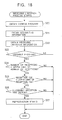
- Fig. 18 is a flowchart illustrating an example of a process performed in the embodiment shown in Fig. 17 .
- step S20 the MPU 15-2 obtains a viewing program. More specifically, when the system is powered on and a desired program is selected by the user, the MPU 15-2 obtains a packet which is contained in the data stream output from the digital interface 12-2 and which contains information for the selected program.
- step S21 accounting information is obtained. More specifically, the MPU 15-2 obtains the accounting information of the program which is viewed currently by referring to the packet containing accounting information from among the packets obtained in step S20. The process then proceeds to step S22.
- step S22 reception limitation information is obtained. More specifically, the MPU 15-2 obtains the reception limitation information from the IC card 222 through the IC card IF 221.
- step S23 the MPU 15-2 determines whether or not the program to be viewed can be viewed. More specifically, the MPU 15-2 refers to the reception limitation information obtained in step S22 in order to determine whether or not the program which is viewed currently is a program in which, for example, a child lock is applied.
- the process is terminated (END). Also, when it is determined that a child lock is not applied (YES: a program which can be viewed), the process proceeds to step S24.
- step S24 the MPU 15-2 reads the viewing history from the IC card 222, computes a total number of program viewing up to the present time, and compares the total number of program viewing with the upper limit of number of receptions contained in the reception limitation information obtained in step S22 in order to determine whether or not the number of program viewing is smaller than the upper limit of the number of receptions.
- NO the number of program viewing is greater than the upper limit of the number of receptions
- END the process is terminated
- the process proceeds to step S25.
- step S25 the MPU 15-2 reads the viewing history from the IC card 222, computes the total program reception fee up to the present time, and compares the total program reception fee with the upper limit of the reception fee contained in the reception limitation information obtained in step S22 in order to determine whether or not the program reception fee is smaller than the upper limit of the reception fee.
- the process is terminated (END). Also, when it is determined that the reception fee is not greater than the upper limit of the reception fee (YES), the process proceeds to step S26.
- step S26 the MPU 15-2 reads the present time from a timer section (not shown), and compares the time with the allowable reception time period contained in the reception limitation information obtained in step S22 in order to determine whether or not the present time is included in the allowable reception time period.
- the process is terminated (END). Also, when it is determined that the present time is in the allowable reception time period (YES), the process proceeds to step S27.
- step S27 the reproduction of the broadcasting program is started.
- this lock in the case where a child lock is applied to the program to be viewed, this lock can be detected to limit the viewing. Not only in a case in which the total number of receptions of programs is greater than the upper limit of the number of receptions preset by a user, but also in a case in which the total reception fee is greater than the upper limit of the reception fee preset by a user, it is possible to limit viewing. Furthermore, in order to prevent a child from viewing a late-night program, also when the present time is not included in the allowable reception time period, viewing can be limited.
- the tuner 10 is handled as a common part irrespective of the broadcasting providers, in a case in which, for example, transmission configurations (for example, a satellite broadcast, a ground-wave program, or a cable broadcast) from broadcasting providers are different, this tuner section 10 cannot be handled as a common part. In such a case, as shown in Fig. 19 , it is preferable that the tuner 10 be included in the CI-Module 2.
- Fig. 19 is a block diagram showing an example of the construction of the CI-Module 2 corresponding to the above-described case.
- Components in Fig. 19 which correspond to those of Fig. 3 are given the same reference numeral, and accordingly, a description thereof has been omitted.
- the RF signal of a predetermined frequency extracted by the tuner 10 is demodulated by the demodulator 11 and output in the form of a data stream.
- the descrambler 22 performs a descrambling process on the data stream obtained as a result of demodulation and outputs the obtained data stream through the digital interface 21.
- the data stream output through the digital interface 21 is input, for example, to the CI-Post_STB 1b shown in Fig. 7 , whereby a reproduction process is performed, and the image signals and the sound signals are output.
- the function blocks can be shared, and accordingly, the cost of the apparatus can be reduced.
- a CI-STB'and a CI-Module are used in combination in order to receive a broadcast, in a case in which reception is possible even if processing is not performed by the CI-Module, it is preferable that processing be performed by only the CI-STB.
- the digital interface 12 may output the output of the demodulator 11 directly to the demultiplexer 13 without outputting it to the outside. According to such a method, the amount of information transmitted on the IEEE1394 bus can be reduced, thereby allowing exchange of information to be smoothly performed among the other apparatuses.
- the examples of the transmission medium include not only information recording media, such as FDs (floppy disks) or CD-ROMs (compact disc-read-only memories), but also network transmission media, such as the Internet or a digital satellite.
Landscapes
- Engineering & Computer Science (AREA)
- Signal Processing (AREA)
- Multimedia (AREA)
- Databases & Information Systems (AREA)
- Computer Security & Cryptography (AREA)
- Computer Networks & Wireless Communication (AREA)
- Theoretical Computer Science (AREA)
- General Health & Medical Sciences (AREA)
- Bioethics (AREA)
- Computer Hardware Design (AREA)
- Software Systems (AREA)
- Physics & Mathematics (AREA)
- General Engineering & Computer Science (AREA)
- General Physics & Mathematics (AREA)
- Health & Medical Sciences (AREA)
- Two-Way Televisions, Distribution Of Moving Picture Or The Like (AREA)
- Circuits Of Receivers In General (AREA)
- Data Exchanges In Wide-Area Networks (AREA)
Claims (10)
- Datenverarbeitungssystem, das Folgendes umfasst:mehrere Entwürfelungsmodule (2-1, 2-2, 2-3); undmehrere Rundsendesignalempfänger (1-1, 1-2), wovon jeder über einen IEEE1394-Bus mit den mehreren Entwürfelungsmodulen (2-1, 2-2, 2-3) gekoppelt ist, was die Ausgabe von Daten aus jedem der mehreren Rundsendesignalempfänger zu jedem der mehreren Entwürfelungsmodule ermöglicht; wobeijeder der Rundsendesignalempfänger (1-1, 1-2) Folgendes umfasst:Empfangsmittel (10) zum Empfangen von Rundsendesignalen;Auswahlmittel (10) zum Auswählen von Signalen eines vorbestimmten Kanals aus den durch die Empfangsmittel empfangenen Rundsendesignalen;Demodulationsmittel (11) zum Demodulieren eines durch die Auswahlmittel ausgewählten vorbestimmten Kanals in einen Datenstrom, der aus mehreren Informationen aufgebaut ist;eine Empfängerschnittstelle (12), die den IEEE1394-Standard erfüllt, zum Ausgeben des durch die Demodulationsmittel demodulierten Datenstroms zu irgendeinem aus den mehreren Entwürfelungsmodulen (2-1, 2-2, 2-3); undjedes der mehreren Entwürfelungsmodule (2-1, 2-2, 2-3) Folgendes umfasst:eine Entwürfelungsschnittstelle (21), die den IEEE1394-Standard erfüllt, zum Eingeben eines durch einen der mehreren Rundsendesignalempfänger (1-1, 1-2) verarbeiteten Datenstroms undEntwürfelungsmittel (22) zum Entwürfeln des durch die Entwürfelungsschnittstelle (21) eingegebenen Datenstroms; undwobei die Entwürfelungsschnittstelle (21) konfiguriert ist, den durch die Entwürfelungsmittel entwürfelten Datenstrom zu dem einen aus den mehreren Rundsendesignalempfängern (1-1, 1-2) auszugeben; undjeder der Rundsendesignalempfänger ferner Folgendes umfasst:Demultiplexierungsmittel (13) zum Demultiplexieren des durch die Entwürfelungsmittel (22) entwürfelten und von einem aus den mehreren Entwürfelungsmodulen durch die Empfängerschnittstelle (12) empfangenen Datenstroms; undDecodierungsmittel (14) zum Decodieren des demultiplexierten Datenstroms aus den Demultiplexierungsmitteln (13).
- Datenverarbeitungssystem nach Anspruch 1, wobei jeder der mehreren Rundsendesignalempfänger ferner Folgendes umfasst:Extraktionsmittel (100) zum Extrahieren nur vorbestimmter Informationen unter den mehreren Informationen, die in dem durch die Demodulationsmittel demodulierten Datenstrom enthalten sind,wobei die Empfängerschnittstelle (12) konfiguriert ist, nur die vorbestimmten, durch die Extraktionsmittel extrahierten Informationen auszugeben.
- Datenverarbeitungssystem nach Anspruch 1, wobei der eine aus den mehreren Rundsendesignalempfängern (1-1, 1-2) eine Bildverarbeitungsvorrichtung ist.
- Datenverarbeitungssystem nach Anspruch 1, wobei der eine aus den mehreren Rundsendesignalempfängern (1-1, 1-2) eine Tonverarbeitungsvorrichtung ist.
- Datenverarbeitungssystem nach Anspruch 1, das ferner ein oder mehrere Speichermodule (3) umfasst, die über einen IEEE1394-Bus mit den mehreren Rundsendesignalempfängern (1-1, 1-2) und den mehreren Entwürfelungsmodulen (2-1, 2-2, 2-3) gekoppelt sind, was das Speichern von Daten, die von irgendeinem aus den mehreren Rundsendesignalempfängern oder irgendeinem aus den mehreren Entwürfelungsmodulen empfangen werden, ermöglicht, wobei jedes der mehreren Speichermodule (3) Folgendes umfasst:eine Speicherschnittstelle, die den IEEE 1394-Standard erfüllt; undAufzeichnungsmittel zum Aufzeichnen der empfangenen Daten.
- Datenverarbeitungssystem nach Anspruch 1, wobei jedes der mehreren Entwürfelungsmodule (2-1, 2-2, 2-3) ferner Folgendes umfasst:Detektionsmittel (23) zum Detektieren des Typs der Vorrichtungen, die mit der Entwürfelungsschnittstelle (21) verbunden sind; undBegrenzungsmittel (23) zum Begrenzen einer Ausgabe des Datenstroms aus der Entwürfelungsschnittstelle (21) in Übereinstimmung mit dem Detektionsergebnis der Detektionsmittel.
- Datenverarbeitungssystem nach Anspruch 1, wobei jedes der mehreren Entwürfelungsmodule (2-1, 2-2, 2-3) ferner Folgendes umfasst:Detektionsmittel (23) zum Detektieren der Anzahl der Vorrichtungen, die mit der Entwürfelungsschnittstelle (21) verbunden sind; undBegrenzungsmittel (23) zum Begrenzen einer Ausgabe des Datenstroms aus der Entwürfelungsschnittstelle (21) in Übereinstimmung mit dem Detektionsergebnis der Detektionsmittel.
- Datenverarbeitungssystem nach Anspruch 1, wobei jedes der mehreren Entwürfelungsmodule (2-1, 2-2, 2-3) ferner Folgendes umfasst:Detektionsmittel (23) zum Detektieren des Typs der Vorrichtungen, die mit der Entwürfelungsschnittstelle (21) verbunden sind; undBerechnungsmittel (23) zum Berechnen einer Empfangsgebühr in Übereinstimmung mit dem Detektionsergebnis der Detektionsmittel.
- Datenverarbeitungssystem nach Anspruch 1, wobei jedes der mehreren Entwürfelungsmodule (2-1, 2-2, 2-3) ferner Folgendes umfasst:Detektionsmittel (23, S4) zum Detektieren der Anzahl der Vorrichtungen, die mit der Entwürfelungsschnittstelle (21) verbunden sind; undBerechnungsmittel (23, S8) zum Berechnen einer Empfangsgebühr (F1, F2) in Übereinstimmung mit dem Detektionsergebnis der Detektionsmittel.
- Datenverarbeitungssystem nach Anspruch 1,
wobei jedes der mehreren Entwürfelungsmodule (2-1, 2-2, 2-3) ferner Verschlüsselungsmittel (220) zum Verschlüsseln einer Ausgabe der Entwürfelungsmittel umfasst und die Entwürfelungsschnittstelle (21) konfiguriert ist, einen Datenstrom, der aus den Verschlüsselungsmitteln ausgegeben wird, auszugeben, und
wobei jeder der mehreren Rundsendesignalempfänger (1-1, 1-2) ferner Entschlüsselungsmittel (120) zum Entschlüsseln des von einem der mehreren Entwürfelungsmodule (2-1, 2-2, 2-3) empfangenen verschlüsselten Datenstroms umfasst.
Priority Applications (7)
| Application Number | Priority Date | Filing Date | Title |
|---|---|---|---|
| EP20100175911 EP2256963B1 (de) | 1997-09-30 | 1998-09-29 | System für den Empfang, Entwürflung und Wiedergabe von digitalen Fernsehsignalen, entsprechendes Verfahren und entsprechendes Speichermedium für ein Computerprogramm |
| EP06076009.7A EP1734678B1 (de) | 1997-09-30 | 1998-09-29 | Verfahren und Vorrichtung für den Empfang und die Verarbeitung von digitalen Rundfunksignalen |
| EP10175925A EP2256966A3 (de) | 1997-09-30 | 1998-09-29 | Digitales System für den Empfang von Fernsehsignalen, Speichermedium für ein Computerprogramm un Verfahren zum Betrieb des genannten Systems |
| EP10177583A EP2259459A3 (de) | 1997-09-30 | 1998-09-29 | Empfänger für digitalen verwürfelten Informationen |
| EP10175916A EP2256964A3 (de) | 1997-09-30 | 1998-09-29 | Digitaler Fernsehsignalempfänger, Verfahren und Speichermedium für ein Computerprogramm zum Betrieb des genannten Empfängers |
| EP10177582.3A EP2262136B1 (de) | 1997-09-30 | 1998-09-29 | Empfänger für digitalen verwürfelten Informationen |
| EP10175922A EP2256965A3 (de) | 1997-09-30 | 1998-09-29 | System für den Empfang von digitalen Rundfunksignalen, Verfahren und Speichermedium für ein Computerprogramm zum Betrieb des genannten Systems |
Applications Claiming Priority (3)
| Application Number | Priority Date | Filing Date | Title |
|---|---|---|---|
| JP267552/97 | 1997-09-30 | ||
| JP26755297 | 1997-09-30 | ||
| JP26755297 | 1997-09-30 |
Related Child Applications (10)
| Application Number | Title | Priority Date | Filing Date |
|---|---|---|---|
| EP10177583A Division-Into EP2259459A3 (de) | 1997-09-30 | 1998-09-29 | Empfänger für digitalen verwürfelten Informationen |
| EP20100175911 Division-Into EP2256963B1 (de) | 1997-09-30 | 1998-09-29 | System für den Empfang, Entwürflung und Wiedergabe von digitalen Fernsehsignalen, entsprechendes Verfahren und entsprechendes Speichermedium für ein Computerprogramm |
| EP20100175911 Division EP2256963B1 (de) | 1997-09-30 | 1998-09-29 | System für den Empfang, Entwürflung und Wiedergabe von digitalen Fernsehsignalen, entsprechendes Verfahren und entsprechendes Speichermedium für ein Computerprogramm |
| EP06076009.7A Division-Into EP1734678B1 (de) | 1997-09-30 | 1998-09-29 | Verfahren und Vorrichtung für den Empfang und die Verarbeitung von digitalen Rundfunksignalen |
| EP06076009.7A Division EP1734678B1 (de) | 1997-09-30 | 1998-09-29 | Verfahren und Vorrichtung für den Empfang und die Verarbeitung von digitalen Rundfunksignalen |
| EP10175925A Division-Into EP2256966A3 (de) | 1997-09-30 | 1998-09-29 | Digitales System für den Empfang von Fernsehsignalen, Speichermedium für ein Computerprogramm un Verfahren zum Betrieb des genannten Systems |
| EP10175922A Division-Into EP2256965A3 (de) | 1997-09-30 | 1998-09-29 | System für den Empfang von digitalen Rundfunksignalen, Verfahren und Speichermedium für ein Computerprogramm zum Betrieb des genannten Systems |
| EP10175916A Division-Into EP2256964A3 (de) | 1997-09-30 | 1998-09-29 | Digitaler Fernsehsignalempfänger, Verfahren und Speichermedium für ein Computerprogramm zum Betrieb des genannten Empfängers |
| EP10177582.3A Division-Into EP2262136B1 (de) | 1997-09-30 | 1998-09-29 | Empfänger für digitalen verwürfelten Informationen |
| EP10177582.3A Division EP2262136B1 (de) | 1997-09-30 | 1998-09-29 | Empfänger für digitalen verwürfelten Informationen |
Publications (3)
| Publication Number | Publication Date |
|---|---|
| EP0905932A2 EP0905932A2 (de) | 1999-03-31 |
| EP0905932A3 EP0905932A3 (de) | 2004-12-08 |
| EP0905932B1 true EP0905932B1 (de) | 2015-03-25 |
Family
ID=17446408
Family Applications (8)
| Application Number | Title | Priority Date | Filing Date |
|---|---|---|---|
| EP98307884.1A Expired - Lifetime EP0905932B1 (de) | 1997-09-30 | 1998-09-29 | System für den Empfang, Entwürflung und Wiedergabe von digitalen Rundfunksignalen |
| EP10175916A Withdrawn EP2256964A3 (de) | 1997-09-30 | 1998-09-29 | Digitaler Fernsehsignalempfänger, Verfahren und Speichermedium für ein Computerprogramm zum Betrieb des genannten Empfängers |
| EP10177583A Withdrawn EP2259459A3 (de) | 1997-09-30 | 1998-09-29 | Empfänger für digitalen verwürfelten Informationen |
| EP20100175911 Expired - Lifetime EP2256963B1 (de) | 1997-09-30 | 1998-09-29 | System für den Empfang, Entwürflung und Wiedergabe von digitalen Fernsehsignalen, entsprechendes Verfahren und entsprechendes Speichermedium für ein Computerprogramm |
| EP10177582.3A Expired - Lifetime EP2262136B1 (de) | 1997-09-30 | 1998-09-29 | Empfänger für digitalen verwürfelten Informationen |
| EP10175925A Ceased EP2256966A3 (de) | 1997-09-30 | 1998-09-29 | Digitales System für den Empfang von Fernsehsignalen, Speichermedium für ein Computerprogramm un Verfahren zum Betrieb des genannten Systems |
| EP10175922A Withdrawn EP2256965A3 (de) | 1997-09-30 | 1998-09-29 | System für den Empfang von digitalen Rundfunksignalen, Verfahren und Speichermedium für ein Computerprogramm zum Betrieb des genannten Systems |
| EP06076009.7A Expired - Lifetime EP1734678B1 (de) | 1997-09-30 | 1998-09-29 | Verfahren und Vorrichtung für den Empfang und die Verarbeitung von digitalen Rundfunksignalen |
Family Applications After (7)
| Application Number | Title | Priority Date | Filing Date |
|---|---|---|---|
| EP10175916A Withdrawn EP2256964A3 (de) | 1997-09-30 | 1998-09-29 | Digitaler Fernsehsignalempfänger, Verfahren und Speichermedium für ein Computerprogramm zum Betrieb des genannten Empfängers |
| EP10177583A Withdrawn EP2259459A3 (de) | 1997-09-30 | 1998-09-29 | Empfänger für digitalen verwürfelten Informationen |
| EP20100175911 Expired - Lifetime EP2256963B1 (de) | 1997-09-30 | 1998-09-29 | System für den Empfang, Entwürflung und Wiedergabe von digitalen Fernsehsignalen, entsprechendes Verfahren und entsprechendes Speichermedium für ein Computerprogramm |
| EP10177582.3A Expired - Lifetime EP2262136B1 (de) | 1997-09-30 | 1998-09-29 | Empfänger für digitalen verwürfelten Informationen |
| EP10175925A Ceased EP2256966A3 (de) | 1997-09-30 | 1998-09-29 | Digitales System für den Empfang von Fernsehsignalen, Speichermedium für ein Computerprogramm un Verfahren zum Betrieb des genannten Systems |
| EP10175922A Withdrawn EP2256965A3 (de) | 1997-09-30 | 1998-09-29 | System für den Empfang von digitalen Rundfunksignalen, Verfahren und Speichermedium für ein Computerprogramm zum Betrieb des genannten Systems |
| EP06076009.7A Expired - Lifetime EP1734678B1 (de) | 1997-09-30 | 1998-09-29 | Verfahren und Vorrichtung für den Empfang und die Verarbeitung von digitalen Rundfunksignalen |
Country Status (5)
| Country | Link |
|---|---|
| US (8) | US6438693B1 (de) |
| EP (8) | EP0905932B1 (de) |
| KR (1) | KR19990030282A (de) |
| CN (2) | CN100375518C (de) |
| MY (1) | MY123163A (de) |
Families Citing this family (23)
| Publication number | Priority date | Publication date | Assignee | Title |
|---|---|---|---|---|
| JP3611864B2 (ja) * | 1997-04-24 | 2005-01-19 | 松下電器産業株式会社 | データ転送方法 |
| US6438693B1 (en) * | 1997-09-30 | 2002-08-20 | Sony Corporation | Modular broadcast receiver system and memo |
| EP0952733B1 (de) * | 1998-04-24 | 2006-11-02 | Sony United Kingdom Limited | Digitaler Multimediaempfänger und einen solchen Empfänger umfassendes Netzwerk mit IEEE 1394 serial Bus Schnittstelle |
| TW432840B (en) * | 1998-06-03 | 2001-05-01 | Sony Corp | Communication control method, system, and device |
| KR100624865B1 (ko) * | 1999-06-02 | 2006-09-18 | 엘지전자 주식회사 | 사용자 프로파일을 이용한 비디오 분할 시청 시스템 |
| KR100694043B1 (ko) * | 2000-05-18 | 2007-03-12 | 삼성전자주식회사 | Av 시스템 및 그 기능 확장 모듈 |
| JP3983463B2 (ja) * | 2000-09-04 | 2007-09-26 | パイオニア株式会社 | 情報送信装置及び情報送信方法、情報受信装置及び情報受信方法、情報伝送システム及び情報伝送方法並びに情報記録媒体 |
| DE10119656B4 (de) * | 2001-04-20 | 2010-03-04 | Mascom Gmbh | Entschlüsselungs-Modul für Receiver zum Empfangen von digital codierten Rundfunk- oder Fernsehsignalen |
| US20030001981A1 (en) * | 2001-05-21 | 2003-01-02 | Sony Corporation | Modular digital television architecture |
| US20050177662A1 (en) * | 2002-04-04 | 2005-08-11 | Hauke Michael T. | Modular broadcast television products |
| IL155416A0 (en) * | 2003-04-13 | 2003-11-23 | Nds Ltd | System for securing access to data streams |
| KR100547810B1 (ko) * | 2003-08-27 | 2006-01-31 | 삼성전자주식회사 | 디지털 멀티미디어 데이터의 재생이 가능한 디지털멀티미디어 방송 수신 장치 및 방법 |
| US8132215B2 (en) * | 2003-10-27 | 2012-03-06 | Panasonic Corporation | Apparatus for receiving broadcast signal |
| JP5177939B2 (ja) * | 2004-11-10 | 2013-04-10 | 株式会社東芝 | 情報処理装置 |
| CN1851797A (zh) * | 2005-04-22 | 2006-10-25 | 鸿富锦精密工业(深圳)有限公司 | 信号转接装置 |
| KR20070048060A (ko) * | 2005-11-03 | 2007-05-08 | 삼성전자주식회사 | 방송신호 녹화재생 시스템, 방송신호 녹화재생 장치,방송신호 튜닝장치 |
| JP2013531922A (ja) * | 2010-05-17 | 2013-08-08 | トムソン ライセンシング | ビデオ・レコーダーまたはセットトップボックスstbを通じて利用可能な放送番組のタグ付けされたリストの選択的表示 |
| KR20120067184A (ko) * | 2010-12-15 | 2012-06-25 | 한국전자통신연구원 | 유해도 맵 생성 장치 및 방법 |
| CN102164319A (zh) * | 2011-04-08 | 2011-08-24 | 北京数字太和科技有限责任公司 | 传输码流ts的安全传输方法和装置 |
| CN102742109B (zh) * | 2012-03-01 | 2014-03-26 | 华为技术有限公司 | 一种远供系统及远端电源 |
| WO2013139696A1 (en) * | 2012-03-19 | 2013-09-26 | Smardtv S.A. | A system and method for networking conditional access functionalities |
| DE102014115967B4 (de) * | 2014-11-03 | 2023-10-12 | Infineon Technologies Ag | Kommunikationsvorrichtungen und Verfahren |
| JP2017103587A (ja) * | 2015-12-01 | 2017-06-08 | 富士通株式会社 | 基地局装置、伝送システム及び伝送方法 |
Citations (2)
| Publication number | Priority date | Publication date | Assignee | Title |
|---|---|---|---|---|
| EP0684721A2 (de) * | 1994-05-24 | 1995-11-29 | Sony Corporation | Datenbuskommunikation |
| WO1996008912A2 (en) * | 1994-09-09 | 1996-03-21 | Titan Information Systems Corporation | Conditional access system |
Family Cites Families (15)
| Publication number | Priority date | Publication date | Assignee | Title |
|---|---|---|---|---|
| US5557316A (en) * | 1990-09-28 | 1996-09-17 | Ictv, Inc. | System for distributing broadcast television services identically on a first bandwidth portion of a plurality of express trunks and interactive services over a second bandwidth portion of each express trunk on a subscriber demand basis |
| US5138659A (en) * | 1991-05-02 | 1992-08-11 | General Instrument Corporation | Conversion of television signal formats with retention of common control data stream |
| CN1032099C (zh) * | 1992-03-26 | 1996-06-19 | 松下电器产业株式会社 | 通信系统 |
| US5477263A (en) * | 1994-05-26 | 1995-12-19 | Bell Atlantic Network Services, Inc. | Method and apparatus for video on demand with fast forward, reverse and channel pause |
| DE69523220T2 (de) | 1994-07-08 | 2002-06-13 | Sony Corp., Tokio/Tokyo | Empfang von zugangskontrollierten Rundfunksignalen |
| MY125706A (en) * | 1994-08-19 | 2006-08-30 | Thomson Consumer Electronics | High speed signal processing smart card |
| US5898695A (en) * | 1995-03-29 | 1999-04-27 | Hitachi, Ltd. | Decoder for compressed and multiplexed video and audio data |
| JPH09116450A (ja) * | 1995-10-16 | 1997-05-02 | Sony Corp | 受信機 |
| US5899578A (en) | 1995-12-25 | 1999-05-04 | Sony Corporation | Digital signal processor, processing method, digital signal recording/playback device and digital signal playback method |
| JP3305183B2 (ja) * | 1996-01-12 | 2002-07-22 | 株式会社東芝 | ディジタル放送受信端末装置 |
| TW346571B (en) * | 1996-02-06 | 1998-12-01 | Matsushita Electric Industrial Co Ltd | Data reception apparatus, data transmission apparatus, information processing system, data reception method |
| US5959692A (en) * | 1996-08-21 | 1999-09-28 | Sony Corporation | Television-signal processing apparatus and television-signal processing |
| IT1289206B1 (it) * | 1996-09-12 | 1998-09-29 | Sgs Thomson Microelectronics | Metodo di ricompressione e decompressione adpcm di un flusso di dati digitali costituente un segnale video digitale e stimatore |
| JPH10145188A (ja) * | 1996-11-07 | 1998-05-29 | Sony Corp | 受信装置 |
| US6438693B1 (en) * | 1997-09-30 | 2002-08-20 | Sony Corporation | Modular broadcast receiver system and memo |
-
1998
- 1998-09-28 US US09/162,037 patent/US6438693B1/en not_active Expired - Lifetime
- 1998-09-29 EP EP98307884.1A patent/EP0905932B1/de not_active Expired - Lifetime
- 1998-09-29 EP EP10175916A patent/EP2256964A3/de not_active Withdrawn
- 1998-09-29 EP EP10177583A patent/EP2259459A3/de not_active Withdrawn
- 1998-09-29 EP EP20100175911 patent/EP2256963B1/de not_active Expired - Lifetime
- 1998-09-29 EP EP10177582.3A patent/EP2262136B1/de not_active Expired - Lifetime
- 1998-09-29 EP EP10175925A patent/EP2256966A3/de not_active Ceased
- 1998-09-29 EP EP10175922A patent/EP2256965A3/de not_active Withdrawn
- 1998-09-29 MY MYPI98004466A patent/MY123163A/en unknown
- 1998-09-29 EP EP06076009.7A patent/EP1734678B1/de not_active Expired - Lifetime
- 1998-09-30 CN CNB981245315A patent/CN100375518C/zh not_active Expired - Lifetime
- 1998-09-30 KR KR1019980040765A patent/KR19990030282A/ko not_active Ceased
- 1998-09-30 CN CNA200810001423XA patent/CN101232336A/zh active Pending
-
2002
- 2002-06-12 US US10/170,111 patent/US7254715B2/en not_active Expired - Lifetime
-
2007
- 2007-05-03 US US11/799,773 patent/US7796756B2/en not_active Expired - Fee Related
-
2010
- 2010-06-08 US US12/796,037 patent/US8189782B2/en not_active Expired - Fee Related
- 2010-06-08 US US12/796,016 patent/US8280050B2/en not_active Expired - Fee Related
-
2012
- 2012-09-24 US US13/625,358 patent/US8824675B2/en not_active Expired - Fee Related
-
2014
- 2014-05-22 US US14/284,514 patent/US9237373B2/en not_active Expired - Fee Related
-
2015
- 2015-11-17 US US14/943,199 patent/US20160073157A1/en not_active Abandoned
Patent Citations (2)
| Publication number | Priority date | Publication date | Assignee | Title |
|---|---|---|---|---|
| EP0684721A2 (de) * | 1994-05-24 | 1995-11-29 | Sony Corporation | Datenbuskommunikation |
| WO1996008912A2 (en) * | 1994-09-09 | 1996-03-21 | Titan Information Systems Corporation | Conditional access system |
Non-Patent Citations (2)
| Title |
|---|
| "COMMON INTERFACE SPECIFICATION FOR CONDITIONAL ACCESS AND OTHER DIGITAL VIDEO BROADCASTING DECODER APPLICATIONS", EUROPEAN STANDARD EN 50221, no. EN 50221, 1 February 1997 (1997-02-01), pages 1 - 86,01, XP000950003 * |
| BLOKS R H J: "The IEEE-1394 high speed serial bus", PHILIPS JOURNAL OF RESEARCH, ELSEVIER, AMSTERDAM, NL, vol. 50, no. 1, 1 January 1996 (1996-01-01), pages 209 - 216, XP004008212, ISSN: 0165-5817, DOI: 10.1016/0165-5817(96)81310-6 * |
Also Published As
Similar Documents
| Publication | Publication Date | Title |
|---|---|---|
| US7796756B2 (en) | Modular broadcast receiver system and method | |
| JP4394833B2 (ja) | 通信ネットワーク | |
| JP4110588B2 (ja) | データ受信装置および受信方法 | |
| JP4877421B2 (ja) | 受信装置及び受信方法ならびに送受信システム及び送受信方法 | |
| JP2003515286A (ja) | デジタルテレビジョン方法および装置 | |
| WO2001027731A1 (en) | Enhancing interface to transport streams by pin re-assignment | |
| JP3912563B2 (ja) | 入出力装置および入出力方法、並びに受信装置 | |
| JPH11168486A (ja) | 情報処理装置、情報処理方法、および、提供媒体 | |
| JP2005354729A (ja) | 送信装置及び送信方法 |
Legal Events
| Date | Code | Title | Description |
|---|---|---|---|
| PUAI | Public reference made under article 153(3) epc to a published international application that has entered the european phase |
Free format text: ORIGINAL CODE: 0009012 |
|
| AK | Designated contracting states |
Kind code of ref document: A2 Designated state(s): AT BE CH CY DE DK ES FI FR GB GR IE IT LI LU MC NL PT SE |
|
| AX | Request for extension of the european patent |
Free format text: AL;LT;LV;MK;RO;SI |
|
| PUAL | Search report despatched |
Free format text: ORIGINAL CODE: 0009013 |
|
| AK | Designated contracting states |
Kind code of ref document: A3 Designated state(s): AT BE CH CY DE DK ES FI FR GB GR IE IT LI LU MC NL PT SE |
|
| AX | Request for extension of the european patent |
Extension state: AL LT LV MK RO SI |
|
| RIC1 | Information provided on ipc code assigned before grant |
Ipc: 7H 04N 5/00 B Ipc: 7H 04H 1/00 A |
|
| 17P | Request for examination filed |
Effective date: 20050524 |
|
| AKX | Designation fees paid |
Designated state(s): DE FR GB |
|
| RAP1 | Party data changed (applicant data changed or rights of an application transferred) |
Owner name: SONY CORPORATION |
|
| REG | Reference to a national code |
Ref country code: DE Ref legal event code: R079 Ref document number: 69843375 Country of ref document: DE Free format text: PREVIOUS MAIN CLASS: H04H0001000000 Ipc: H04H0060140000 |
|
| GRAP | Despatch of communication of intention to grant a patent |
Free format text: ORIGINAL CODE: EPIDOSNIGR1 |
|
| RIC1 | Information provided on ipc code assigned before grant |
Ipc: H04N 7/167 20110101ALI20140930BHEP Ipc: H04N 21/418 20110101ALI20140930BHEP Ipc: H04N 21/61 20110101ALI20140930BHEP Ipc: H04N 21/442 20110101ALI20140930BHEP Ipc: H04H 60/14 20080101AFI20140930BHEP Ipc: H04N 21/23 20110101ALI20140930BHEP Ipc: H04N 21/434 20110101ALI20140930BHEP Ipc: H04N 21/4405 20110101ALI20140930BHEP Ipc: H04N 21/436 20110101ALI20140930BHEP Ipc: H04N 21/4147 20110101ALI20140930BHEP Ipc: H04N 21/4363 20110101ALI20140930BHEP Ipc: G06F 21/62 20130101ALI20140930BHEP Ipc: H04N 21/40 20110101ALI20140930BHEP Ipc: H04H 60/23 20080101ALN20140930BHEP Ipc: H04N 21/21 20110101ALI20140930BHEP Ipc: H04N 21/4627 20110101ALI20140930BHEP Ipc: H04N 21/4408 20110101ALI20140930BHEP |
|
| RIC1 | Information provided on ipc code assigned before grant |
Ipc: H04N 21/4627 20110101ALI20141003BHEP Ipc: G06F 21/62 20130101ALI20141003BHEP Ipc: H04N 21/418 20110101ALI20141003BHEP Ipc: H04N 7/167 20110101ALI20141003BHEP Ipc: H04N 21/4408 20110101ALI20141003BHEP Ipc: H04N 21/40 20110101ALI20141003BHEP Ipc: H04H 60/14 20080101AFI20141003BHEP Ipc: H04H 60/23 20080101ALN20141003BHEP Ipc: H04N 21/23 20110101ALI20141003BHEP Ipc: H04N 21/4363 20110101ALI20141003BHEP Ipc: H04N 21/442 20110101ALI20141003BHEP Ipc: H04N 21/4147 20110101ALI20141003BHEP Ipc: H04N 21/21 20110101ALI20141003BHEP Ipc: H04N 21/61 20110101ALI20141003BHEP Ipc: H04N 21/434 20110101ALI20141003BHEP Ipc: H04N 21/436 20110101ALI20141003BHEP Ipc: H04N 21/4405 20110101ALI20141003BHEP |
|
| INTG | Intention to grant announced |
Effective date: 20141022 |
|
| GRAS | Grant fee paid |
Free format text: ORIGINAL CODE: EPIDOSNIGR3 |
|
| GRAA | (expected) grant |
Free format text: ORIGINAL CODE: 0009210 |
|
| AK | Designated contracting states |
Kind code of ref document: B1 Designated state(s): DE FR GB |
|
| REG | Reference to a national code |
Ref country code: GB Ref legal event code: FG4D |
|
| REG | Reference to a national code |
Ref country code: DE Ref legal event code: R081 Ref document number: 69843375 Country of ref document: DE Owner name: SATURN LICENSING LLC, NEW YORK, US Free format text: FORMER OWNER: SONY CORPORATION, TOKIO/TOKYO, JP |
|
| REG | Reference to a national code |
Ref country code: DE Ref legal event code: R096 Ref document number: 69843375 Country of ref document: DE Effective date: 20150507 |
|
| REG | Reference to a national code |
Ref country code: FR Ref legal event code: PLFP Year of fee payment: 18 |
|
| REG | Reference to a national code |
Ref country code: DE Ref legal event code: R097 Ref document number: 69843375 Country of ref document: DE |
|
| PLBE | No opposition filed within time limit |
Free format text: ORIGINAL CODE: 0009261 |
|
| STAA | Information on the status of an ep patent application or granted ep patent |
Free format text: STATUS: NO OPPOSITION FILED WITHIN TIME LIMIT |
|
| 26N | No opposition filed |
Effective date: 20160105 |
|
| REG | Reference to a national code |
Ref country code: FR Ref legal event code: PLFP Year of fee payment: 19 |
|
| REG | Reference to a national code |
Ref country code: FR Ref legal event code: PLFP Year of fee payment: 20 |
|
| PGFP | Annual fee paid to national office [announced via postgrant information from national office to epo] |
Ref country code: FR Payment date: 20170810 Year of fee payment: 20 Ref country code: GB Payment date: 20170927 Year of fee payment: 20 |
|
| REG | Reference to a national code |
Ref country code: DE Ref legal event code: R081 Ref document number: 69843375 Country of ref document: DE Owner name: SATURN LICENSING LLC, NEW YORK, US Free format text: FORMER OWNER: SONY CORP., TOKYO, JP |
|
| REG | Reference to a national code |
Ref country code: GB Ref legal event code: 732E Free format text: REGISTERED BETWEEN 20171214 AND 20171222 |
|
| PGFP | Annual fee paid to national office [announced via postgrant information from national office to epo] |
Ref country code: DE Payment date: 20170927 Year of fee payment: 20 |
|
| REG | Reference to a national code |
Ref country code: FR Ref legal event code: TP Owner name: SATURN LICENSING LLC, US Effective date: 20180226 |
|
| REG | Reference to a national code |
Ref country code: DE Ref legal event code: R071 Ref document number: 69843375 Country of ref document: DE |
|
| REG | Reference to a national code |
Ref country code: GB Ref legal event code: PE20 Expiry date: 20180928 |
|
| PG25 | Lapsed in a contracting state [announced via postgrant information from national office to epo] |
Ref country code: GB Free format text: LAPSE BECAUSE OF EXPIRATION OF PROTECTION Effective date: 20180928 |