EP0907296A1 - Système de communication avec du reseau, du dispositif portable et du procédé - Google Patents
Système de communication avec du reseau, du dispositif portable et du procédé Download PDFInfo
- Publication number
- EP0907296A1 EP0907296A1 EP97402301A EP97402301A EP0907296A1 EP 0907296 A1 EP0907296 A1 EP 0907296A1 EP 97402301 A EP97402301 A EP 97402301A EP 97402301 A EP97402301 A EP 97402301A EP 0907296 A1 EP0907296 A1 EP 0907296A1
- Authority
- EP
- European Patent Office
- Prior art keywords
- network
- communications device
- portable communications
- power
- portable
- Prior art date
- Legal status (The legal status is an assumption and is not a legal conclusion. Google has not performed a legal analysis and makes no representation as to the accuracy of the status listed.)
- Granted
Links
- 238000004891 communication Methods 0.000 title claims abstract description 59
- 238000000034 method Methods 0.000 title claims description 11
- 230000008054 signal transmission Effects 0.000 claims 1
- 230000005540 biological transmission Effects 0.000 description 15
- 230000011664 signaling Effects 0.000 description 12
- 238000005516 engineering process Methods 0.000 description 6
- 230000001419 dependent effect Effects 0.000 description 5
- 230000000694 effects Effects 0.000 description 3
- 230000010267 cellular communication Effects 0.000 description 2
- 238000012986 modification Methods 0.000 description 2
- 230000004048 modification Effects 0.000 description 2
- 238000012546 transfer Methods 0.000 description 2
- 230000001413 cellular effect Effects 0.000 description 1
- 238000012545 processing Methods 0.000 description 1
Images
Classifications
-
- H—ELECTRICITY
- H04—ELECTRIC COMMUNICATION TECHNIQUE
- H04W—WIRELESS COMMUNICATION NETWORKS
- H04W52/00—Power management, e.g. Transmission Power Control [TPC] or power classes
- H04W52/04—Transmission power control [TPC]
- H04W52/18—TPC being performed according to specific parameters
- H04W52/28—TPC being performed according to specific parameters using user profile, e.g. mobile speed, priority or network state, e.g. standby, idle or non-transmission
- H04W52/287—TPC being performed according to specific parameters using user profile, e.g. mobile speed, priority or network state, e.g. standby, idle or non-transmission when the channel is in stand-by
-
- H—ELECTRICITY
- H04—ELECTRIC COMMUNICATION TECHNIQUE
- H04W—WIRELESS COMMUNICATION NETWORKS
- H04W52/00—Power management, e.g. Transmission Power Control [TPC] or power classes
- H04W52/02—Power saving arrangements
- H04W52/0209—Power saving arrangements in terminal devices
- H04W52/0225—Power saving arrangements in terminal devices using monitoring of external events, e.g. the presence of a signal
- H04W52/0241—Power saving arrangements in terminal devices using monitoring of external events, e.g. the presence of a signal where no transmission is received, e.g. out of range of the transmitter
-
- H—ELECTRICITY
- H04—ELECTRIC COMMUNICATION TECHNIQUE
- H04W—WIRELESS COMMUNICATION NETWORKS
- H04W52/00—Power management, e.g. Transmission Power Control [TPC] or power classes
- H04W52/02—Power saving arrangements
- H04W52/0209—Power saving arrangements in terminal devices
- H04W52/0251—Power saving arrangements in terminal devices using monitoring of local events, e.g. events related to user activity
- H04W52/0258—Power saving arrangements in terminal devices using monitoring of local events, e.g. events related to user activity controlling an operation mode according to history or models of usage information, e.g. activity schedule or time of day
-
- H—ELECTRICITY
- H04—ELECTRIC COMMUNICATION TECHNIQUE
- H04W—WIRELESS COMMUNICATION NETWORKS
- H04W52/00—Power management, e.g. Transmission Power Control [TPC] or power classes
- H04W52/04—Transmission power control [TPC]
- H04W52/18—TPC being performed according to specific parameters
- H04W52/28—TPC being performed according to specific parameters using user profile, e.g. mobile speed, priority or network state, e.g. standby, idle or non-transmission
- H04W52/288—TPC being performed according to specific parameters using user profile, e.g. mobile speed, priority or network state, e.g. standby, idle or non-transmission taking into account the usage mode, e.g. hands-free, data transmission or telephone
-
- Y—GENERAL TAGGING OF NEW TECHNOLOGICAL DEVELOPMENTS; GENERAL TAGGING OF CROSS-SECTIONAL TECHNOLOGIES SPANNING OVER SEVERAL SECTIONS OF THE IPC; TECHNICAL SUBJECTS COVERED BY FORMER USPC CROSS-REFERENCE ART COLLECTIONS [XRACs] AND DIGESTS
- Y02—TECHNOLOGIES OR APPLICATIONS FOR MITIGATION OR ADAPTATION AGAINST CLIMATE CHANGE
- Y02D—CLIMATE CHANGE MITIGATION TECHNOLOGIES IN INFORMATION AND COMMUNICATION TECHNOLOGIES [ICT], I.E. INFORMATION AND COMMUNICATION TECHNOLOGIES AIMING AT THE REDUCTION OF THEIR OWN ENERGY USE
- Y02D30/00—Reducing energy consumption in communication networks
- Y02D30/70—Reducing energy consumption in communication networks in wireless communication networks
Definitions
- This invention relates to a communication system, and particularly but not exclusively to a cellular communications system.
- a number of portable devices within a cell typically communicates with a base station of the cell via a number of channels.
- a known problem with this arrangement is that typical base stations require portable devices within them to operate according to certain criteria which results in high power consumption. For example, a base station may require that all portable devices connected to it exhibit certain power characteristics, or transmit a location signal at regular intervals.
- This invention seeks to provide a communications system, network, portable device and method which mitigate the above mentioned disadvantages.
- An advantage of the invention is that it allows a network operator to differentiate its products from the products of other network operators by proposing a complete solution to the end user, including a solution in which the portable device is fully controlled by the operator.
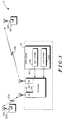
- a communications system 5 such as a Coded Digital Multiplexed Access (CDMA) cellular system.
- the communications system 5 including a network 10 and first and second portable devices 100 and 200 respectively.
- CDMA Coded Digital Multiplexed Access
- the network 10 has a number of base stations, including the first base station 20 and the second base station 25, which provide an air interface with the first and second portable devices 100 and 200 respectively, over a plurality of radio frequency channels.
- the present invention may also be used in an arrangement where two mobiles operate in the same cell. In this case of single cell operation, the base station 20 and the base station 25 are the same.
- the first portable device 100 has a power amplifier 105 and the second portable device 200 has a power amplifier 205.
- the power amplifiers 105 and 205 are arranged for transmitting on any selected one of the plurality of radio channels of the air interface.
- the network 10 also has various infrastructure components, such as a controller 30, and a database 40.
- the controller 30 is arranged to manage the network 10 through controlling the activities of the first and second base stations 20 and 25 respectively.
- the database 40 contains first and second user profile registers 130 and 230. These registers contain information about the users of the first and second portable devices 100 and 200 respectively such as the type of service, the quality of service, the target power consumption, mobility, talktime versus standby time, required and/or paid for by the user, and also information about the nature of the portable devices, to be further described below.
- the user profile registers 130, 230 may also or alternatively be located in the respective portable devices.
- the first user profile register 130 may be located in the sports portable device 100 and the second user profile register 230 may be located in the second portable device 200.
- the user profile registers my be located in the terminal or in the SIM card or again in both.
- the information held in the user profile registers may then contain the technology parameters of the even terminal as well as the user profile of the given subscriber.
- the information held in the user profile registers 130, 230 is preferably derived by statistical information gathered by the communication system and continuously updated.
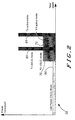
- a power profile 50 of the portable device 100 there is shown an example of a power profile 50 of the portable device 100.
- the power profile 50 relates to different modes of operating which are required by the network 10 for communication, and the power consumption of the portable device 100 for each mode.
- a low power (idle) mode of operation 60 occurs when the portable device 100 is not communicating over the air interface. The amount of power consumed in the low power mode 60 is dependent upon the technology within the portable device 100.
- a receive (Rx) idle mode of operation 70 occurs when the portable device 100 is set to receive signalling transmissions from the network 10, over the air interface, such as paging messages.
- the amount of power consumed in the Rx idle mode 70 is dependent both upon the technology within the portable device 100, and also system parameters that may be sent by the network such a the type of modulation scheme chosen by the network 10 for the signalling transmissions (since different schemes have different data transfer rates).
- the number of signalling transmissions received in a given time will also influence the power consumption of the portable device 100, since this will determine the number of times the receive idle mode 70 will occur.
- a transmit (Tx) idle mode of operation 80 occurs when the portable device 100 is set to transmit signalling transmissions to the network 10, over the air interface.
- the amount of power consumed in the Tx idle mode 80 is again partly dependent upon the technology within the portable device 100, but also upon the power output and efficiency determined for the power amplifier 105, and the type of modulation scheme.
- the number of signalling transmissions required from the portable device 100 will also influence the power consumption, since this will determine the number of times the transmit idle mode 80 will occur.
- One type of signalling transmission required from the portable device 100 is a location update transmission which enables the network 100 to know which base station will be used for traffic transmissions with the portable device 100.
- a receive (Rx) active mode of operation 75 occurs when the portable device 100 is set to receive traffic transmissions from the network 10, over the air interface, such as voice transmissions.
- the amount of power consumed in the Rx active mode 75 is dependent both upon the technology within the portable device 100, and also system parameters that may be sent by the network such as the type of vocoder scheme chosen by the network 10 for the traffic transmissions (since different schemes have different data transfer rates), and by the traffic rate.
- a transmit (Tx) active mode of operation 85 occurs when the portable device 100 is set to transmit traffic transmissions to the network 10, over the air interface.
- the amount of power consumed in the Tx active mode 85 is again partly dependent upon the technology within the portable device 100, but also upon the power output and efficiency determined for the power amplifier 105, the type of vocoder modulation scheme, and the traffic rate.
- FIG. 2 represents a model with five modes of operation, but the invention applies whatever the number of modes of operation for the power profile.
- a model with nine modes of operation may also be envisaged, including low power idle mode, receive idle mode, transmit idle mode, receive speech mode, transmit speech mode, receive low data rate mode, transmit low data rate mode, receive high data rate mode and transmit high data rate mode.
- a model with only one mode of operation may also been envisaged.
- the number of modes of operation may vary from one portable device to another in the communication system.
- the power profile 50 reflected by appropriate data values stored in the first user profile register 130 of the database 40.
- the data values indicate the amount of power consumed and the duration of power consumption for each of the above modes, and how the amounts and durations will differ if the network 10 should modify one or more of the schemes or rates of transmissions identified above.
- the data values may reflect that for the Rx idle mode 70, a certain amount of power is consumed by the portable device 100 for a given modulation scheme and a given signalling rate (the rate at which the network 10 requires the portable device 100 to listen to the signalling transmissions), and how a change of the modulation scheme and/or signalling rate will affect the power consumption of the portable device 100.
- the second user profile register 230 contains a similar power profile of the second portable device 200.
- communication may be established between the first portable device 100 and the base station 20 using a first channel 150, and between the second portable device 200 and the base station 25 using a second channel 250.
- the first and second user profile registers 130 and 230 are used by the controller 30,to dynamically modify a default communication scheme in different ways for each of the first and second channels 150 and 250, thereby influencing the power consumption of the first and second mobiles 100 and 200.
- the controller 30 may contain a microprocessor (not shown) arranged to perform an algorithm which determines modifications for each of the first and second channels 150 and 250.
- the algorithm may be arranged to optimise the power efficiency of every portable device within a even cell of the network 100, or to optimise the efficiency of certain users, for example those who pay a higher premium subscription.
- a user who has paid a premium subscription may not be required to perform a location update signalling transmission at all.
- the result will be that an announcement of an incoming call, instead of being routed to one base station, will be broadcast over the whole network 10. This would be impossible to do for every user of the network 10, but premium subscribers could have this facility, thereby reducing the power consumption of their portable devices.
- the algorithm may be arranged to arbitrate for power efficiency between portable devices.
- an algorithm may be arranged to identify the mode of operation which has the most significant impact on the total power consumption and to then optimise the communication scheme or system parameters for this particular mode, and relax the communication scheme or system parameters for the other modes.
- the algorithm may operate to relax all the system parameters for this specific device.
- the baseband processing with high quality of service may be chosen. This will have low impact on the total power consumption.
- the user profile may still indicate user preferences which would modify the algorithm. For example, the user may request to optimise only the idle mode. In this case, the algorithm will optimise the idle modes and relax the traffic modes.
- the invention may also be used in GSM systems to decide whether one of the HR, FR, EHR, or EFR communication schemes may be chosen, according to the impact of the traffic modes of operation on the total power consumption.
- the information held the user profile registers may include information on the remaining battery life of a portable device. This may be either monitored in the network, or sent as information by the portable device. When the battery life is low, the network may optimise drastically the power consumption in the device.
- the communication schemes or system parameters of different devices may be modified differently for each device.
- the modifications to a communication scheme of a device can be transmitted on a dedicated signalling channel or a broadcast signalling channel. In the latter case, several types of portable devices are defined.
- the values of the system parameters for each type of portable device are broadcasted and a device retrieves the appropriate values corresponding to its own type.
- the user profile registers may be located in the network and/or in the portable devices. Whatever the location of the registers, a communication protocal between the registers and the network allows the algorithm in the network to use the values stored in the user profile registers.
- the database 40 may be incorporated in the controller 30, or in another part of the network 10.
Landscapes
- Engineering & Computer Science (AREA)
- Computer Networks & Wireless Communication (AREA)
- Signal Processing (AREA)
- Mobile Radio Communication Systems (AREA)
Priority Applications (1)
| Application Number | Priority Date | Filing Date | Title |
|---|---|---|---|
| EP97402301A EP0907296B1 (fr) | 1997-10-01 | 1997-10-01 | Système de communication avec du reseau, du dispositif portable et du procédé |
Applications Claiming Priority (1)
| Application Number | Priority Date | Filing Date | Title |
|---|---|---|---|
| EP97402301A EP0907296B1 (fr) | 1997-10-01 | 1997-10-01 | Système de communication avec du reseau, du dispositif portable et du procédé |
Publications (2)
| Publication Number | Publication Date |
|---|---|
| EP0907296A1 true EP0907296A1 (fr) | 1999-04-07 |
| EP0907296B1 EP0907296B1 (fr) | 2006-03-01 |
Family
ID=8229864
Family Applications (1)
| Application Number | Title | Priority Date | Filing Date |
|---|---|---|---|
| EP97402301A Expired - Lifetime EP0907296B1 (fr) | 1997-10-01 | 1997-10-01 | Système de communication avec du reseau, du dispositif portable et du procédé |
Country Status (1)
| Country | Link |
|---|---|
| EP (1) | EP0907296B1 (fr) |
Cited By (7)
| Publication number | Priority date | Publication date | Assignee | Title |
|---|---|---|---|---|
| WO2001037447A1 (fr) * | 1999-11-19 | 2001-05-25 | Telefonaktiebolaget Lm Ericsson (Publ) | Procede de selection du mode de modulation de la puissance des creneaux temporels sur la base de caracteristiques d'une station mobile |
| FR2805703A1 (fr) * | 2000-02-29 | 2001-08-31 | Mitsubishi Electric Inf Tech | Systeme de controle de la puissance d'emission d'une station de base avec laquelle plusieurs stations mobiles sont en communication |
| WO2004105417A1 (fr) * | 2003-05-21 | 2004-12-02 | Sony Ericsson Mobile Communications Ab | Systeme et procede pour prolonger le temps de conversation a la fin de la duree de vie d'une batterie |
| US7049015B2 (en) * | 2002-04-12 | 2006-05-23 | Motorola, Inc. | Method of operating a fuel cell power source |
| WO2011000710A1 (fr) * | 2009-07-01 | 2011-01-06 | Telefonaktiebolaget L M Ericsson (Publ) | Transmission de données efficace en énergie |
| US8055291B2 (en) | 2007-09-12 | 2011-11-08 | Telefonaktiebolaget Lm Ericsson (Publ) | Power-aware link adaptation in a wideband CDMA system |
| US8103302B2 (en) | 2007-09-11 | 2012-01-24 | Telefonaktiebolaget Lm Ericsson (Publ) | Power-aware link adaptation with variable bandwidth allocation |
Citations (3)
| Publication number | Priority date | Publication date | Assignee | Title |
|---|---|---|---|---|
| US5444764A (en) * | 1993-07-01 | 1995-08-22 | Motorola, Inc. | Method of providing a subscription lock to a radiotelephone system |
| WO1996037053A2 (fr) * | 1995-05-18 | 1996-11-21 | Ericsson Inc. | Procede et appareil de commande du fonctionnement de radiotelephones a piles, portatifs ou mobiles. |
| US5666649A (en) * | 1994-09-01 | 1997-09-09 | Ericsson Inc. | Communications system having variable system performance capability |
Family Cites Families (2)
| Publication number | Priority date | Publication date | Assignee | Title |
|---|---|---|---|---|
| FI97930C (fi) * | 1994-05-31 | 1997-03-10 | Nokia Mobile Phones Ltd | Menetelmä lisäpiirteiden toteuttamiseksi matkaviestinjärjestelmässä sekä matkaviestinjärjestelmä |
| FI112832B (fi) * | 1997-04-14 | 2004-01-15 | Sonera Oyj | Menetelmä ja järjestelmä matkapuhelimen tehon rajoittamiseksi |
-
1997
- 1997-10-01 EP EP97402301A patent/EP0907296B1/fr not_active Expired - Lifetime
Patent Citations (3)
| Publication number | Priority date | Publication date | Assignee | Title |
|---|---|---|---|---|
| US5444764A (en) * | 1993-07-01 | 1995-08-22 | Motorola, Inc. | Method of providing a subscription lock to a radiotelephone system |
| US5666649A (en) * | 1994-09-01 | 1997-09-09 | Ericsson Inc. | Communications system having variable system performance capability |
| WO1996037053A2 (fr) * | 1995-05-18 | 1996-11-21 | Ericsson Inc. | Procede et appareil de commande du fonctionnement de radiotelephones a piles, portatifs ou mobiles. |
Cited By (14)
| Publication number | Priority date | Publication date | Assignee | Title |
|---|---|---|---|---|
| WO2001037447A1 (fr) * | 1999-11-19 | 2001-05-25 | Telefonaktiebolaget Lm Ericsson (Publ) | Procede de selection du mode de modulation de la puissance des creneaux temporels sur la base de caracteristiques d'une station mobile |
| FR2805703A1 (fr) * | 2000-02-29 | 2001-08-31 | Mitsubishi Electric Inf Tech | Systeme de controle de la puissance d'emission d'une station de base avec laquelle plusieurs stations mobiles sont en communication |
| EP1130798A1 (fr) * | 2000-02-29 | 2001-09-05 | Mitsubishi Electric Information Technology Centre Europe B.V. | Système de contrôle de la puissance d'émission d'une station de base avec laquelle plusieurs stations mobiles sont en communication |
| US6873856B2 (en) | 2000-02-29 | 2005-03-29 | Mitsubishi Denki Kabushiki Kaisha | System for controlling the transmission power of a base station with which a number of mobile stations are in communication |
| EP1497880A4 (fr) * | 2002-04-12 | 2007-09-05 | Motorola Inc | Source d'alimentation a pile a combustible |
| US7049015B2 (en) * | 2002-04-12 | 2006-05-23 | Motorola, Inc. | Method of operating a fuel cell power source |
| WO2004105417A1 (fr) * | 2003-05-21 | 2004-12-02 | Sony Ericsson Mobile Communications Ab | Systeme et procede pour prolonger le temps de conversation a la fin de la duree de vie d'une batterie |
| CN1762171B (zh) * | 2003-05-21 | 2010-12-29 | 索尼爱立信移动通讯股份有限公司 | 在电池寿命尾声提高通话时间的系统和方法 |
| US8103302B2 (en) | 2007-09-11 | 2012-01-24 | Telefonaktiebolaget Lm Ericsson (Publ) | Power-aware link adaptation with variable bandwidth allocation |
| US8055291B2 (en) | 2007-09-12 | 2011-11-08 | Telefonaktiebolaget Lm Ericsson (Publ) | Power-aware link adaptation in a wideband CDMA system |
| WO2011000710A1 (fr) * | 2009-07-01 | 2011-01-06 | Telefonaktiebolaget L M Ericsson (Publ) | Transmission de données efficace en énergie |
| CN102474280A (zh) * | 2009-07-01 | 2012-05-23 | 瑞典爱立信有限公司 | 有功率效率的数据传输 |
| CN102474280B (zh) * | 2009-07-01 | 2016-01-20 | 瑞典爱立信有限公司 | 有功率效率的数据传输 |
| US9591563B2 (en) | 2009-07-01 | 2017-03-07 | Telefonaktiebolaget Lm Ericsson (Publ) | Power efficient data transmission |
Also Published As
| Publication number | Publication date |
|---|---|
| EP0907296B1 (fr) | 2006-03-01 |
Similar Documents
| Publication | Publication Date | Title |
|---|---|---|
| US11129089B2 (en) | Signalling in mobile telecommunications | |
| KR100574139B1 (ko) | 통신 시스템에서 전송 메시지의 전송 시간 스케쥴링 방법 | |
| JP4443056B2 (ja) | 移動体通信システムにおける移動端末へ送信される、異なるメッセージタイプの統合 | |
| RU2189115C2 (ru) | Способ и устройство для передачи поискового вызова для концентрированной абонентской системы для местной сети радиосвязи | |
| CN1421106B (zh) | 使移动站能够接收分组交换寻呼的方法 | |
| EP0667086B1 (fr) | Systeme radio | |
| EP1000515B1 (fr) | Systeme et procede de radiodiffusion par canaux partages | |
| EP0991288B1 (fr) | Méthode et système pour le mise à jour des messages de service | |
| EP1006740A2 (fr) | Procédé pour la réalisation d'un service multidestination dans un système de communication mobile | |
| US5748620A (en) | Method for providing communications to a communication device in a radio communication system | |
| US6748231B2 (en) | Method and apparatus for controlling power during a dispatch group call | |
| EP0682847A1 (fr) | Procede de commande d'un poste d'abonne d'un reseau de radiocommunications | |
| US6745043B1 (en) | Priorty communication system and method of operation | |
| WO1996027993A1 (fr) | Unite d'abonne pourvue d'un mode sommeil et d'un mode latent | |
| JP4288008B2 (ja) | Gprs移動機ページング方法 | |
| US6873855B1 (en) | Radio telephone system with base station capable of updating data of mobile stations and changing transmission power level | |
| US6477368B1 (en) | Method for dynamic transmitter training for a shared communication system utilizing dynamic channel allocation | |
| US6542517B1 (en) | System and method for operating a mobile station in voice mode or pager mode | |
| US7376390B2 (en) | Radio control apparatus, mobile communication method, mobile communication program, and mobile communication system | |
| EP0907296B1 (fr) | Système de communication avec du reseau, du dispositif portable et du procédé | |
| US7096018B2 (en) | Group communication system having group number specified by mobile unit to permit intergroup calls | |
| EP1251706A2 (fr) | Procedé et appareil pour sélecter de système , mode et fonction dans un terminal adaptif | |
| US6757271B1 (en) | Method for providing a data service in a CDMA communications system | |
| US20040223479A1 (en) | Method of interference control and radio terminal equipment arrangement | |
| JP3361722B2 (ja) | 移動通信システムのトラヒック制御方法 |
Legal Events
| Date | Code | Title | Description |
|---|---|---|---|
| PUAI | Public reference made under article 153(3) epc to a published international application that has entered the european phase |
Free format text: ORIGINAL CODE: 0009012 |
|
| AK | Designated contracting states |
Kind code of ref document: A1 Designated state(s): FR |
|
| AX | Request for extension of the european patent |
Free format text: AL;LT;LV;RO;SI |
|
| 17P | Request for examination filed |
Effective date: 19991005 |
|
| AKX | Designation fees paid |
Free format text: FR |
|
| REG | Reference to a national code |
Ref country code: DE Ref legal event code: 8566 |
|
| 17Q | First examination report despatched |
Effective date: 20010206 |
|
| GRAP | Despatch of communication of intention to grant a patent |
Free format text: ORIGINAL CODE: EPIDOSNIGR1 |
|
| GRAS | Grant fee paid |
Free format text: ORIGINAL CODE: EPIDOSNIGR3 |
|
| GRAA | (expected) grant |
Free format text: ORIGINAL CODE: 0009210 |
|
| AK | Designated contracting states |
Kind code of ref document: B1 Designated state(s): FR |
|
| ET | Fr: translation filed | ||
| PLBE | No opposition filed within time limit |
Free format text: ORIGINAL CODE: 0009261 |
|
| STAA | Information on the status of an ep patent application or granted ep patent |
Free format text: STATUS: NO OPPOSITION FILED WITHIN TIME LIMIT |
|
| 26N | No opposition filed |
Effective date: 20061204 |
|
| REG | Reference to a national code |
Ref country code: FR Ref legal event code: ST Effective date: 20080630 |
|
| PGFP | Annual fee paid to national office [announced via postgrant information from national office to epo] |
Ref country code: FR Payment date: 20061003 Year of fee payment: 10 |
|
| PG25 | Lapsed in a contracting state [announced via postgrant information from national office to epo] |
Ref country code: FR Free format text: LAPSE BECAUSE OF NON-PAYMENT OF DUE FEES Effective date: 20071031 |
|
| P01 | Opt-out of the competence of the unified patent court (upc) registered |
Effective date: 20230516 |