EP0907920B1 - Systeme de communications personnelles a service ameliore de messages brefs - Google Patents
Systeme de communications personnelles a service ameliore de messages brefs Download PDFInfo
- Publication number
- EP0907920B1 EP0907920B1 EP97932304A EP97932304A EP0907920B1 EP 0907920 B1 EP0907920 B1 EP 0907920B1 EP 97932304 A EP97932304 A EP 97932304A EP 97932304 A EP97932304 A EP 97932304A EP 0907920 B1 EP0907920 B1 EP 0907920B1
- Authority
- EP
- European Patent Office
- Prior art keywords
- short
- message
- subscriber
- short message
- unbundled
- Prior art date
- Legal status (The legal status is an assumption and is not a legal conclusion. Google has not performed a legal analysis and makes no representation as to the accuracy of the status listed.)
- Expired - Lifetime
Links
- 238000000034 method Methods 0.000 claims abstract description 34
- 238000004891 communication Methods 0.000 claims description 24
- 230000011664 signaling Effects 0.000 claims description 5
- 108091006146 Channels Proteins 0.000 claims description 3
- 238000002716 delivery method Methods 0.000 claims 2
- 230000008569 process Effects 0.000 description 11
- 238000004590 computer program Methods 0.000 description 5
- 230000006870 function Effects 0.000 description 5
- 210000004271 bone marrow stromal cell Anatomy 0.000 description 3
- 239000000969 carrier Substances 0.000 description 2
- 238000010586 diagram Methods 0.000 description 2
- 230000003993 interaction Effects 0.000 description 2
- 238000007726 management method Methods 0.000 description 2
- 230000004913 activation Effects 0.000 description 1
- 230000001413 cellular effect Effects 0.000 description 1
- 230000000295 complement effect Effects 0.000 description 1
- 230000004069 differentiation Effects 0.000 description 1
- 230000000694 effects Effects 0.000 description 1
- 238000010295 mobile communication Methods 0.000 description 1
- 230000004044 response Effects 0.000 description 1
- 239000013589 supplement Substances 0.000 description 1
Images



Classifications
-
- H—ELECTRICITY
- H04—ELECTRIC COMMUNICATION TECHNIQUE
- H04W—WIRELESS COMMUNICATION NETWORKS
- H04W4/00—Services specially adapted for wireless communication networks; Facilities therefor
- H04W4/12—Messaging; Mailboxes; Announcements
-
- H—ELECTRICITY
- H04—ELECTRIC COMMUNICATION TECHNIQUE
- H04W—WIRELESS COMMUNICATION NETWORKS
- H04W4/00—Services specially adapted for wireless communication networks; Facilities therefor
- H04W4/12—Messaging; Mailboxes; Announcements
- H04W4/14—Short messaging services, e.g. short message services [SMS] or unstructured supplementary service data [USSD]
-
- H—ELECTRICITY
- H04—ELECTRIC COMMUNICATION TECHNIQUE
- H04W—WIRELESS COMMUNICATION NETWORKS
- H04W8/00—Network data management
- H04W8/18—Processing of user or subscriber data, e.g. subscribed services, user preferences or user profiles; Transfer of user or subscriber data
-
- H—ELECTRICITY
- H04—ELECTRIC COMMUNICATION TECHNIQUE
- H04W—WIRELESS COMMUNICATION NETWORKS
- H04W88/00—Devices specially adapted for wireless communication networks, e.g. terminals, base stations or access point devices
- H04W88/18—Service support devices; Network management devices
- H04W88/184—Messaging devices, e.g. message centre
-
- H—ELECTRICITY
- H04—ELECTRIC COMMUNICATION TECHNIQUE
- H04W—WIRELESS COMMUNICATION NETWORKS
- H04W92/00—Interfaces specially adapted for wireless communication networks
- H04W92/02—Inter-networking arrangements
-
- H—ELECTRICITY
- H04—ELECTRIC COMMUNICATION TECHNIQUE
- H04W—WIRELESS COMMUNICATION NETWORKS
- H04W92/00—Interfaces specially adapted for wireless communication networks
- H04W92/16—Interfaces between hierarchically similar devices
- H04W92/24—Interfaces between hierarchically similar devices between backbone network devices
Definitions
- the present invention relates generally to personal communications systems, and more specifically is directed toward the delivery of short-message services.
- a personal communications services (PCS) system is a mobile service platform that seeks to revolutionize communications by allowing users to call people rather than customer premise equipment.
- PCS subscriber is reachable at a single number regardless of the PCS subscriber's location within the PCS network. Achieving this flexibility requires an intelligent network that can recognize a location of a subscriber and subsequently route a particular communication service to that location.
- Document WO 95/12933 discloses a method and a system for message signalling in a radiocommunication system, wherein privacy and urgency indicators and subaddressing can be provided to segregate messages in a hierarchical manner.
- the underlined problem to be solved by document WO 95/12933 is the lack of security for short message services and radiocommunications system.
- document WO 95/12933 lacks any information as for how to solve the problem of providing a short message service that can be selectively enabled based upon subscriber's choice of one of a plurality of unbundled short message service applications, i.e. a system and method for providing enhanced short message services options in a PCS system.
- a PCS system is generally defined independent of a particular communication service.
- the communications services supported by PCS include paging, residential cordless telephony, data broadcasting, cellular telephony, mobile data, etc.
- Customers can subscribe to one or more of these services based upon their individual preferences. These individual preferences should also be recognized by the intelligent network.
- Short-message service is a feature that provides for delivery of up to 160 characters to and from a mobile subscriber. This messaging feature can provide a powerful complement to the high-quality voice mobile service.
- short-message service that can be selectively enabled based upon a subscriber's choice of one of a plurality of unbundled short-message service applications.
- the present invention satisfies the above mentioned needs by providing a personal communication services system and method according to claims 1 and 10.
- Processing of a short message begins with the reception by a short-message (SM) system of a communication from a short-message entity.
- This communication includes a short message, a destination subscriber number and an unbundled short-message service type.
- the short message is stored by the short-message system pending the availability of the destination subscriber.
- the short-message system Prior to determining the availability of the destination subscriber, the short-message system first determines whether the destination subscriber is eligible to receive the short message. In this process, the short-message system interacts with a Home Location Register (HLR) that stores the customer profile for the destination subscriber. In one embodiment, the HLR determines whether the destination subscriber is eligible to receive the general class of short messages and/or the unbundled short-message service type based upon a lookup in the customer profile record.
- HLR Home Location Register
- the HLR may perform further processing for the short-message service. For example, in a voice mail alert service, the HLR may identify a pager number if the destination subscriber is unavailable.
- the short-message system sends a query to the HLR to determine the location of the destination subscriber.
- the location of the destination subscriber can be identified through addresses for a mobile services center (MSC)/visitor location register (VLR).
- MSC mobile services center
- VLR visitor location register
- the short-message system sends the short message to the MSC/VLR.
- the Mobile Application Part protocol is used.
- the MSC/VLR forwards the short message to the destination subscriber via a base station.
- Short-message service is one of many services that are supported by personal communications service (PCS) systems.
- Short-message service provides for the delivery ofN characters (e.g., 160, 200, etc.) both to and from a subscriber terminal (ST) in a connectionless manner. Unlike standard telephone calls, no land-line speech path setup is required.
- the short-message service can be delivered to single subscribers or to a plurality of subscribers in a broadcast fashion.
- the N characters within a short message can be used in a variety of applications.
- the simplest application is the provision of alphanumeric messages as a supplement to the standard mobile voice service.
- These alphanumeric messages which includes emergency messages, customer service messages, etc. can be displayed on a subscriber terminal.
- the short message can be used to activate an icon on the display of a subscriber terminal.
- short messages can also be used in functional applications such as a teleadmin service, which provides an over the air activation (OTAA) function designed to remotely reconfigure a subscriber terminal.
- OTAA over the air activation
- N characters within a short message can be used in a variety of applications. These applications can be display based, icon based, or functionally operative at the subscriber terminal. Note that these examples are provided without limitation. Other examples that use a generic binary message are also contemplated.
- the present invention allows a subscriber to choose between the set of short-message services that are offered. Differentiation between these various applications is consistent with the general PCS philosophy of offering a variety of services with varying tariffs.
- PCS systems such as the European-defined global system for mobile communication (GSM) or the US-defined interim standard (IS-41) provision the short-message service as a single service group of mobile originated and terminated point-to-point short messages.
- GSM European-defined global system for mobile communication
- IS-411 US-defined interim standard
- the present invention expands upon the basic short-message service functionality by unbundling the short-message services into a variety of recognizably distinct short-message applications. Through this unbundling, the PCS system components can implement enhanced short-message service applications through the execution of predefined functions.
- the predefmed functions are individually dedicated to unbundled short-message service types.
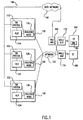
- FIG. 1 illustrates a high-level overview of a PCS system 100 capable of transporting short messages to subscriber terminals 182, 186.
- PCS system 100 comprises three wireless intelligent network sites 110, 120, 130. These three national sites 110, 120, 130 provide a high level of system reliability through system and geographic diversity. This diversity mitigates the effects of network outages, natural disasters or sabotage.
- the three national sites 110, 120, 130 can be situated in the western, central and eastern regions, respectively. Note that alternative embodiments could use more or less national sites without departing from the spirit of the invention.
- Each site 110,120,130 comprises a short message (SM) system 112, 122, 132, a Home Location Register (HLR) 114,124,134 and a routing node 116,126, 136, respectively.
- Routing nodes 116, 126, 136 connect short message systems 112, 122, 132 and HLRs 114, 124, 134 to mobile switching centers/visitor location registers (MSC/VLRs) 172, 174 via network 150 (e.g., a wide area network).
- MSC/VLRs 172, 174 are linked to individual subscriber terminals 182, 186 via base stations (not shown).
- the system components within sites 110, 120, 130 could be distributed throughout the network.
- an HLR could be collocated with a VLR.
- network 150 is a common channel signaling (CCS) network and routing nodes 116, 126, 136 are signal transfer points (STPs).
- CCS common channel signaling
- STPs signal transfer points
- MSCs are switching centers that incorporate all the switching functions needed for routing services (e.g., voice, data, short messages, etc.) to subscriber terminals 182, 186 located in an associated geographical area.
- MSCs communicate with subscriber terminals 182, 186 via radio systems that are embodied in a plurality of base stations (not shown). To obtain proper radio coverage of a given geographical area, each MSC is connected to a plurality of base stations.
- MSCs are further connected to lines and trunks of the fixed networks such as the interexchange carriers (IXCs) and the local exchange carriers (LECs). These connections allow the PCS system to provide voice and data services to subscribers. Call setup information for these voice and data services are provided through a common channel signaling (CCS) network (e.g., signaling system #7).
- CCS common channel signaling
- the CCS network generally comprises mated STP pairs that are interconnected in a mesh architecture via a plurality of links.
- SMEs short-message entities
- VM/ARU 160 voice mail/automated response unit 160.
- VM/ARU 160 sends a voice mail alert message to one of the three short message systems 112, 122, 132 via a data communications network 140 (e.g., X.25, TCP/IP).
- SMEs can send short messages to short-message systems 112, 122, 132 via network 150 using a predefined protocol.
- Short messages that are stored in short-message systems 112,122,132 are transmitted to the appropriate MSC/VLR 172, 174 via network 150. Connection of sites 110, 120, 130 to network 150 is provided through routing nodes 116,126, 136, respectively.
- the short-message data is transmitted to the appropriate MSC/VLR using the Mobile Application Part (MAP) protocol.
- MAP Mobile Application Part
- HLRs 114, 124, 134 are per-subscriber databases. In other words, a logical record is stored for each subscriber. Each logical record is indexed by primary keys such as the international mobile station identity (IMSI) and the mobile station international ISDN number (MsISDN).
- IMSI international mobile station identity
- MsISDN mobile station international ISDN number
- the logical records in HLRs 114, 124, 134 store management data for a plurality of subscribers. This management data includes both subscription information and location information.
- Subscription information includes a listing of the basic and supplementary services that a subscriber has selected. As will be described in greater detail below, the subscription information is relied upon by MSC/VLR 172, 174 to determine whether a service can be provided to a particular subscriber.
- Location information includes an MSC/VLR address for a subscriber.
- This MSC/VLR address enables short-message system 112,122, 132 to route a short message to the MSC/VLR 172, 174 that operates in the area that the destination subscriber is located.
- each short-message system 112, 122, 132 can communicate with any one of HLRs 114, 124, 134.
- FIG. 1 illustrates connections only between HLRs and short-message systems that are located at the same site 110, 120, 130.
- VLRs are the functional units that dynamically store subscriber information, when the subscriber is located in the VLRs area.
- MSC mobile subscriber roaming number
- the VLR then initiates a registration procedure wherein the roaming subscriber is assigned a mobile subscriber roaming number (MSRN) or visited network address. This assigned number is used to route services to the roaming subscriber.
- MSRN mobile subscriber roaming number
- the VLR stores this assigned number in a database record that is keyed on the same IMSI and MSISDN numbers as the database records in the HLR 114, 124, 134.
- the database records also contain call handling data that is retrieved from HLR 114, 124, 134 at which the roaming subscriber was registered. This call handling data can identify the provision of supplementary services such as call forwarding, barring all incoming/outgoing calls, call hold, etc.
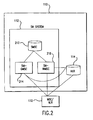
- FIG. 2 illustrates a more detailed logical function view of short-message system 112.
- short-message system 112 comprises short-message service center (SMSC) 212, short-message gateway MSC (SM-GMSC) 214 and short-message interworking MSC (SM-IWMSC) 216.
- SMSC short-message service center
- SM-GMSC short-message gateway MSC
- SM-IWMSC short-message interworking MSC
- SMSC 212 is a store-and-forward database that stores the short messages received from an SME.
- the short messages that are stored in SMSC 212 can be accessed using the MSISDN. If the destination subscriber is unavailable, the short messages will accumulate in SMSC 212.
- SM-GMSC 214 is an interface between SMSC 212 and MSC/VLRs 172, 174. This interface supports the delivery of short messages from SMSC 212 to the destination subscriber. SM-GMSC 214 is responsible for determining the location of the destination subscriber and sending the short message to the appropriate MSC/VLR 172, 174 via network 150.
- SM-IWMSC 214 is a second interface between SMSC 212 and MSC/VLRs 172, 174. This second interface supports the delivery of short messages from a subscriber to SMSC 212. In one example, a short message from the subscriber alerts short-message system 112 that the subscriber is now available to receive a message that was unsuccessfully delivered.
- FIG. 3 illustrates a flow chart describing a generic short-message delivery process. This process begins at step 302 where an SME creates a short message and sends it to one of short-message system 112, 122, 132.
- SME creates a short message and sends it to one of short-message system 112, 122, 132.
- HLR 214 the interaction between short-message system 212 and HLR 214 is described.
- each short-message system 112, 122, 132 can interact with each HLR 114, 124, 134.
- a short-message communication from an SME comprises the short message, a destination number of the destination subscriber, and a short-message type.
- the short-message type identifies one of the specific unbundled short-message services such as emergency messages, customer service messages, voice mail alert messages, teleadmin, etc.
- short-message system 212 stores the short message in SMSC 112.
- short-message system 212 stores the short message in SMSC 112 according to the MSISDN.
- any identifier that uniquely identifies the destination subscriber can be used.
- short-message system 212 determines whether it can deliver the short message to the destination subscriber. In making this determination short-message system 212 identifies the services that the destination subscriber is allowed to receive. In the present invention, the general category of short messages has been unbundled into a variety of specialized short-message services. Each of these unbundled short-message services is assigned a distinct service group number that is recognized in the customer profile stored in HLR 114. As noted above, these distinct service group numbers are consistent with the overall philosophy of PCS by allowing subscribers to select individually tariffed services.
- short-message system 212 identifies whether the destination subscriber is allowed to receive any short-message services. If it is determined at step 306 that the destination subscriber is not allowed to receive the general class of short-message services, HLR 114 informs short-message system 112 at step 310 to delete the short message from SMSC 212. Conversely, if HLR 114 confirms that the destination subscriber is allowed to receive the general class of short-message service, short-message system 212 proceeds to the second service inquiry.
- short-message system 212 identifies at step 308 whether the destination subscriber is allowed to receive the specific unbundled short-message service. If it is determined that the destination subscriber is not allowed to receive the specific unbundled short-message service, HLR 114 informs short-message system 112 at step 310 to delete the short message from SMSC 212.
- short-message system 212 proceeds to step 312.
- short-message system 212 queries HLR 114 to determine the location of the destination subscriber. This location can be identified by HLR 114 by an MSC/VLR address that is stored in the customer profile. After the location information is obtained, short-message system 212 sends the short message to the destination subscriber at step 314.
- HLR 114 identifies the eligibility of the destination subscriber to receive a specific unbundled short-message service. Based upon this determination, HLR 114 can also perform further processing in accordance with procedures that have been predefined for that unbundled short-message service.
- the voice mail alert example of FIG. 4 illustrates this concept.
- the voice mail alert process begins at step 402 where a VM/ARU 160 receives a voice mail message for a destination subscriber.
- VM/ARU 160 sends a voice mail alert message to a short-message system 112, 122,132 that is located with the subscriber's master HLR 114, 124, 134. Again, in this example, the interaction between short-message system 112 and HLR 114 is described. This communication occurs over data communications network 140.
- HLR 114 Upon receipt, HLR 114 stores the voice mail alert message in SMSC 212 at step 406.
- SM system 112 then sends at step 408 a query to HLR 114 to determine if the destination subscriber is allowed to receive voice mail alert message service. If, at step 408, it is determined that the destination subscriber is not allowed to receive voice mail alert message service, short-message system 112 deletes the voice mail alert message from SMSC 212, as shown in step 412. If the destination subscriber is allowed to receive voice mail alert message service, the process continues in step 414. At step 414, short-message system 112 sends a query to HLR 114 to determine if the destination subscriber is available.
- short-message system 112 receives the MSC/VLR address for the destination subscriber and sends the voice mail alert message to the destination subscriber at step 416. If the destination subscriber is unavailable, HLR 114 can proceed with additional processing. In one embodiment, HLR 114 can identify an alternate method of communicating with the subscriber associated with the destination subscriber. In the example of FIG. 4, HLR 114 at step 418 identifies the pager number for the subscriber associated with the destination subscriber. Thereafter, at step 420, the subscriber is alerted of the voice mail message via the pager.
- customized processing can be associated with each unbundled short-message service.
- the tariff for each of the unbundled short-message services can also vary. Variable tariffs can be implemented by distinguishing the unbundled short-message services in the call detail records that are sent to the billing system (not shown).
- FIG. 5 illustrates a flow chart of the processing within subscriber terminal 182, 186.
- This process begins at step 502 where subscriber terminal 182, 186 receives a short message from an MSC.
- FIG. 7 illustrates an example of the format of a short message.
- Short message 700 includes header 710 and short message payload 720.
- Short message payload 720 further comprises message type field 722 and message data field 724.
- message payload 720 is 160 octets in length.
- short message type field 722 can be assigned one octet and short message data field 724 can be assigned 159 octets.
- short message data field 724 can be formatted in any application specific manner.
- subscriber terminal 182, 186 identifies at step 504 the short message type from short message type field 722.
- possible short message types include emergency messages, customer service messages, voice mail alert messages, teleadmin service, etc.
- Each of the unbundled short message service types is assigned a distinct short message service type code that is included within message type field 722.
- subscriber terminal 182,186 determines at step 506 whether the short message type is supported by the subscriber terminal. If the short message type is not supported by the subscriber terminal, the short message is discarded at step 508 and the process ends.
- subscriber terminal 182, 186 determines at step 506 that the short message type is supported by the subscriber terminal, then the process continues to step 510.
- subscriber terminal 182,186 provides the short message data contained in short message data field 724 to the logic that is operative on the identified short message type.
- subscriber terminal 182, 186 includes logic for a subset of the available short message services selected by the subscriber. In other embodiments, subscriber terminal 182,186 includes logic for the entire set of available short message services. In this case, only the logic for the subscriber selected short message services can be activated.
- short message data field 724 can be formatted in an application specific manner.
- short message data field 724 can include ASCII encoded alphanumeric characters or generic binary data to be input into application specific logic.
- subscriber terminal 182, 186 processes the short message data according to the procedures defined by the logic that is associated with the particular short message service type. For example, in an emergency message application, ASCII encoded short message data could be output to the display screen of subscriber terminal 182, 186. In a voice mail alert example, the short message data could prompt the logic assigned to that service type to cause a voice mail icon to be displayed on subscriber terminal 182, 186. Still further, in a teleadmin service, the short message data could cause subscriber terminal 182,186 to reconfigure itself. Acknowledgment of the reconfiguration could then be returned to the MSC. In this acknowledgment process, subscriber terminal 182, 186 includes a transaction ID contained within header 710 in the acknowledgment message.
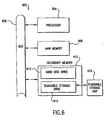
- FIG. 6 An exemplary computer system 602 is shown in FIG. 6.
- the computer system 602 includes one or more processors, such as processor 604.
- the processor 604 is connected to a communication bus 606.
- the computer system 602 also includes a main memory 608, preferably random access memory (RAM), and a secondary memory 610.
- the secondary memory 610 includes, for example, a hard disk drive 612 and/or a removable storage drive 614, representing a floppy disk drive, a magnetic tape drive, a compact disk drive, etc.
- the removable storage drive 614 reads from and/or writes to a removable storage unit 616 in a well known manner.
- Removable storage unit 616 also called a program storage device or a computer program product, represents a floppy disk, magnetic tape, compact disk, etc.
- the removable storage unit 616 includes a computer usable storage medium having stored therein computer software and/or data.
- Computer programs are stored in main memory and/or the secondary memory 610. Such computer programs, when executed, enable the computer system 602 to perform the features of the present invention as discussed herein. In particular, the computer programs, when executed, enable the processor 604 to perform the features of the present invention. Accordingly, such computer programs represent controllers of the computer system 602.
Landscapes
- Engineering & Computer Science (AREA)
- Computer Networks & Wireless Communication (AREA)
- Signal Processing (AREA)
- Mobile Radio Communication Systems (AREA)
- Telephonic Communication Services (AREA)
- Computer And Data Communications (AREA)
- Data Exchanges In Wide-Area Networks (AREA)
Abstract
Claims (10)
- Procédé de livraison de textos (courts messages), comprenant les étapes de :caractérisé en ce que(1) réception par un système de textos (112, 122, 132) d'une communication provenant d'une entité de textos, en laquelle ladite communication comprends un texto, un numéro de localisation d'un abonné et un type de texto ;(2) émission, par ledit système de textos (112, 122, 132), d'une première requête vers un registre d'accueil de localisation (114, 124, 134) du dit abonné pour déterminer les services sélectionnés par ledit abonné ;(3) émission, par ledit système de textos (112, 122, 132), d'une seconde requête vers ledit registre d'accueil de localisation (114, 124, 134) pour déterminer la localisation du dit abonné ; et(4) emission par ledit système de textos (112, 122, 132) dudit texto au dit abonné via un centre de services de commutation pour téléphones portables (172, 174),le texto a une entête et un message « paiement pris en charge », ladite entête incluant un identifiant de l'abonné et ledit message « paiement pris en charge » comprenant un modèle de service de textos «dégroupés» et des données de message;le procédé comprend en outre l'étape de déterminer par ledit registre d'accueil de localisation (114, 124, 134) si ledit abonné est autorisé à recevoir ou non un service de textos associé avec ledit modèle de service de textos «dégroupés».
- Procédé selon la revendication 1, en lequel l'étape (1) comprend l'étape de réception de ladite communication de ladite entité de textos via un réseau de communication de donnés X.25 (150).
- Procédé selon la revendication 1, en lequel ladite étape (1) comprend l'étape de réception de ladite communication de ladite entité de textos via un réseau de communication de données (150) qui utilise le protocole TCP/IP.
- Procédé selon la revendication 1, en lequel ladite étape (3) comprend l'étape de recherche/réception par ledit registre d'accueil de localisation (114, 124, 134) d'un enregistrement de profil d'abonné.
- Procédé selon la revendication 1, en lequel ladite étape (4) comprend l'étape d'émission dudit texto vers ledit centre de services de commutation pour téléphones portables (172, 174) via un réseau de signaux de canal commun.
- Procédé selon la revendication 5, en lequel ladite étape (4) comprend en outre l'étape d'émission dudit texto vers le centre de services de commutation pour téléphones portables (172, 174) utilisant un protocole partiel de localisation pour téléphones portables.
- Procédé selon la revendication 1, en lequel le procédé de livraison de textos est un procédé dans un système de communication personnel, comprenant en outre l'étape de traitement par ledit registre d'accueil de localisation (114, 124, 134), de ladite première requête en conformité avec les procédures qui sont définies pour ledit modèle de service de textos si ledit abonné est autorisé à recevoir des textos associés avec ledit modèle de service de textos.
- Procédé selon la revendication 7, en lequel l'étape de traitement de ladite première requête en conformité avec la procédure définie pour ledit modèle de service de textos comprend l'étape de recherche/réception par ledit registre d'accueil de localisation (114, 124, 134) d'un enregistrement de profil d'abonné.
- Procédé selon la revendication 7, en lequel l'étape de traitement de ladite première requête en conformité avec les procédures qui sont définies pour ledit modèle de service de textos comprend l'étape de détermination par ledit registre d'accueil de localisation (114, 124, 134) d'un procédé alternatif pour joindre ledit abonné si ledit abonné n'est pas disponible.
- Système de service de communication personnel, comprenant :un système de textos (112, 122, 132) qui reçoit, d'une entité de textos, une communication de textos qui comprend un texto, un numéro de destination d'un abonné et un modèle de service de textos «dégroupés», ledit système de textos envoyant ledit texto vers ledite abonné de destination via un centre de services de commutation pour téléphones portables (172, 174) si ledit abonné de destination est autorisée à recevoir des textos dudit modèle de service de textos «dégroupés»,
caractérisé parun registre d'accueil de localisation (114, 124, 134) qui stocke des profils de clients pour une pluralité d'abonnés, lesdits profils de clients identifiant les services sélectionnés par un abonné associé, ledit registre d'accueil de localisation (114, 124, 134) déterminant, sur une requête provenant dudit système de textos, si ledit abonné est autorisé à recevoir ou non un service de textos «dégroupés» associés avec un modèle de service de textos «dégroupés», ledit registre d'accueil de localisation (114, 124, 134) exécutant en outre au moins une partie d'une procédure qui est prédéfinie pour ledit modèle de service de textos «dégroupés», si le dit abonné est autorisé à recevoir des textos associés avec ledit modèle de service de textos «dégroupés».
Applications Claiming Priority (3)
| Application Number | Priority Date | Filing Date | Title |
|---|---|---|---|
| US670678 | 1996-06-26 | ||
| US08/670,678 US5903726A (en) | 1996-06-26 | 1996-06-26 | System using portion of a short message payload to identify short message service types and delivering the message if user subscribes to the services |
| PCT/US1997/011115 WO1997050037A1 (fr) | 1996-06-26 | 1997-06-26 | Systeme de communications personnelles a service ameliore de messages brefs |
Publications (3)
| Publication Number | Publication Date |
|---|---|
| EP0907920A1 EP0907920A1 (fr) | 1999-04-14 |
| EP0907920A4 EP0907920A4 (fr) | 2001-07-11 |
| EP0907920B1 true EP0907920B1 (fr) | 2005-08-31 |
Family
ID=24691402
Family Applications (1)
| Application Number | Title | Priority Date | Filing Date |
|---|---|---|---|
| EP97932304A Expired - Lifetime EP0907920B1 (fr) | 1996-06-26 | 1997-06-26 | Systeme de communications personnelles a service ameliore de messages brefs |
Country Status (7)
| Country | Link |
|---|---|
| US (2) | US5903726A (fr) |
| EP (1) | EP0907920B1 (fr) |
| JP (1) | JP2000516409A (fr) |
| AU (1) | AU3579697A (fr) |
| CA (1) | CA2258615A1 (fr) |
| DE (1) | DE69734107T2 (fr) |
| WO (1) | WO1997050037A1 (fr) |
Families Citing this family (122)
| Publication number | Priority date | Publication date | Assignee | Title |
|---|---|---|---|---|
| FI102869B (fi) | 1996-02-26 | 1999-02-26 | Nokia Mobile Phones Ltd | Laite, menetelmä ja järjestelmä eri sovelluksiin liittyvien tietojen l ähettämiseksi ja vastaanottamiseksi |
| US5903726A (en) * | 1996-06-26 | 1999-05-11 | Mci Communications Corporation | System using portion of a short message payload to identify short message service types and delivering the message if user subscribes to the services |
| US5875187A (en) * | 1996-06-28 | 1999-02-23 | At&T Wireless Services Inc. | TDMA messaging service microcell |
| US6381633B2 (en) | 1997-05-09 | 2002-04-30 | Carmel Connection, Inc. | System and method for managing multimedia messaging platforms |
| FI109511B (fi) * | 1997-06-03 | 2002-08-15 | Nokia Corp | Lyhytsanomien reititys |
| FI106282B (fi) * | 1997-09-22 | 2000-12-29 | Nokia Networks Oy | Menetelmä ja järjestelmä lyhytsanoman lähettämiseksi tietoliikenneverkossa |
| FI108771B (fi) * | 1997-11-05 | 2002-03-15 | Nokia Corp | Menetelmä viestin lähettämiseksi matkaviestimelle |
| US6055423A (en) * | 1997-12-29 | 2000-04-25 | Lucent Technologies, Inc. | Method for updating message waiting number count for a mobile telephone in an ANSI41 network |
| US6263212B1 (en) * | 1998-02-17 | 2001-07-17 | Alcatel Usa Sourcing, L.P. | Short message service center |
| US6977921B1 (en) * | 1998-08-19 | 2005-12-20 | Lucent Technologies Inc. | Using discrete message-oriented services to deliver short audio communications |
| FI106085B (fi) * | 1998-11-10 | 2000-11-15 | Nokia Networks Oy | Lyhytsanomien laskutus |
| DE19856440C2 (de) | 1998-12-08 | 2002-04-04 | Bosch Gmbh Robert | Übertragungsrahmen und Funkeinheit mit Übertragungsrahmen |
| DE19856441C5 (de) | 1998-12-08 | 2004-11-18 | Robert Bosch Gmbh | Verfahren zur Übertragung von Kurznachrichten |
| WO2001005118A1 (fr) * | 1999-07-09 | 2001-01-18 | Nokia Corporation | Procede de limitation de service d'envoi de message |
| IE20000748A1 (en) * | 1999-09-17 | 2001-04-04 | Markport Ltd | A short message gateway |
| US6795711B1 (en) * | 1999-10-07 | 2004-09-21 | Nokia Mobile Phones Ltd | Multimedia message content adaptation |
| FR2799918B1 (fr) * | 1999-10-18 | 2002-04-05 | Bull Cp8 | Systeme et procede et de transmission de messages, et utilisation du systeme de transmission pour l'investigation de services fournis |
| US8073477B2 (en) | 2000-04-11 | 2011-12-06 | Telecommunication Systems, Inc. | Short message distribution center |
| DE19961345A1 (de) * | 1999-12-17 | 2001-06-21 | Bosch Gmbh Robert | Verfahren zur Übertragung von elektronischen Postnachrichten |
| DE10059647B4 (de) * | 2000-12-01 | 2005-03-24 | Siemens Ag | Verfahren zum Versenden von Kurznachrichten von einem mobilen Endgerät und Verfahren zum Empfangen von Kurznachrichten von einem mobilen Endgerät jeweils in einem Mobilfunknetz |
| US6760580B2 (en) * | 2000-03-06 | 2004-07-06 | America Online, Incorporated | Facilitating instant messaging outside of user-defined buddy group in a wireless and non-wireless environment |
| US6714793B1 (en) | 2000-03-06 | 2004-03-30 | America Online, Inc. | Method and system for instant messaging across cellular networks and a public data network |
| US7624172B1 (en) | 2000-03-17 | 2009-11-24 | Aol Llc | State change alerts mechanism |
| US9246975B2 (en) | 2000-03-17 | 2016-01-26 | Facebook, Inc. | State change alerts mechanism |
| US6625461B1 (en) * | 2000-03-31 | 2003-09-23 | Telefonaktiebolaget Lm Ericsson (Publ) | Method and system for providing compatibility between telecommunication networks using different transmission signaling systems |
| FI111681B (fi) | 2000-04-10 | 2003-08-29 | Sonera Oyj | Palvelun käytön estäminen tietoliikennejärjestelmässä |
| US7522911B2 (en) | 2000-04-11 | 2009-04-21 | Telecommunication Systems, Inc. | Wireless chat automatic status tracking |
| US6839562B2 (en) * | 2000-04-11 | 2005-01-04 | Telecommunication Systems, Inc. | Intelligent delivery agent for short message distribution center |
| US20070136592A1 (en) * | 2000-04-12 | 2007-06-14 | Smith Richard A | Wireless internet gateway |
| US7369648B1 (en) | 2000-07-06 | 2008-05-06 | Purplecomm, Inc. | Apparatus and method for PBX-integrated unified messaging services on a switched backbone |
| ATE406762T1 (de) * | 2000-07-12 | 2008-09-15 | Ericsson Telefon Ab L M | Leitweglenkung von sms nachrichten zwischen netzwerken die auf unterschiedlichen standards basiert sind |
| US6993119B1 (en) | 2000-08-09 | 2006-01-31 | Bellsouth Intellectual Property Corporation | Network and method for providing a flexible call forwarding telecommunications service with automatic speech recognition capability |
| US6505163B1 (en) | 2000-08-09 | 2003-01-07 | Bellsouth Intellectual Property Corporation | Network and method for providing an automatic recall telecommunications service with automatic speech recognition capability |
| US6826529B1 (en) | 2000-08-09 | 2004-11-30 | Bellsouth Intellectual Property Corporation | Network and method for providing a call screening telecommunications service with automatic speech recognition capability |
| US6907111B1 (en) | 2000-08-09 | 2005-06-14 | Bellsouth Intellectual Property Corporation | Network and method for providing a name and number delivery telecommunications services with automatic speech recognition capability |
| US6778640B1 (en) | 2000-08-09 | 2004-08-17 | Bellsouth Intellectual Property Corporation | Network and method for providing a user interface for a simultaneous ring telecommunications service with automatic speech recognition capability |
| US6873686B1 (en) * | 2000-08-09 | 2005-03-29 | Bellsouth Intellectual Property Corporation | Network and method for providing a calling name telecommunications service with automatic speech recognition capability |
| US7209950B2 (en) * | 2000-08-15 | 2007-04-24 | Zonamovil.Com, Inc. | Method and apparatus for a network independent short message delivery system |
| KR100391291B1 (ko) * | 2000-08-18 | 2003-07-12 | (주)인트로모바일 | 게시판 기능을 갖는 이동 통신 단말 장치 및 이의 구동방법과 이를 이용한 게시판 서비스 방법 및 시스템 |
| US7519654B1 (en) * | 2000-11-22 | 2009-04-14 | Telecommunication Systems, Inc. | Web gateway multi-carrier support |
| EP1213931A3 (fr) * | 2000-12-05 | 2003-03-19 | Siemens Aktiengesellschaft | Procédé d'envoi et de réception de messages courts dans un réseau radiomobile |
| KR20020060489A (ko) * | 2001-01-11 | 2002-07-18 | 윤종용 | 이동 전화기에서 이미지 파일 송신 및 수신방법 |
| US6947738B2 (en) * | 2001-01-18 | 2005-09-20 | Telefonaktiebolaget Lm Ericsson (Publ) | Multimedia messaging service routing system and method |
| KR100416342B1 (ko) * | 2001-02-06 | 2004-01-31 | 주식회사 케이티프리텔 | Sms와 무선 인터넷을 이용한 데이터 수신 방법 및시스템 |
| US6819932B2 (en) | 2001-03-05 | 2004-11-16 | Tekelec | Methods and systems for preventing delivery of unwanted short message service (SMS) messages |
| US7145875B2 (en) * | 2001-03-05 | 2006-12-05 | Tekelec | Methods and systems for preventing short message service (SMS) message flooding |
| US20020187794A1 (en) * | 2001-05-04 | 2002-12-12 | Comverse Network Systems, Ltd. | SMS automatic reply and automatic handling |
| US7190956B2 (en) * | 2001-05-15 | 2007-03-13 | Motorola Inc. | Instant message proxy for circuit switched mobile environment |
| US8107937B2 (en) * | 2001-07-31 | 2012-01-31 | Nokia Corporation | System and method for automatic provisioning detection and notification |
| DE60232084D1 (de) * | 2001-08-14 | 2009-06-04 | Tekelec Us | En sms-screening und zur buchhaltung in einem zeichengabenachrichten-routing-knoten |
| US7221951B2 (en) * | 2001-09-17 | 2007-05-22 | Level Z, L.L.C. | Method and system for short message service exchange and teleconferencing |
| US7171493B2 (en) * | 2001-12-19 | 2007-01-30 | The Charles Stark Draper Laboratory | Camouflage of network traffic to resist attack |
| CN100382554C (zh) * | 2001-12-26 | 2008-04-16 | 中兴通讯股份有限公司 | 增强移动通信的短消息业务的方法及其移动终端设备 |
| EP1331786B1 (fr) * | 2002-01-29 | 2007-05-02 | Agere Systems Guardian Corporation | Procédé et dispositif pour réaliser une session de communication |
| US7003307B1 (en) * | 2002-01-31 | 2006-02-21 | Cellco Partnership | System and method for a messaging gateway |
| US7149537B1 (en) * | 2002-02-12 | 2006-12-12 | Cellco Partnership | Method and system for generating a user-accessible internet-based mobile messaging log |
| JP2005518114A (ja) * | 2002-02-14 | 2005-06-16 | アバイア テクノロジー コーポレーション | 存在追跡および名前空間相互接続の技術 |
| US20040203943A1 (en) * | 2002-06-12 | 2004-10-14 | Yigang Cai | Intelligent network application protocol communication between phone system switch and short message service center |
| US6996409B2 (en) | 2002-06-26 | 2006-02-07 | Level Z, L.L.C. | Multi-party concurrence through short message service exchanges |
| US7848767B2 (en) * | 2002-10-15 | 2010-12-07 | Tekelec | Methods and systems for migrating between application layer mobile signaling protocols |
| US7133420B2 (en) | 2002-11-15 | 2006-11-07 | Tekelec | Methods and systems for triggerless screening of wireless message service messages for delivery with differential quality of service |
| US8122137B2 (en) | 2002-11-18 | 2012-02-21 | Aol Inc. | Dynamic location of a subordinate user |
| EP1565830A4 (fr) | 2002-11-18 | 2008-03-12 | America Online Inc | Listes de personnes |
| US7640306B2 (en) | 2002-11-18 | 2009-12-29 | Aol Llc | Reconfiguring an electronic message to effect an enhanced notification |
| US7899862B2 (en) | 2002-11-18 | 2011-03-01 | Aol Inc. | Dynamic identification of other users to an online user |
| US8005919B2 (en) | 2002-11-18 | 2011-08-23 | Aol Inc. | Host-based intelligent results related to a character stream |
| US7590696B1 (en) | 2002-11-18 | 2009-09-15 | Aol Llc | Enhanced buddy list using mobile device identifiers |
| US8965964B1 (en) | 2002-11-18 | 2015-02-24 | Facebook, Inc. | Managing forwarded electronic messages |
| US8701014B1 (en) | 2002-11-18 | 2014-04-15 | Facebook, Inc. | Account linking |
| US7428580B2 (en) | 2003-11-26 | 2008-09-23 | Aol Llc | Electronic message forwarding |
| US7023980B2 (en) * | 2002-12-04 | 2006-04-04 | Avaya Technology Corp. | Outbound dialing decision criteria based |
| US7474741B2 (en) * | 2003-01-20 | 2009-01-06 | Avaya Inc. | Messaging advise in presence-aware networks |
| US8117265B2 (en) | 2003-03-26 | 2012-02-14 | Aol Inc. | Identifying and using identities deemed to be known to a user |
| US7826828B2 (en) * | 2003-04-29 | 2010-11-02 | Comverse, Ltd. | Method and system for detecting availability of a wireless device |
| WO2004104851A1 (fr) * | 2003-05-16 | 2004-12-02 | M-Qube, Inc. | Systeme et procede de registre centralise d'exclusion d'une messagerie sans fil et mobile |
| US7653693B2 (en) | 2003-09-05 | 2010-01-26 | Aol Llc | Method and system for capturing instant messages |
| US20050037728A1 (en) * | 2003-08-13 | 2005-02-17 | Binzel Charles P. | Emergency broadcast message in a wireless communication device |
| US9398152B2 (en) * | 2004-02-25 | 2016-07-19 | Avaya Inc. | Using business rules for determining presence |
| US7996024B2 (en) | 2004-04-14 | 2011-08-09 | Tekelec | Method for preventing the delivery of short message service message spam |
| US8195205B2 (en) | 2004-05-06 | 2012-06-05 | Telecommunication Systems, Inc. | Gateway application to support use of a single internet address domain for routing messages to multiple multimedia message service centers |
| US7155243B2 (en) * | 2004-06-15 | 2006-12-26 | Tekelec | Methods, systems, and computer program products for content-based screening of messaging service messages |
| US7751836B2 (en) * | 2004-09-10 | 2010-07-06 | Tekelec | Methods, systems, and computer program products for short message service (SMS) spam filtering using e-mail spam filtering resources |
| DE102004062683A1 (de) * | 2004-12-21 | 2006-06-29 | Bosch Rexroth Aktiengesellschaft | Verfahren zur Regelung einer Übertragung mit kurzen Datentelegrammen |
| US7353034B2 (en) | 2005-04-04 | 2008-04-01 | X One, Inc. | Location sharing and tracking using mobile phones or other wireless devices |
| US7774849B2 (en) * | 2005-04-15 | 2010-08-10 | Tekelec | Methods, systems, and computer program products for detecting and mitigating denial of service attacks in a telecommunications signaling network |
| USRE49187E1 (en) | 2005-09-06 | 2022-08-23 | Samsung Electronics Co., Ltd. | Mobile communication terminal and method of the same for outputting short message |
| US7889716B2 (en) * | 2005-12-01 | 2011-02-15 | Tekelec | Methods, systems, and computer program products for using an E.164 number (ENUM) database for message service message routing resolution among 2G and subsequent generation network systems |
| CN101433070B (zh) * | 2006-02-15 | 2011-10-05 | 泰克莱克公司 | 选择性地处理或重定向信令连接控制部分(sccp)消息的方法、系统和装置 |
| CN101060654A (zh) * | 2006-04-21 | 2007-10-24 | 朗迅科技公司 | 用于控制无线网络中短消息传送的方法 |
| US8914433B2 (en) * | 2006-09-20 | 2014-12-16 | At&T Intellectual Property I, L.P. | Publish-subscription platforms for alert messages and related methods and computer program products |
| US8675831B2 (en) * | 2006-10-24 | 2014-03-18 | Alcatel Lucent | Storage of data messages for later retrieval by the recipient |
| US8606222B2 (en) * | 2006-12-28 | 2013-12-10 | Tekelec Global, Inc. | Methods, systems, and computer program products for performing prepaid account balance screening |
| US8493330B2 (en) * | 2007-01-03 | 2013-07-23 | Apple Inc. | Individual channel phase delay scheme |
| US8150003B1 (en) | 2007-01-23 | 2012-04-03 | Avaya Inc. | Caller initiated undivert from voicemail |
| US8730970B2 (en) * | 2007-02-23 | 2014-05-20 | Tekelec Global, Inc. | Methods systems, and computer program products for providing voicemail routing information in a network that provides customized voicemail services |
| WO2010060087A2 (fr) * | 2008-11-24 | 2010-05-27 | Tekelec | Systèmes, procédés et supports lisibles par ordinateur pour traduction sensible au lieu du numéro de la partie appelée dans un réseau de télécommunications |
| US9712341B2 (en) | 2009-01-16 | 2017-07-18 | Tekelec, Inc. | Methods, systems, and computer readable media for providing E.164 number mapping (ENUM) translation at a bearer independent call control (BICC) and/or session intiation protocol (SIP) router |
| WO2010083509A2 (fr) | 2009-01-16 | 2010-07-22 | Tekelec | Procedes, systemes et supports lisibles par ordinateur de routage centralise et de gestion centralisee de codes d'instance d'appel pour des messages de signalisation de commande d'appel independante du support (bicc) |
| WO2010111561A2 (fr) * | 2009-03-25 | 2010-09-30 | Tekelec | Procédés, systèmes et supports de stockage lisibles par un ordinateur permettant de fournir un serveur mandataire pour un serveur domestique d'abonnés (hss) |
| US8280417B2 (en) * | 2009-12-23 | 2012-10-02 | Intel Corporation | Short user messages in system control signaling |
| KR101369753B1 (ko) * | 2009-08-24 | 2014-03-06 | 인텔 코포레이션 | 시스템 제어 시그널링에서의 단문 사용자 메시지 |
| US8301581B2 (en) * | 2009-09-24 | 2012-10-30 | Avaya Inc. | Group compositing algorithms for presence |
| WO2011106690A2 (fr) | 2010-02-25 | 2011-09-01 | Tekelelec | Systèmes, procédés et support lisible par ordinateur pour utiliser un nœud d'acheminement de message de signalisation afin de fournir un service de gestion d'informations d'abonné de secours |
| US9319318B2 (en) * | 2010-03-15 | 2016-04-19 | Tekelec, Inc. | Methods, systems, and computer readable media for performing PCRF-based user information pass through |
| US8984143B2 (en) * | 2010-03-30 | 2015-03-17 | Rave Wireless, Inc. | Emergency information services |
| US8391833B2 (en) | 2010-08-08 | 2013-03-05 | Tekelec, Inc. | Systems, methods, and computer readable media for diameter routing with number portability correction |
| US8903974B2 (en) | 2010-10-05 | 2014-12-02 | Tekelec, Inc. | Methods, systems, and computer readable media for user controlled policy sharing |
| US9332036B2 (en) | 2010-10-15 | 2016-05-03 | Tekelec, Inc. | Methods, systems, and computer readable media for providing user receptivity driven policy in a communications network |
| US8620263B2 (en) | 2010-10-20 | 2013-12-31 | Tekelec, Inc. | Methods, systems, and computer readable media for diameter routing agent (DRA) based credit status triggered policy control |
| WO2012079648A1 (fr) * | 2010-12-17 | 2012-06-21 | Telefonaktiebolaget L M Ericsson (Publ) | Système permettant à un serveur de communication d'utiliser des fonctions associées à msc-s |
| US8681622B2 (en) | 2010-12-17 | 2014-03-25 | Tekelec, Inc. | Policy and charging rules function (PCRF) and performance intelligence center (PIC) based congestion control |
| JP6010546B2 (ja) | 2010-12-23 | 2016-10-19 | テケレック・インコーポレイテッドTekelec, Inc. | 課金機能ノードへ向けられたDiameter信号メッセージを修正する方法およびシステム、ならびに、当該方法をコンピュータに実行させるためのプログラム |
| JP5662170B2 (ja) * | 2011-01-07 | 2015-01-28 | 株式会社Nttドコモ | 事業者毎サービス提供システム及び事業者毎サービス提供方法 |
| CN103493522B (zh) | 2011-03-03 | 2016-12-07 | 泰科来股份有限公司 | 用于丰富Diameter信令消息的方法、系统和计算机可读介质 |
| US8996670B2 (en) | 2011-08-05 | 2015-03-31 | Tekelec, Inc. | Methods, systems, and computer readable media for network metadata based policy control |
| US8929854B2 (en) | 2011-10-27 | 2015-01-06 | Telecommunication Systems, Inc. | Emergency text messaging |
| US9100796B2 (en) | 2011-12-15 | 2015-08-04 | Tekelec, Inc. | Methods, systems, and computer readable media for seamless roaming between diameter and non-diameter networks |
| CN102833705B (zh) * | 2012-08-10 | 2016-04-13 | 中兴通讯股份有限公司 | 一种终端多外部标识共存下的消息处理方法、网络侧设备 |
| US8855654B2 (en) | 2013-01-28 | 2014-10-07 | Tekelec Global, Inc. | Methods, systems, and computer readable media for tracking and communicating long term evolution (LTE) handset communication capability |
| US9992021B1 (en) | 2013-03-14 | 2018-06-05 | GoTenna, Inc. | System and method for private and point-to-point communication between computing devices |
| US11570588B2 (en) * | 2019-11-01 | 2023-01-31 | Apple Inc. | SMS enhancement for new radio |
| CN117956419A (zh) * | 2023-12-29 | 2024-04-30 | 联通沃音乐文化有限公司 | 短消息计费方法及相关装置 |
Family Cites Families (21)
| Publication number | Priority date | Publication date | Assignee | Title |
|---|---|---|---|---|
| FI94581C (fi) * | 1991-02-12 | 1995-09-25 | Nokia Telecommunications Oy | Järjestelmä yhteystietojen välittämiseksi automaattisesti matkapuhelinverkossa tai vastaavassa |
| MX9201267A (es) * | 1991-03-29 | 1992-10-01 | Ericsson Telefon Ab L M | Trazado de ruta de servicio de comunicacion auxiliar. |
| WO1992017943A1 (fr) * | 1991-04-04 | 1992-10-15 | Motorola, Inc. | Unite de communication equipee d'une programmation radioelectrique |
| US5353331A (en) * | 1992-03-05 | 1994-10-04 | Bell Atlantic Network Services, Inc. | Personal communications service using wireline/wireless integration |
| US5550535A (en) * | 1992-08-14 | 1996-08-27 | Seiko Communications Holding N.V. | Bank balance notification by wristwatch pager |
| SE470505B (sv) * | 1992-10-27 | 1994-06-06 | Ellemtel Utvecklings Ab | Sätt att i GSM/VLR hantera tilläggstjänstprocedurer mot HLR |
| US5398021A (en) * | 1993-07-19 | 1995-03-14 | Motorola, Inc. | Reliable information service message delivery system |
| NZ276005A (en) * | 1993-11-01 | 1997-12-19 | Ericsson Telefon Ab L M | Mobile telephone network: messages with appended function indicators |
| DE4340679A1 (de) * | 1993-11-30 | 1995-06-01 | Detecon Gmbh | Sprachmodul für die akustische Wiedergabe von SAPI 3 Messages (Short Message Service) in einer Mobilstation (MS) |
| ES2103557T3 (es) | 1994-06-20 | 1997-09-16 | Eidgenoess Ptt | Dispositivo para la transmision de mensajes dentro de una red de comunicacion movil. |
| US5535428A (en) * | 1994-07-28 | 1996-07-09 | Motorola, Inc. | Method and apparatus for selectively retaining messages received by a radio receiver based upon message content |
| US5590175A (en) * | 1995-05-17 | 1996-12-31 | Mci Communications Corporation | Method and system for enhanced call completion in telecommunications mobility applications |
| US5604921A (en) * | 1995-07-07 | 1997-02-18 | Nokia Mobile Phones Ltd. | Radiotelephone user interface for broadcast short message service |
| US5797098A (en) * | 1995-07-19 | 1998-08-18 | Pacific Communication Sciences, Inc. | User interface for cellular telephone |
| US5666348A (en) * | 1995-09-18 | 1997-09-09 | Telefonaktiebolaget L M Ericsson (Publ.) | Packet switched radio channel admission control in a cellular telecommunications system |
| US5842141A (en) * | 1996-01-01 | 1998-11-24 | Nokia Mobile Phones Limited | Mobile terminal having user-actuated pager mode |
| US6085068A (en) * | 1996-02-21 | 2000-07-04 | Motorola, Inc. | Method and apparatus for informing a user of message status in a communication device |
| FI102869B (fi) * | 1996-02-26 | 1999-02-26 | Nokia Mobile Phones Ltd | Laite, menetelmä ja järjestelmä eri sovelluksiin liittyvien tietojen l ähettämiseksi ja vastaanottamiseksi |
| US6014561A (en) * | 1996-05-06 | 2000-01-11 | Ericsson Inc. | Method and apparatus for over the air activation of a multiple mode/band radio telephone handset |
| US5903726A (en) * | 1996-06-26 | 1999-05-11 | Mci Communications Corporation | System using portion of a short message payload to identify short message service types and delivering the message if user subscribes to the services |
| US6101393A (en) * | 1997-11-20 | 2000-08-08 | Ericsson Inc. | Selective acceptance of short message service (SMS) messages in a cellular telephone network |
-
1996
- 1996-06-26 US US08/670,678 patent/US5903726A/en not_active Expired - Lifetime
-
1997
- 1997-06-26 EP EP97932304A patent/EP0907920B1/fr not_active Expired - Lifetime
- 1997-06-26 AU AU35796/97A patent/AU3579697A/en not_active Abandoned
- 1997-06-26 CA CA002258615A patent/CA2258615A1/fr not_active Abandoned
- 1997-06-26 WO PCT/US1997/011115 patent/WO1997050037A1/fr not_active Ceased
- 1997-06-26 JP JP10503525A patent/JP2000516409A/ja not_active Ceased
- 1997-06-26 DE DE69734107T patent/DE69734107T2/de not_active Expired - Lifetime
-
1998
- 1998-12-11 US US09/210,234 patent/US6519468B1/en not_active Expired - Lifetime
Also Published As
| Publication number | Publication date |
|---|---|
| EP0907920A4 (fr) | 2001-07-11 |
| DE69734107T2 (de) | 2006-07-13 |
| DE69734107D1 (de) | 2005-10-06 |
| AU3579697A (en) | 1998-01-14 |
| CA2258615A1 (fr) | 1997-12-31 |
| US5903726A (en) | 1999-05-11 |
| EP0907920A1 (fr) | 1999-04-14 |
| US6519468B1 (en) | 2003-02-11 |
| WO1997050037A1 (fr) | 1997-12-31 |
| JP2000516409A (ja) | 2000-12-05 |
Similar Documents
| Publication | Publication Date | Title |
|---|---|---|
| US5903726A (en) | System using portion of a short message payload to identify short message service types and delivering the message if user subscribes to the services | |
| JP3916004B2 (ja) | セルラ通信システムにおいて短メッセージを記憶し移動体加入者に転送する方法 | |
| EP0888025B1 (fr) | Méthode et appareil fournissant des services de télécommunication partagées | |
| US6052591A (en) | Broadcasting messages to mobile stations within a geographic area | |
| US6101393A (en) | Selective acceptance of short message service (SMS) messages in a cellular telephone network | |
| EP0923257B1 (fr) | Transmission de messages entre enregistreurs nominaux dans un réseau decommunication cellulaire | |
| EP2356834B1 (fr) | Procédé pour envoyer des messages d'urgence à des terminaux mobiles | |
| AU1600099A (en) | System, method, and apparatus for delivery of location information about caller | |
| CA2306091A1 (fr) | Systeme et procede permettant de fournir des informations identification de la ligne appelante (cli) a un terminal mobile d'un reseau de radiotelecommunications | |
| US5878115A (en) | Method and apparatus for providing different terminating call treatments based on service area | |
| WO1997036436A1 (fr) | Procede et appareil pour composer un numero b dans un systeme de telecommunications mobile | |
| WO2000013454A1 (fr) | Systeme et procede permettant d'appeler un abonne itinerant sans passer par le reseau local | |
| US20050176421A1 (en) | Multiple subscription service for wireless communications | |
| US6701147B1 (en) | Method and system for handling a call from a mobile station within a wireless communication network | |
| WO2000045611A2 (fr) | Gestion d'un profil d'utilisateur de systeme de bureau sans fil numerique | |
| MXPA03010699A (es) | Sistema de servicios de comunicaciones personales con opcion de servicio de mensaje corto mejorado. | |
| WO1999003293A1 (fr) | Schema de recherche de personne ameliore destine a la delivrance d'un appel dans un reseau telephonique cellulaire |
Legal Events
| Date | Code | Title | Description |
|---|---|---|---|
| PUAI | Public reference made under article 153(3) epc to a published international application that has entered the european phase |
Free format text: ORIGINAL CODE: 0009012 |
|
| 17P | Request for examination filed |
Effective date: 19981223 |
|
| AK | Designated contracting states |
Kind code of ref document: A1 Designated state(s): BE CH DE FR GB IE IT LI NL SE |
|
| RIC1 | Information provided on ipc code assigned before grant |
Free format text: 7G 06F 13/00 A, 7H 04Q 7/22 B |
|
| A4 | Supplementary search report drawn up and despatched |
Effective date: 20010529 |
|
| AK | Designated contracting states |
Kind code of ref document: A4 Designated state(s): BE CH DE FR GB IE IT LI NL SE |
|
| 17Q | First examination report despatched |
Effective date: 20020222 |
|
| GRAP | Despatch of communication of intention to grant a patent |
Free format text: ORIGINAL CODE: EPIDOSNIGR1 |
|
| GRAS | Grant fee paid |
Free format text: ORIGINAL CODE: EPIDOSNIGR3 |
|
| GRAA | (expected) grant |
Free format text: ORIGINAL CODE: 0009210 |
|
| AK | Designated contracting states |
Kind code of ref document: B1 Designated state(s): BE CH DE FR GB IE IT LI NL SE |
|
| PG25 | Lapsed in a contracting state [announced via postgrant information from national office to epo] |
Ref country code: NL Free format text: LAPSE BECAUSE OF FAILURE TO SUBMIT A TRANSLATION OF THE DESCRIPTION OR TO PAY THE FEE WITHIN THE PRESCRIBED TIME-LIMIT Effective date: 20050831 Ref country code: LI Free format text: LAPSE BECAUSE OF FAILURE TO SUBMIT A TRANSLATION OF THE DESCRIPTION OR TO PAY THE FEE WITHIN THE PRESCRIBED TIME-LIMIT Effective date: 20050831 Ref country code: IT Free format text: LAPSE BECAUSE OF FAILURE TO SUBMIT A TRANSLATION OF THE DESCRIPTION OR TO PAY THE FEE WITHIN THE PRESCRIBED TIME-LIMIT;WARNING: LAPSES OF ITALIAN PATENTS WITH EFFECTIVE DATE BEFORE 2007 MAY HAVE OCCURRED AT ANY TIME BEFORE 2007. THE CORRECT EFFECTIVE DATE MAY BE DIFFERENT FROM THE ONE RECORDED. Effective date: 20050831 Ref country code: CH Free format text: LAPSE BECAUSE OF FAILURE TO SUBMIT A TRANSLATION OF THE DESCRIPTION OR TO PAY THE FEE WITHIN THE PRESCRIBED TIME-LIMIT Effective date: 20050831 Ref country code: BE Free format text: LAPSE BECAUSE OF FAILURE TO SUBMIT A TRANSLATION OF THE DESCRIPTION OR TO PAY THE FEE WITHIN THE PRESCRIBED TIME-LIMIT Effective date: 20050831 |
|
| REG | Reference to a national code |
Ref country code: GB Ref legal event code: FG4D Ref country code: CH Ref legal event code: EP |
|
| REG | Reference to a national code |
Ref country code: IE Ref legal event code: FG4D |
|
| REF | Corresponds to: |
Ref document number: 69734107 Country of ref document: DE Date of ref document: 20051006 Kind code of ref document: P |
|
| PG25 | Lapsed in a contracting state [announced via postgrant information from national office to epo] |
Ref country code: SE Free format text: LAPSE BECAUSE OF FAILURE TO SUBMIT A TRANSLATION OF THE DESCRIPTION OR TO PAY THE FEE WITHIN THE PRESCRIBED TIME-LIMIT Effective date: 20051130 |
|
| REG | Reference to a national code |
Ref country code: HK Ref legal event code: WD Ref document number: 1017460 Country of ref document: HK |
|
| NLV1 | Nl: lapsed or annulled due to failure to fulfill the requirements of art. 29p and 29m of the patents act | ||
| REG | Reference to a national code |
Ref country code: CH Ref legal event code: PL |
|
| ET | Fr: translation filed | ||
| PG25 | Lapsed in a contracting state [announced via postgrant information from national office to epo] |
Ref country code: IE Free format text: LAPSE BECAUSE OF NON-PAYMENT OF DUE FEES Effective date: 20060626 |
|
| PLBE | No opposition filed within time limit |
Free format text: ORIGINAL CODE: 0009261 |
|
| STAA | Information on the status of an ep patent application or granted ep patent |
Free format text: STATUS: NO OPPOSITION FILED WITHIN TIME LIMIT |
|
| 26N | No opposition filed |
Effective date: 20060601 |
|
| REG | Reference to a national code |
Ref country code: IE Ref legal event code: MM4A |
|
| PGFP | Annual fee paid to national office [announced via postgrant information from national office to epo] |
Ref country code: GB Payment date: 20140625 Year of fee payment: 18 |
|
| PGFP | Annual fee paid to national office [announced via postgrant information from national office to epo] |
Ref country code: DE Payment date: 20140618 Year of fee payment: 18 |
|
| PGFP | Annual fee paid to national office [announced via postgrant information from national office to epo] |
Ref country code: FR Payment date: 20140609 Year of fee payment: 18 |
|
| REG | Reference to a national code |
Ref country code: DE Ref legal event code: R119 Ref document number: 69734107 Country of ref document: DE |
|
| GBPC | Gb: european patent ceased through non-payment of renewal fee |
Effective date: 20150626 |
|
| REG | Reference to a national code |
Ref country code: FR Ref legal event code: ST Effective date: 20160229 |
|
| PG25 | Lapsed in a contracting state [announced via postgrant information from national office to epo] |
Ref country code: DE Free format text: LAPSE BECAUSE OF NON-PAYMENT OF DUE FEES Effective date: 20160101 Ref country code: GB Free format text: LAPSE BECAUSE OF NON-PAYMENT OF DUE FEES Effective date: 20150626 |
|
| PG25 | Lapsed in a contracting state [announced via postgrant information from national office to epo] |
Ref country code: FR Free format text: LAPSE BECAUSE OF NON-PAYMENT OF DUE FEES Effective date: 20150630 |