EP0907923B1 - Procede et systeme de calcul de formes de logique semantique dans des arborescences syntaxiques - Google Patents
Procede et systeme de calcul de formes de logique semantique dans des arborescences syntaxiques Download PDFInfo
- Publication number
- EP0907923B1 EP0907923B1 EP97932316A EP97932316A EP0907923B1 EP 0907923 B1 EP0907923 B1 EP 0907923B1 EP 97932316 A EP97932316 A EP 97932316A EP 97932316 A EP97932316 A EP 97932316A EP 0907923 B1 EP0907923 B1 EP 0907923B1
- Authority
- EP
- European Patent Office
- Prior art keywords
- syntactic
- parse tree
- logical form
- semantic
- form graph
- Prior art date
- Legal status (The legal status is an assumption and is not a legal conclusion. Google has not performed a legal analysis and makes no representation as to the accuracy of the status listed.)
- Expired - Lifetime
Links
Images




















Classifications
-
- G—PHYSICS
- G06—COMPUTING OR CALCULATING; COUNTING
- G06F—ELECTRIC DIGITAL DATA PROCESSING
- G06F40/00—Handling natural language data
- G06F40/20—Natural language analysis
- G06F40/205—Parsing
- G06F40/211—Syntactic parsing, e.g. based on context-free grammar [CFG] or unification grammars
-
- G—PHYSICS
- G06—COMPUTING OR CALCULATING; COUNTING
- G06F—ELECTRIC DIGITAL DATA PROCESSING
- G06F40/00—Handling natural language data
- G06F40/20—Natural language analysis
- G06F40/253—Grammatical analysis; Style critique
-
- G—PHYSICS
- G06—COMPUTING OR CALCULATING; COUNTING
- G06F—ELECTRIC DIGITAL DATA PROCESSING
- G06F40/00—Handling natural language data
- G06F40/30—Semantic analysis
-
- Y—GENERAL TAGGING OF NEW TECHNOLOGICAL DEVELOPMENTS; GENERAL TAGGING OF CROSS-SECTIONAL TECHNOLOGIES SPANNING OVER SEVERAL SECTIONS OF THE IPC; TECHNICAL SUBJECTS COVERED BY FORMER USPC CROSS-REFERENCE ART COLLECTIONS [XRACs] AND DIGESTS
- Y10—TECHNICAL SUBJECTS COVERED BY FORMER USPC
- Y10S—TECHNICAL SUBJECTS COVERED BY FORMER USPC CROSS-REFERENCE ART COLLECTIONS [XRACs] AND DIGESTS
- Y10S707/00—Data processing: database and file management or data structures
- Y10S707/99941—Database schema or data structure
- Y10S707/99944—Object-oriented database structure
- Y10S707/99945—Object-oriented database structure processing
-
- Y—GENERAL TAGGING OF NEW TECHNOLOGICAL DEVELOPMENTS; GENERAL TAGGING OF CROSS-SECTIONAL TECHNOLOGIES SPANNING OVER SEVERAL SECTIONS OF THE IPC; TECHNICAL SUBJECTS COVERED BY FORMER USPC CROSS-REFERENCE ART COLLECTIONS [XRACs] AND DIGESTS
- Y10—TECHNICAL SUBJECTS COVERED BY FORMER USPC
- Y10S—TECHNICAL SUBJECTS COVERED BY FORMER USPC CROSS-REFERENCE ART COLLECTIONS [XRACs] AND DIGESTS
- Y10S707/00—Data processing: database and file management or data structures
- Y10S707/99941—Database schema or data structure
- Y10S707/99948—Application of database or data structure, e.g. distributed, multimedia, or image
Definitions
- the present invention relates to the field of natural language processing ("NLP"), and more particularly, to a method and system for generating a logical form graph from a syntax tree.
- NLP natural language processing
- Computer systems for automatic natural language processing use a variety of subsystems, roughly corresponding to the linguistic fields of morphological, syntactic, and semantic analysis to analyze input text and achieve a level of machine understanding of natural language. Having understood the input text to some level, a computer system can, for example, suggest grammatical and stylistic changes to the input text, answer questions posed in the input text, or effectively store information represented by the input text.
- Morphological analysis identifies input words and provides information for each word that a human speaker of the natural language could determine by using a dictionary. Such information might include the syntactic roles that a word can play ( e . g ., noun or verb) and ways that the word can be modified by adding prefixes or suffixes to generate different, related words.
- the dictionary might also list a variety of words related to, and derived from, the word “fish,” including “fishes,” “fished,” “fishing,” “fisher,” “fisherman,” “fishable,” “fishability,” “fishbowl,” “fisher woman,” “fishery,” “fishhook,” “fishnet,” and “fishy.”
- Syntactic analysis analyzes each input sentence, using, as a starting point, the information provided by the morphological analysis of input words and the set of syntax rules that define the grammar of the language in which the input sentence was written.
- Syntactic analysis attempts to find an ordered subset of syntax rules that, when applied to the words of the input sentence, combine groups of words into phrases, and then combine phrases into a complete sentence.
- syntactic analysis would identify the words “Big” and “dogs” as an adjective and noun, respectively, and apply the second rule to generate the noun phrase "Big dogs.”
- syntactic analysis would identify the words “fiercely” and “bite” as an adverb and verb, respectively, and apply the third rule to generate the verb phrase "fiercely bite.”
- syntactic analysis would apply the first rule to form a complete sentence from the previously generated noun phrase and verb phrase.
- the result of syntactic analysis often represented as an acyclic downward branching tree with nodes representing input words, punctuation symbols, phrases, and a root node representing an entire sentence, is called a parse.
- time is an imperative verb
- flies is the object
- like an arrow is a prepositional phrase modifying "time.”
- This parse corresponds to a command to time flies as one would time an arrow, perhaps with a stopwatch.
- Syntactic analysis is often accomplished by constructing one or more hierarchical trees called syntax parse trees.
- Each leaf node of the syntax parse tree generally represents one word or punctuation symbol of the input sentence.
- the application of a syntax rule generates an intermediate-level node linked from below to one, two, or occasionally more existing nodes.
- the existing nodes initially comprise only leaf nodes, but, as syntactic analysis applies syntax rules, the existing nodes comprise both leaf nodes as well as intermediate-level nodes.
- a single root node of a complete syntax parse tree represents an entire sentence.
- Semantic analysis generates a logical form graph that describes the meaning of input text in a deeper way than can be described by a syntax parse tree alone.
- the logical form graph is a first attempt to understand the input text at a level analogous to that achieved by a human speaker of the language.
- the logical form graph has nodes and links, but, unlike the syntax parse tree described above, is not hierarchically ordered.
- the links of the logical form graph are labeled to indicate the relationship between a pair of nodes.
- semantic analysis may identify a certain noun in a sentence as the deep subject or deep object of a verb.
- the deep subject of a verb is the doer of the action and the deep object of a verb is the object of the action specified by the verb.
- the deep subject of an active voice verb may be the syntactic subject of the sentence, and the deep object of an active voice verb may be the syntactic object of the verb.
- the deep subject of a passive voice verb may be expressed in an agentive-by phrase, and the deep object of a passive voice verb may be the syntactic subject of the sentence.
- the two sentences (1) "Dogs bite people" and (2) "People are bitten by dogs.”
- the first sentence has an active voice verb, and the second sentence has a passive voice verb.
- the syntactic subject of the first sentence is "Dogs” and the syntactic object of the verb "bite” is "people.”
- the syntactic subject of the second sentence is "People” and the verb phrase "are bitten” is modified by the agentive-by phrase “by dogs.”
- "dogs” is the deep subject
- "people” is the deep object of the verb or verb phrase of the sentence.
- Further semantic processing after generation of the logical form graph may draw on knowledge databases to relate analyzed text to real world concepts in order to achieve still deeper levels of understanding.
- An example knowledge base would be an on-line encyclopedia, from which more elaborate definitions and contextual information for particular words can be obtained.
- EP-A2-0 413 132 describes a computer method for determining predicate-argument structures in input prose sentences of English.
- the input sentence is first parsed by a rule component that has access only to morphological and syntactic information about the words to create a data structure consisting of attribute-value pairs that will then be enhanced by semantic attributes.
- Figure 1 is a block diagram illustrating the flow of information between the NLP subsystems.
- the morphological subsystem 101 receives the input text and outputs an identification of the words and senses for each of the various parts of speech in which each word can be used.
- the syntactic subsystem 102 receives this information and generates a syntax parse tree by applying syntax rules.
- the semantic subsystem 103 receives the syntax parse tree and generates a logical form graph.
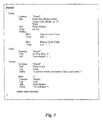
- Figures 2-5 display the dictionary information stored on an electronic storage medium that is retrieved for the input words of the sample input text during morphological analysis.
- Figure 2 displays the dictionary entries for the input words "the” 201 and "person” 202.
- Entry 201 comprises the key “the” 203 and a list of attribute/value pairs.
- the first attribute "Adj" 204 has, as its value, the symbols contained within the braces 205 and 206. These symbols comprise two further attribute/value pairs: (1) “Lemma” / "the” and (2) "Bits” / "Sing Plur Wa6 Det Art BO Def.”
- a lemma is the basic, uninflected form of a word.
- the attribute "Lemma” therefore indicates that "the” is the basic, uninflected form of the word represented by this entry in the dictionary.
- the attribute "Bits” comprises a set of abbreviations representing certain morphological and syntactic information about a word. This information indicates that "the” is: (1) singular; (2) plural; (3) not inflectable; (4) a determiner; (5) an article; (6) an ordinary adjective; and (7) definite.
- Attribute 204 indicates that the word “the” can serve as an adjective.
- Attribute 212 indicates that the word "the” can serve as an adverb.
- Attribute "Senses” 207 represents the various meanings of the word as separate definitions and examples, a portion of which are included in the list of attribute/value pairs between braces 208-209 and between braces 210-211. Additional meanings actually contained in the entry for "the” have been omitted in Figure 2, indicated by the parenthesized expression “(more sense records)” 213.
- the morphological subsystem recognizes each word and punctuation symbol of the input text as a separate token and constructs an attribute/value record for each part of speech of each token using the dictionary information. Attributes are fields within the records that can have one of various values defined for the particular attribute. These attribute/value records are then passed to the syntactic subsystem for further processing, where they are used as the leaf nodes of the syntax parse tree that the syntactic subsystem constructs. All of the nodes of the syntax parse tree and the logical form graph constructed by subsequent NLP subsystems are attribute/value records.
- the syntactic subsystem applies syntax rules to the leaf nodes passed to the syntactic subsystem from the morphological subsystem to construct higher-level nodes of a possible syntax parse tree that represents the sample input text.
- a complete syntax parse tree includes a root node, intermediate-level nodes, and leaf nodes.
- the root node represents the syntactic construct (e.g. , declarative sentence) for the sample input text.
- the intermediate-level nodes represent intermediate syntactic constructs (e.g. , verb, noun, or prepositional phrases).
- the leaf nodes represent the initial set of attribute/value records.
- syntax rules are applied in a top-down manner.
- the syntactic subsystem of the NLP system herein described applies syntax rules to the leaf nodes in a bottom-up manner. That is, the syntactic subsystem attempts to apply syntax rules one-at-a-time to single leaf nodes to pairs of leaf nodes, and, occasionally, to larger groups of leaf nodes. If the syntactic rule requires two leaf nodes upon which to operate, and a pair of leaf nodes both contain attributes that match the requirements specified in the rule, then the rule is applied to them to create a higher-level syntactic construct.
- the words "my friend” could represent an adjective and a noun, respectively, which can be combined into the higher-level syntactic construct of a noun phrase.
- each new intermediate-level node is created, it is linked to already-existing leaf nodes and intermediate-level nodes, and becomes part of the total set of nodes to which the syntax rules are applied.
- the process of applying syntax rules to the growing set of nodes continues until either a complete syntax parse tree is generated or until no more syntax rules can be applied.
- a complete syntax parse tree includes all of the words of the input sentence as leaf nodes and represents one possible parse of the sentence.
- This bottom-up method of syntax parsing creates many intermediate-level nodes and sub-trees that may never be included in a final, complete syntax parse tree. Moreover, this method of parsing can simultaneously generate more than one complete syntax parse tree.
- the syntactic subsystem can conduct an exhaustive search for all possible complete syntax parse trees by continuously applying the rules until no additional rules can be applied.
- the syntactic subsystem can also try various heuristic approaches to first generate the most probable nodes. After one or a few complete syntax parse trees are generated, the syntactic subsystem typically can terminate the search because the syntax parse tree most likely to be chosen as best representing the input sentence is probably one of the first generated syntax parse trees. If no complete syntax parse trees are generated after a reasonable search, then a fitted parse can be achieved by combining the most promising sub-trees together into a single tree using a root node that is generated by the application of a special aggregation rule.
- Figure 6 illustrates the initial leaf nodes created by the syntactic subsystem for the dictionary entries initially displayed in Figures 2-5.
- the leaf nodes include two special nodes, 601 and 614, that represent the beginning of the sentence and the period terminating the sentence, respectively.
- Each of the nodes 602-613 represent a single part of speech that an input word can represent in a sentence. These parts of speech are found as attribute/value pairs in the dictionary entries.
- leaf nodes 602 and 603 represent the two possible parts of speech for the word "The,” that are found as attributes 204 and 212 in Figure 2.
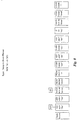
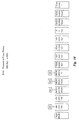
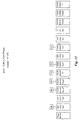
- Figure 7-22 show the rule-by-rule construction of the final syntax parse tree by the syntactic subsystem.
- Each of the figures illustrates the application of a single syntax rule to generate an intermediate-level node that represents a syntactic structure. Only the rules that produce the intermediate-level nodes that comprise the final syntax tree are illustrated.
- the syntactic subsystem generates many intermediate-level nodes which do not end up included in the final syntax parse tree.
- the syntactic subsystem applies unary syntax rules that create intermediate-level nodes that represent simple verb, noun, and adjective phrases.
- the syntactic subsystem begins to apply binary syntax rules that combine simple verb, noun, and adjective phrases into multiple-word syntactic constructs.
- the syntactic subsystem orders the rules by their likelihood of successful application, and then attempts to apply them one-by-one until it finds a rule that can be successfully applied to the existing nodes.
- the syntactic subsystem successfully applies a rule that creates a node representing a noun phrase from an adjective phrase and a noun phrase.
- the rule specifies the characteristics required of the adjective and noun phrases.
- the adjective phrase must be a determiner.
- the syntactic subsystem determines that node 1501 does represent a determiner.
- the syntactic subsystem Having located the two nodes 1501 and 1502 that meet the characteristics required by the rule, the syntactic subsystem then applies the rule to create from the two simple phrases 1501 and 1502 an intermediate-level node that represents the noun phrase "my friend.”
- the syntactic subsystem generates the final, complete syntax parse tree representing the input sentence by applying a trinary rule that combines the special Begin1 leaf node 2201, the verb phrase "The person whom I met was my friend" 2202, and the leaf node 2203 that represents the final terminating period to form node 2204 representing the declarative sentence.
- the semantic subsystem generates a logical form graph from a complete syntax parse tree.
- the logical form graph is constructed from the nodes of a syntax parse tree, adding to them attributes and new bi-directional links.
- the logical form graph is a labeled, directed graph. It is a semantic representation of an input sentence.
- the information obtained for each word by the morphological subsystem is still available through references to the leaf nodes of the syntax parse tree from within nodes of the logical form graph.
- Both the directions and labels of the links of the logical form graph represent semantic information, including the functional roles for the nodes of the logical form graph.
- the semantic subsystem adds links and nodes to represent (1) omitted, but implied, words; (2) missing or unclear arguments and adjuncts for verb phrases; and (3) the objects to which prepositional phrases refer.
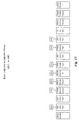
- Figure 23 illustrates the complete logical form graph generated by the semantic subsystem for the example input sentence. Meaningful labels have been assigned to links 2301-2306 by the semantic subsystem as a product of the successful application of semantic rules.
- the logical form nodes roughly correspond to input words, but certain words that are unnecessary for conveying semantic meaning, such as "The” and "whom” do not appear in the logical form graph, and the input verbs "met” and "was” appear as their infinitive forms “meet” and "be.”
- the nodes are represented in the computer system as records, and contain additional information not shown in Figure 23. The fact that the verbs were input in singular past tense form is indicated by additional information within the logical form nodes corresponding to the meaning of the verbs, 2307 and 2310.
- the differences between the syntax parse tree and the logical form graph are readily apparent from a comparison of Figure 23 to Figure 22.
- the syntax parse tree displayed in Figure 22 includes 10 leaf nodes and 16 intermediate-level nodes linked together in a strict hierarchy, whereas the logical form graph displayed in Figure 23 contains only 6 nodes.
- the logical form graph is not hierarchically ordered, obvious from the two links having opposite directions between nodes 2307 and 2308.
- the nodes no longer represent the exact form of the input words, but instead represent their meanings.
- Prior art methods for generating logical form graphs involve computationally complex adjustments to, and manipulations of the syntax parse tree. As a result, it becomes increasingly difficult to add new semantic rules to a NLP system. Addition of a new rule involves new procedural logic that may conflict with the procedural logic already programmed into the semantic subsystem. Furthermore, because nodes of the syntax parse tree are extended and reused as nodes for the logical form graph, prior art semantic subsystems produce large, cumbersome, and complicated data structures. The size and complexity of a logical form graph overlayed onto a syntax parse tree makes further use of the combined data structure error-prone and inefficient. Accordingly, it would be desirable to have a more easily extended and manageable semantic subsystem so that simple logical form graph data structures can be produced.
- the present invention is directed to a method and system for performing semantic analysis of an input sentence within a NLP system.
- the semantic analysis subsystem receives a syntax parse tree generated by the morphological and syntactic subsystems.
- the semantic analysis subsystem applies two sets of semantic rules to make adjustments to the received syntax parse tree.
- the semantic analysis subsystem then applies a third set of semantic rules to create a skeletal logical form graph from the syntax parse tree.
- the semantic analysis subsystem finally applies two additional sets of semantic rules to the skeletal logical form graph to provide semantically meaningful labels for the links of the logical form graph, to create additional logical form graph nodes for missing nodes, and to unify redundant logical form graph nodes.
- the final logical form graph generated by the semantic analysis subsystem represents the complete semantic analysis of an input sentence.
- the present invention provides a new semantic method and system for generating a logical form graph from a syntax tree.
- a new semantic subsystem performs the semantic analysis in three phases: (1) filling in and adjusting the syntax parse tree, (2) generating an initial logical form graph, and (3) generating meaningful labels for links of the logical form graph and constructing a complete logical form graph.
- Each phase constitutes the application of one or two sets of rules to either a set of syntax tree nodes or to a set of logical form graph nodes.
- the NSS addresses the recognized deficiencies in prior art semantic subsystems described above in the background section.
- Each phase of the NSS is a simple and extensible rule-based method. As additional linguistic phenomena are recognized, rules to handle them can be easily included into one of the rule sets employed by the NSS.
- the second phase of the NSS generates an entirely separate logical form graph, rather than overlaying the logical form graph onto an existing syntax parse tree.
- the logical form graph data structure generated by the NSS is therefore simple and space efficient by comparison with prior art logical form graph data structures.
- Figure 24 is a block diagram illustrating a preferred computer system for a NLP system.
- the computer system 2401 contains a central processing unit, a memory, a storage device, and input and output devices.
- the NLP subsystems 2406-2409 are typically loaded into memory 2404 from a computer-readable storage device such as a disk.
- An application program 2405 that uses the services provided by the NLP system is also typically loaded into memory.
- the electronic dictionary 2411 is stored on a storage device, such as a disk 2410, and entries are read into memory for use by the morphological subsystem.
- a user typically responds to a prompt displayed on the output device 2403 by entering one or more natural language sentences on an input device 2404.
- the natural language sentences are received by the application, processed, and then passed to the NLP system by way of the morphological subsystem 2406.
- the morphological subsystem uses information from the electronic dictionary to construct records describing each input word, and passes those records to the syntactic subsystem 2407.
- the syntactic subsystem parses the input words to construct a syntax parse tree and passes the syntax parse tree to the semantic subsystem 2408.
- the semantic subsystem generates a logical form graph from the received syntax parse tree and passes that logical form graph to other NLP subsystems 2409.
- the application program then can send and receive information to the natural language subsystem 2409 in order to make use of the machine understanding of the input text achieved by the NLP system, and then finally output a response to the user on an output device 2403.
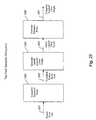
- Figure 25 illustrates the three phases of the preferred new semantic subsystem.
- Phases 1-3 of the NSS are shown as 2502, 2504, and 2506, respectively.
- the states of the relevant data structures input and output from each phase of the NSS are displayed in Figure 25 as labels 2501, 2503, 2505, and 2507.
- the NSS receives a syntax parse tree 2501 generated by the syntactic subsystem.
- the first phase of the NSS 2502 completes the syntax parse tree using semantic rules, and passes the completed syntax parse tree 2503 to the second phase of the NSS 2504.
- the second phase of the NSS generates an initial logical form graph 2505 and passes that initial logical form graph to the third phase of the NSS 2506.
- the third phase of the NSS applies semantic rules to the initial logical form graph in order to add meaningful semantic labels to the links of the logical form graph, to add new links and nodes to fill out the semantic representation of the input sentence, and occasionally to remove redundant nodes.
- the complete logical form graph 2507 is then passed to other NLP subsystems for use in further interpreting the input sentence represented by the logical form graph or in answering questions or preparing data based on the input sentence.
- a flow diagram for the NSS is displayed in Figure 26.
- the flow diagram shows successive invocation of the three phases of the NSS, 2601, 2602, and 2603. In the following, each phase of the NSS will be described in detail.
- the NSS modifies a syntax parse tree received from the syntactic subsystem by applying two different sets of semantic rules to the nodes of the syntax parse tree. These semantic rules can alter the linkage structure of the syntax tree or cause new nodes to be added.
- the NSS applies a first set of semantic rules to resolve a variety of possible omissions and deficiencies that cannot be addressed by syntactical analysis.
- Application of these first set of semantic rules effect preliminary adjustments to the input syntax parse tree.
- the linguistic phenomena addressed by the first set of semantic rules include verbs omitted after the words "to” or “not,” but understood to be implicit by a human listener, missing pronouns, such as "you” or “we” in imperative sentences, expansion of coordinate structures involving the words "and” or "or,” and missing objects or elided verb phrases.
- Figure 27 lists a preferred first set of semantic rules applied by the NSS in phase one. For each rule, the name of the rule followed by a concise description of the linguistic phenomenon that it addresses is shown.
- each semantic rule is a set of conditions which are applied to a syntax parse tree node or logical form graph node and a list of actions that are applied to the syntax parse tree or logical form graph.
- the NSS applies the conditions of each rule of the first set of semantic rules to the list of syntax records that represents the syntax parse tree and, for each rule for which all the conditions of that rule are satisfied, the NSS performs the list of actions contained in the rule, resulting in specific changes to the syntax parse tree.
- the actual form of each semantic rule depends on the details of the representation of the syntax parse tree and logical form graph, for which many different representations are possible.
- a semantic rule is described by a conditional expression preceded by the word "If' in bold type, followed by a list of actions preceded by the word “Then” in bold type.
- the "If" part of the semantic rule represents the conditions that must be applied to a syntax parse tree node or logical form graph node and found to be true in order for the rule, as a whole, to be applied to the node, and the "Then” expression represents a list of actions to be performed on the syntax parse tree or logical form graph.
- the displayed expression closely corresponds to the computer source code expression for the semantic rule.
- Figure 28A displays an English-language representation of the semantic rule PrLF_You from the first set of semantic rules.
- the "If” expression concerns the values of various attributes of the syntax parse tree node to which the rule is applied
- the "Then” expression specifies the creation of a pronoun node for the lemma "you” and a noun phrase node parent for the pronoun node and the attachment of the created nodes to the syntax parse tree.
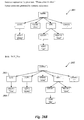
- Figure 28B shows an example of the application of the semantic rule PrLF_You to the syntax parse tree 2801 generated by the syntactic subsystem for the sentence "Please close the door.”
- Application of PrLF_You results in the modified syntax parse tree 2802, with two new nodes 2803 and 2804 connected to the root node for the sentence.
- This semantic rule has the purpose of explicitly placing an understood "you" of an imperative sentence into the syntax parse tree.
- the NSS makes main adjustments to the preliminarily-adjusted syntax parse tree by applying to the nodes of the preliminarily-adjusted syntax parse tree a second set of semantic rules.
- This second set of rules include rules that serve to identify and resolve long-distance attachment phenomena, to transform verbal phrases into verbs with prepositional phrase objects, and to replace, in certain cases, the word "it" with an infinitive clause.
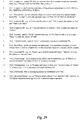
- Figure 29 lists a preferred second set of semantic rules applied by the NSS in phase one. For each rule, the name of the rule followed by a concise description of the linguistic phenomenon that it addresses is shown.
- Figures 30A-30B display an English-language representation of the semantic rule TrLF_MoveProp from the second set of semantic rules. As can be seen in Figures 30A-30B, the "If" expression concerns the values of various attributes of the syntax parse tree node to which the rule is applied and various related syntax parse tree nodes, and the "Then" expression specifies a rather complex rearrangement of the syntax parse tree.
- Figure 30C shows an example of the application of the semantic rule TrLF_MoveProp to the syntax parse tree 3001 generated by the syntactic subsystem for the sentence "I have no desire to see the man.”
- Application of TrLF_MoveProp results in the modified syntax parse tree 3002.
- the infinitive clause represented by node 3003 in the original syntax parse tree has been moved from its position as a child of node 3004 to being a child 3005 of the root DECL node 3006 of the modified syntax parse tree.
- This semantic rule has the purpose of moving clauses like the infinitive clause 3003 from a lower level to a higher level in the syntax tree to facilitate the subsequent transition from the syntax parse tree to a logical form graph.
- semantic rules are statements in a programming language that, when executed, create a new tree or graph node from one, two, or occasionally more existing tree or graph nodes and create appropriate links between the newly created node and the existing tree or graph nodes.
- the left-hand portion of a semantic rule specifies characteristics that the existing node or nodes must have in order for the rule to be applied.
- the right-hand portion of the semantic rule specifies the type of new node to be created, and the values for the new node's attributes.
- each syntax parse tree and each logical form graph is represented as a list of nodes, with the links between the nodes represented by attribute values within the nodes.
- Each set of rules is also represented as a list.
- Application of set of rules to a syntax parse tree involves selecting successive nodes from the list of nodes and attempting to apply to each selected node each rule from the list of rules representing the set of rules.
- a particular rule can be successfully applied to a node if that node has the characteristics specified in the left-hand portion of the rule. Occasionally, a new node may be created as a result of a successful rule application, or an existing node may be marked for deletion.
- a flow diagram for the subroutine "apply_rules” which applies a set of rules to a list of nodes representing a syntax parse tree or logical form graph is displayed in Figure 31.
- the subroutine "apply_rules” is called by the NSS to apply each set of rules during each of the three phases of the NSS.
- apply_rules receives a list of nodes as its first argument and a list of rules as its second argument.
- Steps 3102 through 3107 represent an outer loop, each iteration of which attempts to apply all of the input rules from the input list of rules to successive nodes selected from the input list.
- Steps 3103 through 3106 represent an inner loop, each iteration of which attempts to apply a rule selected from the list of input rules to a node selected from the input list of nodes.
- apply_rules selects the next node from the input list of nodes, starting with the first.
- apply_rules selects the next rule from the input list of rules, starting with the first.
- apply_rules determines whether the selected node has the characteristics specified in the left-hand part of the selected rule. If the node has the specified characteristics, then apply_rules applies in step 3105 the selected rule to the selected of node.
- apply_rules determines in step 3106 that there are more rules to attempt to apply to the selected node, apply_rules returns to step 3103 to select the next rule. If apply_rules determines in step 3107 that there are more nodes to attempt to apply the rules of the input rule list, apply rules returns to step 3102 to select the next node.
- a flow diagram for the processing done in the first phase of the NSS is displayed in Figure 32.
- the variable "parameter1” is assigned to be the list of syntax parse tree nodes that comprise the syntax parse tree generated by the syntactic subsystem and input into the NSS.
- the variable "parameter2” is assigned to be a list of the first set of semantic rules displayed in Figure 27.
- the NSS invokes the subroutine "apply_rules,” passing to the subroutine the variables "parameter1" and “parameter2.”
- the subroutine "apply_rules" applies the first set of semantic rules to the syntax parse tree to effect preliminary adjustments.
- the variable "parameter1" is assigned to be the list of syntax parse tree nodes that comprise the preliminarily-adjusted syntax parse tree.
- the variable "parameter2" is assigned to be a list of the second set of semantic rules displayed in Figure 29.
- the NSS invokes the subroutine "apply_rules,” passing to the subroutine the variables "parameter1” and “parameter2.”
- the subroutine "apply_rules” applies the second set of semantic rules to the syntax parse tree to effect main adjustments.
- the NSS applies a third set of semantic rules to the nodes of the adjusted syntax tree.
- Each successful rule application in phase two creates a new logical form graph node.
- the NSS creates a new logical form graph.
- the nodes of the logical form graph consist of only semantically meaningful attributes and a pointer back to the corresponding syntax tree node.
- the logical form graph nodes created by the NSS in phase two are completely separate and distinct from the syntax parse tree nodes.
- the NSS constructs a skeleton of the logical form graph that comprises links, stored as attributes within the nodes, that interconnect the nodes of the logical form graph.
- Figure 33 a list of the third set of semantic rules applied by the NSS in phase two is displayed. For each rule, Figure 33 displays the name of the rule followed by a concise description of the linguistic phenomenon that it addresses. There are only three rules in this third set of rules, and only the first rule, SynToSem1, is commonly used. The second and third rules apply only to special situations when a fitted parse was generated by the syntactic subsystem, and the adjusted syntax parse tree therefore contains a fitted parse node.
- Figures 34A-34C display an English-language representation of the semantic rule SynToSem1 from the third set of semantic rules.
- the "If" expression concerns the values of various attributes for the syntax parse tree node to which the rule is applied and various related syntax parse tree nodes
- the "Then” expression specifies the creation of a logical form graph node and placement of the new node within the incipient logical form graph.
- Figure 34D shows an example of the application of the semantic rule SynToSem1 to the syntax parse tree 3401 generated by the syntactic subsystem for the sentence "The book was written by John.”
- Application of SynToSem1 results in the skeletal logical form graph 3402.
- the skeletal logical form graph has three nodes with temporary modifiers labeling the links. Attributes have been assigned to the new nodes, based on the syntactic attributes of the syntax parse tree nodes from which they were created. There are far fewer nodes in the logical form graph than in the corresponding syntax parse tree, because the logical form graph represents the semantic meaning of the sentence.
- Figure 35 displays a flow diagram for phase two of the NSS.
- the variable "parameter1" is assigned the list of nodes representing the adjusted syntax parse tree.
- the variable "parameter2” is assigned to be a list of the third set of semantic rules displayed in Figure 33.
- the NSS invokes subroutine "apply_rules” to apply the third set of semantic rules to the nodes of the adjusted syntax parse tree, thereby creating a new logical form graph corresponding to the adjusted syntax parse tree.
- the NSS applies a fourth set of semantic rules to the skeletal logical form graph to add semantically meaningful labels to the links of the logical form graph.
- These new labels include "deep subject” ("Dsub”), “deep object” (“Dobj"), “deep indirect object” (“Dind”), “deep predicate nominative” (“Dnom”), “deep complement” (“Dcmp”), and “deep predicate adjective” ("Dadj”).
- Dsub deep subject
- Dobj deep object
- Dind deep indirect object
- Dnom deep predicate nominative
- Dcmp deep complement
- Dadj deep predicate adjective
- Figure 39A displays an English-language representation of the semantic rule LF_Dobj2 from the fourth set of semantic rules.
- the "If" expression concerns the values of various attributes of the logical form graph node to which the rule is applied, and the "Then” expression specifies the labeling of a link in the logical form graph.
- Figure 39B shows an example of the application of the semantic rule LF_Dobj2 to the logical form graph 3901 generated by the NSS for the sentence "The book was written by John.”
- Application of LF_Dobj2 to a logical form graph containing a passive clause identifies the syntactic subject as the deep object of the action. This is accomplished, in Figure 39B, by relabeling link 3903 from a temporary modifier to the label 3904 indicating a deep object relationship.
- the NSS makes final adjustments to the logical form graph by applying a fifth set of semantic rules.
- This set of rules include rules that serve to unify a relative pronoun with its antecedent, find and explicitly include missing pronouns, resolve number ellipsis, provide missing deep subjects, unify redundant instances of personal pronouns, and contract coordinate structures expanded in the first sub-step of semantic analysis. These rules also deal with the problem of taking a pronoun (or "proform") and identifying the noun phrase to which it refers. In many cases, it is not possible to identify the correct noun phrase referent with the level of information that the logical form graph provides.
- Figure 40 a list of the fifth set of semantic rules applied by the NSS in phase three is displayed. For each rule, Figure 40 displays the name of the rule followed by a concise description of the linguistic phenomenon that it addresses.
- Figures 41A-41C display an English-language representation of the semantic rule PsLF_PronAnaphora from the fifth set of semantic rules.
- the "If" expression concerns the values of various attributes of the logical form graph node to which the rule is applied, and of related logical form graph nodes, and the "Then” expression specifies the addition of a logical form graph node representing an omitted referent of a pronoun.
- Figure 41D shows an example of the application of the semantic rule PsLF_PronAnaphora to the logical form graph 4101 generated by the NSS for the sentence "Mary likes the man who came to dinner, and Joan likes him too.”
- Application of PsLF_PronAnaphora to a logical form graph containing a pronoun node with a referent in a different part of the logical form graph adds a new node to which the pronoun node is directly linked.
- the new node 4103 has been added by application of PsLF_PronAnaphora to indicate that the node "he1" refers to "man.”
- a flow diagram for the processing done in phase three of the NSS is displayed in Figure 42.
- the variable "parameter1" is assigned to be the list of logical form graph nodes that comprise the logical form graph generated during phase two of the NSS.
- the variable "parameter2" is assigned to be a list of the fourth set of semantic rules displayed in Figures 36-38.
- the NSS invokes the subroutine "apply_rules,” passing to the subroutine the variables "parameter1" and “parameter2.”
- the subroutine "apply_rules” applies the fourth set of semantic rules to the logical form graph to add semantically meaningful labels to the links of the logical form graph.
- step 4204 the variable "parameter1" is assigned to be the list of the logical form graph nodes that comprise the meaningfully-labeled logical form graph generated in step 4203.
- step 4205 the variable "parameter2" is assigned to be a list of the fifth set of semantic rules displayed in Figure 40.
- step 4206 the NSS invokes the subroutine "apply_rules,” passing to the subroutine the variables "parameter1” and “parameter2.” The subroutine "apply_rules" applies the fifth set of semantic rules to the logical form graph to effect final adjustments.
- Figure 43 is a block diagram of a computer system for the NSS.
- the computer 4300 contains memory with the semantic rules 4304-4308 and rule application engine 4303.
- the rule application engine under control of a central processing unit, applies the five sets of rules to the syntax parse tree 4301 to generate a corresponding logical form graph 4302.
- the syntax parse tree is preferably generated by the morphological and syntactic subsystems, which are not shown.
- the syntax tree and logical form graph can also be used to accomplish a subsequent task requiring information analogous to that which a human reader would obtain from the input sentences.
- a grammar checker program might suggest a new phrasing for the input sentence that more accurately or concisely states what was stated in the input sentence.
- a computer operating system might perform computational tasks described by the input sentence.
- information contained in the input sentence might be categorized and stored away for later retrieval by a database management system.
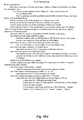
- rule TrLF_LongDist1 is the introduction of a direct object attribute in the noun phrase node 4403 to indicate that the word "whom” is the direct object of the phrase "I met.” Normally, in English, the direct object of a verb follows the verb. Because "whom” does not follow "I met” in the sentence that was parsed to produce the syntax tree 4400, the fact that "whom” is the direct object of "I met” was not identified by the application of syntactic rules.
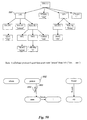
- the NSS successfully applies the semantic rule SynToSem1, displayed in Figure 33 as rule 1, to the determinate pronoun node DETP2, 4501, of the syntax parse tree to generate the logical form graph node "my" 4502.
- the NSS successfully applies the semantic rule SynToSem1 to the noun phrase node NP4, 4601, of the syntax parse tree to generate the logical form graph node "friend" 4602 and the link 4603 with the temporary semantic label "Tmods" 4604.
- the NSS successfully applies the semantic rule SynToSem1 to the noun phrase node NP3, 4701, of the syntax parse tree to generate the logical form graph node "I" 4702.
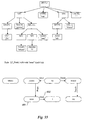
- the NSS successfully applies the semantic rule SynToSem1 to the noun phrase node NP2, 4801, of the syntax parse tree to generate the logical form graph node "whom” 4802.
- the NSS successfully applies the semantic rule SynToSem1 to the relative clause node RELCL1, 4901, of the syntax parse tree to generate the logical form graph node "meet" 4902 and the link 4903 with the temporary semantic label "Tmods" 4904.
- the NSS successfully applies the semantic rule SynToSem1 to the noun phrase node NP1, 5001, of the syntax parse tree to generate the logical form graph node "person" 5002 and the link 5003 with the temporary semantic label "Tmods” 5004.
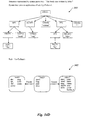
- the NSS successfully applies the semantic rule SynToSem1 to the declarative sentence node DECL1, 5101, of the syntax parse tree to generate the logical form graph node "be” 5102 and the link 5103 with the temporary semantic label "Tmods" 5104.
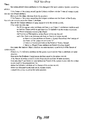
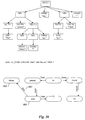
- the NSS successfully applies the semantic rule LF_Dsubl, displayed in Figure 36 as rule 1, to the logical form graph node "meet” 5501 to generate the link label "Dsub” 5502.
- the NSS successfully applies the semantic rule LF_Dobj1, displayed in Figure 36 as rule 3, to the logical form graph node “meet” 5601 to generate the link labeled "Dobj” 5603 to link the node "meet” to the node "whom” 5602.
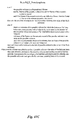
- the NSS successfully applies the semantic rule LF_Ops, displayed in Figure 38 as rule 22, to the logical form graph node "friend" 5701 to generate the link label "PossBy" 5702.
Landscapes
- Engineering & Computer Science (AREA)
- Theoretical Computer Science (AREA)
- Health & Medical Sciences (AREA)
- Artificial Intelligence (AREA)
- Audiology, Speech & Language Pathology (AREA)
- Computational Linguistics (AREA)
- General Health & Medical Sciences (AREA)
- Physics & Mathematics (AREA)
- General Engineering & Computer Science (AREA)
- General Physics & Mathematics (AREA)
- Machine Translation (AREA)
Claims (34)
- Procédé mis en oeuvre dans un système informatique (4300) destiné à générer un graphe de forme logique (2507, 4302) pour une phrase en langage naturel, la phrase étant représentée par une arborescence d'analyse syntaxique (2501, 4301) ayant des noeuds représentant des constructions syntaxiques de la phrase, l'arborescence d'analyse syntaxique (2501, 4301) étant représentée dans une structure de données, le procédé comprenant :la mise au point de l'arborescence d'analyse syntaxique (2501, 4301) en fonction d'une analyse sémantique de l'arborescence d'analyse syntaxique (2501, 4301), la mise au point étant constituée de mises au point n'étant pas susceptibles d'être mises en oeuvre à partir d'une analyse syntaxique de l'arborescence d'analyse syntaxique (2501, 4301) ;la génération d'un graphe de forme logique paramétrable (2505, fig.51) de l'arborescence d'analyse syntaxique mise au point (2503), le graphe de forme logique paramétrable (2505, fig.51) étant représenté dans une structure de données distincte de la structure de données de l'arborescence d'analyse syntaxique (2501, 4301) ; etla mise en oeuvre de l'analyse sémantique sur le graphe de forme logique paramétrable (2505, fig.51) afin d'obtenir un graphe de forme logique complet (2507, 4302).
- Procédé selon la revendication 1 dans lequel la mise au point de l'arborescence d'analyse syntaxique (2501, 4301) comprend l'ajout d'un rôle syntaxique d'une construction syntaxique implicite dans la phrase.
- Procédé selon la revendication 2 dans lequel lorsque la phrase omet un verbe après un mot prédéfini, l'ajout d'un rôle syntaxique ajoute une construction syntaxique pour le verbe omis.
- Procédé selon la revendication 3 dans lequel le mot prédéfini est le mot "à" (to).
- Procédé selon la revendication 3 dans lequel le mot prédéfini est le mot "ne/non" (not).
- Procédé selon la revendication 2 dans lequel lorsqu'il manque un pronom à l'intérieur de la phrase, l'ajout d'un rôle syntaxique ajoute une construction syntaxique pour le pronom manquant.
- Procédé selon la revendication 6 dans lequel le pronom manquant est le mot "tu/vous" (you) dans une phrase impérative.
- Procédé selon la revendication 2 selon lequel lorsque la phrase comprend une structure de coordination, l'ajout d'un rôle syntaxique ajoute une construction syntaxique destinée à étendre la structure de coordination.
- Procédé selon la revendication 8 dans lequel la structure de coordination comprend le mot "et" (and).
- Procédé selon la revendication 8 dans lequel la structure de coordination comprend le mot "ou" (or).
- Procédé selon la revendication 2 dans lequel la mise au point de l'arborescence d'analyse syntaxique (2501, 4301) comprend la résolution de phénomènes de liaison à longue distance après ajout des rôles syntaxiques.
- Procédé selon la revendication 2 dans lequel la mise au point de l'arborescence d'analyse syntaxique (2501, 4301) comprend la transformation des locutions verbales en verbes avec objets de locutions prépositionnelles après ajout des rôles syntaxiques.
- Procédé selon la revendication 2 dans lequel la mise au point de l'arborescence d'analyse syntaxique (2501, 4301) comprend le remplacement du mot "il/elle/le/la/ce" (it) par une déclaration infinitive après ajout des rôles syntaxiques.
- Procédé selon la revendication 1 dans lequel la génération du graphe de forme logique paramétrable (2505, fig.51) inclut l'affectation d'attributs aux noeuds du graphe de forme logique paramétrable (2505, fig.51) en fonction des attributs de l'arborescence d'analyse syntaxique mise au point (2503).
- Procédé selon la revendication 1 dans lequel la mise en oeuvre de l'analyse sémantique sur le graphe de forme logique paramétrable (2505, fig.51) comprend l'ajout d'étiquettes sémantiques au graphe de forme logique paramétrable (2505, fig.51).
- Procédé selon la revendication 15 dans lequel une étiquette sémantique indique une partie de phrase profonde.
- Procédé selon la revendication 15 dans lequel la mise en oeuvre de l'analyse sémantique sur le graphe de forme logique paramétrable (2505, fig.51) comprend l'ajout de constructions sémantiques après l'ajout d'étiquettes sémantiques.
- Système informatique (4300) destiné à générer un graphe de forme logique (2507, 4302) concernant une phrase en langage naturel, la phrase étant représentée par une arborescence d'analyse syntaxique (2501, 4301) ayant des noeuds représentant des constructions syntaxiques de la phrase, comprenant :un premier composant (2503) servant à la mise au point de l'arborescence d'analyse syntaxique (2501) en fonction d'une analyse sémantique de l'arborescence d'analyse syntaxique (2501), la mise au point étant constituée de mises au point n'étant pas susceptibles d'être mises en oeuvre en fonction d'une analyse syntaxique de l'arborescence d'analyse syntaxique (2501) ;un second composant (2504) servant à la génération d'un graphe de forme logique paramétrable (2505) de l'arborescence d'analyse syntaxique mise au point (2503), le graphe de forme logique paramétrable (2505) étant représenté dans une structure de données distincte de la structure de données de l'arborescence d'analyse syntaxique (2501) ; etun troisième composant (2506) servant à la mise en oeuvre de l'analyse sémantique sur le graphe de forme logique paramétrable (2505) afin de constituer le graphe de forme logique.
- Système informatique selon la revendication 18 dans lequel la mise au point de l'arborescence d'analyse syntaxique (2501) comprend l'ajout d'un rôle syntaxique d'une construction syntaxique implicite dans la phrase.
- Système informatique selon la revendication 19 dans lequel lorsque la phrase omet un verbe après un mot prédéfini, l'ajout d'un rôle syntaxique ajoute une construction syntaxique pour le verbe omis.
- Système informatique selon la revendication 20 dans lequel le mot prédéfini est le mot "à" (to).
- Système informatique selon la revendication 20 dans lequel le mot prédéfini est le mot "ne/non" (not).
- Système informatique selon la revendication 19 dans lequel lorsqu'il manque un pronom à l'intérieur de la phrase, l'ajout d'un rôle syntaxique ajoute une construction syntaxique pour le pronom manquant.
- Système informatique selon la revendication 23 dans lequel le pronom manquant est le mot "tu/vous" (you) dans une phrase impérative.
- Système informatique selon la revendication 19 dans lequel lorsque la phrase comprend une structure de coordination, l'ajout d'un rôle syntaxique ajoute une construction syntaxique destinée à étendre la structure de coordination.
- Système informatique selon la revendication 25 dans lequel la structure de coordination comprend le mot "et" (and).
- Système informatique selon la revendication 25 dans lequel la structure de coordination comprend le mot "ou" (or).
- Système informatique selon la revendication 19 dans lequel la mise au point de l'arborescence d'analyse syntaxique (2501) comprend la résolution de phénomènes de liaison à longue distance après ajout des rôles syntaxiques.
- Système informatique selon la revendication 19 dans lequel la mise au point de l'arborescence d'analyse syntaxique (2501) comprend la transformation des locutions verbales en verbes avec objets de phrases à prépositions après ajout des rôles syntaxiques.
- Système informatique selon la revendication 19 dans lequel la mise au point de l'arborescence d'analyse syntaxique (2501) comprend le remplacement du mot "il/elle/le/la/ce" (it) par une déclaration infinitive après ajout des rôles syntaxiques.
- Système informatique selon la revendication 18 dans lequel la génération du graphe de forme logique paramétrable (2505) inclut l'affectation d'attributs aux noeuds du graphe de forme logique paramétrable (2505) en fonction des attributs de l'arborescence d'analyse syntaxique mise au point (2503).
- Système informatique selon la revendication 18 dans lequel la mise en oeuvre de l'analyse sémantique sur le graphe de forme logique paramétrable (2505) comprend l'ajout d'étiquettes sémantiques au graphe de forme logique paramétrable (2505).
- Système informatique selon la revendication 32 dans lequel une étiquette sémantique indique une partie de phrase profonde.
- Système informatique selon la revendication 32 dans lequel la mise en oeuvre de l'analyse sémantique sur le graphe de forme logique paramétrable (2505) comprend l'ajout de constructions sémantiques après l'ajout d'étiquettes sémantiques.
Applications Claiming Priority (3)
| Application Number | Priority Date | Filing Date | Title |
|---|---|---|---|
| US08/674,610 US5966686A (en) | 1996-06-28 | 1996-06-28 | Method and system for computing semantic logical forms from syntax trees |
| US674610 | 1996-06-28 | ||
| PCT/US1997/011160 WO1998000793A1 (fr) | 1996-06-28 | 1997-06-27 | Procede et systeme de calcul de formes de logique semantique dans des arborescences syntaxiques |
Publications (2)
| Publication Number | Publication Date |
|---|---|
| EP0907923A1 EP0907923A1 (fr) | 1999-04-14 |
| EP0907923B1 true EP0907923B1 (fr) | 2002-02-13 |
Family
ID=24707266
Family Applications (1)
| Application Number | Title | Priority Date | Filing Date |
|---|---|---|---|
| EP97932316A Expired - Lifetime EP0907923B1 (fr) | 1996-06-28 | 1997-06-27 | Procede et systeme de calcul de formes de logique semantique dans des arborescences syntaxiques |
Country Status (6)
| Country | Link |
|---|---|
| US (1) | US5966686A (fr) |
| EP (1) | EP0907923B1 (fr) |
| JP (1) | JP4668363B2 (fr) |
| CN (1) | CN1122231C (fr) |
| DE (1) | DE69710458T2 (fr) |
| WO (1) | WO1998000793A1 (fr) |
Families Citing this family (168)
| Publication number | Priority date | Publication date | Assignee | Title |
|---|---|---|---|---|
| US6076051A (en) * | 1997-03-07 | 2000-06-13 | Microsoft Corporation | Information retrieval utilizing semantic representation of text |
| EP1078323A4 (fr) * | 1997-04-22 | 2007-04-25 | Greg Hetherington | Procede et appareil pour traiter des donnees non structurees |
| US5933822A (en) * | 1997-07-22 | 1999-08-03 | Microsoft Corporation | Apparatus and methods for an information retrieval system that employs natural language processing of search results to improve overall precision |
| US6078878A (en) * | 1997-07-31 | 2000-06-20 | Microsoft Corporation | Bootstrapping sense characterizations of occurrences of polysemous words |
| JP3531468B2 (ja) * | 1998-03-30 | 2004-05-31 | 株式会社日立製作所 | 文書処理装置及び方法 |
| US7197451B1 (en) | 1998-07-02 | 2007-03-27 | Novell, Inc. | Method and mechanism for the creation, maintenance, and comparison of semantic abstracts |
| US7152031B1 (en) | 2000-02-25 | 2006-12-19 | Novell, Inc. | Construction, manipulation, and comparison of a multi-dimensional semantic space |
| US6108619A (en) * | 1998-07-02 | 2000-08-22 | Novell, Inc. | Method and apparatus for semantic characterization of general content streams and repositories |
| US6243670B1 (en) * | 1998-09-02 | 2001-06-05 | Nippon Telegraph And Telephone Corporation | Method, apparatus, and computer readable medium for performing semantic analysis and generating a semantic structure having linked frames |
| US6405199B1 (en) * | 1998-10-30 | 2002-06-11 | Novell, Inc. | Method and apparatus for semantic token generation based on marked phrases in a content stream |
| US6901402B1 (en) * | 1999-06-18 | 2005-05-31 | Microsoft Corporation | System for improving the performance of information retrieval-type tasks by identifying the relations of constituents |
| US7509572B1 (en) * | 1999-07-16 | 2009-03-24 | Oracle International Corporation | Automatic generation of document summaries through use of structured text |
| JP3702414B2 (ja) * | 1999-08-11 | 2005-10-05 | 株式会社日立製作所 | 情報検索支援方法、コンピュータ読み取り可能な記憶媒体および情報検索装置 |
| JP2001075957A (ja) * | 1999-08-24 | 2001-03-23 | Internatl Business Mach Corp <Ibm> | 自然言語構造の表示方法及び装置 |
| US6721697B1 (en) * | 1999-10-18 | 2004-04-13 | Sony Corporation | Method and system for reducing lexical ambiguity |
| US6928448B1 (en) | 1999-10-18 | 2005-08-09 | Sony Corporation | System and method to match linguistic structures using thesaurus information |
| US6529865B1 (en) * | 1999-10-18 | 2003-03-04 | Sony Corporation | System and method to compile instructions to manipulate linguistic structures into separate functions |
| US6778949B2 (en) | 1999-10-18 | 2004-08-17 | Sony Corporation | Method and system to analyze, transfer and generate language expressions using compiled instructions to manipulate linguistic structures |
| US6535886B1 (en) | 1999-10-18 | 2003-03-18 | Sony Corporation | Method to compress linguistic structures |
| US7379862B1 (en) * | 1999-11-19 | 2008-05-27 | Microsoft Corporation | Method and apparatus for analyzing and debugging natural language parses |
| US7421395B1 (en) * | 2000-02-18 | 2008-09-02 | Microsoft Corporation | System and method for producing unique account names |
| GB0006721D0 (en) * | 2000-03-20 | 2000-05-10 | Mitchell Thomas A | Assessment methods and systems |
| AU2001252951A1 (en) * | 2000-03-24 | 2001-10-08 | Eliza Corporation | A novel approach to speech recognition |
| US7120574B2 (en) * | 2000-04-03 | 2006-10-10 | Invention Machine Corporation | Synonym extension of search queries with validation |
| US6556973B1 (en) * | 2000-04-19 | 2003-04-29 | Voxi Ab | Conversion between data representation formats |
| US7962326B2 (en) * | 2000-04-20 | 2011-06-14 | Invention Machine Corporation | Semantic answering system and method |
| US6965857B1 (en) * | 2000-06-02 | 2005-11-15 | Cogilex Recherches & Developpement Inc. | Method and apparatus for deriving information from written text |
| US7653530B2 (en) * | 2000-07-13 | 2010-01-26 | Novell, Inc. | Method and mechanism for the creation, maintenance, and comparison of semantic abstracts |
| US7389225B1 (en) | 2000-10-18 | 2008-06-17 | Novell, Inc. | Method and mechanism for superpositioning state vectors in a semantic abstract |
| US7672952B2 (en) * | 2000-07-13 | 2010-03-02 | Novell, Inc. | System and method of semantic correlation of rich content |
| US7286977B1 (en) * | 2000-09-05 | 2007-10-23 | Novell, Inc. | Intentional-stance characterization of a general content stream or repository |
| US6952666B1 (en) * | 2000-07-20 | 2005-10-04 | Microsoft Corporation | Ranking parser for a natural language processing system |
| US20100122312A1 (en) * | 2008-11-07 | 2010-05-13 | Novell, Inc. | Predictive service systems |
| US20090234718A1 (en) * | 2000-09-05 | 2009-09-17 | Novell, Inc. | Predictive service systems using emotion detection |
| US7177922B1 (en) | 2000-09-05 | 2007-02-13 | Novell, Inc. | Policy enforcement using the semantic characterization of traffic |
| US7085708B2 (en) * | 2000-09-23 | 2006-08-01 | Ravenflow, Inc. | Computer system with natural language to machine language translator |
| AU2000276393A1 (en) * | 2000-09-28 | 2002-04-08 | Intel Corporation (A Corporation Of Delaware) | A method and apparatus for extracting entity names and their relations |
| AU2002213279A1 (en) * | 2000-10-16 | 2002-04-29 | Text Analysis International, Inc. | Method for analyzing text and method for builing text analyzers |
| US20020063691A1 (en) * | 2000-11-30 | 2002-05-30 | Rich Rogers | LCD and active web icon download |
| WO2002054279A1 (fr) * | 2001-01-04 | 2002-07-11 | Agency For Science, Technology And Research | Methode amelioree de similitude textuelle |
| US7174536B1 (en) * | 2001-02-12 | 2007-02-06 | Iowa State University Research Foundation, Inc. | Integrated interactive software visualization environment |
| US9009590B2 (en) * | 2001-07-31 | 2015-04-14 | Invention Machines Corporation | Semantic processor for recognition of cause-effect relations in natural language documents |
| US20050216456A1 (en) | 2001-08-10 | 2005-09-29 | T-Systemev, Ltd. | Method for entering, recording, distributing and reporting data |
| US7024351B2 (en) * | 2001-08-21 | 2006-04-04 | Microsoft Corporation | Method and apparatus for robust efficient parsing |
| US7113905B2 (en) * | 2001-12-20 | 2006-09-26 | Microsoft Corporation | Method and apparatus for determining unbounded dependencies during syntactic parsing |
| US8380491B2 (en) * | 2002-04-19 | 2013-02-19 | Educational Testing Service | System for rating constructed responses based on concepts and a model answer |
| US7634398B2 (en) * | 2002-05-16 | 2009-12-15 | Microsoft Corporation | Method and apparatus for reattaching nodes in a parse structure |
| JP4038717B2 (ja) * | 2002-09-13 | 2008-01-30 | 富士ゼロックス株式会社 | テキスト文比較装置 |
| US20040098250A1 (en) * | 2002-11-19 | 2004-05-20 | Gur Kimchi | Semantic search system and method |
| US7640267B2 (en) * | 2002-11-20 | 2009-12-29 | Radar Networks, Inc. | Methods and systems for managing entities in a computing device using semantic objects |
| US7584208B2 (en) * | 2002-11-20 | 2009-09-01 | Radar Networks, Inc. | Methods and systems for managing offers and requests in a network |
| AU2004202391A1 (en) | 2003-06-20 | 2005-01-13 | Microsoft Corporation | Adaptive machine translation |
| US7440890B2 (en) * | 2003-12-19 | 2008-10-21 | Xerox Corporation | Systems and methods for normalization of linguisitic structures |
| US7433876B2 (en) | 2004-02-23 | 2008-10-07 | Radar Networks, Inc. | Semantic web portal and platform |
| US8666725B2 (en) | 2004-04-16 | 2014-03-04 | University Of Southern California | Selection and use of nonstatistical translation components in a statistical machine translation framework |
| US7689410B2 (en) * | 2004-04-23 | 2010-03-30 | Microsoft Corporation | Lexical semantic structure |
| US7761858B2 (en) * | 2004-04-23 | 2010-07-20 | Microsoft Corporation | Semantic programming language |
| CN1310171C (zh) * | 2004-09-29 | 2007-04-11 | 上海交通大学 | 建立基于语法模型的语义分析器的方法 |
| US7680648B2 (en) * | 2004-09-30 | 2010-03-16 | Google Inc. | Methods and systems for improving text segmentation |
| US8051096B1 (en) | 2004-09-30 | 2011-11-01 | Google Inc. | Methods and systems for augmenting a token lexicon |
| US7996208B2 (en) | 2004-09-30 | 2011-08-09 | Google Inc. | Methods and systems for selecting a language for text segmentation |
| DE112005002534T5 (de) * | 2004-10-12 | 2007-11-08 | University Of Southern California, Los Angeles | Training für eine Text-Text-Anwendung, die eine Zeichenketten-Baum-Umwandlung zum Training und Decodieren verwendet |
| US7742911B2 (en) * | 2004-10-12 | 2010-06-22 | At&T Intellectual Property Ii, L.P. | Apparatus and method for spoken language understanding by using semantic role labeling |
| US7835902B2 (en) * | 2004-10-20 | 2010-11-16 | Microsoft Corporation | Technique for document editorial quality assessment |
| US7698124B2 (en) * | 2004-11-04 | 2010-04-13 | Microsoft Corporaiton | Machine translation system incorporating syntactic dependency treelets into a statistical framework |
| US8843536B1 (en) | 2004-12-31 | 2014-09-23 | Google Inc. | Methods and systems for providing relevant advertisements or other content for inactive uniform resource locators using search queries |
| TWI315044B (en) * | 2005-01-21 | 2009-09-21 | Hon Hai Prec Ind Co Ltd | File server and method for displaying and editing information searching conditions |
| US20060195313A1 (en) * | 2005-02-25 | 2006-08-31 | Microsoft Corporation | Method and system for selecting and conjugating a verb |
| US7555475B2 (en) * | 2005-03-31 | 2009-06-30 | Jiles, Inc. | Natural language based search engine for handling pronouns and methods of use therefor |
| US20060277525A1 (en) * | 2005-06-06 | 2006-12-07 | Microsoft Corporation | Lexical, grammatical, and semantic inference mechanisms |
| US8676563B2 (en) * | 2009-10-01 | 2014-03-18 | Language Weaver, Inc. | Providing human-generated and machine-generated trusted translations |
| US8886517B2 (en) | 2005-06-17 | 2014-11-11 | Language Weaver, Inc. | Trust scoring for language translation systems |
| US7809551B2 (en) * | 2005-07-01 | 2010-10-05 | Xerox Corporation | Concept matching system |
| US7689411B2 (en) | 2005-07-01 | 2010-03-30 | Xerox Corporation | Concept matching |
| US20070094183A1 (en) * | 2005-07-21 | 2007-04-26 | Microsoft Corporation | Jargon-based modeling |
| US20070050185A1 (en) * | 2005-08-24 | 2007-03-01 | Keith Manson | Methods and apparatus for constructing graphs, semitic object networks, process models, and managing their synchronized representations |
| US20070055491A1 (en) * | 2005-08-24 | 2007-03-08 | Keith Manson | Method for apparatus for construction and use of an operational lexicon in process models and managing their synchronized representations |
| CN100424685C (zh) * | 2005-09-08 | 2008-10-08 | 中国科学院自动化研究所 | 一种基于标点处理的层次化汉语长句句法分析方法及装置 |
| US7672831B2 (en) * | 2005-10-24 | 2010-03-02 | Invention Machine Corporation | System and method for cross-language knowledge searching |
| US7756890B2 (en) * | 2005-10-28 | 2010-07-13 | Novell, Inc. | Semantic identities |
| US20070100600A1 (en) * | 2005-10-28 | 2007-05-03 | Inventec Corporation | Explication system and method |
| US10319252B2 (en) | 2005-11-09 | 2019-06-11 | Sdl Inc. | Language capability assessment and training apparatus and techniques |
| US7805455B2 (en) * | 2005-11-14 | 2010-09-28 | Invention Machine Corporation | System and method for problem analysis |
| US20070214153A1 (en) * | 2006-03-10 | 2007-09-13 | Mazzagatti Jane C | Method for processing an input particle stream for creating upper levels of KStore |
| US7962328B2 (en) * | 2006-03-13 | 2011-06-14 | Lexikos Corporation | Method and apparatus for generating a compact data structure to identify the meaning of a symbol |
| US20070220069A1 (en) * | 2006-03-20 | 2007-09-20 | Mazzagatti Jane C | Method for processing an input particle stream for creating lower levels of a KStore |
| US8238351B2 (en) * | 2006-04-04 | 2012-08-07 | Unisys Corporation | Method for determining a most probable K location |
| US8943080B2 (en) * | 2006-04-07 | 2015-01-27 | University Of Southern California | Systems and methods for identifying parallel documents and sentence fragments in multilingual document collections |
| US8060567B2 (en) | 2006-04-12 | 2011-11-15 | Google Inc. | Method, system, graphical user interface, and data structure for creating electronic calendar entries from email messages |
| US8886518B1 (en) | 2006-08-07 | 2014-11-11 | Language Weaver, Inc. | System and method for capitalizing machine translated text |
| US8924838B2 (en) | 2006-08-09 | 2014-12-30 | Vcvc Iii Llc. | Harvesting data from page |
| US8548795B2 (en) * | 2006-10-10 | 2013-10-01 | Abbyy Software Ltd. | Method for translating documents from one language into another using a database of translations, a terminology dictionary, a translation dictionary, and a machine translation system |
| US8397157B2 (en) * | 2006-10-20 | 2013-03-12 | Adobe Systems Incorporated | Context-free grammar |
| US20080141230A1 (en) * | 2006-12-06 | 2008-06-12 | Microsoft Corporation | Scope-Constrained Specification Of Features In A Programming Language |
| US9122674B1 (en) | 2006-12-15 | 2015-09-01 | Language Weaver, Inc. | Use of annotations in statistical machine translation |
| US20080208566A1 (en) * | 2007-02-23 | 2008-08-28 | Microsoft Corporation | Automated word-form transformation and part of speech tag assignment |
| US20080221870A1 (en) * | 2007-03-08 | 2008-09-11 | Yahoo! Inc. | System and method for revising natural language parse trees |
| US8615389B1 (en) | 2007-03-16 | 2013-12-24 | Language Weaver, Inc. | Generation and exploitation of an approximate language model |
| US8831928B2 (en) | 2007-04-04 | 2014-09-09 | Language Weaver, Inc. | Customizable machine translation service |
| US8825466B1 (en) | 2007-06-08 | 2014-09-02 | Language Weaver, Inc. | Modification of annotated bilingual segment pairs in syntax-based machine translation |
| US20090076887A1 (en) | 2007-09-16 | 2009-03-19 | Nova Spivack | System And Method Of Collecting Market-Related Data Via A Web-Based Networking Environment |
| US8082151B2 (en) | 2007-09-18 | 2011-12-20 | At&T Intellectual Property I, Lp | System and method of generating responses to text-based messages |
| US20100017293A1 (en) * | 2008-07-17 | 2010-01-21 | Language Weaver, Inc. | System, method, and computer program for providing multilingual text advertisments |
| US9262409B2 (en) | 2008-08-06 | 2016-02-16 | Abbyy Infopoisk Llc | Translation of a selected text fragment of a screen |
| CA2988181C (fr) | 2008-08-29 | 2020-03-10 | Primal Fusion Inc. | Systemes et procedes de definition de concepts semantiques et de synthese de relations entre concepts semantiques faisant appel a des definitions de domaines existants |
| US8301622B2 (en) * | 2008-12-30 | 2012-10-30 | Novell, Inc. | Identity analysis and correlation |
| US8296297B2 (en) * | 2008-12-30 | 2012-10-23 | Novell, Inc. | Content analysis and correlation |
| US8386475B2 (en) * | 2008-12-30 | 2013-02-26 | Novell, Inc. | Attribution analysis and correlation |
| US8370129B2 (en) * | 2009-01-07 | 2013-02-05 | Guangsheng Zhang | System and methods for quantitative assessment of information in natural language contents |
| CN101520775B (zh) * | 2009-02-17 | 2012-05-30 | 北京大学 | 一种融入语义信息的中文句法分析与解码方法 |
| CN101814065B (zh) * | 2009-02-23 | 2014-07-30 | 富士通株式会社 | 句法分析装置及句法分析方法 |
| CN102439595A (zh) * | 2009-03-13 | 2012-05-02 | 发明机器公司 | 基于文本文档和用户问题的语义标记的问答系统和方法 |
| US20100250479A1 (en) * | 2009-03-31 | 2010-09-30 | Novell, Inc. | Intellectual property discovery and mapping systems and methods |
| WO2010120929A2 (fr) | 2009-04-15 | 2010-10-21 | Evri Inc. | Génération de résultats de recherche personnalisés par l'utilisateur et construction d'un moteur de recherche à sémantique améliorée |
| US10628847B2 (en) | 2009-04-15 | 2020-04-21 | Fiver Llc | Search-enhanced semantic advertising |
| WO2010120925A2 (fr) | 2009-04-15 | 2010-10-21 | Evri Inc. | Recherche et optimisation de recherche à l'aide d'un modèle d'identifiant de position |
| US8200617B2 (en) | 2009-04-15 | 2012-06-12 | Evri, Inc. | Automatic mapping of a location identifier pattern of an object to a semantic type using object metadata |
| US8990064B2 (en) * | 2009-07-28 | 2015-03-24 | Language Weaver, Inc. | Translating documents based on content |
| US10417646B2 (en) | 2010-03-09 | 2019-09-17 | Sdl Inc. | Predicting the cost associated with translating textual content |
| US8949773B2 (en) * | 2010-03-25 | 2015-02-03 | International Business Machines Corporation | Deriving process models from natural language use case models |
| US8694304B2 (en) * | 2010-03-26 | 2014-04-08 | Virtuoz Sa | Semantic clustering and user interfaces |
| US8676565B2 (en) * | 2010-03-26 | 2014-03-18 | Virtuoz Sa | Semantic clustering and conversational agents |
| US9378202B2 (en) | 2010-03-26 | 2016-06-28 | Virtuoz Sa | Semantic clustering |
| US20120016661A1 (en) * | 2010-07-19 | 2012-01-19 | Eyal Pinkas | System, method and device for intelligent textual conversation system |
| US9524291B2 (en) * | 2010-10-06 | 2016-12-20 | Virtuoz Sa | Visual display of semantic information |
| US8688453B1 (en) * | 2011-02-28 | 2014-04-01 | Nuance Communications, Inc. | Intent mining via analysis of utterances |
| US11003838B2 (en) | 2011-04-18 | 2021-05-11 | Sdl Inc. | Systems and methods for monitoring post translation editing |
| US8694303B2 (en) | 2011-06-15 | 2014-04-08 | Language Weaver, Inc. | Systems and methods for tuning parameters in statistical machine translation |
| US9015031B2 (en) * | 2011-08-04 | 2015-04-21 | International Business Machines Corporation | Predicting lexical answer types in open domain question and answering (QA) systems |
| US9971849B2 (en) * | 2011-09-29 | 2018-05-15 | International Business Machines Corporation | Method and system for retrieving legal data for user interface form generation by merging syntactic and semantic contraints |
| US8942973B2 (en) | 2012-03-09 | 2015-01-27 | Language Weaver, Inc. | Content page URL translation |
| US8935277B2 (en) * | 2012-03-30 | 2015-01-13 | Sap Se | Context-aware question answering system |
| US8971630B2 (en) | 2012-04-27 | 2015-03-03 | Abbyy Development Llc | Fast CJK character recognition |
| US8989485B2 (en) | 2012-04-27 | 2015-03-24 | Abbyy Development Llc | Detecting a junction in a text line of CJK characters |
| US10261994B2 (en) | 2012-05-25 | 2019-04-16 | Sdl Inc. | Method and system for automatic management of reputation of translators |
| US10073827B2 (en) * | 2012-06-07 | 2018-09-11 | Robert Kevin Houston | Method and system to generate a process flow diagram |
| US9152622B2 (en) | 2012-11-26 | 2015-10-06 | Language Weaver, Inc. | Personalized machine translation via online adaptation |
| US20140278362A1 (en) * | 2013-03-15 | 2014-09-18 | International Business Machines Corporation | Entity Recognition in Natural Language Processing Systems |
| US9760644B2 (en) | 2013-04-17 | 2017-09-12 | Google Inc. | Embedding event creation link in a document |
| JP6152711B2 (ja) * | 2013-06-04 | 2017-06-28 | 富士通株式会社 | 情報検索装置および情報検索方法 |
| US8805845B1 (en) * | 2013-07-31 | 2014-08-12 | LinedIn Corporation | Framework for large-scale multi-label classification |
| US9213694B2 (en) | 2013-10-10 | 2015-12-15 | Language Weaver, Inc. | Efficient online domain adaptation |
| CN105373527B (zh) * | 2014-08-27 | 2020-11-27 | 中兴通讯股份有限公司 | 一种省略恢复方法及问答系统 |
| US9588961B2 (en) | 2014-10-06 | 2017-03-07 | International Business Machines Corporation | Natural language processing utilizing propagation of knowledge through logical parse tree structures |
| US9665564B2 (en) | 2014-10-06 | 2017-05-30 | International Business Machines Corporation | Natural language processing utilizing logical tree structures |
| WO2016055895A1 (fr) * | 2014-10-06 | 2016-04-14 | International Business Machines Corporation | Traitement du langage naturel employant des structures logiques arborescentes et propagation de connaissances à travers des structures arborescentes d'analyse logique |
| US9715488B2 (en) | 2014-10-06 | 2017-07-25 | International Business Machines Corporation | Natural language processing utilizing transaction based knowledge representation |
| US10019437B2 (en) * | 2015-02-23 | 2018-07-10 | International Business Machines Corporation | Facilitating information extraction via semantic abstraction |
| US20170161386A1 (en) * | 2015-12-02 | 2017-06-08 | International Business Machines Corporation | Adaptive product questionnaire |
| CN106933809A (zh) * | 2017-03-27 | 2017-07-07 | 三角兽(北京)科技有限公司 | 信息处理装置及信息处理方法 |
| US10460044B2 (en) * | 2017-05-26 | 2019-10-29 | General Electric Company | Methods and systems for translating natural language requirements to a semantic modeling language statement |
| KR101985309B1 (ko) * | 2017-06-12 | 2019-06-04 | 주식회사 티맥스데이터 | 최적화된 높이를 가지는 밸런스드 파스 트리를 생성하는 방법 |
| KR102509822B1 (ko) * | 2017-09-25 | 2023-03-14 | 삼성전자주식회사 | 문장 생성 방법 및 장치 |
| WO2019172849A1 (fr) * | 2018-03-06 | 2019-09-12 | Agency For Science, Technology And Research | Procédé et système de génération de données de connaissances structurées pour un texte |
| CN111368565B (zh) * | 2018-09-05 | 2022-03-18 | 腾讯科技(深圳)有限公司 | 文本翻译方法、装置、存储介质和计算机设备 |
| US10902208B2 (en) | 2018-09-28 | 2021-01-26 | International Business Machines Corporation | Personalized interactive semantic parsing using a graph-to-sequence model |
| CN109545202B (zh) * | 2018-11-08 | 2021-05-11 | 广东小天才科技有限公司 | 一种调整语义逻辑混乱的语料的方法及系统 |
| CN109754809B (zh) * | 2019-01-29 | 2021-02-09 | 北京猎户星空科技有限公司 | 语音识别方法、装置、电子设备及存储介质 |
| US10936801B2 (en) * | 2019-03-25 | 2021-03-02 | International Business Machines Corporation | Automated electronic form generation with context cues |
| CN110705316B (zh) * | 2019-09-29 | 2023-03-24 | 南京大学 | 一种智能家居线性时序逻辑规约生成的方法和装置 |
| US11386902B2 (en) * | 2020-04-28 | 2022-07-12 | Bank Of America Corporation | System for generation and maintenance of verified data records |
| US11669613B2 (en) | 2020-05-29 | 2023-06-06 | EnSoft Corp. | Method for analyzing and verifying software for safety and security |
| CN111859990B (zh) * | 2020-07-30 | 2023-11-21 | 韩朝晖 | 基于语义逻辑唯一性判断的处理问答数据的方法及系统 |
| CN112685605A (zh) * | 2020-12-24 | 2021-04-20 | 深圳科安达电子科技股份有限公司 | 一种报警分析方法及系统 |
| CN113255295B (zh) * | 2021-04-27 | 2024-04-09 | 西安电子科技大学 | 一种自然语言到pptl形式化规约自动生成方法及系统 |
| CN115809319B (zh) * | 2021-09-14 | 2026-04-07 | 北京猿力未来科技有限公司 | 问题解答方法及装置 |
| CN115905524B (zh) * | 2022-11-07 | 2023-10-03 | 华南师范大学 | 融合句法和语义信息的情感分析方法、装置以及设备 |
| CN119494343B (zh) * | 2024-10-30 | 2025-10-31 | 桂林电子科技大学 | 一种英语文本逻辑连贯性分析方法 |
Family Cites Families (5)
| Publication number | Priority date | Publication date | Assignee | Title |
|---|---|---|---|---|
| US5111398A (en) * | 1988-11-21 | 1992-05-05 | Xerox Corporation | Processing natural language text using autonomous punctuational structure |
| SE466029B (sv) * | 1989-03-06 | 1991-12-02 | Ibm Svenska Ab | Anordning och foerfarande foer analys av naturligt spraak i ett datorbaserat informationsbehandlingssystem |
| US5146406A (en) * | 1989-08-16 | 1992-09-08 | International Business Machines Corporation | Computer method for identifying predicate-argument structures in natural language text |
| JP3266246B2 (ja) * | 1990-06-15 | 2002-03-18 | インターナシヨナル・ビジネス・マシーンズ・コーポレーシヨン | 自然言語解析装置及び方法並びに自然言語解析用知識ベース構築方法 |
| JP2640793B2 (ja) * | 1992-01-17 | 1997-08-13 | 松下電器産業株式会社 | 共起辞書構築装置及びこの共起辞書を用いた文解析装置 |
-
1996
- 1996-06-28 US US08/674,610 patent/US5966686A/en not_active Expired - Lifetime
-
1997
- 1997-06-27 JP JP50430298A patent/JP4668363B2/ja not_active Expired - Fee Related
- 1997-06-27 WO PCT/US1997/011160 patent/WO1998000793A1/fr not_active Ceased
- 1997-06-27 DE DE69710458T patent/DE69710458T2/de not_active Expired - Lifetime
- 1997-06-27 CN CN97196852A patent/CN1122231C/zh not_active Expired - Lifetime
- 1997-06-27 EP EP97932316A patent/EP0907923B1/fr not_active Expired - Lifetime
Also Published As
| Publication number | Publication date |
|---|---|
| CN1122231C (zh) | 2003-09-24 |
| WO1998000793A1 (fr) | 1998-01-08 |
| CN1226327A (zh) | 1999-08-18 |
| DE69710458T2 (de) | 2002-06-27 |
| DE69710458D1 (de) | 2002-03-21 |
| JP4668363B2 (ja) | 2011-04-13 |
| JP2000513473A (ja) | 2000-10-10 |
| HK1022027A1 (en) | 2000-07-21 |
| US5966686A (en) | 1999-10-12 |
| EP0907923A1 (fr) | 1999-04-14 |
Similar Documents
| Publication | Publication Date | Title |
|---|---|---|
| EP0907923B1 (fr) | Procede et systeme de calcul de formes de logique semantique dans des arborescences syntaxiques | |
| US11397762B2 (en) | Automatically generating natural language responses to users' questions | |
| US11250842B2 (en) | Multi-dimensional parsing method and system for natural language processing | |
| Kumar | Natural language processing | |
| CN110263177B (zh) | 用于事件预测的知识图构建方法与事件预测方法 | |
| US7346490B2 (en) | Method and system for describing and identifying concepts in natural language text for information retrieval and processing | |
| US20070174041A1 (en) | Method and system for concept generation and management | |
| EP1544746A2 (fr) | Création de résumés normalisés en utilisant de modèles de domaines communs pour l'analyse et la géneration de texte. | |
| JPH1074203A (ja) | 大文字及び非強調テキストの語彙処理の方法及びシステム | |
| JP2003308320A (ja) | 文実現システム | |
| US20230111052A1 (en) | Self-learning annotations to generate rules to be utilized by rule-based system | |
| Chang et al. | A methodology and interactive environment for iconic language design | |
| CN108351869A (zh) | 用于计算机执行语言学分析的基于集解析 | |
| Sevilla et al. | Enriched semantic graphs for extractive text summarization | |
| Schuler et al. | Toward a psycholinguistically-motivated model of language processing | |
| Grandi | ProbQL: A Probabilistic Query Language for Information Extraction from PDF Reports and Natural Language Written Texts | |
| Barzegar et al. | Classification of composite semantic relations by a distributional-relational model | |
| Gibbon et al. | Spoken language lexicography: an integrative framework | |
| Seco et al. | Using CBR for semantic analysis of software specifications | |
| Bohnet | Synchronous Parsing of Syntactic and Semantic Structures | |
| Sarkar | Combining labeled and unlabeled data in statistical natural language parsing | |
| Hausser | Computational Foundations of Database Semantics | |
| Wu | Vectorial representations of meaning for a computational model of language comprehension | |
| Ooi | Computational Approaches to the Lexicon: A Lexical Frame Analysis of Business English | |
| Doran et al. | The XTAG Project |
Legal Events
| Date | Code | Title | Description |
|---|---|---|---|
| PUAI | Public reference made under article 153(3) epc to a published international application that has entered the european phase |
Free format text: ORIGINAL CODE: 0009012 |
|
| 17P | Request for examination filed |
Effective date: 19981218 |
|
| AK | Designated contracting states |
Kind code of ref document: A1 Designated state(s): DE FR GB |
|
| 17Q | First examination report despatched |
Effective date: 19991029 |
|
| GRAG | Despatch of communication of intention to grant |
Free format text: ORIGINAL CODE: EPIDOS AGRA |
|
| GRAG | Despatch of communication of intention to grant |
Free format text: ORIGINAL CODE: EPIDOS AGRA |
|
| GRAH | Despatch of communication of intention to grant a patent |
Free format text: ORIGINAL CODE: EPIDOS IGRA |
|
| GRAH | Despatch of communication of intention to grant a patent |
Free format text: ORIGINAL CODE: EPIDOS IGRA |
|
| GRAA | (expected) grant |
Free format text: ORIGINAL CODE: 0009210 |
|
| REG | Reference to a national code |
Ref country code: GB Ref legal event code: IF02 |
|
| AK | Designated contracting states |
Kind code of ref document: B1 Designated state(s): DE FR GB |
|
| REF | Corresponds to: |
Ref document number: 69710458 Country of ref document: DE Date of ref document: 20020321 |
|
| ET | Fr: translation filed | ||
| PLBE | No opposition filed within time limit |
Free format text: ORIGINAL CODE: 0009261 |
|
| STAA | Information on the status of an ep patent application or granted ep patent |
Free format text: STATUS: NO OPPOSITION FILED WITHIN TIME LIMIT |
|
| 26N | No opposition filed |
Effective date: 20021114 |
|
| REG | Reference to a national code |
Ref country code: DE Ref legal event code: R082 Ref document number: 69710458 Country of ref document: DE Representative=s name: GRUENECKER, KINKELDEY, STOCKMAIR & SCHWANHAEUS, DE |
|
| REG | Reference to a national code |
Ref country code: GB Ref legal event code: 732E Free format text: REGISTERED BETWEEN 20150115 AND 20150121 |
|
| REG | Reference to a national code |
Ref country code: DE Ref legal event code: R082 Ref document number: 69710458 Country of ref document: DE Representative=s name: GRUENECKER PATENT- UND RECHTSANWAELTE PARTG MB, DE Effective date: 20150126 Ref country code: DE Ref legal event code: R081 Ref document number: 69710458 Country of ref document: DE Owner name: MICROSOFT TECHNOLOGY LICENSING, LLC, REDMOND, US Free format text: FORMER OWNER: MICROSOFT CORP., REDMOND, WASH., US Effective date: 20150126 |
|
| REG | Reference to a national code |
Ref country code: FR Ref legal event code: TP Owner name: MICROSOFT TECHNOLOGY LICENSING, LLC, US Effective date: 20150724 |
|
| REG | Reference to a national code |
Ref country code: FR Ref legal event code: PLFP Year of fee payment: 20 |
|
| PGFP | Annual fee paid to national office [announced via postgrant information from national office to epo] |
Ref country code: GB Payment date: 20160622 Year of fee payment: 20 Ref country code: DE Payment date: 20160622 Year of fee payment: 20 |
|
| PGFP | Annual fee paid to national office [announced via postgrant information from national office to epo] |
Ref country code: FR Payment date: 20160516 Year of fee payment: 20 |
|
| REG | Reference to a national code |
Ref country code: DE Ref legal event code: R071 Ref document number: 69710458 Country of ref document: DE |
|
| REG | Reference to a national code |
Ref country code: GB Ref legal event code: PE20 Expiry date: 20170626 |
|
| PG25 | Lapsed in a contracting state [announced via postgrant information from national office to epo] |
Ref country code: GB Free format text: LAPSE BECAUSE OF EXPIRATION OF PROTECTION Effective date: 20170626 |