EP0908338A1 - Dispositif de commande d'installation de climatisation d'un véhicule automobile,à réglages personnalisés - Google Patents
Dispositif de commande d'installation de climatisation d'un véhicule automobile,à réglages personnalisés Download PDFInfo
- Publication number
- EP0908338A1 EP0908338A1 EP98118845A EP98118845A EP0908338A1 EP 0908338 A1 EP0908338 A1 EP 0908338A1 EP 98118845 A EP98118845 A EP 98118845A EP 98118845 A EP98118845 A EP 98118845A EP 0908338 A1 EP0908338 A1 EP 0908338A1
- Authority
- EP
- European Patent Office
- Prior art keywords
- parameters
- stored
- setpoint
- passenger
- aerothermal
- Prior art date
- Legal status (The legal status is an assumption and is not a legal conclusion. Google has not performed a legal analysis and makes no representation as to the accuracy of the status listed.)
- Granted
Links
Images
Classifications
-
- B—PERFORMING OPERATIONS; TRANSPORTING
- B60—VEHICLES IN GENERAL
- B60H—ARRANGEMENTS OF HEATING, COOLING, VENTILATING OR OTHER AIR-TREATING DEVICES SPECIALLY ADAPTED FOR PASSENGER OR GOODS SPACES OF VEHICLES
- B60H1/00—Heating, cooling or ventilating devices
- B60H1/00642—Control systems or circuits; Control members or indication devices for heating, cooling or ventilating devices
- B60H1/00971—Control systems or circuits characterised by including features for locking or memorising of control modes
Definitions
- the invention relates to electronic control devices motor vehicle air conditioning system, especially with automatic operating mode.
- An object of the invention is therefore to provide a device for control of an air conditioning system which allows remedy the aforementioned drawback.
- the invention provides for this purpose a device of the type described in the introduction, in which a memory of programming to store at least two sets of parameters of deposit, known as personalized, in correspondence each so-called "input" data, and recognition means capable, upon receipt of an input data provided by a vehicle passenger, to provide the calculation module the set of setpoint parameters stored in the memory of programming in correspondence of the input data received.
- the calculation module can determine the play of installation settings corresponding to the parameter set setpoint provided by the recognition module and to the set of physical parameters detected in progress so as to satisfy the usual, personalized needs of the user.
- the different (at least two) passenger-users each have their own set of custom setpoint parameters and can use it whenever they want, with the supply of input data.
- a single user can also store for its own use several (at least two) games different custom, but these should all be associated with different input data.
- the sets of aerothermal parameters of instructions that can be entered include at least the temperature. But, depending on the options of other parameters aerothermal setpoints may be subject to seizure, as for example the mode of air conditioning distribution to the interior of the passenger compartment.
- the means of recognition may be carried out under various forms. They can understand for example, and preferably one or more seizure-identification organ (s) contact key type, or include a module voice frequency detection, or even understand a code or key form detection module.
- seizure-identification organ (s) contact key type or include a module voice frequency detection, or even understand a code or key form detection module.
- a voice frequency detection module it will suffice, for example, for a passenger whose frequency voice is memorized to send (voice) a message chosen so that the set of custom setpoint parameters stored corresponding to its voice frequency either automatically established, said voice frequency forming the input data.
- a passenger will only need to enter their key in the vehicle contactor so that the parameter set of stored custom locker corresponding to the shape of its key is automatically established, said form forming the input data.
- any entry and modification of at least one of the aerothermal parameters deposit results in automatic replacement in this set of setpoint parameters chosen from said (s) aerothermal parameter (s) subject to the entry-modification.
- validation means may include a touch of validation intended, in the event of activation, to cause the replacement, or alternatively timed means to count down a time period chosen at each input-modification of a setpoint parameter, and arranged to authorize the replacement if no other entry-modification is only performed during the selected period.
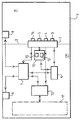
- Such an air conditioning installation being perfectly known to those skilled in the art, it is therefore unnecessary to describe it all the elements, as well as their functioning. It is nevertheless useful, for the following description, of specify that it is managed by a control device comprising at least input devices, an installation-interface, a module for calculating settings and a memory, and that a passenger housed in the passenger compartment H of a vehicle V equipped with such an installation can choose, at using these input devices, the internal temperature TCint, as well as generally the air conditioning flow and the MD air conditioning distribution mode.
- vehicle V includes an input box 1, generally housed in the dashboard 2 of the vehicle, and comprising a multiplicity of seizure bodies, such as for example impulse snaps such as digital keys.
- a first key 3 is provided in particular allowing enter (choose) the temperature inside the passenger compartment (TCint) and a second digital button 4 allowing, for example, to enter the air distribution mode MD in the same cabin.
- Internal temperature and mode distribution systems are called aerothermal parameters inside the passenger compartment, or more concise setpoint parameters.
- the input box 1 comprises also a button to start up the installation air conditioning 5.
- aerothermal setpoints which form a set
- aerothermal setpoints which form a set
- a calculation module 7 to which are connected at least two physical parameter sensors, including at least two temperature sensors 8 and 9 intended respectively to measure the temperature inside of the passenger compartment (Tint) and the temperature outside of this same cockpit (Text). These physical parameters detected form a game. Temperature sensors can be supplemented, for example, by a radiation sensor solar or by any other sensor known to the man of art, allowing the installation settings to be refined.
- the calculation can determine, thanks to programmed automatons that it includes, a set of installation settings allowing to satisfy the passenger-user as quickly as possible, which is preferably the driver.
- the calculation module 7 then addresses an installation-interface 10 the set of settings thus determined, so that the adjustable elements 11 of the installation operate according to these particular settings.
- the control device offers a mode of personalized operation, allowing either several vehicle users to each memorize a set of custom setpoint parameters, i.e. a single user to memorize, for example in a memory of programming 15, which can be the same as memory 6, multiple sets of custom setpoint parameters different.
- the invention provides a recognition module 12 capable of receiving input data from users, then, after recognition of these and interrogation of the programming memory 15 which in the illustrated example is part of the recognition module 12, to send to the calculation module 7 the set of parameters of custom setpoints stored in the programming memory 15, associated with the input data received, so that the calculation module determines the set of settings suitable for last set of physical parameters detected, and then the installation-interface 10 installs this set of settings.
- the recognition module 12 comprises an auxiliary memory 13 in which are stored the different input data associated with different users, or to different sets of parameters single user setpoint. So upon receipt of the input data provided by the user, the module recognition 12 just has to do a comparison between this received data and the data stored in the auxiliary memory 13. If this comparison indicates that there has identity between the input data received and one of the stored data, it just has to look in the programming memory 15 the set of setpoint parameters which is stored in correspondence of the data input received so as to send it to the calculation module 7.
- auxiliary memory 13 and the memory of programming 15 can constitute only one memory, which can itself be a part of a memory comprising memory 6.
- the calculation module, the recognition module, the different memories and possibly the user interface can be integrated into an electronic module specific, such as a micro-controller.
- an identification member 14 for example a digital key, allowing a passenger-user, in the event of activation, to provide the recognition module 12 the input data designating the set of user-defined setpoint parameters.
- the identification member 14 is produced under the shape of a digital key, capable, for example to issue a pulse, a first press (or actuation) the button is enough for the recognition module to identify a first user.
- a double actuation identifies a second user
- a triple actuation identifies a third user, etc.
- provision may be made for multiple identification bodies allowing respectively to identify the users, or the games of custom setpoint parameters different from a single user.
- the recognition module 12 when the recognition module 12 receives, by example, two impulses, it associates the user with them number 2. He just has to look in the memory of programming 15 the associated set of parameter parameters and send it to the calculation module 7.
- the recognition module 12 can be realized in the form of a speech synthesis module capable, by example, to recognize multiple voice frequencies.
- a speech synthesis module capable, by example, to recognize multiple voice frequencies.
- said recognition module 12 can memorize in memory auxiliary 13 the different voice frequencies of each user as a voice message.
- the voice message forms the data entry.
- the recognition module 12 may include gripping devices allowing a passenger-user to dial an alphanumeric personal code forming the input data, to which corresponds a set of personalized setpoint parameters stored in the programming memory 15.
- gripping devices allowing a passenger-user to dial an alphanumeric personal code forming the input data, to which corresponds a set of personalized setpoint parameters stored in the programming memory 15.
- a memorization step each user's alphanumeric codes must be performed.
- the recognition module 12 upon receipt of the user's PIN, the recognition module 12 performs a comparison with the codes stored in its auxiliary memory 13, and in deduces, in the event of identity, the set of setpoint parameters corresponding to the code entered. It is clear that in this variant each user code must allow setting vehicle operation.
- the module recognition 12 can be achieved in the form of a ignition key form recognition module vehicle. This embodiment requires that the different vehicle operating keys present minimal differences detectable by the module recognition 12, for example using contactors installed inside the ignition key housing.
- These sets of default setpoint parameters can be identical, or different.
- each game custom setpoint parameters stored by operating at least one of the aerothermal parameters input keys setpoint There are two ways to do this. be considered.
- the settings in during installation correspond to a set of parameters custom locker selected, and the user modifies one of the set aerothermal parameters, the or the changed setpoint parameters come automatically replace the old game setting (s) custom setpoint parameters concerned.
- one can provide a validation module with a validation key including actuation makes it possible to replace in a set of parameters, stored in the programming memory 15, and previously chosen by a recognized user, one or several aerothermal parameters having been the subject of a entry-modification.
- the validation module may include a timer module arranged for count down a time period of selected duration as soon as a entry and modification of a setpoint parameter is carried out, and to authorize replacement in a set of setpoint parameters, stored in the programming memory 15, and previously chosen by a recognized user, of one or more aerothermal parameters having the subject of a seizure-modification, if no other seizure-modification is performed during this chosen period.
- the number of sensors can be significantly higher to that illustrated in the single figure.
- the bodies for entering aerothermal parameters instructions and installation start-up may be different from the digital keys described above. These may include buttons rotary, or linear movement sliders.
Landscapes
- Physics & Mathematics (AREA)
- Thermal Sciences (AREA)
- Engineering & Computer Science (AREA)
- Mechanical Engineering (AREA)
- Air-Conditioning For Vehicles (AREA)
- Lock And Its Accessories (AREA)
Abstract
Description
- des moyens permettant de détecter des jeux de paramètres physiques, parmi lesquels au moins des températures à l'intérieur et à l'extérieur de l'habitacle (mais il pourra également s'agir du rayonnement solaire),
- des moyens de saisie permettant à un passager de requérir le placement de l'installation dans un mode de fonctionnement automatique et de sélectionner des jeux de paramètres aérothermiques de consigne à l'intérieur de l'habitacle, comme par exemple la température interne,
- un module de calcul capable de déterminer, à partir d'un jeu de paramètres physiques détectés et d'un jeu de paramètres de consigne, un jeu de réglages de l'installation, dits "en cours", et
- une interface-installation pour instaurer un tel jeu de réglages.
Claims (14)
- Dispositif de commande d'une installation de climatisation d'un véhicule automobile, du type comprenant :des moyens de détection (8,9) de jeux de paramètres physiques (Tint,Text),des moyens de saisie (3,4) permettant à un passager de sélectionner des jeux de paramètres aérothermiques de consigne à l'intérieur de l'habitacle (TCint),un module de calcul propre à déterminer, à partir d'un jeu de paramètres physiques détectés (Tint,Text) et d'un jeu de paramètres de consigne (TCint), un jeu de réglages de l'installation, etune interface-installation (10) pour instaurer un tel jeu de réglages,
caractérisé en ce qu'il comprend :une mémoire de programmation (15) propre à stocker au moins deux jeux de paramètres de consigne en correspondance chacun d'une donnée dite d'entrée, etdes moyens de reconnaissance (12) propres, à réception d'une donnée d'entrée fournie par un passager du véhicule, à fournir au module de calcul (7) le jeu de paramètres de consigne stocké dans ladite mémoire de programmation en correspondance de la donnée d'entrée reçue, de sorte que l'installation fonctionne selon un jeu de réglages correspondant au jeu de paramètres de consigne fourni et au jeu de paramètres physiques détectés en cours (Tint,Text). - Dispositif selon la revendication 1, caractérisé en ce que les jeux de paramètres aérothermiques de consigne comprennent au moins la température (TCint) à l'intérieur de l'habitacle (H).
- Dispositif selon la revendication 2, caractérisé en ce que les jeux de paramètres aérothermiques de consigne comprennent au moins la température (TCint) et le mode de distribution d'air (MD) à l'intérieur de l'habitacle (H).
- Dispositif selon l'une des revendications 1 à 3, caractérisé en ce que les moyens de reconnaissance (12) comprennent au moins un organe de saisie-identification (14), de type touche de contact, propre à être actionné par un passager souhaitant obtenir dans l'habitacle l'un des jeux de paramètres de consigne mémorisés dans la mémoire de programmation (15), ledit actionnement formant donnée d'entrée.
- Dispositif selon la revendication 4, caractérisé en ce que l'organe de saisie (14) est du type à émission d'impulsion par pression, chaque jeu de paramètres personnalisés correspondant à un nombre de pressions successives prédéfinies.
- Dispositif selon la revendication 4, caractérisé en ce que les moyens de reconnaissance (12) comprennent une multiplicité d'organes de saisie-identification personnalisés, de type touche de contact, associés chacun à un jeu de paramètres personnalisés et propres à être actionnés par un passager souhaitant obtenir dans l'habitacle l'un des jeux de paramètres de consigne stockés, ledit actionnement formant donnée d'entrée.
- Dispositif selon l'une des revendications 1 à 3, caractérisé en ce que les moyens de reconnaissance (12) comprennent un module de détection propre à reconnaítre plusieurs formes de clés différentes associées chacune à un jeu de paramètres stocké, lesdites formes formant message d'entrée.
- Dispositif selon l'une des revendications 1 et 2, caractérisé en ce que les moyens de reconnaissance (12) comprennent un module de détection de fréquences vocales propre à mémoriser un message vocal selon au moins deux fréquences vocales différentes de passagers, associées chacune à un jeu de paramètres de consigne stocké, et à comparer audit message vocal stocké tout message vocal détecté de façon à déterminer si ledit message détecté a été émis selon l'une des fréquences vocales mémorisées et est identique audit message stocké, un tel message vocal détecté formant donnée d'entrée.
- Dispositif selon l'une des revendications 1 à 3, caractérisé en ce que les moyens de reconnaissance (12) comprennent un module de détection de codes comprenant des organes de saisie pour permettre la mémorisation d'au moins deux codes différents, associés chacun à un jeu de paramètres stocké, et la saisie par un passager d'un code personnel, et déterminer si ledit code saisi est identique à l'un desdits codes stockés, un tel code saisi formant message d'entrée.
- Dispositif selon l'une des revendications 4 à 9, caractérisé en ce qu'il est agencé pour, en cas de reconnaissance d'une donnée d'entrée désignant un jeu de paramètres stocké suivie d'une saisie-modification de l'un au moins des paramètres aérothermiques de consigne, remplacer dans ledit jeu de paramètres stocké désigné le(s)dit(s) paramètre(s) aérothermique(s) ayant fait l'objet de la modification-saisie.
- Dispositif selon l'une des revendications 4 à 9, caractérisé en ce qu'il comprend des moyens de validation pour permettre, après reconnaissance d'une donnée d'entrée désignant un jeu de paramètres personnalisés suivie d'une saisie-modification de l'un au moins des paramètres aérothermiques de consigne, le remplacement dans ledit jeu de paramètres stocké désigné dudit (ou desdits) paramètre(s) aérothermique(s) ayant fait l'objet de la modification-saisie.
- Dispositif selon la revendication 11, caractérisé en ce que les moyens de validation comprennent une touche de validation destiné, en cas d'actionnement, à provoquer ledit remplacement.
- Dispositif selon la revendication 11, caractérisé en ce que les moyens de validation comprennent des moyens de temporisation agencés pour décompter une période temporelle choisie à chaque saisie-modification d'un paramètre de consigne, et propres à autoriser ledit remplacement si aucune autre saisie-modification n'est effectuée durant ladite période choisie.
- Dispositif selon l'une des revendications précédentes, caractérisé en ce qu'avant une première mise en fonctionnement de l'installation, la mémoire de programmation (15) stocke des jeux de réglages dits "par défaut", en nombre égal au nombre de jeux de consigne pouvant être stockés, et destinés à être remplacés respectivement par des jeux de paramètres de consigne choisis sélectivement par le(s) passager(s).
Applications Claiming Priority (2)
| Application Number | Priority Date | Filing Date | Title |
|---|---|---|---|
| FR9712611A FR2769545B1 (fr) | 1997-10-09 | 1997-10-09 | Dispositif de commande d'installation de climatisation d'un vehicule automobile, a reglages personnalises |
| FR9712611 | 1997-10-09 |
Publications (2)
| Publication Number | Publication Date |
|---|---|
| EP0908338A1 true EP0908338A1 (fr) | 1999-04-14 |
| EP0908338B1 EP0908338B1 (fr) | 2003-03-26 |
Family
ID=9512022
Family Applications (1)
| Application Number | Title | Priority Date | Filing Date |
|---|---|---|---|
| EP19980118845 Expired - Lifetime EP0908338B1 (fr) | 1997-10-09 | 1998-10-06 | Dispositif de commande d'installation de climatisation d'un véhicule automobile,à réglages personnalisés |
Country Status (3)
| Country | Link |
|---|---|
| EP (1) | EP0908338B1 (fr) |
| DE (1) | DE69812525T2 (fr) |
| FR (1) | FR2769545B1 (fr) |
Cited By (4)
| Publication number | Priority date | Publication date | Assignee | Title |
|---|---|---|---|---|
| GB2361074A (en) * | 2000-04-08 | 2001-10-10 | Llanelli Radiators Ltd | Control arrangement for a climate control system |
| WO2002078989A1 (fr) * | 2001-03-31 | 2002-10-10 | Daimlerchrysler Ag | Unite de commande equipee d'au moins un element de commande |
| WO2013093542A1 (fr) * | 2011-12-20 | 2013-06-27 | Renault Trucks | Système et procédé de commande thermique pour une cabine d'un véhicule |
| WO2015018679A1 (fr) * | 2013-08-09 | 2015-02-12 | Dr. Schneider Kunststoffwerke Gmbh | Système présentant une unité de commande |
Families Citing this family (4)
| Publication number | Priority date | Publication date | Assignee | Title |
|---|---|---|---|---|
| US7962441B2 (en) | 2006-09-22 | 2011-06-14 | Denso Corporation | Air conditioner for vehicle and controlling method thereof |
| JP4360409B2 (ja) | 2007-02-13 | 2009-11-11 | 株式会社デンソー | 車両用空調装置、車両用空調装置の制御方法および制御装置 |
| JP4990115B2 (ja) | 2007-12-06 | 2012-08-01 | 株式会社デンソー | 位置範囲設定装置、移動物体搭載装置の制御方法および制御装置、ならびに車両用空調装置の制御方法および制御装置 |
| DE102010062436A1 (de) * | 2010-12-06 | 2012-06-06 | Behr Gmbh & Co. Kg | Verfahren zum kraftstoffeffizienten Betrieb einer Klimaanlage |
Citations (5)
| Publication number | Priority date | Publication date | Assignee | Title |
|---|---|---|---|---|
| US4358050A (en) * | 1979-06-22 | 1982-11-09 | Nippondenso Co., Ltd. | Air conditioner control method and apparatus |
| US4448035A (en) * | 1981-04-20 | 1984-05-15 | Toyota Jidosha Kogyo Kabushiki Kaisha | Air conditioner control system |
| DE3817495A1 (de) * | 1988-05-21 | 1989-11-30 | Bayerische Motoren Werke Ag | Kraftwagen mit benutzerspezifischen einstellbaren elektronisch steuerbaren funktionen |
| EP0770524A1 (fr) * | 1995-10-26 | 1997-05-02 | FIAT AUTO S.p.A. | Système pour déplacer automatiquement dans des positions prédéterminées des dispositifs motorisés ajustables présents dans un véhicule à moteur |
| EP0781672A1 (fr) * | 1995-12-27 | 1997-07-02 | Valeo Climatisation | Dipositif de commande électronique d'installation de chauffage, ventilation et/ou climatisation d'un véhicule automobile |
-
1997
- 1997-10-09 FR FR9712611A patent/FR2769545B1/fr not_active Expired - Lifetime
-
1998
- 1998-10-06 EP EP19980118845 patent/EP0908338B1/fr not_active Expired - Lifetime
- 1998-10-06 DE DE1998612525 patent/DE69812525T2/de not_active Expired - Lifetime
Patent Citations (5)
| Publication number | Priority date | Publication date | Assignee | Title |
|---|---|---|---|---|
| US4358050A (en) * | 1979-06-22 | 1982-11-09 | Nippondenso Co., Ltd. | Air conditioner control method and apparatus |
| US4448035A (en) * | 1981-04-20 | 1984-05-15 | Toyota Jidosha Kogyo Kabushiki Kaisha | Air conditioner control system |
| DE3817495A1 (de) * | 1988-05-21 | 1989-11-30 | Bayerische Motoren Werke Ag | Kraftwagen mit benutzerspezifischen einstellbaren elektronisch steuerbaren funktionen |
| EP0770524A1 (fr) * | 1995-10-26 | 1997-05-02 | FIAT AUTO S.p.A. | Système pour déplacer automatiquement dans des positions prédéterminées des dispositifs motorisés ajustables présents dans un véhicule à moteur |
| EP0781672A1 (fr) * | 1995-12-27 | 1997-07-02 | Valeo Climatisation | Dipositif de commande électronique d'installation de chauffage, ventilation et/ou climatisation d'un véhicule automobile |
Cited By (8)
| Publication number | Priority date | Publication date | Assignee | Title |
|---|---|---|---|---|
| GB2361074A (en) * | 2000-04-08 | 2001-10-10 | Llanelli Radiators Ltd | Control arrangement for a climate control system |
| GB2361074B (en) * | 2000-04-08 | 2004-06-09 | Llanelli Radiators Ltd | Climate control system and a control arrangement therefor |
| WO2002078989A1 (fr) * | 2001-03-31 | 2002-10-10 | Daimlerchrysler Ag | Unite de commande equipee d'au moins un element de commande |
| WO2013093542A1 (fr) * | 2011-12-20 | 2013-06-27 | Renault Trucks | Système et procédé de commande thermique pour une cabine d'un véhicule |
| WO2015018679A1 (fr) * | 2013-08-09 | 2015-02-12 | Dr. Schneider Kunststoffwerke Gmbh | Système présentant une unité de commande |
| CN106414128A (zh) * | 2013-08-09 | 2017-02-15 | 施耐德博士塑料工厂有限公司 | 包括控制单元的系统 |
| US9604523B2 (en) | 2013-08-09 | 2017-03-28 | Dr. Schneider Kunststoffwerke Gmbh | System having a control unit |
| CN106414128B (zh) * | 2013-08-09 | 2018-11-20 | 施耐德博士塑料工厂有限公司 | 包括控制单元的系统 |
Also Published As
| Publication number | Publication date |
|---|---|
| DE69812525D1 (de) | 2003-04-30 |
| FR2769545A1 (fr) | 1999-04-16 |
| FR2769545B1 (fr) | 1999-12-24 |
| EP0908338B1 (fr) | 2003-03-26 |
| DE69812525T2 (de) | 2003-08-14 |
Similar Documents
| Publication | Publication Date | Title |
|---|---|---|
| EP0781672B1 (fr) | Dipositif de commande électronique d'installation de chauffage, ventilation et/ou climatisation d'un véhicule automobile | |
| US9002586B2 (en) | Integrated biometric switch | |
| EP1293403A2 (fr) | Système de démarrage d'un véhicule automobile utilisant la reconnaissance d'empreinte digitale | |
| US5812067A (en) | System for recognizing authorization to use a vehicle | |
| CN105083167B (zh) | 用于使用眼睛盯视数据控制汽车的系统和方法 | |
| EP2176770B1 (fr) | Procede de commande d'un systeme multimedia sur un vehicule dispositif pour sa mise en oeuvre | |
| US8482534B2 (en) | Programmable tactile touch screen displays and man-machine interfaces for improved vehicle instrumentation and telematics | |
| US8576199B1 (en) | Computer control systems | |
| US20060273880A1 (en) | Biological authentication system | |
| US20110032203A1 (en) | Human interfaces for vehicles, homes, and other applications | |
| US20090273563A1 (en) | Programmable tactile touch screen displays and man-machine interfaces for improved vehicle instrumentation and telematics | |
| EP0908338B1 (fr) | Dispositif de commande d'installation de climatisation d'un véhicule automobile,à réglages personnalisés | |
| GB9600801D0 (en) | Electrical control system for vehicle options | |
| JP2011517143A (ja) | 車両システムと相互作用する双方向携帯型電子装置 | |
| EP3670237A1 (fr) | Système de commande d'un dispositif monté dans un véhicule | |
| JP2004317585A (ja) | 蓋付モニタ | |
| EP1148525A1 (fr) | Dispositif de commande de fonction comprenant au moins un sélecteur | |
| CN109895718A (zh) | 车辆及其控制方法 | |
| EP0908339B1 (fr) | Dispositif de commande d'installation de climatisation d'un véhicule automobile, à personnalisation de réglages par auto-apprentissage | |
| JP2004155410A (ja) | スマート所有者マニュアル | |
| EP0932894B1 (fr) | Console de commande | |
| FR2867424A1 (fr) | Procede de pilotage d'odorisation d'air par diffusion de fragrance pour dispositif d'odorisation de vehicule automobile | |
| FR2738588A1 (fr) | Procede de reinitialisation d'une installation de verrouillage centralise d'un vehicule automobile avec un dispositif de commande a distance | |
| FR3136569A1 (fr) | Dispositif d'interface pour véhicule automobile, et véhicule automobile correspondant | |
| FR2678996A1 (fr) | Dispositif electronique de commande de boite de vitesses automatique. |
Legal Events
| Date | Code | Title | Description |
|---|---|---|---|
| PUAI | Public reference made under article 153(3) epc to a published international application that has entered the european phase |
Free format text: ORIGINAL CODE: 0009012 |
|
| AK | Designated contracting states |
Kind code of ref document: A1 Designated state(s): DE |
|
| AX | Request for extension of the european patent |
Free format text: AL;LT;LV;MK;RO;SI |
|
| 17P | Request for examination filed |
Effective date: 19991012 |
|
| AKX | Designation fees paid |
Free format text: DE |
|
| 17Q | First examination report despatched |
Effective date: 20010417 |
|
| GRAG | Despatch of communication of intention to grant |
Free format text: ORIGINAL CODE: EPIDOS AGRA |
|
| GRAG | Despatch of communication of intention to grant |
Free format text: ORIGINAL CODE: EPIDOS AGRA |
|
| GRAH | Despatch of communication of intention to grant a patent |
Free format text: ORIGINAL CODE: EPIDOS IGRA |
|
| GRAH | Despatch of communication of intention to grant a patent |
Free format text: ORIGINAL CODE: EPIDOS IGRA |
|
| GRAA | (expected) grant |
Free format text: ORIGINAL CODE: 0009210 |
|
| AK | Designated contracting states |
Designated state(s): DE |
|
| REF | Corresponds to: |
Ref document number: 69812525 Country of ref document: DE Date of ref document: 20030430 Kind code of ref document: P |
|
| PLBE | No opposition filed within time limit |
Free format text: ORIGINAL CODE: 0009261 |
|
| STAA | Information on the status of an ep patent application or granted ep patent |
Free format text: STATUS: NO OPPOSITION FILED WITHIN TIME LIMIT |
|
| 26N | No opposition filed |
Effective date: 20031230 |
|
| PGFP | Annual fee paid to national office [announced via postgrant information from national office to epo] |
Ref country code: DE Payment date: 20161013 Year of fee payment: 19 |
|
| REG | Reference to a national code |
Ref country code: DE Ref legal event code: R119 Ref document number: 69812525 Country of ref document: DE |
|
| PG25 | Lapsed in a contracting state [announced via postgrant information from national office to epo] |
Ref country code: DE Free format text: LAPSE BECAUSE OF NON-PAYMENT OF DUE FEES Effective date: 20180501 |