EP0910199A2 - Méthode de rappel - Google Patents
Méthode de rappel Download PDFInfo
- Publication number
- EP0910199A2 EP0910199A2 EP98250359A EP98250359A EP0910199A2 EP 0910199 A2 EP0910199 A2 EP 0910199A2 EP 98250359 A EP98250359 A EP 98250359A EP 98250359 A EP98250359 A EP 98250359A EP 0910199 A2 EP0910199 A2 EP 0910199A2
- Authority
- EP
- European Patent Office
- Prior art keywords
- dial
- end system
- connection
- call
- called
- Prior art date
- Legal status (The legal status is an assumption and is not a legal conclusion. Google has not performed a legal analysis and makes no representation as to the accuracy of the status listed.)
- Granted
Links
- 238000000034 method Methods 0.000 title claims abstract description 35
- 238000004891 communication Methods 0.000 claims description 27
- 230000011664 signaling Effects 0.000 claims description 20
- 238000011144 upstream manufacturing Methods 0.000 claims description 4
- 230000008878 coupling Effects 0.000 claims description 3
- 238000010168 coupling process Methods 0.000 claims description 3
- 238000005859 coupling reaction Methods 0.000 claims description 3
- 238000001514 detection method Methods 0.000 claims description 3
- 230000004044 response Effects 0.000 abstract description 2
- 230000005540 biological transmission Effects 0.000 description 2
- 230000008569 process Effects 0.000 description 2
- 230000008901 benefit Effects 0.000 description 1
- 230000009977 dual effect Effects 0.000 description 1
- 230000002349 favourable effect Effects 0.000 description 1
- 230000006870 function Effects 0.000 description 1
- 238000012216 screening Methods 0.000 description 1
- 230000007704 transition Effects 0.000 description 1
Images

Classifications
-
- H—ELECTRICITY
- H04—ELECTRIC COMMUNICATION TECHNIQUE
- H04M—TELEPHONIC COMMUNICATION
- H04M15/00—Arrangements for metering, time-control or time indication ; Metering, charging or billing arrangements for voice wireline or wireless communications, e.g. VoIP
- H04M15/80—Rating or billing plans; Tariff determination aspects
- H04M15/8044—Least cost routing
-
- H—ELECTRICITY
- H04—ELECTRIC COMMUNICATION TECHNIQUE
- H04M—TELEPHONIC COMMUNICATION
- H04M15/00—Arrangements for metering, time-control or time indication ; Metering, charging or billing arrangements for voice wireline or wireless communications, e.g. VoIP
-
- H—ELECTRICITY
- H04—ELECTRIC COMMUNICATION TECHNIQUE
- H04M—TELEPHONIC COMMUNICATION
- H04M3/00—Automatic or semi-automatic exchanges
- H04M3/42—Systems providing special services or facilities to subscribers
- H04M3/48—Arrangements for recalling a calling subscriber when the wanted subscriber ceases to be busy
-
- H—ELECTRICITY
- H04—ELECTRIC COMMUNICATION TECHNIQUE
- H04M—TELEPHONIC COMMUNICATION
- H04M2215/00—Metering arrangements; Time controlling arrangements; Time indicating arrangements
- H04M2215/42—Least cost routing, i.e. provision for selecting the lowest cost tariff
-
- H—ELECTRICITY
- H04—ELECTRIC COMMUNICATION TECHNIQUE
- H04M—TELEPHONIC COMMUNICATION
- H04M2215/00—Metering arrangements; Time controlling arrangements; Time indicating arrangements
- H04M2215/74—Rating aspects, e.g. rating parameters or tariff determination apects
- H04M2215/745—Least cost routing, e.g. Automatic or manual, call by call or by preselection
-
- H—ELECTRICITY
- H04—ELECTRIC COMMUNICATION TECHNIQUE
- H04Q—SELECTING
- H04Q2213/00—Indexing scheme relating to selecting arrangements in general and for multiplex systems
- H04Q2213/1307—Call setup
-
- H—ELECTRICITY
- H04—ELECTRIC COMMUNICATION TECHNIQUE
- H04Q—SELECTING
- H04Q2213/00—Indexing scheme relating to selecting arrangements in general and for multiplex systems
- H04Q2213/13093—Personal computer, PC
-
- H—ELECTRICITY
- H04—ELECTRIC COMMUNICATION TECHNIQUE
- H04Q—SELECTING
- H04Q2213/00—Indexing scheme relating to selecting arrangements in general and for multiplex systems
- H04Q2213/13097—Numbering, addressing
-
- H—ELECTRICITY
- H04—ELECTRIC COMMUNICATION TECHNIQUE
- H04Q—SELECTING
- H04Q2213/00—Indexing scheme relating to selecting arrangements in general and for multiplex systems
- H04Q2213/13138—Least cost routing, LCR
-
- H—ELECTRICITY
- H04—ELECTRIC COMMUNICATION TECHNIQUE
- H04Q—SELECTING
- H04Q2213/00—Indexing scheme relating to selecting arrangements in general and for multiplex systems
- H04Q2213/13152—Callback
-
- H—ELECTRICITY
- H04—ELECTRIC COMMUNICATION TECHNIQUE
- H04Q—SELECTING
- H04Q2213/00—Indexing scheme relating to selecting arrangements in general and for multiplex systems
- H04Q2213/13173—Busy signals
-
- H—ELECTRICITY
- H04—ELECTRIC COMMUNICATION TECHNIQUE
- H04Q—SELECTING
- H04Q2213/00—Indexing scheme relating to selecting arrangements in general and for multiplex systems
- H04Q2213/13176—Common channel signaling, CCS7
-
- H—ELECTRICITY
- H04—ELECTRIC COMMUNICATION TECHNIQUE
- H04Q—SELECTING
- H04Q2213/00—Indexing scheme relating to selecting arrangements in general and for multiplex systems
- H04Q2213/13178—Control signals
-
- H—ELECTRICITY
- H04—ELECTRIC COMMUNICATION TECHNIQUE
- H04Q—SELECTING
- H04Q2213/00—Indexing scheme relating to selecting arrangements in general and for multiplex systems
- H04Q2213/13204—Protocols
-
- H—ELECTRICITY
- H04—ELECTRIC COMMUNICATION TECHNIQUE
- H04Q—SELECTING
- H04Q2213/00—Indexing scheme relating to selecting arrangements in general and for multiplex systems
- H04Q2213/13209—ISDN
Definitions
- the invention relates to a callback method according to the Preamble of claim 1 and a dial-in system in one Communication network and a least cost routing system Execution of the procedure.
- Procedures are referred to as callback procedures to establish a connection between a calling party Telecommunication system and a called telecommunication system first a computer is selected that one Low price structure communications network, and through this computer a call back to the calling telecommunication system he follows.
- the advantage is that the Cost of telecommunication connection based the low-cost tariffs of the communication network, to which the selected computer belongs.
- Transatlantic telephone traffic has callback procedures gained considerable economic importance. she are generally applicable whenever the Price structures of interconnected telecommunications networks differentiate.
- Callback methods in which the calling Telecommunication device a "lock call" to a dial-up system a telecommunications network with a favorable price structure, for example, a computer located in the United States. After ringing once or twice, the caller must answer the Replace the handset. In response to this call, there is a Call back from the dial-in system to the calling party. If the caller receives the call upon callback he the dial tone of the telecommunication network, which the dialing system listened to. The calling subscriber can now Number of the called subscriber in the usual way Enter, whereupon a connection to the called subscriber is built up. The cost of the connection is calculated based on the low-cost tariffs of the telecommunications network, to which the dial-in system belongs.
- a major disadvantage of this callback process lies in that a telephone connection twice in succession must be set up, first to the dial-up system and after call back to the called end user. This is tedious and takes time.
- Another disadvantage of the known The procedure is that even in the event that the called Telecommunication end system can not accept a connection (Busy case), costs arise for the calling subscriber, namely the cost of recalling the dial-up system.
- the least-cost routers are looking for between the tariffs of the different callback providers automatically the cheapest dial-up connection out.
- the calling subscriber can dial the number of the called party immediately. Establishing the connection to the dial-in system and recording of the call back through the dial-in system is carried out by the least-cost router then automatically by.
- callback methods are known in which the Number of the called subscriber to the dial-up system dialed (Callback computer) already when the Connection request is communicated.
- the corresponding Signaling information is used as an in-band signal using DTMF (Dual Tone Multi Frequency). Since the Information regarding the phone number of the called end system the dial-in system can already be used establish a connection to the called end system after the callback. When calling back to the calling end system, the desired one is The connection is then immediately established.
- DTMF Dual Tone Multi Frequency
- This callback method has the disadvantage that already a paid connection to the dial-in system must be established before the DTMF inband signals are sent can be. There are therefore costs if the called end system cannot accept a connection (busy case). The speed of voting is also relatively slow.
- the invention has for its object a callback method as well as a dial-in system and a least-cost routing system to carry out the callback procedure to make a quick connection enable and in the case of busy no costs to the calling Let participants arise.
- this object is achieved by a callback method with the features of claim 1, a dial-in system with the features of claim 11 and a least cost routing system solved with the features of claim 13.
- Advantageous and preferred embodiments of the invention are specified in the subclaims.
- the dial-in system the phone number when the connection request is displayed of the called end system.
- the corresponding signaling information as an out-of-band signal transferred from the calling end system to the dial-in system.
- out-of-band signaling for transmission the phone number of the dial-in system and the phone number of the called end system means that the signaling data transmitted on its own signaling channel which is independent of the channel for the transmission the actual information data.
- An example for an out-of-band signaling provides an ISDN connection in which the signaling data on the D channel and the information data is transmitted on a B channel.
- calling end system and the called end system via a ISDN connection connected.
- the phone number of the called end system is together with the phone number of the dial-in system in the ISDN D channel to the dial-in system transfer.
- the number of the called end system is preferred into the signaling signal sent to the dial-up system as follows "embedded": one from the calling end system D channel SETUP protocol data element sent becomes such configured that the ISDN number of the Dial-in system and as the destination sub-address the ISDN number of the called end system is set. Then that will SETUP protocol data element corresponding to its destination address through one or more exchanges of the communication network, to which the calling end system belongs, to which Dial-up system forwarded to the second communication network. In the dial-up system of the second communication network then the previous destination subaddress as the new destination address set, whereupon a signaling from the dial-in system to called end system.
- the calling end system builds the Connection to the dial-up system, the dial-up system picks up with the phone number of the called end system as the origin address a call back to the calling end system and that calling end system accepts this recall. The connection is then made.
- the called end system If the called end system is "busy" has the corresponding signaling information also via the dial-in system to the calling end system forwarded, and the calling end system builds the connection to the dial-up system. This becomes the busy case recognized without a connection being switched through and thus a chargeable event would be created.
- connection to the called subscriber is built up directly, which means that it is despite the "Detour" via a call back to the dial-up system, only one dialing process on the part of the calling subscriber for setting up the Connection to the called subscriber required (direct line access).
- the complete call is made when the call is made Number passed on.
- the calling is End system from a telecommunications unit, in particular a PABX, a telephone or a PC, and a least cost routing system upstream of the telecommunications unit (in the following also as a least cost router or LCR system), which establishes the connection controls and dismantles.
- a telecommunications unit in particular a PABX, a telephone or a PC
- a least cost routing system upstream of the telecommunications unit in the following also as a least cost router or LCR system
- the LCR system configures the SETUP protocol data element so that the number of the dial-in system as Destination address and the phone number of the calling end system as Target subaddress is set.
- a suitable one, that is for the dialed number becomes an inexpensive dial-up system automatically based on an internal table from the LCR system selected. The end participant only needs the desired one To dial the number.
- the least cost routing system automatically adds a suitable number to this number Dial-in system added, both numbers as an out-of-band signal be transferred to the dial-in system.
- the LCR system contains an ALERT log data element or a CALL-PROCEEDING protocol data item from Dial-in system and this indicates that the called end system is ready to accept the call, that builds LCR system disconnects from the dial-in system without using it to inform the connected telecommunications terminal.
- the internal connection to the TC terminal is kept.
- the LCR system accepts the call back of the dial-in system the call back and couples it with the internally held Connection to the telecommunications terminal. The desired Connection is established.
- An advantageous embodiment of the invention provides that a SETUP protocol data element is already sent out before the full ISDN number of the called end system, which is in the destination subaddress is included.
- the missing parts of the Destination subaddress are then identified by one or more Transfer INFO protocol data elements.
- the dial-in system according to the invention in a communication network has a) registration means for recording the number of a called end system in one of a calling end system out-of-band signal sent to the dial-in system, b) Lanyard for establishing and clearing the connection to the called end system based on that of the calling End system as an out-of-band signal number and c) Callback means for carrying out a callback to the calling end system, the call number of the called End system represents the origin address of the callback.
- the least cost routing system has a) Means for adding the number of a dial-up system of a communication network into an outband signal, which the Contains the phone number of a called end system, b) means for Establishing a connection to the dial-in system, the phone number of the called end system in the outband signal to the dial-in system is transferred, c) means of dismantling a established connection to the dial-up system while keeping the corresponding internal connection to the connected TK terminal and d) means for accepting a callback on the part of of the dial-in system and for coupling the callback with the internally held connection to the TC terminal.
- the detection means, the connection means, are preferred and the call-back means of the dial-in system and the means to add the phone number, the means to build a Connection, the means to clear a connection and the means of accepting a recall of least cost routing System designed as software that leads to the respective functions protocol data elements such as the ISDN Log data elements SETUP, ALERT, CALL PROCEEDING, CONNECT, RELEASE and DISCONNECT.
- protocol data elements such as the ISDN Log data elements SETUP, ALERT, CALL PROCEEDING, CONNECT, RELEASE and DISCONNECT.
- the dial-in system according to the invention and the one according to the invention Least-cost routing systems are, for example, personal computers with a PBX card and suitable software.
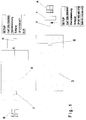
- Figure 1 shows an ISDN end system A, such as an ISDN telephone or a PC with an ISDN card, from which via a first telecommunications network 3 and a second telecommunications network 4 a connection to an ISDN end system B is established shall be.
- an ISDN end system A such as an ISDN telephone or a PC with an ISDN card
- a dial-in system 5 (hereinafter also referred to as dial-in) establishes a gateway system between the first Network 3 and the second network 4.
- dial-in serves Dialing system 5 as a recall computer, as explained below will be.
- Both networks 3, 4 have a plurality of ISDN exchanges or network nodes, of which A switching center 6, 7 is shown as an example is. It should be noted that between the Network 4 and the B-subscriber also other communication networks can be interposed or a transition back to network 3 can be done.
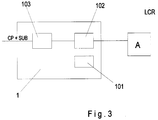
- a least cost router 1 (LCR system) is assigned to end system A, which is a connection establishment and disconnection of the end system A controls. If necessary, there is also a telecommunications system (not shown) provided to the End system A is initially connected. The least cost router 1 is then between the telecommunications system and the associated switching center. Such arrangements are known per se to the person skilled in the art.
- the least-cost router has an internal one Memory 101, an allocation unit 102 and a configuration unit 103 on. These units are functional too understand and can be trained as hardware or software be.
- the dial-in numbers are different Communication networks (especially proprietary Networks or public networks of another state) and Information about the respective price structure of the individual Networks included.
- the least-cost router 1 selects in the allocation unit 102 automatically a dial-in system 5 in a communication network 4, which is the cheapest connection to the end system B enables.
- a standard ISDN SETUP protocol data element like this configures that in the SETUP log data item as Destination address is not, as provided in the ISDN standard, the ISDN number of the called end system B is specified, but instead the number of the dial-in system 5 in the communication network 4.
- the ISDN number of the called end system B on the other hand is in a target subaddress provided by default of the SETUP data element.
- the B-end subscriber dials the phone number in the usual way of the end system B to be called (step 201).
- the LCR system determines the call number by means of the memory 101 and the allocation unit 102 an inexpensive communication network and associated dial-in system (Step 202).
- the configuration unit 103 of the LCR system 1 then the SETUP log data element becomes such configures that the phone number of the dial-in as the destination address and the call number of the called B subscriber as the destination subaddress is set (step 203).
- a SETUP protocol data element already to the exchange 6 is sent out before the complete ISDN number of the called end system B is present. This is how a SETUP log data element transmitted as soon as the area or country code of the end system to be called. The ones that are still missing Parts of the ISDN number of the called B subscriber, that have to be added in the target subaddress SUB, are replaced by one or more INFO protocol data elements forwarded after sending the SETUP protocol data element.
- the associated switching center 6 of the network 3 directs the Connection request according to that in the destination address coded dial-in number of the communication network 4 to the Dial-up system 5 of the communication network 4 further (step 204).
- the dial-in system 5 provides a callback computer represents the signaling to the called end system B and when the called end system is ready for Accepting a call back to the calling end system A or which performs this upstream least-cost router 1.
- Signaling to the called end system B takes place in that in the incoming SETUP protocol data element the target address CP removed and the new target address CP previous sub-destination address SUB is set, which is the ISDN number of the called end system B (step 205).
- the corresponding changed SETUP protocol data element is from the dial-in system 5 via the network 4 to the end system B sent (step 206).
- the dial-in system 5 points to this Appropriate means on that as hardware or software can be trained.
- the origin address is CaP the telephone number 030-399 28 00.
- the destination address CP is in SETUP protocol data element the number 001-805-985-3708 of a dial-up system in the United States.
- the one to be called ISDN number 001-213-308-2477 of a US resident B subscriber is specified in the target subaddress SUB.
- the Switch 3 routes the incoming call to the dial-in system 5 with the number 001-805-985-3708.
- the dial-up system 5 is then the address of the destination CP End participant B, i.e. the number 001-213-308-2477 set, with the country code 011 omitted.
- the target subaddress SUB no longer contains any information.
- the called end system B If the called end system B is already ready to accept the call (Step 207), it sends an ALERT log data item dial-up system 5 (step 208). Alternatively, too be provided that a CALL PROCEEDING protocol data element is sent to the dial-in 5. This ALERT message is passed through transparently to the LCR system 1 by the dial-in (Step 209). The LCR system 1 then establishes the connection to dial-in 5 from (step 210) without this connected terminal A to be informed. The internal Connection to terminal A is therefore on hold.
- the dial-in system 5 now takes a call back LCR system 1 before (step 211).
- the callback points as Calling Party Number CaP no longer the original address of the A-participant, but now the origin address of the B participant.
- the origin address of the B participant (which is the same number as the called B subscriber) the dial-in system 5 from the previous SETUP data element known.
- CLIP Calling Party Identification Presentation
- the call back of the dial-in system 5 is accepted by the LCR system and with the corresponding internally held connection coupled to end system A (step 212). This is possible because the calling party number of the callback is the same is the call number called from terminal A.
- End system A For coupling the callback to the internally held connection End system A becomes first when the callback is received checks whether there is a connection on hold and a Matching the calling party number of the callback with the call number from terminal A is given. Provided if this is the case, the LCR system takes the connection through a CONNECT protocol data element. Then be the two connections are connected. The administration is now switched through and the transfer of User data take place on a B channel.
- step 207 If the called terminal B is not ready to accept the call (step 207) takes place between terminal B and the dial-in system 5 a disconnection by sending the data elements DISCONNECT, RELEASE and RELEASE COMPLETE (steps 213, 214, 215). These signals become transparent to the LCR system passed (step 216), so that this recognizes that the called subscriber cannot establish the connection. It the connection to the dial-in system is then dismantled (step 217). Possibly. becomes a through the LCR system Alternative routing performed (step 218). A call back through the dialing system is not done, so no fee Fact arises.
- the invention is not limited in its application the above-mentioned embodiments.
- Essential for the invention is only that the dial-in system the phone number when the connection request is displayed of the called end system as part of an out-of-band signaling is communicated.
Landscapes
- Engineering & Computer Science (AREA)
- Signal Processing (AREA)
- Computer Networks & Wireless Communication (AREA)
- Telephonic Communication Services (AREA)
- Data Exchanges In Wide-Area Networks (AREA)
- Agricultural Chemicals And Associated Chemicals (AREA)
Applications Claiming Priority (2)
| Application Number | Priority Date | Filing Date | Title |
|---|---|---|---|
| DE19746712 | 1997-10-15 | ||
| DE19746712A DE19746712C2 (de) | 1997-10-15 | 1997-10-15 | Callback-Verfahren |
Publications (3)
| Publication Number | Publication Date |
|---|---|
| EP0910199A2 true EP0910199A2 (fr) | 1999-04-21 |
| EP0910199A3 EP0910199A3 (fr) | 1999-08-04 |
| EP0910199B1 EP0910199B1 (fr) | 2005-07-20 |
Family
ID=7846316
Family Applications (1)
| Application Number | Title | Priority Date | Filing Date |
|---|---|---|---|
| EP98250359A Expired - Lifetime EP0910199B1 (fr) | 1997-10-15 | 1998-10-13 | Méthode de rappel |
Country Status (4)
| Country | Link |
|---|---|
| EP (1) | EP0910199B1 (fr) |
| AT (1) | ATE300149T1 (fr) |
| DE (2) | DE19746712C2 (fr) |
| ES (1) | ES2246063T3 (fr) |
Cited By (4)
| Publication number | Priority date | Publication date | Assignee | Title |
|---|---|---|---|---|
| EP0991291A3 (fr) * | 1998-10-01 | 2002-02-06 | Elsa AG | Méthode pour l'initialisation automatique d'une connexion rappel |
| WO2006002951A1 (fr) * | 2004-07-05 | 2006-01-12 | United Mobile Holding Limited | Procede de rappel automatique dans un systeme de communication |
| DE102005038051A1 (de) * | 2005-08-10 | 2007-02-22 | Drescher, Rüdiger | Verfahren zur Vermittlung von Telefonverbindungen |
| WO2010130463A1 (fr) * | 2009-05-14 | 2010-11-18 | Norbert Boehnke | Système de commutation à orientation des appels permettant d'optimiser la commutation d'un appel entre différents réseaux de télécommunication |
Families Citing this family (5)
| Publication number | Priority date | Publication date | Assignee | Title |
|---|---|---|---|---|
| DE10023868A1 (de) * | 2000-05-16 | 2001-11-22 | Siemens Ag | Kommunikationsanlage und Verfahren für einen Verbindungsaufbau |
| DE10133828B4 (de) * | 2001-04-24 | 2005-09-08 | Tenovis Gmbh & Co. Kg | Verfahren zur Herstellung einer Telekommunikationsverbindung und Telekommunikationssystem |
| DE10129424A1 (de) * | 2001-06-19 | 2003-01-09 | Tenovis Gmbh & Co Kg | Verfahren zum Aufbau einer Verbindung |
| DE10135041B4 (de) * | 2001-07-09 | 2015-06-18 | Deutsche Telekom Ag | System zur Weitervermittlung von Mobilfunkgesprächen über das Festnetz mittels ISDN-Rerouter |
| DE10209383A1 (de) * | 2002-03-02 | 2003-09-18 | Gude Michael | Kommunikations-Router |
Family Cites Families (12)
| Publication number | Priority date | Publication date | Assignee | Title |
|---|---|---|---|---|
| US5027387A (en) * | 1990-02-26 | 1991-06-25 | Moll Edward W | Reverse direction calling system |
| JP2956941B2 (ja) * | 1990-06-08 | 1999-10-04 | 株式会社東芝 | 構内電子交換機 |
| JP2770592B2 (ja) * | 1991-03-20 | 1998-07-02 | 日本電気株式会社 | 交換機 |
| US5422942A (en) * | 1992-09-14 | 1995-06-06 | Sony Corporation | Incoming call transfer terminal |
| CA2159383C (fr) * | 1994-12-22 | 1999-01-12 | Bruce Merrill Bales | Rappel automatique commande par un terminal telephonique |
| US5661790A (en) * | 1995-11-03 | 1997-08-26 | Ericsson, Inc. | Call back service for a regulatory restrictive area |
| US6853636B1 (en) * | 1995-11-17 | 2005-02-08 | Mci Communications Corporation | Reverse call origination via a packet switched network |
| WO1997024860A2 (fr) * | 1995-12-29 | 1997-07-10 | Mci Communications Corporation | Systeme et procede de rappel automatique international |
| FR2744312B1 (fr) * | 1996-01-31 | 1998-05-22 | Courvoisier Denis | Procede et dispositif de telecommunication |
| FI960501A0 (fi) * | 1996-02-02 | 1996-02-02 | Finland Telecom Oy | Foerfarande foer omkastning av uppkopplingsriktningen av samtal |
| DE19619521A1 (de) * | 1996-05-15 | 1997-11-27 | Deutsche Telekom Ag | Verfahren und Anordnung zum Aufbau von temporären Telekommunikationsverbindungen |
| DE19711112A1 (de) * | 1997-03-06 | 1998-09-10 | Teles Ag | Verfahren zum Aufbau einer Verbindung zwischen ISDN-Endsystemen und Telekommunikationseinrichtungen zur Durchführung des Verfahrens |
-
1997
- 1997-10-15 DE DE19746712A patent/DE19746712C2/de not_active Expired - Fee Related
-
1998
- 1998-10-13 AT AT98250359T patent/ATE300149T1/de active
- 1998-10-13 ES ES98250359T patent/ES2246063T3/es not_active Expired - Lifetime
- 1998-10-13 DE DE59812935T patent/DE59812935D1/de not_active Expired - Lifetime
- 1998-10-13 EP EP98250359A patent/EP0910199B1/fr not_active Expired - Lifetime
Cited By (8)
| Publication number | Priority date | Publication date | Assignee | Title |
|---|---|---|---|---|
| EP0991291A3 (fr) * | 1998-10-01 | 2002-02-06 | Elsa AG | Méthode pour l'initialisation automatique d'une connexion rappel |
| WO2006002951A1 (fr) * | 2004-07-05 | 2006-01-12 | United Mobile Holding Limited | Procede de rappel automatique dans un systeme de communication |
| DE102004032608A1 (de) * | 2004-07-05 | 2006-02-16 | United Mobile Holding Ltd. | Rückrufverfahren in einem Kommunikationssystem |
| EA009560B1 (ru) * | 2004-07-05 | 2008-02-28 | Юнайтед Мобайл Лихтенштейн Аг | Автоматический способ обратного вызова в коммуникационной системе |
| DE102005038051A1 (de) * | 2005-08-10 | 2007-02-22 | Drescher, Rüdiger | Verfahren zur Vermittlung von Telefonverbindungen |
| DE102005038051B4 (de) * | 2005-08-10 | 2007-07-05 | Drescher, Rüdiger | Verfahren zur Vermittlung von Telefonverbindungen |
| WO2010130463A1 (fr) * | 2009-05-14 | 2010-11-18 | Norbert Boehnke | Système de commutation à orientation des appels permettant d'optimiser la commutation d'un appel entre différents réseaux de télécommunication |
| US8532639B2 (en) | 2009-05-14 | 2013-09-10 | Trinity Holding Ag | Call correcting relay system for optimizing call relaying between different telecommunication networks |
Also Published As
| Publication number | Publication date |
|---|---|
| DE59812935D1 (de) | 2005-08-25 |
| DE19746712C2 (de) | 2002-02-07 |
| ATE300149T1 (de) | 2005-08-15 |
| ES2246063T3 (es) | 2006-02-01 |
| DE19746712A1 (de) | 1999-04-22 |
| EP0910199A3 (fr) | 1999-08-04 |
| EP0910199B1 (fr) | 2005-07-20 |
Similar Documents
| Publication | Publication Date | Title |
|---|---|---|
| DE19830333B4 (de) | Verfahren zum Bereitstellen von Leistungsmerkmalen für mobile Teilnehmer über ein Kommunikationsnetz | |
| EP0687402A1 (fr) | Circuit permettant d'integrer des systemes informatiques dans le cadre de l'utilisation d'installations telephoniques | |
| EP0910199B1 (fr) | Méthode de rappel | |
| EP1011253B1 (fr) | Méthode pour la mise en place d'un appel vers un groupe d'utilisateurs dans un réseau de télécommunication | |
| DE69025142T2 (de) | Steuerung von nicht lokal vermittelten Fernmeldediensten | |
| DE69828041T2 (de) | Verfahren zur erzeugung eines dienstprofils mit gebraucherauswahl für eine endstelle in einem telekommunikationsnetzwerk | |
| EP0676905B1 (fr) | Procédé pour établir une connexion avec un abonné par un premier réseau, ainsi qu'un processeur de service, un dispositif de commutation et un terminal | |
| DE69637129T2 (de) | Erhöhung der Kapazität eines Personenkommunikationssystems durch vielfache Verbindungen mit einzelnen Telefonübertragungsstrecken | |
| DE69102272T2 (de) | Fernsprechnebenstellensystem mit vereinfachten steuereigenschaft. | |
| EP0797903B1 (fr) | Service de communications public permettant l'utilisation en mode acces multiple de liaisons interurbaines | |
| DE19943742B4 (de) | Verfahren zum Zurverfügungstellen zusätzlicher Dienste an einem Teilnehmeranschluß | |
| EP0966148A2 (fr) | Procédé, serveur et noeud de communications pour l'établissement de communications a coût minimum | |
| EP0949836B1 (fr) | Procédé de signalisation entre un terminal d'une terminaison RNIS et un central de commutation, ainsi qu'un dispositif pour la mise en oeuvre du procédé | |
| DE19711112A1 (de) | Verfahren zum Aufbau einer Verbindung zwischen ISDN-Endsystemen und Telekommunikationseinrichtungen zur Durchführung des Verfahrens | |
| DE102004002201B4 (de) | Rufnummern- oder Netzauskunft bei einem Number Portability Server | |
| DE19818513B4 (de) | Verfahren zum Aufbau einer Verbindung durch ein an ein Kommunikationssystem angeschlossenes Endgerät | |
| EP1168881B1 (fr) | Méthode de transmission de signalisation utilisateur-utilisateur entre deux terminaux de télécommunication | |
| DE19935759B4 (de) | Verfahren und Kommunikationssystem zum Management der Auslastung von Interconnectanschlüssen | |
| WO2002049328A2 (fr) | Determination de l'etat de l'appareil et/ou de la liaison d'un terminal d'abonne | |
| DE19922266C2 (de) | Verfahren und Kommunikationssystem zum Management der Auslastung von Interconnectanschlüssen | |
| DE10133764B4 (de) | Verfahren zum Aufbau einer Kommunikationsverbindung und Telekommunikationssystem | |
| EP0991292B1 (fr) | Système de communication commandé par programme pour la commutation des terminaux de communication analogiques et numériques connectés | |
| DE19964189B4 (de) | Routing-Einrichtung und TK-Einrichtung zum Management der Auslastung von Interconnectanschlüssen | |
| DE19964486B4 (de) | Verfahren zum Zurverfügungstellen zusätzlicher Dienste an einem Teilnehmeranschluß | |
| DE10120036C2 (de) | Verfahren zum Betrieb einer Telekommunikationsverbindung und Telekommunikationsanlage |
Legal Events
| Date | Code | Title | Description |
|---|---|---|---|
| PUAI | Public reference made under article 153(3) epc to a published international application that has entered the european phase |
Free format text: ORIGINAL CODE: 0009012 |
|
| AK | Designated contracting states |
Kind code of ref document: A2 Designated state(s): AT BE CH DE DK ES FI FR GB GR IE IT LI NL PT SE |
|
| AX | Request for extension of the european patent |
Free format text: AL;LT;LV;MK;RO;SI |
|
| PUAL | Search report despatched |
Free format text: ORIGINAL CODE: 0009013 |
|
| AK | Designated contracting states |
Kind code of ref document: A3 Designated state(s): AT BE CH CY DE DK ES FI FR GB GR IE IT LI LU MC NL PT SE |
|
| AX | Request for extension of the european patent |
Free format text: AL;LT;LV;MK;RO;SI |
|
| RIC1 | Information provided on ipc code assigned before grant |
Free format text: 6H 04M 3/48 A, 6H 04M 15/00 B, 6H 04Q 11/04 B |
|
| 17P | Request for examination filed |
Effective date: 20000204 |
|
| AKX | Designation fees paid |
Free format text: AT BE CH CY DE DK ES FI FR GB GR IE IT LI LU MC |
|
| RBV | Designated contracting states (corrected) |
Designated state(s): AT BE CH DE DK ES FI FR GB GR IE IT LI NL PT SE |
|
| 17Q | First examination report despatched |
Effective date: 20040305 |
|
| GRAP | Despatch of communication of intention to grant a patent |
Free format text: ORIGINAL CODE: EPIDOSNIGR1 |
|
| GRAS | Grant fee paid |
Free format text: ORIGINAL CODE: EPIDOSNIGR3 |
|
| GRAA | (expected) grant |
Free format text: ORIGINAL CODE: 0009210 |
|
| AK | Designated contracting states |
Kind code of ref document: B1 Designated state(s): AT BE CH DE DK ES FI FR GB GR IE IT LI NL PT SE |
|
| PG25 | Lapsed in a contracting state [announced via postgrant information from national office to epo] |
Ref country code: IE Free format text: LAPSE BECAUSE OF FAILURE TO SUBMIT A TRANSLATION OF THE DESCRIPTION OR TO PAY THE FEE WITHIN THE PRESCRIBED TIME-LIMIT Effective date: 20050720 Ref country code: GB Free format text: LAPSE BECAUSE OF FAILURE TO SUBMIT A TRANSLATION OF THE DESCRIPTION OR TO PAY THE FEE WITHIN THE PRESCRIBED TIME-LIMIT Effective date: 20050720 Ref country code: FI Free format text: LAPSE BECAUSE OF FAILURE TO SUBMIT A TRANSLATION OF THE DESCRIPTION OR TO PAY THE FEE WITHIN THE PRESCRIBED TIME-LIMIT Effective date: 20050720 |
|
| REG | Reference to a national code |
Ref country code: GB Ref legal event code: FG4D Free format text: NOT ENGLISH |
|
| REG | Reference to a national code |
Ref country code: CH Ref legal event code: EP |
|
| REG | Reference to a national code |
Ref country code: IE Ref legal event code: FG4D Free format text: LANGUAGE OF EP DOCUMENT: GERMAN |
|
| REF | Corresponds to: |
Ref document number: 59812935 Country of ref document: DE Date of ref document: 20050825 Kind code of ref document: P |
|
| PG25 | Lapsed in a contracting state [announced via postgrant information from national office to epo] |
Ref country code: SE Free format text: LAPSE BECAUSE OF FAILURE TO SUBMIT A TRANSLATION OF THE DESCRIPTION OR TO PAY THE FEE WITHIN THE PRESCRIBED TIME-LIMIT Effective date: 20051020 Ref country code: GR Free format text: LAPSE BECAUSE OF FAILURE TO SUBMIT A TRANSLATION OF THE DESCRIPTION OR TO PAY THE FEE WITHIN THE PRESCRIBED TIME-LIMIT Effective date: 20051020 Ref country code: DK Free format text: LAPSE BECAUSE OF FAILURE TO SUBMIT A TRANSLATION OF THE DESCRIPTION OR TO PAY THE FEE WITHIN THE PRESCRIBED TIME-LIMIT Effective date: 20051020 |
|
| PG25 | Lapsed in a contracting state [announced via postgrant information from national office to epo] |
Ref country code: LI Free format text: LAPSE BECAUSE OF NON-PAYMENT OF DUE FEES Effective date: 20051031 Ref country code: CH Free format text: LAPSE BECAUSE OF NON-PAYMENT OF DUE FEES Effective date: 20051031 Ref country code: BE Free format text: LAPSE BECAUSE OF NON-PAYMENT OF DUE FEES Effective date: 20051031 |
|
| PG25 | Lapsed in a contracting state [announced via postgrant information from national office to epo] |
Ref country code: PT Free format text: LAPSE BECAUSE OF FAILURE TO SUBMIT A TRANSLATION OF THE DESCRIPTION OR TO PAY THE FEE WITHIN THE PRESCRIBED TIME-LIMIT Effective date: 20051221 |
|
| REG | Reference to a national code |
Ref country code: ES Ref legal event code: FG2A Ref document number: 2246063 Country of ref document: ES Kind code of ref document: T3 |
|
| GBV | Gb: ep patent (uk) treated as always having been void in accordance with gb section 77(7)/1977 [no translation filed] |
Effective date: 20050720 |
|
| REG | Reference to a national code |
Ref country code: IE Ref legal event code: FD4D |
|
| ET | Fr: translation filed | ||
| PLBE | No opposition filed within time limit |
Free format text: ORIGINAL CODE: 0009261 |
|
| STAA | Information on the status of an ep patent application or granted ep patent |
Free format text: STATUS: NO OPPOSITION FILED WITHIN TIME LIMIT |
|
| REG | Reference to a national code |
Ref country code: CH Ref legal event code: PL |
|
| 26N | No opposition filed |
Effective date: 20060421 |
|
| BERE | Be: lapsed |
Owner name: TELES A.G. INFORMATIONSTECHNOLOGIEN Effective date: 20051031 |
|
| PGFP | Annual fee paid to national office [announced via postgrant information from national office to epo] |
Ref country code: AT Payment date: 20101020 Year of fee payment: 13 |
|
| PGFP | Annual fee paid to national office [announced via postgrant information from national office to epo] |
Ref country code: NL Payment date: 20111025 Year of fee payment: 14 |
|
| REG | Reference to a national code |
Ref country code: NL Ref legal event code: V1 Effective date: 20130501 |
|
| REG | Reference to a national code |
Ref country code: AT Ref legal event code: MM01 Ref document number: 300149 Country of ref document: AT Kind code of ref document: T Effective date: 20121013 |
|
| PG25 | Lapsed in a contracting state [announced via postgrant information from national office to epo] |
Ref country code: AT Free format text: LAPSE BECAUSE OF NON-PAYMENT OF DUE FEES Effective date: 20121013 |
|
| PG25 | Lapsed in a contracting state [announced via postgrant information from national office to epo] |
Ref country code: NL Free format text: LAPSE BECAUSE OF NON-PAYMENT OF DUE FEES Effective date: 20130501 |
|
| REG | Reference to a national code |
Ref country code: FR Ref legal event code: PLFP Year of fee payment: 18 |
|
| PGFP | Annual fee paid to national office [announced via postgrant information from national office to epo] |
Ref country code: IT Payment date: 20151026 Year of fee payment: 18 Ref country code: DE Payment date: 20151022 Year of fee payment: 18 |
|
| PGFP | Annual fee paid to national office [announced via postgrant information from national office to epo] |
Ref country code: ES Payment date: 20151023 Year of fee payment: 18 Ref country code: FR Payment date: 20151026 Year of fee payment: 18 |
|
| REG | Reference to a national code |
Ref country code: DE Ref legal event code: R119 Ref document number: 59812935 Country of ref document: DE |
|
| REG | Reference to a national code |
Ref country code: FR Ref legal event code: ST Effective date: 20170630 |
|
| PG25 | Lapsed in a contracting state [announced via postgrant information from national office to epo] |
Ref country code: DE Free format text: LAPSE BECAUSE OF NON-PAYMENT OF DUE FEES Effective date: 20170503 Ref country code: FR Free format text: LAPSE BECAUSE OF NON-PAYMENT OF DUE FEES Effective date: 20161102 |
|
| PG25 | Lapsed in a contracting state [announced via postgrant information from national office to epo] |
Ref country code: IT Free format text: LAPSE BECAUSE OF NON-PAYMENT OF DUE FEES Effective date: 20161013 |
|
| PG25 | Lapsed in a contracting state [announced via postgrant information from national office to epo] |
Ref country code: ES Free format text: LAPSE BECAUSE OF FAILURE TO SUBMIT A TRANSLATION OF THE DESCRIPTION OR TO PAY THE FEE WITHIN THE PRESCRIBED TIME-LIMIT Effective date: 20050720 |
|
| REG | Reference to a national code |
Ref country code: ES Ref legal event code: FD2A Effective date: 20181116 |
|
| RIC2 | Information provided on ipc code assigned after grant |
Ipc: H04M 15/00 20060101ALI19990616BHEP Ipc: H04M 3/48 20060101AFI19990126BHEP Ipc: H04Q 11/04 20060101ALI19990616BHEP |
|
| PG25 | Lapsed in a contracting state [announced via postgrant information from national office to epo] |
Ref country code: ES Free format text: LAPSE BECAUSE OF FAILURE TO SUBMIT A TRANSLATION OF THE DESCRIPTION OR TO PAY THE FEE WITHIN THE PRESCRIBED TIME-LIMIT Effective date: 20161014 |