EP0911732A2 - Méthode, appareil en produit de programme pour connecter une interface de programmation multi-fil a une interface de programmation mono-fil - Google Patents
Méthode, appareil en produit de programme pour connecter une interface de programmation multi-fil a une interface de programmation mono-fil Download PDFInfo
- Publication number
- EP0911732A2 EP0911732A2 EP98308500A EP98308500A EP0911732A2 EP 0911732 A2 EP0911732 A2 EP 0911732A2 EP 98308500 A EP98308500 A EP 98308500A EP 98308500 A EP98308500 A EP 98308500A EP 0911732 A2 EP0911732 A2 EP 0911732A2
- Authority
- EP
- European Patent Office
- Prior art keywords
- server
- api
- computer
- event
- client
- Prior art date
- Legal status (The legal status is an assumption and is not a legal conclusion. Google has not performed a legal analysis and makes no representation as to the accuracy of the status listed.)
- Withdrawn
Links
Images





Classifications
-
- G—PHYSICS
- G06—COMPUTING OR CALCULATING; COUNTING
- G06F—ELECTRIC DIGITAL DATA PROCESSING
- G06F9/00—Arrangements for program control, e.g. control units
- G06F9/06—Arrangements for program control, e.g. control units using stored programs, i.e. using an internal store of processing equipment to receive or retain programs
- G06F9/46—Multiprogramming arrangements
- G06F9/54—Interprogram communication
- G06F9/542—Event management; Broadcasting; Multicasting; Notifications
-
- G—PHYSICS
- G06—COMPUTING OR CALCULATING; COUNTING
- G06F—ELECTRIC DIGITAL DATA PROCESSING
- G06F9/00—Arrangements for program control, e.g. control units
- G06F9/06—Arrangements for program control, e.g. control units using stored programs, i.e. using an internal store of processing equipment to receive or retain programs
- G06F9/46—Multiprogramming arrangements
- G06F9/54—Interprogram communication
- G06F9/541—Interprogram communication via adapters, e.g. between incompatible applications
-
- G—PHYSICS
- G06—COMPUTING OR CALCULATING; COUNTING
- G06F—ELECTRIC DIGITAL DATA PROCESSING
- G06F9/00—Arrangements for program control, e.g. control units
- G06F9/06—Arrangements for program control, e.g. control units using stored programs, i.e. using an internal store of processing equipment to receive or retain programs
- G06F9/46—Multiprogramming arrangements
- G06F9/54—Interprogram communication
- G06F9/547—Remote procedure calls [RPC]; Web services
- G06F9/548—Object oriented; Remote method invocation [RMI]
-
- G—PHYSICS
- G06—COMPUTING OR CALCULATING; COUNTING
- G06F—ELECTRIC DIGITAL DATA PROCESSING
- G06F2209/00—Indexing scheme relating to G06F9/00
- G06F2209/54—Indexing scheme relating to G06F9/54
- G06F2209/544—Remote
Definitions
- the present invention relates to a method, apparatus and program product for interfacing a multi-threaded application programmer interface.
- the present invention relates to the field of client-server computing, and provides a mechanism that allows a multi-threaded application on one or more clients to access a single threaded service on the server.
- OOP Object-oriented programming languages associate an object's data with programmed-methods for operating on that object's data.
- OOP objects are instantiated in a heap memory area and are based on classes that reference the programmed-methods for the OOP object.
- Instantiated OOP objects contain data (in instance variables) specific to that particular instantiated OOP object.
- object-related information such as the number of instance variables in the object
- the instance variables and addresses of programmed-methods that access and/or manipulate the contents of the instance variables in the object.
- this shared information is usually extracted into a class.
- the instantiated object simply contains its instance variables and a pointer to its class.
- Smalltalk, Java and C++ are examples of OOP languages. Smalltalk was developed in the Learning Research Group at Xerox's Palo Alto Research Center (PARC) in the early 1970s. C++ was developed by Bjarne Stroustrup at the AT&T Bell Laboratories in 1983 as an extension of the C programming language. Java is an OOP language with elements from C and C++ and includes highly tuned libraries for the internet environment. It was developed at Sun Microsystems and released in 1995.
- a client/server computing environment allows a client computer to use a service or resource provided by a server computer. Generally many clients use the server computer.
- the client/server environment provides advantages well known in the art and described in Not Just Java at page 199.
- programming environments that are independent of the computer used to execute them (for example, programming environments that include the Java Virtual Machine)
- client applications are being developed that execute on a variety of different computers. Because the executable code for these applications is independent of the computer architecture and operating system that execute the code, only one compilation of the executable code need be created. This compilation of the executable code can be transferred from storage on a server, over the network, to a client where the code is executed. Sometimes the client and server portions of an application execute on the same computer.
- a “thin-client” is a networked client computer that does not have permanent local storage.
- the storage service is provided by a server computer termed a “thick-” or “fat-” server.
- Thin-clients read Java applications stored on the fat-server and locally execute them. These applications can, in turn, access data from the fat-server or other sources on the Internet.
- the thin-client/thick-server environment is described in Not Just Java at pages 207-218.
- Java is an object-oriented programming language. Thus, it is useful to transport objects between the client and server. It is also advantageous to invoke an object's method that resides on one computer by a program executing on another computer. Java generally uses the remote method invocation (RMI) interface to provide this capability.
- RMI remote method invocation
- the RMI interface is described in Core Java, by Cornell and Horstmann, 2nd edition, ISBN 0-13-596891-7, ⁇ 1997 Sun Microsystems, Inc. at pages 643-681.
- Other interfaces exist (such as the CORBA standard) that provide similar functionality.
- One difficulty with remote method invocation interfaces is that the application programmer must explicitly obtain a reference to a remote object before invoking that object's programmed-methods. This additional complexity increases the difficulty involved to create a networked application.
- the object's programmed-methods are either executed on the client or on the server dependent on the location of the object.
- simple programmed-methods such as obtaining the value of an object's data, are high overhead operations if the object is located on the server because the client must cause the server to execute the programmed-method that returns the value. This value is then returned across the network to the client.
- These overheads impact the performance of the application on the thin-client. It would be advantageous to provide an object that extends across the client/server interface and that has the capability to automatically execute one of its programmed-methods on the client and another of its programmed-methods on the server.
- One aspect of the invention provides this capability.
- client-server systems such as the previously described thin-client/fat-server system
- server portion of the system generally must invoke operations on an existing service - one that was not necessarily implemented to take advantage of modern computing environment features such as a multi-thread capability.
- the programmer generally limits the implementation of an application to the programming techniques allowed by the existing service.
- many existing server applications do not support thread-safe APIs, multiple client threads (either in the same server, or extending across multiple servers, or both) must synchronize access to the service so the client application can be written using the modern programming techniques.
- the service is upgraded to use the new methodology, the existing client programs will not need to be modified to use the new capabilities of the service.
- APIs are written in a programming language other than the language used to write an application. It is expensive to convert an API written in one language to another language. Thus it is advantageous to provide an API written in the new language that invokes the methods used by the corresponding API written in the original language. Threads are briefly discussed in Not Just Java at pages 149-156.
- a network management information service is an example of a service that can be provided to a client by a server.
- a service like the SolsticeTM Enterprise ManagerTM from Sun Microsystems Inc., gathers information about network devices, stores this information in a management information service (MIS), and provides this information to other applications.
- MIS management information service
- Monitoring this information in a thin-client/fat-server environment would allow a user or network administrator to monitor network from inexpensive thin-clients or from a Java enabled web browser.
- Such a network management application on a client must be able to request information about the network devices that are relevant to the network administrator.
- Such an application must also receive notification that a relevant event has occurred in the MIS regarding those devices.
- Yet another problem with client-server systems is that of the client performing operations on their server's MIS.
- sending large numbers of data records from a MIS system from the server to the client requires significant network bandwidth if the client and server reside on different computer systems.
- the client is a thin-client it may not have sufficient resources to timely process or store the data records.
- the server it would be advantageous for the server to provide those services that require extensive computational and I/O processing to the client through an API.
- the present invention provides an apparatus, method and computer program product for interfacing a multi-threaded, client-based API to a single-threaded, server-based API.
- One aspect of the invention includes a computer controlled method for interfacing a multi-threaded application programmer interface (API) to a single threaded API.
- the multi-threaded API is written in a first programming language and executes in a client.
- the single threaded API is written in a second programming language and executes in a server.
- the method includes the step of registering the client with an object factory in the server.
- the method also includes the step of instantiating, by the object factory, a server object in the server.
- the server object is configured to serialize access to the single threaded API.
- the method also invokes an operation provided by the multi-threaded API.
- the method communicates the operation to the server object from the multi-threaded API and invokes the single threaded API to effectuate the operation by the server.
- Another aspect of the invention includes an apparatus having a central processing unit (CPU) and a memory coupled to said CPU for interfacing a multi-threaded application programmer interface (API) to a single threaded API.
- the multi-threaded API is written in a first programming language and executes in a client.
- the single threaded API is written in a second programming language and executes in a server.
- the apparatus includes a registration mechanism configured to register the client with an object factory in the server. It also includes an instantiation mechanism configured to instantiate a server object in the server by the object factory.
- the server object is configured to serialize access to the single threaded API.
- a first invocation mechanism is configured to invoke an operation provided by the multi-threaded API.
- a communication mechanism is configured to communicate the operation to the server object from the multi-threaded API.
- the apparatus also includes a second invocation mechanism that is configured to invoke the single threaded API to effectuate the operation by the server.
- Another aspect of the invention includes a computer program product embedded in a computer usable medium for causing a computer to interface a multi-threaded application programmer interface (API) to a single threaded API.
- the multi-threaded API is written in a first programming language and executes in a client.
- the single threaded API is written in a second programming language and executes in a server.
- the computer readable code causes a computer to effect a registration mechanism, an instantiation mechanism, a first invocation mechanism, a communication mechanism and a second invocation mechanism.
- Each of these mechanisms have the same functions as the corresponding mechanisms for the previously described apparatus.
- API Application Programmer Interface
- Constructor A programmed-method for initializing an instance of an object.
- Framework - A framework is a set of classes that provide extensible facilities (using object-oriented methodologies) for performing services for the application program that uses the framework.
- frameworks are essentially groups of interconnected object classes that provide a pre-fabricated structure of portions of a working application.
- An API differs from a framework in that the framework is an implementation of the API.
- the framework also includes private methods and data that are not visible to the programmer who uses the API.
- Java Native Interface An API that allows a Java program to invoke programmed-objects and other procedures that are not programmed in Java (for example, C or C++ procedures).
- Logical Object - A composite object comprising one or more objects that cooperate in a client/server environment to provide an automatic network invocation of a remote programmed-method.
- the locality of the programmed-method (that is, whether it is located on the client or the server) is transparent to the programmer.
- MIS Management Information Service
- a MIS is a service provided by a server computer.
- the service is either a library or a framework that provides services to a client.
- the client and the server may reside in the same computer.
- Programmed-method - is a procedure associated with an object-oriented object or class that performs a function on the object.
- RMI Remote Method Invocation
- Topological node - A logical representation of a network device that is monitored by a management information server.
- Procedure - A self-consistent sequence of steps leading to a desired result. These steps are those requiring physical manipulation of physical quantities. Usually these quantities take the form of electrical or magnetic signals capable of being stored, transferred, combined, compared, and otherwise manipulated. These signals are referred to as bits, values, elements, symbols, characters, terms, numbers, or the like. It will be understood by those skilled in the art that all of these and similar terms are associated with the appropriate physical quantities and are merely convenient labels applied to these quantities.
- the manipulations performed by a computer in executing programmed instructions are often referred to in terms, such as adding or comparing, that are commonly associated with mental operations performed by a human operator. In the present invention no such capability of a human operator is necessary in any of the operations described herein.
- the operations are machine operations. Useful machines for performing the operations of the invention include programmed general purpose digital computers or similar devices. In all cases the method of computation is distinguished from the method of operation in operating a computer.
- the present invention relates to method steps for operating a computer in processing electrical or other (e.g., mechanical, chemical) physical signals to generate other desired physical signals.
- the invention also relates to apparatus for performing these operations.
- This apparatus may be specially constructed for the required purposes or it may comprise a general purpose computer as selectively activated or reconfigured by a computer program stored in the memory of a computer.
- the procedures presented herein are not inherently related to a particular computer or other apparatus.
- various general purpose machines may be used with programs written in accordance with the teachings herein, or it may prove more convenient to construct more specialized apparatus to perform the required method steps. The required structure for a variety of these machines will appear from the following description.
- the invention may be embodied in a computer readable storage medium encoded with a program that causes a computer to perform the programmed logic.
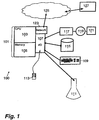
- a processor 101 configured to support the invention is shown in Fig. 1 wherein a processor 101 is shown, having a central processor unit (CPU) 103 , a memory section 105 and an input/output (I/O) section 107 .
- the I/O section 107 is connected to a keyboard 109 , a display unit 111 , a pointing device 113 , a disk storage unit 115 and a CD-ROM drive unit 117 .
- the CD-ROM drive unit 117 can read a CD-ROM medium 119 that typically contains a program and data 121 .
- the CD-ROM drive unit 117 along with the CD-ROM medium 119 , and the disk storage unit 115 comprise a filestorage mechanism.
- the CD-ROM drive unit 117 can be replaced by a floppy disk, magnetic tape unit or similar device that accepts a removable media that can contain the program and data 121 .
- the computer system 100 includes a network interface 123 that connects the processor 101 to a network 125 .
- the network 125 can be used to communicate between the processor 101 and a networked computer 127 .
- Such a computer system is an example of a system that is capable of executing procedures that embody the invention.
- client-server architectures enable the client program and the server program to be executed by the same computer or by separate networked computer systems. While the following description is cast within a networked computer system architecture, the description also applies to a single computer that hosts both the server and the client.
- Fig. 2A illustrates a client-server architecture, indicated by general reference character 200 , that enables a multi-threaded client application programmed in one language to use a single threaded service provided by the server.
- the architecture 200 includes a client 201 that often is a computer or network appliance.
- the client 201 communicates to a server 203 that often is hosted on a computer separate from the computer that hosts the client 201 .
- An application 205 executes in the client 201 and invokes procedures from an API 207 .
- the API 207 can be an object-oriented framework or a procedural library.
- the API 207 communicates to a Java-Management-Adapter (JMA) 209 that resides on the server 203 .
- the JMA 209 uses a Java-Native-Interface (JNI) 211 to access the functions of a portable management interface (PMI) 213 .
- the PMI 213 is a multi-thread unsafe framework (written in C++) that provides access to a management information service (MIS) 215 (for example, Sun Microsystems Inc.'s Enterprise ManagerTM).
- MIS management information service
- Fig. 2B illustrates a JMA architecture, indicated by general reference character 220 , that includes a JMA dispatcher 221 , a first server object 223 and a second server object 225 .
- the client 201 communicates with the JMA dispatcher 221 to create server objects such as the first server object 223 and the second server object 225 .
- a server object exists for each client that registers with the JMA dispatcher 221 .
- the JMA dispatcher 221 is an object factory that creates a server object in the server 203 for each registered client.
- Fig. 2C illustrates a server object environment, indicated by general reference character 230 , that serializes access from a multi-threaded client to the MIS 215 .
- the server object environment 230 includes a server object 231 that contains a 'server event handler' thread 233 and a 'controlling PMI' thread 235 that creates an exclusion lock 237 .
- the exclusion lock 237 serializes a thread, such as a 'PMI operation' thread 239 that operates on a JNI/PMI procedure 241 .
- the 'PMI operation' thread 239 is started by the 'controlling PMI' thread 235 in response receipt, by the server object 231 , of a request to perform an operation from the API 207 . Once the 'PMI operation' thread 239 obtains the exclusion lock 237 the 'PMI operation' thread 239 can invoke a JNI/PMI procedure 241 to access the requested service.
- the 'server event handler' thread 233 receives event conditions from the JNI/PMI procedure 241 and passes these events to the client 201 associated with the server object 231 .
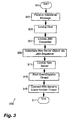
- Fig. 3 illustrates a server creation process, indicated by general reference character 300 , used by the client portion of the JMA dispatcher to instantiate a JMA server object.
- the server creation process 300 initiates at a 'start' terminal 301 and continues to a 'receive newserver message' procedure 303 that receives a 'new server' message.
- the 'new server' message is processed by a 'lookup host' procedure 305 that uses a uniform resource locator (URL) string supplied with the 'new server' message to locate and make a connection with the server computer system. If no URL string is provided, the 'lookup host' procedure 305 assumes that the service is located on the same computer as the client.
- URL uniform resource locator
- the server creation process 300 continues to a 'lookup JMA dispatcher' procedure 307 that locates the JMA dispatcher using methods well known in the art such as connecting to a known port, or by using a directory to find the dispatcher.
- an 'instantiate new server' procedure 309 causes the JMA dispatcher application on the server to instantiate a new server object on the server system.
- the new server object provides the desired services to the client.
- the server creation process 300 continues to a 'lookup new server' procedure 311 that locates the just-created server object executing on the server computer system.
- the server creation process 300 continues to a 'start eventdispatch thread' procedure 313 that initiates a thread used to dispatch events received by the just-created server to objects that have registered to receive specified events.
- the server creation process 300 continues to a 'connect with new server's event handler thread' procedure 315 that causes the event dispatch thread to connect with the server's event handling thread (subsequently described with respect to Fig. 4). Then the server creation process 300 completes through an 'end' terminal 317 .
- Fig. 4 illustrates a server initialization process, indicated by general reference character 400 , that is invoked by the 'instantiate new server' procedure 309 of Fig. 3.
- the server initialization process 400 initiates at a 'server object start' terminal 401 and continues to a 'start initial PMI thread' process 403 that starts the initial PMI access thread.
- This thread is used to initialize the PMI through the JNI.
- This thread also establishes the locking mechanisms used to serialize access, by other PMI operation threads within the server object, to the PMI framework.
- thread-unsafe frameworks can be accessed using these techniques.
- the server initialization process 400 continues to a 'start event handler thread' process 405 that is used to route events generated by the MIS to the appropriate client. Then, a 'connect with client's eventdispatch thread' process 407 waits until the 'connect with new server's event handler thread' procedure 315 attempts a connection with the event handler thread that was started by the 'start event handler thread' process 405 . Once the server's event-handler thread is connected with the client's event dispatch thread, the server initialization process 400 completes though an 'end' terminal 409 . Once the server initialization process 400 completes, the server is able to receive, process, and return results for requests from applications executing on the client and is able to pass events from the server to the client.
- Fig. 5 illustrates an API registration process, illustrated by general reference character 500 , that registers an API, such as an alarm API, with the JMA.
- the API registration process 500 initiates at a 'register API start' terminal 501 in response to the API invoking the registration process.
- the API registration process 500 continues to an 'instantiate API service' procedure 503 that instantiates a JMA service for the requesting API. After the service is instantiated, the service starts an API service at a 'start API service' procedure 505 .
- the API service will be used to service requests made to the JMA from the API.
- the API registration process 500 After the API service is started, the API registration process 500 , returns the API handle at a return API service handle' procedure 507 .
- the returned API handle corresponds to the API service instantiated at the 'instantiate API service' procedure 503 .
- the API registration process 500 completes through an 'end' terminal 509 .
- the API can request services (operations) from the JMA once the API is registered.
- Fig. 6 illustrates an API operation process, indicated by general reference character 600 , that processes a PMI invocation that resulted from an API operation.
- the API operation process 600 initiates at an 'API operation start' terminal 601 in response to the API application requesting a JMA service that invokes a PMI service.
- the API operation process 600 continues to an 'invoke lock PMI' procedure 603 that acquires the PMI lock established by the initial PMI thread created by the 'start initial PMI thread' process 403 of Fig. 4.
- the thread is suspended until the thread is able to acquire the lock.
- the API service thread assigns a thread to effectuate the requested operation.
- the API operation process 600 continues to an 'invoke PMI operation' procedure 605 .
- the 'invoke PMI operation' procedure 605 now invokes the appropriate PMI operation from the PMI framework through the JNI.
- a 'release PMI lock' procedure 607 releases the PMI lock to allow other threads access to the PMI framework. If a result is returned by the PMI operation the operation result value is returned to the API application.
- the process completes through an 'end' terminal 609 .
- the API operation process 600 serializes access to the PMI framework and performs the operation requested by the API.
- the operations used by the JMA can be applied to services other than the PMI framework and may be provided by a traditional routine library.
- the JMA-API interface is optimized with respect to handling events. Instead of using RMI or other client/server object communication packages, this interface uses a TCP/IP socket or equivalent.
- Fig. 7 illustrates a client event-dispatch process, indicated by general reference character 700 , that processes events delivered by the server event handler thread that is subsequently described with respect to Fig. 9.
- the process 700 initiates at a 'start' terminal 701 and continues to a 'delay for server' procedure 703 that waits for the start of the server's event handler thread (invoked by the 'start event handler thread' process 405 of Fig. 4).
- the 'delay for server' procedure 703 completes when the process 700 receives the connection initiated by the 'connect with client's eventdispatch thread' process 407 .
- the process 700 detects that the server event handler has started, the process continues at a 'start incoming event threads' procedure 705 .
- the 'start incoming event threads' procedure 705 generates enough threads to handle (at most) the maximum number of events expected during the time required to process the longest event.
- a 'receive API event listener registration' procedure 707 waits for an API to register with the process 700 .
- the event listener registration is sent by the 'connect with new server's event handler thread' procedure 315 of Fig. 3.
- the 'receive API event listener registration' procedure 707 stores the identification of the API and the event types that are of interest to the API.
- the process 700 waits at an 'event delivery' procedure 708 for receipt of an event generated and sent from any relevant event source (such as the MIS).
- an 'assign event to thread' procedure 709 assigns the event to a thread for processing.
- the thread executes a 'pass event to registered API' procedure 711 that determines which registered APIs (if any) have requested notification for the event and distributes the event to those APIs.
- Events are sent from the server's event handler process as is subsequently described with respect to Fig. 9.
- the process 700 continues to a 'termination requested' decision procedure 713 that determines whether the process 700 is to terminate. If the process 700 is to continue, the process returns to the 'assign event to thread' procedure 709 and wait for the next event.
- Fig. 8 illustrates a 'pass event to API' process, indicated by general reference character 800 , that is invoked by the 'pass event to registered API' procedure 711 of Fig. 7.
- the process 800 initiates at a 'start' terminal 801 and continues to an 'event ID match' decision procedure 803 that examines the event to determine whether an API has registered for that particular type of event. If the 'event ID match' decision procedure 803 successfully matches the event with a registered API, the process 800 continues to a 'pass copy of event to APIs event handler' procedure 805 that passes a copy of the event to those APIs that have registered to receive events of that type. In a preferred embodiment this event communications is handled by a low overhead communication mechanism such as TCP/IP sockets or equivalent.
- the process 800 continues to a 'dereference event' procedure 807 that dereferences the original event If the 'event ID match' decision procedure 803 determines that the event is not of interest to any of the registered APIs, the process simply continues to the 'dereference event' procedure 807 . After the 'dereference event' procedure 807 finishes the process 800 completes through an 'end' terminal 809 .
- Fig. 9 illustrates a 'server event handler' process, indicated by general reference character 900 , that receives an event that occurs on the server and passes the event to the client event-dispatch process 700 of Fig. 7.
- the 'server event handler' process 900 initiates at a 'start' terminal 901 and continues to a 'receive event' procedure 903 .
- the 'receive event' procedure 903 receives an event generated at the server.
- a 'send event to client' procedure 905 sends the event to the client's event dispatcher (previously described with respect to Fig. 7) where the event is received at the 'event delivery' procedure 708 .
- the 'server event handler' process 900 completes through an 'end' terminal 907 .
- a thin-class is a logical class (that defines a logical object) that is implemented to reduce the resource usage on the client.
- One advantage of the thin-class is that it hides the complexity involved with programming distributed applications.
- the thin-class also makes the distributed nature of the object transparent to the programmer because the thin class automatically invokes the client-server communication mechanism (if required) to communicate to a programmed-method located on the server.
- the underlying transport mechanism used in the client-server communication is often the remote method invocation (RMI) mechanism, object request broker mechanism such as defined by the CORBA standard, or some other similar mechanism.
- RMI remote method invocation
- the thin-class allows an API programmer to balance execution speed and memory usage required to effectuate the API by specifying the locality of the programmed-methods used in the class.
- simple programmed-methods may be located at the client while more complex programmed-methods may be located at the server.
- the programmer of an application that uses a logical object of the API is completely unaware of the locality of the programmed-methods for that logical object.
- Fig. 10 illustrates a 'thin class constructor' process, indicated by general reference character 1000 , used by a logical object when the logical object is instantiated.
- the 'thin class constructor' process 1000 initiates at a 'start' terminal 1001 and continues to an 'instantiate local portion' procedure 1003 .
- the 'instantiate local portion' procedure 1003 creates an object on the client that provides programmed-methods for the logical object that execute on the client.
- These programmed-methods generally are those that are small enough and simple enough so that the thin-client's resources are not adversely affected by the instantiation of the object or execution of the associated programmed-methods.
- Such an object would be an object that contains limited private data and has programmed-methods that provide access to this private data. Such programmed-methods are generally small and execute sufficiently rapidly that they are appropriately implemented on the thin-client.
- the 'thin class constructor' process 1000 continues to an 'initialize communication with server' procedure 1005 that initiates communication with the fat-server. This procedure generally locates the server host and connects to a known process.
- An 'instantiate remote portion' procedure 1007 causes the known process to instantiate a remote portion of the logical object on the fat-server.
- the remote portion includes programmed-methods that would impact the operation of the thin-client.
- the API developer determines whether the thin-client or fat-server should execute the programmed-methods and implements the API accordingly.
- the 'thin class constructor' process 1000 completes through an 'end' terminal 1009 .
- the 'thin class constructor' process 1000 creates object stubs and skeletons as appropriate when the client-server communication mechanism is RMI. Equivalent mechanisms exist, or can be constructed, for other client-server communication technologies.
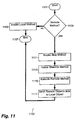
- Fig. 11 illustrates a logical object programmed-method invocation process, indicated by general reference character 1100 , for invoking a logical object's programmed-method.
- the logical object programmed-method invocation process 1100 initiates at a 'start' terminal 1101 and continues to a 'remote method' decision procedure 1103 .
- the 'remote method' decision procedure 1103 determines whether the programmed-method to be executed is located in the client portion or in the server portion of the logical object. If the programmed-method is located in the client portion, the logical object programmed-method invocation process 1100 continues to an 'invoke local method' procedure 1105 that dispatches the programmed-method resident in the client.
- the programmed-method executes in the client and using the data resident in the client portion of the logical object. Once the programmed-method returns, the logical object programmed-method invocation process 1100 completes through an 'end' terminal 1107 .
- the logical object programmed-method invocation process 1100 continues to an 'invoke stub method' procedure 1111 .
- the 'invoke stub method' procedure 1111 sends a copy of the logical object's instance variables in the client portion to the server portion and then invokes the stub object that corresponds to the skeleton object resident in the server portion of the logical object.
- the 'invoke stub method' procedure 1111 communicates with a skeleton object located within the server portion of the logical object. This communication causes an 'invoke skeleton method' procedure 1113 to cause the remote programmed-method to execute.
- An 'execute remote method' procedure 1115 executes the programmed-method in the server using the instance variable values sent by the 'invoke stub method' procedure 1111 .
- a 'send remote data' procedure 1117 sends the possibly modified instance variable data from the server portion of the logical object back to the client portion of the logical object to update the client's portion of the logical object.
- the logical object programmed-method invocation process 1100 then completes through the 'end' terminal 1107 .
- the application can invoke the API logical object's methods transparently as to whether the method is actually executed by the client or by the server.
- programming applications for thin-clients is greatly simplified by the use of APIs that implement thin-classes.
- Such an API hides the details of the client/server communication from the programmer and allows the programmer to transparently use the API without regard to any underlying inter-program communication issues.
- the programmer of an application that uses the API can transparently use the API objects without concern as to whether the object executes in the client or in the server and the method will be automatically executed on the server as appropriate. Instead this consideration is analyzed by the programmer of the API who determines which methods are to be executed in the client and the server.
- Some embodiments of the API allow dynamic determination of the locality of the logical object's methods. These embodiments determine the capabilities and resources of the client and determine the locality of the methods dependent on this determination.
- the use of a thin-class also enables the underlying inter-program communication mechanism (i.e., RMI, CORBA or other mechanism) to be changed without requiring a change to the application program.
- inter-program communication mechanism i.e., RMI, CORBA or other mechanism
- the alarm API provides the programmer with facilities for accessing a management information service (MIS) from a thin-client.
- MIS management information service
- an application designed to display alarm information about networked devices can use the alarm API to obtain information about those devices.
- the API is an implementation of the previously described thin-class.
- the API programmer determines which methods are local (to be executed on the client) and which are remote (executed on the server).
- the programmer who uses the API need not understand where the programmed-method is executed.
- the server/client communication is transparent to the programmer who uses the API. Thus, even in very thin-clients programmers need not balance the tradeoffs generally required for using the thin-client as the API programmer has already done so.
- the thin-client often receives an AlarmRecord in response to subsequently described methods.
- To minimize the amount of memory used in the thin-client and the bandwidth required between the thin-client and fat-server that contains the network database only selected portions of the AlarmRecord (the attributes-of-interest) are transferred.
- the programmer selects which attributes-of-interest by specifying an argument of type AlarmRecordAttributeSet in the invocation of the appropriate programmed-methods.
- Fig. 12 illustrates a MIS access process, indicated by general reference character 1200 , for providing a client with access to a MIS resident on a server.
- the process 1200 initiates at a 'start' terminal 1201 by an application executing in the client and continues to an 'instantiate API' procedure 1203 .
- the instantiate API' procedure 1203 instantiates an API in the client.
- the application specifies the attributes-of-interest.
- the attributes-of-interest specify which fields are included in records returned by the server.
- the application invokes a method in the API at an 'invoke API method' procedure 1207 that sends a message to the server to perform an operation.
- the server then executes the invoked method at an 'execute API method' procedure 1209 .
- This method accesses the MIS to obtain data and perform the desired operations on the data.
- this method generates results that are returned to the client at a 'return values for attributes-of-interest' procedure 1211 .
- Some methods recursively traverse the topology tree descending from a particular topological node in the network. These methods may return a result for each node traversed.
- the 'return values for attributes-of-interest' procedure 1211 collects the values for the attributes-of-interest specified by the 'specify attributes-of-interest' procedure 1205 and sends this information to the client where they can be accessed by the application.
- the returned information, for an alarm API, is in the form of alarm records.
- the process 1200 can return data about a monitored condition in the MIS. Where the MIS is a network MIS this data is often the status of a monitored device or topological node. This data can be provided to a user of the client application.
- Table 1 is a listing of the public methods available to return data values from fields in the AlarmRecord. An exception occurs if an attempt is made to return a field that was not communicated to the client. In a preferred embodiment, the locality of each of these methods is on the client.
- the "String”, “boolean”, and “Date” types are well known Java data types.
- the AlarmRecordId type is an opaque object and EMSeverity is an instance of an object enumerated type that includes five values (critical, major, minor, warning and indeterminate), EMTopoNodeDn is an object that uniquely identifies a topology object.
- the AlarmLog class (shown in Table 2) provides a number of methods for obtaining information from and manipulating the alarm records within the MIS. In general, the locality of these methods are in the server (the exceptions are indicated). These methods are subsequently described.
- the following methods return information about the number of alarms in the MIS.
- the AlarmLogEventListener class (Table 3) provides call-back methods responsive to particular events in the MIS.
- the AlarmLogEvent class (shown in Table 4) obtains information relating to MIS events.
- the locality of these method is at the client.
Landscapes
- Engineering & Computer Science (AREA)
- Software Systems (AREA)
- Theoretical Computer Science (AREA)
- Physics & Mathematics (AREA)
- General Engineering & Computer Science (AREA)
- General Physics & Mathematics (AREA)
- Multimedia (AREA)
- Stored Programmes (AREA)
Applications Claiming Priority (2)
| Application Number | Priority Date | Filing Date | Title |
|---|---|---|---|
| US957794 | 1997-10-24 | ||
| US08/957,794 US6260077B1 (en) | 1997-10-24 | 1997-10-24 | Method, apparatus and program product for interfacing a multi-threaded, client-based API to a single-threaded, server-based API |
Publications (2)
| Publication Number | Publication Date |
|---|---|
| EP0911732A2 true EP0911732A2 (fr) | 1999-04-28 |
| EP0911732A3 EP0911732A3 (fr) | 2002-10-09 |
Family
ID=25500148
Family Applications (1)
| Application Number | Title | Priority Date | Filing Date |
|---|---|---|---|
| EP98308500A Withdrawn EP0911732A3 (fr) | 1997-10-24 | 1998-10-16 | Méthode, appareil en produit de programme pour connecter une interface de programmation multi-fil a une interface de programmation mono-fil |
Country Status (4)
| Country | Link |
|---|---|
| US (1) | US6260077B1 (fr) |
| EP (1) | EP0911732A3 (fr) |
| JP (1) | JPH11242605A (fr) |
| CA (1) | CA2251123A1 (fr) |
Cited By (4)
| Publication number | Priority date | Publication date | Assignee | Title |
|---|---|---|---|---|
| WO2001077826A3 (fr) * | 2000-04-08 | 2003-03-06 | Sun Microsystems Inc | Procede et appareil de gestion d'evenements reçus par une interface de connexion de serveur |
| EP1338958A1 (fr) * | 2002-02-15 | 2003-08-27 | Sap Ag | Appel d'une classe Java depuis un programme en C++ |
| EP1830263A2 (fr) | 2006-01-09 | 2007-09-05 | Sun Microsystems, Inc. | Appareil de jeu et procédé de commande |
| CN104380661A (zh) * | 2014-06-23 | 2015-02-25 | 华为技术有限公司 | 一种路由设备的操作方法、路由设备和终端设备 |
Families Citing this family (52)
| Publication number | Priority date | Publication date | Assignee | Title |
|---|---|---|---|---|
| US6275870B1 (en) * | 1997-09-24 | 2001-08-14 | Sony Corporation | Network object request broker |
| US6704803B2 (en) | 1998-01-26 | 2004-03-09 | International Business Machines Corporation | Method and system for distributing data events over an information bus |
| US6704804B1 (en) | 1998-01-26 | 2004-03-09 | International Business Machines Corporation | Method and system for communicating information among interactive applications |
| US6490623B1 (en) * | 1998-08-24 | 2002-12-03 | International Business Machines Corporation | System, method and computer readable code for encapsulating system, language and device independent communications socket functionality in a lightweight uniform communications object model |
| GB9825102D0 (en) * | 1998-11-16 | 1999-01-13 | Insignia Solutions Plc | Computer system |
| US7237093B1 (en) | 1998-12-16 | 2007-06-26 | Mips Technologies, Inc. | Instruction fetching system in a multithreaded processor utilizing cache miss predictions to fetch instructions from multiple hardware streams |
| US7529907B2 (en) | 1998-12-16 | 2009-05-05 | Mips Technologies, Inc. | Method and apparatus for improved computer load and store operations |
| US7035997B1 (en) | 1998-12-16 | 2006-04-25 | Mips Technologies, Inc. | Methods and apparatus for improving fetching and dispatch of instructions in multithreaded processors |
| US6389449B1 (en) * | 1998-12-16 | 2002-05-14 | Clearwater Networks, Inc. | Interstream control and communications for multi-streaming digital processors |
| US7020879B1 (en) * | 1998-12-16 | 2006-03-28 | Mips Technologies, Inc. | Interrupt and exception handling for multi-streaming digital processors |
| US7257814B1 (en) | 1998-12-16 | 2007-08-14 | Mips Technologies, Inc. | Method and apparatus for implementing atomicity of memory operations in dynamic multi-streaming processors |
| US6779184B1 (en) * | 1999-01-21 | 2004-08-17 | Oracle International Corporation | Method for loosely coupling object oriented and non-object oriented applications in a messaging-based communication infrastructure |
| US8225002B2 (en) | 1999-01-22 | 2012-07-17 | Network Disk, Inc. | Data storage and data sharing in a network of heterogeneous computers |
| US7219073B1 (en) | 1999-08-03 | 2007-05-15 | Brandnamestores.Com | Method for extracting information utilizing a user-context-based search engine |
| US7013300B1 (en) * | 1999-08-03 | 2006-03-14 | Taylor David C | Locating, filtering, matching macro-context from indexed database for searching context where micro-context relevant to textual input by user |
| US6766349B1 (en) * | 1999-09-24 | 2004-07-20 | Sun Microsystems, Inc. | Mechanism for obtaining a thread from, and returning a thread to, a thread pool without attaching and detaching |
| US6701367B1 (en) * | 1999-09-24 | 2004-03-02 | Sun Microsystems, Inc. | Mechanism for enabling customized session managers to interact with a network server |
| AU2112301A (en) | 1999-09-24 | 2001-04-24 | Sun Microsystems, Inc. | Mechanism for enabling session information to be shared across multiple processes |
| JP2003518788A (ja) * | 1999-10-22 | 2003-06-10 | ローク マナー リサーチ リミテッド | 完全統合型ウェブ作動式制御及びモニター装置 |
| US7418506B1 (en) * | 1999-11-12 | 2008-08-26 | International Business Machines Corporation | Apparatus for connection management and the method therefor |
| EP1117072A1 (fr) * | 2000-01-17 | 2001-07-18 | Koninklijke Philips Electronics N.V. | Amélioration de texte |
| US6996829B2 (en) * | 2000-02-25 | 2006-02-07 | Oracle International Corporation | Handling callouts made by a multi-threaded virtual machine to a single threaded environment |
| DE60143896D1 (de) | 2000-07-14 | 2011-03-03 | Mips Tech Inc | Anweisungsabruf und -absendung in einem multi-thread-system |
| US6553406B1 (en) * | 2000-08-03 | 2003-04-22 | Prelude Systems, Inc. | Process thread system receiving request packet from server thread, initiating process thread in response to request packet, synchronizing thread process between clients-servers. |
| WO2002013048A2 (fr) * | 2000-08-03 | 2002-02-14 | Prelude Systems, Inc. | Système et procédé de gestion des communications client-serveur et des ressources d'entreprise |
| US7069546B2 (en) * | 2001-12-03 | 2006-06-27 | Corrigent Systems Ltd. | Generic framework for embedded software development |
| US6983462B2 (en) * | 2002-03-15 | 2006-01-03 | Toshiba Corporation | Method and apparatus for serving a request queue |
| US7299471B2 (en) * | 2002-04-17 | 2007-11-20 | International Business Machines Corporation | Common thread server |
| US7447701B2 (en) | 2002-07-11 | 2008-11-04 | Oracle International Corporation | Automatic configuration of attribute sets |
| US7428523B2 (en) * | 2002-07-11 | 2008-09-23 | Oracle International Corporation | Portal bridge |
| US7206851B2 (en) * | 2002-07-11 | 2007-04-17 | Oracle International Corporation | Identifying dynamic groups |
| US7428592B2 (en) | 2002-07-11 | 2008-09-23 | Oracle International Corporation | Securely persisting network resource identifiers |
| US7512585B2 (en) | 2002-07-11 | 2009-03-31 | Oracle International Corporation | Support for multiple mechanisms for accessing data stores |
| US7478407B2 (en) * | 2002-07-11 | 2009-01-13 | Oracle International Corporation | Supporting multiple application program interfaces |
| US8375113B2 (en) | 2002-07-11 | 2013-02-12 | Oracle International Corporation | Employing wrapper profiles |
| US7467142B2 (en) * | 2002-07-11 | 2008-12-16 | Oracle International Corporation | Rule based data management |
| JP4433372B2 (ja) * | 2003-06-18 | 2010-03-17 | 株式会社日立製作所 | データアクセスシステム及び方法 |
| US7904487B2 (en) | 2003-10-09 | 2011-03-08 | Oracle International Corporation | Translating data access requests |
| US7882132B2 (en) | 2003-10-09 | 2011-02-01 | Oracle International Corporation | Support for RDBMS in LDAP system |
| US7340447B2 (en) * | 2003-10-09 | 2008-03-04 | Oracle International Corporation | Partitioning data access requests |
| US7409693B2 (en) * | 2003-10-30 | 2008-08-05 | International Business Machines Corporation | Method and system for providing version control of parameters in a command-based API using Java serialization |
| US7526768B2 (en) * | 2004-02-04 | 2009-04-28 | Microsoft Corporation | Cross-pollination of multiple sync sources |
| US7630974B2 (en) | 2004-09-28 | 2009-12-08 | Oracle International Corporation | Multi-language support for enterprise identity and access management |
| US7809699B2 (en) * | 2004-11-17 | 2010-10-05 | Iron Mountain Incorporated | Systems and methods for automatically categorizing digital assets |
| US7577962B2 (en) * | 2004-12-03 | 2009-08-18 | Microsoft Corporation | Routing exceptions to operating system subsystems |
| US8301750B2 (en) * | 2005-06-10 | 2012-10-30 | International Business Machines Corporation | Apparatus, system, and method for facilitating communication between an enterprise information system and a client |
| US8495664B2 (en) * | 2005-07-06 | 2013-07-23 | International Business Machines Corporation | System, method and program product for invoking a remote method |
| US8027876B2 (en) | 2005-08-08 | 2011-09-27 | Yoogli, Inc. | Online advertising valuation apparatus and method |
| US8429167B2 (en) * | 2005-08-08 | 2013-04-23 | Google Inc. | User-context-based search engine |
| US9798524B1 (en) * | 2007-12-04 | 2017-10-24 | Axway, Inc. | System and method for exposing the dynamic web server-side |
| WO2018022627A1 (fr) * | 2016-07-25 | 2018-02-01 | Jadhav Ajay | Système de dispositif en nuage |
| US11809839B2 (en) | 2022-01-18 | 2023-11-07 | Robert Lyden | Computer language and code for application development and electronic and optical communication |
Family Cites Families (3)
| Publication number | Priority date | Publication date | Assignee | Title |
|---|---|---|---|---|
| US5452459A (en) * | 1993-01-08 | 1995-09-19 | Digital Equipment Corporation | Method and apparatus for allocating server access in a distributed computing environment |
| US5421013A (en) * | 1993-07-08 | 1995-05-30 | Park City Group, Inc. | Agent-based multithreading application programming interface |
| US5951653A (en) * | 1997-01-29 | 1999-09-14 | Microsoft Corporation | Method and system for coordinating access to objects of different thread types in a shared memory space |
-
1997
- 1997-10-24 US US08/957,794 patent/US6260077B1/en not_active Expired - Lifetime
-
1998
- 1998-10-16 EP EP98308500A patent/EP0911732A3/fr not_active Withdrawn
- 1998-10-22 CA CA002251123A patent/CA2251123A1/fr not_active Abandoned
- 1998-10-26 JP JP10304525A patent/JPH11242605A/ja active Pending
Non-Patent Citations (4)
| Title |
|---|
| ANONYMOUS: "CORBAservices: Common Object Services Specification (July 1997 version)" OMG TECHNICAL DOCUMENTS, [Online] no. 97-07-04, July 1997 (1997-07), pages 1.1-1.4,4.1-4.7,7.1-7.3, XP002209956 Retrieved from the Internet: <URL:http://cgi.omg.org/cgi-bin/doc?formal /97-07-04.ps.gz> [retrieved on 2002-08-13] * |
| GRASSO E: "Synchronizer: an Object Behavioral Pattern for Concurrent Programming" IN PROCEEDINGS OF THE 2ND EUROPEAN CONFERENCE ON PATTERN LANGUAGES OF PROGRAMMING (EUROPLOP '97), [Online] 10 - 12 July 1997, pages 1-12, XP002209954 Irsee, GERMANY Retrieved from the Internet: <URL:http://www.riehle.org/europlop-1997/p 3final.pdf> [retrieved on 2002-08-13] * |
| LAVENDER R G, SCHMIDT D C: "Active Object: an Object Behavioral Pattern for Concurrent Programming" IN PROCEEDINGS OF THE 2ND ANNUAL PATTERN LANGUAGES OF PROGRAMMING (PLOP '95) CONFERENCE, [Online] 6 - 8 September 1995, pages 1-8, XP002209955 Monticello, Illinois, USA Retrieved from the Internet: <URL:http://www.cs.utexas.edu/users/lavend er/papers/active-object.pdf> [retrieved on 2002-08-13] * |
| ORFALI R ET AL: "THE SERVER SIDE OF CORBA" OS/2 DEVELOPER, MILLER FREEMAN, SAN FRANCISCO, CA, US, vol. 7, no. 4, 1 July 1995 (1995-07-01), pages 26-30, XP000672970 ISSN: 1073-0729 * |
Cited By (8)
| Publication number | Priority date | Publication date | Assignee | Title |
|---|---|---|---|---|
| WO2001077826A3 (fr) * | 2000-04-08 | 2003-03-06 | Sun Microsystems Inc | Procede et appareil de gestion d'evenements reçus par une interface de connexion de serveur |
| EP1338958A1 (fr) * | 2002-02-15 | 2003-08-27 | Sap Ag | Appel d'une classe Java depuis un programme en C++ |
| EP1830263A2 (fr) | 2006-01-09 | 2007-09-05 | Sun Microsystems, Inc. | Appareil de jeu et procédé de commande |
| EP1830263A3 (fr) * | 2006-01-09 | 2008-05-21 | Sun Microsystems, Inc. | Appareil de jeu et procédé de commande |
| US8032872B2 (en) | 2006-01-09 | 2011-10-04 | Oracle America, Inc. | Supporting applets on a high end platform |
| CN101013379B (zh) * | 2006-01-09 | 2013-03-20 | 太阳微系统有限公司 | 在智能卡上的多线程运行时间环境中支持传统应用程序的方法 |
| CN104380661A (zh) * | 2014-06-23 | 2015-02-25 | 华为技术有限公司 | 一种路由设备的操作方法、路由设备和终端设备 |
| US10417061B2 (en) | 2014-06-23 | 2019-09-17 | Huawei Technologies Co., Ltd. | Operating method of routing device, routing device, and terminal device |
Also Published As
| Publication number | Publication date |
|---|---|
| US6260077B1 (en) | 2001-07-10 |
| CA2251123A1 (fr) | 1999-04-24 |
| JPH11242605A (ja) | 1999-09-07 |
| EP0911732A3 (fr) | 2002-10-09 |
Similar Documents
| Publication | Publication Date | Title |
|---|---|---|
| US6260077B1 (en) | Method, apparatus and program product for interfacing a multi-threaded, client-based API to a single-threaded, server-based API | |
| EP0912014B1 (fr) | Procédé, appareil et programme pour accès à un service d' information de gestion sur un serveur | |
| EP0817027B1 (fr) | Interfaces d'appel et de service indépendants du mode de transmission, qui permettent à la fois la transformation du code interprété et compilé | |
| JP3072709B2 (ja) | 要求伝達方法 | |
| US6272557B1 (en) | Framework for marshaling and unmarshaling argument object references | |
| US6044224A (en) | Mechanism for dynamically associating a service dependent representation with objects at run time | |
| US6959307B2 (en) | Process and system for a client object to perform a remote method invocation of a method in a server object | |
| US7089561B2 (en) | Methods and systems for creating and communicating with computer processes | |
| US6438616B1 (en) | Method and apparatus for fast, local corba object references | |
| US5969967A (en) | Methods and apparatus for conspiracy between objects | |
| US6470375B1 (en) | System and method for managing the execution of system management tasks | |
| EP0604010B1 (fr) | Procédé et dispositif pour sous-contrats dans un système de traitement distribué | |
| US5991823A (en) | Low overhead object adaptor | |
| US6718550B1 (en) | Method and apparatus for improving the performance of object invocation | |
| US20020004848A1 (en) | System and method of providing an asynchronous interface between a client system and an enterprise javabeans-enabled server | |
| US20130283292A1 (en) | Method and Apparatus for Composite User Interface Generation | |
| JPH08115223A (ja) | コンピュータで実施する方法及びデータ処理システム | |
| US20030115379A1 (en) | Method, system, and program for implementing a remote method call | |
| JPH0916503A (ja) | コンピュータプロセスを管理する方法および装置 | |
| US6205491B1 (en) | Method and apparatus for deferred throwing of exceptions in C++ | |
| WO2000045238A2 (fr) | Procede et systeme de configuration dynamique d'activateurs dans un environnement client-serveur | |
| US6189048B1 (en) | Mechanism for dispatching requests in a distributed object system | |
| EP0911727A2 (fr) | Procédé, dispositif, procédé et produit logiciel pour un environnement client-serveur | |
| WO2001029653A1 (fr) | Systeme et procede permettant de deserialiser dynamiquement un train de donnees dans un environnement distribue oriente objet | |
| Huang | Design and implementation of DOSS |
Legal Events
| Date | Code | Title | Description |
|---|---|---|---|
| PUAI | Public reference made under article 153(3) epc to a published international application that has entered the european phase |
Free format text: ORIGINAL CODE: 0009012 |
|
| AK | Designated contracting states |
Kind code of ref document: A2 Designated state(s): AT BE CH CY DE DK ES FI FR GB GR IE IT LI LU MC NL PT SE |
|
| AX | Request for extension of the european patent |
Free format text: AL;LT;LV;MK;RO;SI |
|
| PUAL | Search report despatched |
Free format text: ORIGINAL CODE: 0009013 |
|
| AK | Designated contracting states |
Kind code of ref document: A3 Designated state(s): AT BE CH CY DE DK ES FI FR GB GR IE IT LI LU MC NL PT SE |
|
| AX | Request for extension of the european patent |
Free format text: AL;LT;LV;MK;RO;SI |
|
| 17P | Request for examination filed |
Effective date: 20030326 |
|
| AKX | Designation fees paid |
Designated state(s): DE FR GB NL SE |
|
| STAA | Information on the status of an ep patent application or granted ep patent |
Free format text: STATUS: THE APPLICATION IS DEEMED TO BE WITHDRAWN |
|
| 18D | Application deemed to be withdrawn |
Effective date: 20060817 |