EP0914249B1 - Materiau composite resistant a l'eau et inhibant la corrosion en phase vapeur - Google Patents
Materiau composite resistant a l'eau et inhibant la corrosion en phase vapeur Download PDFInfo
- Publication number
- EP0914249B1 EP0914249B1 EP97930279A EP97930279A EP0914249B1 EP 0914249 B1 EP0914249 B1 EP 0914249B1 EP 97930279 A EP97930279 A EP 97930279A EP 97930279 A EP97930279 A EP 97930279A EP 0914249 B1 EP0914249 B1 EP 0914249B1
- Authority
- EP
- European Patent Office
- Prior art keywords
- composite material
- low density
- corrosion inhibitor
- vapour phase
- layer
- Prior art date
- Legal status (The legal status is an assumption and is not a legal conclusion. Google has not performed a legal analysis and makes no representation as to the accuracy of the status listed.)
- Expired - Lifetime
Links
- 230000007797 corrosion Effects 0.000 title claims abstract description 83
- 238000005260 corrosion Methods 0.000 title claims abstract description 83
- 239000002131 composite material Substances 0.000 title claims abstract description 75
- 239000003112 inhibitor Substances 0.000 title claims abstract description 62
- XLYOFNOQVPJJNP-UHFFFAOYSA-N water Substances O XLYOFNOQVPJJNP-UHFFFAOYSA-N 0.000 title claims abstract description 20
- 230000004888 barrier function Effects 0.000 claims abstract description 49
- 239000000463 material Substances 0.000 claims abstract description 22
- 239000007787 solid Substances 0.000 claims abstract description 20
- 229920000098 polyolefin Polymers 0.000 claims abstract description 18
- 238000003860 storage Methods 0.000 claims abstract description 11
- 230000005540 biological transmission Effects 0.000 claims abstract description 10
- 239000007789 gas Substances 0.000 claims abstract description 8
- QVGXLLKOCUKJST-UHFFFAOYSA-N atomic oxygen Chemical compound [O] QVGXLLKOCUKJST-UHFFFAOYSA-N 0.000 claims abstract description 4
- 230000007613 environmental effect Effects 0.000 claims abstract description 4
- 239000001301 oxygen Substances 0.000 claims abstract description 4
- 229910052760 oxygen Inorganic materials 0.000 claims abstract description 4
- 239000012071 phase Substances 0.000 claims description 57
- 238000001125 extrusion Methods 0.000 claims description 23
- 150000001875 compounds Chemical class 0.000 claims description 19
- 238000000034 method Methods 0.000 claims description 18
- -1 flame retardant compound Chemical class 0.000 claims description 15
- 239000003063 flame retardant Substances 0.000 claims description 14
- 230000008569 process Effects 0.000 claims description 7
- 229920005672 polyolefin resin Polymers 0.000 claims description 6
- 238000000859 sublimation Methods 0.000 claims description 6
- 230000008022 sublimation Effects 0.000 claims description 6
- 230000019612 pigmentation Effects 0.000 claims description 5
- 150000002826 nitrites Chemical class 0.000 claims description 4
- RNFJDJUURJAICM-UHFFFAOYSA-N 2,2,4,4,6,6-hexaphenoxy-1,3,5-triaza-2$l^{5},4$l^{5},6$l^{5}-triphosphacyclohexa-1,3,5-triene Chemical compound N=1P(OC=2C=CC=CC=2)(OC=2C=CC=CC=2)=NP(OC=2C=CC=CC=2)(OC=2C=CC=CC=2)=NP=1(OC=1C=CC=CC=1)OC1=CC=CC=C1 RNFJDJUURJAICM-UHFFFAOYSA-N 0.000 claims description 3
- 238000004049 embossing Methods 0.000 claims description 3
- 230000005484 gravity Effects 0.000 claims description 3
- 230000001965 increasing effect Effects 0.000 claims description 3
- 238000001782 photodegradation Methods 0.000 claims description 3
- 239000007792 gaseous phase Substances 0.000 claims description 2
- 238000004064 recycling Methods 0.000 claims description 2
- 230000002708 enhancing effect Effects 0.000 claims 1
- 238000002156 mixing Methods 0.000 claims 1
- 238000005299 abrasion Methods 0.000 description 8
- 239000007788 liquid Substances 0.000 description 7
- 230000000979 retarding effect Effects 0.000 description 7
- 239000001913 cellulose Substances 0.000 description 6
- 229920002678 cellulose Polymers 0.000 description 6
- 230000002401 inhibitory effect Effects 0.000 description 6
- 239000000758 substrate Substances 0.000 description 6
- 239000002184 metal Substances 0.000 description 5
- 229910052751 metal Inorganic materials 0.000 description 5
- VYPSYNLAJGMNEJ-UHFFFAOYSA-N Silicium dioxide Chemical compound O=[Si]=O VYPSYNLAJGMNEJ-UHFFFAOYSA-N 0.000 description 4
- 239000006260 foam Substances 0.000 description 4
- 230000008901 benefit Effects 0.000 description 3
- 230000000694 effects Effects 0.000 description 3
- 150000002739 metals Chemical class 0.000 description 3
- 230000005855 radiation Effects 0.000 description 3
- MGWGWNFMUOTEHG-UHFFFAOYSA-N 4-(3,5-dimethylphenyl)-1,3-thiazol-2-amine Chemical compound CC1=CC(C)=CC(C=2N=C(N)SC=2)=C1 MGWGWNFMUOTEHG-UHFFFAOYSA-N 0.000 description 2
- CURLTUGMZLYLDI-UHFFFAOYSA-N Carbon dioxide Chemical compound O=C=O CURLTUGMZLYLDI-UHFFFAOYSA-N 0.000 description 2
- XEEYBQQBJWHFJM-UHFFFAOYSA-N Iron Chemical compound [Fe] XEEYBQQBJWHFJM-UHFFFAOYSA-N 0.000 description 2
- FAPWRFPIFSIZLT-UHFFFAOYSA-M Sodium chloride Chemical compound [Na+].[Cl-] FAPWRFPIFSIZLT-UHFFFAOYSA-M 0.000 description 2
- RAHZWNYVWXNFOC-UHFFFAOYSA-N Sulphur dioxide Chemical compound O=S=O RAHZWNYVWXNFOC-UHFFFAOYSA-N 0.000 description 2
- ADCOVFLJGNWWNZ-UHFFFAOYSA-N antimony trioxide Chemical compound O=[Sb]O[Sb]=O ADCOVFLJGNWWNZ-UHFFFAOYSA-N 0.000 description 2
- 239000011248 coating agent Substances 0.000 description 2
- 238000000576 coating method Methods 0.000 description 2
- 230000008021 deposition Effects 0.000 description 2
- 239000000428 dust Substances 0.000 description 2
- 238000001704 evaporation Methods 0.000 description 2
- 230000008020 evaporation Effects 0.000 description 2
- 239000011133 lead Substances 0.000 description 2
- 239000000203 mixture Substances 0.000 description 2
- JCXJVPUVTGWSNB-UHFFFAOYSA-N nitrogen dioxide Inorganic materials O=[N]=O JCXJVPUVTGWSNB-UHFFFAOYSA-N 0.000 description 2
- 230000003647 oxidation Effects 0.000 description 2
- 238000007254 oxidation reaction Methods 0.000 description 2
- 238000012856 packing Methods 0.000 description 2
- 229920000642 polymer Polymers 0.000 description 2
- 230000001681 protective effect Effects 0.000 description 2
- 239000002994 raw material Substances 0.000 description 2
- 230000009467 reduction Effects 0.000 description 2
- 239000000741 silica gel Substances 0.000 description 2
- 229910002027 silica gel Inorganic materials 0.000 description 2
- 239000002699 waste material Substances 0.000 description 2
- 229910001369 Brass Inorganic materials 0.000 description 1
- RYGMFSIKBFXOCR-UHFFFAOYSA-N Copper Chemical compound [Cu] RYGMFSIKBFXOCR-UHFFFAOYSA-N 0.000 description 1
- CWYNVVGOOAEACU-UHFFFAOYSA-N Fe2+ Chemical class [Fe+2] CWYNVVGOOAEACU-UHFFFAOYSA-N 0.000 description 1
- 239000004698 Polyethylene Substances 0.000 description 1
- 239000004743 Polypropylene Substances 0.000 description 1
- 150000007513 acids Chemical class 0.000 description 1
- 239000000853 adhesive Substances 0.000 description 1
- 230000001070 adhesive effect Effects 0.000 description 1
- 150000001336 alkenes Chemical class 0.000 description 1
- 239000004411 aluminium Substances 0.000 description 1
- 229910052782 aluminium Inorganic materials 0.000 description 1
- XAGFODPZIPBFFR-UHFFFAOYSA-N aluminium Chemical compound [Al] XAGFODPZIPBFFR-UHFFFAOYSA-N 0.000 description 1
- QRUDEWIWKLJBPS-UHFFFAOYSA-N benzotriazole Chemical compound C1=CC=C2N[N][N]C2=C1 QRUDEWIWKLJBPS-UHFFFAOYSA-N 0.000 description 1
- 239000012964 benzotriazole Substances 0.000 description 1
- 230000015572 biosynthetic process Effects 0.000 description 1
- 239000010951 brass Substances 0.000 description 1
- 230000000711 cancerogenic effect Effects 0.000 description 1
- 239000001569 carbon dioxide Substances 0.000 description 1
- 229910002092 carbon dioxide Inorganic materials 0.000 description 1
- UBAZGMLMVVQSCD-UHFFFAOYSA-N carbon dioxide;molecular oxygen Chemical compound O=O.O=C=O UBAZGMLMVVQSCD-UHFFFAOYSA-N 0.000 description 1
- 231100000315 carcinogenic Toxicity 0.000 description 1
- 239000010949 copper Substances 0.000 description 1
- 229910052802 copper Inorganic materials 0.000 description 1
- 230000002939 deleterious effect Effects 0.000 description 1
- 230000003467 diminishing effect Effects 0.000 description 1
- 238000009472 formulation Methods 0.000 description 1
- 239000000499 gel Substances 0.000 description 1
- 230000001939 inductive effect Effects 0.000 description 1
- 230000003993 interaction Effects 0.000 description 1
- 229910052742 iron Inorganic materials 0.000 description 1
- 238000002372 labelling Methods 0.000 description 1
- 239000012528 membrane Substances 0.000 description 1
- 239000007769 metal material Substances 0.000 description 1
- 239000010847 non-recyclable waste Substances 0.000 description 1
- JRZJOMJEPLMPRA-UHFFFAOYSA-N olefin Natural products CCCCCCCC=C JRZJOMJEPLMPRA-UHFFFAOYSA-N 0.000 description 1
- 238000004806 packaging method and process Methods 0.000 description 1
- 239000008188 pellet Substances 0.000 description 1
- 150000002989 phenols Chemical class 0.000 description 1
- 239000004033 plastic Substances 0.000 description 1
- 229920003023 plastic Polymers 0.000 description 1
- 229920000573 polyethylene Polymers 0.000 description 1
- 229920001155 polypropylene Polymers 0.000 description 1
- 239000011148 porous material Substances 0.000 description 1
- 230000002829 reductive effect Effects 0.000 description 1
- 229920006395 saturated elastomer Polymers 0.000 description 1
- 239000000377 silicon dioxide Substances 0.000 description 1
- 239000011780 sodium chloride Substances 0.000 description 1
- 230000007480 spreading Effects 0.000 description 1
- 238000003892 spreading Methods 0.000 description 1
- 239000000126 substance Substances 0.000 description 1
- 239000004291 sulphur dioxide Substances 0.000 description 1
- 235000010269 sulphur dioxide Nutrition 0.000 description 1
- 238000005494 tarnishing Methods 0.000 description 1
Images
Classifications
-
- B—PERFORMING OPERATIONS; TRANSPORTING
- B32—LAYERED PRODUCTS
- B32B—LAYERED PRODUCTS, i.e. PRODUCTS BUILT-UP OF STRATA OF FLAT OR NON-FLAT, e.g. CELLULAR OR HONEYCOMB, FORM
- B32B27/00—Layered products comprising a layer of synthetic resin
- B32B27/18—Layered products comprising a layer of synthetic resin characterised by the use of special additives
-
- B—PERFORMING OPERATIONS; TRANSPORTING
- B32—LAYERED PRODUCTS
- B32B—LAYERED PRODUCTS, i.e. PRODUCTS BUILT-UP OF STRATA OF FLAT OR NON-FLAT, e.g. CELLULAR OR HONEYCOMB, FORM
- B32B27/00—Layered products comprising a layer of synthetic resin
- B32B27/12—Layered products comprising a layer of synthetic resin next to a fibrous or filamentary layer
-
- B—PERFORMING OPERATIONS; TRANSPORTING
- B32—LAYERED PRODUCTS
- B32B—LAYERED PRODUCTS, i.e. PRODUCTS BUILT-UP OF STRATA OF FLAT OR NON-FLAT, e.g. CELLULAR OR HONEYCOMB, FORM
- B32B27/00—Layered products comprising a layer of synthetic resin
- B32B27/32—Layered products comprising a layer of synthetic resin comprising polyolefins
-
- B—PERFORMING OPERATIONS; TRANSPORTING
- B32—LAYERED PRODUCTS
- B32B—LAYERED PRODUCTS, i.e. PRODUCTS BUILT-UP OF STRATA OF FLAT OR NON-FLAT, e.g. CELLULAR OR HONEYCOMB, FORM
- B32B3/00—Layered products comprising a layer with external or internal discontinuities or unevennesses, or a layer of non-planar shape; Layered products comprising a layer having particular features of form
- B32B3/26—Layered products comprising a layer with external or internal discontinuities or unevennesses, or a layer of non-planar shape; Layered products comprising a layer having particular features of form characterised by a particular shape of the outline of the cross-section of a continuous layer; characterised by a layer with cavities or internal voids ; characterised by an apertured layer
- B32B3/30—Layered products comprising a layer with external or internal discontinuities or unevennesses, or a layer of non-planar shape; Layered products comprising a layer having particular features of form characterised by a particular shape of the outline of the cross-section of a continuous layer; characterised by a layer with cavities or internal voids ; characterised by an apertured layer characterised by a layer formed with recesses or projections, e.g. hollows, grooves, protuberances, ribs
-
- B—PERFORMING OPERATIONS; TRANSPORTING
- B32—LAYERED PRODUCTS
- B32B—LAYERED PRODUCTS, i.e. PRODUCTS BUILT-UP OF STRATA OF FLAT OR NON-FLAT, e.g. CELLULAR OR HONEYCOMB, FORM
- B32B2307/00—Properties of the layers or laminate
- B32B2307/30—Properties of the layers or laminate having particular thermal properties
- B32B2307/306—Resistant to heat
- B32B2307/3065—Flame resistant or retardant, fire resistant or retardant
-
- B—PERFORMING OPERATIONS; TRANSPORTING
- B32—LAYERED PRODUCTS
- B32B—LAYERED PRODUCTS, i.e. PRODUCTS BUILT-UP OF STRATA OF FLAT OR NON-FLAT, e.g. CELLULAR OR HONEYCOMB, FORM
- B32B2307/00—Properties of the layers or laminate
- B32B2307/30—Properties of the layers or laminate having particular thermal properties
- B32B2307/31—Heat sealable
-
- B—PERFORMING OPERATIONS; TRANSPORTING
- B32—LAYERED PRODUCTS
- B32B—LAYERED PRODUCTS, i.e. PRODUCTS BUILT-UP OF STRATA OF FLAT OR NON-FLAT, e.g. CELLULAR OR HONEYCOMB, FORM
- B32B2307/00—Properties of the layers or laminate
- B32B2307/50—Properties of the layers or laminate having particular mechanical properties
- B32B2307/582—Tearability
- B32B2307/5825—Tear resistant
-
- B—PERFORMING OPERATIONS; TRANSPORTING
- B32—LAYERED PRODUCTS
- B32B—LAYERED PRODUCTS, i.e. PRODUCTS BUILT-UP OF STRATA OF FLAT OR NON-FLAT, e.g. CELLULAR OR HONEYCOMB, FORM
- B32B2307/00—Properties of the layers or laminate
- B32B2307/70—Other properties
- B32B2307/752—Corrosion inhibitor
-
- Y—GENERAL TAGGING OF NEW TECHNOLOGICAL DEVELOPMENTS; GENERAL TAGGING OF CROSS-SECTIONAL TECHNOLOGIES SPANNING OVER SEVERAL SECTIONS OF THE IPC; TECHNICAL SUBJECTS COVERED BY FORMER USPC CROSS-REFERENCE ART COLLECTIONS [XRACs] AND DIGESTS
- Y10—TECHNICAL SUBJECTS COVERED BY FORMER USPC
- Y10T—TECHNICAL SUBJECTS COVERED BY FORMER US CLASSIFICATION
- Y10T428/00—Stock material or miscellaneous articles
- Y10T428/24—Structurally defined web or sheet [e.g., overall dimension, etc.]
- Y10T428/24942—Structurally defined web or sheet [e.g., overall dimension, etc.] including components having same physical characteristic in differing degree
- Y10T428/24992—Density or compression of components
-
- Y—GENERAL TAGGING OF NEW TECHNOLOGICAL DEVELOPMENTS; GENERAL TAGGING OF CROSS-SECTIONAL TECHNOLOGIES SPANNING OVER SEVERAL SECTIONS OF THE IPC; TECHNICAL SUBJECTS COVERED BY FORMER USPC CROSS-REFERENCE ART COLLECTIONS [XRACs] AND DIGESTS
- Y10—TECHNICAL SUBJECTS COVERED BY FORMER USPC
- Y10T—TECHNICAL SUBJECTS COVERED BY FORMER US CLASSIFICATION
- Y10T442/00—Fabric [woven, knitted, or nonwoven textile or cloth, etc.]
- Y10T442/10—Scrim [e.g., open net or mesh, gauze, loose or open weave or knit, etc.]
- Y10T442/102—Woven scrim
- Y10T442/164—Including a preformed film, foil, or sheet
- Y10T442/169—Polyolefin film or sheet
-
- Y—GENERAL TAGGING OF NEW TECHNOLOGICAL DEVELOPMENTS; GENERAL TAGGING OF CROSS-SECTIONAL TECHNOLOGIES SPANNING OVER SEVERAL SECTIONS OF THE IPC; TECHNICAL SUBJECTS COVERED BY FORMER USPC CROSS-REFERENCE ART COLLECTIONS [XRACs] AND DIGESTS
- Y10—TECHNICAL SUBJECTS COVERED BY FORMER USPC
- Y10T—TECHNICAL SUBJECTS COVERED BY FORMER US CLASSIFICATION
- Y10T442/00—Fabric [woven, knitted, or nonwoven textile or cloth, etc.]
- Y10T442/20—Coated or impregnated woven, knit, or nonwoven fabric which is not [a] associated with another preformed layer or fiber layer or, [b] with respect to woven and knit, characterized, respectively, by a particular or differential weave or knit, wherein the coating or impregnation is neither a foamed material nor a free metal or alloy layer
- Y10T442/2025—Coating produced by extrusion
-
- Y—GENERAL TAGGING OF NEW TECHNOLOGICAL DEVELOPMENTS; GENERAL TAGGING OF CROSS-SECTIONAL TECHNOLOGIES SPANNING OVER SEVERAL SECTIONS OF THE IPC; TECHNICAL SUBJECTS COVERED BY FORMER USPC CROSS-REFERENCE ART COLLECTIONS [XRACs] AND DIGESTS
- Y10—TECHNICAL SUBJECTS COVERED BY FORMER USPC
- Y10T—TECHNICAL SUBJECTS COVERED BY FORMER US CLASSIFICATION
- Y10T442/00—Fabric [woven, knitted, or nonwoven textile or cloth, etc.]
- Y10T442/30—Woven fabric [i.e., woven strand or strip material]
- Y10T442/3854—Woven fabric with a preformed polymeric film or sheet
- Y10T442/3886—Olefin polymer or copolymer sheet or film [e.g., polypropylene, polyethylene, ethylene-butylene copolymer, etc.]
Definitions
- This invention relates to composite materials that may be used to provide coverings or wrappings for metal parts, machinery and other materials to protect them from the effects of corrosion and interaction with environmental gases.
- the invention provides a water resistant and vapour phase corrosion inhibitor composite material that can be used to shield and protect metal parts, machinery and materials during storage and transportation to reduce corrosion and oxidation.
- the most common metals which are susceptible to corrosion from ambient or atmospheric conditions are iron or ferrous compounds, aluminium, brass, copper, and lead.
- the corrosion of such metals, and metallic items created from them may take the form of oxidation, tarnishing, pitting, discolouration or the mottling of the exterior surface.
- corrosion of this nature is associated with contact between the metallic surface and liquids, such as water or acidic compounds.
- the corrosion may be a direct result of the ambient atmospheric conditions within which the metallic item is situated.
- metallic parts, machinery and raw materials are often exposed to gaseous compounds of oxygen, water vapour, carbon dioxide, nitrogen dioxide, sulphur dioxide and other such gases which can create an inherently corrosive environment.
- vapour phase corrosion inhibitors release gaseous compounds which help to protect the surfaces of metals through the deposition of a protective film or coating on the corrodible surface. Provided that a sufficient supply of the vapour phase corrosion inhibitor is available, a metallic item can be protected for a considerable length of time.
- vapour phase corrosion inhibitors in sufficient supply to ensure a constant deposition onto the corrodible surface.
- Such devices and methods include the use of foam packing pellets or chips which have been injected with a liquid component that slowly evaporates to provide a constant supply of vapour phase corrosion inhibitor.
- others have utilized solid components that sublimate into a vapour phase corrosion inhibitor.
- Still others have laminated a cellulose or similar layer to the underside of a tarpaulin or cover and saturated the cellulose layer with a liquid component that evaporates into a vapour phase corrosion inhibitor.
- the cellulose layer may be subjected to abrasion which may result in an area having little or no corrosion protection. That is, should a portion of the cellulose layer be damaged or stripped off, a section or portion of the metallic item may not receive adequate protection.
- impregnated foams or silica gels have limited application. To ensure that an adequate supply of the solid or liquid inhibiting compound is adjacent to the corrodible surface, the entire metallic part or component must normally be encapsulated within the foam or silica gel. In addition, the use of impregnated foam or silica gel does not provide protection from the elements of weather, from ultra violet radiation from the sun, nor do they provide a barrier to dust and dirt.
- the invention therefore provides a vapour phase corrosion inhibitor composite material that addresses the short comings of the prior art devices by providing a water, wind and dust resistant composite material of significant strength, tear and abrasion resistance and that ensures a constant and adequate supply of vapour phase corrosion inhibitor adjacent to metallic materials wrapped therein.
- the invention provides a water resistant and vapour phase corrosion inhibitor composite material for wrapping around metallic items to protect such items and reduce corrosion during storage and transportation, the composite material comprising a high strength, tear resistant, flexible scrim; a low density layer, said low density layer impregnated with a solid form vapour phase corrosion inhibitor of from about 1 to 15 percent by weight, said solid form vapour phase corrosion inhibitor volatilizing, at a known rate, into a gaseous phase by way of sublimation; and, a barrier layer, said barrier layer reducing the transmission of water, water vapour, oxygen and other environmental gases through said composite material to said metallic item and also reducing the atmospheric loss of said gaseous vapour phase corrosion inhibitor from between said composite material and said metallic item, each of said scrim, said barrier layer and said low density layer being formed from a polyolefin material and together forming a multi-layered polyolefin composite material.
- the invention provides a method of producing a water resistant and vapour phase corrosion inhibitor composite material for wrapping around metallic items to protect such items and reduce corrosion during storage and transportation, the method comprising the steps of extruding polyolefin resin onto opposite sides of a high strength, tear resistant, flexible, polyolefin scrim to form a high density barrier layer on one side of said scrim and a low density layer on the opposite side of said scrim; adding a solid form vapour phase corrosion inhibitor to said polyolefin resin prior to extrusion of said low density layer to distribute said solid form vapour phase corrosion inhibitor throughout said low density layer without significant volatilization of said solid form vapour phase corrosion inhibitor during said extrusion process, said volatilization of said solid form vapour phase corrosion inhibitor during said extrusion process minimized by carrying out said extrusion process at temperatures of approximately 250 to 280 degrees Celsius; and, embossing the outer surface of said low density layer, at the time of extrusion of said low density layer, to increase the surface area thereof and provide an anti
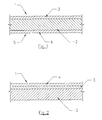
- composite material 1 is a true composite and formed from three separate and distinct layers.
- composite material 1 comprises a high strength, tear resistant and flexible substrate or scrim 2 which is bordered on its upper surface by a barrier layer 3 and on its lower surface by a low density layer 4.
- scrim 2 is bonded to the lower surface of barrier layer 3 and low density layer 4 is bonded to the upper surface of barrier layer 3.
- the scrim 2 provides a strong and flexible substrate or base which in effect carries barrier layer 3 and low density layer 4.
- the flexibility of scrim 2, and hence composite material 1 enables the material to be rolled or folded for convenience of use and storage, and also allows it to be readily wrapped around items of varying shape and size.
- composite material 1 in order for composite material 1 to be useful for a wide variety of different applications it must not only be strong and flexible but must also exhibit high resistance to tearing, must be abrasion resistant, must be relatively light in weight, and must be sufficiently low in cost. Furthermore, today's business and social-economic climate requires that packing materials be recyclable in order to reduce waste and the amount of material that must be shipped to landfill sites. In many cases business must pay for waste disposal and therefore any reduction in non-recyclable waste can result in cost savings. It is therefore desirable, and in some cases imperative, that composite material 1 be completely recyclable.
- scrim 2 is comprised of woven polyolefin. Within the woven material individual fibres are arranged in an approximately 90 degree grid thereby providing both an increased level of overall strength and superior tear resistance.
- the woven polyolefin scrim also serves as a "backbone” or weight bearing layer for composite material 1. Scrim 2 provides for a flexible and light weight composite product that can be readily used to wrap practically any shaped item.
- Woven polyolefin scrim 2 is also easily recyclable and does not present the disposal problems that are common with traditional vapour phase corrosion inhibitor products that contain nitrites and are made from paper that has been reinforced with an olefin substrate.
- barrier layer 3 provides an relatively impermeable layer that significantly reduces or eliminates the transmission of water, water vapour, oxygen, carbon dioxide, nitrogen dioxide and other atmospheric gases or elements therethrough. By preventing the transmission of such gases or elements through composite material 1, barrier layer 3 helps to reduce or eliminate corrosive or corrosion inducing compounds and gases from coming into contact with the metallic item wrapped in composite material 1. Barrier layer 3 also helps to create a relatively impermeable membrane surrounding the wrapped item in order to limit the escape of vapour phase corrosion inhibitor from between composite material I and the wrapped item.
- barrier layer 3 is also comprised of polyolefin, and preferably polyethylene or polypropylene. This polyolefin layer has been found to also provide a tough and abrasion resistant exterior surface that can stand up to the abuse to which it will be subjected when used to wrap metallic parts, machinery or other materials during transportation or storage.
- barrier layer 3 presents a surface onto which packaging information, labelling or advertising can be readily printed.
- barrier layer 3 is a high density barrier layer having a specific gravity of approximately 0.94 to 0.97, however, it will be appreciated that a lower density film that is laminated to scrim 2 may also be utilized.
- low density layer 4 is bonded to the under side of scrim 2.
- Low density layer 4 is impregnated with a vapour phase corrosion inhibitor which is preferably within a ratio of from about 1 to 15 percent by weight of the layer.
- the vapour phase corrosion inhibitor in low density layer 4 is in the form of a solid that is volatized directly into a vapour phase by way of sublimation.
- a concentration of solid form vapour phase corrosion inhibitor within the above range has been found to produce a sufficiently high level of inhibitor vapour for an appropriate length of time to provide for extended and reliable corrosion protection for metallic items that are wrapped in composite material 1.
- the approximate rate of sublimation of the solid form vapour phase corrosion inhibitor can be determined so that with a known volatilization rate, and for a given concentration of inhibitor, the useful life of composite material 1 can be determined.
- the above structure has been found to provide reliable protection for a period of from approximately 6 months to 2 years.
- the exterior or bottom surface 5 of low density layer 4 is preferably embossed, thereby significantly increasing its surface area. It has also been discovered that through embossing bottom surface 5 an anti-skid quality is provided on the surface. This feature has been noted to be advantageous from the perspective of helping to prevent composite material 1 from slipping or sliding around on smooth metallic surfaces, particulary when used to wrap items in transport. The movement of composite material 1 across the surface of wrapped items can cause abrasion and can remove portions of low density layer 4. Abrasion can also cause the removal of the protective film or-coating of vapour phase corrosion inhibitor that has been deposited or condensed upon the metallic surface. Through reducing slippage, the embossed bottom surface 5 therefore helps to reduce the deleterious effects of abrasion between composite material 1 and the items over which it is wrapped.
- vapour phase corrosion inhibitor impregnated into low density layer 4 may vary as there are a number of commercially available products that can be readily used. However, due to carcinogenic concerns that have recently come to the attention of medical researchers, the vapour phase corrosion inhibitor utilized in the present invention is preferably devoid of nitrite compounds. Typically, vapour phase corrosion inhibitor compounds that do not contain nitrite compounds and that are commercially available are formulations comprising amine benzoates, amine nitrates or benzotriazole. An example of a commercially available compound which has been found to satisfy the requirements for the vapour phase corrosion inhibitor of the present invention is VCI M126R, manufactured by Cortec Corp.
- Low density layer 4 is also comprised of a polyolefin material and preferably has a specific gravity of approximately 0.90 to 0.93. Forming layer 4 from a polyolefin product ensures that all three layers of composite material 1 are completely recyclable and that material 1 can be readily melted and re-pelletized for re-use. This provides a significant advantage over the traditional prior art products that utilize a combination of cellulose and plastic which is not readily recyclable. Furthermore, the fact that each of low density layer 4, barrier layer 3, and scrim 2 are formed from a polyolefin allows for an enhanced level of bonding between the respective layers without the addition of adhesives or complex or costly mechanical bonding steps or procedures.
- barrier layer 3 and low density layer 4 are extruded onto scrim 2 thereby forming a strong bond between the respective layers.
- the respective layers may be extruded sequentially and heat sealed or laminated together.
- barrier layer 3 and low density layer 4 are co-extruded onto scrim 2 to form composite material 1.
- co-extrusion involves the extrusion of two or more polymers simultaneously through the same die such that the molten masses are in contact with each other thereby forming a bond between them.
- the vapour phase corrosion inhibiting compound is added to low density layer 4 during extrusion.
- the preferable method of achieving this result is to mix the vapour phase corrosion inhibitor compound with low density polyolefin resin prior to extrusion and then extrude the combined product at below normal extrusion temperatures. That is, while typically polyolefin extrusions are carried out at temperatures of approximately 285 to 310 degrees celsius, in the preferred embodiment of the present invention the extrusion of low density layer 4 is carried out at approximately 250 to 280 degrees celsius.
- a flame retardant compound is added to composite material 1.
- the flame retardant can be added to both barrier layer 3 and scrim 2.
- the flame retardant compound may be added to barrier layer 3 only.
- the addition of the flame retardant compound to barrier layer 3 ensures that the compound is present within the exterior surface of composite material 1 when it is in use. Including the flame retardant compound in scrim 2 will ensure that composite material 1 retains its flame retarding capabilities even where barrier layer 3 has been damaged or worn off.
- the flame retarding compound When exposed to fire, the flame retarding compound helps to reduce the spreading or transmission of flames across composite material 1. It has been found that commercially available flame retardant products that contain antimony trioxide and/or brominated phenol provide protection consistent with National Fire Protection Association Testing Standard #701L and allow for addition during the extrusion of the respective layers.
- flame retarding compounds and vapour phase corrosion inhibiting compounds are generally incompatible when mixed in the same polymer melt. Accordingly, by locating the flame retarding compound in high density barrier layer 3, and/or scrim 2, and the vapour phase corrosion inhibiting compound in low density layer 4, any such incompatibilities that may exist are eliminated. The two compounds are physically separated in different layers and are not intermixed.
- scrim 2 may be pigmented to limit the transmission of light and ultraviolet radiation through composite material 1.
- the materials being encased or wrapped in composite material 1 may be sensitive to light or ultraviolet radiation. Accordingly, through the pigmentation of scrim 2 the amount of light that is allowed to pass through composite material 1 can be controlled, thereby reducing photo degradation of articles wrapped therein.
- high density barrier layer 3 may also be pigmented in addition, or as an alternative, to the pigmentation of scrim 2.
- the use of different shades of pigmentation can also be used as a means of identifying particular types of material (for example with or without a flame retarding compound) or may be used to identify the source or type of material that is being transported or stored.
- both high density layer 3 and low density layer 4 are positioned on the same side of scrim 2 (see Figure 2).
- high density layer 3 is effectively sandwiched between scrim 2 and low density layer 4.
- This embodiment functions essentially the same as the embodiment shown in Figure 1 except that when in use the outermost surface of composite material 1 will be comprised of scrim 2. Since scrim 2 provides the majority of the strength and tear resistance for the composite material, it will be appreciated that under some conditions of use the structure of Figure 2 will be preferable.
- scrim 2 has been described as a woven material, it could also be comprised of a knit, a non-woven, a tri-axial weave or a stitchbond material having sufficient strength for the particular application for which it is to be used.
Landscapes
- Laminated Bodies (AREA)
- Preventing Corrosion Or Incrustation Of Metals (AREA)
- Wrappers (AREA)
- Curing Cements, Concrete, And Artificial Stone (AREA)
Claims (22)
- Matériau composite inhibiteur de corrosion en phase vapeur et résistant à l'eau, pour envelopper des objets métalliques dans le but de protéger ces objets et de réduire la corrosion en cours de stockage et de transport, le matériau composite comprenant :chacun desdits canevas, couche barrière et couche basse densité étant formé d'un matériau polyoléfinique, et tous formant ensemble un matériau composite polyoléfinique multicouche.(i) un canevas souple, résistant à la déchirure, à grande résistance mécanique ;(ii) une couche basse densité, ladite couche basse densité étant imprégnée d'un inhibiteur de corrosion en phase vapeur sous forme solide, en une quantité d'environ 1 à 15 % en poids, ledit inhibiteur de corrosion en phase vapeur sous forme solide se volatilisant, à un taux connu, pour se transformer en une phase gazeuse par sublimation ; et(iii) une couche barrière, ladite couche barrière réduisant la transmission, à travers ledit matériau composite et vers ledit objet métallique, de l'eau, de la vapeur d'eau, de l'oxygène et d'autres gaz ambiants, et réduisant aussi la perte à l'atmosphère dudit inhibiteur de corrosion gazeux en phase vapeur, à partir de l'espace situé entre ledit matériau composite et l'objet métallique,
- Matériau composite selon la revendication 1, dans lequel ladite couche basse densité a une surface extérieure gaufrée, ladite surface extérieure augmentant l'aire exposée de ladite couche basse densité, et renforçant de ce fait ladite volatilisation dudit inhibiteur de corrosion en phase vapeur dont elle est imprégnée.
- Matériau composite selon la revendication 1 ou 2, dans lequel ladite couche barrière est une couche barrière haute densité ayant une densité d'environ 0,94 à 0,97.
- Matériau composite selon la revendication 1 ou 2, dans lequel ladite couche barrière est un film basse densité.
- Matériau composite selon les revendications 1, 2 ou 3, dans lequel ladite couche barrière haute densité est collée à la surface supérieure dudit canevas, et ladite couche basse densité est collée à la surface inférieure dudit canevas.
- Matériau composite selon les revendications 1, 2 ou 3, dans lequel ladite couche barrière haute densité est collée à la surface supérieure dudit canevas, et ladite couche basse densité est collée à la surface supérieure de ladite couche haute densité.
- Matériau composite selon la revendication 5, dans lequel ladite surface gaufrée fournit aussi une surface antidérapante sur ladite couche basse densité, ladite surface antidérapante réduisant le glissement dudit matériau composite en travers de la surface de l'objet métallique quand ledit objet métallique en est enveloppé.
- Matériau composite selon l'une quelconque des revendications précédentes, dans lequel ledit canevas représente une épaisseur souple tissée d'un matériau polyoléfinique.
- Matériau composite selon l'une quelconque des revendications précédentes, qui comprend un composé retardateur de flamme qui réduit la transmission des flammes à travers ledit matériau composite quand ledit matériau composite est soumis à un feu.
- Matériau composite selon l'une quelconque des revendications précédentes, dans lequel ladite couche barrière haute densité et ladite couche basse densité sont des couches extrudées formées et appliquées simultanément sur ledit canevas.
- Matériau composite selon l'une quelconque des revendications 1 à 9, dans lequel ladite couche barrière haute densité et ladite couche basse densité sont des couches extrudées formées successivement et thermoscellées ou contrecollées sur ledit canevas.
- Matériau composite selon l'une quelconque des revendications 1 à 9, dans lequel ladite couche barrière haute densité et ladite couche basse densité sont appliquées par co-extrusion sur ledit canevas.
- Matériau composite selon l'une quelconque des revendications 10 à 12, dans lequel ladite couche basse densité est formée à des températures d'extrusion d'environ 250 à 280°C pour minimiser la volatilisation dudit inhibiteur de corrosion en phase vapeur dont elle est imprégnée.
- Matériau composite selon la revendication 13, dans lequel ledit composé retardateur de flamme est contenu dans ladite couche barrière haute densité.
- Matériau composite selon la revendication 13, dans lequel ledit composé retardateur de flamme est contenu dans ledit canevas.
- Matériau composite selon la revendication 14, dans lequel ledit composé retardateur de flamme est ajouté à ladite couche barrière haute densité, et ledit inhibiteur de corrosion en phase vapeur est ajouté à ladite couche basse densité, pendant ladite extrusion desdites couches de façon que ledit composé retardateur de flamme et ledit inhibiteur de corrosion en phase vapeur soient répartis d'une manière généralement uniforme sur toute la surface, respectivement de ladite couche barrière haute densité et de ladite couche basse densité, sans aucun mélange physique dudit retardateur de flamme et desdits composés inhibiteurs de corrosion en phase vapeur.
- Matériau composite selon la revendication 16, qui est facilement repastillé à des fins de recyclage.
- Matériau composite selon la revendication 17, dans lequel ledit inhibiteur de corrosion en phase vapeur est exempt de nitrites.
- Matériau composite selon les revendications 17 ou 18, dans lequel ledit canevas est pigmenté, ladite pigmentation limitant la transmission de la lumière à travers ledit matériau composite et la photodégradation des objets qui en sont enveloppés.
- Matériau composite selon les revendications 17, 18 ou 19, dans lequel ladite couche barrière haute densité est pigmentée, ladite pigmentation limitant la transmission de la lumière à travers ledit matériau composite et la photodégradation des objets qui en sont enveloppés.
- Procédé de production d'un matériau composite inhibiteur de corrosion en phase vapeur et résistant à l'eau, pour envelopper des objets métalliques dans le but de protéger ces objets et de réduire la corrosion en cours de stockage et de transport, procédé caractérisé en ce qu'il comprend les étapes suivantes :ladite couche barrière haute densité, ledit canevas et ladite couche basse densité formant ensemble un matériau composite multicouche collé.(i) extrusion d'une résine de polyoléfine sur les faces opposées d'un canevas souple de polyoléfine, résistant à la déchirure, à grande résistance mécanique, pour former une couche barrière haute densité sur une face dudit canevas et une couche basse densité sur la face opposée dudit canevas ;(ii) addition d'un inhibiteur de corrosion en phase vapeur sous forme solide à ladite résine de polyoléfine avant extrusion de ladite couche basse densité, pour distribuer ledit inhibiteur de corrosion en phase vapeur sous forme solide dans toute la masse de ladite couche basse densité, sans volatilisation significative dudit inhibiteur de corrosion en phase vapeur sous forme solide pendant ladite opération d'extrusion, ladite volatilisation dudit inhibiteur de corrosion en phase vapeur sous forme solide pendant ladite opération d'extrusion étant minimisée par mise en oeuvre de ladite opération d'extrusion à des températures d'environ 250 à 280 degrés Celsius ; et(iii) gaufrage de la surface extérieure de ladite couche basse densité, au moment de l'extrusion de ladite couche basse densité, pour augmenter sa surface et réaliser sur elle une surface antidérapante,
- Procédé selon la revendication 21, comprenant l'étape additionnelle d'addition d'un composé retardateur de flamme à ladite résine de polyoléfine devant être extrudée sous forme de ladite couche barrière haute densité, et de distribution régulière dudit composé retardateur de flamme dans toute la masse de ladite couche barrière haute densité.
Applications Claiming Priority (3)
| Application Number | Priority Date | Filing Date | Title |
|---|---|---|---|
| US686539 | 1996-07-26 | ||
| US08/686,539 US5863642A (en) | 1996-07-26 | 1996-07-26 | Water resistant and vapor phase corrosion inhibitor composite material |
| PCT/CA1997/000502 WO1998004410A1 (fr) | 1996-07-26 | 1997-07-10 | Materiau composite resistant a l'eau et inhibant la corrosion en phase vapeur |
Publications (2)
| Publication Number | Publication Date |
|---|---|
| EP0914249A1 EP0914249A1 (fr) | 1999-05-12 |
| EP0914249B1 true EP0914249B1 (fr) | 2001-10-24 |
Family
ID=24756728
Family Applications (1)
| Application Number | Title | Priority Date | Filing Date |
|---|---|---|---|
| EP97930279A Expired - Lifetime EP0914249B1 (fr) | 1996-07-26 | 1997-07-10 | Materiau composite resistant a l'eau et inhibant la corrosion en phase vapeur |
Country Status (7)
| Country | Link |
|---|---|
| US (1) | US5863642A (fr) |
| EP (1) | EP0914249B1 (fr) |
| AT (1) | ATE207412T1 (fr) |
| AU (1) | AU3431697A (fr) |
| CA (1) | CA2242587C (fr) |
| DE (1) | DE69707683T2 (fr) |
| WO (1) | WO1998004410A1 (fr) |
Families Citing this family (12)
| Publication number | Priority date | Publication date | Assignee | Title |
|---|---|---|---|---|
| US6794317B2 (en) * | 2000-04-26 | 2004-09-21 | Creare Inc. | Protective cover system including a corrosion inhibitor |
| GB0114684D0 (en) * | 2001-06-15 | 2001-08-08 | Dow Chemical Co | Automobile assembly |
| US20030049986A1 (en) * | 2001-09-06 | 2003-03-13 | Qureshi Naseer Mohammad | Protective woven fabric with crease retention |
| CA2390278C (fr) * | 2002-06-11 | 2011-04-19 | Interwrap Industries Inc. | Materiau d'emballage pour metaux |
| WO2004039573A2 (fr) * | 2002-09-17 | 2004-05-13 | Burlington Industries, Inc. | Materiau lamine composite ameliore |
| GB2424852A (en) * | 2003-12-15 | 2006-10-11 | Polymer Group Inc | Protective laminate and method for making the same |
| DE102004019537A1 (de) * | 2004-04-22 | 2005-11-10 | All-Plastic Kunststoffwerk Gunzenhausen Gmbh | Verbund aus Kunststofflagen zur Verpackung von Gegenständen, Schutzhülle, insbesondere für Möbelstücke, hergestellt aus mindestens einem derartigen Verbund, Verfahren zur Herstellung eines derartigen Verbundes sowie zur Herstellung einer derartigen Schutzhülle |
| US7838445B2 (en) * | 2005-05-10 | 2010-11-23 | Interwrap Inc. | Multi-layer wrapping material with water vapor-permeable inner layer |
| EP1924226A2 (fr) * | 2005-08-12 | 2008-05-28 | Sugarcrm Inc. | Systeme et procede de gestion de relation clientele |
| US20070236049A1 (en) * | 2006-03-31 | 2007-10-11 | Dow Global Technologies Inc. | Modular assembly for a vehicle |
| US20110070389A1 (en) * | 2009-09-22 | 2011-03-24 | Berry Plastics Corporation | Multi-layer woven heat-shrinkable coating |
| CN102501510A (zh) * | 2011-11-17 | 2012-06-20 | 成都盛尔嘉科技有限公司 | 一种复合型气相防锈膜 |
Family Cites Families (16)
| Publication number | Priority date | Publication date | Assignee | Title |
|---|---|---|---|---|
| US4368233A (en) * | 1976-03-29 | 1983-01-11 | Standard Oil Company (Indiana) | Coated woven and non-woven polyolefin articles |
| DE2737495A1 (de) * | 1977-08-19 | 1979-03-01 | Ruoff Schaefer Rudolf | Isolierelement in platten-, schalen- oder schlauchform |
| US4188445A (en) * | 1977-12-12 | 1980-02-12 | Chromatex, Inc. | Laminated fabric of polypropylene |
| US4321297A (en) * | 1980-07-07 | 1982-03-23 | The Crowell Corporation | Sheet packaging material |
| US4302496A (en) * | 1980-10-21 | 1981-11-24 | Albany International Corp. | Composite waterproof and flame resistant fabrics |
| US4421827A (en) * | 1982-01-18 | 1983-12-20 | Scott Bader Company Limited | Composites and methods for providing metal clad articles and articles produced |
| DE3518625A1 (de) * | 1985-05-23 | 1986-11-27 | W. Bosch GmbH + Co KG Papier- und Folienwerke, 5272 Wipperfürth | Verpackungsmaterial fuer korrosionsempfindliche gueter |
| CA1261736A (fr) * | 1985-09-17 | 1989-09-26 | Hachiro Saitoh | Materiau stratifie a teneur d'agent actif, et sa production |
| US4973448A (en) * | 1986-11-18 | 1990-11-27 | Cortec Corporation | Vapor phase corrosion inhibitor product and method containing a desiccant |
| US5139700A (en) * | 1988-08-23 | 1992-08-18 | Cortec Corporation | Vapor phase corrosion inhibitor material |
| US5332525A (en) * | 1988-08-23 | 1994-07-26 | Cortec Corporation | Vapor phase corrosion inhibitor-desiccant material |
| US5209869A (en) * | 1988-08-23 | 1993-05-11 | Cortec Corporation | Vapor phase corrosion inhibitor-dessiccant material |
| US5102726A (en) * | 1990-04-03 | 1992-04-07 | Gabbay Jeffrey S S | Flexible composite laminate comprising a textile substrate, cementitious layer and sealing layer |
| US5187005A (en) * | 1991-04-24 | 1993-02-16 | Amoco Corporation | Self-bonded nonwoven web and woven fabric composites |
| BR9401515A (pt) * | 1994-04-18 | 1994-11-15 | Henrique Luiz Araujo | Fita com tratamento longitudinal com inibidor volátil de corrosão-VCI |
| US5715945A (en) * | 1996-03-18 | 1998-02-10 | Cortec Corporation | Vapor phase corrosion inhibitor package utilizing plastic packaging envelopes |
-
1996
- 1996-07-26 US US08/686,539 patent/US5863642A/en not_active Expired - Fee Related
-
1997
- 1997-07-10 WO PCT/CA1997/000502 patent/WO1998004410A1/fr not_active Ceased
- 1997-07-10 DE DE69707683T patent/DE69707683T2/de not_active Expired - Fee Related
- 1997-07-10 AU AU34316/97A patent/AU3431697A/en not_active Abandoned
- 1997-07-10 EP EP97930279A patent/EP0914249B1/fr not_active Expired - Lifetime
- 1997-07-10 CA CA002242587A patent/CA2242587C/fr not_active Expired - Fee Related
- 1997-07-10 AT AT97930279T patent/ATE207412T1/de not_active IP Right Cessation
Also Published As
| Publication number | Publication date |
|---|---|
| CA2242587A1 (fr) | 1998-02-05 |
| DE69707683D1 (de) | 2001-11-29 |
| DE69707683T2 (de) | 2002-08-01 |
| EP0914249A1 (fr) | 1999-05-12 |
| US5863642A (en) | 1999-01-26 |
| WO1998004410A1 (fr) | 1998-02-05 |
| AU3431697A (en) | 1998-02-20 |
| CA2242587C (fr) | 1999-08-03 |
| ATE207412T1 (de) | 2001-11-15 |
Similar Documents
| Publication | Publication Date | Title |
|---|---|---|
| US5863642A (en) | Water resistant and vapor phase corrosion inhibitor composite material | |
| US4321297A (en) | Sheet packaging material | |
| EP0665102B1 (fr) | Feuille stratifiée thermoplastique en polyéthylène destinée à contenir des composants de produit odoriférants | |
| EP0578750B1 (fr) | Technique de formation d'etiquettes a retrecissement sensible a la pression et stable | |
| US5736231A (en) | Protective wrap with additive delivery system | |
| PL326086A1 (en) | Seamed sheating and article wrapped therewith | |
| US6013351A (en) | Decorated thermoplastic articles | |
| EP0825019A2 (fr) | Matériau d'emballage ayant un système de libération d'un additif | |
| US5705566A (en) | Adhesive with additive delivery system | |
| US20030049986A1 (en) | Protective woven fabric with crease retention | |
| WO2008042439A2 (fr) | Ruban antirouille | |
| EP0737566B1 (fr) | Matériau thermosoudable multicouche comprenant une couche d'étanchéité | |
| CA2724260C (fr) | Materiau d'emballage multicouches a couche interne permeable a la vapeur | |
| US6593007B2 (en) | Neutralization of reactive elements | |
| US20080299368A1 (en) | Packaging material for metal | |
| US5773107A (en) | Method of storing active films | |
| WO2001081191A2 (fr) | Enveloppes de protection anti-corrosion ameliorees et methodes d'utilisation | |
| GB2294902A (en) | Composite packing sheets | |
| CA1199566A (fr) | Emballage stratifie | |
| WO2003103957A1 (fr) | Materiau en feuille duplex servant a envelopper du metal | |
| CA2233948A1 (fr) | Enveloppe a fermeture arriere pour emballage de produits | |
| EP0846629A1 (fr) | Emballage flexible pour substances non-alimentaires | |
| WO2003043831A2 (fr) | Dispositif de securite holographique et retardateur de corrosion pour l'emballage d'articles/ de pieces/de composants metalliques | |
| JPH01163284A (ja) | 鋼板防錆用粘着フィルム | |
| MXPA97006291A (en) | Protective wrap with adit supply system |
Legal Events
| Date | Code | Title | Description |
|---|---|---|---|
| PUAI | Public reference made under article 153(3) epc to a published international application that has entered the european phase |
Free format text: ORIGINAL CODE: 0009012 |
|
| 17P | Request for examination filed |
Effective date: 19990129 |
|
| AK | Designated contracting states |
Kind code of ref document: A1 Designated state(s): AT BE CH DE DK ES FI FR GB GR IE IT LI LU MC NL PT SE |
|
| GRAG | Despatch of communication of intention to grant |
Free format text: ORIGINAL CODE: EPIDOS AGRA |
|
| 17Q | First examination report despatched |
Effective date: 20001013 |
|
| GRAG | Despatch of communication of intention to grant |
Free format text: ORIGINAL CODE: EPIDOS AGRA |
|
| GRAH | Despatch of communication of intention to grant a patent |
Free format text: ORIGINAL CODE: EPIDOS IGRA |
|
| GRAH | Despatch of communication of intention to grant a patent |
Free format text: ORIGINAL CODE: EPIDOS IGRA |
|
| GRAA | (expected) grant |
Free format text: ORIGINAL CODE: 0009210 |
|
| AK | Designated contracting states |
Kind code of ref document: B1 Designated state(s): AT BE CH DE DK ES FI FR GB GR IE IT LI LU MC NL PT SE |
|
| PG25 | Lapsed in a contracting state [announced via postgrant information from national office to epo] |
Ref country code: LI Free format text: LAPSE BECAUSE OF FAILURE TO SUBMIT A TRANSLATION OF THE DESCRIPTION OR TO PAY THE FEE WITHIN THE PRESCRIBED TIME-LIMIT Effective date: 20011024 Ref country code: CH Free format text: LAPSE BECAUSE OF FAILURE TO SUBMIT A TRANSLATION OF THE DESCRIPTION OR TO PAY THE FEE WITHIN THE PRESCRIBED TIME-LIMIT Effective date: 20011024 Ref country code: AT Free format text: LAPSE BECAUSE OF FAILURE TO SUBMIT A TRANSLATION OF THE DESCRIPTION OR TO PAY THE FEE WITHIN THE PRESCRIBED TIME-LIMIT Effective date: 20011024 |
|
| REF | Corresponds to: |
Ref document number: 207412 Country of ref document: AT Date of ref document: 20011115 Kind code of ref document: T |
|
| REG | Reference to a national code |
Ref country code: CH Ref legal event code: EP |
|
| REG | Reference to a national code |
Ref country code: IE Ref legal event code: FG4D |
|
| REF | Corresponds to: |
Ref document number: 69707683 Country of ref document: DE Date of ref document: 20011129 |
|
| REG | Reference to a national code |
Ref country code: GB Ref legal event code: IF02 |
|
| ET | Fr: translation filed | ||
| PG25 | Lapsed in a contracting state [announced via postgrant information from national office to epo] |
Ref country code: PT Free format text: LAPSE BECAUSE OF FAILURE TO SUBMIT A TRANSLATION OF THE DESCRIPTION OR TO PAY THE FEE WITHIN THE PRESCRIBED TIME-LIMIT Effective date: 20020124 Ref country code: DK Free format text: LAPSE BECAUSE OF FAILURE TO SUBMIT A TRANSLATION OF THE DESCRIPTION OR TO PAY THE FEE WITHIN THE PRESCRIBED TIME-LIMIT Effective date: 20020124 |
|
| PG25 | Lapsed in a contracting state [announced via postgrant information from national office to epo] |
Ref country code: ES Free format text: LAPSE BECAUSE OF FAILURE TO SUBMIT A TRANSLATION OF THE DESCRIPTION OR TO PAY THE FEE WITHIN THE PRESCRIBED TIME-LIMIT Effective date: 20020430 |
|
| REG | Reference to a national code |
Ref country code: CH Ref legal event code: PL |
|
| REG | Reference to a national code |
Ref country code: GR Ref legal event code: EP Ref document number: 20020400168 Country of ref document: GR |
|
| PG25 | Lapsed in a contracting state [announced via postgrant information from national office to epo] |
Ref country code: LU Free format text: LAPSE BECAUSE OF NON-PAYMENT OF DUE FEES Effective date: 20020710 Ref country code: IE Free format text: LAPSE BECAUSE OF NON-PAYMENT OF DUE FEES Effective date: 20020710 Ref country code: FI Free format text: LAPSE BECAUSE OF NON-PAYMENT OF DUE FEES Effective date: 20020710 |
|
| PG25 | Lapsed in a contracting state [announced via postgrant information from national office to epo] |
Ref country code: SE Free format text: LAPSE BECAUSE OF NON-PAYMENT OF DUE FEES Effective date: 20020711 |
|
| PLBE | No opposition filed within time limit |
Free format text: ORIGINAL CODE: 0009261 |
|
| STAA | Information on the status of an ep patent application or granted ep patent |
Free format text: STATUS: NO OPPOSITION FILED WITHIN TIME LIMIT |
|
| 26N | No opposition filed | ||
| PG25 | Lapsed in a contracting state [announced via postgrant information from national office to epo] |
Ref country code: NL Free format text: LAPSE BECAUSE OF NON-PAYMENT OF DUE FEES Effective date: 20030201 Ref country code: MC Free format text: LAPSE BECAUSE OF NON-PAYMENT OF DUE FEES Effective date: 20030201 |
|
| EUG | Se: european patent has lapsed | ||
| PG25 | Lapsed in a contracting state [announced via postgrant information from national office to epo] |
Ref country code: FR Free format text: LAPSE BECAUSE OF NON-PAYMENT OF DUE FEES Effective date: 20030331 |
|
| NLV4 | Nl: lapsed or anulled due to non-payment of the annual fee |
Effective date: 20030201 |
|
| REG | Reference to a national code |
Ref country code: FR Ref legal event code: ST |
|
| REG | Reference to a national code |
Ref country code: IE Ref legal event code: MM4A |
|
| PGFP | Annual fee paid to national office [announced via postgrant information from national office to epo] |
Ref country code: GB Payment date: 20060703 Year of fee payment: 10 |
|
| PGFP | Annual fee paid to national office [announced via postgrant information from national office to epo] |
Ref country code: GR Payment date: 20060707 Year of fee payment: 10 |
|
| PGFP | Annual fee paid to national office [announced via postgrant information from national office to epo] |
Ref country code: BE Payment date: 20060718 Year of fee payment: 10 |
|
| PGFP | Annual fee paid to national office [announced via postgrant information from national office to epo] |
Ref country code: DE Payment date: 20060727 Year of fee payment: 10 |
|
| PGFP | Annual fee paid to national office [announced via postgrant information from national office to epo] |
Ref country code: IT Payment date: 20060731 Year of fee payment: 10 |
|
| BERE | Be: lapsed |
Owner name: *FABRENE INC. Effective date: 20070731 |
|
| GBPC | Gb: european patent ceased through non-payment of renewal fee |
Effective date: 20070710 |
|
| PG25 | Lapsed in a contracting state [announced via postgrant information from national office to epo] |
Ref country code: DE Free format text: LAPSE BECAUSE OF NON-PAYMENT OF DUE FEES Effective date: 20080201 |
|
| PG25 | Lapsed in a contracting state [announced via postgrant information from national office to epo] |
Ref country code: GB Free format text: LAPSE BECAUSE OF NON-PAYMENT OF DUE FEES Effective date: 20070710 |
|
| PG25 | Lapsed in a contracting state [announced via postgrant information from national office to epo] |
Ref country code: BE Free format text: LAPSE BECAUSE OF NON-PAYMENT OF DUE FEES Effective date: 20070731 |
|
| PG25 | Lapsed in a contracting state [announced via postgrant information from national office to epo] |
Ref country code: GR Free format text: LAPSE BECAUSE OF NON-PAYMENT OF DUE FEES Effective date: 20080206 |
|
| PG25 | Lapsed in a contracting state [announced via postgrant information from national office to epo] |
Ref country code: IT Free format text: LAPSE BECAUSE OF NON-PAYMENT OF DUE FEES Effective date: 20070710 |