EP0914640B1 - Verfahren zum speichen und bearbeiten sensibler informationen in einem sicherheitsmodul und dazugehöriges sicherheitsmodul - Google Patents
Verfahren zum speichen und bearbeiten sensibler informationen in einem sicherheitsmodul und dazugehöriges sicherheitsmodul Download PDFInfo
- Publication number
- EP0914640B1 EP0914640B1 EP98914904A EP98914904A EP0914640B1 EP 0914640 B1 EP0914640 B1 EP 0914640B1 EP 98914904 A EP98914904 A EP 98914904A EP 98914904 A EP98914904 A EP 98914904A EP 0914640 B1 EP0914640 B1 EP 0914640B1
- Authority
- EP
- European Patent Office
- Prior art keywords
- cpi
- security module
- cpid
- information
- temporary protection
- Prior art date
- Legal status (The legal status is an assumption and is not a legal conclusion. Google has not performed a legal analysis and makes no representation as to the accuracy of the status listed.)
- Expired - Lifetime
Links
Images


Classifications
-
- G—PHYSICS
- G06—COMPUTING OR CALCULATING; COUNTING
- G06F—ELECTRIC DIGITAL DATA PROCESSING
- G06F21/00—Security arrangements for protecting computers, components thereof, programs or data against unauthorised activity
- G06F21/70—Protecting specific internal or peripheral components, in which the protection of a component leads to protection of the entire computer
- G06F21/78—Protecting specific internal or peripheral components, in which the protection of a component leads to protection of the entire computer to assure secure storage of data
-
- G—PHYSICS
- G06—COMPUTING OR CALCULATING; COUNTING
- G06Q—INFORMATION AND COMMUNICATION TECHNOLOGY [ICT] SPECIALLY ADAPTED FOR ADMINISTRATIVE, COMMERCIAL, FINANCIAL, MANAGERIAL OR SUPERVISORY PURPOSES; SYSTEMS OR METHODS SPECIALLY ADAPTED FOR ADMINISTRATIVE, COMMERCIAL, FINANCIAL, MANAGERIAL OR SUPERVISORY PURPOSES, NOT OTHERWISE PROVIDED FOR
- G06Q20/00—Payment architectures, schemes or protocols
- G06Q20/30—Payment architectures, schemes or protocols characterised by the use of specific devices or networks
- G06Q20/34—Payment architectures, schemes or protocols characterised by the use of specific devices or networks using cards, e.g. integrated circuit [IC] cards or magnetic cards
- G06Q20/341—Active cards, i.e. cards including their own processing means, e.g. including an IC or chip
-
- G—PHYSICS
- G06—COMPUTING OR CALCULATING; COUNTING
- G06Q—INFORMATION AND COMMUNICATION TECHNOLOGY [ICT] SPECIALLY ADAPTED FOR ADMINISTRATIVE, COMMERCIAL, FINANCIAL, MANAGERIAL OR SUPERVISORY PURPOSES; SYSTEMS OR METHODS SPECIALLY ADAPTED FOR ADMINISTRATIVE, COMMERCIAL, FINANCIAL, MANAGERIAL OR SUPERVISORY PURPOSES, NOT OTHERWISE PROVIDED FOR
- G06Q20/00—Payment architectures, schemes or protocols
- G06Q20/30—Payment architectures, schemes or protocols characterised by the use of specific devices or networks
- G06Q20/36—Payment architectures, schemes or protocols characterised by the use of specific devices or networks using electronic wallets or electronic money safes
- G06Q20/367—Payment architectures, schemes or protocols characterised by the use of specific devices or networks using electronic wallets or electronic money safes involving electronic purses or money safes
- G06Q20/3672—Payment architectures, schemes or protocols characterised by the use of specific devices or networks using electronic wallets or electronic money safes involving electronic purses or money safes initialising or reloading thereof
-
- G—PHYSICS
- G06—COMPUTING OR CALCULATING; COUNTING
- G06Q—INFORMATION AND COMMUNICATION TECHNOLOGY [ICT] SPECIALLY ADAPTED FOR ADMINISTRATIVE, COMMERCIAL, FINANCIAL, MANAGERIAL OR SUPERVISORY PURPOSES; SYSTEMS OR METHODS SPECIALLY ADAPTED FOR ADMINISTRATIVE, COMMERCIAL, FINANCIAL, MANAGERIAL OR SUPERVISORY PURPOSES, NOT OTHERWISE PROVIDED FOR
- G06Q20/00—Payment architectures, schemes or protocols
- G06Q20/38—Payment protocols; Details thereof
- G06Q20/382—Payment protocols; Details thereof insuring higher security of transaction
- G06Q20/3829—Payment protocols; Details thereof insuring higher security of transaction involving key management
-
- G—PHYSICS
- G06—COMPUTING OR CALCULATING; COUNTING
- G06Q—INFORMATION AND COMMUNICATION TECHNOLOGY [ICT] SPECIALLY ADAPTED FOR ADMINISTRATIVE, COMMERCIAL, FINANCIAL, MANAGERIAL OR SUPERVISORY PURPOSES; SYSTEMS OR METHODS SPECIALLY ADAPTED FOR ADMINISTRATIVE, COMMERCIAL, FINANCIAL, MANAGERIAL OR SUPERVISORY PURPOSES, NOT OTHERWISE PROVIDED FOR
- G06Q20/00—Payment architectures, schemes or protocols
- G06Q20/38—Payment protocols; Details thereof
- G06Q20/40—Authorisation, e.g. identification of payer or payee, verification of customer or shop credentials; Review and approval of payers, e.g. check credit lines or negative lists
- G06Q20/409—Device specific authentication in transaction processing
- G06Q20/4097—Device specific authentication in transaction processing using mutual authentication between devices and transaction partners
- G06Q20/40975—Device specific authentication in transaction processing using mutual authentication between devices and transaction partners using encryption therefor
-
- G—PHYSICS
- G07—CHECKING-DEVICES
- G07F—COIN-FREED OR LIKE APPARATUS
- G07F7/00—Mechanisms actuated by objects other than coins to free or to actuate vending, hiring, coin or paper currency dispensing or refunding apparatus
- G07F7/08—Mechanisms actuated by objects other than coins to free or to actuate vending, hiring, coin or paper currency dispensing or refunding apparatus by coded identity card or credit card or other personal identification means
- G07F7/0806—Details of the card
- G07F7/0813—Specific details related to card security
- G07F7/082—Features insuring the integrity of the data on or in the card
-
- G—PHYSICS
- G07—CHECKING-DEVICES
- G07F—COIN-FREED OR LIKE APPARATUS
- G07F7/00—Mechanisms actuated by objects other than coins to free or to actuate vending, hiring, coin or paper currency dispensing or refunding apparatus
- G07F7/08—Mechanisms actuated by objects other than coins to free or to actuate vending, hiring, coin or paper currency dispensing or refunding apparatus by coded identity card or credit card or other personal identification means
- G07F7/0806—Details of the card
- G07F7/0813—Specific details related to card security
- G07F7/0826—Embedded security module
-
- G—PHYSICS
- G07—CHECKING-DEVICES
- G07F—COIN-FREED OR LIKE APPARATUS
- G07F7/00—Mechanisms actuated by objects other than coins to free or to actuate vending, hiring, coin or paper currency dispensing or refunding apparatus
- G07F7/08—Mechanisms actuated by objects other than coins to free or to actuate vending, hiring, coin or paper currency dispensing or refunding apparatus by coded identity card or credit card or other personal identification means
- G07F7/10—Mechanisms actuated by objects other than coins to free or to actuate vending, hiring, coin or paper currency dispensing or refunding apparatus by coded identity card or credit card or other personal identification means together with a coded signal, e.g. in the form of personal identification information, like personal identification number [PIN] or biometric data
- G07F7/1008—Active credit-cards provided with means to personalise their use, e.g. with PIN-introduction/comparison system
-
- G—PHYSICS
- G07—CHECKING-DEVICES
- G07F—COIN-FREED OR LIKE APPARATUS
- G07F7/00—Mechanisms actuated by objects other than coins to free or to actuate vending, hiring, coin or paper currency dispensing or refunding apparatus
- G07F7/08—Mechanisms actuated by objects other than coins to free or to actuate vending, hiring, coin or paper currency dispensing or refunding apparatus by coded identity card or credit card or other personal identification means
- G07F7/10—Mechanisms actuated by objects other than coins to free or to actuate vending, hiring, coin or paper currency dispensing or refunding apparatus by coded identity card or credit card or other personal identification means together with a coded signal, e.g. in the form of personal identification information, like personal identification number [PIN] or biometric data
- G07F7/1016—Devices or methods for securing the PIN and other transaction-data, e.g. by encryption
-
- H—ELECTRICITY
- H04—ELECTRIC COMMUNICATION TECHNIQUE
- H04L—TRANSMISSION OF DIGITAL INFORMATION, e.g. TELEGRAPHIC COMMUNICATION
- H04L9/00—Cryptographic mechanisms or cryptographic arrangements for secret or secure communications; Network security protocols
- H04L9/08—Key distribution or management, e.g. generation, sharing or updating, of cryptographic keys or passwords
- H04L9/0891—Revocation or update of secret information, e.g. encryption key update or rekeying
-
- H—ELECTRICITY
- H04—ELECTRIC COMMUNICATION TECHNIQUE
- H04L—TRANSMISSION OF DIGITAL INFORMATION, e.g. TELEGRAPHIC COMMUNICATION
- H04L9/00—Cryptographic mechanisms or cryptographic arrangements for secret or secure communications; Network security protocols
- H04L9/08—Key distribution or management, e.g. generation, sharing or updating, of cryptographic keys or passwords
- H04L9/0894—Escrow, recovery or storing of secret information, e.g. secret key escrow or cryptographic key storage
- H04L9/0897—Escrow, recovery or storing of secret information, e.g. secret key escrow or cryptographic key storage involving additional devices, e.g. trusted platform module [TPM], smartcard or USB
-
- H—ELECTRICITY
- H04—ELECTRIC COMMUNICATION TECHNIQUE
- H04L—TRANSMISSION OF DIGITAL INFORMATION, e.g. TELEGRAPHIC COMMUNICATION
- H04L2209/00—Additional information or applications relating to cryptographic mechanisms or cryptographic arrangements for secret or secure communication H04L9/00
- H04L2209/12—Details relating to cryptographic hardware or logic circuitry
Definitions
- the invention relates to a method for storing and operating a sensitive information in a security module, as well as the security module associated.
- the term "security module” should be taken, either in its classic sense in which it designates a device having vocation, in a network of communication or information, to be held by an organization supervising the network and securely store secret and fundamental parameters of the network such as cryptographic keys, or as more simply denoting a device allocated to various network users and allowing each of them to have access to it, the latter device also being likely to hold secret parameters.
- the security module may take the form of an object portable type smart card, such as a bank card.
- FR 2 681 165 A describes the encrypted transmission of information between two credit cards microprocessor. We encrypt the information in the first card, we transmit the information encrypted from the first card to the second, and the information is decrypted in the second card. We use an encryption key drawn from a pool of potential keys which is made up by card memory.
- the invention starts from the observation that, using material means accessible to all, a fraudster can observe the current consumption of the security module when executing a program or defined instructions by micro-wired logic in the security module, especially when the latter is CMOS technology.
- CMOS technology especially when the latter is CMOS technology.
- the invention therefore aims to reinforce the security of the security modules, meaning specified above, ensuring the protection of sensitive information, especially during their transfer between an EEPROM memory and a memory RAM or vice versa, by encrypting them using a temporary protection key the content of which varies at a certain frequency, in particular a frequency which is depending on the level of confidentiality of sensitive information.
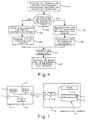
- the information processing device 1 represented in FIG. 1 comprises in a manner known per se a microprocessor 2 to which are connected a ROM memory 3, and RAM memory 4, means 5 for cooperating, with or without physical contact, with a security module 8, and a transmission 7 allowing the information processing device to communicate with another similar device, either directly or through of a communication network.
- the device 1 can also be equipped with storage means such as floppy disks or disks, removable or not, input means (such as keyboard and / or a pointing device of the mouse type) and display means, these different means not being shown in FIG. 1.
- storage means such as floppy disks or disks, removable or not
- input means such as keyboard and / or a pointing device of the mouse type
- display means these different means not being shown in FIG. 1.
- the information processing device can consist of any computer device installed on a private or public site and capable of providing means of information management or delivery of various goods or services, this device being permanently installed or portable. It can in particular also be a telecommunications device.
- the security module 8 includes means for processing information 9, non-volatile memory 10, volatile working memory RAM 14, and means 13 for cooperating with the device for processing information.
- This module is arranged to define, in memory 10, an area secret 11 in which information once recorded is inaccessible from outside the module but only accessible by means of processing 9, and a free area 12 which is accessible from outside the module for reading and / or writing information.
- Each memory area not volatile 10 can include a non-modifiable part ROM and a part modifiable EPROM, EEPROM, or made up of "flash" type RAM memory, that is to say having the characteristics of an EEPROM memory with in addition access times identical to those of a conventional RAM.
- the security module 8 will be designed in the form monolithic on a single chip.
- the security nature of the security module may result from its location in an inviolable enclosure.
- the invention uses several temporary protection keys for CP1 encryption, whereas CPi, across CPn and several temporary protection keys associated decryption CPd1, Across CPdi, Across CPdn.
- temporary decryption protection keys are identical to the temporary encryption protection keys or different from them.
- a symmetric secret key algorithm such as the Data algorithm Encryption Standard
- the secret key corresponding to one of the protection keys cipher CP1, ?? CPi, Across CPn.
- the decryption operation uses a decryption which is identical to the encryption key.
- an asymmetric algorithm is used with public key, such as the RSA algorithm (from the inventors Rivest, Shamir, and Adleman) which implements a public encryption key and another secret decryption, different from the encryption key.
- the module security stores these two keys, or parameters for them reconstruct, according to two successive versions.
- the encryption algorithm may be identical to an algorithm used for various functions relating to the applications for which the security module, or be specific and dedicated to the encryption task of temporary protection keys.
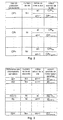
- the table in FIG. 2 comprises a first column defining a number n of temporary protection keys CP1, ?? CPi, «. CPn respectively carrying a key number N1, ?? Ni , across Nn used to designate them.
- CPi a current value defined by an update index (ai + 1)
- the different update indices evolve independently of each other.
- the table of FIG. 3 comprises, in a first column, references of a number m of sensitive information IS1, IS2, .... IS (j-1), ISj, Across ISm, each being stored in the security module in encrypted form using an encryption algorithm and a temporary protection key chosen from those in the table in FIG. 2.
- a second column of the table defines the number of the temporary protection key used for each sensitive information.
- the temporary protection key CP1 (whose number is N1) is used to protect sensitive information IS1, IS2, the temporary protection key CPi for sensitive information IS (j-1), ISj, and the protection key temporary CPn for the only sensitive information ISm.
- a third column of the table specifies the update index that the temporary protection key had when it was used to encrypt sensitive information.
- the sensitive information IS1, IS2, ...., ISj, Vietnamese ISm have been encrypted with a key bearing the most recent update index (a1 + 1), (ai + 1), or (an + 1) depending on the case, while the sensitive information IS (j-1) was encrypted with a key bearing an update index (ai) preceding the most recent update index (ai + 1 ).
- a fourth column of the table indicates the stored version of the sensitive information.
- sensitive information ISj is stored in encrypted form ISj (ai + 1) which carries the update index (ai + 1) relating to the associated temporary protection key.
- the data contained in the tables of FIGS. 2 and 3 are stored in the non-volatile memory 10 of the security module, the values of the temporary protection keys such as CPi ai being stored in secret zone 11 while the other data can be stored, either preferably in secret zone 11, or in free zone 12.
- the size of this data expressed in bits the size of the keys, whether these are temporary protection keys CPi or keys constituting the sensitive information ISj, will typically be 64 bits, while that of the numbers Ni and update indices (ai) will typically be 1 byte.
- the first column of the table in FIG. 2 may not be stored in the security module, but its storage can nevertheless be useful for defining the type of information in question, if one wishes to store the keys of temporary protection in an area containing information of another type.
- Each temporary protection key such as CPi has a value which evolves over time and is generated internally by the security module.
- each CPi key is a hazard or a function of a hazard produced by the security module, so that its evolution over time is unpredictable. This hazard can be generated in software, for example according to one of the methods described in American patents No. 5,177,790 or 5,365,466, or by means of a circuit producing a random physical quantity.
- each CPi key is an evolving datum in time according to a predetermined rule. For example, this data is equal to the content of a counter which is regularly incremented by one.
- each CPi temporary protection key will be generated either at in advance, either when it is used to encrypt sensitive information ISj.
- the creation of temporary protection keys CPi as well as the encryption or decryption of sensitive information ISj are under the sole control of the security module or sometimes of a specially authorized authority, cooperating with the security module, in the sense that only the security module or that authority makes the decision to perform these operations which are transparent to the unauthorized outside world (i.e. any terminal and ordinary user cooperating with the security module), even if these operations can be triggered indirectly by a request from this outside world not empowered for example to involve sensitive information ISj in a cryptographic calculation such as encryption or signature of a message, or authentication of a message or a person.
- the most frequent case is that where the security module cooperates with a unauthorized terminal and controls the creation of protection keys itself temporary CPi as well as encryption or decryption of information sensitive ISj.
- a less frequent case is that where the security module cooperates with a terminal of the authorized authority, i.e. before the first use of the security module to initialize it, either during its lifetime for allow the authorized authority to control the security module or modify functions or data it contains; in the latter case, creating the keys CPi temporary protection and encryption or decryption of sensitive information ISj may possibly be under the control of this authority, and no longer from the security module.
- FIG. 4 is a flow diagram of an initial encryption procedure for a any sensitive information ISj, before its storage in non-volatile memory 10 of the security module.
- This procedure is triggered from outside the security module, by an authority wishing store sensitive information ISj therein.
- the security module stored in working memory 14 new information sensitive ISj received from the outside, while in a second step 42, the security module -or possibly the authorized authority -decides if a new CPi temporary protection key or an existing key will be used to encrypt sensitive information ISj.
- the processing means 9 of the module select (step 43) a temporary protection key existing in non-volatile memory 10 and transfer it (step 44) to volatile working memory 14.
- FIG. 4 is a flow diagram of an initial encryption procedure for a any sensitive information ISj, before its storage in non-volatile memory 10 of the security module.
- step 4 it is the key CPi, bearing the number Ni.
- the security module chooses, as a key value, that which is at the index of highest update: in this case, it is the index (ai + 1), but if this key had never been updated, it would be index 1. If, on the contrary, it is decided in step 42 that a new temporary protection key must be created, this creation by the security module is carried out in step 45 in working memory 14 and the key is saved (step 46) in non-volatile memory for use ulterior.
- step 47 the security module encrypts the information ISj with the key CPi to obtain a result ISj (ai + 1) .
- step 48 the security module stores this result in a non-volatile memory area dedicated to this sensitive information.
- the security module stores, in association with sensitive information ISj (ai + 1) and as illustrated in FIG. 3, the Ni number and the update index (ai + 1) of the key used.
- FIG. 5 is a flow diagram of a procedure for decrypting sensitive information ISj , for use in processing, typically processing internal to the security module.
- a request to use sensitive information ISj is made, for example on the initiative of the information processing device 1, so that in step 52, the security module transfers sensitive information in encrypted form ISj (ai + 1) and the corresponding temporary protection key CPi (in the applicable version ai + 1) from its non-volatile memory 10 in its working memory 14. It then decrypts there (step 53) the sensitive information with the key to obtain sensitive information deciphered ISj.
- the security module uses the deciphered sensitive information ISj in the processing to be carried out.
- the sensitive information deciphered ISj will disappear so that it does not permanently reside in the security module. This is obtained, in this example, thanks to a property of a volatile memory according to which the information which it contains disappears when it is switched off, occurring at the end of the communication with the information processing device 1.
- FIG. 6 is a flowchart of a refresh procedure (i.e. renewal) of any protection key temporary CPi. Its interest lies in particular in that a variation of the content of this key is thus produced, making it very difficult any fraudulent attempt to guess this key; moreover, this refreshed key will allow, by a new encryption of associated sensitive information, to refresh the encrypted form of these, making it all the more difficult any fraudulent attempt to guess the content of sensitive information from their encrypted form. Indeed, we know that a fraudster can possibly benefit from observing the signals present at the terminals of the security module, especially during data transfers between the non-volatile memory and the working memory 14, signals which are in practice always influenced by the nature of the treatments performed by the security module. By means of the fraudster's storage of a significant number of such observations and a statistical analysis, this one can possibly succeed in reconstructing the sensitive information concerned.
- the procedure in Figure 6 is triggered, either on the initiative of the module security which is arranged to refresh its temporary protection keys to a predetermined or even random rhythm, either on the initiative of the processing device information 1 which sends a message or a message to the security module for this purpose appropriate command, although in the latter case the actual execution of the procedure remains under the sole control of the security module, except possibly in the particular case where the information processing device 1 is that of the authorized authority.
- Refreshing is done at a pace that is preferably a function of the type of sensitive information considered: thus, this rhythm will be high for sensitive information such as a confidential code User or "PIN" (from the English Personal Identification Number) which, given the low number of digits it usually contains and its use frequent, is more prone to fraud than a cryptographic key encryption or signature.
- the security module will advantageously store, in its non-volatile memory 10, indications on the refresh rate to apply to each sensitive information. For example, refreshment may be provided each time the sensitive information considered has been used a predetermined number of times.
- the security module consults its table of Figure 2 to determine if the temporary protection key CPi it needs to refresh is at the highest update index for all sensitive information that it protects. Indeed, knowing that one wishes to keep preferably, for each key, that two successive versions, the refreshment of a key supposes erasing the oldest version to write the most recent version instead recent; however, this erasure can only be done if no sensitive information currently stored will not need to be decrypted using the version older, otherwise this decryption will not be possible.
- step 62 it transfers this sensitive information into working memory 14 (in this example, the only sensitive information IS (j-1) ai ), the corresponding value CPi ai of the temporary protection key CPi, and the most recent value CPi (ai + 1) of this same key.
- step 63 it deciphers sensitive information IS (j-1) ai with the key CPi ai then, in step 64, it saves the sensitive information IS (j-1) ai (that is to say in encrypted form) in a buffer zone of the non-volatile memory 10, in order to avoid losing it in the event that the subsequent re-encryption of IS (j-1) is interrupted.
- step 65 the security module re-encrypts the sensitive information IS (j-1) restored with the most recent value CPi (ai + 1) of the temporary protection key CPi in order to obtain a most recent version. IS (j-1) (ai + 1) of the encrypted form of sensitive information IS (j-1).
- step 66 the security module replaces, in non-volatile memory 10, the oldest value IS (j-1) have the most recent value IS (j-1) (ai + 1) and it updates the update index (ai) by incrementing it by one unit to obtain (ai + 1): this situation is illustrated in bold characters in FIG. 8, third and fourth columns of the table.
- step 67 the security module generates, in step 67, a new value CPi (ai + 2) of the temporary protection key CPi at a new index of update (ai + 2) in working memory 14.
- this new value is a hazard or a function of a hazard.
- Figure 9 is a flowchart of a refresh procedure of any sensitive information.
- this procedure will follow the key refresh procedure of figure 6 and will concern precisely the sensitive information associated with the keys thus refreshed; however, as a variant, it can be executed at any later time.
- She will triggered, like the procedure in Figure 6, either on the initiative of the module security which is arranged to refresh its sensitive information at a rate predetermined or even random, either on the initiative of the processing device information 1 which sends a message or a message to the security module for this purpose appropriate command, although in the latter case the actual execution of the procedure remains under the sole control of the security module, except possibly in the particular case where the information processing device 1 is that of the authorized authority.
- step 91 a request to refresh sensitive information is therefore made.
- the security module transfers the sensitive information considered and their associated temporary protection keys into working memory 14: in this example, it is sensitive information IS (j-1) (ai + 1) and ISj (ai + 1) , and keys CPi (ai + 1) and CPi (ai + 2) .
- step 93 the security module decrypts this sensitive information with the key CPi (ai + 1) , then, in step 94, it re-encrypts the sensitive information IS (j-1) and ISj thus obtained with the key CPi (ai + 2) .
- step 95 it stores the re-encrypted sensitive information IS (j-1) (ai + 2) and ISj (ai + 2) in the aforementioned buffer zone of the non-volatile memory.
- step 96 it stores this data in the dedicated area of the non-volatile memory, in place of the sensitive information.
- IS (j-1) (ai + 1) and ISj (ai + 1) and it updates the update index (ai + 1) by incrementing it by one unit to obtain (ai + 2): this situation is illustrated in bold type in Figure 8 , fifth and sixth columns of the table.
- the sequence of stages may be temporarily interrupted by the information processing means 9 of the security module for perform other tasks, independent of the process of the invention but deemed priority at a given time. In this case, the procedure will be resumed at the end performing these tasks.
- the order in which the security module will process temporary protection keys and sensitive information may change according to different variants.
- the procedure in Figure 6 performs a complete refresh of the CPi key, independently of that of other keys; in a variant, the security module performs a refresh multiple keys simultaneously, the steps in Figure 6 specific to each key are finding then juxtaposed or nested with those specific to the other keys.
- the example above has used the information loss property of a volatile memory (here, the memory 14) when it is switched off, at the end of communication with the information processing device 1.
- a volatile memory here, the memory 14
- such an algorithm typically receives data in a 512-bit format, that is to say significantly superior to the format typical of sensitive information (64 bits).
- the security module 8 operates typically in a mode coupled with a treatment device information 1.
- the security module has self-supply means in electrical energy and implements the method described above of storage or use of sensitive information - or at least some stages of it- in a stand-alone mode, i.e. not mated with a information processing device.
Landscapes
- Engineering & Computer Science (AREA)
- Business, Economics & Management (AREA)
- Computer Security & Cryptography (AREA)
- Physics & Mathematics (AREA)
- General Physics & Mathematics (AREA)
- Accounting & Taxation (AREA)
- Theoretical Computer Science (AREA)
- General Business, Economics & Management (AREA)
- Strategic Management (AREA)
- Finance (AREA)
- Computer Networks & Wireless Communication (AREA)
- Signal Processing (AREA)
- Computer Hardware Design (AREA)
- Microelectronics & Electronic Packaging (AREA)
- Software Systems (AREA)
- General Engineering & Computer Science (AREA)
- Storage Device Security (AREA)
- Control Of Vending Devices And Auxiliary Devices For Vending Devices (AREA)
Claims (9)
- Verfahren zum Speichern einer sensiblen Information ISj in einem Sicherheitsmodul (8) mit Mittel zum Bearbeiten der Information (9) und Mittel zum Speichern der Information (10,14), dadurch gekennzeichnet, dass es folgende Schritte umfasst:Verschlüsseln lassen der sensiblen Information ISj durch das Sicherheitsmodul mittels eines temporären Verschlüsselungsschutzschlüssels CPi in einer vom Sicherheitsmodul bereitgestellten aktuellen Version CPi(ai+1) und eines gespeicherten Verschlüsselungsalgorithmus mit einem dazugehörigen Entschlüsselungsalgorithmus in den besagten Mitteln zum Speichern;durch das Sicherheitsmodul in einem nicht-flüchtigen Speicher (10) davon die sensible Information in verschlüsselter Form
ISj (ai+1) in Verbindung mit Identifikationsdaten speichern lassen, wobei diese Identifikationsdaten einen temporären Entschlüsselungsschutzschlüssel CPid in einer der besagten aktuellen Version CPi(ai+1) des temporären Verschlüsselungsschutzschlüssels CPi zugeordneten aktuellen Version CPid(ai+1) definieren und eine Schlüsselidentität CPid sowie einen Aktualisierungsindex (ai+ 1) enthalten, der die aktuelle Version CPid(ai+1) des Entschlüsselungsschlüssels unter mehreren Versionen definiert; undim Falle, dass der temporäre Entschlüsselungsschutzschlüssel CPid in seiner aktuellen Version CPid(ai+1) nicht bereits in diesem nicht-flüchtigen Speicher (10) gespeichert ist, diese Version vom Sicherheitsmodul speichern lassen. - Speicherverfahren nach Anspruch 1, bei dem das Sicherheitsmodul Mittel zur Zufallserzeugung umfasst, die verschiedene Folgeversionen eines Zufalls bereitstellen, wobei jede vom Sicherheitsmodul bereitgestellte Version des temporären Verschlüsselungsschutzschlüssels CPi ausgehend von einer verschiedenen Version des besagten Zufalls erzielt wird.
- Verfahren zum Bearbeiten einer sensiblen Information ISj in einem Sicherheitsmodul (8) mit Mittel zum Bearbeiten der Information (9) und Mittel zum Speichern der Information (10,14), wobei diese sensible Information ISj durch das Sicherheitsmodul mittels eines temporären Verschlüsselungsschutzschlüssels CPi in einer vom Sicherheitsmodul bereitgestellten aktuellen Version CPi(ai+1) und eines gespeicherten Verschlüsselungsalgorithmus mit einem dazugehörigen Entschlüsselungsalgorithmus in den Mitteln zum Speichern in einer verschlüsselten Form vorliegt und die sensible Information in verschlüsselter Form
ISj (ai+1) in einem nicht-flüchtigen Speicher (10) des Sicherheitsmoduls in Verbindung mit Identifikationsdaten gespeichert wird, die einen temporären Entschlüsselungsschutzschlüssel CPid in einer der besagten aktuellen Version CPi(ai+1) des temporären Verschlüsselungsschutzschlüssels CPi zugeordneten aktuellen Version CPid(ai+1) definieren, wobei die Identifikationsdaten eine Schlüsselidentität CPid und einen Aktualisierungsindex (ai+1) enthalten, der die aktuelle Version CPid(ai+1) des Entschlüsselungsschlüssels unter mehreren Versionen definiert, dadurch gekennzeichnet, dass es folgende Schritte umfasst:während einer innerhalb oder außerhalb des Sicherheitsmoduls gestellten Anfrage hinsichtlich der Anwendung der sensiblen Information ISj vom Sicherheitsmodul die aktuelle Version CPid(ai+1) des dieser sensiblen Information zugeordneten temporären Entschlüsselungsschutzschlüssels CPid mittels der Identifikationsdaten auswählen lassen;das Sicherheitsmodul die verschlüsselte sensible InformationISj (ai+1) mittels der aktuellen Version CPid(ai+1) des temporären Entschlüsselungsschutzschlüssels CPid und des Entschlüsselungsalgorithmus entschlüsseln lassen und die sensible Information ISj in auf diese Weise erhaltener entschlüsselter Form vorübergehend derart zu speichern, dass sie nach einer Anwendung dieser sensiblen Information vom Sicherheitsmodul verschwindet; unddas Sicherheitsmodul die sensible Information ISj in ihrer entschlüsselten Form anwenden lassen. - Bearbeitungsverfahren nach Anspruch 3 zum regelmäßigen Modifizieren der verschlüsselten Form einer sensiblen Information, das folgende Schritte umfasst:vom Sicherheitsmodul die in einer aktuellen verschlüsselten Form
ISj (ai+1) gespeicherte sensible Information mittels der aktuellen Version CPid(ai+1) des ihr zugeordneten temporären Entschlüsselungsschutzschlüssels CPid und des Entschlüsselungsalgorithmus entschlüsseln lassen;das Sicherheitsmodul eine neue Version CPi(ai+2) des temporären Verschlüsselungsschutzschlüssels CPi auswählen lassen; danndas Sicherheitsmodul die entschlüsselte sensible Information ISj mittels der neuen Version CPi(ai+2) des temporären Verschlüsselungsschutzschlüssels und des Verschlüsselungsalgorithmus erneut verschlüsseln lassen, um eine neue verschlüsselte FormISj (ai+2) der sensiblen Information zu erzeugen; unddie sensible Information in ihrer neuen verschlüsselten FormISj (ai+2) sowie eine der neuen Version CPi(ai+2) des temporären Verschlüsselungsschutzschlüssels zugeordnete neue Version CPid(ai+2) des temporären Entschlüsselungsschutzschlüssels CPid im Sicherheitsmodul speichern. - Bearbeitungsverfahren nach Anspruch 4, bei dem das Sicherheitsmodul Mittel zur Zufallserzeugung umfasst, die verschiedene Folgeversionen eines Zufalls bereitstellen, wobei jede vom Sicherheitsmodul bereitgestellte aktuelle Version CPi(ai+1) und neue Version CPid(ai+2) des temporären Verschlüsselungsschutzschlüssels CPi ausgehend von einer verschiedenen Version des besagten Zufalls erzielt wird.
- Bearbeitungsverfahren nach Anspruch 4, bei dem im nicht-flüchtigen Speicher (10) des Sicherheitsmoduls die beiden neuesten Versionen jedes temporären Entschlüsselungsschutzschlüssels CPid gespeichert werden, d. h. eine vorletzte Version CPidai und eine letzte Version CPid(ai+1) und bei dem man, wenn eine neue Version CPi(ai+2) eines beliebigen temporären Verschlüsselungsschutzschlüssels vom Sicherheitsmodul erzeugt wird, von diesem im nicht-flüchtigen Speicher (10) eine entsprechende neue Version CPid(ai+2) des zugeordneten temporären Entschlüsselungsschutzschlüssels CPid anstatt der vorletzten Version CPidai speichern lässt.
- Bearbeitungsverfahren nach Anspruch 6, bei dem man mehrere sensible Informationen IS(j-1), ISj jeweils mit einer verschiedenen vorletzten Version CPiai und einer letzten Version CPi(ai+1) desselben temporären Verschlüsselungsschutzschlüssels CPi verschlüsselt, um die verschlüsselten Formen
IS(j-1) ai undISj (ai+1) zu erzielen und man, wenn eine neue Version dieser sensiblen Informationen vom Sicherheitsmodul erzeugt werden muss, folgende Schritte ausführt:vom Sicherheitsmodul die mit der vorletzten Version CPiai des temporären Verschlüsselungsschutzschlüssels CPi verschlüsselten sensiblen InformationenIS(j-1) ai mittels der vorletzten Version CPidai des ihm zugeordneten temporären Entschlüsselungsschutzschlüssels CPid entschlüsseln lassen;das Sicherheitsmodul die entschlüsselten sensiblen Informationen IS(j-1) mittels der letzten Version CPi(ai+1) des temporären Verschlüsselungsschutzschlüssels erneut verschlüsseln lassen, um eine neue verschlüsselte FormIS(j-1) (ai+1) der sensiblen Information zu erzeugen; unddiese sensible Informationen in ihrer neuen verschlüsselten FormIS(j-1) (aj+1) im Sicherheitsmodul speichern; und bei dem man, um die neue Version der sensiblen Informationen IS(j-1), ISj zu erzielen, folgende Schritte ausführt:vom Sicherheitsmodul alle sensible InformationenIS(j-1) (ai+1) undISj (ai+1) über den temporären Verschlüsselungsschutzschlüssel CPi mittels einer der letzten Version CPi(ai+1) des temporären Verschlüsselungsschutzschlüssels CPi zugeordneten letzten Version CPid(ai+1) des temporären Entschlüsselungsschutzschlüssels CPid entschlüsseln lassen;vom Sicherheitsmodul die entschlüsselten sensiblen Informationen IS(j-1), ISj mittels einer neuen Version CPi(ai+2) des temporären Verschlüsselungsschutzschlüssels und des Verschlüsselungsalgorithmus erneut verschlüsseln lassen, um eine neue verschlüsselte FormIS(j-1) (ai+2) undISj (ai+2) dieser sensiblen Informationen zu erzeugen; undim Sicherheitsmodul diese sensible Informationen in ihrer neuen verschlüsselten FormIS(j-1) (ai+2) undISj (ai+2) sowie eine der neuen Version CPi(ai+2) des temporären Verschlüsselungsschutzschlüssels zugeordnete neue Version CPid(ai+2) des temporären Entschlüsselungsschutzschlüssels CPid speichern. - Sicherheitsmodul (8) mit Mittel zum Bearbeiten der Information (9) und Mittel zum Speichern der Information (10,14), dadurch gekennzeichnet, dass es folgendes umfasst:Mittel zum Produzieren angeordneter Schlüssel, um einen oder mehrere temporäre Verschlüsselungsschutzschlüssel CP1, ..., CPi, ..., CPn und genauso viele zugeordnete temporäre Entschlüsselungsschutzschlüssel CP1d, ..., CPid, ..., CPnd und für jeden temporären Verschlüsselungsschutzschlüssel CPi und Entschlüsselungsschutzschlüssel CPid mehrere Folgeversionen CPiai, CPi(ai+1), CPi(ai+2) und CPidai, CPid(ai+1), CPid(ai+2) zu schaffen;angeordnete Mittel, um einer bestimmten sensiblen Information ISj einen bestimmten temporären Verschlüsselungsschutzschlüssel CPi und einen dem temporären Verschlüsselungsschutzschlüssel CPi zugeordneten temporären Entschlüsselungsschutzschlüssel CPid zuzuordnen;zum nacheinander folgenden Verschlüsseln der sensiblen Information ISj angeordnete Verschlüsselungsmittel unter Anwendung der einen oder anderen der Folgeversionen CPiai, CPi(ai+1), CPi(ai+2) des dieser sensiblen Information zugeordneten temporären Verschlüsselungsschutzschlüssels und eines in den Speichermitteln (10,14) gespeicherten Verschlüsselungsalgorithmus; undzum nacheinander folgenden Entschlüsseln der sensiblen Information ISj angeordnete Entschlüsselungsmittel unter Anwendung bei jedem Entschlüsseln des Schlüssels der Folgeversionen CPidai, CPid(ai+1), CPid(ai+2) des temporären Entschlüsselungsschutzschlüssels, der der zum entsprechenden Verschlüsseln verwendeten Version des temporären Verschlüsselungsschutzschlüssels zugeordnet ist, sowie eines in den Speichermitteln (10,14) gespeicherten Entschlüsselungsalgorithmus.
- Sicherheitsmodul nach Anspruch 8, das Mittel zur Zufallserzeugung umfasst, die verschiedene Folgeversionen eines Zufalls bereitstellen, wobei jede vom Sicherheitsmodul bereitgestellte Folgeversion CPiai, CPi(ai+1), CPi(ai+2) jedes temporären Verschlüsselungsschutzschlüssels CPi ausgehend von einer verschiedenen Version des besagten Zufalls erzielt wird.
Applications Claiming Priority (3)
| Application Number | Priority Date | Filing Date | Title |
|---|---|---|---|
| FR9702973 | 1997-03-13 | ||
| FR9702973A FR2760871B1 (fr) | 1997-03-13 | 1997-03-13 | Procede de stockage et d'exploitation d'une information sensible dans un module de securite, et module de securite associe |
| PCT/FR1998/000503 WO1998040853A1 (fr) | 1997-03-13 | 1998-03-12 | Procede de stockage et d'exploitation d'une information sensible dans un module de securite, et module de securite associe |
Publications (2)
| Publication Number | Publication Date |
|---|---|
| EP0914640A1 EP0914640A1 (de) | 1999-05-12 |
| EP0914640B1 true EP0914640B1 (de) | 2004-11-24 |
Family
ID=9504685
Family Applications (1)
| Application Number | Title | Priority Date | Filing Date |
|---|---|---|---|
| EP98914904A Expired - Lifetime EP0914640B1 (de) | 1997-03-13 | 1998-03-12 | Verfahren zum speichen und bearbeiten sensibler informationen in einem sicherheitsmodul und dazugehöriges sicherheitsmodul |
Country Status (13)
| Country | Link |
|---|---|
| US (1) | US6658566B1 (de) |
| EP (1) | EP0914640B1 (de) |
| JP (1) | JPH11510678A (de) |
| CN (1) | CN1122951C (de) |
| AR (1) | AR011974A1 (de) |
| AU (1) | AU752328C (de) |
| BR (1) | BR9804778A (de) |
| CA (1) | CA2255126A1 (de) |
| DE (1) | DE69827742T2 (de) |
| FR (1) | FR2760871B1 (de) |
| NO (1) | NO318858B1 (de) |
| TW (1) | TW373154B (de) |
| WO (1) | WO1998040853A1 (de) |
Cited By (2)
| Publication number | Priority date | Publication date | Assignee | Title |
|---|---|---|---|---|
| EP1750217A1 (de) | 2005-08-04 | 2007-02-07 | Giesecke & Devrient GmbH | Absicherung von Speichereinhalten eines Datenträgers |
| US8983072B2 (en) | 2005-05-12 | 2015-03-17 | Giesecke & Devrient Gmbh | Portable data carrier featuring secure data processing |
Families Citing this family (63)
| Publication number | Priority date | Publication date | Assignee | Title |
|---|---|---|---|---|
| JP4505693B2 (ja) * | 1998-12-11 | 2010-07-21 | ソニー株式会社 | 情報処理装置および情報処理方法、並びに記録媒体 |
| WO2000055861A1 (en) * | 1999-03-15 | 2000-09-21 | Koninklijke Philips Electronics N.V. | A method and system for providing copy-protection on a storage medium and storage medium for use in such a system |
| ATE312446T1 (de) * | 1999-05-22 | 2005-12-15 | Sc Info & Inno Gmbh & Co | Verfahren zum verifizieren der unversehrtheit und urheberschaft sowie zum ver- und entschlüsseln von texten |
| US6289450B1 (en) * | 1999-05-28 | 2001-09-11 | Authentica, Inc. | Information security architecture for encrypting documents for remote access while maintaining access control |
| GB9920502D0 (en) | 1999-09-01 | 1999-11-03 | Ncr Int Inc | Portable terminal |
| DE19953321C2 (de) * | 1999-11-05 | 2001-09-06 | Beta Res Gmbh | Reproduktionsschutz von Geheimnissen auf Chipkarten |
| SE9904094D0 (sv) * | 1999-11-12 | 1999-11-12 | Protegrity Research & Dev | Method for reencryption of a database |
| GB9930145D0 (en) | 1999-12-22 | 2000-02-09 | Kean Thomas A | Method and apparatus for secure configuration of a field programmable gate array |
| US20070288765A1 (en) * | 1999-12-22 | 2007-12-13 | Kean Thomas A | Method and Apparatus for Secure Configuration of a Field Programmable Gate Array |
| GB2375418B (en) * | 1999-12-22 | 2004-06-23 | Algotronix Ltd | Method and apparatus for secure configuration of a field programmable gate array |
| US7240218B2 (en) * | 2000-02-08 | 2007-07-03 | Algotronix, Ltd. | Method of using a mask programmed key to securely configure a field programmable gate array |
| FR2810139B1 (fr) * | 2000-06-08 | 2002-08-23 | Bull Cp8 | Procede de securisation de la phase de pre-initialisation d'un systeme embarque a puce electronique, notamment d'une carte a puce, et systeme embarque mettant en oeuvre le procede |
| US7770010B2 (en) * | 2000-09-18 | 2010-08-03 | Wideband Semiconductors Inc. | Dynamically configurable interleaver scheme using at least one dynamically changeable interleaving parameter |
| JP2002132585A (ja) * | 2000-10-20 | 2002-05-10 | Sony Corp | 情報記録装置、情報再生装置、情報記録媒体、および情報記録方法、情報再生方法、並びにプログラム提供媒体 |
| GB0114317D0 (en) * | 2001-06-13 | 2001-08-01 | Kean Thomas A | Method of protecting intellectual property cores on field programmable gate array |
| GB2379756A (en) * | 2001-09-18 | 2003-03-19 | Hewlett Packard Co | Renewal of data in long-term storage |
| DE10205316B4 (de) * | 2002-02-08 | 2008-01-17 | Infineon Technologies Ag | Schlüsselmanagementeinrichtung und Verfahren zur verschlüsselten Ablage von digitalen Datenwörtern |
| JP4655452B2 (ja) * | 2003-03-24 | 2011-03-23 | 富士ゼロックス株式会社 | 情報処理装置 |
| JPWO2005004382A1 (ja) | 2003-07-08 | 2006-08-17 | 富士通株式会社 | 暗号処理装置 |
| TW200509637A (en) * | 2003-07-14 | 2005-03-01 | Nagravision Sa | Method to create and manage a local network |
| JP4239747B2 (ja) * | 2003-08-07 | 2009-03-18 | ソニー株式会社 | 情報処理装置、およびコンテンツ情報管理方法、並びにコンピュータ・プログラム |
| WO2005086802A2 (en) | 2004-03-08 | 2005-09-22 | Proxense, Llc | Linked account system using personal digital key (pdk-las) |
| RU2007127725A (ru) | 2004-12-20 | 2009-01-27 | ПРОКСЕНС, ЭлЭлСи (US) | Аутентификация по биометрическому ключу персональных данных (pdk) |
| JP4907880B2 (ja) * | 2005-02-23 | 2012-04-04 | 株式会社エヌ・ティ・ティ・ドコモ | 携帯情報端末およびデータ保護方法 |
| US8433919B2 (en) | 2005-11-30 | 2013-04-30 | Proxense, Llc | Two-level authentication for secure transactions |
| US11206664B2 (en) | 2006-01-06 | 2021-12-21 | Proxense, Llc | Wireless network synchronization of cells and client devices on a network |
| US8340672B2 (en) | 2006-01-06 | 2012-12-25 | Proxense, Llc | Wireless network synchronization of cells and client devices on a network |
| US7729496B2 (en) * | 2006-02-28 | 2010-06-01 | International Business Machines Corporation | Efficient key updates in encrypted database systems |
| JP4770650B2 (ja) * | 2006-09-09 | 2011-09-14 | ソニー株式会社 | 情報処理装置および情報処理方法並びにコンピュータ・プログラム |
| EP1906412A1 (de) * | 2006-09-29 | 2008-04-02 | Koninklijke Philips Electronics N.V. | Sicherer nichtflüchtiger Speicherbaustein und Verfahren, Daten in demselben zu schützen |
| US9269221B2 (en) | 2006-11-13 | 2016-02-23 | John J. Gobbi | Configuration of interfaces for a location detection system and application |
| US8590002B1 (en) | 2006-11-29 | 2013-11-19 | Mcafee Inc. | System, method and computer program product for maintaining a confidentiality of data on a network |
| US8571188B2 (en) * | 2006-12-15 | 2013-10-29 | Qualcomm Incorporated | Method and device for secure phone banking |
| US8621008B2 (en) | 2007-04-26 | 2013-12-31 | Mcafee, Inc. | System, method and computer program product for performing an action based on an aspect of an electronic mail message thread |
| US8010809B1 (en) | 2007-06-22 | 2011-08-30 | Qlogic, Corporation | Method and system for securing network data |
| US8199965B1 (en) | 2007-08-17 | 2012-06-12 | Mcafee, Inc. | System, method, and computer program product for preventing image-related data loss |
| US20130276061A1 (en) | 2007-09-05 | 2013-10-17 | Gopi Krishna Chebiyyam | System, method, and computer program product for preventing access to data with respect to a data access attempt associated with a remote data sharing session |
| WO2009062194A1 (en) | 2007-11-09 | 2009-05-14 | Proxense, Llc | Proximity-sensor supporting multiple application services |
| US8171528B1 (en) | 2007-12-06 | 2012-05-01 | Proxense, Llc | Hybrid device having a personal digital key and receiver-decoder circuit and methods of use |
| US9251332B2 (en) | 2007-12-19 | 2016-02-02 | Proxense, Llc | Security system and method for controlling access to computing resources |
| WO2009102979A2 (en) | 2008-02-14 | 2009-08-20 | Proxense, Llc | Proximity-based healthcare management system with automatic access to private information |
| US8893285B2 (en) | 2008-03-14 | 2014-11-18 | Mcafee, Inc. | Securing data using integrated host-based data loss agent with encryption detection |
| US11120449B2 (en) | 2008-04-08 | 2021-09-14 | Proxense, Llc | Automated service-based order processing |
| US8353053B1 (en) * | 2008-04-14 | 2013-01-08 | Mcafee, Inc. | Computer program product and method for permanently storing data based on whether a device is protected with an encryption mechanism and whether data in a data structure requires encryption |
| US9077684B1 (en) | 2008-08-06 | 2015-07-07 | Mcafee, Inc. | System, method, and computer program product for determining whether an electronic mail message is compliant with an etiquette policy |
| US9418205B2 (en) | 2010-03-15 | 2016-08-16 | Proxense, Llc | Proximity-based system for automatic application or data access and item tracking |
| US8788842B2 (en) | 2010-04-07 | 2014-07-22 | Apple Inc. | System and method for content protection based on a combination of a user PIN and a device specific identifier |
| US8510552B2 (en) | 2010-04-07 | 2013-08-13 | Apple Inc. | System and method for file-level data protection |
| US8433901B2 (en) * | 2010-04-07 | 2013-04-30 | Apple Inc. | System and method for wiping encrypted data on a device having file-level content protection |
| CN102238001B (zh) * | 2010-05-07 | 2014-10-01 | 腾讯数码(深圳)有限公司 | 一种提高数据安全性的方法和装置 |
| US9322974B1 (en) | 2010-07-15 | 2016-04-26 | Proxense, Llc. | Proximity-based system for object tracking |
| US8732485B2 (en) | 2010-12-01 | 2014-05-20 | International Business Machines Corporation | Methods for process key rollover/re-encryption and systems thereof |
| US9265450B1 (en) | 2011-02-21 | 2016-02-23 | Proxense, Llc | Proximity-based system for object tracking and automatic application initialization |
| GB201105765D0 (en) | 2011-04-05 | 2011-05-18 | Visa Europe Ltd | Payment system |
| US9858208B2 (en) * | 2013-03-21 | 2018-01-02 | International Business Machines Corporation | System for securing contents of removable memory |
| US9405898B2 (en) | 2013-05-10 | 2016-08-02 | Proxense, Llc | Secure element as a digital pocket |
| US9922322B2 (en) | 2013-12-19 | 2018-03-20 | Visa International Service Association | Cloud-based transactions with magnetic secure transmission |
| BR112016014106A2 (pt) | 2013-12-19 | 2017-08-08 | Visa Int Service Ass | Método para intensificar a segurança de um dispositivo de comunicação, e, dispositivo de comunicação |
| US12469021B2 (en) | 2014-02-18 | 2025-11-11 | Visa International Service Association | Limited-use keys and cryptograms |
| WO2015179637A1 (en) | 2014-05-21 | 2015-11-26 | Visa International Service Association | Offline authentication |
| US9775029B2 (en) | 2014-08-22 | 2017-09-26 | Visa International Service Association | Embedding cloud-based functionalities in a communication device |
| US10469251B2 (en) * | 2016-05-05 | 2019-11-05 | Auburn University | System and method for preemptive self-healing security |
| CN112948773B (zh) * | 2021-02-07 | 2024-05-24 | 深圳市大梦龙途文化传播有限公司 | 脚本加密与解密方法、终端设备及可读存储介质 |
Family Cites Families (13)
| Publication number | Priority date | Publication date | Assignee | Title |
|---|---|---|---|---|
| US4203166A (en) * | 1977-12-05 | 1980-05-13 | International Business Machines Corporation | Cryptographic file security for multiple domain networks |
| FR2461301A1 (fr) | 1978-04-25 | 1981-01-30 | Cii Honeywell Bull | Microprocesseur autoprogrammable |
| GB2168514A (en) * | 1984-12-12 | 1986-06-18 | Ibm | Security module |
| JP2731945B2 (ja) * | 1989-06-05 | 1998-03-25 | エヌ・ティ・ティ・データ通信株式会社 | 個別鍵による認証が可能なicカード |
| US5365466A (en) | 1989-12-19 | 1994-11-15 | Bull Cp8 | Method for generating a random number in a system with portable electronic objects, and system for implementing the method |
| FR2656125B1 (fr) | 1989-12-19 | 1994-07-08 | Bull Cp8 | Procede de generation d'un nombre aleatoire dans un systeme de traitement de donnees, et systeme mettant en óoeuvre un tel procede. |
| US5081677A (en) | 1990-08-31 | 1992-01-14 | International Business Machines Corp. | Crypotographic key version control facility |
| FR2681165B1 (fr) * | 1991-09-05 | 1998-09-18 | Gemplus Card Int | Procede de transmission d'information confidentielle entre deux cartes a puces. |
| FR2704341B1 (fr) * | 1993-04-22 | 1995-06-02 | Bull Cp8 | Dispositif de protection des clés d'une carte à puce. |
| BE1008699A3 (fr) * | 1994-09-09 | 1996-07-02 | Banksys | Procede et agencement pour donner selectivement un acces dans un systeme de securite. |
| US5694472A (en) * | 1995-02-13 | 1997-12-02 | Eta Technologies Corporation | Personal access management system |
| NO302388B1 (no) * | 1995-07-13 | 1998-02-23 | Sigurd Sigbjoernsen | Fremgangsmåte og anordning for å beskytte programvare mot bruk uten tillatelse |
| EP0840477B1 (de) * | 1996-10-31 | 2012-07-18 | Panasonic Corporation | Hochsicheres Verfahren zur geheimen Schlüsselübertragung mit Beschränkung des Schadens bei Bekanntwerden oder Dekodierung des geheimen Schlüssels |
-
1997
- 1997-03-13 FR FR9702973A patent/FR2760871B1/fr not_active Expired - Fee Related
-
1998
- 1998-02-27 TW TW087102877A patent/TW373154B/zh not_active IP Right Cessation
- 1998-03-12 EP EP98914904A patent/EP0914640B1/de not_active Expired - Lifetime
- 1998-03-12 JP JP10539305A patent/JPH11510678A/ja active Pending
- 1998-03-12 CN CN98800480A patent/CN1122951C/zh not_active Expired - Fee Related
- 1998-03-12 US US09/180,630 patent/US6658566B1/en not_active Expired - Fee Related
- 1998-03-12 DE DE69827742T patent/DE69827742T2/de not_active Expired - Lifetime
- 1998-03-12 AR ARP980101105A patent/AR011974A1/es active IP Right Grant
- 1998-03-12 AU AU69228/98A patent/AU752328C/en not_active Ceased
- 1998-03-12 WO PCT/FR1998/000503 patent/WO1998040853A1/fr not_active Ceased
- 1998-03-12 BR BR9804778A patent/BR9804778A/pt not_active Application Discontinuation
- 1998-03-12 CA CA002255126A patent/CA2255126A1/en not_active Abandoned
- 1998-11-12 NO NO19985275A patent/NO318858B1/no not_active IP Right Cessation
Cited By (2)
| Publication number | Priority date | Publication date | Assignee | Title |
|---|---|---|---|---|
| US8983072B2 (en) | 2005-05-12 | 2015-03-17 | Giesecke & Devrient Gmbh | Portable data carrier featuring secure data processing |
| EP1750217A1 (de) | 2005-08-04 | 2007-02-07 | Giesecke & Devrient GmbH | Absicherung von Speichereinhalten eines Datenträgers |
Also Published As
| Publication number | Publication date |
|---|---|
| AR011974A1 (es) | 2000-09-13 |
| AU752328C (en) | 2003-09-11 |
| NO985275D0 (no) | 1998-11-12 |
| US6658566B1 (en) | 2003-12-02 |
| NO985275L (no) | 1998-12-01 |
| JPH11510678A (ja) | 1999-09-14 |
| FR2760871A1 (fr) | 1998-09-18 |
| AU6922898A (en) | 1998-09-29 |
| FR2760871B1 (fr) | 1999-04-16 |
| HK1020629A1 (en) | 2000-05-12 |
| CN1222991A (zh) | 1999-07-14 |
| BR9804778A (pt) | 1999-08-17 |
| AU752328B2 (en) | 2002-09-19 |
| WO1998040853A1 (fr) | 1998-09-17 |
| CA2255126A1 (en) | 1998-09-17 |
| DE69827742T2 (de) | 2005-11-24 |
| NO318858B1 (no) | 2005-05-18 |
| EP0914640A1 (de) | 1999-05-12 |
| TW373154B (en) | 1999-11-01 |
| CN1122951C (zh) | 2003-10-01 |
| DE69827742D1 (de) | 2004-12-30 |
Similar Documents
| Publication | Publication Date | Title |
|---|---|---|
| EP0914640B1 (de) | Verfahren zum speichen und bearbeiten sensibler informationen in einem sicherheitsmodul und dazugehöriges sicherheitsmodul | |
| CA2121410C (fr) | Dispositif de protection des cles d'une carte a puce | |
| EP0414314B1 (de) | Verfahren zur Erzeugung einer einmaligen Zahl für eine Mikroschaltungskarte und Verwendung derselben zur Zusammenarbeit der Karte mit einem Wirtssystem | |
| EP0425053A1 (de) | Datenverarbeitungssystem mit Beglaubigungsmittel einer Speicherkarte, elektronische Schaltung zur Verwendung in diesem System und Verfahren zum Betreiben dieser Beglaubigung | |
| CA2046289C (fr) | Procede de generation d'un nombre aleatoire dans un systeme de traitement de donnees, et systeme mettant en oeuvre un tel procede | |
| EP1004100A1 (de) | Tragbare elektronische vorrichtung für systeme zur gesicherten kommunikation und verfahren zur initialisierung der parameter | |
| CN108123801A (zh) | 一种区块链钱包使用音频加密私钥系统以及方法 | |
| WO2001099337A1 (fr) | Procede d'authentification/identification biometrique securise, module de saisie et module de verification de donnees biometriques | |
| EP1352523B1 (de) | Verfahren zum speichern verschlüsselter daten | |
| EP0891587A1 (de) | Verfahren zur sicherung eines sicherheitsmoduls und zugehöriges sicherheitsmodul | |
| FR3106909A1 (fr) | Circuit intégré configuré pour réaliser des opérations de chiffrement symétrique avec protection de clé secrète | |
| EP0566512A1 (de) | Verfahren zur Zugriffskontrolle auf eine Funktion eines Bauelementes unter Verwendung eines Kennwortes | |
| WO2011003722A1 (fr) | Module logiciel de securisation utilisant le chiffrement du hache d ' un mot de passe concatene avec une graine | |
| EP1609326A2 (de) | Verfahren zum schutz eines telekommunikationsendgeräts des mobiltelephontyps | |
| CA2046320C (fr) | Procede de generation d'un nombre aleatoire dans un systeme a objets portatifs electroniques, et systeme pour la mise en oeuvre du procede | |
| FR3042626A1 (fr) | Procede et systeme d'acces securise et discrimine a des services d'un circuit integre, par diversification d'une unique cle racine | |
| EP1493072B1 (de) | Verfahren und einrichtung zum schutz von in einem speicher gespeicherten digitalen daten | |
| WO2004093019A1 (fr) | Entite electronique securisee avec compteur modifiable d'utilisations d’une donnee secrete | |
| FR2789774A1 (fr) | Procede de comparaison securise de deux registres memoire, et module de securite mettant en oeuvre ce procede | |
| EP1883034A2 (de) | Methode zum Schützen eines elektronischen Geräts durch Verwendung einer Chipkarte | |
| WO2006128770A1 (fr) | Dispositif de stockage de donnees securise | |
| EP1763029A2 (de) | Schutz eines digitalen Inhalts auf einem physikalischen Datenträger | |
| HK1020629B (en) | Method for storing and operating sensitive information in a security module, and associated security module | |
| FR3025341A1 (fr) | Securisation de cles de cryptage pour transaction sur un dispositif depourvu de module securise | |
| KR20000011016A (ko) | 보안 모듈에서의 민감한 정보의 기억 및 관리를 위한 방법 및관련 보안 모듈 |
Legal Events
| Date | Code | Title | Description |
|---|---|---|---|
| PUAI | Public reference made under article 153(3) epc to a published international application that has entered the european phase |
Free format text: ORIGINAL CODE: 0009012 |
|
| 17P | Request for examination filed |
Effective date: 19990317 |
|
| AK | Designated contracting states |
Kind code of ref document: A1 Designated state(s): BE CH DE DK ES FI FR GB IE IT LI NL SE |
|
| RAP1 | Party data changed (applicant data changed or rights of an application transferred) |
Owner name: CP8 TECHNOLOGIES |
|
| GRAP | Despatch of communication of intention to grant a patent |
Free format text: ORIGINAL CODE: EPIDOSNIGR1 |
|
| GRAS | Grant fee paid |
Free format text: ORIGINAL CODE: EPIDOSNIGR3 |
|
| GRAA | (expected) grant |
Free format text: ORIGINAL CODE: 0009210 |
|
| AK | Designated contracting states |
Kind code of ref document: B1 Designated state(s): BE CH DE DK ES FI FR GB IE IT LI NL SE |
|
| PG25 | Lapsed in a contracting state [announced via postgrant information from national office to epo] |
Ref country code: NL Free format text: LAPSE BECAUSE OF FAILURE TO SUBMIT A TRANSLATION OF THE DESCRIPTION OR TO PAY THE FEE WITHIN THE PRESCRIBED TIME-LIMIT Effective date: 20041124 Ref country code: IT Free format text: LAPSE BECAUSE OF FAILURE TO SUBMIT A TRANSLATION OF THE DESCRIPTION OR TO PAY THE FEE WITHIN THE PRE;WARNING: LAPSES OF ITALIAN PATENTS WITH EFFECTIVE DATE BEFORE 2007 MAY HAVE OCCURRED AT ANY TIME BEFORE 2007. THE CORRECT EFFECTIVE DATE MAY BE DIFFERENT FROM THE ONE RECORDED.SCRIBED TIME-LIMIT Effective date: 20041124 Ref country code: IE Free format text: LAPSE BECAUSE OF FAILURE TO SUBMIT A TRANSLATION OF THE DESCRIPTION OR TO PAY THE FEE WITHIN THE PRESCRIBED TIME-LIMIT Effective date: 20041124 Ref country code: FI Free format text: LAPSE BECAUSE OF FAILURE TO SUBMIT A TRANSLATION OF THE DESCRIPTION OR TO PAY THE FEE WITHIN THE PRESCRIBED TIME-LIMIT Effective date: 20041124 Ref country code: ES Free format text: LAPSE BECAUSE OF FAILURE TO SUBMIT A TRANSLATION OF THE DESCRIPTION OR TO PAY THE FEE WITHIN THE PRESCRIBED TIME-LIMIT Effective date: 20041124 |
|
| REG | Reference to a national code |
Ref country code: GB Ref legal event code: FG4D Free format text: NOT ENGLISH |
|
| REG | Reference to a national code |
Ref country code: CH Ref legal event code: EP |
|
| REF | Corresponds to: |
Ref document number: 69827742 Country of ref document: DE Date of ref document: 20041230 Kind code of ref document: P |
|
| REG | Reference to a national code |
Ref country code: IE Ref legal event code: FG4D Free format text: FRENCH |
|
| PG25 | Lapsed in a contracting state [announced via postgrant information from national office to epo] |
Ref country code: SE Free format text: LAPSE BECAUSE OF FAILURE TO SUBMIT A TRANSLATION OF THE DESCRIPTION OR TO PAY THE FEE WITHIN THE PRESCRIBED TIME-LIMIT Effective date: 20050224 Ref country code: DK Free format text: LAPSE BECAUSE OF FAILURE TO SUBMIT A TRANSLATION OF THE DESCRIPTION OR TO PAY THE FEE WITHIN THE PRESCRIBED TIME-LIMIT Effective date: 20050224 |
|
| PG25 | Lapsed in a contracting state [announced via postgrant information from national office to epo] |
Ref country code: LI Free format text: LAPSE BECAUSE OF NON-PAYMENT OF DUE FEES Effective date: 20050331 Ref country code: CH Free format text: LAPSE BECAUSE OF NON-PAYMENT OF DUE FEES Effective date: 20050331 Ref country code: BE Free format text: LAPSE BECAUSE OF NON-PAYMENT OF DUE FEES Effective date: 20050331 |
|
| NLV1 | Nl: lapsed or annulled due to failure to fulfill the requirements of art. 29p and 29m of the patents act | ||
| REG | Reference to a national code |
Ref country code: IE Ref legal event code: FD4D |
|
| BERE | Be: lapsed |
Owner name: CP8 TECHNOLOGIES Effective date: 20050331 |
|
| PLBE | No opposition filed within time limit |
Free format text: ORIGINAL CODE: 0009261 |
|
| STAA | Information on the status of an ep patent application or granted ep patent |
Free format text: STATUS: NO OPPOSITION FILED WITHIN TIME LIMIT |
|
| REG | Reference to a national code |
Ref country code: CH Ref legal event code: PL |
|
| 26N | No opposition filed |
Effective date: 20050825 |
|
| BERE | Be: lapsed |
Owner name: *CP8 TECHNOLOGIES Effective date: 20050331 |
|
| PGFP | Annual fee paid to national office [announced via postgrant information from national office to epo] |
Ref country code: GB Payment date: 20130228 Year of fee payment: 16 Ref country code: DE Payment date: 20130221 Year of fee payment: 16 |
|
| PGFP | Annual fee paid to national office [announced via postgrant information from national office to epo] |
Ref country code: FR Payment date: 20130429 Year of fee payment: 16 |
|
| REG | Reference to a national code |
Ref country code: DE Ref legal event code: R119 Ref document number: 69827742 Country of ref document: DE |
|
| GBPC | Gb: european patent ceased through non-payment of renewal fee |
Effective date: 20140312 |
|
| REG | Reference to a national code |
Ref country code: FR Ref legal event code: ST Effective date: 20141128 |
|
| REG | Reference to a national code |
Ref country code: DE Ref legal event code: R119 Ref document number: 69827742 Country of ref document: DE Effective date: 20141001 |
|
| PG25 | Lapsed in a contracting state [announced via postgrant information from national office to epo] |
Ref country code: FR Free format text: LAPSE BECAUSE OF NON-PAYMENT OF DUE FEES Effective date: 20140331 Ref country code: DE Free format text: LAPSE BECAUSE OF NON-PAYMENT OF DUE FEES Effective date: 20141001 Ref country code: GB Free format text: LAPSE BECAUSE OF NON-PAYMENT OF DUE FEES Effective date: 20140312 |