EP0915438A2 - Système d'appel à abréviation textuelle - Google Patents
Système d'appel à abréviation textuelle Download PDFInfo
- Publication number
- EP0915438A2 EP0915438A2 EP98204207A EP98204207A EP0915438A2 EP 0915438 A2 EP0915438 A2 EP 0915438A2 EP 98204207 A EP98204207 A EP 98204207A EP 98204207 A EP98204207 A EP 98204207A EP 0915438 A2 EP0915438 A2 EP 0915438A2
- Authority
- EP
- European Patent Office
- Prior art keywords
- significance
- text
- chunks
- chunk
- message
- Prior art date
- Legal status (The legal status is an assumption and is not a legal conclusion. Google has not performed a legal analysis and makes no representation as to the accuracy of the status listed.)
- Granted
Links
Images


Classifications
-
- G—PHYSICS
- G06—COMPUTING OR CALCULATING; COUNTING
- G06F—ELECTRIC DIGITAL DATA PROCESSING
- G06F16/00—Information retrieval; Database structures therefor; File system structures therefor
- G06F16/30—Information retrieval; Database structures therefor; File system structures therefor of unstructured textual data
- G06F16/34—Browsing; Visualisation therefor
- G06F16/345—Summarisation for human users
Definitions
- This invention relates generally to text processing systems and in particular to message processing for use in, for example, radio paging systems.
- Radio paging systems are one specific example. Radio paging systems are well known and widely used.
- One particular format used in a paging systems is text transmission. In these systems, a series of characters representing a message is transmitted to a paging receiver for viewing on a display screen.
- Many paging receivers have the unfortunate drawback that they can only display a message of limited length. For example, many paging receivers in use today are limited in that they can only display a message not to exceed 240 characters of text. Thus, when a user desires to transmit a message having more than 240 characters to such a paging receiver, the entire message can not be displayed. As a result, the paging receiver may react by displaying no message at all.
- Another object of the present invention is to provide for flexible control of text abstraction through a command set available to a system administrator or another authorized individual.
- An additional object of the present invention is to provide a system and method for transmitting text messages such that all critical information may be conveyed to the intended recipient at a paging receiver.
- a yet further object of the present invention is to abstract message text so that the substance of the message text may be conveyed to a recipient having a paging receiver which is unable to display message text beyond a given maximum number of characters.
- the present invention provides a text message abstraction system and method allowing for the selection of important pieces of information based upon a number of criteria and for the removal of unnecessary components of a message.
- the abstraction system of the present invention is provided with an input message, a command set and a maximum message length and attempts to generate a message conveying all of the important information contained within the text message but within the maximum message length constraint.
- Figure 1 is a block diagram of the paging control system 50 of the present invention.
- the paging control system 50 as illustrated in Figure 1 incorporates all necessary functionality for receiving a text message for transmission, abstracting that message and transmitting the abstracted message for viewing on a paging receiver.
- the paging receiver for receiving the abstracted message is illustrated in Figure 2 and may or may not be limited to displaying a given maximum number of characters.
- External input source 10 may comprise any of a variety of well known input sources currently used in paging systems.
- external input source 10 may comprise a telephone receiver, wherein the telephone receiver is connected through a telephone network to paging control system 50.
- an individual desiring to transmit a message may key in, through the telephone keypad, a series of digits representing, for example a telephone number at which the individual may be reached.
- Text messages comprising up to 240 characters may be transmitted to a paging receiver originating at specially configured input sources.
- a portable "terminal" may be provided as input source 10 wherein a user may type in text to be transmitted. This terminal is connected to a conventional modem for transmission to the paging control system 50 for ultimate radio frequency transmission to the paging receiver 110.
- a user may call in a message to a human operator who uses such a terminal to type in the called in message. The message typed in by the human operator is supplied to the paging control system 50 and is eventually transmitted to the paging receiver 110.
- the present invention is primarily directed to the transmission of longer messages (i.e. those input through a "terminal") but may also encompass the transmission of short messages (i.e. telephone numbers entered through a telephone keypad).
- paging control system 50 further comprises memory 40 and paging interface control unit 70.
- Memory 40 stores the text message received from input source 10.
- Paging interface control unit 70 communicates with text abstractor 90, command terminal 45, memory 40 and RF transmission unit 80 to control the overall operation of paging control system 50.
- Text abstractor 90 functions to process the message text received from input source 10 so that the message text may be transmitted within the length constraints imposed by paging receiver 110 without the loss of any important information.
- the function of text abstractor 90 is discussed in detail below.
- buffer 25 contains the result of processing by text abstractor 90 - abstracted text. It is possible that buffer 25 and memory 70 comprise the same memory.
- RF transmission unit 80 reads the abstracted text from buffer 25 and transmits the abstracted text message to paging receiver 110. Prior to transmission, RF transmission unit 80 may further code or process the abstracted message data using various techniques as are well known in the art. Command terminal 45 is also provided for the input of various commands including commands necessary for controlling the operation of text abstractor 90.
- this invention is not specifically limited to the specific structure of the paging control system illustrated in Figure 1 .
- the paging control system it is possible for paging control system to comprise an application contained on a local area network whereby users may receive electronic mail at their respective address on such local area network
- electronic mail may abstracted according to the teachings of this invention and then automatically routed through the network to an RF transmission unit either external or internal to the network.
- the teachings of the present invention may further apply to devices other than pagers.
- the present invention may be employed whenever it is necessary to transmit or store text in a compacted form.
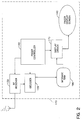
- FIG. 2 illustrates a pager which may be used in the paging system described by the current invention.
- Pager controller 140 is provided for controlling the overall operation of radio paging receiver 110.
- Pager controller 140 may comprise an "off-the-shelf' microprocessor such as any of the i486TM microprocessors manufactured by Intel Corporation.
- Radio paging receiver 110 preferably comprises a standard radio paging receiver incorporating a pager display screen 160.
- Pager display screen 160 is typically a liquid crystal display (LCD) capable of displaying textual information.
- Radio paging receiver 110 is capable of receiving radio broadcast (RF) paging signals which include textual information.
- RF radio broadcast
- the textual information, as transmitted by paging control system 50, may be represented in a variety of formats and/or coding schemes as are well known in the art.
- the form of the textual information as received by radio paging receiver 110 is not critical to the present invention as radio paging receiver 110 may receive any form of RF signal for processing according to the teachings of this invention.
- the RF paging signals are received by RF receiver 130 which may be connected to an external or internal antenna associated with radio paging receiver 110. Once received, the paging signals are decoded, if necessary, by decoder 120 into, for example, ASCII plain text data and stored temporarily in message RAM 190. Alternatively, decoder may serve to place the paging message in any form recognizable by display driver 170 and capable of being displayed by display driver 170 on pager display screen 160.
- text abstractor 90 receives as input a text message or messages to abstract, a set of commands indicating how the abstraction is to be performed and a maximum length permissible for the abstracted text.
- the following description assumes that the message to be abstracted and transmitted is an electronic mail message.
- the function of the text abstractor, and thus of the present invention, however, is not limited thereto.
- the text abstractor may process any form of textual information such as documents, letters, books, articles or facsimiles, for example.
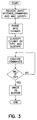
- the first step in the abstraction process is to parse the text message into "chunks".
- the most common and preferred form of a chunk is a sentence although other forms of chunks such as words or paragraphs may be used.
- Each chunk is labeled as one of three types: MAIL HEADER, TEXT, or PUNCTUATION.
- MAIL HEADER types are further classified as SIGNIFICANT or INSIGNIFICANT. Such further classification is referred to as classification into "sub-types”.
- TEXT types are further classified by subtype according to position within a paragraph - either FIRST, LAST, ONLY, or OTHER.
- PUNCTUATION chunks are those that contain no letters or digits. In the preferred embodiment there are no subtypes for the PUNCTUATION type.
- MAIL HEADER types are preferably recognized by the text abstractor 90 through a list of mail header names such as "Subject", “From", “To”, etc. which are read from an external file.
- This external file may be set up to include any key words desirable for locating MAIL HEADER data as specified by a user or administrator.
- this file is named header.txt. Words in the header.txt file that are followed by an asterisk (or some other designating character) are considered significant headers and trigger MAIL HEADER SIGNIFICANT subtype classification.
- text abstractor 90 functions to assume that words contained in a "Subject" line of a MAIL HEADER are SIGNIFICANT regardless of whether the words would otherwise be INSIGNIFICANT as determined by the header.txt file. In this way, the message recipient will be assured to receive the full subject line contained in the MAIL HEADER. Further, the system may be designed (or configured by a user or administrator) to assume that the recipient's name (specified after the "To:" identifier) should be considered to be important, regardless of whether the name appears in the header.txt file as being INSIGNIFICANT.
- the system may be set up to assume that numbers (and times and dates), whether in the MAIL HEADER or in the TEXT portion, are important.
- numbers and times and dates
- Various combinations which are readily apparent to those of skill in the art may be selected to force particular character sequences (e.g. words and numbers) to be either SIGNIFICANT or INSIGNIFICANT.
- text abstractor 90 may operate such that multiple MAIL HEADERS in a single document are processed according to a defined criteria. This will typically occur in "replied-to" mail when a recipient replies to the original sender or when a message is forwarded to a third party. In many current electronic mail environments, it is possible to include the original message (including the original MAIL HEADER) within the replying or forwarded message. In such cases multiple MAIL HEADERs will be present in a single document. Text abstractor 90 may be configured to ignore all information in any MAIL HEADERs beyond the first MAIL HEADER. Thus, all information (i.e. words, numbers and characters) in the mail message beyond the first mail message will be treated as unimportant.
- text abstractor 90 may parse the first MAIL HEADER to determine the name(s) of the party receiving the message (i.e. the "To:” party). Text abstractor 90 may then operate to classify all future words in MAIL HEADERS containing the "To:" party's name (and possibly the TEXT following them) as unimportant. This operation is based on the assumption that the recipient of the current abstracted message has previously seen the previous message (as a sender or recipient) by virtue of his name appearing in a "secondary" MAIL HEADER.
- the "from” party may be the name triggering an indication the following words are unimportant or the presence of either the "from” or the "to” party in a secondary MAIL HEADER may be used to determine that all words in a MAIL HEADER and/or the TEXT following it are unimportant. The treatment of unimportant words is discussed in detail below.
- the text abstractor 90 serially executes the commands provided to it.
- Commands may be provided interactively to the text abstractor 90 or they may be contained in a file for execution in batch.
- Commands consist of single words separated by whitespace.
- Parameter assignments consist of a name and value separated by an equal sign.
- all commands and parameter names are case-insensitive, although parameter values are not.
- Boolean parameters can be give values "true”, “false”, “yes”, no", "0” or "1". If a boolean parameter is named without being given a value, it is equivalent to setting it to true.
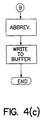
- the abstracted text is written to buffer 25.
- the value of the string parameter ChunkBegin is written to buffer 25.
- the ChunkBegin parameter indicates the beginning of a chunk as it appears in buffer 25.
- the ChunkBegin parameter may be changed in the command sequence provided to text abstractor 90 so that the message recipient has an indication of how much and what type of abstraction was performed on the original document.
- the ChunkSep character is set to be a space (" "). Alternatively, other characters may be used and/or the value may be set by the user. Finally, after all chunks have been written to buffer 25, the value of the string parameter ChunkEnd is written out.
- the ChunkEnd parameter indicates the end of the message as represented in buffer 25.
- the default values for ChunkBegin and ChunkEnd are both empty strings.
- the default value for ChunkSep is a single space. Any string value can be assigned to these variables using commands, but since the value is delimited by whitespace, the string can not include whitespace.
- the ChunkSep string parameter is treated specially: the values "space”, "lf” and “crlf” can be used to indicate a single space, a linefeed, or a carriage return linefeed pair, respectively.
- the text abstractor 90 functions according to a list of
- This command deletes all non-TEXT chunks from the document. As a result, all subsequent operations executed by text abstractor 90 on the message act only on the remaining TEXT chunks.
- the words in the document are tallied and the significance of each word is determined.
- the significance of a word depends on a number of factors as described below.
- This command may be used to save the current state of the text abstractor 90.
- the information which is saved includes the whole of the textual information which is being abstracted (i.e. the document) and the values of all parameters currently selected as well as the count of words in the text.
- dictionaries indicating STOP words and/or SIGNIFICANT words may be saved.
- the information is saved by pushing on a stack in a predefined format.
- the SAVEd state information may be restored using the RESTORE command, below.
- This command functions to discard the current state of text abstractor 90 and restores a SAVEd state from the top of the stack.
- a RESTORE when activated the stack is popped.
- a SAVEd state may only be RESTOREd once, although once RESTOREd it can be immediately SAVEd again. Should the stack be empty, the RESTORE command will have no effect.
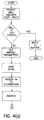
- This command determines if the document as processed so far, will fit in the maximum allotted space. If it will, the complete document is written to out to output buffer 25. At this point all remaining commands will be ignored.
- the abstracted text may be transmitted by RF transmission unit 80 once it has been placed in output buffer 25.
- TRYFIT When determining whether the document will fit into the maximum allotted space, TRYFIT considers the ChunkBegin, ChunkSep and ChunkEnd strings. As an example of this assume that pager memory contains 80 characters as does output buffer 25. Since the message, as transmitted will include ChunkBegin, ChunkSep and ChunkEnd strings it will be necessary for the actual text combined with these strings not to exceed 80 characters. Thus, for example, if an abstracted message contains one ChunkBegin string and 5 ChunkSep strings each being a single character, only 74 spaces will be left for actual message text. In this case the TRYFIT command will limit the text to 74 characters.
- This command is used to abbreviate the text of the document.
- the process is controlled by five parameters which are discussed below.
- the chunks of the document are sorted according to their significance.
- the significance of a chunk is based upon a number of factors, including the significance of the words in the chunk, the number of words in the chunk and the type and position of the chunk. The operation of this command is described in detail below.
- This command disables the use of the STOP list which contains those words which are always INSIGNIFICANT as specified by a user or administrator. These words are excluded from the significance computation as will be explained below. Examples of words contained in the STOP list include “the”, “and”, and "of'.
- the STOP list is read from a file (preferably named stoplist.txt) which contains a free form list of STOP words.
- SIGNIFICANT word list which contains those words which are always considered to be SIGNIFICANT. Examples of such words include "urgent", "important” and “priority”.
- SIGNIFICANT word list is used to boost the significance of these words during significance computation.
- the SIGNIFICANT word list is preferably contained in a file named siglist.txt which is a free form list of SIGNIFICANT words selected by a user or an administrator.
- a document is first processed by dividing the document into chunks. Once divided into chunks, a COUNTWORDS command may be executed. There are six chunk type/subtype combinations in which words may appear:
- Word significance is determined according to six parameters.
- the six parameters are:
- Each of the parameters is assigned a default value although this value may be modified by a user and/or administrator. In the preferred embodiment, the following default values are used:
- the total is compared to cw-MinPoints.
- the default value of cw-MinPoints is 3 although this value may be modified by a user or administrator or may be defaulted to some other value. If the word does not reach the cw-MinPoints threshold, then its significance is assigned the value of cw-InfreqSig. In the preferred embodiment, the default value of cw-InfreqSig is 0 although this value may be modified by a user or administrator or may be defaulted to some other value.
- cw-Factor the number of points in excess of the minimum is multiplied by cw-Factor, and the result is added to cw-BaseValue.
- the ABBREV command is next discussed. As described above, this command causes the text of the document to be abbreviated prior to placement in buffer 25.
- the process is controlled by five parameters.
- the first parameter is ab-UseDict. If this parameter is true (the default), then a table of abbreviations is read from a file preferably called abbrev.txt. Any word in the document that appears in this table of abbreviations is replaced by the corresponding abbreviation contained within the table.
- each line of abbrev.txt contains two words. The first is the original word, and the second is its corresponding abbreviation.
- text abstractor 90 will match the case of the replacement word with that of the original. unabbreviated word.
- Another desirable feature of the ABBREV function is the ability to abbreviate phrases (i.e. more than one word mapping to a single abbreviation). For example, various phrases such as "New York” may be contained in the abbrev.txt file with a corresponding abbreviation of"NY".
- the second parameter is ab-DropVowels. If this parameter is true (NOT the default), than any word which is not specified for an abbreviation in abbrev.txt is abbreviated in the abstracted message by removing all of the vowels in that word.
- the third parameter is ab-DropFirstVowels. If this parameter is true (NOT the default) then vowels are dropped even if they are the first letter in a word, otherwise they are retained.
- the fourth parameter is ab-TrimWhite. When this parameter is true (the default), then multiple white space characters are replaced by a single space. Finally, the last parameter is ab-TrimPunct. If this parameter is true (NOT the default), then all white space is removed around any punctuation.
- chunks are reordered in the abstracted document as compared to the original document according to their significance.
- the abstracted document is ordered so that the most significant chunks are first.
- the significance of chunks is determined by the collective significance of the words contained within that chunk, the number of words in that chunk and the type and subtype of the chunk. If a chunk has fewer words than sc-MinLength, then its significance is set to sc-ShortSig.
- the preferred default value for sc-MinLength is 4 and the default value for sc-ShortSig is 0.
- the parameter sc-FirstInPar indicates a chunk that is the first sentence of a paragraph
- the parameter sc-LastInPar indicates a chunk that is the last sentence of a paragraph
- the parameter sc-OnlyInPar indicates a chunk that is the only sentence of a paragraph
- the parameter sc-OtherInPar indicates a chunk that is a "middle" sentence in a paragraph.
- the default values for each of these parameters are:
- OMIT WORDS Another feature that may be desirable in the abstraction process is the ability to delete particular words (OMIT WORDS) in their entirety.
- OMIT WORDS contained within a file e.g. omitwds.txt
- OMIT WORDS contained within a file (e.g. omitwds.txt) never appear within the abstracted text even if they are contained within a chunk that is otherwise significant enough to be placed in output buffer 25.
- additional room in output buffer 25 may be provided for less significant chunks that would otherwise not make the output buffer 25.
- An additional feature which may be implemented in text abstractor 90 involves parenthetical phrases. Such phrases may be dealt with by determining the overall value for the chunk with the parenthetical phrase contained therein. This is accomplished as discussed above by determining the collective significance of all the words contained within the chunk including the words in the parenthetical phrase. Then, the collective significance of the chunk without inclusion of the words in the parenthetical phrase is determined. A threshold difference value is specified and if the difference in the respective significances is smaller than the threshold value, then since there is not much difference, the parenthetical phrase may be omitted from the abstracted text. Otherwise, if the difference in significances is at or larger than the threshold value then the parenthetical phrase is retained.
- the TEXTONLY command is used to remove all of the mail headers and punctuation lines. Once completed, the TRYFIT command determines whether the document is now short enough. It should be noted that it does not matter if the document was already short enough with the mail headers; the length is not checked until after the headers are removed. Next, the ab-trimwhite and ab-trimpunct parameters are set to true in preparation for a later ABBREV command.
- the SAVE command saves away all of the state information until the next RESTORE. It is used here because it is desired to try to abbreviate the document before chunks are rearranged based upon significance.
- the SAVE and RESTORE commands allow for abbreviation of the document but with the ability to return to the unabbreviated state if it turns out that the abbreviating was not sufficient to fit the document into the required space. It is not possible to simply abbreviate and then compute significances without using SAVE and RESTORE because the abbreviated words are likely not to be recognized properly when re-processing the significance computation.
- ChunkBegin is set to a* (for "abbreviated only") so that if the abbreviating is sufficient alone to fit the document, the transmitted text will be marked with an "a*" at the beginning as an indication to the receiver of the document. Later, if abbreviating is not alone sufficient, ChunkBegin is changed to "s*" to indicate that the text has been sorted and selected by significance. Thus, starting from the most significant chunks and proceeding towards the less significant chunks, it may be that some of the less significant chunks will be omitted from the transmission if the buffer 25 otherwise fills with more significant chunks.
- the command ABBREV next abbreviates the text and then TRYFIT checks to see if the document is now short enough. If it is, the text abstractor 90 writes the text to buffer 25 and the message is transmitted by RF transmission unit 80. Otherwise, the text abstractor 90 continues on to the RESTORE command, which restores the state to the previous SAVE, that is, before the abbreviating.
- ChunkBegin is set to "s*" to indicate that sorting and selection have occurred and ChunkSep is set to a pipe, to further indicate to the message recipient that pieces of the message have been rearranged.
- the COUNTWORDS command is next executed to compute the significance of words and chunks and then the text is rearranged based upon chunk significance.
- a final ABBREV gets the text a little smaller, and the commands are completed.
- Text abstractor 90 then writes out to buffer 25 as much as will fit for transmission by RF transmission unit 80.
- a COUNTWORDS command is executed at the desired time within the command language script. It is necessary to execute the COUNTWORDS command so that each of the words in the document may be assigned a significance value. Once this is done, words having a significance value below a certain pre-determined threshold may be removed from the abstracted message. Alternatively, when chunk reordering is performed prior to word removal, during the word removal phase words may be selected to remain in the abstracted message based upon having a relatively high word significance.
- the available buffer space is 80 characters and all of the words in the message following chunk reordering (and possibly abbreviation) amount to 90 characters, instead of removing the least significant chunk from the message it may be possible to remove words amounting to a total of ten characters.
- the removed words may come from multiple chunks. By removing the low significance words, it may become unnecessary to remove the least significant chunk in its entirety.
Landscapes
- Engineering & Computer Science (AREA)
- Theoretical Computer Science (AREA)
- Data Mining & Analysis (AREA)
- Databases & Information Systems (AREA)
- Physics & Mathematics (AREA)
- General Engineering & Computer Science (AREA)
- General Physics & Mathematics (AREA)
- Information Transfer Between Computers (AREA)
- Medicines Containing Material From Animals Or Micro-Organisms (AREA)
- Coloring Foods And Improving Nutritive Qualities (AREA)
- Preparation Of Compounds By Using Micro-Organisms (AREA)
- Communication Control (AREA)
- Mobile Radio Communication Systems (AREA)
- Information Retrieval, Db Structures And Fs Structures Therefor (AREA)
- Breeding Of Plants And Reproduction By Means Of Culturing (AREA)
- Telephonic Communication Services (AREA)
- Indexing, Searching, Synchronizing, And The Amount Of Synchronization Travel Of Record Carriers (AREA)
Applications Claiming Priority (3)
| Application Number | Priority Date | Filing Date | Title |
|---|---|---|---|
| US08/514,809 US5691708A (en) | 1995-08-14 | 1995-08-14 | Text abstraction method and apparatus |
| US514809 | 1995-08-14 | ||
| EP96928870A EP0786116B1 (fr) | 1995-08-14 | 1996-08-14 | Procede et dispositif d'abreviation textuelle |
Related Parent Applications (1)
| Application Number | Title | Priority Date | Filing Date |
|---|---|---|---|
| EP96928870A Division EP0786116B1 (fr) | 1995-08-14 | 1996-08-14 | Procede et dispositif d'abreviation textuelle |
Publications (3)
| Publication Number | Publication Date |
|---|---|
| EP0915438A2 true EP0915438A2 (fr) | 1999-05-12 |
| EP0915438A3 EP0915438A3 (fr) | 2000-04-05 |
| EP0915438B1 EP0915438B1 (fr) | 2004-10-13 |
Family
ID=24048786
Family Applications (2)
| Application Number | Title | Priority Date | Filing Date |
|---|---|---|---|
| EP96928870A Expired - Lifetime EP0786116B1 (fr) | 1995-08-14 | 1996-08-14 | Procede et dispositif d'abreviation textuelle |
| EP98204207A Expired - Lifetime EP0915438B1 (fr) | 1995-08-14 | 1996-08-14 | Système d'appel à abréviation textuelle |
Family Applications Before (1)
| Application Number | Title | Priority Date | Filing Date |
|---|---|---|---|
| EP96928870A Expired - Lifetime EP0786116B1 (fr) | 1995-08-14 | 1996-08-14 | Procede et dispositif d'abreviation textuelle |
Country Status (6)
| Country | Link |
|---|---|
| US (1) | US5691708A (fr) |
| EP (2) | EP0786116B1 (fr) |
| KR (1) | KR100530709B1 (fr) |
| AT (2) | ATE233003T1 (fr) |
| DE (2) | DE69633639T2 (fr) |
| WO (1) | WO1997007469A2 (fr) |
Families Citing this family (33)
| Publication number | Priority date | Publication date | Assignee | Title |
|---|---|---|---|---|
| AU6148998A (en) * | 1997-05-22 | 1998-12-11 | Seiko Communications Of America, Inc. | Electronic mail notification and access |
| JP4214598B2 (ja) * | 1998-04-02 | 2009-01-28 | ソニー株式会社 | 文書処理方法および装置ならびに記録媒体 |
| US7168039B2 (en) * | 1998-06-02 | 2007-01-23 | International Business Machines Corporation | Method and system for reducing the horizontal space required for displaying a column containing text data |
| US6249675B1 (en) | 1998-08-07 | 2001-06-19 | At&T Corporation | Method and apparatus for network paging |
| US6279018B1 (en) | 1998-12-21 | 2001-08-21 | Kudrollis Software Inventions Pvt. Ltd. | Abbreviating and compacting text to cope with display space constraint in computer software |
| US7475343B1 (en) * | 1999-05-11 | 2009-01-06 | Mielenhausen Thomas C | Data processing apparatus and method for converting words to abbreviations, converting abbreviations to words, and selecting abbreviations for insertion into text |
| US6772346B1 (en) * | 1999-07-16 | 2004-08-03 | International Business Machines Corporation | System and method for managing files in a distributed system using filtering |
| US20060288298A1 (en) * | 1999-08-12 | 2006-12-21 | Robert Haitani | System, method and technique for enabling users to interact with address fields of messaging applications |
| US6452597B1 (en) * | 1999-08-24 | 2002-09-17 | Microsoft Corporation | Displaying text on a limited-area display surface |
| JP2002041404A (ja) * | 2000-07-24 | 2002-02-08 | Canon Inc | 情報提供システム及び装置とその方法 |
| JP4521943B2 (ja) * | 2000-07-24 | 2010-08-11 | キヤノン株式会社 | 情報提供装置及び情報提供方法、コンピュータ読み取り可能な記憶媒体 |
| JP4536225B2 (ja) * | 2000-07-28 | 2010-09-01 | 富士通株式会社 | メッセージ送受信システムにおけるキーワードとその重要度の動的決定 |
| US20020087985A1 (en) * | 2000-12-01 | 2002-07-04 | Yakov Kamen | Methods and apparatuses for displaying meaningful abbreviated program titles |
| GB0107772D0 (en) * | 2001-03-28 | 2001-05-16 | Hewlett Packard Co | Improvements relating to data delivery |
| US8001465B2 (en) * | 2001-06-26 | 2011-08-16 | Kudrollis Software Inventions Pvt. Ltd. | Compacting an information array display to cope with two dimensional display space constraint |
| KR100435442B1 (ko) * | 2001-11-13 | 2004-06-10 | 주식회사 포스코 | 문서 요약 방법 및 시스템 |
| US7315902B2 (en) * | 2002-12-19 | 2008-01-01 | International Business Machines Corporation | Compression and abbreviation for fixed length messaging |
| JP4236630B2 (ja) * | 2004-11-30 | 2009-03-11 | 三洋電機株式会社 | コンテンツデータ記録媒体 |
| KR100834293B1 (ko) * | 2006-11-06 | 2008-05-30 | 엔에이치엔(주) | 문서 처리 시스템 및 방법 |
| US8458252B2 (en) * | 2006-12-15 | 2013-06-04 | International Business Machines Corporation | Minimizing the time required to initiate and terminate an instant messaging session |
| CN101286154B (zh) * | 2007-04-09 | 2016-08-10 | 谷歌股份有限公司 | 输入法编辑器用户档案 |
| CN104605970A (zh) | 2008-05-29 | 2015-05-13 | 瑞思迈有限公司 | 医用头带 |
| US20100145676A1 (en) * | 2008-12-09 | 2010-06-10 | Qualcomm Incorporated | Method and apparatus for adjusting the length of text strings to fit display sizes |
| US20110313756A1 (en) * | 2010-06-21 | 2011-12-22 | Connor Robert A | Text sizer (TM) |
| KR101766484B1 (ko) * | 2011-06-17 | 2017-08-09 | 네이버 주식회사 | 청크를 이용한 메일 관리 방법 및 장치 |
| WO2013049687A1 (fr) * | 2011-09-30 | 2013-04-04 | Mail Bypass, Inc. | Systèmes et procédés de distribution de messages |
| WO2015133714A1 (fr) * | 2014-03-07 | 2015-09-11 | 에스케이플래닛 주식회사 | Procédé d'émission de messages, dispositif et système associés |
| US10175866B2 (en) | 2015-06-05 | 2019-01-08 | Apple Inc. | Providing complications on an electronic watch |
| US10572571B2 (en) * | 2015-06-05 | 2020-02-25 | Apple Inc. | API for specifying display of complication on an electronic watch |
| US11327640B2 (en) | 2015-06-05 | 2022-05-10 | Apple Inc. | Providing complications on an electronic device |
| US11115359B2 (en) | 2016-11-03 | 2021-09-07 | Samsung Electronics Co., Ltd. | Method and apparatus for importance filtering a plurality of messages |
| US11188710B2 (en) * | 2016-12-30 | 2021-11-30 | Dropbox, Inc. | Inline content item editor commands |
| US20190065446A1 (en) * | 2017-08-22 | 2019-02-28 | Microsoft Technology Licensing, Llc | Reducing text length while preserving meaning |
Family Cites Families (11)
| Publication number | Priority date | Publication date | Assignee | Title |
|---|---|---|---|---|
| US4713808A (en) * | 1985-11-27 | 1987-12-15 | A T & E Corporation | Watch pager system and communication protocol |
| US5043718A (en) * | 1988-09-20 | 1991-08-27 | Casio Computer Co., Ltd. | Selective paging system and paging receiver therefor |
| JP2783558B2 (ja) * | 1988-09-30 | 1998-08-06 | 株式会社東芝 | 要約生成方法および要約生成装置 |
| JP2676554B2 (ja) * | 1989-07-10 | 1997-11-17 | ティーオーエー株式会社 | 短縮機能付きポケット・ページャ |
| US4955066A (en) * | 1989-10-13 | 1990-09-04 | Microsoft Corporation | Compressing and decompressing text files |
| US5258739A (en) * | 1989-11-09 | 1993-11-02 | Motorola, Inc. | Efficient message storage within a selective call receiver |
| US5257307A (en) * | 1990-02-07 | 1993-10-26 | Sharp Kabushiki Kaisha | Radio pager system which transmits secret coded messages from a caller to a pager terminal apparatus |
| US5367452A (en) * | 1990-10-05 | 1994-11-22 | Carts Of Colorado, Inc. | Mobile merchandising business management system which provides comprehensive support services for transportable business operations |
| JP2827630B2 (ja) * | 1991-10-24 | 1998-11-25 | 日本電気株式会社 | 選択呼出受信機 |
| US5396228A (en) * | 1992-01-16 | 1995-03-07 | Mobile Telecommunications Technologies | Methods and apparatus for compressing and decompressing paging data |
| JP2682407B2 (ja) * | 1993-10-22 | 1997-11-26 | 日本電気株式会社 | ページングシステム制御装置 |
-
1995
- 1995-08-14 US US08/514,809 patent/US5691708A/en not_active Expired - Fee Related
-
1996
- 1996-08-14 KR KR1019970702426A patent/KR100530709B1/ko not_active Expired - Fee Related
- 1996-08-14 EP EP96928870A patent/EP0786116B1/fr not_active Expired - Lifetime
- 1996-08-14 AT AT96928870T patent/ATE233003T1/de not_active IP Right Cessation
- 1996-08-14 WO PCT/US1996/013196 patent/WO1997007469A2/fr not_active Ceased
- 1996-08-14 DE DE69633639T patent/DE69633639T2/de not_active Expired - Lifetime
- 1996-08-14 AT AT98204207T patent/ATE279752T1/de not_active IP Right Cessation
- 1996-08-14 DE DE69626271T patent/DE69626271T2/de not_active Expired - Lifetime
- 1996-08-14 EP EP98204207A patent/EP0915438B1/fr not_active Expired - Lifetime
Also Published As
| Publication number | Publication date |
|---|---|
| EP0915438A3 (fr) | 2000-04-05 |
| ATE233003T1 (de) | 2003-03-15 |
| WO1997007469A3 (fr) | 1997-05-15 |
| DE69626271D1 (de) | 2003-03-27 |
| EP0786116B1 (fr) | 2003-02-19 |
| WO1997007469A2 (fr) | 1997-02-27 |
| KR100530709B1 (ko) | 2006-01-27 |
| DE69626271T2 (de) | 2003-10-30 |
| EP0915438B1 (fr) | 2004-10-13 |
| DE69633639D1 (de) | 2004-11-18 |
| EP0786116A2 (fr) | 1997-07-30 |
| DE69633639T2 (de) | 2005-10-20 |
| ATE279752T1 (de) | 2004-10-15 |
| KR970707499A (ko) | 1997-12-01 |
| US5691708A (en) | 1997-11-25 |
Similar Documents
| Publication | Publication Date | Title |
|---|---|---|
| US5691708A (en) | Text abstraction method and apparatus | |
| US5635918A (en) | Method and apparatus for controlling message delivery to wireless receiver devices | |
| US7502732B2 (en) | Compressing messages on a per semantic component basis while maintaining a degree of human readability | |
| US5437024A (en) | Selective computer-generated information distribution system by computer peripheral emulation and use | |
| US6546417B1 (en) | Enhanced electronic mail system including methods and apparatus for identifying mime types and for displaying different icons | |
| US5613108A (en) | Electronic mail processing system and electronic mail processing method | |
| CA2109899C (fr) | Systeme multimedia a integration de messages | |
| US5778213A (en) | Multilingual storage and retrieval | |
| US7035902B1 (en) | Method, article of manufacture and apparatus for processing an electronic mail document | |
| US6216165B1 (en) | E-mail paging system and method | |
| EP0930593B1 (fr) | Appel sélectif | |
| US20030009595A1 (en) | System and method for compressing data using field-based code word generation | |
| EP0130375A2 (fr) | Méthode de commande interactive pour la communication de données entre des systèmes incompatibles de traitement d'information | |
| US7538771B2 (en) | Mail data processing method, mail server, program for mail server, terminal device and program for terminal device | |
| EP1729421A2 (fr) | Méthode de compression de messages courts dans un terminal de communication mobile | |
| US5666210A (en) | Document communication apparatus and document communication system | |
| US20040176944A1 (en) | Composite apparatus having a multiple of functions | |
| WO2011004207A1 (fr) | Procédé et système de compression de messages courts, programme informatique et produit-programme informatique associés | |
| JP2638480B2 (ja) | アラーム情報配信装置 | |
| JP2737283B2 (ja) | 無線選択呼出受信機 | |
| US5452404A (en) | Data processing system for automatically changing printing modes in response to stored commands | |
| JP2002024144A (ja) | 電子メール転送方法及び装置及び電子メール転送プログラムを格納した記憶媒体 | |
| JP2003006122A (ja) | 電子メール処理装置及び電子メール処理プログラムを記録した記録媒体 | |
| JPH07200630A (ja) | 受信した情報を選択的に保存して表示する受信・表示 装置 | |
| JP2000293456A (ja) | 電子掲示板文書の未読・既読管理システム |
Legal Events
| Date | Code | Title | Description |
|---|---|---|---|
| PUAI | Public reference made under article 153(3) epc to a published international application that has entered the european phase |
Free format text: ORIGINAL CODE: 0009012 |
|
| AC | Divisional application: reference to earlier application |
Ref document number: 786116 Country of ref document: EP |
|
| AK | Designated contracting states |
Kind code of ref document: A2 Designated state(s): AT BE CH DE DK ES FI FR GB GR IE IT LI LU MC NL PT SE |
|
| RIN1 | Information on inventor provided before grant (corrected) |
Inventor name: BATCHELDER, EDWARD M. |
|
| PUAL | Search report despatched |
Free format text: ORIGINAL CODE: 0009013 |
|
| AK | Designated contracting states |
Kind code of ref document: A3 Designated state(s): AT BE CH DE DK ES FI FR GB GR IE IT LI LU MC NL PT SE |
|
| RIC1 | Information provided on ipc code assigned before grant |
Free format text: 7G 08B 3/10 A, 7H 04Q 7/10 B |
|
| 17P | Request for examination filed |
Effective date: 20001106 |
|
| RAP1 | Party data changed (applicant data changed or rights of an application transferred) |
Owner name: INTERNATIONAL BUSINESS MACHINESCORPORATION |
|
| 17Q | First examination report despatched |
Effective date: 20030122 |
|
| RIC1 | Information provided on ipc code assigned before grant |
Ipc: 7G 06F 17/30 A |
|
| GRAP | Despatch of communication of intention to grant a patent |
Free format text: ORIGINAL CODE: EPIDOSNIGR1 |
|
| DAX | Request for extension of the european patent (deleted) | ||
| GRAS | Grant fee paid |
Free format text: ORIGINAL CODE: EPIDOSNIGR3 |
|
| GRAA | (expected) grant |
Free format text: ORIGINAL CODE: 0009210 |
|
| AC | Divisional application: reference to earlier application |
Ref document number: 0786116 Country of ref document: EP Kind code of ref document: P |
|
| AK | Designated contracting states |
Kind code of ref document: B1 Designated state(s): AT BE CH DE DK ES FI FR GB GR IE IT LI LU MC NL PT SE |
|
| PG25 | Lapsed in a contracting state [announced via postgrant information from national office to epo] |
Ref country code: NL Free format text: LAPSE BECAUSE OF FAILURE TO SUBMIT A TRANSLATION OF THE DESCRIPTION OR TO PAY THE FEE WITHIN THE PRESCRIBED TIME-LIMIT Effective date: 20041013 Ref country code: LI Free format text: LAPSE BECAUSE OF FAILURE TO SUBMIT A TRANSLATION OF THE DESCRIPTION OR TO PAY THE FEE WITHIN THE PRESCRIBED TIME-LIMIT Effective date: 20041013 Ref country code: IT Free format text: LAPSE BECAUSE OF FAILURE TO SUBMIT A TRANSLATION OF THE DESCRIPTION OR TO PAY THE FEE WITHIN THE PRE;WARNING: LAPSES OF ITALIAN PATENTS WITH EFFECTIVE DATE BEFORE 2007 MAY HAVE OCCURRED AT ANY TIME BEFORE 2007. THE CORRECT EFFECTIVE DATE MAY BE DIFFERENT FROM THE ONE RECORDED.SCRIBED TIME-LIMIT Effective date: 20041013 Ref country code: FI Free format text: LAPSE BECAUSE OF FAILURE TO SUBMIT A TRANSLATION OF THE DESCRIPTION OR TO PAY THE FEE WITHIN THE PRESCRIBED TIME-LIMIT Effective date: 20041013 Ref country code: CH Free format text: LAPSE BECAUSE OF FAILURE TO SUBMIT A TRANSLATION OF THE DESCRIPTION OR TO PAY THE FEE WITHIN THE PRESCRIBED TIME-LIMIT Effective date: 20041013 Ref country code: BE Free format text: LAPSE BECAUSE OF FAILURE TO SUBMIT A TRANSLATION OF THE DESCRIPTION OR TO PAY THE FEE WITHIN THE PRESCRIBED TIME-LIMIT Effective date: 20041013 Ref country code: AT Free format text: LAPSE BECAUSE OF FAILURE TO SUBMIT A TRANSLATION OF THE DESCRIPTION OR TO PAY THE FEE WITHIN THE PRESCRIBED TIME-LIMIT Effective date: 20041013 |
|
| REG | Reference to a national code |
Ref country code: GB Ref legal event code: FG4D |
|
| REG | Reference to a national code |
Ref country code: CH Ref legal event code: EP |
|
| REG | Reference to a national code |
Ref country code: IE Ref legal event code: FG4D |
|
| REF | Corresponds to: |
Ref document number: 69633639 Country of ref document: DE Date of ref document: 20041118 Kind code of ref document: P |
|
| REG | Reference to a national code |
Ref country code: CH Ref legal event code: NV Representative=s name: DIPL.-ING. PETER M. KLETT C/O IBM RESEARCH LABORAT |
|
| PG25 | Lapsed in a contracting state [announced via postgrant information from national office to epo] |
Ref country code: SE Free format text: LAPSE BECAUSE OF FAILURE TO SUBMIT A TRANSLATION OF THE DESCRIPTION OR TO PAY THE FEE WITHIN THE PRESCRIBED TIME-LIMIT Effective date: 20050113 Ref country code: GR Free format text: LAPSE BECAUSE OF FAILURE TO SUBMIT A TRANSLATION OF THE DESCRIPTION OR TO PAY THE FEE WITHIN THE PRESCRIBED TIME-LIMIT Effective date: 20050113 Ref country code: DK Free format text: LAPSE BECAUSE OF FAILURE TO SUBMIT A TRANSLATION OF THE DESCRIPTION OR TO PAY THE FEE WITHIN THE PRESCRIBED TIME-LIMIT Effective date: 20050113 |
|
| PG25 | Lapsed in a contracting state [announced via postgrant information from national office to epo] |
Ref country code: ES Free format text: LAPSE BECAUSE OF FAILURE TO SUBMIT A TRANSLATION OF THE DESCRIPTION OR TO PAY THE FEE WITHIN THE PRESCRIBED TIME-LIMIT Effective date: 20050124 |
|
| NLV1 | Nl: lapsed or annulled due to failure to fulfill the requirements of art. 29p and 29m of the patents act | ||
| REG | Reference to a national code |
Ref country code: CH Ref legal event code: PL |
|
| PG25 | Lapsed in a contracting state [announced via postgrant information from national office to epo] |
Ref country code: LU Free format text: LAPSE BECAUSE OF NON-PAYMENT OF DUE FEES Effective date: 20050814 |
|
| PG25 | Lapsed in a contracting state [announced via postgrant information from national office to epo] |
Ref country code: IE Free format text: LAPSE BECAUSE OF NON-PAYMENT OF DUE FEES Effective date: 20050815 |
|
| PLBE | No opposition filed within time limit |
Free format text: ORIGINAL CODE: 0009261 |
|
| STAA | Information on the status of an ep patent application or granted ep patent |
Free format text: STATUS: NO OPPOSITION FILED WITHIN TIME LIMIT |
|
| ET | Fr: translation filed | ||
| PG25 | Lapsed in a contracting state [announced via postgrant information from national office to epo] |
Ref country code: MC Free format text: LAPSE BECAUSE OF NON-PAYMENT OF DUE FEES Effective date: 20050831 |
|
| 26N | No opposition filed |
Effective date: 20050714 |
|
| REG | Reference to a national code |
Ref country code: IE Ref legal event code: MM4A |
|
| PG25 | Lapsed in a contracting state [announced via postgrant information from national office to epo] |
Ref country code: PT Free format text: LAPSE BECAUSE OF NON-PAYMENT OF DUE FEES Effective date: 20050313 |
|
| REG | Reference to a national code |
Ref country code: GB Ref legal event code: 746 Effective date: 20080722 |
|
| PGFP | Annual fee paid to national office [announced via postgrant information from national office to epo] |
Ref country code: FR Payment date: 20100818 Year of fee payment: 15 Ref country code: DE Payment date: 20100826 Year of fee payment: 15 |
|
| PGFP | Annual fee paid to national office [announced via postgrant information from national office to epo] |
Ref country code: GB Payment date: 20100819 Year of fee payment: 15 |
|
| GBPC | Gb: european patent ceased through non-payment of renewal fee |
Effective date: 20110814 |
|
| REG | Reference to a national code |
Ref country code: FR Ref legal event code: ST Effective date: 20120430 |
|
| REG | Reference to a national code |
Ref country code: DE Ref legal event code: R119 Ref document number: 69633639 Country of ref document: DE Effective date: 20120301 |
|
| PG25 | Lapsed in a contracting state [announced via postgrant information from national office to epo] |
Ref country code: GB Free format text: LAPSE BECAUSE OF NON-PAYMENT OF DUE FEES Effective date: 20110814 Ref country code: FR Free format text: LAPSE BECAUSE OF NON-PAYMENT OF DUE FEES Effective date: 20110831 |
|
| PG25 | Lapsed in a contracting state [announced via postgrant information from national office to epo] |
Ref country code: DE Free format text: LAPSE BECAUSE OF NON-PAYMENT OF DUE FEES Effective date: 20120301 |