EP0918514B1 - Triarylmethanverbindungen zur behandlung von krebs, aktinischer keratose und kaposisarkom - Google Patents
Triarylmethanverbindungen zur behandlung von krebs, aktinischer keratose und kaposisarkom Download PDFInfo
- Publication number
- EP0918514B1 EP0918514B1 EP97916889A EP97916889A EP0918514B1 EP 0918514 B1 EP0918514 B1 EP 0918514B1 EP 97916889 A EP97916889 A EP 97916889A EP 97916889 A EP97916889 A EP 97916889A EP 0918514 B1 EP0918514 B1 EP 0918514B1
- Authority
- EP
- European Patent Office
- Prior art keywords
- alkyl
- alkenyl
- alkynyl
- group
- aryl
- Prior art date
- Legal status (The legal status is an assumption and is not a legal conclusion. Google has not performed a legal analysis and makes no representation as to the accuracy of the status listed.)
- Expired - Lifetime
Links
- 0 CCc1c(C(*(C)(C)*)(c2ccc(*)cc2)c2c(*)ccc(*)c2)cccc1 Chemical compound CCc1c(C(*(C)(C)*)(c2ccc(*)cc2)c2c(*)ccc(*)c2)cccc1 0.000 description 16
- QIDUHGHFWAMMPV-UHFFFAOYSA-N CC(c1ccccc1)(c1ccccc1)c1ccccc1 Chemical compound CC(c1ccccc1)(c1ccccc1)c1ccccc1 QIDUHGHFWAMMPV-UHFFFAOYSA-N 0.000 description 2
- OUYQXPSBMLHCAW-UHFFFAOYSA-N CCOC(C(c1ccccc1)(c1ccccc1)N1CCCCC1)=O Chemical compound CCOC(C(c1ccccc1)(c1ccccc1)N1CCCCC1)=O OUYQXPSBMLHCAW-UHFFFAOYSA-N 0.000 description 1
- NWAYOXBXPBXZDF-UHFFFAOYSA-N CNC(C(c1ccccc1)c1ccccc1)c1ccccc1 Chemical compound CNC(C(c1ccccc1)c1ccccc1)c1ccccc1 NWAYOXBXPBXZDF-UHFFFAOYSA-N 0.000 description 1
- IRMNIXXVOOMKKP-UHFFFAOYSA-N COC(c1ccccc1)(c1ccccc1)c1ccccc1 Chemical compound COC(c1ccccc1)(c1ccccc1)c1ccccc1 IRMNIXXVOOMKKP-UHFFFAOYSA-N 0.000 description 1
- KHDXUILEAVJECZ-UHFFFAOYSA-N COc1ccc(C(c2ccccc2)c(cccc2)c2Cl)cc1 Chemical compound COc1ccc(C(c2ccccc2)c(cccc2)c2Cl)cc1 KHDXUILEAVJECZ-UHFFFAOYSA-N 0.000 description 1
- QEPQGCCXBAFXNF-UHFFFAOYSA-N N#CC(c1ccccc1)(c1ccccc1)c(c([I]=[IH])c1)ccc1N=O Chemical compound N#CC(c1ccccc1)(c1ccccc1)c(c([I]=[IH])c1)ccc1N=O QEPQGCCXBAFXNF-UHFFFAOYSA-N 0.000 description 1
- KVNUSGZJFIWFST-UHFFFAOYSA-N N#CC(c1ccccc1)(c1ccccc1)c(cc1)ccc1[N+]([O-])=O Chemical compound N#CC(c1ccccc1)(c1ccccc1)c(cc1)ccc1[N+]([O-])=O KVNUSGZJFIWFST-UHFFFAOYSA-N 0.000 description 1
- JHNRTPKGSCVKKC-UHFFFAOYSA-N N#CC(c1ccccc1)(c1ccccc1)c(cccc1)c1Cl Chemical compound N#CC(c1ccccc1)(c1ccccc1)c(cccc1)c1Cl JHNRTPKGSCVKKC-UHFFFAOYSA-N 0.000 description 1
- OTHZYPKAHPPLOH-UHFFFAOYSA-N O=CC(c1ccccc1)(c1ccccc1)c(cccc1)c1Cl Chemical compound O=CC(c1ccccc1)(c1ccccc1)c(cccc1)c1Cl OTHZYPKAHPPLOH-UHFFFAOYSA-N 0.000 description 1
- QIEQGBXDGUHFNR-UHFFFAOYSA-N OC(C(Cc1cc(cccc2)c2cc1)C(c1ccccc1)(c1ccccc1)c1ccccc1)=O Chemical compound OC(C(Cc1cc(cccc2)c2cc1)C(c1ccccc1)(c1ccccc1)c1ccccc1)=O QIEQGBXDGUHFNR-UHFFFAOYSA-N 0.000 description 1
- VWRQCJRTHKUVNF-UHFFFAOYSA-N OC(c1ccccc1)(c1ccccc1)C#Cc1ccccc1 Chemical compound OC(c1ccccc1)(c1ccccc1)C#Cc1ccccc1 VWRQCJRTHKUVNF-UHFFFAOYSA-N 0.000 description 1
- VUXJWZKEVVTUGQ-GOSISDBHSA-N O[C@@](C1=CC=CCC1)(c1ccccc1)c1cccnc1 Chemical compound O[C@@](C1=CC=CCC1)(c1ccccc1)c1cccnc1 VUXJWZKEVVTUGQ-GOSISDBHSA-N 0.000 description 1
Classifications
-
- A—HUMAN NECESSITIES
- A61—MEDICAL OR VETERINARY SCIENCE; HYGIENE
- A61K—PREPARATIONS FOR MEDICAL, DENTAL OR TOILETRY PURPOSES
- A61K31/00—Medicinal preparations containing organic active ingredients
- A61K31/02—Halogenated hydrocarbons
- A61K31/025—Halogenated hydrocarbons carbocyclic
- A61K31/03—Halogenated hydrocarbons carbocyclic aromatic
-
- A—HUMAN NECESSITIES
- A61—MEDICAL OR VETERINARY SCIENCE; HYGIENE
- A61K—PREPARATIONS FOR MEDICAL, DENTAL OR TOILETRY PURPOSES
- A61K31/00—Medicinal preparations containing organic active ingredients
- A61K31/075—Ethers or acetals
-
- A—HUMAN NECESSITIES
- A61—MEDICAL OR VETERINARY SCIENCE; HYGIENE
- A61K—PREPARATIONS FOR MEDICAL, DENTAL OR TOILETRY PURPOSES
- A61K31/00—Medicinal preparations containing organic active ingredients
- A61K31/075—Ethers or acetals
- A61K31/085—Ethers or acetals having an ether linkage to aromatic ring nuclear carbon
-
- A—HUMAN NECESSITIES
- A61—MEDICAL OR VETERINARY SCIENCE; HYGIENE
- A61K—PREPARATIONS FOR MEDICAL, DENTAL OR TOILETRY PURPOSES
- A61K31/00—Medicinal preparations containing organic active ingredients
- A61K31/095—Sulfur, selenium, or tellurium compounds, e.g. thiols
- A61K31/10—Sulfides; Sulfoxides; Sulfones
-
- A—HUMAN NECESSITIES
- A61—MEDICAL OR VETERINARY SCIENCE; HYGIENE
- A61K—PREPARATIONS FOR MEDICAL, DENTAL OR TOILETRY PURPOSES
- A61K31/00—Medicinal preparations containing organic active ingredients
- A61K31/13—Amines
- A61K31/15—Oximes (>C=N—O—); Hydrazines (>N—N<); Hydrazones (>N—N=) ; Imines (C—N=C)
-
- A—HUMAN NECESSITIES
- A61—MEDICAL OR VETERINARY SCIENCE; HYGIENE
- A61K—PREPARATIONS FOR MEDICAL, DENTAL OR TOILETRY PURPOSES
- A61K31/00—Medicinal preparations containing organic active ingredients
- A61K31/33—Heterocyclic compounds
- A61K31/38—Heterocyclic compounds having sulfur as a ring hetero atom
- A61K31/381—Heterocyclic compounds having sulfur as a ring hetero atom having five-membered rings
-
- A—HUMAN NECESSITIES
- A61—MEDICAL OR VETERINARY SCIENCE; HYGIENE
- A61P—SPECIFIC THERAPEUTIC ACTIVITY OF CHEMICAL COMPOUNDS OR MEDICINAL PREPARATIONS
- A61P35/00—Antineoplastic agents
-
- A—HUMAN NECESSITIES
- A61—MEDICAL OR VETERINARY SCIENCE; HYGIENE
- A61P—SPECIFIC THERAPEUTIC ACTIVITY OF CHEMICAL COMPOUNDS OR MEDICINAL PREPARATIONS
- A61P43/00—Drugs for specific purposes, not provided for in groups A61P1/00-A61P41/00
-
- C—CHEMISTRY; METALLURGY
- C07—ORGANIC CHEMISTRY
- C07C—ACYCLIC OR CARBOCYCLIC COMPOUNDS
- C07C15/00—Cyclic hydrocarbons containing only six-membered aromatic rings as cyclic parts
- C07C15/12—Polycyclic non-condensed hydrocarbons
- C07C15/16—Polycyclic non-condensed hydrocarbons containing at least two phenyl groups linked by one single acyclic carbon atom
-
- C—CHEMISTRY; METALLURGY
- C07—ORGANIC CHEMISTRY
- C07C—ACYCLIC OR CARBOCYCLIC COMPOUNDS
- C07C17/00—Preparation of halogenated hydrocarbons
- C07C17/35—Preparation of halogenated hydrocarbons by reactions not affecting the number of carbon or of halogen atoms in the reaction
-
- C—CHEMISTRY; METALLURGY
- C07—ORGANIC CHEMISTRY
- C07C—ACYCLIC OR CARBOCYCLIC COMPOUNDS
- C07C211/00—Compounds containing amino groups bound to a carbon skeleton
- C07C211/01—Compounds containing amino groups bound to a carbon skeleton having amino groups bound to acyclic carbon atoms
- C07C211/26—Compounds containing amino groups bound to a carbon skeleton having amino groups bound to acyclic carbon atoms of an unsaturated carbon skeleton containing at least one six-membered aromatic ring
- C07C211/27—Compounds containing amino groups bound to a carbon skeleton having amino groups bound to acyclic carbon atoms of an unsaturated carbon skeleton containing at least one six-membered aromatic ring having amino groups linked to the six-membered aromatic ring by saturated carbon chains
-
- C—CHEMISTRY; METALLURGY
- C07—ORGANIC CHEMISTRY
- C07C—ACYCLIC OR CARBOCYCLIC COMPOUNDS
- C07C211/00—Compounds containing amino groups bound to a carbon skeleton
- C07C211/43—Compounds containing amino groups bound to a carbon skeleton having amino groups bound to carbon atoms of six-membered aromatic rings of the carbon skeleton
- C07C211/44—Compounds containing amino groups bound to a carbon skeleton having amino groups bound to carbon atoms of six-membered aromatic rings of the carbon skeleton having amino groups bound to only one six-membered aromatic ring
- C07C211/52—Compounds containing amino groups bound to a carbon skeleton having amino groups bound to carbon atoms of six-membered aromatic rings of the carbon skeleton having amino groups bound to only one six-membered aromatic ring the carbon skeleton being further substituted by halogen atoms or by nitro or nitroso groups
-
- C—CHEMISTRY; METALLURGY
- C07—ORGANIC CHEMISTRY
- C07C—ACYCLIC OR CARBOCYCLIC COMPOUNDS
- C07C211/00—Compounds containing amino groups bound to a carbon skeleton
- C07C211/43—Compounds containing amino groups bound to a carbon skeleton having amino groups bound to carbon atoms of six-membered aromatic rings of the carbon skeleton
- C07C211/54—Compounds containing amino groups bound to a carbon skeleton having amino groups bound to carbon atoms of six-membered aromatic rings of the carbon skeleton having amino groups bound to two or three six-membered aromatic rings
-
- C—CHEMISTRY; METALLURGY
- C07—ORGANIC CHEMISTRY
- C07C—ACYCLIC OR CARBOCYCLIC COMPOUNDS
- C07C215/00—Compounds containing amino and hydroxy groups bound to the same carbon skeleton
- C07C215/68—Compounds containing amino and hydroxy groups bound to the same carbon skeleton having amino groups bound to carbon atoms of six-membered aromatic rings and hydroxy groups bound to acyclic carbon atoms or to carbon atoms of rings other than six-membered aromatic rings of the same carbon skeleton
-
- C—CHEMISTRY; METALLURGY
- C07—ORGANIC CHEMISTRY
- C07C—ACYCLIC OR CARBOCYCLIC COMPOUNDS
- C07C22/00—Cyclic compounds containing halogen atoms bound to an acyclic carbon atom
- C07C22/02—Cyclic compounds containing halogen atoms bound to an acyclic carbon atom having unsaturation in the rings
- C07C22/04—Cyclic compounds containing halogen atoms bound to an acyclic carbon atom having unsaturation in the rings containing six-membered aromatic rings
-
- C—CHEMISTRY; METALLURGY
- C07—ORGANIC CHEMISTRY
- C07C—ACYCLIC OR CARBOCYCLIC COMPOUNDS
- C07C233/00—Carboxylic acid amides
- C07C233/01—Carboxylic acid amides having carbon atoms of carboxamide groups bound to hydrogen atoms or to acyclic carbon atoms
- C07C233/02—Carboxylic acid amides having carbon atoms of carboxamide groups bound to hydrogen atoms or to acyclic carbon atoms having nitrogen atoms of carboxamide groups bound to hydrogen atoms or to carbon atoms of unsubstituted hydrocarbon radicals
- C07C233/11—Carboxylic acid amides having carbon atoms of carboxamide groups bound to hydrogen atoms or to acyclic carbon atoms having nitrogen atoms of carboxamide groups bound to hydrogen atoms or to carbon atoms of unsubstituted hydrocarbon radicals with carbon atoms of carboxamide groups bound to carbon atoms of an unsaturated carbon skeleton containing six-membered aromatic rings
-
- C—CHEMISTRY; METALLURGY
- C07—ORGANIC CHEMISTRY
- C07C—ACYCLIC OR CARBOCYCLIC COMPOUNDS
- C07C239/00—Compounds containing nitrogen-to-halogen bonds; Hydroxylamino compounds or ethers or esters thereof
- C07C239/08—Hydroxylamino compounds or their ethers or esters
- C07C239/22—Hydroxylamino compounds or their ethers or esters having oxygen atoms of hydroxylamino groups esterified
-
- C—CHEMISTRY; METALLURGY
- C07—ORGANIC CHEMISTRY
- C07C—ACYCLIC OR CARBOCYCLIC COMPOUNDS
- C07C25/00—Compounds containing at least one halogen atom bound to a six-membered aromatic ring
- C07C25/18—Polycyclic aromatic halogenated hydrocarbons
-
- C—CHEMISTRY; METALLURGY
- C07—ORGANIC CHEMISTRY
- C07C—ACYCLIC OR CARBOCYCLIC COMPOUNDS
- C07C255/00—Carboxylic acid nitriles
- C07C255/01—Carboxylic acid nitriles having cyano groups bound to acyclic carbon atoms
- C07C255/32—Carboxylic acid nitriles having cyano groups bound to acyclic carbon atoms having cyano groups bound to acyclic carbon atoms of a carbon skeleton containing at least one six-membered aromatic ring
- C07C255/33—Carboxylic acid nitriles having cyano groups bound to acyclic carbon atoms having cyano groups bound to acyclic carbon atoms of a carbon skeleton containing at least one six-membered aromatic ring with cyano groups linked to the six-membered aromatic ring, or to the condensed ring system containing that ring, by saturated carbon chains
-
- C—CHEMISTRY; METALLURGY
- C07—ORGANIC CHEMISTRY
- C07C—ACYCLIC OR CARBOCYCLIC COMPOUNDS
- C07C255/00—Carboxylic acid nitriles
- C07C255/01—Carboxylic acid nitriles having cyano groups bound to acyclic carbon atoms
- C07C255/32—Carboxylic acid nitriles having cyano groups bound to acyclic carbon atoms having cyano groups bound to acyclic carbon atoms of a carbon skeleton containing at least one six-membered aromatic ring
- C07C255/35—Carboxylic acid nitriles having cyano groups bound to acyclic carbon atoms having cyano groups bound to acyclic carbon atoms of a carbon skeleton containing at least one six-membered aromatic ring the carbon skeleton being further substituted by halogen atoms, or by nitro or nitroso groups
-
- C—CHEMISTRY; METALLURGY
- C07—ORGANIC CHEMISTRY
- C07C—ACYCLIC OR CARBOCYCLIC COMPOUNDS
- C07C259/00—Compounds containing carboxyl groups, an oxygen atom of a carboxyl group being replaced by a nitrogen atom, this nitrogen atom being further bound to an oxygen atom and not being part of nitro or nitroso groups
- C07C259/04—Compounds containing carboxyl groups, an oxygen atom of a carboxyl group being replaced by a nitrogen atom, this nitrogen atom being further bound to an oxygen atom and not being part of nitro or nitroso groups without replacement of the other oxygen atom of the carboxyl group, e.g. hydroxamic acids
- C07C259/06—Compounds containing carboxyl groups, an oxygen atom of a carboxyl group being replaced by a nitrogen atom, this nitrogen atom being further bound to an oxygen atom and not being part of nitro or nitroso groups without replacement of the other oxygen atom of the carboxyl group, e.g. hydroxamic acids having carbon atoms of hydroxamic groups bound to hydrogen atoms or to acyclic carbon atoms
-
- C—CHEMISTRY; METALLURGY
- C07—ORGANIC CHEMISTRY
- C07C—ACYCLIC OR CARBOCYCLIC COMPOUNDS
- C07C33/00—Unsaturated compounds having hydroxy or O-metal groups bound to acyclic carbon atoms
- C07C33/34—Monohydroxylic alcohols containing six-membered aromatic rings and other rings
-
- C—CHEMISTRY; METALLURGY
- C07—ORGANIC CHEMISTRY
- C07C—ACYCLIC OR CARBOCYCLIC COMPOUNDS
- C07C33/00—Unsaturated compounds having hydroxy or O-metal groups bound to acyclic carbon atoms
- C07C33/40—Halogenated unsaturated alcohols
- C07C33/46—Halogenated unsaturated alcohols containing only six-membered aromatic rings as cyclic parts
-
- C—CHEMISTRY; METALLURGY
- C07—ORGANIC CHEMISTRY
- C07C—ACYCLIC OR CARBOCYCLIC COMPOUNDS
- C07C39/00—Compounds having at least one hydroxy or O-metal group bound to a carbon atom of a six-membered aromatic ring
- C07C39/24—Halogenated derivatives
- C07C39/367—Halogenated derivatives polycyclic non-condensed, containing only six-membered aromatic rings as cyclic parts, e.g. halogenated poly-hydroxyphenylalkanes
-
- C—CHEMISTRY; METALLURGY
- C07—ORGANIC CHEMISTRY
- C07C—ACYCLIC OR CARBOCYCLIC COMPOUNDS
- C07C43/00—Ethers; Compounds having groups, groups or groups
- C07C43/02—Ethers
- C07C43/03—Ethers having all ether-oxygen atoms bound to acyclic carbon atoms
- C07C43/14—Unsaturated ethers
- C07C43/164—Unsaturated ethers containing six-membered aromatic rings
-
- C—CHEMISTRY; METALLURGY
- C07—ORGANIC CHEMISTRY
- C07C—ACYCLIC OR CARBOCYCLIC COMPOUNDS
- C07C43/00—Ethers; Compounds having groups, groups or groups
- C07C43/02—Ethers
- C07C43/20—Ethers having an ether-oxygen atom bound to a carbon atom of a six-membered aromatic ring
- C07C43/225—Ethers having an ether-oxygen atom bound to a carbon atom of a six-membered aromatic ring containing halogen
-
- C—CHEMISTRY; METALLURGY
- C07—ORGANIC CHEMISTRY
- C07C—ACYCLIC OR CARBOCYCLIC COMPOUNDS
- C07C43/00—Ethers; Compounds having groups, groups or groups
- C07C43/02—Ethers
- C07C43/20—Ethers having an ether-oxygen atom bound to a carbon atom of a six-membered aromatic ring
- C07C43/23—Ethers having an ether-oxygen atom bound to a carbon atom of a six-membered aromatic ring containing hydroxy or O-metal groups
-
- C—CHEMISTRY; METALLURGY
- C07—ORGANIC CHEMISTRY
- C07C—ACYCLIC OR CARBOCYCLIC COMPOUNDS
- C07C45/00—Preparation of compounds having >C = O groups bound only to carbon or hydrogen atoms; Preparation of chelates of such compounds
- C07C45/004—Preparation of compounds having >C = O groups bound only to carbon or hydrogen atoms; Preparation of chelates of such compounds by reaction with organometalhalides
-
- C—CHEMISTRY; METALLURGY
- C07—ORGANIC CHEMISTRY
- C07C—ACYCLIC OR CARBOCYCLIC COMPOUNDS
- C07C45/00—Preparation of compounds having >C = O groups bound only to carbon or hydrogen atoms; Preparation of chelates of such compounds
- C07C45/44—Preparation of compounds having >C = O groups bound only to carbon or hydrogen atoms; Preparation of chelates of such compounds by reduction and hydrolysis of nitriles
-
- C—CHEMISTRY; METALLURGY
- C07—ORGANIC CHEMISTRY
- C07C—ACYCLIC OR CARBOCYCLIC COMPOUNDS
- C07C47/00—Compounds having —CHO groups
- C07C47/20—Unsaturated compounds having —CHO groups bound to acyclic carbon atoms
- C07C47/228—Unsaturated compounds having —CHO groups bound to acyclic carbon atoms containing six-membered aromatic rings, e.g. phenylacetaldehyde
- C07C47/23—Unsaturated compounds having —CHO groups bound to acyclic carbon atoms containing six-membered aromatic rings, e.g. phenylacetaldehyde polycyclic
-
- C—CHEMISTRY; METALLURGY
- C07—ORGANIC CHEMISTRY
- C07C—ACYCLIC OR CARBOCYCLIC COMPOUNDS
- C07C47/00—Compounds having —CHO groups
- C07C47/20—Unsaturated compounds having —CHO groups bound to acyclic carbon atoms
- C07C47/26—Unsaturated compounds having —CHO groups bound to acyclic carbon atoms containing hydroxy groups
- C07C47/273—Unsaturated compounds having —CHO groups bound to acyclic carbon atoms containing hydroxy groups containing halogen
-
- C—CHEMISTRY; METALLURGY
- C07—ORGANIC CHEMISTRY
- C07C—ACYCLIC OR CARBOCYCLIC COMPOUNDS
- C07C49/00—Ketones; Ketenes; Dimeric ketenes; Ketonic chelates
- C07C49/20—Unsaturated compounds containing keto groups bound to acyclic carbon atoms
- C07C49/213—Unsaturated compounds containing keto groups bound to acyclic carbon atoms containing six-membered aromatic rings
- C07C49/215—Unsaturated compounds containing keto groups bound to acyclic carbon atoms containing six-membered aromatic rings polycyclic
-
- C—CHEMISTRY; METALLURGY
- C07—ORGANIC CHEMISTRY
- C07C—ACYCLIC OR CARBOCYCLIC COMPOUNDS
- C07C49/00—Ketones; Ketenes; Dimeric ketenes; Ketonic chelates
- C07C49/20—Unsaturated compounds containing keto groups bound to acyclic carbon atoms
- C07C49/227—Unsaturated compounds containing keto groups bound to acyclic carbon atoms containing halogen
- C07C49/233—Unsaturated compounds containing keto groups bound to acyclic carbon atoms containing halogen containing six-membered aromatic rings
-
- C—CHEMISTRY; METALLURGY
- C07—ORGANIC CHEMISTRY
- C07C—ACYCLIC OR CARBOCYCLIC COMPOUNDS
- C07C57/00—Unsaturated compounds having carboxyl groups bound to acyclic carbon atoms
- C07C57/30—Unsaturated compounds having carboxyl groups bound to acyclic carbon atoms containing six-membered aromatic rings
- C07C57/38—Unsaturated compounds having carboxyl groups bound to acyclic carbon atoms containing six-membered aromatic rings polycyclic
-
- C—CHEMISTRY; METALLURGY
- C07—ORGANIC CHEMISTRY
- C07C—ACYCLIC OR CARBOCYCLIC COMPOUNDS
- C07C57/00—Unsaturated compounds having carboxyl groups bound to acyclic carbon atoms
- C07C57/30—Unsaturated compounds having carboxyl groups bound to acyclic carbon atoms containing six-membered aromatic rings
- C07C57/38—Unsaturated compounds having carboxyl groups bound to acyclic carbon atoms containing six-membered aromatic rings polycyclic
- C07C57/40—Unsaturated compounds having carboxyl groups bound to acyclic carbon atoms containing six-membered aromatic rings polycyclic containing condensed ring systems
-
- C—CHEMISTRY; METALLURGY
- C07—ORGANIC CHEMISTRY
- C07C—ACYCLIC OR CARBOCYCLIC COMPOUNDS
- C07C57/00—Unsaturated compounds having carboxyl groups bound to acyclic carbon atoms
- C07C57/52—Unsaturated compounds having carboxyl groups bound to acyclic carbon atoms containing halogen
- C07C57/58—Unsaturated compounds having carboxyl groups bound to acyclic carbon atoms containing halogen containing six-membered aromatic rings
-
- C—CHEMISTRY; METALLURGY
- C07—ORGANIC CHEMISTRY
- C07C—ACYCLIC OR CARBOCYCLIC COMPOUNDS
- C07C69/00—Esters of carboxylic acids; Esters of carbonic or haloformic acids
- C07C69/612—Esters of carboxylic acids having a carboxyl group bound to an acyclic carbon atom and having a six-membered aromatic ring in the acid moiety
- C07C69/616—Esters of carboxylic acids having a carboxyl group bound to an acyclic carbon atom and having a six-membered aromatic ring in the acid moiety polycyclic
-
- C—CHEMISTRY; METALLURGY
- C07—ORGANIC CHEMISTRY
- C07C—ACYCLIC OR CARBOCYCLIC COMPOUNDS
- C07C69/00—Esters of carboxylic acids; Esters of carbonic or haloformic acids
- C07C69/62—Halogen-containing esters
- C07C69/65—Halogen-containing esters of unsaturated acids
-
- C—CHEMISTRY; METALLURGY
- C07—ORGANIC CHEMISTRY
- C07C—ACYCLIC OR CARBOCYCLIC COMPOUNDS
- C07C69/00—Esters of carboxylic acids; Esters of carbonic or haloformic acids
- C07C69/76—Esters of carboxylic acids having a carboxyl group bound to a carbon atom of a six-membered aromatic ring
-
- C—CHEMISTRY; METALLURGY
- C07—ORGANIC CHEMISTRY
- C07D—HETEROCYCLIC COMPOUNDS
- C07D207/00—Heterocyclic compounds containing five-membered rings not condensed with other rings, with one nitrogen atom as the only ring hetero atom
- C07D207/02—Heterocyclic compounds containing five-membered rings not condensed with other rings, with one nitrogen atom as the only ring hetero atom with only hydrogen or carbon atoms directly attached to the ring nitrogen atom
- C07D207/18—Heterocyclic compounds containing five-membered rings not condensed with other rings, with one nitrogen atom as the only ring hetero atom with only hydrogen or carbon atoms directly attached to the ring nitrogen atom having one double bond between ring members or between a ring member and a non-ring member
- C07D207/22—Heterocyclic compounds containing five-membered rings not condensed with other rings, with one nitrogen atom as the only ring hetero atom with only hydrogen or carbon atoms directly attached to the ring nitrogen atom having one double bond between ring members or between a ring member and a non-ring member with hetero atoms or with carbon atoms having three bonds to hetero atoms with at the most one bond to halogen, e.g. ester or nitrile radicals, directly attached to ring carbon atoms
- C07D207/24—Oxygen or sulfur atoms
- C07D207/26—2-Pyrrolidones
-
- C—CHEMISTRY; METALLURGY
- C07—ORGANIC CHEMISTRY
- C07D—HETEROCYCLIC COMPOUNDS
- C07D213/00—Heterocyclic compounds containing six-membered rings, not condensed with other rings, with one nitrogen atom as the only ring hetero atom and three or more double bonds between ring members or between ring members and non-ring members
- C07D213/02—Heterocyclic compounds containing six-membered rings, not condensed with other rings, with one nitrogen atom as the only ring hetero atom and three or more double bonds between ring members or between ring members and non-ring members having three double bonds between ring members or between ring members and non-ring members
- C07D213/04—Heterocyclic compounds containing six-membered rings, not condensed with other rings, with one nitrogen atom as the only ring hetero atom and three or more double bonds between ring members or between ring members and non-ring members having three double bonds between ring members or between ring members and non-ring members having no bond between the ring nitrogen atom and a non-ring member or having only hydrogen or carbon atoms directly attached to the ring nitrogen atom
- C07D213/06—Heterocyclic compounds containing six-membered rings, not condensed with other rings, with one nitrogen atom as the only ring hetero atom and three or more double bonds between ring members or between ring members and non-ring members having three double bonds between ring members or between ring members and non-ring members having no bond between the ring nitrogen atom and a non-ring member or having only hydrogen or carbon atoms directly attached to the ring nitrogen atom containing only hydrogen and carbon atoms in addition to the ring nitrogen atom
- C07D213/16—Heterocyclic compounds containing six-membered rings, not condensed with other rings, with one nitrogen atom as the only ring hetero atom and three or more double bonds between ring members or between ring members and non-ring members having three double bonds between ring members or between ring members and non-ring members having no bond between the ring nitrogen atom and a non-ring member or having only hydrogen or carbon atoms directly attached to the ring nitrogen atom containing only hydrogen and carbon atoms in addition to the ring nitrogen atom containing only one pyridine ring
-
- C—CHEMISTRY; METALLURGY
- C07—ORGANIC CHEMISTRY
- C07D—HETEROCYCLIC COMPOUNDS
- C07D213/00—Heterocyclic compounds containing six-membered rings, not condensed with other rings, with one nitrogen atom as the only ring hetero atom and three or more double bonds between ring members or between ring members and non-ring members
- C07D213/02—Heterocyclic compounds containing six-membered rings, not condensed with other rings, with one nitrogen atom as the only ring hetero atom and three or more double bonds between ring members or between ring members and non-ring members having three double bonds between ring members or between ring members and non-ring members
- C07D213/04—Heterocyclic compounds containing six-membered rings, not condensed with other rings, with one nitrogen atom as the only ring hetero atom and three or more double bonds between ring members or between ring members and non-ring members having three double bonds between ring members or between ring members and non-ring members having no bond between the ring nitrogen atom and a non-ring member or having only hydrogen or carbon atoms directly attached to the ring nitrogen atom
- C07D213/06—Heterocyclic compounds containing six-membered rings, not condensed with other rings, with one nitrogen atom as the only ring hetero atom and three or more double bonds between ring members or between ring members and non-ring members having three double bonds between ring members or between ring members and non-ring members having no bond between the ring nitrogen atom and a non-ring member or having only hydrogen or carbon atoms directly attached to the ring nitrogen atom containing only hydrogen and carbon atoms in addition to the ring nitrogen atom
- C07D213/16—Heterocyclic compounds containing six-membered rings, not condensed with other rings, with one nitrogen atom as the only ring hetero atom and three or more double bonds between ring members or between ring members and non-ring members having three double bonds between ring members or between ring members and non-ring members having no bond between the ring nitrogen atom and a non-ring member or having only hydrogen or carbon atoms directly attached to the ring nitrogen atom containing only hydrogen and carbon atoms in addition to the ring nitrogen atom containing only one pyridine ring
- C07D213/20—Quaternary compounds thereof
-
- C—CHEMISTRY; METALLURGY
- C07—ORGANIC CHEMISTRY
- C07D—HETEROCYCLIC COMPOUNDS
- C07D213/00—Heterocyclic compounds containing six-membered rings, not condensed with other rings, with one nitrogen atom as the only ring hetero atom and three or more double bonds between ring members or between ring members and non-ring members
- C07D213/02—Heterocyclic compounds containing six-membered rings, not condensed with other rings, with one nitrogen atom as the only ring hetero atom and three or more double bonds between ring members or between ring members and non-ring members having three double bonds between ring members or between ring members and non-ring members
- C07D213/04—Heterocyclic compounds containing six-membered rings, not condensed with other rings, with one nitrogen atom as the only ring hetero atom and three or more double bonds between ring members or between ring members and non-ring members having three double bonds between ring members or between ring members and non-ring members having no bond between the ring nitrogen atom and a non-ring member or having only hydrogen or carbon atoms directly attached to the ring nitrogen atom
- C07D213/24—Heterocyclic compounds containing six-membered rings, not condensed with other rings, with one nitrogen atom as the only ring hetero atom and three or more double bonds between ring members or between ring members and non-ring members having three double bonds between ring members or between ring members and non-ring members having no bond between the ring nitrogen atom and a non-ring member or having only hydrogen or carbon atoms directly attached to the ring nitrogen atom with substituted hydrocarbon radicals attached to ring carbon atoms
- C07D213/28—Radicals substituted by singly-bound oxygen or sulphur atoms
- C07D213/30—Oxygen atoms
-
- C—CHEMISTRY; METALLURGY
- C07—ORGANIC CHEMISTRY
- C07D—HETEROCYCLIC COMPOUNDS
- C07D295/00—Heterocyclic compounds containing polymethylene-imine rings with at least five ring members, 3-azabicyclo [3.2.2] nonane, piperazine, morpholine or thiomorpholine rings, having only hydrogen atoms directly attached to the ring carbon atoms
- C07D295/04—Heterocyclic compounds containing polymethylene-imine rings with at least five ring members, 3-azabicyclo [3.2.2] nonane, piperazine, morpholine or thiomorpholine rings, having only hydrogen atoms directly attached to the ring carbon atoms with substituted hydrocarbon radicals attached to ring nitrogen atoms
- C07D295/14—Heterocyclic compounds containing polymethylene-imine rings with at least five ring members, 3-azabicyclo [3.2.2] nonane, piperazine, morpholine or thiomorpholine rings, having only hydrogen atoms directly attached to the ring carbon atoms with substituted hydrocarbon radicals attached to ring nitrogen atoms substituted by carbon atoms having three bonds to hetero atoms with at the most one bond to halogen, e.g. ester or nitrile radicals
- C07D295/145—Heterocyclic compounds containing polymethylene-imine rings with at least five ring members, 3-azabicyclo [3.2.2] nonane, piperazine, morpholine or thiomorpholine rings, having only hydrogen atoms directly attached to the ring carbon atoms with substituted hydrocarbon radicals attached to ring nitrogen atoms substituted by carbon atoms having three bonds to hetero atoms with at the most one bond to halogen, e.g. ester or nitrile radicals with the ring nitrogen atoms and the carbon atoms with three bonds to hetero atoms attached to the same carbon chain, which is not interrupted by carbocyclic rings
-
- C—CHEMISTRY; METALLURGY
- C07—ORGANIC CHEMISTRY
- C07D—HETEROCYCLIC COMPOUNDS
- C07D307/00—Heterocyclic compounds containing five-membered rings having one oxygen atom as the only ring hetero atom
- C07D307/02—Heterocyclic compounds containing five-membered rings having one oxygen atom as the only ring hetero atom not condensed with other rings
- C07D307/26—Heterocyclic compounds containing five-membered rings having one oxygen atom as the only ring hetero atom not condensed with other rings having one double bond between ring members or between a ring member and a non-ring member
- C07D307/30—Heterocyclic compounds containing five-membered rings having one oxygen atom as the only ring hetero atom not condensed with other rings having one double bond between ring members or between a ring member and a non-ring member with hetero atoms or with carbon atoms having three bonds to hetero atoms with at the most one bond to halogen, e.g. ester or nitrile radicals, directly attached to ring carbon atoms
- C07D307/32—Oxygen atoms
- C07D307/33—Oxygen atoms in position 2, the oxygen atom being in its keto or unsubstituted enol form
-
- C—CHEMISTRY; METALLURGY
- C07—ORGANIC CHEMISTRY
- C07F—ACYCLIC, CARBOCYCLIC OR HETEROCYCLIC COMPOUNDS CONTAINING ELEMENTS OTHER THAN CARBON, HYDROGEN, HALOGEN, OXYGEN, NITROGEN, SULFUR, SELENIUM OR TELLURIUM
- C07F7/00—Compounds containing elements of Groups 4 or 14 of the Periodic Table
- C07F7/02—Silicon compounds
- C07F7/08—Compounds having one or more C—Si linkages
- C07F7/0803—Compounds with Si-C or Si-Si linkages
- C07F7/081—Compounds with Si-C or Si-Si linkages comprising at least one atom selected from the elements N, O, halogen, S, Se or Te
-
- C—CHEMISTRY; METALLURGY
- C07—ORGANIC CHEMISTRY
- C07F—ACYCLIC, CARBOCYCLIC OR HETEROCYCLIC COMPOUNDS CONTAINING ELEMENTS OTHER THAN CARBON, HYDROGEN, HALOGEN, OXYGEN, NITROGEN, SULFUR, SELENIUM OR TELLURIUM
- C07F7/00—Compounds containing elements of Groups 4 or 14 of the Periodic Table
- C07F7/30—Germanium compounds
-
- C—CHEMISTRY; METALLURGY
- C07—ORGANIC CHEMISTRY
- C07F—ACYCLIC, CARBOCYCLIC OR HETEROCYCLIC COMPOUNDS CONTAINING ELEMENTS OTHER THAN CARBON, HYDROGEN, HALOGEN, OXYGEN, NITROGEN, SULFUR, SELENIUM OR TELLURIUM
- C07F9/00—Compounds containing elements of Groups 5 or 15 of the Periodic Table
- C07F9/02—Phosphorus compounds
- C07F9/28—Phosphorus compounds with one or more P—C bonds
- C07F9/535—Organo-phosphoranes
- C07F9/5352—Phosphoranes containing the structure P=C-
-
- C—CHEMISTRY; METALLURGY
- C07—ORGANIC CHEMISTRY
- C07C—ACYCLIC OR CARBOCYCLIC COMPOUNDS
- C07C2601/00—Systems containing only non-condensed rings
- C07C2601/12—Systems containing only non-condensed rings with a six-membered ring
- C07C2601/14—The ring being saturated
Definitions
- the present invention relates to aromatic organic compounds which are specific, potent and safe inhibitors of the Ca 2+ -activated potassium channel (Gardos channel) of erythrocytes and/or of mammalian cell proliferation.
- the compounds can be used to inhibit mammalian cell proliferation in situ as a therapeutic approach towards the treatment or prevention of diseases characterized by abnormal cell proliferation.
- Cell proliferation is a normal part of mammalian existence, necessary for life itself. However, cell proliferation is not always desirable, and has recently been shown to be the root of many life-threatening diseases such as cancer, certain skin disorders, inflammatory diseases, fibrotic conditions and arteriosclerotic conditions.
- Cell proliferation is critically dependent on the regulated movement of ions across various cellular compartments, and is associated with the synthesis of DNA. Binding of specific polypeptide growth factors to specific receptors in growth-arrested cells triggers an array of early ionic signals that are critical in the cascade of mitogenic events eventually leading to DNA synthesis (Rozengurt, 1986, Science 234 : 161-164) . These include (1) a rapid increase in cystolic Ca 2+ , mostly due to rapid release of Ca 2+ from intracellular stores; (2) capacitative Ca 2+ influx in response to opening of ligand-bound and hyperpolarization-sensitive Ca 2+ channels in the plasma membrane that contribute further to increased intracellular Ca 2+ concentration (Tsien and Tsien. 1990, Annu. Rev.
- Clotrimazole has been shown to inhibit the Ca 2+ activated potassium channel of erythrocytes.
- Clotrimazole inhibits voltage- and ligand-stimulated Ca 2+ influx mechanisms in nucleated cells (villalobos et al. , 1992, FASEB J. 6 :2742-2747; Montero et al :, 1991, Biochem. J.
- Clotrimazole and other imidazole-containing antimycotic agents capable of inhibiting Ca 2+ -activated potassium channels have been shown to be useful in the treatment of arteriosclerosis (U.S. Patent No. 5,358,959 to Halperin et al.), as well as other disorders characterized by unwanted or abnormal cell proliferation.
- inhibiting mammalian cell proliferation via alteration of ionic fluxes associated with early mitogenic signals is a powerful therapeutic approach towards the treatment and/or prevention of diseases characterized by unwanted or abnormal cell proliferation.
- Compounds capable of inhibiting mammalian cell proliferation are highly desirable, and are therefore also an object of the present invention.
- the present invention provides a class of organic compounds which are potent, selective and safe inhibitors of the Ca +2 -activated potassium channel (Gardos channel) of erythrocytes, particularly sickle erythrocytes, and/or of mammalian cell proliferation.
- the compounds are generally substituted triaryl methane compounds, or analogues thereof wherein one or more of the aryl moieties is replaced with a heteroaryl, cycloalkyl or heterocycloalkyl moiety and/or wherein the tertiary carbon is replaced with another atom such as Si, Ge, N, or P and are set out in the claims thereafter.
- the compounds capable of inhibiting mammalian cell proliferation according to the invention are: compounds having the structural formula: or a pharmaceutically acceptable salt or hydrate thereof wherein:
- the present invention provides:
- compositions comprising one or more compounds according to the invention in admixture with a pharmaceutically acceptable carrier, excipient or diluent.
- a pharmaceutically acceptable carrier excipient or diluent.
- Such a preparation can be administered in the methods of the invention.
- the compositions of the instant invention comprise: one or more compounds having the formula: or a pharmaceutically acceptable salt or hydrate thereof, wherein:
- the compound or composition may act either cytostatically, cytotoxically or by a combination of both mechanisms to inhibit proliferation.
- Mammalian cells in this manner include vascular smooth muscle cells, fibroblasts, endothelial cells, various types of pre-cancer cells and various types of cancer cells.
- the invention enables treating and/or preventing unwanted or abnormal cell proliferation in a subject, such as a human.
- a subject such as a human.
- at least one compound according to the invention, or a pharmaceutical composition thereof is to be administered to a subject in need of such treatment in an amount effective to inhibit the unwanted or abnormal mammalian cell proliferation.
- the compound and/or composition may be applied locally to the proliferating cells, or may be administered to the subject systemically.
- the compound and/or composition is to be administered to a subject that has a disorder characterized by unwanted or abnormal cell proliferation.
- disorders include, but are not limited to, cancer, epithelial precancerous lesions or non-cancerous angiogenic conditions.
- the invention enables the treatment and/or prevention of diseases that are characterized by unwanted and/or abnormal mammalian cell proliferation.
- Diseases that are characterized by abnormal mammalian cell proliferation include, but are not limited to, cancer, actinic keratosis, Kaposi's sarcoma, blood vessel proliferative disorders, and fibrotic disorders.
- the invention enables use of the compounds of the invention for the manufacture of a medicament for treating diseases that are characterized by abnormal mammalian cell proliferation.
- diseases include, but are not limited to, cancer, actinic keratosis, Kaposi's sarcoma, blood vessel proliferative disorders, and fibrotic disorders.
- Clotrimazole in addition to inhibiting the Gardos channel of erythrocytes, also modulates ionic mitogenic signals and inhibits cell proliferation both in vitro and in vivo .
- Clotrimazole inhibits the rate of cell proliferation of normal and cancer cell lines in a reversible and dose-dependent manner in vitro (Benzaquen et al ., 1995 Nature Medicine 1 :534-540). Clotrimazole also depletes the intracellular Ca 2+ stores and prevents the rise in cystolic Ca 2+ that normally follows mitogenic stimulation. Moreover, in mice with severe combined immunodeficiency disease (SCID) and inoculated with MM-RU human melanoma cells, daily administration of Clotrimazole resulted in a significant reduction in the number of lung metastases observed (Benzaquen et al ., supra).
- SCID severe combined immunodeficiency disease
- the present invention provides a new class of organic compounds that are capable of inhibiting mammalian cell proliferation, particularly mitogen-induced cell proliferation.
- the compounds of the invention are potent, specific inhibitors of mammalian cell proliferation.
- the invention enables inhibiting mammalian cell proliferation as a therapeutic approach towards the treatment or prevention of diseases characterized by unwanted or abnormal cell proliferation.
- this involves an effective amount of at least one pharmacologically active compound according to the invention to be administered to a mammalian cell in situ.
- the compound may act cytostatically, cytotoxically, or by a combination of both mechanisms to inhibit cell proliferation.
- Mammalian cells treatable in this manner include vascular smooth muscle cells, fibroblasts, endothelial cells, various pre-cancer cells and various cancer cells.
- cell proliferation is to be inhibited in a subject suffering from a disorder that is characterized by unwanted or abnormal cell proliferation. Such diseases are described more fully below.
- the invention enables the treatment or prevention of diseases characterized by abnormal cell proliferation.
- an effective amount of at least one compound according to the invention, or a pharmaceutical composition thereof is to be administered to a patient suffering from a disorder that is characterized by abnormal cell proliferation.
- administration of an appropriate amount of a compound according to the invention to a subject inhibits cell proliferation by altering the ionic fluxes associated with early mitogenic signals.
- Such alteration of ionic fluxes is thought to be due to the ability of the compounds of the invention to inhibit potassium channels of cells, particularly Ca 2+ -activated potassium channels.
- the described method can be used prophylactically to prevent unwanted or abnormal cell proliferation, or may be used therapeutically to reduce or arrest proliferation of abnormally proliferating cells.
- the compound, or a pharmaceutical formulation thereof can be applied locally to proliferating cells to arrest or inhibit proliferation at a desired time, or may be administered to a subject systemically to arrest or inhibit cell proliferation.
- Diseases which are characterized by abnormal cell proliferation include blood vessel proliferative disorders, fibrotic disorders, and various cancers.
- Blood vessel proliferation disorders refer to angiogenic and vasculogenic disorders generally resulting in abnormal proliferation of blood vessels.
- Other examples of blood vessel proliferative disorders include arthritis, where new capillary blood vessels invade the joint and destroy cartilage and ocular diseases such as diabetic retinopathy, where new capillaries in the retina invade the vitreous, bleed and cause blindness and neovascular glaucoma.
- neovascularization is that associated with solid tumors. It is now established that unrestricted growth of tumors is dependent upon angiogenesis and that induction of angiogenesis by liberation of angiogenic factors can be an important step in carcinogenesis. For example, basic fibroblast growth factor (bFGF) is liberated by several cancer cells and plays a crucial role in cancer angiogenesis. The demonstration that certain animal tumors regress when angiogenesis is inhibited has provided the most compelling evidence for the role of angiogenesis in tumor growth. Other cancers that are associated with neovascularization include hemangioendotheliomas, hemangiomas and Kaposi's sarcoma.
- bFGF basic fibroblast growth factor
- Proliferation of endothelial and vascular smooth muscle cells is the main feature of neovascularization.
- the invention is useful in inhibiting such proliferation, and therefore in inhibiting or arresting altogether the progression of the angiogenic condition which depends in whole or in part upon such neovascularization.
- the invention is particularly useful when the condition has an additional element of endothelial or vascular smooth muscle cell proliferation that is not necessarily associated with neovascularization.
- psoriasis may additionally involve endothelial cell proliferation that is independent of the endothelial cell proliferation associated with neovascularization.
- a solid tumor which requires neovascularization for continued growth may also be a tumor of endothelial or vascular smooth muscle cells. In this case, growth of the tumor cells themselves, as well as the neovascularization, is inhibited by the compounds described herein.
- the invention is also useful for the treatment of fibrotic disorders such as fibrosis and other medical complications of fibrosis which result in whole or in part from the proliferation of fibroblasts.
- Medical conditions involving fibrosis include undesirable tissue adhesion resulting from surgery or injury.
- vascular injury can also result in endothelial and vascular smooth muscle cell proliferation.
- the injury can be caused by any number of traumatic events or interventions, including vascular surgery and balloon angioplasty. Restenosis is the main complication of successful balloon angioplasty of the coronary arteries. It is believed to be caused by the release of growth factors as a result of mechanical injury to the endothelial cells lining the coronary arteries.
- the compounds described herein can be used to delay, or even avoid, the onset of restenosis.
- Other conditions which can be treated or prevented by means of the present invention include diseases of the arterial walls that involve proliferation of endothelial and/or vascular smooth muscle cells, such as complications of diabetes, diabetic glomerulosclerosis and diabetic retinopathy.
- Cancers which can be treated by means of the present invention include, but are not limited to, biliary tract cancer; brain cancer, including glioblastomas and medulloblastomas; breast cancer; cervical cancer; choriocarcinoma; colon cancer; endometrial cancer; esophageal cancer; gastric cancer; hematological neoplasms, including acute and chronic lymphocytic and myelogenous leukemia, multiple myeloma, AIDS associated leukemias and adult T-cell leukemia lymphoma; intraepithelial neoplasms, including Bowen's disease and Paget's disease; liver cancer; lung cancer; lymphomas, including Hodgkin's disease and lymphocytic lymphomas; neuroblastomas; oral cancer, including squamous cell carcinoma; ovarian cancer, including those arising from epithelial cells, stromal cells, germ cells and mes
- the compounds of the invention are useful with hormone dependent and also with nonhormone dependent cancers. They also are useful with prostate and nonprostate cancers and with breast and nonbreast cancers. They further are useful with multidrug resistant strains of cancer.
- the invention is also useful in treating or preventing dermatological diseases including keloids, hypertrophic scars, seborrheic dermatosis, papilloma virus infection (e . g ., producing verruca vulgaris, verruca plantaris, verruca plan, condylomata, etc.), eczema and epithelial precancerous lesions such as actinic keratosis; other inflammatory diseases including proliferative glomerulonephritis; lupus erythematosus; scleroderma; temporal arthritis; thromboangiitis obliterans; mucocutaneous lymph node syndrome; and other pathologies mediated by growth factors including uterine leiomyomas.
- dermatological diseases including keloids, hypertrophic scars, seborrheic dermatosis, papilloma virus infection (e . g ., producing verruca vulgaris, verruca plantaris, verruca
- the compounds of the invention provide myriad advantages over agents commonly used to treat sickle cell disease and/or cell proliferative disorders.
- the compounds of the invention also provide myriad advantages over the treatment of cell proliferative disorders with Clotrimazole or other antimycotic agents.
- Clotrimazole or other antimycotic agents For example, many of the compounds of the invention are more potent than Clotrimazole in in vitro tests, and therefore may provide consequential therapeutic advantages in clinical settings.
- the compounds of the invention have reduced toxicity as compared with these other agents.
- Clotrimazole it is well-known that the imidazole moiety is responsible for inhibiting a wide range of cytochrome P-450 isozyme catalyzed reactions, which constitutes their main toxicological effects (Pappas and Franklin, 1993, Toxicology 80 :27-35; Matsuura et al ., 1991, Biochemical Pharmacology 41 :1949-1956). Analogues and metabolites of Clotrimazole do not induce cytochrome P-450 (Matsuura et al ., 1991, Biochemical Pharmacology 41 :1949-1956), and therefore do not share Clotrimazole's toxicity.
- the compounds which are capable of inhibiting mammalian cell proliferation according to the invention are generally triaryl methane compounds or analogues thereof wherein one or more of the aryl moieties is replaced with a heteroaryl, cycloalkyl or heterocycloalkyl moiety and/or wherein the tertiary carbon is replaced with another atom such as Si, Ge, N or P and are set out in the claims thereafter.
- the compounds of the invention are compounds having the formula: or a pharmaceutically acceptable salt or hydrate thereof wherein:
- the present invention provides:
- compositions comprising one or more compounds according to the invention in admixture with a pharmaceutically acceptable carrier, excipient or diluent.
- a pharmaceutically acceptable carrier excipient or diluent.
- Such a preparation can be administered in the methods of the invention.
- the compositions of the instant invention comprise: one or more compounds having the formula: or a pharmaceutically acceptable salt or hydrate thereof, wnerein:
- the compound or composition may act either cytostatically, cytotoxically or a by a combination of both mechanisms to inhibit proliferation.
- Mammalian cells in this manner include vascular smooth muscle cells, fibroblasts, endothelial cells, various types of pre-cancer cells and various types of cancer cells.
- the invention enables treating and/or preventing unwanted or abnormal cell proliferation in a subject, such as a human.
- a subject such as a human.
- at least one compound according to the invention, or a pharmaceutical composition thereof is to be administered to a subject in need of such treatment in an amount effective to inhibit the unwanted or abnormal mammalian cell proliferation.
- the compound and/or composition may be applied locally to the proliferating cells, or may be administered to the subject systemically.
- the compound and/or composition is to be administered to a subject that has a disorder characterized by unwanted or abnormal cell proliferation.
- disorders include, but are not limited to, cancer, epithelial precancerous lesions or non-cancerous angiogenic conditions.
- the invention enables the treatment and/or prevention of diseases that are characterized by unwanted and/or abnormal mammalian cell proliferation.
- Diseases that are characterized by abnormal mammalian cell proliferation include, but are not limited to, cancer, actinic keratosis, Kaposi's sarcoma, blood vessel proliferative disorders, and fibrotic disorders.
- the invention enables use of the compounds of the invention for the manufacture of a medicament for treating diseases that are characterized by abnormal mammalian cell proliferation.
- diseases include, but are not limited to, cancer, actinic keratosis, Kaposi's sarcoma, blood vessel proliferative disorders, and fibrotic disorders.
- Exemplary preferred compounds according to formula (I) include those listed in TABLE A, below.
- the compounds of the invention are compounds having the structural formula: or a pharmaceutically acceptable salt or hydrate thereof, wherein:
- Exemplary preferred compounds according to formula (II) include the following: 14, 15, 20, 27, 32, 33, 36, 42, 45, 49, 55, 70, 75, 79, 80, 81, 82, 83, and 86.
- the compounds of the invention are compounds having the structural formula: or a pharmaceutically acceptable salt or hydrate thereof, wherein:
- Exemplary preferred compounds according to formula (III) include the following: 7, 12, 13, 16, 18, 19, 21, 22, 23, 24, 26, 28, 29, 30, 31, 34, 35, 37, 38, 40, 41, 44, 46, 47, 48, 50, 51, 52, 53, 54, 56, 58, 59, 60, 61, 62, 64, 65, 67, 68, 69, 71, 72, 73, 78, 87, 88, 89 and 90 .
- the compounds of the invention may be in the form of free acids, free bases or pharmaceutically effective salts thereof.
- Such salts can be readily prepared by treating a compound with an appropriate acid.
- Such acids include, by way of example and not limitation, inorganic acids such as hydrohalic acids (hydrochloric, hydrobromic, etc.), sulfuric acid, nitric acid, phosphoric acid, etc.; and organic acids such as acetic acid, propanoic acid, 2-hydroxyacetic acid, 2-hydroxypropanoic acid, 2-oxopropanoic acid, propandioic acid, butandioic acid, etc.
- the salt can be converted into the free base form by treatment with alkali.
- the invention may employ, where applicable, solvated as well as unsolvated forms of the compounds (e.g. hydrated forms).
- the compounds described herein may be prepared by any processes known to be applicable to the preparation of chemical compounds. Suitable processes are well known in the art. Preferred processes are illustrated by the representative examples. Necessary starting materials may be obtained commercially or by standard procedures of organic chemistry. Moreover, many of the compounds are commercially available.
- An individual compound's relevant activity and potency as an agent to affect mammalian cell proliferation may be determined using standard techniques. Preferentially, a compound is subject to a series of screens to determine its pharmacological activity.
- the active compounds of the invention exhibit two pharmacological activities: inhibition of the Gardos channel of erythrocytes and inhibition of mammalian cell proliferation.
- the compounds of the invention may exhibit only one of these pharmacological activities. Any compound encompassed by formula (I) which exhibits at least one of these pharmacological activities is considered to be within the scope of the present invention.
- the active compounds of the invention are those which induce at least about 25% inhibition of the Gardos channel of erythrocytes (measured at about 10 ⁇ M) and/or about 25% inhibition of mammalian cell proliferation (measured at about 10 ⁇ M), as measured using in vitro assays that are commonly known in the art (see, e . g ., Brugnara et al ., 1993, J. Biol. Chem. 268 (12):8760-8768; Benzaquen et al ., 1995, Nature Medicine 1 :534-540).
- the active compounds of the invention generally will have an IC 50 (concentration of compound that yields 50% inhibition) for inhibition of the Gardos channel of less than about 10 ⁇ M and/or an IC 50 for inhibition of cell proliferation of less than about 10 ⁇ M, as measured using in vitro assays that are commonly known in the art (see , e . g ., Brugnara et al ., 1993, J. Biol. Chem. 268 (12):8760-8768; Benzaquen et al. , 1995, Nature Medicine 1 :534-540).
- compounds which exhibit only one pharmacological activity, or a higher degree of one activity may be preferred.
- the compound When the compound is to be used in methods to treat or prevent disorders characterized by abnormal cell proliferation or in methods to inhibit cell proliferation in situ, it is preferable that the compound exhibit at least about 75% inhibition of mitogen-induced cell proliferation (measured at about 10 ⁇ M) and/or have an IC 50 of cell proliferation of less than about 3 ⁇ M, with at least about 90% inhibition and/or an IC 50 of less than about 1 ⁇ M being particularly preferred.
- Exemplary preferred compounds for use in methods inhibiting mammalian cell proliferation or for the treatment or prevention of diseases characterized by abnormal cell proliferation include compound numbers 13, 14, 15, 16, 18, 19, 21, 26, 27, 28, 30, 31, 36, 38, 40, 41, 42, 43, 45, 46, 47, 48, 49, 50, 52, 54, 59, 61, 65, 67, 68, 70, 71, 72, 73, 79, 82, 83, 86, 89 and 90.
- Exemplary particularly preferred compounds for use in methods of inhibiting mammalian cell proliferation or for the treatment or prevention of diseases characterized by abnormal cell proliferation include compound numbers 16, 28, 30, 36, 43, 45, 47, 48, 49, 50, and 54 .
- Compounds 6 , 17 and 85 are known metabolites of Clotrimazole (Duhm et al ., 1974, Postgraduate Medical Journal July Suppl. :13-16). However, unlike Clotrimazole, no biological or pharmacological activity has been reported for these compounds. For example, unlike Clotrimazole, Compound 6 does not induce hepatic microsomal cytochrome P450 in rats (Matsuura et al ., 1991, Biochem. Pharmacol. 41 :1949-1956).
- compositions of the invention embrace all of the compounds of formula (I).
- Certain compounds of formula (I) which are included in the invention apart from any pharmaceutical excipients, carriers or diluents are represented by formulae (A), (B) and (C), below.
- compounds of the invention are compounds having the formula: or a pharmaceutically acceptable salt or hydrate thereof, wherein:
- Representative compounds according to formula (A) include Compounds 14, 15, 32, 33, 36, 55, 70, 75, 79, 80, 81, 82, 83, and 86.
- the compounds of the invention are compounds having the formula: or a pharmaceutically acceptable salt or hydrate thereof, wherein:
- Representative preferred compounds according to formula (B) include Compounds 30, 40, and 65.
- the compounds of the invention are compounds having the formula:
- Representative preferred co pounds according to formula (C) include compounds 56 and 78.
- Suitable routes of administration include, but are not limited to, inhalation, transdermal, oral, rectal, transmucosal, intestinal and parenteral administration, including intramuscular, subcutaneous and intravenous injections.
- the compounds described herein, or pharmaceutically acceptable salts and/or hydrates thereof may be administered singly, in combination with other compounds of the invention, and/or in cocktails combined with other therapeutic agents.
- therapeutic agents that can be co-administered with the compounds of the invention will depend, in part, on the condition being treated.
- the compounds When administered to a patient undergoing cancer treatment, the compounds may be administered in cocktails containing other anti-cancer agents and/or supplementary potentiating agents. The compounds may also be administered in cocktails containing agents that treat the side-effects of radiation therapy, such as anti-emetics, radiation protectants, etc.
- Anti-cancer drugs that can be co-administered with the compounds of the invention include, e.g., Aminoglutethimide; Asparaginase; Bleomycin; Busulfan; Carboplatin; Carmustine (BCNU); Chlorambucil; Cisplatin (cis-DDP); Cyclophosphamide; Cytarabine HCl; dacarbazine; Dactinomycin; Daunorubicin HCl; Doxorubicin HCl; Estramustine phosphate sodium; Etoposide (VP-16); Floxuridine; Fluorouracil (5-FU); Flutamide; Hydroxyurea (hydroxycarbamide); Ifosfamide; Interferon Alfa-2a, Alfa 2b, Lueprolide acetate (LHRH-releasing factor analogue); Lomustine (CCNU); Mechlorethamine HCl (nitrogen mustard); Melphalan; Mercaptopurine; Mesna; Methotrexate (
- Supplementary potentiating agents that can be co-administered with the compounds of the invention include, e.g., Tricyclic anti-depressant drugs (e.g., imipramine, desipramine, amitriptyline, clomipramine, trimipramine, doxepin, nortriptyline, protriptyline, amoxapine and maprotiline); non-tricyclic and anti-depressant drugs (e.g., sertraline, trazodone and citalopram); Ca ++ antagonists (e.g., verapamil, nifedipine, nitrendipine and caroverine); Amphotericin (e.g., Tween 80 and perhexiline maleate); Triparanol analogues (e.g., tamoxifen); antiarrhythmic drugs (e.g., quinidine); antihypertensive drugs (e.g., reserpine); Thio
- the active compound(s) may be administered per se or in the form of a pharmaceutical composition wherein the active compound(s) is in admixture with one or more pharmaceutically acceptable carriers, excipients or diluents.
- Pharmaceutical compositions for use in accordance with the present invention may be formulated in conventional manner using one or more physiologically acceptable carriers comprising excipients and auxiliaries which facilitate processing of the active compounds into preparations which can be used pharmaceutically. Proper formulation is dependent upon the route of administration chosen.
- the agents of the invention may be formulated in aqueous solutions, preferably in physiologically compatible buffers such as Hanks's solution, Ringer's solution, or physiological saline buffer.
- physiologically compatible buffers such as Hanks's solution, Ringer's solution, or physiological saline buffer.
- penetrants appropriate to the barrier to be permeated are used in the formulation. Such penetrants are generally known in the art.
- the compounds can be formulated readily by combining the active compound(s) with pharmaceutically acceptable carriers well known in the art.
- Such carriers enable the compounds of the invention to be formulated as tablets, pills, dragees, capsules, liquids, gels, syrups, slurries, suspensions and the like, for oral ingestion by a patient to be treated.
- Pharmaceutical preparations for oral use can be obtained solid excipient, optionally grinding a resulting mixture, and processing the mixture of granules, after adding suitable auxiliaries, if desired, to obtain tablets or dragee cores.
- Suitable excipients are, in particular, fillers such as sugars, including lactose, sucrose, mannitol, or sorbitol; cellulose preparations such as, for example, maize starch, wheat starch, rice starch, potato starch, gelatin, gum tragacanth, methyl cellulose, hydroxypropylmethyl-cellulose, sodium carboxymethylcellulose, and/or polyvinylpyrrolidone (PVP).
- disintegrating agents may be added, such as the cross-linked polyvinyl pyrrolidone, agar, or alginic acid or a salt thereof such as sodium alginate.
- Dragee cores are provided with suitable coatings.
- suitable coatings For this purpose, concentrated sugar solutions may be used, which may optionally contain gum arabic, talc, polyvinyl pyrrolidone, carbopol gel, polyethylene glycol, and/or titanium dioxide, lacquer solutions, and suitable organic solvents or solvent mixtures.
- Dyestuffs or pigments may be added to the tablets or dragee coatings for identification or to characterize different combinations of active compound doses.
- compositions which can be used orally include push-fit capsules made of gelatin, as well as soft, sealed capsules made of gelatin and a plasticizer, such as glycerol or sorbitol.
- the push-fit capsules can contain the active ingredients in admixture with filler such as lactose, binders such as starches, and/or lubricants such as talc or magnesium stearate and, optionally, stabilizers.
- the active compounds may be dissolved or suspended in suitable liquids, such as fatty oils, liquid paraffin, or liquid polyethylene glycols.
- stabilizers may be added. All formulations for oral administration should be in dosages suitable for such administration.
- compositions may take the form of tablets or lozenges formulated in conventional manner.
- the compounds for use according to the present invention are conveniently delivered in the form of an aerosol spray presentation from pressurized packs or a nebulizer, with the use of a suitable propellant, e.g. , dichlorodifluoromethane, trichlorofluoromethane, dichlorotetrafluoroethane, carbon dioxide or other suitable gas.
- a suitable propellant e.g. , dichlorodifluoromethane, trichlorofluoromethane, dichlorotetrafluoroethane, carbon dioxide or other suitable gas.
- a suitable propellant e.g. , dichlorodifluoromethane, trichlorofluoromethane, dichlorotetrafluoroethane, carbon dioxide or other suitable gas.
- a suitable propellant e.g. , dichlorodifluoromethane, trichlorofluoromethane, dichlorotetrafluoroethane
- the compounds may be formulated for parenteral administration by injection, e.g. , by bolus injection or continuous infusion.
- Formulations for injection may be presented in unit dosage form, e.g ., in ampoules or in multidose containers, with an added preservative.
- the compositions may take such forms as suspensions, solutions or emulsions in oily or aqueous vehicles, and may contain formulatory agents such as suspending, stabilizing and/or dispersing agents.
- compositions for parenteral administration include aqueous solutions of the active compounds in water-soluble form. Additionally, suspensions of the active compounds may be prepared as appropriate oily injection suspensions. Suitable lipophilic solvents or vehicles include fatty oils such as sesame oil, or synthetic fatty acid esters, such as ethyl oleate or triglycerides, or liposomes. Aqueous injection suspensions may contain substances which increase the viscosity of the suspension, such as sodium carboxymethyl cellulose, sorbitol, or dextran. Optionally, the suspension may also contain suitable stabilizers or agents which increase the solubility of the compounds to allow for the preparation of highly concentrated solutions.
- the active ingredient may be in powder form for constitution with a suitable vehicle, e.g., sterile pyrogen-free water, before use.
- a suitable vehicle e.g., sterile pyrogen-free water
- the compounds may also be formulated in rectal compositions such as suppositories or retention enemas, e.g., containing conventional suppository bases such as cocoa butter or other glycerides.
- the compounds may also be formulated as a depot preparation. Such long acting formulations may be administered by implantation or transcutaneous delivery (for example subcutaneously or intramuscularly), intramuscular injection or a transdermal patch.
- the compounds may be formulated with suitable polymeric or hydrophobic materials (for example as an emulsion in an acceptable oil) or ion exchange resins, or as sparingly soluble derivatives, for example, as a sparingly soluble salt.
- compositions also may comprise suitable solid or gel phase carriers or excipients.
- suitable solid or gel phase carriers or excipients include but are not limited to calcium carbonate, calcium phosphate, various sugars, starches, cellulose derivatives, gelatin, and polymers such as polyethylene glycols.
- compositions suitable for use with the present invention include compositions wherein the active ingredient is contained in a therapeutically effective amount, i.e., in an amount effective to achieve its intended purpose.
- a therapeutically effective amount i.e., in an amount effective to achieve its intended purpose.
- the actual amount effective for a particular application will depend, inter alia, on the condition being treated.
- such compositions When administered in methods to inhibit cell proliferation, such compositions will contain an amount of active ingredient effective to achieve this result.
- an amount of active ingredient effective to, inter alia prevent the development of or alleviate the existing symptoms of, or prolong the survival of, the patient being treated.
- a therapeutically effective amount further includes that amount of compound which arrests or regresses the growth of a tumor. Determination of an effective amount is well within the capabilities of those-skilled in the art, especially in light of the detailed disclosure herein.
- Target plasma concentrations will be those concentrations of active compound(s) that are capable of inducing at least about 25% inhibition of cell proliferation in cell culture assays, depending, of course, on the particular desired application.
- Target plasma concentrations of active compound(s) that are capable of inducing at least about 50%, 75%, or even 900 or higher inhibition of the cell proliferation in cell culture assays are preferred.
- the percentage of inhibition of the cell proliferation in the patient can be monitored to assess the appropriateness of the plasma drug concentration achieved, and the dosage can be adjusted upwards or downwards to achieve the desired percentage of inhibition.
- Therapeutically effective amounts for use in humans can also be determined from animal models.
- a dose for humans can be formulated to achieve a circulating concentration that has been found to be effective in animals.
- a particularly useful animal model for sickle cell disease is the SAD mouse model (Trudel et al., 1991, EMBO J. 11:315725 3165).
- Useful animal models for diseases characterized by abnormal cell proliferation are well-known in the art.
- the following references provide suitable animal models for cancer xenografts (Corbett et al ., 1996, J. Exp. Ther. Oncol. 1 :95-108; Dykes et al ., 1992, Contrib. oncol. Basel.
- the dosage in humans can be adjusted by monitoring inhibition of cell proliferation and adjusting the dosage upwards or downwards, as described above.
- a therapeutically effective dose can also be determined from human data for compounds which are known to exhibit similar pharmacological activities, such as Clotrimazole and other antimycotic agents (see, e.g., Brugnara et al., 1995, JPET 273 :266-272; Benzaquen et al., 1995, Nature Medicine 1 :534-540; Brugnara et al., 1996, J. Clin. Invest. 97 (5):1227-1234).
- the applied dose can be adjusted based on the relative bioavailability and potency of the administered compound as compared with Clotrimazole.
- the systemic circulating concentration of administered compound will not be of particular importance.
- the compound is administered so as to achieve a concentration at the local area effective to achieve the intended result.
- a circulating concentration of administered compound of about 0.001 ⁇ M to 20 ⁇ M is considered to be effective, with about 0.1 ⁇ M to 5 ⁇ M being preferred.
- Patient doses for oral administration of the compounds described herein for the treatment or prevention of cell proliferative disorders typically range from about 80 mg/day to 16,000 mg/day, more typically from about 800 mg/day to 8000 mg/day, and most typically from about 800 mg/day to 4000 mg/day. Stated in terms of patient body weight, typical dosages range from about 1 to 200 mg/kg/day, more typically from about 10 to 100 mg/kg/day, and most typically from about 10 to 50 mg/kg/day. Stated in terms of patient body surface areas, typical dosages range from about 40 to 8000 mg/m 2 /day, more typically from about 400 to 4000 mg/m 2 /day, and most typically from about 400 to 2000 mg/m 2 /day.
- dosage amount and interval can be adjusted individually to provide plasma levels of the administered compound effective for the particular clinical indication being treated.
- the compounds can be administered before, during or after surgical removal of the tumor.
- the compounds can be administered to the tumor via injection into the tumor mass prior to surgery in a single or several doses.
- the tumor, or as much as possible of the tumor may then be removed surgically. Further dosages of the drug at the tumor site can be applied post removal.
- surgical removal of as much as possible of the tumor can precede administration of the compounds at the tumor site.
- an effective prophylactic or therapeutic treatment regimen can be planned which does not cause substantial toxicity and yet is entirely effective to treat the clinical symptoms demonstrated by the particular patient.
- an effective prophylactic or therapeutic treatment regimen can be planned which does not cause substantial toxicity and yet is entirely effective to treat the clinical symptoms demonstrated by the particular patient.
- many factors are important in determining a therapeutic regimen suitable for a particular indication or patient. Severe indications such as cancer may warrant administration of higher dosages as compared with less severe indications such as sickle cell disease.
- the ratio between toxicity and therapeutic effect for a particular compound is its therapeutic index and can be expressed as the ratio between LD 50 (the amount of compound lethal in 50% of the population) and ED 50 (the amount of compound effective in 50% of the population).
- Compounds which exhibit high therapeutic indices are preferred.
- Therapeutic index data obtained from cell culture assays and/or animal studies can be used in formulating a range of dosages for use in humans.
- the dosage of such compounds preferably lies within a range of plasma concentrations that include the ED 50 with little or no toxicity.
- the dosage may vary within this range depending upon the dosage form employed and the route of administration utilized. The exact formulation, route of administration and dosage can be chosen by the individual physician in view of the patient's condition. (See e.g . Fingl et al ., 1975, In : The Pharmacological Basis of Therapeutics, Ch. 1 pl).
- a general method of synthesis of triphenylmethanol derivatives is as follows: A mixture of substituted benzoyl chloride (1 equivalent), substituted benzene (1 equivalent), and aluminum chloride (1.1 equivalent), in methylene chloride was stirred at room temperature for 1 hour. The reaction mixture was cooled in an ice bath and water was added. The layers were separated and the aqueous layer extracted with methylene chloride. The combined methylene chloride extracts were washed with water and saturated aqueous sodium bicarbonate and then dried over sodium sulfate. Evaporation of the solvent gave the substituted benzophenone in 80-95% yield.
- triphenylpropionic acid derivatives One method of synthesis of triphenylpropionic acid derivatives is as follows: A mixture of substituted triphenylmethanol (1 equivalent) and malonic acid (2-3 equivalents) was stirred without solvent at 170 °C for 3 hour. After cooling, aqueous 1.0 M sodium hydroxide was added to the reaction mixture. This mixture was stirred at 90 °C for 4 hours and then filtered hot. Acidification of the cooled filtrate with 1.0 M hydrochloric acid caused precipitation of a white product which was collected by suction filtration in 20-40% yield.
- a second method of synthesis of triphenylpropionic acid derivatives is as follows: A mixture of magnesium (1.1 equivalent) and diethyl malonate (1.1 equivalent) in anhydrous ethanol was heated at reflux until all the magnesium was consumed (approximately 2 hours). Evaporation of the solvent gave a clear oil to which substituted triphenylmethane (obtained by reduction of the substituted triphenylmethanol by the method of Ando & Ikeno, 1979, Tetrahedron. Lett. 51:4941) (1 equivalent) and benzene was added. The mixture was refluxed for 5 minutes and then stirred at ambient temperature for 3 hours. Hydrochloric acid (0.1 M) was added and the mixture stirred at room temperature overnight.
- a preferred method of synthesis of 2-chlorophenyl-diphenylmethanol is as follows: A mixture of 25 g (0.073 mole) of Clotrimazole in 100 mL of 1.0M HCl was refluxed for 2.5 hours. After cooling to room temperature the mixture was extracted with ethyl acetate and the combined organics dried over sodium sulfate. The solvent was removed in vacuo and the residue crystallized from hexane to give 19.5 g (91% yield) of a yellow crystalline product having a melting point of 92-93.5 °C.
- a preferred method of synthesis of (2-chlorophenyl)-diphenylacetonitrile is as follows: A mixture of 1 g (0.003 mole) of chloro-(2-chlorophenyl)-diphenylmethane and 0.3 g (0.004 mole) of copper cyanide was heated for 2 hours at 150 °C without solvent. The mixture was allowed to cool slightly, 10 mL of toluene added, the mixture filtered, and the solvent removed in vacuo . The resulting brown solid was crystallized from 2-propanol to give 0.64 g (66% yield) of a light brown crystalline product having a melting point of 145-147 °C.
- a preferred method of synthesis of 2-chlorophenyl-diphenylacetaldehyde is as follows: A mixture of 7.5 g (0.025 mole) of 2-chlorophenyl-diphenylacetonitrile, and 56 mL (0.056 mole) of DIBAL-H in 100 mL of toluene was stirred for 1 hour at -78 °C. Ethyl acetate (7 mL), silica gel (65 g), and water (5 mL) was added and the mixture stirred at -78 °C for 2 hours. The mixture was then allowed to warm to room temperature and stirred at room temperature for 4 hours.
- a preferred method of synthesis of triphenylacetaldehyde is as follows: A mixture of 1 g (0.003 mole) of 2-chlorophenyl-diphenylacetonitrile, and 8 mL (0.008 mole) of DIBAL-H in 15 mL of toluene was stirred for 1 hour at -78 °C. Ethyl acetate (4 mL), silica gel (10 g), and water (0.5 mL) was added and the mixture stirred at -78 °C for 30 min. The mixture was then allowed to warm to room temperature and stirred at room temperature for 4 hours. Ethyl acetate (100 mL) was added and the mixture filtered. The organic layer was dried over sodium sulfate. Evaporation gave 0.9 g (95 % yield) of a white powder having a melting point of 91-96 °C.
- a preferred method of synthesis of 2-chlorophenyl-diphenylmethane is as follows: A mixture of 5 g (0.017 mole) of 2-chlorophenyl-diphenylmethanol (Compound 6), 15 g (0.1 mole) of sodium iodide, 12.7 mL (0.1 mole) of chlorotrimethylsilane and 5 mL (0.1 mole) acetonitrile in 30 mL of dichloromethane was stirred at room temperature for 2 days. The reaction mixture was diluted with 50 mL of water and extracted with ethyl acetate. The combined organics were dried over sodium sulfate and the solvent removed in vacuo.
- the resultant oil was passed through a silica gel column using ethyl acetate:hexane (1:5) as eluent.
- the first fraction collected contained the product which was obtained as a solid after removal of the solvent in vacuo. This solid was crystallized from ethanol/water to give 3.67 g (78% yield) of a white crystalline product having a melting point of 74-76°C.
- a preferred method of synthesis of tris(4-chlorophenyl)propionamide is as follows: A mixture of 5.2 g (0.012 mole) of tris(4-chlorophenyl)propionic acid chloride in 25 mL of tetrahydrofuran was cooled to 0-5 °C and 25 mL of ammonium hydroxide (0.4 mole NH 3 ) was added. The solution was stirred at 0-5 °C for 15 minutes and then extracted with ethyl acetate (5 x 25 mL). The combined organics were dried over magnesium sulfate. Evaporation gave 4.5 g (91 % yield) of an off-white powder which was crystallized from hexane to give 3.7 g (74% yield) of a white powder having a melting point of 158-160 °C.
- a preferred method of synthesis of (2-fluorophenyl)-diphenylacetonitrile is as follows: A mixture of 0.5 g (0.002 mole) of chloro-(2-fluorophenyl)-diphenylmethane and 0.15 g (0.002 mole) of copper cyanide was heated for 2 hours at 150 °C without solvent. The mixture was allowed to cool slightly, 10 mL of toluene added, the mixture filtered, and the solvent removed in vacuo. The resulting off-white solid was crystallized from 2-propanol to give 0.31g (64% yield) of a clear crystalline product having a melting point of 144-145 °C.
- a preferred method of synthesis of 3-(2-chlorophenyl)-3,3-diphenylpropionic acid is as follows: A mixture of 1.7 g (0.07 mole) of magnesium and 11.2 g (0.07 mole) of diethyl malonate in 25 mL anhydrous ethanol was heated at reflux until all the magnesium was consumed (approximately 2 hours). Evaporation of the solvent gave a clear oil to which 20 g (0.064) of chloro-(2-chlorophenyl)-diphenylmethane and 100 mL benzene was added. The mixture was refluxed for 5 minutes and then stirred at ambient temperature for 3 hours.
- a preferred method of synthesis of diethyl-( ⁇ , ⁇ -diphenyl)-2-fluorobenzyl)malonate (Compound 55) is as follows: A mixture of 0.1 g (0.0035 mole) of magnesium, 0.64 g (0.004 mole) of diethyl malonate, a catalytic amount of iodine, and 1 drop of carbon tetrachloride in 10 mL anhydrous ethanol was heated at reflux until all the magnesium was consumed (2 hours). Evaporation of the solvent gave a clear oil to which 1 g (0.0034 mole) of chloro-(2-fluorophenyl)-diphenylmethane and 40 mL benzene was added.
- a preferred method of synthesis of 4,4,4-triphenylbutronitrile is as follows: A mixture of 5.0 g (0.017 mole) of 3,3,3-triphenylpropanol, 2.2 g (0.019 mole) of methanesulfonyl chloride, and 3.6 mL (0.026 mole) of triethylamine in 100 mL of methylene chloride was stirred at -15 °C for 30 minutes. The reaction mixture was then washed sequentially with 50 mL water, 100 mL 1.0 M hydrochloric acid, 100 mL saturated aqueous sodium carbonate, and 100 mL brine.
- a preferred method of synthesis of (2-chlorophenyl)-diphenylacetamide is as follows: (2-chlorophenyl)-diphenylacetonitrile (Compound 14), 2.0 g (0.007 mole), was dissolved in 15 mL of sulfuric acid and 15 mL of acetic acid and heated for 12 hours at 100 °C. The cooled reaction mixture was neutralized with ammonium hydroxide and extracted with methylene chloride. The organic layer was dried over sodium sulfate and the solvent removed in vacuo . The resulting brown solid was crystallized from acetone to give 0.9 g (42% yield) of a light brown solid having a melting point of 197-198.5 °C.
- a preferred method of synthesis of 3-(2'-chlorophenyl)-3,3-diphenylpropanal is as follows: A mixture of 1.8 g (0.0053 mole) of 3-(2-chlorophenyl)-3,3-diphenylpropionic acid (Compound 36), 0.68 g (0.007 mole) of N-methyl-N-methoxyhydroxylamine hydrochloride, 0.91 g (0.0059 mole) of 1-(3-dimethylaminopropyl)-3-ethylcarbodiimide hydrochloride and 0.97 mL (0.007 mole) of triethylamine in 25 mL of dimethylformamide was stirred at 0-5 °C for 2 hours followed by stirring at room temperature for 15 hours.
- a preferred method of synthesis of 4-(2-chlorophenyl)-4,4-diphenyl-2-butanone is as follows: A solution of 1.05 g (0.0027 mole) of N-methyl-N-methoxy 3-(2-chlorophenyl) 3,3-diphenylpropionamide, in 20 mL of tetrahydrofuran was cooled to 0 °C and 1.01 mL of methyl magnesium bromide (3.0 M solution in tetrahydrofuran, 0.00303 mole) was added to the cooled solution. The mixture was stirred at room temperature overnight.
- a preferred method of synthesis of ⁇ -(2-chlorophenyl)- ⁇ -(4-hydroxyphenyl)benzyl alcohol is as follows: A solution of 0.5 g (0.0015 mole) of ⁇ -(2-chlorophenyl)- ⁇ -(4-methoxyphenyl)benzyl alcohol, in 10 mL of dichloromethane, was cooled to -15 °C and 4.5 mL of boron tribromide (1.0 M solution in dichloromethane, 0.0045 mole) was added to the cooled solution. The mixture was stirred at room temperature overnight and then refluxed for 8 hours. The reaction mixture was quenched with water and neutralized by adding aqueous sodium bicarbonate.
- a preferred method of synthesis of cyclohexyl-diphenylmethanol is as follows: A solution of 3.0 g (0.0021 mole) of methylcyclohexyl carboxylate in 20 mL of tetrahydrofuran (THF) was aded dropwise, with stirring, to 46 mL (0.0046 mole) of phenylmagnesium bromide (1.0 M in THF) at room temperature. The solution was refluxed for 6 hours and then allowed to cool. Water (15 mL) was added causing a white precipitate to form. The mixture was extracted with ethyl acetate (3 x 25 mL) and the combined organics dried over sodium sulfate. Evaporation of the solvent gave a clear oil which crystallized from ethanol. The white crystals were collected by filtration to give 4.0 g (75% yield) of a product having a melting point of 76-78°C.
- a preferred method of synthesis of cyclohexyl-diphenylacetonitrile is as follows: A mixture of 0.94 g (0.024 mole)of sodium amide and 3.85 g (0.02 mole) if diphenylacetonitrile in 25 mL of toluene was stirred at reflux for 3 hours. To this refluxing mixture was added 2.6 mL (0.022 mole) of cyclohexyl chloride. The mixture was stirred at reflux an additional 3 hours and then allowed to cool. To the cool solution was added 50 mL of a 1.0 M HCl solution. The layers were separated and the organic layer was washed with brine and then dried over sodium sulfate. The toluene was removed in vacuo to give a yellow solid (4.9 g). This solid was crystallized from ethanol to give 3.6 g of a white crystalline product having a melting point of 117.5-119°C.
- Cyclohexyl-diphenylacetamide (Compound 90 ) is as follows: Cyclohexyl-diphenylacetonitrile (Compound 89 ), 0.155 g (0.0056 mole), was stirred in 1 mL of sulfuric acid and 1 mL of acetic acid and heated for 9 hours at 110°C. The cooled reaction mixture was diluted with an equal volume of water and extracted with methylene chloride. Separation of the product from the unreacted starting material was accomplished by flash chromatography (7:3 hexane:ethyl acetate on silica gel). Evaporation of the fractions in vacuo gave 0.044 g (27% yield) of a white solid.
- This Example demonstrates the ability of several exemplary compounds of formula (I) to inhibit the Gardos channel of erythrocytes and/or mitogen-induced cell proliferation in vitro .
- the assays are generally applicable for demonstrating the in vitro activity of other compounds of formula (I).
- the percent inhibition of the Gardos channel (10 ⁇ M compound) and the IC 50 were determined as described in Brugnara et al., 1993, J. Biol. Chem. 268 (12):8760-8768.
- the percent inhibition of mitogen-induced cell proliferation (10 ⁇ M compound) and the IC 50 were determined or described in Benzaquen et al . (1995, Nature Medicine 1 :534-540) with NIH 3T3 mouse fibroblast cells (ATCC No. CRL 1658). Clotrimazole is reported for purposes of comparison.
- Other cell lines e.g., cancer cells, endothelial cells and fibroblasts, as well as many others, may be used in the cell proliferation assay. Selection of a particular cell line will depend in part on the desired application, and is well within the capabilities of an ordinarily skilled artisan.
- Charybdotoxin (ChTX), a peptide of 37 amino acids in length, is a potent inhibitor of many Ca 2+ -activated and voltage-gated K + channels, including the Gardos channel (Miller et al ., 1985, Nature 313 :316-318; Bontems et al ., 1992, Biochemistry 31 :7756-7764; Park et al ., 1991, Proc. Natl. Acad. Sci. U.S.A . 88 :2046-2050; Vazquez et al ., 1989, J. Biol. Chem. 264 :20902-20909; Grinstein and Smith, 1990, J. Gen. Physiol .
- ChTX is an important tool for understanding Gardos channel function and activation.
- This example demonstrates displacement of ChTX by CLT metabolite B (Compound 6 ). The method described herein is generally applicable for demonstrating the ability of other compounds of formula (I) to competitively displace ChTX.
- White cells were removed by passing 0.8 mL of packed red cells through a 5 mL syringe containing a mixture of equal parts of alpha-cellulose and microcrystalline cellulose as originally described by Beutler and West, 1976, J. Lab. Clin. Med. 88 :328-333. Red cells were washed three times in binding medium containing 18mM NaCl, 2mM KCl, 10mM tris-Cl, pH 8.0, 230 mM sucrose and 0.25% bovine serum albumin. A suspension was then made in the same medium at 15% Hematocrit (HCt).
- HCt Hematocrit
- Cells were added to 3.5 ml of binding medium containing 125 IChTX to a final concentration of 1 X 10 7 cells/mL, in the absence or presence of the specified drugs. Tubes containing cell suspension were gently rotated for 90 min. at room temperature. At the end of the incubation, aliquots of 1 ml were pelleted by microfuge and washed 3 times at 4°C with a solution containing 200 mM NaCl, 10mM tris-Cl, pH 8.0. The washed red cell pellet was then lysed in 1 ml of 0.01% Acationox (American scientific Products), and counted in a gamma counter. Aliquots of binding medium were counted prior to addition of cells at the end of the binding assay.
- Metabolite B (Compound 6 ) was added to the red cells from a stock solution in acetonitrile. A similar amount of acetonitrile was added to each control tube. Specific binding was estimated on the basis of displacement of 125 I-ChTX by 50 nM unlabeled ChTX. Various concentrations of metabolite B (Compound 6 ) or unlabeled ChTX were added to the cell suspension (1x10 7 cells/mL) prior to the addition of 125 I-ChTX.
- Metabolite B specifically displaces 125 IChTX binding. Displacement of 125 I-ChTX Binding by Metabolite B (Compound 6 ) 125 I-ChTX Binding Displacement ⁇ (%) ⁇ (%) control 1.279 0.030 0.0 2.3 50 nM ChTX 0.608 0.002 100.0 0.3 10 ⁇ M CLT 1.000 0.06 41.6 6.0 1 nM B 1.403 0.13 (18.5) 9.3 10 nM B 1.399 0.15 (17.9) 10.7 100 nM B 1.239 0.35 6.0 28.1 500 nM B 1.134 0.07 21.6 6.1 1 ⁇ M B 1.327 0.05 (7.2) 4.1 5 ⁇ M B 1.016 0.07 39.2 7.0 10 ⁇ M B 0.790 0.04 72.9 5.1 ⁇ is standard deviation B is CLT Metabolite B (Compound 6 )
- This Example demonstrates the ability of Clotrimazole (CLT) and CLT metabolites A and B (Compounds 17 and 6 , respectively) to inhibit the Gardos channel of erythrocytes in vivo in humans.
- the methods described herein are generally applicable for demonstrating the in vivo activity of other compounds of formula (I) when administered to humans.
- TABLE 3 depicts the results of the measurement of the red cell calcium-activated potassium transport in the two normal subjects. As shown in TABLE 3, there was significant inhibition of calcium-activated potassium transport during CLT administration, which persisted for at least 7 days after the drugs were discontinued. At day 6, plasma CLT concentration was 0.2 ⁇ M with combined metabolite levels of 2.9 ⁇ M (subject A) and 3.85 ⁇ M (subject D). There was no evidence of CLT or CLT-metabolites in plasma two days after CLT administration was stopped.
- Metabolite B specifically inhibits potassium transport via the red cell Gardos channel.
- CLT and metabolite B (Compound 6 ) were incubated with a red cell suspension at 20% Hct.
- Comparison of the inhibitory effect on the red cell Gardos channel of CLT and metabolite B shows IC 50 values of 310 ⁇ 63 nM for CLT and 720 ⁇ 190nM for metabolite B (Compound 6 ).
- the value for the inhibition of K + transport by metabolite B is two to three fold lower than the IC 50 for displacement of 125 I-ChTx by metabolite B (Compound 6 ).
- This Example demonstrates the ability of Clotrimazole (CLT) metabolite B (Compound 6 ) to inhibit mitogen-induced cell proliferation in various cell lines, including cancer cells. Such assays are generally applicable for demonstrating the activities of other compounds of formula (I) in various cell lines.
- CLT metabolite B (Compound 6 ) was a potent inhibitor of proliferation of these cell lines in vitro. Specifically, CLT metabolite B (Compound 6 ) inhibited [ 3 H]thymidine uptake by about 60% versus controls in MM-RU cells and by about 50% versus controls in HT29 cells.
- This Example demonstrates the ability of Clotrimazole (CLT) to inhibit cell proliferation in an in vivo animal model of human melanoma. Such an animal model is contemplated to be applicable for demonstrating the in vivo activity of compounds of formula (I) which inhibit MM-RU cells in vitro.
- mice with severe combined immunodeficiency disease were inoculated via the lateral tail vein with approximately 2.5 x 10 6 MM-RU human melanoma cells, a cell line that produces metastases only in the lungs (Byers et al ., 1993, Melanoma Res. 3 :247-253).
- SCID severe combined immunodeficiency disease
- Tablets each containing 60 mg of active ingredient are made up as follows: Active Compound 60 mg Starch 45 mg Microcrystalline 45 mg Cellulose Sodium carboxymethyl 4.5 mg starch Talc 1 mg Polyvinylpyrrolidone 4 mg (10% in water) Magnesium Stearate 0.5 mg 150 mg
- the active ingredient, starch and cellulose are passed through a No. 45 mesh U.S. sieve and mixed thoroughly.
- the solution of polyvinylpyrrolidone is mixed with the resultant powders which are then passed through a No. 14 mesh U.S. sieve.
- the granules are dried at 50°-60°C and passed through a No. 18 mesh U.S. sieve.
- the sodium carboxymethyl starch, magnesium stearate and talc, previously passed through a No. 60 mesh U.S. sieve, are then added to the granules, which, after mixing are compressed by a tablet machine to yield tablets each weighing 150 mg.
- Tablets can be prepared from the ingredients listed by wet granulation followed by compression.
- Hard gelatin capsules are prepared using the following ingredients: Active Compound 250 mg/capsule Starch dried 200 mg/capsule Magnesium Stearate 10 mg/capsule
- the above ingredients are mixed and filled into hard. gelatin capsules in 460 mg quantities.
- An aerosol solution is prepared containing the following components: Active Compound 0.25% (w/w) Ethanol 29.75% (w/w) Propellant 22 (Chlorodifluoromethane) 77.00% (w/w)
- the active compound is mixed with ethanol and the mixture added to a portion of the propellant 22, cooled to -30°C and transferred to a filling device. The required amount is then fed to a stainless steel container and diluted with the remainder of the propellant. The valve units are then fitted to the container.
- Suppositories each containing 225 mg of active ingredient are made as follows: Active Compound 225 mg Saturated fatty acid glycerides 2,000 mg
- the active ingredient is passed through a No. 60 mesh U.S. sieve and suspended in the saturated fatty acid glycerides previously melted using the minimum heat necessary. The mixture is then poured into a suppository mold of nominal 2 g capacity and allowed to cool.
- Suspensions each containing 50 mg of medicament per 5 mL dose are made as follows: Active Compound 50 mg Sodium 50 mg carboxymethylcellulose Syrup 1.25 mL Benzoic acid solution 0.10 mL Flavor q.v. Color q.v. Purified water to 5 mL
- the active ingredient is passed through a No. 45 mesh U.S. sieve and mixed with the sodium carboxymethyl cellulose and syrup to form a smooth paste.
- the benzoic acid solution, flavor and some color are diluted with some of the water and added, with stirring. Sufficient water is then added to produce the required volume.
Landscapes
- Chemical & Material Sciences (AREA)
- Organic Chemistry (AREA)
- Health & Medical Sciences (AREA)
- Life Sciences & Earth Sciences (AREA)
- General Health & Medical Sciences (AREA)
- Medicinal Chemistry (AREA)
- Pharmacology & Pharmacy (AREA)
- Animal Behavior & Ethology (AREA)
- Public Health (AREA)
- Veterinary Medicine (AREA)
- Epidemiology (AREA)
- Chemical Kinetics & Catalysis (AREA)
- Biochemistry (AREA)
- Molecular Biology (AREA)
- General Chemical & Material Sciences (AREA)
- Nuclear Medicine, Radiotherapy & Molecular Imaging (AREA)
- Engineering & Computer Science (AREA)
- Bioinformatics & Cheminformatics (AREA)
- Acyclic And Carbocyclic Compounds In Medicinal Compositions (AREA)
- Pharmaceuticals Containing Other Organic And Inorganic Compounds (AREA)
- Pyridine Compounds (AREA)
- Pyrrole Compounds (AREA)
- Organic Low-Molecular-Weight Compounds And Preparation Thereof (AREA)
- Furan Compounds (AREA)
- Nitrogen Condensed Heterocyclic Rings (AREA)
Claims (27)
- Verbindung der Formel (A):oder ein pharmazeutisch verträgliches Salz oder Hydrat davon, wobei:
 n 0, 1, 2, 3 oder 4 ist;R1 -H, -OR, -SR, -CN, -C(O)R, -C(S)R, -C(O)OR, -C(S)OR, -C(O)SR, -C(S)SR, -C(O)N(R)2, -C(S)N(R)2, -CH[C(O)R]2, -CH[C(S)R]2, -CH[C(O)OR]2, -CH[C(S)OR]2, -CH[C(O)SR]2, -CH[C(S)SR]2 ist;R2 -F, -Cl, -Br oder -I ist;R3 -R, -OR oder -SR ist;R4 -H oder -N(R)2 ist;R4' -H, -F, -Cl, -Br oder -I ist; undjedes R unabhängig aus der Gruppe von -H, (C1-C6)-Alkyl, (C1-C6)-Alkenyl, (C1-C6)-Alkinyl und (C1-C6)-Alkoxy ausgewählt ist,mit den Maßgaben, daß (i), wenn n 0 ist und R1 -H oder -OH ist, R3 anders als -H ist; und (ii), wenn n 0 ist und R1 -H ist, R3 anders als -OH ist.
 - Verbindung nach Anspruch 1, wobei die Verbindung aus der Gruppe von Verbindungen 14, 15, 32, 33, 36, 55, 70, 75, 79, 80, 81, 82, 83 und 86 ausgewählt ist.
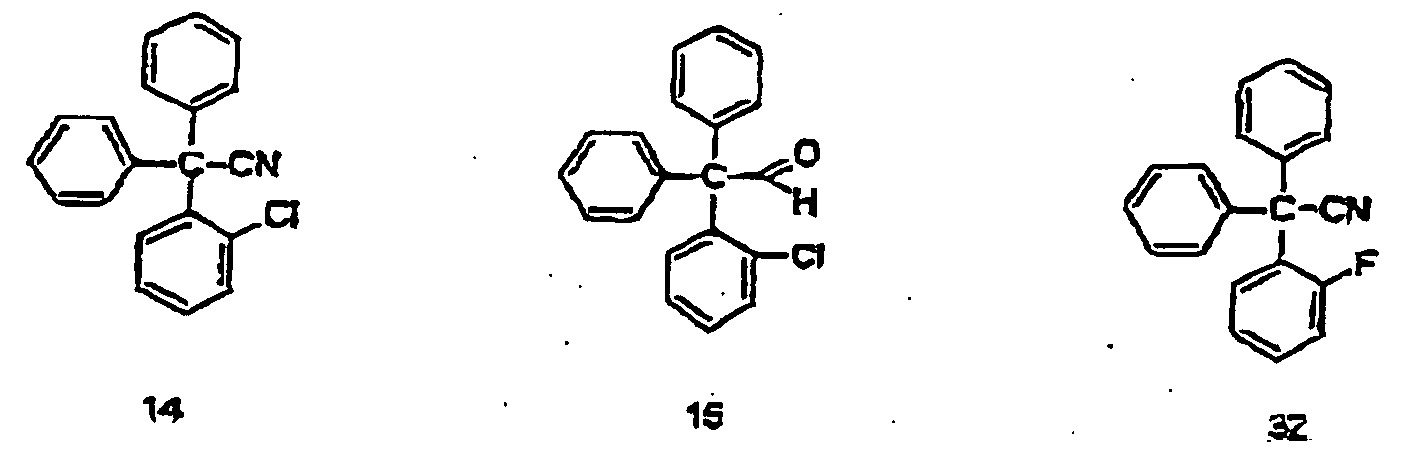


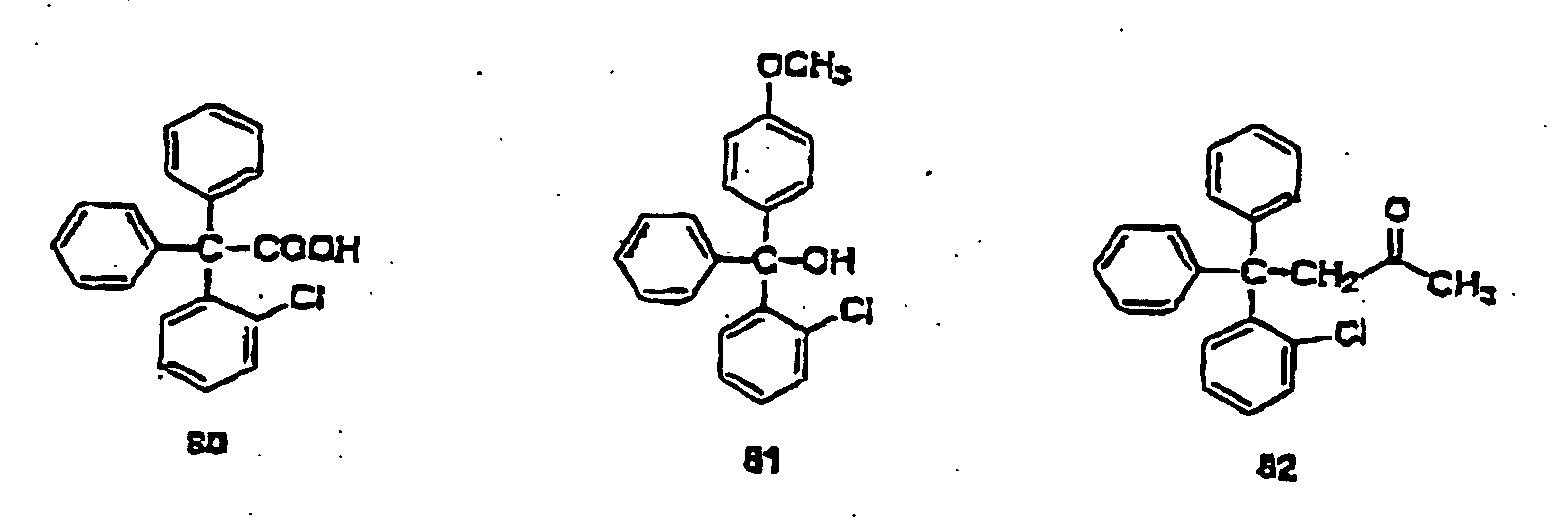
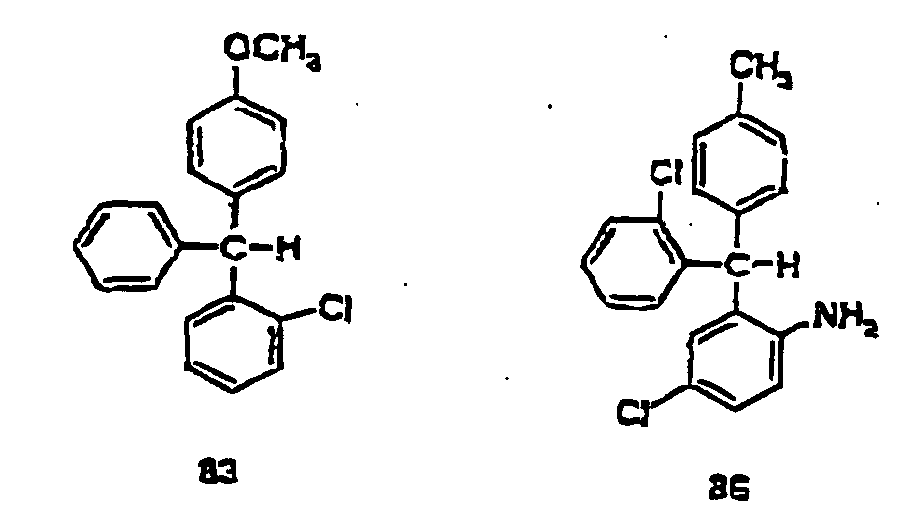
- Verbindung der Formel (B):oder ein pharmazeutisch verträgliches Salz oder Hydrat davon, wobei:
 n 0, 1, 2, 3 oder 4 ist;R1 -NR2, -C(O)R, -C(S)R, -C(O)NR'2 oder -C(S)NR'2 ist;R2-F, -Cl, -Br oder -I ist;R3 -F, -Cl, -Br oder -I ist;R4 -F, -Cl, -Br oder -I ist;jedes R unabhängig aus der Gruppe von -H, (C1-C6)-Alkyl, (C1-C6)-Alkenyl, (C1-C6)-Alkinyl und (C1-C6)-Alkoxy ausgewählt ist; undjedes R' unabhängig aus der Gruppe von -H, (C1-C6)-Alkyl, (C1-C6)-Alkenyl, (C1-C6)-Alkinyl und (C1-C6)-Alkoxy ausgewählt ist;mit der Maßgabe, daß, wenn R2 = R3 = R4 = Cl, R1 = NH2, dann n = 1, 3 oder 4.
 - Verbindung nach Anspruch 3, wobei die Verbindung aus der Gruppe von Verbindungen 30, 40 und 65 ausgewählt ist.

- Verbindung der Formel (C):oder ein pharmazeutisch verträgliches Salz oder Hydrat davon, wobei:
 n 0, 1, 2, 3 oder 4 ist;Ar1 Phenyl oder Cyclohexyl ist;R1 N(R)2, -CH[C(O)OR]2, -CH[C(S)OR]2, -CH[C(O)SR]2, -CH[C(S)SR]2, -C(O)N(R)2 oder -C(S)N(R)2 ist; undjedes R unabhängig aus der Gruppe von -H, (C1-C6)-Alkyl, (C1-C6)-Alkenyl, (C1-C6)-Alkinyl und (C1-C6)-Alkoxy ausgewählt ist,mit der Maßgabe, daß, wenn R1 -NH2 oder -C(O)NH2 ist, dann n 1,2 oder 3 ist, und wenn:(i) wenn Ar1 = Ph, R1 = -NHR, wobei R (C1-C4)-Alkyl, -CH(CH3)(CH2)2CH3, -CH(C2H5)2, -CH(CH3)CH(CH3)CH2CH3, -CH(CH3)CH2CH(CH3)CH3, Cyclohexyl; -OCH3; -(CH2)5CH3; -(CH2)4CH3; -CH2CH=CH2, -CH(CH3)CH=CH2, -CH[CH2CH(CH3)2]CH=CH2 ist, dann n = 1, 2, 3 oder 4;(ii) wenn Ar1 = Ph, R1 = -NR2, wobei eine der R-Gruppen -CH(C≡CH)2 ist und die andere R-Gruppe -CH2C≡CH oder -CH2CH2C≡CH ist, dann n = 1, 2, 3, 4;(iii) wenn Ar1 = Ph, R1 =-NR2, wobei eine der R-Gruppen -CH2CH3 ist und die andere R-Gruppe -CH3 oder -CH2C(CH3)=CH2 ist, dann n = 1, 2, 3 oder 4;(iv) wenn Ar1 = Ph, R1 = N(CH3)2 oder N(CH2CH3)2, dann n = 2, 3 oder 4;(v) wenn Ar1 = Ph, R1 = NH(t-Bu) oder C(O)NH2, dann n = 0, 2, 3 oder 4;(vi) wenn Ar1 = Ph, R1 = NH2, dann n = 3 oder 4;(vii) wenn Ar1 = Ph, R1 = -C(O)N(CH3)2 oder -C(O)N(CH3)-Cycohexan oder -CH[C(O)OC2H5]2, dann n = 1, 2, 3 oder 4;(viii) wenn Ar1 = Cyclohexyl, R1 = N(CH2CH3)2, dann n = 0, 1, 2 oder 4.
 - Verbindung nach Anspruch 5, wobei die Verbindung aus der Gruppe von Verbindungen 56 und 78 ausgewählt ist.

- Pharmazeutische Zusammensetzung, umfassend eine Verbindung im Gemisch mit einem pharmazeutisch verträglichen Excipienten, Träger oder Verdünnungsmittel, wobei die Verbindung die Formel:hat, oder ein pharmazeutisch verträgliches Salz oder Hydrat davon, wobei:
 n 0,1, 2, 3 oder 4 ist;X abwesend, (C1-C3)-Alkyl, (C1-C3)-Alkenyl oder (C1-C3)-Alkinyl ist;Y C oder Si ist;R1 -Halogen, -SR, -N(R)2, -ON(R)2, -NO2, -CN, -C(O)R, -C(S)R, -C(O)OR, -C(S)OR, -C(O)SR, -C(S)SR, -C(O)N(R)2, -C(S)N(R)2, -C(O)NR(OR), -C(S)NR(OR), -C(O)NR(SR), -C(S)NR(SR), -CH(CN)2, -CH[C(O)R]2, -CH[C(S)R]2, -CH[C(O)OR]2, -CH[C(S)OR]2, -CH[C(O)SR]2 oder -CH[C(S)SR]2 ist;Ar1 Aryl, substituiertes Aryl, Heteroaryl anders als Imidazol, Nitroimidazol und Triazol, Heteroarylium anders als Imidazolium, Nitroimidazolium und Triazolium, (C5-C8)-Cycloalkyl oder (C5-C8)-Heterocycloalkyl ist;Ar2 Aryl oder substituiertes Aryl ist;Ar3 Aryl, substituiertes Aryl, Biaryl oder Heteroaryl anders als Imidazol, Nitroimidazol und Triazol ist;jedes R unabhängig aus der Gruppe von -H, (C1-C6)-Alkyl, substituiertem (C1-C6)-Alkyl, (C1-C6)-Alkenyl, substituiertem (C1-C6)-Alkenyl, (C1-C6)-Alkinyl, substituiertem (C1-C6)-Alkinyl und (C1-C6)-Alkoxy ausgewählt ist;die Arylsubstituenten jeweils unabhängig aus der Gruppe von -Halogen, Trihalogenmethyl, -R, -R', -OR', -SR', N(R)2, -NO2, -CN, -C(O)R', -C(S)R', -C(O)OR', -C(S)OR', -C(O)SR' und -C(S)SR' ausgewählt sind;die Alkyl-, Alkenyl- und Alkinylsubstituenten jeweils unabhängig aus der Gruppe von -Halogen, -R', -OR', -SR', N(R')2, -NO2, -CN, -C(O)R', -C(S)R', -C(O)OR', -C(S)OF,-, -C(O)SR', -C(S)SR', Aryl, γ-Butyrolactonyl, Pyrrolidinyl, Pyrrolidinonyl und Succinanhydridyl ausgewählt sind; undjedes R' unabhängig aus der Gruppe von -H, (C1-C6)-Alkyl, (C1-C6)-Alkenyl und (C1-C6)-Alkinyl ausgewählt ist.
 - Pharmazeutische Zusammensetzung, umfassend eine Verbindung im Gemisch mit einem pharmazeutisch verträglichen Excipienten, Träger oder Verdünnungsmittel, wobei die Verbindung die Formel:hat, oder ein pharmazeutisch verträgliches Salz oder Hydrat davon, wobei:
 n 0, 1, 2, 3 oder 4 ist;X abwesend, (C1-C3)-Alkyl, (C1-C3)-Alkenyl oder (C1-C3)-Alkinyl ist;Y C, N, P, Si oder Ge ist;R1 abwesend, -SR, -N(R)2, -ON(R)2, -NO2, -CN, -C(S)R, -C(S)OR, -C(O)SR, -C(S)SR, -C(O)N(R)2, -C(S)N(R)2, -C(O)NR(OR), -C(S)NR(OR), -C(O)NR(SR), -C(S)NR(SR), -CH(CN)2, -CH[C(O)R]2, -CH[C(S)R]2, -CH[C(O)OR]2, -CH[C(S)OR]2, -CH[C(O)SR]2 oder -CH[C(S)SR]2 ist;Ar1 Aryl, substituiertes Aryl, Heteroaryl anders als Imidazol, Nitroimidazol und Triazol, Heteroarylium anders als Imidazolium, Nitroimidazolium und Triazolium, (C5-C8)-Cycloalkyl oder (C5-C8)-Heterocycloalkyl ist;Ar2 Aryl oder substituiertes Aryl ist;Ar3 Aryl, substituiertes Aryl, Biaryl oder Heteroaryl anders als Imidazol, Nitroimidazol und Triazol ist;jedes R unabhängig aus der Gruppe von -H, (C1-C6)-Alkyl, substituiertem (C1-C6)-Alkyl, (C1-C6)-Alkenyl, substituiertem (C1-C6)-Alkenyl, (C1-C6)-Alkinyl, substituiertem (C1-C6)-Alkinyl und (C1-C6)-Alkoxy ausgewählt ist;die Arylsubstituenten jeweils unabhängig aus der Gruppe von -Halogen, Trihalogemmethyl, -R, R', -OR', -SR', N(R')2, -NO2, -CN, -C(O)R', -C(S)R', -C(O)OR', -C(S)OR', -C(O)SR' und -C(S)SR' ausgewählt sind;die Alkyl-, Alkenyl- und Alkinylsubstimenten jeweils unabhängig aus der Gruppe von -Halogen, -R', -OR', -SR', N(R')2, -NO2, -CN, -C(O)R', -C(S)R', -C(O)OR', -C(S)OR', -C(O)SR', -C(S)SR', Aryl, γ-Butyrolactonyl, Pyrrolidinyl, Pyrrolidinonyl und Succinanhydridyl ausgewählt sind; undjedes R' unabhängig aus der Gruppe von -H, (C1-C6)-Alkyl, (C1-C6)-Alkenyl und (C1-C6)-Alkinyl ausgewählt ist.
 - Pharmazeutische Zusammensetzung, umfassend eine Verbindung im Gemisch mit einem pharmazeutisch verträglichen Exeipienten, Träger oder Verdünnungsmittel, wobei die Verbindung die Formel:hat, oder ein pharmazeutisch verträgliches Salz oder Hydrat davon, wobei:
 n 0, 1, 2, 3 oder 4 ist;X abwesend, (C1-C3)-Alkyl, (C1-C3)-Alkenyl oder (C1-C3)-Alkinyl ist;Y N, Si oder Ge ist;R1 abwesend, -Halogen, -R, -OR, -SR -N(R)2, -ON(R)2, -NO2, -CN, -C(O)R, -C(S)R, -C(O)OR, -C(S)OR, -C(O)SR, -C(S)SR, -C(O)N(R)2, -C(S)N(R)2, -C(O)NR(OR), -C(S)NR(OR), -C(O)NR(SR), -C(S)NR(SR), -CH(CN)2, -CH[C(O)R]2, -CH[C(S)R]2, -CH[C(O)OR]2, -CH[C(S)OR]2, -CH[C(O)SR]2, -CH[C(S)SR]2 oder Aryl ist;Ar1 Aryl, substituiertes Aryl, Heteroaryl anders als Imindazol, Nitrvimidazol und Triazol, Heteroarylium anders als Imidazolium, Nitroimzdazolium und Triazolium, (C5-C8)-Cycloalkyl oder (C5-C8)-Heterocycloalkyl ist;Ar2 Aryl oder substituiertes Aryl ist;Ar3 Aryl, substituiertes Aryl, Biaryl oder Heteroaryl anders als Imidazol, Nitroimidazol und Triazol ist;jedes R unabhängig aus der Gruppe von -H, (C1-C6)-Alkyl, substituiertem (C1-C6)-Alkyl, (C1-C6)-Alkenyl, substituiertem (C1-C6)-Alkenyl, (C1-C6)-Alkinyl, substituiertem (C1-C6)-Alkinyl und (C1-C6)-Alkoxy ausgewählt ist;die Arylsubstituenten jeweils unabhängig aus der Gruppe von -Halogen, Trihalogenmethyl, -R, -R', -OR', -SR', N(R')2, -NO2, -CN, -C(O)R', -C(S)R', -C(O)OR', -C(S)OR', -C(O)SR- und -C(S)SR' ausgewählt sind;die Alkyl-, Alkenyl- und Alkinylsubstituenten jeweils unabhängig aus der Gruppe von -Halogen, -R', -OR', -SR', N(R')2, -NO2, -CN, -C(O)R', -C(S)R', -C(O)OR', -C(S)OR', -C(O)SR', -C(S)SR', Aryl, γ-Butyrolactonyl, Pyrrolidinyl, Pyrrolidinonyl und Succinanhydridyl ausgewählt sind; undjedes R' unabhängig aus der Gruppe von -H, (C1-C6)-Alkyl, (C1-C6)-Alkenyl und (C1-C6)-Alkinyl ausgewählt ist.
 - Pharmazeutische Zusammensetzung nach Anspruch 7, wobei die Substituenten wie folgt sind:n 0, 1, 2, 3 oder 4 ist;X abwesend oder -C≡C- ist;Y C oder Si ist;R1 -F, -Cl, -Br, SR, -N(R)2, -ON(R)2, -NO2, -CN, -C(O)R, -C(O)OR, -C(O)N(R)2, -C(O)NR(OR) oder -CH[C(O)OR]2 ist;Ar1 Phenyl, substituiertes Phenyl, Heteroaryl anders als Imidazol, Nitroimidazol und Triazol, Cyclohexyl, Piperidyl oder Pyridinium ist;Ar2 Phenyl oder substituiertes Phenyl ist;Ar3 Phenyl, substituiertes Phenyl, Biphenyl, Naphthyl oder Pyridyl ist;R -H, (C1-C3)-Alkyl, substituiertes (C1-C3)-Alkyl, (C1-C3)-Alkenyl, substituiertes (C1-C3)-Alkenyl, (C1-C3)-Alkinyl, substituiertes (C1-C3)-Alkinyl und (C1-C3)-Alkoxy ist;die Phenylsubstituenten jeweils unabhängig aus der Gruppe von -F, -Cl, -Br, -CF3, R, -R', -OR', -SR', -N(R')2, -NO2, -CN, -C(O)R' und -C(O)OR' ausgewählt sind;die Alkyl-, Alkenyl- und Alkinylsubstituenten jeweils unabhängig aus der Gruppe von -F, -Cl, Br, -R', -OR', -SR', -N(R')2, -NO2, -CN, -C(O)R', -C(O)OR', Naphthyl, γ-Butyrolactonyl, Pyrrolidinyl, Pyrrolidinonyl; und Succinanhydridyl ausgewählt sind; undjedes R' unabhängig aus der Gruppe von -H, (C1-C3)-Alkyl, (C1-C3)-Alkenyl und (C1-C3)-Alkinyl ausgewählt ist.
- Pharmazeutische Zusammensetzung nach Anspruch 9, wobei:n 0, 1, 2, 3 oder 4 ist;X abwesend oder -C≡C- ist;Y N, Si oder Ge ist;R1 abwesend, -F, -Cl, -Br, R, -OR, -SR, -N(R)2, -ON(R)2, -NO2, -CN, -C(O)R, -C(O)OR, -C(O)N(R)2, -C(O)NR(OR), -CH[C(O)OR]2 oder Cyclopenta-2,4-dien-1-yliden ist;Ar1 Phenyl, substituiertes Phenyl, Heteroaryl anders als Imidazol, Nitroimidazol und Triazol, Cyclohexyl, Piperidyl oder Pyridinium ist;Ar2 Phenyl oder substituiertes Phenyl ist;Ar3 Phenyl, substituiertes Phenyl, Biphenyl, Naphthyl oder Pyridyl ist;R -H, (C1-C3)-Alkyl, substituiertes (C1-C3)-Alkyl, (C1-C3)-Alkenyl, substituiertes (C1-C3)-Alkenyl, (C1-C3)-Alkinyl, substituiertes (C1-C3)-Alkinyl und (C1-C3)-Alkoxy ist;die Phenylsubstituenten jeweils unabhängig aus der Gruppe von -F, -Cl, -Br, -CF3, -R, -R', -OR', -SR', -N(R')2. -NO2, -CN, -C(O)R' und -C(O)OR' ausgewählt sind;die Alkyl-, Alkenyl- und Alkinylsubstituenten jeweils unabhängig aus der Gruppe von -F, -Cl, -Br, -R', -OR', -SR', -N(R')2, -NO2, -CN, -C(O)R' -C(O)OR', Naphthyl, γ-Butyrolactonyl, Pyrrolidinyl, Pyrrolidinonyl; und Succinanhydridyl ausgewählt sind; undjedes R' unabhängig aus der Gruppe von -H, (C1-C3)-Alkyl, (C1-C3)-Alkenyl und (C1-C3)-Alkinyl ausgewählt ist.
- Pharmazeutische Zusammensetzung nach Anspruch 8, wobei:n 0, 1, 2, 3 oder 4 ist;X abwesend oder -C≡C- ist;Y C, N, P, Si oder Ge ist;R1 abwesend, -F, -CI, -Br, -SR, -N(R)2, -ON(R)2, -NO2, -CN, -C(O)N(R)2, -C(O)NR(OR) oder -CH[C(O)OR]2 ist;Ar1 Phenyl, substituiertes Phenyl, Heteroaryl anders als Imidazol, Nitroimidazol und Triazol, Cyclohexyl, Piperidyl oder pyridinium ist;Ar2 Phenyl oder substituiertes Phenyl ist;Ar3 Phenyl, substituiertes Phenyl, Biphenyl, Naphthyl oder Pyridyl ist;R-H, (C1-C3)-Alkyl, substituiertes (C1-C3)-Alkyl, (C1-C3)-Alkenyl, substituiertes (C1-C3)-Alkenyl, (C1-C3)-Alkinyl, substituiertes (C1-C3)-Alkinyl und (C1-C3)-Alkoxy ist,die Phenylsubstituenten jeweils unabhängig aus der Gruppe von -F, -Cl, -Br, -CF3, -R, -R', -OR', -SR', -N(R')2, -NO2, -CN, -C(O)R' und -C(O)OR' ausgewählt sind;die Alkyl-, Alkenyl- und Alkinylsubstituenten jeweils unabhängig aus der Gruppe von F, -Cl, -Br, -R', -OR', -SR', -N(R)2, -NO2, -CN, -C(O)R', -C(O)OR', Naphthyl, γ-Butyrolactonyl, Pyrrolidinyl, Pyrrolidinonyl; und Succinanhydridyl ausgewählt sind; undjedes R' unabhängig aus der Gruppe von -H, (C1-C3)-Alkyl, (C1-C3)-Alkenyl und (C1-C3)-Alkinyl ausgewählt ist.
- Pharmazeutische Zusammensetzung, umfassend eine Verbindung im Gemisch mit einem pharmazeutisch verträglichen Excipienten, Träger oder Verdünnungsmittel, wobei die Verbindung aus der Gruppe von Verbindungen 1, 2, 3, 4, 5, 7, 8, 9, 10, 11, 12, 13, 14, 15, 16, 18, 19, 20, 21, 22, 23, 24, 25, 26, 27, 28, 29, 30, 31, 32, 33, 34, 35, 36, 37, 38, 39, 40, 41, 42, 44, 45, 46, 47, 48, 49, 50, 51, 52, 53, 54, 55, 56, 57, 58, 59, 60, 61, 62, 63, 64, 65, 66, 67, 68, 69, 70, 71, 72, 73, 74, 75, 76, 77, 78, 79, 80, 81, 82, 83, 86, 87, 88, 89 und 90;


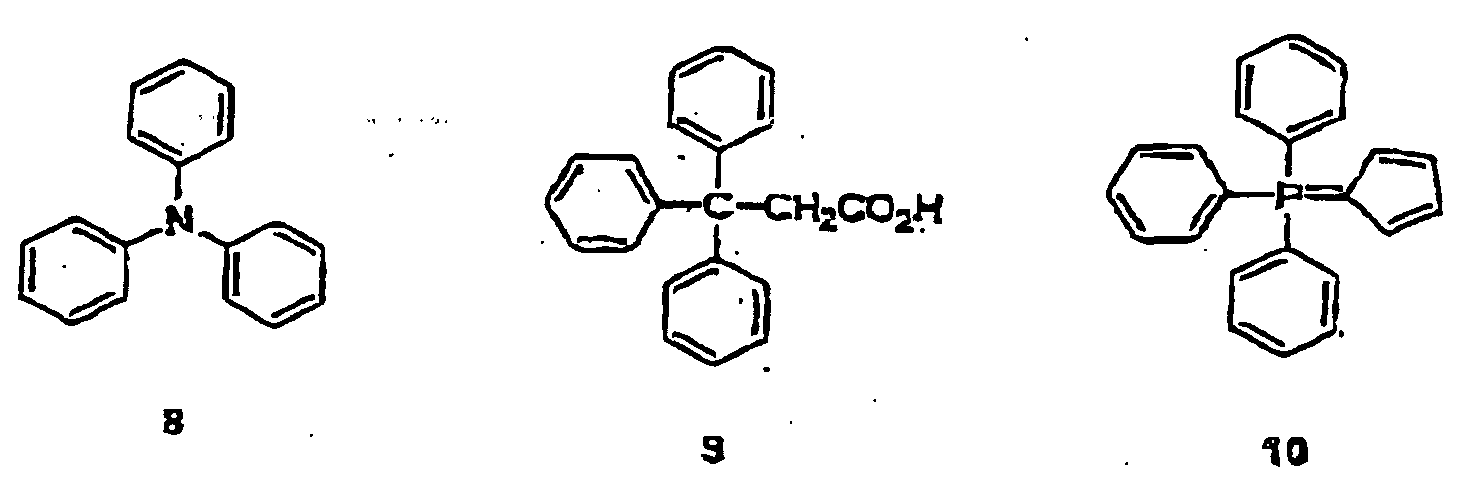
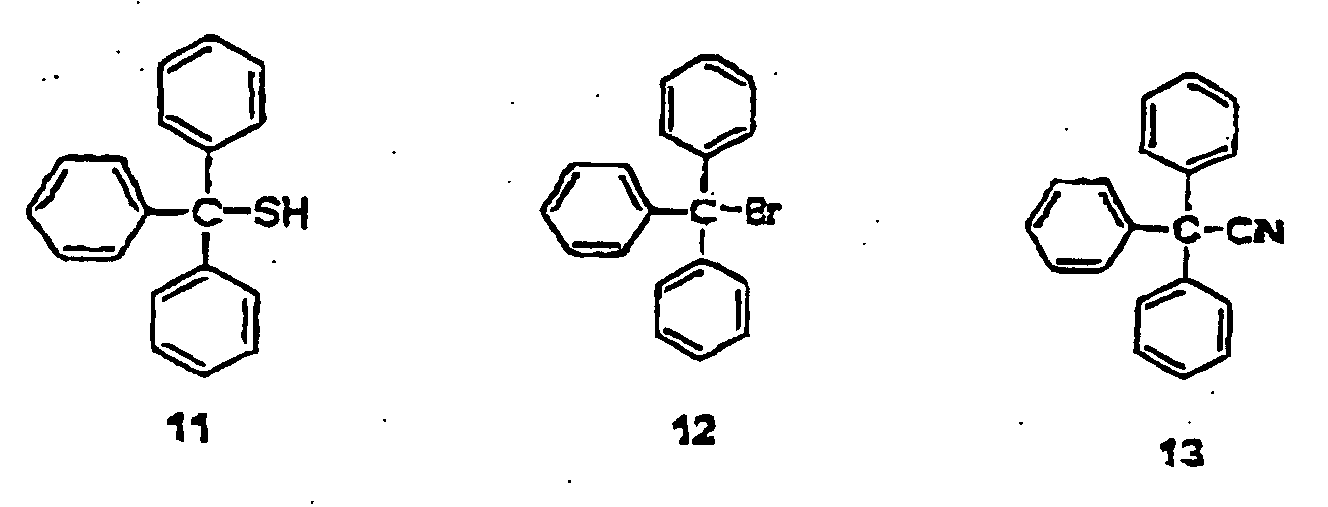


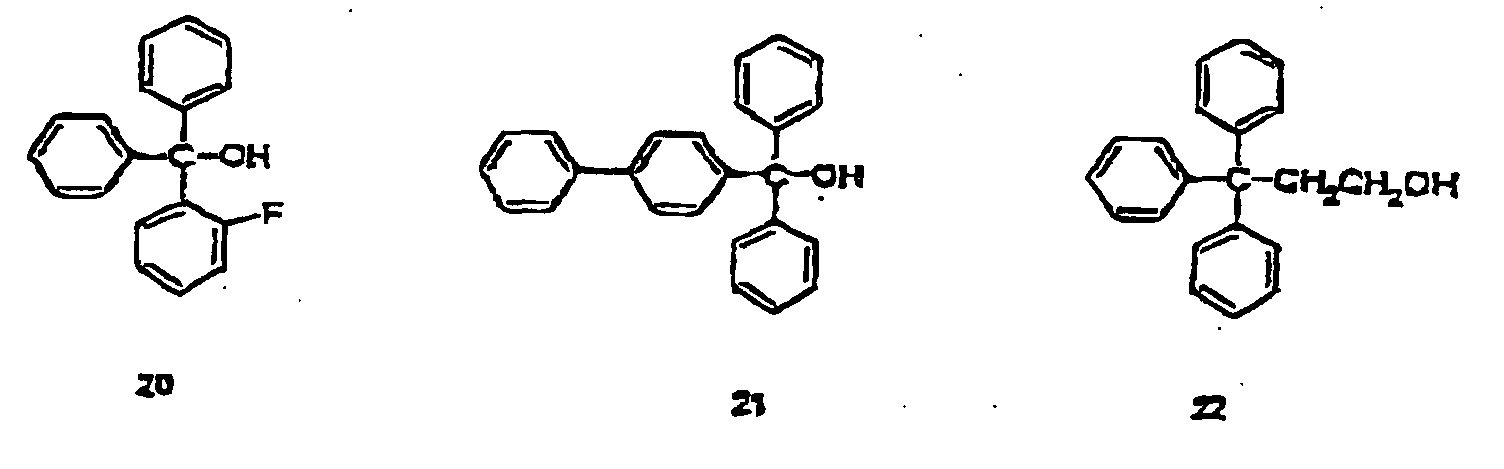
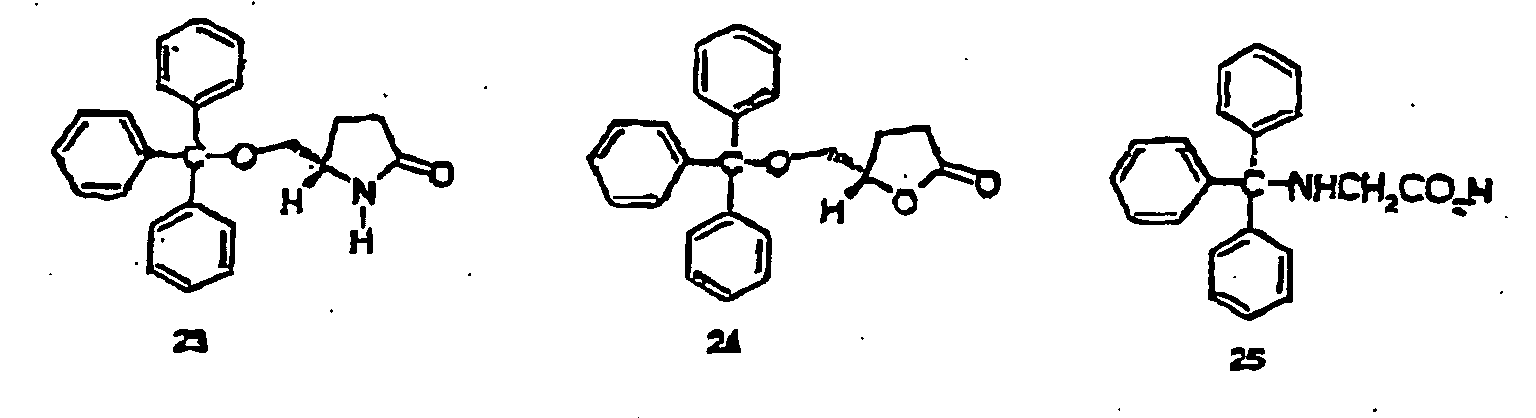
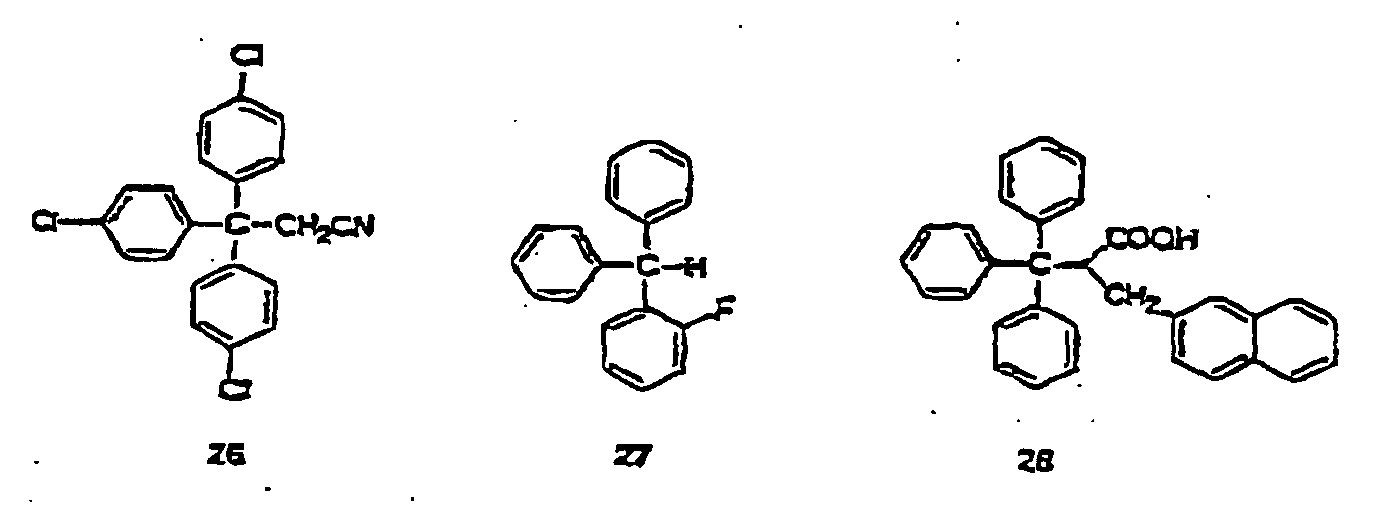
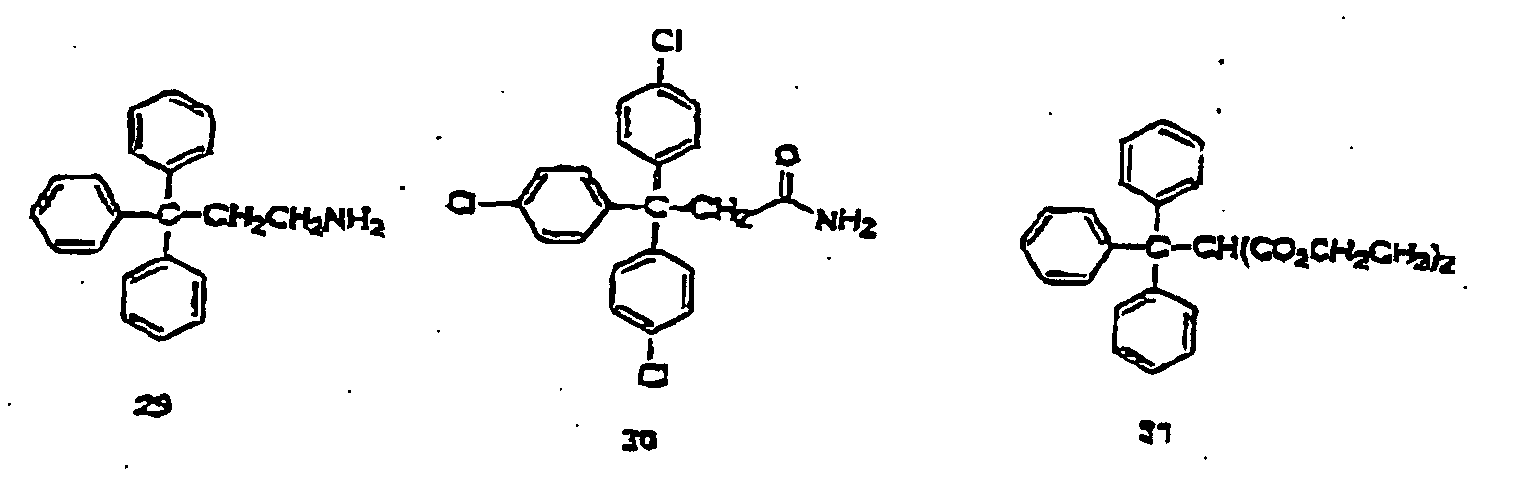

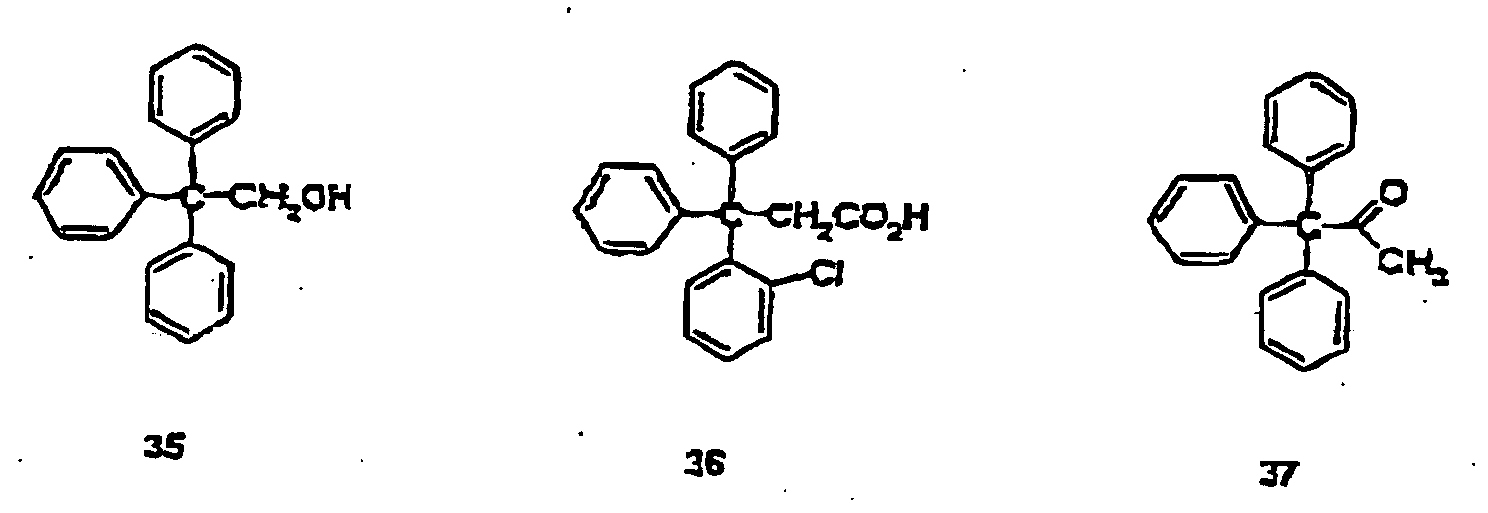


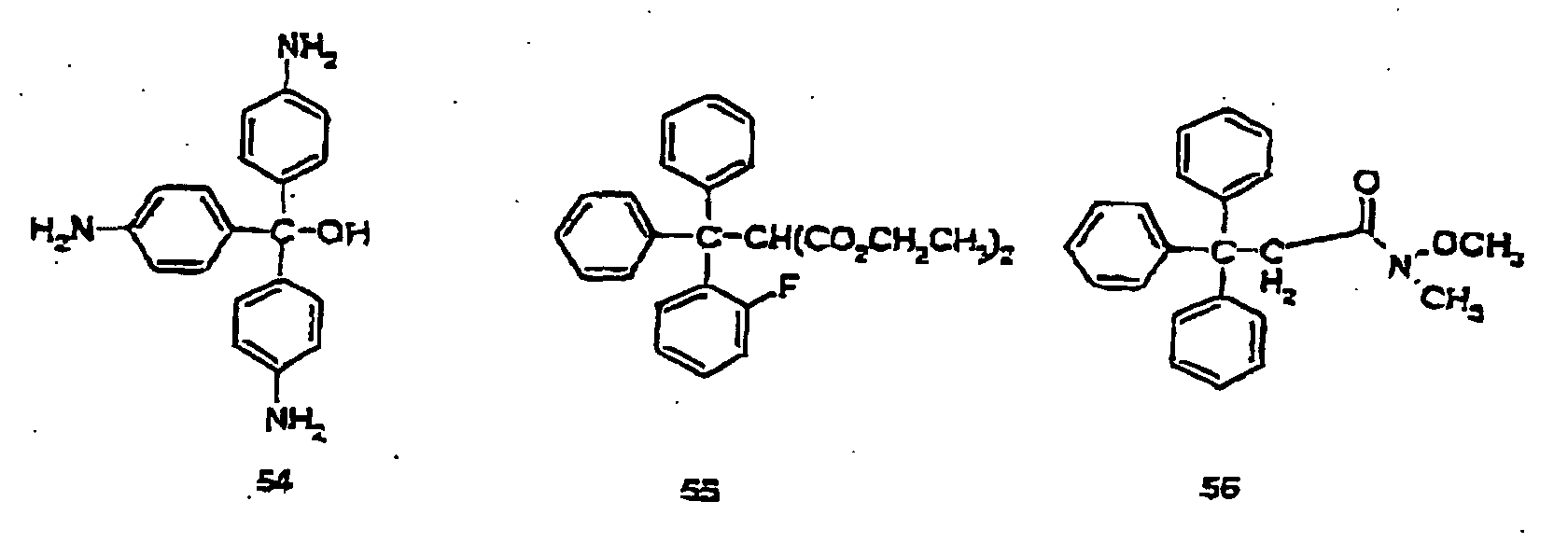

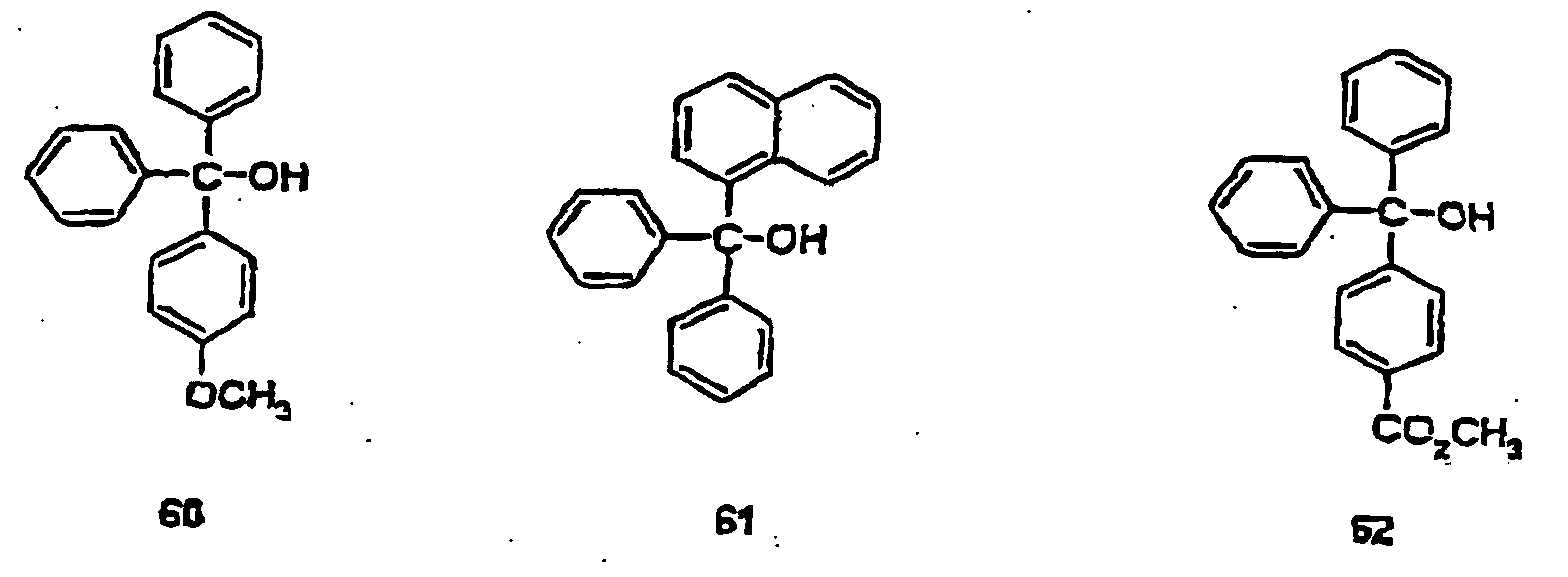
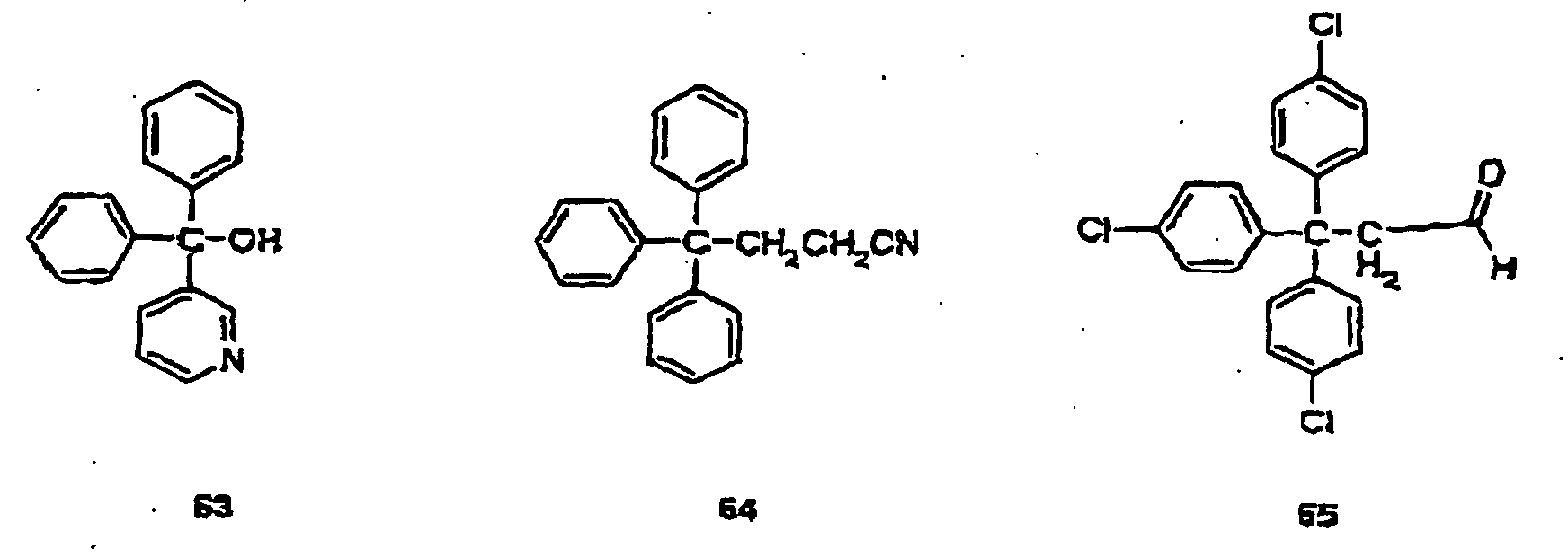
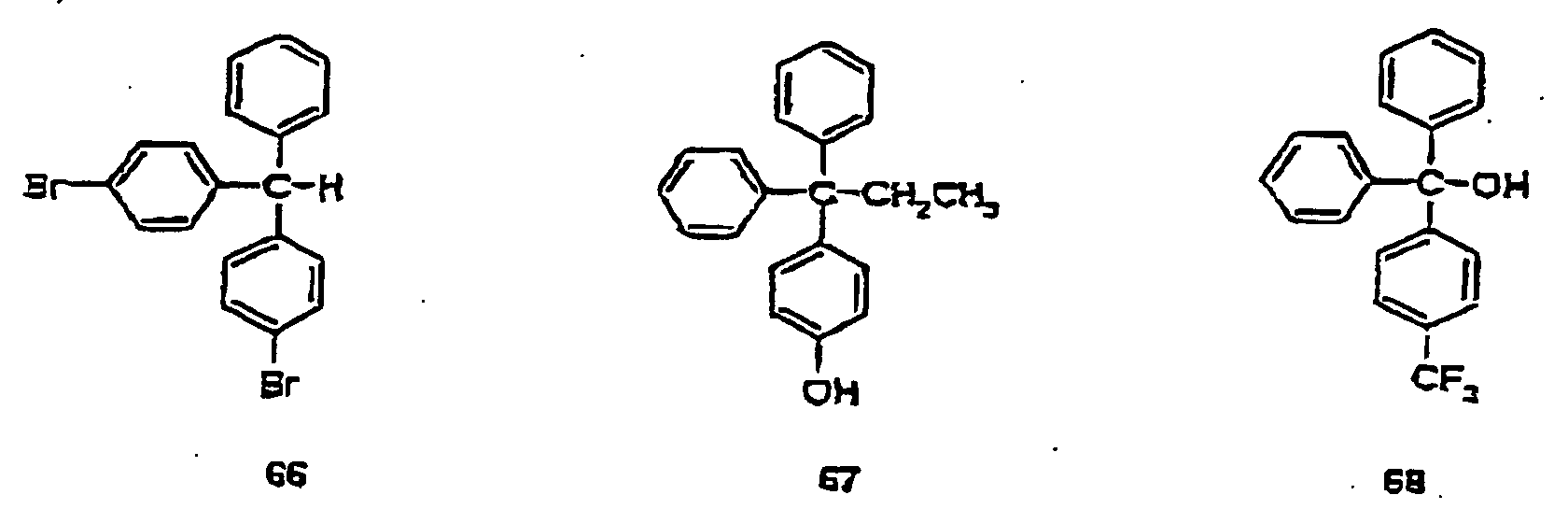

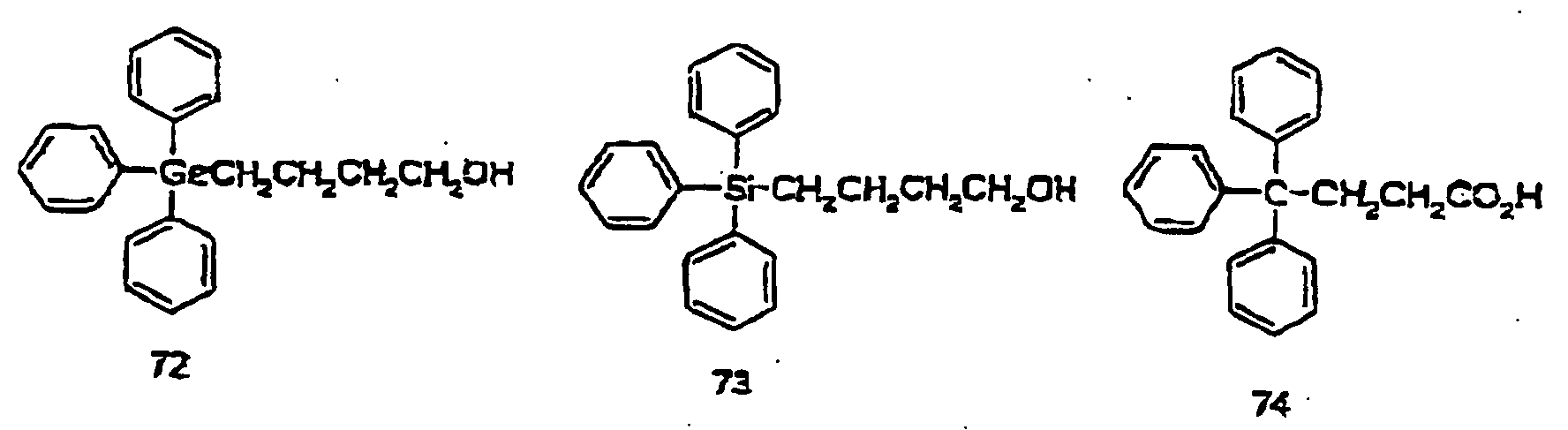
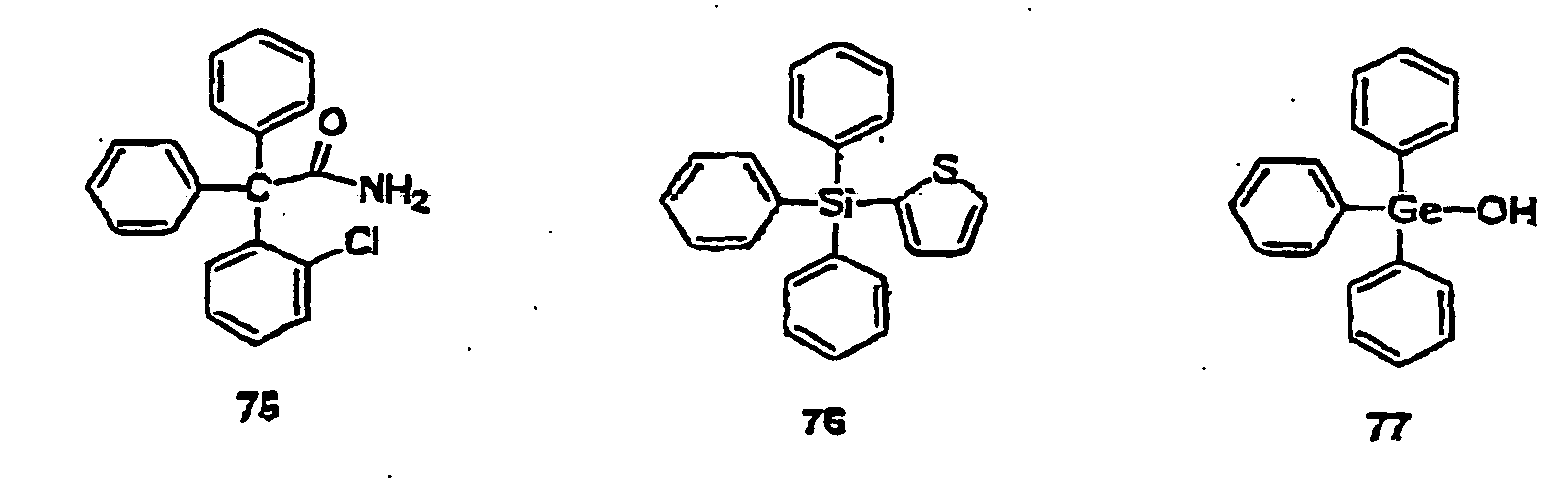
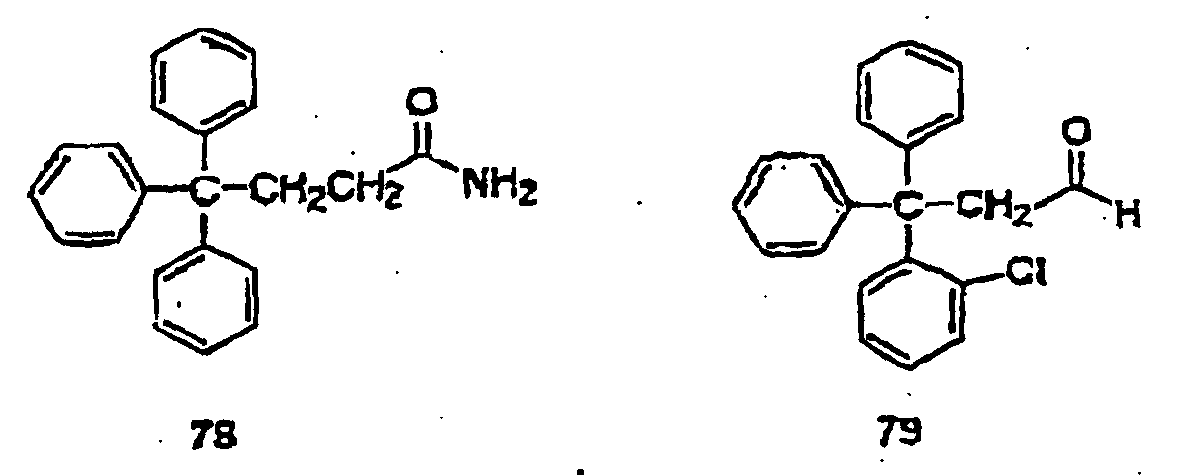
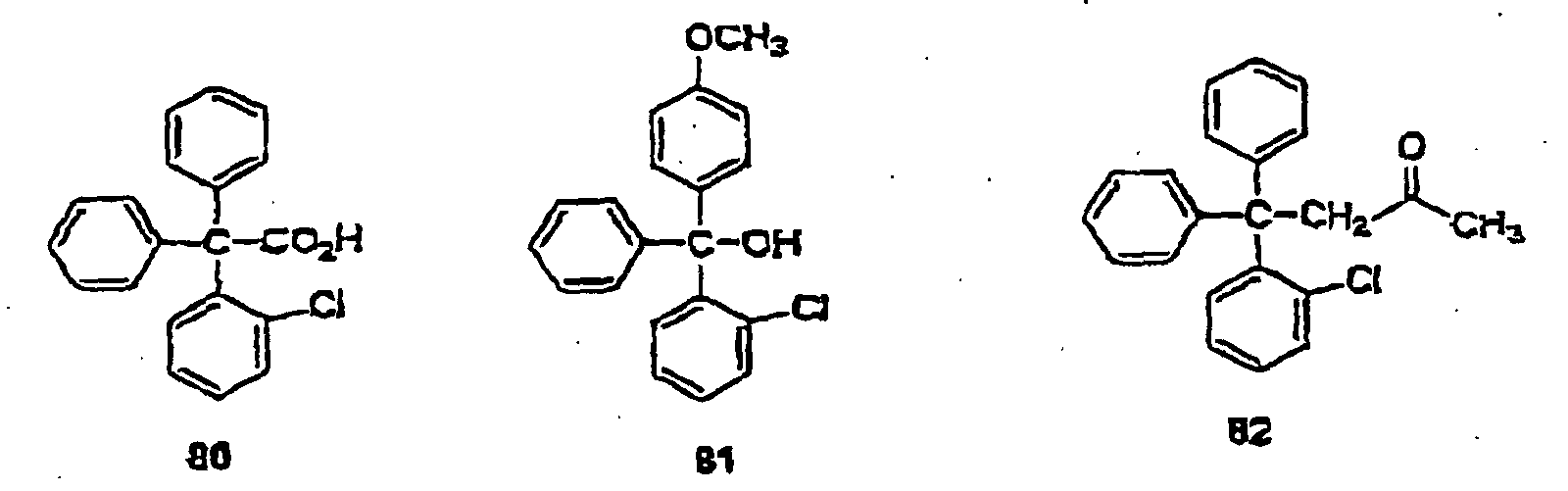
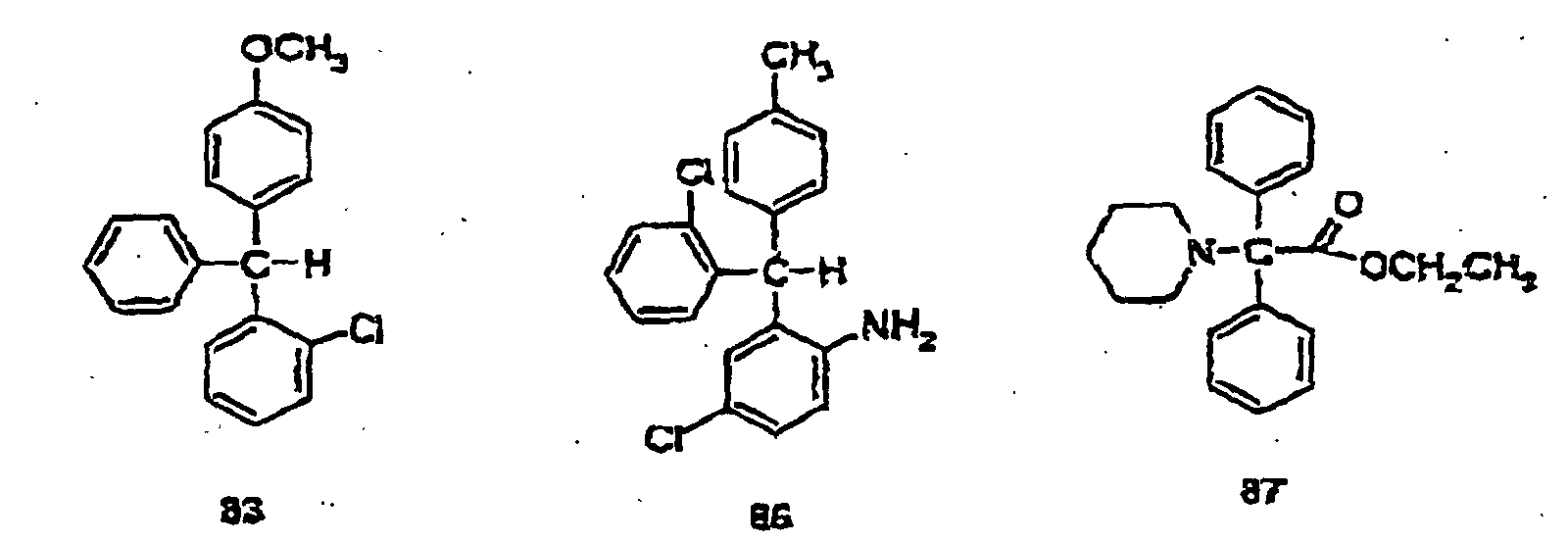 ausgewählt ist.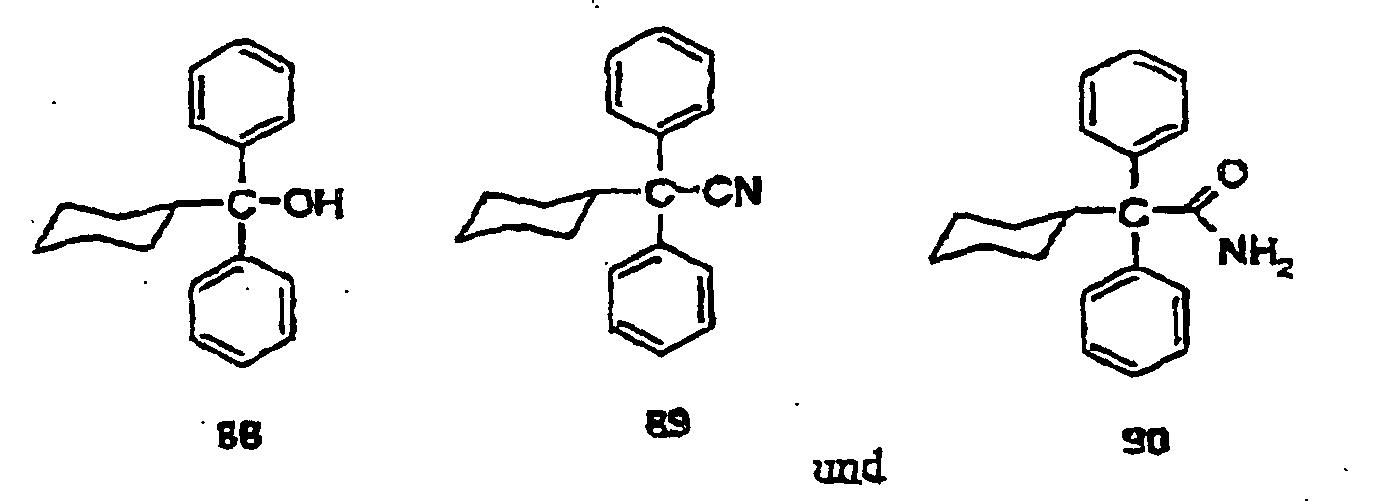
- Pharmazeutische Zusammensetzung nach Anspruch 13, wobei die Verbindung aus der Gruppe von Verbindungen 7, 10, 12, 13, 14, 15, 16, 18, 19, 24, 21, 22, 23, 24, 26, 27, 28, 29, 30, 31, 32, 33, 34, 35, 36, 37, 38, 40, 41, 42, 44, 45, 46, 47, 48, 49, 50, 51, 52, 53, 54, 55, 56, 58, 59, 60, 61, 62, 64, 65, 67, 68, 69, 70, 71, 72, 73, 75, 78, 79, 80, 81, 82, 83, 86, 87, 88, 89 und 90 ausgewählt ist.
- Pharmazeutische Zusammensetzung, umfassend eine Verbindung im Gemisch mit einem phannazeutisch verträglichen Excipienten, Träger oder Verdünnungsmittel, wobei die Verbindung die Strukturformel:hat, oder ein pharmazeutisch verträgliches Salz oder Hydrat davon, wobei:
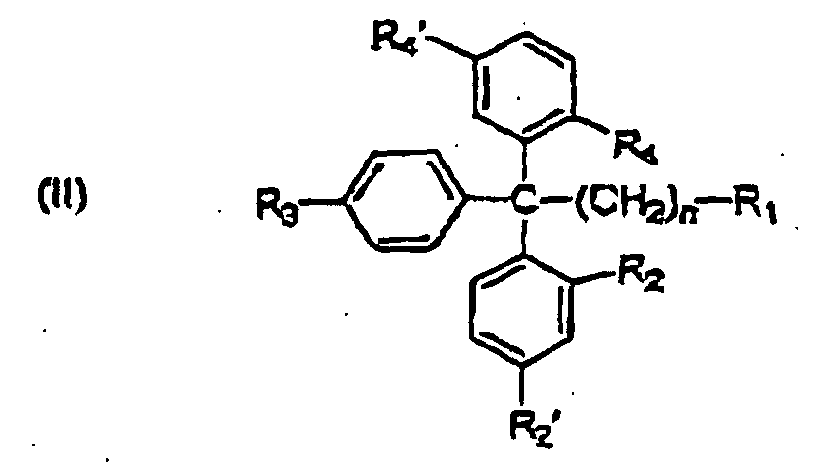 n 0, 1, 2, 3 oder 4 ist;R1 -H, -OR, -SR, -CN, -C(O)R, -C(O)OR, -C(O)N(R)2, -CH[C(O)R]2 oder -CH[C(O)OR]2 ist;R2 -F, -Cl, -Br, -I, -OR, -SR, -C(O)R oder -C(O)N(R)2 ist;R2' -H oder -NO2 ist;R3 -H, (C1-C6)-Alkyl, (C1-C6)-Alkenyl, (C1-C6)-Alkinyl, -OR oder -SR ist;R4 -H oder -N(R)2 ist;R4'-H, -F, -Cl, -Br oder -I ist; undjedes R unabhängig aus der Gruppe von -H, (C1-C6)-Alkyl, (C1-C6)-Alkenyl, (C1-C6)-Alkinyl und (C1-C6)-Alkoxy ausgewählt ist;außer, daß die Verbindung anders als 1-(2-Chlorphenyl)-1,1-diphenylmethanol, 1-(2-Chlorphenyl)-1,1-diohenylmethan oder 1-(2-Chlorphenyl)-1-(4-hydroxyphenyl)-1-phenylmethan ist.
 - Pharmazeutische Zusammensetzung nach Anspruch 15, wobei die Verbindung aus der Gruppe von Verbindungen 14, 15, 20, 27, 32, 33, 36, 42, 45, 49, 55, 70, 75, 79, 80, 81, 82, 83 und 86 ausgewählt ist.
- Pharmazeutische Zusammensetzung, umfassend eine Verbindung im Gemisch mit einem pharmazeutisch verträglichen Excipienten, Träger oder Verdünnungsmittel, wobei die Verbindung die Strukturformel:hat, oder ein pharmazeutisch verträgliches Salz oder Hydrat davon, wobei:
 X abwesend oder -C≡C- ist;Y C, Si oder Ge ist;n 0, 1, 2, 3 oder 4 ist;Ar1 Phenyl, substituiertes Phenyl, Cycloalkyl oder Heteroarylium anders als Imidazolium, Nitroimidazolium oder Triazolium ist;Ar3 Phenyl, Naphthyl, Piperidyl oder Cyclohexyl ist;R1 -R, -OR, -SR, -CN, -N(R)2, -ONR2, -C(O)R. -C(O)OR, -C(O)N(R)2, -CH[C(O)R]2, -CH[C(O)OR]2, (C1-C6)-Alkyl, (C1-C6)-Alkenyl, (C1-C6)-Alkinyl, Cyclopenta-2,4-dien-1-yliden oder Phenyl ist;jedes von R2, R3 und R4 unabhängig aus der Gruppe von -H, -F, -Cl, -Br, -I, -OR, -SR, -N(R)2, -NO2, -C(O)R, -C(O)OR, -C(O)N(R)2, -C(O)N(R)2, Trihalomethyl, (C1-C6)-Alkyl, (C1-C6)-Alkenyl, (C1-C6)-Alkinyl und Phenyl ausgewählt ist;jedes R unabhängig aus der Gruppe von -H, Halogen, (C1-C6)-Alkyl, substituiertem (C1-C6)-Alkyl, (C1-C6)-Alkenyl, substituiertem (C1-C6)-Alkenyl, (C1-C6)-Alkinyl, substituiertem (C1-C6)-Alkinyl und (C1-C6)-Alkoxy ausgewählt ist;die Alkyl-, Alkenyl- oder Alkinylsubstituenten jeweils unabhängig aus der Gruppe von Aryl, -C(O)OR, Pyrrolidinyl, Pyrrolidinonyl, γ-Butyrolactonyl, -F, -Cl, -Br, -I und -CN ausgewählt sind; unddie Phenylsubstituenten jeweils unabhängig -R sind, außer, daß die Verbindung anders als 1-(2-Chlorphenyl)-1,1-diphenylmethanol, 1-(2-Chlorphenyl)-1,1-diphenylmethan oder 1-(2-Chlorphenyl)-1-(4-hydroxyphenyl)-1-phenylmethan ist.
 - Pharmazeutische Zusammensetzung nach Anspruch 17, wobei die Verbindung aus der Gruppe von Verbindungen 7, 12, 13, 16, 18, 19, 21, 22, 23, 24, 26, 28, 29, 30, 31, 34, 35, 37, 38, 40, 41, 44, 46, 47, 48, 50, 51, 52, 53, 54, 56, 58, 59, 60, 61, 62, 64, 65, 67, 68, 69, 71, 72, 73, 78, 87, 88, 89 und 90 ausgewählt ist.
- Verwendung einer Verbindung der Formel (I):oder eines pharmazeutisch verträglichen Salzes oder Hydrats davon bei der Herstellung eines Medikaments zum Behandeln oder Verhindern einer Erkrankung, ausgewählt aus Krebs, aktinischer Keratose oder Kaposi-Sarkom, wobei:
 n 0, 1, 2, 3 oder 4 ist;X abwesend, (C1-C3)-Alkyl, (C1-C3)-Alkenyl oder (C1-C3)-Alkinyl ist;Y C, N, Si oder Ge ist;R1 abwesend, -Halogen, -R, -OR, -SR, -N(R)2, -ON(R)2, -NO2, -CN, -C(O)R, -C(S)R, -C(O)OR, -C(S)OR, -C(O)SR, -C(S)SR, -C(O)N(R)2, -C(S)N(R)2, -C(O)NR(OR), -C(S)NR(OR), -C(O)NR(SR), -C(S)NR(SR), -CH(CN)2, -CH[C(O)R]2, -CH[C(S)R]2, -CH[C(O)OR]2, CH[C(S)OR]2, CH[C(O)SR]2, CH[C(S)SR]2 oder Aryl ist;Ar1 Aryl, substituiertes Aryl, Heteroaryl anders als Imidazol, Nitroimidazol und Triazol, Heteroarylium anders als Imidazolium, Nitroimidazolium und Triazolium, (C5-C8)-Cycloalkyl oder (C5-C8)-Heterocycloalkyl ist;Ar2 Aryl oder substituiertes Aryl ist;Ar3 Aryl, substituiertes Aryl, Biaryl oder Heteroaryl anders als Imidazol, Nitroimidazol und Triazol ist;jedes R unabhängig aus der Gruppe von -H, (C1-C6)-Alkyl, substituiertem (C1-C6)-Alkyl, (C1-C6)-Alkenyl, substituiertem (C1-C6)-Alkenyl, (C1-C6)-Alkinyl, substituiertem (C1-C6)-Alkinyl und (C1-C6)-Alkoxy ausgewählt ist;die Arylsubstituenten jeweils unabhängig aus der Gruppe von -Halogen, Trihalogenmethyl, -R, -R', -OR', -SR', N(R')2, -NO2, -CN, -C(O)R', -C(S)R', -C(O)OR', -C(S)OR', -C(O)SR' und -C(S)SR' ausgewählt sind;die Alkyl-, Alkenyl- und Alkinylsubstituenten jeweils unabhängig aus der Gruppe von -Halogen, -R', -OR', -SR', N(R')2, -NO2, -CN, -C(O)R', -C(S)R', -C(O)OR', -C(S)OR', -C(O)SR', -C(S)SR', Aryl, γ-Butyrolactonyl, Pyrrolidinyl, Pyrrolidinonyl und Succinanhydridyl ausgewählt sind;jedes R' unabhängig aus der Gruppe von -H, (C1-C6)-Alkyl, (C1-C6)-Alkenyl und (C1-C6)-Alkinyl ausgewählt ist; undjedes R' unabhängig aus der Gruppe von -H, (C1-C6)-Alkyl, (C1-C6)-Alkenyl und (C1-C6)-Alkinyl ausgewählt ist, außer, daß die Verbindung anders als 1-(2-Chlorphenyl)-1,1-diphenylmethanol, 1-(2-Chlorphenyl)-1,1-diphenylmethan, 1-(2-Chlorphenyl)-1-(4-hydroxyphenyl)-1-phenylmethan ist
 - Verwendung einer Verbindung im Gemisch mit einem pharmazeutisch verträglichen Excipienten, Träger oder Verdünnungsmittel bei der Herstellung eines Medikaments zum Behandeln einer Erkrankung, ausgewählt aus Krebs, aktinischer Keratose und Kaposi-Sarkom, wobei die Verbindung die Formel:hat, oder eines pharmazeutisch verträglichen Salzes oder Hydrats davon, wobei:
 n 0, 1, 2, 3 oder 4 ist;X abwesend, (C1-C3)-Alkyl, (C1-C3)-Alkenyl oder (C1-C5)-Alkinyl ist;Y C, N, P, Si oder Ge ist;R1 abwesend, -Halogen, -OR, -SR, -N(R)2, -ON(R)2, -NO2, -CN, -C(S)R, -C(S)OR, -C(O)SR, -C(S)SR -C(O)N(R)2, -C(S)N(R)2, -C(O)NR(OR), -C(S)NR(OR), -C(O)NR(SR), -C(S)NR(SR), -CH(CN)2, -CH[C(O)R]2, -CH[C(S)R]2, -CH[C(O)OR]2, -CH[C(S)OR]2, -CH[C(O)SR]2, oder -CH[C(S)SR]2 ist;Ar1 Aryl, substituiertes Aryl, Heteroaryl anders als Imidazol, Nitroimidazol und Triazol, Heteroarylium anders als Imidazolium, Nitroimidazolium oder Triazolium, (C5-C8)-Cycloalkyl oder (C5-C8)-Heterocycloalkyl ist;Ar2 Aryl oder substituiertes Aryl ist;Ar3 Aryl, substituiertes Aryl, Biaryl oder Heteroaryl anders als Imidazol, Nitroimidazol und Triazol ist;jedes R unabhängig aus der Gruppe von -H, (C1-C6)-Alkyl, substituiertem (C1-C6)-Alkyl, (C1-C6)-Alkenyl, substituiertem (C1-C6)-Alkenyl, (C1-C6)-Alkinyl, substituiertem (C1-C6)-Alkinyl und (C1-C6)-Alkoxy ausgewählt ist;die Arylsubstituenten jeweils unabhängig aus der Gruppe von -Halogen, Trihalogenmethyl, -R, -R', -OR', -SR', N(R')2, -NO2, -CN, -C(O)R', -C(S)R', -C(O)OR'. -C(S)OR', -C(O)SR' und -C(S)SR' ausgewählt sind;die Alkyl-, Alkenyl- und Alkinylsubstituenten jeweils unabhängig aus der Gruppe von -Halogen, -R', -OR', -SR', N(R')2, -NO2, -CN, -C(O)R', -C(S)R', -C(O)OR', -C(S)OR', -C(O)SR', -C(S)SR', Aryl, γ-Butyrolactonyl, Pyrrolidinyl, Pyrrolidinonyl und Succinanhydridyl ausgewählt sind; undjedes R' unabhängig aus der Gruppe von -H. (C1-C6)-Alkyl, (C1-C6)-Alkenyl und (C1-C6)-Alkinyl ausgewählt ist
 - Verwendung nach Anspruch 19, wobei die Verbindung aus der Gruppe von Verbindungen 13, 14, 15, 16, 18, 19, 21, 26, 27, 28, 30, 31, 36, 38, 40, 41, 42, 43, 45, 46, 47, 48, 49, 50, 52, 54, 59, 61, 65, 67, 68, 70, 71, 72, 73, 79, 82, 83, 84, 86, 89 und 90 ausgewählt ist
- Verwendung nach Anspruch 19, wobei die Verbindung aus der Gruppe von Verbindungen 16, 28, 30, 36, 38, 45, 47, 48, 49, 50, 52, 54 und 84 ausgewählt ist.
- Verwendung nach einem der Ansprüche 19, 21 oder 22, wobei die Verbindung für orale, parenterale, intravenöse oder transdermale Verabreichung ist.
- Verwendung nach einem der Ansprüche 19, 21 oder 22, wobei die Erkrankung Krebs ist und die Verbindung für orale, patenterale oder intravenöse Verabreichung ist.
- Verwendung nach einem der Ansprüche 19,21 oder 22, wobei die Erkrankung aus aktinischer Keratose oder Kaposi-Sarkom ausgewählt ist und die Verbindung für transdermale Verabreichung ist.
- Verbindung nach einem der Ansprüche 1 bis 6 zur Verwendung bei der Behandlung oder Verhinderung einer Erkrankung, ausgewählt aus Krebs, aktinischer Keratose und Kaposi-Sarkom.
- Pharmazeutische Zusammensetzung nach einem der Ansprüche 13 bis 18 zur Verwendung bei der Behandlung oder Verhinderung einer Erkrankung, ausgewählt aus Krebs, aktinischer Keratose und Kaposi-Sarkom.
Applications Claiming Priority (9)
| Application Number | Priority Date | Filing Date | Title |
|---|---|---|---|
| US618759 | 1990-11-27 | ||
| US61875996A | 1996-03-20 | 1996-03-20 | |
| US61876296A | 1996-03-20 | 1996-03-20 | |
| US61895296A | 1996-03-20 | 1996-03-20 | |
| US61876096A | 1996-03-20 | 1996-03-20 | |
| US618762 | 1996-03-20 | ||
| US618760 | 1996-03-20 | ||
| PCT/US1997/004551 WO1997034589A1 (en) | 1996-03-20 | 1997-03-19 | Triaryl methane compounds for sickle cell disease |
| US618952 | 2000-07-19 |
Publications (4)
| Publication Number | Publication Date |
|---|---|
| EP0918514A1 EP0918514A1 (de) | 1999-06-02 |
| EP0918514A4 EP0918514A4 (de) | 2001-05-09 |
| EP0918514B1 true EP0918514B1 (de) | 2005-12-28 |
| EP0918514B9 EP0918514B9 (de) | 2006-07-05 |
Family
ID=27505150
Family Applications (1)
| Application Number | Title | Priority Date | Filing Date |
|---|---|---|---|
| EP97916889A Expired - Lifetime EP0918514B9 (de) | 1996-03-20 | 1997-03-19 | Triarylmethanverbindungen zur behandlung von krebs, aktinischer keratose und kaposisarkom |
Country Status (10)
| Country | Link |
|---|---|
| US (2) | US6331564B1 (de) |
| EP (1) | EP0918514B9 (de) |
| JP (1) | JP4376970B2 (de) |
| AT (1) | ATE314060T1 (de) |
| AU (1) | AU732881C (de) |
| BR (1) | BR9708230A (de) |
| CA (1) | CA2250092C (de) |
| DE (1) | DE69734983T2 (de) |
| NZ (1) | NZ332103A (de) |
| WO (1) | WO1997034589A1 (de) |
Families Citing this family (54)
| Publication number | Priority date | Publication date | Assignee | Title |
|---|---|---|---|---|
| US7531573B2 (en) * | 1994-09-16 | 2009-05-12 | Children's Medical Center Corporation | Use of triaryl methane compounds for inhibiting unwanted cellular proliferation associated with inflammatory disease |
| WO1997034589A1 (en) | 1996-03-20 | 1997-09-25 | President And Fellows Of Harvard College | Triaryl methane compounds for sickle cell disease |
| US5889038A (en) | 1996-03-20 | 1999-03-30 | Children's Hospital | Methods and products for treating diarrhea and scours: use of clotrimazole and related aromatic compounds |
| JPH10338658A (ja) * | 1997-04-08 | 1998-12-22 | Hoechst Marion Roussel Kk | レチノイド作用調節剤 |
| EP1052990A2 (de) | 1997-11-14 | 2000-11-22 | Neurosearch A/S | Chemische verbindungen mit ionenkanalblockierender aktivität zur behandlung von dysfunktionen des immunsystems |
| IL136208A0 (en) * | 1997-11-20 | 2001-05-20 | Childrens Medical Center | Use of substituted diphenyl indanone, indane and indole compounds for the treatment or prevention of sickle cell disease, inflammatory diseases characterized by abnormal cell proliferation, diarrhea and scours |
| EP2196930B1 (de) * | 1998-07-01 | 2011-03-23 | The Trustees of The University of Pennsylvania | Hohlraum-induzierte allosterische Modifikation von intermolekularen Interaktionen und Verfahren zur Identifikation von Verbindungen, die diese bewirken |
| US6166013A (en) * | 1998-07-30 | 2000-12-26 | Abbott Laboratories | Glucocortiocoid-selective agents |
| DE69920717T2 (de) * | 1998-07-30 | 2005-10-06 | Abbott Laboratories, Abbott Park | Glucocorticoid selektive wirkstoffe |
| AU1596099A (en) * | 1998-11-23 | 2000-06-13 | Eisai Co. Ltd. | Aryl and heteroaryl compounds useful as fibroblast growth factor antagonists |
| US6288122B1 (en) * | 1999-02-23 | 2001-09-11 | Icagen, Inc. | Gardos channel antagonists |
| WO2000069439A1 (en) | 1999-05-12 | 2000-11-23 | Neurosearch A/S | Chemical compounds having ion channel blocking activity for the treatment of immune dysfunction |
| US6803375B1 (en) * | 2000-01-06 | 2004-10-12 | The Regents Of The University Of California | Non-peptide inhibition of T-lymphocyte activation and therapies related thereto |
| GB0111872D0 (en) | 2001-05-15 | 2001-07-04 | Northwick Park Inst For Medica | Therapeutic agents and methods |
| DE60322019D1 (de) * | 2002-01-04 | 2008-08-21 | Neurosearch As | Kaliumkanal-modulatoren |
| US7968605B2 (en) * | 2002-02-04 | 2011-06-28 | ALFAMA—Investigação e Desenvolvimento de Produtos Farmacêuticos, Lda. | Methods for treating inflammatory disease by administering aldehydes and derivatives thereof |
| US20080026984A1 (en) * | 2002-02-04 | 2008-01-31 | Alfama - Investigacao E Desenvolvimento De Productos Farmaceuticos Lda | Methods for treating inflammatory disease by administering aldehydes and derivatives thereof |
| EP2042181A1 (de) * | 2002-02-04 | 2009-04-01 | ALFAMA-Investigacao e Desenvolvimento de Produtos Farmaceuticos Lda. | Verwendung CO- freisetzender Substanzen zur Herstellung eines Medikaments für die Behandlung entzündlicher Erkrankungen |
| US7122580B2 (en) * | 2002-08-09 | 2006-10-17 | Transtech Pharma, Inc. | Aryl and heteroaryl compounds and methods to modulate coagulation |
| CA2503962A1 (en) | 2002-10-30 | 2004-05-13 | Ralf Koehler | Compounds, methods and devices for inhibiting neoproliferative changes in blood vessel walls |
| GB2395432B (en) * | 2002-11-20 | 2005-09-14 | Northwick Park Inst For Medica | Therapeutic delivery of carbon monoxide to extracorporeal and isolated organs |
| US20070027205A1 (en) * | 2003-07-03 | 2007-02-01 | Joachim Demnitz | Diarylmethyl derivatives as potassium channel modulators |
| US7501538B2 (en) * | 2003-08-08 | 2009-03-10 | Transtech Pharma, Inc. | Aryl and heteroaryl compounds, compositions and methods of use |
| US7208601B2 (en) * | 2003-08-08 | 2007-04-24 | Mjalli Adnan M M | Aryl and heteroaryl compounds, compositions, and methods of use |
| EP2298295B1 (de) | 2005-01-31 | 2013-08-28 | Cephalon, Inc. | Tumornekrosefaktor-Hemmer |
| US8637706B2 (en) | 2005-11-28 | 2014-01-28 | Gtx, Inc. | Nuclear receptor binding agents |
| EA201500845A1 (ru) * | 2005-11-28 | 2016-04-29 | Джи Ти Икс, ИНК. | Агенты, связывающиеся с ядерными рецепторами |
| US8158828B2 (en) * | 2005-11-28 | 2012-04-17 | Gtx, Inc. | Nuclear receptor binding agents |
| US8546451B2 (en) | 2005-11-28 | 2013-10-01 | Gtx, Inc. | Estrogen receptor ligands and methods of use thereof |
| US9409856B2 (en) | 2005-11-28 | 2016-08-09 | Gtx, Inc. | Estrogen receptor ligands and methods of use thereof |
| WO2007073226A1 (en) * | 2005-12-20 | 2007-06-28 | Alfama - Investigação E Desenvolvimento De Produtos Farmacêuticos Lda | Method for treating a mammal by administration of a compound having the ability to release co |
| US20100056637A1 (en) * | 2005-12-20 | 2010-03-04 | Icagen, Inc. | Treatment methods using triaryl methane compounds |
| WO2007075849A2 (en) * | 2005-12-20 | 2007-07-05 | Icagen, Inc. | Treatment methods using triaryl methane compounds |
| GB0601394D0 (en) | 2006-01-24 | 2006-03-01 | Hemocorm Ltd | Therapeutic delivery of carbon monoxide |
| US20070185045A1 (en) * | 2006-02-06 | 2007-08-09 | Ratcliffe Peter J | Inhibitors of 2-oxoglutarate dioxygenase as gamma globin inducers |
| WO2007104696A1 (en) * | 2006-03-15 | 2007-09-20 | Sigma-Tau Industrie Farmaceutiche Riunite S.P.A. | Antimalarial agents having polyaromatic structure |
| WO2007140335A2 (en) * | 2006-05-25 | 2007-12-06 | The Regents Of The University Of Michigan | Screening methods and transgenic animals for treatment of beta-globin related diseases and conditions |
| EP2100603A4 (de) * | 2006-11-29 | 2011-06-22 | Germanov Evgeny Pavlovich | Verwendung von malachitgrün in form eines arzneimittels zur behandlung von malignen neoplasien |
| KR101560844B1 (ko) * | 2007-06-04 | 2015-10-15 | 벤-구리온 유니버시티 오브 더 네게브 리서치 앤드 디벨럽먼트 어쏘러티 | 트라이-아릴계 화합물 및 이를 포함하는 조성물 |
| WO2009027292A1 (en) | 2007-08-24 | 2009-03-05 | Neurosearch A/S | Carbonylamino derivatives useful for the treatment of certain inflammatory disorders |
| CA2711221C (en) * | 2007-12-31 | 2017-02-28 | Emory University | Triarylmethane analogs and their use in treating cancers |
| US8835506B2 (en) | 2008-06-05 | 2014-09-16 | Stc.Unm | Methods and related compositions for the treatment of cancer |
| WO2010042596A2 (en) * | 2008-10-08 | 2010-04-15 | The Uab Research Foundation | Photo-activated protecting groups |
| US9427418B2 (en) | 2009-02-23 | 2016-08-30 | Gtx, Inc. | Estrogen receptor ligands and methods of use thereof |
| US9624161B2 (en) | 2009-02-23 | 2017-04-18 | Gtx, Inc. | Estrogen receptor ligands and methods of use thereof |
| US9220682B2 (en) | 2009-04-22 | 2015-12-29 | Emory University | Nanocarrier therapy for treating invasive tumors |
| US9163044B2 (en) | 2011-04-19 | 2015-10-20 | Alfama, Inc. | Carbon monoxide releasing molecules and uses thereof |
| WO2013013179A1 (en) | 2011-07-21 | 2013-01-24 | Alfama, Inc. | Ruthenium carbon monoxide releasing molecules and uses thereof |
| US9115066B2 (en) * | 2011-12-14 | 2015-08-25 | Indicator Systems International, Inc. | Trisubstituted methyl alcohols and their polymerizable derivatives |
| WO2014176510A2 (en) | 2013-04-25 | 2014-10-30 | Emory University | N-(4-(bis(4-(dimethylamino)phenyl)methylene)-8-(dimethylamino) naphthalen-1(4h)-ylidene)-n-methylmethanaminium, derivatives, and their use in treating cancer |
| EA201690938A1 (ru) | 2013-11-05 | 2016-11-30 | Бен-Гурион Юниверсити Оф Дзе Негев Рисерч Энд Дивелопмент Оторити | Соединения для лечения диабета и осложнений, возникающих из-за этого заболевания |
| FR3024778B1 (fr) * | 2014-08-05 | 2021-01-22 | Screencell | Procede pour le depistage de la drepanocytose et kit pour sa mise en oeuvre |
| US10179115B2 (en) | 2015-02-20 | 2019-01-15 | The Children's Medical Center Corporation | Methods for treating malaria using potassium channel inhibitors |
| EP4259130B1 (de) | 2020-12-11 | 2026-03-04 | Sanquin IP B.V. | Gardos-kanalhemmer oder andere mittel zur verwendung bei der behandlung und prävention von anämie bei chronischer erkrankung |
Family Cites Families (18)
| Publication number | Priority date | Publication date | Assignee | Title |
|---|---|---|---|---|
| DE1088972B (de) * | 1958-12-11 | 1960-09-15 | Hoechst Ag | Verfahren zur Herstellung von ª†, ª†, ª†-Triphenylpropylaminen |
| DE1165575B (de) * | 1960-06-14 | 1964-03-19 | Hoechst Ag | Verfahren zur Herstellung von 3, 3, 3-Tris-(4'-halogenphenyl)-propionsaeuren |
| DE1445722A1 (de) * | 1962-12-21 | 1968-12-05 | Hoechst Ag | Verfahren zur Herstellung von Carbonsaeurepiperaziden |
| DE1620412C3 (de) * | 1966-10-14 | 1975-12-18 | Shell Internationale Research Maatschappij B.V., Den Haag (Niederlande) | Verfahren zur Herstellung von Tritylaminen |
| US4006023A (en) * | 1974-10-07 | 1977-02-01 | The United States Of America As Represented By The Secretary Of The Department Of Health, Education And Welfare | Photographic polymeric composition containing a leuco dye cyanide |
| US4806685A (en) * | 1985-08-05 | 1989-02-21 | Gyogyszerkutato Inteezet/Pharmaceutical Research Institute | 1,1,2-triphenylpropane and -propene derivatives |
| KR970009887B1 (ko) * | 1987-12-24 | 1997-06-19 | 존 에이취. 뉴만 | 심방의 나트륨이뇨성 펩티드의 선형유사체 |
| US5430062A (en) * | 1992-05-21 | 1995-07-04 | Research Corporation Technologies, Inc. | Stilbene derivatives as anticancer agents |
| US5387600A (en) * | 1992-07-30 | 1995-02-07 | Fuji Photo Film Co., Ltd. | Treating arteriosclerosis using benzimidazole compositions |
| US5273992A (en) * | 1992-11-02 | 1993-12-28 | Beth Israel Hospital Assoc. Inc. | Method for reducing sickle erythrocyte dehydration and delaying the occurrence of erythrocyte sickling in-situ |
| US5512591A (en) | 1993-02-18 | 1996-04-30 | President And Fellows Of Harvard College | Treatments for diseases characterized by neovascularization |
| US5650425A (en) | 1994-04-04 | 1997-07-22 | Pharmos Corporation | Permanently ionic derivatives of steroid hormones and their antagonists |
| AU2880595A (en) | 1994-07-06 | 1996-01-25 | Bo Arne Hofmann | Use of pharmaceutical agents for restoring, alleviation, or treatment of immunodeficiency, including the alleviation or treatment of the immune dysfunction related to infection with human immunodeficiency viruses (hiv) or related viruses |
| WO1997034589A1 (en) | 1996-03-20 | 1997-09-25 | President And Fellows Of Harvard College | Triaryl methane compounds for sickle cell disease |
| EP0781128B1 (de) * | 1994-09-16 | 2005-11-23 | Children's Medical Center Corporation | Clorimazole metabolite in den behandlung vom sichelzellanämie |
| US6028103A (en) * | 1994-09-16 | 2000-02-22 | Children's Medical Center Corporation | Triaryl methane compounds and analogues thereof useful for the treatment or prevention of sickle cell disease or diseases characterized by abnormal cell proliferation |
| US5889038A (en) | 1996-03-20 | 1999-03-30 | Children's Hospital | Methods and products for treating diarrhea and scours: use of clotrimazole and related aromatic compounds |
| EP1052990A2 (de) | 1997-11-14 | 2000-11-22 | Neurosearch A/S | Chemische verbindungen mit ionenkanalblockierender aktivität zur behandlung von dysfunktionen des immunsystems |
-
1997
- 1997-03-19 WO PCT/US1997/004551 patent/WO1997034589A1/en not_active Ceased
- 1997-03-19 CA CA002250092A patent/CA2250092C/en not_active Expired - Lifetime
- 1997-03-19 BR BR9708230-9A patent/BR9708230A/pt not_active Application Discontinuation
- 1997-03-19 DE DE69734983T patent/DE69734983T2/de not_active Expired - Lifetime
- 1997-03-19 JP JP53372197A patent/JP4376970B2/ja not_active Expired - Lifetime
- 1997-03-19 AT AT97916889T patent/ATE314060T1/de not_active IP Right Cessation
- 1997-03-19 NZ NZ332103A patent/NZ332103A/xx not_active IP Right Cessation
- 1997-03-19 EP EP97916889A patent/EP0918514B9/de not_active Expired - Lifetime
- 1997-03-19 AU AU25388/97A patent/AU732881C/en not_active Ceased
-
1998
- 1998-09-23 US US09/159,335 patent/US6331564B1/en not_active Expired - Lifetime
-
2001
- 2001-08-28 US US09/942,258 patent/US20020119953A1/en not_active Abandoned
Non-Patent Citations (2)
| Title |
|---|
| BENZAQUEN L. ET AL: "Clotrimazole inhibits cell proliferation in vitro and in vivo", NATURE MEDICINE, vol. 1, no. 6, June 1995 (1995-06-01), pages 534 - 540 * |
| BRUGNARA C. ET AL: "Inhibition of Ca(2+)-dependent K(+) transport and cell dehydration in sickle erythrocytes by clotrimazole and other imidazole derivatives", JOURNAL OF CLINICAL INVESTIGATION, vol. 92, no. 1, July 1993 (1993-07-01), pages 520 - 526 * |
Also Published As
| Publication number | Publication date |
|---|---|
| CA2250092A1 (en) | 1997-09-25 |
| EP0918514A1 (de) | 1999-06-02 |
| CA2250092C (en) | 2001-10-02 |
| DE69734983T2 (de) | 2006-09-07 |
| US20020119953A1 (en) | 2002-08-29 |
| WO1997034589A1 (en) | 1997-09-25 |
| US6331564B1 (en) | 2001-12-18 |
| DE69734983D1 (de) | 2006-02-02 |
| BR9708230A (pt) | 2000-01-04 |
| JP4376970B2 (ja) | 2009-12-02 |
| ATE314060T1 (de) | 2006-01-15 |
| AU732881C (en) | 2002-11-07 |
| EP0918514A4 (de) | 2001-05-09 |
| NZ332103A (en) | 2000-08-25 |
| JP2001521485A (ja) | 2001-11-06 |
| AU732881B2 (en) | 2001-05-03 |
| EP0918514B9 (de) | 2006-07-05 |
| AU2538897A (en) | 1997-10-10 |
Similar Documents
| Publication | Publication Date | Title |
|---|---|---|
| EP0918514B9 (de) | Triarylmethanverbindungen zur behandlung von krebs, aktinischer keratose und kaposisarkom | |
| US6028103A (en) | Triaryl methane compounds and analogues thereof useful for the treatment or prevention of sickle cell disease or diseases characterized by abnormal cell proliferation | |
| JP2008201783A (ja) | 鎌状赤血球症のためのトリアリールメタン化合物 | |
| US6800658B2 (en) | Substituted diphenyl indanone, indane and indole compounds and analogues thereof useful for the treatment of prevention of diseases characterized by abnormal cell proliferation | |
| AU749960B2 (en) | Substituted 11-phenyl-dibenzazepine compounds useful for the treatment or prevention of diseases characterized by abnormal cell proliferation | |
| EP1047411B1 (de) | Substituierte diphenylindanone, -indane und -indolverbindungen und deren analogue zur verwendung in der prophylaxe und behandlung von krankheiten die sich durch anormale zellproliferation auszeichnen | |
| US20020128256A1 (en) | Methods for the treatment or prevention of inflammatory diseases characterized by abnormal cell proliferation | |
| AU2640201A (en) | Triaryl and diaryl compounds, their analogues and uses thereof | |
| US20030134842A1 (en) | Methods for the treatment or prevention of inflammatory diseases characterized by abnormal cell proliferation | |
| US6992079B2 (en) | Substituted 11-phenyl-dibenzazepine compounds useful for the treatment or prevention of diseases characterized by abnormal cell proliferation | |
| HK1032357B (en) | Substituted diphenyl indanone, indane and indole compounds and analogues thereof useful for the treatment or prevention of diseases characterized by abnormal cell proliferation | |
| MXPA98007658A (en) | Composite of triaril metano for falsifo cell disease | |
| US6743784B2 (en) | Estrogen mimetics lacking reproductive tract effects |
Legal Events
| Date | Code | Title | Description |
|---|---|---|---|
| PUAI | Public reference made under article 153(3) epc to a published international application that has entered the european phase |
Free format text: ORIGINAL CODE: 0009012 |
|
| 17P | Request for examination filed |
Effective date: 19981019 |
|
| AK | Designated contracting states |
Kind code of ref document: A1 Designated state(s): AT BE CH DE DK ES FI FR GB GR IE IT LI LU MC NL PT SE |
|
| RAP1 | Party data changed (applicant data changed or rights of an application transferred) |
Owner name: NUCHEM PHARMACEUTICALS, INC. Owner name: CHILDREN'S MEDICAL CENTER CORPORATION Owner name: PRESIDENT AND FELLOWS OF HARVARD COLLEGE |
|
| RIN1 | Information on inventor provided before grant (corrected) |
Inventor name: HAIDAR, REEM, M. Inventor name: GAO, YING-DUO Inventor name: CLIFFORD, JOHN, J. Inventor name: LOMBARDY, RICHARD, J. Inventor name: FROIMOWITZ, MARK Inventor name: BELLOT, EMILE, M., JR. Inventor name: HALPERIN, JOSE Inventor name: BRUGNARA, CARLO |
|
| RAP1 | Party data changed (applicant data changed or rights of an application transferred) |
Owner name: NUCHEM PHARMACEUTICALS INC. Owner name: CHILDREN'S MEDICAL CENTER CORPORATION Owner name: PRESIDENT AND FELLOWS OF HARVARD COLLEGE |
|
| A4 | Supplementary search report drawn up and despatched |
Effective date: 20010322 |
|
| AK | Designated contracting states |
Kind code of ref document: A4 Designated state(s): AT BE CH DE DK ES FI FR GB GR IE IT LI LU MC NL PT SE |
|
| 17Q | First examination report despatched |
Effective date: 20011128 |
|
| RTI1 | Title (correction) |
Free format text: TRIARYL METHANE COMPOUNDS FOR THE TREATMENT OF CANCER, ACTINIC KERATOSIS AND KAPOSI'S SARCOMA |
|
| GRAP | Despatch of communication of intention to grant a patent |
Free format text: ORIGINAL CODE: EPIDOSNIGR1 |
|
| GRAS | Grant fee paid |
Free format text: ORIGINAL CODE: EPIDOSNIGR3 |
|
| GRAA | (expected) grant |
Free format text: ORIGINAL CODE: 0009210 |
|
| AK | Designated contracting states |
Kind code of ref document: B1 Designated state(s): AT BE CH DE DK ES FI FR GB GR IE IT LI LU MC NL PT SE |
|
| PG25 | Lapsed in a contracting state [announced via postgrant information from national office to epo] |
Ref country code: NL Free format text: LAPSE BECAUSE OF FAILURE TO SUBMIT A TRANSLATION OF THE DESCRIPTION OR TO PAY THE FEE WITHIN THE PRESCRIBED TIME-LIMIT Effective date: 20051228 Ref country code: FI Free format text: LAPSE BECAUSE OF FAILURE TO SUBMIT A TRANSLATION OF THE DESCRIPTION OR TO PAY THE FEE WITHIN THE PRESCRIBED TIME-LIMIT Effective date: 20051228 |
|
| REG | Reference to a national code |
Ref country code: GB Ref legal event code: FG4D |
|
| REG | Reference to a national code |
Ref country code: CH Ref legal event code: EP |
|
| REG | Reference to a national code |
Ref country code: IE Ref legal event code: FG4D |
|
| REF | Corresponds to: |
Ref document number: 69734983 Country of ref document: DE Date of ref document: 20060202 Kind code of ref document: P |
|
| PG25 | Lapsed in a contracting state [announced via postgrant information from national office to epo] |
Ref country code: SE Free format text: LAPSE BECAUSE OF FAILURE TO SUBMIT A TRANSLATION OF THE DESCRIPTION OR TO PAY THE FEE WITHIN THE PRESCRIBED TIME-LIMIT Effective date: 20060328 Ref country code: GR Free format text: LAPSE BECAUSE OF FAILURE TO SUBMIT A TRANSLATION OF THE DESCRIPTION OR TO PAY THE FEE WITHIN THE PRESCRIBED TIME-LIMIT Effective date: 20060328 Ref country code: DK Free format text: LAPSE BECAUSE OF FAILURE TO SUBMIT A TRANSLATION OF THE DESCRIPTION OR TO PAY THE FEE WITHIN THE PRESCRIBED TIME-LIMIT Effective date: 20060328 |
|
| PG25 | Lapsed in a contracting state [announced via postgrant information from national office to epo] |
Ref country code: MC Free format text: LAPSE BECAUSE OF NON-PAYMENT OF DUE FEES Effective date: 20060331 Ref country code: LU Free format text: LAPSE BECAUSE OF NON-PAYMENT OF DUE FEES Effective date: 20060331 |
|
| PG25 | Lapsed in a contracting state [announced via postgrant information from national office to epo] |
Ref country code: ES Free format text: LAPSE BECAUSE OF FAILURE TO SUBMIT A TRANSLATION OF THE DESCRIPTION OR TO PAY THE FEE WITHIN THE PRESCRIBED TIME-LIMIT Effective date: 20060408 |
|
| REG | Reference to a national code |
Ref country code: CH Ref legal event code: PFA Owner name: PRESIDENT AND FELLOWS OF HARVARD COLLEGE Free format text: PRESIDENT AND FELLOWS OF HARVARD COLLEGE#124 MOUNT AUBURN STREET#CAMBRIDGE, MA 02138 (US) $ CHILDREN'S MEDICAL CENTER CORPORATION#55 SHATTUCK STREET#BOSTON, MASSACHUSETTS 02115 (US) $ NUCHEM PHARMACEUTICALS INC.#7100 WOODBINE AVENUE, SUITE 215#MARKHAM, ONTARIO L3R 5J2 (CA) -TRANSFER TO- PRESIDENT AND FELLOWS OF HARVARD COLLEGE#124 MOUNT AUBURN STREET#CAMBRIDGE, MA 02138 (US) $ CHILDREN'S MEDICAL CENTER CORPORATION#55 SHATTUCK STREET#BOSTON, MASSACHUSETTS 02115 (US) $ NUCHEM PHARMACEUTICALS INC.#2 MERIDIAN ROAD#TORONTO, ONTARIO M9W 4Z7 (CA) |
|
| RAP2 | Party data changed (patent owner data changed or rights of a patent transferred) |
Owner name: NUCHEM PHARMACEUTICALS INC. Owner name: CHILDREN'S MEDICAL CENTER CORPORATION Owner name: PRESIDENT AND FELLOWS OF HARVARD COLLEGE |
|
| PG25 | Lapsed in a contracting state [announced via postgrant information from national office to epo] |
Ref country code: PT Free format text: LAPSE BECAUSE OF FAILURE TO SUBMIT A TRANSLATION OF THE DESCRIPTION OR TO PAY THE FEE WITHIN THE PRESCRIBED TIME-LIMIT Effective date: 20060529 |
|
| NLV1 | Nl: lapsed or annulled due to failure to fulfill the requirements of art. 29p and 29m of the patents act | ||
| REG | Reference to a national code |
Ref country code: CH Ref legal event code: NV Representative=s name: A. BRAUN, BRAUN, HERITIER, ESCHMANN AG PATENTANWAE |
|
| ET | Fr: translation filed | ||
| PLBE | No opposition filed within time limit |
Free format text: ORIGINAL CODE: 0009261 |
|
| STAA | Information on the status of an ep patent application or granted ep patent |
Free format text: STATUS: NO OPPOSITION FILED WITHIN TIME LIMIT |
|
| 26N | No opposition filed |
Effective date: 20060929 |
|
| BECA | Be: change of holder's address |
Owner name: 2 MERIDIAN ROAD, TORONTO, ONTARIO M9W 4Z7 (CA) Effective date: 20051228 Owner name: 55 SHATTUCK STREET,BOSTON MASSACHUSETTS 02115(US) Effective date: 20051228 Owner name: *NUCHEM PHARMACEUTICALS INC.124 MOUNT AUBURN STREE Effective date: 20051228 Owner name: *CHILDREN'S MEDAL CENTER CORP. Effective date: 20051228 Owner name: *PRESIDENT AND FELLOWS OF HARVARD COLLEGE Effective date: 20051228 |
|
| REG | Reference to a national code |
Ref country code: CH Ref legal event code: PFA Owner name: PRESIDENT AND FELLOWS OF HARVARD COLLEGE Free format text: PRESIDENT AND FELLOWS OF HARVARD COLLEGE#124 MOUNT AUBURN STREET#CAMBRIDGE, MA 02138 (US) $ CHILDREN'S MEDICAL CENTER CORPORATION#55 SHATTUCK STREET#BOSTON, MASSACHUSETTS 02115 (US) $ NUCHEM PHARMACEUTICALS INC.#2 MERIDIAN ROAD#TORONTO, ONTARIO M9W 4Z7 (CA) -TRANSFER TO- PRESIDENT AND FELLOWS OF HARVARD COLLEGE#124 MOUNT AUBURN STREET#CAMBRIDGE, MA 02138 (US) $ CHILDREN'S MEDICAL CENTER CORPORATION#55 SHATTUCK STREET#BOSTON, MASSACHUSETTS 02115 (US) $ NUCHEM PHARMACEUTICALS INC.#2 MERIDIAN ROAD#TORONTO, ONTARIO M9W 4Z7 (CA) |
|
| PGFP | Annual fee paid to national office [announced via postgrant information from national office to epo] |
Ref country code: IE Payment date: 20100325 Year of fee payment: 14 Ref country code: CH Payment date: 20100325 Year of fee payment: 14 |
|
| PGFP | Annual fee paid to national office [announced via postgrant information from national office to epo] |
Ref country code: FR Payment date: 20100406 Year of fee payment: 14 |
|
| PGFP | Annual fee paid to national office [announced via postgrant information from national office to epo] |
Ref country code: GB Payment date: 20100326 Year of fee payment: 14 Ref country code: AT Payment date: 20100303 Year of fee payment: 14 |
|
| PGFP | Annual fee paid to national office [announced via postgrant information from national office to epo] |
Ref country code: IT Payment date: 20100329 Year of fee payment: 14 Ref country code: DE Payment date: 20100329 Year of fee payment: 14 Ref country code: BE Payment date: 20100324 Year of fee payment: 14 |
|
| BERE | Be: lapsed |
Owner name: *NUCHEM PHARMACEUTICALS INC. Effective date: 20110331 Owner name: *CHILDREN'S MEDAL CENTER CORP. Effective date: 20110331 Owner name: *PRESIDENT AND FELLOWS OF HARVARD COLLEGE Effective date: 20110331 |
|
| REG | Reference to a national code |
Ref country code: CH Ref legal event code: PL |
|
| GBPC | Gb: european patent ceased through non-payment of renewal fee |
Effective date: 20110319 |
|
| PG25 | Lapsed in a contracting state [announced via postgrant information from national office to epo] |
Ref country code: AT Free format text: LAPSE BECAUSE OF NON-PAYMENT OF DUE FEES Effective date: 20110319 |
|
| REG | Reference to a national code |
Ref country code: FR Ref legal event code: ST Effective date: 20111130 |
|
| PG25 | Lapsed in a contracting state [announced via postgrant information from national office to epo] |
Ref country code: BE Free format text: LAPSE BECAUSE OF NON-PAYMENT OF DUE FEES Effective date: 20110331 |
|
| REG | Reference to a national code |
Ref country code: IE Ref legal event code: MM4A |
|
| PG25 | Lapsed in a contracting state [announced via postgrant information from national office to epo] |
Ref country code: DE Free format text: LAPSE BECAUSE OF NON-PAYMENT OF DUE FEES Effective date: 20111001 Ref country code: IE Free format text: LAPSE BECAUSE OF NON-PAYMENT OF DUE FEES Effective date: 20110321 Ref country code: LI Free format text: LAPSE BECAUSE OF NON-PAYMENT OF DUE FEES Effective date: 20110331 Ref country code: CH Free format text: LAPSE BECAUSE OF NON-PAYMENT OF DUE FEES Effective date: 20110331 Ref country code: FR Free format text: LAPSE BECAUSE OF NON-PAYMENT OF DUE FEES Effective date: 20110331 |
|
| REG | Reference to a national code |
Ref country code: DE Ref legal event code: R119 Ref document number: 69734983 Country of ref document: DE Effective date: 20111001 |
|
| PG25 | Lapsed in a contracting state [announced via postgrant information from national office to epo] |
Ref country code: GB Free format text: LAPSE BECAUSE OF NON-PAYMENT OF DUE FEES Effective date: 20110319 Ref country code: IT Free format text: LAPSE BECAUSE OF NON-PAYMENT OF DUE FEES Effective date: 20110319 |