EP0919122A1 - Tiermodel für hepatitis c erkrankungen - Google Patents
Tiermodel für hepatitis c erkrankungen Download PDFInfo
- Publication number
- EP0919122A1 EP0919122A1 EP97933015A EP97933015A EP0919122A1 EP 0919122 A1 EP0919122 A1 EP 0919122A1 EP 97933015 A EP97933015 A EP 97933015A EP 97933015 A EP97933015 A EP 97933015A EP 0919122 A1 EP0919122 A1 EP 0919122A1
- Authority
- EP
- European Patent Office
- Prior art keywords
- hepatitis
- hcv
- cdna
- mice
- expression
- Prior art date
- Legal status (The legal status is an assumption and is not a legal conclusion. Google has not performed a legal analysis and makes no representation as to the accuracy of the status listed.)
- Withdrawn
Links
Images




Classifications
-
- C—CHEMISTRY; METALLURGY
- C07—ORGANIC CHEMISTRY
- C07K—PEPTIDES
- C07K14/00—Peptides having more than 20 amino acids; Gastrins; Somatostatins; Melanotropins; Derivatives thereof
- C07K14/005—Peptides having more than 20 amino acids; Gastrins; Somatostatins; Melanotropins; Derivatives thereof from viruses
-
- A—HUMAN NECESSITIES
- A01—AGRICULTURE; FORESTRY; ANIMAL HUSBANDRY; HUNTING; TRAPPING; FISHING
- A01K—ANIMAL HUSBANDRY; AVICULTURE; APICULTURE; PISCICULTURE; FISHING; REARING OR BREEDING ANIMALS, NOT OTHERWISE PROVIDED FOR; NEW BREEDS OF ANIMALS
- A01K67/00—Rearing or breeding animals, not otherwise provided for; New or modified breeds of animals
- A01K67/027—New or modified breeds of vertebrates
- A01K67/0275—Genetically modified vertebrates, e.g. transgenic
-
- C—CHEMISTRY; METALLURGY
- C12—BIOCHEMISTRY; BEER; SPIRITS; WINE; VINEGAR; MICROBIOLOGY; ENZYMOLOGY; MUTATION OR GENETIC ENGINEERING
- C12N—MICROORGANISMS OR ENZYMES; COMPOSITIONS THEREOF; PROPAGATING, PRESERVING, OR MAINTAINING MICROORGANISMS; MUTATION OR GENETIC ENGINEERING; CULTURE MEDIA
- C12N15/00—Mutation or genetic engineering; DNA or RNA concerning genetic engineering, vectors, e.g. plasmids, or their isolation, preparation or purification; Use of hosts therefor
- C12N15/09—Recombinant DNA-technology
- C12N15/63—Introduction of foreign genetic material using vectors; Vectors; Use of hosts therefor; Regulation of expression
- C12N15/79—Vectors or expression systems specially adapted for eukaryotic hosts
- C12N15/85—Vectors or expression systems specially adapted for eukaryotic hosts for animal cells
- C12N15/8509—Vectors or expression systems specially adapted for eukaryotic hosts for animal cells for producing genetically modified animals, e.g. transgenic
-
- A—HUMAN NECESSITIES
- A01—AGRICULTURE; FORESTRY; ANIMAL HUSBANDRY; HUNTING; TRAPPING; FISHING
- A01K—ANIMAL HUSBANDRY; AVICULTURE; APICULTURE; PISCICULTURE; FISHING; REARING OR BREEDING ANIMALS, NOT OTHERWISE PROVIDED FOR; NEW BREEDS OF ANIMALS
- A01K2217/00—Genetically modified animals
- A01K2217/05—Animals comprising random inserted nucleic acids (transgenic)
-
- A—HUMAN NECESSITIES
- A01—AGRICULTURE; FORESTRY; ANIMAL HUSBANDRY; HUNTING; TRAPPING; FISHING
- A01K—ANIMAL HUSBANDRY; AVICULTURE; APICULTURE; PISCICULTURE; FISHING; REARING OR BREEDING ANIMALS, NOT OTHERWISE PROVIDED FOR; NEW BREEDS OF ANIMALS
- A01K2227/00—Animals characterised by species
- A01K2227/10—Mammal
- A01K2227/105—Murine
-
- A—HUMAN NECESSITIES
- A01—AGRICULTURE; FORESTRY; ANIMAL HUSBANDRY; HUNTING; TRAPPING; FISHING
- A01K—ANIMAL HUSBANDRY; AVICULTURE; APICULTURE; PISCICULTURE; FISHING; REARING OR BREEDING ANIMALS, NOT OTHERWISE PROVIDED FOR; NEW BREEDS OF ANIMALS
- A01K2267/00—Animals characterised by purpose
- A01K2267/03—Animal model, e.g. for test or diseases
- A01K2267/0337—Animal models for infectious diseases
-
- C—CHEMISTRY; METALLURGY
- C12—BIOCHEMISTRY; BEER; SPIRITS; WINE; VINEGAR; MICROBIOLOGY; ENZYMOLOGY; MUTATION OR GENETIC ENGINEERING
- C12N—MICROORGANISMS OR ENZYMES; COMPOSITIONS THEREOF; PROPAGATING, PRESERVING, OR MAINTAINING MICROORGANISMS; MUTATION OR GENETIC ENGINEERING; CULTURE MEDIA
- C12N2770/00—MICROORGANISMS OR ENZYMES; COMPOSITIONS THEREOF; PROPAGATING, PRESERVING, OR MAINTAINING MICROORGANISMS; MUTATION OR GENETIC ENGINEERING; CULTURE MEDIA ssRNA viruses positive-sense
- C12N2770/00011—Details
- C12N2770/24011—Flaviviridae
- C12N2770/24211—Hepacivirus, e.g. hepatitis C virus, hepatitis G virus
- C12N2770/24222—New viral proteins or individual genes, new structural or functional aspects of known viral proteins or genes
-
- C—CHEMISTRY; METALLURGY
- C12—BIOCHEMISTRY; BEER; SPIRITS; WINE; VINEGAR; MICROBIOLOGY; ENZYMOLOGY; MUTATION OR GENETIC ENGINEERING
- C12N—MICROORGANISMS OR ENZYMES; COMPOSITIONS THEREOF; PROPAGATING, PRESERVING, OR MAINTAINING MICROORGANISMS; MUTATION OR GENETIC ENGINEERING; CULTURE MEDIA
- C12N2800/00—Nucleic acids vectors
- C12N2800/30—Vector systems comprising sequences for excision in presence of a recombinase, e.g. loxP or FRT
Definitions
- the present invention relates to a hepatitis C animal model, which is useful for clarification of an onset mechanism of hepatitis C, development of means for treating the disease, and so on.
- HCV hepatitis C virus
- HCV gene was difficult to be integrated into a murine individual, and even if it was successfully integrated into the animal, production of an HCV protein did not take place in most cases. Furthermore, even in the extremely rare case where an HCV protein was produced in the animal, use as a hepatitis model was impossible since the protein was produced from the fetal period, thereby causing an immunological tolerance which resulted in no animal exhibiting typical hepatitis symptoms after birth.
- an animal model presenting pathological conditions very similar to those of the disease plays an important role.
- An object of the present invention is to provide a novel animal model that exhibits the pathological conditions analogous to human hepatitis C.
- the present invention is a hepatitis C animal model into which cDNA derived from hepatitis C virus has been introduced.
- cDNA derived from HCV is introduced into the animal such that the cDNA is switch-expressed.
- switch expression refers to an expression system wherein a specific gene can be expressed at a desired time.
- the switch expression may be constructed by interposing a sequence, which can be removed at a desired time, between a gene to be expressed and a promoter thereof, or by using a promoter inducible with an agent or the like.
- Cre/loxP expression system Nov Sternberg et al., J. Molecular Biology 150. pp.467-486, 1981; and Nat Sternberg et al., J. Molecular Biology 150.
- the Cre/loxP expression system comprises an insert gene that has been interposed between two loxP sequences, which intervene between a promoter and a gene of interest so as to suppress expression of the gene; and a P1 phage Cre DNA recombinase enzyme (hereinafter, simply referred to as "Cre") which removes the insert gene together with one of the loxP sequences.
- the gene of interest can be expressed at any time by action of Cre.
- the loxP sequence is DNA derived from the gene of E.coli P1 phage, which DNA has the following nucleotide sequence with a length of 34 bp:
- Cre is a DNA recombinase enzyme derived from E.coli P1 phage, with a molecular weight of about 38 kD.
- HCV-derived cDNA By switch expression of the HCV-derived cDNA, a protein derived from HCV can be produced at a stage where an animal has grown to some extent. Thus, the problem of the immunological tolerance as seen in the known hepatitis C animal models can be avoided by the switch expression.
- the outward characteristic of the hepatitis C animal model according to the present invention is that it exhibits pathological conditions analogous to those of human hepatitis C.
- pathological conditions include increase in serum GPT; emergence of acidophilic body in liver tissue and exfoliation of hepatic cells; hypertrophy and hyperplasia of Kupffer's cells; and conglomerate of lymphocytes.
- the hepatitis C animal model of the present invention may be produced, for example, as follows.
- a vector in which HCV-derived cDNA is switch-expressed is prepared.
- Such a vector may be prepared, for example, from a vector including a promoter and loxP sequences, by inserting cDNA derived from HCV into a site downstream of the loxP sequence.
- Examples of the vector including the promoter and the loxP sequences are PCALNLW made by Yumi Kanegae and pCALN/pBR made by the present inventors.
- E.coli introduced with pCALN/pBR has been deposited with the National Institute of Bioscience and Human-Technology Agency, Industrial Science and Technology (1-1-3, Higashi, Tsukuba-shi, Ibaragi-ken, JAPAN) under Accession No. FERM P-15753 (deposition date: July 22, 1996).
- Examples of cDNAs to be inserted into the vector include, but not limited to, CN2, N24 and CR, which are employed in the Examples below.
- Such cDNA may be prepared according to the method of Nobuyuki Kato et al. (Proc. Natl. Acad. Sci. USA, 87, 9524-9528, 1990).
- An expression cassette is subsequently cut out from the prepared vector, and introduced into a fertilized egg which is then transplanted into a provisional parent.
- the introduction of the vector into a fertilized egg may be conducted according to common methods including microinjection.
- types of animals usable as the subject for introducing cDNA as long as they are animals where techniques of producing a transgenic animal have been established for them.
- mice are used in the Examples herein, the animals usable in the present invention are not limited thereto and may include rat, rabbit, pig, killifish, and zebrafish.
- the animals obtained from the provisional parent are screened for those having HCV-derived cDNA then for those having HCV-derived cDNA capable of the switch expression, thereby obtaining hepatitis C animal models of the present invention.
- Whether the animal has cDNA derived from HCV may be determined by a PCR method. Specifically, DNA is extracted from animals to be screened and is used as a template to synthesize oligonucleotides corresponding to both termini of the introduced cDNA. Using the oligonucleotides as primers, PCR is performed. An amplified fragment is detected if HCV-derived cDNA has been introduced, but undetected if HCV-derived cDNA has not been introduced.
- HCV-derived cDNA has been switch-expressed can be determined by removing a sequence that inhibits the expression of the HCV-derived cDNA and then examining, either in vitro or in vivo, whether a protein corresponding to the cDNA is produced. Whether a protein corresponding to the HCV-derived cDNA is produced may be determined by a method such as Western blotting or immunofluorescence staining.
- the hepatitis C animal model according to the present invention can not develop hepatitis by itself. For the onset of hepatitis, it is necessary to remove a sequence suppressing the expression of the cDNA.
- a DNA recombinase enzyme may be used; for example, if the suppression sequence is a loxP sequence then the animal cells may be infected with an adenovirus AxNCre that expresses Cre, i.e., an enzyme for removing the loxP sequence.
- Cre and AxNCre can be prepared according to the teaching of Yumi Kanegae et al., Nucl. Acids Res. 23, 19, 38 16-21, 1995.
- Example 1 Construction of expression vector utilizing Cre/loxP expression system
- the pCALN/pBR was cleaved at a SwaI cleavage site downstream of the neomycin resistant gene and loxP sequence, into which 3 types of HCV-derived cDNA, i.e., CN2, N24 and CR, were inserted individually ( Figure 2).
- CN2 was cDNA of 3160 bp corresponding to base numbers 294-3435 of the HCV gene
- N24 was cDNA of 4055 bp corresponding to base numbers 769-6823 of the same
- CR was cDNA of 9162 bp corresponding to base numbers 294-9455 of the same.
- Used as the HCV-derived cDNA were: DNAs separated by the RT-PCR method from R6 serum which had been confirmed, by Kohara et al., to be infectious to a chimpanzee and an HPBMa cell (i.e., serum corresponding to "plasma K" described in Yohko K. Shimizu et al., Proc. Natl. Acad. Sci. USA, 90, 6037-6041; Nobuyuki Kato et al., Proc. Natl. Acad. Sci. USA, 87, 9524-9528, 1990).
- the expression cassette was cut out by HindIII cleavage and then purified by agarose gel electrophoresis. The resulting DNA was further purified by cesium chloride density-gradient centrifugation. After desalting and ethanol precipitation, the DNA was dissolved in TE buffer (10 mM Tris-HCl, 1 mM EDTA).
- mice Female mice (BALB/cCrs1c and C57B1/10SnS1c, both produced by Nippon SLC Co. LTD.) were administered with an ovulatory drug and allowed to mate with male mice of the same lineage. On the following day, fertilized eggs with pronuclei were taken out from the oviducts of the female mice. About 2 pl of the DNA fragment solution (1-5 ⁇ g/ml) prepared in Example 1 was injected into the pronuclei of the fertilized eggs using a glass microtube. This manipulation was performed as described previously (see "Injection of DNA into fertilized egg, An Experimental Manual for Embryological Engineering" supervised by Tatsuji Nomura and edited by Motoya Katsuki, pp.
- the DNA-injected fertilized eggs were transplanted into the oviducts of pseudopregnant, provisional-parental, female mice (Slc:ICR, produced by Nippon SLC Co., LTD.) which, after about 20 days, gave birth naturally or by Caesarean section.
- mice were screened for integration of transgenes into somatic cell genes by PCR using primers which had sequences specific for the HCV gene.
- mice Auricular sections of the mice were incubated in 125 mg/ml of a proteinase K solution (50mM KCl, 10mM Tris-HCl pH8.3, 1.5mM MgCl 2 , 0.1% gelatin, 0.45% NP40, 0.55% Tween20) at 55°C for 1 hour and then heated at 96°C for 10 minutes. Five microliters of the thus-obtained DNA solution was used for PCR.
- a proteinase K solution 50mM KCl, 10mM Tris-HCl pH8.3, 1.5mM MgCl 2 , 0.1% gelatin, 0.45% NP40, 0.55% Tween20
- a sense primer 6-294-S20 (5'-TGATAGGGTGCTTGCGAGTG-3') and an anti-sense primer 6-604-R18 (5'-TTGCCATAGAGGGGCCAA-3') were used as primers for PCR to screen mice having CN2, each primer having a final concentration of 1 ⁇ M.
- PCR was performed using Thermal-Cycler® (manufactured by Perkin-Elmer) through 40 cycles of reactions at 94°C for 1 minute, 55°C for 2 minutes and 72°C for 2 minutes.
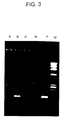
- a and C both represent PCR products from negative mice; B represents a PCR product from a positive mouse; N represents a PCR product from a negative control (BALB/c mouse); M represents a PCR product from a positive control (pCALN-CN2 plasmid DNA); and M is a DNA size marker. Seven of 28 mice obtained from BALB/cCrSlc and one of 3 mice obtained from C57B1/10SnSlc were positive. Each positive mouse was bred for use in further studies.
- PCR was conducted in a similar manner to the PCR for CN2 using a sense primer 6-4269-S20 (5'-TATGACATCATAATATGTGA-3') and an anti-sense primer 6-4599-R20 (5'-CCCGATAATATGCTACAGCA-3').
- a sense primer 6-4269-S20 (5'-TATGACATCATAATATGTGA-3')
- an anti-sense primer 6-4599-R20 5'-CCCGATAATATGCTACAGCA-3'.
- mice obtained from BALB/cCrS1c were positive.
- the transgenic mouse according to the present invention carries the switch expression system, the HCV gene is not expressed in a normal state.
- Cre In order to initiate the expression, Cre must act.
- the present inventors prepared a recombinant adenovirus AxNCre that expressed Cre.
- the adenovirus AxNCre was prepared by the method of Yumi Kanegae (Nucl. Acids Res. 23, 19, 38 16-21, 1995).
- Spleens were surgically excised from the transgenic mice (derived from BALB/cCrSlc and introduced with CN2) so as to separate and culture spleen cells and fibroblasts.
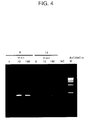
- the thus-obtained spleen cells were collected by centrifugation in order to extract RNA therefrom by the acidic phenol/guanidine method. Then, cDNA synthesis was conducted using the RNA as a template and 6-604-R20 as a primer.
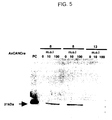
- the membrane was then reacted with an anti-core monoclonal antibody and an anti-E2 monoclonal antibody.
- Two of 8 mice (lines 8 and 29) exhibited positive reactions ( Figure 5).
- the monoclonal antibodies used in the present example were prepared by producing recombinant core, E1, and E2 proteins from HCV genes and then immunizing BALB/c mouse with the proteins. (see Masahiko Kaito et al., J. General Virology 75 pp.1775-1760, 1994; and Tomiko Kashiwakura et al., J. Immunological Methods 190 pp.78-89 1996)
- the fixed cells were reacted with the anti-core monoclonal antibody, the anti-E1 monoclonal antibody and the anti-E2 monoclonal antibody, thereby detecting the HCV proteins by the indirect immunofluorescence technique.
- two of 8 mice were found to be positive ( Figure 6, line 8). Positive mice (lines 8 and 29) gave the same results in both of the Western blotting and immunofluorescence methods.
- mice that were found to be positive in expressing HCV proteins were used to examine in vivo expression of the proteins.
- AxNCre was administered to the mice intravenously via the tail veins or directly into the spleens. After 3 days, the livers were excised from the mice to analyze expression of HCV proteins.
- One milliliter of RIPA buffer (10mM Tris-HCl pH7.4, 1% SDS, 0.5% NP40, 0.15M NaCl, 1mM PMSF) was added to the murine liver slices, which were then homogenized at 20 strokes in a Down's homogenizer.
- the resultant solutions were heated at 100°C for 5 minutes and then subjected to supersonic treatment at 4°C for 15 minutes. After centrifugation at 14,000 rpm for 10 minutes, the supernatants were separated and measured for protein concentrations. Moreover, EIA (Takeshi Tanaka et al., J. Hepatology 23:742-745, 1995) and Western blotting were conducted with respect to core proteins.
- the HCV structural proteins core, E1 and E2 were expressed in the transgenic mice (lines 8 and 29) in order to observe changes in expression of the HCV proteins in the livers, liver tissue images, and the serum GPT values with the lapse of time. 10 9 pfu of AxNCre was administered to the mice via their tail veins. The mice were sacrificed 3, 5, 7 and 10 days after the AxNCre administration. The expression of an HCV core protein in the transgenic mouse livers increased until Day 7 and decreased on Day 10 ( Figure 7) when quantitatively measured by the EIA method. The serum GPT value was low until Day 5 but was drastically raised on Day 7, and this raising continued until Day 10 ( Figure 7).
- the present invention provides a novel human disease animal model.
- This animal model exhibits pathological conditions very similar to human hepatitis C and is therefore useful for clarification of an onset mechanism of hepatitis C as well as for development of means for treating the disease.
Landscapes
- Life Sciences & Earth Sciences (AREA)
- Health & Medical Sciences (AREA)
- Genetics & Genomics (AREA)
- Chemical & Material Sciences (AREA)
- Organic Chemistry (AREA)
- Engineering & Computer Science (AREA)
- Biotechnology (AREA)
- General Health & Medical Sciences (AREA)
- Zoology (AREA)
- Biomedical Technology (AREA)
- General Engineering & Computer Science (AREA)
- Molecular Biology (AREA)
- Environmental Sciences (AREA)
- Bioinformatics & Cheminformatics (AREA)
- Biophysics (AREA)
- Wood Science & Technology (AREA)
- Veterinary Medicine (AREA)
- Biochemistry (AREA)
- Microbiology (AREA)
- Gastroenterology & Hepatology (AREA)
- Animal Behavior & Ethology (AREA)
- Animal Husbandry (AREA)
- Biodiversity & Conservation Biology (AREA)
- Plant Pathology (AREA)
- Virology (AREA)
- Physics & Mathematics (AREA)
- Medicinal Chemistry (AREA)
- Proteomics, Peptides & Aminoacids (AREA)
- Micro-Organisms Or Cultivation Processes Thereof (AREA)
- Pharmaceuticals Containing Other Organic And Inorganic Compounds (AREA)
- Medicines Containing Material From Animals Or Micro-Organisms (AREA)
- Medicines That Contain Protein Lipid Enzymes And Other Medicines (AREA)
Applications Claiming Priority (3)
| Application Number | Priority Date | Filing Date | Title |
|---|---|---|---|
| JP19507696 | 1996-07-24 | ||
| JP195076/96 | 1996-07-24 | ||
| PCT/JP1997/002575 WO1998003060A1 (en) | 1996-07-24 | 1997-07-24 | Hepatitis c model animals |
Publications (2)
| Publication Number | Publication Date |
|---|---|
| EP0919122A1 true EP0919122A1 (de) | 1999-06-02 |
| EP0919122A4 EP0919122A4 (de) | 2004-11-17 |
Family
ID=16335158
Family Applications (1)
| Application Number | Title | Priority Date | Filing Date |
|---|---|---|---|
| EP97933015A Withdrawn EP0919122A4 (de) | 1996-07-24 | 1997-07-24 | Tiermodel für hepatitis c erkrankungen |
Country Status (4)
| Country | Link |
|---|---|
| US (2) | US6201166B1 (de) |
| EP (1) | EP0919122A4 (de) |
| AU (1) | AU719292B2 (de) |
| WO (1) | WO1998003060A1 (de) |
Families Citing this family (9)
| Publication number | Priority date | Publication date | Assignee | Title |
|---|---|---|---|---|
| AU719292B2 (en) * | 1996-07-24 | 2000-05-04 | Chugai Seiyaku Kabushiki Kaisha | Hepatitis C animal model |
| US6995299B2 (en) * | 1999-11-02 | 2006-02-07 | University Of Connecticut | Propagation of human hepatocytes in non-human animals |
| JPWO2003037081A1 (ja) * | 2001-10-30 | 2005-02-17 | 財団法人 東京都医学研究機構 | Hcv遺伝子トランスジェニック動物 |
| CN100410381C (zh) * | 2004-07-08 | 2008-08-13 | 中国人民解放军军事医学科学院野战输血研究所 | 一种hcv转基因小鼠模型及其构建方法与应用 |
| WO2006021896A2 (en) | 2004-08-27 | 2006-03-02 | Tripep Ab | Transgenic mouse models of hepatitis c virus (hcv) and identification of hcv therapeutics |
| WO2008045120A2 (en) * | 2006-01-11 | 2008-04-17 | The Board Of Trustees Of The University Of Texas System And Chan Et Al | Transgenic mouse lines expressing human ace2 and uses thereof |
| EP3224381B1 (de) | 2014-11-25 | 2019-09-04 | The Brigham and Women's Hospital, Inc. | Verfahren zur identifizierung von personen mit einer prädisposition für eine kardiometabolische krankheit oder davon betroffenen personen |
| WO2016085876A1 (en) | 2014-11-25 | 2016-06-02 | The Broad Institute Inc. | Clonal haematopoiesis |
| GB201819726D0 (en) * | 2018-12-03 | 2019-01-16 | Diagnostics For The Real World Ltd | HCV detection |
Family Cites Families (5)
| Publication number | Priority date | Publication date | Assignee | Title |
|---|---|---|---|---|
| US5849987A (en) * | 1992-06-02 | 1998-12-15 | Yeda Research And Development Co. Ltd. | Animal model for hepatitis virus infection |
| US5858328A (en) * | 1991-06-04 | 1999-01-12 | Yeda Research And Development Co. Ltd. | Animal model for hepatitis virus infection |
| JPH09500526A (ja) * | 1993-06-14 | 1997-01-21 | ベーアーエスエフ アクツィエンゲゼルシャフト | テトラサイクリン反応性プロモーターによる真核細胞の遺伝子発現の厳密な制御 |
| JP2001508283A (ja) * | 1996-03-13 | 2001-06-26 | ザ ジェネラル ホスピタル コーポレーション | C型肝炎ウイルス感染のトランスジェニックモデル |
| AU719292B2 (en) * | 1996-07-24 | 2000-05-04 | Chugai Seiyaku Kabushiki Kaisha | Hepatitis C animal model |
-
1997
- 1997-07-24 AU AU36348/97A patent/AU719292B2/en not_active Ceased
- 1997-07-24 US US09/214,471 patent/US6201166B1/en not_active Expired - Fee Related
- 1997-07-24 WO PCT/JP1997/002575 patent/WO1998003060A1/ja not_active Ceased
- 1997-07-24 EP EP97933015A patent/EP0919122A4/de not_active Withdrawn
-
2000
- 2000-09-14 US US09/661,364 patent/US6429355B1/en not_active Expired - Fee Related
Also Published As
| Publication number | Publication date |
|---|---|
| US6201166B1 (en) | 2001-03-13 |
| US6429355B1 (en) | 2002-08-06 |
| AU3634897A (en) | 1998-02-10 |
| EP0919122A4 (de) | 2004-11-17 |
| WO1998003060A1 (en) | 1998-01-29 |
| AU719292B2 (en) | 2000-05-04 |
Similar Documents
| Publication | Publication Date | Title |
|---|---|---|
| CN108660161B (zh) | 基于CRISPR/Cas9技术的制备无嵌合基因敲除动物的方法 | |
| CN106987604B (zh) | 一种制备动脉粥样硬化疾病模型犬的方法 | |
| US20080113437A1 (en) | In-vitro method for producing oocytes or eggs having targeted genomic modification | |
| Gum Jr et al. | Goblet cell-specific expression mediated by the MUC2 mucin gene promoter in the intestine of transgenic mice | |
| US6429355B1 (en) | Hepatitis C animal model | |
| WO2005003342A1 (ja) | メチル化を利用したトランスジェニック生物を作製する方法およびシステム | |
| US20190335724A1 (en) | Urokinase-type plasminogen activator transgenic mouse | |
| AU1462200A (en) | Transgenic and cloned mammals | |
| CN112899311A (zh) | 一种rs1-ko小鼠模型的构建方法及其应用 | |
| JP7426120B2 (ja) | ノックイン細胞の作製方法 | |
| JP3714702B2 (ja) | C型肝炎ウイルス遺伝子の全長配列を有するトランスジェニック動物 | |
| JP3977898B2 (ja) | C型肝炎モデル動物 | |
| US20050108784A1 (en) | Non-human transgenic mammals used as models for human pathologies originating from stem cells | |
| CA2196190A1 (en) | Ikaros transgenic cells and animals | |
| JP2003533171A (ja) | Atp結合カセットトランスポーター(abc1)改変トランスジェニックマウス | |
| CN120290567A (zh) | 构建先天性心脏病小鼠模型的方法 | |
| US20030092174A1 (en) | Tissues or organs for use in xenotransplantation | |
| CN116868959B (zh) | Rag2基因编辑免疫缺陷模型犬的建立方法 | |
| KR100455898B1 (ko) | Srg3 유전자 결핍 생쥐 및 그의 제조방법 | |
| JP7795804B2 (ja) | 融合タンパク質、核酸、細胞及び動物の製造方法 | |
| EP1454524A1 (de) | Hcv-gen-transgenes tier | |
| CN112575037B (zh) | 一种嵌合人hla-dp基因组区域的人源化转基因小鼠模型的构建方法 | |
| WO2019040744A1 (en) | METHODS AND COMPOSITIONS FOR IN SITU GERMINAL GENOMIC GENE ENGINEERING | |
| CN119639827A (zh) | 一种高尿酸血症的非人哺乳动物模型的制备方法及其用途 | |
| CN119776361A (zh) | 一种pPB-CAG-hORMDL3小鼠模型的构建方法及其应用 |
Legal Events
| Date | Code | Title | Description |
|---|---|---|---|
| PUAI | Public reference made under article 153(3) epc to a published international application that has entered the european phase |
Free format text: ORIGINAL CODE: 0009012 |
|
| 17P | Request for examination filed |
Effective date: 19990121 |
|
| AK | Designated contracting states |
Kind code of ref document: A1 Designated state(s): AT BE CH DE DK ES FI FR GB GR IE IT LI LU MC NL PT SE |
|
| A4 | Supplementary search report drawn up and despatched |
Effective date: 20041006 |
|
| RIC1 | Information provided on ipc code assigned before grant |
Ipc: 7C 07K 14/18 B Ipc: 7C 12N 15/00 B Ipc: 7A 01K 67/027 A |
|
| 17Q | First examination report despatched |
Effective date: 20051024 |
|
| GRAP | Despatch of communication of intention to grant a patent |
Free format text: ORIGINAL CODE: EPIDOSNIGR1 |
|
| STAA | Information on the status of an ep patent application or granted ep patent |
Free format text: STATUS: THE APPLICATION IS DEEMED TO BE WITHDRAWN |
|
| 18D | Application deemed to be withdrawn |
Effective date: 20080326 |