EP0919609B1 - Composition et procédé de nettoyage pour sonde d'analyse hématologique - Google Patents
Composition et procédé de nettoyage pour sonde d'analyse hématologique Download PDFInfo
- Publication number
- EP0919609B1 EP0919609B1 EP98307971A EP98307971A EP0919609B1 EP 0919609 B1 EP0919609 B1 EP 0919609B1 EP 98307971 A EP98307971 A EP 98307971A EP 98307971 A EP98307971 A EP 98307971A EP 0919609 B1 EP0919609 B1 EP 0919609B1
- Authority
- EP
- European Patent Office
- Prior art keywords
- cleansing
- composition
- pipette
- cleansing composition
- polyoxyethylene alkyl
- Prior art date
- Legal status (The legal status is an assumption and is not a legal conclusion. Google has not performed a legal analysis and makes no representation as to the accuracy of the status listed.)
- Expired - Lifetime
Links
Images
Classifications
-
- G—PHYSICS
- G01—MEASURING; TESTING
- G01N—INVESTIGATING OR ANALYSING MATERIALS BY DETERMINING THEIR CHEMICAL OR PHYSICAL PROPERTIES
- G01N35/00—Automatic analysis not limited to methods or materials provided for in any single one of groups G01N1/00 - G01N33/00; Handling materials therefor
- G01N35/10—Devices for transferring samples or any liquids to, in, or from, the analysis apparatus, e.g. suction devices, injection devices
- G01N35/1004—Cleaning sample transfer devices
-
- C—CHEMISTRY; METALLURGY
- C11—ANIMAL OR VEGETABLE OILS, FATS, FATTY SUBSTANCES OR WAXES; FATTY ACIDS THEREFROM; DETERGENTS; CANDLES
- C11D—DETERGENT COMPOSITIONS; USE OF SINGLE SUBSTANCES AS DETERGENTS; SOAP OR SOAP-MAKING; RESIN SOAPS; RECOVERY OF GLYCEROL
- C11D1/00—Detergent compositions based essentially on surface-active compounds; Use of these compounds as a detergent
- C11D1/66—Non-ionic compounds
- C11D1/72—Ethers of polyoxyalkylene glycols
-
- C—CHEMISTRY; METALLURGY
- C11—ANIMAL OR VEGETABLE OILS, FATS, FATTY SUBSTANCES OR WAXES; FATTY ACIDS THEREFROM; DETERGENTS; CANDLES
- C11D—DETERGENT COMPOSITIONS; USE OF SINGLE SUBSTANCES AS DETERGENTS; SOAP OR SOAP-MAKING; RESIN SOAPS; RECOVERY OF GLYCEROL
- C11D1/00—Detergent compositions based essentially on surface-active compounds; Use of these compounds as a detergent
- C11D1/66—Non-ionic compounds
- C11D1/74—Carboxylates or sulfonates esters of polyoxyalkylene glycols
-
- C—CHEMISTRY; METALLURGY
- C11—ANIMAL OR VEGETABLE OILS, FATS, FATTY SUBSTANCES OR WAXES; FATTY ACIDS THEREFROM; DETERGENTS; CANDLES
- C11D—DETERGENT COMPOSITIONS; USE OF SINGLE SUBSTANCES AS DETERGENTS; SOAP OR SOAP-MAKING; RESIN SOAPS; RECOVERY OF GLYCEROL
- C11D3/00—Other compounding ingredients of detergent compositions covered in group C11D1/00
- C11D3/16—Organic compounds
- C11D3/26—Organic compounds containing nitrogen
- C11D3/30—Amines; Substituted amines ; Quaternized amines
-
- C—CHEMISTRY; METALLURGY
- C11—ANIMAL OR VEGETABLE OILS, FATS, FATTY SUBSTANCES OR WAXES; FATTY ACIDS THEREFROM; DETERGENTS; CANDLES
- C11D—DETERGENT COMPOSITIONS; USE OF SINGLE SUBSTANCES AS DETERGENTS; SOAP OR SOAP-MAKING; RESIN SOAPS; RECOVERY OF GLYCEROL
- C11D3/00—Other compounding ingredients of detergent compositions covered in group C11D1/00
- C11D3/16—Organic compounds
- C11D3/26—Organic compounds containing nitrogen
- C11D3/33—Amino carboxylic acids
-
- C—CHEMISTRY; METALLURGY
- C11—ANIMAL OR VEGETABLE OILS, FATS, FATTY SUBSTANCES OR WAXES; FATTY ACIDS THEREFROM; DETERGENTS; CANDLES
- C11D—DETERGENT COMPOSITIONS; USE OF SINGLE SUBSTANCES AS DETERGENTS; SOAP OR SOAP-MAKING; RESIN SOAPS; RECOVERY OF GLYCEROL
- C11D2111/00—Cleaning compositions characterised by the objects to be cleaned; Cleaning compositions characterised by non-standard cleaning or washing processes
- C11D2111/10—Objects to be cleaned
- C11D2111/14—Hard surfaces
- C11D2111/20—Industrial or commercial equipment, e.g. reactors, tubes or engines
Definitions
- the present invention relates to a cleansing composition for, and its method of use in, an automated hematological analyzer.
- the invention more particularly relates to a cleansing composition for a quantitatively aspirating sampling probe, as well as to a method for cleansing the sampling probe, in an automated hematological analyzer capable of simultaneous, multi-item analysis.
- Clinical analytical procedures are increasingly becoming automated owing to technological advances, such that, for example, multiple items can be assayed by several different reagents simultaneously in one device.
- the extent of clinical monitoring items in the area of hemostasis and thrombosis does not end merely with blood coagulation time, but ramifies into quantitating the factors in the clotting/fibrinolytic system, and to quantitating fibrin degradation products; and it is now possible to make these measurements with a single device.
- Automated hematological analyzers accordingly are able to investigate any hemostatic disorder, as well as risk of thrombosis. That is, by performing multiple assays on hematological samples, "coagulation profiles" are produced, from which bleeding disorders as well as the potential for pathological formation of cardiovascular blood clots (thrombi) can be evaluated.
- Coagulation assays are performed in the hematological analyzer by mixing test reagents into hematological samples in reaction tubes and monitoring for diagnostic change; typically the time to onset of clotting in the sample is measured.
- protease Factor X (Stuart Factor) is activated, which in turn activates prothrombin, by cleaving it to yield thrombin.
- Thrombin in turn cleaves fibrinogen to yield clot-forming fibrin.
- Tissue factor released from tissues exposed to plasma from a ruptured blood vessel, can activate Factor X directly.
- a laboratory blood coagulation test known as the prothrombin time (PT) assay can be conducted to evaluate the extrinsic and common pathways.
- a test reagent containing tissue factor also called thromboplastin
- the time to clot formation in the sample following the addition of the thromboplastin reagent is measured as the PT.
- Factor VIII antihemophilic factor
- a Factor VIII reagent may be added to a plasma sample and, as with the PT test, the time to clotting monitored, except that therein the intrinsic pathway is evaluated.
- clot-forming fibrin the protein end product of blood coagulation, must eventually be degraded, which occurs through factors having fibrinolytic functions.
- Plasmin is the activated enzyme responsible for fibrin degradation in the fibrinolytic system, and is derived from converted plasminogen in the blood. Plasmin activity is in turn regulated by ⁇ 2 -antiplasmin, a principal inhibitor of fibrinolysis. Monitoring plasmin levels can accordingly indicate hemostatic integrity or thrombosis.
- antiplasmin levels can be assayed to evaluate fibrinolytic function. For example, by adding a plasmin-containing reagent to a hematological sample in a reaction tube, antiplasmin can then be quantitated.
- the blood coagulation system must be regulated to prevent massive formation of thrombi. Blood consequently contains natural clotting cascade inhibitors.
- Protein C is a coagulation inhibitor, functioning to block the activity of activated Factor VIII, as well as another clotting factor. At the same time, Protein C inactivates an inhibitor of tissue plasminogen activator (tPA is secreted primarily by endothelial cells and activates plasmin), thus enhancing fribrinolytic activity.
- tissue plasminogen activator tPA is secreted primarily by endothelial cells and activates plasmin
- Levels of Protein C can be assayed by adding to a sample a chromogenic synthetic peptide substrate that is cleaved in the presence of the reaction between a protease (Factor VIII, for example) and its inhibitor (Protein C, for example). Cleavage of the synthetic substrate produces a chromogenic change that can be quantitated photometrically.
- a protease Factor VIII, for example
- Protein C for example
- the intrinsic clotting pathway by definition can be activated solely by elements within the blood itself, when intrinsic Factor XII (Hageman Factor) comes into contact with and is bound by a negatively charged surface (thus the pathway can be triggered in vitro).
- intrinsic Factor XII Haman Factor
- the time to coagulation via this mechanism is referred to as the "partial thromboplastin time,” in relation to the time to coagulation required when the extrinsic pathway is initiated via thromboplastin.
- the intrinsic clotting system can be screened generally for abnormalities by the activated partial thromboplastin time (aPTT) assay.
- aPTT activated partial thromboplastin time
- This test is also used to monitor the anticoagulant effect of heparin treatment.
- Heparin occurs naturally in the basophils of blood leukocytes, but is prepared as a commercial product from animal sources and administered therapeutically. Heparin accelerates the activity of Antithrombin III (ATIII).
- ATIII is the major inhibitor of the enzymes of the clotting cascade, binding to some half-dozen proteases, including factors X and XII and thrombin.
- Antithrombin III acting with co-factor heparin functions immediately to inhibit coagulation.
- the aPTT assay is conducted by adding a test reagent containing a Factor XII activator to a platelet-poor plasma sample. Time to clotting is evaluative of adequate levels of the intrinsic coagulation factors.
- Antithrombin III levels can be assayed by employing a synthetic peptide substrate as with the assay for Protein C levels described above.
- measuring reagents and test samples are taken up by means of a pipette-like aspirating device (sampling probe) and ejected into reaction vessels.
- pipette devices used herein would be provided according to use, as it were, for each particular assaying reagent or each particular sample.
- a single pipette device is utilized in common.
- the pipette device is not cleaned sufficiently the problem of "carry-over" occurs, in which prior-remaining matter is mixed in with next-aspirated reagents, exerting an influence on the analytical results.
- methods include clotting time and chromogenic substrate tests, as described above, as well as immunoassays.
- reagents employed in these assaying methods are many that have enzymatic activity, or in the case of chromogenic substrates, that contain proteins or peptides. Because enzymes, and proteins and peptides generally, tend to become adsorbed on the pipette device, carry-over problems are liable to arise with the use of such reagents, making sufficient cleaning of the pipette device necessary. Conventionally the pipette device has been cleaned with a cleansing fluid containing a hypochlorite substance.
- US 4,431,560 discloses an acidic solution of glycine and a fatty acid of 3 to 12 carbon atoms for cleaning and storing blood dialyzers, the fatty acid acting as a bacteriocide.
- JP-790122230 discloses a detergent for use with an automatic blood analyser, the detergent containing NaCl, a buffer and a surfactant which is preferably a polyoxyethylene alkyl phenyl ether.
- EP 0 769 547 discloses a method of washing a reaction chamber (used for reaction of a body liquid sample with a reagent) with a detergent solution containing a polyoxyethylene alkyl ether, a polyoxyethylene polyoxypropylene glycol ether, an N-acyl amino acid salt and a polyacrylic salt.
- An object of the present invention is to enable rapid or even instantaneous cleaning of a sampling probe in an automated analyzer, and at the same time to curtail carry-over effects from the cleansing agent or from assaying reagents residual in the sampling probe due to insufficient cleaning.
- the present invention is directed to a cleansing composition or preparation for an automated analyzer, wherein the composition is an acidic aqueous solution of pH 5.0 or less containing (1) a compound having a primary amino group; and (2) one or more nonionic surfactants selected from the group consisting of polyoxyethylene alkyl ether, polyoxyethylene alkyl phenyl ether, polyoxyethylene alkyl ester and polyoxyethylene sorbitan ester.
- Another object of the invention is to cleanse a pipette or sampling probe employed in aspirating and dispensing aliquots of analytical samples, assaying reagents, and reaction solutions thereof for multiple assays in an automated analyzer, by a method of contacting surfaces of the pipette or sampling probe at least subsequent to each assay with a cleansing composition of the present invention, so as to remove instantaneously assaying reagents such as enzymes, proteins and peptides contaminating the surfaces of the pipette or sampling probe, without contaminating the surfaces with the cleansing agent itself.
- the cleansing composition of the present invention is an acidic aqueous solution of pH 5.0 or less; preferably the pH is 1.8 to 4.0; most preferably the pH is 2.0 to 2.5.
- adjustment can be made utilizing conventional acidifying agents (hydrochloric acid, phosphoric acid, citric acid, for example), and buffers (Goode buffers, for example).
- the amount of acid added to the composition depends on the desired pH, and the concentration and strength of the acid.
- amino acids As a substance having a primary amino group, amino acids, and "Tris" [tris(hydroxymethyl)aminomethane] can be used.
- the amino acids are not particularly limited, however glycine, valine, leucine, phenylalanine, alanine, serine, and threonine are preferable; glycine is most preferable.
- the concentration of the compound having a primary amino group can be suitably determined according to the compound employed; but for example, amino acids can be employed in a concentration in the range of 0.05 to 10 w/v%, more preferably in the range of 0.1 to 2.0 w/v%.
- nonionic surfactant elevates the cleansing effectiveness of the composition.
- polyoxyethylene alkyl ethers polyoxyethylene alkyl phenyl ethers, polyoxyethylene sorbitan esters, polyoxyethylene alkyl esters, and mixtures thereof can be used.
- the nonionic surfactant is water soluble, the ethylene oxide or polyoxyethylene molar addition number is not particularly limited; however 2 to 100 moles is preferable, 5 to 60 moles is more preferable, and 5 to 12 moles is most preferable.
- the cleansing effectiveness is elevated further by mixing a nonionic surfactant of low ethylene oxide molar addition number with one of high ethylene oxide molar addition number.
- the polyoxyethylene alkyl ether, polyoxyethylene alkyl phenyl ether and polyoxyethylene alkyl ester include an alkyl group having 8 to 20 carbons, and preferably an alkyl group having 8 to 18 carbons.
- nonionic surfactants suitable for use in the present invention are available.
- polyoxyethylene alkyl ether in several ethylene oxide molar addition numbers is available as Actinol LTM (Matsumoto Yushi Pharmaceuticals, Inc.), and Noigen ETTM (Daiichi Kogyo Pharmaceuticals, Inc.); polyoxyethylene alkyl phenyl ether in several ethylene oxide molar addition numbers is available as EmulsitTM (Daiichi Kogyo Pharmaceuticals, Inc.), and NonipolTM (Sanyo Kasei Kogyo, Inc.); polyoxyethylene sorbitan ester in several ethylene oxide molar addition numbers is available as SpanTM (Atlas Powder Co.), and SolubonTM (Toho Kagaku Kogyo, Inc); polyoxyethylene alkyl ester in several ethylene oxide molar addition numbers is available as Noigen ESTM (Daiichi Kogyo Pharmaceuticals, Inc).
- the concentration of the nonionic surfactant can be suitably determined according to the employed surfactant; but the surfactant can be employed in the range of 0.001 to 2.0 w/v%, and more preferably in the range of 0.10 to 1.00 w/v%.
- a cleansing composition of the present invention is extremely effective in instantaneously cleansing the quantitatively aspirating pipette or sampling probe wherein concurrent multi-item analysis is conducted by an automated analyzer having a liquid dispensing system.
- the aspirating probe which has aspirated/ejected sample aliquots and reagents, or their reaction solution, is cleansed with the cleansing composition of the present invention, and a rinse is performed as desired.
- the pipette being cleansed draws in an amount of the cleansing composition sufficient to contact substantially all contaminated surfaces thereof and then discharges the spent cleansing composition to a suitable waste site.
- the pipette can be rinsed with a conventional rinse solution, such as water.
- Subsequently analysis is carried out on another assay item. It is sufficient to have an extremely short period for the exposure of the aspirating probe to the cleansing composition.
- the preferable duration of the exposure is about 0.1 to 20 seconds, and more preferably about 0.2 to 1.0 seconds.
- the cleansing composition of the present invention may be used in combination with other types of cleansing compositions, for example, with hypochlorite cleansing compositions.
- hydrochloric acid - glycine - (polyoxyethylene) n nonyl phenyl ether can be given.
- Glycine can be replaced with valine, leucine, phenylalanine, alanine, serine, or threonine.
- hydrochloric acid can be replaced with acetic acid or citric acid.
- the cleansing composition of the present invention is superior in preventing carry-over of reagents remaining in the pipette or sampling probe wherein multiple assays including those having enzymatic activity, or employing proteins or the peptides of chromogenic substrates, are carried out continuously, such as is the case with automated devices for carrying out hemostasis or thrombosis analysis.
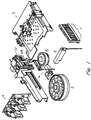
- Fig. 1 Centrifuged blood sample tubes are arranged in a sample rack 1.
- sampling arm 2 When the analytical procedure begins, requisite sample aliquots are aspirated from the sample tubes by sampling arm 2 and dispensed into a main reagent refrigeration unit 3 , wherein the samples and reagents are kept refrigerated to suppress degradation.
- sampling arm 4 Aspirates and dispenses a sample aliquot, which is then incubated in a sample heating unit 5 .
- reagent-aspirating pipette (quantitative sampling probe) arm 6 (in the figure, the thick pipette 6a has a heater, and the slender pipette 6b is exclusively for thrombin) into the incubated sample aliquot.
- XY mechanism 7 functions as a stirrer to mix the reagents and samples sufficiently. XY mechanism 7 then transports the samples to a (not-shown) photometric unit. The assayed samples are then disposed of, again by XY mechanism 7 , after which the analytical procedure is complete.
- the degree of the carry-over of the anti-plasmin reagent to Protein C activity analysis was examined (a) wherein the reagent-aspirating pipette was not cleaned, (b) wherein the reagent-aspirating pipette was cleaned utilizing a cleansing composition having a hypochlorite concentration of about 1.0 w/v% and (c) wherein the reagent-aspirating pipette was cleaned utilizing cleaning solutions prepared varying the pH in cleansing compositions from the above Composition IV by adding 1N NaOH accordingly.
- Protein C activeness displayed a normal value of 102.5%, against which (a) wherein the pipette was not cleaned, and (b) wherein it was cleaned utilizing the conventional hypochlorite cleansing composition, a tendency to abnormally high Protein C activeness values, 160.0% and 152.0%, respectively, was exhibited, due to carrying-over of antiplasmin reagent.
- a cleansing composition in accordance with the present invention practically eliminates carry-over; securing accuracy of analytical results, particularly in hemostatic and thrombotic assays employing enzymatically active or peptidyl reagents.
Landscapes
- Chemical & Material Sciences (AREA)
- Life Sciences & Earth Sciences (AREA)
- Engineering & Computer Science (AREA)
- Chemical Kinetics & Catalysis (AREA)
- Oil, Petroleum & Natural Gas (AREA)
- Wood Science & Technology (AREA)
- Organic Chemistry (AREA)
- Health & Medical Sciences (AREA)
- Physics & Mathematics (AREA)
- Analytical Chemistry (AREA)
- Biochemistry (AREA)
- General Health & Medical Sciences (AREA)
- General Physics & Mathematics (AREA)
- Immunology (AREA)
- Pathology (AREA)
- Investigating Or Analysing Biological Materials (AREA)
- Measuring Or Testing Involving Enzymes Or Micro-Organisms (AREA)
- Automatic Analysis And Handling Materials Therefor (AREA)
- Detergent Compositions (AREA)
Claims (10)
- Composition de nettoyage pour un analyseur automatisé dans laquelle ladite composition comprend une solution aqueuse acide de pH 5,0 ou moins comprenant(1) un composé ayant un groupe amino primaire ; et(2) un ou plusieurs agents tensioactifs non ioniques choisis dans le groupe consistant en des éthers alkyliques de polyoxyéthylène, des éthers alkyl-phényliques de polyoxyéthylène, des esters alkyliques de polyoxyéthylène et des esters de sorbitan de polyoxyéthylène.
- Composition de nettoyage selon la revendication 1, dans laquelle ledit composé ayant un groupe amino primaire est choisi dans le groupe consistant en un acide aminé et le tris(hydroxyméthyl)aminométhane.
- Composition de nettoyage selon la revendication 2, dans laquelle l'acide aminé est choisi dans le groupe consistant en la glycine, la valine, la leucine, la phénylalanine, l'alanine, la sérine et la thréonine.
- Composition de nettoyage selon la revendication 2, dans laquelle un acide aminé est choisi en tant que ledit composé ayant un groupe amino primaire, ledit acide aminé étant présent à une concentration de 0,05 à 10 % m/v.
- Composition de nettoyage selon la revendication 1, dans laquelle ladite solution aqueuse acide a un pH de 1,8 à 4,0.
- Composition de nettoyage selon la revendication 1, dans laquelle ledit agent tensioactif non ionique est un agent tensioactif non ionique soluble dans l'eau ayant un indice d'addition molaire de polyoxyéthylène de 2 à 100 moles.
- Composition de nettoyage pour un analyseur automatisé selon la revendication 1, dans laquelle ledit agent tensioactif non ionique a un groupe alkyle ayant de 8 à 20 atomes de carbone.
- Composition de nettoyage pour une pipette dans un analyseur automatisé pour analyser plusieurs paramètres d'essai simultanément, ayant des pipettes à aspiration quantitatives pour aspirer et distribuer des aliquotes de matériau d'essai comprenant des échantillons analytiques, des réactifs d'essai et des solutions de réaction de ceux-ci, ledit procédé comprenant les étapes consistant à :distribuer le matériau d'essai à partir d'une pipette à aspiration quantitative ;mettre ensuite en contact les surfaces de la pipette contaminées avec le matériau d'essai avec une quantité nettoyante d'une composition de nettoyage pour nettoyer la pipette, dans laquelle la composition de nettoyage est une solution aqueuse acide de pH de 5,0 ou moins et comprend(1) un composé ayant un groupe amino primaire ; et(2) un ou plusieurs agents tensioactifs non ioniques choisis dans le groupe consistant en des éthers alkyliques de polyoxyéthylène, des éthers alkyl-phényliques de polyoxyéthylène, des esters alkyliques de polyoxyéthylène et des esters de sorbitan de polyoxyéthylène.
- Procédé selon la revendication 8, dans lequel la pipette à aspiration quantitative est utilisée pour l'analyse dans des essais d'hémostase et de thrombose.
- Composition pour nettoyer une sonde de prélèvement à aspiration quantitative dans un analyseur hématologique automatisé, ladite composition étant une solution aqueuse acide comprenant :un composé ayant un groupe amino primaire ; etun ou plusieurs agents tensioactifs non ioniques choisis dans le groupe consistant en des éthers alkyliques de polyoxyéthylène, des éthers alkyl-phényliques de polyoxyéthylène, des esters alkyliques de polyoxyéthylène et des esters de sorbitan de polyoxyéthylène ; dans laquelle ladite solution aqueuse acide a un pH de 5,0 ou moins.
Applications Claiming Priority (3)
| Application Number | Priority Date | Filing Date | Title |
|---|---|---|---|
| JP268301/97 | 1997-10-01 | ||
| JP26830197 | 1997-10-01 | ||
| JP26830197A JP4104704B2 (ja) | 1997-10-01 | 1997-10-01 | 自動分析装置用洗浄剤 |
Publications (2)
| Publication Number | Publication Date |
|---|---|
| EP0919609A1 EP0919609A1 (fr) | 1999-06-02 |
| EP0919609B1 true EP0919609B1 (fr) | 2003-11-26 |
Family
ID=17456636
Family Applications (1)
| Application Number | Title | Priority Date | Filing Date |
|---|---|---|---|
| EP98307971A Expired - Lifetime EP0919609B1 (fr) | 1997-10-01 | 1998-09-30 | Composition et procédé de nettoyage pour sonde d'analyse hématologique |
Country Status (4)
| Country | Link |
|---|---|
| US (2) | US6043205A (fr) |
| EP (1) | EP0919609B1 (fr) |
| JP (1) | JP4104704B2 (fr) |
| DE (1) | DE69820010T2 (fr) |
Families Citing this family (18)
| Publication number | Priority date | Publication date | Assignee | Title |
|---|---|---|---|---|
| JP2001091523A (ja) * | 1999-09-21 | 2001-04-06 | Hitachi Ltd | 自動分析装置 |
| DE10007323A1 (de) * | 2000-02-17 | 2001-08-23 | Bode Chemie Gmbh & Co Kg | Reinigunsmittel für medizinische Instrumente |
| DE10153553A1 (de) * | 2001-07-07 | 2003-06-12 | Henkel Kgaa | Nichtwäßrige "3in1"-Geschirrspülmittel II |
| HUP0401286A3 (en) * | 2001-08-17 | 2009-06-29 | Henkel Ag & Co Kgaa | Dishwasher detergent with improved protection against glass corrosion |
| WO2003086637A1 (fr) * | 2002-04-12 | 2003-10-23 | Instrumentation Laboratory Company | Sonde d'immunodosage |
| JP3863087B2 (ja) | 2002-10-25 | 2006-12-27 | シスメックス株式会社 | 試料分析装置およびその装置に使用されるピペット洗浄用希釈液 |
| CN100347280C (zh) * | 2003-05-09 | 2007-11-07 | 上海捷瑞医用试剂有限公司 | 血细胞分析仪用清洗剂及其制备方法 |
| US8211386B2 (en) * | 2004-06-08 | 2012-07-03 | Biokit, S.A. | Tapered cuvette and method of collecting magnetic particles |
| FR2888328B1 (fr) * | 2005-07-08 | 2013-09-20 | Horiba Abx Sas | Procede automatise de preparation d'analyse d'echantillons de sang total et dispositif automatise pour sa mise en oeuvre |
| US8729276B2 (en) | 2009-04-17 | 2014-05-20 | Korea Institute Of Science And Technology | Cyanine compound for labeling biomolecule and preparation method thereof |
| JP5805136B2 (ja) * | 2013-05-16 | 2015-11-04 | 株式会社堀場製作所 | 全血血球免疫測定装置 |
| JP5771236B2 (ja) * | 2013-05-17 | 2015-08-26 | 株式会社堀場製作所 | 血液分析装置 |
| US9127235B2 (en) | 2013-10-09 | 2015-09-08 | Ecolab Usa Inc. | Alkaline detergent composition containing a carboxylic acid/polyalkylene oxide copolymer for hard water scale control |
| US9487738B2 (en) | 2013-10-09 | 2016-11-08 | Ecolab Usa Inc. | Solidification matrix comprising a carboxylic acid terpolymer |
| WO2016130553A1 (fr) * | 2015-02-13 | 2016-08-18 | Siemens Healthcare Diagnostics Inc. | Procédés et appareil permettant de réduire les volumes rapportés durant les opérations de pipetage |
| JP6139603B2 (ja) | 2015-06-30 | 2017-05-31 | シスメックス株式会社 | 塗抹標本作製装置、血液検体処理システム、および、塗抹標本作製装置における血液処理部の洗浄方法 |
| CN111793528A (zh) * | 2020-07-27 | 2020-10-20 | 郑州兰森生物技术有限公司 | 一种抗菌无磷清洗剂及其制备方法和应用 |
| CN115404131A (zh) * | 2021-05-28 | 2022-11-29 | 深圳市帝迈生物技术有限公司 | 清洗液 |
Family Cites Families (15)
| Publication number | Priority date | Publication date | Assignee | Title |
|---|---|---|---|---|
| US4285840A (en) * | 1977-08-29 | 1981-08-25 | Sandoz Ltd. | Detergent compositions |
| JPS5645998A (en) * | 1979-09-21 | 1981-04-25 | Toa Medical Electronics | Detergent for automated analyzing device |
| JPS5980613A (ja) * | 1982-10-29 | 1984-05-10 | Mitsui Toatsu Chem Inc | 新規なプラスミノ−ゲン・アクチベ−タ及びその製造方法 |
| US4431560A (en) * | 1982-12-27 | 1984-02-14 | Baxter Travenol Laboratories, Inc. | Washing and storage solution for separation devices |
| JPS62102253A (ja) * | 1985-10-30 | 1987-05-12 | Ricoh Co Ltd | 静電写真用カラ−液体現像剤 |
| DE3602746A1 (de) * | 1986-01-30 | 1987-08-06 | Wella Ag | Haarbehandlungsmittel und verfahren zur verbesserung des zustandes der haare |
| US5110730A (en) * | 1987-03-31 | 1992-05-05 | The Scripps Research Institute | Human tissue factor related DNA segments |
| US4956281A (en) * | 1987-06-03 | 1990-09-11 | Biogen, Inc. | DNA sequences, recombinant DNA molecules and processes for producing lymphocyte function associated antigen-3 |
| US5081228A (en) * | 1988-02-25 | 1992-01-14 | Immunex Corporation | Interleukin-1 receptors |
| GB9126306D0 (en) * | 1991-12-11 | 1992-02-12 | Unilever Plc | Mouthwash compositions |
| CA2076578A1 (fr) * | 1992-08-21 | 1994-02-22 | Miroslav Milinkovic | Mandrin utilise dans les procedes de metallisation par depot de nickel et moules nickeles ainsi fabriques |
| US5395545A (en) * | 1993-10-21 | 1995-03-07 | Akzo N.V. | Cleaning solution for automated analyzers |
| JPH07292387A (ja) * | 1994-04-28 | 1995-11-07 | Hitachi Ltd | 自動分析装置用洗浄剤および自動分析装置 |
| US5888752A (en) * | 1995-05-16 | 1999-03-30 | Bayer Corporation | Universal rinse reagent and method for use in hematological analyses of whole blood samples |
| JP3001087B2 (ja) * | 1995-10-18 | 2000-01-17 | 株式会社日立製作所 | 自動分析装置および方法 |
-
1997
- 1997-10-01 JP JP26830197A patent/JP4104704B2/ja not_active Expired - Fee Related
-
1998
- 1998-09-29 US US09/161,672 patent/US6043205A/en not_active Expired - Lifetime
- 1998-09-30 EP EP98307971A patent/EP0919609B1/fr not_active Expired - Lifetime
- 1998-09-30 DE DE69820010T patent/DE69820010T2/de not_active Expired - Lifetime
-
2000
- 2000-01-20 US US09/487,629 patent/US6114292A/en not_active Expired - Lifetime
Also Published As
| Publication number | Publication date |
|---|---|
| US6114292A (en) | 2000-09-05 |
| US6043205A (en) | 2000-03-28 |
| EP0919609A1 (fr) | 1999-06-02 |
| DE69820010D1 (de) | 2004-01-08 |
| JPH11106798A (ja) | 1999-04-20 |
| JP4104704B2 (ja) | 2008-06-18 |
| DE69820010T2 (de) | 2004-09-09 |
Similar Documents
| Publication | Publication Date | Title |
|---|---|---|
| EP0919609B1 (fr) | Composition et procédé de nettoyage pour sonde d'analyse hématologique | |
| US6902904B2 (en) | Coagulation assay reagents containing lanthanides | |
| US5292664A (en) | Functional test and reagent for determining fibrinogen | |
| US6432657B1 (en) | Method for determining coagulation parameters | |
| EP0632270A1 (fr) | Procede de determination de l'activite du facteur de coagulation sanguine xiii et trousse de reactifs appropries | |
| US20150111785A1 (en) | Method for Simultaneously Determining Multiple Coagulation Proteases | |
| EP0873418B1 (fr) | Analyse sanguine portant sur le rapport du facteur v indiquant une predisposition aux thromboembolies | |
| CA2155503C (fr) | Methode de detection des anomalies de coagulation sanguine a mediation proteique/proteique | |
| KR100353305B1 (ko) | 자동분석기용세정액 | |
| Friberger | Synthetic peptide substrate assays in coagulation and fibrinolysis and their application on automates | |
| Chantarangkul et al. | Evaluation of a fully automated centrifugal analyzer for performance of hemostasis tests. | |
| Waldmann et al. | Effect of bovine high molecular weight kininogen and its fragments on Fitzgerald trait plasma | |
| WO1993010262A1 (fr) | Dosage de la proteine s a l'aide d'un chromogene | |
| US5350458A (en) | Method for cleaning a diagnostic analyzer | |
| CA2421957C (fr) | Procede de mesure de l'activite de l'antithrombine | |
| HU216866B (hu) | Eljárás és reagens fibrinogén meghatározására | |
| US7767458B2 (en) | Method for determining coagulation activation and device for carrying out said method | |
| US5753510A (en) | Calibrator for use in test methods for detecting a defective coagulation factor V | |
| EP0491895B1 (fr) | DOSAGE CHROMOGENIQUE SERVANT A DETERMINER LE FACTEUR VIII:Ca | |
| JPH04350560A (ja) | プロテインs活性の機能的測定方法 | |
| Bowie et al. | Effect of streptokinase on fibrinogen and related proteins in plasma. | |
| EP0260707A2 (fr) | Méthode pour l'essai de protéine du plasma et trousse à réactifs à cet effet | |
| JP2024095611A (ja) | フィブリノゲンを決定する方法 | |
| Dempfle et al. | A 96-well microfiltration assay for measurement of total clottable fibrinogen | |
| Tripodi et al. | A chromogenic assay of prothrombin compared with coagulation tests during anticoagulant therapy and liver disease |
Legal Events
| Date | Code | Title | Description |
|---|---|---|---|
| PUAI | Public reference made under article 153(3) epc to a published international application that has entered the european phase |
Free format text: ORIGINAL CODE: 0009012 |
|
| AK | Designated contracting states |
Kind code of ref document: A1 Designated state(s): DE FR GB IT NL |
|
| AX | Request for extension of the european patent |
Free format text: AL;LT;LV;MK;RO;SI |
|
| 17P | Request for examination filed |
Effective date: 19990924 |
|
| AKX | Designation fees paid |
Free format text: DE FR GB IT NL |
|
| 17Q | First examination report despatched |
Effective date: 20020823 |
|
| GRAH | Despatch of communication of intention to grant a patent |
Free format text: ORIGINAL CODE: EPIDOS IGRA |
|
| GRAS | Grant fee paid |
Free format text: ORIGINAL CODE: EPIDOSNIGR3 |
|
| GRAA | (expected) grant |
Free format text: ORIGINAL CODE: 0009210 |
|
| AK | Designated contracting states |
Kind code of ref document: B1 Designated state(s): DE FR GB IT NL |
|
| REG | Reference to a national code |
Ref country code: GB Ref legal event code: FG4D |
|
| REF | Corresponds to: |
Ref document number: 69820010 Country of ref document: DE Date of ref document: 20040108 Kind code of ref document: P |
|
| ET | Fr: translation filed | ||
| PLBE | No opposition filed within time limit |
Free format text: ORIGINAL CODE: 0009261 |
|
| STAA | Information on the status of an ep patent application or granted ep patent |
Free format text: STATUS: NO OPPOSITION FILED WITHIN TIME LIMIT |
|
| 26N | No opposition filed |
Effective date: 20040827 |
|
| REG | Reference to a national code |
Ref country code: FR Ref legal event code: PLFP Year of fee payment: 18 |
|
| PGFP | Annual fee paid to national office [announced via postgrant information from national office to epo] |
Ref country code: NL Payment date: 20150809 Year of fee payment: 18 |
|
| PGFP | Annual fee paid to national office [announced via postgrant information from national office to epo] |
Ref country code: DE Payment date: 20150922 Year of fee payment: 18 Ref country code: GB Payment date: 20150930 Year of fee payment: 18 |
|
| PGFP | Annual fee paid to national office [announced via postgrant information from national office to epo] |
Ref country code: FR Payment date: 20150811 Year of fee payment: 18 |
|
| PGFP | Annual fee paid to national office [announced via postgrant information from national office to epo] |
Ref country code: IT Payment date: 20150925 Year of fee payment: 18 |
|
| REG | Reference to a national code |
Ref country code: DE Ref legal event code: R119 Ref document number: 69820010 Country of ref document: DE |
|
| REG | Reference to a national code |
Ref country code: NL Ref legal event code: MM Effective date: 20161001 |
|
| GBPC | Gb: european patent ceased through non-payment of renewal fee |
Effective date: 20160930 |
|
| PG25 | Lapsed in a contracting state [announced via postgrant information from national office to epo] |
Ref country code: NL Free format text: LAPSE BECAUSE OF NON-PAYMENT OF DUE FEES Effective date: 20161001 |
|
| REG | Reference to a national code |
Ref country code: FR Ref legal event code: ST Effective date: 20170531 |
|
| PG25 | Lapsed in a contracting state [announced via postgrant information from national office to epo] |
Ref country code: FR Free format text: LAPSE BECAUSE OF NON-PAYMENT OF DUE FEES Effective date: 20160930 Ref country code: GB Free format text: LAPSE BECAUSE OF NON-PAYMENT OF DUE FEES Effective date: 20160930 Ref country code: DE Free format text: LAPSE BECAUSE OF NON-PAYMENT OF DUE FEES Effective date: 20170401 |
|
| PG25 | Lapsed in a contracting state [announced via postgrant information from national office to epo] |
Ref country code: IT Free format text: LAPSE BECAUSE OF NON-PAYMENT OF DUE FEES Effective date: 20160930 |